A New Beginning

The rapidly shrinking, sinking and stinking Rapidshare has blocked my account and deleted hundreds of my files. Is this the end of A.O.O.F.C? Watch this space, & thanks for all your support and encouragement. Keep on rockin' in the free world. Paul

A.O.O.F.C
recommends
Mizar6

babydancing


Get this crazy baby off my head!

31.1.10

Steely Dan


Steely Dan - VH1 Storytellers TV Broadcast Audio Only - 2000

This show was first taped at New York's Sony Studios on February 1st, 2000. The band played ten songs, including three from 2VN. The recording also included an audience Q & A session. The show was originally broadcast on April 24th, 2000, with the eight songs listed here. The DVD has bonus footage of interviews and jam sesions on CNN, Today Show, E, Letterman, and Rock and the Dan's Roll Hall of Fame induction

N.B: Track 1, "FM" is not the complete song; more a TV doccumentary type intro. Track 6, "Do It Again" is the same. The broadcast's ad breaks accounted for this. The show is one 192kbps mp3 audio file, and sound quality is ok. In between tracks, there is some good banter between the audience, and Don, and Walt.

TRACK SEQUENCE

1 FM [intro]
2 Peg
3 Kid Charlemagne
4 Bad Sneakers
5 Josie
6 Do It Again [part]
7 Cousin Dupree
8 What A Shame About Me

All songs composed by Donald Fagen, and Walter Becker

MUSICIANS

Walter and Donald were joined onstage by Jon Herington (guitar); Cornelius Bumpus (sax); Chris Potter (sax); Michael Leonhart (trumpet); Jim Pugh (trombone); Ricky Lawson (drums); Tom Barney (bass); Ted Baker (keyboards); Victoria Cave (BG vocals); Carolyn Leonhart (BG vocals), and Cynthia Calhoun (BG vocals).
The music was recorded and remixed for the tv broadcast by Elliot Scheiner, and Roger Nichols

30.1.10

Wayne Krantz, Keith Carlock, Tim Lefebvre


Wayne Krantz, Keith Carlock, Tim Lefebvre - Krantz Carlock Lefebvre - 2009 - Abstract Logix

The American guitarist Wayne Krantz is a real one-off. He sounds somewhere between John Scofield and Bill Frisell at times, and he has toured in the legacy version of Steely Dan, which has had an audible impact on his playing. But Krantz is also an unflinching adventurer who dislikes repeating himself or imitating others, and possibly dislikes the music industry even more. This trio's famously long residency at New York's 55 Bar used to be documented by downloadable recordings of the gigs the same night, and though the guitarist has access to a conventional recording studio here, he has kept the same improvisational live feel, augmenting it with some overdubbed theme statements and quirkily offhand vocals on four tracks. Krantz is accompanied by his regular partners, Tim Lefebvre (bass) and Keith Carlock (drums), and the bone-crunching three-way conversation they keep up joins the impact of a heavy rock power-trio to the harmonic sleight-of-hand and melodic slipperiness of a contemporary jazz band. Some pieces are dark, churning, raw-sound growls, while others are drawlingly countrified; there's a rock-virtuosity tribute to Jeff Beck, and Rugged Individual is almost a reassuring ballad. © John Fordham guardian.co.uk, Thursday 15 October 2009 21.49 BST © Guardian News and Media Limited 2010 http://www.guardian.co.uk/music/2009/oct/15/wayne-krantz-cd-review

Fans of electric guitarist Wayne Krantz have been waiting well over a decade to hear something new or commercially available on CD, and here it is. It seems he's a more mature player, not as raucous or raw as in previous years where volume and screaming, high-pitched sounds were favored. Not to say he's refined his approach, but it seems as if Krantz is more interested in flowing composition, symmetry, and teamwork within funky beats rather than trying to stand above the plethora of rock-oriented jazz guitarists. With bassist Tim Lefebvre and drummer Keith Carlock, Krantz has a solid idea of what he wants to portray, and compact ideas swimming around in his head and fingers. There's only a modicum of noodling, some inane vocalizing here and there, but it does not detract from the overall message he's attempting to get across. He might even be heard as a thoughtful tunesmith on the languid "Rushdie," a slow and introspective "The Earth from Above," or "Moseley." While faster externally, "Left It on the Playground" is a nine-minute jam, at times wonky, but for the most part exploring some interesting industrialized effects. Then again, there are those untamed moments, as on the appropriately titled "War-Torn Johnny" or the hard-edged "Holy Joe" where the razor-edge impulses of Krantz cannot be denied. It is his tribute, "Jeff Beck," where the guitarist adds something unique, as vocal-type, faux-wah-wah sounds from Lefebvre set up some choppy and looser lines, while a much more defined blues in 6/8 time signifies "Rugged Individual." Of the vocal selections, the anthem for sommeliers "Wine Is the Thread" works best in its soulful, song-style repast, but it is not a strong suit. Krantz admitted he became discouraged with the music business, as working diligently on a project did not mean the recording would get proper promotion or distribution. Since the advent of the Internet, he's made live performances available as downloads. This project has a spontaneous, liquid quality to it that may very well establish a new concept for a figure far too talented to take any more time away from the studio to document his pithy, intriguing music. © 2009 Rovi Corporation. All Rights Reserved http://www.allmusic.com/cg/amg.dll?p=amg&sql=10:apftxzlaldhe

A great album of jazz rock/fusion from three masters of their instruments. There is some ferocious guitar playing here from Wayne Krantz. The bass work from Tim Lefebvre, is an education in itself, and of course the drumming from the unbelievably talented Keith Carlock is out of this world. There are some quiet moments on the album, but overall it's very, very impressive. The three guys produce some magical grooves. Listen to Wayne Krantz and Leni Stern's "Separate Cages" album. You can also hear some of Wayne's superb guitar work on Donald Fagen's "Morph The Cat" album. It is also worthwhile listening to Keith Carlock on Marian McPartland's "Piano Jazz: McPartland/Steely Dan", a great in-studio radio recording. Check out John Petrucci's great "Suspended Animation" album which features Tim Lefebvre. For music in a similar vein, listen to the late Emily Remler's "Transitions" music

TRACKS

01 - It's No Fun Not to Like Pop
02 - War-Torn Johnny
03 - Rushdie
04 - Wine Is the Thread
05 - The Earth from Above
06 - Left It on the Playground
07 - Jeff Beck
08 - I Was Like
09 - Mosley
10 - Holy Joe
11 - Rugged Individual

All tracks composed by Wayne Krantz

MUSICIANS

Wayne Krantz - Guitar, Vocals
Tim Lefebvre - Bass Guitar
Keith Carlock - Drums

ABOUT KEITH CARLOCK (WIKI)

Keith Carlock is an American drummer originally from Clinton, Mississippi. He currently resides in New York City, NY. He has recorded and/or toured with such musical luminaries as Sting, Steely Dan, James Taylor, Donald Fagen, Walter Becker, Diana Ross, Faith Hill, The Blues Brothers Band, Leni Stern, David Johansen and the Harry Smiths, Richard Bona, Chris Botti, Wayne Krantz, Harry Belafonte, Oz Noy, Clay Aiken, Rascal Flatts, Paula Abdul and Grover Washington, Jr, to name a few. Perhaps the greatest testament to Carlock's mastery of the drums lies in him being the exclusive drummer for every track on Steely Dan's latest CD Everything Must Go (Steely Dan has used multiple drummers on each of the last several albums they've released over the past three decades, presumably because Walter Becker and Donald Fagen, with a reputation for relentless perfection in the studio, wanted a "specialist" drummer for each different groove required for a given song). While in the Jazz Studies program at the University of North Texas, Keith studied with many teachers, including Ed Soph. Keith is also the long time boyfriend of Ruff Ryders/Ruff Pop pop/rock singer/songwriter Lynne Timmes. In October 2009 he released an instructional DVD called "The Big Picture: Phrasing, Improvisation, Style, and Technique."

ABOUT WAYNE KRANTZ (WIKI)

Wayne Krantz (born July 26, 1956 in Corvallis, Oregon) is an innovative American musician, who is widely recognized as a technically advanced jazz fusion guitarist. He has played with top artists such as Steely Dan, John Zorn, Michael Brecker, Billy Cobham, and others, but currently has a solo act. Krantz released his first album, Signals, in 1991, sporting an array of recognized jazz musicians such as Dennis Chambers, Leni Stern, Anthony Jackson, and others. However, in 1992, he formed a trio with bassist Lincoln Goines and drummer Zach Danziger, and recorded two albums with them; Long To Be Loose, in 1993, and a live album, 2 Drink Minimum, in 1995. In doing so, he began to play periodically at the 55 Bar, a diverse and premier jazz club in New York City. In 1996, Krantz released an acoustic album with Leni Stern, dubbed Separate Cages. Wayne formed a new trio in 1997, consisting of his ferocious guitar skills, complemented by Tim Lefebvre on electric bass and Keith Carlock on drums, new sounds that would change his music's style drastically. On June 28, 2007, Krantz played his final regular Thursday night gig at NYC's 55 Bar. In an announcement by Krantz to his mailing list notifying his fans of the change, he stated a desire to move towards a "louder thing" requiring "bigger rooms, with stages and sound systems to pull it off." Krantz's first three solo albums were released on the jazz label, Enja Records, which was at the time also home to frequent collaborator Leni Stern. However, Krantz's last three albums, 1999's Greenwich Mean, 2003's Your Basic Live, and 2007's "Your Basic Live '06" were both released from Wayne's private website. Like 2 Drink Minimum, these two albums both are excerpts of various sets at the 55 Bar. These two albums also include more use of effects pedals, and are more unscripted and improvised than the previous three, implying Wayne's tendency towards nonconformism on and off the stage. He contributed to Steely Dan co-founder Donald Fagen's newest release, Morph the Cat, and participated in touring with Fagen's band in early 2006. In another rare sideman role, Krantz is featured on tenor saxophonist Chris Potter's 2006 release, "Underground." Additionally, he is to return to the studio in 2006 to record a new solo album, to be followed by touring. It is unknown whether this new album will feature Wayne's existing trio. Even with a lack of a record company, and thus an absence of excessive advertisement and sponsorship, Krantz's music still receives acclaim and a worldwide underground fan base, strongest in the New York metropolitan area and Britain. Wayne Krantz signed with record label Abstract Logix to release his first studio record in over fifteen years.Krantz Carlock Lefebvre (2009) features the core trio of Keith Carlock on drums, Tim Lefebvre on bass, and Wayne on guitar. As a guitarist, Krantz is known for being a relentless individualist, which is evidenced in his improvisational style. In his book "An Improviser's Operating System," Krantz outlines his approach to improvisation, which relies not on licks or memorized fretboard patterns but an awareness of musical "formulas" on the instrument. Krantz's improvisation is known for its spontaneity, and he makes a distinction between this form of improvisation and "composition," the latter of which may include any musical idea that is preconceived on the instrument. While many guitarists rely on other music as a model for their own playing, Krantz is highly committed to realizing his own voice on the instrument and claims not to derive a great deal of inspiration from other music. Though Krantz has studied other players in the past, he does not consider himself a stylist (i.e. someone who models his or her playing on a predefined stylistic template, such as pure bebop, rock, blues or funk.) In addition to its concern for melody and harmony, Krantz's music demonstrates a high rhythmic awareness, often incorporating polyrhythms, odd metric groupings and displaced beats. Krantz is most identified with a Stratocaster-type electric guitar. Recently he has played a model manufactured by Tyler Guitars. Earlier releases such as "Signals" feature a chorus effect commonly associated with fusion guitar. Within several years, however, his sound became more organic, featuring analog effects such as overdrive, wah-wah, and a Moogerfooger ring modulator. For amplification, Krantz has used both Fender Deluxe Reverb and, more recently, Marshall amplifiers for a heavier sound. On May 22, 2004, Krantz married smooth jazz vocalist Gabriela Anders. Together they live in New York City with their daughter Marley.

ABOUT TIM LEFEVBRE

Tim Lefebvre (bass) is one of the most skilled and sought after bass players in NY. Tim has made appearances in Saturday Night Live's house band over the last few years - his work has also been heard on The Apprentice, The Sopranos, Late Show With David Letterman, The Knights of Prosperity (CBS), 30 Rock (NBC), Oceans 12, Ocean 's 13, The Departed, Harold & Kumar Go To White Castle, and Analyze That!. Tim was the Musical Director/Leader on The Caroline Rhea Show on ABC and has appeared recently with Chris Potter, Patti Austin, Uri Caine, and Dave Binney. This summer Tim is touring with Chuck Loeb, Dennis Chambers, Till Bronner, Eric Marienthal and Jim Beard. Tim brings his incredible support and huge low sounds to the Rudder vibe. © All About Jazz and/or contributing writer/visual artist. All rights reserved

Ten Years After


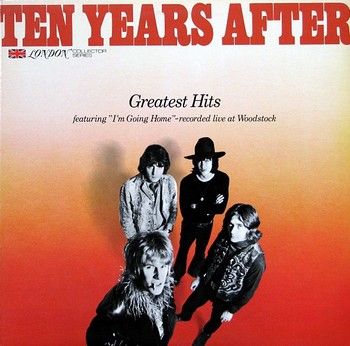
Ten Years After - Greatest Hits - 1975 - London (London Collectors Series)

Good early blues rock compilation from Ten Years After. The album features a live version of "Woodchopper's Ball", and also the band's "I'm Going Home". The present line up have been around for many years now. TYA are one of the greatest blues rock bands to emerge from Britain. They were hugely popular in the late sixties, when they played Woodstock, but during the early seventies, they produced some of their finest work.The brilliant axeman Alvin Lee, co-founded TYA, and two of the bands early albums with Alvin Lee, "Stonehenge" and "Cricklewood Green" are classics. Many people thought that without the "Main Man", Alvin Lee, the band would never survive, but they have, and TYA have prroduced a few above standard albums in recent years, reminiscent of the glory days. Alvin Lee still appears at the occasional concert with the band, but Joe Gooch who joined the band in 2003, permanently replacing Alvin Lee has proved himself as a brilliant guitarist and great vocalist. Joe fits in with TYA, as if he was always part of the band, and alongside the founding member Leo Lyons, Chick Churchill and Ric Lee, they form a crack team of professional musicians that give a new lease of life to TYA. This album is a great example of powerful blues rock, Listen to two of the band's early classic albums, "Stonehenge" and "Cricklewood Green" featuring the brilliant axeman Alvin Lee, co-founder of the band. Search this blog for other TYA/Alvin Lee recordings. [P.S: Thanks, Mike P. for the "Woodstock"/Roy Orbison info]

TRACKS / COMPOSERS

A1 Hear Me Calling - Alvin Lee
A2 Going T Try - Alvin Lee
A3 Love Like A Man - Gus Dudgeon, Alvin Lee
A4 No Title - Alvin Lee
B1 I Woke Up This Morning - Sam Hopkins, Alvin Lee
B2 Woodchopper's Ball - J. Bishop, & W. Herman
B3 I'm Going Home - Alvin Lee

MUSICIANS

Alvin Lee Guitar, Harmonica, Percussion, Piano, Sound Effects, Vocals, Voices, Clogs
Leo Lyons Bass, Guitar (Bass), Sound Effects, Bowed Bass, String Bass, Foot Stomping, Reverb Echo
Chick Churchill Organ, Piano, Celeste, Drums, Keyboards
Ric Lee Drums, Sound Effects, Timbales, Tympani [Timpani], Footsteps, Animal Sounds
Simon Stable Percussion, Bongos
Count Simon DeLaBedoyere Bongos
Martin Smith Train Sounds
Mike Vernon Vocals

SHORT BIO [ © William Ruhlmann, All Music Guide ]

Ten Years After is a British blues-rock quartet consisting of Alvin Lee (born December 19, 1944), guitar and vocals; Chick Churchill (born January 2, 1949), keyboards; Leo Lyons (born November 30, 1944) bass; and Ric Lee (born October 20, 1945), drums. The group was formed in 1967 and signed to Decca in England. Their first album was not a success, but their second, the live Undead (1968) containing "I'm Going Home," a six-minute blues workout by the fleet-fingered Alvin, hit the charts on both sides of the Atlantic. Stonedhenge (1969) hit the U.K. Top Ten in early 1969. Ten Years After's U.S. breakthrough came as a result of their appearance at Woodstock, at which they played a nine-minute version of "I'm Going Home." Their next album, Ssssh, reached the U.S. Top 20, and Cricklewood Green, containing the hit single "Love Like a Man," reached number four. Watt completed the group's Decca contract, after which they signed with Columbia and moved in a more mainstream pop direction, typified by the gold-selling 1971 album A Space in Time and its Top 40 single "I'd Love to Change the World." Subsequent efforts in that direction were less successful, however, and Ten Years After split up after the release of Positive Vibrations in 1974. They reunited in 1988 for concerts in Europe and recorded their first new album in 15 years, About Time, in 1989 before disbanding once again. In 2001, Ric Lee was preparing the back catalog for rerelease when he discoverd the Live at the Fillmore East 1970 tapes. He approached Alvin about getting back together to promote the lost album, but Alvin Lee declined. The rest of the band was up for it, though, and together with guitarist Joe Gooch, Ten Years After started touring again. In addition to touring the world, this new incarnation recorded their first new material in about a decade and a half and released Now in 2004 and added the live double CD set Roadworks in 2005.

BIO (Wikipedia)

Ten Years After are an English blues rock band, most popular in the late 1960s and early 1970s. After several years of local success in the Nottingham/Mansfield area as a band known since 1962 as The Jaybirds (its core was formed in late 1960 as Ivan Jay and the Jaycats), and later as Ivan Jay and the Jaymen, Ten Years After was founded by Alvin Lee and Leo Lyons. Ivan Jay sang lead vocals from late 1960 to 1962 and was joined by Ric Lee in August 1965, replacing original drummer Dave Quickmire, who had joined in 1962. In 1966 The Jaybirds moved to London, where Chick Churchill joined the group. That November the quartet signed a manager, Chris Wright, and decided to change their name to Blues Trip, Blues Yard (under which they played a show at the legendary Marquee Club supporting Bonzo Dog Band), and finally in November 1966, to Ten Years After ( in honour of Elvis Presley, an idol of Lee's whose momentous year in rock, 1956, helps to better explain the band's title). They became the first band of the soon-to-be Chrysalis Agency. They secured a residency at the Marquee, and received an invitation to play at the renowned Windsor Jazz Festival in 1967. That performance led to a contract with Deram, a subsidiary company of Decca – the first band so signed without a hit single. In October, their 1967 self-titled debut album was released. In 1968, after touring Scandinavia and the United States, Ten Years After released their second album, live Undead, which brought their first classic, "I'm Going Home." This was followed in February 1969 by studio issue, Stonedhenge, a British hit, that included another classic, "Hear Me Calling" (it was released also as a single, and covered in 1972 by British glam rock rising stars, Slade). In July 1969 they appeared at the Newport Jazz Festival, in the first event to which rock bands were invited. In August, the band performed a breakthrough American appearance at Woodstock; their furious-to-soft-to-furious rendition of "I'm Going Home" was featured in both the subsequent film and soundtrack album and catapulted them to star status. During 1970, Ten Years After released "Love Like a Man," their only hit in the UK Singles Chart. This song was on their fifth album, Cricklewood Green. The name of the album comes from a friend of the group who lived in Cricklewood, London. He grew a sort of plant which was said to have hallucinogenic effects. The band did not know the name of this plant, so they called their album Cricklewood Green. It was the first record to be issued with a different playing speed on both sides – one a three-minute edit at 45rpm, the other, a nine-minute live version at 33rpm. In August, Ten Years After played the Isle of Wight Festival 1970 to an audience of 600,000. In 1971, the band released the album A Space in Time which marked a move toward more commercial material. It featured their biggest hit, "I'd Love To Change The World." But a few albums later, the band broke up after the 1974 album "Positive Vibrations." They re-united in 1983 to play the Reading Rock Festival and this performance was later released on CD as "The Friday Rock Show Sessions - Live At Reading '83' ". In 1988, they re-united for a few concerts and recorded the album About Time (1989). Alvin Lee has since then mostly played and recorded under his own name. In 2004, the other band members replaced him with Joe Gooch and recorded the album Now. Material from the following tour was used for the 2005 double album Roadworks. Ric Lee is currently in a band called The Breakers, along with Ian Ellis (Clouds).

Johnny Heartsman & the Blues Company


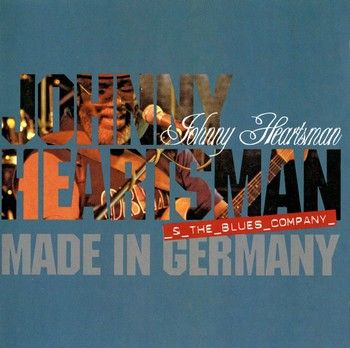
Johnny Heartsman & the Blues Company - Made in Germany - 1994 - Inak

It would be wrong to say that Johnny Heartsman died young, although he died at a relatively young age -- Heartsman was 59 when the blues world lost him on December 27, 1996. You can certainly call his death premature, and you can say that he was at the height of his creative powers during the last years of his life. Recorded live at Vitischanze -- a club in Osnabrück, Germany -- in 1993, this album is a thoroughly rewarding document of the bluesman's late period. Heartsman's voice is in fine shape throughout his diverse set, and he is as confident on the guitar as he is on organ and flute. Although Made in Germany is a blues CD first and foremost, it's a blues CD that underscores his appreciation of jazz and soul. Heartsman's inspired performances of Junior Parker's "I Don't Want No Woman" and Albert Collins' "Cold Cold Feeling" are pure electric urban blues, but on the standard "Flip, Flop & Fly," the Californian reminds listeners how nicely he could handle jazz-influenced jump blues. Meanwhile, elements of soul, jazz, and blues come together on an instrumental version of Bill Withers' "Ain't No Sunshine," which gives Heartsman a chance to stretch out on flute. Very few bluesmen have been known for their flute playing, but in Heartsman's funky hands, the flute sounded perfectly logical as a blues instrument. Made in Germany makes one wish that he had recorded a lot more live albums during his career. © Alex Henderson, All Music Guide, http://www.answers.com/topic/made-in-germany-blues-album

The late Johnny Heartsman may not be a household name to many people, but he was one of the great Bay Area bluesman. He was a talented flautist, and managed to incorporate his use of the instrument into his blues recordings. Unusual, but it worked. "Made in Germany" was recorded live at The Vitischanze club in Osnabrück, Germany, on June 30th, 1993, and is a great showcase of the man's versatility. Backed by the established Blues Company band from Germany, this is a wonderful recording. Buy Johnny Heartsman's great "Sacramento" album, and try and listen to The Blues Company's "Two Nights Only" album

TRACKS / COMPOSERS

1. Intro - James Rogers
2. That's All Right - James Johnny Heartsman
4. Cold, Cold Feeling - Albert Collins
5. I Don't Want No Woman - Junior Parker
6. Let Me Love You, Baby - Johnny Heartsman
7. Ain't No Sunshine - Bill Withers
8. Sweet Frisco Blues - Johnny Heartsman
9. Flip Flop and Fly - Lou Willie Turner, Charles E. Calhoun

BAND

Johnny Heartsman (vocals, guitar, flute, organ, keyboards)
Mike Titre (guitar, harp)
Todor Todorovic (guitar)
Martin Schmachtenberg (drums)


JOHNNY HEARTSMAN BIO

Shaven-headed Johnny Heartsman did so many musical things so well that he's impossible to pigeonhole. His low-moaning lead guitar work greatly distinguished a myriad of Bay Area blues recordings during the '50s and '60s, and still played his axe with delicious dexterity and dynamics into the '90s. But Heartsman was just as likely to cut loose on organ or blow a titillating solo on flute (perhaps the unlikeliest blues instrument imaginable). He possessed a mellow, richly burnished voice to boot. Through one of his principal influences, guitarist Lafayette "Thing" Thomas, a teenaged Heartsman hooked up with Bay Area producer Bob Geddins. Heartsman played bass on Jimmy Wilson's 1953 rendition of "Tin Pan Alley," handling guitar or piano at other Geddins-supervised dates. He cut his own two-part instrumental, the "Honky Tonk"-inspired "Johnny's House Party," for Ray Dobard's Music City imprint and watched it become a national R&B hit in 1957. The early '60s brought a lot more session work -- Heartsman played on Tiny Powell's "My Time After Awhile" (soon covered by Buddy Guy) and Al King's remake of Lowell Fulson's "Reconsider Baby." By then, Heartsman's imaginative twiddling of the volume knob with his finger to produce an eerie moan had become his guitaristic trademark. Stints in show bands, jazzy cocktail lounge gigs, and a stand as soul singer Joe Simon's trusty organist came prior to the inauguration of Heartsman's edifying back-to-the-blues campaign. In 1991, Dick Shurman produced Heartsman's most satisfying set to date for Alligator, The Touch. He remained a versatile performer until is death in December of 1996. © Bill Dahl, All Music Guide, http://www.answers.com/topic/johnny-heartsman

ABOUT THE BLUES COMPANY

The Blues is Alive. In Germany Too. That´s not surprising because the multi-faceted German music scene has spawned such extraordinary groups as Blues Company from Osnabrück, Germany. The group was founded almost 30 years ago and has by now become a household name. No one can talk about Blues "made in Germany" without mentioning Blues Company in the same breath. The band's success is rooted in its consistent quality and, of course, in its approach. This "company" doesn't simply pull off a routine "job." On the contrary. These musicians put their heart and soul into their music. It is a passionate "crusade" for the Blues, and the group's message * "The Blues Is Allright" * is attracting a steadily growing number of fans into concert halls and clubs. The driving force behind Blues Company is an innovative "Blues Man" * singer, guitarist, and songwriter Todor "Toscho" Todorovic. He was born in 1951 in Lingen, northern Germany. His parents, who had fled from the former Yugoslavia to West Germany after WWII, gave gifted young Toscho many opportunities to develop his musical talent. After hearing legendary B.B. King play in a jazz club, Toscho was forever captivated by the Blues. He acquired the Blues guitar repertoire and founded a number of small bands; he also studied classical guitar and song at the conservatory. In 1976, at the age of 25, he met the German pianist Christian Rannenberg at a Blues session featuring the Texan sax player Eddie "Cleanhead" Vinson. Before long Toscho and Christian Rannenberg had founded Blues Company. Blues Company has given over 3000 concerts in Germany and neighboring European countries. The group consists of Toscho Todorovic ( guitar, vocals) , Mike Titre (guitar, bass, bluesharp), Olli Gee (bass, organ), and Florian Schaube (drums), as well as the "Fabulous B.C. Horns" aka Uwe Nolopp (trumpet) and Robert Kretzschmar (sax, organ). The Fabulous BC Horns give the band even greater punch, both on stage and in the studio. The musicians of Blues Company have never been purists. Rather, it has always been Toscho's desire not just to plumb the depths of the Blues for its extraordinary range of expression, but also to spark new ideas in all facets of the genre. This front man and his band know all too well that the Blues is always changing and thus stays alive. Variety is one of the hallmarks of Blues Company, whose numerous CDs masterfully bridge the traditional and the modern. There are lusty Blues-Rock numbers, laid-back swinging Rhythm & Blues, haunting Blues ballads, as well as excursions into Soul and Cajun music. [ from http://www.nightshift-agency.de/en/artists/blues/bluescompany.html ]

29.1.10

Ian Dury & The Blockheads


Ian Dury & The Blockheads - sex&drugs&rock&roll (The Essential Collection) - 2010 - Demon

"The Inspiration For The Motion Picture"

This album is the subject of the biopic “Sex&Drugs&Rock&Roll”, starring Andy Serkis as Ian Dury, with Naomi Harris and Ray Winstone. The movie is about the late Ian Dury's marvellous musical achievements, his personal life, and how he overcame his physical disabilities to become one of the greatest songwriters and performers of all time. There have been numerous Ian Dury/Blockheads compilations, but you never get tired of the geezer! There are 20 fabulous songs here, including "What A Waste", "Billericay Dickie","Hit Me With Your Rhythm Stick", "Clevor Trevor",and of course the film's title track, "Sex & Drugs & Rock & Roll". The album also includes extended 12" Versions of "Hit Me With Your Rhythm Stick", and "Reasons To Be Cheerful (Part 3)". Combining streetwise humor with verbal cleverness, the late Ian Dury was a superb songwriter and a lyrical genius, who put his soul into his music. He was a giant of British Pub Rock and New Wave rock. Ian used a mock-threatening appearance on stage, looking like a street bum, and using his limp (resulting from having polio as a child), often in a humorously, mock-menacing manner. He also had a shrunken arm. But his popularity owed nothing to simpering sentimentalism. Anyone patronising Ian Dury would have been given "the bums rush" for indulging in such “a load of old bollo". Always able to laugh at himself, he will always be remembered, not only as a great rock musician, but also as a true "peoples' champion. He did an immense amount of work for people with special needs, and the underprivileged in society. Together with his totally brilliant back up band, The Blockheads, Ian recorded some classic albums. Buy his brilliant "Warts 'N' Audience Live" album. It has all his best songs, is full of atmosphere, and his rapport with the audience is great to listen to. His "New Boots And Panties" is one of the great seventies rock albums. In Autumn, 1999, he was inducted into Q magazine's songwriting hall of fame. His contribution to rock music is immeasuarable. Check out Ian's work with the great Kilburn And The High Roads band. Search this blog for more Ian Dury/Blockheads releases. Don't forget the great Chas Jankel, the great keyboardist and guitarist. He co-wrote many of Ian Dury & The Blockheads' songs, and also composed the theme music for the new movie. The amazing MUSIC BLOG OF SALTYKA AND HIS FRIENDS contains some invaluable info on Ian Dury, and Chas Jankel

"Einstein can't be classed as witless. He claimed atoms were the littlest. When you did a bit of splitting-em-ness. Frighten everybody shitless". [from the song "There Ain't Half Been Some Clever Bastards" © Ian Dury, Russell Hardy]. There ain't half been some clever bastards, and Ian was one of them!

TRACKS / COMPOSERS

1. Sex & Drugs & Rock & Roll - Ian Dury, Chas Jankel, Chaz Jankel
2. What A Waste - Ian Dury, Chas Jankel, Rod Melvin
3. Reasons To Be Cheerful (Part 3) - Ian Dury, Chas Jankel, Davey Payne
4. Hit Me With Your Rhythm Stick - Ian Dury, Chas Jankel
5. Billericay Dickie - Ian Dury, Stephen Nugent
6. If I Was With A Woman - Ian Dury, Chas Jankel
7. Blackmail Man - Ian Dury, Stephen Nugent
8. Wake Up And Make Love With Me - Ian Dury, Chas Jankel
9. My Old Man - Ian Dury, Stephen Nugent
10. Sweet Gene Vincent - Ian Dury, Wilko Johnson
11. Blockheads - Ian Dury, Chas Jankel
12. Clever Trevor - Ian Dury, Chas Jankel
13. I'm Partial To Your Abracadabra - Ian Dury, Mick Gallagher
14. There Ain't Half Been Some Clever Bastards - Ian Dury, Russell Hardy
15. Inbetweenies - Ian Dury, Chas Jankel
16. Superman's Big Sister - Ian Dury, Chas Jankel
17. I Want To Be Straight - Ian Dury, Mick Gallagher
18. Spasticus Autisticus (Live) - Ian Dury, Chas Jankel
19. Hit Me With Your Rhythm Stick (12" Version) - Ian Dury, Chas Jankel
20. Reasons To Be Cheerful (Part 3) (12" Version) - Ian Dury, Chas Jankel, Davey Payne

MUSICIANS INCLUDE :-

Vocals - Ian Dury
Guitar - Chaz Jankel
Guitar, Backing Vocals - John Turnbull , Wilko Johnson
Keyboards - Mickey Gallagher
Bass - Norman Watt-Roy
Drums - Charley Charles
Saxophone - Davey Payne

Check http://en.wikipedia.org/wiki/Ian_Dury for detailed info on ID &TB's line-ups

IAN DURY BIO [ © Stephen Thomas Erlewine , All Music Guide ]

Rock & roll has always been populated by fringe figures, cult artists that managed to develop a fanatical following because of their outsized quirks, but few cult rockers have ever been quite as weird, or beloved, as Ian Dury. As the leader of the underappreciated and ill-fated pub-rockers Kilburn & the High Roads, Dury cut a striking figure -- he remained handicapped from a childhood bout with polio, yet stalked the stage with dynamic charisma, spitting out music-hall numbers and rockers in his thick Cockney accent. Dury was 28 at the time he formed Kilburn, and once they disbanded, conventional wisdom would have suggested that he was far too old to become a pop star, but conventional wisdom never played much of a role in Dury's career. Signing with the fledgling indie label Stiff in 1978, Dury developed a strange fusion of music-hall, punk rock and disco that brought him to stardom in his native England. Driven by a warped sense of humor and a pulsating beat, singles like "Hit Me With Your Rhythm Stick," "Sex & Drugs & Rock & Roll" and "Reasons to Be Cheerful (Part 3)" became Top Ten hits in the U.K., yet Dury's most distinctive qualities -- his dry wit and wordplay, thick Cockney brogue, and fascination with music-hall -- kept him from gaining popularity outside of England. After his second album, Dury's style became formulaic, and he faded away in the early '80s, turning to an acting career instead. At the age of seven, Ian Dury was stricken with polio. After spending two years in hospital, he attended a school for the physically handicapped. Following high school, he attended to the Royal College of Art, and after his graduation, he taught painting at the Canterbury Art College. In 1970, when he was 28 years old, Dury formed his first band, Kilburn & the High Roads. The Kilburns played simple,'50s rock & roll, occasionally making a detour into jazz. Over the next three years, they became a fixture on England's pub-rock circuit. By 1973, their following was large enough that Dury could quit his teaching job. Several British critics became dedicated fans, and one of them, Charlie Gillett, became their manager. Gillett helped the band sign to the Warner subsidiary Raft, and the group recorded an album for the label in 1974. Warner refused to release the album, and after some struggling, the Kilburns broke away from Raft and signed with the Pye subsidiary Dawn in 1975. Dawn released Handsome in 1975, but by that point, the pub-rock scene was in decline, and the album was ignored. Kilburn & the High Roads disbanded by the end of the year. Following the dissolution of the Kilburns, Dury continued to work with the band's pianist/guitarist, Chaz Jankel. By 1977, Dury had secured a contract with Stiff Records, and he recorded his debut with Jankel and a variety of pub-rock veterans -- including former Kilburn Davey Payne -- and session musicians. Stiff had Dury play the 1977 package tour Live Stiffs in order to support his debut album New Boots and Panties!!, so he and Jankel assembled the Blockheads, recruiting guitarist John Turnbull, pianist Mickey Gallagher, bassist Norman Watt Roy and drummer Charley Charles. Dury and the Blockheads became a very popular act shortly after the Live Stiffs tour, and New Boots and Panties!! became a major hit, staying on the U.K. charts for nearly two years; it would eventually sell over a million copies worldwide. The album's first single, "What A Waste," reached the British Top Ten, while the subsequent non-LP single "Hit Me With Your Rhythm Stick" climbed all the way to number one. Ian Dury had unexpectedly become a superstar in Britain, and American record companies were suddenly very interested in him. Arista won the rights to distribute Dury's Stiff recordings in the U.S., but despite overwhelmingly positive reviews, New Boots and Panties!! stiffed in America, and the label instantly dropped him. Despite his poor U.S. sales, Dury was still riding high in his homeland, with his second album, Do It Yourself, entering the U.K. charts upon its summer release in 1979. Dury supported the acclaimed album, which saw him delving deeply into disco, with an extensive tour capped off by the release of the single "Reasons to Be Cheerful (Part 3)," which climbed to number three. Once the tour was completed, Jankel left the band and Dury replaced him with Wilko Johnson, former lead guitarist for Dr. Feelgood. With Johnson, Dury released his last Stiff album, Laughter, which received mixed reviews but respectable sales upon its 1980 release. The following year, he signed with Polydor Records and reunited with Jankel. The pair flew to the Bahamas to record his Polydor debut with reggae superstars Sly Dunbar and Robbie Shakespeare. The resulting album, Lord Upminster, received mixed reviews and poor sales upon its 1981 release; the album was notable for the inclusion of the single "Spasticus Autisticus," a song Dury wrote for the United Nations Year of the Disabled, but was rejected. Following the failure of Lord Upminster, Dury quietly backed away from a recording career and began to concentrate on acting; 1984's 4000 Weeks Holiday, an album recorded with his new band the Music Students, was his last major record of the '80s. He appeared in several plays and television shows, as well as the Peter Greenaway film The Cook, the Thief, His Wife and Her Lover and Roman Polanski's movie Pirates. He also began to write jingles for British commercials. In 1989, he wrote the musical Apples with Mickey Gallagher, and he also appeared in the stage production of the play. Dury returned to recording in 1992 with The Bus Driver's Prayer and Other Stories. In May 1998, Dury announced that he had be diagnosed with colon cancer in 1995 and that the disease had spread to his liver. He decided to release the information the weekend of his 56th birthday, in hopes of offering encouragement for others battling the disease. For the next year, he battled the disease while keeping a public profile -- in the fall of 1999, he was inducted into Q magazine's songwriting hall of fame, and he appeared at the ceremony. Sadly, it was his last public appearance. Dury succumbed to cancer on March 27, 2000. He left behind a truly unique, individual body of work.


MORE ABOUT IAN DURY

Born on May 12, 1942, in Harrow, west London, England, and raised in Upminster, Essex; died of cancer on March 27, 2000, in London, England; married Betty, 1985 (divorced); married Sophie Tilson, a sculptor, c. 1996; children: (first marriage) Jemima and Baxter; (second marriage) Bill and Albert. Education: Graduated from Walthamstow Art College and the Royal College of Art.
Pop icon Ian Dury, the man responsible for coining the expression "Sex and drugs and rock 'n' roll," succumbed to cancer on March 27, 2000. His songs, including the innuendo-laden number-one hit "Hit Me With Your Rhythm Stick," were instantly memorable, combining streetwise humor with verbal cleverness. Paying tribute to the life and career of his close friend, Madness frontman Suggs, also known as Graham McPherson, called Dury "the people's poet laureate, one of the finest lyricists this country has produced," as quoted in the Mirror, "he was still giving it his all to the end." In addition to his contributions to pop music, Dury was equally regarded for his warmth, humor, and charitable endeavors, despite all his efforts to remain the naughty cockney rocker in the eyes of his fans. He always maintained a positive outlook about his own physical limitations, resulting from a bout with childhood polio, as well as his later struggles with depression and colon cancer. Even while performing a charity concert at the London Palladium just one month before his death he remained upbeat. "I believe in the power of positive thinking. I think 51 percent of it is down to spirit, whatever you're fighting," he told the Daily Express, speaking bravely and matter-of-factly about facing his own death. "The polio has made me fatalistic, able to laugh at most things--I'm a pretty cheerful person in most of my doings." Aside from music and later acting, Dury spent much of his energy campaigning for the disabled, working with those with mental illnesses, and helping others stricken with polio and cancer, and actively supported charitable causes like the United Nations Children's Fund (UNICEF), and Cancer BACUP. Born on May 12, 1942, in Harrow, west London, England, and later moving with his family to Upminster, Essex, Dury contracted polio at the age of seven, leaving him partially crippled. In a strange way, he later told the Daily Express, the polio actually helped him deal with cancer later on. As a boy, he grew accustomed to dealing with pain and coping with periods of incapacitation, but refused to feel sorry for himself or allow a disability to disrupt his life's plans. In spite of teasing, stares, and physical limitations, he would become one of Great Britain's most beloved rock stars, never letting the fact that his left hand and leg were lacking in muscle tone stand in his way. According to Dury, who always felt uncomfortable when people pitied him, he never saw any point in being bitter. Likewise with cancer, he decided, "I'm not here to be remembered. I'm here to be alive." After spending two years in a hospital recovering from polio, Dury attended a school for disabled children for many years, leaving at the age of 16 to study art at Walthamstow Art College in London. Subsequently, he won admittance to the Royal College of Art. Upon graduation in 1967, he took a position lecturing and teaching painting at the Canterbury Art College. Around the same time, Dury also began writing and playing songs. In 1971 at the age of 28, he formed his first band, Kilburn and The High Roads, and embarked on the pub/college circuit in London playing simple, '50s-style rock and roll with an occasional detour into jazz. Over the next three years, the band became a fixture on the pub-rock circuit as Dury honed his lyrical prowess with songs like "Billy Bentley" and "Upminster Kid."By 1973, the group's success allowed Dury to quit his teaching job. Among Kilburn and The High Roads' legion of dedicated fans were several British music critics, and one of them, Charlie Gillett, signed on as the band's manager, helping them to secure a record deal with the Warner imprint Raft Records. In 1974, the group presented Warner with an album that the label refused to release, though it was later issued under the title Wotabunch after Dury became popular. After some struggling, Kilburn and The High Roads broke away from Warner and signed with Dawn, a subsidiary of Pye Records, who released the Warner-rejected material as Handsome in 1975. By now, however, the pub scene was in decline, and the record went largely unnoticed. Thus, after one album and many line-up changes, Kilburn and The High Roads called it quits at the end of the year. Afterward, guitarist Keith Lucas formed the band 999, while an undeterred Dury concentrated on a solo career. Continuing to work with Kilburn pianist and guitarist Chaz Jankel to write new songs, Dury in 1977 secured a contract with Jack Riviera's new indie label, Stiff Records. Joined by Jankel, whose compositions now suggested a move away from solid rock toward a lighter, jazzy style, Dury gathered a variety of session players and pub-rock veterans for studio work. Many of the participants--including former Kilburn saxophonist Davey Payne, drummer Charley Charles, and bassist Norman Watt-Roy--would become The Blockheads. During the recording sessions, Jankel's musical sophistication, along with Dury's earthy delivery and a skilled backing band, resulted in a formula that was to produce some of the singer's biggest hits. In August of 1977, Dury released his first solo record, "Sex and Drugs and Rock and Roll," a single that became the definitive statement on the rock 'n' roll lifestyle that also appeared on New Boots and Panties, released in November. Widely hailed as a brilliant debut LP, New Boots and Panties demonstrated Dury's talent for writing punchy couplets and music-hall parodies ("Billericay Dickie" and "Clever Trevor"), showing his street smarts and rougher edge ("Blockheads" and "Plaistow Patricia"), and creating the ultimate rock tribute ("Sweet Gene Vincent"). The album went gold, reaching number five on the United Kingdom charts thanks in large part to a punishing touring schedule. By this time, Dury had added keyboard player Mickey Gallagher and guitarist John Turnball to the Blockhead lineup. After playing the inaugural 1977 Stiff Records package tour dubbed "Stiff's Live Stiffs" alongside Elvis Costello, Nick Lowe, and others, followed by a headlining slot with the "Dirty Dozen Tour," Ian Dury and The Blockheads traveled to the United States as the opening act for Lou Reed. However, audiences in America met The Blockheads--decidedly a very British band--with a mixed reception. While songs off New Boots and Panties did receive some airplay on college radio stations and eventually breached the United States album charts at number 168, most mainstream listeners found Dury's clever wordplay and inherent "Englishness" incomprehensible. Moreover, Stiff failed to organize adequate distribution for the U.S. market. Therefore Dury, like so many of his contemporaries, most notably Dave Edmunds and Nick Lowe, never really had a chance to establish much more than a cult following in the States. But back home, Ian Dury and The Blockheads had evolved into one of the most powerful bands in Britain, touring almost constantly throughout Europe. Their sets, usually lasting two hours or more and featuring Dury decked out in all the fancy trappings of a pop star, delighted audiences. The band never played the same list twice, and during Dury's peak years, it is said that no band could follow up The Blockheads' atmospheric performances, no matter how hard they tried. Whether clad as a pearly king, prince of darkness, used car salesman, or a cockney wildman, Dury commanded attention. The combination of his onstage alter-egos, riveting performances, and stark balance of cheerful and dark material always made an emotional impact. But on the downside, Blockhead gigs were exhausting affairs and would eventually prove detrimental to Dury's health. In the meantime, Dury and his band landed on the United Kingdom singles chart for the first time in April of 1978 with "What A Waste," which peaked at number nine. An even bigger hit followed in December of 1978 with "Hit Me With Your Rhythm Stick," which rose to the number one position in January and remained at the top of the charts for two weeks. It was Stiff's first number one hit and first million-selling record and set the scene for a second LP, Do It Yourself, released in May of 1979. Although it made less of a long-term impact than New Boots, Do It Yourself was an instant success, rocketing to number two on the U.K. album chart within weeks of its release and climbing to number 126 in the United States later that summer. In addition, Ian Dury and The Blockheads, despite their undeniably English style, enjoyed increasing popularity throughout Europe, especially in Germany. "Rhythm Stick" charted at number 24 in March of 1979, New Boots and Panties followed on the German album charts at number 29, and Do It Yourself sold steadily as well, peaking at number 23. In September of 1979, Dury and his group arrived with another hit, the jazzy stream-of-consciousness single "Reasons To Be Cheerful (Part 3)," which climbed to number three in the United Kingdom. But after another tour in support of Do It Yourself, Dury's fortunes began to wane. Upon its conclusion, Jankel decided to move on to solo work, feeling that his contributions to the band had not been fully appreciated. This would prove a devastating blow because Jankel had served as the musical inspiration behind Dury's lyrics. Former Dr. Feelgood guitarist Wilko Johnson stepped in as Jankel's replacement in time to play on the next single, "I Want To Be Straight," a reflection of Dury's concerns about his worsening health. Although it was a minor hit, the song only reached number 22 on the United Kingdom charts. A follow-up single a couple months later titled "Superman's Big Sister" only reached the number 51 position, while the band's first album without Jankel, Laughter, released in November of that year, peaked at a disappointing number 48 and was met with only modest approval. In 1981, Dury signed with a major label, Polydor, and released the upbeat single "Spasticus Austicus," a song he had written for "The Year of the Disabled," a cause he had devoted much of his energies to that year. However, radio stations, misunderstanding Dury's direct, in-your-face sense of humor, refused to play the song, perceiving it as being in bad taste. Polydor reacted by deleting the single soon thereafter, though it would resurface on Dury's first album for the label. For the new LP, Dury reunited with Jankel, creating a sense of optimism among fans. But despite Jankel's involvement and good reviews, Lord Upminster, released in October of 1981 and recorded with a top-drawer rhythm section team of Sly Dunbar and Robbie Shakespeare, only reached the number 51 slot on the United Kingdom album chart. After this disappointment, Dury made only brief returns to the recording business. His subsequent records were always met with a warm reception, although they were never big sellers. In 1984, he released the optimistic 4,000 Weeks Holiday, credited to Ian Dury and The Music Students, which featured some of the Blockheads and charted at number 53. His last significant hit, 1985's "Profoundly in Love With Pandora," the theme for the television show The Secret Diaries of Adrian Mole written and recorded with Jankel, reached number 45. By the late 1980s, Dury had returned to his first love, painting, and also forged an acting career. In addition to landing spots for radio and television commercials, he also appeared in numerous television productions, including King of the Ghetto, for which he played the title character, in 1986, and Night Moves, for which he also wrote the musical score, in 1987, and acted in plays, most notably Talk of the Devils in 1986, Road in 1987, and Apples, a musical co-written with Mickey Gallagher, in 1989. In 1985, Dury acted in his first film, Number One, opposite Bob Geld, followed by roles in several more big screen productions, among them Roman Polanski's The Pirates in 1986 and Peter Greenway's The Cook, The Thief, His Wife And Her Lover in 1989. Although Dury's musical career appeared at rest for good, he suddenly reformed The Blockheads at the end of 1990 to play some reunion benefit gigs in memory of Charley Charles, a victim of cancer. These shows proved so successful as well as enjoyable that the group continued to perform on occasion, and Dury began collaborating again with Jankel. Their efforts resulted in the 1992 release The Bus Driver's Prayer and Other Stories, Dury's first new LP in nearly ten years. Hailed as one of his best since Do It Yourself, the album featured many of the old Blockheads, including Jankel, Gallagher, Turnbull, and Payne. In 1996, Dury was diagnosed with colon cancer. After an operation, secondary tumors appeared on his liver, signaling that his condition was terminal. In addition to Charles, Dury's first wife, Betty, had also died of the disease in 1994. Though they had separated in 1985, Dury was greatly grieved by her death. Rather than dwell on what was to come, Dury instead chose to make the most of his situation. "I haven't shaken my fists at the moon," he said, as quoted by the BBC Online. "I'm not that sort of geezer. I'm 56 and mustn't grumble. I've had a good crack, as they say." Soon after his diagnosis, Dury married Sophie Tilson, a sculptor and mother of his two youngest children, then decided to record a new album. Mr. Lovepants, issued on Ronnie Harris Records in 1998, was met with praise from critics and fans alike. Dury maintained a high profile even while his condition worsened. His health progressively deteriorating, Dury toured in support of Mr. Lovepants beginning in the fall and made a trip with UNICEF, for whom he served as an official ambassador, to Sri Lanka promoting polio vaccination with pop star Robbie Williams. In 1999, he started recording material for a new album with The Blockheads. Sadly, however, Dury passed away on March 27, 2000, before the material saw the light of day. One of the songs, "You Are the Way," was played at his funeral. He was survived by Tilson, the couple's two young sons, five-year-old Bill and two-year-old Albert, and Dury's two grown children from his first marriage, 29-year-old Jemima and 26-year-old Baxter. In memory of Dury's contributions to the music business, The Blockheads, along with several celebrities including Robbie Williams, Madness, Neneh Cherry, The Clash, and others, played a special "Tribute to Ian" gig on June 16, 2000, at the Brixton Academy. Dury dies on March 27, 2000, at his home in London, England, at the age of 57 following a battle with liver cancer. © Laura Hightower, © 2007 Net Industries - All Rights Reserved

28.1.10

The Robert Cray Band


The Robert Cray Band - This Time - 2009 - Vanguard

Robert Cray's music has been described as as "neoclassic-R&B". Not a bad definition of his music, as many music "critics" have maintained that Robert Cray's music is "safe", "predictable", and some have made the ridiculous comment that he is not a "genuine" bluesman because of his musical excursions into Gospel, R&B, and Southern Soul. Other "experts" have said that his albums have a "sameness" about them. Even funnier, he was once described as "a yuppie blues wannabe". Well, Robert Cray's music has always had a "soul backbone", and even though "This Time" has a strong Soul flavour, (nothing wrong with that), his music has always had a strong blues foundation. The guy is a brilliant blues guitarist, and has made many great albums. Robert has never stuck to the orthodox blues' styles. His innovative guitar playing has brought new life to the blues, and songs like "Chicken in the Kitchen" and "That’s What Keeps Me Rockin" are the real blues deal. Robert has stamped modern blues with his own unique style. Robert, himself, has said that "Blues is one of the foundations of our music, but it’s not all that we play." He also said "When I first started playing guitar, I wanted to be George Harrison – that is, until I heard Jimi Hendrix. After that, I wanted to be Albert Collins and Buddy Guy and B.B. King. And then there are singers like O.V. Wright and Bobby Blue Bland. It’s all mixed up in there." "Every time somebody asks me about where my music comes from, I give them five or six different directions – a little rock, soul, jazz, blues, a little gospel feel. Then there are some other things that maybe fall in there every once in a while, like a little Caribbean flavor or something. You just never know. I always attribute it to the music we grew up listening to, and the radio back in the ‘60s. It’s pretty wide open. It’s hard to put a tag on it." On "This Time", Robert Cray shows that he is more than capable of playing great music, using his many formidable influences. He is admired by real music lovers as a stylish musician. He has a winning musical formula, and as the saying goes, - "If it ain't broke, don't fix it"!. Tracks like "Love 2009", "This Time", or "Forever Goodbye" demonstrate Robert's ability to travel outside the blues realm, and still play great music. Somebody said that "if the Everly Brothers could sing the same way for 30 years, why can't Robert Cray do the same ?" "This Time" is HR by A.O.O.F.C. Buy Robert's superb "Strong Persuader" album, and search this blog for other Robert Cray releases

TRACKS / COMPOSERS

1. Chicken In The Kitchen - Robert Cray
2. I Can't Fail - Robert Cray
3. Love 2009 - Jim Pugh
4. That's What Keeps Me Rockin' - Tony Braunagel/Johnnie Lee Schell
5. This Time - Robert Cray
6. To Be True - Richard Cousins/Jim Pugh
7. Forever Goodbye - Robert Cray/Sue Turner-Cray
8. Trouble And Pain - Robert Cray
9. Truce - Hendrix Ackle/Richard Cousins

MUSICIANS

Robert Cray - Guitar, Vocals
Johnnie Lee Schell - Guitar
Richard Cousins - Guitar (Bass)
Jim Pugh - Keyboards
Tony Braunagel - Drums

BIO

Tin-eared critics have frequently damned him as a yuppie blues wannabe whose slickly soulful offerings bear scant resemblance to the real down-home item. In reality, Robert Cray is one of a precious few young (at this stage, that translates to under 50 years of age) blues artists with the talent and vision to successfully usher the idiom into the 21st century without resorting either to slavish imitation or simply playing rock while passing it off as blues. Just as importantly, his immensely popular records helped immeasurably to jump-start the contemporary blues boom that still holds sway to this day. Blessed with a soulful voice that sometimes recalls '60s-great O.V. Wright and a concise lead guitar approach that never wastes notes, Cray's rise to international fame was indeed a heartwarming one. For a guy whose 1980 debut album for Tomato, Who's Been Talkin', proved an instantaneous cutout, his ascendancy was amazingly swift — in 1986 his breakthrough Strong Persuader album for Mercury (containing "Smoking Gun") won him a Grammy and shot his asking price for a night's work skyward. Robert Cray was born on August 1, 1953 in Columbus, GA. An Army brat who grew up all over the country before his folks settled in Tacoma, WA, in 1968, Cray listened intently to soul and rock before becoming immersed in the blues (in particular, the icy Telecaster of Albert Collins, who played at Cray's high school graduation!). Cray formed his first band with longtime bassist Richard Cousins in 1974. They soon hooked up with Collins as his backup unit before breaking out on their own. The cinematic set caught a brief glimpse of Cray (even if they weren't aware of it) when he anonymously played the bassist of the frat party band Otis Day & the Knights in National Lampoon's Animal House. Cray's Tomato set, also featuring the harp of Curtis Salgado, was an excellent beginning, but it was the guitarist's 1983 set for HighTone, Bad Influence, that really showed just how full of talent Cray was. Another HighTone set, False Accusations, preceded the emergence of the Grammy-winning 1985 guitar summit meeting album Showdown! for Alligator, which found the relative newcomer more than holding his own alongside Collins and Texan Johnny Copeland. Strong Persuader made it two Grammys in two years and made Cray a familiar face even on video-driven MTV. Unlike too many of his peers, Cray continued to experiment within his two presiding genres, blues and soul, on sets for Mercury such as Midnight Stroll, 1990, I Was Warned, 1992, and Shame + A Sin in 1993. After switching to Rykodisc in the late 90s Cray released Take Your Shoes Off in 1999, and Shoulda Been Home in 2001, proving that the "bluenatics" (as he amusedly labels his purist detractors) have nothing to fear and plenty to anticipate from this innovative, laudably accessible guitarist. Touring regularly with the likes of Eric Clapton and Bob Dylan, Cray stayed active in the studio, as well, signing with Sanctuary Records and releasing Time Will Tell in 2003, Twenty in 2005, a pair of live albums, Live from Across the Pond in 2006 and Live at the BBC in 2008, and This Time, which was issued by Vanguard Records in 2009. © Bill Dahl & Al Campbell, allmusic.com, http://allmusic.com/cg/amg.dll?p=amg&sql=11:3ifwxq95ldke~T1

27.1.10

Savoy Brown featuring Kim Simmonds


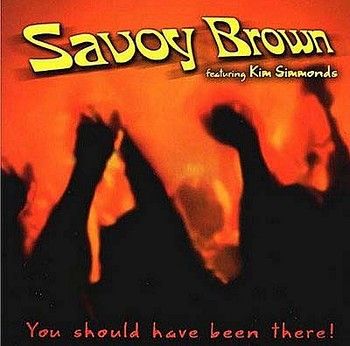
Savoy Brown featuring Kim Simmonds - You Should Have Been There - 2005 - Panache

What can you say about Savoy Brown. For over forty years, and through numerous personnel changes, this great British rock band have played the same brand of blues and hard-edged rock. Recorded live in Vancouver, BC during SB's 2003 tour, Kim Simmonds & Co. pull out all the stops, and produce stellar performances. This is one hell of a great album with smooth, laid back, tight arrangements, and VHR by A.O.O.F.C. Listen to the band's "Raw Sienna" album. Check out the band's "Live At The Record Plant 1975" album @ SAVB/LATRP75 Kim Simmond's "Struck By Lightning" album can be found @ KIMSIM/SBL and "The Savoy Brown Collection (Featuring Kim Simmonds)" is @ SAVB/COLL/KIMSIM

TRACKS / COMPOSERS

1. When It Rains - Kim Simmonds
2. Where Has Your Heart Gone - Kim Simmonds
3. Poor Girl - Tone Stevens
4. Blues Like Midnight - Jimmie Rogers, Kim Simmonds
5. Street Corner Talking - Kim Simmonds
6. Hellbound Train - Andy Silvester, Kim Simmonds

BAND

Kim Simmonds - Guitar, Vocals
David Malachowski - Guitar
Garry Sorrentino - Bass Guitar
Dennis Cotton - Drums

BIO (Wikipedia)

Savoy Brown is a British blues band formed in the 1960s. Originally known as the Savoy Brown Blues Band, their 1969 single "Train to Nowhere" (with singer Chris Youlden), was viewed by many as the last gasp of the blues scene in Great Britain. Although Savoy Brown never reached much acclaim in their home nation, they developed a loyal core following in the United States, due to songs such as "I'm Tired" (from their album, A Step Further), a driving, melodic song. They were one of the bands that UK Decca (US London/Parrot) stuck with through the lean times until they started selling records (it took 4 or 5 albums until they started to sell in the US). In the late 1960s and 1970s, the band managed to penetrate the Billboard Hot 100. Superstardom perpetually evaded them, perhaps in part because of their frequent lineup changes, but despite that, "Hellbound Train" was a big album for them in the US.
While the band is still active today, only Kim Simmonds has stayed since the beginning. Guitarist "Lonesome" Dave Peverett, bassist Tone Stevens, and drummer Roger Earle went on to form Foghat. Original member and harmonica player, John O'Leary, is still active on the British blues circuit with The John O'Leary Band. Savoy Brown's first album, Shake Down, featured lead vocalist Bryce Portius. Portius was one of the first black blues musicians to be a part of a British rock band. Another singer, Dave Walker, would later join Fleetwood Mac and Black Sabbath. Savoy Brown also provided an outlet for the keyboardist and guitarist, Paul Raymond, who later went on to join UFO. Other notable members include Jeff Howell, who went on to play with Foghat and the Outlaws before returning to central New York, where he is considered the best carpet installer in Ithaca.

MORE ABOUT SAVOY BROWN

Part of the late-'60s blues-rock movement, Britain's Savoy Brown never achieved as much success in their homeland as they did in America, where they promoted their albums with nonstop touring. The band was formed and led by guitarist Kim Simmonds, whose dominating personality has led to myriad personnel changes; the original lineup included singer Bryce Portius, keyboardist Bob Hall, guitarist Martin Stone, bassist Ray Chappell, and drummer Leo Manning. This lineup appeared on the band's 1967 debut, Shake Down, a collection of blues covers. Seeking a different approach, Simmonds dissolved the group and brought in guitarist Dave Peverett, bassist Rivers Jobe, drummer Roger Earl, and singer Chris Youlden, who gave them a distinctive frontman with his vocal abilities, bowler hat, and monocle. With perhaps its strongest lineup, Savoy Brown quickly made a name for itself, now recording originals like "Train to Nowhere" as well. However, Youlden left the band in 1970 following Raw Sienna, and shortly thereafter, Peverett, Earl, and new bassist Tony Stevens departed to form Foghat, continuing the pattern of consistent membership turnover. Simmonds collected yet another lineup and began a hectic tour of America, showcasing the group's now-refined bluesy boogie rock style, which dominated the rest of their albums. The group briefly broke up in 1973, but re-formed the following year. Throughout the '80s and '90s Simmonds remained undeterred by a revolving-door membership and continued to tour and record. Their first album for the Blind Pig label, Strange Dreams, was released in 2003. Steel followed in 2007 from Panache Records. © Steve Huey, allmusic.com

ABOUT KIM SIMMONDS

For over 30 years Kim Simmonds has been synonymous with 'legendary British blues guitar', being mentioned in the same breath as Eric Clapton, Peter Green and Mick Taylor in the hierarchy of England's best guitar slingers from the 60s golden era of British blues. Kim started his career in London, England in 1966 by forming the group Savoy Brown and has since enjoyed international fame. He's been featured on the front cover of Guitar Magazine, made over 3 dozen records and performed around the world. He has an international fan club based in Wales and a web site at www.savoybrown.com. Kim's records with Savoy Brown (many produced by himself) have sold millions, with albums such as Looking In and Hellbound Train reaching the Billboard Top 40 charts. Many of his songs have been covered by such diverse artists as Rare Earth, Hugo Montenegro and Great White. In 1995, a two CD boxed set, The Savoy Brown Collection released by Polygram Records, chronicled his and the band's astonishing career. As a solo artist and in the acoustic field Kim has released three CDs - Savoy Brown's 1986 Slow Train, his own 1997 Solitaire, and the 2001 release Blues Like Midnight. Born in Wales in 1947 and playing the pubs of London with Savoy Brown at the very tender age of 18, Kim Simmonds recorded albums that helped start the 60s blues boom. While others have strayed from their roots, Simmonds has stayed the course .... a true journeyman and road warrior, who's comfortably settled into an elder statesman role at the same time as burning up the fretboard on the concert stage while remaining at the top of his game.(c) The British Blues All Stars 2004, www.thebritishbluesallstars.co.uk/kim_simmonds.htm

The Jimi Vincent Band


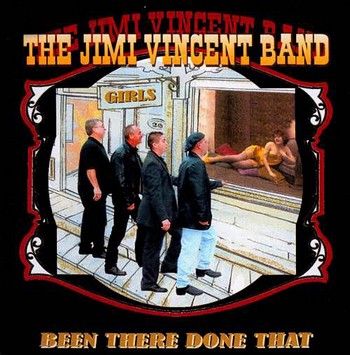
The Jimi Vincent Band - Been There Done That Won't Do That Again - 2007 - The Jimi Vincent Band

"Been There Done That Won't Do That Again" is posted here to promote this great blues rock band, and to show that good blues rock is alive and thriving.The band, formed in 1989, plays rockin' blues, with some country and soul elements.They have opened shows for Robert Cray, Bonnie Raitt, Keb Mo, John Lee Hooker Jr., BlueOyster Cult, Foghat, Mark Farner, Guy Davis, Travis Tritt, Emmylou Harris, and many others. The Band has performed three times at the International Blues Challenge in Memphis Tennessee. They play a blend of classic blues covers, and original songs. HR by A.O.O.F.C, this album is also available for download @ http://www.amazon.com/gp/product/B001BLB9VQ/ref=dm_sp_adp Try and find out if the band's "Horseplay" album is still available. Info @ http://www.freewebs.com/jvstallion/

TRACKS / COMPOSERS

1 A Quitter Never Wins - Ellis, Sampsen 5:17
2 I Need Your Love So Bad - Mertis 4:35
3 Been There, Done That, Won't Do That Again - Vincent 2:20
4 Summertime - Dubose, Gershwin, Heyward 6:56
5 Branded - Neal 4:23
6 Send Me An Angel - Stepp, Vincent 3:36
7 Stay Away Darlin' - Vincent 2:02
8 Have You Ever Been Lonely - Vincent 2:33
9 Bad News Woman - Vincent 3:44
10 Mercury Blues - Miller 4:58
11 I Woke Up This Morning - Vincent 3:14
12 Your Man - Vincent 4:46

BAND

Jimi Vincent - Guitar, Mandolin, Dobro, Harmonica, Vocals
Bob Dutton - Bass
Sam Romagnoli - Piano, Hammond B3, Vovals
Dustin Smith - Drums
Cee Jay Jenkins - Backing Vocals

ABOUT THE BAND [ © 2004 http://www.freewebs.com/jvstallion/ ]

JIMI VINCENT

Born James Vincent Smith,Jimi adopted the new configuration of his birth name to avoid confusion with keyboardist Jimmy Smith. He started playing guitar at age 5 and has been rockin' ever since. Opening shows for such greats as Robert Cray, Bonnie Raitt, Keb Mo, Robert Lockwood Jr., Tex Ritter (at age 11), The Charlie Daniels Band, Emmilou Harris, Travis Tritt, and many others. Jimi writes the band's original material, plays electric and acoustic guitar, dobro and harp. With the low growl in his voice and ability to write easily understood lyrics, you can feel the rhythm and blues pouring out of his guitar and soul.

SAM ROMAGNOLI

Keyboard player Sam Romagnoli is originally from Follansbee,WV. Romagnoli's funk-fusion band Crosswinds toured the country for a number of years after leaving college. Influences at the time were Jimmy Smith,The Allman Brothers, Herbie Hancock, Tower of Power, and various jazz keyboardists. Romagnoli's primary instrument is a Hammond B-3 organ, with twin #122 Leslie Speakers. It is a combination that is rarely seen on today's stages due to it's size and weight, but the sound is far more soulful than the digital organs made today. Romagnoli's passion for the instrument shows in his playing.

DUSTIN SMITH

Dustin Smith has been playing drums since childhood, beating and banging on everything that moves. The youngest player in the band, he pushes the band with youthful energy. Dustin is Jimi's son and you can tell he has been hanging around with the band for a long time.

BOB DUTTON

Laying down the bottom for the band is bass player, Bob Dutton. Born in Sylacauga, Alabama. Bob started playing bass guitar while in the 7TH grade on a guitar bought at the local Giant Store. He has been jamming with Jimi since the early 80's

MORE BAND INFO [ © http://www.cdbaby.com/cd/jvincentband# ]

Who Are The Jimi Vincent Band. Formed in 1989, The Jimi Vincent Band plays rockin' blues. They rattle the rafters and treat their listeners to an explosive musical experience. One can certainly feel the energy the band generates as they take the listener on a musical journey through the world of blues. The Jimi Vincent Band is currently playing blues festivals and clubs across this great land and converting new listeners to their brand of the blues. Most recently they opened a show for headliners Bonnie Raitt, Keb Mo and John Lee Hooker Jr. Jimi has also opened for the great Robert Lockwood Jr., Blue Oyster Cult, Foghat, Travis Tritt, Emmylou Harris, and many others. The band performed at the Heritage Music Festival in Wheeling, West Virginia, a three day blues event featuring many of the major blues bands in the country. The venue is on the banks of the Ohio River and was a beautiful setting to hear bands from all over the country. The Jimi Vincent Band performed three sets and was asked to be the host band for the after hours jam session held at a local club for all Heritage Festival performers. The audience went wild as The Anthony Gomes Band joined Jimi onstage for a truly memorable set . A number of other musicians took the stage as the blues burned well into the night. The band has just released its newest CD, "Been There, Done That... Won't Do That Again. It has a mix of original music and classic blues selections. Please check the Discography at www.thejimivincentband.com for information on all Jimi Vincent Band CD's

The Blue Nile


The Blue Nile - High - 2004 - Sanctuary

If you've read anything else about the Blue Nile, you already know it takes them eight to ten years between albums, they're elegant sad sacks, and they're critically adored for the most part. Their last album, 1996's Peace at Last, was their first stumble, with main man Paul Buchanan yammering wistfully about family and domestication instead of giving listeners the skeletal poems and studio magic of their first two albums. If you weren't staring at your newborn, Peace at Last could grow tiresome, but the Blue Nile have returned with a more balanced album and Buchanan is broken-hearted again, thank the stars. He's been struggling with fatigue and illness and as selfish and inconsiderate as it sounds, it's brought the spark back to his writing. Mood over narrative has always worked to the Blue Nile's benefit and that's what the excellent "Broken Loves" is all about, giving the listener a better chance to relate than Peace at Last's postcard from home. "I Would Never" is the sweet single, but album tracks like "Because of Toledo" and "She Saw the World" are where the album gets meaty and intricately structured, recalling the glory days. Getting more obscure and atmospheric toward the end, High follows the arc of their classic, Walk Across the Rooftops, and given the time to sink in, the album fits well in their canon. The closing "Stay Close" is one of those "raw emotion over urbanite aesthetic" tracks that fans crave. It makes the eyes well up, and like the better part of High, justifies the next eight- to ten-year wait. © David Jeffries, allmusic.com, http://www.allmusic.com/cg/amg.dll?p=amg&sql=10:difyxqwsldje

The Blue Nile have released four studio albums in thirty years. Even Steely Dan have a more prolific album output, but as Cathy Ilani said, “It's about quality, not quantity". And William A. Foster said, “Quality is never an accident; it is always the result of high intention, sincere effort, intelligent direction and skillful execution; it represents the wise choice of many alternatives.” These two quotes could apply to TBN's music. "High" is intricate, delicate "rock" music, full of "urban solitude", and "melancholic" romanticism. TBN's music has been called "Folk Ambient". This may sound boring, but it's really engrossing stuff. Despite the songs' subject matter, the music is moody and atmospheric, and never descends into "corniness" or "lovey doviness". Amazingly, the songs' subject matter is injected with skilful melodic structure, and the band's low key/slow tempo execution of their songs is masterful. The Blue Nile's music is tough to describe, but it just has to be heard. "High" is VHR by A.O.O.F.C. Listen to the band's awesome masterpiece, "Hats", and their stellar "Walk Across the Rooftops" albums. Check out more info on The Blue Nile @ http://en.wikipedia.org/wiki/The_Blue_Nile and "Hats" off to Scotland, again!

TRACKS

1 The Days of Our Lives
2 I Would Never
3 Broken Loves
4 Because of Toledo
5 She Saw the World
6 High
7 Soul Boy
8 Everybody Else
9 Stay Close

All songs composed by Paul Buchanan

BAND

Paul Buchanan - Vocals, Guitar, Synthesizer
Robert Bell - Bass, Synthesizer
Paul Joseph Moore - Keyboards, Synthesizer

REVIEWS

Blue Nile go on creative splurge - 4th album in 20 years. Less is more... The CLUAS Verdict? 9.9 out of 10. There's a lot of old toffee written and spoken about Blue Nile's almost torturous recording process, their suffering for their art and their shared obsession with getting everything aurally just so. Reportedly they had an entire album of new material just before "High", their new collection, and "High" is of course their fourth album in 20 years. I love this band to bits but I sometimes wonder if the whole longevity thing is a smokescreen - I reckon that in and around the early 1980s the Blue Nile lads worked flat out and recorded five or six bodies of work. They then sat back and vegged. Whenever their stock rose and the crowd yelled out for more they release another masterpiece, tour, do some obtuse press interviews and then return to their bath chairs for another five years. It's a funny hypothesis of course but even though it was recorded in the last couple of years "High" makes you wonder if it's the second disc of a double, coupled up with their debut, "Walk across the rooftops". The latter is a masterpiece, brilliantly structured, painstakingly arranged and beautifully played - check out "Tinseltown in the rain" - it's a true measure of frontman Paul Buchanan's phrasing that he can sing a line like "hey, there's a red car in the fountain" and make it sound like the most romantic thing in the world. "Walk across the rooftops" was an exercise in setting down different shades of darkness but while "High" is built along the same sombre tones it's full of colour and movement. You wonder how they make it work - the synth settings are stuck around 1983, Buchanan sounds like disappointment on legs, the lyrics are sometimes a bit drippy, all mid-life crises and lovelorn longings. But it does work for Blue Nile, and "High" really is a stunning return to form after the pretty awful "Peace at last". For all that, High's track 3, "Broken loves" is a turkey, by the band's exalted standards - the song itself is up to scratch but they deck it out with a keyboard motif that is more irritating than edgy. It's the only blemish on the entire album - everything else on "High" is far above and beyond nearly everything else recorded this and many a year in terms of its sheer musical class. "Because of Toledo", a dustbowl ballad, could become an absolute classic but I hope it does not - no one could ever hope to top Buchanan's vocal and the song's tear-soaked arrangement. "Turn my back" is their "Every breath you take", a bona fide masterpiece and a possible single, the album's title track sails perilously close to the Lighthouse Family's wretched "Ocean Drive" but manages to avoid an ugly collision, and "Everybody else" is a jaunty little thing, Buchanan sounding almost playful. Check out the fade on the improbably titled "Soul Boy"- it's the softest sound ever recorded. "High" - a serious must-buy. © Anthony Morrissey, © 1999-2009 www.CLUAS.com & individual writers as indicated per byline. http://www.cluas.com/music/albums/blue_nile.htm

In his original sleeve note to Miles Davis's Kind of Blue, the pianist Bill Evans compared the method by which that album was made to the procedure followed by a certain kind of Japanese calligraphic artist: an inordinate amount of care over the selection and preparation of materials followed by a fleeting moment of creation in which nothing can be repeated and nothing erased. Sometimes simplicity is the hardest thing of all to bring off. The songs on High, the fourth album from the Blue Nile, give no clue that they took eight years to create. So exquisite as to be almost transparent, they sound like the result of a few quick brush-strokes. Eight years, however, is the gap between the new recording and its predecessor, Peace At Last. In turn, Peace At Last came seven years after Hats. And Hats followed A Walk Across the Rooftops, their debut, by six years. This time, at least, there is a practical reason for the lengthy period of gestation: an ME-type illness kept Paul Buchanan, their singer and guitarist, out of action for a couple of years. Nevertheless, there is something magnificent about the sheer doggedness of the Blue Nile's adherence to the unorthodox trajectory of their singular career. The group's three members - Buchanan, Robert Bell and PJ Moore - have produced for public consumption a mere 33 songs in just over 20 years. But their impact has far exceeded that of many more productive outfits, and by distilling such limited quantities of a particular emotional essence, they have encouraged a loyal following. Existential melancholy is the mode they explored in A Walk Across the Rooftops and Hats. In songs such as Tinseltown in the Rain and The Downtown Lights, Buchanan evoked urban solitude with greater precision than any singer since the mid-1950s Sinatra. The Blue Nile made torch songs for the Thatcher years, and they turned the lean, floppy-haired Buchanan into an enigmatic archetype. Such an image tends to persist, particularly when time passes and the subject remains lean and floppy-haired. "It probably comes across like I'm the man in the car advert," Buchanan admits in an interview in the current issue of Uncut magazine, "with the big raincoat, walking in the rain, and all of that." But there is more to him, and to the Blue Nile, than a particular strain of stylish gloom, and those prepared to hang around after the popular success of Hats discovered that its successor marked a considerable change of tone. While making Peace At Last, they downplayed the neon-lit synth washes and the robotic drum machines with which they had evoked the alienation and the relentless beat of modern city life. More open and organic sounds, including finger-picked acoustic guitar and a choir, were matched to a set of unashamedly optimistic lyrics celebrating family, community, peace, faith and love. What made the new combination work, even for those besotted by the earlier headlights-in-the-rain ballads, was that while he celebrated the consolations of life, Buchanan still sounded like a man on the edge of an emotional precipice. The sound of his voice - mostly a murmur in the listener's ear, occasionally vaulting up to a heart-aching upper register - told his listeners that this was the same guy who had gazed through the window of the late-night train and seen only the emptiness of his own existence. "Now that I've found peace at last," he sang, "tell me, Jesus, will it last?" He was waiting for an answer, knowing that a false step might mean a plunge into the abyss. Although High marks another shift of mood, its ingredients are familiar enough. Now, however, the emotional commitment of Peace At Last is combined with the observational detachment of the earlier work. So while Buchanan is still watching the world through a window - in the opening song, The Days of Our Lives, the window belongs to someone else - his eye has grown more compassionate. Almost all of these nine songs are so well turned as to validate his claim that the group discarded "hundreds" more while preparing the material for High. The exception is Everybody Else, a curious, uneventful trifle. Otherwise the Blue Nile's gift for an impassioned chord change is frequently in evidence, along with the instrumental economy that was such a telling feature of the previous album. With three songs in particular they touch their peak. The glorious descending melody of Because of Toledo carries a western narrative full of fractured, inconclusive images: "Girl leans on a jukebox/ In a pair of old blue jeans/ Says, 'I don't live here/ But I don't really live anywhere'..." The urgent She Saw the World is propelled by the kind of mid-tempo 4/4 that pushes ahead of the beat (think of the Beatles' Things We Said Today or the Stones' Honky Tonk Woman) under pensive, hovering strings - a magical contrast. The closing track, Stay Close, emerges from a shimmer of what sound like Mellotron strings and woodwind (but are probably something far more expensive), turning a momentary thought and a snatch of melody into a quiet hymn that concludes with a stately diminuendo. In pop, most people do their best work within five or six years. How extraordinary, then, that after more than two decades of activity, the Blue Nile remain on course, their range expanded, their focus more refined, unshaken in their determination to proceed at their own measured pace. © Richard Williams The Guardian, Friday 13 August 2004, guardian.co.uk © Guardian News and Media Limited 2010, http://www.guardian.co.uk/music/2004/aug/13/popandrock.shopping

The first album for eight years, and only the fourth in 21 years, High manages to maintain the Blue Nile's impeccably tasteful standards while soaring blissfully over the rattle and hum of most contemporary music. Paul Buchanan still sings his songs of faded love affairs, broken dreams and squandered ambitions with almost painful emotional candor, while the musical backings are as lush and flowing as ever. Opening track "The Days of Our Lives" returns to the sparse sound of 1984's debut, A Walk Across the Rooftops, although the flush of youthful romantic exuberance has now been replaced by a world weary housewife who "sits around in her dressing gown". Buchanan's lyrics deal in the kind of details which can wrench the most telling of emotional responses from the seemingly mundane. On "Broken Loves" he sings, "Nothing I can say or do/will make you turn off the tv/and look up", perfectly evoking the heartbreaking frustration of knowing things are going wrong but not quite knowing why, and stalking similar territory to 1989's classic "Lets Go Out Tonight". Elsewhere, "I Would Never" is as perfect a love song as you will ever hear, all the more striking for it's unashamed romanticism -as close as Buchanan ever gets to cliché. While most pop songs seem content to bask in the glow of eternal youth, The Blue Nile are resolutely adult in their concerns - 1996's Peace At Last dealt with the pressures and the joys of family and commitment, while High seems to deal with a re-affirmation of those same things, but with an occasionally ambiguous and fearful tone. There are many recognizable Blue Nile motifs throughout - the imagery of rain, railway stations, traffic and rooftops will certainly be familiar - and the tempo barely rises above a stately shuffle, which for some might seem a missed opportunity for stylistic innovation. However, for those of us who've cherished the band's previous albums, High is like meeting a new friend, albeit one possessing a reassuring familiarity. See you in ten years then, lads? © Michael Fitzsimmons 2004-09-08, http://www.bbc.co.uk/music/reviews/g2hj

"Sometimes, the Good Times Don't Last" : - Productivity is overrated. Being productive is just a matter of willpower, a parlor trick. True creativity comes with a certain amount of restraint. The Blue Nile has managed to build an unassailable career by being selective about what they record, and even more selective about what they eventually release. The band, which formed and released its first single in 1981, has just gotten around to releasing High, their fourth album, eight full years since the previous one. I fear that the words "eight years" do not do justice for this inconceivable gap. To give the reader some perspective, a 14-year-old who was just beginning high school when Peace at Last was released, would now be fresh out of college in time for High. Most bands with such long gaps between albums would gradually fade away in the public memory, but the Blue Nile has built a sizable legend thanks to their extended absences. With the band's limited output, group leader Paul Buchanan throws away far more songs than he keeps, insuring that there is very little in their output that is anything less than revelatory. Then, these songs are given the best possible studio treatment, regardless of how long the process takes. The Blue Nile is, in just about every sense, the antithesis of artists like Lou Barlow or Robert Pollard. For the diehard fan, every Blue Nile album is an event, with the only two possible disappointments being that there are too few songs and too long of a wait for the next one. These two disappointments are the only major charges that could be held against the band's latest, High. From the opening repeating piano dirge that opens the heartbreaking "Days of Our Lives" to Buchanan's last exhortations on the eight-minute plea "Stay Close", there is not a single wasted moment on the entire album. Often when bands spend too much time refining their material in the studio, the results are drained of emotional immediacy. This will never be a danger for the Blue Nile as the band carefully composes and produces their songs for maximum emotional impact, using the studio to enhance rather than smother the painful core of Buchanan's songs. If anything, High is a little too emotional, with some of its songs striking chords of despair and emptiness that popular music, particularly well-produced adult pop, rarely addresses. It is this delicate balance between professionalism, there is a smoothness to their songs that rivals Steely Dan, and the sheer emotional appeal of the songs that makes each Blue Nile album "event listening". The Blue Nile has been able to survive three decades in a constantly evolving musical landscape without seeming dated by latching onto the most basic, and most often ignored, aspects of the synth-pop scene from which they emerged: the lack of warmth inherent in digital music and synthesizers and the fact that this new form of music was perfectly suited to reflect emotions of alienation and despair. Certainly New Order and Depeche Mode at their peak would use this coldness in a way to directly appeal to a listener's emotions, but the Blue Nile has been able to escape the "'80s" ghetto by explicitly appealing to these often uncomfortable emotions. "Days of Our Lives" opens right with a bleak tale of the boredom and emptiness of life. Most pop music explores the high points of life: love, betrayal, murder, death, redemption, moments of joy, moments of sadness, decadence, celebration, etc. "Days of Our Lives", and much of the rest of High, focuses on the other ninety percent of life. The 90 percent of life that we will not remember on our deathbeds, the 90 percent of life that we barely notice as it is going on around us. "Days of Our Lives" is about the times when life consists of nothing but going to work and coming back nine hours later and maybe turning on the television but maybe not, and finally going to sleep without really accomplishing anything until waking up to face the next uninspiring day. It is a bitter song to take, only barely redeemed by the next song, the oddly sorrowful love song "I Would Never". The album gets even bleaker, and, not coincidentally, more beautiful as it progresses. On "High", Buchanan wonders why we bother to live at all, when, after all, we could take the coward's way out and "get high" to escape all of this. There is something in the way the band strips life of its many illusions that is powerfully cathartic, with Buchanan's soulful untrained voice fighting against the impersonal but beautifully skeletal arrangements provided by the band (bassist Robert Bell and keyboardist Paul Joseph Moore). It is as if Buchanan's vocals are attempting to find something human and beautiful in a seemingly sterile world. Perhaps the madness in Blue Nile's method is more than quality control. Both the spaces between albums and the band's minimalist sound reflect the emptiness of the lives that Buchanan describes. This explains why the fullest production is given to the closing "Stay Close", which attempts some sort of redemption. On this final track, Buchanan howls for an unnamed figure to "stay close" to him for almost eight minutes in an ambiguous final statement. Has Buchanan found love, or something real and substantive, in this otherwise empty world, or is "Stay Close" a rallying cry of co-dependence? Buchanan's almost tearful exhortations last far too long to be reassuring that the song's subject will actually stay. In my view, "Stay Close" is a triumph because the singer is at least able to yearn for something. He is still able to feel. In a world where so much music is aimed to anesthetize, the equivalent of Buchanan's appeal to "get high" and forget about real life on the album's title track, High reminds the listener that it is a rare gift just to be able to feel anything. Heck, even better, it manages to deliver this message through a series of catchy and well-produced songs that will reward decades of replay value. Of course, considering the band's output, they pretty much better withstand some series replay value. Here's hoping the band is just as good on the follow-up, circa 2012. — 29 October 2004, © 1999-2009 PopMatters.com. All rights reserved. http://www.popmatters.com/music/reviews/b/bluenile-high.shtml

BIO

The Scottish folk-ambient band the Blue Nile has enjoyed a mystique contrived by its inaccessibility and the infrequency of its recordings, but it has also made a series of critically acclaimed discs. The group was formed by three Glasgow natives who had graduated from university there: singer/songwriter/guitarist Paul Buchanan, bassist Robert Bell, and keyboardist Paul Joseph Moore. (Engineer Callum Malcolm and drummer Nigel Thomas have worked with the trio consistently, to the point of being considered secondary bandmembers.) (The Blue Nile is the title of Alan Moorehead's 1962 sequel to The White Nile, the two books making up a history of the Nile River.) They recorded their own single, "I Love This Life," which was distributed by Robert Stigwood's RSO Records just before the company closed its doors. They were then signed by Linn Products, which released their debut album, A Walk Across the Rooftops, in 1984. (A&M handled it in the U.S.) Since the company was small and the band did not tour, the album took some time to find its audience, though it briefly reached the U.K. charts and led to high expectations for a second album. This came in 1989 with Hats, which reached the British Top 20, throwing off three chart singles, "The Downtown Lights," "Headlights on the Parade," and "Saturday Night." The album also made the lower reaches of the American charts as the Blue Nile embarked on its first tour, a 30-date journey taking place in the British Isles and the U.S. In the ensuing years, the band members switched record labels, signing to Warner Bros., and contributed to recordings by Robbie Robertson and Julian Lennon. They finally emerged with their third album, Peace at Last, in June 1996. Another critically acclaimed release, it placed in the U.K. Top 20, but failed to chart in the U.S. © William Ruhlmann, allmusic.com, http://www.allmusic.com/cg/amg.dll?p=amg&sql=11:kifqxqw5ldde~T1