A New Beginning

The rapidly shrinking, sinking and stinking Rapidshare has blocked my account and deleted hundreds of my files. Is this the end of A.O.O.F.C? Watch this space, & thanks for all your support and encouragement. Keep on rockin' in the free world. Paul

A.O.O.F.C
recommends
Mizar6

babydancing


Get this crazy baby off my head!

31.1.11

Bernard Allison


Support Real Music

Bernard Allison - Keepin' the Blues Alive - 1997 - Cannonball Records

Using a group of hand-picked Chicago musicians he was friendly with, and borrowed equipment, Bernard Allison recorded his stunning U.S. debut, Keepin' the Blues Alive. The album was released early in 1997, perfectly blending traditional post-WWII Chicago blues with a few blues-rock riffs from the 1970s and '80s thrown in. Songs like "Young Boy's Blues," "When I'm Lonely" and "Tell Me Why" demonstrate a refreshing approach to blues songwriting reminiscent of Louisiana bluesman Larry Garner. © Richard Skelly © 2011 Rovi Corporation. All Rights Reserved http://www.allmusic.com/album/keepin-the-blues-alive-r279351

Amid all the daily pop culture pressures to be the next American Idol why does Bernard stay rooted in the blues? "The blues is my roots. Regardless of how far outside of the blues I reach for tones, I can't ever leave the blues. Whenever I play, all those guitar parts are Luther Allison coming through me. My dad was the same way, he wasn't all blues. He loved Otis Redding or Chuck Berry. I'm just showing where my influences come from. And respecting the people who got me to this point." © www.rufrecords.de/

Great modern Chicago style blues rock album in the "less is more" fashion from the great Chicago guitarist, Bernard Allison. The album title means what it says and it's great to hear the old cliche put into practice. The album is HR by A.O.O.F.C. Buy his outstanding "The Otherside" album and check out his "Higher Power" album @ BERNALL/HIPO

TRACKS / COMPOSERS

1. Baby Chile - Bernard Allison ( 4'40" )
2. Tell Me Why - Bernard Allison ( 4'26" )
3. Walkin' - Bernard Allison ( 3'30" )
4. Young Boy's Blues - Bernard Allison ( 6'28" )
5. In the Open - Freddie King, Sonny Thompson ( 4'16" )
6. You Gave Me the Blues - Bernard Allison ( 4'32" )
7. Home Goin' - Traditional ( 5'43" )
8. When I'm Lonely - Bernard Allison ( 3'20" )
9. A Change Must Come - Luther Allison ( 4'56" )
10. Rocket 88 - Jackie Brenson ( 3'41" )
11. Garbage Man - Aaron Burton ( 6'50" )

MUSICIANS

Bernard Allison - Guitar,Slide Guitar, Vocals
Will Crosby - Rhythm Guitar, Solo Interlude on "Garbage Man"
Greg Rzab - Fender Bass
Ron Levy - Acoustic Piano, Hammond B3 Organ
Ray "Killer" Allison - Drums
Matthew Skoller - Harmonica on "Baby Chile", and "Rocket 88"
Ray C.Drain - Vocal on "Home Goin'"

BIO

Bernard Allison is the guitar-playing, singing, and songwriting son of late legendary blues guitarist Luther Allison. True to form for this chip off the old block, the young Allison injects every bit as much energy into his live shows as his father did. Bernard counts among his influences icons like Albert King, Muddy Waters, and Freddie King, and later, Stevie Ray Vaughan and Johnny Winter. He began accompanying his famous father to blues festivals in the early '70s. There, he was introduced to a who's who of Chicago blues stars: Muddy Waters, Hound Dog Taylor, and Albert King, among others. When he was seven or eight, he began having aspirations of becoming a guitar slinger like his father. Luther Allison was more than just a casual record collector, and so Bernard benefited from his father and brothers' collections of classic blues and gospel. After graduating from high school, Bernard began playing with Koko Taylor in her touring band. He stayed with Taylor's band until 1985, when he left to hustle up his own gigs as Bernard Allison & Back Talk. Bernard spent a lot of time in Canada with his first band, and later rejoined Taylor and her Blues Machine for another two years in the late '80s. After joining his father in Europe for a live recording, Bernard was asked to join Luther's touring band and become his European bandleader. Luther helped his son along with the finer points of showmanship for several years until Bernard was good enough to lead his own trio or quartet. At Christmastime in 1989, while both were living together in Paris, the elder Allison arranged to give his son the most precious gift for budding musicians: studio time to record his first album. Bernard's debut, Next Generation, was recorded for Mondo Records using musicians from his dad's band. His other European label releases include Hang On, No Mercy, and Funkifino. In December 1996, Bernard was contacted by Cannonball Records founder Ron Levy. Bernard was home in Chicago visiting family at Christmas, and hadn't brought any of his guitars or other equipment with him. Levy wanted something based in traditional electric blues, with a few bones for newer fans of the idiom who had jumped on the blues bandwagon after 1990. Bernard released his stunning U.S. debut, Keepin' the Blues Alive, in early 1997, receiving a great deal of critical acclaim. On his successful tour of clubs around the U.S. in the latter half of 1997, Bernard was joined by drummer Ray "Killer" Allison (no relation) and Buddy Guy bassist Greg Rzab, among others. Times Are Changing followed a year later. In mid-2000, Across the Water was released. Based in Paris full-time, Bernard Allison has the comfort and security that the multitude of blues clubs and festivals around Europe can provide. © Richard Skelly © 2011 Rovi Corporation. All Rights Reserved http://www.allmusic.com/artist/bernard-allison-p37004/biography

Support Real Music

MORE

Born in Chicago on November 26th, 1965, the youngest of nine children Bernard Allison was first introduced to the roots of black music and the art of the electric guitar by his father, the late great Luther Allison. Bernard made his first appearance on record at age 13, when he played on a live LP his father recorded in Peoria, IL. "I didn't start to play 'til I was maybe 10 years of age" Bernard recalled "I picked up the guitar, listened to records. I was in grade school and I played with the high school jazz band. They thought I was reading the sheet music, but actually I was making up everything I could play." Soon after graduating from High School, he began a three-year guitar apprenticeship in Koko Taylor's high-flying Blues Machine. He also played in the late Willie Dixon's Blues All-Stars and performed with his Dad at the 1983 Blues Festival - one of the event's highlights. Along the way, Bernard picked up slide guitar tips from Johnny Winter and in the 80's also learned from the late Stevie Ray Vaughan. With those experiences under his belt, Bernard moved to Paris in 1989 to live and play the blues with his father. He joined the tourband of Luther Allison after a furious collaboration of "Father & Son" at the '89 Chicago Blues Festival. A recording of this formation is to be heard on the Luther Allison album "Let's Try It again" (RUF Records). Bernard released his first solo album in 1990 with the significant title "The Next Generation". In 1999, two years after Luther passed away, Bernard decided to move back to the States to go back to his roots and push his career in his native country. Bernard seems to have inherited Luther's knack for igniting audiences, but he's no clone of his famous father. He is definitely blazing his own path with a style that reflects a unique mix of traditional and modern influences. The Allison torch has been passed, and it's clear that Bernard takes his role as its bearer very seriously. He's assumed the challenge of keeping the blues alive and growing - a commitment he renews every time he takes the stage. Bernard totes the same smokin' six string shooter that his late father Luther Allison assaulted the blues with. And he is blessed with his father's soulful voice, spiritual devotion, and a musical freedom which experiments with the blues. "In order for anything to expand, you have to take a risk," says Bernard. "Blues is about experimenting and getting your feelings across to someone else. And if you want to keep it going, people are going to have to give it all a chance because we're losing all our creators.It has taken Bernard a long time to feel free to talk or write a song about what's going on within him or his personal tragedies. After decades of chasing the muse, Bernard is now settled down raising a family without the old personal vices. Thus the music he's written speaks of the inner peace and companionship every human searches for. If Bernard's honesty touches just one person with a similar struggles then the power of the blues works. Then Bernard becomes the higher power by healing another troubled soul. "I've been through a lot since the passing of my father. I'm married and I have started my own family. This music comes from everyday responsibility and lifestyle". © www.rufrecords.de/

29.1.11

Crack The Sky


Support Real Music

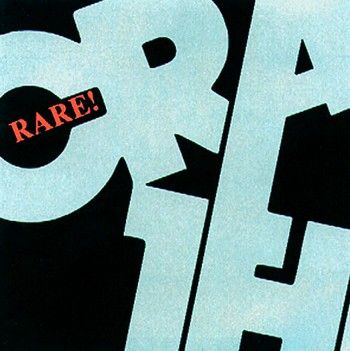
Crack The Sky - Rare! - 1994 - Yodelin' Pig

This release doesn't make a whole lot of sense. Although the truly rare CtS (at least for me) is the first four albums, this is a compilation of a couple of John Palumbo solo albums and "Dog City", "Raw" and "From the Greenhouse", the last three CtS CDs. The rest are live tracks (from 1988), outtakes from Palumbo solo and three demo tracks from "Safety in Numbers". These 7 tracks are indeed rare, while the rest could be scared up without too much trouble. The "Safety in Numbers" songs are okay, but not up to the par of the original album, and the live version of "Let It Be" pales in comparison to the rollicking version of "I Am the Walrus", which can be found on "Live Sky". Chalk this up as a disappointing purchase from a pretty talented band. Review by & © A. D. Jensen © http://www.newsandentertainment.com/zArare.html

"Rare!" is a great compilation album of singles and tracks from earlier Crack The Sky and John Palumbo solo albums. The album also contains live tracks, including two recorded at Hammerjacks nightclub between 1986 and 1988 as well as previously unreleased outtakes and alternate versions of songs. Most critics slagged off this release as old material repackaged. It is true that eight of the fifteen tracks were previously released - six from CTS studio albums, and two from John Palumbo solo albums. However, not everybody has heard all these tracks. Some of these albums are not easy to obtain and many CTS fans will not have heard the live tracks and outtakes on the album. If you are a CTS/John Palumbo fan you will probably enjoy hearing this album. Sound quality is ok but could be better. Many compilation CD albums are produced without using available remastered versions of tracks. This often means that some tracks sound better than others. If you are not familiar with the band's music listen to "Crack Attic (The Best of Crack the Sky)" and search this blog for other CTS releases. N.B: Link 1 of this post contains all the previously released material. The second link of this post contains the live, alt.versions, and outtakes, which you may prefer

TRACKS / COMPOSERS / TRACK INFO.

1. "Mr. President" - Palumbo - From Crack The Sky's "Dog City" (5:34)
2. "Love Me Like a Terrorist" - Palumbo - From Crack The Sky's "Dog City" (4:39)
3. "From the Greenhouse" - Palumbo - From Crack The Sky's "From the Greenhouse" (5:49)
4. "Lost in America" - Palumbo - From Crack The Sky's "From the Greenhouse"(4:12)
5. "Boilermaker" - Palumbo - From Crack The Sky's "Raw" (4:26)
6. "Mr. DJ" - Palumbo - From Crack The Sky's "World in Motion 1" (3:17)
7. "Drifting Back to Motown" - Palumbo - From John Palumbo's "Blowing Up Detroit" (4:21)
8. "Dancing With the Fuhrer" - Palumbo - From John Palumbo's "Victim of the Nightlife" (4:29)
9. "Monkey Time" (live or demo version) - Palumbo (3:07)
10. "Last Time" (live or demo version) - Palumbo (3:17)
11. "Crying Father from Idaho" (live or demo version) - Palumbo 4:23
12. "Jungle Man" (live or demo version) - Palumbo (4:49)
13. "Atlantic City" (live or demo version) - Palumbo (4:35)
14. "Blowing up Detroit" (live or demo version) - Palumbo (6:28)
15. "Let It Be" (live) - John Lennon, Paul McCartney (4:20)

MUSICIANS

John Palumbo - guitar, keyboards, vocals
Jamie La Ritz - lead guitar
Michael Taylor, Rick Witkowski, Bobby Hird - guitar
Jim Griffiths - guitar, vocals
Joe MacRe - bass, vocals
Cary Ziegler - bass
Rob Stevens, Vince DePaul - keyboards
John Tracey, Joey d'Amico - drums, vocals
Gary Lee Chappell - vocals

SHORT BIO

Progressive rock group Crack the Sky was formed in the Ohio River Valley region in 1975 by frontman John Palumbo, guitarists Jim Griffiths and Rick Witkowski, bassist Joe Macre, and drummer Joey D'Amico. According to the website at www.crackthesky.com, the band was originally dubbed ArcAngel, building a loyal following on the Cleveland and Baltimore club circuits before signing to the Lifesong label to issue their self-titled debut LP, which earned critical acclaim for Palumbo's acerbic lyrics and the songs' complex structures and time changes. Commercial reward was minimal, however, and after completing Crack the Sky's second LP, 1976's Animal Notes, Palumbo exited to pursue a solo career. D'Amico assumed lead vocal duties on 1978's Safety in Numbers, with singer Gary Lee Chappell featured on the Live Sky release. Crack the Sky then disbanded, but in 1980 Palumbo, Witkowski, and keyboardist Vince DePaul briefly reformed the group to record the White Music album before again dissolving. Palumbo then formed another new lineup for a series of albums including Photoflamingo, World in Motion I, and Raw before reuniting with Witkowski, D'Amico, and DePaul for a series of 1986 live dates at the Baltimore club Hammerjacks and eventually a new 1989 studio LP, From the Greenhouse. Dog City followed in 1990, and Crack the Sky infrequently reunited throughout the decade to come. Jason Ankeny © 2011 Rovi Corporation. All Rights Reserved http://www.allmusic.com/artist/crack-the-sky-p3977/biography

MORE

The band CRACK THE SKY started in the Ohio River valley (the members are originally from the Pittsburgh, PA area; John came from West Virginia to Pittsburgh). Originally named ARCANGEL, they became Crack the Sky when they signed with Lifesong records. They broke first in Pittsburgh, and eventually "emigrated" to and were "adopted" by the Baltimore, MD area. They recorded albums and played live shows with various personnel changes from the mid '70's until the late '80's. They played an original mix of quirky rock and roll with many time changes and switch-ups mixed in with a few Beatles-esque touches. Originally fronted by John Palumbo, the group's initial lineup also included Jim Griffiths (guitar), Rick Witkowski (guitar), Joe Macre (bass) and Joey D'Amico (drums). They were quasi-adopted by the Baltimore radio station, WIYY (98 Rock); this station above all others continued to play the classic hits from the band, and ended up sponsoring their reunion shows at Hammerjacks nightclub in 1986-1988. Their first album "Crack The Sky", released in 1975, was declared album of the year by Rolling Stone magazine, and contained such "cult" hits as Ice, Hold On/Surf City and She's A Dancer. Unfortunately, it never got promoted very well, and failed to catch on with the public. This was followed by their second in 1976, "Animal Notes", which contained such songs as Rangers At Midnight and Maybe I Can Fool Everybody (Tonight), was more quirky and less accessible than the first album, but good, nonetheless. Unfortunately it fared as well or worse than thier first album. John Palumbo left the band in 1978 during the writing of their third album, "Safety In Numbers", which resulted in songs on the first half of the album having words & lyrics by John, but the second half having words & lyrics by assorted (remaining) band members. John's leaving was "due clearly to a divergence in artistic direction." While many thought that losing John would damage the band, they were able to put together a good third album, followed by a tour which received rave reviews and produced their fourth, live album in 1978, "Live Sky". ("This band has come all the way down from an acid trip just to play for you...") This is an excellent example of the band live, with replacement vocalist Gary Lee Chappell, and credits (for the first time) Vince DePaul on keyboards, although he had played keyboards for the band on previous live outings. (I can't count the number of people I've talked to who saw Crack The Sky open for some band or other, and said that Crack basically blew the other band off the stage - that the headliner was a let-down after Crack played!) After Live Sky the band put out a greatest hits collection in 1980 titled Classic Crack. After leaving the band, John P. pursued a solo career, putting out the album Innocent Bystander in 1978. You can see the pain he was going through at the time, as many of the songs revolve around living through relationships dying (Dear, Dear), related change-of-life issues (It's Okay To Die, The Crying Father From Idaho) and also a song addressing how/why he left the band (Madness On Comet Way). After "Live Sky" the band broke up, but soon came back together in 1980 in their third incarnation of John Palumbo, Rick Witkowski and Vince DePaul to create the album "White Music", rumored to be a contractual obligation album. This album spawned such radio hits as All American Boy and Hot Razors In My Heart, and helped fans discover or renew their interest in the band. Unfortunately, soon after the album was released, the band broke up again, ostensibly for good. After that, in 1981, John once again re-formed the band in its fourth incarnation, with Vince DePaul (keyboards), Carey Ziegler (bass), Michael Taylor (guitar) and John Tracey (drums), and put out the album "Photoflamingo". This album received less-than-rave reviews from the critics and public, and today is one of the bands least well- known albums. As John wrote all the music and lyrics for the album, CRACK THE SKY began to become thought of as "his band", which caused him both joy and suffering for many years afterwards. The next offering from the band came in 1983 with "World In Motion I", yet another disappointment for the band. It never got much airplay other than Mr DJ, and the album itself was very hard to find in stores, eventually virtually totally disappearing from the record bins. The lack of acceptance of this album probably contributed to John again calling an end to the band, and the same year put out "The End", the bands supposed swan song. The album contained a collection of live songs from some previous albums as well as a couple of new (or previously unreleased) offerings. At this point, it seemed that CRACK THE SKY was finally gone forever, as John P. had grown to feel it like an albatross around his neck. He continued to pursue his solo career and released "Blowing Up Detroit" in 1984, which contained which contained such songs as Blowing Up Detroit and Drifting Back To Motown. Band members Carey Zeigler, John Tracey, Bobby Hird and Vince DePaul went on to form the local Baltimore band No Heroes, which played some Crack tunes as well as original tunes. Eventually, in 1986 John decided to make another CRACK THE SKY album, "Raw". He once again wrote all the words & lyrics, as well as produced the album. There were no previous band members on this album; the only other artist listed in the credits is Jamie LaRitz (guitar). Many fans did not deem this a "real" CRACK THE SKY album, as John was the only previous band member on the album. He apparently felt the tug of the CRACK THE SKY legend, or the laments of the fans, as he decided to resurrect the band for a series of live shows in 1986 at the Baltimore, MD club Hammerjacks. The band, consisting of mostly-original members John (guitar/vocals), Rick Witkowski (lead guitar), Joey D'Amico (drums/vocals), Vince DePaul (keyboards) and Carey Ziegler (bass/vocals) played three nights in March 1986 to an enthusiastic, sold-out audience. While they didn't play anything from "Raw" at these shows, there were two songs from the "Blowing Up Detroit" album, as well as most of the bands classic songs. They came back again in the Christmas Week in 1986 with a few more shows, this time incorporating the title track from "Raw" into the show. Possibly spurred on by the overwhelming reception the band received at the Hammerjacks shows, he continued to work with the other band members, and eventually did other live shows at Hammerjacks as well as another local Baltimore club, Painters Mill (before it burned down) in 1986 and 1988. Eventually, in 1989 there was a new CRACK THE SKY album named From The Greenhouse, featuring all of the members from the Hammerjacks shows except for Carey Zeigler, who was otherwise engaged during the recording sessions. (Carey did play with the band when they played more Hammerjacks shows after the release of Greenhouse.) This album featured the title track, as well as a critique of the American "yuppie" lifestyle in Lost In America. The band played more shows at Hammerjacks in support of this album. The same year John released his third solo album, "Victim Of The Nightlife". It contained a re-release of Drifting Back To Motown, as well as Dancing With The Fuhrer and a cover of Lou Reed's Walk On The Wild Side. (This is not surprising, as it's reminiscent of a song from CRACK THE SKY'S first album, She's A Dancer, which also talks about transsexuality issues. The next year, 1990, saw the release of the last (to date) studio album from the band, titled "Dog City", which didn't receive very much airplay, even from the local Baltimore radio stations. After this album, John once again dissolved the band to pursue his own projects. John went on to form a band named CRUEL SHOES and released a single album in 1993(?). This appears to have been a one-shot deal; I cannot find any curent information on this band. Finally, in late 1994 a new disc was released, titled "Rare!", containing a collection of singles from previous albums (both CTS albums and Palumbo solo efforts), live versions and previously unreleased alternate versions of songs -- outtakes from previous albums. This disc includes two songs recorded at two of the Hammerjacks shows. It was not received well by critics (panned as a rehashing of old material), but is a must-have for completists and true CRACK THE SKY/John Palumbo fans. In May and August 1996 the band played sets of shows at a small club in the Baltimore, MD area A.L. Gators. The band lineup is the same as on the album "The End"; John Palumbo, Rick Witkowski, Carey Zeigler, John Tracey, Bobby Hird, with the addition of Nat Kerr on keyboards. They also played the 2nd Annual COLT FESTat Merriweather Post Pavilion on Sunday, August 11th, 1996. CRACK THE SKY got back together again on May 31st, 1997 at Bohagers nightclub in the Fells Point area of Baltimore, MD. They played two shows, with the opening band being the Patty Reese Band, whom John Tracey also played with. (The Patty Reese Band played a drummer-less show.) Once again CTS wowed the standing room only crowd with two hours of their hits, including bringing back an old chestnut, Robots For Ronnie and a punked-up version of We Want Mine [ from & © http://www.crackthesky.com/library/ ]

Demian Band


Support Real Music

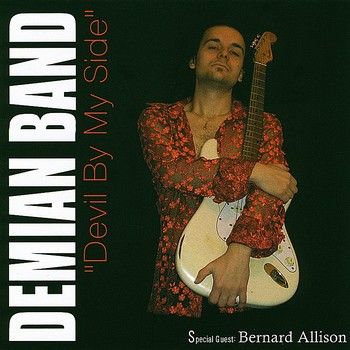
Demian Band - Devil By My Side - 2008 - Demain Band Music

Demian Dominguez is the most promising Blues guitarist/singer to ever emerge from the Latin American, and Spanish cultures. Demian s musicianship sounds so authentically Blues that you would think Demian to be a native of the Southern United States, rather than his native Argentina and current home in Barcelona, Spain. Currently, Demian is releasing in the United States and in Europe, his second CD entitled Devil By My Side featuring world renowned Bernard Allison along with Demianband. Devil By My Side will be promoted on radio and press internationally with a major impetus in the United States. A native of Buenos Aires, Argentina, Demian Dominguez has been devoted to his music and his musical career since the age of 12. In his early teens, he had the life forming experience of being around and involved in the music of Jimmie Vaughan, Los Lobos and Roy Rogers in Huracan Stadium in Buenos Aires at an homage to Stevie Ray Vaughan when he worked at the stadium. Demian cultivated his artistry while covering the Buenos Aires scene with his trio, and he shared the stage with well-known Argentine musicians, such as, Alejandro Lerner, Ricardo Mollo (Divididos), Pappo, Jorge Pinchevsky, Emphis la blusera, Willi Quiroga (Vox Dei), Alejandro Medina (Manal), Hector Starc, Walter Sidotti drums of de "Patricio Rey y los Redonditos de Ricotta"), and others. In 1996 the Teatro General San Martin de Buenos Aires awarded Demian a certificate for the Promotion of and Continuation of the Blues. In 1997, MTV aired a 60 minute special entitled MTV Outside, in which Demian was involved. He was then invited to the Argentine Exposicion Nacional Rock 30 Years where he was part of a band promoting on television the "Toyota Hilux". He was invited to participate in the festivities of the 6th anniversary of the famed radio program of "Rock & Pop" "Buenos Aires Blues", playing along with well-known Argentine musicians such as, Pappo, Ricardo Mollo (Divididos), Juanse (Ratones Paranoicos), Maximo Pera Renauld, Rafael Nasta, Miguel Botafogo y Black Amaya. Demian recorded his first CD entitled Furia in 1998 in Buenos Aires. Furia was aired on "Radio Nacional" of Argentina in a live broadcast throughout the entire country. In 2000 he recorded his second CD, "Heavy Blues" which was promoted throughout Argentina. In 2002, Demian moved to Barcelona, Spain where he re-formed Demianband. The band plays the circuit of clubs and bars and was invited to play in the "Festa de la Merce", "S.O.S Racisme" and blues festivals such as Reus, "Black Music" (Girona), Barcelona, Manresa, Cerdanyola and others while being a member of the Blues Society of Barcelona. One of the most special times in Demian s career was when Bernard Allison one of the most brilliant guitar players in the world blues music scene -- invited him to Karlsruhe, Germany, to perform with him. During the performance Bernard Allison pointed out to the audience how beautifully Demian had interpreted the music. Now the tables have turned, and Bernard Allison appears on Demian s new CD, Devil Bu My Side which also features Demian Dominguez along with Tito Bonacera on bass, Roger Serrahima on drums and Fernando Tejero on Hammond B3 and piano. The CD is schedule for international release in the Fall of 2008. © 1996-2011, Amazon.com, Inc. or its affiliates

Demian Dominguez from Buenos Aires, Argentina began to play professionally when he was 13. By the time he was 15 he had opened for artists like Jimmie Vaughan, Roy Rogers & Los Lobos. Demian's biggest influences are among 60′ and 70′ musicians of whom he said "Those guys were inventing new stuff and they played with such energy and passion by contributing a piece of themselves to every song and every musical note that they played and this is something that I never forget". Demian, a great fan of the late SRV also said "I give thanks to Stevie Ray Vaughn for being a major influence in my musical career. For me, what was so profound about Stevie Ray Vaughn is that you can hear that he took many influences of the old timers and he created his own style with those influences that evolved beyond and expressed his own individuality. It’s like when you are young and your family offers you advice. You must listen to them and then you take their suggestions and your own way of doing things grows out of that so you build your own thoughts and opinions. To me it is the most important thing to have my own musical “voice” and for that to keep on developing". Speaking about "Devil By My Side", Demian stated that "Truly, Devil By My Side is the CD that I’ve enjoyed working on more than any of the others. I was able to put into use much of what I had learned in the past. I also took the opportunity to focus on the vocals on the album. For me, singing is just as important as playing the guitar, although I have to work much harder on the vocals. I’m really satisfied with the final product. Being able to collaborate with Bernard Allison was an incredible experience. We met each other years ago in Germany when he invited me to perform with him. in Germany and when I had the idea to record my new album instantly I thought about him to be involved. What an amazing person he is. When I asked him to record a song with me he was delighted to do so. We worked together in the studio with my good friend Raul Arias and we used a 60s microphone, my old Fender amps, Marshalls, electric and acoustic Dobro guitars and we did it all in one or two takes. It was a great experience. I recorded my CD with my good friends Tito Bonacera on Bass, Roger Serrahima on Drums and Fernando Tejero on Hammond and everyone did a great job. Thanks to this CD, I have had the opportunity to travel to and play in many countries including the United States and Canada". "Devil By My Side" is a great album and HR by A.O.O.F.C. Buy the band's "Bull Blues" album and promote real music

TRACKS / COMPOSERS

1 Mystery Train - Parker, Philips 2:48
2 If You Say You Love Me - Dominguez, Pessatti 3:19
3 Drown in My Own Tears - Glover 3:46
4 Where You Are? - Dominguez, Pessatti 2:51
5 Kill the Matador - Dominguez 2:29
6 Karlsruhe - Bonacera, Dominguez 5:08
7 Baby, Please Don't Go - Williams 3:34
8 The Sky Is Crying - James, Levy, Lewis 3:33
9 Don't Be with My Money - Bonacera, Dominguez 3:12
10 Devil by My Side - Dominguez 3:16
11 Check out How We Sound! - Bonacera, Dominguez, Serrahima, Tejero 4:02
12 Demian, Con E! - Dominguez 2:48
13 Rude Mood - Vaughan

MUSICIANS

Demian Dominguez - guitar, vocals
Bernard Allison - slide guitar, vocals [guest]
Tito Bonacera - bass
Fernando Tejero - Hammond B3, piano
Roger Serrahima - drums

BIO

Demian Dominguez the blues and rock guitar player and singer was born on march 18th 1979 in Buenos Aires, Argentina. He is professionally dedicated to music since he was 12. At age of 15 he had been the supporting artist for Jimmie Vaughan, along with Los Lobos and Roy Rogers at Huracán Stadium at Buenos Aires, in a tribute to Stevie Ray Vaughan, receiving excellent reviews. With his band in Buenos Aires he has shared the stage with renowned musicians. In 1996, the General San Martin Theatre of Buenos Aires Argentina gave him an important award for his “contribution to blues”. In 1997 MTV produced an hour-long special program about him as part of the “MTV Afuera” series. He was also hired by Toyota to create a jingle for a TV advert. Demian has played in one of the shows in the “Rock Nacional 30 años”, in Argentina. He has lived in Barcelona, Spain, since 2002. He recorded his album “Bull Blues” in Barcelona with Tito Bonacera: on bass and harp, Dannyman Navarro on drums and guests Luciano Matias on piano and Xavi Reija on Drums. In 2005/2006 he was the support artist for Elliot Murphy and Bernard Allison .Demian had one of the most special moments in his career when he was invited to Karlsruhe, Germany, by Bernard Allison, one of the most brilliant guitarists in the worldwide blues scene, to play with him, getting the acknowledgement and astonishment of Allison, who praised Demian's excellent playing in front of the crowd. Demian Dominguez with Tito Bonacera: bass, Roger Serrahima: drums and Fernando Tejero: keyboards & piano, finished recording "Devil By My Side", his last study work and the most special in his career, as the great bluesman Bernard Allison, one of his great guitar heroes, is a special guest on the album, on vocals and slide guitar. In 2008 the Demian Band toured with Lucia del Campo: hammond & bass and Gustavo Segura: drums playing songs from “Devil By My Side” and got a great reaction from audiences around the world and the band was Nº 126 "Album Of The Year" category in the "52nd Annual GRAMMY Awards. This album received great acclaim and reached No.1 in some Americans Blues Charts. [from & © http://www.demianband.net/bio.html]

Camel


Support Real Music

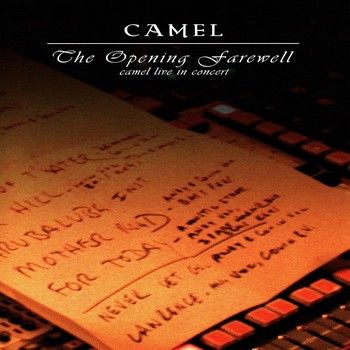
Camel - The Opening Farewell - 2010 - Camel Productions

Camel seem to be the kind of band that everybody has heard of, but not listened to. Camel were one of the the greatest archetypal progressive rock bands ever to emerge from England. The late Peter Bardens' brilliant keyboard-playing was a major force in Camel's success. Peter played with Peter Green, Mick Fleetwood, and had played keyboards with the legendary Van Morrison's "Them." Despite many album releases from 1972 onwards, Camel have never reached megastardom. But again, like so many other great bands, Camel have never bowed to commercialism, and for the last 40 years or so, through many different line-ups, Camel continue to produce their own unique brand of wonderful music. This album was recorded at The Catalyst, Santa Cruz, California on 26 June 2003 with a line-up of Andrew Latimer (the only original band member) on guitar and vocals, Colin Bass on bass and vocals, Tom Brislin on keys and vocals, and Denis Clement on drums. The band play 15 tracks from a good cross section of the band's career and demonstrate just why they have been around so long. This is Grade A progressive rock from a band who deserve more accolades. N.B: The album is composed of three large files, and sound quality although very listenable is only fair to good. So think about DLing it ! The official DVD issue is of far superior sound quality. The album is VHR by A.O.O.F.C. "Rainbow's End: An Anthology 1973-1985" was released in 2010 and there were rumours of a new Camel album in the works. Hope springs eternal in the human breast ! Buy the band's brilliant "Nod & A Wink" album, and listen to their "Rain Dances" and "I Can See Your House From Here" albums. Check this blog for other releases

TRACKS / COMPOSERS

1 Lady Fantasy - Peter Bardens, Doug Ferguson, Andy Latimer, Andy Ward
2 Unevensong - Peter Bardens, Andy Latimer, Andy Ward
3 Hymn to her - Andy Latimer, Jan Schelhaas
4 Echoes - Peter Bardens, Andy Latimer, Andy Ward
5 Stationary traveller - Susan Hoover, Andy Latimer
6 Drafted - Susan Hoover, Andy Latimer
7 Rhayader - Peter Bardens, Andy Latimer
8 Rhayader goes to town - Peter Bardens, Andy Latimer
9 Lunar Sea - Peter Bardens, Andy Latimer
10 Another night - Peter Bardens, Doug Ferguson, Andy Latimer, Andy Ward
11 Ice - Andy Latimer
12 Spirit of the water - Peter Bardens
13 Slow yourself down - Andy Latimer, Andy Ward
14 Mother road - Susan Hoover, Andy Latimer
15 For today - Susan Hoover, Andy Latimer, Guy LeBlanc

BAND

Andrew Latimer - Guitar, Flute, Recorder, Vocals
Colin Bass - Bass, Bass Pedals, Vocals
Tom Brislin - Keyboards, Vocals
Denis Clement - Drums, Percussion, Recorder

BIO

Camel never achieved the mass popularity of fellow British progressive rock bands like the Alan Parsons Project, but they cultivated a dedicated cult following. Over the course of their career, Camel experienced numerous changes, but throughout the years, Andrew Latimer remained the leader of the band. Formed in 1972 in Surrey, Camel originally consisted of Latimer (guitar, flute, vocals), Andy Ward (drums), Doug Ferguson (bass), and keyboardist Peter Bardens, previously of Them. By the end of 1973, the group signed with MCA and released their eponymous debut. In 1974, the band switched record labels, signing with Decca's Gama subsidiary, and released Mirage. In 1975, Camel released their breakthrough album The Snow Goose, which climbed into the British Top 30. The band's English audience declined with 1976's Moonmadness, but the album was more successful in America, reaching number 118 -- the highest chart position the band ever attained in the U.S. Following the release of Moonmadness, Ferguson left the band and was replaced by Richard Sinclair (ex-Caravan); at the same time, the group added saxophonist Mel Collins. Latimer and Bardens conflicted during the recording of 1977's Rain Dances and those tensions would come to a head during the making of 1978's Breathless. After Breathless was completed, Bardens left the band. Before recording their next album, Camel replaced Bardens with two keyboardists -- Kit Watkins (Happy the Man) and Jim Schelhaas (Caravan) -- and replaced Sinclair with Colin Bass. By the time Camel released their 1979 album, I Can See Your House From Here, rock & roll had been changed by the emergence of punk rock, which resulted in less press coverage for progressive rock, as well as decreased record sales. Camel suffered from this shift in popular taste -- I Can See Your House from Here received less attention than any of the band's releases since their debut. Latimer returned to writing concept albums with 1981's Nude. In 1982, drummer Andy Ward was forced to leave the band after suffering a severe hand injury. Camel's 1982 album, The Single Factor, was a slicker, more accessible affair than previous Camel records, but it failed to chart. Stationary Traveller (1984) was another concept album. After the release of the 1984 live album, Pressure Points, Camel entered a long period of hibernation that lasted until the early '90s. In 1985, Decca dropped Camel from its roster. Latimer wasn't able to find a new label because he was embroiled in a difficult legal battle with Camel's former manager Geoff Jukes; Camel eventually won the lawsuit in the late '80s. Throughout this period, Camel produced no new music. In 1988, Latimer sold his home in England and moved to California, where he founded the independent label Camel Productions. By the time Camel recorded their follow-up to Stationary Traveller in the early '90s, the band was, for most intents and purposes, simply Andrew Latimer and a handful of session musicians. Dust and Dreams (1991) was the first release on Camel Productions. In 1993, PolyGram released a double-disc Camel retrospective, Echoes. In early 1996, Camel released Harbour of Tears. © Stephen Thomas Erlewine © 2011 Rovi Corporation. All Rights Reserved http://www.allmusic.com/artist/camel-p3821/biography

Warren Haynes - Studio Demos (aka Some Ordinary Madness Studio Outtakes)


Support Real Music

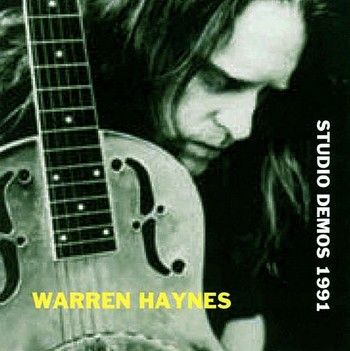
Warren Haynes - Studio Demos (aka Some Ordinary Madness Studio Outtakes) - 1991 - Unknown

Hard to find detailed info on these tracks. Supposedly the tracks were laid down during the making of Warren's debut solo album, "Tales Of Ordinary Madness" released in 1993. Of the 11 tracks on this album, only the tracks "Power And The Glory", "Tattoos And Cigarettes", and "Blue Radio" appeared on the final "Tales Of Ordinary Madness" issue. These demos/outtakes are most likely from around the late 80's to early 90's period, and the material is good. There are dozens of these tracks floating around on various unofficial recordings. Definite info on dates, track composers and musicians would be very welcome. Listen to Warren Haynes' "Tales Of Ordinary Madness" and "Live at Bonnaroo" albums

TRACKS / COMPOSERS (WHERE KNOWN)

01. She's A Pro
02. Power And The Glory - Haynes
03. She Knows Secrets
04. Sammy
05. Tattoos And Cigarettes - Jeff Anders / Keith Flynn / Warren Haynes
06. Uptown
07. Blue Radio - Haynes
08. The Final Act
09. Lonely Night
10. One Way Ticket
11. Angel City - Haynes

MUSICIANS (NOT DEFINITIVE)

Warren Haynes: guitar & vocals
Lincoln Schleifer: bass
Jeff Young: keyboards
Steve Holly: drums

BIO

You wouldn't know it from listening to Warren Haynes' work with Gov't Mule or the Allman Brothers Band, but there was a time when he didn't play guitar. He says, "I didn't get my first guitar until I was 12. My oldest brother had an acoustic guitar and I would bang around on it and try to play." But guitar wasn't even his first love -- it was singing. Around the time he was eight or nine, Haynes' two older brothers began turning him on to soul music. He would sit in his room, singing Smokey Robinson, Diana Ross, Otis Redding, and Wilson Pickett. He became fascinated with sounds of Motown and Memphis. "All I cared about was the singer. The really strong singers really knocked me out. Levi Stubbs of the Four Tops still is one of my favorite voices of all time. And I always liked B.B. King even before I liked the blues. His voice was the main thing." Guitar didn't escape Haynes' attention for long, however: he would soon turn on to rock & roll. "I really liked Eric Clapton. He was the first guitar hero I had. I liked really heavy Cream stuff. I liked all the Derek & the Dominos stuff." Haynes' brothers used his admiration of Clapton to expand his musical horizons to take in the blues masters. They would tell him to check out Howlin' Wolf because Clapton played on it. Interviews with Haynes' favorite guitarists led him to other blues players, and the scope of his guitar playing grew accordingly. Soon, Haynes found himself performing at private gigs and pool parties. When he was about 14, he started hanging around a local pizza parlor that had been converted into a nightclub. About six months later, word got out that Haynes played guitar. The regulars wondered what this kid could do, so they offered to let him on stage. It wasn't long before Haynes was playing in a band called Ricochet that developed a good regional following. One day, Haynes got a call from David Allan Coe, and it was a major break for the 20-year-old Haynes. He played with Coe from 1980 to 1984 (traveling all over the States and Europe) and played on nine of Coe's albums. Haynes also met Dickey Betts and Gregg Allman through Coe, and when Coe's band opened for the Allman Brothers at the Fox Theater in Atlanta, Betts sat in. Four years later, Haynes moved to Nashville to do session work, but the Allman connection was still there. Betts was doing some demos in Nashville and called someone to put together a group of background singers. As fate would have it, Haynes was one of them. Later, he called Haynes and invited him down to work on some songs. Those songs turned into Betts' solo album, Pattern Disruptive. At the same time, Allman decided to record "Just Before the Bullets Fly," which Haynes co-wrote, as the title track to his 1988 album. It's no wonder that when the Allman Brothers re-formed for their Reunion Tour in 1989, Haynes got a call to join. That tour turned into two studio albums and two Grammy nominations for Best Instrumental Rock Performance (in 1990 for "True Gravity," and in 1991 for "Kind of Bird," both of which were co-written by Haynes and Betts), and then a live album in 1992 An Evening with the Allman Brothers Band. Haynes' songwriting, singing, and playing helped make Seven Turns, Shades of Two Worlds and An Evening with the Allman Brothers Band, the Brothers' most critically acclaimed albums in years. Many critics give Haynes credit for putting the fire back in the Allman Brothers Band. Haynes also took time out to release his first solo album, Tales of Ordinary Madness. The album featured the piano work of Chuck Leavell. Leavell also played on the album, joining another former Allman Brother, Johnny Neel, and Funkadelic's Bernie Worrell on keyboards. Marc Quinones, percussionist in the current Brothers lineup, also helped out. After dropping out of the Allman Brothers Band in 1997 to pursue his side project (Gov't Mule) on a full-time basis, Haynes, along with bassist Allen Woody and drummer Matt Abts, released their third album in 1998, Dose, as a follow-up to their highly successful 1996 debut album and the 1996 recording Live at Roseland Ballroom. © Michael B. Smith © 2011 Rovi Corporation. All Rights Reserved http://www.allmusic.com/artist/warren-haynes-p39324/biography

27.1.11

Billy Price & Fred Chapellier


Support Real Music

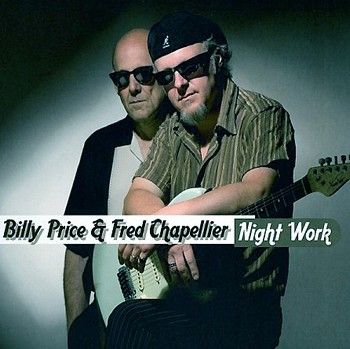
Billy Price & Fred Chapellier - Night Work - 2009 - DixieFrog

The partnership of veteran U.S. soul singer Billy Price and French blues guitarist Fred Chapellier might seem like an unlikely pairing, but the results -- chronicled in the song "Champagne Blues and Pittsburgh Soul" -- are an impressive, occasionally explosive meeting of the minds. Price with his strong tenor voice, similar to Robert Cray's at times, first found popular acclaim as Roy Buchanan's singer for a short while back in the mid-‘70s. While guitarist Chapellier isn't in Buchanan's league, his deft touch and alternately snaking/scorching leads fit well with this set of predominantly original R&B. The guitarist gets his own showcase on the closing jam of "Skunk Shuffle" but it's on the rest of the album, dominated by tight arrangements, terrific soul-blues songs, and crisp but never forced production, that his playing makes the most impact. A three-piece horn section is along for additional punch, bringing an old-school yet never musty vibe to the peppy proceedings. The Nighthawks' frontman Mark Wenner brings his always incisive harp playing to three tracks, and Otis Clay swings by to sing lead on a spirited but somewhat unnecessary cover of Al Green's "Love and Happiness" that sticks pretty close to the original. Price and Chapellier hit their stride on the swampy grind of "Night Work," an autobiographical tune about the life of a working blues musician that manages to avoid the clichés of that shopworn topic. The midtempo "When the Lights Come On" sizzles with a memorable melody, committed singing, snappy horns, and piercing guitar work that displays Chapellier's tough chops while still servicing the song. Like Cray, Price and Chapellier are clearly inspired by the great, rather unsung soul-bluesman O.V. Wright, as they make clear on the song that bears his name and the following "All the Love in the World," which borrows from Wright's gospel influences. Price and Chapellier feed off each other's strengths throughout, yielding one of the finest -- and unfortunately most overlooked -- contemporary roots R&B albums of 2009. Hopefully they will continue their collaboration, because this is a mighty impressive start. © Hal Horowitz © 2011 Rovi Corporation. All Rights Reserved http://www.allmusic.com/album/night-work-r2049264/review

Night Work, by Pittsburgh-based blue-eyed soul singer Billy Price and French blues guitarist Fred Chapellier, was released in Europe in March 2009 on DixieFrog Records. Fans of Price's work in the 1970s with guitarist Roy Buchanan are going to love Night Work. Roy is one of Fred's biggest influences as a guitarist; in fact, Fred's last CD for DixieFrog was titled A Tribute to Roy Buchanan, and Billy Price appeared on that CD as a guest vocalist. Mark Wenner, harmonica player of the Nighthawks, plays on three songs--the title song, written by our friend Mike Sweeney from Pittsburgh; a new version of "Who You're Working For," which Price recorded with Billy Price and the Keystone Rhythm Band on the Free at Last CD in 1988; and a new song written by Price, Sweeney, Sally Tiven, and Jon Tiven titled "The Wrong Woman." Also making a guest appearance on the new CD, singing Al Green's "Love and Happiness," is Otis Clay. Price and Chapellier wrote six songs for the new CD, BP Band keyboard player Jimmy Britton and Price wrote one, and Sweeney contributed a great tribute to O.V. Wright. Speaking of O.V. Wright, no Billy Price CD would be complete without at least one O.V. Wright cover. This time, it's "Don't Let My Baby Ride." The CD is a true international collaboration. The Billy Price Band play on most of the tracks, but Fred's great band--Abder Benachour on bass, Pat Machenaud on drums, and Damien Cornelis on keyboards--play on three songs, with horns overdubbed by the Billy Price Band horn section. © 2011 Woodstock.com. All Rights Reserved http://www.woodstock.com/music-item/B001Q4N7Q8/billy-price-and-fred-chapellier-night-work/

A terrific Soul and R&B album by U.S. soul singer Billy Price and French blues guitarist Fred Chapellier. This album's got everything: Great songs, great musicianship, wonderful guitar by Fred Chapellier, and tremendous vocals by Billy Price. The album is HR by A.O.O.F.C. Buy Billy Price and Fred Chapellier's "Live On Stage" album. Listen to Billy Price's "East End Avenue" album. Fred Chapellier & Friends' "A Tribute To Roy Buchanan" album can be found @ FCHPELL&FS/ATRIB2ROYBUCH

TRACKS / COMPOSERS

Smart Money - Price &/or Chapellier
My Love Comes Tumbling Down - Price &/or Chapellier
Night Work - Mike Sweeney
Don't Let My Baby Ride - O.V. Wright
When the Lights Came On - Price &/or Chapellier
Love and Happiness - Al Green
Who You're Working For - Price &/or Chapellier
Under the Influence - Price &/or Chapellier
The Wrong Woman - Price, Sweeney, Sally Tiven, Jon Tiven
O.V. Wright - Price &/or Chapellier
All the Love in the World - Price &/or Chapellier
Champagne Blues and Pittsburgh Soul - Price &/or Chapellier
Skunk Shuffle - Price &/or Chapellier

MUSICIANS

Billy Price - vocals
Fred Chapellier - guitar
Steve Delach - guitar
Abder Benachour - bass
Paul Thompson - bass
Jimmy Britton - keyboards
Damien Cornelis - keyboards
Dave Dodd - drums
Pat Machenaud - drums
Rick Matt - baritone and tenor sax
Eric DeFade - tenor sax
Joe Herndon - trumpet
Mark Wenner - harmonica
Otis Clay - vocals

BILLY PRICE BIO (WIKI)

Billy Price is the stage name of soul singer William Pollak. Born in Fair Lawn, New Jersey in 1949, he has lived in Pittsburgh, Pennsylvania, USA since the mid 1970s. Price attracted national attention in the mid-1970s during his three-year collaboration with blues guitarist Roy Buchanan. The pair toured the U.S. and Canada, playing Carnegie Hall in New York, the Newport Jazz Festival, the Roxy and Troubadour in Los Angeles, and the Spectrum in Philadelphia. After leaving Buchanan, Price formed the Keystone Rhythm Band, which toured the Eastern US on a circuit that stretched from Boston to Atlanta with large followings in Boston, Philadelphia, Washington, DC and North Carolina. Sustaining several personnel changes, the band performed until 1990. He then formed The Billy Price Band, which currently consists of Steve Delach (guitar), Paul Thompson (bass), Dave Dodd (drums), Jimmy Britton (keyboards), Joe Herndon (trumpet), Eric DeFade (tenor sax) and Rick Matt (baritone and tenor sax). Though he works full-time in corporate communications at the Software Engineering Institute at Carnegie Mellon University, he continues to perform regularly in Pittsburgh, the eastern United States, and occasionally in Europe.

ABOUT FRED CHAPELLIER

Fred was born in 1966 in Metz, France . He started playing drums he was 12 years old until 1981... Then, at the tender age of 15, he started playing guitar. "EUREKA" - the revelation! Immediately, he felt the call of the blues and along the years, found himself accompanying the likes of: Don Ray Johnson, Boney Fields, Audrey Madison, Tom Principato, Neal Black and many other "blues" giants (in Fred's eyes). In his search for more creative freedom, he formed his own band, "The Fred Chapellier Blues Band" with Pat Machenaud on drums, Abder Benachour on bass & Damien Cornelis on keyboards, and they recorded two albums for MOSAIC RECORDS - "Blues Devil" (2003) and "l'Oeil du Blues" (2005) ! In 2004, Fred was acclaimed "Best New Blues Artist of The Year" and "Best Guitar Player of The Year" by "Les Trophées France Blues" ... In January 2007 Fred called upon his friend - producer, arranger, composer & keyboard Maestro Jean Alain Roussel, with whom he had struck up a solid friendship while playing on different albums to produce his "tribute to Roy Buchanan" album. Jean had produced Buchanan's "you're not alone" album in 1976- Fred's main "guitar hero/reference"...Terms agreed, and songs chosen, Fred proceeded to record & engineer the basic tracks at his "Blue house Studio" in Châlons en Champagne, calling upon several long-time friends & guests, including Tom Principato, Billy Price, Neal Black, Miguel M, as well as members of Fred's own "Blues Band", to perform, with Jean assuming the "Producer" role (Jean had produced & composed for Roy Buchanan, & recorded with Cat Stevens, Bob Marley, The Police, 10cc & Thin Lizzy etc)... Then, off Fred went to Jean's "Shakti Studios" near Paris to complete the production under the guidance of Jean behind the recording console. ... The finished product was immediately picked up for France, by "DIXIEFROG RECORDS"... The album, "Fred Chapellier & friends - A Tribute to Roy Buchanan" is available now everywhere in Europe and also on I Tunes. Fred and Billy Price who sang with Roy Buchanan from 1972 to 1975 (www.billyprice.com) became good friends and, after two years of hard work, Fred's new album with his friend Billy Price "Night Work" will be out in march 2009 on DIXIEFROG RECORDS again. You wanna know what the blues is all about? Then - go to see Fred on stage! You WILL be AMAZED ! ! !..... © http://www.cdbaby.com/Artist/FREDCHAPELLIER

Gerry Rafferty


Support Real Music

Gerry Rafferty - Gerry Rafferty Revisited - 1974 - Transatlantic Records

"Gerry Rafferty Revisited", released on Transatlantic Records in 1974 is mainly a compilation of Humblebums material that Gerry Rafferty had written and performed while in that group. It comprises most of the serious musical content of the last two albums released by that group, with the exception of So Bad Thinking (which came from the B-side of his "Can I Have My Money Back?" single). The remaining content of those two albums were mostly humorous Billy Connolly compositions, although a few musical gems can be found among them, especially the ones in which Rafferty sings harmony. The sound and feel of this album is similar to "Can I Have My Money Back?", his first solo effort from 1971. All song versions on this album (except So Bad Thinking) are available in CD form on various Humblebums compilations.
In the same year that City to City was released, Visa Records released the self-titled Gerry Rafferty album, a 15-track compendium of Humblebum tunes which appeared on 1969's The New Humblebums and 1970's Open Up the Door. Spotlighting Rafferty's early songwriting prowess, fans who are more familiar with tracks such as "Baker Street," "Right Down the Line," and "Get It Right Next Time," from his more successful solo career, will enjoy his discerning folk-pop sound that drifts through songs like the Beatlesque "My Singing Bird," "Her Father Didn't Like Me Anyway," and "Patrick." The spirited "Steamboat Row" is a definite precursor to future efforts like Stealers Wheel' "Stuck in the Middle With You" and his own "The Girls Got No Confidence," proving that his talent isn't purely engulfed in heartfelt ballads and twilight pieces. If anything, the songs that make up Gerry Rafferty illustrates his ability for combining pleasant melodies and earnest moods before his work was embedded in a commercial late-'70s sound. While the material that he produced at the end of the decade brought him more success, there's an ample amount of modesty and genuine simplicity in his early music that is often just as effectual, which is why the tracks that appear on Gerry Rafferty should eventually be discovered by longtime fans, if they haven't heard them already. © Mike DeGagne © 2011 Rovi Corporation. All Rights Reserved http://www.allmusic.com/album/gerry-rafferty-r47466/review

The album was reissued on various labels 1n 1978 with the simple title "Gerry Rafferty".

TRACKS

1 "Shoeshine Boy"
2 "Rick Rack"
3 "All The Best People Do It"
4 "Look Over The Hill And Far Away"
5 "Blood and Glory"
6 "Song For Simon"
7 "I Can't Stop Now"
8 "So Bad Thinking"
9 "Patrick"
10 "Steamboat Row"
11 "Her Father Didn't Like Me Anyway"
12 "Keep It To Yourself"
13 "Coconut Tree"
14 "Please Sing A Song For Us"
15 "My Singing Bird"

All songs composed by Gerry Rafferty except "So Bad Thinking" by Gerry Rafferty & Joe Egan, and "My Singing Bird" (Traditional). Tracks 1,3,6,7,10,12,15 from from The Humblebum's "Open Up the Door" album. Tracks 2,4,5,9,11,13,14 from The Humblebum's "The New Humblebums" aka "The Humblebums" album. Track 8 was the B-side to Gerry Rafferty's "Can I Have My Money Back" single

MUSICIANS

Gerry Rafferty - Guitar, Keyboards, Vocals
Billy Connolly - Guitar, Vocals
Alan Parker - Guitar, Guitar (Electric)
Roger Brown - Guitar (Electric), Vocals
Zed Jenkins - Guitar (Electric)
Bernie Holland, John VanDernick - Guitar
Rod King - Guitar (Steel)
Gary Taylor - Bass, Vocals
Tom Lasker - Keyboards, Piano
Tom Parker - Harmonium, Harpsichord, Keyboards
Jimmy Tagford, Terry Cox, Andrew Steele, Henry Spinetti - Drums
Hugh Murphy - Tambourine, Vocals
Johnny VanDerrick - Fiddle, Violin
Barry Dransfield - Violin
Joe Egan - Vocals, Vocals (Background)
Rab Noakes - Vocals

Gerry Rafferty's bio and other releases can be found on this blog

THE HUMBLEBUMS BIO

Scottish folk outfit the Humblebums aren't perhaps as well known as their two main individual members: Gerry Rafferty, who later scored hits with Stealers Wheel and as a solo artist, and Billy Connolly, who left music to become an internationally successful stand-up comedian. Connolly actually founded the group in 1965, along with guitarist Tam Harvey; both had been regulars on the Glasgow folk circuit, and Connolly had previously been playing old-time country music in a group called the Skillet Lickers. The duo quickly became a popular attraction in Glasgow's folk clubs, particularly as Connolly honed his humorous between-song patter, which became an increasingly large part of their already whimsical act. After a few years of local celebrity, the Humblebums recorded their debut album, First Collection of Merrie Melodies, for the Transatlantic label, employing bassist Ronnie Rae to flesh out their sound; the repertoire was split between traditional folk songs and Connolly originals. Not long after the album's release, budding singer/songwriter Gerry Rafferty (a former member of a beat group called Fifth Column) approached the duo after one of their gigs for feedback on his original songs. He wound up being invited to join the group, officially making them a trio. Rafferty's songs soon took a prominent place in their repertoire, which led to friction with Tam Harvey; he departed around half a year into Rafferty's tenure. Toward the end of 1969, Rafferty and Connolly entered the studio together and cut the second Humblebums LP, The New Humblebums, which began to feature brass and woodwind arrangements. With Rafferty's pop instincts, the Humblebums grew more popular on the live circuit than ever, and they recorded another album in a similar vein, 1970's Open Up the Door. However, there was growing dissension between Rafferty and Connolly. Rafferty's material had a more serious bent than Connolly's lighthearted, dryly witty offerings, and Connolly's comedy bits were taking up a large portion of the Humblebums' stage show, to the point where Rafferty wanted him to cut the comedy altogether. Moreover, the extra session musicians who were used on Open Up the Door made it difficult for the duo to capture the feel of the record on stage. It was no surprise when the Humblebums broke up in 1971. Rafferty moved on to Stealers Wheel, best known for their hit "Stuck in the Middle With You," and later went solo, scoring a huge hit with "Baker Street." Connolly, meanwhile, realized that stand-up comedy was his true calling, and in a few short years became one of the most popular comedians not only in Scotland, but the whole U.K., with a career that's spanned decades. © Steve Huey © 2011 Rovi Corporation. All Rights Reserved http://www.allmusic.com/artist/humblebums-p18359/biography

Gerry Rafferty


Support Real Music

Gerry Rafferty - Over My Head - 1994 - Polydor

The late Gerry Rafferty never really shook off the success he attained with the great Stealers Wheel song "Stuck in the Middle" composed by Gerry and Joe Egan and also Gerry's solo "City To City" album, and his magnificent "Baker Street" song with Raphael Ravenscroft's memorable sax work. Thirty-three years later, "Baker Street" is still constantly played, and is without doubt one of the greatest pop songs of all time. "Over My Head" is not one of the late Gerry Rafferty's best known albums but like most of Gerry's albums remains underappreciated. All thirteen tracks are good. Eight of the tracks were composed especially for the album, (six solely by Joe Egan), and five tracks are either covers or re-recordings of Gerry's earlier pre-solo work. Listen to his underrated "North & South" album and search this blog for more Gerry Rafferty/Stealer's Wheel releases. Joe Egan who retired from the music scene in 1981 should not be forgotten for his huge contributions to Gerry Rafferty's success. Try and listen to Joe's 1981 "Map" album

TRACKS / COMPOSERS

1. "Bajan Moon" - Joe Egan
2. "The Waters of Forgetfulness" - Joe Egan
3. "Down and Out" - Joe Egan
4. "Over My Head" - Joe Egan
5. "The Girl's Got No Confidence" - Joe Egan
6. "Wrong Thinking" - Joe Egan
7. "Lonesome Polecat" - Gene DePaul, Johnny Mercer
8. "Right or Wrong" - Gerry Rafferty, Joe Egan
9. "Late Again" - Gerry Rafferty, Joe Egan, Rab Noakes
10. "Clear Day" - Gerry Rafferty, Joe Egan, Rab Noakes
11. "Out of the Blue" - Debbie Gibson, John Lennon
12. "A New Beginning" - Gerry Rafferty
13. "Her Father Didn't Like Me Anyway" - Gerry Rafferty

MUSICIANS

Gerry Rafferty - Guitar (Acoustic), Vocals, Vocals (Background)
Pavel Rosak - Guitar (Electric), Harmonica, Keyboards, Bass, Brass, Drum Programming, Marimba, Multi Instruments, Percussion, Piano, Piano (Electric), Sound Effects
Bryn Haworth - Guitar, Guitar (Acoustic), Guitar (Electric), Guitar (Rhythm), Harpolek, Mandolin, Multi Instruments, Slide Guitar
Rab Noakes - Guitar (Acoustic)
Mo Foster - Bass
Pete Zorn - Bass, Guitar (Bass)
Ian Lynn - Keyboards, Strings, Synthesizer
Arran Ahmun - Drums, Conga, Cymbals, Multi Instruments, Percussion, Piano, Strings, Tambourine, Tom-Tom
Brad Davis - Percussion, Shaker
Mel Collins - Sax (Baritone), Sax (Tenor), Saxophone
Julian Dawson - Harmonica
Nicky Moore, Lianne Carroll - Vocals (Background)

BIO

Gerry Rafferty was a popular music giant at the end of the '70s, thanks to the song "Baker Street" and the album City to City. His career long predated that fixture of Top 40 radio, however; indeed, by the time he cut "Baker Street" Rafferty had already been a member of two successful groups, the Humblebums and Stealers Wheel. Rafferty was born in Paisley, Scotland in 1947, the son of a Scottish mother and an Irish father. His father was deaf but still enjoyed singing, mostly Irish rebel songs, and his early experience of music was a combination of Catholic hymns, traditional folk music, and '50s pop music. By 1968, at age 21, Rafferty was a singer/guitarist and had started trying to write songs professionally, and was looking for a gig of his own. Enter Billy Connolly, late of Scottish bands like the Skillet Lickers and the Acme Brush Company. Connolly was a musician and comedian who'd found that telling jokes from the stage was as appealing an activity to him -- and the audience -- as making music. He'd passed through several groups looking for a niche before finally forming a duo called the Humblebums with Tim Harvey, a rock guitarist. They'd established themselves in Glasgow, and were then approached by Transatlantic, one of the more successful independent record labels in England at the time, and signed to a recording contract. After playing a show in Paisley, Rafferty approached Connolly about auditioning some of the songs he'd written. Connolly was impressed not only with the songs but with their author, and suddenly the Humblebums were a trio. They were a major success in England both on-stage and on record, but not without some strain. Connolly was the dominant personality, his jokes between the songs entertaining audiences as much as the songs themselves. Additionally, Rafferty began develop a distinctive style as a singer, guitarist, and songwriter, and this eventually led to tension between him and Harvey: the latter exited in 1970, and Rafferty and Connolly continued together for two more albums, their line-up expanding to a sextet, but their relationship began to break down. The records were selling well, and the gigs were growing in prominence, including a Royal Command Performance. Connolly, however, worked himself to the point of exhaustion amid all of this activity, and when he did recover, he and Rafferty ultimately split up over the differing directions in which each was going. Rafferty had noticed that Connolly's jokes were taking up more time in their concerts than the music he was writing. They parted company in 1971. Transatlantic didn't want to give up one of its top money-makers, however, especially if there was a new career to be started. Rafferty cut his first solo album for the label that year. "Can I Have My Money Back?" was a melodious folk-pop album, on which Rafferty employed the vocal talents of an old school friend, Joe Egan. The LP garnered good reviews but failed to sell.Out of those sessions, however, Rafferty and Egan put together the original lineup of Stealers Wheel, which was one of the most promising (and rewarding) pop/rock outfits of the mid-'70s. Unfortunately, Stealers Wheel's lineup and legal history were complicated enough to keep various lawyers well paid for much of the middle of the decade. Rafferty was in the group, then out, then in again as the lineup kept shifting. Their first album was a success, the single "Stuck in the Middle with You" a huge hit, but nothing after that clicked commercially, and by 1975 the group was history. Three years of legal battles followed, sorting out problems between Rafferty and his management. Finally, in 1978, Rafferty was free to record again, and he signed to United Artists Records. That year, he cut City to City, a melodic yet strangely enigmatic album that topped the charts in America, put there by the success of the song "Baker Street." The song itself was a masterpiece of pop production, Rafferty's Paul McCartney-like vocals carrying a haunting central melody with a mysterious and yearning lyric, backed by a quietly thumping bass, tinkling celeste, and understated keyboard ornamentation, and then Raphael Ravenscroft's sax, which you got a taste of in the opening bars, rises up behind some heavily amplified electric guitars. It was sophisticated '70s pop/rock at its best (and better yet, it wasn't disco!) and it dominated the airwaves for months in 1978, narrowly missing the number one spot in England but selling millions of copies and taking up hundreds of cumulative hours of radio time. The publisher and the record company couldn't have been happier. Everyone concerned was thrilled, until it became clear that Rafferty -- who had a reclusive and iconoclastic streak -- was not going to tour America to support the album. The album, which finally reached number one, might've gone double-platinum and meant it (lots of records were shipped platinum in those days, only eventually to return 90-percent of those copies) had Rafferty toured. His next record, Night Owl (1979), also charted well and got good reviews, but the momentum that had driven City to City to top-selling status wasn't there, and Snakes & Ladders (1980), his next record, didn't sell nearly as well. Ironically, around this time, Rafferty's brother Jim was signed to a recording contract by Decca-London, a label that wasn't long for this world -- something that Gerry would soon have to face about his own situation at United Artists. United Artists Records had seen some major hit records throughout the '60s and '70s, but by the end of the decade, the parent film distribution and production company was revamping all of its operations in the wake of the mass exodus of several of its top executives. The record label was one of the first things to go -- running a record company was a luxury that the current UA management felt it could do without. Rafferty was practically the last major artist signed to the label, and if City to City had been a hit when the label was sold to EMI, he'd probably have been treated like visiting royalty. But by the time United Artists Records was sold to EMI around 1980, his figures weren't showing millions of units sold anymore. His contract was merely part of a deal, and, in fact, almost none of the UA artists picked up by EMI fared well with the new company -- as with many artists caught up in one of those sale-and-acquisition situations, even if Rafferty had been producing anything comparable to "Baker Street" in popularity, it's doubtful the record would've gotten the push it would've taken to make it a hit. Sleepwalking (1982), issued on the Liberty label, ended that round of Rafferty's public music-making activities, and he was little heard from during the mid-'80s, apart from one song contributed to the offbeat comedy Local Hero, a producer's gig with the group the Proclaimers that yielded a Top Three single ("Letter from America") in 1987. A year later, he released his first album in more than five years, North & South, which failed to register with the public. By that time, Transatlantic had begun exploiting his early recording activity, reissuing his early solo and Humblebums tracks on CD. On a Wing and a Prayer (1992) was similarly ignored by the public, although the critics loved it, and Over My Head (1995) was an attempt to reconsider his own past by rethinking some Stealers Wheel-era songs. In January 2011, Gerry Rafferty died of liver disease at the age of 63 in Bournemouth, Dorset, England. At the time of his death he was still remembered primarily for "Baker Street" and City to City, which had been released as gold-plated audiophile CDs. And one might reasonably expect that when some Stealers Wheel track gets picked up for a soundtrack (as "Stuck in the Middle with You" was for Quentin Tarantino's Reservoir Dogs) or commercial, his voice and guitar will continue to get a fresh airing. © Bruce Eder © 2011 Rovi Corporation. All Rights Reserved http://www.allmusic.com/artist/gerry-rafferty-p5215/biography

26.1.11

Nazca Line


Support Real Music

Nazca Line - Outer Space Connection - 1979 - Nazca Productions

Nazca Line was a late '70's progressive hard rock band from Lima, Ohio who released only one album (posted here). The liner notes say the album was recorded at St. John, Ohio's Emersonhill Studios, Emersonhill. Allegedly these "studios" comprised a barn with some basic recording equipment crammed into it. "Outer Space Connection", "M.I.B. (Men In Black)" and "Stranger" are based on space and alien topics but this is not a space rock album. Vocals are often weak. There are no outstanding tracks and very few hooks but musicianship is quite good, especially Dave Emerson and Don Smithey's twin lead guitar work. It has been said that “Stranger" copies the main guitar riff from Greg Kihn’s “Breakup Song” and Television’s “Elevation”, but not having heard these tracks, it is hard to comment. This band definitely could have done a lot better with some decent financial backing. The album was self-produced, and given the reputed recording venue and studio equipment the album is an above average progressive/psychedelic hard rock album. The volume on this disc needs to be cranked up a bit. Has anybody any info on this band?

TRACKS / COMPOSERS

A SIDE

1. Outer Space Connection (Dennis Backus - Dave Emerson) - 5:03
2. M.I.B. (Men In Black) (Dennis Backus - Dave Emerson) - 4:32
3. Take Your Share (Settlage - Dave Emerson) - 4:20
4. Rock & Roll Machine (Dennis Backus - Dave Emerson) - 4:25

B SIDE

1. Running Thru the City (Dennis Backus - Dave Emerson) - 3:34
2. Bluesy Music (Gary Oswalt) - 3:01
3. Stranger (Peltier - Dennis Backus - Dave Emerson) - ) 9:21
4. Red Line 7000 (Dennis Backus - Dave Emerson) - 3:28

BAND

Don Smithey, Dave Emerson - lead guitar, vocals
Gary Oswalt - bass, vocals
Steve Detrick - drums,vocals
Dave Backus - vocals

Albert Lee & Hogan's Heroes


Support Real Music

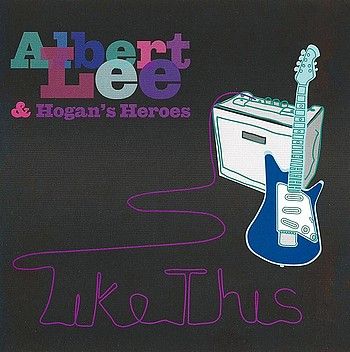
Albert Lee & Hogan's Heroes - Like This - 2008 - Heroic Records

Eric Clapton once called Albert Lee the best guitar player he had ever heard. That's a big statement to make from Eric who has proved himself as one of the greatest blues and rock guitarists of all time. “Like This” is a strong Albert Lee album. It is mainly a "Country Blues" album, and many people don't like "Country" music for obvious reasons. However, this album is not composed of songs like "All My Exes Live in Texas", "If the Phone Don't Ring, It's Me Not Calling You Up", or "I Went Back to My Fourth Wife for the Third Time and Gave Her a Second Chance to Make a First Class Fool Out of Me"!! (LOL). "Like This" was released in spring 2008 to coincide with Albert Lee and Hogan's Heroes European tour. The album is "Country Blues" with real merit. Huey Lewis guests on harmonica, and other musicians include bassist, Brian Hodgson, the great keyboardist Elio Pace, and The E.P Horns. Some of the songs include covers of songs by Jesse Winchester, Ray Charles, John Hiatt, Delbert McClinton, Carole King, Otis Blackwell, Little Feat, and a very rare cover of Walter Becker & Donald Fagen's beautiful "Pearl Of The Quarter". The "country" music on this album encompasses blues, folk, Americana, rock, soul, and even a New Orleans flavour with tracks like “Two Step Too”, and “Rad Gumbo.” No musical genre is excluded from this blog. If an album has real merit, it will be posted. Listen to Albert Lee's "Heartbreak Hill" and "Road Runner" albums and Steve Trovato's "About Time" album which has many similarities with "Like This". It is also worth reading about the many different sub-genres of this style of music @ http://en.wikipedia.org/wiki/Country_mu MY thanks to WOLF for bringing this album to my attention and for pointing out the Steely Dan cover to me. Call me crazy, but I bought this album for "Pearl Of The Quarter" and was surprised at just how good the other tracks were! (A.O.O.F.C).

TRACKS / COMPOSERS

1. Skin Rope Song - Jesse Winchester
2. Can Your Grandpa Rock And Roll Like This - Elio Pace, Matthew Baker
3. Leave My Woman - Ray Charles
4. On The Verge - Hugh Prestwood
5. I'm Comin' Home - Charlie Rich
6. Runaway Train - John Stewart
7. I'll Never Get Over You - John Hiatt
8. Barnyard Boogie - Gray,Wilhelmina, Jordan
9. Two Step Too - Delbert McClinton
10. Why Me? - McClinton, Knobloch
11. Pearl Of The Quarter - Walter Becker & Donald Fagen
12. Breathless - Otis Blackwell
13. Crying In The Rain - Carole King, Howard Greenfield
14. Rad Gumbo - Barrere, Clayton, Gradney, Kibbee, Park, Payne

MUSICIANS

Albert Lee (Guitar), (Mandolin), (Piano), (Vocals)
Gerry Hogan (Dobro), (Pedal Steel), (Guitar (Electric), (E-Bow)
Brian Hodgson (Bass), (Vocals Background)
Elio Pace (Piano), (Electric Piano), (Accordion), (Vocals Background)
Peter Baron (Drums), (Vocals),(Vocals Background), (Vocal Harmony)
Ray Cooper (Percussion)
Nick Cooper (Cello)
Peter Effamy - Tenor Sax, Clarinet [ The E.P Horns ]
Paul Newton (Trumpet) [ The E.P Horns ]
Adrian Fry - Trombone [ The E.P Horns ]
Philippa Ibbotson (Violin)
William Hawkes (Viola)
Huey Lewis (Harmonica)
Richard Pite - Sousaphone
Susan Acteson, Helen McNee, Chloe Buswell, Helen York, Kirstie Roberts (Background Vocals)

BIO

Albert Lee occupies an odd niche in music -- British by birth and upbringing, he spent the mid-'60s as a top R&B guitarist, but in the 1970s became one of the top rockabilly guitarists in the world, and no slouch in country music either. In England he's a been household name, and in Nashville and Los Angeles he's been one of the most in-demand session guitarists there is; but outside of professional music circles in America, he's one of those vaguely recognizable names, and occasionally misidentified with his similar-sounding contemporary, ex-Ten Years After guitarist Alvin Lee (with whom he did share a berth once, in Jerry Lee Lewis's band on the latter's London Sessions album) -- but where Alvin was a hero of Woodstock and a flashy guitarist, in the manner of British blues extroverts Jimmy Page and Jeff Beck, Albert is much more likely to be found playing in the background, behind the Everly Brothers or alongside Eric Clapton. Lee was born in Leominster, England, in 1943. His introduction to music came from his father, who played piano and accordion. His first instrument was the piano, which he took up at age seven -- he was lucky enough to be more than five years into his keyboard study when rock & roll came along, and his first idol was Jerry Lee Lewis, which also marked his introduction to rockabilly music. Within a couple of years, however, Lee had switched to guitar, and also discovered the music of Buddy Holly & the Crickets. He started learning the guitar in earnest and studying their records very closely, and not long after graduated from an acoustic to an electric instrument, and was learning the lead guitar parts on records by Holly, Gene Vincent, Ricky Nelson, the Louvin Brothers, and the Everly Brothers -- except that to him they were just as much records by Tommy Alsup, Jimmy Bryant, Cliff Gallup, James Burton, Chet Atkins, and Hank "Sugarfoot" Garland, among other guitarists. At 16, he turned professional and joined the stable of musicians working for manager Larry Parnes, playing behind Dickie Pride, among other stars on Parnes' roster. He later joined the backing band of R&B singer Bob Xavier, and later played behind Jackie Lynton, through whom he appeared on his first recording. Lee twice succeeded Jimmy Page as a lead guitarist, first in Mike Hurst's band and then in Neil Christian's backing group. And Lee, in turn, was succeeded in the latter band by Ritchie Blackmore when he jumped to Chris Farlowe's backing group the Thunderbirds. He spent four years with the Thunderbirds, who became known in British musical circles as one of the best R&B bands in England, and all gained fame as Farlowe charted singles (including a number one hit) in 1966 and early 1967. He finally left Farlowe in 1968, feeling bored after four years, and over next two years passed through several bands playing behind various visiting American country stars, including George Hamilton IV, Skeeter Davis, and Bobby Bare. Lee passed through several groups, including Country Fever and Poet & the One Man Band, before finally reaching a semipermanent berth with Heads, Hands & Feet, a progressive country outfit who were sort of England's answer to the Flying Burrito Brothers or the Nitty Gritty Dirt Band. He first achieved public notice as a member of this group, which achieved some positive critical notice -- and allowed Lee to expand his playing beyond the guitar -- but saw little commercial success. They split up after two years, and Lee made his living as a session guitarist for the next couple of years, and was also able to latch on to a piece of new recording action going on in England. In 1970, Chess Records had scored an unexpected chart success with The London Howlin' Wolf Sessions, which had led to a spate of "London Sessions" albums by Muddy Waters and Chuck Berry, among others at Chess, and even a B.B. King album on ABC Records built along the same lines. He got in on Jerry Lee Lewis' London Sessions album, and that seemed to reopen Lee's relationship of the early '60s with American acts -- except that this time one circle of his life seemed to close when he was chosen to replace Glen D. Hardin in the Crickets. He toured with them and also cut sides with them in Nashville for a Mercury Records release, Long Way From Lubbock. When the smoke cleared from his two years with the band, Lee had moved to Los Angeles, where he made contact with Phil Everly and Don Everly, who were working separately at the time. Lee joined Don's band and even got his Heads, Hands & Feet bandmates to work on his Sunset Towers LP. From there, Lee became a member of Joe Cocker's band, which, in turn, led to the offer of a contract in 1975 to do a solo album with A&M Records, which was Cocker's label at the time. A gig playing (and recording) with Emmylou Harris delayed the completion of his own record for a couple of years, until the end of 1978, though when Home, as it was titled, finally appeared, it was not only a guitar virtuoso showcase but included Harris on it as a guest performer. He was signed to Polydor as a solo artist, but by that time the session work and offers were coming in fast and furious, and Lee was seemingly everywhere, playing with everyone from Jackson Browne to Bo Diddley to Herbie Mann. His most visible gig, however, was playing with Eric Clapton, first on Just One Night and then on the tour that followed. And when the Everly Brothers reunited for a concert, a live album, and a concert video, Lee was there in the band. Lee's own solo career continued into the late '80s with Speechless (1987) and Gagged but Not Bound (1988), both issued by MCA and both critical successes. He was also later a member of Gerry Hogan's bluegrass group Hogan's Heroes, and toured and recorded with Bill Wyman's band, the Rhythm Kings. He has also played with Eddie Van Halen and Steve Morse in a supergroup called the Biff Baby All-Stars. In his fifth decade as a professional musician, Lee was part of a rarefied fraternity as a virtuoso's virtuoso, respected on three continents and pretty much living out a professional life that most of his colleagues, when he started out, could only dream of. He continued to record in the 21st century, cutting the country/rockabilly album Heartbreak Hotel for Sugar Hill in 2003. That same year, Castle Records issued a Lee retrospective compilation, That's All Right, Mama. A second Sugar Hill release, Road Runner, appeared in 2006. © Bruce Eder, Rovi © 2011 Answers Corporation http://www.answers.com/topic/albert-lee

25.1.11

Rick Holmstrom


Support Real Music

Rick Holmstrom - Gonna Get Wild - 2000 - Tone-Cool

Los Angeles axeman Rick Holstrom, best known for his work with Rod Piazza and the Mighty Flyers, delivers an album full of diversity on this, his first Tone-Cool release. The 13 songs included on Gonna Get Wild play out like a catalog of guitar stylings, running from the uptempo blues of "I'd Hate to See You Cry" to the sounds of swing and early rock & roll. Holstrom is able to pull off the different styles with ease and finesse, playing in rich, clean tones without overdoing it on the distortion. That's one reason why his songs have the uncanny ability to sound both retro and modern simultaneously. On "Phlazzbo," Holstrom turns up the Latin rhythm, while "Have You Seen My Girl" delves into the New Orleans flavorings of zydeco. On "Lovin' Ways," a variation on the theme delivered by Jay McShann's "Hootie Blues," Holstrom swings to beat the band. "Lost in the Shuffle" is a fine swing-shuffle, with some excellent sax and a foot tapping beat. Rick brings in some top of the line guests on the album, including the aforementioned Rod and Honey Piazza, and the Mighty Flyers rhythm section including Bill Stuve (bass) and Steve Mugalian (drums), Jeff Turmes (ex-James Hartman Band), Andy Kaulkin (piano), Junior Watson, Johnny Dyer, Juke Logan (organ), Kad Kadison (tenor sax), Chris Hunter, Bobby Horton, Teddy Morgan, Henry Carvajal, Curtis Cunningham, and Steve Marsh (tenor sax). In an interesting new move, Holstrom steps up to the mike to sing lead vocals on eight of the tracks for the first time, and he sounds great. It kind of makes you wonder why he hasn't taken to the mike before. The most refreshing quality about Rick Holstrom is the fact that he delivers music with technical savvy and traditional stylings, without sacrificing originality and pure adventure. And his knack for creating a melody line is unparalleled, and his open attitude toward varied musical genres paint a clear image of greatness in Holstom's immediate future. © Michael B. Smith © 2011 Rovi Corporation. All Rights Reserved http://www.allmusic.com/album/gonna-get-wild-r468256/review

One has to presume Rick "L.A. Holmes" Holmstrom had his tongue planted firmly in cheek when he titled his new solo release "Gonna Get Wild." Even though the lead guitarist of Rod Piazza & the Mighty Flyers does let loose on occasion, he more typically is a model of restraint, choosing to communicate with a minimum of flash. In other words, just because Holmstrom can, doesn't mean he will crank up the wattage and unleash Stevie Ray Vaughan-like solo after solo. By & © JOHN ROOS, SPECIAL TO THE TIMES, April 19, 2000 2011 © Los Angeles Times http://articles.latimes.com/keyword/rick-holmstrom

A good blues album from the Alaskan born bluesman, Rick Holmstrom. Influenced by greats like Muddy Waters, and Johnny Dyer, "Gonna Get Wild" is a combination of all these artists' blues styles and more. The album is not as guitar orientated as some of Rick's other albums and the album could have done with a few more guitar solos from a man who was the lead guitarist of Rod Piazza & the Mighty Flyers. Rick has played with greats like R.L. Burnside, Jimmy Rogers, Smokey Wilson, and Billy Boy Arnold. Buy his brilliant 2002 album, "Hydraulic Groove," which was a superb blend of jazz, funk, and blues. Billboard described "Hydraulic Groove" as "blues for the avant mind", and Amazon voted it one of the best releases of 2002. "Hydraulic Groove" has also been cited as one of the most original, and innovative blues/roots albums of the decade. Check out Rick's "Late In The Night" album @ RICKHOLM/LITN

TRACKS

1 Gonna Get Wild 3:53
2 Have You Seen My Girl 2:44
3 Wiggle Stick 3:55
4 I'd Hate to See You Cry 3:30
5 Lucky Day 4:04
6 Lovin Ways 3:04
7 Phlazzbo 3:59
8 You Missed Your Chance 4:08
9 Just Right 3:20
10 Uno Mas 2:20
11 What's Ailing You 3:43
12 Lost in the Shuffle 4:08
13 [Untitled] 4:52

All songs composed by Rick Holmstrom except "Phlazzbo" by Rick Holmstrom & Steve Mugalian, "Just Right" by Rick Holmstrom & Jeff Big Dad Turmes, and "Uno Mas" by Rick Holmstrom & Marco Fiume

MUSICIANS

Rick Holmstrom - Guitar, Baritone Guitar, Vocals
Henry Carvajal - Guitar, Harmony Guitar
Marco Fiume - Guitar, Wiggle Stick
Bill Stuve - Bass
Jeff Turmes - Bass, Breakdown Vocals
Junior Watson - Bass Guitar, "Bassy" Guitar, Organ
Honey Piazza, Andy Kaulkin - Piano
Juke Logan - Organ
Johnny Dyer - Organ, Harp, Vocals, Breakdown Vocals, "Why?" Chorus
Steve Mugalian - Drums, Snare Drums, Rubboard, Harmony Vocals
Red Naugahyde, Kad Kadison, Henry Carajal, Steve Marsh - Tenor Sax
Teddy Morgan - Tenor Sax, Vocals, Handclaps, Backing Vocals
Bobby Horton - Tenor Sax, Vocals, Handclaps, Backing Vocals
Chris Hunter - Tenor Sax, Tambourine, Vocals, Handclaps, Backing Vocals
Big Dad - Baritone Sax
Rod Piazza - Harp
Curtis Cunningham - Harmony Vocals
Poppy Atkins - "Why?" Chorus

BIO

Rick Holmstrom was born on May 30, 1965 in, of all places, Fairbanks, Alaska. His father was a disc jockey and Rick was brought up listening to the likes of Muddy Waters, Chuck Berry, Buddy Holly, and the Ventures. In 1985 his family moved to Southern California. There, in Los Angeles, he started a garage type blues band covering Jimmy Reed and Chuck Berry songs. He began going to blues clubs like the Pioneer Club, Babe & Ricky's, and the Pure Pleasure Club and began hanging out with such greats as Smokey Wilson and Junior Watson, one of Rod Piazza's original Mighty Flyers. From 1985 to 1988 Holmstrom toured with harmonica player William Clark, spending one year of this time as rhythm guitarist only. During that period he also backed up Jimmy Rogers, Smokey Wilson, Billy Boy Arnold, and Finis Tusby. Later he was befriended by another great harpist, delta bluesman Johnny Dyer who he started playing with in 1989. And in 1994 he was featured on Dyer's "Listen Up". This was followed by Shake It! (again with Dyer) in 1995. Both were released on Black Top Records. Through Black Top, Holmstrom had worked with Rod Piazza on numerous occassions. So when Rod's guitar player, Alex Schultz, gave his notice in 1995, Holmstrom was the obvious choice. In 1996 he recorded the all instrumental "Lookout!" for Rounder Records. This was followed by his Tone-Cool debut "Gonna Get Wild" in 2000. On that disc Holmstrom not only plays guitar but takes over lead vocals, and has written all thirteen songs. There is no doubt about it. Rick "L.A. Holmes" Holmstrom has come a long way from his Alaskan roots and garage band guitar licks. Says Blues Revue Magazine "...Holmstrom is destined for greatness." Having seen him many times live, I can not be in more agreement. Holmstrom brought a much needed blaze of fire to the Flyers, whose 1997 Tone Cool album, Tough and Tender, proved Rod and his group were the hottest band on the circuit. The Holmstrom solo effort Gonna Get Wild followed in the spring of 2000. Holmstrom played another year with the Might Flyers, leaving after 2001's Beyond the Source. Holmstrom turned some heads with his 2002 release, Hydraulic Groove, where he brought a bit of jazz and funk to his blues, also utilizing loops and samples and guests like John Medeski and DJ Logic. Holmstrom stayed busy producing other acts and playing guitar before releasing Live at the Cafe Boogaloo in 2006. © R.J. Bianchino, Blues Internet, www.jazzinternet.com/boulderblues/holmstrom/index.html

MORE

Take a clean-cut boy-next-door type, stick a guitar in his hands, and place him in an environment of smoky, dimly lit bars surrounded by a bunch of blues sages. If you think it's fiction, you don't know Rick Holmstrom, who has been working with some of the best of the Los Angeles blues scene. His father was a disc jockey in Alaska and baptized Holmstrom with music by bringing home records of Chuck Berry, Muddy Waters, the Ventures, and Buddy Holly. After moving to Southern California to attend school in 1985, he joined a garage-type blues band that rekindled his musical flame. Holmstrom began seeking live blues at places like the Pioneer Club, Babe & Ricky's, and the Pure Pleasure Club, which became his training ground through hanging out with greats such as Smokey Wilson and Junior Watson. From 1985 to 1988, Holmstrom played and toured with harmonica guru William Clarke. During part of this period, Holmstrom spent a year as a rhythm guitarist only. Befriended by a former Delta bluesman, harpist Johnny Dyer, the duo recorded two earth-shaking albums for Black Top, 1994's Listen Up, followed by Shake It! in 1995. When Alex Schultz gave his notice to Rod Piazza & the Mighty Flyers, Holmstrom was the obvious choice, as he worked with Rod on numerous occasions. Urged by Hammond Scott of Black Top Records, Holmstrom recorded Lookout! in 1996, an all-instrumental album that garnered airplay on blues and rock radio, sounding like hard-boiled blues instead of a clichéd blues-rock conglomeration. Holmstrom brought a much needed blaze of fire to the Flyers, whose 1997 Tone Cool album, Tough and Tender, proved Rod and his group were the hottest band on the circuit. The Holmstrom solo effort Gonna Get Wild followed in the spring of 2000. Holmstrom played another year with the Might Flyers, leaving after 2001's Beyond the Source. Holmstrom turned some heads with his 2002 release, Hydraulic Groove, where he brought a bit of jazz and funk to his blues, also utilizing loops and samples and guests like John Medeski and DJ Logic. Holmstrom stayed busy producing other acts and playing guitar before releasing Live at the Cafe Boogaloo in 2006. © Char Ham © 2011 Rovi Corporation. All Rights Reserved http://www.allmusic.com/artist/rick-holmstrom-p87585/biography