A.O.O.F.C
recommends
Mizar6

babydancing


Get this crazy baby off my head!

Showing posts with label Eighties Soul. Show all posts

14.5.12

Walter ''Wolfman'' Washington


Walter ''Wolfman'' Washington - Wolf Tracks - 1986 - Rounder

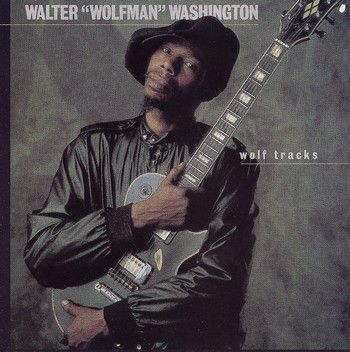
Guitarist/vocalist Walter "Wolfman" Washington didn't get his shot on a national label until his 1986 debut for Rounder. While the album wasn't flawless, he possessed a strong, often compelling voice and was a skilled guitarist who could play effectively in a blues, R&B or jazz mode. Washington turned in a competent cover of the Tyrone Davis hit "Can I Change My Mind," spun a good yarn on "You Got Me Worried" and sounded weary, forlorn and anguished on various cuts. Although his songs weren't exactly lyrical triumphs, they were earnestly performed, and Washington displayed more than enough talent to justify subsequent followups. © Ron Wynn © 2012 Rovi Corporation. All Rights Reserved © http://www.allmusic.com/album/wolf-tracks-r89692

While New Orleans is known as the home of many great horn players, pianists, and drummers, the city has produced relatively few great guitarists. Walter "Wolfman" Washington is a very talented, experienced and underrated guitarist. You are not going to hear any blistering solos, but you will hear one of the funkiest and most expressive styles in modern soul/R&B. Walter's unique deep soul voice combined with great musicianship and imaginative arrangements, in collaboration with Bill Samuel and David Torkanowsky make "Wolf Tracks" a great soul/R&B album in the traditional New Orleans style. Listen to Walter's great "Wolf at the Door" album. His playing can also be heard on Johnny Adams' "Man Of My Word" album (on this blog) [All tracks @ 320 Kbps: File size = 103 Mb]

TRACKS / COMPOSERS

1 I'm Tiptoeing Through - W.Washington & T.Beckerman 4:43
2 Thinking for Yourself - W.Washington & T.Beckerman 3:45
3 Are You the Lady? - W.Washington & T.Beckerman 5:33
4 Sweet Cakes - W.Washington 4:16
5 It Was Fun While It Lasted - W.Washington & T.Beckerman 3:37
6 You Got Me Worried - W.Washington 5:54
7 One Way or Another - W.Washington & T.Beckerman 5:19
8 Can I Change My Mind - Barry Despenza & Carl Wolfolk 4:14
9 Without You - W.Washington 5:02

MUSICIANS

Walter ''Wolfman'' Washington - Guitar, Vocals
Elijah Rogers - Rhythm Guitar
Harold J.Scott - Bass
David Torkanowsky - Keyboards
Van Odom - Drums
George "Geeje" Jackson Jr. - Congas on "Sweet Cakes"
Bill "Foots" Samuel - Alto & Tenor Saxophones [The Windfall Horns]
Ernie Gautreau - Valve Trombone [The Windfall Horns]
Terry Tullos, Eric Baskin - Trumpet & Flugelhorn [The Windfall Horns]
Timothea - Vocal on "It Was Fun While It Lasted"

ABOUT WALTER WASHINGTON

Walter Washington became a local legend in the black clubs of New Orleans in the '70s and '80s and worked his way up to national status with a series of well-received albums and appearances. His recording affiliations have likewise moved from local to national independent to major label. An innovative guitarist and fine singer who has also done some excellent work with vocalist Johnny Adams, Washington does not perform in the classic New Orleans R&B mold but incorporates soul, funk, jazz, and blues with fluency and power. Washington was born and raised in New Orleans, where he performed in his mother's church choir as a child. As he grew older, he fell in love with blues and R&B and learned how to play guitar. His first big break came in the form of a supporting role for vocalist Johnny Adams, working with the singer in the late '50s. In the early '60s, Washington became a member of Lee Dorsey's touring band; after that engagement was through, he worked with Irma Thomas. In the mid-'60s, Washington formed his own group, the All Fools Band, and began headlining at local New Orleans clubs. By the early '70s, his popularity had grown enough to earn him a slot on a European package tour of New Orleans R&B acts. In the late '70s, he toured Europe on his own with his new band, the Roadmasters. Washington began his recording career relatively late, cutting his first album in 1981. The record, Rainin' in My Heart, appeared on a small independent label called Help Me; it was later re-released on Maison de Soul. Four years after his debut, Washington landed a contract with Rounder Records, releasing Wolf Tracks in 1986. The guitarist recorded two more albums for Rounder -- Out of the Dark (1988) and Wolf at the Door -- before moving to the major-label Point Blank/Charisma in 1991. Throughout the '90s, Washington continued to perform regularly, particularly in New Orleans clubs, and he recorded occasionally, yielding Blue Moon Risin' in 1999 and On the Prowl a year later. © Jim O'Neal © 2012 Rovi Corporation. All Rights Reserved © http://www.allmusic.com/artist/walter-wolfman-washington-p565/biography

BIO (WIKI)

Walter "Wolfman" Washington (born December 21, 1943) is an American singer and guitarist, based in New Orleans, Louisiana, United States. While his roots are in blues music, he blends in the essence of funk and R&B to create his own unique sound. Washington was born in New Orleans, and whilst still in his teens, he was invited to play in Lee Dorsey's band. In the mid 1960s, Washington formed the All Fools Band, and played at clubs in New Orleans. In the 1970s, he joined Johnny Adams' band. He played with Adams for 20 years, both performing live and also appearing on his records. During this time he continued to work as a solo artist, and in the late 1970s formed his own band, the Roadmasters, and toured Europe with them. Washington released his first solo album Rainin' In My Heart in 1981 from a small local label Help Me. He landed a contract with Rounder Records in the mid 1980s and he released total of three albums from the label. After the Rounder days, he also released an album from Virgin subsidiary Point Blank Records. Washington started to play regularly with two New Orleans musicians, the organist Joe Krown and the drummer Russell Batiste, Jr., working as a trio at the Maple Leaf Bar. In 2008, he released Doin' the Funky Thing, his first album in many years. Live at the Maple Leaf, a live recording by Krown, Washington, Batiste was also released in the same year.

9.2.11

Boz Scaggs


Support Real Music

Boz Scaggs - Other Roads - 1988 - Columbia

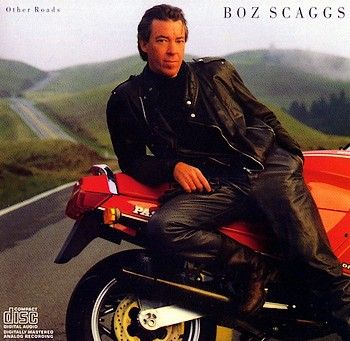
When Boz Scaggs released Other Roads in 1988, he'd been off the scene for a full eight years. Produced by Bill Schnee, it featured some of his most unlikely songwriting collaborations with instrumental backing by Toto along with some studio aces. Scaggs tried hard to walk a line between the decade's obsession with more processed studio sounds that utilized electronic keyboards and drum machines up front, while relying more heavily on electric guitars and kit drums. He doesn't always succeed in keeping the balance, but the attempt sets him apart from most mainstream acts at the time. Other Roads is odd from the start: the opener, "What's Number One?" is a spacey pop number written with the late poet and songwriter Jim Carroll and bassist/arranger Marcus Miller. "Right Out of My Head," written with Dan and David Huff, juxtaposes Steve Lukather's blistering guitar work against a synth fill right out of Gary Numan's "Cars." Scaggs nailed another number one with "Heart of Mine" co-written with pop-jazz songwriter Bobby Caldwell (and the only cut produced by Stuart Levine). There's a strange futurist club noir inherent in both "I Don't Hear You" and "Crimes of Passion" written by Carroll and the Huffs. "Cool Running" written by Scaggs with Patrick Leonard is a solid, grown up, island groover with staggered R&B horns contrasted with a female backing chorus and a bridge of vocal counterpoint. "Claudia," by Steve Williams is one of Scaggs' classic mid-tempo, broken love songs with a killer bridge, and stellar guitar work by Lukather. The set closer is a dreamy adult pop ballad entitled "The Night of Van Gogh," co-authored by him, Caldwell and Peter Wolf. Scaggs was in top vocal shape when he cut this: cool, bemused, but able to capture and communicate emotion mellifluously with freeze frame accuracy. While Other Roads didn't scale the charts as an album, and is regarded as a minor work, hearing it in the 21st century reveals Scaggs' ambition and vision reach outside the box in a collection of great songs -- even if the production doesn't fare as well as the material. © Thom Jurek © 2011 Rovi Corporation. All Rights Reserved http://www.allmusic.com/album/other-roads-r17459/review

After an eight-year recording gap, Boz Scaggs released "Other Roads" which was aimed at the adult contemporary market by his record company. The album reached #47 on the Billboard pop album chart, while “Heart of Mine”, a classic Boz ballad, was a big Adult Contemporary hit, reaching #3 on that chart. The single also reached #35 on the Billboard pop singles chart. 'Other Roads' mixes the expected ballads and "dance-floor" style songs with some good rock tracks. Recording "Other Roads" was nearly three years in the making and was a frustrating and difficult process for Boz. According to him, some record company executives wanted stuff re-recorded to make the album more commercial. Boz said that "They didn't feel that they had a strong hit single". Many of the songs were eventually reworked and some songs replaced. Later issues of the album differ from the version posted here. Boz has said in retrospect that "I enjoy listening to this album more than any other album I've made. Last night, I went back to my hotel and listened to the album 3 times and really enjoyed it. But it's not what people expect of a Boz Scaggs album." He also said, "I had no choice. I did what I had to do. It's what I do. My father once said to me after a concert at the end of the seventies, 'You know, you really turned those people on. You really have something to give these people.' People really do enjoy it. Same way I got turned on when I saw Ray Charles for the first time or heard Al Green's voice. There are a lot of people out there who seem to miss my presence, and I miss being out there." "Other Roads" was an album that Boz Scaggs dearly wanted to make and have success with, and despite the record company's "success" at turning the album into a "commercial" venture, it's a very good album. Boz's "Silk Degrees" is usually the standard by which all his other albums are judged. This is a common dilemma for many great artists. However, he has released other albums which have not been as successful as "Silk Degrees" but really should be heard by more people. Buy Boz Scaggs' great jazzy "But Beautiful" album, and check this blog for more related releases. Boz's brilliant "Greatest Hits Live" album is @ BOZSC/GHLIV

TRACKS / COMPOSERS

What's Number One? - Boz Scaggs, J. Carroll / Marcus Miller
Claudia - Boz Scaggs, L. Williams, Bryan MacLean
Heart Of Mine - Boz Scaggs, Bobby Caldwell, Dennis Matkosky, Jason Scheff
Right Out Of My Head - Boz Scaggs, D. Huff
I Don't Hear You - J. Carroll, D. Huff
Mental Shakedown - Boz Scaggs, Guy Allison Steiner, D. Williams
Crimes Of Passion - J. Carroll, D. Huff
Funny - Boz Scaggs, Marcus Miller
Cool Running - Boz Scaggs, D. Williams, P. Leonard
The Night Of Van Gogh - Boz Scaggs, B. Caldwell, Peter Wolf

MUSICIANS

Boz Scaggs - Guitar, Vocals, Vocals (Background)
Howard "Buzz" Feiten, Steve Lukather, Carlos Rios, Dann Huff, Michael Landau, Paul Jackson, Jr., David Williams - Guitar
Freddie "Ready Freddie" Washington, David Hungate - Bass
Marcus Miller - Bass, Clarinet, Guitar, Keyboards, Percussion, Synthesizer, Synthesizer Drums
Guy Allison Steiner - Bass, Drums, Keyboards, Percussion, Synthesizer Drums
Patrick Leonard, Peter Wolf, Larry Williams - Keyboards
Robbie Buchanan - Keyboards, Synthesizer, Synthesizer Bass
Alan Pasqua - Keyboards, Synthesizer Bass
David Paich - Keyboards, Synthesizer, Vocals
Aaron Zigman - Keyboards, Synthesizer
Siedah Garrett - Keyboards, Vocals (Background)
Jeff Porcaro, John "J.R." Robinson - Drums
Rhett Lawrence - Drums, Keyboards
Michael Fischer, Paulinho Da Costa, Lenny Castro - Percussion
Paulette McWilliams, Kate Markowitz, Edie Lehmann, Carl Carwell, Charlotte Crossley, Kevin Dorsey, Phillip Ingram, James Ingram, Pam Hutchinson, David Lasley, Jeanette Hanes, Phil Perry, Darryl Phinnessee, Boz Schmit, Timothy B. Schmit, Myrna Smith-Schilling Vocals (Background)

BIO

After first finding acclaim as a member of the Steve Miller Band, singer/songwriter Boz Scaggs went on to enjoy considerable solo success in the 1970s. Born William Royce Scaggs in Ohio on June 8, 1944, he was raised in Oklahoma and Texas, and while attending prep school in Dallas met guitarist Steve Miller. Scaggs joined Miller's group the Marksmen as a vocalist in 1959, and the pair later attended the University of Wisconsin together, where they played in blues bands like the Ardells and the Fabulous Knight Trains. Scaggs returned to Dallas alone in 1963, fronting an R&B unit dubbed the Wigs; after relocating to England, the group promptly disbanded, and two of its members -- John Andrews and Bob Arthur -- soon formed Mother Earth. Scaggs remained in Europe, singing on street corners. He also recorded a failed solo LP in Sweden, 1965's Boz, before returning to the U.S. two years later. Upon settling in San Francisco, he reunited with Miller, joining the fledgling Steve Miller Band; after recording two acclaimed albums with the group, Children of the Future and Sailor, Scaggs exited in 1968 to mount a solo career. With the aid of Rolling Stone magazine publisher Jann Wenner, Scaggs next secured a contract with Atlantic. Sporting a cameo from Duane Allman, 1968's soulful Boz Scaggs failed to find an audience despite winning critical favor, and the track "Loan Me a Dime" later became the subject of a court battle when bluesman Fenton Robinson sued (successfully) for composer credit. After signing to Columbia, Scaggs teamed with producer Glyn Johns to record 1971's Moments, a skillful blend of rock and R&B which, like its predecessor, failed to make much of an impression on the charts. Scaggs remained a critics' darling over the course of LPs like 1972's My Time and 1974's Slow Dancer, but he did not achieve a commercial breakthrough until 1976's Silk Degrees, which reached number two on the album charts while spawning the Top Three single "Lowdown," as well as the smash "Lido Shuffle." 1977's Down Two Then Left was also a success, and 1980's Middle Man reached the Top Ten on the strength of the singles "Breakdown Dead Ahead" and "Jo Jo." However, Scaggs spent much of the 1980s in retirement, owning and operating the San Francisco nightclub Slim's and limiting his performances primarily to the club's annual black-tie New Year's Eve concerts. Finally, he resurfaced in 1988 with the album Other Roads, followed three years later by a tour with Donald Fagen's Rock and Soul Revue. The solo effort Some Change appeared in 1994, with Come on Home and My Time: The Anthology (1969-1997) both released in 1997. The newly energized Scaggs spent the next few years consistantly releasing new material, including Here's the Low Down, Fade into Light, Dig, and a collection of standards called But Beautiful. An expanded reissue of Silk Degrees and Runnin' Blue (a recording of a 1974 performance) appeared in 2007, and Speak Low saw him reinterpreting a number of jazz standards in 2008. © Jason Ankeny © 2011 Rovi Corporation http://www.allmusic.com/artist/boz-scaggs-p5359/biography

BIO (Wikipedia)

Boz Scaggs (born William Royce Scaggs, 8 June 1944, Canton, Ohio) is an American singer, songwriter and guitarist. He gained fame in the 1970s with several Top 20 Hits in the United States along with the #2 album Silk Degrees. Scaggs continued to release and record in the 1980s and 1990s, and still tours into the 2000s. Scaggs was born William Royce Scaggs in Canton, Ohio, the son of a traveling salesman. The family moved to Oklahoma, then to Plano, at that time a Texas farm town just north of Dallas. He attended a Dallas private school, St. Mark's, where a schoolmate gave him the nickname "Bosley". Soon, he was just plain Boz. After learning guitar at the age of 12, he met Steve Miller at St. Mark's. In 1959, he became the vocalist for Miller's band, The Marksmen. The pair later attended the University of Wisconsin-Madison together, playing in blues bands like The Ardells and The Fabulous Knight Trains. Leaving school, Scaggs briefly joined the burgeoning rhythm and blues scene in London. After singing in bands such as The Wigs and Mother Earth, he traveled to Sweden as a solo performer, and in 1965 recorded his solo debut album, Boz, which was not a commercial success. Scaggs also had a brief stint with the band The Other Side with fellow American Jack Downing and Brit Mac MacLeod. Returning to the U.S., Scaggs promptly headed for the booming psychedelic music center of San Francisco in 1967. Linking up with Steve Miller again, he appeared on the Steve Miller Band's first two albums, Children of the Future and Sailor, which received good reviews from music critics. After being spotted by Rolling Stone publisher Jann Wenner, Scaggs secured a solo contract with Atlantic Records in 1968. Despite good reviews, his sole Atlantic album, featuring the Muscle Shoals Rhythm Section and slide guitarist Duane Allman, achieved lukewarm sales, as did follow-up albums on Columbia Records. (His Atlantic album was deleted and replaced with the exact same cover and tracks, but it was given a new catalog number and it was completely remixed in Los Angeles in 1977. This new remix brought Duane Allman's guitar up to the front, but it greatly altered the original feeling. On the track "Finding Her", the volume fades down real low for the last minute, an obvious mixing error by engineer Craymore Stevens. The original has never been available on CD.) In 1976, he linked up with session musicians who would later form Toto and recorded his smash album Silk Degrees. The album reached number 2 on the U.S. charts and number 1 in a number of countries across the world, spawning three hit singles: "Lowdown", "Lido Shuffle", and "What Can I Say", as well as the MOR standard "We're All Alone", later covered by Rita Coolidge and Frankie Valli. A sellout world tour followed, but his follow-up album, the 1977 Down Two Then Left, did not fare as well commercially as Silk Degrees. The 1980 album Middle Man spawned two top 20 hits, "Breakdown Dead Ahead" and "Jojo," and Scaggs enjoyed two more hits in 1980-81 ("Look What You've Done to Me" from the Urban Cowboy soundtrack, and "Miss Sun" from a greatest hits set, both U.S. #14 hits). But Scaggs' lengthy hiatus from the music industry (his next LP, Other Roads, wouldn't appear until 1988) slowed his chart career down dramatically. "Heart of Mine" in 1988, from Other Roads, was Scaggs' final top 40 hit but was a major adult contemporary success. Scaggs continued to record and tour sporadically throughout the 1980s and 1990s, and for a time was semi-retired from the music industry. He opened the San Francisco nightclub, Slim's, in 1988, and remains a co-owner as of 2008. After Other Roads, Scaggs took another hiatus and then came back with Some Change in 1994. He released Come On Home, an album of blues, and My Time, an anthology in the late 1990s. He garnered good reviews with Dig although the CD, which was released on September 11, 2001, was lost in the post-9/11 melée. In May 2003, Scaggs released But Beautiful, a collection of jazz standards that debuted at number 1 on the jazz charts. He tours each summer, has a loyal cadre of fans, remains hugely popular in Japan, and released a DVD and a live CD in 2004. Other releases followed. In 2008, Scaggs began an expanded tour, and is scheduled to appear across the country from spring through fall. Scaggs and his wife grow grapes in California's Napa County and have produced their own wine.


15.9.10

Paul Carrack


paulcarracknightbird

Paul Carrack - Nightbird - 1980 - Vertigo

Baz "Vinyl man", said on amazon.co.uk, "Paul Carrack is undoubtedly one of the greatest underrated talents this country has ever produced. His list of credits is almost endless yet most people haven't a clue who he is. Best seen live - don't hesitate. He only plays in small venues and is constantly touring so you dont have to wait too long before he will be somewhere near. I must have seen him a dozen times in the last 6 ears or so and he never disappoints. Fabulous voice, pianist, guitarist and song writer and all accompanied by some very decent musicians. If you like quality soul, pop and soft rock all mixed up Paul is your man". The guy is a legend. His name may be unfamiliar to many, but his great soulful voice is one of the most recognizable voices in the rock business. He has been a member of several bands including Warm Dust, Ace, Squeeze, Mike + The Mechanics, and Roxy Music, been a session and touring musician for several others, and has enjoyed success as a solo artist as well. His distinctive voice shows up on some of his affiliated bands' best-known hits, two of the most memorable being "How Long" with Ace, and "Tempted" with Squeeze. Will Paul ever be forgotten for writing Ace's "How Long"? As a result of this song much of Paul's later work has been largely overlooked. Even on some of Paul's "eightyish" AOR style albums, his great voice made some average songs listenable. On his later albums he abstained from the trendy, '80s style dance orientated pop sound, he was becoming accustomed to, and reverted to a more soulful, adult contemporary, pop soul sound, which is the real sound of Paul Carrack. The great vocalist has always been heavily influenced by '60s and '70s soul and pop music. The underrated pop soul and reggae influenced "Nightbird", Paul Carrack's debut solo album, posted here was not a commercial success, and failed to establish him as a solo artist, but that was no surprise as even nowadays his name is unfamiliar to many people. After the album sank, Paul was offered the job of keyboardist in the rock band Squeeze replacing Jools Holland. He recorded one album with Squeeze in 1981, the great Elvis Costello produced "East Side Story", which included the great "Tempted" hit with Paul singing. Paul didn't compose the song, but along with "How Long" remains one of his many brilliant signature songs. Paul remains one of Britain's greatest pop/soul vocalists. Paul's "Twenty-One Good Reasons" album is @ http://overdoseoffingalcocoa.blogspot.com/2010/09/paul-carrack.html Search this blog for other Paul Carrack releases

TRACKS / COMPOSERS

1 Beauty's Only Skin Deep - N.Whitfield, E.Holland 2:56
2 There's A Good Chance - Carrack 4:19
3 In Love With Me -Alan "Bam" King, K.White 4:38
4 Foregone Conclusion - Carrack 4:25
5 Love Is All It Takes - A.Fraser 4:41
6 Bet You Never Been In Love - Carrack 3:55
7 Where You Going Babe - Carrack 3:56
8 You Belong With Me - Carrack 4:49
9 The Rumour - Carrack 4:13
10 Nightbird - Carrack 4:29

MUSICIANS

Guitar, Keyboards, Vocals, Backing Vocals - Paul Carrack
Guitar - Neil Hubbard, Tim Renwick, Winston Delandro
Bass - Alan Spenner, Kuma Harada
Drums - Andy Newmark, Jeff Seopardie, Richard Bailey
Percussion - Neville Murray
Horn - Guy Barker, Malcolm Griffiths, Martin Drover, Mel Collins
Backing Vocals - Alan "Bam" King, Dyan Birch, Noel McCalla

BIO

Paul Carrack was pop music's ultimate journeyman. A vocalist and keyboardist who enjoyed considerable success over the course of his lengthy career while in the service of bands ranging from Ace to Squeeze to Mike + the Mechanics, his finest work often came at the expense of his own identity as a performer; indeed, of the many big hits on which the unassuming singer was prominently featured, only one, 1987's "Don't Shed a Tear," bore his own name. Carrack was born April 22, 1951, in Sheffield, England; he joined the pub rock group Ace in 1972, eventually writing and singing their debut single, "How Long." After reaching the Top 20 in the group's native Britain, the record hit the number-three position in the U.S.; however, after subsequent material failed to match the success of "How Long," Ace disbanded in 1977, and Carrack signed on with country artist Frankie Miller. He soon resurfaced in Roxy Music, appearing on the LPs Manifesto and Flesh and Blood before releasing his solo debut, Nightbird, in 1980. Carrack next joined Squeeze, replacing keyboardist Jools Holland; in addition to contributing to the group's 1981 creative pinnacle East Side Story, he also assumed lead vocal duties on the single "Tempted," their best-remembered hit. However, Carrack's stay in Squeeze was brief, and after working with Nick Lowe he again attempted to forge a solo career with the 1982 LP Suburban Voodoo, cracking the U.S. Top 40 with the single "I Need You." A tenure as a sideman with Eric Clapton followed, and in 1985 he joined Genesis' Mike Rutherford in his side project Mike + the Mechanics. Their hits include "Silent Running (On Dangerous Ground)" and "All I Need Is a Miracle." While remaining a rather anonymous figure at home, Carrack achieved a higher level of visibility in America as a result of Mike + the Mechanics' success; subsequently, his third solo album, One Good Reason, proved to be by far his most popular effort to date, with the single "Don't Shed a Tear" reaching the Top Ten. Another tenure with the Mechanics followed, and with the title track of 1988's The Living Years, the group scored their first number-one hit. After the 1989 Carrack solo LP Groove Approved, Mike + the Mechanics issued 1991's Word of Mouth, which failed to repeat the chart performance of its predecessors; by 1993, Carrack was again a member of Squeeze, appearing on the album Some Fantastic Place and also resuming lead chores for a re-recording of "Tempted." However, he was once again back in the Mechanics' fold for 1995's Beggar on a Beach of Gold; the solo Blue Views was issued the next year, followed in 1997 by Beautiful World. Satisfy My Soul was issued in 2000, his first album for Compass Records. © Jason Ankeny © 2010 Rovi Corporation. All Rights Reserved http://www.allmusic.com/cg/amg.dll?p=amg&sql=11:0ifrxqw5ldfe~T1

7.2.10

Boz Scaggs


Boz Scaggs - Middle man - 1980 - Columbia

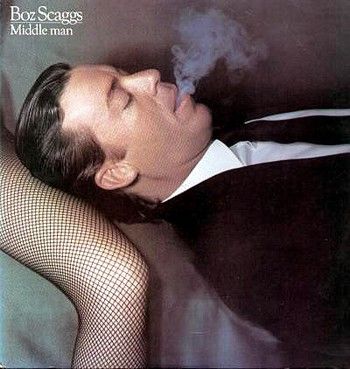
Boz Scaggs' steamy new blockbuster, Middle Man, more than recaptures the robust lushness of Silk Degrees, the album that firmly established Scaggs as pop-rock's sharpest fancy dancer. Its recipe is the same: two guitars, bass, drums and keyboards, generously embellished with strings, horns and backup vocals. Though David Paich, the brilliant keyboardist who was Scaggs' chief collaborator on Silk Degrees, appears on Middle man, Scaggs' main partner on the new project is David Foster, the gifted keyboard wizard who produced Daryl Hall and John Oates' Along the Red Ledge and cowrote Earth, Wind and Fire's "After the Love Has Gone." As on Silk Degrees, the arrangements are carefully blocked-out set pieces that boast the precision and texture of big-band charts. In front of these gorgeous backdrops, Scaggs struts his vocal stuff, a white soul man in tie and tails. Middle man lifts the aura of detachment that's usually surrounded Scaggs. He sings more aggressively than ever, often taking big chances. In the title track, a driving boogie, Scaggs pushes his voice to the manic edge, achieving a thrilling immediacy. Elsewhere, the singer uses his jagged, quavering falsetto not to express tender erotic thrall in the traditional soul manner, but to project the high-voltage carnality of urban life. Middle man could well be Boz Scaggs' response to Donna Summer's Bad Girls, since its milieu is similar: a high-rent, high-rise City of Night where grand passions and cheap thrills are one and the same. Indeed, the cover photo shows a slicked-down Scaggs exhaling cigarette smoke, his head propped on the fish netted thigh of an anonymous showgirl. The artist's air of blithe depravity implies an unabashedly glamorous view of the voluptuary life. Though the words are hard to understand without a lyric sheet, the song sequencing suggests a hot affair with a hooker. "Jojo," the first number, introduces us to a middle man who could arrange just such an adventure: a gun-toting, mink-clad pimp who gazes down from "dizzy heights" on Broadway's "spinning lights" like a neon Bacchus. The tune's arrangement is a smoother, steamier update of the throbbing pop-disco of Silk Degrees' "Lowdown," the melody a chromatic refinement of Philadelphia International formulas. Middle man's musical style shifts back and forth between this slick, choral pop-soul and the brand of streamlined hard rock that's been a Scaggs signature beginning with "Dinah Flo." As on Silk Degrees, most of the core members of Toto man the hardware. "Breakdown Dead Ahead," the LP's catchiest rocker, is so exhilarating that the romantic smashup it anticipates exudes a deadly allure. This is no warning about life in the fast lane, but an incitement to slam down on the accelerator. "Simone," a slippery-sweet proposition that echoes "My Cherie Amour" and the best of Burt Bacharach, segues into a beautiful ballad, "You Can Have Me Anytime," that's reminiscent of Silk Degrees' "We're All Alone" but buffed with symphonic gloss straight out of Rachmaninoff. So ends side one, on which Scaggs pursues Eros into a dreamy fadeout. Side two reels us back to the precipice. "Middle man" lurches between paranoia and braggadocio as its protagonist, in the first verse, offers to pimp for his girlfriend. In the second verse, he asks to be her john. "Do like You Do in New York." a tense soul strut, imagines the entire city as a flesh market where the watchwords for survival are "Don't look down" and "Go another round." In "Angel You," the tension becomes even more explicitly perverse. Here, Scaggs and backup singer Rosemary Butler play lovers who arrange their dates as though they were commercial assignations. In the record's final cut, "You Got Some Imagination," Middle man's whole fantasy world shatters in jealous recriminations. "You got a mind like a tattletale magazine," Boz Scaggs rails. "You must be crazy if you thought I'd fall for you." Sure enough, Scaggs' joy ride ends in a break down. From a talented blues acolyte, Scaggs has developed into a pungent quasi-soul stylist comparable to Michael McDonald and Daryl Hall. All the roles he's tried on over the years–Southern blues rocker, Bay Area gentleman, sophisticated soul man – have finally come together. Boz Scaggs' raw timbre, syllabic slurs and insinuating phraseology make him pop music's hippest city slicker, a sulky roué who combines Al Green's leonine grace with Van Morrison's emotional volatility. If the real estate on Middle man is too expensive for most of us, the music keens with a zest for the high life that cuts across racial, sexual and economic lines. This is great party music that conjures up the achingly erotic tug of all big cities, a honky-tonk yearning that's as old as any Saturday-night fever. © Stephen Holden / Rolling Stone (RS 318) / May 29, 1980 © 2010 Rolling Stone

1980's Middle Man was Boz Scaggs' last album for Columbia before an eight-year self-imposed sabbatical. Scaggs nonetheless caps off the decade with equal nods to his '70s hitmaking formulas and the newer, shinier production techniques of the coming decade. The synthesizer rocker "Angel You" and the title track are given the full in-vogue androgynous (i.e., Hall & Oates) treatment, while the opener "Jo Jo" and "Simone" are pages taken from his Here's the Low Down-era grooves that wedded soulful vocals against a flurry of jazz changes. His penchant for the ballad is explored on "You Can Have Me Any Time" and "Isn't It Time," while his seldom-seen rockier side comes up for air on the bluesy "Breakdown Dead Ahead" and "You Got Some Imagination," both featuring stinging guitar from Steve Lukather. Not his best album, but a very timely one. © Cub Koda, © 2010 Rovi Corporation. All Rights Reserved http://www.allmusic.com/cg/amg.dll?p=amg&sql=10:a9ftxqy5ld0e

Boz Scaggs released "Middle man" in 1980, and for eight years disappeared from the music scene, while he managed his San Francisco nightclub, Slim's. In 1988 he released "Other Roads" but between 1988 and 1993, he was again virtually absent from the music scene, although in 1991 he toured with Donald Fagen's Rock and Soul Revue. In 1994 he released "Some Change"which can be found @ http://overdoseoffingalcocoa.blogspot.com/2008/11/boz-scaggs.html , and more albums followed including "Come on Home" and "Fade into Light". His 1976"Silk Degrees" album should be heard by everyone. "Middle man" could have been the follow up album to "Silk Degrees". it has a wonderful bluesy, jazzy, LA soul pop sound. There is also some good hard rock here. The songs may not be as good as "Lowdown", "What Can I Say", or "Lido Shuffle", but like so many other artists who release classic albums, they sometimes never reproduce or equal the sound of these great albums. Musicians on "Middle man" include Steve Lukather, Carlos Santana, Ray Parker Jr., Jeff Porcaro, Rick Marotta, and Venetta Fields. His 1969 s/t album, and his "Slow Dancer", and "Fade Into Light" albums are some of Boz Scaggs' best works, and worth hearing. "Silk Degrees" is now available as a remastered CD with bonus tracks, and is worth buying.

TRACKS / COMPOSERS

A1 Jojo - David Foster/David Lasley/Boz Scaggs
A2 Breakdown Dead Ahead - David Foster/Boz Scaggs
A3 Simone - David Foster/Boz Scaggs
A4 You Can Have Me Anytime - David Foster/Boz Scaggs

B1 Middle Man - David Foster/John Prine/Boz Scaggs
B2 Do Like You Do In New York - Boz Scaggs
B3 Angel You - David Foster/Boz Scaggs
B4 Isn't It Time - Boz Scaggs
B5 You Got Some Imagination - Steve Lukather/Boz Scaggs/Bill Schnee

MUSICIANS

Vocals, Guitar - Boz Scaggs
Guitar [Guitars] - Steve Lukather
Guitar [Solo] - Carlos Santana on A4
Guitar - Ray Parker Jr.
Bass - Ray Parker Jr. on B2
Bass Guitar - David Hungate
Bass - John Pierce on A1
Keyboards, Synthesizer [Synthesizers] - David Foster
Synthesizer [Additional] - David Paich on A3
Organ, Synthesizer - David Paich on B2
Piano [Electric] - Don Grolnick on A2
Piano [Acoustic] - Don Grolnick on B4
Drums - Jeff Porcaro
Drums - Rick Marotta on A2, & B4
Drums - Joe Vitale on B2
Percussion [Additional] - Lenny Castro
Saxophone [Solo] - Adrian Tapia on A1
Clavinet - James Newton Howard on B2
Backing Vocals - Rosemary Butler, Bill Champlin , Charles Irwin, Charlotte Crossley , David Lasley , Sharon Redd, Bili Thedford , Paulette Brown , Venetta Fields, Julia Tillman Waters , Oren Waters
Programmed By [Synthesizers] - Larry Fast , Michael Boddicker , Steve Porcaro

BIO (Wikipedia)

Boz Scaggs (born William Royce Scaggs, 8 June 1944, Canton, Ohio) is an American singer, songwriter and guitarist. He gained fame in the 1970s with several Top 20 Hits in the United States along with the #2 album Silk Degrees. Scaggs continued to release and record in the 1980s and 1990s, and still tours into the 2000s. Scaggs was born William Royce Scaggs in Canton, Ohio, the son of a traveling salesman. The family moved to Oklahoma, then to Plano, at that time a Texas farm town just north of Dallas. He attended a Dallas private school, St. Mark's, where a schoolmate gave him the nickname "Bosley". Soon, he was just plain Boz. After learning guitar at the age of 12, he met Steve Miller at St. Mark's. In 1959, he became the vocalist for Miller's band, The Marksmen. The pair later attended the University of Wisconsin-Madison together, playing in blues bands like The Ardells and The Fabulous Knight Trains. Leaving school, Scaggs briefly joined the burgeoning rhythm and blues scene in London. After singing in bands such as The Wigs and Mother Earth, he traveled to Sweden as a solo performer, and in 1965 recorded his solo debut album, Boz, which was not a commercial success. Scaggs also had a brief stint with the band The Other Side with fellow American Jack Downing and Brit Mac MacLeod. Returning to the U.S., Scaggs promptly headed for the booming psychedelic music center of San Francisco in 1967. Linking up with Steve Miller again, he appeared on the Steve Miller Band's first two albums, Children of the Future and Sailor, which received good reviews from music critics. After being spotted by Rolling Stone publisher Jann Wenner, Scaggs secured a solo contract with Atlantic Records in 1968. Despite good reviews, his sole Atlantic album, featuring the Muscle Shoals Rhythm Section and slide guitarist Duane Allman, achieved lukewarm sales, as did follow-up albums on Columbia Records. (His Atlantic album was deleted and replaced with the exact same cover and tracks, but it was given a new catalog number and it was completely remixed in Los Angeles in 1977. This new remix brought Duane Allman's guitar up to the front, but it greatly altered the original feeling. On the track "Finding Her", the volume fades down real low for the last minute, an obvious mixing error by engineer Craymore Stevens. The original has never been available on CD.) In 1976, he linked up with session musicians who would later form Toto and recorded his smash album Silk Degrees. The album reached number 2 on the U.S. charts and number 1 in a number of countries across the world, spawning three hit singles: "Lowdown", "Lido Shuffle", and "What Can I Say", as well as the MOR standard "We're All Alone", later covered by Rita Coolidge and Frankie Valli. A sellout world tour followed, but his follow-up album, the 1977 Down Two Then Left, did not fare as well commercially as Silk Degrees. The 1980 album Middle Man spawned two top 20 hits, "Breakdown Dead Ahead" and "Jojo," and Scaggs enjoyed two more hits in 1980-81 ("Look What You've Done to Me" from the Urban Cowboy soundtrack, and "Miss Sun" from a greatest hits set, both U.S. #14 hits). But Scaggs' lengthy hiatus from the music industry (his next LP, Other Roads, wouldn't appear until 1988) slowed his chart career down dramatically. "Heart of Mine" in 1988, from Other Roads, was Scaggs' final top 40 hit but was a major adult contemporary success. Scaggs continued to record and tour sporadically throughout the 1980s and 1990s, and for a time was semi-retired from the music industry. He opened the San Francisco nightclub, Slim's, in 1988, and remains a co-owner as of 2008. After Other Roads, Scaggs took another hiatus and then came back with Some Change in 1994. He released Come On Home, an album of blues, and My Time, an anthology in the late 1990s. He garnered good reviews with Dig although the CD, which was released on September 11, 2001, was lost in the post-9/11 melée. In May 2003, Scaggs released But Beautiful, a collection of jazz standards that debuted at number 1 on the jazz charts. He tours each summer, has a loyal cadre of fans, remains hugely popular in Japan, and released a DVD and a live CD in 2004. Other releases followed. In 2008, Scaggs began an expanded tour, and is scheduled to appear across the country from spring through fall. Scaggs and his wife grow grapes in California's Napa County and have produced their own wine.
3.10.09

Paul Carrack


Paul Carrack - Suburban Voodoo - 1982 - Epic

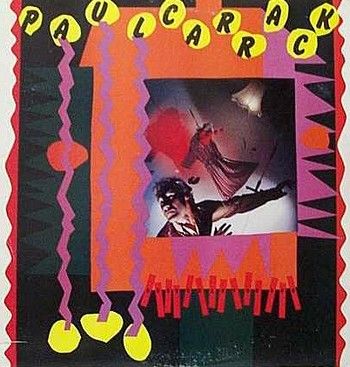
His name may be unfaniliar to many, but his great soulful voice is one of the most recognizable voices in the rock business. He has been a member of several bands including Ace, Squeeze, Mike + The Mechanics, and Roxy Music, been a session and touring musician for several others, and has enjoyed success as a solo artist as well. His distinctive voice shows up on some of his affiliated bands' best-known hits, two of the most memorable being "How Long" with Ace, and "Tempted" with Squeeze. With Suburban Voodoo, Paul Carrack re-launched his solo career after singing with Squeeze. Even if the album is an "eightyish" AOR style album, it is worth listening to just to hear the guy's terrific voice. It's quite a good album from Paul, with some great Motown, and soul touches. Also, Nick Lowe had a major part in the songwriting and production on the album. Check out his 1980 "Nightbird" album, and you can find his "Satisfy My Soul" album @ PCRCK/SMS [ use megaupload link]

TRACKS / COMPOSERS

LESSON IN LOVE (Paul Carrack) 2:58
ALWAYS BETTER WITH YOU (Paul Carrack) 3:30
I NEED YOU (Paul Carrack/Nick Lowe/Martin Belmont) 2:47
I'M IN LOVE (Carlene Carter/Nick Lowe) 3:16
DON'T GIVE MY HEART A BREAK (Carlene Carter/Nick Lowe/Paul Carrack) 3:21
A LITTLE UNKIND (Paul Carrack) 3:03
OUT OF TOUCH (Chris Difford/Glenn Tilbrook) 3:06
WHAT A WAY TO GO (Paul Carrack/Nick Lowe/Martin Belmont/James Eller/J.E. Ceiling) 2:50
SO RIGHT, SO WRONG (Paul Carrack/Nick Lowe/Martin Belmont/James Eller/J.E. Ceiling) 3:29
FROM NOW ON (Nick Lowe) 3:20
CALL ME TONIGHT (Paul Carrack/Alan Spenner) 3:05
I FOUND LOVE (Neil Hubbard) 3:37

MUSICIANS

Vocals, Backing Vocals, Piano, Organ - P. Carrack
Guitar - Martin Belmont
Bass - James Eller
Drums, Backing Vocals - Bobby Irwin
Backing Vocals - Robert Treherne , Nicholas Drain Lowe

REVIEWS

With Suburban Voodoo, Paul Carrack re-launched his solo career following a successful stint with Squeeze that produced a hit with his lead vocal on "Tempted." By this point, Carrack was playing with Nick Lowe, who produced Suburban Voodoo, and the album sounds very much like a Lowe album with Carrack singing. That's all to the good, though, since Carrack's supple voice is well-suited to Lowe's updated '60s rock & roll style. Carrack scored his first solo Top 40 hit with "I Need You," but that was one of the slighter tracks on an unusually tuneful album. © William Ruhlmann, allmusic.com

Paul Carrack has a charming voice, which helps immensely when you’re delivering a line like “I need you like a fly needs a plane.” If you’re wondering how Lowe he could go, Suburban Voodoo has your answer. Nick produced the record, cowrote six of the tracks and brought in his backing band to play it. As a result, it sounds like a Nick Lowe record, but you won’t hear me complain; I like Nick Lowe. (I also like saying the name “Nick Lowe.”) Most of the English pub pop records sound the same to me anyway: Paul Carrack, Squeeze, Ian Gomm, Nick Lowe (thunderous applause). Squeeze is the cleverest of the lot, Lowe below them, but the voodoo that Paul Carrack does isn’t so different in effect: “I Need You,” “What A Way To Go,” “Lesson In Love.” Mostly he’s the life of other people’s parties: Ace (“How Long”), Squeeze (“Tempted”), Mike + The Mechanics (“Silent Running”). Here he’s an ingratiating host, the punch is pretty punchy and there’s plenty of cake for everyone. It didn’t titillate any of the A&Rgoyles to plan Paul’s next party, but middle-aged men with thinning hair are hard work to market (and I had the eHarmony page to prove it). Also, Paul’s records require a lot of involvement from other people: players, producers, songwriters. They usually come on the coattails of a hit single with somebody else and carry over from other sessions (Nick the Knife, Mike + The Mechanics); sort of a party made from leftovers. Squeeze and Nick Lowe fans will find the food familiar: “From Now On,” “Out of Touch.” While it lacks the magical moments of East Side Story, Suburban Voodoo is nearly as sharp as Nick’s last record. More Motown than Englandtown, more soulful too, but otherwise in the same neighborhood. © 2007 Connolly & Company. All rights reserved

BIO

After years spent bringing a little soul to artists as diverse as Mike & The Mechanics, Nick Lowe, and Squeeze, singer's singer Paul Carrack makes his most persuasive play so far with the release of his stunning new album Satisfy My Soul. Recorded with minimal outside assistance at his Hertfordshire home studio, the album represents a quantum leap beyond Paul's previous work, showcasing his songwriting abilities and allowing his natural soul qualities to shine through with a new clarity and power. In the past, he's often tended to let others mould and direct his considerable talents, but Satisfy My Soul serves to re-establish Paul Carrack as a major solo artist, with both the vision and the capabilities to take control of his own career, and the musical instinct to know which direction it should take. A lot of people are going to be pleasantly surprised by this latest chapter in the life of one of pop music's most distinctive voices. Paul was first bitten by the music bug as a small child back in his native Sheffield, where he would bash away at a home-made drumkit up in his parents' attic, playing along with an old wind-up gramophone. By the time he reached his teens, the Mersey Boom was in full swing, and the young Carrack proceeded to swindle his way into a series of local bands, learning to play the organ and following the gig circuit to Germany, where he underwent the obligatory Hamburg nightclub baptism, as pioneered by such as The Beatles. In the early '70s, his progressive rock outfit Warm Dust released a few albums, but it was only when his pub-rock band Ace had a huge global hit with his song How Long that Paul's career really started to take off. Immediately, the band was catapulted from the British college circuit into huge American arenas, as How Long soared into the US singles chart, eventually reaching #1. When Ace broke up toward the end of the '70s, Paul found himself wrong-footed by the punk-rock boom, but secured some session work, playing on albums by Frankie Miller and Roxy Music, and touring with Roxy, an experience which gave him a taste for the big time. Paul's 1980 solo debut, Nightbird, failed to establish him as an artist in his own right, so he continued playing sessions, biding his time, and honing his talents as a musician and songwriter. As the '80s proceeded, Paul reached a rapprochement with the new-wave scene, playing on albums by The Undertones, The Smiths, and The Pretenders, and joining Squeeze for their masterwork East Side Story, helping redefine the group's profile with his soulful vocal on the hit single Tempted. After leaving Squeeze, obstensibly to pursue a solo career, he hooked up with Nick Lowe, an association which, though resolutely out of step with public taste and radio formats, would nevertheless generate five albums for Lowe and another for Paul, 1982's Suburban Voodoo. Though largely ignored in the UK, the album was a critical success in the US, where it was cited as one of Rolling Stone Magazine's Top 20 Albums of the Year. I Need You, a Carrack composition lifted from the album, provided him with another US Top 40 hit, and was subsequently covered by Linda Ronstadt & Aaron Neville. The biggest break in Carrack's career came in 1985 when he was invited to contribute vocals to a solo album being recorded by Genesis guitarist Mike Rutherford. Despite the apparent differences in their musical styles, the very first track Paul sang on, Silent Running, became a hit on both sides of the Atlantic. Encouraged by such instant success, Mike & The Mechanics developed into more of a group, touring America extensively and securing a string of hit albums and singles over the next decade. Before they could produce a follow-up album, however, Paul found time to sing and play on Roger Waters' Radio KAOS album and record another solo album of his own, 1987's One Good Reason, scoring another couple of hits through the title track and Don't Shed a Tear, which again broke into the US Top Ten, staying on Billboard's Hot 100 for nearly half a year. Even better was to come when Mike & The Mechanics resumed recording. Sung by Paul, the title-track of their second LP The Living Years was a huge worldwide hit, peaking at number one in America, and hoisting the band to megastar status. Further touring was followed by another Carrack solo album, 1989's Groove Approved, whose standout track - the Motown-flavoured Carrack / Lowe composition Battlefield - was later covered by Diana Ross. The following year, Paul was co-opted to perform at Roger Waters' grandiose presentation of The Wall in Berlin, where he sang Hey You in front of over 250,000 people. A third Mike & The Mechanics album, 1991's Word of Mouth, saw Carrack's creative input increasing, with four songwriting credits; and also donated a performance of Ain't That Peculiar recorded with Paul Shaffer's house band on Late Night with David Letterman to Nobody's Child, a charity album for Romanian orphans. Between tours again, in 1993 Paul busied himself with Spin 1ne 2wo, a classic rock covers collaboration with Rupert Hine, Tony Levin, and Steve Ferrone, and rejoined Squeeze for their Some Fantastic Place album. The next year was spent touring the world with Squeeze, working on an ultimately abortive band project with Don Felder, Timothy Schmidt, and Joe Walsh of The Eagles (which nevertheless garnered Paul an award for the most played song in America that year, when the reformed Eagles covered Love Will Keep us Alive, a song he co-wrote with Peter Vale and Jim Capaldi), and recording another Mike & The Mechanics album, Beggar on A Beach of Gold. This contained another couple of Carrack co-compositions, including his collaboration with Mike Rutherford, the hit single Over my Shoulder, which revived the band's flagging fortunes in the UK and Europe, paving the way for a subsequent Greatest Hits compilation. Paul's fifth solo album, Blue Views, appeared in 1995, and despite problems occasioned by the collapse of the record label, it was still highly successful in Europe, earning him a gold disc in Spain. When it was finally released a couple of years later in America on another label, the single For Once in Our Lives became a Top Five hit on Billboard's Adult Contemporary chart, cementing Carrack's growing reputation as a singer-songwriter of class and distinction. He was also developing a parallel reputation as an able and accomplished sideman to the stars, playing keyboards on albums by Eric Clapton, BB King, Simply Red, Mark Knopfler and Elton John, and being invited by Elton to play on Something About the Way You Look Tonight, which, as the B-side of "Candle in the Wind '97," is officially the biggest-selling single ever. Unfortunately, a management change at EMI resulted in his next album, Beautiful World failing to get the promotional push it deserved, and a bitterly dissillusioned Paul elected to take matters more into his own hands. After years spent biding his time, contributing to other musicians' projects and allowing outside producers to impose their designs on his material, it was a long overdue move, and one which reflected Paul's growing belief in himself as a singer-songwriter. Accordingly, he recorded his new album, "Satisfy My Soul" at his home studio, relying on his own musical instincts and playing everything himself, with the exception of the sax parts (which are by Steve Beighton), some backing vocals (by Lindsay Dracass) and some of the drum parts (by Ian Thomas or Paul's old chum Andy Newmark, the former Sly & The Family Stone sticksman.) Steeped in the classic and funk sounds of the '60s and '70s, but with an ear firmly trained on the future, Satisfy My Soul is clearly a labour of love, and features some of Carrack's most accomplished songwriting, with three tracks being co-written by Squeeze lyricist Chris Difford. Carrack's journey to make a record that truly does satisfy his soul has come full circle. "I've been doing this a long time, and I've often made it quite difficult for myself, one way or another, but I'm at the point now where I just want to enjoy my musicality, and I have the technical resources and the stability to be able to follow my instincts more confidently. Alot of the time, I've gone against my own instincts, but I'm not fighting them any more, I'm doing what comes naturally now. I'll be happy just to reach the people who already like what I do, but who knows, by making a more personal record, I might reach more people anyway." Satisfy My Soul brings Carrack to Compass Records, also the American home to other British popsters Robbie McIntosh, Hamish Stuart, Eddi Reader, Boo Hewerdine and Clive Gregson. © 2003-2008 Compass Records. All Rights Reserved

MORE ABOUT PAUL CARRACK

Paul Carrack was pop music's ultimate journeyman. A vocalist and keyboardist who enjoyed considerable success over the course of his lengthy career while in the service of bands ranging from Ace to Squeeze to Mike + the Mechanics, his finest work often came at the expense of his own identity as a performer; indeed, of the many big hits on which the unassuming singer was prominently featured, only one, 1987's "Don't Shed a Tear," bore his own name. Carrack was born April 22, 1951, in Sheffield, England; he joined the pub rock group Ace in 1972, eventually writing and singing their debut single, "How Long." After reaching the Top 20 in the group's native Britain, the record hit the number-three position in the U.S.; however, after subsequent material failed to match the success of "How Long," Ace disbanded in 1977, and Carrack signed on with country artist Frankie Miller. He soon resurfaced in Roxy Music, appearing on the LPs Manifesto and Flesh and Blood before releasing his solo debut, Nightbird, in 1980. Carrack next joined Squeeze, replacing keyboardist Jools Holland; in addition to contributing to the group's 1981 creative pinnacle East Side Story, he also assumed lead vocal duties on the single "Tempted," their best-remembered hit. However, Carrack's stay in Squeeze was brief, and after working with Nick Lowe he again attempted to forge a solo career with the 1982 LP Suburban Voodoo, cracking the U.S. Top 40 with the single "I Need You." A tenure as a sideman with Eric Clapton followed, and in 1985 he joined Genesis' Mike Rutherford in his side project Mike + the Mechanics. Their hits include "Silent Running (On Dangerous Ground)" and "All I Need Is a Miracle." While remaining a rather anonymous figure at home, Carrack achieved a higher level of visibility in America as a result of Mike + the Mechanics' success; subsequently, his third solo album, One Good Reason, proved to be by far his most popular effort to date, with the single "Don't Shed a Tear" reaching the Top Ten. Another tenure with the Mechanics followed, and with the title track of 1988's The Living Years, the group scored their first number-one hit. After the 1989 Carrack solo LP Groove Approved, Mike + the Mechanics issued 1991's Word of Mouth, which failed to repeat the chart performance of its predecessors; by 1993, Carrack was again a member of Squeeze, appearing on the album Some Fantastic Place and also resuming lead chores for a re-recording of "Tempted." However, he was once again back in the Mechanics' fold for 1995's Beggar on a Beach of Gold; the solo Blue Views was issued the next year, followed in 1997 by Beautiful World. Satisfy My Soul was issued in 2000, his first album for Compass Records. © Jason Ankeny, allmusic.com