A.O.O.F.C
recommends
Mizar6

babydancing


Get this crazy baby off my head!

Showing posts with label Seventies Soul/Funk. Show all posts

7.10.13

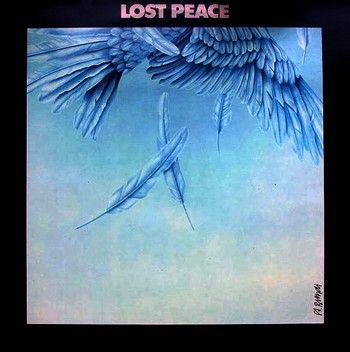
Lost Peace


Lost Peace- Lost Peace - 1977 - Zytglogge

Lost Peace was a very talented Swiss jazz rock band from Bern featuring Marc Hellman, Willy Müller, Peter Lehmann, Martin (Tinu) Heiniger, Markus Küng, and Claudio Bischoff.

Super rare and still underrated monster jazz funk album from Switzerland ! Deep Fender Rhodes solo, raw drumming with many open breaks, loud bass, funky moog & synth, horns. Tracks such as "Fun king" / "City West" / "As Herbschtetlet" / "Papera" would please any serious jazz funk collectors. Super hard to find nowadays, check the long audio and don't miss this Holy Grail ! © http://www.diggersdigest.com/index.php?page=shop&catid=22&numpage=5#

This independently produced set contains some amazing breaks and beats too so please read on! If you are into funky fender rhodes, raw fender bass riffs and seriously tight drumming then this Lp is for you! FUN KING opens with a fat drum break / loop (a must for beatheadz and producers!) before the bugged out basslines, jazzy horns, wah wah, fender rhodes and funky synth take off! Lots of funky breakdowns (great drumming and fender rhodes here) all played with skin-tight precision! CITY WEST is even funkier! More wicked basslines, breakbeat, funk drumming, heavy rhythms and fender rhodes solos etc. The track clocks in at 9 min dead and is a masterpiece! ÄS HERBSCHTETLET is another super-funky toon with more mad basslines, deep keyboard solos, wah wah and jazzy funk rock style horn riffs! Our absolute favourite is the extremely funky fusion groove of PAPERA! Driving bass riffs, drums and heavy horns map out a seriously tight groove that start and end the track but it is the deeply trippy (and long) Eastern scaled middle section of bells, gongs, finger cymbals, shakers, and other, unknown exotic percussion sounds that make this track special! If that is not enough, this movement then changes into a slow building (funky) drum solo before exploding into one of the best percussion breaks we've heard in years! Really wild and delirius jungle sounds a la Eberhard Schoener Bali-Agung! If you like Euro funk / fusion stuff like Second Direction or Placebo but with a twist, YOU WILL LOVE THIS! © 2013 - WorthPoint Corporation http://www.worthpoint.com/worthopedia/lost-peace-swiss-fusion-jazz-funk-132439806

This a really exceptional laid back jazz rock/funk album from the Swiss band, Lost Peace, with tight horn rock instrumentals, and a lot of soul. HR by A.O.O.F.C. Check http://www.dailymotion.com/video/x14zzct_lost-peace-fun-king-1977-swiss-jazz-rock-fusion_music and listen to some tracks from this obscure but top-notch Swizz jazz rock band. Does anybody have any more info about this band? [All tracks @ 320 Kbps: File size = 89.7 Mb]

TRACKS

1 Fun King 5:02
2 City West 9:00
3 Einzeiler 4:48
4 Join In 4:38
5 Äs Herbschtelet 3:47
6 Studweid Ballade 3:02
7 Papera 8:34

All tracks composed by Willy Müller except "Papera" by Marc Hellman

MUSICIANS

Markus Küng - Lead & Rhythm Guitar
Claudio Bischoff - Bass
Willy Müller - Rhodes Electric Piano, Mini-moog Synthesizer, Trombone
Marc Hellman - Drums, Congas, Tuned Gong, Marimba, Claves, Shekere, Maracas, Finger Cymbal, Sleigh Bells
Martin Heiniger - Tenor Saxophone, Clarinet
Peter Lehmann - Trumpet, Flugelhorn, Violin

7.4.13

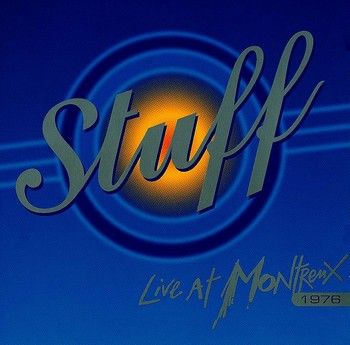
Stuff


Stuff - Live At Montreux 1976 - 2008 - Eagle Records

Stuff was a brilliant mid-seventies jazz-funk band that included guitarists Eric Gale RIP and Cornell Dupree, bassist Gordon Edwards, the incredibly talented drummer Steve Gadd and keyboardist Richard Tee RIP. All five members were very experienced Grade A session musicians. Individually, they played on a long list of of classic rock, soul and pop albums from the 60s into the 80s, including work for artists like John Lennon, Steely Dan, Miles Davis, Paul Simon, Billy Joel and Aretha Franklin, and in between session work they found time to tour as a band and record five albums. “Live at Montreux” is a terrific funky blues and soul based album with touches of Gospel with killer grooves throughout. No one musician dominates the proceedings. There is a wonderful dynamic musical understanding between all the musicians and they produce music of the highest calibre. Regardless of whether you regard this album as rock, funk, jazz, or fusion, Chris Rea said that "The purity of what's on this CD is the true history of modern music. It's as good as it ever got and ever will get." Listen to Stuff’s 1976 s/t album [All tracks @ 320 Kbps: File size = 135 Mb]

TRACKS / COMPOSERS

1. Foots - C. Dupree, E. Gale, G. Edwards, R. Tee, S. Gadd 6:50
2. Signed, Sealed, Delivered, I'm Yours - L. Garrett, Lula Mae Hardaway, S. Wright, Stevie Wonder 3:32
3. The Gadd Solo – S.Gadd 1:16
4. Stuff's Stuff - C. Dupree, E. Gale, G. Edwards, R. Tee, S. Gadd 3:48
5. That's The Way Of The World - C. Stepney, M. White, V.A. White 6:08
6. Feelin' Alright - Dave Mason 6:25
7. Lift Every Voice And Sing - Johnson, J Rosamond, Johnson, J. Weldon 0:46
8. Oh Happy Day - Edwin Hawkins 6:59
9. Ode To Stuff - C. Dupree, E. Gale, G. Edwards, R. Tee, S. Gadd 5:43
10. How Long Will It Last? - E. Gale 3:46
11. It’s Your Thing - O'Kelly Isley, Ronald Isley, Rudolf Isley 0:28
12. You Are So Beautiful - B. Fisher, Preston, W.E. "Billy" 5:04
13. Boogie On Reggae Woman - Stevie Wonder 5:32
14. Do It Again - C. Dupree, E. Gale, G. Edwards, R. Tee, S. Gadd 2:32

MUSICIANS

Eric Gale, Cornell Dupree - Guitar
Gordon Edwards - Bass
Richard Tee - Keyboards
Steve Gadd - Drums
Odetta - Vocals on “Oh, Happy Day”

BIO (WIKI)

Stuff was an American, New York City-based jazz-funk band active in the late 1970s and early 1980s. The members were Gordon Edwards (bass), Richard Tee (keyboards), Eric Gale (guitar), Cornell Dupree (guitar), Chris Parker (drums), and later Steve Gadd (drums). (Gadd has confirmed on a recent DVD that Chris Parker was in the lineup first.) Initially called The Encyclopedia of Soul, in his liner notes for the 2008 Eagle Rock release Stuff - Live in Montreux 1976 Edwards describes how the band was founded: I was contracting and playing studio sessions, and hired Cornell for many of the dates – so we started recruiting for the band. One day at Rudy Van Gelder’s – I remember it was a hell of a job; it was for Queen Esther Marrow, great singer. George Benson was on the job, Bernard Purdie, and Richard Tee on keyboards. Esther asked me if she could use the band for a club date she had lined up – a club called Mikell's, (on the corner of 97th and Columbus Avenue) in New York City.) We did play there, and Richard Tee stopped by one time and he started coming every night. We only worked Monday through Thursday, and Mikell’s was packed, wall to wall, round the block. After parting ways with Esther the band returned to play there every week. Steve Gadd came by one night to sit in with us, as did Eric Gale, and they both became a part of the band. We were rolling heavy, and one night I was approached by Michael Lang, the gentleman who put on Woodstock, who said he was sure he could get us a record deal – were we interested. Sure enough Warner Bros. flew in from California to hear us live. They liked us, but we couldn’t use the name The Encyclopedia of Soul – it was too long. I remember we were in a diner that was on the corner by Atlantic Records one day; there was me, Michael Lang, Cornell Dupree and Erma Dupree and we were trying to decide what we would call the band. It was Erma who said, “You know Gordon, you always call everybody stuff, I don’t care who it is. You should call the band STUFF. Stuff developed a danceable Rhythm and blues and Funk sound, the likes of which had not been heard since the days of the Harlem Swing Bands of the 40s and 50s. Individually and collectively the members of Stuff became some of the most sought after session musicians of that era, playing with a stellar array of artists from Aretha Franklin to John Lennon to Paul Simon to name but three; they backed Joe Cocker during his world tour to promote his Stingray album, performing with Cocker on NBC's Saturday Night Live in its second season. The band released five albums between 1975 and 1980, all of which went Gold; More Stuff earned a Grammy Nomination. Stuff's first album was produced by Herb Lovelle in 1976 and went platinum in Japan. Stuff was closely associated with the New York jazz club Mikell's, where the city's top session musicians would meet up for jam sessions with visiting soul, jazz and funk stars. Later, because of the intricate rhythms many of his newer songs had developed, Paul Simon assembled an all-star band of mostly jazz heroes. He attained three fifths of the Stuff band (Steve Gadd on drums, Richard Tee on keyboards, and Eric Gale on guitar), as well as future King Crimson/Peter Gabriel bassist, Tony Levin.

4.3.12

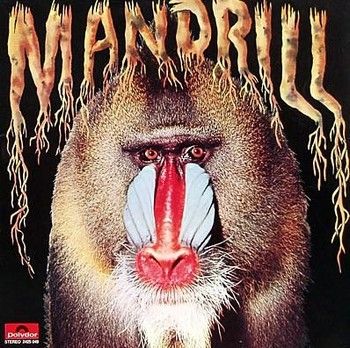
Mandrill


Mandrill - Mandrill - 1970 - Polydor

A good East Coast jazz funk seventies album. Mandrill recorded catchy, well-played material with great Brooklyn grooves, combining soul, blues, and progressive jazz with Latin and Caribbean influences. Although their music was mainly for the commercial market, there was also an experimentalist bent in their music, which set them apart from many bands playing the same kind of music in the seventies. A very enjoyable album from this sometimes forgotten stylish, and very talented band. Listen to their album "Mandrill Is," and buy their brilliant 1973 "Composite Truth" album. [All tracks @ 320 Kbps: File size = 87.2 Mb]

TRACKS

A1 Mandrill 4:20
A2 Warning Blues 4:33
A3 Symphonic Revolution 5:22
A4 Rollin' On 7:41

Side B is "Peace And Love (Amani Na Mapenzi)" separated into 6 tracks

B1 Movement I (Birth) 1:50
B2 Movement II (Now) 1:45
B3 Movement III (Time) 2:15
B4 Movement IV (Encounter) 6:05
B5 Movement V (Beginning) 2:05
B6 Chutney 3:07

Tracks A1 & B6 composed by Mandrill: Tracks A2 - B5 composed by Kelly Wilson & Steve Wilson

MUSICIANS

Carlos Wilson - Guitar, Trombone, Flute, Percussion, Vocals
Omar Mesa - Soloist [Lead Guitar], Guitar [Lead Guitar], Percussion, Vocals,
Bundie Cenacs - Bass, Percussion, Vocals
Claude Cave - Organ, Piano, Vibraphone, Percussion, Vocals
Charles Padro - Drums, Percussion, Vocals
Ric Wilson - Tenor Saxophone, Percussion, Vocals
Lou Wilson - Trumpet, Flugelhorn, Congas, Percussion, Vocals

BIO

One of funk's most progressive outfits, Mandrill paid the price for their ambitions in commercial returns -- not that they never earned a reputation or an audience, but their expansive, eclectic vision often worked better when given an album's worth of room to roam, rather than being condensed into hit singles. Mandrill's jam-heavy brand of funk was liberally infused with Latin, Caribbean, and jazz influences, plus blues, psychedelia, African music, and straight-up rock. Their freewheeling approach was a definite influence on the Parliament-Funkadelic collective (an early incarnation of which actually served as their opening act), and their grooves have been sampled by numerous hip-hop acts in modern days. Mandrill was formed in Brooklyn in 1968 by brothers Ric Wilson (sax, vocals), Lou Wilson (trumpet, vocals), and Carlos Wilson (trombone, vocals), all of whom were born in Panama and raised in the Bedford-Stuyvesant neighborhood by musically inclined parents. Ric Wilson had already taken up a career as a cardiologist when the group officially formed; the brothers had performed together for quite some time, rehearsing at the beauty salon where their mother worked. Taking their name from the variety of West African ape (because of its distinctive, colorful face and well-developed, family-oriented social organization), Mandrill soon added keyboardist Claude "Coffee" Cave, guitarist Omar Mesa, bassist Bundie Cenas, and drummer Charlie Padro. They signed with Polydor and released their eponymous debut album in 1970, displaying the influence of the burgeoning jazz-rock and Latin rock movements in addition to soul and funk. For the follow-up, 1972's Mandrill Is, Fudgie Kae Solomon replaced Cenas on bass, and the group scored its first hits with "Ape Is High" and "Git It All." With new drummer Neftali Santiago, Mandrill scored their biggest hit with 1973's Composite Truth, which also produced their highest-charting single, "Fencewalk." This incarnation ranked as the classic Mandrill lineup, but didn't take long to splinter; after 1974's Just Outside of Town (which featured the hit "Mango Meat"), guitarist Mesa left (citing "spiritual reasons") and was replaced by Dougie Rodriguez, formerly of Santana. After the soundscape-heavy double-LP Mandrilland, disputes over the Wilson brothers' control of the band led to the departure of every non-Wilson member save for Claude Cave. Leaving Polydor, Mandrill cut two albums for United Artists with a session rhythm section over 1975-1976, and subsequently caught on with Arista. Their label debut, 1977's We Are One, proved to be their biggest hit since Composite Truth, spawning the club hits "Funky Monkey" and "Can You Get It"; it also marked the temporary return of Santiago on drums, the addition of another brother, Wilfredo "Wolf" Wilson, on bass, and the debut of guitarist Joaquin Jessup. Two more albums for Arista followed over the next two years (New Worlds and Getting in the Mood), and the band also handled the soundtracks for the Muhammad Ali flick The Greatest (1977) and the cult gang film The Warriors (1979). Mandrill went on to cut one more album, Energize!, for Montage in 1982 before disbanding. Fudgie Kae Solomon later died of a drug overdose. © Steve Huey © 2012 Rovi Corporation. All Rights Reserved http://www.allmusic.com/artist/mandrill-p4835/biography

15.10.11

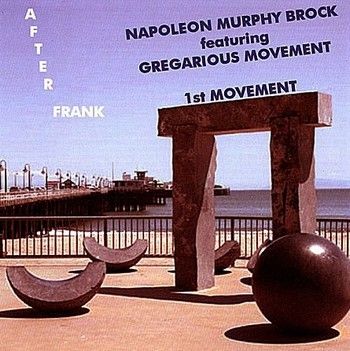
Napoleon Murphy Brock


Napoleon Murphy Brock - After Frank: 1st Movement (Feat. Gregarious Movement) - 2008 - Crossfire

Napoleon Murphy Brock's three-year stint alongside Frank Zappa coincided with some of the main man's most contentious albums, at least if period reviews are anything to go by; 30 years on, of course, Apostrophe, One Size Fits All, and the Beefheart collaboration Bongo Fury are as well loved as the rest of the Mothers catalog, funky instincts and all. At the time, though, his willingness to study (say it softly) dance music, even if he did so quietly, raised many a quizzical eyebrow. After Frank takes those once-suspect rhythms and wraps them around your head. Recounting Brock's post-Zappa activities, it's a five-track disc recorded live in Santa Cruz in 1977 with his new band, Gregarious Movement, having such a wild time that even the vaguely muffled sound quality only packs on the ambience of the evening. Three Ohio Players covers dominate the set, but it's good times à go go regardless, as band interacts with audience, rhythms melt and float into one another, and Al Green's "Let's Stay Together" is as smooth and sultry as you could wish. In fact, the only criticism is -- can we have some more, please? © Dave Thompson © 2011 Rovi Corporation. All Rights Reserved. http://www.allmusic.com/album/after-frank-1st-movement-r1389238

A live 1977 recording of Gregarious Movement, the funk band formed by Napoleon Murphy Brock after leaving the Zappa band. This is the first part of Napoleon Murphy Brock's archival series of recordings made before and after his time with Frank Zappa. Three of the five extended tracks are Ohio Players classics done in Gregarious Movement's unique style: "Skin Tight," "Heaven Must Be Like This" and "Fire." Billy Ingram scores on The Five Stairsteps' "O-o-h Child", while Napi turns in a brilliant lead vocal on Al Green's "Let's Stay Together". Really good funk from NMB (ex-Zappa). The album has been called "cheesy" in some quarters, but the guys are covering songs by Al Green, The Ohio Players, and The Five Stairsteps - All soul/funk standards. There was a lot of very cheesy music about in the '70's disco/funk era, but NMB and his band members definitely brought something new to these songs. This is archive stuff, so don't expect perfect sound quality. It's good that these recordings have been preserved. Listen to Napoleon Murphy Brock's "Balls" album. [All tracks @ 320 Kbps: File size = 101 Mb]

TRACKS / COMPOSERS

Skin Tight - Beck, Bonner, Jones, Middlebrooks, Ohio Players, Pierce, Satchell, Williams
Heaven Must Be Like This - Bonner, Jones, Middlebrooks, Satchell, Williams
Let's Stay Together - Green, Jackson, Mitchell
O-o-h Child - Stan Vincent
Fire - Beck, Bonner, Jones, Middlebrook, Ohio Players, Satchell, Williams

BAND

Napoleon Murphy Brock - Vocals, Saxophone, Percussion
Thomas Reed - Guitar
Clifford Coulter - Vocals, Piano, Synthesizer, Organ, Keyboard Bass
Billy Ingram - Vocals, Drums, Percussion

SHORT BIO

Napoleon Murphy Brock is an American Grammy Award winning singer, saxophonist and flautist who is best known for his work with Frank Zappa in the 1970s, including the albums One Size Fits All, Roxy and Elsewhere, and Bongo Fury. His own most memorable vocal accomplishments are illustrated on the songs "Village of the Sun" and "Florentine Pogen." Napoleon Murphy Brock's numerous performances include the role of the "Evil Prince" on Zappa's Thing-Fish album. He has also performed with George Duke, Captain Beefheart and more recently with Neonfire and Robert Kramer. He remains a regular performer at Zappanale. Brock appeared in the 2005 film Rock School, a documentary about The Paul Green School of Rock Music, an extracurricular music program that he and Project/Object have closely supported for several years. In 2006, he toured with Frank Zappa's son Dweezil on the latter's Zappa Plays Zappa shows. He also regularly tours with fellow Zappa alumnus Ike Willis and others with Andre Cholmondeley's Project/Object. Other Zappa related projects he's been involved with include the Tampa, Florida based band Bogus Pomp, and the 16 piece Ed Palermo Big Band from New York City. He is most frequently seen fronting the Grande Mothers Re-Invented with Roy Estrada and Don Preston (the only Frank Zappa alumni from the Mothers of Invention regularly performing the music of Frank Zappa). They have over 91 performances since 2002. At the 51st Grammy Awards on February 8, 2009, Napoleon won a Grammy for his performance of the song "Peaches en Regalia" with the band Zappa Plays Zappa, which also featured Steve Vai. The song was originally written by Frank Zappa and released on the album Hot Rats © 2006 Tarnius Music Inc http://www.tarniusmusic.com/Soul/NapoleonMurphyBrockfeatGregariousMovement/AfterFrank-1stMovement/

24.4.11

Upp


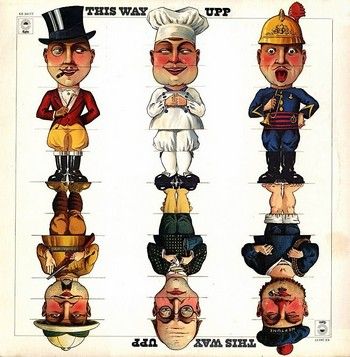
Upp - This Way - 1976 - Epic

Upp was a British keyboard based soul funk/jazz rock band, active in the 1970s and based in South London. The group consisted of Stephen Amazing aka Steve Fields (bass guitar), David Bunce (guitar), the group's founder Andy Clark (keyboards), and Jim Copley (drums). Stephen Amazing played bass at different times in bands called 'The Kinetics' and 'The Abstracts'. Andy Clark had recorded several albums with south coast blues-boomers Clark Hutchinson. The group's debut album, "Upp", was released in 1975, and produced by Jeff Beck who also played guitars on the album. Jeff also produced "This Way" (posted here), and played guitar solos on "Dance Your Troubles Away" and "Don't Want Nothing to Change." This album has been classified as jazz fusion, but fundamentally the music is a mellow blend of funky white soul. The musicianship is good, and the band's sound is reminiscent of a lightweight AWB. Listen to Be Bop Deluxe's great "Sunburst Finish" album with Andy Clark on keyboards

TRACKS

A1 Never Turn My Back On You 8:25
A2 Say Goodbye 5:00
A3 Nitto 3:50

B1 Dance Your Troubles Away 3:40
B2 I Don't Want Nothing (To Change) 3:25
B3 Groovin' Mood 3:34
B4 There's Still Hope 4:00
B5 Get To The Bottom 3:25

All tracks composed by Andy Clark, James Copley, Steve Fields

MUSICIANS

David Bunce - Guitar
Jeff Beck - Guitar solos on "Dance Your Troubles Away", & "I Don't Want Nothing (To Change)"
Stephen Amazing aka Steve Fields - Bass, Mutron Bass
Andy Clark - Fender Rhodes, Mini Moog Synthesizer, Clavinet, Lead Vocals
James Copley - Drums
Gary Coleman - Vibraphone, Percussion
Tom Scott - Sax solos
Jeanie Arnold, Christie Thompson - Background Vocals
Jimmy Getzoff - Strings, Concert Master

9.3.11

Locust


Support Real Music

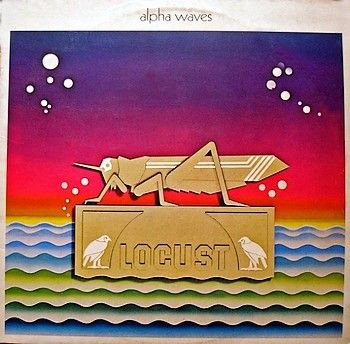
Locust - Alpha Waves - 1976 - BUK Records Ltd

There are a few bands named Locust. However, this post refers to the very obscure British soul funk band of the mid seventies. Bass player Brent Forbes played in an English band named Zac who recorded one album. Chris Parren played in the same band and both musicians backed the American soul singer Doris Troy who wrote "Just One Look", a hit in the USA and also a hit for the Hollies in the UK. Seemingly Brent became an estate agent and still plays on an amateur basis. In August 1989, Chris Parren played with the great Ray Minhinnett in his band, the UK Busters. You can find more info on Chris @ http://www.reocities.com/sunsetstrip/Diner/2674/parren_chris_a.htm Wikipedia notes that drummer/vocalist Phil Spinelli and rhythm guitarist Pete Bonas quit the jazz rock/fusion band (Brand X) after recording the 1st (disappeared/unreleased) Brand X album around 1975. Genesis drummer Phil Collins replaced Phil Spinelli in Brand X between 1975 and 1976. Pete Bonas played on Jim Capaldi's "The Sweet Smell Of Success" album. Find some info on Pete @ http://www.discogs.com/artist/Peter+Bonas. Seemingly in 1994 Phil Spinelli was part of a north west comedy troupe in England. John Dillon may possibly have played in a band called The Field Trip around 1994. Ray Allen played sax with Jim Capaldi, Robert Palmer, Maggie Bell and many others. "Alpha Waves" is quite an unusual British soul funk album from a very talented band. There are some great grooves throughout the album, with a flavour of the AWB, the early War, Isaac Hayes, and Sly & The Family Stone. "Foxy" is a bit on the "poppy" side and a little out of step with the rest of the album. "Cosmic Kangaroo Juice" is a good track, and a great example of the quality of the band's skills. N.B: Jim Capaldi wrote a small sleeve note on the album. Any info on this band would be appreciated

TRACKS

A1 Good People 5:30
A2 Foxy 3:59
A3 Stranger 5:35
A4 Tribute To Escoriot 4:30

B1 Say Your Little Piece 4:20
B2 Funky Paranoia 4:45
B3 Alpha Waves 5:15
B4 Cosmic Kangaroo Juice 5:40

BAND

Guitar - Peter Bonas
Bass - Brent Forbes
Keyboards - Chris Parren
Drums - John Dillon
Percussion, Lead Vocals - Phil Spinelli
Saxophone, Percussion, Vocals - Ray Allen

27.9.10

Short Stuff


Photobucket

Short Stuff - Short Stuff - 1976 - Third Coast

Milwaukee group Short Stuff, were an innovative Milwaukee based band very popular in S.E Wisconsin and throughout the US midwest in the 1970's. The band led by singer, songwriter and stellar blues harmonica player Jim Liban pioneered the blues/rock sound later identified with bands like the Fabulous Thunderbirds and SRV. Short Stuff released 2 Albums, the s/t one posted here and "Talk Is Cheap" in the early 80's. "Short Stuff" may be an obscure album, but it's pure kick-ass funk, soul, blues, and rock! Short Stuff's keyboard player/vocalist Junior Brantley went on to play with The Thunderbirds and later Roomfull of Blues and Jimmie Vaughan. Jim Liban still plays in a more traditional vein with his trio. He has earned global cult status as one of the greatest post-war blues harmonica players. Many of his songs have been recorded by great artists like Johnny Winter and Lonnie Brooks. Has anybody any info on the band's second album "Talk Is Cheap"? N.B: The album here is from vinyl so expect some "snap, crackle and pop"!.
TRACKS / COMPOSERS

1 If Bad Luck Were Money - Jim Liban
2 This Time I Got You - Jim Liban
3 Main Lady -Robert Brantley Jr, Marie Wiess
4 Everyday I Learn Something New - Jim Liban
5 Always There - R. Laws, W. Jeffery
6 Let's Straighten It Out - B.Latimore
7 One Of These Days - Jim Liban
8 Sloppy Drunk - Trad.
9 I Made A Mistake - Jim Liban
10 The Disco Kid - Jim Liban
11 Coda Kid - Jim Liban, Mark Lamar Plopper

MUSICIANS

Jim Liban - lead and background vocals, harmonica, percussion
Mark Lamar Plopper - electric and acoustic guitars
Mike Duffeck - bass
Junior Brantley - lead and background vocals, piano
Dean Halonen - ARP Synthesizers
Kenny Arnold RIP - drums, percussion
Cathy Nicholson - vocals on Track 6

30.4.10

Hummingbird


Photobucket

Hummingbird - We Can't Go On Meeting Like This - 1976 - A&M Records

This album is full of really good dynamic playing. The rhythms are great, and there are some nice funky soul/jazz touches. Musicians include guitarist, Bernie Holland who once played with the late, great Mike Patto, Hummingbird's founder, the great bassist and guitarist, Bobby Tench who played with Jeff Beck, Van Morrison, Roger Chapman, Eric Burdon and many more, the brilliant keyboardist Max Middleton, who played with Kate Bush, the late John Martyn, Jeff Beck, etc., and the great session vocalist and ex-Blue Mink member, Madeline Bell. Almost forgot to mention that "The World's Greatest Drummer", the shy and retiring Bernard "Pretty" Purdie plays here too! "We Can't Go On Meeting Like This" was a successful album in the mid seventies, but is almost forgotten now. Listen to the band's "Diamond Nights" album

TRACKS / COMPOSERS

A1 Fire And Brimstone - Clive Chaman, Ian Samwell 4:57
A2 Gypsy Skys - Max Middleton 5:17
A3 Trouble Maker - Ian Samwell, Bobby Tench 3:14
A4 Scorpio - Bernie Holland 4:14
A5 We Can't Go On Meeting Like This - Ian Samwell, Bobby Tench, Max Middleton 4:19

B1 The City Mouse - Clive Chaman 4:45
B2 A Friend Forever - Clive Chaman 5:30
B3 Heaven Knows (Where You've Been) - Ian Samwell, Bobby Tench 4:01
B4 Snake Snack - Clive Chaman 4:25
B5 Let It Burn - Bernie Holland, Ian Samwell, Bobby Tench 4:59

MUSICIANS

Guitar - Bernie Holland
Vocals, Guitar - Bobby Tench
Guitar - Robert Ahwai on tracks A1, A2, B1, B4
Bass, Harmonica - Clive Chaman
Keyboards, Synthesizer [Moog] - Max Middleton
Drums - Bernard Purdie
Backing Vocals - Joanne Williams , Liza Strike , Madeline Bell

BIO (WIKI)

Hummingbird were a British rock band, formed in 1974 by Bobby Tench of The Jeff Beck Group and Streetwalkers fame. Hummingbird recorded three successful albums, released by A&M using Ian "Sammy" Samwell as their record producer.The original line up included members of the second Jeff Beck Group, vocalist and guitarist Bobby Tench,keyboardist Max Middleton, bassist Clive Chaman, drummer Conrad Isidore and second guitarist Bernie Holland. At the start of sessions for their first album they were joined by Jeff Beck for a brief period but he did not contribute to the album and left to work on his own project. After the first album Bernie Holland was replaced by guitarist Robert Awhai and drummer Bernard Purdie replaced Isidore on the next two albums,vocalists Madeline Bell and Liza Strike were brought in to complement the band. They found success mainly in the USA, also in Europe and Japan.

4.8.09

Mother Night


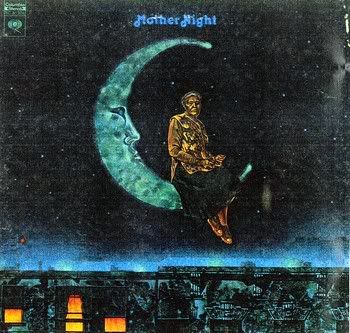
Mother Night - Mother Night - 1972 - Columbia

Mother Night were a 9 piece 60-70's soul/funk group band from New York. There is an amazing amalgamation of sounds here, like Tower Of Power, Blood Sweat, & Tears, Average White Band, War, Jimi Hendrix, Sly & The Family Stone, and countless more. A good album from a very obscure band.

Dusty Groove America had this to say, - "An obscure rocking funk combo from the early 70s -- one of a few, like Sweet Apple or High Voltage, who seemed to crop up on Columbia after the success of Sly & The Family Stone. Like those groups, and Sly, Mother Night's got a guitar-driven groove that was probably easy funk for the crossover crowd -- but like Sweet Apple, they're a bit hard-driven, with a heavy sound that really takes them over the top with a wild energy that probably kept them off of radio, and stuck in the underground. Lots of nice jamming, though, and these guys really know how to lay some jazzy chords into the mix to keep things fresh! Titles include "Julie Nixon", "Utopia", "Scuffle", "Warm Spot", "Groupie", "Guitar Man", and "Fools Are You".

Any info on this band / album would be greatly appreciated.

TRACKS

scuffle
today's another day
julie nixon
utopia
take a trip
fools are you
warm spot
groupie
guitar man

BAND

Eddie Martinez - Lead Guitar, Vocals
Bill Ohashi - Trombone
Sonny McPhee - Alto Sax., Vocals
Gary Pribek - Tenor Sax., Flute
Skip McPhee - Organ, Vocals
Val Burke - Bass, Vocals
Ronnie Pace - Lead Vocals, Trumpet, Piano, Congas
Arnold Ramsey - Drums, Organ, Guitar, Bass, Sax.

REVIEW [ FROM ralphcat © 2000 - 2009 rateyourmusic.com ]

I just bought this very rare album on wax and I must say it is indeed a damn good record overall. Very funky and very, very much a product of 1972. I mean shit, there's a cut about sending "roaches" to president Nixon's daughter Julie (track 3 "Julie Nixon"). The overall sound on the album is like Chicago Transit Authority mixed with Funkadelic (circa "America Eats It's Young") with a dash of War and Santana. The highlights of this one and only offering from this band are "Scuffle" (the frenetically funky opener), "Groupie" (an 8 minute soul/jazz/funk instrumental featuring one monster of a guitar solo), and the very Latin cut "Fools are You" which is simply one of the greatest songs I've ever heard. The remaining cuts sound a bit dated but are really good nonetheless. I also put the amazing album cover in my top three favourites of all time. I would love to see this released on C.D. someday soon. © ralphcat © 2000 - 2009 rateyourmusic.com

17.4.09

The Average White Band


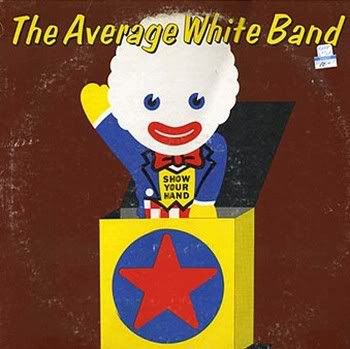
The Average White Band - Show Your Hand - 1973 - MCA

Show Your Hand was where it all began for the Average White Band, which turned out to be one of the hottest funk/soul outfits of the mid- to late '70s. But when MCA released this debut LP in 1973, the band's commercial success was still a year away — it wasn't until they joined the Atlantic roster in 1974 that they exploded commercially. Show Your Hand, in fact, was among 1973's neglected R&B releases. In retrospect, it's easy to point the finger at MCA and say, "You dropped the ball; this album should have done better." Atlantic successfully broke AWB in 1974, so why weren't MCA's promotions and marketing people able to accomplish that the previous year? But in all fairness to MCA, breaking AWB was a challenge — imagine trying to convince '70s soul stations that a white band from Scotland played first-class funk and soul. Back in 1973, a lot of program directors at R&B stations probably took one look at this LP and assumed that AWB was a rock band; it took Atlantic to convince those programmers that the name Average White Band was meant to be ironic. Of course, anyone who gave Show Your Hand a serious listen in 1973 realized that AWB certainly wasn't typical of the era's long-haired white bands — stylistically, they inspired comparisons to the Isley Brothers and Tower of Power, not Led Zeppelin, Deep Purple, or Mahogany Rush. Whether AWB is turning up the funk on "T.L.C." or chilling out on the smooth soul of "Twilight Zone," there is no getting around the fact that Show Your Hand is very much an R&B album. Show Your Hand (which MCA reissued as Put It Where You Want It in 1975) never became as well-known as AWB's subsequent recordings for Atlantic, but that doesn't make it any less impressive a debut for Hamish Stuart and his colleagues. © Alex Henderson, allmusic.com

This debut album showed the future potential of one of the great British soul/ R&B/ /funk groups. The Average White Band made some brilliant albums, and their "Atlantic Avenue", "Pick Up The Pieces", and "You Got It" are three of the best soul/funk songs ever written. Listen to their "Cut the Cake," and "Person to Person" albums, and check out the band's rare 1974 "AWB/The Clover Sessions" album, a 20-track remastered promotional 2 x CD-R acetate album set @ AWB/TCS

TRACKS / COMPOSERS

Side 1
"The Jugglers" (AWB, Alan Gorrie) – 4:55
"This World Has Music" (Bamlett, Gorrie, Ware) – 5:45
"Twilight Zone" (Roger Ball, Gorrie) – 5:12
"Put It Where You Want It" (Joe Sample, Gorrie, Layne) – 4:00

Side 2
"Show Your Hand" (Gorrie) – 3:40
"Back in '67" (Ball, Gorrie, Robbie McIntosh) – 4:00
"Reach Out" (AWB, Ball) – 4:00
"T.L.C." (AWB, Gorrie) – 8:20

N.B: This album was re-released in 1975 as "Put It Where You Want It", which excluded "The Jugglers" and included the track "How Can You Go Home".

BAND

Alan Gorrie - Bass, Guitar, Keyboards, Vocals
Hamish Stuart - Bass, Guitar, Vocals
Onnie McIntyre - Guitar, Vocals
Roger Ball - Keyboards, Alto Saxophone
Malcolm Duncan - Tenor Saxophone
Robbie McIntosh R.I.P - Drums, Percussion

BIO

The Average White Band had their name jokingly bestowed on them by Bonnie Bramlett of Delanie & Bonnie; during their prime, AWB's solid grooves and overall chemistry were anything but average. But the name did reflect their paradoxical position: they were an American-style soul band made up of native Scots. The group was formed in Glasgow, Scotland, in early 1972 by Alan Gorrie (b. Jul. 19, 1946, Perth, Scotland) on bass, vocals, Michael Rosen; (soon replaced by Hamish Stuart; [b. Oct. 8, 1949, Glasgow, Scotland] [guitar, vocals]), Onnie McIntyre, (b. Sep. 25, 1945, Lennox Town, Scotland) on vocals, guitar, Robbie McIntosh (b. 1950, Scotland - d. Sep. 23, 1974, Los Angeles), Roger Ball, (b. Jun. 4, 1944, Dundee, Scotland) on keyboards, saxophone, and Malcolm Duncan, (b. Aug. 24, 1945, Montrose, Scotland) on saxophone. After their 1973 debut album, Show Your Hand, went unnoticed, they hooked up with producer Arif Mardin to record Average White Band (frequently called AWB because of the initials on the cover). Released in August 1974, the album topped the charts and spawned the near-instrumental dance hit "Pick Up the Pieces," which also went to number one. Meanwhile, tragedy struck the band, when drummer Robbie McIntosh died of a drug overdose; he was replaced by Steve Ferrone (b. Apr. 25, 1950, Brighton, England). AWB nearly replicated its success with the third album, Cut the Cake, and its title single, both of which reached the Top Ten. But the sameness of the group's approach and such side projects as an album with Ben E. King broke its momentum. Also, the rise of disco left its funky soul style sounding dated. AWB managed a couple more gold albums in Person to Person (January 1977) and Warmer Communications (March 1978), and its popularity lasted longer in the UK than in the US, but by the start of the '80s the band was permanently out of fashion. The band members have worked as session sidemen for artists ranging from Chaka Khan to Paul McCartney and Badfinger. © Rick Clark & William Ruhlmann, All Music Guide

21.7.08

Average White Band & Ben E. King


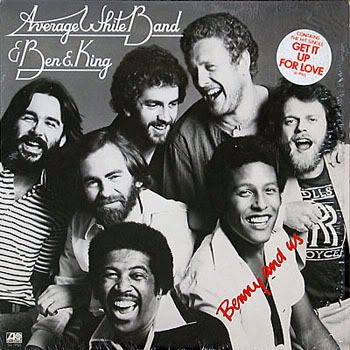
Average White Band & Ben E. King - Benny And Us - 1977 - Atlantic

One of the most interesting collaborations of the seventies, the soul legend Ben E. King and the progressive Average White Band. The result was a surprisingly good album, and one that has the AWB "fixing" their "bad vocalist" problem by bringing in Ben E King to sing! The album has a great funky sound , and some great tracks on the album include a funky version of "What Is Soul", an earlier hit for King, and "Star In The Ghetto", "Get It Up For Love", and "The Message." A very good album, even if it's a little short. The sound quality is only fair, but it's great to hear these great artists together. Check out the AWB's "Cut the Cake," and "Person to Person" albums for a real taste of just how good this group could be. There is info on their "Feel No Fret" album @ AWB/FNF and it is very worthwhile to hear Ben E. King's brilliant " Shades of Blue" album.

TRACKS / DETAILS/ COMPOSERS

A1 Get It Up For Love (4:33) Congas, Percussion - Nicky Marrero [composed by Ned Doheny]
A2 Fool For You Anyway (5:38) Guitar [Solo] - Jim Mullen [composed by Mick Jones]
A3 A Star In The Ghetto (7:01) Arranged By [Strings, Horns] - Arif Mardin [composed by Phillip Mitchell]
Congas - Ray Barretto
A4 The Message (5:17) Recorded By - Bobby Warner [composed by by The Average White Band, Ben E. King]
B1 What Is Soul (4:34) [composed by Ben E. King, Bob Gallo]
B2 Someday We'll All Be Free (5:13) Arranged By [Strings] - Cengiz Yaltkaya [composed by Donny Hathaway, Ed Howard]
Backing Vocals - Debra Gray , Robin Clark
Recorded By - Bobby Warner
B3 Imagine (4:56) Arranged By [Strings] - Arif Mardin , Cengiz Yaltkaya [composed by John Lennon]
Backing Vocals - Debra Gray , Robin Clark
B4 Keepin' It To Myself (4:30) Congas, Percussion - Nicky Marrero [composed by Alan Gorrie]

MUSICIANS

Backing Vocals - Luther Vandross
Bass, Guitar, Backing Vocals - Alan Gorrie
Drums, Percussion - Steve Ferrone
Guitar - Onnie McIntyre
Guitar, Backing Vocals - Hamish Stuart
Keyboards, Saxophone [Alto] - Malcolm Duncan
Lead Vocals - Ben E. King
Saxophone [Additional Baritone] - Lewis Del Gatto (tracks: A2, B1, B4)
Saxophone [Additional Tenor] - Michael Brecker (tracks: A2, B1, B4)
Trombone [Additional] - Barry Rogers (tracks: A2, B1, B4)
Trumpet [Additional] - Marvin Stamm (tracks: A2, B1, B4) , Randy Brecker (tracks: A2, B1, B4)

AWB (SHORT BIO)

Their self-effacing name to the contrary, Average White Band was anything but -- one of the few white groups to cross the color line and achieve success and credibility playing funk, with their tight, fiery sound also belying their Scottish heritage, evoking American R&B hotbeds like Detroit, Memphis, and Philadelphia instead. Singer/bassist Alan Gorrie, guitarists Hamish Stuart and Onnie McIntyre, tenor saxophonist Malcolm Duncan, keyboardist/saxophonist Roger Ball, and drummer Robbie McIntosh comprised the original Average White Band lineup. Veterans of numerous Scottish soul and jazz groups, they made their debut in 1973 as the opening act at Eric Clapton's Rainbow Theatre comeback gig, soon issuing their debut LP, Show Your Hand, to little notice. After adopting the abbreviated moniker AWB, a year later the band issued their self-titled sophomore effort, topping the American pop charts with the Arif Mardin-produced instrumental "Pick Up the Pieces." The record's mammoth success was nevertheless tempered by the September 23, 1974 death of McIntosh, who died at a Hollywood party after overdosing on heroin. Ex-Bloodstone drummer Steve Ferrone replaced McIntosh for AWB's third album, 1975's Cut the Cake, which scored a Top Ten hit with its title track as well as two other chart entries, "If I Ever Lose This Heaven" and "School Boy Crush." (Put It Where You Want It, issued later that same year, was simply a retitled and repackaged Show Your Hand.) With 1976's Soul Searching, the group reclaimed the full Average White Band name, scoring their final Top 40 hit with "Queen of My Soul." Following the live Person to Person, they issued Benny & Us, a collaboration with soul legend Ben E. King. However, after subsequent outings, including 1978's Warmer Communications, 1979's Feel No Fret, and 1980's Shine, failed to recapture the energy of AWB's peak, the group dissolved in 1982, with Ferrone later joining Duran Duran and Stuart recording with Paul McCartney. Gorrie, Ball, and McIntyre reformed Average White Band in 1989, tapping vocalist Alex Ligertwood for their comeback effort Aftershock. Oft-sampled by hip-hop producers throughout the 1990s, the group continued touring prior to releasing Soul Tattoo in 1996. The live album, Face to Face, followed three years later. © Jason Ankeny, All Music Guide

BEN E. KING (SHORT BIO)

From the groundbreaking orchestrated productions of the Drifters to his own solo hits, Ben E. King was the definition of R&B elegance. King's plaintive baritone had all the passion of gospel, but the settings in which it was displayed were tailored more for his honey smooth phrasing and crisp enunciation, proving for perhaps the first time that R&B could be sophisticated and accessible to straight pop audiences. King's approach influenced countless smooth soul singers in his wake and his records were key forerunners of the Motown sound. King was born Benjamin Earl Nelson in Henderson, NC, in 1938, and sang with his church choir before the family moved to Harlem in 1947. In junior high, he began performing with a street corner doo wop group called the Four B's, which won second place in an Apollo Theater talent contest. While still in high school, he was offered a chance to join the Moonglows, but was simply too young and inexperienced to stick. He subsequently worked at his father's restaurant as a singing waiter, which led to an invitation to become the baritone singer in a doo wop outfit called the Five Crowns in 1958. The Five Crowns performed several gigs at the Apollo Theater along with the Drifters, whose career had begun to flounder in the years since original lead singer Clyde McPhatter departed. Drifters manager George Treadwell, dissatisfied with the group members' unreliability and lack of success, fired them all in the summer of 1958 and hired the Five Crowns to assume the name of the Drifters (which he owned). The new Drifters toured for about a year, playing to often hostile audiences who knew they were a completely different group. In early 1959, they went into the studio with producers Jerry Leiber and Mike Stoller to cut their first records. A song Nelson (still performing under his given name) co-wrote called "There Goes My Baby" became his first lead vocal and the lush backing arrangement made highly unorthodox (in fact, virtually unheard-of) use of a string section. "There Goes My Baby" became a massive hit, laying the groundwork for virtually every smooth/uptown soul production that followed. Over the next two years, Nelson sang lead on several other Drifters classics, including "Dance With Me," "This Magic Moment," "Save the Last Dance for Me," and "I Count the Tears." In 1960, Nelson approached Treadwell about a salary increase and a fairer share of the group's royalties. Treadwell rebuffed him and Nelson quit the group, at this point assuming the more memorable stage name Ben E. King in preparation for a solo career. Remaining on Atlantic, King scored his first solo hit with the stylish, Latin-tinged ballad "Spanish Harlem," a Jerry Leiber/Phil Spector composition that hit the Top Ten in early 1961. The follow-up, "Stand By Me," a heartfelt ode to friendship and devotion co-written by King, became his signature song and an enduring R&B classic; it was also his biggest hit, topping the R&B charts and reaching the pop Top Five. King scored a few more chart singles through 1963, including velvety smooth pop-soul productions like "Amor," "Don't Play That Song (You Lied)," and the Italian tune "I (Who Have Nothing)." In the post-British Invasion years, King had a rough go of it on the pop charts but continued to score R&B hits. 1967's Southern-fried "What Is Soul?" was one of his last singles for Atco; seeking to revive his commercial fortunes, King departed in 1969. A 1970 album on Maxwell, Rough Edges, failed to generate much attention, and King was forced to make a living touring the oldies circuit. In 1975, Atlantic president Ahmet Ertegun caught King's act in a Miami lounge and invited him to re-sign with the label. King scored an unlikely comeback smash with the disco track "Supernatural Thing, Part I," which returned him to the top of the R&B charts in 1975 and also reached the pop Top Five. While he was unable to duplicate that single's success, King recorded several more albums for Atlantic up through 1981, and also collaborated with the Average White Band in 1977 on the album Benny & Us. After leaving Atlantic a second time, King toured in a version of the Drifters beginning in 1982. In 1986, "Stand By Me" was prominently featured in the Rob Reiner film of the same name; re-released as a single, it climbed into the Top Ten all over again. In its wake, King returned to solo recording, issuing a new album every few years all the way up through the '90s. He also guested on recordings by Heaven 17 and Mark Knopfler, among others. King's 1999 album Shades of Blue (on Half Note Records) found him branching out into jazz territory, performing with a big band and guests like Milt Jackson and David "Fathead" Newman. 2006 saw the release of a brand new album, I've Been Around, on True Life Records. © Steve Huey, All Music Guide

18.1.08

Graham Central Station


grahamcentralstation-mirror1976


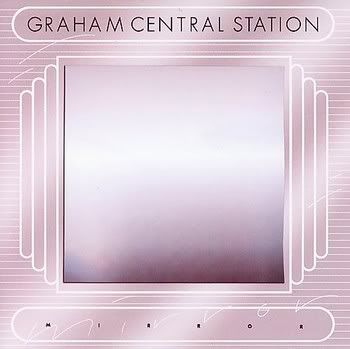
Graham Central Station - Mirror - 1976 - Warner Bros

Terrific seventies funk soul grooves reminiscent of Stevie Wonder. Throw in a slight jazz touch and some gospel, and you have a great album. Check out their great 1974 album, "Release Yourself." For music in a similar groove, check out the "Soul Vaccination: Live" album from the great soul funk band, Tower Of Power, some of whose members also played with Graham Central Station

TRACKS

A1.Entrow (7:09)
A2.Love (Covers A Multitude Of Sin) (3:49)
A3.Mirror (3:50)
A4.Do Yah (3:55)

B1.Save Me (5:17)
B2.I Got A Reason (3:48)
B3.Priscilla (3:15)
B4.Forever (6:54)

CREDITS

Arranged By - Larry Graham , Tom Salisbury
Arranged By [Horns] - Greg Adams , Larry Graham
Bass, Synthesizer, Vocals - Larry Graham
Clavinet, Vocals - Hershall "Happiness" Kennedy*
Drums, Vocals - Gaylord "Flash" Birch*
Engineer - Tom Flye
Guitar, Vocals - David "Dynamite" Vega*
Organ, Piano, Vocals - Robert "Butch" Sam*
Percussion, Drum Programming, Vocals - Patryce "Chocolate" Banks*
Written-By, Recorded By - Larry Graham

Musicians who have been in Graham Central Station, include

Willie Sparks: vocals, drums,
P. CaboOse: tenor saxophone,
Milt Holland: percussion,
Lenny Williams: vocals,
Freddie Stone: guitar,
and Noel Closson: Drums

REVIEW

Larry Graham and crew are definitely going for a fuller sound on this set -- starting off the record with a funky marching band, in Tusk-like fashion -- then rolling into some bass-heavy funk that tops even their previous records for tightness! The groove is a key element in the growth of west coast funk in the 70s -- bass in the lead, but keyboards percolating in all over the place, in a style that's almost got touches of jazz -- and which sets the stage for many of the Zapp-sounding projects of the future. Titles include "Love", "Mirror", "Entrow", "Do Yah", "Save Me", and "I Got A Reason". © 1996-2008, Dusty Groove America, Inc.

BIO (Wikipedia)

Graham Central Station was a funk band named after founder Larry Graham (formerly of Sly & the Family Stone) and is a pun on New York City's Grand Central Station. The band's origins date from when Santana guitarist Neal Schon formed the band Azteca along with Larry Graham (bass guitar) and Gregg Errico (drums), both from Sly & the Family Stone, and Peter Sears (keyboards), from Hot Tuna and Jefferson Starship. Santana bass guitar player Tom Rutley would move into to the bass spot with Azteca. That band, like Santana with heavy Latin influences, would eventually morph into Graham Central Station, while Schon would find Journey. Graham Central Station's biggest hit was "Your Love", which charted at number 9 in 1975. The group also integrated gospel music sounds into their music, and played with the dichotomy between the funk/rock star image and the "sanctified" gospel group image. Some of their recordings feature the Tower of Power horn section.

28.12.07

Daryl Hall & John Oates


hall&oates-warbabies1974


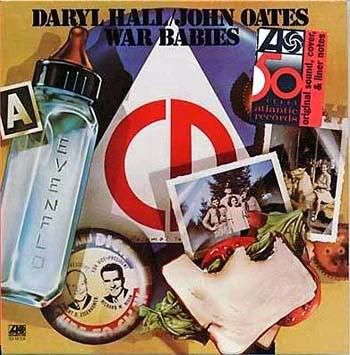
Daryl Hall & John Oates - War Babies - 1974 - Atlantic Records

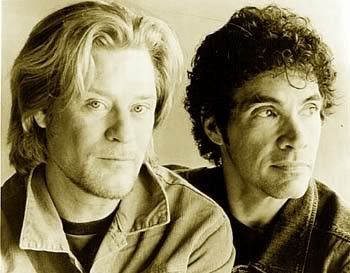
War Babies is a 1974 album by Hall & Oates, and their last of three albums for Atlantic Records before moving to the RCA label. This is mainly an experimental album, littered with urban rock, funk and soul sounds, and laced with a touch of psychedelia. It even has sounds reminiscent of Steely Dan. Definitely not your typical Daryl Hall & John Oates album! But strange as it may seem, the album still retains their unmistakeable Blue-Eyed Soul sound. The album was brilliantly produced by Todd Rundgren, with Utopia, and it is one of the most under-rated album from the 1970's. There is no Sara Smile here, but please don't let that put you off. If you want to hear great music, this is for you. Daryl Hall & John Oates never recreated this sound again. Highly recommended by A.O.O.F.C. You should listen to the great Todd Rundgren album, "A Wizard, A True Star." Pure genius. Also try and buy the great Hall & Oates' album " Our Kind of Soul. "


"Can't Stop the Music (He Played It Much Too Long)" (Oates) (2:50)
"Is It a Star" (Hall, Oates) (4:41)
"Beanie G and the Rose Tattoo" (Hall) (3:01)
"You're Much Too Soon" (Hall) (4:08)
"70's Scenario" (Hall) (4:00)
"War Baby Son of Zorro" (Hall) (4:10)
"I'm Watching You (A Mutant Romance)" (Hall) (4:27)
"Better Watch Your Back" (Hall) (4:15)
"Screaming Through December" (Hall) (6:35)
"Johnny Gore and the C Eaters" (Hall, Oates) (5:18)

20.11.07

Average White Band


averagewhiteband-feelnofret1979


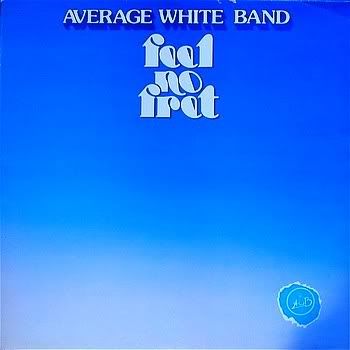
Average White Band - Feel No Fret - 1979 - Atlantic


Regarded by many as the AWB's weakest album. It is not up to the band's usual standards, but is still better than average, and well worth having for the one brilliant track, "Atlantic Avenue." Check out their "Cut the Cake," and "Person to Person" albums for a real taste of just how good this group was.

TRACKS

1 When Will You Be Mine (Average White Band/Gorrie)
2 Please Don't Fall in Love (Ball/Gorrie)
3 Walk on By (Bacharach/David)
4 Feel No Fret (Average White Band/Ferrone/Gorrie/Stuart)
5 Stop the Rain (Gorrie/Stuart)
6 Atlantic Avenue (Average White Band/Ferrone/Gorrie)
7 Ace of Hearts (Ferrone/Gorrie/Stuart)
8 Too Late to Cry (Stuart)
9 Fire Burning (Average White Band/Gorrie)

PERSONNEL

Alan Gorrie- Bass, Guitar (1, 2, 3, 6), Vocals, Hamish Stuart- Bass (1, 2, 3, 6), Guitar, Vocals, Onnie McIntyre- Guitar, Vocals Roger Ball- Keyboards, Saxophone, Horn & String Arrangements Malcolm Duncan- Saxophone, Sax (Tenor) Steve Ferrone- Drums, Percussion Production Credits The Average White Band - Producer Gene Paul - Engineer Benji Armbrister - Assistant Engineer
Additional Musicians
Airto Moreira- Percussion (4, 6)
Luis Carlos Dos Santos - Surdo (6) Zeca da' Cuica - Cuica (6) Michael Brecker- Sax (Tenor) Randy Brecker- Trumpet, Louis Del Gatto- Saxophone Luther Vandross - Background Vocal (8) Arif Mardin - String Arrangement on Ace Of Hearts

REVIEW

From their self-titled sophomore album of 1974 to 1978's Warmer Communications, the Average White Band enjoyed a commercial winning streak in the '70s; all of the albums they recorded for Atlantic during that period went either gold or platinum in the United States (and that is in addition to their impressive sales in Europe). But if any AWB album demonstrated that all good things must eventually come to an end, it was Feel No Fret. This 1979 LP marked the first time since 1973's Show Your Hand (also known as Put It Where You Want It) that an AWB album didn't enjoy either gold or platinum sales in the U.S., and it was also the most uneven album they recorded in the '70s. So what went wrong? Perhaps the absence of Arif Mardin was a factor; Mardin had produced all of AWB's previous Atlantic releases, whereas they produced Feel No Fret themselves. If Mardin had been encouraging the Scottish soul/funk band to go that extra mile, they settled for decent or competent on this record. Feel No Fret is far from a total meltdown, and the material is generally likable -- especially the good-natured "Atlantic Avenue," the slow-grinding "When Will You Be Mine," and a remake of the Burt Bacharach/Hal David favorite "Walk On By" (which became a minor hit and made it to number 32 on Billboard's R&B singles chart). But after Mardin-produced treasures like AWB, Soul Searching, Cut the Cake, and Warmer Communications, AWB followers had become extremely spoiled -- they expected excellence, not a record that was merely adequate. Nonetheless, hardcore devotees (as opposed to casual listeners) will want to hear this album, which Rhino reissued on CD as Feel No Fret...and More (with four bonus tracks added) in 1994. © Alex Henderson, All Music Guide

BIO

This unique act, an R'n'B/ soul group from Scotland with only two black musicians became one of the best selling and sounding funk bands in the world. The horn section started out as "The Dundee Horns". They can be heard on Johnny Nash's reggae hit "I Can See Clearly Now". Eric Clapton and Bonnie Bramlett (of Delaney & Bonnie) helped them on their way to becoming a household name. But it wasn't until they reached the US and were signed to Atlantic Records that the Average White Band really took off (Jerry Wexler signed them on the spot, after they hit him at home on one of his parties, where they played him the basic tracks for what would become the White Album: "AWB"). Arif Marden became their producer and together they couldn't do wrong. All of their seventies albums reached gold or even platinum status and hits such as the timeless "Pick Up The Pieces" and "Cut The Cake" were number 1 hits on the U.S. Billboard Charts. Tragedy hit the young group in 1974 when their drummer, Robbie McIntosh died at a Hollywood party in a drug-related incident, but their act only became stronger. The Double album "Person To Person", recorded during their American 1975 Tour, is among the best selling live funk albums ever. They reached the white market with their unique sound without losing respect from the core Soul/ R'n'B lover in the black communities. © 2007 Discogs