A.O.O.F.C
recommends
Mizar6

babydancing


Get this crazy baby off my head!

Showing posts with label Seventies Soul Jazz. Show all posts

14.1.14

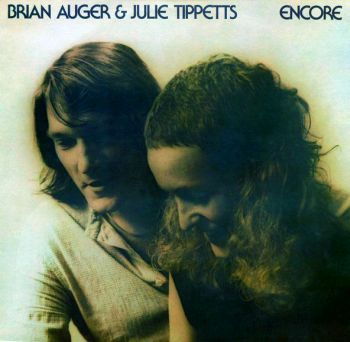
Brian Auger & Julie Tippetts


Brian Auger & Julie Tippetts - Encore - 1978 - Warner Bros.

Julie Driscoll left Trinity, the band she fronted and directed with Brit soul-jazz icon Brian Auger, in 1969. She recorded a pair of solo albums, married Keith Tippett, a brilliant jazz improviser and bandleader, and recorded with Ovary Lodge, a free-form vocal ensemble, in 1977. In 1978 she and Auger reunited for Encore, a one-off studio offering that revealed the hole she'd left in the progressive pop scene of the late '60s. Her voice was in even better shape nearly a decade later: fuller, stronger, more throaty, without giving up a bit of her range. Auger, meanwhile, had remained very active with his groundbreaking soul-jazz-funk ensemble the Oblivion Express. While some complain that these sides don't have the Swinging London imprint on them, that would be because they stayed back there in the musty, dusty pop history bin. Listening to Encore in the 21st century is nearly a revelation. Auger, for his part as the band's musical director on his trademark B-3, acoustic piano, and a slew of electronic keyboards, is a strictly no-BS performer. He's as straight-ahead as they get, and Julie Tippetts understands that the root of the song is in its intention. Together, they make a nearly flawless pair on these nine cuts. Nowhere is this clearer than on the two tracks previously defined by other vocalists. "Don't Let Me Be Misunderstood," while oft-covered, had never come close to Eric Burdon & the Animals' version. Tippetts, however, plasters the song with bluesy feeling and a smoldering, nearly angry plea. Then there's Jack Bruce's "Rope Ladder to the Moon." Tippetts implicitly understands the jazz feel of the tune as Bruce wrote it. The funky backdrop bassline by David McDaniels doesn't even muddy it up. Auger's Rhodes piano and B-3 and George Doering's gorgeous acoustic guitar playing are certainly the pegs the tune turns on, but it's Tippetts who delivers the authority and dark secret in this song about love's cruelty. And, of course, there's Pops Staples' "Freedom Highway," in which the vocalist here gives Mavis Staples a run for her money in offering the sense of determination and joy in the gospel and blues shout she got to use so rarely in her solo career. But there's more than this, too: Tippetts and Auger deliver the album's two bookends written by Al Jarreau, "Spirit" and "Lock All the Gates," as harder, funkier jazz numbers while never losing the airiness at their core. On the former, Tippetts is prodded and edged to the ledge by Auger and McDaniels, and the tune nearly lifts off. The only weak spot on this whole set is the Auger vocal on Milton Nascimento's "Nothing Will Be as It Was." It's not that the tune wouldn't have been a standout on an Oblivion Express record, but on this one it's pale in comparison to the solid groove consciousness and expression in Tippetts' Earth angel voice. Auger wrote a couple of winners here as well in both "Git Up" and "Freedom Pilot," and they stand up with the canonical tracks just fine. The former is as jazzy funk tune with some knotty twists and turns that Tippetts pulls off without a seam, and the latter is a soul groover. Finally, it should be mentioned that "No Time to Live," the Steve Winwood-Jim Capaldi tune, is given all the elegance of the original, but Tippetts adds her own sense of smoke and fire to its lyric, turning it inside out as a soul tune. The lead work of Doering as it punches through Auger's fat acoustic piano makes this little ballad soar. Ultimately, this is as necessary as any of the previous Auger/Driscoll (nee Tippetts) collaborations, and aurally reveals that for the two of them, time may move on, but their collaborative spirit is nearly effortless in its balance, dignity, feeling, and poise. © Thom Jurek © 2014 AllMusic, a division of All Media Network, LLC. | All Rights Reserved http://www.allmusic.com/album/encore-mw0000611157

Brian Auger, the "Grandfather of Acid Jazz", came out of the British Blues scene playing with artists like John Mayall. He was strongly influenced by organ players like Groove Holmes, Charles Earland, Jimmy Smith, Jack McDuff, Don Patterson, and many others. However, in his own right, Brian is equally as talented as any of these artists. In his early career, during the mid '60's in England, Brian was a "straight up jazz player". Later in his career he was accused by many music critics and fans of selling out, after he veered his music in a more R&B/jazz direction. At various times, he played with artists like Passport, Average White Band & Les McCann and Eddie Harris. "Brian Auger is one of the best B-3 artists I have ever heard in my life. His technique is awesome and the amount of energy he generates is unparalleled and relentless. He is a tremendous talent with a wonderfully warm and compassionate personality, a combination that is hard to beat. He deserves all the accolades."- Herbie Hancock: "My Favorite rock artists are Van Morrison, Bonnie Raitt, Brian Auger and Loudon Wainwright."- Mose Allison. “Encore” is a great laid back album of mainly R&B covers infused with funk, blues, jazz, and soul, from two British musicians who have never fully received the credit they deserved. This album made a miniscule impact on the 1978 music scene and sank into obscurity. It was hard to compete with artists like Showaddywaddy and Boney M. (Gawd ‘elp us! Lol). Listen to Julie Driscoll & Brian Auger’s “Jools” album, and Brian Auger's Oblivion Express’ “Reinforcements” album. Check out “Mind Your Own Music” @ http://www.mindyourownmusic.co.uk/ which will give you much more info about Julie Tippett [All tracks @ 320 Kbps: File size = 87.7 Mb]

TRACKS / COMPOSERS

1 Spirit - Al Jarreau 4:07
2 Don't Let Me Be Misunderstood - Bennie Benjamin / Gloria Caldwell / Sol Marcus 3:34
3 Git Up - Brian Auger 3:47
4 Freedom Highway - Roebuck "Pops" Staples 2:50
5 Future Pilot - Brian Auger 4:22
6 Rope Ladder to the Moon - Pete Brown / Jack Bruce 3:03
7 No Time to Live - Jim Capaldi / Steve Winwood 6:14
8 Nothing Will Be as It Was - Ronaldo Bastos / Milton Nascimento / Rene Vincent 3:46
9 Lock All the Gates - Al Jarreau 5:04

MUSICIANS

Brian Auger - Keyboards, Piano, Organ, Synthesizer, Percussion, Tambourine, Vocals
George Doering - Guitar
David McDaniels - Bass
Dave Crigger - Drums
Julie Driscoll aka Julie Tippetts - Harmonica, Vocals
Maxine Willard Waters, Jessica Smith - Vocals, Background Vocals
Julia Tillman Waters - Background Vocals

BRIAN AUGER BIO

Brian Auger was raised in London, where he took up the keyboards as a child and began to hear jazz by way of the American Armed Forces Network and an older brother's record collection. By his teens, he was playing piano in clubs, and by 1962 he had formed the Brian Auger Trio with bass player Rick Laird and drummer Phil Knorra. In 1964, he won first place in the categories of "New Star" and "Jazz Piano" in a reader's poll in the Melody Maker music paper, but the same year he abandoned jazz for a more R&B-oriented approach and expanded his group to include John McLaughlin (guitar) and Glen Hughes (baritone saxophone) as the Brian Auger Trinity. This group split up at the end of 1964, and Auger moved over to Hammond B-3 organ, teaming with bass player Rick Brown and drummer Mickey Waller. After a few singles, he recorded his first LP on a session organized to spotlight blues singer Sonny Boy Williamson that featured his group, saxophonists Joe Harriott and Alan Skidmore, and guitarist Jimmy Page; it was Don't Send Me No Flowers, released in 1968. By mid-1965, Auger's band had grown to include guitarist Vic Briggs and vocalists Long John Baldry, Rod Stewart, and Julie Driscoll, and was renamed Steampacket. More a loosely organized musical revue than a group, Steampacket lasted a year before Stewart and Baldry left and the band split. Auger retained Driscoll and brought in bass player Dave Ambrose and drummer Clive Thacker to form a unit that was billed as Julie Driscoll, Brian Auger and the Trinity. Their first album, Open, was released in 1967 on Marmalade Records (owned by Auger's manager, Giorgio Gomelsky), but they didn't attract attention on record until the release of their single, "This Wheel's on Fire," (music and lyrics by Bob Dylan and Rick Danko) in the spring of 1968, which preceded the appearance of the song on the Band's Music from Big Pink album. The disc hit the top five in the U.K., after which Open belatedly reached the British charts. Auger and the Trinity recorded the instrumental album Definitely What! (1968) without Driscoll, then brought her back for the double-LP, Streetnoise (1968), which reached the U.S. charts on Atco Records shortly after a singles compilation, Jools & Brian, gave them their American debut on Capitol in 1969. Driscoll quit during a U.S. tour, but the Trinity stayed together long enough to record Befour (1970), which charted in the U.S. on RCA Records, before disbanding in July 1970. Auger put together a new band to play less commercial jazz-rock and facetiously called it the Oblivion Express, since he didn't think it would last; instead, it became his perennial band name. The initial unit was a quartet filled out by guitarist Jim Mullen, bass player Barry Dean, and drummer Robbie McIntosh. Their initial LP, Brian Auger's Oblivion Express, was released in 1971, followed later the same year by A Better Land, but their first U.S. chart LP was Second Wind in June 1972, the album that marked the debut of singer Alex Ligertwood with the band. Personnel changes occurred frequently, but the Oblivion Express continued to figure in the U.S. charts consistently over the next several years with Closer to It! (August 1973), Straight Ahead (March 1974), Live Oblivion, Vol. 1 (December 1974), Reinforcements (October 1975), and Live Oblivion, Vol. 2 (March 1976). Meanwhile, Auger had moved to the U.S. in 1975, eventually settling in the San Francisco Bay area. In the face of declining sales, he switched to Warner Bros. Records for Happiness Heartaches, which charted in February 1977. Encore, released in April 1978, was a live reunion with Julie Tippetts (née Driscoll) that marked the end of Auger's association with major record labels, after which he dissolved the Oblivion Express and recorded less often. In 1990, he teamed up with former Animals singer Eric Burdon, and the two toured together during the next four years, releasing Access All Areas together in 1993. In 1995, Auger put together a new Oblivion Express. As of 2000, the lineup consisted of his daughter, Savannah, on vocals, Chris Clermont on guitar, Dan Lutz on bass, and his son Karma on drums. This group issued the album Voices of Other Times on Miramar Records one week before Auger's 61st birthday. © William Ruhlmann © 2014 AllMusic, a division of All Media Network, LLC. | All Rights Reserved

JULIE DRISCOLL BIO

Sixties pop diva-turned-avant jazz singer Julie Driscoll was born June 8, 1947 in London. As a teen she oversaw the Yardbirds' fan club, and it was the group's manager and producer Giorgio Gomelsky who encouraged her to begin a performing career of her own. In 1963 she issued her debut pop single "Take Me by the Hand," two years later joining the short-lived R&B combo Steampacket alongside Rod Stewart, Long John Baldry and organist Brian Auger. After Steampacket dissolved, Driscoll signed on with the Brian Auger Trinity, scoring a Top Five UK hit in 1968 with their rendition of Bob Dylan's "This Wheel's on Fire." Dubbed "The Face" by the British music press, Driscoll's striking looks and coolly sophisticated vocals earned her flavor of the month status, and she soon left Auger for a solo career. Her debut solo album 1969 heralded a significant shift away from pop, however, enlisting members of the Soft Machine and Blossom Toes to pursue a progressive jazz direction. Also contributing to the record was pianist Keith Tippett, whose avant garde ensembles Centipede and Ovary Lodge Driscoll soon joined. She and Tippett were later married, and she took her new husband's name, also recording as Julie Tippetts. With her 1974 solo masterpiece Sunset Glow, she further explored improvisational vocal techniques in settings ranging from folk to free jazz. Two years later, Tippett joined with Maggie Nicols, Phil Minton and Brian Ely to form the experimental vocal quartet Voice, and in 1978 also collaborated with Nicols on the duo album Sweet and s'Ours. A decade later, she and Keith released Couple in Spirit, and in 1991 Tippett teamed with over a dozen instrumentalists from Britain and the former Soviet Georgia in the Mujician/Georgian Ensemble. The following year, she re-recorded "This Wheel's on Fire" as the theme to the smash BBC comedy Absolutely Fabulous. ©Jason Ankeny © 2014 AllMusic, a division of All Media Network, LLC. | All Rights Reserved http://www.allmusic.com/artist/julie-driscoll-mn0000261098/biography

9.7.12

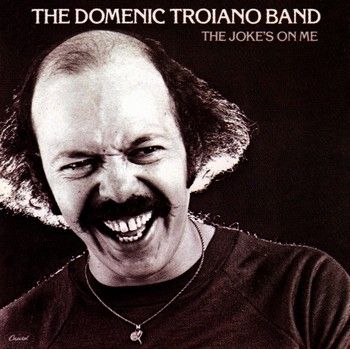
The Domenic Troiano Band


The Domenic Troiano Band - The Joke's on Me - 1978 - Capitol

In the music world, the inability to clearly categorize an album usually decreases its mass appeal. In other words, musical creativity doesn't sell records. As a result, loads of great "not quite this, not quite that" albums have been quietly forgotten. This is one of them. Domenic is pictured on the back cover of the sleeve with his bandmates surrounding him. With a bright light shining behind him casting a stellar shadow, he resembles a God-like figure. Some of the music on this album is indeed heavenly. This is my Troiano desert island album and definitely one of my all-time favorites. The songs here are strong and the band is excellent. Terry Brown's production is relatively sparse, but two keyboardists are used (only in the '70s!). Some of the keyboard tones are pleasant, but others sound dated by today's standards. Nonetheless, the material and Domenic's guitar playing completely make up for that flaw. The album opens on an ominous note with the title track, a nightmarish tune with a droning synth to enhance the mood. Dom plays some great licks in the song's breaks. "Maybe the Next Time," a light, jazz-rock tune, has 1978 written all over it. If it were sung by Donald Fagen, it would have been a Steely Dan hit. The third track, "Spud," is a laid-back instrumental with some neat, jazzy guitar runs. "Here Before My Time" is one of Domenic's best songs, a quiet ballad with intelligent lyrics. I'm not sure if Dom meant for the song to be autobiographical, but I believe it is ("I'm tryin' to get by in a world that seems so blind, I'm here before my time, or am I last in line?"). Here's where the album goes from really good to incredible. The last song on side one, a seven-minute instrumental called "Eleanora Fagan," just might be my favorite Troiano song. Simply put, it's better than most songs you've heard. It quietly begins with an slow, elegant guitar line. Gradually, drums and layers of keyboards enter and give the melody more depth and emotion. Domenic's guitar playing in the third verse is stunning; he is a musician who can stir up the listener's emotions through his playing alone. Just as you're about to burst into tears as the band reaches a crescendo, the instruments quickly fade, only to slowly build once again for the grand finale. Find this very out-of-print album just to hear this song. You won't be disappointed. (Who is Eleanora Fagan? Billie Holiday.) Side two consists of three songs which are essentially one long piece. The result is arguably Troiano's masterpiece. The idea to link the songs together and create a side-long epic was brilliant. "Road to Hell" is a tough rock song with touches of jazz and funk played in a very strange time. A diabolical choir invades the song's finale, and it starts to sound like you've actually entered hell. That's when you're dropped off into the "War Zone." It truly is the sonic equivalent of a battlefield. The length, nearly 10 minutes, adds to the effect. After an instrumental introduction, the song sounds pretty normal, with a couple verses and a chorus which includes a synthesizer that sounds like a car alarm. The lengthy middle section includes instrumental solos, creepy keyboard sounds, and weird vocal effects. Near the end of the song, you begin to wonder if you'll ever see the light of day again. Just when you think there's no escape, the song segues into "Look Up," an absolutely ethereal piece of music. This is aural utopia. The song is a thoughtful and heartfelt ballad about turning to a higher power when things are bad. Yes, artists other than Christian performers can sing about faith and do it well. I think Domenic deserves a lot of respect for that alone. Why critics and the public didn't pay more attention to this album is a mystery to me. The Joke's on Me is Troiano's most unified album, in terms of musical style, delivery and concept. Dom wrote all of the songs on the album and he sings all of the lead vocals. You can find some of his best guitar work here, too. Troiano's heart and soul really come through in the album's words and music, especially on "Eleanora Fagan" and "Look Up". And can you name a balding rocker besides Domenic who would bare his head proudly on an album cover? It all adds up to music and an artist that is real, someone who isn't caught in the machinery of the music business. All of these reasons are why I think this is his best album; you really can't go wrong here. If you can find a used copy of it, consider yourself lucky. [Unless otherwise stated, all text © 1999-2010 JDF] © http://www.troianomusic.com/joke.html

The late Canadian guitar icon, Domenic Troiano was a gifted, world-class guitarist and band leader. He formed the bands Mandala and Bush in 1970. He helped create the "Toronto Sound" in the 60′s and 70′s. In his career he replaced the Band's Robbie Robertson while Robbie was playing with Ronnie Hawkins. He also replaced the James Gang band's guitarist Joe Walsh and replaced Randy Bachman in the The Guess Who. Domenic played with many great artists including Joe Cocker, Donald Fagen, Diana Ross, David Clayton-Thomas, Etta James, and also produced albums for for other artists. He was inducted into the Canadian Music Hall of Fame in 1996. "The Joke's on Me" is full of relaxed, down-to-earth R&B, funk, and soul with a jazz touch and is HR by A.O.O.F.C. Please forgive the slight "snap, crackle, and pop" on this vinyl issue. This would be a wonderful album for somebody to remaster for CD. After his death, Randy Bachman said "I'm sure the heavenly jam sessions with Lenny Breau and Jimi Hendrix are taken to a new level, now that Dom has arrived." Donald Fagen said that "I was sad to hear that Domenic Troiano lost out to cancer the other day. Dom was a touring mate of ours in the mid '70s when he was with the James Gang. Walter and I used to stand in the wings after our set and watch as he played the long, psychedelic solos required of him. It was the sort of gig where he'd end up under a followspot on his knees sending these sustained, creamy lines heavenward, or at least out into the crowd of worshipful, wine and quaalude-addled young men. Nevertheless, Dom always added a very personal elegance to everything he played. We'd met him before, in the late sixties in New York when we were doing session work for Gary Katz. He had just done a couple years with a popular "blue-eyed" soul unit, Mandala. We were both knocked out by his beautiful technique and the energy he brought to the session. He could do it all - startling licks, clear octave lines, driving rhythm parts - whatever the party called for. Everyone wanted to play with Dom. When we were starting up Steely Dan, he was one of the first guys we called. Dom said, thanks, but he was just too busy." Try and listen to his "Burnin' at the Stake" album. Check out Domenic Troiano's s/t album on this blog and read a detailed bio of Domenic @ http://www.troianomusic.com/bio.html [All tracks @ 320 Kbps: File size = 106 Mb: Vinyl issue]

STEELY DAN TRIVIA: Domenic played with Donald Fagen on Diana Ross' "Ross" album and also on Eye To Eye's "Shakespeare Stole My Baby" album, both albums produced by the great Gary Katz

TRACKS

1 The Joke's on Me 3:50
2 Maybe the Next Time 4:24
3 Spud 3:48
4 Here Before My Time 4:25
5 Eleanora Fagan 7:04
6 Road to Hell 6:25
7 War Zone 9:13
8 Look Up 7:0

All tracks composed by Domenic Troiano. N.B: Tracks 6-8 are essentially one long piece which comprised the B-Side of the original LP. On this post the three tracks are unified into one long track, making a 6 track album

BAND

Domenic Troiano - Guitar, Lead Vocals
Keith Jones - Bass, Vocals
Dave Tyson - Keyboards, Vocals
Jacek Sobatta - Keyboards
Paul DeLong - Drums

BIO

Singer, songwriter, and famed guitarist Domenic Troiano is probably best known for the time he served as a member of the famed rock group, the Guess Who. Over more than three long decades in the music world, Troiano did a lot of other work with different bands, blues style and rock, including the James Gang, the original Bush, and Mandala. He later composed tunes for both film and television. He even completed several solo albums in the '70s, earning himself a spot in the Canadian Music Hall of Fame. Some of the solo numbers Troiano recorded so long ago, became available on CD just before the new millennium rolled around, proving that many fans still hold interest in his music. Domenic Troiano was born in 1946 in Modugno, Italy. When he was little more than a baby, his family picked up and moved to Toronto, Canada. He was raised with a love for music, both rhythm & blues and good ol' rock & roll. When he was in his mid-teens, his desire to learn to play the guitar resulted in him teaching himself. Maybe that's why his style became so much his own and was later imitated by many other artists. One of the early influences on Troiano was a guitarist by the name of Robbie Robertson. In a twist of fate, Troiano started his professional career by replacing Robertson in a band that performed with Ronnie Hawkins, a fellow Canadian singer. Troiano worked with the band for less than a year, then moved on to other groups. One of those early bands was Five Rogues, which changed its name to Mandala. It was with Mandala in 1967 that Troiano made his first recordings and began to climb the ladder to fame. Some of that fame started from negative press, complaints from parents about the group's corrupt music style, the way the guys dressed, and even the length of their hair. Of course, the more parents complained, the more their teens loved Mandala and its music. When Mandala came to an end around 1969, Troiano and some of the other members pulled together to start a new group, Bush. ABC/Dunhill singed the band and sent it on tour with major groups at the time like Three Dog Night. After a short life, Bush met a quick end, but never one to give up, Troiano went solo. In 1972, before he could finish an album of his own, he was called in to join the James Gang, replacing Joe Walsh. For the next year, Troiano recorded with the group, but continued to work solo also, completing not one, but two solo albums, a self-titled one in 1972, and then Tricky in 1973. Both albums were released under the Mercury Records label. During that same time, he recorded two other albums with the James Gang, writing a number of the songs himself. 974 and 1975 found Troiano serving as a member of the Guess Who. After that group folded too, he took some time working on his own again, trying his skills at a little funk and some jazz. Two years later he was under contract once more, this time with Capitol Records, where he finished a third solo album, Burning at the Stake, and then a forth offering, Jokes on Me. It was followed in 1979 by Fret Fever, Troiano's last solo album.
In the early '80s, Troiano was back with a band, this one called Black Market. The group released one independent recording in 1981. When success didn't come to Black Market, Troiano walked. He soon turned his attention to composing for films and television, and doing session work for other artists in the '90s. Domenic Troiano passed away May 25, 2005 after a long battle with cancer. © Charlotte Dillon © 2012 Rovi Corp | All Rights Reserved http://www.allmusic.com/artist/domenic-troiano-mn0000175101

3.7.12

Andy Fairweather Low


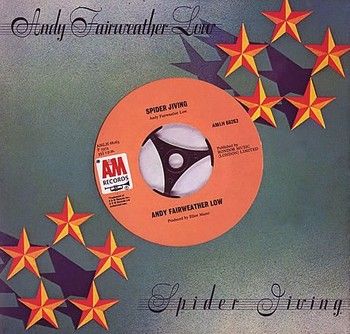
Andy Fairweather Low - Spider Jiving - 1974 - A&M

In which the voice of (ta-ra) the Amen Corner rocks more convincingly than he ever did as an English-r&b teen throb and still somehow sounds laid-back. The secret is a rough-hewn spontaneity in which the guitar and bass that meet the Memphis Horns over an insistent but very unfunky 4/4 are both acoustic, in which Charlie McCoy plays hornpipe harp over oompah drums. The lean, direct, catchy, introspective lyrics work the same way; their substance--that is, their obsessive but unassuming speculation about man's fate--is bound up in their free use of verbatim borrowings from a common language. Apotheosis: the slyly hermeneutic "Dancing in the Dark," in which a discreet fatalism is shaped by courtly music-hall tune and elegant soft-shoe timing. A - © http://www.robertchristgau.com/get_artist.php?name=Andy+Fairweather+Low

Andy Fairweather Low spent a fair amount of the late '60s through 1970 in the British Top Ten with the pop-R&B band Amen Corner, as well the short-lived Fair Weather, before taking a nearly three-year hiatus from recording. Shedding his teen idol image of previous years, the Welsh-born Low returned in 1974 with his first solo record, Spider Jiving. Here he delivers 11 self-penned gems that can be as laid-back as they can be funky, employing support from both Nashville and Memphis while retaining the sort of looseness found in an English pub band. With producer Elliot Mazer -- known for his work with Neil Young -- Low punches up tunes such as the acoustic-based title track with help from the Memphis Horns, while his rock & roll and R&B sport wry touches of banjo, fiddle, pedal steel, and Charlie McCoy's harmonica. Lyrically, there's a thread of frustration, steeped in the experiences of someone who's had to sit back and watch others get rich from his hard work and success (Low and Amen Corner made very little money despite their success, and were actually in debt to their label following their breakup). And while lines such as "...and the sad thing is, that no one really cares" and "I've been abused too long..." may hint at singer/songwriter self-pity, closer investigation reveals a playfulness in the music, as well as a sense of humor and a sly wink in his delivery that keeps everything in perspective. Some of the highlights include the irresistible title cut; the dancehall ballad "Dancing in the Dark"; and the wah-wah driven "Reggae Tune," which continued Low's string of U.K. Top Ten hits. © Brett Hartenbach © 2012 Rovi Corporation. All Rights Reserved http://www.allmusic.com/album/spider-jiving-r37078/review

"Spider Jiving" is arguably Andy Fairweather Low's best album. Andy has never been an instantly recognizable name in rock music, but he's a true rock star. He's the kind of guy who has managed to keep a low profile throughout his career. You may have heard some of his great songs, most of which he penned himself, including - Wide Eyed And Legless, Reggae Tune, (If Paradise Is) Half As Nice, and Natural Sinner. From his early days in Amen Corner, and Fair Weather, Andy has been one of Britain's great musicians and songwriters. Much of Andy's solo work has never been taken seriously by music critics. The music is often on the lightweight and humorous side. However Andy's songs often contain sardonic and/or pessimistic lyrics combined with cheerful music, and many critics just dont get him. Andy has had many "downs" in his musical career due to bad management by record companies. In his early career with groups like Amen Corner, Andy had major hits and topped charts and still found himself in debt with a certain record company. Thankfully, those who know great music when they hear it have always appreciated Andy's unique adenoidal and reedy voice, his talent as a songwriter and brilliant guitar technique. He has built up a huge reputation as a session guitarist, and as a sideman. and has played many great musicians including Eric Clapton, Jimi Hendrix, BB King, Bill Wyman, The Who, Roger Waters, George Harrison, Bob Dylan, and others too numerous to mention. "Spider Jiving" is HR by A.O.O.F.C. Read Robert Christgau's article about Pete Fowler and Andy Fairweather Low @ http://www.furious.com/perfect/andyfairweatherlow.html Search this blog for related releases [All tracks @ 320 Kbps: File size = 71.7 Mb]

TRACKS

A1 Spider Jiving
A2 Drowning On Dry Land
A3 Keep On Rockin'
A4 Same Old Story
A5 I Ain't No Mountain
A6 Every Day I Die

B1 Standing On The Water
B2 Mellow Down
B3 The Light Is Within
B4 Reggae Tune
B5 Dancing In The Dark

All songs composed by Andy Fairweather Low

MUSICIANS

Andy Fairweather Low - Guitar, Vocals
Henry McCullough, John Kahn - Guitar
Weldon Myrick - Steel Guitar
Chris Stewart - Bass
Bobby Thompson - Banjo
Buddy Spicher, Vassar Clements - Violin
Mick Weaver, Mark Naftalin - Keyboards
Charlie McCoy - Harmonica
Denny Seiwell, Kenny Buttrey - Drums
The Memphis Horns - Horn
Mary Holladay, Ginger Holladay, Dianne Davidson, Lea Jane Berinati - Vocals

SHORT BIO

The seven million people who bought Eric Clapton's Unplugged album and the countless more who saw the MTV Unplugged TV show experienced the work of Andy Fairweather Low, who served as Clapton's backup guitarist/vocalist. But probably few in that giant audience knew that Fairweather Low had once been a teen idol and had an extensive recorded catalog in groups and as a solo star. Born in Cardiff, Wales, Fairweather Low formed Amen Corner in the mid-'60s, for which he served as lead singer. The group scored six U.K. hits from 1967 to 1969, the biggest of which was the number one "(If Paradise Is) Half as Nice." Its success put Fairweather Low's attractive face on the bedroom walls of teenage girls all over Britain. Amen Corner broke up at the end of the '60s and evolved into the more progressive Fair Weather, which scored a hit with "Natural Sinner" in 1970, but broke up in 1971. Fairweather Low retired for several years, but returned as a solo artist in 1974 and made a series of albums through 1980, reaching the U.K. Top Ten with the singles "Reggae Tune" and "Wide Eyed and Legless." Gradually, however, he began to work as a sideman to more prominent British musicians, notably ex-Pink Floyd leader Roger Waters, and with the ARMS benefit group in 1987. He toured Japan with George Harrison and Eric Clapton in 1991 and has since been part of Clapton's backup band. Fairweather Low began touring with Bill Wyman's Rhythm Kings and, in 2006, hit the road again with Waters for the Dark Side of the Moon Tour. © William Ruhlmann © 2012 Rovi Corporation. All Rights Reserved http://www.allmusic.com/artist/andy-fairweather-low-p17410/biography

MORE

Andy Fairweather Low is in a class of his own. One of the UK’s best guitar players with a truly unique voice (not to mention one of their best tennis players) he’s worked with some of the greatest artists around and still found time to release some solo material. ‘Sweet Soulful Music’ (2006) was his first solo album in 26 years but it was no simple comeback story - the intervening years were packed with people and projects virtually amounting to a stellar A to Z of Popular Music. Not surprising then that “The Very Best Of Andy Fairweather Low – The Low Rider” out on Proper Records in Spring 2008 should be such a catalogue of delight. It trawls right through his back catalogue from the hits of the late sixties right through to the present day resulting in a panoply of glorious sounds. Andy has a magnificent CV. Throughout his momentous career, he has played with such artists as Bob Dylan, Roger Waters, Eric Clapton, George Harrison, Elton John, Jimi Hendrix, David Crosby, The Band, Richard and Linda Thompson, Dave Gilmour, The Who, BB King, Joe Cocker, Steve Winwood, Donald ‘Duck’ Dunn, Jimmy Page, Ronnie Lane, Linda Ronstadt, Roddy Frame, Emmylou Harris, Joe Satriani, the Bee Gees, Jeff Beck, The Impressions, Lonnie Donegan, Ringo Starr, Steve Gadd, David Sanborn, Benmont Tench, Warren Zevon, Charlie Watts, Mary J. Blige, Dave Edmunds, Georgie Fame, Bonnie Raitt, Otis Rush, Phil Collins, Van Morrison, Gerry Rafferty, Chris Rea, Buddy Guy, Chris Barber, Jackson Browne, Bill Wyman, Sheryl Crow, Clarence ‘Gatemouth’ Brown, Pete Townshend and hundreds more. Quite simply, Andy Fairweather Low has been – and continues to be - the guitarist and vocalist of choice for a phenomenal cast list of musical luminaries. Cardiff-born Fairweather Low originally came to fame as vocalist and leader of the pop group Amen Corner. The band had four Top 30 hits – a sequence starting with ‘Gin House Blues’ in 1967 - on Decca’s subsidiary Deram label before leaving at the end of 1968 to join Andrew Loog Oldham’s pioneering indie, Immediate. Amen Corner were instantly rewarded with a UK number one, ‘(If Paradise Is) Half As Nice’ in early 1969 but, despite another Top Five hit with Roy Wood’s ‘Hello Suzie’, it seemed the band could not survive success. By the following year Amen Corner had split, with Andy Fairweather Low escaping the teenybop grind by forming the simply named Fairweather, a band signed to RCA’s shiny new progressive label, Neon. Fairweather reached number six in the UK singles chart with ‘Natural Sinner’ during the summer of 1970. It was to be, however, the band’s only hit. One album later and Fairweather came to an end. Andy Fairweather Low then became somewhat of a refugee from the music business, eventually emerging three years later as a solo artist with an album called ‘Spider Jiving’ on A&M. The album was produced by Elliot Mazer – best known for his work with Neil Young – and featured some heavyweight backup support from the likes of the Memphis Horns and Nashville legend Charlie McCoy on harmonica. ‘Spider Jiving’ included the wah-wah driven ‘Reggae Tune’, a UK Top 10 hit in September 1974. Andy Fairweather Low was on something of a roll. The following year, 1975, he released his second solo album, ‘La Booga Rooga’, which eventually emerged as his most successful record. Produced by the celebrated Glyn Johns – at that time fresh from working with The Eagles – ‘La Booga Rooga’ featured such stellar musicians as ex-Eagle Bernie Leadon (guitar), Dave Mattacks (drums), Eddie ‘Tan Tan’ Thornton (trumpet), Kenney Jones (drums), John ‘Rabbit’ Bundrick (keyboards), BJ Cole (steel guitar) and Georgie Fame (keyboards). Among the tracks was ‘Wide Eyed and Legless’, a Top 10 hit for Fairweather Low at the end of 1975. Johns was also at the helm for ‘Be Bop ‘n’ Holla’, Fairweather Low’s 1976 album. It was followed, in 1980, by ‘Mega-Shebang’, recorded for Warner Brothers and destined to be Fairweather Low’s final solo album until 2006. In between ‘Be Bop ‘n’ Holla’ and ‘Mega-Shebang’, however, Fairweather Low sang backing vocals on The Who’s 1978 ‘Who Are You’ album - the start of a relationship which also saw him playing guitar on the band’s 1982 album, ‘It’s Hard’, and appearing with Pete Townshend on his 1993 ‘Psychoderelict’ tour. That work with The Who set the direction for Fairweather Low’s next moves. He became the ultimate Guitarist to the Stars, building an extraordinary reputation that has endured to this day. Most notably, Fairweather Low has been a stalwart of Eric Clapton’s band since the early-Nineties, touring in Clapton’s bands right up until 2003 and recording the ‘Unplugged’, ‘From the Cradle’, ‘Pilgrim’, ‘Riding with the King’, ‘Reptile’, ‘One More Car One More Rider’, ‘Me & Mr. Johnson’ and ‘Back Home’ albums with him. Fairweather Low was also a regular player with George Harrison, appearing on his ‘Live in Japan’ album and, in 2002, playing several of the lead guitar parts for the Harrison tribute, ‘The Concert for George’. One of Fairweather Low’s longest musical relationships, however, has been with Roger Waters. The two have worked together since Waters’ ‘Pros and Cons of Hitchhiking’ tour of America in 1985. Since that time Fairweather Low has contributed to two of Waters’ albums – ‘Radio K.A.O.S’ in 1987 and ‘Amused to Death’ in 1992 – and played guitar and bass on the 1999-2002 ‘In the Flesh’ world tour. Fairweather Low rejoined Waters for the ‘Dark Side of the Moon’ tour this year. Fairweather Low is also a regular member of Bill Wyman’s Rhythm Kings, the consequence of another relationship that stretches back to the mid-Eighties. Fairweather Low and Wyman first worked together at the Small Faces’ legendary bass player Ronnie Lane’s A.R.M.S. – Action for Research into Multiple Sclerosis – benefit concert at London’s Royal Albert Hall in 1983. It was a charity cause that Wyman revisited in 1985 with Willie & The Poor Boys, a Fifties’ style rock ‘n’ roll concept band featuring Fairweather Low. Since that time Fairweather Low has been frequently involved in Wyman’s projects, most recently touring with the Rhythm Kings in 2005 and the summer of 2006. But perhaps it was inevitable that one day Fairweather Low would be tempted to return to the studio in his own right. ‘Sweet Soulful Music’ reunited Fairweather Low with producer Glyn Johns and October ‘07 saw Andy touring solo again in the UK with his own all star band containing Chris Stainton – keyboards, Dave Bronze – bass and Paul Beavis – drums. One of the shows was filmed and the resulting DVD is released in June 2008 closely following the TV advertised release of his new album “The Very Best Of Andy Fairweather Low – The Low Rider”. “The Very Best Of Andy Fairweather Low – The Low Rider” hits the shops on June 2nd and combines all the hits and more. An absolute gem, the title says it all. To coincide with its release Andy and his band, The Low Riders (featuring Dave Bronze ,Paul Beavis and keyboard player Richard Dunn), head out on a major UK tour which also encompasses Cambridge rock, Colne blues, Trowbridge and Glastonbury Festivals. © http://www.judytotton.com/printable/current_promotions/biography_andy_fairweather_low.htm

......AND MORE

Andy was born in 1948 in Cardiff, S.Wales and rose to prominence in the 1960’s as the front man and guitarist for chart topping teen idol band Amen Corner. His vocals and his distinctive voice were the perfect lead for the group. Amen Corner scored 6 memorable hits between 1967 and 1969 with ( If Paradise is ) Half As Nice reaching number 1 in January 1969 and their shows were always full of excitement and they were regular fixtures on package tours at the time. When the group split in 1969 Andy formed the band Fairweather which was signed to RCA on their progressive label Neon and for an underground progressive band it was somewhat surprising that they soon had a Top 10 single in 1970 with Natural Sinner. Andy’s first solo success was another Top 10 hit with Reggae Tune in September 1974 when after two albums with Fairweather and a brief spell off for good behaviour Andy had signed a Solo deal with A&M Records and recorded Spider Jiving which was produced by Neil Young producer Elliott Mazer and included major players such as The Memphis Horns & Nashville legend Charlie McCoy. Following up was not a problem and in 1975 he released his second album La Booga Rooga Produced by celebrated UK Producer Glyn Johns at that time fresh from working with The Eagles. Glyn Johns was again the producer of choice in 1976 for Andy’s third solo album ‘Be Bop ‘n’ Holla’. La Booga Rooga featured a great line up of musicians with such great players as Ex Eagle Bernie Leadon – Guitar, Dave Mattacks – Drums, Eddie Tan Tan Thornton – Trumpet, Kenney Jones – Drums, John ‘ Rabbit’ Bundrick – Keyboards, B.J.Cole – Steel Guitar and Georgie Fame – Keyboards and among the tracks was ‘Wide Eyed & Legless’ released late in 1975 and becoming another Solo Top 10 hit in the UK and major International hit record. In 1980 having moved labels to Warner Brothers Andy released his fourth Solo album Mega Shebang but had already started his notable contributions to other people’s records with his appearance in 1978 on The Who’s album ‘Who Are You’ which also continued through with his appearance on guitar on their Its Hard album in 1982 and contributions to Pete Townshend’s Psychderelict tour in 1993. From the work with The Who Andy moved on as the in demand player and ultimate Guitarist to the stars, building an extraordinary reputation that has endured to this day. In 1983, ex Small faces and Faces bass player Ronnie Lane, himself suffering from multiple sclerosis, set about organising some of the most significant musicians in the Rock world to tour on both sides of the Atlantic and record with the aim of raising awareness and funds for sufferers of MS. The project, A.R.M.S. – Action for Research into Multiple Sclerosis, was immensely successful ending up with a visit to the Whitehouse for some of the participants. Andy, Eric Clapton, Jeff Beck, Jimmy Page, Ronnie Wood and Steve Winwood all appeared... In the early nineties Andy joined Eric Clapton’s band with which he stayed until 2003 touring and recording the ‘Unplugged’, ‘From the Cradle’, ‘Pilgrim’, ‘Riding with the King’, ‘Reptile’, ‘One More Car One More Rider’, ‘Me & Mr. Johnson’ and ‘Back Home’ albums with him. Andy was also a regular player with George Harrison, appearing on his ‘Live in Japan’ album and, in 2002, playing several of the lead guitar parts for the Harrison tribute, ‘The Concert for George’. One of Fairweather Low’s longest musical relationships, however, has been as musical director with Roger Waters. The two have worked together since Waters’ ‘Pros and Cons of Hitchhiking’ tour of America in 1985. Since that time Andy has contributed to two of Waters’ albums – ‘Radio K.A.O.S’ in 1987 and ‘Amused to Death’ in 1992 – and played guitar and bass on the 1999-2002 ‘In the Flesh’ world tour. He also rejoined Waters for the ‘Dark Side of the Moon’ tour more recently. On November 29th, 2002, one of the most important concerts ever was staged at the Royal Albert Hall. The Concert for George was a tribute to George Harrison, under the musical direction of Eric Clapton. Featuring Joe Brown, Eric Clapton, Jules Holland and Sam Brown, Dhani Harrison, Jeff Lynne, Paul McCartney, Tom Petty and the Heartbreakers, Billy Preston, Ravi and Anoushka Shankar and Ringo Starr. Andy was a member of the Incredible House Band, which, among other great players, also included Dave Bronze, Gary Brooker, Jim Capaldi, Ray Cooper, Jim Keltner, Albert Lee and Chris Stainton. Andy is also a regular member of Bill Wyman’s Rhythm Kings, the consequence of another relationship that stretches back to the mid-Eighties. Fairweather Low and Wyman first worked together at the Small Faces’ legendary bass player Ronnie Lane’s A.R.M.S. – Action for Research into Multiple Sclerosis – benefit concert at London’s Royal Albert Hall in 1983. It was a charity cause that Bill revisited in 1985 with Willie & The Poor Boys, a Fifties’ style rock ‘n’ roll concept band featuring Andy who, since that time has been frequently involved in Wyman’s projects, most recently touring with the Rhythm Kings in 2005 and the summer of 2006 and 2007. But perhaps it was inevitable that one day Fairweather Low would be tempted to return to the studio in his own right. That time came in 2006. ‘Sweet Soulful Music’ reunited Fairweather Low with producer Glyn Johns - and features bassist David Bronze (Eric Clapton, Robin Trower, Procol Harum), drummer Henry Spinetti (Eric Clapton, George Harrison, Paul McCartney, Roger Daltrey) and John ‘Rabbit’ Bundrick (Bob Marley, The Who, Pete Townshend) together with Roger Waters’ back-up singers Katie Kissoon, Carol Kenyon and PP Arnold. Twenty-six years is a long wait but ‘Sweet Soulful Music’ signaled a welcome return for one of the UK’s most distinctive artists, as heartily endorsed by many of the world’s greatest talents. The current band is also a who’s who of the best players on the rock scene, joining Andy on Drums is Paul Beavis (Thea Gilmore, Robbie Macintosh & Sunday All Over The World) on Keyboards is Chris Stainton (The Grease Band, Joe Cocker, Eric Clapton & The Concert For George) and on Bass is long standing associate Dave Bronze (Clapton, Concert For George, Dear Mr Fantasy tribute to Jim Capaldi). © 2006 Proper Records

27.11.11

Moon


Moon - Turning The Tides - 1977 - Epic

Moon was an early to mid-70's UK R&B/soul/funk/jazz rock band formed by Noel McCalla (ex-Manfred Mann's Earth Band). Between 1975 and 1977 the band recorded two albums, and were quite popular, especially on the London pub scene. The band also toured extensively, supporting artists like Joan Armatrading, and the Average White Band. Most of the band's material was written by session guitarist Loz Netto, but the band covered many songs including Van Morrison's "Moondance" and Steely Dan's "Night By Night". Moon played some of Britain's biggest concert venues including The Hammersmith Odeon, The Rainbow, The Fairfield Halls etc. The band recorded 4 sessions for the late, great John Peel's BBC Radio One programme at BBC's Maida Vale studios. "Turning The Tides" was produced by Barry Blue ("Dancin' On A Saturday Night"), but the less said about that, the better!. "Turning The Tides" is quite a good album, with excellent musicianship, and good vocal harmonics, and contains plenty of catchy AWB type soul grooves, although the album is probably more jazz rock than soul. The album here is a vinyl rip, so please make allowances for sound quality. Check out Moon's "Too Close for Comfort" album, and read Loz Netto's bio @ http://www.loznetto.co.uk/HTML_files/biog.html [All tracks @ 192 Kbps: File size = 57.4 Mb]

TRACKS

A1 The Name Of The Game 5:10
A2 Broken Hearts (At High School) 3:51
A3 I'm Leaving You 6:00
A4 This Is Your Life 5:50

B1 All Night 5:17
B2 Back Rooms 3:59
B3 White Paper Time 4:12
B4 Sweet Virginia 3:00
B5 Cruisin' 5:46

All tracks composed by Loz Netto except "White Paper Time" by Loz Netto, Ron Lawrence, Nicky Payn, Moon and "Sweet Virginia" by Graham Collyer, Nicky Payn

BAND

Lead, Slide, Acoustic Guitar - Loz Netto
Rhythm Guitar, Acoustic Guitar, Whistle - Graham Collyer
Bass - Ron Lawrence
Keyboards, Lead Vocals - Noel McCalla
Drums, Percussion - John Shearer
Alto Saxophone, Flute, Congas, Percussion - Doug Bainbridge
Saxophone, Flute, Harmonica - Nicky Payn

ABOUT NOEL MCALLA

Noel McCalla (born 4 November 1956 in London, England) is a British rock singer. He was the lead vocalist for the rock group Manfred Mann's Earth Band from 1991 until September 2009, when his mutually accepted departure was announced. He was replaced as the band's vocalist by Peter Cox (musician), best known for his work as lead singer of Go West (band). McCalla first became involved with the band in 1990, featuring on the Plains Music album, and thereafter toured extensively with them, also featuring on the studio albums Soft Vengeance and 2006, and the live album Mann Alive. He was previously a member of the band Moon. He sang on Mike Rutherford's solo album Smallcreep's Day and on Morrissey-Mullen's 1985 This Must Be the Place. His fifteen-year-old son Mali Michael-McCalla competed for a place in Britain's fifth series of the talent competition X-Factor in 2008, but did not progress to the Live Final stages. Noel Lincoln McCalla was born on 4th November 1956, to Hubert Sylvester McCalla, a minister in a gospel church, and Elizabeth Victoria McCalla, in North London, England. Including himself, there were eight children in the family.McCalla attended Alexandra Park infant school in London, but was withdrawn at the age of nine, as the family moved to Coventry, where he finished his primary school tuition at Hillfarm Junior School. Studying at Barkers Butts Secondary School, Noel McCalla began to realise he had musical potential, and dropped out of school at fifteen to work with a band known as Black and White Notes - gigging, and eventually supporting The Shadows. Later, he joined a band called Moon, who were signed to record label Epic Records. After splitting from the band, he stayed with Epic Records, releasing an album. In 1972, McCalla left his family in Coventry to move back to London. From 1977, he worked for a while with Sniff And The Tears as a backing vocalist. During this time, he worked as a freelance musician, and, by 1981, he had decided to form his own band, which he had named Contact. They played to the public and produced a cassette, which was sold at gigs. In 1993, the band's name changed to McCalla, and they released “Push and Pull”, followed by “Hot From The Smoke" in 1995. Throughout these years, he had much interest from Manfred Mann, and, in 1990, he became the Earthband's lead singer, and began touring both nationally and overseas. With this, came a lot of success, and one of their highest achievements was performing at Wembley Arena, where they supported headliners Status Quo in December of 2008. From mid 2006, whilst being the lead singer for Manfred Mann's Earth Band, he started to collaborate with jazz band Dave Lewis 1Up. He continues to work with them on some accounts, but most of his work is with Manfred Mann touring in Europe.

17.5.09

Shirley Scott


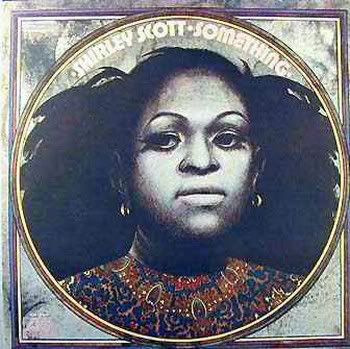
Shirley Scott - Something - 1970 - Atlantic

Since the late 1950s the late Philadelphia born Shirley Scott is still regarded as the first Lady of the Jazz organ. A brilliant soul/jazz organist and pianist, Shirley is backed on this great album by top rate Jazz musicians, including Eric Gale,and Chuck Rainey. Shirley covers some classic songs which include "Someday We’ll Be Together," George Harrison’s "Something" and Joe South’s "Games People Play". Although Shirley Scott has an extensive back catalogue of recordings, many people have never heard of her! Listen to her "Soul Shoutin'", and "Shirley Scott & the Soul Saxes" albums, which are classic soul jazz albums. N.B: This album has been called "Sure Thing", and "Something". The album is listed as SD-1561 - Sure Thing - Shirley Scott [1970] on the Atlantic Album Discography @ http://www.bsnpubs.com/atlantic/atlantic14648813.html and there are numerous examples of this "mistake" in many record catalogues, and music publications. It's a bit of an enigma. The 1970 vinyl lp on the Atlantic label is definitely entitled "Something", and the George Harrison track on the album would surely point to "Something" being the correct album title. Has anyone any more info on this album?

TRACKS / COMPOSERS

1 Something Harrison 3:28
2 Can I Change My Mind Despenza, Wolfolk 2:57
3 Because Lennon, McCartney 3:46
4 Brand New Me Bell, Butler, Gamble 4:10
5 I Want You Back Gordy, Mizell, Perren , Richards 2:41
6 Games People Play South 3:52
7 Someday We'll Be Together Beavers, Bristol, Fuqua 3:04
8 Messie Bessie Scott 4:18

MUSICIANS

Shirley Scott Organ, Piano, Ondioline
Billy Butler Guitar (Electric)
Eric Gale Guitar (Electric)
Chuck Rainey Bass (Electric)
Jimmy Johnson, Jr. Drums
Ralph MacDonald Conga

BIO

An admirer of the seminal Jimmy Smith, Shirley Scott has been one of the organ's most appealing representatives since the late '50s. Scott, a very melodic and accessible player, started out on piano and played trumpet in high school before taking up the Hammond B-3 and enjoying national recognition in the late '50s with her superb Prestige dates with tenor sax great Eddie "Lockjaw" Davis. Especially popular was their 1958 hit "In the Kitchen." Her reputation was cemented during the '60s on several superb, soulful organ/soul-jazz dates where she demonstrated an aggressive, highly rhythmic attack blending intricate bebop harmonies with bluesy melodies and a gospel influence, punctuating everything with great use of the bass pedals. Scott married soul-jazz tenor man Stanley Turrentine, with whom she often recorded in the '60s. The Scott/Turrentine union lasted until the early '70s, and their musical collaborations in the '60s were among the finest in the field. Scott wasn't as visible the following decade, when the popularity of organ combos decreased and labels were more interested in fusion and pop-jazz (though she did record some albums for Chess/Cadet and Strata East). But organists regained their popularity in the late '80s, which found her recording for Muse. Though known primarily for her organ playing, Scott is also a superb pianist — in the 1990s, she played piano exclusively on some trio recordings for Candid, and embraced the instrument consistently in Philly jazz venues in the early part of the decade. At the end of the '90s, Scott's heart was damaged by the diet drug combination, fen-phen, leading to her declining health. In 2000 she was awarded $8 million in a lawsuit against the manufacturers of the drug. On March 10, 2002 she died of heart failure at Presbyterian Hospital in Philadelphia. © Alex Henderson and Ron Wynn, allmusic.com