A.O.O.F.C
recommends
Mizar6

babydancing


Get this crazy baby off my head!

Showing posts with label Fifties Jazz. Show all posts

9.1.08

Horace Silver


horacesilver-horacesilverjazzmessengers


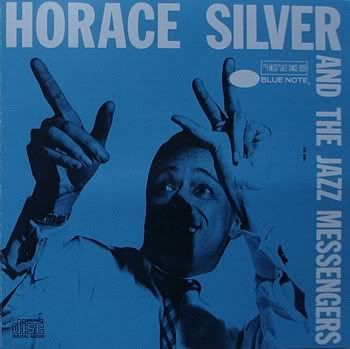
Horace Silver - Horace Silver & The Jazz Messengers - 1956 - Blue Note Records (USA)

A true classic, this CD found pianist Horace Silver and drummer Art Blakey co-leading the Jazz Messengers; Silver would leave a year later to form his own group. Also featuring trumpeter Kenny Dorham, Hank Mobley on tenor, and bassist Doug Watkins, this set is most notable for the original versions of Silver's "The Preacher" and "Doodlin'," funky standards that helped launch hard bop and both the Jazz Messengers and Silver's quintet. Essential music. © Scott Yanow, All Music Guide
You should buy Horace Silver's magnificent 1964 "Song for My Father" album.

TRACKS

1. Room 608, (Horace Silver) 5:19
2. Creepin' In, (Horace Silver) 7:25
3. Stop Time, (Horace Silver) 4:05
4. To Whom It May Concern, (Horace Silver) 5:07
5. Hippy, (Horace Silver) 5:20
6. The Preacher, (Horace Silver) 4:15
7. Hankerin', (Hank Mobley) 5:15
8. Doodlin', (Horace Silver) 6:44

[1-3,8] Recorded on December 13, 1954, at the Van Gelder Studio, Hackensack, New Jersey
[4-7] Recorded on February 6, 1955, at the Van Gelder Studio, Hackensack, New Jersey
Produced by Alfred Lion
Cover Photo by Francis Wolff
Cover Design by Reid Miles
Recording by Rudy Van Gelder

MUSICIANS

Horace Silver (piano)
Hank Mobley (tenor saxophone)
Kenny Dorham (trumpet)
Doug Watkins (double bass)
Art Blakey (drums)

horacesilver-portrait1


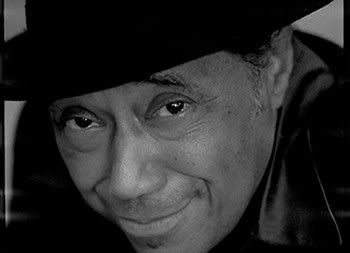
Horace Silver


REVIEWS

In 1954, pianist Horace Silver teamed with drummer Art Blakey to form a cooperative ensemble that would combine the dexterity and power of bebop with the mid-tempo, down-home grooves of blues and gospel music. The results are what would become known as hard bop, and the Jazz Messengers were one of the leading exponents of this significant era in jazz history. Before Silver's departure and Blakey's lifetime of leadership, this first major session by the original Jazz Messengers set the standard by which future incarnations of the group would be measured. The tunes here are all Silver's, save the bopping "Hankerin'" by tenor man Hank Mobley. Such cuts as the opening "Room 608," the bluesy "Creepin' In," and "Hippy" are excellent examples of both Silver's creative composing style and the Messengers' signature sound. Of course, the most remembered tunes from the session are the classic "The Preacher" and "Doodlin'," two quintessential hard bop standards. In all, this set is not only a stunning snapshot of one of the first groups of its kind but the very definition of a style that dominated jazz in the '50s and '60s and enjoyed a resurgence in the '80s. © 1996 - 2008 CD Universe

Late in 1954 a quartet under the leadership of Horace Silver was playing at Minton's Playhouse. As a result of earlier successes on the Blue Note label, Horace's star was in the ascendancy and Alfred Lion was anxious to record more of his brilliant hard driving piano. It was decided that this date would present Horace as a combo leader for the first time. He responded by getting Kenny Dorham and Art Blakey to join himself and two of the members of his Minton's quartet, Hank Mobley and Doug Watkins. Thus the Messengers were born, or reborn. Actually the name had been used before by Art Blakey when he led a 17-piece band on occasional gigs, and a septet on Blue Note, both in the late Forties. The present Messengers have laid permanent claim to the name by their length of existence and their musical excellence. In most informed, aware jazz circles they are considered to be the most muscular, spiritually rewarding group to come along in the past two years. Proceedings start with a fast unison theme, "Room 608" named for Horace's hotel room (Horace is hewing to the correct jazz line here, for hotel rooms have made jazz tune titles ever since Benny Goodman cut "Room 1411" in 1928). The ensemble is followed by two choruses of trumpet that will serve to convince you of Kenny Dorham's true ability. Seldom has he played with such fluency and assurance, in a style that seems to blend the best elements of both Gillespie and Davis. After two typically well-constructed choruses by Horace there is a series of cute unison breaks and piano fill-ins before Mobley takes over for a swinging solo. A rousing drum chorus precedes the return to the theme. "Creepin' In" sets a wonderful minor mood--slow, slinky and funky. It is better listened to than described. Listen to it. "Stop Time" contains only 16 bars of fast unison theme and gives everybody a chance to accomplish what seems to me to be their best work on the entire session: Dorham, Mobley, Silver and Blakey all sit in the spotlight successively and successfully. The open letter, "To Whom It May Concern," has scriveners Silver, Mobley, and Dorham spreading the word to one and all on the merits of getting to the heart of the matter and what it is all about. Once when Horace was being interviewed in reference to the group he said, "We can reach way back and get hat old time gutbucket barroom feeling with just a taste of the backbeat." He was referring of course, to "The Preacher," an earthy swinger somewhat reminiscent of "I've Been Working On The Railroad" in its melody line. In keeping with the title, everyone "preaches" in their solos. First Kenny exhorts and then Hank follows with a bluesy sermon. Rev. Silver gives the benediction and the congregation answers him. Hank Mobley shines on his original "Hankerin'" with a pace-setting opening solo that Kenny picks up beautifully before handing it over to Horace to expound on. Art has a characteristically telling solo before the close. "Doodlin'" is a 12-bar blues in which the tenor creeps below the trumpet at whole-tone intervals in the first 8 bars. Note too, the humorous use of staccato notes in bars 8 and 9. Note more particularly Horace's superb comping behind the Dorham and Mobley solos, in which he sometimes gets a 12-to-the-bar feel. This record proves again that the strength of jazz recording lies with the honest independents who are always the first to recognize and record real talent. © IRA GITLER, from the liner notes

19.11.07

The Modern Jazz Quartet


modernjazzquartet-pyramid1959


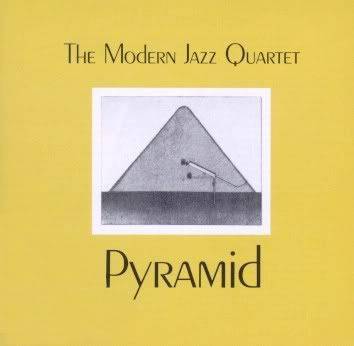
The Modern Jazz Quartet - Pyramid - 1959 - Atlantic

This is a strong recording from The Modern Jazz Quartet with inventive versions of John Lewis's "Vendome," and Ray Brown's "Pyramid," Jim Hall's "Romaine," Lewis's famous "Django," and cooking jams on "How High the Moon" and "It Don't Mean a Thing." The MJQ had become a jazz institution by this time, but they never lost their creative edge, and their performances (even on the remakes) are quite stimulating, enthusiastic and fresh. © Scott Yanow, All Music Guide

TRACKS

1. Vendome (2:30) Composed by John Lewis
2. Pyramid (Blues for Junior) (10:46) Composed by Ray Brown
3. It Don't Mean a Thing (If It Ain't Got That Swing) (5:02) Composed by Irving Mills
4. Django (5:23) Composed by John Lewis
5. How High the Moon (6:15) Composed by Nancy Hamilton
6. Romaine (7:28) Composed by Jim Hall

MUSICIANS

Percy Heath - bass
Milt Jackson - vibes
Connie Kay - drums
John Lewis - piano


BIO (Wikipedia)


The Modern Jazz Quartet was established in 1952 by Milt Jackson (vibraphone), John Lewis (piano, musical director), Percy Heath (bass), and Kenny Clarke (drums). Connie Kay replaced Clarke in 1955. Through the years the quartet had performed in several jazz styles, including bebop, cool jazz and third stream. Milt Jackson, Lewis, and Clarke had originally played together in a quartet while in the Dizzy Gillespie orchestra from 1946 to 1950. Together with Ray Brown they played during interludes designed to give the trumpeters time to recover from the challenging upper register trumpet parts. This line-up recorded as the Milt Jackson Quartet in 1951.
Jackson and Lewis originally shared the role of musical director but Lewis eventually took over the entire responsibility of this position.
In their middle years the group often played with classical musicians, but its repertoire consisted mainly of bop and Swing era standards. Among the original compositions from the band's book are "Django" by Lewis (a tribute to the Belgian jazz guitar player Django Reinhardt), "Afternoon In Paris", also by Lewis and "Bags' Groove" by Jackson (Bags was his nickname).
The group was first signed by Prestige and later in the 'fifties with Atlantic. In the late 1960s, in between their two periods with Atlantic, they signed with Apple, the Beatles label (the sole jazz group on the label), and released two albums – Under the Jasmine Tree (1967) and Space (1969).
Jackson left the group in 1974 partly because he liked a freer blowing style of playing and partly because he was tired of playing for little money (compared to rock and roll stars). As there could be no Modern Jazz Quartet without the two principals Lewis and Jackson, the group disbanded. In 1981 the MJQ reorganized to play festivals and later on a permanent six months per year basis. The MJQ's last recording was issued in 1993. Heath, the last surviving member, died in 2005. The enigma of the MJQ's music-making was that each individual member could improvise with an exciting vibrancy but in toto the group specialised in genteel baroque counterpoint. Their approach to jazz attracted promoters who sponsored 'jazz packet' concerts during the 1950s. One show would consist of several contrasting groups. The MJQ were ideal participants because no other group sounded like them. They provided a visual contrast as well, attired in black jackets and pin-striped trousers.
The group played blues as much as they did fugues, but the result was tantalising when one considered the hard-swinging potential of each individual player. Their best-selling record, Django, typified their neo-classical approach to polyphony.

22.9.07

Eddie Costa


eddiecosta-thehouseofbluelights1959


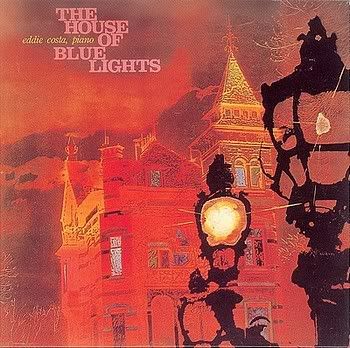
Eddie Costa - The House of Blue Lights - 1959 - Dot Records

"The House of Blue Lights", by the obscure, but brilliant jazz pianist and vibist, Eddie Costa is one of the best piano trio albums ever recorded. If you can find his 1956 albun," Guys And Dolls Like Vibes", give it a spin. A terrific musician, whose music deserves more exposure.

TRACKS

a. The house of blue lights 10:01
b. My funny Valentine 6:58
c. Diane 4:28
d. Annabelle 4:07
e. When I fall in love 4:07
f. What's to ya 9:26

PERSONNEL

Eddie Costa, p;
Wendell Marshall, b;
Paul Motian, dm
Recorded January 29th, 1959, N.Y.C.


eddiecosta-portrait


BIO (Wikipedia)

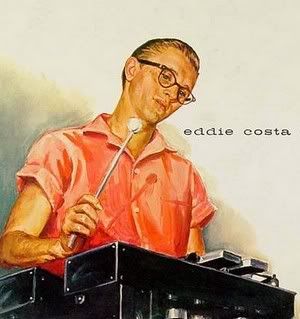
Eddie Costa, (August 14, 1930 - July 28, 1962), was an American jazz pianist and vibraphonist born in Atlas, Pennsylvania, now based in Pittsburgh. He recorded on vibraphones with pianist Bill Evans. One notable recording with Bill Evans was "Guys and Dolls Like Vibes", now reissued as "Bill Evans and Eddie Costa, Complete Quartet" on CD. Eddie Costa died in a car accident on New York's Westside Highway on July 28, 1962, cutting short a very promising career. Like Clifford Brown, Eddie's another jazz man who left the stage at too young an age.

MORE BIO INFO

Eddie Costa emerged from an unlikely background into a heralded -- if too brief -- career in jazz. Born in a rural coal mining town, Costa studied piano with his brother Bill and developed a taste for the swing greats; later, exposure to Bud Powell turned him to bop. Self-taught on vibes, Costa became known as an excellent sight reader, which produced a lot of studio work. On piano, his trademark sound was the emphasis of the middle and lower registers while nearly ignoring the top two octaves. In addition to recording as a sideman with Tal Farlow, Woody Herman, Johnny Smith, the Bob Brookmeyer-Clark Terry Quintet, and Bill Evans, Costa led his own trio and quintet dates. Sadly, most of Costa's recorded output remains unavailable on CD, with the notable exception of the VSOP reissue of his Quintet LP. Costa died when his car careened off of a busy New York parkway in 1962. © www.vervemusicgroup.com