A.O.O.F.C
recommends
Mizar6

babydancing


Get this crazy baby off my head!

Showing posts with label Nineties Jazz-Pop. Show all posts

21.4.13

Leni Stern


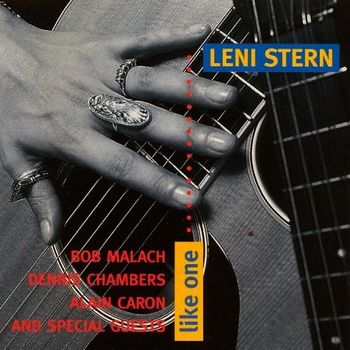
Leni Stern - Like One - 1993 - Lipstick Records

It isn't elitism that makes many in the jazz hardcore shudder whenever the word "fusion" is mentioned; it is the attempt to define any and everything instrumental as jazz, regardless of sound, structure, intent and content. Guitarist Leni Stern clearly has improvisational skills, and there are certainly songs on his current session designed in a jazz context. But neither Sting's "Every Breath You Take" nor Joni Mitchell's "Court and Spark" qualify; these are clearly pop covers, done with little or no jazz sensibility. Other songs reveal Stern's penchant for light, finely played voicings and bluesy chords, and includes some fervent blowing from tenor saxophonist Bob Malach. There is a lot on this session that is entertaining and commendable; just don't call the Sting cover jazz. © Ron Wynn © 2013 Rovi Corp | All Rights Reserved http://www.allmusic.com/album/like-one-mw0000619594

Born in Munich, Germany, Leni started playing piano at the age of six and guitar at eleven. At seventeen, she formed her own acting company. Her radical productions sold out houses across Europe and attracted press and TV coverage. In 1977, she turned her attention to music and left for the United States to study film scoring at the Berklee College of Music in Boston. Film scoring gave way to her love for guitar and in 1981, Leni moved to New York City to play in a variety of rock and jazz bands. In 1983, she formed a group of her own with Paul Motion on drums and Bill Frisell on guitar. In between writing, recording, and touring, Leni runs her own record label, Leni Stern Recordings (LSR). Take Ron Wynn’s advice and “don’t call the Sting cover jazz” or please don’t attempt to classify "Court and Spark" as jazz either. That would be musical sacrilege! (lol)! Leaving these hugely important points aside, give this album a listen and enjoy great guitar playing. There may be a misconception that Leni is purely a jazz guitarist. She was definitely categorized as a jazz guitarist very early on in her career but over the years her music has become increasingly difficult to label. Leni, herself has said that “I see myself as an improvising musician, and I sing so.” She plays so also. Leni has introduced many different musical elements into her music over her career including African guitar. She has travelled to many different countries and absorbed many musical influences including Hindustani classical vocal techniques. How many guitarists can you name who have gone to the trouble to take this kind of real interest in their music? Ok. Let’s start with Jeff Beck, George Harrison...(lol)! But really, to get back to the original review, who said this was a jazz album? I doubt if Sting or Joni Mitchell would be upset by Leni’s covers of their songs, and even if you are a jazz lover, it would be hard to be “upset” if some of the songs played by Leni on the album are not strictly jazz. All her musical life, Leni has played jazz, rock and pop and any of her albums are an education in music. “Like One” is HR by A.O.O.F.C. It is really pointless trying to categorise music. Are musical definitions really that important? Music is continuously evolving and Leni Stern has been a major player in it’s evolution. Don’t get stuck in a musical time warp! Listen to Leni’s “Finally The Rain Has Come” album which features Steely Dan drummer, Keith Carlock and also John Mclaughlin on guitar [All tracks @ 320 Kbps: File size = 111 Mb]

TRACKS

1. Bubbles (5:12)
2. Jessie's Song (6:04)
3. Low Blow (5:22)
4. Leave Softly (5:39)
5. Lights Out (4:42)
6. Blue Cloud (6:46)
7. Bruze (4:11)
8. Every Breath You Take (4:22)
9. Court And Spark (3:54)
10. Back Out (5:01)

All songs composed by Leni Stern, except "Low Blow" by Mike Stern & Leni Stern, "Court And Speak" by Joni Mitchell and "Every Breath You Take" by Sting

MUSICIANS

Leni Stern - Electric & Slide Guitar, Acoustic 6 and 12 string Guitar, Tiple
Alain Caron - Electric Bass
Russell Ferrante - Keyboards
Dennis Chambers - Drums
Bob Malach - Tenor Saxophone
Didier Lockwood - Violin on Tracks 5,7,10

BIO

Regarded as the "First Lady" of jazz guitar, German born composer Leni Stern has become a respected force on the global music scene, earning the Orville H. Gibson Award for Best Female Jazz Guitarist for five consecutive years from 1996 through 2000. With songs ranging from the delicately melodic to bebop and funk, Stern has won accolades for both her compositions and her guitar skills from the world’s most respected music critics and publications. Guitar Player once described her work as "a case study in the interactive properties of composition and improvisation," while Jazz Times likewise applauded Stern’s music, calling it "crisp, confident and bursting with energy." In addition to her achievements as a musician, she also ventured into the business side of the recording industry. In the 1990s, Stern established her own record label, Leni Stern Recordings, and handled most of her own business affairs. "I have this rule," she told Andy Ellis of Guitar Player in 1998. "Whenever I get bad news—like I didn’t get a gig—I don’t get up from my chair until I’ve attempted to avoid the bitterness. I translate the energy into a phone call to try and get another gig." Moreover, Stern expressed that dealing with business is a necessary evil for every musician. "But it’s a separate art," she further explained, "and you have to keep it in proportion. You need to admit that you’ll probably never be a great businessperson. I’m sure my lawyer and accountant friends double over laughing at my business sense. But its about being part of the game, if you don’t want to be treated like a child and used like a slave, you have to become a grown-up, sit at the table, and establish a level playing field. My awareness of this is probably heightened by the fact that I’m a woman. I had to get my shit together, because it was too frustrating to be ignored." Born Magdalena Thora in Munich, Germany, in 1952, Leni (pronounced "Lay-nee") Stern was drawn to music early in life. A child prodigy, she discovered the piano at age six, started taking classical piano lessons at the age of seven, and after finding an old guitar in the attic of her home, picked up that instrument and began teaching herself jazz at age eleven. Even as a child, Stern realized she possessed a natural gift for composition. "I didn’t think of it as composing at the time, but I was always sticking chords together and putting a melody on top," she recalled to Bill Milkowski and Jesse Gress in a 1993 interview with Guitar Player. "What I learned from studying composition was how to make that process go faster. I used to randomly search for something I liked. When you study composition, you learn to look in better places for what you like. You eliminate choices and get right to the heart of the matter. And then you also learn to analyze what other people do—and steal." Back then, Stern’s primary influences included Keith Jarrett, Bill Evans, Ralph Towner, and Pat Metheny, whose "Bright Size Life," she said, later "changed my whole life." In addition to music, Stern held aspirations in other areas of the arts, namely acting. A drama major at Falckenberg Schauspelschule, the young performer went on—upon graduating from school at the age of 17—to found her own theater company, for which she also served as musical director. Before long, Stern and her radical productions sold out houses across Europe, gaining the young artist considerable press and television coverage, especially in France and Germany. As Stern’s reputation blossomed, she started attracting more job offers, for both composing and acting, and by the mid-1970s, she had written two film scores and was appearing regularly on the television hit Goldener Sontag, a popular German show that spoofed soap operas. Jazz Guitar Beckoned: - In 1977, Stern left behind her successful career as an actor and relocated to the United States, where she enrolled as a composition major at the renowned Berklee College of Music in Boston, Massachusetts. Here, she met and befriended guitarist Bill Frisell, who accepted Stern as a private student and also introduced her to her future husband, fellow guitarist Mike Stern. "I had asked Frisell to show me some rock and blues licks, so he took me to see Michael play at a club in Boston … and he had the chops of doom," she recalled to Milkowski and Gress. "He made all the other guitar players in the audience turn green. So I asked him if he would teach me, and that was that. Two weeks later, he brought his amp over to my place, and soon after that we were married." While at Berklee, Stern also studied with Jon Damián, who taught the aspiring guitarist to listen and play with an open mind. "He really understands how music works, and he knows the connection between playing notes and pure sound," Stern explained to Ellis. "And he can bring you to that place. To Jon, everything is music. I think he’s a genius—or the closest I’ve come to it. My main teacher was Bill Frisell, who also studied with Jon. Along with my husband, Mike Stern, these are my major influences." In 1980, the couple moved to New York City when Stern’s husband landed an eventful gig playing with legendary trumpeter Miles Davis. Meanwhile, Stern herself played with various rock and jazz groups before forming her own band in 1983 with Frisell and drummer Paul Motian. Two years later, in 1985, Stern arrived with her debut, Clairvoyant, for the now defunct Passport label. Produced by Hiram Bullock and featuring Frisell as second guitarist alongside Stern, as well as Motian, bassist Harvie Swartz, pianist Larry Willis, and tenor saxophonist Bob Berg, the album won considerable praise. Since then, Stern continued to form associations with some of the jazz world’s leading musicians. "I’ve always hired the guys who were better than me," she informed Milkowski and Gress. "Michael Brecker once told me that it was the best way to learn." Her follow-up recording, 1987’s The Next Day, featured the same lineup as her debut with producer Bullock substituting for Frisell on rhythm guitar. Secrets, her energized 1989 debut for the Enja label, employed a three-guitar front line, with Stern’s tone contrasted against slide work by guitarist David Tronzo and superb saxophone playing by Berg, while third guitarist, Wayne Krantz, supplied the rhythm. Other featured musicians included percussionist Don Alias, drummer Dennis Chambers, and bassist Lincoln Goines—all top-notch players. Her next record, 1990s Closer to the Light, returned many of the same sessionists, including powerhouse drumming by Chambers and Zach Danzinger, and a special guest appearance by saxophonist David Sanborn. Collaborated with the Best: - Ten Songs, released in 1992 on the Lipstick label, also saw Stern employing a cast of renowned players, such as Bob Malach on tenor saxophone, Gil Goldstein on keys, Badal Roy on Indian percussion, Zawinul Syndicate drummer Rodney Holmes, and bassist Alain Caron from the Canadian fusion group Uzeb, as well as Chambers, Goines, and Krantz. Collaborating with the best over the years evidently paid off for the album, and critics noted Stern’s expanded technique—with Stern additionally playing Spanish and slide guitar—along with her always noted compositional skills. "That’s the Dave Tronzo influence," she said to Milkowski and Gress, referring to her slide guitar spotlight for the fusion track "Trouble." "I love the sound of it—it’s so swampy and emotional." Following the release of Ten Songs, Stern returned as a sole guitarist on 1993’s Like One, which featured Didier Lockwood on violin; teamed with keyboardist John Askew for a more stripped-down sound on 1995’s Words; and reunited with Krantz for an album of guitar duets for 1996’s Separate Cages. In 1997, Stern arrived with her first recording for her own label entitled Black Guitar, which brought the musician’s musical vision into sharp focus. The highly acclaimed work also reached out to a new audience, moving away from strictly jazz elements and adding surprisingly effective vocals alongside some of her most confident guitar playing. Although Stern had previously experimented with singing during her live performances, she had never tried recording her soft, somewhat breathy voice before until Black Guitar. "Be advised that Black Guitar is not a jazz album with some songs thrown in for balance," Jon Andrews concluded in a review for Down Beat in 1998. "Here, we venture into the introspective domain of the singer/songwriter, where hushed, somewhat confessional vocals and storytelling are central to a low key, intimate experience." Stern’s next release, 1998’s Recollection, looked back on the guitarist’s previous work, featuring vintage material as well as new songs that again showcased Stern’s singing ability. Stern and her husband have continued to reside in Manhattan in New York throughout their careers, and each guitarist prefers to keep their professional lives separate. As for possible collaborations with her husband in the future, Stern remarked, as quoted by Milkowski and Gress, "We play together around the house, but it’s so private. But I do have this vision of when we’re old and grey, sitting on the stage of Carnegie Hall playing ’Body and Soul‘ in rocking chairs." Triumphed over Cancer: - Although Stern has enjoyed an accomplished recording career and has earned the reputation as the world’s leading female jazz guitarist and composer, one of her most significant triumphs was of a more personal sort. In 1989, at the same time Stern was making great strides with her music, doctors diagnosed the guitarist with breast cancer. "I’m not the kind of person who worries and suffers in silence, who turns inward and consumes herself," she explained to Milkowski and Gress. "So I found a need to turn my amp up to 10 after I was diagnosed, to let the feedback sing for a while." Determined to defeat the disease, Stern fought back, and following surgery, chemotherapy, and various alternative treatments—including vitamins, improved nutrition, and even magnets—she won her greatest battle and was soon in remission. "I was really afraid that this thing was going to take over my life," she admitted to Milkowski and Gress. "So I really tried to return to normal as soon as I could. I was out of the hospital for three weeks when I went right back to playing just to prove to myself that I could still do it, even though I couldn’t really lift up my arm after surgery. I was deathly afraid that I wouldn’t be able to move my hands. That’s the first thing I told the surgeon: If you have to cut any tendons or nerves that affect my hands, I’d rather die. Don’t do it. Don’t mess up my hands.’" © 2013 Answers Corporation http://www.answers.com/topic/leni-stern

30.1.12

Rebecka Törnqvist


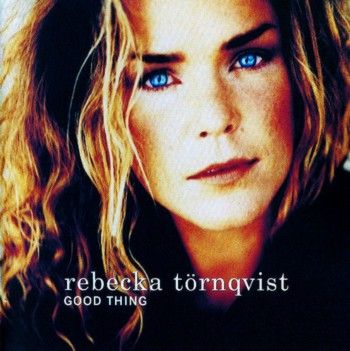
Rebecka Törnqvist - Good Thing - 1995 - EMI

If you are not familiar with Rebecka Törnqvist , you really should check out her music. She is a very talented Swedish jazz/pop vocalist with some good albums to her credit, including the two she did with Sara Isaksson as part of the group Gloria. In the late '90s when Swedish jazz-pop became marketable and too commercial, much of the music was watered down, and lost much of it's originality, but Rebecka stood out as a skilled songwriter. Even if "Good Thing" is not as strong as her "A Night Like This" album her talent for songwriting is still obvious. "Good Thing" is a mature, smooth (NOT smooth jazz) and cool combination of jazz and jazz pop with Grade A musicianship by a big part of the Swedish jazz elite. Check out her "Tremble My Heart" album @ REBTORN/TMH Have you heard her magnificent album of Steely Dan cover songs, "Fire In The Hole," which Rebecka recorded with Sara Isaksson. Check it out @ REBTORN/SARISAK/FITH/STDAN Buy her "A Night Like This" album and support good uncommercial jazz pop music. Rebecka's website is @ Rebecka Törnqvist [Tracks @ 224-320 Kbps: File size = 81.2 Mb]

TRACKS

1 Good Thing 3:45
2 Just As Long 4:27
3 Sleep Tight 3:27
4 Julio's Rainbow 4:37
5 You And Your Great Love 4:10
6 Forever More 4:38
7 I Do 4:34
8 Monster Walk 5:13
9 Love Song 3:07
10 Larger Than Life 5:35
11 I Don't Know Why 5:28

All songs composed by Pål Svenre, & Rebecka Törnqvist except "I Do" by Rebecka Törnqvist, "Julio's Rainbow" by Rebecka Törnqvist & Esbjörn Svensson, " Larger Than Life" by Pål Svenre, Rebecka Törnqvist & Marcus Wikström, and "I Don't Know Why" by Shawn Colvin

MUSICIANS

Rebecka Törnqvist - vocals, background vocals
Max Schultz - electric guitar, 6-string acoustic guitar, slide guitar
Lars (Halapi) - electric guitar, 12-string & 6-string acoustic guitar
Henrik Janson - 12-string & 6-string acoustic guitar
Hans Backenroth, Dan Berglund - bass
Urban Werner - double bass [THE SNYKO STRINGS]
Pål Svenre - piano, synthesizer, Fender Rhodes, keyboards, Wurlitzer, vocals, background vocals
Esbjörn Svensson - piano, synthesizer
Mats Asplén - Hammond organ
Christer Wallin, Magnus Öhrström - drums
Jan Robertson - drums, cymbals
René Martinez - percussion
Frederick Ljungqvist - sax
Per "Texas" Johansson - baritone & tenor sax
Per "Ruskträsk" Johansson - alto sax, flute
Leif Lindvall, Peter Asplund - trumpet
Anders Wiborg, Mikael Råberg, Bertil Strandberg - trombone
Bo Eriksson - English horn
Goran Gunnarsson, Håkan Nyqvist - French Horn
Christian Bergqvist, Christos Andered, Ulf Forsberg, Hanna Göran, Mira Malik, Urban Svensson, Paul Waltman, Patrik Swedrup - violin [THE SNYKO STRINGS]
His Åkeson, Elisabeth Arnberg, Mikael Sjöberg - viola [THE SNYKO STRINGS]
Asa Forsberg, Johan Stern - cello [THE SNYKO STRINGS]
Magnus Rongedal, André de Lange, Greta folkesson - background vocals

BIO

Rebecka Törnqvist was probably the most important artist in raising the interest in young female jazz vocalists in Sweden in the '90s, though her solo albums weren't pure jazz, but rather pop with heavy jazz influences. Apart from getting a number of followers in this style, she also revitalized the interest for the whole genre. This was not only her work, but artists like Per "Texas" Johansson have her to thank for increasing the commercial potential for Swedish jazz. Törnqvist's debut album, A Night Like This, was released the same year as Bo Kaspers Orkester released their successful jazzy debut. The albums were similar in some aspects, but where Bo Kaspers Orkester took a witty, ironic stand in jazz music and stretched out towards R&B, Törnqvist lacked the irony and her approach was serious, mature, and smooth. In 1993, Törnqvist made her debut with the album A Night Like This. Backing her was a big part of the Swedish jazz elite, including names like Esbjörn Svensson, Anders Widmark, and Per "Texas" Johansson, and the combination of jazz and pop proved very successful, not least commercially. Törnqvist's next album, Good Thing, was definitely pop, but also showed influences from slick soul and blues. In 1996, she released her first pure jazz album, Stockholm Kaza Session, together with saxophonist Per Texas Johansson and two years later, Tremble My Heart, which was a return to the mix of pop and jazz. The next year she was one of the members in the supergroup Gloria, formed by Lars Halapi, where Törnqvist sang together with singer/songwriter Sara Isaksson. The group released a self-titled album in 1999. In 2001, Törnqvist released a new solo album, this time produced by Halapi, who had also produced Gloria. Vad Jag Vill was her first album in Swedish and was also a step further away from the laid-back jazz-pop that had made her well-known. © Lars Lovén © 2012 Rovi Corporation. All Rights Reserved http://www.allmusic.com/artist/rebecka-trnqvist-p203541/biography

BIO (WIKI)

Rebecka Törnqvist (born 26 April 1964 in Uppsala, Sweden) is a Swedish jazz and pop vocalist. Her debut album A Night like This was released in 1993 and sold over 100,000 copies. She was nominated for five Swedish Grammys in 1993. This was followed by Good Thing in 1995, which got a platinum record and got her a Swedish Grammy Best Female Pop/Rock Artist of the Year in 1996. Most of the albums by Rebecka Törnqvist are sung in English, with the exception of Vad Jag Vill (2001). She also appears on the Swedish compilation Jul i folkton (BAM, 2005) in the song Det Är En Ros Utsprungen (III), and on another Swedish compilation Dubbel Trubbel (EMI, 2005) with Resan Hem (together with Eldkvarn) and Vad Tänker Han På. Rebecka Törnqvist was probably the most important artist in raising the interest in young female jazz vocalists in Sweden in the '90s, though her solo albums weren't pure jazz, but rather pop with heavy jazz influences. Apart from getting a number of followers in this style, she also revitalized the interest for the whole genre. In 1996 she was awarded Ulla Billquist Stipendiet (Swedish). Rebecka Törnqvist grew up in Africa where her father worked for the Swedish foreign aid organisation Sida.

17.10.11

Rebecka Törnqvist


Rebecka Törnqvist - Tremble My Heart - 1998 - EMI

With its sophisticated, jazzy sound, "Tremble My Heart" demonstrates Rebecka's confident and secure vocals as well as her songwriting talents. Some of the backing musicians include part of the Swedish jazz elite, including Per "Texas" Johansson, Johan Lindström , Mats Lidstrom , and Sara Isaksson. With Sara, Rebecka recorded the classic Steely Dan covers album, "Fire In The Hole". Vocalists like Rebecka Törnqvist and Viktoria Tolstoy were crucial in starting the '90s wave of female jazz vocalists in Sweden, and were instrumental in promoting interest in the whole genre. This album is not strictly jazz, but is more in the jazz-pop mould. The instrumentation and sound is jazzy, while the approach leans towards pop. When Swedish jazz-pop had proved itself marketable in the late '90s, it lost much of it's quality, but Rebecka Törnqvist still produces very worthwhile albums and remains a talented songwriter. She penned six of the albums' tracks and was involved in composing the other five tracks. A really classy album, and HR by A.O.O.F.C. Listen to Rebecka's "A Night Like This" album and Sara Isaksson & Rebecka Törnqvist's inspired masterpiece "Fire In The Hole" album @ REB.TORN/SAR.ISAK/FITH [All tracks @ 128 Kbps: File size = 39.8 Mb] N.B: A higher bitrate does not always mean better audio quality. A lot depends on the audio source, and various audio conversion and compression factors. The album here is of excellent sonic quality

TRACKS / COMPOSERS

1 What I Thought Was Mine - Törnqvist 2:55
2 I Let Mine Go - Törnqvist 4:13
3 Make Believe (Is Always for Tonight) - Svenre, Törnqvist 4:50
4 I Couldn't Love You Anymore - Törnqvist 2:23
5 Tongue Tie - Johansson, Lindström, Törnqvist 3:38
6 I Have No Worries - Törnqvist 1:16
7 Tremble My Heart - Törnqvist 3:21
8 Princess Days - Johansson, Törnqvist 5:17
9 As I Am - Johansson, Törnqvist 2:20
10 Mayday - Lindström, Svenre, Törnqvist 4:09
11 Mutiny - Törnqvist 2:59

MUSICIANS

Rebecka Törnqvist - Piano, String Arrangements, Vocals, Background Vocals
Johan Lindström - Electric Guitar, Acoustic Guitar, Pedal Steel, Electric Bass, String Arrangements, Background Vocals
Per "Texas" Johansson - Guitar, Saxophone, Clarinet, Background Vocals
Pal Svenre - Electric Piano, Upright Piano, Synthesizer, String Arrangements, Background Vocals
Ulrika Frankmar, Ulf Forsberg - Violin
Mats Lidstrom - Cello
Leif Lindvall - Trumpet
Sara Isaksson - Duet, Vocals
Andre de Lange - Background Vocals

REBECKA TÖRNQVIST (BIO)

Rebecka Törnqvist was born in the university town Uppsala, north of the Swedish capital Stockholm. Daughter of a journalist/teacher mother and physicist/musician father, Törnqvist spent parts of her childhood in Lesotho and Kenya before returning home to boarding school. She began writing songs at the age of five and a few years later moved onto confiscating the family radio in the dead of night to record music from Radio Luxemburg and other foreign stations. Alongside classical and East African music and the songs of Alice Tégner it was pop music, which kept Törnqvist company and provided respite as the family uprooted itself at regular intervals. In 1993, the strongly jazz-derived debut album “A Night Like This” was released to critical and unexpected commercial success. The following album “Good Thing” played extensively on the radio and propelled Törnqvist onto the continental and Japanese markets. The collaboration with the Grammy Award-winning musician Per “Texas” Johansson led to the album ”The Stockholm Kaza Session”. It was produced on the Kaza label that Törnqvist had created with Kjell Andersson, legendary A&R at EMI. ”Tremble My Heart” (1998) was a milestone in Törnqvists work as she considers it to be her first “own” album, marking a change in her composing and of musical concept.. Pål Svenre remained as producer while Johan Lindström entered as arranger och guitarist. The collaboration with Lindström had great impact on Törnqvists music making, and 2006 he produced ”Melting Into Orange”, followed by ”The Cherry Blossom And the Skyline Rising from the Street” 2008. Earlier Törnqvist had joined forces with Sara Isaksson as singers in the new group “Gloria”. The song “Party On My Own” became a minor hit from the first album. Isaksson and Törnqvist returned as a duo a few years later to produce “Fire In The Hole”, acoustic interpretations of Steely Dan’s music. In 2006 Törnqvist worked with producer Jari Haapalainen on her contribution to the Olle Adolphson-homage album “Dubbeltrubbel”. Thoughts of a future and more extensive collaboration took hold and has now come to fruition with the upcoming album “Scorpions”. Törnqvist lives in the countryside where she is torn between her cosmopolitan yearnings and her gardening hermit romanticism. © http://www.rebeckatornqvist.se/me

25.5.11

Leni Stern


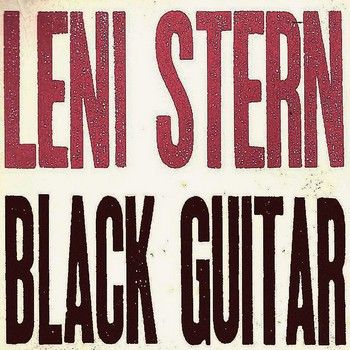
Leni Stern - Black Guitar - 1997 - Leni Stern

Leni Stern introduces us to her singing on Black Guitar. Vocally she's unimpressive, but this has more to do with the trite lyrics than her delivery, which is sufficiently expressive. For most of the CD an enjoyable looped Strat instrumental follows each cut with vocals. In these instrumental melodies her real voice comes through. Her light jazz leads are separately nicely from the deep and busy bass from Tim Lefebvre. The result is a song full of breadth and structure while still putting forth a face of her stylized delicacy. I recommend any fan of relaxed guitar jazz to get into the heart of this disc as the weakest material is concentrated in the first few tracks. Production, lap steel and vocal support are from Larry John McNally (Bonnie Raitt). © Tom Schulte © 2011 Rovi Corporation. All Rights Reserved http://www.allmusic.com/album/black-guitar-r311333

Leni Stern collaborates with Larry John McNally for a critically praised work offering a new spin on songwriting. This album showcases both accomplished writers for their passionate music and clever lyrics. This is Leni Stern's first record that really show's off her lyric writing."Leni Stern has over the years distinguished herself as one of the preeminent composers on the modern scene, with an ear for memorable, complex melodic hooks and keen insight to the human condition matched only by her sublime guitar skills" - Jazz Times

For 12 years and eight albums, guitarist-composer Leni Stern pursued a jazzy muse. From elegant impressionism (1985's excellent Clairvoyant with Paul Motian, Harvie Swartz and Bill Frisell) to slamming fusion (1993's Like One with Dennis Chambers, Alain Caron and Bob Malach), she demonstrated a penchant for melodic sensitivity and evocative harmonies while making some strong six-string statements of her own. A couple of years ago Leni found her voice...literally. She started incorporating a couple of vocal tunes on her regular Sunday night gig at the 55 Bar in New York and eventually began pursuing a very different muse. Following a period of vocal training and some intensive shedding with songwriting partner Larry John McNally, she has emerged as a breathy chanteuse on Black Guitar, her first fully realized showcase as a singer-songwriter. Though tunes like "Chinatown Revisited," "Mercy In The Night," "Mary Magdalene," "One Day" and the title track clearly fall in the pop camp, Leni imbues them with dusky timbres and a haunting beauty. Her guitar playing is strictly in service of the song on this vocal project, though she does resurrect one of her finest instrumental compositions, "Sandbox," a tune also once recorded by her chops-monster husband Mike Stern. She offers a pungent solo on the moody "So Good For You" and stretches on the instrumental closer, "Silverline," a dynamic showcase for Dennis Chambers' awesome drum prowess. Leni hinted at this direction on 1996's Separate Cages, her intimate duet project with fellow guitarist Wayne Krantz. She goes for it with more authority on Black Guitar. By & © Bill Milkowski, May 1998 © 1999–2011 JazzTimes, Inc. All rights reserved http://jazztimes.com/articles/8611-black-guitar-leni-stern

Good album mixing jazz, pop, and rock from Leni Stern, the great Munich born jazz and jazz fusion guitarist. Leni has recorded many albums and collaborated with many great musicians including Wayne Krantz, Paul Motian, Alain Caron and Bob Malach. Despite being an excellent composer, lyricist, and guitarist, her name remains unfamiliar to many people. Leni seldom sings, but she uses her vocals to good effect on this album. "Black Guitar" was specifically released to demonstrate Leni's improved vocal training as well as her lyrics. In fact, it is more a vocal than a guitar dominated album, so don't expect many complex jazz fusion guitar passages. Listen to her "Signal" album which features the incredible guitarist, Wayne Krantz. Spare a thought for the late, great Emily Remler who was another exceptional jazz guitarist, and listen to Emily's great "Firefly" album sometime

TRACKS / COMPOSERS

1 Can Joe Cocker - McNally 4:41
2 Chinatown Revisited - McNally 6:45
3 Mary Magdalene - McNally, Stern 5:57
4 City Sing for Me - McNally, Stern 4:12
5 Sandbox - Stern 8:05
6 Mercy in the Night - McNally, Stern 6:12
7 Jesse - McNally 1:43
8 So Good to You - Lefebvre, McNally, Stern 7:27
9 Black Guitar - McNally 5:34
10 Lynda - Lefebvre 1:04
11 One Day - McNally, Stern 5:52
12 Ghost Money - Stern 1:51
13 Why's Your Skin So White - McNally 4:31
14 Silver Line - Lefebvre, Stern 8:18

MUSICIANS

Leni Stern - Guitar, Guitar (Acoustic), Loop, Tiple, Vocals
Larry John McNally - Guitar, Guitar (Acoustic), Tremolo, Vocals, Vocals (Background)
Tim Lefebvre - Bass, Vocals (Background)
B-3 - George Whitty
Dennis Chambers - Drums
Lionel Cordew - Drums, Vocals (Background)
Malcolm Pollack, Don Alias, Dennis McDermott - Percussion
David Mann - Saxophone
Lisa Michel - Vocals (Background)

BIO (WIKI)

Leni Stern (born Magdalena Thora in Munich, Germany) is an electric guitarist, and singer. She was interested in music from an early age, beginning piano studies at the age of six and taking on the guitar age of eleven. Forming her own acting company at the age of seventeen, Stern attracted media attention and performed her radical productions in front of sold-out European crowds. In 1977, Stern chose music over acting, and left Germany for the United States to attend the Berklee College of Music in Boston, studying film scoring. She gave up film scoring in favor of the guitar and moved to New York City in 1981, playing in various rock and jazz bands. In 1983, she formed a band of her own with Paul Motian on drums and Bill Frisell on guitar. She has released twelve solo instrumental recordings, of which 1985's Clairvoyant was the first. Her most recent releases – Alu Maye, Africa, Spirit in the Water and Sa Belle Belle Ba – juxtapose Stern's trademark inventive guitar and vocal explorations with the indigenous sounds of accomplished African instrumentalists and singers. Her cover of Laura Nyro's song "Upstairs by a Chinese Lamp" appeared on Time and Love: The Music of Laura Nyro, the Laura Nyro tribute album. Leni Stern Recordings (LSR) was established in 1997. The record label seeks to put out music from the most creative artists in jazz and songwriting. LSR's first release was Stern's first full-length vocal release, Black Guitar. Ted Drozdowski of the Boston Phoenix described Stern's voice sounding "something like Marlene Dietrich borrowing Billie Holiday's phrasing." She is married to guitarist Mike Stern

MORE

Leni Stern, who has received more recognition for her composing than her guitar playing, has managed to carve out her own musical personality despite being married to fellow guitarist Mike Stern (a potentially dominant influence). She began classical piano lessons when she was six, but was much more inspired a few years later when she discovered a guitar in the attic and taught herself to play jazz. Stern's early years were actually spent as an actress in her native Germany, featured on a national television show. However, she took a summer off in 1977 to enroll at Berklee, and she never returned to acting. Stern lived in Boston until 1980, moved to New York, and has worked steadily in clubs ever since, recording for Passport (now defunct), Enja, and Lipstick. Primarily an instrumentalist in the past, with 1997's Black Guitar she revealed her prowess as a vocalist, and began releasing a series of albums that mixed jazz, pop, and rock on her own LSR imprint, including Kindness of Strangers (2000), Finally the Rain Has Come (2002), When Evening Falls (2004), and Love Comes Quietly (2006). © Scott Yanow © 2011 Rovi Corporation. All Rights Reserved http://www.allmusic.com/artist/leni-stern-p7609/biography

28.10.10

Dave's True Story


Photobucket

Dave's True Story - Dave's True Story - 1994 - Bepop

"You can call it hip, call it clever, or even call it 'jazz noire.' The music of Dave's True Story both challenges and defies categorization. It swings with a refreshing literate charm of its own." Ken Franckling/UPI Arts & Entertainment - The Jazz Condition

"New York hipsters DAVE'S TRUE STORY mix it up with smoldering grooves and cheeky beatnik lyrics..." Billboard

"Jo Stafford-sings-Dorothy-Parker feel...Harry Connick, Jr. and John Pizzarelli should have new material that is as witty as what Mr. Cantor creates." Jim Fusilli - Wall Street Journal

"beatnik wit and chic" Thomas Standler - NY Times

"Dave has all the wit, sophistication, even romance of Cole Porter, and yet he remains a maverick with a cutting-edge sensibility" Mary Foster Conklin, performer

"Cole Porter meets Seinfeld." CNNfn

"This is the stuff of pure hipster cool, fleshed out by David Cantor's sense for gentle dynamics and Flint's winking delivery." Colin Helms - CMJ Magazine

"DTS offers art songs for a new century, spiced with jazz and neon details, and I can't wait for more" Neil Tesser - Playboy Magazine

The eponymous debut album by Dave's True Story won substantial acclaim upon its initial release in 1994. Following its release, the New York Times devoted a Sunday-edition article to the group, who went on to win the 1995 Kerrville New Music Award because of this debut effort. The album showcased for the first time the eerie vocals of Kelly Flint and the songwriting of David Cantor, the man who gave the group their name. Together, they create relaxed lounge music with both jazz and pop overtones, though more the former than the latter. In particular, "Crazy Eyes" stands out because of its appearance in the film Kissing Jessica Stein. Originally self-released, this eponymous debut remained long out of print until 2002, when Flint and Cantor remastered and re-released it with four bonus tracks, one of them being a remix of "Crazy Eyes." © Jason Birchmeier, Rovi © 2010 Answers Corporation http://www.answers.com/topic/dave-s-true-story-1994

"Dave's True Story" is a sensational s/t jazz pop album from the truly original Dave's True Story, and VHR by A.O.O.F.C. Kelly Flint's vocals can't be faulted, and David Cantor has got to be one of the greatest songwriters and lyricists in the jazz pop genre today. Listen to DTS "Unauthorized" album. The band's "Sex Without Bodies" album is on this blog.

TRACKS

01 Sequined Mermaid Dress
02 Can't Get You Out Of My System
03 Another Hit
04 Flexible Man
05 Crazy Eyes
06 Last Go 'Round
07 Sommes Blues
08 Marisa
09 Nadine
10 Like a Rock
11 Mad About You
12 Joey (Bonus)
13 Fever (Bonus) - John Davenport, Eddie Cooley
14 Blue Moon (Bonus) - Richard Rodgers, Lorenz Hart
15 Crazy Eyes Remix 2002 (Bonus)

All songs composed by David Cantor except where stated

MUSICIANS

David Cantor (Guitar), (Vocals), (Finger Snaps)
Michael Visceglia (Bass Electric), (Finger Snaps)
Dave Richards, Earl May (Bass Upright)
Steve Gaboury (Piano)
Oliver Jackson (Drums)
Dave Lebolt (Sample Percussion)
Andy Snitzer (Soprano & Tenor Sax)
Chris Botti (Trumpet)
Michael Davis (Trombone)
Kelly Flint (Vocals), (Finger Snaps)

ABOUT DAVE'S TRUE STORY

Dave's True Story is a jazzy pop combo featuring Dave Cantor's intelligent, sometimes quirky lyrics, Kelly Flint's smooth-as-silk vocals and Jeff Eyrich's acoustic upright bass laying a solid rhythm track beneath it all. They have built an impressive body of accomplishments since their formation in 1994. Winners of the 1995 Kerrville New Music Award as well as numerous and various other surprising accomplishments, they have performed nationally and internationally to wide critical and commercial acclaim. Dave and Kelly met in 1989 through the Fast Folk group of songwriters. Chanteuse, Kelly Flint, a teenage Joni Mitchell freak turned twenty-something fan of Keely Smith and Lulu, had been singing backup around town and feeding her dreams as a waitress at the Cookery, an old cabaret where she befriended blues legend Alberta Hunter. David Cantor, a one-time student of the Berklee College of Music and an avid songwriter, started performing his offbeat jazzy songs at open-mics at places like the Speakeasy. Kelly and Dave passed each other like two ships in the night until a snowy evening in 1992 when they cemented their friendship over shots of Jack Daniels at the old Village Corner. Kelly proposed that Dave teach her a song and the rest, as they say, is history. Well, not quite. Jeff Eyrich signed on in 1998, bringing his upright bass and considerable production experience into the picture. Dave's True Story is an independent band whose notoriety has been built mainly by word of mouth and hundreds of live shows. http://www.davestruestory.com/press/about.html

SHORT BIO

The duo Dave's True Story formed in Manhattan, when songwriter/guitarist David Cantor and singer Kelly Flint met through connections in the New York music scene; Flint showed an affinity for singing Cantor's witty, often risqué songs written in the style of Porter and Gershwin. The duo released their self-titled debut on their own BePop label in 1996 and built a following by performing frequently at New York clubs and touring the Northeast. Their second album, Sex Without Bodies, appeared in 1998, followed in early 2000 by Unauthorized. © Steve Huey © 2010 Rovi Corporation. All Rights Reserved http://www.allmusic.com/cg/amg.dll?p=amg&sql=11:k9fwxqlhldfe

7.10.10

Dave's True Story


Photobucket

Dave's True Story - Sex Without Bodies - 1998 - Chesky

For the die-hard Dave's True Story fan, it's been a long wait since 1993's self-titled debut disc on their own Bepop label. Although 10,000 copies were sold of that disc, indicating its wide appeal, a new album did not arrive. Finally, in 1998, DTS (Kelly Flint on vocals and David Cantor on guitar and vocals) release their second album, Sex Without Bodies. It continues the legacy of smooth jazz-influenced folk music that DTS pioneered on their debut album. The sound is so unmistakably DTS that you can just picture yourself in a dark jazz club in Greenwich Village, sipping martinis on a 1920s-style couch, listening to Flint melt men's hearts, overtop Cantor's funky guitar licks. Sex Without Bodies features 12 new tracks and one old one: I'll Never Read Trollope Again from Christine Lavin's Laugh Tracks, Volume 1. Appearing on the same album as roll-on-the-floor favorites as Vance Gilbert's Country Western Rap, Patty Larkin's At the Mall, and Rob Carlson's Springsteen parody (These Eggs Were) Born to Run, Trollope was just too subdued and subtle to fit comfortably on Laugh Tracks. On Sex Without Bodies, Trollope fits nicely with the more easy-going theme consistent with the rest of the album. As the album title suggests, Sex Without Bodies is chock full of songs about sex and its implications for human relationships. Ned's Big Dutch Wife tells the tale of a woman running a brothel without her husband's knowledge. Baby Talk is a recipe for success at bedding the song's narrator. And the title track is a take-off on the false sexual goals of porno movies and 1-900 numbers. Like Flexible Man on their eponymous first CD, Sex without Bodies also contains a soon-to-be signature song Spasm, featuring the sexual interplay between Flint's alluring vocals and Cantor's guitar accents. Flint sings, "You've got a laugh that could bring me to tears. You've got compassion coming out of your ears. You've got a mind that's agile and bright. But that's not the reason that I'm yours tonight." As the mood shifts and the post-martini high fades, we arrive at the album's highlight, Once Had a Woman. Here the tale is told of a philandering man and the woman who loved him, seemingly overlooking his habit. In the last line of the song, we learn that the narrator is that woman. Simply a powerful song that brings chills up the spine. To see that song in concert would probably send most everyone reaching into their purses and pockets for Kleenex or handkerchiefs. Flint describes that when she's singing Daddy-O, she takes on the character of "a housewife in the '60s who's playing hostess to a group who are freaked out over Vietnam. She's wearing a pantsuit, has a Mai-Tai in her hand, and is kind of a ditz, telling everybody to chill out." Nirvana is a musical companion to Last Go Round, from their first album, in which the narrator must learn to become comfortable with being swept off her feet by possible love, after doing without for so long: "I can't deny this stranger in my skin, or is it just Nirvana setting in?" The only low point of the album is a cover of Walk on the Wild Side. Maybe I'm missing something here, but DTS's "beat-lounge" version of Lou Reed's exploration of cross-dressing, addiction, and perversion in New York City does not seem quite appropriate in the context of the rest of the album. That mystery aside, Flint's sexy vocals are prominent in the mix and are not drowned out by the tasteful instrumentation, filled out by drums, upright bass, percussion, vibes, trumpet, and saxophone. Despite being recorded live in a Chelsea, New York Episcopal Church with no overdubs, the sound quality of the CD is excellent, as one would hope for a CD of this genre. I highly recommend Sex Without Bodies for those who want to music to seduce to. DTS has no equals in the folk-music world. They are truly unique. Welcome back, DTS! I'm looking forward to your next release; please don't make us wait another five years. Edited by David N. Pyles (dnpyles@acousticmusic.com) Copyright 1998, Peterborough Folk Music Society and David Schultz. This review may be reprinted with prior permission and attribution. http://www.acousticmusic.com/fame/p00795.htm

It is not often that I rate a new disc as highly as Sex Without Bodies. This recording provides the listener with a view into the sophistication, intellectualism, recklessness and rebellious condition that defined the decade of the 1960s. Dave's True Story is the product of a melange between vocalist Kelly Flint and guitarist (and sometimes vocalist) David Cantor. On this, their second release, these two fine musicians and lyricists are doing what many attempt but few achieve. This is a magical, wonderful, musically engaging tour of 1960s lounges, coffee houses and beatnik hangouts. Flint's voice is sweet and seductive throughout this very fine recording. Her harmonious sultriness seems to be especially fit for this type of music. Lest I begin by erroneously giving you the impression that there are only two performers here, I would be sorely remiss if I did not mention at this point that this recording boasts a very competent and lengthy list of back-up musicians, including the great European horn man, Chris Botti. There are vibes, saxes, acoustic basses, drums, percussion and even an electric Wurlitzer piano. All of the performers are exceptionally talented, with each one taking the spotlight from time to time. Never overdone, the musical solos are smooth, engaging and full of the juxtaposed dimness and brightness of a gaslight cabaret. This entire musical performance was recorded live at St. Peter’s Episcopal Church in Chelsea, New York, and is the product of Richard Julian and David Chesky. There were no overdubs used on any of the songs, and the quality of the recording is, without reservation, true audiophile. There is a realness to the music and a perceptual ambiance in the reproduction of the recording venue's interaction with the musicians and their instruments that is quite extraordinary. The location of the performers on the soundstage is precise without being sterile. As I thought about how to best convey to you the strong emotional feeling that this recording imparts, it occurred to me that its strongest quality is the high degree of timbral accuracy heard in, and most importantly between, voices and instruments. The sound is, as my daughter would say, "most real!" In addition to some terrific music, there are some great lyrics. On "Daddy-O," jointly written by Flint and Cantor, the lyrics are especially entertaining: "The word from Saigon/Mao will change his tune/Let bys be bygone/We'll be gone by June." "Spasm" is lyrically hottish: "So let's get this straight/I'm not in for the long haul/So spare me the roses the wine and the song/It all boils down to the raw protoplasm/'Cause this ain't the real thing/It's just a spasm." A cover of Lou Reed's "Walk On The Wild Side" is included. I'm not going to write about it; you'll just have to hear it for yourself. Imagine a sultry, female jazz singer belting out those lyrics. I assure you, Flint never loses her head, even when she's -- oh my! I listen to a great deal of music -- some good, much mediocre, some bad. When I came across Sex Without Bodies, I felt as though I had found some wonderful, rare artifact that should be put on display somewhere because of its simple beauty and profound complexity. Aside from being a reference-grade technical recording, Sex Without Bodies is a creative, solid musical performance that’s a real joy. This is great music. And yes, with this Chesky recording, you CAN hear the difference. Musical Performance **** 1/2 Overall Enjoyment ***** Recording Quality ***** by Jay Piriz October 1998 http://www.soundstage.com/music/reviews/rev068.htm

Recorded at St. Peter's Episcopal Church, Chelsea, NYC, Dave's True Story's "Sex Without Bodies" is another sensational jazz pop album from the truly original Dave's True Story, and VHR by A.O.O.F.C. Kelly Flint's vocals can't be faulted, and David Cantor has got to be one of the greatest songwriters and lyricists in the jazz pop genre today. The album is also available as a special DVD issue. Listen to DTS "Unauthorized" and "Nature" albums

TRACKS

1. Spasm
2. Baby Talk
3. Sex Without Bodies
4. I'll Never Read Trollope Again
5. Once Had a Woman
6. I'm So Repentant
7. Rue de Lappe
8. Nirvana
9. Ned's Big Dutch Wife
10. Crazy
11. Daddy-O
12. Walk on the Wild Side
13. Stormy

All tracks composed by David Cantor except "Daddy-O" by David Cantor, & Kelly Flint and "Walk on the Wild Side" by Lou Reed

MUSICIANS

David Cantor (vocals, guitar)
Richard Julian, Ben Monder (guitar)
Darren Solomon (upright bass)
Kevin Hupp, Richard Crooks (drums)
Emedin Rivera (percussion)
Jeff Berman (vibraphone)
Aaron Heick (tenor saxophone)
Crispin Cioe, Jack Bashkow (baritone saxophone)
Chris Botti (trumpet)
Charlie Giordano (musette)
Kelly Flint (vocals)

ABOUT DAVE'S TRUE STORY

Dave's True Story is a jazzy pop combo featuring Dave Cantor's intelligent, sometimes quirky lyrics, Kelly Flint's smooth-as-silk vocals and Jeff Eyrich's acoustic upright bass laying a solid rhythm track beneath it all. They have built an impressive body of accomplishments since their formation in 1994. Winners of the 1995 Kerrville New Music Award as well as numerous and various other surprising accomplishments, they have performed nationally and internationally to wide critical and commercial acclaim. Dave and Kelly met in 1989 through the Fast Folk group of songwriters. Chanteuse, Kelly Flint, a teenage Joni Mitchell freak turned twenty-something fan of Keely Smith and Lulu, had been singing backup around town and feeding her dreams as a waitress at the Cookery, an old cabaret where she befriended blues legend Alberta Hunter. David Cantor, a one-time student of the Berklee College of Music and an avid songwriter, started performing his offbeat jazzy songs at open-mics at places like the Speakeasy. Kelly and Dave passed each other like two ships in the night until a snowy evening in 1992 when they cemented their friendship over shots of Jack Daniels at the old Village Corner. Kelly proposed that Dave teach her a song and the rest, as they say, is history. Well, not quite. Jeff Eyrich signed on in 1998, bringing his upright bass and considerable production experience into the picture. Dave's True Story is an independent band whose notoriety has been built mainly by word of mouth and hundreds of live shows. http://www.davestruestory.com/press/about.html

5.4.09

Everything But The Girl


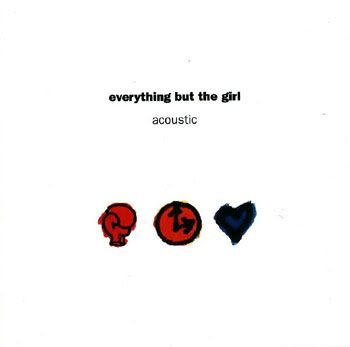
Everything But The Girl - Acoustic - 1992 - Atlantic

Here is a stunning acoustic collection of sophisticated jazz pop-tronica by Ben Watt and Tracey Thorn. EBTG had their first indie hit with a samba version of Porter’s “Night And Day” and two years later hit the Top 40 with “Each And Every One,” from their great debut album, Eden. They simplified their sound with 1988’s Idlewild and had a big hit with “I Don’t Want To Talk About It.” In 1994, they became more electronica orientated when they joined the hugely popular electronic, trip-hop outfit, Massive Attack, on the hit single “Protection” featuring Tracey Thorn’s vocals. In 1994, EBTG developed a more sensuous club sound, reminiscent of Sade, with their album Amplified Heart. Their albums, 1996’s Walking Wounded and 1999’s Temperamental, established them as a serious force in the jazz pop genre. Much of EBTG's music is associated with clubbers, but even if you're not into music of that genre, you should find something to enjoy in this album, as it is also a brilliant album for serious music fans, and is VHR by A.O.O.F.C. You will not be disappointed by this acoustic jazz pop album. As well as their own compositions, Ben and Tracey cover songs by Springsteen, Cyndi Lauper, Elvis Costello, and Tom Waits. Check out their "Walking Wounded" album, and buy Tracey Thorn’s great 2007 solo album, "Out of the Woods." For similar music in this vein, it is worthwhile listening to the "Matt's Mood" album by Matt Bianco, and Sade's great "Diamond Life" album.

TRACKS / COMPOSERS

1 Love Is Strange - Smith, Baker
2 Tougher Than The Rest - Springsteen
3 Time After Time - Lauper, Hyman
4 Alison - Costello
5 Downtown Train - Waits
6 Driving - Watt
7 One Place - Thorn
8 Apron Strings (Live) - Watt/Thorn [Recorded Live In Minneapolis / St. Paul]
9 Me And Bobby D - Watt/Thorn
10 Come On Home - Watt/Thorn
11 Fascination (Live) - Thorn [Recorded Live In Manchester]

All tracks recorded at Livingston, London, except where stated

MUSICIANS

Ben Watt - Guitar [Guitars], Piano, Vocals
Tracey Thorn - Vocals

ADDITIONAL MUSICIANS

Steve Pearce - Bass Guitar, Track 1
Damon Butcher - Additional Keyboards, Track 5
Martin Ditcham - Percussion, Tracks 7, & 9
Dick Oatts - Soprano Saxophone, Track 11

BIO (Wikipedia)

Everything but the Girl (EBTG) is a two-person English band formed in Hull in 1982. The band's members are lead singer and sometime-guitarist Tracey Thorn (born September 26, 1962), and guitarist, keyboardist & vocalist Ben Watt (born December 6, 1962). Watt and Thorn are also a couple; they are intensely private about their relationship and personal life. It was not a publicized fact for some time that they were a couple, or that they had subsequently married. The duo have a strong desire to raise their three children outside of the spotlight. When Thorn and Watt met, their paths were very similar; they were both attending the University of Hull, and both had signed to independent record label Cherry Red Records as solo artists. Thorn was also a member of the trio Marine Girls, and Watt contributed a photograph to the cover of their first album, Lazy Ways. The pair each had solo album releases through Cherry Red Records: Thorn’s 1982 L.P. was A Distant Shore, an eight-track mini-album. Watt’s L.P. was entitled North Marine Drive. They formed a duo and took their unusual name "Everything but the Girl" from the slogan of well-known Hull shop Turner's furniture on Beverley Road. EBTG's debut single, a cover version of Cole Porter's "Night and Day", was released in June 1982. Following steady sales and exposure from the Pillows & Prayers compilation album, the single was re-issued in August 1983. Their first album was released in 1984 in the UK as Eden. 1984 also saw the UK release of singles "Mine", and "Native Land". Their first UK hit single, "Each and Every One", had a jazzy sound, and EBTG was considered part of the jazz/pop movement known as sophisti-pop that included other British acts like Sade, Matt Bianco, and The Style Council, on whose Café Bleu album they guested. EBTG and Sade both worked with producer Robin Millar and engineers Ben Rogan and Mike Pela for their debut albums. Although Eden was released in the UK, a different recording, Everything But the Girl, was released in the United States. The U.S. release contained about half the tracks from "Eden", along with some different tracks, including 'Mine' and 'Native Land'. The U.S. release balanced the bossa nova stylings of the British version with a more folk rock aesthetic, helping to establish the group's eclectic musicality. Subsequent releases underscored EBTG's versatility and range. Their 1985 album Love Not Money featured a shimmering pop sound with jangly guitars, and included a cover version of The Pretenders' song "Kid" (not on the UK L.P.). The lyrics have strong social and political content. "Angel" comments upon child poverty and public attitudes towards it. "Sean" is a bitter comment on the Northern Ireland troubles. "Ugly Little Dreams" comments upon male attitudes to intelligent women and is dedicated to actress Frances Farmer. "Angel" was also released as a single in the UK. The following year they released the self-produced Baby the Stars Shine Bright, an album of original pop songs recorded with an orchestra. They revealed the album's inspiration by their choices of B-sides for its single releases: one finds songs from Bacharach and Jimmy Webb on the 12" versions (as well as a cover of Patsy Cline's "I Fall to Pieces"). The first single was "Come On Home", followed by "Don't Leave Me Behind". While the jump from jazz to post-Smiths rock (with the release of Love Not Money) may have jarred some of their audience, the move to orchestral pop was much bolder and foretold the stylistic swap they'd make ten years later with Walking Wounded. In 1988, EBTG released Idlewild, a collection of mature songs that began a trend towards middle-of-the-road, adult-orientated contemporary music. A cover version of Danny Whitten's "I Don't Want to Talk About It" (previously a hit by Rod Stewart) was released as a non-L.P. single; it achieved a high UK chart position and was later added to the album. Around this time, Lloyd Cole and the Commotions asked Tracey to contribute vocals to the song "Big Snake" on their final studio album Mainstream. Tommy Lipuma produced the band’s 1990 album The Language of Life. The album, which featured the single "Driving", was another lush pop effort, but with a more contemporary sound. Jazz great Stan Getz contributed a solo. Next came Worldwide, and its single "Old Friends" in 1991. Worldwide's lyrics revolve around the themes of relationships, travel and personal memories. 1992 saw another UK hit single with the release of the Covers E.P. The lead track was "Love Is Strange", and the E.P. featured cover versions of Bruce Springsteen's "Tougher Than the Rest"; Cyndi Lauper's "Time after Time" and Elvis Costello's "Alison". These four tracks were included on the U.S.-only album Acoustic. In 1993, EBTG released a cover version of Paul Simon's "The Only Living Boy in New York" as a single in the UK. The duo were forced to curtail recording and touring for a few years when Watt contracted Churg-Strauss syndrome, an autoimmune disease (he subsequently wrote a memoir, Patient, about his ordeal). The next work of original music was not until 1994, when EBTG released Amplified Heart. Although most of the music was still acoustic-based, it had a much more contemporary feel. Producer Todd Terry remixed the track "Missing", and when EBTG released the remix as a single, it became a huge international hit. It hit the top of nearly every chart around the world, and charted in the U.S., a feat that had previously eluded the band. The track reached number two and stayed in the U.S. Billboard Hot 100 for well over a year. The success of that track, along with a collaboration Thorn did with the bands Massive Attack and Deep Dish, influenced them and helped usher the band into a more electronic sound. Having completed contractual obligations to WEA, they were free to shop their recordings and had full ownership of their future recorded works. They signed licensing deals with Virgin Records for the United Kingdom and Europe, and Atlantic Records for the United States and Canada. Their subsequent albums Walking Wounded and Temperamental, showed the band's musical progress as well as established Ben Watt as a notable dance music producer. Between the two albums he produced "Stars All Seem To Weep" for Beth Orton, and it immediately garnered attention. This would bolster his growing reputation as a D.J. and producer.

19.2.08

Swing Out Sister


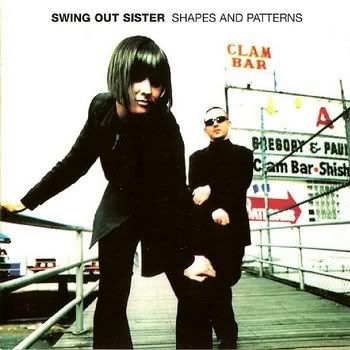
Swing Out Sister - Shapes And Patterns - 1997 - Mercury

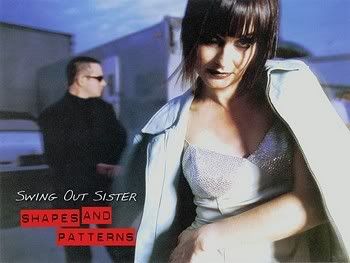
Brilliant soul pop/jazz, with a hint of R & B. A wonderful album of intelligent, cool music from the great vocalist, Corinne Drewery and keyboardist, Andy Connell. Check out their equally good 1990 album, "It's Better to Travel."

TRACK INFORMATION

1.Somewhere In The World (3:45) - Composed by Connell, Andy/Drewery, Corinne/ODuffy, Paul
2.Here And Now (5:07) - Composed by Connell, Andy/Drewery, Corinne
Arranged By [Strings] - Robyn Smith
3.We Could Make It Happen (5:13) - Composed by Connell, Andy/Drewery, Corinne/ODuffy, Paul
Saxophone, Flute, Arranged By [Horns] - Snake Davis
Trombone - Fayyaz Virji
Trumpet, Flugelhorn - Steve Sidwell
4.Shapes And Patterns (0:52) - Composed by Connell, Andy/Drewery, Corinne
5.Better Make It Better (5:23) - Composed by Connell, Andy/Drewery, Corinne
6.Something Out Of This World (5:03) - Composed by Connell, Andy/Drewery, Corinne
Saxophone, Flute, Arranged By [Horns] - Snake Davis
Trombone - Fayyaz Virji
Trumpet, Flugelhorn - Steve Sidwell
7.Joe Meek's Cat (0:23) - Composed by Connell, Andy/Drewery, Corinne/ODuffy, Paul
8.Stoned Soul Picnic (5:08) - Composed by Nyro, Laura
9. You Already Know (4:35) - Composed by Connell, Andy/Drewery, Corinne
10.Always (5:06) - Composed by Connell, Andy/Drewery, Corinne/ODuffy, Paul
Arranged By [Vocals] - Frank Campbell
Vocals - Beverley Skeete , Lance Ellington , Miriam Stockley
11.Now You're Not Here (4:36) - Composed by Connell, Andy/Drewery, Corinne/ODuffy, Paul
Flute - Hideya Takakuwa
Saxophone - Osamu Koike , Takuo Yamamoto
Trombone, Bass Trombone, Arranged By [Horns] - Yoichi Murata
Trumpet, Flugelhorn - Masahiro Sugasaka , Toshio Araki
12.Icy Cold As Winter (5:11) - Composed by Connell, Andy/Drewery, Corinne/ODuffy, Paul
13. Shapes And Patterns (Reprise) (1:23) - Composed by Connell, Andy/Drewery, Corinne


Corinne Drewery

CREDITS

Backing Vocals - Beverley Skeete , Derek Green , George Chandler , Leon Daniels , Melodie Sexton , Stevie Lange , Sylvia Mason-James
Conductor - Gavyn Wright (tracks: 1, 2, 8)
Conductor [Strings] - Robyn Smith (tracks: 1, 2, 8)
Drums - Andrew Small (tracks: 1, 2, 5) , Gota Yashiki
Engineer - Ben Darlow
Engineer [Assistant] - Ben Georgiades , Ibi Tijani , Jon Bailey , Scott Howland , Steve Cook (3) , Tatsuya Shimokawa , Valerie Jaquot , Yutaka Shimoyama , Yutaka Uematsu
Guitar - Tim Cansfield
Keyboards - Andy Connell
Lead Vocals - Corinne Drewery
Percussion, Bass Guitar - Luis Jardim
Producer, Mixed By - Paul Staveley O'Duffy
Programmed By [Rhythm] - Gota Yashiki (tracks: 3, 8, 9) , Steve Sydelnick (tracks: 4, 6, 9, 13)
Saxophone - Larry Williams (tracks: 1, 4, 9, 13)
Strings - London Session Orchestra, The (tracks: 1, 2, 8)
Trombone - Bill Reichenbach (2) (tracks: 1, 4, 9, 13)
Trumpet, Flugelhorn - Gary Grant (tracks: 1, 4, 9, 13)
Trumpet, Flugelhorn, Arranged By [Horns] - Jerry Hey (tracks: 1, 4, 9, 13)

REVIEWS

More swinging, instantly likable Burt Bacharach-style retro pop from the U.K. duo fronted by Corinne Drewery. Like a pre-Todd Terry, frown-free Everything But the Girl, SOS is at its sophisticated best on the Japanese No. 1 "Somewhere in the World," a jazzy "Now You're Not Here," and the irresistible cover of "Stoned Soul Picnic." © Jeff Bateman, © 1996-2008, Amazon.com, Inc. or its affiliates

Swing Out Sister's fifth album Shapes & Patterns doesn't depart from the group's sophisticated pop-soul formula, but that isn't a bad thing, since their jazzy, danceable urban R&B remains pleasant. The group still has trouble coming up with memorable material, but the sound of the record is appealing, and Shapes & Patterns should satisfy fans, even if it doesn't win them any new ones. © Leo Stanley, All Music Guide


BIO (Wikipedia)

Swing Out Sister is a British pop musical group best known worldwide for their 1986 song "Breakout", which was their only song to reach the US top 10. Various listeners have classified their sound as everything from smooth jazz to cool jazz to acid jazz. Although Swing Out Sister is currently a duo, they began as a trio in the UK. The group was formed by Andy Connell (keyboards) and Martin Jackson (drums), and were later joined by Corinne Drewery (vocals). The name came from a 1945 movie starring Arthur Treacher, called Swing Out, Sister, and they claim they chose the name because it was the only thing the band could agree on: they all hated it! Both Connell and Jackson had been playing in other bands prior to forming SOS, while Drewery was actually a fashion designer before she became the band's lead vocalist. Together with their producer, Paul Staveley O'Duffy, they signed with Mercury Records. Prior to their first album, they released the single "Blue Mood" in the UK in November 1985. However, it did not chart. In late 1986, the single "Breakout" was released. It reached the number three position on the UK charts, and number six in the United States. Consequently, when they released their debut album, "it's better to travel", on May 11, 1987, it reached number one on the UK album charts. The album registered with listeners for its mix of jazz and electropop, with a blend of real horns, synths (arranged subtly, to sound like strings), drums, and xylophones, scored by producer/arranger Richard Niles. The follow-up single to the effervescent "Breakout" was the brooding "Surrender", which featured a trumpet solo performed by John Thirkell. It rose to number seven on the UK charts in January 1987. The next single was the more serious and jazzy "Twilight World". This song was the subject of many remixes and was a dance club favourite worldwide. The final single "Fooled By a Smile" returned to the upbeat pop orientation characteristic of "Breakout". The group was subsequently nominated for two American Grammy Awards in 1988: Best New Artist and Best Pop Vocal Performance by a Group or Duo ("Breakout"). In addition to long-time partner O'Duffy as well as Thirkell, Swing Out Sister also have enlisted the talents of saxophonist Gary Barnacle (who with Thirkell also comprise the Henpecked Horns known for their work with Level 42); percussionist Luis Jardim; guitarist Tim Cansfield; trumpet/fluegelhorn master Jerry Hey; and songwriter-arranger Jimmy Webb. Original member Jackson, whose acoustic drums drove the "Surrender" single, left the group during the making of the second album, Kaleidoscope World. Although the liner notes give "special thanks to Martin Jackson" and his co-writing credits appear on the songs "Tainted" and "Between Strangers", they also point out that "Swing Out Sister are Corinne Drewery and Andy Connell." Drewery and Connell have been the core group on all subsequent albums. After leaving Swing Out Sister, Jackson later worked for Frank Zappa. "Kaleidoscope World" was released in May 1989 and achieved critical acclaim. Their turn away from contemporary styles towards retro musical sources on this album would establish the musical path that they would continue to follow with their subsequent albums. The duo found inspiration in Easy Listening music, such as Burt Bacharach, as well as songwriter Jimmy Webb, who arranged two tracks, "Forever Blue" and "Precious Words". The incorporation of an orchestra to their recordings realized their sound in a richer, fuller way than their previous effort which relied more heavily on synthesizers. Consequently, this album featured arrangements and songwriting more classical in inclination. The lead-off single "You On My Mind" featured a more sophisticated blend of musical components than their previous efforts while the upbeat tone of "Breakout" was echoed in the lead USA single "Waiting Game". Further singles included Where in the World and Forever Blue which featured a sample from the John Barry score Midnight Cowboy. In May 1992, their retro orientation became even more evident in both their sound and image on their third album, "Get In Touch With Yourself". With strong dance rhythms reverberating throughout the entire album, tracks draw influences from 1960s and 1970s jazz, pop, soul, and funk, including a breezy cover of the Dusty Springfield classic "Am I The Same Girl?" (which became their last US hit, reaching #1 on the AC chart). The album's title track, a blend of 1970s soul music and modern pop, gained the duo heavy airplay on smooth-jazz radio and was a crossover hit, gaining airtime on adult contemporary stations. The musical influences of Stevie Wonder, The Jackson Five, and others would become evident on this album but continue on through their later releases. In line with the album theme, Drewery also grew out her hair from her trademark bob which had become a visual signature for their early years. Numerous changes were afoot by the time the fourth album, "The Living Return" was released in September 1994. The replacement of producer Paul O'Duffy after initial studio sessions with Ray Hayden contributed to a looser, raw feel to the songs that were often the results of studio jam sessions. Though Drewery and Connell still led Swing Out Sister, additional musicians (including former 52nd Street bassist Derick Johnson; Pa'lante percussionist Chris Manis; drummer Myke Wilson, formerly of the Jazz Defectors; and trumpet player John Thirkell increased their group to ten members that replicate the live performances that had been captured on the Japan-only release Live at the Jazz Cafe. The album featured the single and cover song "La La (Means I Love You)", which was also included on the Four Weddings and a Funeral soundtrack. Few of the band's releases charted highly on the pop listings in Western countries after the successful debut album (though they became radio-airplay staples on jazz stations). The band, however, became extremely popular in Japan. Their song "Now You're Not Here" (from their fifth album "Shapes And Patterns", one of several released only in Japan) was used as the theme to a Japanese TV program, and received a Japanese 'Grand Prix' (the equivalent of a Grammy) for best international single in 1997. "Shapes and Patterns" was first released in Japan in March 1997, and then in Europe and USA the year after. Producer Paul O'Duffy, who co-wrote half of the songs, was back at the helm. As an orchestra was once again employed (led by Gavyn Wright), the lush arrangements characteristic of Kaleidoscope World resurfaced. The liner notes, written by Mary Edwards, point out the influences of Bacharach, Webb, and John Barry are perceptible in the string arrangements and Latin rhythms, as well as Minnie Riperton, Rotary Connection and The Fifth Dimension. The album included a cover of Laura Nyro's "Stoned Soul Picnic" as well as the original version of "Better Make It Better", which appeared in a different mix on their previous album. A pervasive longing marks songs such as "Now You're Not Here", "Somewhere in the World", "You Already Know", and "Icy Cold as Winter". This album would also mark the beginning of the duo's use of Japanese musicians in their studio sessions. "Filth and Dreams", their sixth album, proved yet again that Swing Out Sister was eager to reinvent themselves. The album was released in Japan in March 1999, and it remains the only album not released in any other country. This album featured stronger jazz leanings than some of their early pop-oriented albums, and is restrained in mood. The track Who's Been Sleeping was promoted as a single and released with several remixes. this album has a Trip-Hop feel to it. For this record, SOS adapted to the growing popularity of hip-hop in the late '90s. "Who's Been Sleeping" kicks off the record with an aggressive beat and a few hip-hop flourishes (such as Drewery's counting and uttering "Yeah..." in the background.) The rest of the record incorporates such sounds a bit more subtly, through the soaring retro stylings of "Closer Than the Sun" and "When Morning Comes" to the excitable lounge of the title track to the mid-tempo trip-hop of "Invisible" and scratch-laced "Sugar Free." Traditional SOS sounds are challenged successfully with the darkly dreamy "If I Had the Heart" and "Make You Stay." Background noises, from telephone conversations to child's play, also enrich the record and give the listener much more to cue in on. Drewery strays out of the usual love lyrics and colors a portrait of a darker world (as the title indicates) by singing about more urban subjects such as drugs (the eerie "Happy When You're High") and prostitution ("When Morning Comes.") All of their experimentation works surprisingly well and the result is probably the strongest SOS outing to date. Ironically, "Filth and Dreams" is the first SOS record not released in their native England, and is currently the most difficult CD to find. A seventh album, "Somewhere Deep in the Night", was recorded in France, and released in May 2001 in Japan (with subsequent release in Europe and USA). It was dedicated to their friend Kazuhiko Yanagida. While it is quintessential Swing Out Sister, with lush, brassy and stringy arrangements, the melodic tunes which often feature melancholic, languid, or introspective atmospherics and is more sombre in tone. Many of the tracks are instrumental, or only feature vocal harmonies without lyrics. One song even features a French spoken-word monologue. O'Duffy, who produced the album, also has co-writing credits on all the songs, and provided backing vocals along with Connell and Cansfield. Due to declining sales, their record label Universal dropped them from their contract in America. Consequently, they signed on with Shanachie Records. Undeterred, the band bounced back with their eighth studio effort, Where Our Love Grows. It was released in Japan on April 28, 2004 with the UK edition following in July. GQ Magazine reviewed it and called it "indisputably their finest record to date". The album features a return to a rich, upbeat retro-sound that fuses jazz, soul, R&B, Latin, and Easy Listening music. Samples of Roger Nichols and The Small Circle of Friends and Herbie Mann were incorporated also into some songs. Late 2005 saw Swing Out Sister return to their studio in London to commence recording of their new album. The band planned on making a second tour of America in 2006, however due to recording commitments this had to be cancelled. In 2006 they composed incidental music for the ITV1 drama The Outsiders, a new television drama featuring Nigel Harman. August 2007 saw a new single "Secret Love". The new album from the band, however, is to be called Beautiful Mess, and it's scheduled for release by the Japanese record company Avex on February 27, 2008. The title is taken from one of the tracks on the album. In late December 2007, two other tracks will be available for download: "Butterflies" and "Something Everyday".

22.6.07

Touch And Go


touchandgo-ifinduveryattractive


Touch And Go - I Find You Very Attractive - 1999 - V2

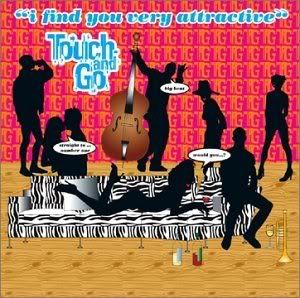
A great experimental jazz-pop album.Clever lyrics with excellent musicians and some good Latin and cool lounge touches make this a fun and very enjoyable album.If you're a jazz purist you may not like this album, but relax and give it a spin.You might just get to like it!

TRACKS/COMPOSERS

Straight to...Number One ... David Lowe, James Lynch, Vanessa Lancaster
Big Beat ... David Lowe, Steve Mellor
Ecoutez, Repetez ... David Lowe
Would You...? ... David Lowe
So Hot ... David Lowe, James Lynch, Grant Buckerfield, Vanessa Lancaster
Mein Freund Harvey (Sugar Daddy) ... David Lowe
Tango in Harlem ... David Lowe, Julia Fischer
Are You Talking About Me? ... David Lowe, Julia Fischer
Life's a Beach ... David Lowe, James Lynch
Thanks for Coming ... David Lowe
Would You...? [Trailermen Go to Rio Edit] ... David Lowe, James Lynch
Straight to... Number One [Dreamcatcher's Mix] ... David Lowe

MEMBERS

David Lowe (vocals, keyboards, bass, drums); Alexa Motley, Julia Lara, Sandrine Henriot, Amaru Del Rio Romero, Ana Acicoly (vocals); Vo Fletcher (guitar); Sovra Wilson-Dickson (violin); Steve Mellor (clarinet, saxophone); James Lynch, Ted Emmett (trumpet); Andy Wood (trombone).

CREDITS

Ted Emmet (Trumpet), Charlie Gillett (A&R), Noel Summerville (Mastering), David Lowe (Bass), David Lowe (Arranger), David Lowe (Drums), David Lowe (Keyboards), David Lowe (Vocals), David Lowe (Producer), David Lowe (Engineer), David Lowe (Mixing), Tim Gordine (Editing), Touch & Go (Main Performer), Andy Wood (Trombone), James Lynch (Trumpet), James Lynch (Flugelhorn), Wilson Dickson, Sovra (Violin), Ana Accioly (Vocals), Jules Bromley (Producer), Jules Bromley (Mixing), Grant Buckerfield (Engineer), Cool Fish (Mixing), Jon Culshaw, Amaru DelRio Romero (Vocals), Gordon Neiki (A&R), Alexa Motley (Vocals), Steve Mellor (Clarinet), Steve Mellor (Sax (Alto)), Steve Mellor (Sax (Baritone)), Steve Mellor (Sax (Soprano)), Sandrine Henriot (Vocals), Julia Lara (Vocals), Vanessa Lancaster (Vocals)

BIO

Featuring the European hit single "Would You...?," "I Find You Very Attractive" (quotation marks included in the title) is for the most part lyrically built around the kind of catch phrases that people use as pickup lines at clubs and parties. So it comes as little surprise that these are matched to the kind of music you'd expect to hear at clubs and parties where such pickup lines form the backbone of conversation, and where bouncers are on hand to make sure that no one with the wrong haircut or shirt intrudes on the fun. This is a more curious and eclectic brew than many such discs, though, mixing sexy female spoken and sung vocals; jack-in-the-box samples, echoes, and effects; perky brass with vaguely Latin and swing jazz overtones; smoky cocktail lounge passages; the odd bit that wouldn't sound out of place on dub records; and more conventional modern dance percussion. When Caribbean accents are introduced in the brass, guitar, and rhythm, it's more akin to postmodern music to sip piña coladas to on beach cruises. It's clever, and the riffs are modestly catchy. There's also the nagging feeling that the music is aimed toward listeners who desperately aspire to nouveau riche chicness, but want to feel somewhat hip about doing so. The CD concludes with the Trailermen Go to Rio edit of "Would You..." and the Dreamcatcher's Mix of one of the disc's other tracks, "Straight to...Number One." © Richie Unterberger, All Music Guide
Real Name: David Lowe, Charlie Gillett, Gordon Nelki, Vanessa Lancaster, James Lynch
Profile: Touch And Go is a co-operation between television composer David Lowe, veteran radio presenter and music journalist Charlie Gillett and co-founder of Oval Music, Gordon Nelki.
the group is completed with two performers: Vanessa Lancaster (vocals) and James Lynch (trumpet).

Touch And Go is the progeny of an unholy alliance between television composer David Lowe, veteran radio presenter and music journalist Charlie Gillett and co-founder of Oval Music, Gordon Nelki.

Charlie and Gordon have wide-ranging tastes in popular music and a fondness for something just that bit different. Paul Hardcastle’s 19 was one of their earlier successes. Having worked together on the Dreamcatcher project, the trio conceived a new concept based around largely instrumental jazz-based tunes with an ‘economical’ use of lyrics — quite unconventional by today’s chart standards.

Influences for the project ranged from The Champs’ Tequila and Mongo Santamaria’s Watermelon Man to Louis Armstrong’s Dippermouth Blues. Within a few days, Dave had put together Would You…? using a sampled vocal clip and trumpet jazz licks played by James Lynch, over a Latin rhythm.

Released in October 1998, Would You…? reached number 3 in the UK charts, remained in the top ten for a month and subsequently became a hit all over Europe and many other parts of the world. The single sold half a million copies worldwide, and was included on literally hundreds of compilations whose total sales exceed ten million copies.

Touch And Go’s album, I Find You Very Attractive followed up the success of Would You…? and included three more singles Straight To Number One, So Hot, and Tango In Harlem, all of which are widely played on radio throughout Europe, especially in Eastern Europe where Touch and Go is one of the UK’s best-known acts.

About The Performers

Vanessa Lancaster, Vocalist
Vanessa Lancaster began ballet classes at the age of 4, gaining success in exams at the Royal Academy of Ballet in London. Shortly afterwards she began drama lessons in her free time and auditioned successfully for the Corona Stage School in London where she was educated until the age of 16. Vanessa completed her education at the Lucy Clayton Finishing School in London which was followed by 8 months working in the USA.

In London, Vanessa has worked as a voice-over artist for numerous UK TV commercials and has modelled both on the catwalk and for beauty products. Her other television credits include Emu’s World for ITV and the James Bond movie Octopussy.

Vanessa began singing professionally at the age of 15 when she teamed up with brother Shaz to form a band called Boys Behaving Badly whose drummer later became a member of Jamiroquai. Vanessa was, of course, the only girl member of the group! Once her vocal talents were discovered, Vanessa became a much in-demand singer on the London recording session scene, which led to a world tour with Urban Species.

Having sung on numerous jingles for producer and songwriter David Lowe, Vanessa was invited to collaborate on a new project Dave was working on which became Touch And Go, whose records have now become hits all over the world. Vanessa co-wrote the Touch And Go songs Straight To Number One, Big Beat and So Hot.

James Lynch, Trumpet
London-based trumpeter James Lynch was educated at the City Of Leeds College of Music where he gained a first-class degree in Jazz & Contemporary Music and won prizes for Outstanding Performance, Brass and Arranging. As a former member of the National Youth Brass Band of Great Britain, Jim won the Newman Cup at the age of 17 for Most Improved Player.

On moving to London he joined the National Youth Jazz Orchestra of Great Britain eventually becoming their lead trumpet player. Jim began his professional career with society dance bands in London’s Mayfair district before moving into the freelance areas of work such as musical theatre and recording. He has played in many of London’s West End musicals including Chicago, Starlight Express, Jesus Christ Superstar, Saturday Night Fever, and My Fair Lady.

In the world of pop music Jim has played in the big bands of Robbie Williams and for Babybird, Embrace, The Freestylers, Beverly Knight and also Missy Elliot. He has also played for Shirley Bassey and Michael Ball. Jim was brass arranger and first trumpet for the Spice Girls on their last UK tour, which was broadcast live on Sky TV from London’s Earls Court Arena. Recent clients include the Matthew Herbert Big Band, London rapper Dizzy Rascal, Engelbert Humperdink and opera singer Lesley Garrett.

Jim has played on many TV shows in the UK and abroad and his trumpet can be heard on many theme tunes and TV commercials too. Recently he played on the soundtrack and wrote four arrangements for the Kevin Spacey film Beyond The Sea. He has worked with composer and producer David Lowe for a number of years and can still be heard on the theme for BBC's Cash In The Attic. He was invited by Dave to collaborate on a new project, which eventually became Touch And Go. James co-wrote the Touch And Go songs Would You…?, So Hot and Life’s A Beach. © 2000-2005 KpNemo.Ru www.kpnemo.ru/music/2007/04/03/touch_and_go__1999_i_find_you_very_attractive/