A.O.O.F.C
recommends
Mizar6

babydancing


Get this crazy baby off my head!

Showing posts with label Seventies Jazz Fusion. Show all posts

8.9.14

Volker Kriegel & Spectrum


Volker Kriegel & Spectrum - Mild Maniac - 1974 - MPS

Nice, uncomplicated fusion by the late German jazzman / guitarist and "Father of Jazz Rock" Volker Kriegel. There is some beautiful jazz fusion here like "Mindwill" with great E-Piano solo and deep euro grooves. The pianist and keyboardist Rainer Bruninghaus plays a Fender Rhodes piano with a Wah Wah pedal for lovers of electric jazz. Check out Volker Kriegel & Mild Maniac Orchestra’s “Long Distance” album [All tracks @ 320 Kbps: File size = 93 Mb]

TRACKS

A1 Mindwill 6:45
A2 Prinz Eisenherz 4:37
A3 Schnellhörspiel 5:26
A4 Mild Maniac 5:08
B1 The Visit 7:26
B2 D-Dödel 12:12

All tracks composed by Volker Kriegel except Track B2 by Volker Kriegel, Eberhard Weber, Joe Nay, & Rainer Bruninghaus

MUSICIANS

Volker Kriegel, Electric & Acoustic Guitar: Bass Guitar on Track A1
Eberhard Weber - Electric Bass, Bass Guitar, Double Bass, Cello
Rainer Brüninghaus - Keyboards
Joe Nay - Drums
Peter Giger - Percussion

BIO

Volker Kriegel (* December 24th 1943 in Darmstadt; † June 15th 2003 in San Sebastián) was a jazz guitarist, composer, bandleader and cartoonist, an extensively educated artist that studied sociology in Frankfurt at Adorno and considered one of the pioneers of German jazz-rock. Kriegel was an autodidact and in 1963/1964 he won two Best Guitarist/Soloist awards at the Düsseldorf Amateur Jazz Festival at the age of 20. While studying sociology in Frankfurt he was already playing with established musicians like Klaus Doldinger, the Emil brothers and Albert Mangelsdorff, Ingfried Hoffmann, Freddie Hubbard, and Percy Heath, among others. His breakthrough came in 1968 when he released his first solo record (“ With A Little Help From My Friends”) and also performed at the German Jazz Festival in Frankfurt. Between 1968 and 1972 he was a member of the Dave Pike Set with American vibraphonist Dave Pike, bassist Hans Rettenbacher and drummer Peter Baumeister. This formation played at almost all important international festivals and released six albums. Another Kriegel solo album, “Spectrum”, was released in 1971, followed by “Inside: Missing Link” in 1972, “Lift” in 1973, and “Mild Maniac” in 1974. In “Lift” he played among others with bassist Eberhard Weber and violinist Zbigniew Seifert, two main individualists of European jazz. In the following years Kriegel also wrote music for radio and TV and played with artists like Don Sugarcane Harris and Alexis Korner. One of his most impressive albums is “Topical Harvest” of 1976, which finally introduced the electric Kriegel phase that elegantly steppes away from the rough, jazzier playing of his early recordings over to a more personal sound that mixes jazz, rock, pop and elements of South American and other Non-european music. He later lead his own group the Mild Maniac Orchestra. In 1977 he started playing in the United Jazz und Rock Ensemble, of which he was also a founding member. Kriegel used several Framus AZ-10 models and BL semi-acoustics. © http://www.framus-vintage.de/modules/infos/info.php?katID=4685

18.7.14

Bill Connors


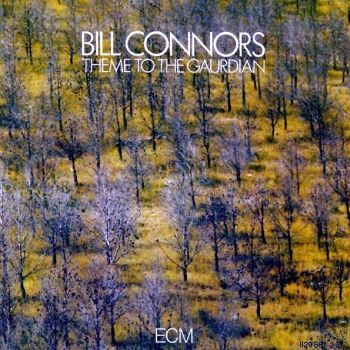
Bill Connors - Theme To The Gaurdian - 1975 - ECM Records

Bill Connors' great moment of fame occurred when he was with Chick Corea's Return to Forever during 1973-1974, recording the influential Hymn of the Seventh Galaxy. His decision to leave RTF to concentrate more on acoustic guitar may have been satisfying artistically, but it cut short any chance he had at commercial success. Previously, he had played electric guitar with Mike Nock and Steve Swallow in San Francisco; but his post-1974 work was primarily acoustic, particularly in the 1970s when he recorded a series of atmospheric albums for ECM (including with Jan Garbarek). In the mid-'80s, for Pathfinder, Connors' music became more rock-oriented, but those releases did not make much of an impact despite his talent. © Scott Yanow © 2014 AllMusic, a division of All Media Network, LLC. | All Rights Reserved http://www.allmusic.com/artist/bill-connors-mn0000070942/biography

The blazingly explosive and technically precise legato guitarist in Return to Forever left after one release with RTF to pursue a solo career and much quieter, acoustic guitar path. This is the first in a trio of acoustic guitar releases Connors put out in the '70s on the famous ECM label. Theme to the Guardian features some truly excellent acoustic guitar work, with some unique compositions and playing styles. Connors dubs one track as a sort of complex and exotic chordal progression-based structure of strummed rhythms and/or a tapestry of three-finger rolling. Connors solos over this landscape of dreamy, moody, surreal, and frenetic design. The effect is a ghostly dance of melancholy angst and passionate wailings. © John W. Patterson © 2014 AllMusic, a division of All Media Network, LLC. | All Rights Reserved http://www.allmusic.com/album/theme-to-the-guardian-mw0000197363

Great innovative acoustic guitar based jazz fusion album from one of the best guitarists you may never have heard! The chords, melodies,and song structures are ahead of their time. This subtle and beautiful album is just as enjoyable as any full blown aggressive electric fusion album with a full band. HR by A.O.O.F.C. Listen to Bill’s “Return” album, and check out Bill’s “Double Up”,” “Step It”, “Assembler”, and “Swimming With A Hole In My Body” albums on this blog. Listen to the late Emily Remler’s “Firefly” album sometime. [All tracks @ 320 Kbps: File size = 105 Mb]

TRACKS

1 Theme To The Gaurdian 5:15
2 Childs Eyes 4:22
3 Song For A Crow 4:13
4 Sad Hero 4:25
5 Sea Song 5:00
6 Frantic Desire 2:52
7 Folk Song 6:32
8 My Favorite Fantasy 4:23
9 The Highest Mountain 3:24

All tracks composed by Bill Connors except Track 5 composed by Glenn Cronkhite

BIO (WIKI)

Bill Connors (born September 24, 1949) is an American jazz musician notable for being a legato technique master, adept at both the acoustic and electric guitar, and successfully played jazz-rock, free and fusion material in the '70s and '80s. His best early solos were in the jazz-rock genre, where his use of distortion and electronics was balanced by fine phrasing and intelligent solos. His first great moment of fame occurred when he joined Chick Corea's Return to Forever in 1973, recording Hymn of the Seventh Galaxy, though he quit in 1974 and was followed by Earl Klugh, who was then replaced by Al Di Meola. His decision to leave Return to Forever to concentrate more on acoustic guitar was satisfying artistically: he recorded three acoustic albums and then three electric albums as a leader/soloist, and recorded and performed with others. The quality, innovation and thoughtfulness of his work has always garnered strong praise. Connors was born in Los Angeles, California in 1949 and began to play the guitar at the age of fourteen. After three years of extensive self-study of the rock and blues influences that were his first inspiration, he began to play gigs around the Los Angeles area. He soon found his way to jazz, the music that would lead to a lifelong commitment. "I'd been playing for about four years", he explained at the time of his RTF tenure, "and suddenly had an overnight change. I didn't want to be a blues guitarist anymore. I began listening to people like Bill Evans, Jim Hall, Wes Montgomery, [bassist] Scott LaFaro, Miles Davis, [John] Coltrane—anyone who had a 'jazz' label. Django Reinhardt really got to me. The first time I heard one of his records, I thought that was just what I wanted to be. He had all the fire, creativity, and energy that rock players have today. And the amazing purity of his melodies—you just knew they came from a totally instinctive place." He and Django differed however over the matter of electronics with Bill preferring the sound of the electric instrument. "I always wanted to use the electric guitar in a sophisticated context, like with Chick [Corea]. I like to play jazz with that electric-rock sound. For me it's a lot closer to a horn than the traditional guitar, and that's what I love about it; I can sustain notes, get into different kinds of phrasing -- do things other instruments do naturally, only the guitar does it with the aid of technology." Connors moved to San Francisco in 1972 to join the Mike Nock Group (formerly known as "The Fourth Way") with drummer Eddie Marshall and bassist Dennis Parker. He met up with drummer and vibraphonist Glenn Cronkhite, who would introduce him to a new depth of jazz sounds and study. In those early years in the city by the bay, Connors played with numerous top-flight musicians, including Cronkhite, bassist Steve Swallow and pianist Art Lande. In 1973, after sitting in on a gig, Connors was signed on to Return to Forever, keyboardist and composer Chick Corea’s pioneering fusion group that featured bassist Stanley Clarke and (then) drummer Steve Gadd. "A miracle!" Bill claims. "Chick was my hero. I wanted to be Chick Corea on guitar. I didn't know him, but whenever I really wanted to get off on music I'd play some of his piano solos and Return To Forever songs. I heard that Chick was looking for a guitarist. Steve encouraged me to call Chick, and though I was very nervous, I did, and he invited me to come over to the club where he was working and sit in. I was so scared that I almost turned him down. But after running around and saying to everyone, 'Guess who I'm going to play with tonight,' and everyone telling everyone else, all this energy was formulating—and I took to my room and practiced my ass off." That night, the fright totally disappeared. "The minute I got up on stage I had this feeling like I'd been preparing for this all my life. I was so relaxed that I felt as though I was in my own living room. Chick and I played musical games -- he'd play these real simple lines and I'd be giving my interpretations of them, then go off into the Chick Corea 'outness.' I ended up in New York two weeks later." With keyboardist and composer Chick Corea’s pioneering fusion group that featured bassist Stanley Clarke and drummer Lenny White, Connors established himself on the national and international music scenes, touring in Japan and Europe, and recording the now legendary Hymn of the Seventh Galaxy. Connors' playing with the group and on Hymn... spearheaded an unprecedented direction for guitar in jazz. "It's hard to overlook the early Return to Forever or the Stanley Clarke debut solo recording, but.. again sentiment has taken over...but here is truly the FIRST guitarist to play fusion with a KILLER 'rock' guitar sound". - Steve Kahn. But there is often a problem when wishes come true; in April 1974, after the band's tour of Europe and Japan, Bill quit the group. The musical direction seemed to him to be changing from what it was when Connors joined. He explains, "Everything started getting less aesthetic, more rock. Just too much like Mahavishnu (John McLaughlin (musician)). I was having trouble expressing myself the way I wanted to in that context." Connor's disenchantment with the group also stemmed from certain objections to Corea's Scientology-inspired leadership style. "Chick had a lot of ideas that were part of his involvement with Scientology. He got more demanding, and I wasn't allowed to control my own solos. I had no power in the music at all. Then, we'd receive written forms about what clothes we could wear, and graphic charts where we had to rate ourselves every night – not by our standards, but his. Finally, we had to connect dots on a chart every night. I took all of it seriously because I had a lot of respect for Chick, but eventually I just felt screwed around. In the end, my only power was to quit." In 1974, Connors left RTF, and began to explore the New York jazz and session scene, performing with guitarist John Abercrombie and keyboardist Jan Hammer, and recording with bassist Stanley Clarke. "It was great,"he states, "because it wasn't this contrived thing in order to communicate to the audience. We were *playing* again and *learning* again, and it felt real good." During this period, record dates with artists as diverse as vocalist Gene McDaniels and Stanley Clarke kept the guitarist's creative impulses occupied with a variety of challenges—but not for long. "Around 1975, I'd decided to become a classical guitar player", he muses. "I did my first solo album in 1974, and just decided on the spur of the moment to do it all on acoustic. That was just such a contrast from blowing people's ears off with my 200-watt Marshall that it really started to capture me." A further impetus came with Connors' discovery of classical artist Julian Bream. "I was sitting with his album 20th Century Guitar [RCA, LSC2964] -- a real classic -- and it has this piece by [German composer] Henze that I really loved. It was just getting to me, so I sat down for a couple of days and transcribed it -- on my steel-string guitar, with my funny pick-and-finger technique [laughs]. When I got it, it gave me so much pleasure that I said, 'Okay, I'm going to be a classical guitar player.' And that's what happened." "I bought a bunch of books and a classical guitar, and started with the C scale, playing 'i m i m' [index, middle, index, middle], etc. For about three years, I practiced eight hours a day: up early, play for five hours, take a break, and play for three more hours. I'd throw in some extra hours if I could. My reading sure improved after that. You've got to understand that I come from an unschooled background—all my schooling is self-inflicted [laughs]. I like scales, technique, and intelligence, but they weren't natural for me. Being a blues player was natural for me, but it wasn't enough." Connors recorded his first solo album in 1974, Theme to the Guardian (ECM), making the switch from electric to acoustic guitar. At the same time, he began the next phase of his self-driven studies, taking it on himself to delve into transcriptions and studies of the works of classical guitarists. Two more recordings on acoustic guitar followed, 1977's Of Mist and Melting (ECM), with Connors as leader and on guitar, saxophonist Jan Garbarek, bassist Gary Peacock and drummer Jack DeJohnette and then, in 1979, another solo effort by the guitarist, Swimming with a Hole in My Body (ECM). During 1976 and 1977, Connors also recorded with Lee Konitz, Paul Bley and Jimmy Giuffre in New York. He toured Europe, performing with composers Luciano Berio and Cathy Berberian. Connors then returned to electric guitar, performing and recording with Jan Garbarek on Places (1978) and Photo with Blue Sky, White Cloud, Wires, Windows and a Red Roof (1979), and with Tom Van Der Geld and Richard Jannotta in 1979 (Path, ECM). In 1985, Connors recorded Step It (Pathfinder/Evidence), featuring Connors and Steve Kahn on guitars, Tom Kennedy on bass and Dave Weckl on drums. Music critic Gene Santoro said of Connors’ playing on the album: “the aching blues phrases sing with the expressiveness of early-to middle-period Clapton; the sudden note blizzards strike with the stark power of a John Coltrane sax solo ” (Guitar Player, May 1985). Connors’ next album, 1986's Double Up, again featuring bassist Kennedy but now with drummer Kim Plainfield, brought more accolades: “Connors is back, stronger than ever with one of the most dynamic, burning sounds in electric jazz” and “Connors soars, smolders, and screams; don’t miss it” (Jim Ferguson, Guitar Player, April 1987). The same trio (Connors, Kennedy, Plainfield) recorded Assembler in 1987, and again reviewers praised the sounds: “Connors’ flowing, passionate lines in the context of slippery, interactive funk grooves laid down by drummer Plainfield, a master of slick time displacement, and the accomplished 6-string electric bassist Tom Kennedy...the three reach a special accord... Bill Connors is in rare and ripping form” (reviewer Bill Milkowski). For the past years, Connors has been giving private lessons while continuing his stylistic and technical studies of the works of jazz greats. He’s now playing plectrum style on a classical jazz guitar, an archtop electric. Connors is a mature professional with a highly polished level of musicianship, a sure sense of direction, and the same overriding love for the music that has always been his touchstone. Recent press continues to praise Connors' work, his contributions to the field of music, and his continued innovations: "Bill Connors was the 'cry of love' in jazz/fusion guitar. He may be the most misunderstood, overlooked, and maligned character on the scene at the time" (Vernon Reid, notes to Columbia/Legacy box set 100 Years of Jazz Guitar). The following selection speaks to Connors' 2005 release, Return: "Bill Connors has always lived and played ahead of the times...... masterful playing and infectious grooves... If Connors' past albums can be likened to swimming in a pool at an all-night pool party, then Return is like taking a dive into the open sea... The band is so tight that much of the record sounds like a duet, with bass, drums, and percussion forming a singular rhythmic landscape for the piano and guitar to dance through like light beaming into a raindrop... All in all, Return is a mature and playful album. The musicians are responsive and fluid, in complete control of the music, and are unafraid to lead the listener into uncharted territory" (Ari Messer, June 2005, Guitar Player). "Playing a mellow-toned Gibson L5 through his own hand-crafted amp, Connors is an emotional, sophisticated and subtle soloist to go with flawless technique..." (Los Angeles Daily Times, February 2005). "Connors' perfectionism is evident... throughout,his tone is round and penetrating, considerably weightier than the typical jazz guitar sound; his technique, meanwhile, is flawless, his lines totally logical" (Adam Perlmutter, Guitar One). "The first thing that hits you about this record is the songs. They are memorable and sound great... The next thing that hits you is Bill's playing... a take on Coltrane's "Brasilia" is pure heaven. The ballad lets Connors demonstrate some haunting, bluesy, soulful playing that is, in a word, gorgeous" (John Heidt, Vintage Guitar). "Connors’ line of attack on Return is centered upon his supple, fingerstyle picking and clean jazz licks, augmented by a resplendent, medium-toned electric sound. He uses space as an effective vehicle, whether alternating between buzzing single-note runs or when improvising through a primary melody with pianist Bill O’Connell" (Glenn Astarita, DownBeat). ".. bill connors is about the guitar... yes ... but this album is about much more than guitar... you have to listen to these tracks more than once to experience the depth. connors shines when soloing... and o'connell hangs right with him. just catch the piano solo on 'mind over matter' ... they are pushed by plainfield who can groove yes... and stop on a dime ... shifting gears so seamless... he is incredible... ... one fact about 'return' and connors... the effects and processors for guitar are not there.. only pure tone of the Gibson L5 played through an amp crafted by connors himself... pure smooth tone... best displayed on the track 'try tone today'... ... it is all good... and then there is coltrane's brasilia.. oh my! so sweet" (dr. mike, February 17, 2005, RadioJazz.com). "Connors soars effortlessly through Latin-tinged numbers, funk-tinged blues, and his personal forte, elegant ballads, all conjoined by the shimmering, glasslike tone of his Gibson L5 lines and melodies. Pretty close to exquisite" (Jim Miers, Buffalo News). "Connors takes back seat to no one as a killer jazz guitarist, having won his spurs for his pioneering work in the original Return to Forever line up. Coming back after sometime away from recording, Connors makes the kind of date that used to be routinely issued by the majors when they still cared about music. Having the admiration of his peers, Connors is free to pursue his vision and he never abuses the fan's trust along the way. Dazzling set sure to be a staple on all the year end best lists come December" (Chris Spector, Midwest Record Recap, Vol. 28, number 7, February 14, 2005). Connors is "back with an album that finds him in fine form with a completely unaffected and warm, big-bodied sound. Return has enough energy and groove to appeal to fusion fans but, without the bombast that is so often pegged with that genre, a more direct and economical approach that will appeal to those of a more purist persuasion... [Connors] retains that same sense of thrift, capable of lightning runs when necessary but always constructing solos that make sense and are more than simply a series of notes strung together. Return is, indeed, a welcome comeback from a guitarist whose reputation has never been less than stellar, even though he's never achieved the same level of stardom as some of his contemporaries" (John Kelman, all-about-jazz, 2/18/2005). "Guitarist Bill Connors wouldn't blame you for thinking that he's dead. Thirty years after bursting onto the burgeoning jazz-rock fusion scene with Chick Corea's Return to Forever, Connors is relaunching his recording career with his first release - Return (Tone Center) - since 1987's Assembler... 'I got motivated to get away from the music scene in the early '90s', said the 55-year-old Connors... 'I went through a real Wes Montgomery period in my teens when I was first discovering jazz... In a way, working with my students helped me get back to that because I was doing jazz transcriptions for them and listening to Bill Evans and Trane, stuff that I've always admired'. As a self-taught teenaged guitarist in Los Angeles, Connors went from delving into Montgomery and Django Reinhardt into attempting to meld the power of his favorite saxophonists with Eric Clapton's sweet tone. 'I wanted to get that big sound that Trane and Sonny Rollins got through amplified volume but integrate those singing lines that Clapton played'. His search led him to work with Mike Nock and Steve Swallow in San Francisco and then to an audition with Corea, who was looking to launch an electric quarter. 'Chick was like a god to me, so this was an incredible opportunity'. Hymn of the Seventh Galaxy garnered rave reviews, and Connors quickly assumed his place alongside John McLaughlin and Larry Coryell as electric guitar hero. His decision to quit the band after only a year and eschew electricity on three subsequent recordings for ECM stunned his fans. Looking back over three decades he's at a loss to explain the move. 'Maybe I should've just taken a few days off. It was a little rash'. But Connors isn't a man to harbor regrets. Instead, he looks back on his decision to pursue classical guitar studies in the late '70s as an opportunity to learn more about guitar music, and his experiments with acoustic fingerpicking as necessary to convince him that plectrum playing is his natural métier. The only thing that rankles about his decision to leave fusion behind is that his seminal role was forgotten by the time he returned to electric music the '80s with Step It, Double Up and Assembler. 'I don't have a huge ego, but it still hurt when people would tell me that I must've listened to a lot of Al Di Meola (who replaced Connors in Return to Forever),' Connors said. 'I was robbed of my identity, that my guitar was like a credit card that had been stolen and I'd been left to play the bill'... Although Connors isn't sure Return will lead to more recordings, he's enthusiastic about performing again and thinks he's back on the scene to stay. 'Music is not so mysterious now. I had a lot of impulses to try different things when I was young, but I'm more aware now of what I like', he said. 'I'm more into content and feel than volume. I don't play loud any more. It's all about whether the music is swinging'. (James Hale, DownBeat, April 2005). A 2011 review of Connors' playing on Forever offers more praise: "Bill Connors’ playing on this recording sounds just as fresh as it did in the mid-‘70s" (Jon Liebman, review of Forever, For Bass Players Only, September 2011).
9.2.14

Billy Cobham, Steve Khan, Alphonso Johnson & Tom Scott


Billy Cobham, Steve Khan, Alphonso Johnson, Tom Scott - Alivemutherforya - 1978 - Columbia

Drummer Billy Cobham is heard on this live set heading an all-star quintet also including Tom Scott on tenor, soprano and lyricon, keyboardist Mark Soskin, guitarist Steve Khan and electric bassist Alphonso Johnson. Although the music is mostly funky and uses plenty of electronics (Scott sounds quite faceless on lyricon), there are some strong solos, particularly from Khan and Scott (when he is on tenor). The six group originals are highlighted by "Bahama Mama," "Some Punk Funk" and "On a Magic Carpet Ride." Due to the amount of variety and spontaneity, Alivemutherforya is superior to most of these musicians' individual projects of the era. © Scott Yanow © 2014 AllMusic, a division of All Media Network, LLC. | All Rights Reserved

The Panamanian born drummer Billy Cobham is a legend in jazz and fusion. He has played with artists that include John Scofield, the Brecker Brothers, John Abercrombie. Horace Silver, George Benson, Miles Davis, James Brown, John McLaughlin and many others. Indeed, many of those artists have backed Billy rather than the other way around. Billy’s “Spectrum” album remains a jazz fusion classic. “Alivemutherforya” cannot and should not be compared with albums like “Spectrum” but it’s exceptional jazz fusion with six great tracks and includes artists like Mark Soskin best known for his work with saxophone legend Sonny Rollins, the brilliant guitarist Steve Khan, legendary saxophonist Tom Scott, and Alphonso Johnson on bass and synth. These guys together produce a really special sound. Listen to Billy Cobham’s “Inner Conflicts” album, Steve Khan’s “Let's Call This” album, Alphonso Johnson’s “Moonshadows” album, and Tom Scott’s “Great Scott” album [All tracks @ 320 Kbps: File size = 100 Mb]

TRACKS / COMPOSERS

1 "Anteres" - The Star - Billy Cobham 5:35
2 Bahama Mama - Alphonso Johnson 8:29
3 Shadows - Tom Scott 7:51
4 Some Punk Funk - Steve Khan 4:31
5 Spindrift - Tom Scott 7:21
6 On A Magic Carpet Ride - Billy Cobham 7:22

MUSICIANS

Steve Khan- Electric & Acoustic Guitar
Alphonso Johnson- Bass [Electric, Electric Fretless], Synthesizer [Bass Pedal], Chapman Stick [Electric Stick]
Mark Soskin - Piano, Electric Piano [Fender Rhodes], Clavinet, Synthesizer [Arp Odyssey, Mini-moog, Arp, String Ensemble]
Billy Cobham - Drums, Percussion
Tom Scott - Saxophone [Tenor, Soprano], Lyricon, Percussion

BILLY COBHAM BIO

Generally acclaimed as fusion's greatest drummer, Billy Cobham's explosive technique powered some of the genre's most important early recordings -- including groundbreaking efforts by Miles Davis and the Mahavishnu Orchestra -- before he became an accomplished bandleader in his own right. At his best, Cobham harnessed his amazing dexterity into thundering, high-octane hybrids of jazz complexity and rock & roll aggression. He was capable of subtler, funkier grooves on the one hand, and awe-inspiring solo improvisations on the other; in fact, his technical virtuosity was such that his flash could sometimes overwhelm his music. After debuting as a leader with the classic Spectrum in 1973, Cobham spent most of fusion's glory days recording for Atlantic; briefer stints on CBS, Elektra, and GRP followed, and by the mid-'80s, Cobham was de-emphasizing his own bands in favor of session and sideman work. Even so, he continued to record for various small labels with some regularity. William C. Cobham was born May 16, 1944, in Panama, where as a very young child he became fascinated with the percussion instruments his cousins played. When Cobham was three, his family moved to New York City, and at age eight he made his performance debut with his father. He honed his percussion skills in a drum-and-bugle corps outfit called the St. Catherine's Queensmen, and attended New York's prestigious High School of Music and Art, graduating in 1962. From 1965 to 1968, he served as a percussionist in the U.S. Army Band, and after his release, he was hired as the new drummer in hard bop pianist Horace Silver's band. Cobham toured the U.S. and Europe with Silver in 1968, and also moonlighted with Stanley Turrentine, Shirley Scott, and George Benson. After eight months with Silver, Cobham departed to join the early jazz-rock combo Dreams in 1969, which also featured the Brecker brothers and guitarist John Abercrombie. From there, he landed a job in Miles Davis' new fusion ensemble, and played a small part in the seminal Bitches Brew sessions; he also appeared more prominently on several other Davis albums of the time, including more aggressive classics like Live-Evil and A Tribute to Jack Johnson. Cobham and guitarist John McLaughlin split off from Davis' group to pursue a harder rocking brand of fusion in the Mahavishnu Orchestra, which debuted in 1971 with the seminal The Inner Mounting Flame. With Mahavishnu, Cobham's fiery intensity was given its fullest airing yet, and his extraordinary technique influenced not only countless fusioneers in his wake, but also quite a few prog rock drummers who were aiming for similarly challenging musical territory. The 1972 follow-up Birds of Fire cemented his reputation, and by this time he had also become something of an unofficial in-house drummer for Creed Taylor's CTI label, known for a smoother, more polished style of fusion; here Cobham backed musicians like George Benson, Stanley Turrentine, Freddie Hubbard, Hubert Laws, and Grover Washington, Jr. Unfortunately, the volatile group chemistry that made Mahavishnu's recordings so exciting also carried over into real life and the original lineup disbanded in 1973. Deciding to make a go of it on his own, Cobham formed his own band, Spectrum (which initially featured ex-Mahavishnu cohort Jan Hammer on keyboards), and signed with Atlantic. His debut as a leader, also called Spectrum, was released in 1973, showcasing an exciting blend of jazz, funk, and rock that benefited from the presence of guitarists John Scofield and Tommy Bolin (the latter better known for his rock recordings); it also found Cobham experimenting a bit with electronic percussion. Spectrum is still generally acknowledged as the high point of Cobham's solo career, and holds up quite well today. Cobham followed Spectrum with a series of LPs on Atlantic that, like fusion itself, grew increasingly smoother and more commercial as the '70s wore on. For his second album, 1974's Crosswinds, ex-Dreams mate John Abercrombie joined the band, as did keyboardist George Duke, who would become a frequent Cobham collaborator over the years; that same year's performance at Montreux produced the live Shabazz. After Total Eclipse, Cobham moved more explicitly into commercial jazz-funk with 1975's A Funky Thide of Sings, which featured an expanded horn section. He pared the group back down for the improved Life and Times in 1976, and also played Montreux again, in tandem with Duke. In 1977, Cobham switched to the CBS label, which set him firmly on the path of commercial accessibility. In addition to his records as a leader, he'd remained highly active as a session drummer, and began to focus on that side of his career even more in the late '70s. By 1980, he was done with CBS and began pursuing side opportunities, playing live with the Grateful Dead and Jack Bruce, as well as the Saturday Night Live band. He drummed for the Grateful Dead side project Bobby & the Midnites in 1982, and recorded three albums for Elektra in the early '80s with his new quartet the Glass Menagerie. During the mid-'80s, he cut three commercially oriented LPs for GRP, and spent the next few years stepping up his international touring and absorbing a healthy dose of world music. He played Peter Gabriel's 1992 WOMAD Festival, and the following year recorded The Traveler, inspired by a sojourn in Brazil. In 1996, he formed a more acoustic-oriented quartet called Nordic with three Norwegian musicians; the following year, he also started a German-based fusion outfit called Paradox. In 1998, Cobham began playing with a group called Jazz Is Dead, which devoted itself to jazz reinterpretations of Grateful Dead material; their album Blue Light Rain proved fairly popular among Deadheads. As Cobham maintained his touring, session, and bandleading activities, Rhino released the excellent two-CD retrospective Rudiments: The Billy Cobham Anthology in 2001. © Steve Huey © 2014 AllMusic, a division of All Media Network, LLC. | All Rights Reserved http://www.allmusic.com/artist/billy-cobham-mn0000767741/biography

21.9.13

Tony Williams Lifetime


Tony Williams Lifetime - The Collection - 1992 - Columbia/Legacy

This CD has all of the music from drummer Tony Williams' Believe It and Million Dollar Legs LPs. The best-known version of Williams' Lifetime is the trio he led during 1969-1970 with guitarist John McLaughlin and organist Larry Young. There are times (particularly on the first half of this reissue) that this later edition of Lifetime approaches the power and creativity of the original group. Key among the sidemen is guitarist Allan Holdsworth, a very underrated and creative musician whose style falls between rock and jazz and who often improvises more like a keyboardist than a guitarist. Alan Pasqua on electric piano and bassist Tony Newton (who also takes a few forgettable vocals) complete the group; background brass and strings are added to some of the songs in the later date. Although not flawless (some of the music has dated), these long-overlooked performances are worth exploring by fusion collectors, especially for Holdsworth's fiery yet thoughtful solos. © Scott Yanow © 2013 AllMusic, a division of All Media Network, LLC. | All Rights Reserved http://www.allmusic.com/album/lifetime-the-collection-mw0000091754

Despite the overall fair review for this compilation album from Allmusic, it is worth reading P.McKenna’s review of “Million Dollar Legs” @ http://www.amazon.com/Million-Dollar-Legs-Tony-Williams/dp/B00009XFS8 Are the tracks really that bad? Don Menn in his review of “Million Dollar Legs” in Guitar Player, January 1977 said that “Allan Holdsworth assumes the lead guitar role in this percussionist's latest jazz-rock gathering. He whomps out big, ragged-edged chords, and he flings happy fills under the beak of keyboardist Alan Pasqua who pecks them right up and flies away with them. Holdsworth must have practiced scales for most of a previous life to achieve his speed and accuracy. Although fast, he is controlled, circling rather than fleeing too far from central tones, and he never substitutes virtuosity for taste, beauty, or funk. Neither does anyone else in this tight, wholly satisfying foursome”. Sean Trane in progarchives.com gave the album 3.5/5 ***** and said “While this album suffers from execrable reputation (some of it deserved), it's not quite as bad as what some reviewers would have you believe. True that the absolutely ugly artwork and the stupid title do no favour to this wax slice?.. You'd believe we're in some kind of mid-70's funky radio-friendly junk stuck somewhere between Orleans and Kool & The Gang, with Tony even looking a bit like a retarded shoe fetishist. If that wasn't enough, the album is over-produced with often unneeded horns and seldom useful string arrangements, but the New Lifetime's line-up remains unchanged, although it's more Pasqua's baby, as opposed to the previous being Holdsworth's. One thing for sure: Pasqua didn't feel limited to the Rhodes or Hammond, he was using synths to beef up the compositions and unlike many of those years, and he chose well his sounds. Admittedly, starting on an average jazz funk tune (a little long and repetitive) Sweet revenge, then on an atrocious (but thankfully short) sung track You Did It To Me (and they did, and it hurt), intended to be a radio hit filled with a full EW&F brass section, all these don't make a good start to an album that follow a minor masterpiece. However the title tracks does reverse things with some excellent chord progressions, good string arrangements (despite what I said in the opening paragraph), and some excellent GG-esque keyboards. Joy Filled Summer brings us more of the same minus the strings and more of Holdsworth and Tony dazzles us. Excellent track if a little repetitive. These two tracks are reminiscent of early Brian Auger's Oblivion Express. The flipside starts on the slow-evolving piano-dominated Lady Jade where the strings reappear, but this time in all cheesiness, but thankfully it's quickly over. The 7-mins What You Do To Me is an excellent crescendo track, one that might just be the answer to that excruciatingly bad "hit" on the A side. Again Oblivion Express shades are all over this track. The almost 10-mins finale Inspiration Of Love, where a tad of Lady Alice (Coltrane) permeated Pasqua's piano in the intro, before Holdsworth pulls a huge solo. Overall this closing monster is a fine piece if it wasn't for the over-powering string arrangements around the end of the track. Well the end of Lifetime was near as they would find themselves abandoned on a tour by their management, and if heir last album was not their best, it certainly doesn't deserve its bad reputation aside the awful front artwork. Definitely needs rehabilitation among some "fans".” “Believe It” received far more favourable reviews. Check out http://www.amazon.com/Believe-It-Tony-Williams/dp/B0001O2BY8/ref=ntt_mus_ep_dpi_2 Listen to the classic The Tony Williams Lifetime’s “Emergency!” album with John McLaughlin on guitar for hard edged fusion at it’s best [All tracks @ 320 Kbps: File size = 169 Mb]

TRACKS / COMPOSERS

1 Snake Oil – Tony Newton 6:30
2 Fred – Allan Holdsworth 6:48
3 Proto-Cosmos – Alan Pasqua 4:03
4 Red Alert – Tony Newton 4:39
5 Wildlife – Tony Williams 5:22
6 Mr.Spock – Allan Holdsworth 6:17
7 Sweet Revenge – Tony Williams 6:05
8 You Did It to Me Baby – Tony Williams & Antonio Newton 3:52
9 Million Dollar Legs – Tony Williams 6:39
10 Joy Filled Summer – Tony Newton 5:53
11 Lady Jade – Alan Pasqua 4:01
12 What You Do To Me – Tony Williams 7:08
13 Inspirations Of Love – Tony Newton 9:47

N:B Tracks 1-6 are on The New Tony Williams Lifetime’s “ Believe It” album, and Tracks 7-13 are from The New Tony Williams Lifetime’s “Million Dollar Legs” album

MUSICIANS

Allan Holdsworth - Guitar
Tony Newton - Bass, Vocals
Alan Pasqua - Keyboards, Electric Piano, Clavinet
Tony Williams - Drums

BIO

Tony Williams' death in 1997 of a heart attack after routine gall bladder surgery was a major shock to the jazz world. Just 51, Williams (who could be a very loud drummer) seemed so youthful, healthy, and ageless even though he had been a major drummer for nearly 35 years. The open style that he created while with the Miles Davis Quintet in the mid- to late '60s remains quite influential, and he had a long list of accomplishments during the decades that followed. Williams' father, a saxophonist, took his son out to clubs that gave him an opportunity to sit in; at 11, the youngster already showed potential. He took lessons from Alan Dawson, and at 15 was appearing at Boston-area jam sessions. During 1959-1960, Williams often played with Sam Rivers, and in December 1962 (when he was barely 17), the drummer moved to New York and played regularly with Jackie McLean. Within a few months he joined Miles Davis, where his ability to imply the beat while playing quite freely influenced and inspired the other musicians; together with Herbie Hancock and Ron Carter he was part of one of the great rhythm sections. Williams, who was 18 when he appeared on Eric Dolphy's classic Out to Lunch album, stayed with Davis into 1969, leading his own occasional sessions and becoming a household name in the jazz world. In addition to his interest in avant-garde jazz, Tony Williams was a fan of rock music, and when he left Miles he formed the fusion band Lifetime, a trio with Larry Young and John McLaughlin. After leading other versions of Lifetime (one of them starring Allan Holdsworth), Williams stuck to freelancing for a time, studied composition, and toured with Herbie Hancock's V.S.O.P. band. By the mid-'80s, he was heading his own all-star hard bop group which featured Wallace Roney as a surrogate Miles Davis and a repertoire dominated by the drummer's originals (including the standard "Sister Cheryl"). After breaking up his longtime quintet in 1995, Williams gigged a bit with a trio, recorded a very interesting set of original music for the Ark 21 label, and seemed to have a limitless future. His premature death makes one grateful that he started his career early and that he was extensively documented. © Scott Yanow © 2013 AllMusic, a division of All Media Network, LLC. | All Rights Reserved http://www.allmusic.com/artist/tony-williams-mn0000791318/biography

11.8.13

Eric Gale


Eric Gale - Multiplication - 1977 - Columbia

The late famed session jazz guitarist Eric Gale (not to be confused with Eric Gales) may not be a household name on the jazz scene, but in a long career, he was highly sought after as a top session player. He appeared on over 500 albums, and recorded with artists that included Billy Joel, Quincy Jones, Van Morrison, Lena Horne, Gábor Szabó, Chuck Rainey, Grover Washington Jr., Phil Upchurch, Tom Scott, Patti Austin, and Paul Simon. "Multiplication" is highly polished late 70s jazz fusion. It’s mellow, uncomplicated, cool, and Eric used a tight funk approach on some of the tracks. The album is a joy to listen to and is not just for jazz fans. This is an underrated album that received some poor reviews on it’s release in 1977. The competition was stiff then wasn’t it? Who can ever forget the great music of David Soul, Baccara, Boney M, and the Muppets! (lol)! Well, ok. We also had 10 cc, David Bowie, Stevie Wonder, and Jonathan Richman & The Modern Lovers. However, the fact remains that this kind of jazz guitar music did not overwhelm the music critics in the mid to late ‘70’s, and still doesn’t! “Those who can – do. Those who can’t - criticize!” Give Eric’s "Ginseng Woman" album a listen and support real music [All tracks @ 320 Kbps: File size = 85.3 Mb]

TRACKS / COMPOSERS

1 Oh! Mary Don't You Weep - Trad. 7:20
2 Thumper - Eric Gale 5:50
3 Multiplication - Eric Gale 5:20
4 Morning Glory - Lee Ritenour 8:25
5 Gypsy Jello - Richard Tee 4:49
6 Sometimes I Feel Like A Motherless Child - Trad. 5:18

MUSICIANS

Eric Gale - Guitar
Willie Weeks - Bass on Tracks 1,2,5,6
Alphonso Johnson - Bass on Tracks 3,4
Anthony Jackson - Additional Bass on Tracks 3,4
Bob James - Fender Rhodes, Oberheim Polyphonic Synth., Clavinet
Richard Tee - Piano, Organ
Steve Gadd - Drums
Andrew Smith - Additional Drums on Track 3
Ralph MacDonald - Percussion
Eddie Daniels - Tenor Saxophone
Jerry Dodgion - Alto Saxophone
George Marge - Baritone Saxophone
Grover Washington,Jr. - Saxophone Solo on Tracks 3,4,5
Hank Crawford - Saxophone Solo on Track 6
Randy Brecker, Jon Faddis, Marvin Stamm, Lew Soloff - Trumpet
Wayne Andre, Paul Faulise - Trombone
David Taylor - Bass Trombone
David Nadien, Max Pollikoff, Marvin Morgenstern, Harry Lookofsky, Matthew Raimondi, Max Ellen,
LaMar Alsop, Harold Kohon, Harry Cykman - Violin
Emanuel Vardi, Barry Finclair - Viola
Richard Locker, Charles McCracken - Cello

ABOUT THE ARTIST

Eric Gale, a guitarist best known for his work as a side musician with numerous pop and jazz luminaries, died on May 25 (1994) in a hospital in Baja California, Mexico. Mr. Gale, who lived in Los Angeles, was 55. The cause was lung cancer, said his daughter Gretchen, of Brooklyn. Mr. Gale played guitar on over 100 pop, jazz, and blues recordings, including those of the Beatles, Jimi Hendrix, Aretha Franklin, Carla Bley, Mose Allison, Marvin Gaye, Frank Sinatra, Johnny Hodges and Grover Washington Jr. Over the course of his 30-year career, he released many solo albums and remained a regular fixture in New York clubs and recording studios. Mr. Gale, who was born in Brooklyn, started to teach himself to play guitar when he was 12. During the 1960's, he performed on the rhythm-and-blues circuit, with King Curtis, Maxine Brown, and Little Anthony and the Imperials. In 1976, he was a founding member of the group Stuff, with Cornell Dupree, Gordon Edwards, Steve Gadd, Chris Parker and Richard Tee. After performing in the Paul Simon film "One Trick Pony," Stuff toured with Mr. Simon. In 1982, Mr. Gale formed his own ensemble. In addition to his daughter Gretchen, he is survived by his mother, Jacqueline, of Brooklyn; his wife, Masako; three other daughters, Eriko, Mariko and Noriko, all of Los Angeles; two brothers, Leslie and Michael, both of Brooklyn, and a granddaughter. [Copyright 2008 The New York Times Company]

BIO (Wikipedia)

Eric J. Gale (Brooklyn, New York, 20 September 1938 - Baja California, Mexico, 25 May 1994) was a leading American jazz and session guitarist. He began playing guitar at the age of 12. Although he majored in chemistry at Niagara University, Gale was determined to pursue a musical career, and began contributing to accompaniments for such stars as Maxine Brown, the Drifters, and Jesse Belvin. He soon began to attract the attention of King Curtis and Jimmy Smith, who began recommending him for studio work. He became known first as a session musician in the 1960s, eventually appearing on an estimated 500 albums. Among the many artists he recorded with were Aretha Franklin, Paul Simon, Lena Horne, Quincy Jones, Grover Washington Jr., Herbie Mann, Esther Phillips, Joe Cocker, Carly Simon, Van Morrison, and Billy Joel. He also had a spell in Aretha Franklin's stage band. The epitome of the guitarist's guitarist, he was also used for many R&B-oriented dates. From the early 1970s he recorded extensively on the CTI label, as a sideman, on his own records, and as part of

4.8.13

John McLaughlin, John Surman, Dave Holland, Karl Berger, and Stu Martin


John McLaughlin, John Surman, Dave Holland, Karl Berger, and Stu Martin - Where Fortune Smiles - 1971 - Dawn Records

Recorded in New York in 1969, when McLaughlin's studio appearances were amazing everyone from Jimi to Buddy to Miles, this prefigures Mahavishnu's fusion at an earlier, jazzier stage. Pretty intense. The rock guy (drummer Martin) sounds a lot more original than the jazz guys (keyboard player Berger and--especially--saxophonist Surman), but only the justifiably ubiquitous Holland (on bass) can keep up with McLaughlin. And believe me, even if in historical fact it's McLaughlin who's trying to keep up, that's how it sounds. B+ © Robert Christgau http://www.robertchristgau.com/get_artist.php?name=John+McLaughlin%2C+Dave+Holland%2C+John+Surman%2C+Stu+Martin%2C+Karl+Berger

Where Fortune Smiles is really a John Surman recording, but subsequent re-releases have passed the credit on to John McLaughlin (for obvious reasons). The music is similar to but more dense than Extrapolation. McLaughlin's raw sound was starting to take shape by this time and his impeccable chops are on full display. So too are those of the underrated vibraphonist Karl Berger and, of course, soprano saxophonist Surman. The foundation is held loosely in place by bassist Dave Holland and drummer Stu Martin. It's a challenging but interesting listen, especially given McLaughlin's later success and popularity. Although his creativity would peak with the Mahavishnu Orchestra and Shakti, he never sounded more free and exploratory than he does here. Highly recommended for its historical significance as well as some excellent playing. © Robert Taylor © 2013 Rovi Corp | All Rights Reserved http://www.allmusic.com/album/where-fortune-smiles-mw0000113645

The music on some free jazz albums often drifts aimlessly with a complete lack of any musical structure. However, "Where Fortune Smiles" is a stellar blend of intense improvisational free jazz fusion played with a sometimes moody and introspective beauty. Many music critics and music publications credit this album to the great jazz fusion guitarist John McLaughlin, but John Surman on sax and clarinet plays just as much a part. In fact, the other members of the quintet bassist Dave Holland, vibraphonist Karl Berger, and the late drummer Stu Martin each contribute equally to the great music on this album [All tracks @ 320 Kbps: File size = 82.2 Mb]

TRACKS / COMPOSERS

Glancing Backwards (for Junior) - Surman 8:54
Earth Bound Hearts - McLaughlin 4:15
Where Fortune Smiles - Surman 4:01
New Place, Old Place - McLaughlin 10:24
Hope - McLaughlin 7:19

MUSICIANS

John McLaughlin - Guitars
Dave Holland - Upright Bass
Karl Berger - Piano, Vibraphone
Stu Martin - Drums
John Surman - Soprano & Baritone Saxophone, Bass Clarinet

BIOS

Info on John McLaughlin @ http://en.wikipedia.org/wiki/John_McLaughlin_(musician)
Info on Dave Holland @ http://en.wikipedia.org/wiki/Dave_Holland#As_sideman
Info on Karl Berger @ http://en.wikipedia.org/wiki/Karl_Berger
Info on Stu Martin @ http://en.wikipedia.org/wiki/Stu_Martin_(drummer)
Info on John Surman @ http://en.wikipedia.org/wiki/John_Surman

2.8.13

Bill Connors


Bill Connors - Swimming With A Hole In My Body - 1980 - ECM

The L.A born guitarist, Bill Connors may be better known for playing with Chick Corea's Return to Forever during 1973-74, recording the influential Hymn of the Seventh Galaxy. The quality, innovation and thoughtfulness of Bill's work has in the main received great critical acclaim, and recent press continues to praise his work, and his contributions to the field of music. In June 2005, Guitar Player magazine said that "Bill Connors has always lived and played ahead of the times." The Los Angeles Daily Times, in February 2005 noted that "Playing a mellow-toned Gibson L5 through his own hand-crafted amp, Connors is an emotional, sophisticated and subtle soloist to go with flawless technique." Despite the acclaim Bill has received, his solo recordings have been overlooked by a great many jazz fans, and this is a pity as he has made some excellent albums. “Swimming With A Hole In My Body” is one of those quality albums post-bop jazz albums which deserve a wider hearing. Bill has said that "I always wanted to use the electric guitar in a sophisticated context, like with Chick [Corea]. I like to play jazz with that electric-rock sound. For me it's a lot closer to a horn than the traditional guitar, and that's what I love about it; I can sustain notes, get into different kinds of phrasing - do things other instruments do naturally, only the guitar does it with the aid of technology." Described by Paul Kohler of allmusic.com as "Brilliant solo acoustic guitar with some overdubs. Required listening." Listen to Bill’s great “Return” album [All tracks @ 320 Kbps: File size = 93.3 Mb]

TRACKS

1. Feet First
2. Wade
3. Sing And Swim
4. Frog Stroke
5. Surrender To The Water
6. Survive
7. With Strings Attached
8. Breath

All tracks composed by Bill Connors: All instrumentation by Bill Connors

SHORT BIO

Bill Connors' great moment of fame occurred when he was with Chick Corea's Return to Forever during 1973-1974, recording the influential Hymn of the Seventh Galaxy. His decision to leave RTF to concentrate more on acoustic guitar may have been satisfying artistically, but it cut short any chance he had at commercial success. Previously, he had played electric guitar with Mike Nock and Steve Swallow in San Francisco; but his post-1974 work was primarily acoustic, particularly in the 1970s when he recorded a series of atmospheric albums for ECM (including with Jan Garbarek). In the mid-'80s, for Pathfinder, Connors' music became more rock-oriented, but those releases did not make much of an impact despite his talent. © Scott Yanow © 2013 Rovi Corp | All Rights Reserved http://www.allmusic.com/artist/bill-connors-mn0000070942

MORE (WIKI)

Bill Connors (born September 24, 1949) is a jazz musician notable for being a legato technique master, adept at both the acoustic and electric guitar, and successfully played jazz-rock, free and fusion material in the '70s and '80s. His best early solos were in the jazz-rock genre, where his use of distortion and electronics was balanced by fine phrasing and intelligent solos. His first great moment of fame occurred when he joined Chick Corea's Return to Forever in 1973, recording Hymn of the Seventh Galaxy, though he quit in 1974 and was replaced by Al Di Meola. His decision to leave Return to Forever to concentrate more on acoustic guitar was satisfying artistically: he recorded three acoustic albums and then three electric albums as a leader/soloist, and recorded and performed with others. The quality, innovation and thoughtfulness of his work has always garnered strong praise. Connors was born in Los Angeles, California in 1949 and began to play the guitar at the age of fourteen. After three years of extensive self-study of the rock and blues influences that were his first inspiration, he began to play gigs around the Los Angeles area. He soon found his way to jazz, the music that would lead to a life-long commitment."I'd been playing for about four years", he explained at the time of his RTF tenure, "and suddenly had an overnight change. I didn't want to be a blues guitarist anymore. I began listening to people like Bill Evans, Jim Hall, Wes Montgomery, [bassist] Scott LaFaro, Miles Davis, [John] Coltrane -- anyone who had a 'jazz' label. Django Reinhardt really got to me. The first time I heard one of his records, I thought that was just what I wanted to be. He had all the fire, creativity, and energy that rock players have today. And the amazing purity of his melodies -- you just knew they came from a totally instinctive place." He and Django differed however over the matter of electronics with Bill preferring the sound of the electric instrument. "I always wanted to use the electric guitar in a sophisticated context, like with Chick [Corea]. I like to play jazz with that electric-rock sound. For me it's a lot closer to a horn than the traditional guitar, and that's what I love about it; I can sustain notes, get into different kinds of phrasing -- do things other instruments do naturally, only the guitar does it with the aid of technology." Connors moved to San Francisco in 1972 to join the Mike Nock Group (formerly known as "The Forth Way") with drummer Eddie Marshall and bassist Dennis Parker. He met up with drummer and vibraphonist Glenn Cronkhite, who would introduce him to a new depth of jazz sounds and study. In those early years in the city by the bay, Connors played with numerous top-flight musicians, including Cronkhite, bassist Steve Swallow and pianist Art Lande. In 1973, after sitting in on a gig, Connors was signed on to Return to Forever, keyboardist and composer Chick Corea’s pioneering fusion group that featured bassist Stanley Clarke and drummer Lenny White. "A miracle!" Bill claims. "Chick was my hero. I wanted to be Chick Corea on guitar. I didn't know him, but whenever I really wanted to get off on music I'd play some of his piano solos and Return To Forever songs. I heard that Chick was looking for a guitarist. Steve encouraged me to call Chick, and though I was very nervous, I did, and he invited me to come over to the club where he was working and sit in. I was so scared that I almost turned him down. But after running around and saying to everyone, 'Guess who I'm going to play with tonight,' and everyone telling everyone else, all this energy was formulating -- and I took to my room and practiced my ass off." That night, the fright totally disappeared. "The minute I got up on stage I had this feeling like I'd been preparing for this all my life. I was so relaxed that I felt as.though I was in my own living room. Chick and I played musical games -- he'd play these real simple lines and I'd be giving my interpretations of them, then go off into the Chick Corea 'outness.' I ended up in New York two weeks later." But there is often a problem when wishes come true; in April 1974, after the band's tour of Europe and Japan, Bill quit the group. The musical direction seemed to him to be changing from what it was when Connors joined. He explains, "Everything started getting less aesthetic, more rock. Just too much like Mahavishnu (John McLaughlin). I was having trouble expressing myself the way I wanted to in that context." Connors' disenchantment with the group also stemmed from certain objections to Corea's Scientology-inspired leadership style. "Chick had a lot ideas that were part of his involvement with Scientology. He got more demanding, and I wasn't allowed to control my own solos. I had no power in the music at all. Then, we'd receive written forms about what clothes we could wear, and graphic charts where we had to rate ourselves every night -- not by our standards, but his. Finally, we had to connect dots on a chart every night. I took all of it seriously because I had a lot of respect for Chick, but eventually I just felt screwed around. In the end, my only power was to quit." After leaving Corea, Connors explored the New York jazz and session scene, performing with people such as guitarist John Abercrombie and keyboardist Jan Hammer. "It was great,"he states, "because it wasn't this contrived thing in order to communicate to the audience. We were *playing* again and *learning* again, and it felt real good." During this period, record dates with artists as diverse as vocalist Gene McDaniels and Stanley Clarke kept the guitarist's creative impulses occupied with a variety of challenges -- but not for long. "Around 1975, I'd decided to become a classical guitar player", he muses. "I did my first solo album in 1974, and just decided on the spur of the moment to do it all on acoustic. That was just such a contrast from blowing people's ears off with my 200-watt Marshall that it really started to capture me." A further impetus came with Connors' discovery of classical artist Julian Bream. "I was sitting with his album "20th Century Guitar" [RCA, LSC2964] -- a real classic -- and it has this piece by [German composer] Henze that I really loved. It was just getting to me, so I sat down for a couple of days and transcribed it -- on my steel-string guitar, with my funny pick-and-finger technique [laughs]. When I got it, it gave me so much pleasure that I said, 'Okay, I'm going to be a classical guitar player.' And that's what happened." "I bought a bunch of books and a classical guitar, and started with the C scale, playing 'i m i m' [index, middle, index, middle], etc. For about three years, I practiced eight hours a day: up early, play for five hours, take a break, and play for three more hours. I'd throw in some extra hours if I could. My reading sure improved after that. You've got to understand that I come from an unschooled background -- all my schooling is self-inflicted [laughs]. I like scales, technique, and intelligence, but they weren't *natural* for me. Being a blues player was natural for me, but it wasn't enough." Bill Connors' albums are all still in print in CD format, and recent press continues to praise his work, his contributions to the field of music, and his continued innovations (see press page). "Bill Connors has always lived and played ahead of the times..." (Guitar Player June 2005. "Playing a mellow-toned Gibson L5 through his own hand-crafted amp, Connors is an emotional, sophisticated and subtle soloist to go with flawless technique..." (Los Angeles Daily Times, February 2005).

30.6.13

Barry Miles & Co. ‎


Barry Miles & Co. ‎- Sky Train - 1977 - RCA

An album I just never get tired of since I first got it in 1977 (oh my! I'm old!). Incredible musicianship: this is one REALLY tight band. The album starts off at full tilt and alternates between extremely high energy and relaxing cuts, which, frankly, is necessary because I have a tendency not to breathe during music of this intensity. It's a full band, with keyboards, guitar, sax, drums, and a powerhouse brass section. Oh yes, and putting on my audiophile jerk hat, this is a very good recording. The keyboards and guitar are real. The brass is powerful. There is plenty of tight, controlled bass. Etc. It's not a super high tech recording where the recording quality is more important than the music (oops! Jaded attitude alert), but it's certainly good enough. It can be enjoyed at proper volumes without harshness. It's a great album. If you're a fusion fan, this should be in your collection, although it sets the bar very high. Somebody commented on the previous review that he saw this performed live: I cannot tell you how jealous I am! - ***** Awesome Fusion Jazz Album By & © MightyFavog August 29, 2011 © 1996-2013, Amazon.com, Inc. or its affiliates

Great jazz funk/fusion album from the brilliant fusion- jazz keyboardist Barry Miles who has worked with many of the top fusion musicians, including Al Di Meola & Miles Davis. Over the years, he has issued a handful of solo albums most of which are still unavailable on CD. “Sky Train” features among others, Eric Kloss, Anthony Jackson & Randy Brecker. The album also features the 20 minute epic "Cityscape" (The Fusion Suite). Read an interview with Barry Miles @ http://www.thebottomend.co.uk/Barry_Miles_artists.php and listen to his “White Heat” album regarded by many as one of the pioneering "fusion" jazz recordings of all time [All tracks @ 320 Kbps: File size = 113 Mb]

TRACKS

1 Sky Train 3:59
2 Old Man Jack 4:35
3 Relay 5:10
4 This Is Our Night 4:20
5 Big A 6:53
6 A Waltz For You 5:28
7 Cityscape (The Fusion Suite) 19:26

All tracks composed by Barry Miles

MUSICIANS

Vic Juris - Guitar
Jeffrey Mironov - Guitar on “Old Man Jack”
Anthony Jackson - Electric Bass
Eddie Gomez - Acoustic Bass on “A Waltz For You”
Barry Miles – Mini Moog Synthesizer, Electric & Acoustic Piano, Clavinet, String Ensemble
Terry Silverlight - Drums
Rubens Bassini, Erroll “Crusher” Bennett - Percussion
Eric Kloss - Alto Sax
Randy Brecker, Tom Harrell, Joe Shepley, Burt Collins - Trumpet
Sam Burtis, Tony Studd, Tom Malone, David Taylor - Trombone
Tony Price - Tuba
Jim Buffington, Brooks Tillotson - French Horn

BIO

"I guess it all started the day I was born in 1947", muses composer, arranger, and keyboard wizard, Barry Miles. "The doctor was a serious jazz buff and he was playing a Benny Goodman record while he was delivering me. My parents have always been into music and when I was just a toddler, my father who owned a record store, would bring home be-bop records of Charlie Parker and Dizzy Gillespie which I would play incessantly on my little 78 phonograph. When I was four I started taking piano lessons from my uncle and when I was seven I started drum lessons. My father noticed my early musical ability and took me to sit in with some great musicians who were passing through town." One of the musicians who heard Barry was Woody Herman and through his association with Woody, Barry performed on some major TV shows and concerts which led to his early membership in the musician's union at age nine. In his pre-teen years, he got the opportunity to perform with some of the greatest jazz legends including Lester Young, Billie Holiday, Roy Eldridge, Buck Clayton, Coleman Hawkins, and John Coltrane. "I remember playing a concert in Newark, N.J. with then 19 year old Wayne Shorter and in a darkened backstage area I heard a gruff voice behind me say 'you sound good, kid'. I turned around and discovered it was Miles Davis!" In the early 60's, throughout high-school, Barry continued his musical studies: Harmony and Theory with Dika Newlin who herself had been a student of composer, Arnold Schoenberg, classical piano with Olga Von Till, who had studied with Bela Bartok. (Olga, at the time, was also teaching famed jazz pianist, Bill Evans who had gone a decade earlier to the same high-school as Barry). Barry simultaneously was studying jazz piano with acclaimed teacher John Mehegan and during the summers went up to the Eastman School of Music to study arranging and orchestration with Ray Wright, Manny Albam, and Fred Karlin. Along with school and private study, Barry maintained his own band which performed concerts and TV. He played a State Department tour of Europe and recorded and composed all the music for his first album, "Miles of Genius" on Charlie Parker-MGM Records (1961). Many great young musicians were introduced to the public in Barry's group in the 60's, including Woody Shaw, Eddie Gomez, Richard Davis, and Ron Carter. By the mid-60's, Barry came to the conclusion that "because of the developments in mass communication, people have the opportunity to hear music from all over the world and the result will be the fusion of many diverse elements into various new styles". The outcome of this concept was the recording of Barry's "Syncretic Compositions" (1966) featuring Lew Soloff, Robin Kenyatta, Walter Booker, and Don Perullo, and it's probably the first "fusion" album in an acoustic setting containing elements of jazz, classical, rock, and Eastern music. It was recorded at a live concert at Princeton University which Barry graduated from in 1969. While at Princeton, Barry studied electronic music and experimented with the early versions of the sophisticated synthesizers available today. Upon graduation, Barry recorded an album for Poppy- RCA Records and through the 70's continued to pioneer his fusion concept by recording seven more albums and touring all over the world with his quartet, Barry Miles & Silverlight. Many more great musicians were introduced through his band and recordings including Al Di Meola, Vic Juris, Pat Martino, John Abercrombie, Eric Kloss, Lew Tabackin, and Barry's brother, Terry Silverlight. In between engagements, Barry did studio work playing on hundreds of pop, R&B, and jazz recordings.Between 1980 and 1994, Barry was the musical director for Roberta Flack and through Roberta he composed and arranged music for the Richard Pryor movie, "Bustin' Loose" as well as contributing as a producer/composer/arranger/performer on a number of her albums. In the early '90's, Barry renewed a long association with Al Di Meola by performing with the Al Di Meola Project and collaborating in the production, arranging, and writing of Al's "Kiss My Axe" album. Throughout the '90's to the present, Barry has composed music for several hundred national and international TV and radio commercials along with numerous Miramax movie trailers. More recently, he performed and arranged with Roberta Flack on the "Songs From the Neighborhood" album, which won the 2006 Grammy for best children's album, and is currently producing and arranging on a new album of Beatles songs for her. Once again, Barry has collaborated with Al Di Meola on his highly acclaimed albums, "The Consequences of Chaos" (2006), and "In Pursuit of Radical Rhapsody" (2011). Barry is proud to have performed and assisted on Terry Silverlight's albums, "Diamond In The Riff" (2008) and "In Concert" (2011). © http://www.terrysilverlight.com/BarryMilesBio.pdf © http://www.terrysilverlight.com/BarryMiles.html

10.3.13

Jukka Tolonen


Jukka Tolonen - The Hook - 1974 - Love Records

"The Hook" is quite a good mid seventies jazz/rock fusion album from Jukka Tolonen, the co-founder of Tasavallan Presidentti. Jukka composed the track "Starfish" for the Helsinki Arts Festival in 1974. The album tracks were mainly composed originally on piano and contain indo-Arabic and other unusual musical styles that Jukka was interested in at the time. Many of these seventies albums were completely overlooked by the media during the early seventies era. This kind of music would definitely not have been heard on Top Of The Pops! (Now then! Now then!) More likely, DJ's like John Peel or Bob Harris would have had these band's playing live on their shows. This is not a groundbreaking album by any means, but it's always good to hear Grade A musicianship from people who were genuinely interested in their music and took their playing very seriously. Jukka is not only Finland's national guitar hero but also one of the world's most respected and versatile guitarists whose career now spans nearly 45 years. His first four solo albums are well worth checking out. Listen to his 1971 "Tolonen!" album. Check out the Finnish band Wigwam's "Lucky Golden Stripes And Starpose" album on this blog which is a good Scandinavian progressive jazz rock album [All tracks @ 192 Kbps: File size = 54.2 Mb]

TRACKS

A1 Aurora Borealis 12:52
A2 Starfish 6:13

B1 The Sea 8:18
B2 The Hook 8:32
B3 Together 3:15

All tracks composed by Jukka Tolonen

MUSICIANS

Jukka Tolonen - Guitar, Piano
Heikki Virtanen - Bass
Esa Kotilainen - Moog Synthesizer, Clavinet, Accordion
Esko Rosnell - Drums, Percussion
Pekka Pöyry - Alto & Soprano Saxophone, Flute
Seppo Paakkunainen - Baritone Saxophone
Jan Kling - Tenor Saxophone on "Starfish"
Bertil Löfgren - Trumpet on "Starfish"
Torgny Nilsson - Trombone on "Starfish"

BIO (WIKI)

Jukka Tolonen (born April 16, 1952, Helsinki) is a Finnish jazz guitarist. Tolonen became famous as guitarist for the progressive rock band Tasavallan Presidentti (which means "president of the republic"). His first solo album Tolonen!, recorded and released in 1971 while he was only 19 years old, displayed his prowess on both guitar (electric and acoustic) and piano, and instrumental songwriting which comfortably segues from classical, jazz, folk, blues, and rock. Tolonen! peaked at number 6 on the Finnish charts in 1971, and was voted album of the year. "Windermere Avenue", a song from his 1974 Hysterica album, became a minor radio hit in Finland. While making several other solo albums and projects he also played on albums Tombstone Valentine (1970) and Fairyport (1971) by Wigwam. Tolonen is a virtuoso guitarist, who is highly respected in his native Finland as well as in Sweden, where he has lived for long periods. Among Tolonen's side projects are Guitarras Del Norte, Trio Tolonen, and Jukka Tolonen Band (JTB). He has used many different guitars over the years, such as the Gibson ES-335 and Ibanez Artist. Since the 1990s he has used Finnish handmade instruments by Ruokangas Guitars (electric) and Lottonen Guitars (acoustic). Despite his earlier successes, Jukka Tolonen was eventually twice divorced, homeless, and drug-addicted. In May, 2008 Tolonen was found guilty of stabbing his girlfriend and was sentenced to 27 months in jail for aggravated assault. When released in 2010, he told the media that he was quitting guitar playing due to osteoarthritis. While in prison Jukka Tolonen dedicated his life to Jesus Christ, and in 2011 he released Juudan Leijona ("Lion of Judah"), a CD of traditional Finnish hymns, in which he sings and plays piano, occasionally accompanied by other instruments and voices. He continues to perform live concerts of Christian music on piano along with other musicians and vocalists.

22.2.13

Ian Carr


Ian Carr - Belladonna - 1972 - Vertigo

On Belladonna, the late Ian Carr and saxophonist Brian Smith was joined by the legendary fusion guitarist Allan Holdsworth with Dave MacRae on keyboards, Gordon Beck on piano, bass player Roy Babbington, drummer Clive Thacker, and Trevor Tomkins on percussion. The music is a continuation of Ian Carr's early 70's delicate, orchestral, baroque style where he further develops his exploration of timbres and tempos. Wonderful original and elegant music by a genius in the jazz rock/fusion world. Listen to Nucleus' "We'll Talk About It Later" album [All tracks @ 320 Kbps: File size = 91.1 Mb]

TRACKS

1 Belladonna 13:41
2 Summer Rain 6:12
3 Remadione 3:48
4 Mayday 5:40
5 Suspension 6:14
6 Hector's House 4:33

All tracks composed by Ian Carr except "Remadione" and "Hector's House" by Brian Smith

MUSICIANS

Allan Holdsworth - Guitar
Roy Babbington - Bass
Gordon Beck, Dave Macrae - Electric Piano
Clive Thacker - Drums
Brian Smith - Tenor & Soprano Saxophone, Alto & Bamboo Flute
Trevor Tomkins - Percussion
Ian Carr - Trumpet, Flugelhorn, Horns

IAN CARR / NUCLEUS BIO

Britain's jazz scene embraced jazz-rock as soon as it was invented by Miles Davis. Formed in 1969 by trumpeter and flugelhornist Ian Carr (a veteran bebop musician), Nucleus were among the very first groups to fuse jazz and rock from the jazz perspective. Carr had been playing for almost ten years, first in the EmCee Five (featuring John McLaughlin on guitar) and then in the Rendell-Carr Group, which released five albums before 1969.Except for the jittery, petulant, forceful eight-minute Torrid Zone, Nucleus' first album, Elastic Rock (Vertigo, 1970), was fragmented in brief vignettes that highlighted the group interplay without attempting any major statement. Ian Carr on trumpet and flugelhorn, Karl Jenkins on oboe and piano, Brian Smith on saxophone and flute, Chris Spedding on guitar and bouzouki, Jeff Clyne on bass and John Marshall on drums (both Marshall and Jenkins being ex-members of Graham Collier's ensemble), constituted one of the most skilled combos in the world, and each piece was mainly a display of their technical brilliance and of Carr's command of the melody (Elastic Rock, the sublime Earth Mother).The music began to stretch out on We'll Talk About It Later (Vertigo, 1970), a release that was both more ambitious and more emotive. The slick, breezy seven-minute Song For The Bearded Lady refined Carr's jazz-rock aesthetics to an almost baroque degree and at an almost rocking pace (including lilting guitar riffs to accompany the horn fanfares that bookend the piece). The nine-minute Oasis is mere sheen, as the instruments gracefully danced around the leitmotiv propelled by Marshall's unstoppable rhythm. The constructs are never simple, but their "sound" is smooth and elegant. Sun Child is built around the contrast between the cynical, funky guitar and the sensual horn melodies. We'll Talk About It Later reinvents the blues by translating Jimi Hendrix's Voodoo Chile into the language of Weather Report. The Lullaby For A Lonely Child is the album's romantic zenith, relishing the interplay between the trumpet solo and the dense drumming. Only the cold, brainy and obscure eight-minute Easter 1916, that is also the most frantic and convoluted piece of the album, breaks the magical equilibrium of the whole.Nucleus' evolutionary process led to the "orchestral" sound of Solar Plexus (Vertigo, 1971), where the line-up of Carr, Jenkins, Smith, Spedding, Clyne and Marshall is augmented with the horn section of Kenny Wheeler, Harry Beckett and Tony Roberts, and with the synthesizer. Half of the album is taken by the 21-minute suite Torso / Snakehips' Dream, a new peak for their fluid style of improvisation, but no less charming and challenging are the 7-minute Bedrock Deadlock and the 9-minute Spirit Level.As the original members began playing with the more popular Soft Machine, Nucleus became the name of whatever line-up Ian Carr was playing with. On Belladonna (Vertigo, 1972) the leader and Smith were joined by Allan Holdsworth (guitar), Dave MacRae (keyboards), Gordon Beck (piano), Roy Babbington (bass), Clive Thacker (drums), Trevor Tomkins (percussions). The six tracks (Belladonna, Summer Rain, Remadione, May Day, Suspension, Hector's House) continue the leader's elegant, orchestral, baroque trip, and increase his exploration of timbres and tempos.Nucleus lost Holdsworth but gained Tony Levin, a synthesizer and a plethora of guests (Kenny Wheeler, Trevor Tomkins, violinist Norma Winstone, clarinetist Tony Coe) on Labyrinth (Vertigo, 1973), whose highlights are the 11-minute Origins and the 18-minute Exultation / Naxos. The main innovations were in the rhythmic elements, that acquired a solid geometry of their own and constrained the melodic elements. Carr shone as the impeccable conductor, composer and arranger of the ensemble. Nucleus music was the "sound" that Carr manufactured out of his collaborators.The overall talent of the group was declining, though, as shown by Roots (Vertigo, 1973), the first album to include a vocalist. The rhythm was beginning to sound like funk music and the ensemble was beginning to lose its "choral" appeal due to an excessively smooth production (Roots, Images, Caliban, Whapatiti, Capricorn, Odokamona, Southern Roots And Celebration)Under The Sun (Vertigo, 1974) presented mostly a completely renovated line-up, with, again, a touch of electronics. Despite the 10-minute Rites of Man, the album is mostly uneventful. So were Snakehips Etcetera (Vertigo, 1975), and Alleycat (Vertigo, 1975). The four lengthy pieces of In Flagranti Delicto (Capitol, 1977) partially restored Carr's prestige, particularly in the way he fused traditional jazz and electronic sounds (Gestalt, Mysteries, Heyday, In Flagranti Delicto). Jazz arranger Neil Ardley helped craft the electronic sound of the new Nucleus on Out Of The Long Dark (Capitol, 1979), but the result was a more fragmented and less compelling work, as was the humbler Awakening (Mood, 1980).Live At The Theaterhaus (Mood, 1985) contains all previously unreleased compositions. Despite the return of John Marshall, this is hardly worth of the original Nucleus.Carr eventually found himself toying with classical composition. The result was the four-part Northumbrian Sketches, for jazz ensemble and string orchestra, that appears on Old Heartland (EMI, 1988).Carr also contributed to Zyklus, a quartet with Neil Ardley and John Walters on electronics and Warren Greveson on drum-machines that released Virtual Realities (AMP, 1992).Ian Carr's album of trumpet and organ duets Sounds And Sweet Airs (Celestial Harmonies, 1993) tried to sell his sophisticated sound to the meditative audience of new-age music.Ian Carr also pursued a successful career as a music critic.Ian Carr died in 2009. © 1999 Piero Scaruffi http://www.scaruffi.com/vol2/nucleus.html#title

23.12.12

Pat Martino

LINK
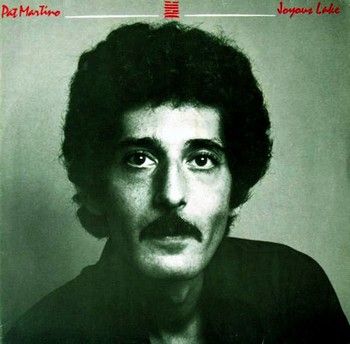
Pat Martino - Joyous Lake - 1976 - Warner Bros. Records

The utterly brilliant guitarist, Pat Martino has recorded some of the best jazz guitar albums you will ever need to hear. He has covered soul jazz, avant-garde jazz, rock, pop, and world music played in a unique hard bop style. The guy is a one-off. "Joyous Lake" is an example of how jazz fusion can be enjoyable and easily accessible. Listen to Pat's superb "Live at Yoshi's" album, and read Jesse Gress' engrossing "10 Things You Gotta Do to Play Like Pat Martino" article @ http://www.guitarplayer.com/article/10-Things-You-Gotta-Do-to-Play-Like-Pat-Martino/241 [All tracks @ 320 Kbps: File size = 91.6 Mb]

TRACKS / COMPOSERS

A1 Line Games - Pat Martino 3:55
A2 Pyramidal Vision - Delmar Brown 7:34
A3 Mardi Gras - Delmar Brown 9:07

B1 M'wandishi - Kenwood Dennard 5:27
B2 Song Bird - Pat Martino 7:52
B3 Joyous Lake - Pat Martino 7:25

MUSICIANS

Pat Martino - Guitar, Synthesizer [Eml 101], Percussion
Mark Leonard - Electric Bass
Delmar Brown - Electric Piano [Fender Rhodes], Synthesizer [Eml 500, Oberheim Polyphonic]
Kenwood Dennard - Drums, Percussion

BIO

One of the most original of the jazz-based guitarists to emerge in the 1960s, Pat Martino made a remarkable comeback after brain surgery in 1980 to correct an aneurysm caused him to lose his memory and completely forget how to play. It took years, but he regained his ability, partly by listening to his older records. Martino began playing professionally when he was 15. He worked early on with groups led by Willis Jackson, Red Holloway, and a series of organists, including Don Patterson, Jimmy Smith, Jack McDuff, Richard "Groove" Holmes, and Jimmy McGriff. After playing with John Handy (1966), he started leading his own bands and heading sessions for Prestige, Muse, and Warner Bros. that found him welcoming the influences of avant-garde jazz, rock, pop, and world music into his advanced hard bop style. After the operation, Martino did not resume playing until 1984, making his recording comeback with 1987's The Return. Although not as active as earlier, Pat Martino has regained his earlier form, recording again for Muse and Evidence; he later signed with Blue Note, issuing All Sides Now in 1996, followed two years later by Stone Blue and in 1998 by Fire Dance. In 2001 Martino released a live album recorded at Yoshi's in California. Two years later he teamed with saxophonist Joe Lovano for Think Tank. Remember: A Tribute to Wes Montgomery appeared on Blue Note in 2006. © Scott Yanow © 2012 Rovi Corp | All Rights Reserved http://www.allmusic.com/artist/pat-martino-mn0000792583

12.9.12

Joachim Kühn & Jan Akkerman

LINK
Joachim Kühn & Jan Akkerman ‎- Live! The Kiel Concert - The Stuttgart Concert - 2000 - in-akustik

Like all the best musical conversations between two improvising players, the dialogue on this album has not two voices but three. There are the solo contributions of Kühn and Akkerman, and a third composite voice provided by the blending of piano and guitar - a voice that represents the spontaneous musical rapport between these two outstanding musicians. In a very real sense, this recording offers a fascinating portrait of the growth in a musical relationship which can take place when compitable, sensitive and listening players spend night after night in duo performances. It was during an extended European tour of more than 40 concerts that these tracks were recorded, the first at the beginning of the tour and second some four weeks later. The same Joachim Kühn composition is featured on both tracks - a piece the pianist actually composed in Santa Barbara, California - and it is fascinating to see how the interact between Kühn and Akkerman and their development of the work changed during the period between the first recording and the second. As Joachim Kühn says: "When we made the first recording the piece was pretty new. But by the time we came to record it the second time, Jan and I were able to be much more adventurous and, of course, we had developed a much deeper mutual understanding". The collaboration between Joachim Kühn and Jan Akkerman is the ultimate fruition of a friendship which began in Bonn back in the midseventies when Joachim was working with "Association P.C." and Jan guested with the band. Since then the two have made considerable inspiration from each other's music. They have also drawn increasingly enthustiastic audience response. - On a sunny afternoon in October 1980 they played two duo-concerts before estatic audiences at the twice sold-out Philharmonic Hall in Wroclaw, Poland. In 1981 on their second European tour Joachim Kühn could be seen live on Polish TV performing solo-piano at the Congress-Centre, Warzawa, befire a tentative audience of 3.500 people. The duo continued to tour numerous succesful concerts in major venues such as the "Berlin Art Academy" (Hochschule der Künste), "Schauspielhaus" Hamburg. Kühn & Akkerman were also featured on many TV- and radioshows. Says Jan: "Joachim is one of the greatest piano players around and he really turned me on to play again. I'd drifted away from the guitar after Focus broke up in 1974, not being able to decide which musical direction to take. Teaming up with Joachim is one of the hardest things I ever did, but also one of the most rewarding." Akkerman, who is heard playing guitar syntheziser on one track - for the first time on record - describes the music as "weird fusion of everything from blues to Bartók." It goes without saying that Akkerman's high regard for Kühn's musicianship is fully reciprocated. "Jan knows the guitar so well and gets a fantastic big sound," says Joachim. "He is a natural musician and although he thinks of himself as a rock'n' roll guitarist, he has a very strong jazz feel. He has been turning me on to people like Joe Walsh and the Temptations and I've been getting him interested in McCoy Tyner." That kind of musical exchange takes place on this album and it is fascinating to listen to the way in which each musician picks up on the "conversation" of the other, underlining it, adapting it, extending it, sometimes diverting it into another musical realm. This music on this album - spontaneous, technically brilliant, highly charged with self-expression and instinctive creativity - is improvised music at its best played by two mutually appreciative, superbly gifted instrumentalists. There is a cohesive compatibility throughout, no one hogs the limelight and the range of mood and dynamics sustains interest even though there is no formal chord sequence or reitarated theme pattern to serve as landmarks. "The better we get to know each other," says Joachim, "the better we improvise together". The evidence of this album suggests that Jan Akkerman and Joachim Kühn know each other uncommonly well already. - from Liner notes by & © Mike Henessey, Billboard

The great guitarist Jan Akkerman described the music on this album as "weird fusion of everything from blues to Bartók." A cryptic description but a beautiful and delicate fusion album with the Joachim Kühn composition "Santa Barbara" played in two different variations from two very distinguished musicians and HR by A.O.O.F.C [All tracks @ 192 Kbps: File size = 46.2 Mb]

TRACKS

A Santa Barbara - First Dance 15:27 [Recorded 'live' in Kiel, 1978]
B Santa Barbara - Second Dance 20:28 [Recorded 'live' in Stuttgart, 1978]
3 [Hidden Track - Applause] 0:38

All tracks composed by Joachim Kühn: N.B: Back of booklet refers to Duo in concert, Santa Barbara, but both tracks were recorded in Germany. Santa Barbara refers to the name of the tracks

MUSICIANS

Jan Akkerman - Roland Guitar Synthesizer on Track A: Gibson Double Neck Electric Guitar on Track B
Joachim Kühn - Acoustic Grand Piano

16.5.12

The New Tony Williams Lifetime


The New Tony Williams Lifetime - Believe It - 1975 - Columbia

Believe It features former Motown bassist Tony Newton, keyboard player Alan Pasqua and, most notably, British guitarist Allan Holdsworth, who, while already somewhat of an underground legend in his own country, had yet to make an impression in North America. Believe It changed all that, demonstrating that not only was Holdsworth a fresh new voice on his instrument, but a fine writer as well. "Fred," later re-titled "Kinder" by Holdsworth, and a staple in his repertoire for some years to come, introduces Holdsworth's unique harmonic language, with a lyrical bent that manages to be completely distinctive. And his playing style is quite simply like no other; influenced heavily by Coltrane, Holdsworth, even at this early stage in his career, is capable of sheets of sound that, punctuated by held notes and legato runs, are visceral in their impact. No less visceral, of course, is Williams himself. While peers including Billy Cobham and Lenny White gravitated towards more overblown displays of virtuosity, Williams overpowers both with his stronger sense of groove and sheer muscularity. And while he is every bit as capable of extravagant displays of technique, he always sounds more musical. Even on intense burners like the Holdsworth-penned bonus track "Letsby," he is less concerned with how many beats he can throw into a fill; and his solo over Holdsworth's power chord ostinato is the epitome of construction. For someone who moved the concept of rhythmic freedom so far forward as part of Miles' second quintet, Williams may have been the most overtly rock and roll-informed drummer of the mid-'70s fusion era. With an inherent sense of groove and honest energy that comes from compositions that are less contrived and more direct vehicles for improvisational flight, Believe It is one of the most compelling arguments for the validity of jazz-rock fusion, before the term became such a dirty word. By & © JOHN KELMAN, Published: June 1, 2004 © 2012 All About Jazz and/or contributing writer/visual artist. All rights reserved http://www.allaboutjazz.com/php/article.php?id=13840

The late drummer Tony Williams was a phenomenal jazz rock fusionist. "Believe It" is an almost perfect blend of jazz and rock. The album might be less "progressive" than other albums from Allan Holdsworth or Tony Williams, but contains eight brilliantly played and really good solid jazz rock/fusion compositions with a funky edge. There is wonderful guitar from the legendary Allan Holdsworth, some killer bass from the great Motown session musician Tony Newton and amazing keyboard play throughout from Alan Pasqua. 'Snake Oil' and 'Red Alert' are powerful compositions. 'Wildlife' is a nod to the missing link between the old and the new Tony Williams Lifetime. 'Fred' is the electric version of Allan Holdsworth's 'Kinder', (heard on his album 'Velvet Darkness'). Allan's 'Mr. Spock' celebrates his enjoyment of 'Star Trek', but not in any stupid commercial sense. The two bonus track are a great addition to the CD issue of this album. Allan's "Letsby" is a more complex and exciting reworking of his "Mr Spock" tune, and Tony Williams' own "Celebration" is a great jazz funk track in the Herbie Hancock style. The album is HR by A.O.O.F.C. Listen to Tony Williams Lifetime's "Emergency!" and "The Joy of Flying" albums [All tracks @ 320 Kbps: File size = 99.4 Mb]

TRACKS / COMPOSERS

1 Snake Oil (Tony Newton) — 6:30
2 Fred (Allan Holdsworth) — 6:48
3 Proto-Cosmos (Alan Pasqua) — 4:02
4 Red Alert (Newton) — 4:39
5 Wildlife (Tony Williams) — 5:22
6 Mr Spock (Holdsworth) — 6:15
7 Celebration (Williams) — [Bonus Track] 4:01
8 Letsby (Holdsworth) — [Bonus Track] 6:34

BAND

Allan Holdsworth – Guitar
Tony Newton – Electric Bass
Alan Pasqua – Piano, Clavinet
Tony Williams – Drums

BIO (WIKI)

The Tony Williams Lifetime was a jazz-rock fusion group led by jazz drummer Tony Williams. The Tony Williams Lifetime was founded in 1969 as a power trio with John McLaughlin on electric guitar, and Larry Young (aka Khalid Yasin) on organ. The band was possibly named for Williams' debut album as a bandleader, Life Time, released on Blue Note in 1964. Its debut album was Emergency!, a double album released on Polydor/PolyGram Records in 1969. It was largely rejected by jazz listeners at the time of its release because of its heavy rock influences, but it is now looked upon as a fusion classic. Jack Bruce joined the group to provide bass and vocals on its second album, Turn it Over, released in 1970. McLaughlin left the group and was replaced by Ted Dunbar on its 1971 album, Ego. This album also featured Ron Carter on bass and cello, Warren Smith and Don Alias on percussion, and Larry Young on organ. Lifetime gigs around this time featured Juini Booth on bass. This lineup's performance in France on August 7, 1971 (venue unknown) was filmed in color and broadcast on the French television program Pop2. Following Larry Young's departure from the band sometime after July of 1972, Tony Williams was the only original member remaining. In July 1972 Williams appeared at the Montreux Jazz Festival with an all-star lineup of the Stan Getz Quartet featuring Stan Getz on saxophone, bassist Stanley Clarke and pianist Chick Corea. This performance was memorialized with both audio and video recordings. Williams performed the following month in August 1972 with a new brief-lived trio called Life Time Experience, featuring bassist Stanley Clarke and violinist Jean Luc-Ponty. Their performance at the Festival de Chateauvallon, Chateauvallon, France, on August 23rd, 1972, was captured on film in black & white. The fourth and last Lifetime album for Polydor/PolyGram, 1973's The Old Bum's Rush, was recorded in Boston and featured entirely new personnel, consisting of female vocalist and guitarist Linda 'Tequila' Logan, Webster Lewis on organ & clavinette, David Horowitz on piano, vibes, and ARP synthesizer, and Herb Bushler on bass. Tony Williams' father Tillmon Williams makes a guest appearance on saxophone. Prior to recording, with Larry Young still in the band, the Lifetime performed material from the album on July 1, 1972 at Carnegie Hall in New York. Marking yet another stylistic departure for the Lifetime and reinvention of the band's musical identity, the record is characterized by a predominantly sprightly and upbeat songwriting approach, electronic keyboard-dominated sound, and jazzy female vocals. Recorded by Williams under the dark cloud of knowing that Polydor would not be renewing his contract, the album received poor reviews, and the group was effectively dissolved. In 1974, Williams formed a new Lifetime featuring Bum's Rush holdovers Webster Lewis on keyboards and Linda 'Tequila' Logan on vocals, along with former Cream/Lifetime bassist Jack Bruce and British guitarist Allan Holdsworth. This lineup, sometimes referred to as Wildlife, recorded an album's worth of material at Europa Films Studios in Stockholm, Sweden in October 1974, which has never been officially released. In the spring of 1975, Williams put together a quartet he called The New Tony Williams Lifetime featuring bassist Tony Newton, pianist Alan Pasqua, and guitarist Allan Holdsworth. This lineup recorded two albums for Columbia/CBS Records, Believe It in 1975 and Million Dollar Legs in 1976. These albums were reissued on one CD in 1992 as Lifetime: The Collection. After recording Million Dollar Legs, guitarist Allan Holdsworth departed and was replaced by Marlon Graves for the subsequent tour undertaken to support the album. In 1977, Williams parted ways with Graves, Pasqua, and Newton and formed another Lifetime lineup with entirely new personnel consisting of Mike Hoffmann (lead guitar), Gerry Mule (2nd guitar), Paul Potyen (keyboards), and Michael Formanek (bass). This lineup recorded demos for the Columbia label but had no official releases, and played a small number of live gigs performing material from "Ego" and the two New Lifetime albums "Believe It" and "Million Dollar Legs." In July 1978, Williams toured Japan with Ronnie Montrose (guitar), Brian Auger (keyboards), Mario Cipollina (bass) and special guest Billy Cobham also on drums for a series of concerts. They were billed as the Tony Williams All Stars. Later that year he released The Joy of Flying, an eclectic solo album featuring a mix of styles and collaborations with Herbie Hancock, Cecil Taylor, Tom Scott, Stanley Clarke, Michael Brecker, George Benson, and Jan Hammer. It also contains "Open Fire" recorded by the All Stars earlier that year. In 1979, Williams formed another all-new Lifetime featuring Tod Carver (guitar), Bunny Brunel (bass), Bruce Harris (keyboards), and Tom Grant (keyboards). The band's sound was a major departure from the former New Lifetime's classic fusion: the high-energy shredding heard on Believe It and Million Dollar Legs was largely abandoned in favor of a cerebral and groove-laden approach that emphasized mood and melody over technical virtuosity. As with the 1977 lineup, the 1979 Lifetime played a small number of live gigs and no studio recordings are known to exist. Toward the end of this period, Williams pared-down the lineup to a trio and played some gigs with Tom Grant on keyboards and Bunny Brunel on bass. In late May 1980, Williams and a new trio incarnation of the Lifetime featuring Patrick O'Hearn on bass (miscredited as Patrick O'Hara) and Tom Grant on keyboards recorded the little known Play or Die album for the Swiss label PS Productions. Stylistically, the recording found Williams returning to high energy keyboard-dominated instrumental fusion reminiscent of the 1975 album On the Mountain by Elvin Jones, Jan Hammer and Gene Perla. At the time of its release, Emergency! was notably influential on the then-emerging genre of jazz fusion. It was also one of several albums that the members of The Allman Brothers Band listened to regularly early in their career. John Zorn named the Tony Williams Lifetime as a specific musical inspiration in the liner notes of the Naked City album Radio. Since the death of Williams in 1997, Jack DeJohnette and John Scofield formed Trio Beyond with Larry Goldings in honour of The Tony Williams Lifetime. They released one album, Saudades (2006), on the German label ECM. In 2006, former Lifetime members Allan Holdsworth and Alan Pasqua toured with drummer Chad Wackerman and bassist Jimmy Haslip performing a set comprising original as well as Lifetime material. Live at Yoshi's, a DVD from the U.S. leg of the tour, was released in 2007 and followed by the 2CD set Blues for Tony in 2009. In December 2008, guitarist Vernon Reid, organist John Medeski, drummer Cindy Blackman, and former Lifetime member Jack Bruce played a week of shows in Japan as the Tony Williams Lifetime Tribute Band, playing a set of 1969/70 Lifetime material. This was recorded in high-definition and shown on Japanese TV. The Lifetime Tribute Band featuring Jack Bruce reformed in February 2011 to play a further ten shows in high profile jazz clubs in North America. Unusually the dates have early & evening shows, something most rock musicians stopped doing at the beginning of the 1970s. Reaction to the 2011 U.S. Lifetime shows has been so positive that the band have re-named themselves Spectrum Road, after a track on 1969's first Lifetime album,and post tour are to go into the studio to record a new album for the U.S. jazz record label Palmetto Records.

MORE ABOUT TONY WILLIAMS

Tony Williams' death in 1997 of a heart attack after routine gall bladder surgery was a major shock to the jazz world. Just 51, Williams (who could be a very loud drummer) seemed so youthful, healthy, and ageless even though he had been a major drummer for nearly 35 years. The open style that he created while with the Miles Davis Quintet in the mid- to late '60s remains quite influential, and he had a long list of accomplishments during the decades that followed. Williams' father, a saxophonist, took his son out to clubs that gave him an opportunity to sit in; at 11, the youngster already showed potential. He took lessons from Alan Dawson, and at 15 was appearing at Boston-area jam sessions. During 1959-1960, Williams often played with Sam Rivers, and in December 1962 (when he was barely 17), the drummer moved to New York and played regularly with Jackie McLean. Within a few months he joined Miles Davis, where his ability to imply the beat while playing quite freely influenced and inspired the other musicians; together with Herbie Hancock and Ron Carter he was part of one of the great rhythm sections. Williams, who was 18 when he appeared on Eric Dolphy's classic Out to Lunch album, stayed with Davis into 1969, leading his own occasional sessions and becoming a household name in the jazz world. In addition to his interest in avant-garde jazz, Tony Williams was a fan of rock music, and when he left Miles he formed the fusion band Lifetime, a trio with Larry Young and John McLaughlin. After leading other versions of Lifetime (one of them starring Allan Holdsworth), Williams stuck to freelancing for a time, studied composition, and toured with Herbie Hancock's V.S.O.P. band. By the mid-'80s, he was heading his own all-star hard bop group which featured Wallace Roney as a surrogate Miles Davis and a repertoire dominated by the drummer's originals (including the standard "Sister Cheryl"). After breaking up his longtime quintet in 1995, Williams gigged a bit with a trio, recorded a very interesting set of original music for the Ark 21 label, and seemed to have a limitless future. His premature death makes one grateful that he started his career early and that he was extensively documented. © Scott Yanow © 2012 Rovi Corporation. All Rights Reserved http://www.allmusic.com/artist/tony-williams-p7832/biography