A.O.O.F.C
recommends
Mizar6

babydancing


Get this crazy baby off my head!

Showing posts with label Eighties Jazz Rock. Show all posts

12.12.13

Kazumi Watanabe


Kazumi Watanabe ‎- The Spice Of Life - 1987 - Polydor K.K. / Domo

This album features the power trio of K. Watanabe on all guitars & guitar synths, fantastic bassist Jeff Berlin and Bill Bruford who was the drummer for the classic rock band Yes. By the time Kazumi Watanabe expanded beyond jazz to join the fusion movement, it was the '80s and fusion had all but died in The States. It was a pure delight to see this man keep fusion alive with a mixture of rock, the hard-driving beats and rythms of the '80s which kept the music current in its time and updated the sound that had once been the property of the '70s..........and of course, the jazz influence is solid throughout this recording. Watanabe is a tremendous guitar talent who is too often overlooked. His blistering hot guitar work shines with a knowledge of American culture while he slips in a definite Japanese flavor in his music........sometimes subtle, sometimes blatant. An incredible album!!! On a scale of 1-5 stars, this album deserves 10 stars!!! I also agree with other reviewers that the sequel album "Spice of Life Too" was a weak and disappointing follow-up to this superb album. I haven't bothered to pick it up on CD, because even with the addition of a keyboardist, the music was uninspired and lackluster.......worth 3 stars at best........but again, THIS album, the ORIGINAL "Spice of Life" deserves 10 stars on a scale of 1-5 stars!!! An excellent piece of work!!! – from ***** A masterpiece of Fusion for the'80s and today!!! December 26, 2007 By & © D. Gorman "Crystalline Structure Moon" © 1996-2013, Amazon.com, Inc. or its affiliates http://www.amazon.com/Spice-Life-Kazumi-Watanabe/dp/B000007UKW

Kazumi Watanabe (born on October 14, 1953) is a jazz and jazz fusion guitarist, from Tokyo, Japan. He learned to play guitar from Sadanori Nakamure, one of Japan's master guitarists. Kazumi released his first album in 1971, and quickly showed his great potential on the fretboard. In 1979, he formed an all-star band with some of Japan's leading studio musicians, and recorded the fusion masterpiece “Kylyn”. Throughout the eighties Kazumi released several jazz-rock albums. The funky and bright sounding “To Chi Ka” is probably one of Kazumi’s better known early releases. Later albums like “Mobo Club” and “Mobo Splash” are more experimental. Arguably, Kazumi Watanabe’s strongly melodic “Spice of Life” with drummer Bill Bruford and bassist Jeff Berlin is one of Kazumi’s best releases and HR by A.O.O.F.C. Listen to Kazumi’s exceptional “To Chi Ka” album [All tracks @ 320 Kbps: File size = 113 Mb]

TRACKS

A1 Melancho 3:27
A2 Hiper K 5:38
A3 City 4:27
A4 Period 6:37

B1 Unt 5:10
B2 Na Starovia 4:46
B3 Lim-Poo 4:49
B4 J. F. K. 4:54
9 Rage In 6:19 (Bonus Track)

All tracks composed by Kazumi Watanabe except "Na Starovia" by Kazumi Watanabe & Bill Bruford, "J. F. K." by Kazumi Watanabe & Jeff Berlin, and “Rage In” by Kazumi Watanabe, Bill Bruford, & Jeff Berlin

MUSICIANS

Kazumi Watanabe - Guitars, Guitar-Synthesizer
Jeff Berlin - Bass
Bill Bruford - Drums, Electronic Drums, Percussion

BIO (WIKI)

Kazumi Watanabe is a jazz and jazz fusion guitarist, from Tokyo, Japan. He was born on October 14, 1953. Kazumi learnt to play guitar from Sadanori Nakamure, who is one of Japans grandmaster guitarists. He released his first recording in 1971, and quickly became a promising guitarist in his own right. In 1979, he formed an all-star band with some of Japans leading studio musicians, and recorded the album "KYLYN", which is considered a masterpiece in fusion music. During the eighties Watanabe released a considerable number of jazz-rock albums. To Chi Ka (1980), with its funk influences and bright sound, is probably the most famous of early titles. Some latter albums, such as Mobo Club (1983) and Mobo Splash (1985) display more experimental tendencies. But the most famous of all is Spice of Life (1987) which is done in strongly melodic style. The DVD has been issued from the tour in which the album was played with drummer Bill Bruford and bassist Jeff Berlin (who also play on the studio record). In the 1990s Kazumi assembled all-Japanese line-up called Resonance Vox (Vagabonde Suzuki on bass, Rikiya Higahihara on drums, Tomohiro Yahiro on percussions). This band went on releasing adventurous fusion albums. Watanabe has worked with numerous musicians such as Steve Gadd, Tony Levin, Jeff Berlin, Bill Bruford, Sly and Robbie, Wayne Shorter, Patrick Moraz, Marcus Miller, Richard Bona, and Peter Erskine. Since 1996, he has been a visiting professor of music at Senzoku Gakuen College. He is known for the endorsement of Steinberger and Paul Reed Smith guitars, and has been chosen Best Jazzman 24 times in a row by Swing Journal's annual poll. Kazumi Watanabe has released over 30 studio, live and compilation albums, and several DVDs

DETAILED BIO

Kazumi Watanabe lives up to his name as the Japan’s world-class, top jazz guitarist. His quick tempo weaves fascinating ad libs and affluent melodies; he has been noted for elaborately combining various performing techniques and infusing rich expressive power to each and every note to create a one-of-a-kind “Kazumi Sound”. He has made the world his stage for over 40 years, transgressing genres and borders to perform with an outstanding number of domestic and international artists. The natural-born improviser also builds a unique world of composition and arrangements, always pioneering frontier instrumental music. Born 1953 in Tokyo, Kazumi Watanabe took the piano at the tender age of seven, but picked up the guitar at age 12 inspired by the Ventures. At 15, he was stunned by the music of Wes Montgomery and turned his aspiration to jazz. He made his debut at age 17 with Infinite and was quickly hailed as the guitar prodigy extraordinaire. While playing in Japan’s top-profile groups led by artists such as Masaru Imada, Sadao Watanabe, and Isao Suzuki, he led his own band as well. From around Olive Steps (1977), he rode the wave of popularity of fusion and guitar music, taking in not only jazz fans but also rock fans under his wings. In 1979 he formed KYLYN with then-up-and-coming stars in the Japanese music scene, namely Ryuichi Sakamoto, Akiko Yano, and Shuichi “Ponta” Murakami, and went on to release an album, perform live, and tour. KYLYN earned the recognition as the legendary band that had made a tremendous influence on the Japanese music scene thereafter, with each member still playing pivotal roles in respective scenes. In the fall of that year (1979) Kazumi participated in Yellow Magic Orchestra’s world tour as guest guitarist. His play won rave reviews in everywhere he went, which catapulted his name to international fame. TO CHI KA (1980), produced by Mike Mainieri, marked an unprecedented sales figure and brought Kazumi to the forefront of the fusion scene. The release was followed by an 11-city tour with Mainieri on vibraphone, Warren Bernhardt on piano and keyboards, Marcus Miller on bass and Omar Hakim on drums. Then up to 1985, he made more epoch-making steps than you could count, such as playing alongside Eddie Gomez and Steve Gadd in the Japan tour of STEPS, a group of cream of the New York-based musicians, as well as the Brecker Brothers Band’s performances at New York’s Seventh Avenue South and their Japan tour, and bassist Jaco Pastorius’ Japan tour to name a few. On the other hand, Kazumi continued to push the envelope of fusion in Kazumi Band, his own band formed with musicians of notable, extraordinary techniques such as saxophonist Yasuaki Shimizu, keyboardist Masanori Sasaji, bassist Kenji Takamizu and drummer Hideo Yamaki. With another band MoboⅢ, a trio with bassist Greg Lee and Shuichi “Ponta” Murakami, he toured the United States performing 17 shows in 12 cities including New York, enjoying high acclaim in each city. Furthermore, recorded with ultra-heavyweights such as Marcus Miller (bass), Omar Hakim (drums), Robbie Shakespeare (bass), Sly Dunbar (drums), and Michael Brecker (saxophone), album Mobo earned high acclaim as a work of experimental approaches to a new sound. During this time, Kazumi produced a number of seminal works in the history of fusion, and established his stature as Japan’s top guitarist. In the late 80s, Kazumi actively explored new fields and recorded an album in London with drummer Bill Bruford, the British rock giant renowned for his activities in King Crimson, and bassist Jeff Berlin. The unit toured twelve cities in Japan, and went on to record another album in London as well as doing many more tours, winning overwhelming support from progressive rock fans across the nation. He also led a band with Kei Akagi on keyboards, Bunny Brunel on bass, and John Wackerman on drums, touring 9 cities in the United States and performing at the Montreux Jazz Festival in Switzerland. On a tour sponsored by The Japan Foundation, he visited Indonesia, Sri Lanka, Bangladesh, Thailand, and China, and performed with local musicians. In the 90s, Kazumi began to immerse himself into acoustic guitar as well, combining it with electric to further expand his musical field. He played strings of European dates such as Barcelona (Spain), Italy, and France with leading free jazz pianist Yosuke Yamashita, as well as Bulgaria and Lisbon (Portugal) with bassist Nobuyoshi Ino, all enjoying high acclaim. Starting with a guitar duo on Tokyo Music Joy with John McLaughlin back in 1987, Kazumi has presented and continues to present to this day the best part of collaborations with world’s high profile guitarists, exciting enthusiasm in many guitar fans. The long list of collaborated guitarists include Al DiMeola at the Mt. Fuji Jazz Festival in 1993, Larry Coryell on recording sessions and tours, Babik Reinhardt, son of Django Reinhardt at the Django Festival in 1997, Toninho Horta, Ralph Towner, Roland Dyens, and Martin Taylor. After participating in the Yatsugatake Music Festival directed by contemporary music composer Toru Takemitsu in 1992, Kazumi forged close ties with classical guitarists as well, and began to receive more requests of music contributions and arrangements. This led him to begin exploring the world of unplugged guitar music, and to experiment resonance with the vibrancy of classical music halls. As for muscular electric music, Kazumi formed RESONANCE VOX that was active from 1991 through 1996. On the other hand, he led ASIA FANTASY ORCHESTRA in 1995, a 32-piece orchestra of Asian musicians from various genres. The orchestra performed in four cities namely Singapore, Kuala Lumpur, Jakarta and Tokyo, as well as African countries as part of the “Taiko Meets Jazz” project. While rooting in his Japanese identity, the improviser developed a global communication field that went beyond the borders of genres. In 1998, Kazumi recorded Dandism in New York, a tight duo album with pianist Makoto Ozone. The following year he recorded live at the Bottom Line in New York with his New Yorker friends Mike Mainieri (vibraphone), Larry Coryell (guitar), Akiko Yano (piano), John Patitucci (bass), and Mino Cinelu (drums), resulting in One For ALL, a perfect live album to curtain the 20th century. Stepping into the 21st century, Kazumi released Beyond The Infinite, a guitar suite to commemorate the 30th year of his career as a guitarist. Upon composing and arranging the music, he drew on his improviser’s side and created his own unique world, making the suite a borderless work of art that freely transgresses genres such as classical music, contemporary music, jazz, rock, and folk. The suite was premiered and released as an album as well. Later, it was rearranged as an orchestral suite and was premiered in 2006 conducted by Seikyo Kim. In February 2003, Kazumi released Guitar Renaissance, the first album in his career he performed completely solo. In May that year, he recorded Mo’Bop in New York as the New Electric Trio with bassist Richard Bona and drummer Horacio el Negro Hernandez. The trio was highly publicized when they world premiered at Tokyo Jazz 2003. Since then for the next four years, he continued to release and perform series of acoustic and electric projects in parallel. With his solo performing skills that he matured with Guitar Renaissance series, he increased his efforts in his solo activities in Europe in 2006, performing in Rome and Paris, as well as participating in a guitar festival in Iceland. At the same time, he launched the Asian Super Guitar Project with guitarists from Korea and Hong Kong. Fruiting album Guitar Sam Guk Ji, the trio performed in Japan and Korea as well as various jazz festivals in Asia. In 2007, Kazumi produced Castle In The Air, a collaborative project with pianist/composer Koko Tanikawa, his musical and personal partner since 1997, who had been producing his overall activities from album making to live performances. The album was released in late 2007. As part of the duo unit also named Castle In The Air, he supported Koko’s worldview and music, rooted in her deep insight on world environment and the concept of coexistence with nature. The unit also contributed music for the live-action version of movie Grave Of The Fireflies that hit theaters in 2008. In the midst of such myriad activities, Kazumi also launched the “Return To Jazz Project” to focus on his point of origin. He released Jazz Impression in fall 2009, and continues to perform live all across the nation as a duo with bassist Yosuke Inoue and occasionally with guest artists. In the four-city, seven-show China tour sponsored by The Japan Foundation in 2009, Kazumi presented a stereoscopic rendition of contemporary music with jazz saxophonist Masato Honda, Koko Tanikawa, and Chinese Pipa player Jiang Ting, which enjoyed high acclaim. This experience made him realize a new enthusiasm and potential in contemporary China especially in terms of jazz and fusion, as well as the importance of nurturing young local jazz players. 2010 has seen a string of events commemorating Kazumi’s 40th career anniversary as a guitarist, including a concert with an orchestra in July where he played all movements of Concierto de Aranjuez, the gold standard of guitar concertos, with a pick. Being the first person in all genres to take on such a challenge, the concert naturally garnered much attention. On top of this, he will perform at Tokyo Jazz in early September leading "TO CHI KA 2010”, a one-night-only reunion with then-tour mates Mike Mainieri (vibraphone), Warren Bernhardt (piano/keyboards), Marcus Miller (bass) and Omar Hakim (drums) for the first time in 30 years, raising expectations among long time jazz/fusion fans. Recently, he also performed at the Saito Kinen Festival Matsumoto as part of a special unit deriving from the Toru Takemitsu Tribute project that had enjoyed rave reviews at the Japan Week 2008 in Washington DC. The unit will perform at Carnegie Hall in New York and in Orange County in December. Kazumi has enjoyed numerous exposures on TV, radio, and their special programs, including regular appearances on Yumeno Rannyusha on Kansai TV for six years since 1990, as well as instructing in Acoustic Guitar for Beginners on NHK’s educational channel in 2003. On radio, he deejayed on Dogatana World: Kazumi Watanabe’s Good Vibration and navigated NHK FM’s Jazz Tonight for two years since 2005. He shares his experiences in his musical life in print media as well, contributing essays occasionally and regularly. Contributing music to and sometimes participating in musicals and plays such as DJANGO 1953, Barcelona Story, Blood Wedding, and Kaihogen to name a few, Kazumi has collaborated with a wide variety of performing arts such as dance, Noh dramas and traditional Japanese music, exerting his high flexibility and capability. He enjoys his stature as a first-call guitarist in film music, composing and performing theme tunes and music to grace important scenes. Kazumi Watanabe is currently guest professor at the jazz course of Senzoku Gakuen College of Music. He has received the prestigious Fumio Nanri Award in 1991. © KAZUMIWATANABE.NET All Right Reserved http://www.kazumiwatanabe.net/bio/english.html

1.6.13

Gamalon


Gamalon - Gamalon - 1987 - Amherst Records

***** This album cooks! One of the few fairly modern jazz/rock fusion albums that deserves a 5 star rating. Gamalon probably needed a better record label or promotion, I'm not sure which. They certainly do not deserve obscurity. All instrumental with memorable melodies. Points of reference would be Gongzilla (without the vibes), Bon, Dixie Dregs (without the country influence) and early Level 42 (the instrumentals). Just a great collective offering. Everyone plays with passion and finesse. A drummer's delight, a bassist's delight and especially highly recommended for guitarists. I'm not sure which guitarist is the soloist, but I must mention both George Puleo and Bruce Brucato. Great chops. Check out their video here at progarchives.com. Serious business. Can hold their own with the greats such as Holdsworth and Morse. I've noticed several used CD copies on amazon.com for no more than $6. Get it while you can because it'll be an obscure one to find after you read this. First come first served. A must for any fusion fanatic. Get it for the opener _Billy's Saloon_ and _Cabin Fever_ alone. Also worth mentioning as a GAMALON reference is Ozric Tentacles without the spacey keyboards. Review by & © Gooner - Prog Reviewer © Prog Archives, All rights reserved http://www.progarchives.com/artist.asp?id=647

"Gamalon", the group's 1987 debut recording, features high-powered rock fusion at its best from the Buffalo, New York band sporting the twin-guitar team of Bruce Brucato and George Puleo. Rounding out the foursome are producer Ted Reinhardt on drums, and brother Tom Reinhardt on bass. Recording for Lenny Silver and Amherst Records (the same label that spawned Spyro Gyra), "Gamalon" was the harder-edged, virtuosic fusion component to the label's roster of bands. The flashy Puleo and Brucato trade blazing overdriven solos over the seven instrumental tracks, which all band members had a hand in writing. Essential guitar-driven rock fusion. © 1996-2013 Guitar Nine All Rights Reserved http://www.guitar9.com/gamalon.html

When Genesis played Buffalo on their first USA tour in 1973, the mighty progressive rock band was very impressed by supporting act Rodan’s opening act, as Rodan (later to become Gamalon) was already covering Genesis’ music when Genesis were virtually unknown in the US. Gamalon’s self-titled debut album was picked up and released by the Buffalo-based Amherst Records label in 1987 and bulleted to the number 8 position on Billboard’s contemporary jazz charts. This was a hugely impressive achievement for a relatively obscure jazz rock band at that time. “Gamalon” is HR by A.O.O.F.C. Check out the band’s “Aerial View” and “Live at the Tralf” albums. Support great jazz rock [All tracks @ 320 Kbps: File size = 87.8 Mb]

TRACKS / COMPOSERS

1. Billy's Saloon - Bruce Brucato 5:45
2. Ooh...Babe - George Puleo 4:24
3. The King - Bruce Brucato 5:43
4. Black Licorice - Bruce Brucato, George Puleo,Tom Reinhardt,Ted Reinhardt 4:25
5. Cabin #14 - Bruce Brucato, George Puleo,Tom Reinhardt,Ted Reinhardt 6:46
6. Souvenirs - George Puleo 6:36
7. Jungle Fever - Ted Reinhardt 5:12

MUSICIANS

Bruce Brucato, George Puleo - Guitar
Tom Reinhardt - Bass
Tom Schuman - Piano on Tracks 3, & 6
Ted Reinhardt - Drums: All instruments on Track 7

ABOUT GAMALON

GAMALON started in Buffalo, New York during the 1960's, when drummer Ted Reinhardt and guitarist Bruce Brucato began playing music together at age 12. By the 70's they were joined by Ted's brother Tom and Rick McGirr to form Rodan, a prog-rock gem of the local music scene. During the Buffalo stop of their first tour of the USA in 1973, GENESIS were quite taken by their opening act, as Rodan was already covering their music at a time when GENESIS had not yet taken off in the States. Rodan folded as the members morphed into GAMALON during the mid 80's, adding George Puleo on lead guitar and Tom Schuman on piano. They joined forces with saxophonist Ernie Watts in 1989. Geoffrey Fitzhugh Perry played violin on one album. Tony Scozzaro replaced George Puleo for several years and in the summer of 2004, Nori Bucci stepped in to take his place. Their self-titled debut in 1987 was one of the finest examples of jazz rock fusion. "Project: Activation Earth" with Ernie Watts followed in 1989. "Aerial View" appeared in 1990, quickly followed by "High Contrast" in 1991. Their latest studio album was 1996's "Held To The Light", their most mature work to date. In 2007, GAMALON introduced a new lineup. Joining founding member Ted Reinhardt are Jim Wynne on bass, Bob Accurso on malletKAT, and Dave Schmeidler on guitar. Gamalon has recorded six albums, played shows with Vital Information, Niacin, Gongzilla, Brand X and many others. GAMALON also celebrated its 25th anniversary in 2007: Past and Present Players:- Ted Reinhardt - Drums / Percussion / Chapman Stick (1982-present): Bruce Brucato - Guitars (1982-2006): George Puleo Guitars (1982-1996): Greg Piontek - Bass (1982-1984): Tom Schuman - Keyboards (1982-1983): Rick McGirr - Keyboards (1983-1985): Tom Reinhardt - Bass (1984-1996; 2004-2006): Jim Wynne - Bass / Keyboards (1996-2001; 2006-present): Tony Scozzaro - Guitars (1996-2004): Geoffrey Perry - Violin / Piccolo Bass / Guitar (1989-1996): Jack Kulp - Bass (2001-2004): Nori Bucci - Guitars (2004-2006): Bob Accurso - Percussion / malletKAT (2006-present): Dave Schmeidler - Guitars (2006-present). © Prog Archives, All rights reserved http://www.progarchives.com/artist.asp?id=647

22.8.12

Larry Carlton


Larry Carlton - Friends - 1983 - Warner Bros.

By the time Larry Carlton recorded Friends, his status as a guitar legend had already been established. In addition to being admired by musicians, he was also loved by Muzak programmers. His blend of happy pop-jazz was the perfect background music for dentist offices. For those who care to listen closer, there is some excellent guitar work being performed. A good example of this would be his creative improvisation on the introduction to "South Town." His duet with B.B. King on "Blues for TJ" is wonderful. It is refreshing to hear two players who are more interested in sharing ideas than showing off. The scat version of "Tequila," courtesy of Al Jarreau, was also interesting. As with most Carlton recordings, there is something here for just about everyone; there's just not enough of it. © Robert Taylor © 2012 Rovi Corp | All Rights Reserved http://www.allmusic.com/album/friends-mw0000652429

Larry's guitar solo on Becker & Fagen's "Kid Charlemagne" from the "Royal Scam" album is a work of genius. It would be great if Larry had thrown a few more solos like that into his later albums. The guy often "underplays" on occasions and it would be great to hear an all blues album from Larry where he would shine. Nevertheless, he is one of the guitar greats and one of the world's most in-demand sessionmen, and "Friends" shows off his guitar skills better than some of his later more pop rock and smooth jazz albums. Listen to Larry Carlton and Lee Ritenour's "Larry & Lee" album and Steely Dan's classic "Royal Scam" album [All tracks @ 320 Kbps: File size = 96 Mb]

TRACKS / COMPOSERS

1 Breaking Ground 4:26
2 South Town 5:25
3 Tequila 4:09
4 Blues For T.J. 5:19
5 Song In The 5th Grade 5:23
6 Cruisin´ 5:19
7 L.A., N.Y. 4:55
8 Friends 5:18

All tracks composed by Larry Carlton except "Tequila" by Chuck Rio, and "Blues For T.J" by Larry Carlton & B.B. King

MUSICIANS

Larry Carlton - Electric Guitar, Electric Bass - (tracks 3, 5), Fender Rhodes Electric Piano - (track 5), Percussion - (tracks 2, 5)
B.B. King - Electric Guitar - (track 4)
Abe Laboriel - Electric Bass
Brian Mann - Synthesizer - (tracks 1, 3, 5, 6, 7, 8), Organ - (tracks 4, 5)
Joe Sample - Fender Rhodes Electric Piano - (tracks 2, 3), Terry Trotter - Fender Rhodes Electric Piano - (tracks 1, 5, 6, 7, 8)
Don Freeman - Fender Rhodes Electric Piano - (track 3), Acoustic Piano - (track 3), Clavinet - (track 3)
Joe Porcaro - Vibraphone - (track 2), Timpani - (track 1)
Jeff Porcaro - Drums
Alex Acuna - Percussion - (track 6), Paulinho Da Costa, Percussion - (tracks 1, 2, 3, 5)
Michael Brecker - Saxophone - (tracks 3, 7, 8)
Don Menza, Gary Herbig, Gordon Berg, James Horn, Kim Hutchcroft, Larry Williams - Woodwind
Bill Reichenbach, Charles Loper, Dick Hyde, Lew McCreary - Trombone
Charles Findley, Gary E. Grant, Jerry Hey, Larry Hall, Pat Lobinger - Trumpet
Jim Horn - Solo Flute - (track 5)
Al Jarreau - Scat Vocals - (track 3)

BIO

Like so many other Los Angeles studio musicians, guitarist and composer Larry Carlton was faced with a choice a number of years back: whether to go solo and develop a name for himself, or to continue the less risky, more lucrative existence of a session guitarist, making good money and recording with prominent musicians. Fortunately for fans of this eclectic guitarist, he chose the former, and has recorded under his own name for Warner Bros., MCA Records, GRP Records, and various other labels since 1978. Carlton's studio credits from the ''0s and early '80s include work with musicians and groups like Steely Dan, Joni Mitchell, Michael Jackson, Sammy Davis, Jr., Herb Alpert, Quincy Jones, Bobby Bland, Dolly Parton, Linda Ronstadt, and literally dozens of others. Among his more notable projects as a session guitarist were Joni Mitchell's critically acclaimed Court and Spark album and Donald Fagen's Nightfly album. For much of the '70s, Carlton was active as a session guitarist, recording on up to 500 albums a year. Although he recorded a number of LPs under his own name as early as 1968's With a Little Help from My Friends (Uni) and 1973's Playing/Singing (Blue Thumb), he didn't land a major-label contract until 1978, when he signed with Warner Bros. Carlton began taking guitar lessons when he was six. His first professional gig was at a supper club in 1962. After hearing Joe Pass on the radio, he was inspired to play jazz and blues. Wes Montgomery and Barney Kessel became important influences soon after he discovered the jazz guitar stylings of Pass. B.B. King and other blues guitarists had an impact on Carlton's style as well. He honed his guitar-playing skills in the clubs and studios of greater Los Angeles while he attended a local junior college and Long Beach State College for a year until the Vietnam War ended. Carlton toured with the Fifth Dimension in 1968 and began doing studio sessions in 1970. His early session work included studio dates with pop musicians like Vikki Carr, Andy Williams, and the Partridge Family. In 1971, he was asked to join the Crusaders shortly after they'd decided to drop the word "Jazz" from their name, and he remained with the group until 1976. In between tours with the Crusaders, he also did studio session work for hundreds of recordings in every genre. But it was while he with the Crusaders that he developed his signature, highly rhythmic, often bluesy style. His credits include performing on more than 100 gold albums. His theme music credits for TV and films include Against All Odds, Who's the Boss, and the theme for Hill Street Blues. The latter won a Grammy award in 1981 for Best Pop Instrumental Performance. Carlton delivered his self-titled debut for Warner Bros. in 1978, shortly after he was recognized for his groundbreaking guitar playing on Steely Dan's Royal Scam album. (Carlton contributed the memorable guitar solo on "Kid Charlemagne.'') He released four more albums for Warner Bros., Strikes Twice (1980), Sleepwalk (1981), Eight Times Up (1982), and the Grammy-nominated Friends (1983), before being dropped from the label. He continued studio session work and toured in between, emerging again in 1986 on MCA Records with an all-acoustic album, Discovery, which contained an instrumental remake of Michael McDonald's hit "Minute by Minute." The single won a Grammy Award for Best Pop Instrumental Performance in 1987. Carlton's live album Last Nite, released in 1987, got him a Grammy nomination for Best Jazz Instrumental Performance. While working on his next album for MCA, On Solid Ground, Carlton was the victim of random gun violence, and was shot in the throat by gun-wielding juveniles outside Room 335, his private studio near Burbank, California. The bullet shattered his vocal cords and caused significant nerve trauma, but through intensive therapy and a positive frame of mind, Carlton completed work on On Solid Ground in 1989. He formed Helping Innocent People (HIP), a non-profit group to aid victims of random gun violence. Despite the tragedy foisted on him in the late '80s after he was shot, with a long period of hospitalization and rehabilitation, Carlton continued his active recording and performing schedule over the next two decades, beginning with a number of albums during the '90s on the GRP label: 1992's Kid Gloves; 1993's Renegade Gentleman; 1995's Larry & Lee (with Lee Ritenour); and 1996's The Gift. Carlton also released the 1995 holiday collection Christmas at My House on MCA. And in 1997 he replaced Lee Ritenour in the popular, contemporary jazz outfit Fourplay, first appearing on the group's 4 album in 1998. The 2000s found Carlton as active as ever, recording live and in the studio as both leader and collaborator for a variety of labels. Two albums on Warner Bros. began the decade, Fingerprints -- including guest appearances by Michael McDonald, Vince Gill, Kirk Whalum, and Vinnie Colaiuta -- in 2000, and Deep into It in 2001. A popular concert draw in Japan, Carlton could be heard as a collaborator on two live recordings from that island country during the decade, Live in Osaka (with Steve Lukather), issued in 2001 on the Favored Nations label, and Live in Tokyo (with Robben Ford) on 335 Records in 2007. Meanwhile, his albums as a leader continued, with Sapphire Blue and Fire Wire released by Bluebird/RCA in 2004 and 2005, respectively, and The Jazz King -- with Carlton leading an all-star band performing music he composed on commission to celebrate the 80th birthday and ascension to the throne of Thailand’s King Bhumibol Adulyadej -- issued by Sony BMG in 2008. In 2009 Carlton appeared as guest guitarist on selected dates during Steely Dan's U.S. summer tour. Always happy to meet with the press, Carlton has a sweet, peaceful personality, and listeners continue to hear it in his unique rhythmic and warm guitar chords and ringing guitar tones. Carlton was featured on and produced vocalist Michele Pillar's holiday album, I Hear Angels Calling, in 2011. © Richard Skelly © 2012 Rovi Corp | All Rights Reserved http://www.allmusic.com/artist/larry-carlton-mn0000102399

22.3.12

Brian Auger


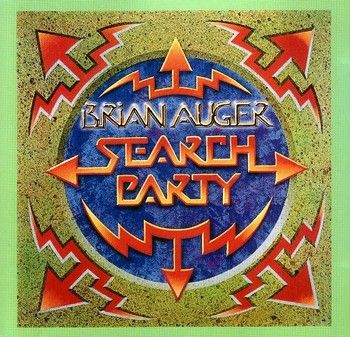
Brian Auger - Search Party - 1981 - Headfirst

Of all Brian Auger's recordings, Search Party may be the most aptly titled of them all. Recorded in San Francisco between 1977 and 1981, Search Party is a perfect example of the restlessness of Brian Auger at the turn of the two decades. On the one hand, his embrace of new keyboard technology made many things possible. Auger was capable of sounding like the keyboardist and a large horn section all by himself. As is evidenced here, his struggle was to embrace the new advances and utilize them as fully as possible without them swallowing his work whole. He walks that tightrope like Karl Wallenda. With the exception of the deep, funky fusion freak-out that is "Red Alert," Auger wrote virtually everything here. His compositions ramble from one side of the sonic spectrum to another. On "Sea of Tranquility," his three-chord intro that weaves in the bassline just ahead of the beat for a languid, shimmering effect is contrasted with the elegant, rhythmic fury of "Planet Earth Calling," and the sparse, Weather Report-like grooves in "Voyager 3." Speaking of this latter track (whose riff had been an Auger trademark for a decade by then), it's amazing to see the accolades showered on Weather Report for their innovation, when Auger was there so much earlier and so much deeper. This cut is just one example. This may be an exercise in restlessness, but clearly, Auger was never more focused on finding the right grooves than he was here. © Thom Jurek © 2012 Rovi Corporation. All Rights Reserved http://www.allmusic.com/album/search-party-r134780/review

Brian Auger, the "Grandfather of Acid Jazz", came out of the British Blues scene playing with artists like John Mayall. He was strongly influenced by organ players like Groove Holmes, Charles Earland, Jimmy Smith, Jack McDuff, Don Patterson, and many others. However, in his own right, Brian is equally as talented as any of these artists. In his early career, during the mid '60's in England, Brian was a "straight up jazz player". Later in his career he was accused by many music critics and fans of selling out, after he veered his music in a more R&B/jazz direction. At various times, he played with artists like Passport, the Average White Band and Les McCann and Eddie Harris. "Brian Auger is one of the best B-3 artists I have ever heard in my life. His technique is awesome and the amount of energy he generates is unparalleled and relentless. He is a tremendous talent with a wonderfully warm and compassionate personality, a combination that is hard to beat. He deserves all the accolades."- Herbie Hancock: "My Favorite rock artists are Van Morrison, Bonnie Raitt, Brian Auger and Loudon Wainwright."- Mose Allison: "Search Party" has been dismissed by some critics as being too commercial and "poppy" but it is still a great jazz rock album full of great probing grooves. Brian Auger has always tried to embrace the musical zeitgeist and has never sold out to commercialism. His music remains original and captivating, and he is one of the world's greatest keyboard players. The album is HR by A.O.O.F.C. Listen to Julie Driscoll/Brian Auger & The Trinity's "Streetnoise" album, Brian Auger's Oblivion Express' "Reinforcements" album, and Karma Auger's great "Blue Groove" album. Search this blog for related releases. [All tracks @ 320 Kbps: File size = 81.4 Mb]

N.B: A little note for Steely Dan fans. One of Brian Auger's favourite musicians is the late English multi-instrumentalist, Victor Feldman, who played on at least five Steely Dan albums, and one of Brian's favourite albums is "Aja".

SIDE ONE

1 Planet Earth Calling
2 Red Alert
3 Sea of Tranquility

SIDE TWO

4 Voyager 3
5 I'm Gone
6 Golden Gate

7 Black Octopus [Bonus Track on 2006 CD issue]

Tracks 1,3,4,6,& 7 composed by Brian Auger: Track 2 composed by Tony Newton: Track 5 composed by Mitch Tubman

MUSICIANS

Brian Auger - Moog Synthesizer, Hammond Organ, Piano, Electric Piano, Prophet 5 Synthesizer, Freeman String Symphoniser, Cabasa, Cowbell, Go Go Bell, Tambourine, Vocals, Background Vocals
George Doering, Ho Young Kim - Guitar
Paul Jackson, David McDaniels, Steve Evans - Bass
Patrick Gleeson - Synthesizer, Programming
Terry Baker, Michael Barsimanto, Mike Clark, Dave Crigger - Drums
Tom Donlinger - Drums, Gong, Wind Gong, Waterphone
Alex Ligertwood - Vocals, Background Vocals

BRIAN AUGER BIO

Brian Auger was raised in London, where he took up the keyboards as a child and began to hear jazz by way of the American Armed Forces Network and an older brother's record collection. By his teens, he was playing piano in clubs, and by 1962 he had formed the Brian Auger Trio with bass player Rick Laird and drummer Phil Knorra. In 1964, he won first place in the categories of "New Star" and "Jazz Piano" in a reader's poll in the Melody Maker music paper, but the same year he abandoned jazz for a more R&B-oriented approach and expanded his group to include John McLaughlin (guitar) and Glen Hughes (baritone saxophone) as the Brian Auger Trinity. This group split up at the end of 1964, and Auger moved over to Hammond B-3 organ, teaming with bass player Rick Brown and drummer Mickey Waller. After a few singles, he recorded his first LP on a session organized to spotlight blues singer Sonny Boy Williamson that featured his group, saxophonists Joe Harriott and Alan Skidmore, and guitarist Jimmy Page; it was Don't Send Me No Flowers, released in 1968. By mid-1965, Auger's band had grown to include guitarist Vic Briggs and vocalists Long John Baldry, Rod Stewart, and Julie Driscoll, and was renamed Steampacket. More a loosely organized musical revue than a group, Steampacket lasted a year before Stewart and Baldry left and the band split. Auger retained Driscoll and brought in bass player Dave Ambrose and drummer Clive Thacker to form a unit that was billed as Julie Driscoll, Brian Auger and the Trinity. Their first album, Open, was released in 1967 on Marmalade Records (owned by Auger's manager, Giorgio Gomelsky), but they didn't attract attention on record until the release of their single, "This Wheel's on Fire," (music and lyrics by Bob Dylan and Rick Danko) in the spring of 1968, which preceded the appearance of the song on the Band's Music from Big Pink album. The disc hit the top five in the U.K., after which Open belatedly reached the British charts. Auger and the Trinity recorded the instrumental album Definitely What! (1968) without Driscoll, then brought her back for the double-LP, Streetnoise (1968), which reached the U.S. charts on Atco Records shortly after a singles compilation, Jools & Brian, gave them their American debut on Capitol in 1969. Driscoll quit during a U.S. tour, but the Trinity stayed together long enough to record Befour (1970), which charted in the U.S. on RCA Records, before disbanding in July 1970. Auger put together a new band to play less commercial jazz-rock and facetiously called it the Oblivion Express, since he didn't think it would last; instead, it became his perennial band name. The initial unit was a quartet filled out by guitarist Jim Mullen, bass player Barry Dean, and drummer Robbie McIntosh. Their initial LP, Brian Auger's Oblivion Express, was released in 1971, followed later the same year by A Better Land, but their first U.S. chart LP was Second Wind in June 1972, the album that marked the debut of singer Alex Ligertwood with the band. Personnel changes occurred frequently, but the Oblivion Express continued to figure in the U.S. charts consistently over the next several years with Closer to It! (August 1973), Straight Ahead (March 1974), Live Oblivion, Vol. 1 (December 1974), Reinforcements (October 1975), and Live Oblivion, Vol. 2 (March 1976). Meanwhile, Auger had moved to the U.S. in 1975, eventually settling in the San Francisco Bay area. In the face of declining sales, he switched to Warner Bros. Records for Happiness Heartaches, which charted in February 1977. Encore, released in April 1978, was a live reunion with Julie Tippetts (née Driscoll) that marked the end of Auger's association with major record labels, after which he dissolved the Oblivion Express and recorded less often. In 1990, he teamed up with former Animals singer Eric Burdon, and the two toured together during the next four years, releasing Access All Areas together in 1993. In 1995, Auger put together a new Oblivion Express. As of 2000, the lineup consisted of his daughter, Savannah, on vocals, Chris Clermont on guitar, Dan Lutz on bass, and his son Karma on drums. This group issued the album Voices of Other Times on Miramar Records one week before Auger's 61st birthday. © William Ruhlmann © 2010 Rovi Corporation. All Rights Reserved http://www.allmusic.com/cg/amg.dll?p=amg&sql=11:fpfrxqr5ldhe~T1

29.11.11

Danny Gatton


Danny Gatton - Funhouse - 2004 - Big Mo Records

Danny Gatton was truly the guitarist's guitarist. Hailed by Guitar Player as the "World's Greatest Unknown Guitar Player" he was cherished by the likes of Les Paul, Joe Perry, Steve Vai, Joe Pass, Eric Clapton, Jeff Beck, Vince Gill, Albert Lee and countless other guitar luminaries. Until his tragic and untimely death in 1994 he was every guitar players best resource for a treasure of "hot licks". Never one to tour he remains an underground treasure for those "in the know". If you play the guitar, you owe it to yourself to check out this great instrumental genius. © http://www.cdbaby.com/cd/gatton07

The late Washington, D.C. born guitarist, Danny Gatton played rockabilly, R&B, pop, country, rock, and jazz equally well. This is a searing live set recorded at the Birchmere in Alexandria, VA. on June 10th and 11th, 1988. This is also the only official Danny Gatton release to feature the horn-driven jazz band, Funhouse who Danny played a regular weekly gig with in the Washington area. Danny described Funhouse as"the most stimulating musical experience I've ever had". The set also features legendary pedal steel guitarist Buddy Emmons. Listen to Danny's outstanding "Unfinished Business" and "88 Elmira St." albums. If you're unfamiliar with Danny Gatton's music, check out bigmo.com and look up Danny's catalogue. Danny was not only a great guitarist, but a truly brilliant musician. [All tracks @ 192 Kbps: File size = 79.7 Mb]

TRACKS / COMPOSERS

Blues on the Half Shell - C. Battistone
Momasita - Joe Henderson
Off the Top - Jimmie Smith
A Train - Billy Strayhorn
Land of Make Believe - Chuck Mangione
Smoke and Mirrors - C.Battistone
Pretty Blue - Danny Gatton
Red Label - Chris Battistone & Danny Gatton
Well You Needn't / Rock Candy - Thelonious Monk/Jack McDuff
Harlem Nocturne - Earle Hagen

N.B: Thanks,Danneau for the composers

MUSICIANS

Danny Gatton - Guitar
Billy Windsor - Guitar, Vocals
Buddy Emmons - Pedal Steel Guitar
John Previti - Upright Bass
Barry Hart - Drums
Bruce Swaim, Phil Berlin - Saxophone
Chris Battistone - Trumpet
John Jensen - Trombone

ABOUT DANNY GATTON

Guitar virtuoso Danny Gatton was known for the incredibly wide stylistic range of his playing; based in rockabilly, Gatton's musical vocabulary included R&B, pop, country, rock, and jazz, all of which he could play effectively. Gatton began playing at age nine, joining his first band, the Lancers, three years later. In 1960, Gatton pursued a jazz direction when he joined the Offbeats, where pianist/organist Dick Heintze proved to be one of Gatton's biggest influences. The band broke up four years later, and Gatton moved to Nashville to get into session work; there he met Roy Buchanan, who briefly became his roommate and taught him more about his instrument of choice. Eventually, Gatton built a reputation as a top-notch guitarist around his native Washington, D.C., area through his club performances. He recorded an album with his backing band the Fat Boys titled American Music in 1975 and followed it with Redneck Jazz in 1978. The band on the latter featured steel guitarist Buddy Emmons, drummer Dave Elliott, and eventual longtime cohorts Evan Johns on vocals and rhythm guitar and John Previti on bass. Gatton's albums led to offers from other musicians to join their bands. Lowell George extended an invitation after leaving Little Feat, but was found dead two days later. Gatton wound up touring with country singer Roger Miller and rockabilly artist Robert Gordon, giving him national exposure and a growing cult among guitar fans, who traded bootlegs of Gatton concerts. Gatton returned to Washington, D.C., to be near his friends and family while playing up and down the East Coast with several bands and doing session work. When Gatton purchased an old farmhouse in need of expensive renovations in 1988, he decided to pursue his music career more seriously. He released his first solo album since 1978 the next year, Unfinished Business, which drew notices from several guitar-oriented magazines as well as Rolling Stone. Elektra Records signed him during the summer, and he made his major-label debut in 1991 with the tremendously varied instrumental album 88 Elmira St. 1992 saw Gatton's first straight-ahead jazz album, New York Stories, recorded for none other than Blue Note. Gatton toured the nation solo for the first time in 1993 in support of Cruisin' Deuces, but its lack of success, coupled with the departure of A&R man Howard Thompson from Elektra, spelled the end of Gatton's association with the label. Gatton returned to session work to pay the bills, but sustained a further blow when rhythm guitarist Billy Windsor died of a heart attack early in 1994. Gatton collaborated with organ virtuoso Joey DeFrancesco on Relentless in May and toured Europe during the summer. Sadly, on October 4, 1994, Gatton locked himself in his garage and shot himself. He left behind no explanation. © Steve Huey © 2011 Rovi Corporation. All Rights Reserved http://www.allmusic.com/artist/danny-gatton-p4343/biography

BIO (WIKI)

Danny Gatton (September 4, 1945 – October 4, 1994) was an American guitarist who fused rockabilly, jazz, and country styles to create his own distinctive style of playing. A biography, Unfinished Business: The Life and Times of Danny Gatton by Ralph Heibutzki, was published in 2003. It has a voluminous discography. Gatton was ranked 63rd on Rolling Stone magazine's 100 Greatest Guitarists of all Time in 2003. On May 26, 2010, Gibson.com ranked Gatton as the 27th best guitarist of all time. Gatton was born in Washington, D.C. on September 4, 1945. His father, Daniel W. Gatton Sr., was a rhythm guitarist known for his unique percussive style, who left his musical career to raise his family in a more stable profession. The younger Gatton grew up to share his father's passion for the instrument. Danny Gatton began his career playing in bands while still a teenager. He began to attract wider interest in the 1970s while playing guitar and banjo for the group Liz Meyer & Friends. He made his name as a performer in the Washington, DC, area during the late 1970s and 1980s, both as a solo performer and with his Redneck Jazz Explosion, in which he would trade licks with virtuoso pedal steel player Buddy Emmons over a tight bass-drums rhythm which drew from blues, country, bebop and rockabilly influences. He also backed Robert Gordon and Roger Miller. He contributed a cover of "Apricot Brandy", a song by Elektra Records-supergroup Rhinoceros, to the 1990 compilation album Rubáiyát. Gatton's playing combined musical styles such as jazz, blues and rockabilly in an innovative fashion, and he was known by some as "the Telemaster" (a portmanteau of "Telecaster", Gatton's guitar of choice, and "Master"). He was also called "the world's greatest unknown guitarist". His most common nickname was "The Humbler", owing to his ability to "humble" or out-play anyone willing to go up against him in "head-cutting" jam sessions. It was Amos Garrett, guitar player for Maria Muldaur, who nicknamed Gatton "The Humbler". After a successful gig, Garrett would pull out a tape of Gatton and tell his band, "You think we played well tonight. Let's take a minute to listen to the Humble-lizer." A photo published in the October 2007 issue of Guitar Player magazine shows Gatton playing in front of a neon sign that says "Victims Wanted". However, he never achieved the commercial success that his talent arguably deserved. His album 88 Elmira Street was up for a 1990 Grammy Award for the song "Elmira Street Boogie" in the category Best Rock Instrumental Performance, but was beaten by Eric Johnson with "Cliffs of Dover". His skills were most appreciated by his peers such as Eric Clapton, Willie Nelson, Steve Earle, and his childhood idol Les Paul. During his career, Gatton appeared on stage with guitar heroes such as Alvin Lee and Jimmie Vaughan, the latter literally walking in one night on a Gatton club gig. There is also an apocryphal rumor about an on-stage "head-cutting" jam between Gatton and fellow Washington DC-area resident (and Telecaster player who also held the title of The Greatest Unknown Guitarist) Roy Buchanan. (Gatton had roomed with Buchanan in Nashville in the mid '60s and they became frequent "jamming partners", according to Guitar Player Magazine's October 2007 issue). He also performed with old teenage friend Jack Casady and Jorma Kaukonen (from Jefferson Airplane and Hot Tuna) as "Jack and the Degenerates". Those recordings were never commercially released, but live tapes are in circulation. In 1993, Gatton was invited by rocker Chris Isaak to record tracks for Isaak's San Francisco Days CD. Reports of where Gatton's playing can be heard on the CD vary, with unconfirmed reports placing him on either "Can't Do A Thing (To Stop Me)", "5:15" or "Beautiful Houses". Gatton reportedly brought a customized Fender Telecaster and Stratocaster to the recording session. He usually played a 1953 Fender Telecaster (Fender now manufactures a replica of his heavily customized instrument), with Joe Barden pick-ups and Fender Super 250L's, or Nickel Plated Steel (.010 to .046 with a .015 for the G) strings. For a slide, Gatton was known for using a beer bottle or mug (still half full of beer), without regard to whether it might spill all over stage or his guitar. During a 1991 performance on Austin City Limits, he followed this by wiping the guitar neck with a rag, then holding the rag between his fingers and the frets, all the while playing flawlessly. In the March 1989 issue of Guitar Player magazine, he said he preferred to use an Alka Seltzer bottle or long 6L6 vacuum tube as a slide, but that audiences liked the beer bottle. He did, however, only play slide overhand, citing his earlier training in steel guitar [Guitar Player, March 1989] He always played with a jazz-style teardrop pick, and was capable of intricate passages combining Bluegrass, bebop, and garage sounds, executed with amazing clarity and at dizzying speeds. His picking technique was a hybrid combination of pick and fingers, primarily his middle and ring fingers on his right hand. The basis of his picking technique was using banjo rolls; he was an accomplished banjo player and from that he learned the traditional (Scruggs style) right-hand technique. His forward roll consisted of a pick downstroke, then middle finger, then ring finger. His backward roll consisted of middle finger, then a pick upstroke, then a pick downstroke. He possessed a classical guitar left hand technique, thumb behind the neck, fretting with arched fingers. Also among his admirers are Les Paul, James Burton, Lenny Breau, Joe Bonamassa (whom Danny mentored when Joe was eleven years old), Vince Gill, Evan Johns (of "Evan Johns and His H-Bombs"), Chris Cheney, Bill Kirchen, Albert Lee, Steve Vai, Buckethead, Arlen Roth, Ricky Skaggs, Slash ("Guns N' Roses"), and Richie Sambora. On October 4, 1994, Gatton locked himself in his garage in Newburg, Maryland and shot himself. He left behind no explanation. In retrospect of his suicide, people around him have suggested that he may have gone in and out of depression for many years. On January 10, 11, and 12, 1995, Tramps club in New York organized a three-night Tribute to Danny Gatton featuring dozens of Gatton's musical admirers, the highlight of which was a twenty-minute performance by Les Paul, James Burton, and Albert Lee. Those shows (with all musicians performing for free) raised $25,000 for Gatton's widow and daughter.

23.11.11

Jack Bruce


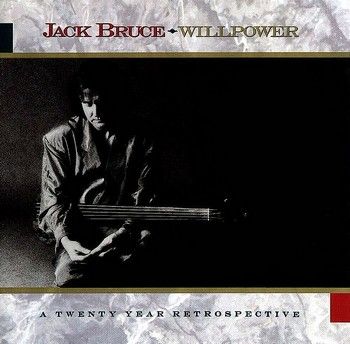
Jack Bruce - Willpower: A Twenty Year Retrospective - 1989 - Polydor

It was with John Mayall’s Bluebreakers that Eric Clapton first accrued status as Britain’s premier guitar hero. His groundbreaking electric blues playing made such an impact on fans that graffiti-type scribblings of “Clapton is God” became the favored slogan on London walls. His stint with the Bluesbreakers made him a star in the U.K., but with Cream, Clapton would establish himself as an icon on both sides of the Atlantic. It was with this super-trio that Clapton, bassist/vocalist Jack Bruce and drummer Ginger Baker would experience real commercial success and international recognition. From 1966 to 1968, Cream would record future classics like “Sunshine of Your Love”, “White Room”, “Crossroads”, “I Feel Free” and “Badge”, while at the same time pushing the boundaries of live performance with their improvisational prowess. Following the demise of Cream, Eric Clapton continued to thrive musically, and the hits of every subsequent decade have included his music—from songs like “Layla”, “I Shot the Sheriff”, and “Lay Down Sally” to “Forever Man”, “She’s Waiting” and “Running on Faith”, to “Tears in Heaven”, “Before You Accuse Me” and “Change the World”. Unlike Clapton, Jack Bruce hasn’t spent the last 30 years churning out readily accessible commercial songs, nor has he enjoyed high visibility on MTV and VH1—media that Clapton has used to great effect. For Bruce, commercial success seemingly began and ended with Cream. But while Clapton’s recent history has been well documented, to most, Jack Bruce’s is shrouded in mystery. A child prodigy, Jack Bruce was a multi-instrumentalist with a strong background in jazz and classical music who, at age 17, had won a scholarship to the Royal Scottish Academy of Music for cello and composition. By 1962, Bruce had landed his first important gig with Alexis Korner’s Blues, Inc., that included drummer Charlie Watts, who would later join the Rolling Stones. A year later, Bruce would join forces with organist Graham Bond, drummer Ginger Baker and guitarist John McLaughlin in what would later be known as the seminal Graham Bond Organization. A brief stint with the Bluesbreakers a few years later brought Bruce and Clapton together—a fateful meeting that would soon result in the successful association, Cream. With Cream, Eric Clapton would undoubtedly garner most of the attention, mainly out of his growing reputation as resident guitar god. But it was Jack Bruce’s presence that would prove paramount to the band’s impending success; he penned most of Cream’s original material with lyrical collaborator Pete Brown. Without Jack Bruce there would’ve been no “Sunshine of Your Love”, “White Room”, “I Feel Free” or “Deserted Cities of the Heart”, nor would Cream have had his distinctive, powerful vocals to propel most of the band’s catalog. In the end, it was Bruce who felt that he had strayed too far from his roots, and that perhaps Cream had gone as far as it possibly could. His desire to create new and untapped forms of music was too great to ignore, and his vision could never really be accomplished with Cream. So with the band’s demise, Jack Bruce dove head first into as many diverse collaborations as possible, with the goal of pushing the envelope of musical tradition. His ‘70s experience would commence after the release of his critically acclaimed solo debut, Songs for a Tailor (1969). Throughout the decade Bruce would work simultaneously in series of rock, jazz and classical formats, collaborating with Tony Williams Lifetime, jazz guitarist Larry Coryell, Frank Zappa, Lou Reed, Robin Trower, Leslie West and Corky Laing, while interspersing several fine solo records in the process. Ironically, Jack Bruce’s Willpower: A Twenty Year Retrospective, originally released in 1989, features none of the collaborative efforts previously mentioned, but focuses almost exclusively upon his ‘70s solo ventures. Of the album’s 17 tracks only two Cream tracks—the classic “White Room” and the haunting, open-tuned acoustic number “As You Said”—made the final cut. Eric Clapton also makes an appearance on two previously unreleased songs, “Ships in the Night” and the title track. Although recorded in 1987, “Willpower” sounds as if it jumped off of Disraeli Gears with Clapton reverting back to his classic Cream guitar sound. Recorded during the same sessions, “Ships in the Night” features a breathtaking duet between Bruce and vocalist Maggie Reilly, with Clapton rounding out the song with a blistering yet poignant guitar statement. In essence, the rest of Willpower lifts equally from Songs for a Tailor, Harmony Row (1971), Out of the Storm (1974), How’s Tricks? (1977) and his unreleased 1978 effort, Jet Set Jewel. You won’t find any catchy pop here; instead, what is unearthed are sophisticated, cleverly written and arranged compositions that are designed to move the listener. Nowhere is this more true than on Bruce’s Procol Harum-ish tour-de-force, “Songs for an Imaginary Western” and the somber piano ballad, “Can You Follow?” The other magic moments that follow are just as impressive including “Rope Ladder to the Moon”, “Morning Story” and the jazzy, brass-infused, “Never Tell Your Mother She’s Out of Tune”. Willpower: A Twenty Year Retrospective serves as a perfect introduction to those unfamiliar with Jack Bruce’s post-Cream endeavors. This disc offers up the best of Jack Bruce, the brilliant multi-instrumentalist, profound vocalist, visionary songwriter and a musician who, 30 years after his greatest success, is still on a mission—even if most aren’t privy to it. By & © Scott Hudson 10 September 2001 © 1999-2011 PopMatters.com. All rights reserved http://www.popmatters.com/pm/review/brucejack-willpower

Willpower was really designed to be Jack Bruce's Crossroads -- it followed Clapton's monumental box by a year, had similar artwork, a similar approach that blended selections from throughout his various projects, and the same remastering/production team. Thing is, Bruce didn't have the commercial success of Clapton, nor did he have the same sizable following (although his fans were indeed devoted), and critics just sorta gave up paying attention around 1970, so there wasn't much of an audience for Willpower upon its release in 1989. Nevertheless, it's a pretty terrific summary of Bruce's career, never staying too long in one particular period (even the selections from Cream lack such heavy hitters as "Sunshine of Your Love" or "I Feel Free"), and encapsulating how unpredictable and adventurous Bruce's career has been. This is not heavy on hits, even if it has such signature songs as "White Room," "Theme for an Imaginary Western," "Never Tell Your Mother She's Out of Tune," "How's Tricks," and "As You Said," because Bruce never had that many hits, even radio hits. But it does provide a through, representative introduction. © Stephen Thomas Erlewine © 2011 Rovi Corporation. All Rights Reserved http://www.allmusic.com/album/willpower-a-twenty-year-retrospective-r78140

Check out West, Bruce and Laing's "Whatever Turns You On", BBM (Baker, Bruce, & Moore) "Around The Next Dream", Jack Bruce's "I've Always Wanted To Do This", Jack Bruce's "Shadows In The Air", Jack Bruce's "Spirit - Live At The BBC", and The Jack Bruce Band's "Live '75 (aka Live at the Manchester Free Trade Hall)" albums on this blog [All tracks @ 192 Kbps: File size = 100 Mb]

TRACKS

1 Willpower 4:18
2 As You Said 4:21
3 White Room 5:01
4 Rope Ladder to the Moon 2:53
5 Theme for an Imaginary Western 3:28
6 Never Tell Your Mother She's Out of Tune 3:40
7 Can You Follow? 1:31
8 Morning Story 4:55
9 Folk Song 4:17
10 Keep It Down 3:45
11 Pieces of Mind 5:40
12 Without a Word 5:21
13 How's Tricks? 4:12
14 Jet Set Jewel 5:22
15 Mickey the Fiddler 5:24
16 The Best Is Still to Come 4:11
17 Ships in the Night 5:15

All tracks composed by Jack Bruce & Pete Brown except "Willpower" by Jack Bruce, Peter Brown, & Paul Westerberg

MUSICIANS

Jack Bruce - Bass, Acoustic Guitar, Keyboards, Organ, Piano, Harmonium, Cello, Vocals
George Harrison, Eric Clapton, Chris Spedding, Clem Clempson, Steve Hunter - Guitar
Hugh Burns - Guitar, Vocals
Peter Weihe - Acoustic Guitar
Tony Hymas - Keyboards, String Arrangements, Vocals
Ginger Baker - Drums, Hi Hat, Tympani
Jim Keltner, Jim Gordon, Jon Hiseman, Stuart Elliott, John Marshall - Drums
Simon Phillips - Drums, Vocals
Dick Heckstall-Smith, Art Themen - Soprano Sax & Tenor Sax
Henry Lowther, Harry Beckett - Trumpet
Felix Pappalardi - Viola, Vocals
Maggie Reilly - Vocals

BIO

Although some may be tempted to call multi-instrumentalist, songwriter, and composer Jack Bruce a rock & roll musician, blues and jazz are what this innovative musician really loves. As a result, these two genres are at the base of most of the recorded output from a career that goes back to the beginning of London's blues scene in 1962. In that year, he joined Alexis Korner's Blues Incorporated. Throughout the following decades and into the 21st century, Bruce has always been a supreme innovator, pushing himself into uncharted waters with his jazz and folk-rock compositions. Bruce's most famous songs are, in essence, blues tunes: "Sunshine of Your Love," "Strange Brew," "Politician," and "White Room." Bruce's best-known songs remain those he penned for Cream, the legendary blues-rock trio he formed with drummer Ginger Baker and guitarist Eric Clapton in July 1966. Baker and Bruce played together for five years before Clapton came along, and although their trio only lasted until November 1968, the group is credited with changing the face of rock & roll and bringing blues to a worldwide audience. Through their creative arrangements of classic blues tunes like Robert Johnson's "Crossroads," Skip James' "I'm So Glad," Willie Dixon's "Spoonful," and Albert King's "Born Under a Bad Sign," the group helped popularize blues-rock and led the way for similar groups that came about later on, like Led Zeppelin. Bruce was born May 14, 1943, in Lanarkshire, near Glasgow, Scotland. His father was a big jazz fan, and so he includes people like Louis Armstrong and Fats Waller among his earliest influences. He grew up listening to jazz and took up bass and cello as a teen. After three months at the Royal Scottish Academy of Music, he left, disgusted with the politics of music school. After traveling around Europe for a while, he settled into the early blues scene in 1962 in London, where he eventually met drummer Ginger Baker. He played with British blues pioneers Alexis Korner and Graham Bond before leaving in 1965 to join John Mayall's Bluesbreakers, whose guitarist was Eric Clapton. This gave him time to get his chops together without having to practice. With Manfred Mann, who he also played with before forming Cream, Bruce learned about the business of making hit songs. Cream's reputation for long, extended blues jams began at the Fillmore in San Francisco at a concert organized by impresario Bill Graham. Bruce later realized that Cream gave him a chance to succeed as a musician, and admitted that if it weren't for that group, he might never have escaped London. After Cream split up in November 1968, Bruce formed Jack Bruce & Friends with drummer Mitch Mitchell and guitarist Larry Coryell. Recording-wise, Bruce took a different tack away from blues and blues-rock, leaning more in a folk-rock direction with his solo albums Songs for a Tailor (1969), Harmony Row (1971), and Out of the Storm (1974). In 1970 and 1971, he worked with Tony Williams Lifetime before putting together another power trio with guitarist Leslie West and drummer Corky Laing in 1972, simply called West, Bruce & Laing. After working with Frank Zappa on his album Apostrophe in 1974, Bruce was at it again in 1975 with the Jack Bruce Band, whose members included keyboardist Carla Bley and guitarist Mick Taylor. Back on the road in 1980 with Jack Bruce & Friends, the latter version of the group included drummer Billy Cobham, keyboardist David Sancious, and guitarist Clem Clempson, formerly of Humble Pie. In the early '80s, he formed another trio, B.L.T., this time with guitarist Robin Trower, before working with Kip Hanrahan on his three solo albums. Bruce's bluesiest albums include all of his work with Cream, the albums B.L.T. and Truce with Trower, some of his West, Bruce & Laing recordings, and several of his albums from the 1980s and early '90s. These include Willpower (PolyGram, 1989); A Question of Time (Epic Records, 1989), which includes guest performances by Albert Collins, Nicky Hopkins, and Baker; as well as his CMP Records live career-retrospective album, recorded in Cologne, France, Cities of the Heart (1993). Bruce released Monkjack in 1995, an album of his jazz piano compositions which he performs with organist Bernie Worrell, issued on CMP. Bruce recorded the fierce Shadows in the Air in 2001 with a new band called the Cuicoland Express that included Vernon Reid, Worrell, and Robby Ameen, and guest artists Eric Clapton and Dr. John for the CMC International/Sanctuary imprint. Bruce reunited with Robin Trower for 2008's Seven Moons, released on Evangeline Records, following it with Seven Moons Live a year later in 2009. In 2010 Bruce joined the Tony Williams Lifetime Tribute Band with Reid, organist John Medeski, and drummer Cindy Blackman and toured in the late part of the year and in early 2011 to sold-out performances and rave critical reviews. Also in 2011, Pledge Music, a company that pairs fans and artists to fund projects, released Jack Bruce and the Cuicoland Express Live at the Milky Way, from a 2001 concert in Amsterdam. The high-quality recording was provided by Bruce's daughters, who designed the cover as well. © Richard Skelly © 2011 Rovi Corporation. All Rights Reserved http://www.allmusic.com/artist/jack-bruce-p3787/biography

3.10.11

Larry Carlton


Larry Carlton - Last Nite - 1986 - MCA

This live set is one of Larry Carlton's best recordings because the guitarist stretches himself. Joined by keyboardist Terry Trotter, bassist Abraham Laboriel, drummer John Robinson and percussionist Alex Acuna (and an occasional three-piece horn section), Carlton plays five- to eight-minute versions of four originals (including "The B.P. Blues"), plus Miles Davis's "So What" and "All Blues." Recorded at the Baked Potato in North Hollywood in California, Carlton is heard throughout at his very best, making one wonder why he has recorded so few albums of a similar spontaneous nature in his career. © Scott Yanow © 2011 Rovi Corporation. All Rights Reserved http://www.allmusic.com/album/last-nite-r136361

By the early 1980's, the guitar giant, Larry Carlton had completed over 3000 studio sessions, covering almost every musical style. Despite the high praise of critics over the last forty years, Larry has never really achieved true "Guitar Hero" status, on the level of Jimi Hendrix, Jan Akkerman, Robben Ford, BB King and many more great guitarists. Much of his work has been in the light-jazz fusion genre, playing with groups like Fourplay, The Crusaders, and The Yellowjackets. His relatively minor involvement in rock music would be a large factor in him not receiving more acclaim than he has. There's no need to mention Larry's guitar solos on Steely Dan's "Kid Charlemagne" and Third World Man", so I won't ! Rolling Stone magazine called Larry's solo on Steely Dan's "Kid Charlemagne" one of the three greatest guitar solos in rock history. Best not to mention that either ! "Last Nite" was recorded live at The Baked Potato, North Hollywood, CA on February 17, 1986, and includes some of Larry's best playing. Musicians include Marc Russo on sax, Abraham Laboriel on bass, and the great Rick Marotta on drums. The band covers Miles Davis' "So What" and "All Blues". The album is HR by A.O.O.F.C. Don't forget to check out Larry's work with the Partridge Family ! (lol) But seriously, Listen to Larry's great "Sapphire Blue" album, and the "No Substitutions: Live in Osaka" album with Steve Lukather. Some of his best session work can be heard on Joni Mitchell's classic "Court and Spark" album. [All tracks @ 320 Kbps: File size = 101 Mb]

TRACKS / COMPOSERS

A1 So What - Miles Davis 7:58
A2 Don´t Give It Up - Larry Carlton 5:30
A3 The B.P. Blues - Larry Carlton 7:50
B1 All Blues - Miles Davis 7:50
B2 Last Nite - Larry Carlton 7:58
B3 Emotions Wound Us So - Larry Carlton 6:17

MUSICIANS

Guitar – Larry Carlton
Bass – Abraham Laboriel
Keyboards – Terry Trotter
Drums – John Robinson, Rick Marotta (tracks: B1)
Percussion – Alex Acuna
Saxophone – Marc Russo
Trumpet – Gary Grant, Jerry Hey

BIO

The impressive career of jazz guitarist Larry Carlton dates back more than 30 years. During the 1970s and 1980s, Carlton served as a session player with some of the biggest and most respected names in the music industry, covering a vast musical terrain. Although often referred to as a "smooth" jazz musician, he aptly played everything from rock, pop, folk, and jazz to country, gospel, and R&B. His credits include work with the likes of John Lennon, Steely Dan, Joni Mitchell, Ray Charles, Barbra Streisand, and hundreds of others. At the height of his career as a session player, he contributed to more than 500 recordings per year and, in total, played on more than 100 gold albums. He furthermore worked on numerous film and television soundtracks, including the theme from the show Hill Street Blues, which won a Grammy Award in 1981 for Best Pop Instrumental Performance. All the while, Carlton gained recognition for his own work in the studio and on stage. After securing a major-label contract in 1977, he recorded several solo albums and, in March of 2002, at the 44th Annual Grammy Awards in Los Angeles, won the prize with fellow guitarist Steve Lukather for Best Pop Instrumental Album for No Substitutions: Live in Osaka. Lawrence Eugene Carlton was born on March 2, 1948, in Torrance, California. He displayed an aptitude for music early in life. Picking up the guitar at the age of six, he subsequently discovered jazz while in junior high school after hearing the album Moment of Truth by the Gerald Wilson Big Band, featuring guitarist Joe Pass. As a high school student, Carlton also gravitated toward players such as Barney Kessel, Wes Montgomery, and B. B. King, as well as saxophonist John Coltrane. He was influenced in particular by Coltrane’s classic album from 1962 entitled Ballads. Throughout the early 1960s, Carlton honed his skills playing club gigs and taking on occasional studio work in and around Los Angeles. In 1968 he released his debut album, With a Little Help from My Friends, which proved a success among critics and colleagues. Immediately, the entertainment/media industry took notice, and the young guitarist landed a job playing with a group of singers, the Going Thing, for radio and television commercials. In that same year Carlton toured with the group the Fifth Dimension. Then, during the middle of his second year as a professional, he was appointed musical director for the Emmy-nominated children’s television show Mrs. Alphabet. With this gig, Carlton additionally displayed his acting skills as "Larry Guitar," the show’s co-star. By 1970 Carton was regarded as a solid session player, and his early studio dates included work for pop stars such as Vicki Carr, Andy Williams, and the Partridge Family. In 1971 he accepted an offer to join the legendary jazz/rock group the Crusaders, remaining with the band until 1976. In between touring and making records with the Crusaders, Carlton, who released his second album, Singing/Playing, in 1973, continued to contribute to the recordings of other artists. Some of his most celebrated performances of the decade include Joni Mitchell’s 1974 album, Court and Spark, and Steely Dan’s 1976 recording, The Royal Scam. On both works, Carlton displayed his distinctive style—one marked by a bluesy sound and the use of a volume pedal. "I try to exercise the utmost taste at all times," he said of his technique to Guitar Player in February of 1977. "That’s where a lot of players falter—they try to impress too many people. I’m a subtle guitarist, but it pays off. The expression of honesty and emotion best describes what I try to do when I pick up my guitar." When Carlton’s association with the Crusaders ended, the guitarist opted to concentrate more on solo work and signed a recording contract with Warner Bros. Records. Remaining with the label through the early part of the 1980s, he released six albums during this period: Larry Carlton, Strikes Twice, Mr. 335 Live in Japan, Sleepwalk, Eight Times Up, and Friends. In 1985 Carlton moved to MCA Records, releasing three albums—Alone/But Never Alone, Discovery, and Last Night— the following year. The song "Minute by Minute," recorded with Michael McDonald, won Carlton his second Grammy Award in 1987 for Best Pop Instrumental Performance. Additionally, Carlton’s live album Last Night received a Grammy Award nomination for Best Jazz Fusion Performance. In 1988, while working on his next album for MCA, Carlton was shot in the neck outside his Los Angeles-area home, leaving him temporarily without control of his left arm. Fortunately, a positive attitude and intensive therapy allowed him to make a full recovery. The event also encouraged Carlton to form Helping Innocent People (HIP), a nonprofit organization designed to aid the victims of random gun violence. "It made me realize that we’re all the same, that good and bad things can happen at any time," he told Los Angeles Times writer Bill Kohlhaase of the incident. "It was a very humbling experience. I was fortunate that nine months after the shooting I was back to playing, if not better than ever, and had full use of my arm." Just one year after the shooting, in 1989, Carlton released the Grammy Award-nominated set On Solid Ground. In 1990 MCA acquired GRP Records, placing all the label’s jazz artists on the new subsidiary. That year, GRP released an album of Carlton’s "greatest hits" for MCA entitled Collection Vol. 1. His next effort, the 1992 poporiented jazz set Kid Gloves, saw Carlton for the first time combining electric and acoustic elements on the same album. Afterwards, Carlton resumed work on a blues-based album he had begun back in 1991 with drummer John Ferraro, keyboardist Matt Rollings, bassist Michael Rhodes, and harmonica player Terry McMillan. He took six original tracks to Nashville, met up once more with Rhodes and McMillan, as well as new drummer Chris Layton, and recorded four new songs. The resulting Renegade Gentlemen appeared in 1993. Following an extensive tour, Carlton teamed with Four play guitarist Lee Ritenour for the album Larry and Lee. Released in 1995, it garnered Carlton another Grammy Award nomination. In 1996 he returned with The Gift, followed by the release of Collection Vol. 2 in 1997. That same year, he accepted an offer to join Fourplay, as Ritenour had departed in order to form his own label. He recorded three albums with the band—including 4 in 1998, the Christmas album Snowbound in 1999, and Yes, Please! in 2000—while simultaneously pursuing his solo work. Returning to Warner Bros., he released Fingerprints in 2000. The following year, Carlton and longtime friend/guitarist Steve Lukather toured for three weeks together in Japan. The highlights of these concerts were thereafter released by the Favored Nations label under the title No Substitutions: Live in Osaka, which won a Grammy Award the following year. Back in 1996, Carlton relocated from his Hollywood Hills home to the Nashville area in order to live closer to Lebanon, Tennessee, home of his children from a previous marriage, and to fulfill a longtime dream of living in the country. "I knew in my 20s that I wanted to eventually live a more rural lifestyle," he explained to Michael McCall in the Los Angeles Times. "I was born and raised in Torrance, but my parents are Okies. As a kid, I’d go on vacations to farms in southeastern Oklahoma. We’d fish and hunt, and I’d ride horses and play along the rivers and creeks. I always loved that, and I wanted to have that kind of a life as an adult." Carlton and his second wife, Michele Pillar, a former Contemporary Christian singer, make their home on a 100-acre farm in the community of Lieper’s Fork, Tennessee. Besides assuming a simpler way of life, Carlton also found the music scene in Nashville much more fulfilling. "In the music community, and especially the song-writing community, it’s just an open book here," Carlton told Los Angeles Times contributor Josef Woodard. "They welcome you, they appreciate you and want to interact with you.… It’s not clique-y like it can be in Los Angeles. Consequently, there are many opportunities to interact with people who you think are great." Although he does not miss living in Los Angeles, Carlton nevertheless looks forward to frequent visits to play gigs and spend time with his parents and friends. © 2011 Answers Corporation http://www.answers.com/topic/larry-carlton

14.7.11

T Lavitz


T Lavitz - From The West - 1987 - Passport Jazz

The late Terry "T" Lavitz (b.April 16, 1956, in New Jersey) was perhaps best known as the keyboardist for the jazz rock band, the Dixie Dregs. He received two prestigious awards from Keyboard magazine - "Best New Talent" in 1981 and "Jazz Keyboard Player of the Year" in 1992. He was a classically trained acoustic player, and collaborated with many great musicians including Widespread Panic (described by T as Miles Davis meets the Grateful Dead), Jefferson Starship, The Bluesbusters, Nils Lofgren, Billy Cobham, Jeff Berlin, Scott Henderson, Steve Smith and Danny Gottlieb. He was also the initial musical catalyst for the formation of the Grateful Dead cover band, Jazz Is Dead, arising from his experience opening for organist Melvin Seals' San Francisco Bay Area rock band JGB, formed to preserve the memory of Jerry Garcia and his music. T learned a lot about composition from Steve Morse, and loved albums like Pat Metheny's "Rioting". He was also a lifelong fan of the jazz fusion giants, Weather Report, and loved artists like Stevie Wonder, Herbie Hancock, George Duke, and Tower of Power and Santana's Chester Thompson. However, as regards keyboard skills, T Lavitz was as talented as any of the artists previously mentioned, and should always be remembered as one of the great jazz-rock/fusion keyboardists. "From The West" is a good instrumental/vocal album, and amply demonstrates T's wonderful keyboard skills. As well as T's own compositions and collaborations with G.Gray and Jeff Richman, he also includes a cover of Rogers & Hart's "Spring Is Here". Guest artists include Maria Muldaur, Bruce Hornsby, and many more. Try and listen to Paul Barrere's "On My Own Two Feet" album featuring Terry "T" Lavitz, and "T" Lavitz's own "Electric" album. Jazz Is Dead's "Blue Light Rain" album is also worth hearing

TRACKS / COMPOSERS

1. Tree People - Lavitz
2. Saturn Return - Lavitz
3. So Close - Lavitz, G.Gray
4. Tears - Lavitz
5. Reunion - Lavitz, J. Richman
6. Out Of The Blue - Lavitz, G.Gray
7. Spring Is Here - Rogers, Hart
8. The Walk - Lavitz
9. Tears (Reprise) - Lavitz

MUSICIANS

Terry "T" Lavitz - Keyboards, Piano
Pat Buchanan - Electric Guitar, Vocals, Vocal Arrangement
Jeff Richman - Electric Guitar
C. Lanzbom - Acoustic Guitar
Dave La Rue - Bass
Dominic Genova - Acoustic Bass
Mark O'Connor - Mandolin, Violin
Dave Samuels - Vibraphone
Rod Morgenstein, Danny Gottlieb - Drums
Brad Dutz - Percussion
Kim Parks - Saxophone, Flute
Bruce Hornsby - Accordion
Maria Muldaur, Alex Ligertwood, Willin' - Vocals

BIO (WIKI)

Terry "T" Lavitz (April 16, 1956 – October 7, 2010) was an American jazz-rock/fusion keyboardist, composer and producer. He is best known for his work with the Dixie Dregs and Jazz Is Dead. Born on April 16, 1956, Lavitz grew up in New Jersey. He started taking piano lessons at the age of seven and was offered a scholarship at the Interlochen Arts Academy in Michigan where he studied before attending the University of Miami's School of Music. While in his senior year at the UM he was asked to join the Dixie Dregs. He accepted the invitation and played his first show in January 1979. 'Dregs of the Earth', released in 1980, was the first Dregs album he could be heard on. In 1981 he won the 'Best New Talent' category of Keyboard Magazine's Annual Readers Poll. The Dregs broke up in January 1983 and T Lavitz, Rod Morgenstein and Andy West went on tour with former Little Feat guitarist/singer Paul Barrere. 'Extended Play', a five song EP, was released in 1984. The album also featured future Dregs and Steve Morse Band bass player Dave LaRue. In 1985 Lavitz joined the Bluesbusters, a blues-rock quintet also featuring Paul Barrere, guitarist/singer Catfish Hodge, bass player Freebo (Bonnie Raitt) and drummer Larry Zack. They released two albums and toured extensively. His first solo album 'Storytime' was released in 1986. The critically acclaimed 'Players' album with Jeff Berlin, Steve Smith and Scott Henderson was released in 1987. The Dregs reunited in 1988 to record two songs as a demonstration CD for the Ensoniq company. A short tour followed with Dave LaRue replacing Andy West. Later that year T Lavitz joined the reformed Mother's Finest on tour. Tours with Bill Bruford and the Billy Cobham Trio followed. In 1991 T Lavitz was invited to join Widespread Panic after playing keyboards on their first album for the revived Capricorn Records label. Lavitz toured with Widespread Panic from April 1991 through the end of that year, but left the band as the Dixie Dregs reunited and re-signed with Capricorn Records in 1992. The re-formed Dixie Dregs shared a bill with Widespread Panic at two events in February 1992 with Lavitz performing with both bands; these were his final two appearances as the keyboardist for Widespread Panic. The Dixie Dregs recorded 'Bring 'Em Back Alive' during a tour in February. Violinist Allen Sloan, who had become an anesthesiologist, was unable to continue touring and was replaced by former Mahavishnu Orchestra violinist Jerry Goodman. That year T Lavitz won the 'Jazz Keyboardist of the Year' category of Keyboard Magazine's Annual Readers Poll. 'Full Circle', the first Dregs studio album in 12 years, was released in 1994. Another solo album 'Gossip' was recorded before T joined Jefferson Starship in 1996. Jazz Is Dead was formed at the end of 1997 with T Lavitz, Jimmy Herring, Alphonso Johnson and Billy Cobham interpreting the Grateful Dead's music in a jazzy, instrumental vein. "Blue Light Rain" was recorded during the first tour in 1998. Billy Cobham was replaced by Rod Morgenstein and Jeff Sipe by the time the second album 'Laughing Water' was released. The Dixie Dregs did a short tour in late August 1999. The band was joined by original members Andy West and Allen Sloan. Lavitz continued touring with Jazz Is Dead and also whenever possible with the Dixie Dregs. In the first part of the new millennium T Lavitz took part in several projects. 'Endangered Species', with Jimmy Herring, Richie Hayward and Kenny Gradney was released in 2001, 'Cosmic Farm', with Rob Wasserman, Craig Erickson and Jeff Sipe, was released in 2005 and 'Boston T Party', with Dennis Chambers, Jeff Berlin and Dave Fiuczynski, was released in 2006. In the summer of 2006 he began teaching at the Summer Performance Program at the Berklee College of Music, Boston, MA. Lavitz died on October 7, 2010.

MORE

Keyboard player T Lavitz joined the Dixie Dregs (aka the Dregs) in 1979, just after Night of the Living Dregs. He played with the band until it broke up in 1982. Lavitz issued a number of independent label releases in a jazz-rock vein during the remainder of the ‘80s and into the ‘90s, including Extended Play (1984), Story Time (1986), From the West (1987), T Lavitz and the Bad Habitz (1989), Mood Swing (1991), and Gossip (1996). During the ‘90s he also toured and recorded with a re-formed Dixie Dregs, appearing on the band’s 1992 live effort Bring ‘Em Back Alive and the studio album Full Circle, released two years later. The ‘90s also saw Lavitz playing with Widespread Panic and Jefferson Starship, and forming Jazz Is Dead, a fusion-oriented quartet that put its own spin on Grateful Dead material, with guitarist Jimmy Herring, bassist Alphonso Johnson, and drummer Billy Cobham. During the new millennium Lavitz participated in some additional notable collaborative projects, as can be heard on 2001’s Endangered Species (featuring guitarist Herring and the Little Feat rhythm section of Richie Hayward on drums and Kenny Gradney on bass) and 2006’s Boston T Party (with drummer Dennis Chambers, bassist Jeff Berlin, and guitarist Dave Fiuczynski), the latter featuring Lavitz not only as keyboardist but also as composer of most of the disc’s material. In the latter half of the 2000s Lavitz served as a faculty member of the Berklee College of Music and issued a new solo recording, Electric (2009). T Lavitz died unexpectedly in his sleep on October 7, 2010. © John Bush © 2011 Rovi Corporation. All Rights Reserved http://www.allmusic.com/artist/t-lavitz-p6952/biography

3.9.10

Jan Akkerman & Thijs van Leer


Photobucket

Jan Akkerman & Thijs van Leer - Focus - 1985 - Vertigo

Actually, this is not a Focus album but an Akkerman/Van Leer album, but since this duo of geniuses who knew each other so well but didn't always look eye to eye despite their shared musical interests in jazz-rock, prog and classical music were keen on the idea of taking back the essential Focus sound and refurbish it in the 80s era of digital sonic explorations, naming this album "Focus" happened to be logical and natural. This is the sort of thing that Focus should have released after the amazing "Hamburg" experiment, since the band finally suffered from inconsistency and loss of creative energy after reaching such a tremendous apex. Something is going terribly wrong with a great band when a compilation album ("Ship") immensely surpasses a studio effort ("Mother") and then, the following album's few highlights are written by newcomers. This "Focus" album conceived by this new encounter of Dutch progressive minds is the definitive testimony of the musical imagination that Focus had still in store but took so many years to take shape and meet its material reality. So, once you get this album and are treated with the stylish romanticism of 'Russian Roulette' and the lovely, refereshing flavors of 'King Kong', you can almost touch the creative vigor in pure Focus style. Van Leer remembers his old-time partner's vibe so well that you might bet that he wrote Akkerman's polished guitar lines for 'Russian Roulette' in his sleep; meanwhile, Akkerman seems to have Van had Leer's agile flute playing physically present in front of him while writing 'King Kong'. Nevermind if the digital keyboards are overwhelming in places or if the use of rhythm computers and an electronic drum kit feels "cold" or "lacks the human touch". The chemistry is there, unhidden, revealing in the wide open, and fueled with authentic creativity. 'Le Tango' is a track I find less brilliant than the first two, but it is still entertaining and well-constructed: it features Argentinean airs among its solid jazz-pog displays, of course. Adding rockier guitar parts (both electric and synth guitars) and exotic moods, 'Indian Summer' provides a captivating exercise on jazz-rock in its most refined form. Another rocker is 'Olé Judy', a piece that might as well have been expanded 1 minute longer since its catchiness doesn't seem to wear out yet while we get to the fade-out. I own both the vinyl and CD versions of this album, so I'm aware that the two long tracks are even longer in the latter edition. I admit that I find the 'Beethoven's Revenge' modern jazz-funky jam a bit too exhausting in its 18+ minute incarnation: it worked better for me in its 10+ minute vinyl version. On the other hand, the captivating lyricism of 'Who's Calling?' does resist the longer CD format quite efficiently. This is romantic, eerie prog rock at its best, Focus-style and all. It might have been entitled 'Focus VI' or something, since its introspective intimacy makes it quite related to the spirit 'Focus V' (from the "Ship" album). Overall conclusion: a very good album that provides the perfect testament of the Akkerman/Van Leer partnership, a long overdue progressive tribute to the significance of Focus that our friends Jan and Thijs paid from the bottom of their hearts. Better, way better than what other old 70s prog bands were doing at the time. **** Cesar Inca Special Collaborator Honorary Collaborator Cesar Inca 4/5 2010-6-7 From Progarchives.com, the ultimate progressive rock music website © Prog Archives, All rights reserved http://www.progarchives.com/Review.asp?id=285536

This is not a Focus album. The album is called "Focus", and is an 1985 collaboration between the two main Focus members, Jan Akkerman and Thijs van Leer. As is usual from these two artists, the musicianship is wonderful, and the album is a joy to listen to. N.B: Tracks are @ 320 kbps. Listen to Focus' magnificent "Live At The Rainbow" album, Jan Akkerman's "Tabernakel" album, and Thijs van Leer's "Introspection" album.

TRACKS / COMPOSER (S)

A1 Russian Roulette - Thijs Van Leer 5:54
A2 King Kong - Jan Akkerman 3:55
A3 Le Tango - Roselie Peters, Thijs Van Leer 4:55
A4 Indian Summer - Jan Akkerman 5:50

B1 Beethoven's Revenge (Bach-One-Turbo-Overdrive) - Jan Akkerman 10:47
B2 Ole Judy - Thijs Van Leer 3:52
B3 Who's Calling - Jan Akkerman, Thijs Van Leer 7:30

MUSICIANS

Jan Akkerman - Guitar, Synthesizer
Thijs Van Leer - Keyboards, Flute, Vocals
Tato Gomez - Bass (tracks: A1, A4)
Ruud Jacobs - Bass [Big Bass] - (tracks: B1)
Ed Staring - Synthesizer [Fairlight Synthesizer Programming]
Sergio Castillo - Drums [Fills] - (tracks: A3)
Ustad Zamir Ahmad Khan -Tabla (tracks: A4)

FOCUS (BIO)

A former Amsterdam Conservatory student, Thijs van Leer (keyboards/flute/vocals) with Martin Dresden (bass) and Hans Cleuver (drums) formed a trio in 1969, they backed several Dutch singers in the late 1960's. At one of their rehearsals Brainbox guitar virtuoso Jan Akkerman stepped in and jammed along with them. The manager of Brainbox, John van Setten found out and kicked him out of the band. This led to Akkerman joining Focus. In 1970 they backed the Dutch version of Hair, they can also be heard on the Dutch Hair album. After their work for the musical they named their band Focus. A few months later Focus recorded their debut album, In And Out Of Focus, released in 1970. The album consists of both vocal and instrumental tracks. As a single the non-album track, House Of The King, was released which became a big hit. After a few months Akkerman wanted to rejoin with his Brainbox mate Pierre van der Linden to form a new band. Van Leer was asked to join them, or to stay with his own trio. He decided to join them. They also asked Cyril Havermans to play bass and do the vocals. This left Dresden and Cleuver aside. With this new line up they worked on their second album. It was produced by Mike Vernon, who would remain their producer throughout their whole career. This was Focus II, or Moving Waves (the name of the album outside the Netherlands). The single Hocus Pocus, with some frantic yodeling and brilliant guitar work, became an enormous hit just as the album did. Focus toured the Netherlands and England and gained a lot of popularity. As another single Sylvia was released and became a hit also. In the summer of 1971 there was also a change in the line up. Cyril Havermans left the band to pursue a solo career. His place was taken by Bert Ruiter. With him as a new member they started recording their third album, Focus 3. it was supposed to be a single album, but so much material was recorded in a three week period they decided to make it a double album project. This album went straight to number one in the Dutch charts. And then in early 2002 drummer Ruben van Roon contacted guitarist Jan Dumée and bass player Bobby Jacobs to form a Focus tribute band, which they call Hocus Pocus. The rehearse together and when the time is right they invite Thijs van Leer to come over and play with them. Van Leer comes over and is so much impressed that they decide to do a few concerts together. In stead of Hocus Pocus they band name is changed to Focus. They play all over the world at several festivals, and start to record an album. By this time Ruben van Roon has left the band because of personal circumstances and is replaced by Bert Smaak. In the fall of 2002 a new Focus album is released. In 2004 an album with BBC recordings form 1976 is released. On this album tracks are featured that have never been released by Focus before. Even more remarkable is the return of Pierre van der Linden in Focus the same year. In 2006 Jan Dumée leaves the band, he starts the band On The Rocks with former Uriah Heep singer John Lawton. He is replaced by Niels van der Steenhoven. The band is also working on a new album New Skin, which is released at the end of 2006. - (sources: Oor Popencyclopedie, Nationaal Pop Instituut, Album sleeves, Nederpop)

JAN AKKERMAN BIO

A musician of nearly legendary prowess, Jan Akkerman for a time eclipsed Eric Clapton, Jimmy Page, and Jeff Beck among reader polls in England as the top guitarist in the world. Akkerman was born in Amsterdam, Holland, and showed his musical inclinations early, taking up the guitar while still in grade school. His taste and interests were extraordinarily wide-ranging, from pop/rock to classical, with room for blues, Latin, and other influences. He joined his first band, Johnny & His Cellar Rockers, in 1958, at age 11, which included his boyhood friend Pierre van der Linden on drums. Later on, the two were members of the Hunters, an instrumental group whose sound was heavily influenced by that of the Shadows. He acquired a special interest in the lute while on a visit to England during the mid-'60s, during which he saw a performance by legendary classical guitarist Julian Bream, whose repertoire of medieval works also fascinated Akkerman. This interest, which broadened to embrace a fixation on medieval England and its countryside, later manifested itself in such works as "Elspeth of Nottingham" from Focus III. During the late '60s, Akkerman, van der Linden, bassist Bert Ruiter, and singer Kaz Lux formed Brainbox, who were good enough to get a recording contract with Parlophone Records. He was involved with an early incarnation of the group Focus, founded by conservatory-trained flutist Thijs Van Leer, but didn't join until after that group had issued its unsuccessful debut album — he took Van der Linden with him from Brainbox and, with Van Leer and bassist Cyril Havermans (later succeeded by Ruiter) from the original Focus, formed a new group of that name. With Akkerman's virtuoso guitar work and arrangements coupled to Van Leer's classical influence (and his yodeling on their breakthrough hit, "Hocus Pocus"), the new group found a large international audience beginning in 1972, which transformed Akkerman into a superstar guitarist. His solo career actually dated from 1968, though his attempt at a solo album, later titled Guitar for Sale — containing his covers of numbers such as "What'd I Say," "Ode to Billy Joe," and "Green Onions" — was so primitive by the standards of the time that it was deemed unreleasable until Akkerman started topping reader surveys in the mid-'70s. Profile, released in 1972 after he'd begun making some headway with his reputation, also dated from 1969 and his days with Brainbox. Akkerman's first real solo album reflecting his music and interests at the time appeared in 1974, in the form of Tabernakel, which was recorded during the summer of that year at Atlantic Recording Studios in New York — having finally acquired a medieval lute of his own, he taught himself to play it and the results comprise more than half of this LP, made up of authentic medieval music and originals composed in a medieval mode. It was certainly the most unusual record ever to feature the playing of Tim Bogart (bass) and Carmine Appice (drums), as well as soul drummer Ray Lucas. After leaving Focus in 1976, Akkerman began releasing a stream of solo albums, which frequently embraced classical, jazz, and blues, and started leading his own bands. Much of his work during the 1980s wasn't released officially outside of Holland, but his periodic recordings with Van Leer, coupled with efforts to revive Focus with its two major stars, kept his name circulating in international music circles. The only problem that Akkerman faces derives from the sheer eclecticism of his work, which makes him very difficult to categorize — two different branches of Tower Records in the same city listed him as a jazz and a rock artist, respectively, but one could just as easily make a claim for him as a classical artist. © Bruce Eder © 2010 Rovi Corporation. All Rights Reserved http://www.allmusic.com/cg/amg.dll?p=amg&sql=11:kifqxqw5ldae~T1

THIJS VAN LEER BIO (WIKIPEDIA)

Thijs van Leer (born 31 March 1948, Amsterdam) is a Dutch musician, singer and composer, best known for heading the Dutch progressive rock band, Focus, as primary vocalist, Hammond organ player, and flautist. He also sings, yodels and whistles. In his later years, Van Leer went on to release many solo albums which were also classical music and jazz-based. Van Leer received his first flute at the age of eleven from his father, a classical flautist. He studied History of Art at Amsterdam University; after when he began studying flute and composition at the Amsterdam Conservatorium. He received a degree for flute from Geneva Conservatoire and also studied piano, orchestration (with Rogier van Otterloo) and organ (with Anthon van der Horst). While still at school, van Leer led a jazz group on piano. He went on to play the flute and sing with the Shaffy cabaret group. In 1969 he joined Martijn Dresden (bass) and Hans Cleuver (drums) to form a trio that covered songs by Traffic and backed other Dutch musicians, as well as playing their own material. Later in the year guitarist Jan Akkerman joined, completing the initial line-up of Focus. They released several albums in the early 1970s. Van Leer headed Focus through several line-up changes, and by 1977 he was the only remaining original member. The group disbanded in 1978. In 1985, van Leer briefly reunited with Akkerman to make Focus 1985. In 2002, van Leer created a new Focus line-up, which has since released the albums Focus 8 and Focus 9 / New Skin. A British tour was undertaken in spring 2006. He also appeared as a guest musician on the album, Into the Electric Castle, by Arjen Anthony Lucassen's musical project Ayreon. In 2008 Explore Multimedia released van Leer's first solo album in nearly a decade, The Home Concert. The album featured recordings made in his living room as he played material for Focus 9. The album is exclusively available via the Internet, and at concerts.