A.O.O.F.C
recommends
Mizar6

babydancing


Get this crazy baby off my head!

Showing posts with label Nineties Jazz Fusion. Show all posts

5.9.14

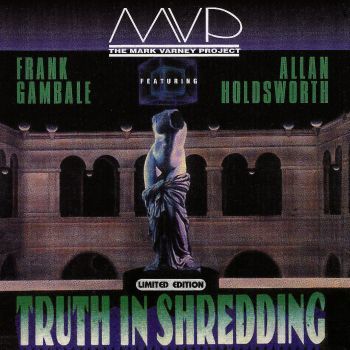
Mark Varney Project (MVP) (Feat. Allan Holdsworth & Frank Gambale)


Mark Varney Project (MVP) - Truth In Shredding (Feat. Allan Holdsworth Frank Gambale) - 1990 - Legato Records

MVP stands for the Mark Varney Project. He has been a longtime recruiter of guitar speed demons such as Yngwie Malmsteen and Tony Macalpine. Here he brings together accomplished and established players. It is a very intense fusion recording that can be an intimidating listen both in terms of technique and the consistent intensity maintained throughout. The metal-influenced Frank Gambale is one of the pioneers of the sweep-picking technique that allows him to generate mind-numbing speed.Allan Holdsworth proves a good counterpoint, as his unique approach also produces lightning-quick runs. Guitar fans, especially the younger crowd, will appreciate the extended solos and lack of any commercial hooks here. It is basically a blowing date; however, it pales in comparison to a jazz blowing date because the players quickly run out of ideas and continuously revert back to familiar territory. This is not to say that the musicians don't deserve credit for their playing -- quite the contrary; it's just that the abundance of linear scales and repetitive patterns proves tiresome. Out of the two, Gambale seems a bit more inspired and more comfortable in this setting. Tommy Brechtlein turns in a fine performance on drums, especially when given some space on "Bathsheba." If taken in short doses, the impact of this recording is more effective. Recommended for fans ranging from fusion to progressive to metal. © Robert Taylor © 2014 AllMusic, a division of All Media Network, LLC. | All Rights Reserved

"Truth in Shredding" is the first studio album by The Mark Varney Project (MVP). The band was a short-lived collaborative concept devised by Mark Varney (brother of Mike Varney, the founder of Shrapnel Records), featuring guitarists Frank Gambale and Allan Holdsworth. "New Boots" was composed by Frank Gambale. The other six tracks are covers of jazz fusion compositions by Randy Brecker, Michael Brecker, Wayne Shorter, and Chick Corea. Mark Varney has said "When I approached Frank (Gambale) with the MVP concept and asked him if he would do it if I could bring Allan (Holdsworth) on board, he jumped at the chance, especially since I let him pretty much choose his favorite fusion tracks and players he was comfortable with. I was fortunate that I didn't have to do much convincing of Allan since, for the most part, he liked the tunes and respected Frank's playing. To this day, I believe both count TIS as one of their favorite projects." "Truth In Shredding" is a superb jazz fusion album by two guitar giants, and HR by this blog. Listen to Frank Gambale's "The Great Explorers" album, and Allan Holdsworth's "Road Games" album. You should also check out Allan Holdsworth's great "I.O.U. Band Live" album [All tracks @ 320 Kbps: File size = 136 Mb]

TRACKS / COMPOSERS

1. Rocks - Randy Brecker 7:01
2. Humpty Dumpty - Chick Corea 6:31
3. The Fall - Wayne Shorter 8:15
4. Not Ethiopia - Michael Brecker 9:36
5. New Boots - Frank Gambale 6:24
6. Ana Maria - Wayne Shorter 9:15
7. Bathsheba - Michael Brecker 8:16

MUSICIANS

Frank Gambale – lead electric guitar, acoustic guitar, rhythm guitar
Allan Holdsworth – lead electric guitar, SynthAxe
Jimmy Earl – bass guitar
Freddy Ravel – keyboards
Tom Brechtlein – drums
Steve Tavaglione – saxophone, EWI

FRANK GAMBALE (BIO)

Frank Gambale is best-known for his fiery work with Chick Corea's Elektric Band. He was a student at the Guitar Institute of Technology while in his early twenties, wrote instructional books, and during 1983-1986, was on the school's faculty. He joined Corea in 1986, has also performed with Steve Smith's Vital Information, and has been a leader on his own rock-oriented dates for JVC. A collaboration with bassist Stu Hamm and drummer Steve Smith was another fruitful venture for Gambale, spawning several discs between the three that became increasingly ambitious as time went by. © Scott Yanow © 2010 Rovi Corporation. All Rights Reserved http://www.allmusic.com/artist/frank-gambale-p6551

ALLAN HOLDSWORTH (BIO)

Guitarist Allan Holdsworth is widely considered to be one of the finest instrumentalists in all of jazz fusion, yet has never truly received the recognition that he so rightfully deserves. Born on August 6, 1946, in Bradford, Yorkshire, Holdsworth was originally taught music by his father, who was a pianist. First a saxophone player, Holdsworth didn't pick up the guitar until he was 17 years old, but learned the instrument quickly. After playing in local outfits (in addition to learning the violin), Holdsworth relocated to London, where he was taken under the wing of saxophonist Ray Warleigh. By 1972, Holdsworth had joined progressive rockers Tempest, appearing on the group's self-titled debut a year later before joining Soft Machine in December 1973 -- and radically changing the latter outfit's sound to guitar-based fusion in the process. U.S. drummer Tony Williams discovered Holdsworth around this time, which led to an invite for the up-and-coming guitarist to replace John McLaughlin in Williams' Lifetime project -- Holdsworth abruptly left Soft Machine in March of 1975, subsequently appearing on the Williams recordings Believe It and Million Dollar Legs. But Holdsworth's union with Williams was a brief one, as the guitarist joined up with French-English prog rockers Gong for such albums as 1976's Gazeuse! (released as Expresso in the U.S.) and 1978's Expresso II, in addition to guesting on recordings by Jean-Luc Ponty, Bill Bruford, Gordon Beck, Jack Bruce, and UK. Also in the late '70s, Holdsworth launched a solo career, which over the years has seen the release of nearly 20 albums (a few standouts include 1983's Road Games, 1985's Metal Fatigue, 1994's Hard Hat Area, and 2000's The Sixteen Men of Tain), as the guitarist has been joined by such acclaimed musicians as Paul Williams (a former bandmate of Holdsworth's in Tempest), Gary Husband, Chad Wackerman, Gary Husband, Jimmy Johnson, Steve Hunt, and Alan Pasqua, among others. In the mid-'80s, Holdsworth was one of the first musicians to use a Synthaxe, a guitar that contained a breath controller that proved to be a cross between a synthesizer, guitar, and saxophone (Holdsworth was awarded Best Guitar Synthesist from 1989 through 1994 in the readers' poll of Guitar Player magazine). In the '90s, Holdsworth also created his own signature guitar model with the Carvin company. In the mid-'90s, Holdsworth briefly shifted away from his fusion originals and recorded an album with longtime musical partner Gordon Beck that dipped into jazz standards. The Sixteen Men of Tain (2000) marked another shift, in that it was the first Holdsworth release to feature an all-acoustic rhythm section. This was followed in 2002 by All Night Wrong, his first official live release. Then! Live in Tokyo was next, featuring Holdsworth's 1990 live band, which was followed by Against the Clock, a career retrospective, in 2005. © Greg Prato © 2010 Rovi Corporation. All Rights Reserved http://www.allmusic.com/artist/allan-holdsworth-p6754/biography

18.8.14

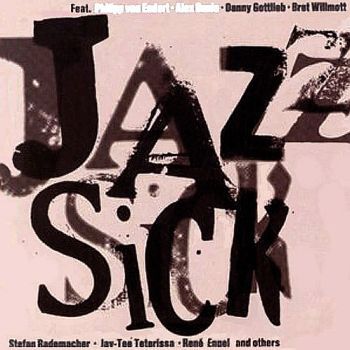
Jazzsick


Jazzsick - Jazzsick - 1995 - Hotwire EFA

Great jazz fusion from Jazzsick, a temporary international band featuring the brilliant Mike Stern & Dan Gottlieb (USA) Philipp van Endert & Alex Gunia (Germany) Rob Hall (UK) Rene Engel & Jaytee Tetterissa (Netherlands) and others. It’s extremely difficult to find a review of this album. The album title is a play on the german word 'jazzig' which means jazzy. Guitarist Philipp van Endert said "... it's jazz, but it's sick!" If “sick” means good, then this album is dying! This is a very obscure but excellent album recorded in Cologne during 1992-3. Don’t expect any Holdsworthian style guitar here. The album is quite subtle in places, but the guitar work is wonderful and the album is a great listen. The band may have one other release available, but I am not 100% sure of that. I saw one used copy of this album for sale on Amazon UK from £78.04. This is crazy! The album is not going to be hung in The Louvre! It is well worth investigating the work of artists like Philipp van Endert, Alex Gunia and others playing on this album which is HR by A.O.O.F.C [All tracks @ 320 Kbps: File size = 146 Mb]

TRACKS / COMPOSERS

1. Shortline - van Endert 7:04
2. Apple's Blues - Gunia 8:14
3. Moon, Moose and Bears - van Endert 3:46
4. Gimmes Never Get - van Endert 7:33
5. Heavy Scrapple From My Apple - Gunia 8:58
6. The Esher - Gunia 6:22
7. Capn' Crunch - Gunia 4:36
8. Kathy - Willmott 7:02
9. Sweet And Sour - van Endert 8:16

MUSICIANS

Philipp van Endert - Guitar, Guitar Synthesizer, Sitarguitar
Alex Gunia - Guitar, Acoustic Guitar
Mike Stern, Rick Peckman, Bret Willmott - Guitar
Stefan Rademacher - Bass
Jey-Tee Teterissa - 5 String Bass
Danny Gottlieb - Drums, Percussion
Rene Engel - Drums
Daniel Moreno, Katrin Birrer - Percussion
Bob Hall - Soprano Saxophone

4.7.14

Chick Corea's Elektric Band


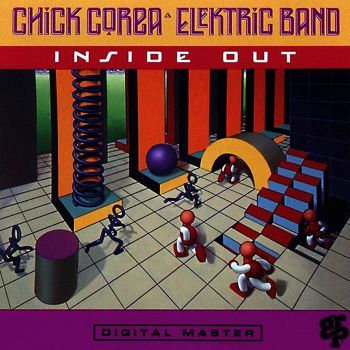
Chick Corea's Elektric Band - Inside Out - 1990 - GRP

Chick Corea's Elektric Band was always a well-integrated unit, featuring passionate solos from the rockish guitarist Frank Gambale and the R&Bish saxophonist Eric Marienthal in addition to major statements from the distinctive leader who utilized a battery of keyboards yet remained quite recognizable. With John Patitucci (arguably jazz's top electric bassist) and drummer Dave Weckl pushing the ensemble, this pacesetting fusion unit is heard at its peak on these Corea originals. © Scott Yanow ©2014 AllMusic, a division of All Media Network, LLC. | All Rights Reserved http://www.allmusic.com/album/inside-out-mw0000654651

“Inside Out” peaked at number six on Billboard's Top Contemporary Jazz Albums chart. The album is arguably more modern jazz than fusion but Chick Corea’s compositions are highly original and the musicianship from legendary guitarist Frank Gambale, bassist John Patitucci, drummer Dave Weckl, and saxophonist Eric Marienthal is complex but inspired. One of CCEB’s best albums and HR by A.O.O.F.C. Listen to Chick Corea & Béla Fleck’s brilliant “The Enchantment” album [All tracks @ 320 Kbps: File size = 110 Mb]

TRACKS

1 Inside Out 5:11
2 Make A Wish Part 1 1:39
3 Make A Wish Part 2 6:18
4 Stretch It Part 1 0:52
5 Stretch It Part 2 7:51
6 Kicker 5:19
7 Child's Play 3:27
8 Tale Of Daring Chapter 1 2:02
9 Tale Of Daring Chapter 2 3:39
10 Tale Of Daring Chapter 3 5:48
11 Tale Of Daring Chapter 4 4:23

All tracks composed by Chick Corea

MUSICIANS

Frank Gambale - Guitar
John Patitucci - Electric Bass
Chick Corea - Midi Piano, Synthesizers
Dave Weckl - Drums
Eric Marienthal - Saxophone

BIO

Chick Corea has been one of the most significant jazzmen since the '60s. Not content at any time to rest on his laurels, he has been involved in quite a few important musical projects, and his musical curiosity has never dimmed. A masterful pianist who, along with Herbie Hancock and Keith Jarrett, was one of the top stylists to emerge after Bill Evans and McCoy Tyner, Corea is also one of the few electric keyboardists to be quite individual and recognizable on synthesizers. In addition, he has composed several jazz standards, including "Spain," "La Fiesta," and "Windows." Corea began playing piano when he was four and, early on, Horace Silver and Bud Powell were influences. He picked up important experience playing with the bands of Mongo Santamaria and Willie Bobo (1962-1963), Blue Mitchell (1964-1966), Herbie Mann, and Stan Getz. He made his recording debut as a leader with 1966's Tones for Joan's Bones, and his 1968 trio release (with Miroslav Vitous and Roy Haynes) Now He Sings, Now He Sobs is considered a classic. After a short stint with Sarah Vaughan, Corea joined Miles Davis as Herbie Hancock's gradual replacement, staying with Davis during a very important transitional period (1968-1970). He was persuaded by the trumpeter to start playing electric piano, and was on such significant albums as Filles de Kilimanjaro, In a Silent Way, Bitches Brew, and Miles Davis at the Fillmore. When he left Davis, Corea at first chose to play avant-garde acoustic jazz in Circle, a quartet with Anthony Braxton, Dave Holland, and Barry Altschul. But at the end of 1971, he changed directions again. Leaving Circle, Corea played briefly with Stan Getz and then formed Return to Forever, which started out as a melodic Brazilian group with Stanley Clarke, Joe Farrell, Airto, and Flora Purim. Within a year, Corea (with Clarke, Bill Connors, and Lenny White) had changed Return to Forever into a pace-setting and high-powered fusion band; Al DiMeola took Connors' place in 1974. While the music was rock-oriented, it still retained the improvisations of jazz, and Corea remained quite recognizable, even under the barrage of electronics. When RTF broke up in the late '70s, Corea retained the name for some big-band dates with Clarke. During the next few years, he generally emphasized his acoustic playing and appeared in a wide variety of contexts, including separate duet tours with Gary Burton and Herbie Hancock, a quartet with Michael Brecker, trios with Miroslav Vitous and Roy Haynes, tributes to Thelonious Monk, and even some classical music. In 1985, Chick Corea formed a new fusion group, the Elektric Band, which eventually featured bassist John Patitucci, guitarist Frank Gambale, saxophonist Eric Marienthal, and drummer Dave Weckl. To balance out his music, he formed his Akoustic Trio with Patitucci and Weckl a few years later. When Patitucci went out on his own in the early '90s, the personnel changed, but Corea continued leading stimulating groups (including a quartet with Patitucci and Bob Berg). During 1996-1997, Corea toured with an all-star quintet (including Kenny Garrett and Wallace Roney) that played modern versions of Bud Powell and Thelonious Monk compositions. He remains an important force in modern jazz, and every phase of his development has been well documented on records. Corea began the 21st century by releasing a pair of solo piano records, Solo Piano: Originals and Solo Piano: Standards, in 2000, followed by Past, Present & Futures in 2001. Rendezvous in New York appeared in 2003, followed by To the Stars in 2004. The Ultimate Adventure was released in 2006. That same year, Corea released Super Trio with drummer Steve Gadd and bassist Christian McBride. In the spring of 2007, Corea released an unlikely but ultimately satisfying duet album with banjo master Béla Fleck entitled The Enchantment on Concord, followed by a Universal Japan-only six-disc box set called Five Trios in 2008 that showcased the pianist in a handful of different trio settings. The same year, Corea and vibraphonist Gary Burton released their fourth offering together, entitled The New Crystal Silence. The year 2008 was a busy one for Corea. He and John McLaughlin got together for the first time since they both played on Miles Davis' seminal Bitches Brew album. They pulled together a band with saxophonist Kenny Garrett, drummer Vinnie Colaiuta, and bassist Christian McBride for the recording Five Peace Band: Live (with another former Miles collaborator, Herbie Hancock, guesting on "In a Silent Way/It's About That Time"). Concord re-released Return to Forever's four albums issued between 1973 and 1976 (with Corea, White, Clarke, and DiMeola) -- Hymn of the Seventh Galaxy, Where Have I Known You Before, No Mystery, and Romantic Warrior -- as a precursor for a reunion tour. This resulted in both a live album, entitled Returns, and a concert DVD. In 2009, Corea teamed with Japanese piano sensation Hiromi for Duet, followed by a live trio album entitled Forever with Clarke and White, culled from their "RTF Unplugged" tour. The two-disc set, issued by Concord in 2011, featured guest appearances by Chaka Khan, original RTF guitarist Connors, and violinist Jean-Luc Ponty. In 2012, Corea was busy from the start. He delivered a trio recording on Concord in January entitled Further Explorations; his sidemen were Eddie Gomez and Paul Motian (both members of various Evans ensembles). Corea: The Continents Concerto for Jazz Quintet and Chamber Orchestra was issued by Deutsche Grammophone in February. In September, another duet recording with Burton, Hot House, was released by Concord. In the summer of 2013, Corea debuted his new electric band with the album The Vigil. Its members include bassist Christian McBride (though Hadrien Feraud often plays with the group live), drummer Marcus Gilmore, Tim Garland on reeds and winds, and guitarist Charles Altura. © Scott Yanow © 2014 AllMusic, a division of All Media Network, LLC. | All Rights Reserved http://www.allmusic.com/artist/chick-corea-mn0000110541/biography

10.6.14

Scott Henderson And Tribal Tech


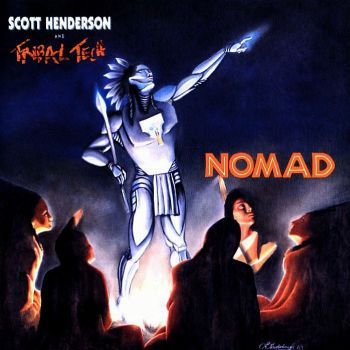
Scott Henderson And Tribal Tech - Nomad - 1990 - Relativity

Like its predecessors, Henderson's third date as a leader is a fine example of how creative and inspired genuine jazz-rock can be. Tough and aggressive yet full of appealing melodic and harmonic nuances, this CD contains not one iota of the type of lightweight smooth jazz or Muzak for which Henderson has often voiced his contempt. With Nomad, Tribal Tech underwent a few personnel changes, and for the first time, recorded an entire album minus a sax. While electric bassist Gary Willis, drummer Steve Houghton, and percussionist/mallet player Brad Dutz remained, saxman Bob Sheppard was gone, and keyboardist Pat Coil had been replaced by David Goldblatt. Despite these changes, Tribal Tech's sound (which was essentially guided by Henderson and Willis) remained easily recognizable. The '70s breakthroughs of Weather Report, Return to Forever, and John McLaughlin, among others, still had an impact on Tribal Tech, but by 1988, it was even more evident that Henderson was a fine soloist and composer in his own right. © Alex Henderson © 2014 AllMusic, a division of All Media Network, LLC. | All Rights Reserved http://www.allmusic.com/album/nomad-mw0000873442

Tribal Tech is a virtuoso and iconic progressive jazz fusion band, formed in 1984 by guitarist Scott Henderson and bass player Gary Willis. From 1993 onwards the band included Scott Kinsey on keyboards and Kirk Covington on drums. From 1985 to 2000 the band released nine albums fusing elements of blues, jazz, and rock. Tribal Tech disbanded after releasing their "Rocket Science" album in 2000, but got together in 2010 to record their "X" album released in 2012. All band members are acclaimed musicians in the jazz rock/fusion world and all their albums are worth checking out. Floridian guitarist Scott Henderson has been quoted as saying that he is a "blues player at heart" and much of his music is based on blues, jazz, and rock influences. His early years were influenced by, rock, blues, funk and soul, and his later jazz influences included artists like John Coltrane and Miles Davis. "Nomad" is one of the band's best albums. The tracks are complex at times but very listenable with odd-meters and great intertwining rock and bebop lines. The album is HR by A.O.O.F.C. Buy Tribal Tech's classic "Thick" album and support jazz fusion at it's very best. Read more about Gary Willis @ http://garywillis.com/press/bio and Scott Henderson @ http://www.scotthenderson.net/ [All tracks @ 320 Kbps: File size = 120 Mb]

TRACKS / COMPOSERS

1 Renegade - Gary Willis 5:49
2 Nomad - Scott Henderson 7:19
3 Robot Immigrants - Brad Dutz & David Goldblatt 5:06
4 Tunnel Vision - Gary Willis 4:40
5 Elegy For Shoe - David Goldblatt 4:07
6 Bofat - Scott Henderson 8:34
7 No No No - Gary Willis 5:51
8 Self Defense - Gary Willis 5:02
9 Rituals - Scott Henderson 5:43

MUSICIANS

Scott Henderson - Guitars
Gary Willis - Bass
Brad Dutz - Keyboards & Mallets
David Goldblatt - Keyboards
Steve Houghton - Drums

ABOUT SCOTT HENDERSON

One of the finest fusion (as opposed to crossover) guitarists of the 1980s and '90s, Scott Henderson's explosive playing is often teamed up with electric bassist Gary Willis in their group Tribal Tech. Originally most influenced by rock, Henderson (who grew up in West Palm Beach, FL) played in local funk and rock bands. In 1980, he moved to Los Angeles to attend the Guitar Institute of Technology, studying with Joe Diorio. After graduating, he became a teacher himself at GIT. Henderson played with Jeff Berlin and Jean-Luc Ponty, and in 1985 toured with the original version of Chick Corea's Elektric Band. During 1987-1989, he worked on and off with Joe Zawinul's Syndicate, later focusing on Tribal Tech as his main band. As a leader, Scott Henderson has recorded for Passport, Relativity, Bluemoon, Atlantic, and Zebra. Starting with 1994's Dog Party, the guitarist made a transition from the world of jazz to the blues world, where his blues-rock fusion became the primary focus of his music career. But unlike many of his blues-rock contemporaries, his music was filled with the sort of odd time signatures and unique touches that are cornerstones of his jazz work. © Scott Yanow © 2014 AllMusic, a division of All Media Network, LLC. | All Rights Reserved http://www.allmusic.com/artist/scott-henderson-mn0000254833/biography

ABOUT TRIBAL TECH

The virtuoso jazz fusion unit Tribal Tech were formed in 1984 by guitarist Scott Henderson and bassist Gary Willis, debuting a year later with Spears. Over the course of subsequent efforts including 1987's Dr. Hee, 1990's Nomad, and 1992's Illicit, both Henderson and Willis emerged among the most acclaimed instrumentalists in contemporary jazz, with each frequently topping music magazine best-of lists; in the wake of 1995's Reality Check, Tribal Tech went on hiatus to allow the members the opportunity to pursue solo projects, finally reuniting four years later for Thick. Rocket Science was released in fall 2000. © Jason Ankeny © 2014 AllMusic, a division of All Media Network, LLC. | All Rights Reserved http://www.allmusic.com/artist/tribal-tech-mn0000022020/biography

8.6.14

Scott Henderson


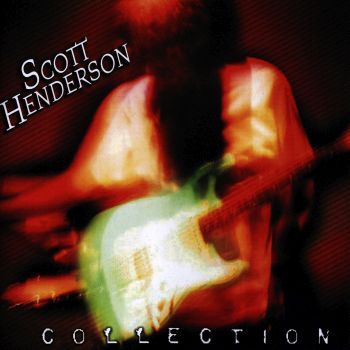
Scott Henderson - Collection - 2007 - Tone Center

One of the finest fusion (as opposed to crossover) guitarists of the 1980s and '90s, Scott Henderson's explosive playing is often teamed up with electric bassist Gary Willis in their group Tribal Tech. Originally most influenced by rock, Henderson (who grew up in West Palm Beach, FL) played in local funk and rock bands. In 1980, he moved to Los Angeles to attend the Guitar Institute of Technology, studying with Joe Diorio. After graduating, he became a teacher himself at GIT. Henderson played with Jeff Berlin and Jean-Luc Ponty, and in 1985 toured with the original version of Chick Corea's Elektric Band. During 1987-1989, he worked on and off with Joe Zawinul's Syndicate, later focusing on Tribal Tech as his main band. As a leader, Scott Henderson has recorded for Passport, Relativity, Bluemoon, Atlantic, and Zebra. Starting with 1994's Dog Party, the guitarist made a transition from the world of jazz to the blues world, where his blues-rock fusion became the primary focus of his music career. But unlike many of his blues-rock contemporaries, his music was filled with the sort of odd time signatures and unique touches that are cornerstones of his jazz work. © Scott Yanow © 2014 AllMusic, a division of All Media Network, LLC. | All Rights Reserved http://www.allmusic.com/artist/scott-henderson-mn0000254833/biography

The Scott Henderson Collection is a good collection of the great fusion guitarist's '90s work. These compilations will always have mixed reviews regarding the track selection, but if you're not familiar with Scott Henderson and/or Tribal Tech's work then this is a good introduction. Outstanding jazz rock, rock, funk and blues. Listen to Scott’s “Tore Down House” album [All tracks @ 320: File size = 168 Mb]

TRACKS

1. Lola Fay 6:25
2. Space Camel 5:28
3. Lady P 7:15
4. Sultan's Boogie 7:26
5. Song Holy Hall 4:59
6. Clinic Troll 3:43
7. Hillbilly In The Band 5:08
8. Slidin' 7:27
9. Snake Soda 5:35
10. Thick 11:17
11. Nairobe Express 4:10

Tracks 1,3,4,7,8 composed by Henderson: Tracks 2,5,6,10 composed by Henderson, Kinsey & Willis: Tracks 9,11 composed by Henderson & Wooten
The tracks "Space Camel," "Song Holy Hell," "Clinic Troll" and "Thick." were recorded with bassist Gary Willis as Tribal Tech. Tracks 1-3 are from the Scott Henderson CD "Well To The Bone": Tracks 4 & 5 are from the Scott Henderson CD "Live": Tracks 6 & 7 are from The Tribal Tech CD "Thick": Tracks 8 & 9 are from The Tribal Tech CD "Rocket Science": Track 10 is from The Scott Henderson, Steve Smith, Victor Wooten CD "Vital Tech Tones": Track 11 is from The Scott Henderson, Steve Smith, Victor Wooten CD "VTT2"

MUSICIANS

Scott Henderson - Guitar
Gary Willis, John Humphrey, Victor Wooten - Bass
Scott Kinsey - Keyboards
Kirk Covington, Steve Smith - Drums
Thelma Houston - Vocals on "Lola Fay"
Wade Durham - Vocals on "Lady P"

3.6.14

David T. Chastain


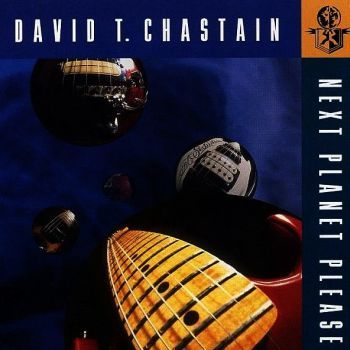
David T. Chastain - Next Planet Please - 1994Leviathan

David T. Chastain (born in Atlanta, Georgia on 31 August 1963) is an American guitarist and owner of Leviathan Records and Diginet Music. Chastain is a metal guitarist who emerged in the mid-'80s along with a wave of other neo-classical guitarists. He has released about 50 recordings under multiple names, including David T. Chastain, CJSS, Georgia Blues Dawgs, The Cincinnati Improvisational Group, SPIKE, Zanister, Ruud Cooty and Southern Gentlemen (blues-rock) as well as a number of heavy metal releases under the band name Chastain, accompanied by female vocalist Leather Leone. In more recent years, David has worked as a record producer at his own company, Leviathan Records. His label specializes in discovering and promoting new talents, specializing in guitarists and bands. He also runs Diginet Music, a company specializing in rare, unreleased or out-of-print music. - Wiki

"A feisty metal-fusion affair laced with complex instrumentals and stylistic nods to such jazz rock greats as Holdsworth and Di Meola." - Guitar Shop

DAVID T. CHASTAIN, considered by many as one of the most prolific and versatile of today's Hard Rock/Metal guitarists, journeys into uncharted heavens with his Progressive Rock/Hard Fusion instrumental CD NEXT PLANET PLEASE. The album combines the ferocity and force of rock with the cultivation and extravagance of jazz as never before for a truly unique, new sound. "This is the type of CD I have always dreamed of making," says the guitarist. "This has always been my favorite style of music. To me progressive rock and fusion lend themselves to two very important aspects of music: melody and improvisation!" For this recording CHASTAIN recruited long time collaborator DAVID HARBOUR, who once again proves he is one of the most original bassists around today. Joining in on drums, and giving a brilliant performance, is fellow Cincinnati Improvisational Group member MIKE HAID. Of the album's title CHASTAIN says: "Since this new CD is a definite departure from my previous releases, I decided that the title should express that event. As music has the capacity to take you out of the world in which you live and transport you somewhere else, I felt NEXT PLANET PLEASE was a fitting way to describe the journey I take on this album. Using a Roland GR-1 Guitar Synth allowed me to create many textures that had not been available in my previous recordings." The musical context is not easy to describe, but can best be compared to early Holdsworth, Di Meola, Return To Forever and Dixie Dregs influences, combined with CHASTAIN's own unique musical vision. Serving as a bridge from previous recordings, the CD opens with "Project Transformation". The title track is one of CHASTAIN's personal favorites "because it brings to the forefront everything special about this type of music." The majestic "Forever Searching" has to be one of the most melodic tracks in memory, while "Sophisticated Debauchery" is a great example of progressive rock in full swing. The haunting "Homage To An Unknown Hero" is an extraordinary track for the emotional character of the song, and "Watching Time Go By" closes the CD with a very hypnotizing ending track that will make you want to play it again and again. The CD was recorded at Kajem Studios in Philadelphia with CHASTAIN producing and Joe Alexander engineering. CHASTAIN says of the recording quality: "I'm extremely satisfied with the end result. It was a pleasure to be involved with the recording of this CD." NEXT PLANET PLEASE is the next phase in the expanding musical imagination of guitar visionary DAVID T. CHASTAIN!! © http://www.leviathanrecords.com/nextdes.htm

The all instrumental “Next Planet Please” combines progressive heavy metal with jazz fusion. Dave uses a Roland guitar synth to create keyboard textures that retain the unique Chastain sound. Guitar World says that, "As a player, Chastain ranks with Steve Morse, Eric Johnson, Joe Satriani and Steve Vai." Dave was one of the first artists signed to Mike Varney's Shrapnel label (which specialized in technically accomplished rock, metal, and fusion guitarists), releasing Chastain shredder classics like ”Mystery of Illusion” and “Ruler of the Wasteland”. David should be better known as a guitar virtuoso, but he is just one of many great musicians who never get the recognition they deserve. Whether you like hard rock, fusion, metal, or just fantastic guitar playing, you may enjoy this album. Check out Dave’s “Mystery of Illusion” album and look for more Chastain info on this blog [All tracks @ 320 Kbps: File size = 150 Mb]

TRACKS

1. Project Transformation 6:07
2. Next Planet Please 5:34
3. Realization 4:53
4. Fusion Delusion 5:01
5. Forever Searching 5:34
6. Sophisticated Debauchery 5:39
7. Dunk The Funk 4:09
8. Blame It On Rio 4:19
9. Homage To An Unknown Hero 4:17
10. Watching Time Go By 6:20

All tracks composed by David T. Chastain

MUSICIANS

David T. Chastain - Electric & Acoustic Guitars, Roland GR-1
David Harbour - Electric & Fretless Bass
Mike Haid - Drums

BIO

Although guitarists such as Steve Vai, Joe Satriani, and Yngwie Malmsteen received the lion's share of publicity and commercial success during the heyday of "guitar shredders" back in the '80s, David T. Chastain has been slugging it out for just as long, yet never achieved the same level of recognition as the aforementioned instrumentalists. With his mastery of the six-string and talent for effortlessly reeling off lightning-fast neo-classical licks, Chastain has been releasing albums since the mid-'80s, either as a solo artist or as part of the bands Chastain and CJSS. David Chastain was one of the first artists signed to Mike Varney's Shrapnel label (which specialized in technically accomplished rock guitarists), resulting in such shredder classics as Mystery of Illusion and Ruler of the Wasteland. Countdown to Infinity was released on Leviathan in 2007. © Greg Prato © 2013 AllMusic, a division of All Media Network, LLC. | All Rights Reserved http://www.allmusic.com/artist/david-t-chastain-mn0000224951/biography

2.6.14

Scott Henderson, Gary Willis, Tribal Tech


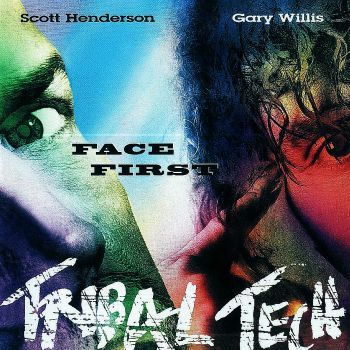
Scott Henderson, Gary Willis, Tribal Tech - Face First - 1993 - Bluemoon

The virtuoso jazz fusion unit Tribal Tech were formed in 1984 by guitarist Scott Henderson and bassist Gary Willis, debuting a year later with Spears. Over the course of subsequent efforts including 1987's Dr. Hee, 1990's Nomad, and 1992's Illicit, both Henderson and Willis emerged among the most acclaimed instrumentalists in contemporary jazz, with each frequently topping music magazine best-of lists; in the wake of 1995's Reality Check, Tribal Tech went on hiatus to allow the members the opportunity to pursue solo projects, finally reuniting four years later for Thick. Rocket Science was released in fall 2000. © Jason Ankeny © 2014 AllMusic, a division of All Media Network, LLC. | All Rights Reserved http://www.allmusic.com/artist/tribal-tech-mn0000022020/biography

Although it was their sixth album overall, Tribal Tech's 1993 release, Face First, was only the second to feature the still-existing lineup of guitarist Scott Henderson, bassist Gary Willis, keyboardist Scott Kinsey, and drummer Kirk Covington. Previously, Henderson and Willis had juggled lineups and eased further away from traditional jazz toward improvisational fusion through the 1985-1991 albums Spears, Dr. Hee, Nomad, and Tribal Tech. But the quartet of musical leftists gelled on Face First, improving on its promising 1992 debut, Illicit. Henderson's solo on the opening title track -- over a percolating Willis bassline -- shows the guitarist's range of influences from Jeff Beck and Jimi Hendrix to Albert King and Stevie Ray Vaughan. Funk pieces like "Canine" and "Uh...Yeah OK" show glimpses of the group's future, all-improvised CDs; hummingbird-quick drummer Covington's lead vocal on the cover-band farce "Boat Gig" set the stage for Henderson"'s solo blues debut the next year. In between, synth-master Kinsey's jazzy "After Hours" and Henderson's New Orleans-tinged "Revenge Stew" provide thought-provoking rest areas -- necessary because of breathtaking ten-minute thrill rides like the blues, bop, and beyond of "Salt Lick." Willis' Weather Report-like "The Precipice" and "Wounded" ease you to the finish of Face First, the album that made a statement that Henderson, Willis, and company have not yet begun to finish. © Bill Meredith © 2014 AllMusic, a division of All Media Network, LLC. | All Rights Reserved http://www.allmusic.com/album/release/face-first-mr0003132030

Guitarist Scott Henderson and bassist Gary Willis, known as Tribal Tech (the renegade rock/jazz/fusion warriors) are back with the release of their 1993 album, entitled "Face First". Equally adapt at recalling Miles Davis and Jimi Hendrix, the band successfully bridges the gap between jazz and rock, blending elements of entities such as Weather Report, The Mahavishnu Orchestra, Frank Zappa and Return To Forever, while simultaneously expanding the dimensions of jazz. Scott Henderson (also known for his work with the Chick Corea Elektric Band and The Zawinul Syndicate) is generally admired as one of the most exciting fusion guitarists in the world today. Gary Willis first made a name for himself in the bands of Wayne Shorter and Allan Holdsworth. Incredibly tasteful phrasing and standout guitar playing dominate "Face First", and interestingly, in a somewhat bizarre move, the band dedicated the song "Boat Gig" to Stevie Ray Vaughan and Albert King. © 1996-2013 Guitar Nine All Rights Reserved http://www.guitar9.com/facefirst.html

Tribal Tech is a virtuoso progressive jazz fusion band, formed in 1984 by guitarist Scott Henderson and bass player Gary Willis. From 1993 onwards the band included Scott Kinsey on keyboards and Kirk Covington on drums. From 1985 to 2000 the band released nine albums fusing elements of blues, jazz, and rock. Tribal Tech disbanded after releasing their "Rocket Science" album in 2000, but got together in 2010 to record their "X" album released in 2012. All band members are acclaimed musicians in the jazz rock/fusion world and all their albums are worth checking out. Floridian guitarist Scott Henderson has been quoted as saying that he is a "blues player at heart" and much of his music is based on blues, jazz, and rock influences. His early years were influenced by rock, blues, funk and soul, and his later jazz influences included artists like John Coltrane and Miles Davis. “Face First” is intense, all instrumental (except Track 9) jazz-fusion laced with plenty of funk, rock and blues. The compositions are sophisticated. The solos and grooves are memorable, and you will listen to this album for a long time to come. The album is VHR by A.O.O.F.C. Check out Tribal Tech’s “Illicit” & “Live In Salzburg” albums, and Scott Henderson & Tribal Tech’s “Reality Check” album on this blog. Buy Tribal Tech's classic "Thick" album and support jazz fusion at it's very best [All tracks @ 320 Kbps: File size = 165 Mb]

TRACKS / COMPOSERS

1 Face First - Willis 7:04
2 Canine - Willis 6:24
3 After Hours - Kinsey 7:23
4 Revenge Stew - Henderson 6:07
5 Salt Lick - Henderson 9:45
6 Uh... Yeah OK - Tribal Tech 6:44
7 The Crawling Horror - Henderson 7:44
8 Boiler Room - Covington 1:35
9 Boat Gig - Henderson 6:00
10 The Precipice - Willis 6:17
11 Wounded - Willis 5:39

MUSICIANS

Scott Henderson - Guitar: Backing Vocals on Track 9
Gary Willis - Bass: Backing Vocals on Track 9
Scott Kinsey - Keyboards: Backing Vocals on Track 9
Kirk Covington - Drums: Lead Vocals on Track 9
Brett Garsed, Dana Sue Collins, Cheryl Graul - Backing Vocals on Track 9

17.5.14

Michael Manring


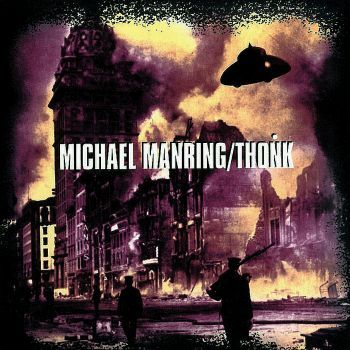
Michael Manring ‎- Thoṅk - 1994 - High Street Records

Inspired by his teacher Jaco Pastorius, Manring has taken the electric bass into new territory. A native of the Washington, DC, area, he played classical bass in high school chamber groups and orchestra while also working in local Top 40 bands. From 1979 to 1982, he honed his chops in the DC fusion group Natural Bridge and also started performing with guitarist Michael Hedges. Manring played on Hedges's Windham Hill debut Breakfast in the Fields. Since then, the bassist has become the Windham Hill session man, recording on albums by Will Ackerman, Ira Stein, and Russel Walder in addition to his frequent tours with Hedges. Manring is a also a key member in the label's all-star band, Montreux. © Linda Kohanov © 2014 AllMusic, a division of All Media Network, LLC. | All Rights Reserved http://www.allmusic.com/artist/michael-manring-mn0000390790/biography

Who said fusion was dead? With Thonk, Michael Manring has managed to create an exciting, humorous, and technically amazing body of work. His quirky approach to the bass and hyperbass have a style and sound that is truly unique and can be heard throughout the many different journeys the listener is taken on. "Big Fungus" is a romping number that finds Manring sounding like a fusion guitar player on the hyperbass. Former Primus drummer Tim "Herb" Alexander proves to be a perfect partner for Manring by adding his own complexities and individual style to the mix. Alex Skolnick, Steve Morse, and Steve Smith also lend excellent support. "Monkey Businessman" is a breathtaking solo performed on the hyperbass, which makes a case for calling Manring the Tuck Andress of the bass. However, it is not just the Manring's playing (which would have been enough) and his stellar sidemen that separate this session from its colleagues; rather, it is his fresh approach to composition. This is a brilliant recording by a brilliant musician and should be documented as one of the most important fusion recordings of the '90s. © Robert Taylor © 2014 AllMusic, a division of All Media Network, LLC. | All Rights Reserved http://www.allmusic.com/album/thonk-mw0000622623

Exceptional heavy jazz rock fusion by the great and underrated bassist, Michael Manring. Michael’s playing is reminiscent of the great Jaco Pastorius and the compositions are generally composed around a two-handed tap and slap style, similar to players like Stuart Hamm. Two of the world’s greatest guitarists, Steve Morse and Alex Skolnick play on two tracks each and arguably the album would have been improved by more guitar. Having said that, some of the greatest fusion albums are not guitar based. However, if you are a bass freak you won’t be disappointed, as Michael Manring’s playing is outstanding throughout the album. The album is HR by A.O.O.F.C. Listen to Michael’s brilliant “Drastic Measures” album [All tracks @ 320 Kbps: File size = 110 Mb]

TRACKS

1 Big Fungus 3:36
2 Snakes Got Legs 4:59
3 Monkey Businessman 3:47
4 Disturbed 3:04
5 On A Day Of Many Angels 3:42
6 My Three Moons 4:04
7 Cruel And Unusual 4:33
8 Bad Hair Day 3:11
9 Adhan 2:38
10 You Offered Only Parabolas 6:12
11 The Enormous Room 4:07

All tracks composed by Michael Manring

MUSICIANS

Steve Morse - Guitar on Tracks 2, 10
Alex Skolnick - Guitar on Tracks 4, 7
Michael Manring - Bass, Hyperbass, Keyboards, Percussion
Phil Aaberg - Piano on Track 5
Tim "Herb" Alexander - Drums on Tracks 1, 4, 8
Steve Smith - Drums on Tracks 2, 5, 7, 10
John Cuniberti - Tambourine on Tracks 5, 10

BIO

Widely considered to be one of the most innovative and talented living bassists, Michael Manring has been performing for over 20 years and covering a wide variety of styles. Born in 1960 in Virginia, Manring was brought up in a musical family. He studied under bassist Peter Princiotto before attending Berklee College of music in the late 1970s. He left the school in 1979 due to a heavy workload with various bands, but while attending he had plenty of opportunities to play a wide variety of music. In the early 1980s, Manring toured and studied with the legendary Jaco Pastorius, and it was during this period that he really began to develop his own sound on bass. Also in the 1980s, Manring was house bassist for the Windham Hill record label, and has played with many groups and artists, including Henry Kaiser and Wadada Leo Smith's Yo Miles! group, Montreux, and collaboration on almost every Michael Hedges album. He has also played with Spastic Ink, Attention Deficit, At War With Self, and in the trio McGill/Manring/Stevens. To this day, Manring continues to play with various groups, along with maintaining a steady solo career of bass clinics and touring. Manring's music is characterized by strong bass playing in all periods. He plays quite often with alternate tunings, unusual basses, and experimental styles of music. Manring regularly utilizes a wide variety of basses, though his main bass is the Hyperbass, which was created in association with Joseph Zon of Zon Guitars. The bass is designed specifically to allow Manring to change the tuning of one or all of his strings in an instant, through a unique bridge with levers for each string/all four and through D-tuner pegs on each of the tuning pegs of the bass. It's also unusual because of its triple octave fretless neck. He has been known to play as many as four basses simultaneously in his compositions. Manring's solo material has evolved over the years, with his earliest albums displaying a new age sound. His third album, Drastic Measures, displays him starting to moving away from this style, and by his next, Thonk, he had moved onto a sound entirely his own. Manring has stated that Thonk was ...the first New Age/Death metal/Fusion album. After Thonk, he released The Book of Flame in 1998 and Soliloquy in 2005. Book of Flame moved even farther away from his new age roots, and Soliloquy is a solo bass album with no overdubs or multitracking. Many of the tracks don't sound like bass at first listen, but he used prepared basses and a wide variety of unusual tunings throughout to give the album a unique sound. Manring's music should appeal to different people depending on which album/era is being discussed. His first three albums would most likely appeal to fans of laid back, new age/new age-influenced jazz music. Thonk and Book of Flame each display a wide variety of material, though they're both heavily jazz/fusion oriented and have some metal influence as well. Soliloquy is recommended to bassists and lovers of bass especially, but also to anyone interested in jazz/experimental music performed exclusively on bass. Fans of Jaco Pastorius' bass playing will most likely enjoy the bass playing on Manring's albums. - Biography written by & © Jon Hilty (SaltyJon) © Prog Archives, All rights reserved http://www.progarchives.com/artist.asp?id=6044

14.4.14

Fissio


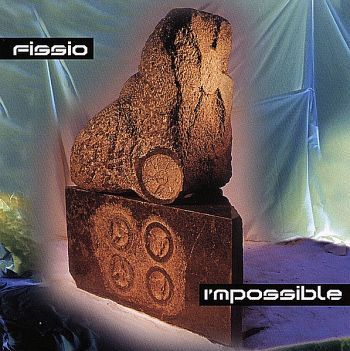
Fissio - I'mpossible - 1998 - Impossible Music

Fissio is a Finnish band and a noted Scandinavian band formed in 1994. Fissio plays mostly originals composed by keyboard player Timo Pratskin and guitar player Peter Engberg. Fissio has toured in Finland at jazz and rock festivals and clubs, and has performed and recorded with many well known Finnish groups. Keyboardist Timo Pratskin the has played and performed with the Pekka Pohjola Group, Instinct, and H.A.R.P., and guitarist Peter Engberg with UMO, Avanti!, and Samuli Edelmann. Peter also continues his studies at Finland's Sibelius-Akademy and has graduated from the Musicians Institute in California (Vocational with Honors/Outstanding Guitarist). Bassist Mikko Vuorela is one of Finland's most in-demand session players. Drummer Sami Sami Kuoppamiki has played with Kingston Wall and Anssi Tikanmki and has studied in in PIT (California) as well as the Manhattan School of Music. "I'mpossible", the band's debut album was released on February 17th 1998 by Impossible Music and is distributed by Texicalli Records (Finland) and Amigo Musik Ab (Sweden). "Forest Tale", "Pärämäts ", and "U.H.E. (Until Head Explodes)" were recorded live. There are tunes with odd meters like “Dance Istvan Dance” and “Fissio Impossible” and there are also folk music influences on "Pärämäts", as well as beautiful ballads like "Goin' Home" and "Pain and Relief". "I'mpossible" is fresh and dynamic fusion with Timo Pratskin and Peter Engberg playing some incredible solos. A very worthwhile fusion album from a band who are not going to receive the promotion they deserve. Buy this album and support real music [All tracks @ 192 Kbps: File size = 92.6 Mb]

TRACKS

1. Forest Tale 4:11
2. Dance Istvan Dance 5:44
3. Once Upon a Time 4:46
4. Dance of Passion 7:50
5. Fissio Impossible 8:37
6. Pain and Relief 3:41
7. Inspection Fee One Million 6:18
8. U.H.E. (Until Head Explodes) 9:13
9. Goin' Home 5:58
10. Pärämäts 6:42
11. Impossible Fade 2:37

Tracks 1-4, 6-7, & 10 composed by Timo Pratskin: Tracks 5,8,9,11 composed by Peter Engberg

MUSICIANS

Peter Engberg - Guitar
Mikko Vuorela - Bass
Timo Pratskin - Keyboards
Sami Kuoppamiki - Drums
Mongo Aaltonen - Percussion

19.3.14

Billy Cobham, Wolfgang Schmid, Bill Bickford


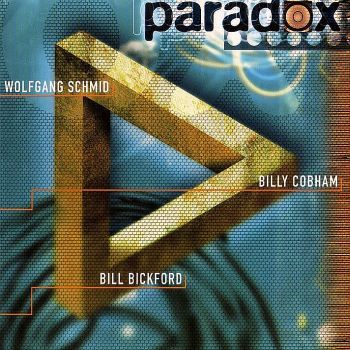
Billy Cobham, Wolfgang Schmid, Bill Bickford - Paradox - 1996 - Enja

Drummer Billy Cobham, guitarist Bill Bickford, and bassist Wolfgang Schmid form a creative fusion trio on Paradox. The result is a powerhouse addition to Cobham's discography. The music ranges from the roiling heavy metal sludge of Bickford's "Four More Years," to the full-on funk of Schmid's "Fonkey Donkey," to Cobham's calmly lyrical "Walking in Five." Schmid is the principal writer, followed by Bickford, then Cobham. The best way to set the scene is with Paradox's version of "Quadrant 4." The original was the defining track on Cobham's 1973 debut release, Spectrum. Coming on the heels of Cobham's work with John McLaughlin's original Mahavishnu Orchestra, Spectrum is one of the essential documents of fusion's classic era. The original "Quadrant 4" was a showcase for the late Tommy Bolin -- a bona fide rock star of James Gang fame. The melding of Bolin's speed-freak boogie with Cobham's pummeling whirlwind got the attention of jazz and rock fans alike, achieving almost "hit single" status in both camps. For their version almost a quarter-century later, Cobham and company notch the pace back a bit, getting more heft and torque without losing any of the original's guitar god flash (Schmid almost steals the show with his own axe-slinging). While Paradox is a tripartite accomplishment, it is also a personal return to form for Cobham, who, after the promise of his early solo career, became involved in many forgettable projects (does anybody remember Bobby & the Midnites?). Paradox doesn't match the howling, apocalyptic thunder of the Mahavishnu Orchestra, but it is the equal of Cobham's own triumphant first release. © Jim Todd © 2014 AllMusic, a division of All Media Network, LLC. | All Rights Reserved http://www.allmusic.com/album/paradox-mw0000599925

Paradox was one fine power fusion trio. Bassist Schmid is a known quantity in Germany. His first marks were made in Klaus Doldinger's group Passport. He has won many German music awards. New York guitarist Bill Bickford spent a decade in the band DeFunkt. Billy Cobham is Billy Cobham. The rhythm section of Cobham and Schmid start "Shoes in Seven" with a rocking beat similar in sound and purpose to Cobham's previous turn in the historic "Right Off" from Miles Davis's Tribute to Jack Johnson. Bickford goes with the flow by throwing in some very effective funky minor 9th chords. As Bickford solos it appears he is indeed paying tribute to "Right Off" as he mimics John McLaughlin's guitar sound. His chord knowledge seems to be very advanced. Cobham has engaged in many guitar/drum "duels" over the years. There is one of those on this cut as well. However, Bickford arms himself with only chords. It would seem he would be outmanned as Cobham usually goes into battle against single-note gunslingers who can shoot faster than the speed of sound. Instead Bickford matches every drum beat with every chord change. (Or is it the other way around?) It is quite an impressive feat either way. It is musical, too. Who knew that Billy Cobham was rocking things out again in a fantastic jazz-rock trio in the middle of the somewhat fusion-stale 1990s? RATING: 90/100 [Outstanding. A work of superior merit] © Walter Kolosky © http://www.jazz.com/music/2008/7/9/paradox-shoes-in-seven

Before fusion engaged in a seemingly unbreakable love affair with elevators, it amplified stadiums globally with joyous eruptions of lacerating electric guitars and orchestral keyboards intertwined with blaring horn sections. Underneath those plugged-in sound collages were molten hotbeds of relentless rock and hand percussion that propelled all the pyro-madness with funk-informed grooves. Recalling the glory slickophonic years of fusion-rock, Paradox thumps mightily with the same frenetic electricity, extroverted pyrotechnics and herculean strength that elevated the careers of Miles Davis, Herbie Hancock, and Weather Report to rock star status. Comprised of fusion veterans, drummer Billy Cobham, bassist Wolfgang Schmid, and guitarist Bill Bickford, this all-star trio stomps like a thumperasaurus monster abruptly awakening from a deep sleep. The combined steroid power of Cobham's muscular backbeats and nasty drum fills, Schmid's thick elastic basslines, and Bickford's electromagnolia guitar musings are a force to be reckoned. From the opening "Fonkey Donkey" which strangely gallops with a subversive nod to Ornette Coleman's rowdier electric years, to Cobham's '70s classic, "Quadrant 4," which features the drumming juggernaut hammering some of his best soloing in recent years, this trio goes for broke with nearly every note. Although subtlety isn't a main ingredient in their repertoire, the relative soft "Walking In Five" and "Late Nite" offer brief moments of quieter pleasures. Light years from being a classic in any sort, Paradox does however provide ample evidence that the '70s jazz era was not a complete waste. John Murph October 1997 © 1999–2014 JazzTimes, Inc. All rights reserved. http://jazztimes.com/articles/9814-paradox-paradox

Great energetic late ‘90’s fusion from Billy Cobham, Bill Bickford, and Wolfgang Schmid. What the album lacks in compositional skills is made up for in the marvellous and engaging musicianship of three great fusion players. HR by A.O.O.F.C. Read more about Wolfgang Schmid @ http://de.wikipedia.org/wiki/Wolfgang_Schmid_(Musiker) Check out Bill Bickford @ http://de.wikipedia.org/wiki/Bill_Bickford Info about the legendary Billy Cobham @ http://en.wikipedia.org/wiki/Billy_Cobham [All tracks @ 320 Kbps: File size = 159 Mb]

TRACKS / COMPOSERS

1. Fonkey Donkey (Schmid-Grandy) 5:14
2. Four More Years (Bickford) 8:52
3. Quadrant 4 (Cobham) 5:28
4. Myohmyohyeoye (Schmid-Grandy) 9:25
5. Walking in Five (Cobham) 6:35
6. Jam o 'James (Bickford) 5:21
7. Late Nite (Bickford) 9:03
8. Shoes in Seven (Schmid-Grandy) 4:58
9. Five In (Schmid-Grandy) 6:17

MUSICIANS

Bill Bickford - Guitar
Wolfgang Schmid - Bass
Billy Cobham - Drums, Cymbals

7.3.14

Virgil Donati


Virgil Donati - Just Add Water - 1997 - Thunder Drum

This independent release from Australian drummer Virgil Donati features guitarist Scott Henderson and bassist Ricc Fierabracci. Just Add Water is essentially an improvised jam session -- but when the players are of this high caliber, a jam session is not only a good thing, but a great thing. Sure, it's a treat to hear these players unashamedly wail away on their respective instruments, but the real magic is in hearing their creative minds work together to make one interesting musical statement after another. Henderson's bluesy playing is perfectly suited for the CD's jam-oriented style, while Fierabracci's bass playing shows why he is in such demand. However, the rhythmic propulsion of the session's leader is the cause of this recording's underground success. Due mainly to Donati's undeniable genius at the traps (and partly because of the relative obscurity of his recordings), he has become a drumming superstar. Donati is equally adept at playing Tribal Tech-style jazz-rock fusion, as he does here, or high-powered progressive metal (see Planet X). An underground classic from down under. © Robert Taylor © 2014 AllMusic, a division of All Media Network, LLC. | All Rights Reserved http://www.allmusic.com/album/just-add-water-mw0001149588

“Just Add Water” is "the result of a spontaneously, unrehearsed jam session", improvised on the first take, and with no overdubs. This brilliant album was recorded by three giants of the fusion scene, drummer Virgil Donati, guitarist Scott Henderson, and bassist Ric Fierrabracci. Virgil Donati has said that, “Just prior to my tour with Tribal Tech in 1997, I invited Scott Henderson and Ricc Fierrabracci in to the studio to record us simply jamming. We literally played straight through for about an hour and a quarter. TJ and I spent some time cutting it in suitable places, and created the tracks that make up this record”. The tracks were recorded in the M.I. Studio in Hollywood on December 22, 1996. It was edited and produced by Donati and T.J. Helmerich. Brett Garsed did the digital editing and Michael Costa mastered the whole thing. The album is HR by A.O.O.F.C. Listen to a few snippets from this album @ http://www.virgildonati.com/discography/disc-vdjad.php Read more about Virgil Donati @ http://www.virgildonati.com/about.php Scott Henderson @ http://en.wikipedia.org/wiki/Scott_Henderson and Ric Fierrabracci @ http://www.ricfierabracci.com/ric/Home.html [All tracks @ 320 Kbps: File size = 111 Mb]

TRACKS

1 The Arithmetic of Sin 2:28
2 Concerning Female Beauty 9:09
3 The Morals of Chess 1:49
4 On Manners 11:56
5 A Small Opening 2:50
6 A Dispute 8:27
7 Extremely Dirty 2:12
8 How to Grow Great Women 7:13

All tracks composed by Henderson, Fierrabracci, & Donati

MUSICIANS

Scott Henderson - Guitar
Ric Fierrabracci - Bass
Virgil Donati - Drums

11.2.14

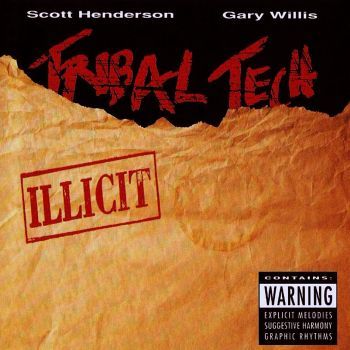
Tribal Tech


Tribal Tech - Illicit - 1992 - Bluemoon

By the time Illicit was released in 1992, Scott Henderson & Tribal Tech (led by Henderson and bassists Gary Willis) had been established as one of the premier, if not the premier, experimental fusion outfits on the globe. That's "fusion" as in the fusion of jazz and rock, not the vanilla instrumental musings of artists like Kenny G, which are occasionally mislabled as such. Henderson's dramatic and powerful soloing and his incredibly refined chord work were the greatest causes for the early attention the group received, and Illicit only furthered the guitarist's reputation with its fire and musical vigor. Henderson's tone is sublime and Holdsworth-ian in its often horn-like quality, and Covington, bassist Gary Willis, and keyboardist Scott Kinsey somehow manage to match Henderson's dynamism and character. "Torque" is Illicit's clear highlight, with its prog rock bombast of power chords topped with angular, classically influenced harmony keyboard and guitar flurries. Experimental and intense, Illicit is as solid an offering as Tribal Tech delivered in the '90s. © Jason Anderson © 2014 AllMusic, a division of All Media Network, LLC. | All Rights Reserved http://www.allmusic.com/album/illicit-mw0000083091

Illicit was Tribal Tech's 1992 spit-in-the-face to corporate radio and record companies who would have the public believing "light jazz" is really fusion like 1989's Nomad. The opening track, "The Big Wave," is a convincing spoof of a light jazz radio station found in any big city in the United States. The track begins with a cheerily cheesy tune, which sounds like something that might be played on one of the many 'wave' stations. Then the drums increase in tempo and volume until the original melody is obliterated, whereupon the band launches into some very loud, very edgy and highly syncopated playing--the hallmark of Tribal Tech. Illicit features two improvisational numbers, "Riot" (named for the L.A. riots happening nearby at that time) and "Aftermath" (also pointing out the riot's devistation). Bottom line--this album sounds like a live-in-the-studio record, with a raw, cutting sound and less slickness in the overall production. Highly recommended to all fusion fans. – from ***** TRIBAL TECH KICKS, August 17, 2001 By & © Antonio (Lawrence, KS) © 1996-2014, Amazon.com, Inc. or its affiliates http://www.amazon.com/Illicit-Tribal-Tech/product-reviews/B0000034BY/ref=cm_cr_dp_synop/180-2165885-2138266?ie=UTF8&showViewpoints=0&sortBy=bySubmissionDateDescending#R1RSNOFUR4WT3N

These guys “click” together like few other jazz fusion bands, and their improvisatory skills are pure genius. “Illicit” is one of TT’s strongest and best albums and VHR by A.O.O.F.C. Listen to T.T’s “Dr. Hee” album, and read more about this great jazz fusion band on this blog [All tracks @ 320 Kbps: File size = 146 Mb]

TRACKS /COMPOSERS

1 The Big Wave (Gary Willis) 6:31
2 Stoopid (Gary Willis) 5:47
3 Black Cherry (Scott Henderson) 6:42
4 Torque (Scott Henderson) 6:02
5 Slidin' Into Charlisa (Scott Henderson) 7:32
6 Root Food (Scott Henderson) 8:13
7 Riot (Henderson, Willis, Kinsey, Covington) 6:58
8 Paha Sapa (Gary Willis) 3:24
9 Babylon (Gary Willis) 5:26
10 Aftermath (Henderson, Willis, Kinsey, Covington) 7:03

MUSICIANS

Scott Henderson - Guitar
Gary Willis - Bass
Scott Kinsey - Keyboards
Kirk Covington - Drums

8.2.14

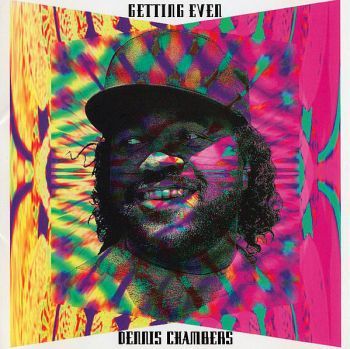
Dennis Chambers


Dennis Chambers - Getting Even - 1992 - Glass House/Pioneer

Originally released in 1991, this hard-to-find Fusion recording is worth searching for. This session features the brilliant drumming of Dennis Chambers, who was just coming into his own at this stage of his career. The selections are fairly typical to the music Chambers was playing with John Scofield, who he uses here on a few tracks, along with another former employer, guitarist Mike Stern. The chemistry with Scofield, Stern, saxophonist Bob Berg and keyboardist Jim Beard is obvious as the three have worked together on several sessions. The temptation to overplay here is addressed by a strong dedication to the groove and by allowing each player ample space. Aside from Chambers' innovative and powerful drumming, the session's excitement is enhanced by the rousing playing of guitarist Jimi Tunnell. While this debut is not in the same class as Stratus (Billy Cobham) or Essence of Mystery (Alphonse Mouzoun), Dennis Chambers demonstrates why he is considered to be one of the most innovative and important players in the history of drumming. This debut is a fine representation of his playing, although fans are encouraged to seek out his extensive discography as a 'sideman' to appreciate his full contributions. © Robert Taylor © 2014 AllMusic, a division of All Media Network, LLC. | All Rights Reserved http://www.allmusic.com/album/getting-even-mw0000546359

Renowned drummer extraordinaire Dennis Chambers has been one of the most celebrated and influential drummers in the jazz rock/fusion world for around 40 years now and is still recording great music. Over the years he has worked with artists that include Billy Sheehan, Bob Berg, Herbie Hancock, Maceo Parker, Steely Dan, Tom Coster, Victor Wooten, Randy Brecker, Michael Brecker, Mike Urbaniak, Bill Evans, CTI All Stars, George Duke, Stanley Clark, Steve Kahn, John McLaughlin and dozens more. “Getting Even” is one of Dennis’ more obscure albums. His drumming is superb and he is accompanied by legends that include Jim Beard, John Scofield, and Bob Berg. The relatively unknown Texan jazz guitarist/vocalist Jimi Tunnell also plays on four tracks. Arguably, more of Jimi Tunnell’s guitar work might have improved this album, but then again this is not a guitar orientated album and if you are into great drum and percussion players, you may find little fault with this great groove laden jazz fusion album which is HR by A.O.O.F.C. Listen to Dennis’ great “Outbreak” album, the superb Scott Henderson, Jeff Berlin and Dennis Chambers’ “HBC” album, and Jimi Tunnel’s cracking “Trilateral Commission” album. Check out Tony MacAlpine, Bunny Brunel, & Dennis Chambers’ “CAB” album on this blog [All tracks @ 320 Kbps: File size = 112 Mb]

TRACKS / COMPOSERS

1. Fortune Dance - Bob Gatzen (5:53)
2. The Opener - Jon Herington (4:22)
3. Keep Walking - Bob Gatzen (6:10)
4. Red Eyes - Bob Gatzen (6:17)
5. Getting Even - Jon Herington (7:29)
6. Widow's Peak - Adam Holzman (5:54)
7. Boo - Paul Soroka (5:53)
8. Until We Return - Paul Soroka (8:09)

MUSICIANS

Jimi Tunnel - Guitar (Tracks 1,2,6,7)
John Scofield - Guitar (Tracks 3,4,5,8)
Gary Grainger - Bass (Tracks 1,2,6,7)
Anthony Jackson - Bass (Tracks 3-5, 8)
Jim Beard - Keyboards, Synthesizer (Tracks 1-8)
Dennis Chambers - Drums (Tracks 1-8)
Victor Williams - Percussion (Tracks 1-5, 7-8)
Bob Berg - Tenor Saxophone (Tracks 1-4, 6,8)

BIO (WIKI)

Dennis Chambers (born May 9, 1959) is an American drummer who has recorded and performed with John Scofield, George Duke, Brecker Brothers, Santana, Parliament/Funkadelic, John McLaughlin, Niacin, Mike Stern, CAB, Greg Howe, and many others. Despite a lack of formal training, Chambers has become well known among drummers for his technique and speed. Chambers is particularly regarded for his ability to play "in the pocket" but can also stretch very far out of the pocket which is also a hallmark of his technique. Chambers exhibits a powerful style that is technically proficient, yet highly musical and groove-oriented. He can play in a wide variety of musical genres, but is perhaps most notable for his jazz-fusion, funk, and Latin music playing. He is mostly known for his fast hands and triplets on the bass drum. He has helped many young drummers, the most prominent being Tony Royster, Jr.In 2007, just before Led Zeppelin were scheduled to play at the O2 Arena in London, John Bonham's son Jason was asked in an interview that if he himself were to pass up the opportunity, which drummer would he recommend to fill the coveted drum throne. His reply was 'If I were to choose, I would probably want a jazz drummer with a strong swing feel. You know what - Dennis Chambers. I think he would "get it", whereas other rock drummers wouldn't.'In an interview by Bonedo in 2011 Dennis Chambers was asked who some of his influences and favorite drummers were and he mentioned Clyde Stubblefield, Al Jackson, Steve Gadd, Vinnie Colaiuta, Gary Husband, Jack Dejonette, Billy Cobham, Buddy Rich, Elvin Jones, Roy Haynes, and Tony Williams.He has been part of the Maceo Parker live band and is touring with Carlos Santana and makes appearances with his band Niacin.He plays Pearl drums, Zildjian cymbals, Zildjian sticks,and Evans drumheads. Chambers began drumming at the age of four years old, and was gigging in Baltimore-area nightclubs by the age of six. In 1978 (at 18 years old) he joined Parliament/Funkadelic, and stayed with them until 1985. In 1986 he joined the John Scofield band. Since then he has played with most of the major figures in jazz fusion music. On August 26, 2011 Chambers appeared as a featured drummer on the Late Show with David Letterman's Drum Solo Week II, alongside other such notable players as Tony Royster, Jr., Gavin Harrison, Neil Peart and Stewart Copeland.

22.11.13

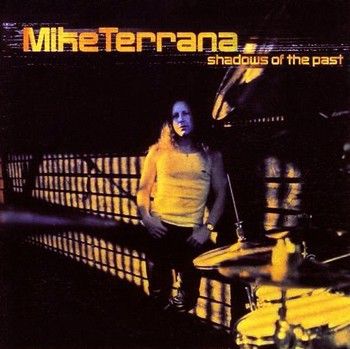
Mike Terrana


Mike Terrana - Shadows Of The Past - 1999 - Hot Wire Records

Mike Terrana ( b.January 21, 1960, Buffalo, NY ) is an American drummer, who plays mainly in the hard rock genre. His first played professionally in 1984 with the MCA band Hanover Fist, after which he toured and recorded with various bands, playing different musical styles in Western New York state. From 1987 to 1997, he was based in Los Angeles, and worked with artists including Yngwie Malmsteen, Tony Macalpine, and Steve Lukather. He relocated to Europe after a decade in L.A. where he divided his time between Germany and The Netherlands. He worked with musicians including Gamma Ray, Rage, Axel Rudi Pell, Roland Grapow, and Savage Circus. He presently resides in Hamburg, Germany, and tours and records with Masterplan and Tarja Turunen. “Shadows Of The Past” is a hard hitting entirely instrumental solo studio project from 1999. Eight of the tracks are original fusion compositions composed by Mike or with bassist Kevin Chown. There is also a great cover of Billy Cobham's 'Anteres', and a live solo drum performance by Mike. The album will probably please percussion fans mostly, but there is enough great guitar work to keep you happy. Guitarists Brian Lord, Paul Kramer, George Burnhart play on a few tracks, with the great Steve Lukather playing on two tracks. Mike has played on many other artist’s albums, but Tony MacAlpine’s “Violent Machine” album is one of the best [All tracks @ 320 Kbps: File size = 120 Mb]

TRACKS / COMPOSERS

1 Pleasure Cube - Kevin Chown, Mike Terrana 5:29
2 Anteres - Billy Cobham 3:58
3 Samantha - Mike Terrana 4:36
4 Press One For English - Kevin Chown, Mike Terrana 5:52
5 More Coffee - Mike Terrana 3:26
6 Shadows Of The Past - Kevin Chown, Mike Terrana 5:28
7 Rio - Mike Terrana 4:08
8 Internal Affair - Kevin Chown, Mike Terrana 5:17
9 Communion (Live) - Mike Terrana 11:33 *

N.B: * Recorded live in The Netherlands in March 1998

MUSICIANS

Steve Lukather – Guitar Solo on Tracks 1, 4
Brian Lord - Slide & Rhythm Guitar on Track 4: Acoustic Guitar on Tracks 6, 7
Paul Kramer - Lead & Rhythm Guitar on Track 8
George Burnhart - Lead & Rhythm Guitar on Track 3
Kevin Chown - Bass on Tracks 1, 2, 3, 4, 5, 6, 7, 8: Programmed Electric Upright Bass on Track 6
Dale Grisa - Keyboards on Tracks 1, 8: Electric Piano on Track 2
Mike Hilland - Keyboards on Track 5
Mike Terrana - Drums, Congas, Bongos, Percussion
Dave Reinstien - Soprano Saxophone on Tracks 1, 2, 4, 6, 7

19.11.13

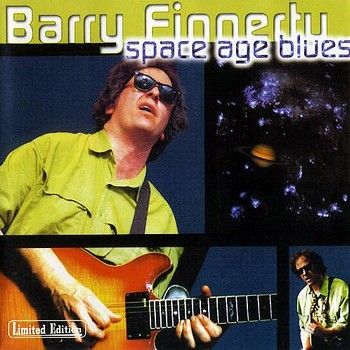
Barry Finnerty


Barry Finnerty - Space Age Blues - 1998 - Hot Wire Records

Born and raised in San Francisco, Barry Finnerty began piano at 5 and guitar at 13. He got his first electric guitar, a Fender Jaguar, at 14, while living in Hong Kong with his mother, Ruth Finnerty, a pianist who taught English at UC Berkeley Extension, and while in his early teens, he played in the rock band, New Breed, which once opened a show for the famous British pop band, Herman's Hermits. In the late sixties Barry played R&B with his band Beefy Red, opening for Bo Diddley and Lightnin' Hopkins at the famous Fillmore venue in San Francisco. Many of the artists who appeared at the Fillmore influeced his playing style, both on guitar and keyboards. Barry is mainly known as a jazz fusion artist. The fusion/studio era produced many great musicians. Some have had successful solo careers, while others have played on many different projects as sidemen, making valuable contributions to many other artists' works. Barry Finnerty is this type of roving player. He has played smooth, straight, and fusion jazz with Tower of Power,The Crusaders, the Brecker Brothers, Miles Davis, B.B. King, Chico Hamilton and Joe Farrell. Here's a good quote from Barry, which says a lot about his music, - "If I had to describe my style, I would say it's a cross between Jeff Beck and George Benson, but it's not something I'm consciously aware of," says Finnerty. "I never try to impress when I take a solo; I just play a note and try to continue to the next note coherently and continue my musical thought. The greatest compliment I ever received was when I was playing in Boston with Airto and Flora Purim in 1974. Charles Mingus was playing next door and he must have come in and heard our last set. As I was leaving, I noticed him in the back, so I said, 'Good night, Mr. Mingus,' and he looked up and said, 'You play ideas on guitar….A lot of people play lines on guitar, but you play ideas.'" “Space Age Blues” is a compilation of a number of Barry Finnerty tracks, taken from the "New York City"(1982), "Lights on Broadway" (1984), and the "Bargain Hunters"(1996) album. There are also two tracks from Billy Cobham's 1981 "Flight Time" album, and 2 rare tracks from 1989 and 1995. It’s a great album, and the title describes the music very well, full of many different styles, and great grooves. In fact, his keyboard work is reminiscent at times of Herbie Hancock and Chick Corea, while his guitar work has elements of Pat Metheny and Jerry Garcia. Listen to his "Straight Ahead" album, and if you can find his "2 Be Named Later" debut album, buy it. It's a good example of early jazz/blues fusion [All tracks @ 320 Kbps: File size = 172 Mb]

TRACKS / MUSICIANS / RECORDING DETAILS

Barry Finnerty - guitar, keyboards, vocal, drum programming

1 You Got It
Joe Berger : guitar (1st guitar solo)
Vinnie Colaiuta : drums
Anthony Jackson : bass
Mark Gray : keyboards
Michael Brecker : tenor saxophone
recorded at Planet Sound, New York City, 1984

2 Funk In A
Vinnie Colaiuta : drums
Anthony Jackson : bass
Mark Gray : keyboards
recorded at Planet Sound, New York City, 1984

3 Dawn Of A New Day
Buddy Williams : drums
Tim Landers : bass
recorded at Planet Sound, New York City, 1982

4 Hunting For Bargains
Jost Nickel : drums
Arnd Geise : bass
Jon Hammond : organ o.t.s.n.
recorded at Hazelwood Studios, Frankfurt, 1996

5 Space Age Blues
Vinnie Colaiuta : drums
Will Lee : bass
Jon Hammond : B3 organ
Mark Gray : piano
recorded at Planet Sound, New York City, 1984

6 Stonescape
Vinnie Colaiuta : drums
Neil Stubenhaus : bass
Carol Steele : percussion
track 6 recorded at "?", Los Angeles, 1982

7 Just My Luck
Richie Morales : drums
Tim Landers : bass
Mark Gray : piano
Carlos Steele : percussion
Randy Brecker : trumpet
horns : Lew Soloff, Mac Gollehan (trumpet)
Bob Mintzer, Denny Morouse (saxophone)
background vocal : Sally Fox, Margaret Dorn
recorded at Planet Sound, New York City, 1982

8 Jackhammer
Billy Cobham : drums
Tim Landers : bass
Don Grolnick : keyboards
recorded live in Koln and Stuttgart, Germany, 1980

9 Steppin' With The Load - Composed by Harry Whitaker
Victor Jones : drums
Gene Williams : keyboards, keyboard bass
recorded at Earthbound Studios, New York, 1995

10 White Onions - Composed by Barry Finnerty, Jon Hammond
Bernard Purdie : drums
Chuggy Carter : percussion
Alex Foster : tenor saxophone
Jon Hammond : B3 organ/Leslie
recorded at Quad Studios, New York, 1989

11 Just The Other Day
Vinnie Colaiuta : drums
Anthony Jackson : bass
Mark Gray : keyboards
recorded at Planet Sound, New York City, 1984

12 Love Far Away
Buddy Williams : drums
Tim Landers : bass
Carlos Steele : percussion
recorded at Planet Sound, New York City, 1982

13 Princess - Composed by Billy Cobham
Billy Cobham : drums
Tim Landers : bass
Don Grolnick : keyboards
recorded live in Koln and Stuttgart, Germany, 1980

All tracks composed by Barry Finnerty, except where stated

SHORT BIO

Guitar, keyboards, bass, composer. A prolific session player during the '70s, Barry Finnerty came to New York from the West Coast in 1973. He'd studied classical piano as a child, taken guitar lessons as a teen and briefly attended Berklee in 1971. Finnerty joined Chico Hamilton in 1974, and later that year worked with Airto and Flora Purim. He joined the Joe Farrell quartet in 1975, and later did sessions and recorded with Hamilton, Hubert Laws, The Tower of Power and the group Beefy Red. Finnerty appeared at the Montreux and Monterey Festivals in the mid-'70s playing with Hamilton and Airto respectively. © Ron Wynn, allmusic.com

BIO (WIKI)

Michael Barry Finnerty (born December 3, 1951) is an American jazz guitarist, keyboardist, and bassist, best known for his work as a session musician. Finnerty was born in San Francisco and raised on the West Coast, studying at the San Francisco Conservatory of Music and the University of California Berkeley. He moved to New York City after attending Berklee College of Music for a short time in 1971. In 1974 he began playing with Chico Hamilton, Airto Moreira, and Flora Purim. In 1975 he became a member of the Joe Farrell quartet, and later in the decade played with Hubert Laws, Tower of Power, Thad Jones and Mel Lewis, Ray Barretto, and Beefy Red. He played with Michael Brecker and Randy Brecker (1977-81) and The Crusaders (1979-84), in addition to touring in Europe with Billy Cobham in 1980. He played with Miles Davis in 1981.

10.11.13

Common Ground


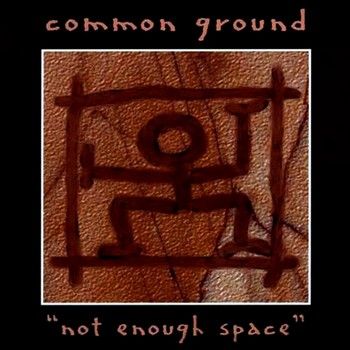
Common Ground - Not Enough Space - 1997 - Lolo Records

Not to be confused with the Common Ground Quartet (a Southern California post-bop unit featuring saxophonist Steve Feierabend and pianist Randy Potter), Common Ground is a hard-edged fusion outfit that emerged in Philadelphia in the mid-'90s. At a time when most Philly jazz clubs favored hard bop, Common Ground went for a tough, yet melodic, combination of jazz, rock, and funk along the lines of Scott Henderson's Tribal Tech. With founding members Erik Sayles (electric guitar) and Chris Farr (tenor and soprano sax) co-leading and doing all of the writing, Common Ground recorded their self-titled debut album for TMP in 1995, and employed heavyweights like drummer Dennis Chambers and trumpeter Randy Brecker as guests. Another key player on that promising debut album was keyboardist Dan Zank, who was also on board for Common's second TMP release, Not Enough Space (1997), along with the explosive Chambers. Although neither jazz purists nor so-called smooth jazz radio stations found the CDs to be of interest, Common Ground acquired a small following among hardcore fusion enthusiasts. © Alex Henderson © 2013 AllMusic, a division of All Media Network, LLC. | All Rights Reserved http://www.allmusic.com/artist/common-ground-mn0001514562

Philadelphia was full of first-rate hard boppers and post-boppers in the 1990s -- everyone from tenor saxman Larry McKenna and trumpeter John Swana to guitarist Jimmy Bruno -- but fusion and pop-jazz were hard to find in that city. One of the best fusion bands playing Philly and southern New Jersey in the late 1990s was Common Ground, which is in good to excellent form on its second album, Not Enough Space. With core members Chris Farr (tenor and soprano sax) and Erik Sayles (guitar) joined by drummer extraordinaire Dennis Chambers, as well as keyboardist Dan Zank and electric bassist James Genus, the sparks fly. Ground's aggressive blend of jazz, rock and funk often brings to mind Scott Henderson & Tribal Tech, and hard-edged numbers like "Drop Zone" and "Scrub" illustrated the fact that fusion still has a lot of possibilities. Fans of improvisatory, creative fusion (as opposed to radio-oriented "crossover" or "jazzy pop") should make a point of searching for this disc. © Alex Henderson © 2013 AllMusic, a division of All Media Network, LLC. | All Rights Reserved http://www.allmusic.com/album/release/not-enough-space-mr0002310095

Great jazz fusion which blends the improvisational melodicism of the Yellowjackets with the more intense guitar orientated fusion of bands like Tribal Tech. This is not “heavy” jazz fusion in the style of Weather Report and similar bands. Neither is it bland “smooth jazz”, but it is very creative and intelligent jazz fusion music penned by Christopher Farr, Erik Sayles, & Dan Zank. Dennis Chambers plays drums on the album, and if you play drums and/or percussion, this album may give you a few great ideas. In fact all the instrumentation on the album is superb. Check out Common Ground’s s/t album [All tracks @ 320 Kbps: File size = 124 Mb]

TRACKS

1 Scrub 5:47
2 Drop Two 5:01
3 Six 7:09
4 Remember 7:31
5 Not Enough Space 6:57
6 Up 6:27
7 West Coast 6:31
8 Drop Zone 5:58

All tracks composed by Christopher Farr, Erik Sayles, & Dan Zank

MUSICIANS

Erik Sayles - Guitar
James Genus - Bass
Dan Zank - Keyboards, Programming
Dennis Chambers - Drums
Brian Farr - Percussion
Christopher Farr - Soprano & Tenor Saxophone

16.10.13

Dave Weckl Band


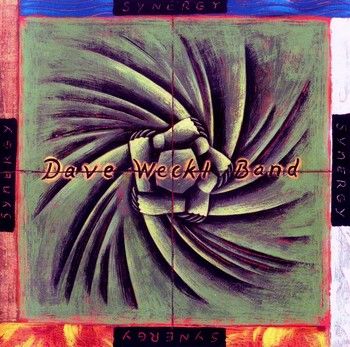
Dave Weckl Band - Synergy - 1999 - Stretch Records

Introduction: Dave Weckl's fifth CD would have been just another good one in a string of many save one thing: the addition of guitar great Buzz Feiten to his usual outstanding rhythm section of Tommy Kennedy on bass and Jay Oliver on keyboards. Feiten's playing and writing talents lifted this release to a level not quite achieved since, giving the whole set an electric edge you can both hear and feel. This CD was recorded on the heels of an extensive tour, and I can only imagine the on stage excitement and creativity that led to such an outstanding musical set: Audio Quality: Audio quality is outstanding throughout, driven by Weckl's accomplished studio techniques and penchant for perfection. High Life is signature Dave Weckl, with an African-inspired drum groove over a tight rhythm section ending in a ridiculous drum solo. Panda's Dream is one of those Buzz Feiten tunes that makes this CD unique; it features a rock groove and guitar lead that makes this one of my all-time favorite Dave Weckl tunes. Swunk features a kind of half-time driving swing famous among drummers (and made popular by Weather Report) for how fun it is to play; checkout the full-blown straight-time swing under a good sax solo. A Simple Prayer is a Feiten ballad featuring a dreamy acoustic guitar. Cape Fear is an interesting groove with a haunting guitar melody, but nothing prepares you for the killer bass solo that ends the tune. After an opening bass solo, the title cut (Synergy) makes you want to get up and dance, and is also one of my favorites on the CD. Where's My Paradise is a second ballad written by Feiten and Oliver featuring some nice acoustic guitar work. Swamp Thing is another rocker featuring Buzz Feiten with a great horn lead, and quickly became one of my all-time favorite Dave Weckl tunes. If you're keeping count, that's two (2!) tracks off of one CD that made my "all-time favorite" list, and both are either written or co-written by Buzz Feiten featuring solos by the same. The last two cuts are really throw-aways for me: Cultural Concurrence is the obligatory Dave Weckl triggered drum solo, and Tower '99 is a re-work of Tower Of Inspiration off of his first CD (Master Plan). It's a nice groove, but I recommend checking out the original that features a killer horn arrangement: Summary: There are a lot of solid cuts on this CD, comprising almost 70 minutes of music! Excellent liner notes along with some nice band pictures elevate the "features" rating to a 5 for this release. This is one of my two or three favorite Dave Weckl CD's, and I always find myself hoping for the return of Buzz Feiten to his recording band. By & © Stanton, December 07, 2006 © 1998–2013 Audioholics, LLC. All Rights Reserved http://www.audioholics.com/music-reviews/dave-weckl-band-synergy-1999

Drummer Dave Weckl gained such a cultlike following playing with Chick Corea's Elektric and Akoustic bands in the 1980s that he could probably release an album of solo wood-block tapping and have it sell enough copies to make the effort worthwhile. So it's a pleasant surprise that Synergy is a decidedly group effort that thrusts the varied compositional talents and versatility of Weckl and his bandmates to the forefront instead of merely showcasing the leader's drum chops. Not that Weckl has been letting those chops sag; his solo percussion odyssey "Cultural Concurrence" and his ferocious soloing over the Latin groove of the title track are enough to give air drummers everywhere a workout. But what makes Synergy more listenable than some of Weckl's other efforts is the inspired group interplay that finds him and his longtime touring ensemble--saxophonist Brandon Fields, keyboardist Jay Oliver, guitarist Buzz Feiten, and bassist Tommy Kennedy--locking in on grooves that push beyond his normal jazz-fusion terrain. From the West African feel of "High Life" to the Cajun-tinged "Swamp Thing" to the swanky James Brown funk of "Wet Skin," Synergy is an inspired and varied outing. © Ezra Gale [Editorial Reviews, Amazon.com] http://www.amazon.com/Synergy-Dave-Band-Weckl/dp/B00000IXSS

After being dismissed by some as a mere "chops meister," former Chick Corea Elektric Band drummer Dave Weckl purposely sought to reinvent himself as a groove player on his previous solo outing, Rhythm of the Soul, which also marked the debut of his own band. While the group toured, soundcheck jams evolved into tunes, and the resulting music on Synergy provides the most balanced document yet of weckl's drumming and his strongest musical statement. Tracks such as "Panda's Dream," which features some of the fattest backbeats Weckl has ever played, and the New Orleans-inspired "Swamp Thing" are strong on pure groove. But tunes such as the African-influenced "High Life," the salsa/funk-informed "Synergy," and the solo drum/percussion tour de force "Cultural Concurrence" bear all the syncopated complexity of Weckl's original fame. He also displays a subdued, sensitive side with brushes and coloristic cymbals on the ballads "A Simple Prayer" and "Where's My Paradise?" A particularly definitive track is "Tower '99," a rewrite of "Tower of Inspiration" from Weckl's first solo album, Master Plan. It has all the technical mastery of the original but a deeper groove and a lot of soul. On Weckl's four previous solo albums, he and Jay Oliver keyboardist composed just about everything. But on Synergy, the songwriting credits are shared among Weckl, Oliver, guitarist Buzz Feiten (a major asset to this band), saxophonist Brandon Fields, and bassist Tom Kennedy. The result is Weckl's broadest level of self-expression. © Rick Mattingly, JAZZIZ Magazine Copyright © 2000, Milor Entertainment, Inc.

The great St.Louis born drummer, Dave Weckl certainly pulls out all the stops on “Synergy”. The album’s twelve instrumental tracks were all composed by band members individually or collectively, with Dave Weckl composing or co-composing eight of the tracks. There are many jazz styles on this album. Dave grew up listening to soul, jazz and R&B, and of course played fusion with the legendary Chick Corea for six years. He puts all his musical influences and experience to exceptional use here creating an album that is a joy to listen to. The band interplay is fantastic. The compositions are exceptional. There is a lot of killer sax from Brandon Fields and terrific guitar from the underrated but hugely talented and experienced guitarist, Buzz Feiten. Listen to Jay Oliver’s great Hammond and Tom Kennedy’s big funky bass. These guys with Dave Weckl create an outstanding album of very creative and tight soul, jazz, fusion and R&B grooves. An album to be savoured and VHR by A.O.O.F.C. Listen to the Dave Weckl Band’s outstanding “Transition” album. Support real musical creativity. There’s too much great talent out there deliberately being ignored by the music media. Dave Weckl is an established artist, but there are other equally talented musicians out there who never even make “the subs bench” because of the commercially driven "X Factor mentality". Please support the lesser known artists. [All tracks @ 320 Kbps: File size = 168 Mb]

TRACKS / COMPOSERS

1. High Life - Weckl, Oliver, Feiten, Kennedy 7:48
2. Panda’s Dream – Feiten 5:22
3. Swunk - Weckl, Oliver 4:51
4. A Simple Prayer - Feiten 4:55
5. Cape Fear - Weckl, Oliver, Feiten, Fields 6:56
6. Wet Skin - Weckl, Oliver, Feiten, Fields, Kennedy 6:12
7. Synergy - Weckl, Oliver 7:15
8. Where’s My Paradise - Oliver, Feiten 4:54
9. Lucky Seven - Fields 5:57
10. Swamp Thing - Weckl, Oliver, Feiten, Kennedy 5:24
11. Cultural Concurrence – Weckl 3:25
12. Tower ’99 - Weckl, Oliver 6:01

MUSICIANS

Buzz Feiten - Electric, Nylon String & Steel String Guitars
Tom Kennedy - Bass
Jay Oliver - Organ, Keyboards, Synthesizer
Brandon Fields - Keyboards, Synthesizer, Soprano, Tenor & Baritone Saxophones
Dave Weckl - Drums, Percussion, Tambourine

BIO

Dave Weckl is one of fusion's most acclaimed drummers, making his name during a six-year-stint with Chick Corea. Weckl was born in St. Louis and grew up listening to soul and jazz; he received his first drum set at age eight and developed his playing by listening to drummers like Buddy Rich, as well as R&B grooves. He majored in jazz at the University of Bridgeport, but left after two years to become involved in the New York jazz scene, also touring Europe with various bands. Weckl joined a fusion group called Nitesprite, where he attracted the attention of drummer Peter Erskine; Erskine helped him get a gig with French Toast, a band also featuring pianist Michel Camilo and bassist Anthony Jackson. From French Toast, Weckl branched out into session work, playing on numerous early-'80s sessions with the likes of Bill Connors (Return to Forever), the Brecker Brothers, Tânia Maria, Paquito D'Rivera, Eliane Elias, and George Benson, as well as pop and soul albums for Diana Ross, Madonna, and Robert Plant. In 1986, Chick Corea saw Weckl performing in New York with guitarist Connors and invited the drummer to join his new Elektric Band. Weckl spent a total of seven years with Corea, performing on numerous albums and also appearing with Corea's Akoustic Band; his skills received considerable esteem, and he augmented his work with Corea by continuing his session work and appearing often with the GRP All-Star Big Band. Weckl also released a series of instructional videos, and in 1990 he led his first solo date, with Master Plan for GRP. Heads Up followed in 1992, as well as Hard-Wired in 1994. Upon leaving Corea, Weckl's primary focus was recording and touring with guitarist Mike Stern; he also continued his work as a sideman. In 1998, Weckl led the R&B-oriented date Rhythm of the Soul, a return to his other boyhood musical love, and the like-minded Synergy followed in 1999. The Dave Weckl Band had really gelled by the time of Transition's 2000 release, but Weckl didn't leave teaching behind, either, and released another instructional recording, The Zone, in 2001. After working extensively with a quartet for the last few years, he debuted their efforts with 2002's improv-heavy Perpetual Motion. Multiplicity followed three years later. © Steve Huey © 2013 AllMusic, a division of All Media Network, LLC. | All Rights Reserved http://www.allmusic.com/artist/dave-weckl-mn0000939549/biography