A.O.O.F.C
recommends
Mizar6

babydancing


Get this crazy baby off my head!

Showing posts with label Sixties Blues Rock. Show all posts

3.7.11

Johnny Winter


Johnny Winter - Jack Daniels Kind of Day - 2011 - Synergie OMP

Once regarded as a "non-official album", this recording was originally released on Thunderbolt records in 1992. It has since been made available as a remastered mp3 download on the Synergie OMP label. It's a compilation album covering the period 1960-1968. The 2011 album cover states that "Some of these tracks may have been remastered and re-recorded using as many of the original band members as possible". Now that's very vague, and hardly a lot of information to go on! Sound quality is poor on some tracks. Not surprising when you consider that some tracks are from vinyl, and over 50 years old. Don't DL this unless you are a hardcore Johnny Winter fan. An album that needs some research. Details about musicians, dates, etc. are non existent. Maybe you can help? Listen to Johnny's "Second Winter" and "Nothin' But the Blues" albums, and search this blog for other releases

TRACKS / COMPOSERS

Sloppy Drunk (Winter)
The Mistress (Strzelecki)
Careful With A Fool (King, Josea)
Shed So Many Tears (Elton Anderson/Eddie Shuler) (Anderson, Shuler)
Eternally (Winter)
Raining Teardrops (Winter)
Jack Daniels Kind Of Day (Linard)
Going Down Slow (Winter)
Stay By My Side (Ballard, Green)
We Go Back Quite A Ways (Foster, Rice)
Low Down Gal Of Mine (Winter)
Thirty-Two Twenty Blues (Winter)
Silvery Moon (Edwards/Madden)
I Had To Cry (Ames)
Gonna Miss Me When I'm Gone (Winter)
Crazie Baby (Winter)

BIO

When Johnny Winter (Born: February 23, 1944) emerged on the national scene in 1969, the hope, particularly in the record business, was that he would become a superstar on the scale of Jimi Hendrix, another blues-based rock guitarist and singer who preceded him by a few years. That never quite happened, but Winter did survive the high expectations of his early admirers to become a mature, respected blues musician with a strong sense of tradition. He was born John Dawson Winter III in Leland, MS, on February 23, 1944, and as an infant moved to Beaumont, TX, where his brother Edgar Winter was born on December 28, 1946; both brothers were albinos. They turned to music early on, Johnny Winter learning to play the guitar, while Edgar Winter took up keyboards and saxophone. Before long they were playing professionally and soon after that recording singles for small local record labels. Both of them were members of Johnny and the Jammers, whose 45 "School Day Blues"/"You Know I Love You" was released by Dart Records in 1959. Other singles, either credited to Winter or some group pseudonym, were released over the next several years, including "Gangster of Love"/"Eternally," initially issued by Frolic Records in 1963 and picked up for national distribution by Atlantic Records in 1964, and "Gone for Bad"/"I Won't Believe It," also a 1963 Frolic single that was licensed by MGM Records in 1965. Winter had his first taste of chart success with a version of "Harlem Shuffle," recorded by the Traits, which was released by Universal Records, then picked up by Scepter Records and spent two weeks in the Billboard Hot 100 in November 1966. In 1968, Winter decided to focus exclusively on blues-rock, and he formed a trio with Tommy Shannon on bass and John "Red" Turner on drums. He signed with the Austin, TX, label Sonobeat Records, and in August cut The Progressive Blues Experiment, released locally. His life was changed irrevocably with the publication of the December 7, 1968, issue of Rolling Stone magazine, which contained an article by Larry Sepulvado and John Burks about the Texas music scene. "The hottest item outside of Janis Joplin," they wrote, "… remains in Texas. If you can imagine a hundred and thirty pound cross-eyed albino with long fleecy hair playing some of the gutsiest fluid blues guitar you have ever heard, then enter Johnny Winter." Among those who read the article was New York club owner Steve Paul, who hopped a plane to Texas and convinced Winter to hire him as manager. Paul set up a bidding war among major record labels that was won in February 1969 by CBS Records, which signed Winter for an advance of 600,000, the largest sum the label had ever paid to a new solo artist. Winter quickly went into a recording studio with his band to cut his debut for CBS' Columbia label, but in the meantime other labels discovered that he had made a lot of recordings in his youth, and they began buying or leasing the early material. Imperial Records bought The Progressive Blues Experiment from Sonobeat and re-released it in March 1969; it entered the charts and peaked at number 40. Winter's Columbia debut, titled Johnny Winter, was released on April 15 and peaked at number 23. In August, GRT Records released The Johnny Winter Story, consisting of material recorded in the early ‘60s; it got to number 111. In October, Buddah Records followed with First Winter, and Janus Records released About Blues in November. (Unfortunately, repackagings of Winter's early recordings continued to litter his discography throughout his career.) Meanwhile, Winter appeared at the Woodstock festival in August 1969. (In 2009, The Woodstock Experience, an album of his performance, was released.) His second Columbia album, Second Winter, was released in November 1969 and reached number 55. In the spring of 1970, he disbanded his trio and enlisted the former members of the McCoys to back him: Rick Derringer (guitar), Randy Jo Hobbs (bass), and Randy Z. (drums). The group was dubbed "Johnny Winter And." Their self-titled album was released in September and peaked at a disappointing number 154, but they followed with a concert collection, Live Johnny Winter And, released in February 1971, and it reached number 40; in 1974, it was certified gold. (In 2010, Collectors' Choice Music released another concert recording from the Johnny Winter And band, Live at the Fillmore East 10/3/70.) Winter was not able to capitalize on the career momentum generated by the success of Live Johnny Winter And. He had become addicted to heroin and suffered from suicidal depression, as a result of which he suspended his career and went home to Beaumont. In this age before rehabilitation clinics, he was hospitalized, initially in Beaumont and then, for nine months, at River Oaks Hospital in New Orleans. His next appearance on disc was as a guest on Roadwork, the live album released by Edgar Winter's White Trash in March 1972, which was preceded by Edgar Winter's introduction in which he said people kept asking him, "Where's your brother?" Johnny Winter was not able to return to action full-time until the release of his comeback album, Still Alive and Well, in March 1973. The album, which featured "Silver Train," a song specially written for Winter by Mick Jagger and Keith Richards, peaked at number 22. Winter returned to touring. His next album, Saints & Sinners, appeared in February 1974 and peaked at number 42. Before the year was out, he had another one ready, and John Dawson Winter III, featuring "Rock & Roll People," a song specially written for Winter by John Lennon, was released in November, peaking at number 78. For Captured Live!, Winter was transferred to a Steve Paul-created custom label within CBS, Blue Sky Records. The album was released in February 1976 and peaked at number 93. Edgar Winter was also on Blue Sky, and the brothers combined for a live album, Together, released in June, which peaked at number 89. Veteran bluesman Muddy Waters was signed to Blue Sky, and Winter became his producer on a comeback LP, Hard Again, released in February 1977. It won the Grammy Award for Best Blues Album. Winter toured with Waters' band, then took them into the studio for his next album, Nothin' But the Blues, released in July 1977. It peaked at number 146. Another Winter-produced Waters album, I'm Ready, came out in February 1978 and was another Grammy winner. Winter returned to working with his usual band for his next album, White, Hot & Blue; the album, released in July 1978, got to number 141. Raisin' Cain, recorded in more of a rock mode, appeared in March 1980 and failed to chart, concluding Winter's CBS contract. Winter signed to the independent blues label Alligator Records, for which he made Guitar Slinger, released in May 1984. It returned him to the charts, and its follow-up, Serious Business (September 1985) was another chart entry. He completed his commitment to Alligator with 3rd Degree (November 1986). He was then signed by Voyager Records, distributed by MCA Records, for The Winter of '88 (October 1988). The album represented an attempt to take him in the more commercial direction of ZZ Top's synthesized blues-boogie, but the attempt backfired, and the album did not chart. Winter returned to more of a straight-ahead blues approach after signing to Virgin Records' Point Blank/Charisma imprint on his next album, Let Me In (July 1, 1991). He followed it with Hey, Where's Your Brother? (November 3, 1992). Winter focused more on concert work than recording after the early '90s. For Live in NYC 1997 (March 10, 1998), he had fans vote on the tracks to be included. Six years passed before the release of I'm a Bluesman (June 15, 2004). Winter inaugurated a series of archival concert collections on Friday Music with Live Bootleg Series, Vol. 1 (October 9, 2007), which was followed by Vol. 2 (March 4, 2008), Vol. 3 (July 29, 2008), Vol. 4 (February 10, 2009), and Vol. 5 (June 30, 2009). Meanwhile, a concert appearance resulted in his first new album in five years, Live at the 2009 New Orleans Jazz & Heritage Festival, released by Munck Mix on December 15, 2009. On January 12, 2010, he released Live Bootleg Series, Vol. 6. In September 2010, he announced that he had signed to Megaforce Records, with his label debut expected in 2011. © William Ruhlmann, © 2011 Rovi Corporation. All Rights Reserved http://www.allmusic.com/artist/johnny-winter-p5853/biography

13.1.11

Michael Bloomfield With Nick Gravenites And Friends


.

Michael Bloomfield With Nick Gravenites And Friends - Live At Bill Graham's Fillmore West - 1969 - Columbia

N.B: The original 1969 LP is not credited to any one artist. The 1969 Columbia LP front cover is entitled "Live At Bill Graham's Fillmore West Featuring Michael Bloomfield, Taj Mahal, Nick Gravenites, Bob Jones, Mark Naftalin, Ira Kamin, John Kahn, Dino Andino, Noel Jewkes, Gerald Oshita, Snookey Flowers, John Wilmeth".

When Mike Bloomfield and Nick Gravenites were recorded by Columbia at the Fillmore West in early 1969, most of the tracks the label released appeared on Live at Bill Graham's Fillmore West 1969. However, not a little additional material from the same source appeared on one side of Gravenites' My Labors LP. This set doesn't contain the most notable of Bloomfield's recordings; it's not the best band he played with, nor is it the best material with which he had to work. It's best appreciated as one of numerous releases on which to hear his reliably accomplished blues-rock guitar work, although it's not as flashy or inventive as his best performances, the arrangements sometimes recalling Electric Flag due to the presence of a horn section. No less than four vocalists (Gravenites, Bloomfield, Bob Jones, and Taj Mahal, who guests on "One More Mile to Go") were featured on the original Live at Bill Graham's Fillmore West 1969 LP; this expanded version does give more weight to Gravenites' singing, as he takes lead on all four of the tracks added from My Labors. As a final bonus, the CD also includes a Bloomfield-sung cover of Ray Charles' "Mary Ann" from another Bloomfield live album of the era (The Live Adventures of Mike Bloomfield and Al Kooper). © Richie Unterberger © 2011 Rovi Corporation. All Rights Reserved http://www.allmusic.com/album/live-at-bill-grahams-fillmore-west-1969-r105598/review [ N.B - Review based on the expanded CD version of album]

Bloomfield’s guitar burns with a frightening intensity. The vocals are probably the least attractive aspect of the recordings, being shared between Gravenites, Bloomfield, Bob Jones and (on One More Mile To Go) special guest Taj Mahal, but there’s no doubting the star of the show. Just fidget through the perfunctory verse and chorus(es) and wait for the fret-melting fireworks! Reviewed by & © Michael Heatley © http://www.recordcollectormag.com/reviews/review-detail/4278
Sound quality is a bit "crackly" but listenable. Listen to Mike's "Live at the Old Waldorf", "Analine", and "Living in the Fast Lane" albums. The Bloomfield-Kooper-Stills "Super Session" album from 1968 is also fabulous album and a genuine super music session.

TRACKS / MAIN VOCALISTS /COMPOSERS

1 It Takes Time - Nick Gravenites - Otis Rush, Willie Dixon 4:27
2 Oh Mama - Michael Bloomfield - Michael Bloomfield 2:59
3 Love Got Me - Bob Jones - Arthur Conley 2:37
4 Blues On A Westside - Nick Gravenites - Nick Gravenites 15:18
5 One More Mile To Go - Taj Mahal - Joseph Cotton 10:35
6 It's About Time - Nick Gravenites - Nick Gravenites 7:00
7 Carmelita Skiffle (Instrumental) - B. T. Jones, M. Naftalin, M. Bloomfield, N. Gravenites 5:11

MUSICIANS

Michael Bloomfield : Guitar, Vocals RIP
Nick Gravenites : Vocals, Guitar
Jesse Ed Davis : Guitar RIP
John Kahn : Bass RIP
Mark Naftalin : Keyboards, Piano
Ira Kamin : Keyboards, Organ
Bob Jones : Drums, Vocals
Reinol Andino : Percussion
Dino Andino : Congas
Gerald Oshita RIP, Cornelius "Snookey" Flowers : Baritone Saxophone
Noel Jewkes : Tenor Saxophone
John Wilmeth : Trumpet
Taj Mahal : Vocals

ABOUT MIKE BLOOMFIELD

Michael Bloomfield was one of America's first great white blues guitarists, earning his reputation on the strength of his work in the Paul Butterfield Blues Band. His expressive, fluid solo lines and prodigious technique graced many other projects -- most notably Bob Dylan's earliest electric forays -- and he also pursued a solo career, with variable results. Uncomfortable with the reverential treatment afforded a guitar hero, Bloomfield tended to shy away from the spotlight after spending just a few years in it; he maintained a lower-visibility career during the '70s due to his distaste for fame and his worsening drug problems, which claimed his life in 1981. Michael Bernard Bloomfield was born July 28, 1943, into a well-off Jewish family on Chicago's North Side. A shy, awkward loner as a child, he became interested in music through the Southern radio stations he was able to pick up at night, which gave him a regular source for rockabilly, R&B, and blues. He received his first guitar at his bar mitzvah and he and his friends began sneaking out to hear electric blues on the South Side's fertile club scene (with the help of their families' maids). The young Bloomfield sometimes jumped on-stage to jam with the musicians and the novelty of such a spectacle soon made him a prominent scenester. Dismayed with the turn his education was taking, his parents sent him to a private boarding school on the East Coast in 1958 and he eventually graduated from a Chicago school for troubled youth. By this time, he'd embraced the beatnik subculture, frequenting hangout spots near the University of Chicago. He got a job managing a folk club and frequently booked veteran acoustic bluesmen; in the meantime, he was also playing guitar as a session man and around the Chicago club scene with several different bands. In 1964, Bloomfield was discovered through his session work by the legendary John Hammond, who signed him to CBS; however, several recordings from 1964 went unreleased as the label wasn't sure how to market a white American blues guitarist. In early 1965, Bloomfield joined several associates in the Paul Butterfield Blues Band, a racially integrated outfit with a storming, rock-tinged take on Chicago's urban electric blues sound. The group's self-titled debut for Elektra, released later that year, made them a sensation in the blues community and helped introduce white audiences to a less watered-down version of the blues. Individually, Bloomfield's lead guitar work was acclaimed as a perfectly logical bridge between Chicago blues and contemporary rock. Later, in 1965, Bloomfield was recruited for Bob Dylan's new electrified backing band; he was a prominent presence on the groundbreaking classic Highway 61 Revisited and he was also part of Dylan's epochal plugged-in performance at the 1965 Newport Folk Festival. In the meantime, Bloomfield was developing an interest in Eastern music, particularly the Indian raga form, and his preoccupation exerted a major influence on the next Butterfield album, 1966's East-West. Driven by Bloomfield's jaw-dropping extended solos on his instrumental title cut, East-West merged blues, jazz, world music, and psychedelic rock in an unprecedented fashion. The Butterfield band became a favorite live act on the emerging San Francisco music scene and in 1967, Bloomfield quit the group to permanently relocate there and pursue new projects. Bloomfield quickly formed a new band called the Electric Flag with longtime Chicago cohort Nick Gravenites on vocals. The Electric Flag was supposed to build on the innovations of East-West and accordingly featured an expanded lineup complete with a horn section, which allowed the group to add soul music to their laundry list of influences. The Electric Flag debuted at the 1967 Monterey Pop Festival and issued a proper debut album, A Long Time Comin', in 1968. Critics complimented the group's distinctive, intriguing sound, but found the record itself somewhat uneven. Unfortunately, the band was already disintegrating; rivalries between members and shortsighted management -- not to mention heroin abuse -- all took their toll. Bloomfield himself left the band he'd formed before their album was even released. He next hooked up with organist Al Kooper, whom he'd played with in the Dylan band, and cut Super Session, a jam-oriented record that spotlighted his own guitar skills on one half and those of Stephen Stills on the other. Issued in 1968, it received excellent reviews and moreover became the best-selling album of Bloomfield's career. Super Session's success led to a sequel, The Live Adventures of Mike Bloomfield and Al Kooper, which was recorded over three shows at the Fillmore West in 1968 and released the following year; it featured Bloomfield's on-record singing debut. Bloomfield, however, was wary of his commercial success and growing disenchanted with fame. He was also tired of touring and after recording the second album with Kooper, he effectively retired for a while, at least from high-profile activities. He did, however, continue to work as a session guitarist and producer, and also began writing and playing on movie soundtracks (including some pornographic films by the Mitchell Brothers). He played locally and occasionally toured with Bloomfield and Friends, which included Nick Gravenites and ex-Butterfield mate Mark Naftalin. Additionally, he returned to the studio in 1973 for a session with John Hammond and New Orleans pianist Dr. John; the result, Triumvirate, was released on Columbia, but didn't make much of a splash. Neither did Bloomfield's 1974 reunion with Electric Flag and neither did KGB, a short-lived supergroup with Barry Goldberg, Rik Grech (Traffic), and Carmine Appice that recorded for MCA in 1976. During the late '70s, Bloomfield recorded for several smaller labels (including Takoma), usually in predominantly acoustic settings; through Guitar Player magazine, he also put out an instructional album with a vast array of blues guitar styles, titled If You Love These Blues, Play 'Em as You Please. Unfortunately, Bloomfield was also plagued by alcoholism and heroin addiction for much of the '70s, which made him an unreliable concert presence and slowly cost him some of his longtime musical associations (as well as his marriage). By 1980, he had seemingly recovered enough to tour in Europe; that November, he also appeared on-stage in San Francisco with Bob Dylan for a rendition of "Like a Rolling Stone." However, on February 15, 1981, Bloomfield was found dead in his car of a drug overdose; he was only 37. © Steve Huey © 2011 Rovi Corporation. All Rights Reserved http://www.allmusic.com/artist/michael-bloomfield-p277/biography

10.2.10

Blues Image


Blues Image - Blues Image - 1969 - ATCO Records

Blues Image (1969), **
Ah - journeymen, those musicians who pass from one group to another without any real stability. In some ways they are a step above session-men because they are actually members of a group, but they may not have the security or the success of a session life. On this album we have future examples of both. This album itself is well performed, well produced and fairly boring blues-rock. Well, it's not entirely blues rock - the liner notes claim that Latin Rock is "their own development." Santana's snub aside, the Latin influence is fairly weak. There's a couple of tracks that have touches and some lyrics in Spanish ("Outside Was Night" and "Yesterday Could Be Today") but mainly the claim appears to be grounded in the fact that they have a dedicated percussionist, future session man Joe Lala. Guitarist (and future journeyman) Mike Pinera has a good grasp of various blues styles (he'll play loud, he'll play soft, he'll play hard), but his vocals are admittedly vanilla. Lala sings on the album's only two decent tracks ("Take Me to the Sunrise" and "Leaving My Troubles Behind" conveniently placed as the first and second tracks on the album), so you have to wonder why he didn't get more leads. Like I said before, it's not badly performed, just really uninspired stuff (the slow traditional "Lazy Day Blues") or with fairly bad lyrics (the chorus of "In Front Behind You" contains the line "a whisper in a broken dream cannot be heard at all"). Lots of skills and potential, but not a whole lot else. Later on they scored a Top 10 hit with "Ride Captain Ride", a good song, and one that is not on this album. Pinera left soon afterwards to join Iron Butterfly and begin his wandering days with middle-road bands. Lala became a top session percussionist after the group broke up the next year. This album has not been re-released on CD, and there's absolutely no reason to track it down on vinyl. Produced by Bill Halverson. [ from http://jhendrix110.tripod.com/OandS.html#BluesImage ]

The Cuban/latin influenced blues rock band, Blues Image, based in Tampa, released this album in 1969. Very much in the mould of the early Carlos Santana, but with mostly below par songs, except perhaps "Leaving My Troubles Behind","Take Me to the Sunrise", and "Reality Does Not Inspire". There is a lot of good keyboard and guitar jamming, but the vocals are only average. Nevertheless, the album has merit based on the album's musicianship, which is adept. Not a great album, but enjoyable. The band's "Open" album is a far better album than the debut album, being more musically developed, and with better quality songs. Members of the band went on to play with artists like Joe Walsh, CSNY, Three Dog Night, and Iron Butterfly

TRACKS

A1 Take Me To The Sunrise 4:10
A2 Leaving My Troubles Behind 3:45
A3 Outside Was Night 3:44
A4 In Front Behind You 3:10
A5 Lay Your Sweet Love On Me 2:12

B1 (Do You Have) Somethin' To Say 3:55
B2 Lazy Day BLues 4:50
B3 Yesterday Could Be Today 2:08
B4 Reality Does Not Inspire 9:08

All songs composed by Mike Pinera, Frank (Skip) Konte, Malcolm Jones, Joe Lala, & Manuel Bertematti

BAND

Bass - Malcolm Jones
Congas - Joe Lala
Drums - Manuel Bertematti
Guitar - Mike Pinera
Piano, Organ - Frank (Skip) Konte

BIO

Known mainly for their 1970 US number 4 hit, ‘Ride Captain Ride’, Blues Image was a quintet from Tampa, Florida, USA. Formed in the mid-60s, they began as a trio featuring Mike Pinera (29 September 1948, Tampa, Florida, USA; guitar/vocals), Joe Lala (b. Tampa, Florida, USA; drums) and Manuel Bertematti (b. 1946, Tampa, Florida, USA; percussion). In 1966 Malcolm Jones (b. Cardiff, Wales; bass) joined and the band took the name Blues Image. Keyboardist Frank ‘Skip’ Konte, originally from Canyon City, California, was enlisted in 1968, at which time the band relocated to Miami, Florida. The band opened their own club, The Image, where besides booking some of the top acts of the day they were able to provide themselves with a ready-made venue for the Blues Image’s performances. Signed to Atco Records in 1969, they recorded their self-titled debut album, which landed at number 112 in the US album charts. The following year, they released Open, which did not do well despite the inclusion of the band’s hit single. A third album was issued in 1970, with Dennis Corell (vocals) and Kent Henry (guitar) but minus Pinera (who briefly joined Iron Butterfly), but proved unsuccessful. Blues Image disbanded upon that record’s release, and although Atco issued two more singles, neither charted. Some members of Blues Image started a new band called Manna. Konte joined Three Dog Night in 1974. Lala became renowned as a session drummer and percussionist, working with, among others, Crosby, Stills, Nash And Young, Manassas, Joe Walsh and Harry Chapin. Pinera joined Ramatam in 1972, then formed the New Cactus Band in 1973, which recorded one album for Atco. He then formed a short-lived band called Thee Image in 1975 and recorded two solo albums, before establishing a career in television and video. [ Source: The Encyclopedia of Popular Music by Colin Larkin. Licensed from Muze. ]

MORE

The Blues Image was a one-hit wonder Latin-tinged pop/rock band, that one hit being "Ride Captain Ride," which made the Top Ten and sold a million copies in 1970. The group was formed in Tampa, FL, in 1966 by Michael Pinera (b. September 29, 1948, Tampa, FL) (guitar, vocals), Manuel Bertematti (b. 1946, Tampa, FL) (percussion), and Joe Lala (b. Tampa, FL) (drums). Malcolm Jones (b. Cardiff, Wales) (bass) joined in 1966, followed in 1968 by Frank "Skip" Konte (b. Canyon City, OK) (keyboards). The band moved to New York City in 1968 and managed a club called the Image. Then they moved to Los Angeles, where they signed to Atlantic Records' Atco division in February 1969, and released their self-titled debut album. This was followed by Open (1970), which featured "Ride Captain Ride." But the Blues Image never followed their hit. Pinera left, replaced by Kent Henry (guitar) and Dennis Correll (vocals). Then the Blues Image broke up. A third album, Red White & Blues Image, was compiled from outtakes. Skip Konte joined Three Dog Night, while some other band members reformed as Manna. Pinera later was a member of Iron Butterfly, then Ramatam, and, with Bertematti, the New Cactus Band. He also formed a band called Thee Image and worked as a solo artist. Lala became a Los Angeles session player and worked with Joe Walsh and the various manifestations of Crosby, Stills, Nash & Young, among others. © William Ruhlmann © 2010 Rovi Corporation. All Rights Reserved. http://www.allmusic.com/cg/amg.dll?p=amg&searchlink=BLUESIMAGE&sql=11:39ftxqr5ldte~T1

BIO (WIKI)

Blues Image was a critically acclaimed late 1960s rock band. Their most successful song was "Ride Captain Ride" in the last half of 1970, which went all the way to #4 on the Billboard Hot 100 chart and #4 on the Canadian RPM magazine charts. Blues Image was a well respected band among their peers. In an interview conducted by British magazine Melody Maker, Jimi Hendrix said that Blues Image was "one of the best up and coming bands around". Shortly before Hendrix's demise, Hendrix and Manny Bertematti were seen jamming at the popular underground club, 'The Experience' on Los Angeles' Sunset Strip. Blues Image was formed in Tampa, Florida in 1966 by singer-guitarist Mike Pinera, singer-drummer Manuel "Manny" Bertematti, singer-percussionist Joe Lala, keyboardist Emilio Garcia, and bassist Malcolm Jones. They were later joined by keyboardist Frank "Skip" Konte when Emilio Garcia left the band to become a pilot. Blues Image moved to Miami in 1968, where they were instrumental in helping promoters form the most innovative music venue in South Florida, 'Thee Image'. Blues Image became the house band at the club, which featured bands like the Grateful Dead, Cream, and Blood, Sweat and Tears. The band moved to Los Angeles and signed with Atco Records, releasing their self-titled debut album in February 1969. Their second album, Open (April 1970), included the popular hit "Ride Captain Ride". Featuring Kent Henry on guitar solo and fills, and Pinera playing solo at the end, the song was co-composed by Pinera and Konte. This disc sold over one million copies, and earned a gold record from the R.I.A.A. in August 1970. Pinera left the band and was replaced by singer Denny Correll and guitarist Kent Henry. The band later broke up but did release a third album, Red White & Blues Image in May 1970. The various members of Blues Image went on to become parts of other rock bands. Pinera & Bertematti later played with Iron Butterfly and Cactus. Pinera also played with Ramatam and Alice Cooper. Konte joined Three Dog Night, and Lala played with Crosby, Stills, Nash & Young. Lala's percussion work figures prominently on the Stephen Stills/Chris Hillman led group, Manassas. Henry played lead guitar with Steppenwolf prior to their break-up in the early 1970s. Bertematti toured with Chi Coltrane and Bobby Womack. Correll later recorded a series of successful Contemporary Christian rock albums, helped expand CCM's commercial appeal, and achieved airplay with several singles on CCM radio during the late 1970s and early 1980s. He died in 2002. Gary Dunham, who also toured with the last incarnation of Blues Image, also became a solo CCM artist. Pinera has released several solo albums, most recently In the Garden of Eden.

2.5.09

Jimmy Page


Jimmy Page - The Jimmy Page Collection (Have Guitar, Will Travel) - 2003 - Fuel 2000

A rare collection of Jimmy Page's pre-Led Zeppelin days playing on other artists' studio and bandwork. The 20 tracks were recorded between 1963 and 1968. This recording should especially appeal to Yardbirds, & Zep fans. Sound quality naturally varies a great deal, but the album is one for the rock archives, featuring one of the greatest British guitar players of all time. Listen to Jimmy Page on the album, "Live at the Greek " album with The Black Crowes. If you've had an extended holiday on Mizar 7, and haven't heard the "Led Zeppelin IV" album, try and get time to listen to it. It features an obscure but brilliant track "Stairway To Heaven", which really should receive more radio play.!!!

ARTISTS / TRACKS / COMPOSERS

The Scotty Mckay Quintet - The Train Kept A-rollin (2:14) - Tiny Bradshaw, Howard Kay, Lois Mann
The Fleur De Lys - Circles (3:02) - Pete Townshend
The Yardbirds - Happenings Ten Years Time Ago (2:55) - Jeff Beck, Keith Relf, Jimmy Page
The Authentics - Climbing Through (3:00) - Young
The Masterminds - She Belongs To Me (2:44) - Bob Dylan
Sean Buckley And The Breadcrumbs - Everybody Knows (2:08) - Adkins
Nico - I`m Not Sayin (2:48) - Gordon Lightfoot
Les Fleur De Lys - Wait For Me (2:21) - Page
Cyril Davies` All Stars - Not Fade Away (2:13) - Buddy Holly, Norman Petty
Chris Ravel And The Ravers - Don`t You Dig This Kinda Beat (1:48) - Andrews
The All Stars Featuring Jimmy Page - L A Breakdown (2:04) - Jimmy Page
Sonny Boy Williamson - It`s A Bloody Life (3:16) - Sonny Boy Williamson
The Yardbirds - Shapes Of Things (Live In Germany) (2:24) - Jim McCarty, Keith Relf, Paul Samwell-Smith
Eric Clapton And Jimmy Page - Draggin` My Tail (3:08) - Jimmy Page, Eric Clapton
Nico - The Last Mile (2:28) - Oldham, Page
The Factotums - Can`t Go Home Anymore My Love (2:10) - Gerrard
The Authentics - Without You (2:23) - H. Young
John Mayall And The Bluesbreakers Featuring Eric Clapton - I`m Your Witchdoctor (2:11) - John Mayall
Jackie De Shannon - Don`t Turn Your Back On Me (2:11) - Jackie DeShannon
The Yardbirds - I`m A Man (Live In Germany) (6:26) - Bo Diddley

REVIEWS

Fuel 2000's 2003 collection The Jimmy Page Collection: Have Guitar Will Travel covers somewhat familiar territory, namely the years prior to Led Zeppelin when Jimmy Page was a roving guitar slinger playing on numerous sessions, sometimes credited, sometimes not. Much of this material falls within the murk of hazy legality, so it's been reissued many, many times (most comprehensively on the 2000 Castle collection Hip Young Guitar Slinger & His Heavy Friends), so it would seem that there's not much need for this 20-track collection -- and, frankly, for many collectors, it probably won't be necessary, since this is all familiar stuff, including various live cuts with the Yardbirds, John Mayall, and Eric Clapton that have shown up numerous times before. However, this does a really nice job of picking the best cuts from these sessions, either in terms of Page's instrumental prowess or simply good sides. The best cuts are here are British Invasion tunes, whether it's a fine reading of the Who's "Circles" by the Fleur de Lys or a deliriously infectious piece of fluff like Sean Buckley's "Everybody Knows," or even Nico's folky "I'm Not Sayin'," which kind of sounds like the roots of Led Zeppelin III. This is where Page's inventiveness is really evident, but the blues jams are bracing in their immediacy. Again, where this really carries an advantage over the other collections is the sharp track selection; it may not be as comprehensive as other collections, but it has the cream of the crop and good notes by Greg Russo, and tells most listeners everything they need to know about Page the session master. © Stephen Thomas Erlewine, All Music Guide

For those who think that the Nuggets box sets are a little too intimidating, this collection of early to mid-‘60s sonic curios is exactly what you need. And strikingly enough, the guitar string pulling, manipulation and plucking on all these songs just so happens to be the work of a pre-Led Zeppelin (and pre-hard substance use edge-dulling) axeman chap named Jimmy Page. This CD showcases a range of his early works from when he was a hired gun producer, writer, guitarist and arranger, and the work shines. Most of the works here are UK-based, with songs by (obviously) the Yardbirds, Authentics, the Who-esque Les Fleurs de Lys and even iconic American bluesman Sonny Boy Williamson. The most interesting inclusion here is the rare pre-Velvet Underground German singer Nico single, which includes a cover of Gordon Lightfoot's "I'm Not Sayin'" backed with a Page and Andrew Oldham-penned song as well as an on-fire and steaming number played with Eric Clapton ("Draggin' My Tail"). Have Guitar, Will Travel is a perfect companion to the recently-released live Led Zeppelin DVD and CD sets, where one gets to experience the roots of modern rock in a time where discovery played constantly on every decimal of the radio dial, and the building up of an explosive vanguard voodoo guitar talent that is Jimmy Page. © Roman Sokal, http://exclaim.ca/default.aspx

BIO

James Patrick Page, known as Jimmy Page, (born January 9, 1944) is one of the most influential guitarists in rock and roll. He was the founding member for the band Led Zeppelin and, prior to that, a member of The Yardbirds from late 1966 through 1968. Page was born in the north London suburb of Heston, Middlesex-Britain. His father was an industrial personnel manager and his mother a doctor's secretary. Jimmy Page is often thought of as a quintessential rock guitar hero, being in the same class of talent as peers such as Eric Clapton, Jeff Beck, and the late Jimi Hendrix. Page and Beck, who grew up near each other in England and both spent time as guitarists for the Yardbirds, were among the first guitarists to help popularize the use of electronic feedback and distortion with the Roger Mayer fuzzbox. Jimmy Page began learning guitar when he was 12. His early influences were rockabilly guitarists Scotty Moore and James Burton, who both played on recordings made by Elvis Presley, and Johnny Day who played guitar for The Everly Brothers. The Presley song "Baby Let's Play House" was an early favourite on his first electric guitar, a second hand 1949 Gibson Les Paul. Page's musical tastes however also encompassed acoustic folk playing particularly that of Bert Jansch and John Renbourn, and the blues sounds of Elmore James and B.B. King. At the age of 14, Page appeared on ITV's Search For Stars talent quest programme. After graduating from school with an initial aim to work as a lab assistant, Page’s love of the guitar saw him switch to playing for Beat poet Royston Ellis before joining his first band, Red E Lewis and The Red Caps. Page was then asked by Neil Christian to join his band, The Crusaders, which gave him his first taste of touring life and an appearance on a November 1962 single, "The Road to Love". Living from out of the back of a van and intermittent wages however, led Page to take up a totally different focus in painting at Sutton Art College in Surrey. While still a student, Page would often jam on stage at the Marquee with bands such as the Cyril Davis All Stars, Alexis Korner's Blues Incorporated and with guitarists Jeff Beck and Eric Clapton. He was spotted one night by John Gibb of The Silhouettes, who asked him to help record a number of singles for EMI, "The Worrying Kind" and "Bald Headed Woman". It wasn't until an offer from Mike Leander from Decca Records that Page was to receive regular studio work. His first session for the label was the recording "Diamonds" by Jet Harris & Tony Meehan which went to Number 1 on the singles chart in 1963. After brief stints with the band Mickey Finn, and Carter Lewis and The Southerners, Page committed himself to full-time session work. His studio output in 1963 included Brian Pool & The Tremeloes' "Twist and Shout", Heinz's "Just Like Eddie" and in 1964, The Rolling Stones "Heart of Stone", Marianne Faithfull's "As Tears Go By", The Nashville Teens' "Tobacco Road", Dave Berry's "The Crying Game", and Lulu's hit "Shout". Under the auspices of producer Shel Talmy, Page recorded The Kinks "You Really Got Me" (1964) (although there is a dispute on whether Page or Dave Davies played lead]), the guitar part on Them's "Baby Please Don’t Go" (1965), and recorded a lead guitar part on The Who's first single "I Can't Explain", although there is disagreement over whether or not it was used. In 1965 Page was hired by Rolling Stones manager Andrew Loog Oldham to act as house producer for the newly formed Immediate Records label, which also allowed him to play on tracks by John Mayall, Nico, and Eric Clapton. Page also formed a brief songwriting partnership with then girlfriend, Jackie DeShannon. It is estimated that Jimmy Page appeared on 60% of rock music recorded in England between 1963 and 1966. After being invited to replace Eric Clapton in The Yardbirds on March 20, 1965, Page instead turned down the offer and suggested his friend Jeff Beck. On May 16, 1966, drummer Keith Moon, bass player John Paul Jones, keyboardist Nicky Hopkins, Jeff Beck and Page recorded "Beck's Bolero" in London's IBC Studios. The experience gave Page an idea to form a band with John Entwistle on bass (instead of Jones), however the lack of a quality vocalist and contractual problems sent the project down like a "lead zeppelin". Within weeks Page was again offered to join The Yardbirds and at first played bass guitar with the group after the departure of Paul Samwell-Smith, before finally switching to twin lead guitar with Beck when Chris Dreja moved to bass. The musical potential of the line-up however was scuttled by personality differences caused by constant touring and a lack of commercial success. Despite the departure of Keith Relf and Jim McCarty in 1968, Page wished to continue the group with a new line-up. The New Yardbirds eventually evolved into Led Zeppelin. Page's past experiences both in the studio and with The Yardbirds was critical in the success of Led Zeppelin in the 1970s. As a producer, composer and guitarist for the band, he was one of the major driving forces behind the rock sound of that era, with his trademark Gibson Les Paul guitar and Marshall amplification. His use of distorted fuzz guitar ("Whole Lotta Love"), slide guitar ("Tangerine", "In My Time of Dying"), eastern scales ("Black Mountain Side", "Kashmir"), acoustic guitar ("Gallows Pole", "Bron-Yr-Aur") and recording techniques made Led Zeppelin a prototype for all future rock bands. Page also put to use his bowed playing technique he developed during his session days, and experimented with feedback devices and a theremin. After Led Zeppelin broke up in 1980, Page attempted to form a supergroup with ex-Yes members to be called XYZ however it came to naught. In 1982, he was commissioned by director Michael Winner to record the soundtrack to the film Death Wish II. Page made a successful return to stage with the ARMS Charity series of concerts in 1983 which honoured Small Faces bass player Ronnie Lane. Page then linked up with Roy Harper for an album and tour. In 1984, Page recorded with Robert Plant in the guise of The Honeydrippers. Various other projects soon followed such as The Firm, with Paul Rodgers, session work for Graham Nash, Box of Frogs, and Robert Plant, a solo album Outrider, a collaboration with David Coverdale in Coverdale Page, and a live album with The Black Crowes. He also reunited with Robert Plant to do two albums and successful tours in 1995 and 1998. They did an MTV UnLedded special showcasing their album No Quarter, a compilation featuring restyled Led Zeppelin songs. Page has been one member of Led Zeppelin that has always left open the option for a group reunion. Since 1990, Jimmy Page has been instrumental in remastering the entire Led Zeppelin back catalogue and is currently involved in various charity concerts and charity work particularly the Action for Brazil's Children Trust (ABC Trust), founded by his wife Jimena Gomez-Paratcha in 1998. His daughter, Scarlet Page, is a respected photographer. Jimmy Page's first solo recording was a single for Fontana Records in 1965 which featured "She Just Satisfies". The B-side was "Keep Movin'". © http://home.att.net/~chuckayoub/jimmy_page_biography.htm

16.11.08

Jimi Hendrix


Jimi Hendrix - The Peel Sessions (15/12/1967) - 1967 - Unofficial

There are many recordings of Jimi Hendrix's BBC Radio appearances, including boots and Japanese versions with alternate takes of studio tracks. The best known recordings are probably "Jimi Hendrix Radio One" Released in 1988 (Rykodisk), and "BBC Sessions", a double CD, ,released in 1998 on MCA. The 128 kbps version posted here contains a track, "Radio One Theme" which is omitted from many versions of this recording. Does any Jimi connoisseur know if "Hear My Train A Comin' is a 1967 John Peel/BBC recording?

TRACKS

Radio One Theme
Day Tripper
Wait Until Tomorrow
Hear My Train A Comin'
Spanish Castle Magic

CREDITS

Jimi Hendrix (Guitar, Vocals)
Mitch Mitchell (Drums)
Noel Redding (Bass, Vocals)
Robert Wyatt ( backing vocals on "Day Tripper")
Producer - Bev Phillips
Engineer - Pete Ritzema
Studio - Playhouse Theatre, Northumberland Avenue

10.8.08

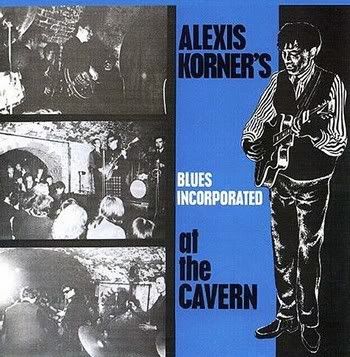
Alexis Korner's Blues Incorporated


Alexis Korner's Blues Incorporated - At the Cavern - 1964 - Oriole

This extremely rare album, released on Oriole in 1964 could be described as a big band effort, but the emphasis on the blues is still very strong, particularly on slow numbers like Hoochie Coochie Man and Whoa, Babe. The band is in top form, and the playing is relaxed and confident , very unusual when you consider that the Cavern was always packed out on nights like this and the temperature was often unbearably hot. The Cavern was very much a home venue for AK and Blues Inc., as the band had played there on a regular basis since their famous concert at the Beat Festival in Liverpool’s Stanley Stadium in 1963. The late Alexis Korner loved playing Liverpool, and was quoted as saying that “The people really listen to you there.The minute you set foot in The Cavern, you know it’s going to be a good session”. And if you listen to this great album, you'll know what he means. A great example of early sixties British R&B/Blues Rock. Check out the 1962 "R&B From The Marquee" album,the 1972 "Accidentally Born In New Orleans," release, and the great "CCS 1st" album from 1970.

TRACKS / COMPOSERS

Side 1
1. Overdrive (A.Korner)
2. Whoa Babe (A.Korner)
3. Everyday I Have The Blues (P.Chatman)
4. Hoochie Coochie Man (W.Dixon)

Side 2
5. Herbie's Tune (a.k.a. Dooji Wooji) (A.Korner)
6. Little Bitty Gal Blues (J.Turner)
7. Well All Right, OK, You Win (Wyche)
8. Kansas City (Lieber/Staller)

MUSICIANS

Alexis Korner: vocal (1,2,4,6), electric guitar, backing vocals (8)
Dave Castle: alto saxophone
Malcom Saul: organ
Vernon Bown: string bass
Mike Scott: drums
Herbie Goins: vocals (3,7,8)

Recorded at The Cavern in Liverpool on February 23, 1964. Produced by Geoff Frost

REVIEW

The group is still called Blues Incorporated, but without Cyril Davies or Long John Baldry, who were present on the first record. Recording at Liverpool's Cavern Club was more a gimmick than anything else, and the music is not as well made or exciting as the group's first album. This record shows Alexis Korner's more big-band type blues work, favoring horns. At the Cavern was a good album, but not one that was going to make much noise amid the work of the Rolling Stones, the Animals, or the Yardbirds. © Bruce Eder, allmusic.com

1964 Oriole LP liner notes by Unknown

No band could swing like this if it felt at all inhibited by its surroundings; that wild sound which has made Blues Inc. what it is could never come out so loud and clear if the whole place were not completely happy. From the slow blues like "Hoocie Coochie Man" and "Whoa, Babe", through to the jumping, up-tempo vocals by Herbie Goins on "All Right, O.K., You Win" and "Everyday I Have The Blues", everybody sounds relaxed and confident. Even the long instrumental, "Herbie's Tune” – dedicated to the band's brilliant American Blues Man, Herbie Goins – never seems to flag. And that really is saying something when you consider what the temperature at the Cavern can be on a really crowded night like this! If you want to know whether this was a really successful evening, just ask regular Cavern member what it is like when Alexis Korner's Blues Incorporated plays there. The thing is that both Blues Incorporated and The Cavern have come a long way since they started in their widely separated areas. If, a couple of years ago, anyone had asked the people at The Cavern or Alexis Korner what they thought of one another, the answer, from both sides, would probably have been: "Who?" But, there you are, that is just the way in which times change. The oldest established R&B band in the business and the oldest established Beat Club eventually hat to come together and the result is to be found in this LP. Here are all the excitement, all the unexpected happenings of a live session, a stage performance which always captures the sort of atmosphere which no studio can recreate. Here is the small group with the biggest sound in the country, wailing and shouting the Blues in the freewheeling, uninhibited fashion which has contributed so much to its success over years. It could never sound like this in a studio! Here is just about the best audience in Britain – much too large to fit into a studio – urging the band on. One hears a lot said about "Audience Participation" and this is the classic example of what it should be. Under circumstanced like these, no group could give a really bad show, but there are few that could have given one as good. In the end it comes down to the fact that, in order to sell excitement, you must be excited by what you are doing. Blues Incorporated always are, which is the very reason why we wanted to record "Alexis Korner 'Live' At The Cavern". The Cavern, by now, must be just about the best known Beat Club in the world. Along with the late Star Club, in Hamburg, The Cavern has figured in more press statements, success stories and guides to the Beat Scene than most of us would care to count. But is this fame really justified? Unquestionably it is. The Cavern has launched more name groups than any other club in Britain. Ask Gerry and The Pacemakers, The Merseybeats, The Big Three and a host of others where they got their first big break and the answer is, almost invariably: "At The Cavern". But, under the guidance of Ray McFall, and the well-liked compere, Bob Wooler, the club has spread its wings to include R&B amongst its list of attractions, using both British and American artists. Sonny Boy Williamson, Charlie and Inez Fox, John Lee Hoocker, these are but three of the best-known American acts to have appeared there. And, among name British acts, none has proved more popular than Alexis Korner's Blues Incorporated. Ever since Blues Incorporated made its sensational appearance at the 1963 Beat Festival in Liverpool's Stanley Stadium, Alexis and the boys have been making regular return visits to Liverpool and, in particular, to The Cavern. Whether it is the audiences which create the atmosphere, or the atmosphere which helps the audiences, the plain fact of the matter is that they love playing in Liverpool. "The people really listen to you, there". Says Alexis, "and they help you to play and sing your best. The minute you set foot in The Cavern, you know that it's going to be a good session. Everyone is so friendly, they just want to help you do your best". Now, The Cavern is a Beat Club, very strongly associated with pop market and this, you might think, could make life a little difficult for a semi-jazz based R&B band like Blues Incorporated. But, as you can hear on this great live LP, nothing could be further from the truth. © http://alexis-korner.net/notescavern.html

BIO (Wikipedia)

Blues Incorporated were a British R&B band in the early 1960s, which were led by Alexis Korner and which featured at various times such musicians as Jack Bruce, Charlie Watts, Terry Cox, Ginger Baker, Long John Baldry, Danny Thompson, Graham Bond, Cyril Davies, Malcolm Cecil and Dick Heckstall-Smith. Although never very successful commercially, they was extremely influential on the development of British rock music in the 1960s and later. Korner (1928-1984) was a member of Chris Barber's Jazz Band in the 1950s, and met up with Cyril Davies (1932-1964) who shared his passion for American blues. In 1954 they teamed up as a duo, began playing blues in London clubs, and opened their own club, the London Blues and Barrelhouse Club, where they featured visiting bluesmen from America. The club embraced aspiring young musicians, including in its early days Charlie Watts, Long John Baldry, and Jack Bruce. In 1961 Korner and Davies formed Blues Incorporated, the first amplified R&B band in Britain, and brought in singer Baldry (sometimes replaced by Art Wood), drummer Watts, bassist Bruce, and saxophonist Dick Heckstall-Smith. They secured a residency at the Marquee Club, which brought them to the attention of record producer and promoter Jack Good. He arranged a recording contract with Decca Records which resulted in the LP R&B from the Marquee. The album, released in late 1962, was actually recorded in the Decca studio rather than the club, and featured Baldry as lead singer and songs by Muddy Waters, Jimmy Witherspoon and Leroy Carr. Also in 1962, Korner and Davies established a regular "Rhythm and Blues Night" at the Ealing Jazz Club. This brought together many more fans of blues and R&B music, including Mick Jagger, Keith Richards, Brian Jones, Rod Stewart, Paul Jones, John Mayall, Zoot Money and Jimmy Page, some of whom would occasionally sit in on Blues Incorporated performances. Blues Incorporated was conceived as an informal "band"; its membership was intended to be fluid. Watts left the group around this time, and successfully suggested Ginger Baker as his replacement. Early in 1963, Davies disagreed with Korner's intention to add a brass section to the band and turn more towards jazz than blues. Joined by Baldry, he left to form his own group, Cyril Davies' All Stars, and was replaced in Blues Incorporated by Graham Bond. Blues Incorporated found a new residency at the Flamingo club, but shortly afterwards Bond, Bruce and Baker also left to form a new organ-based group, the Graham Bond Organisation. Blues Incorporated concentrated on their live work rather than making commercial recordings. The group only released two singles on Parlophone, "I Need Your Loving / Please Please Please" (1963) and "Little Baby" / "Roberta" (1964), followed by one on Fontana, "River's Invitation" / "Every Day I Have The Blues". In 1964, they released the LPs At The Cavern and Red Hot From Alex, with American Herbie Goins as lead singer, and Danny Thompson, later of Pentangle, on bass. By the time of the group's last album Sky High, credited to Alexis Korner's Blues Incorporated in 1965, the group included Duffy Power on vocals. Korner finally dissolved the group in 1966.

SOME INFO ON ALEXIS KORNER (Wikipedia)

Alexis Korner (19 April 1928 - 1 January 1984), born Alexis Andrew Nicholas Koerner, was a pioneering blues musician and broadcaster who has sometimes been referred to as "the Founding Father of British Blues". A major influence on the sound of the British music scene in the 1960s, Korner was instrumental in bringing together various English blues musicians. Alexis Korner was born in Paris to an Austrian father and Greek mother, and spent his childhood in France, Switzerland, and North Africa. He arrived in London in 1940 at the start of the Second World War. One memory of his youth was listening to a record by Jimmy Yancey during a German air raid. He said, "From then on all I wanted to do was play the blues." After the war, he played piano and guitar, and in 1949 joined Chris Barber's Jazz Band where he met blues harmonica player Cyril Davies. They started playing together as a duo, formed the influential London Blues and Barrelhouse Club in 1955, and made their first record together in 1957. Korner brought many American blues artists, previously unknown in England, to perform. Although he himself was a blues purist - Korner criticised better-known British blues musicians, during the blues boom of the late '60s, for their blind adherence to Chicago blues, as if the music came in no other form - he liked to surround himself with jazz musicians and often performed with a horn section drawn from a pool which included, among others, saxophone players Art Themen, Mel Collins, Dick Heckstall-Smith, Dick Morrissey, John Surman and trombonist Mike Zwerin. In the 1960s Korner began a media career, initially as a show business interviewer and then on ITV's Five O'Clock Club, a children's TV show. He also wrote about blues for the music papers, and continued his performing career especially in Europe. Apart from discovering various English musicians Korner also introduced foreign artists, such as German Wolfgang Michels, to a larger audience. Korner also wrote the liner notes for Michels' group Percewood's Onagram first album in 1969. While touring Scandinavia he first joined forces with singer Peter Thorup, together forming the band New Church, who were one of the support bands at the Rolling Stones Free Concert at Hyde Park on 5 July 1969. It is said that Jimmy Page found out about a new singer, Robert Plant, who had been jamming with Korner, who wondered why Plant had not yet been discovered. Plant, Korner, and Steve Miller were in the process of recording a full album with Plant on vocals until Page had asked him to join "the New Yardbirds", aka Led Zeppelin. Only two songs are in circulation from these recordings: "Steal Away" and "Operator". In 1970 Korner and Thorup formed a big band ensemble, C.C.S. - short for The Collective Consciousness Society - which had several hit singles produced by Mickie Most, including a version of Led Zeppelin's "Whole Lotta Love" which was used as the theme for BBC's Top Of The Pops for several years. Another instrumental called Brother was used as the theme to the Radio 1 Top 20 when Tom Browne presented the programme in the early 1970s. This was the period of Korner's greatest commercial success in the UK. In 1973, he formed another group, Snape, with Boz Burrell, Mel Collins, and Ian Wallace, previously together in King Crimson. Korner also played on B. B. King's Supersession album, and cut his own, similar album, Get Off My Cloud, with Keith Richards, Peter Frampton, Nicky Hopkins, and members of Joe Cocker's Grease Band. In the mid 1970s, while touring Germany, he established an intensive working relationship with bassist Colin Hodgkinson who played for the support act Back Door. They would continue to collaborate until the end. In the 1970s Korner's main career was in broadcasting. In 1973 he presented a unique 6-part documentary on BBC Radio 1, The Rolling Stones Story, and in 1977 he established a weekly blues and soul show on Radio 1, which ran until 1981. He also used his gravelly voice to great effect as an advertising voice over artist. In 1978, for Korner's 50th birthday, an all-star concert was held featuring many of his friends mentioned above, as well as Eric Clapton, Paul Jones, Chris Farlowe, Zoot Money and other friends, which was later released as The Party Album, and as a video. In 1981, he joined another "supergroup", Rocket 88, a project led by Ian Stewart based around boogie-woogie keyboard players, which featured a rhythm section comprising Jack Bruce and Charlie Watts, among others, as well as a horn section. They toured Europe and released an album on Atlantic Records. Alexis Korner, a lifelong chain smoker, died of lung cancer in London on January 1, 1984, aged 55.

4.7.08

Cream


Cream - Cream Gold - 2005 - Polydor

Fusing Delta blues, pop and psychedelia, Cream created a sound all its own. During a recording life of just over two years, 1966-1968, the band established the prototypical blues rock power trio, laid the foundation for the hard rock of succeeding decades and redefined the instrumentalist in rock. Yet, at the height of its fame, Cream broke up. Clapton and Baker subsequently formed Blind Faith, and all three eventually went solo, with Clapton achieving one of the most renowned careers in rock. One measure of Cream's impact is that, despite such a short career, in 1993 the trio was inducted into the Rock and Roll Hall of Fame.

DISC 1
Tracks taken from Fresh Cream (1966)
1. "I Feel Free" 1 (Bruce, Brown) – 2:54
2. "N.S.U." (Bruce) – 2:47
3. "Sweet Wine" (Baker, Godfrey) – 3:19
4. "I'm So Glad" (James) – 4:01
Tracks taken from Disraeli Gears (1967)
5. "Strange Brew" (Clapton, Pappalardi, Collins) – 2:48
6. "Sunshine of Your Love" (Bruce, Clapton, Brown) – 4:10
7. "World of Pain" (Collins, Pappalardi) – 3:05
8. "Tales of Brave Ulysses" (Clapton, Sharp) – 2:46
9. "S.W.L.A.B.R." (Bruce, Brown) – 2:31
10. "We're Going Wrong" (Bruce) – 3:29
Tracks taken from Wheels of Fire (1968)
11. "White Room" (Bruce, Brown) – 4:58
12. "Sitting On Top of the World" (Burnett) – 4:59
13. "Passing the Time" (Baker, Taylor) – 4:32
14. "Politician" (Bruce, Brown) – 4:11
15. "Those Were the Days" (Baker, Taylor) – 2:56
16. "Born Under a Bad Sign" (Jones, Bell) – 3:09
17. "Deserted Cities of the Heart" (Bruce, Brown) – 3:41
Tracks taken from Goodbye (1969)
18. "Anyone For Tennis" 1 (Clapton, Sharp) – 2:37
19. "Badge" (Clapton, Harrison) – 2:46
20. "Doing That Scrapyard Thing" (Bruce, Brown) – 3:16
21. "What a Bringdown" (Baker) – 3:57

DISC 2: LIVE
1. "N.S.U." 4 (Bruce) – 10:12
2. "Sleepy Time Time" 4 (Bruce, Godfrey) – 6:50
3. "Rollin' and Tumblin'" 4 (Waters) – 6:34
4. "Spoonful" 2 (Dixon) – 16:46
5. "Crossroads" 2 (Johnson, arr. Clapton) – 4:14
6. "Sunshine of Your Love" 5 (Bruce, Clapton, Brown) – 7:24
7. "I'm So Glad" 3 (James) – 9:12
8. "Toad" 2 (Baker) – 16:16

RELEASE NOTES
Note 1: originally released as a non-album single, but included on later prints of the album
Note 2: previously released on Wheels of Fire (1968)
Note 3: previously released on Goodbye (1969)
Note 4: previously released on Live Cream (1970)
Note 5: previously released on Live Cream Volume II (1972)


CREAM:

Eric Clapton (vocals, guitar)
Jack Bruce (vocals, acoustic guitar, cello, harmonica, piano, organ, bass guitar)
Ginger Baker (vocals, drums, percussion)

ADDITIONAL MUSICIANS

George Harrison (guitar)
Felix Pappalardi (viola, trumpet, organ)


REVIEW


There has been no shortage of Cream compilations over the years — as a matter of fact, they far outnumber the group's actual albums, of which there were merely four (true, they were recorded during an insanely productive two-year lifespan) — but 2005's Gold is arguably the best of the lot. Released as part of Universal's ongoing Gold series, Cream's installment spans 29 tracks over the course of two discs, with the first CD being devoted to their studio work (it weighs in at 21 tracks) and the second devoted to live recordings (it runs only eight songs, which illustrates how much they improvised in concert). Not only are all of the usual suspects here — the hits "I Feel Free," "Strange Brew," "Sunshine of Your Love," "Tales of Brave Ulysses," "Badge," "Swlabr," "Crossroads," and "Politician" — but this includes such gems as "World of Pain," "Passing the Time," "Doing That Scrapyard Thing," and "What a Bringdown." While there are a handful of cuts that might have deserved inclusion — chief among them "Four Until Late," "Take It Back," and "As You Said" — everything essential is here, and each disc draws a near-definitive portrait of what the group achieved on-stage and in the studio. As a (relatively) concise overview, Gold can't be beat — it tells you everything you need to know about this legendary supergroup. © Stephen Thomas Erlewine, allmusic.com

BAND HISTORY

Celebrated as the first of the great power trios of rock, their sound was characterised by a melange of blues and psychedelia, combining Clapton's mastery of the genre with the airy voice of Jack Bruce and, at times, manic rhythms of Ginger Baker. The drug-addled imagery and ambience of the time abounds. Cream epitomised the high energy sound of the time, anchored in a familiar blues style; from the traditional blues classics such as "Crossroads" and "Born Under a Bad Sign," through more eccentric imagery found in "Strange Brew" and "Tales of Brave Ulysses," and culminating in the protracted indulgences of "Spoonful" and "Toad". Their biggest hits were "I Feel Free", "Sunshine of Your Love", "White Room", and "Badge", co-written by Clapton and George Harrison, who played guitar on the recording under the pseudonym 'L'Angelo Misterioso' for contractual reasons. The late Felix Pappalardi, producer (and later member of Mountain), sometimes called the 'fourth member' of Cream, is featured heavily on the Disraeli Gears album, fondly remembered for its striking design by Martin Sharp. British poet Pete Brown wrote the lyrics to many of the band's songs and was another important contributor. While their studio work and songwriting were therefore relatively formal, in a live setting Cream were almost a completely different band, improvising constantly, with songs regularly surpassing the 20 minute mark. This gained them a reputation as (along with The Grateful Dead) the first jam band. Much of this stemmed from Bruce and Baker's origins as jazz musicians, although during an interview on The South Bank Show in the late 1980s Clapton attributed the extending soloing to their unwillingness or inability to stop playing and because none of the trio was officially the bandleader with the authority to rein in the other two. Considering their jazz roots, it is perhaps ironic that the band is also considered a pioneer of heavy metal music. Bruce has stated that without Clapton's influence the band would more likely have played a kind of jazz, although what they played in concert was indeed jazz-rock fusion, and Baker commented in a 2005 interview (included with the Cream reunion DVD) that he and Bruce consider Clapton a jazz musician, even if Clapton himself doesn't. Cream broke up in November 1968 due to clashing egos and musical visions: Bruce and Baker were notorious for not getting along, and Clapton famously related how he once suddenly stopped playing in concert without either of the others noticing. Inspired by more song-based acts like The Band, Clapton went on to perform much different, less improvisational material with Delaney & Bonnie, Blind Faith, his own Derek and the Dominos, and in a long and varied solo career. (Blind Faith came about immediately after the demise of Cream following an attempt by Clapton to recruit Steve Winwood into Cream in the hope that Winwood would act as a buffer between Bruce and Baker; Cream broke up before Winwood could accept the offer.) On the night that Cream split, Jimi Hendrix was performing live on the Lulu show and cut short his own number, instead beginning an instrumental version of "Sunshine of Your Love" (which had, perhaps unknown to him, apparently been originally inspired by a Hendrix concert) which he dedicated to "the Cream". The three members of Cream didn't play together again until 1993, when Cream was inducted into the Rock and Roll Hall of Fame and played at the induction ceremony. The band reunited in May 2005 for a series of four shows at the Royal Albert Hall, where they had played their final concerts in 1968 (documented on the album Goodbye.) The reformed band also played at Madison Square Garden from October 24 - 26, 2005. Cream made a significant impact upon the popular music of the time, together with The Who providing a heavy yet technically proficient musical theme that foreshadowed the emergence of bands like Led Zeppelin in the later 1960s and 1970s, and contributed to the emergence of most later forms of heavy metal and hard rock music. The band's live performances influenced progressive rock acts and other jam bands such as Phish and The Mods.

7.4.08

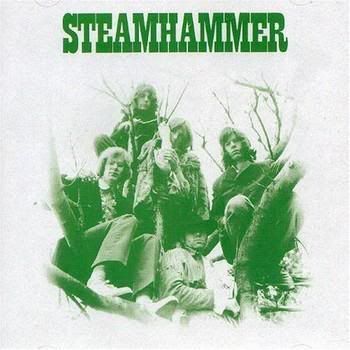
Steamhammer


Steamhammer - Steamhammer (a.k.a. Reflection) - 1969 - CBS UK [This was first pressing of LP]

Recorded in 1969, this self titled debut album was also released as "Reflection." It's a bluesy progressive rock recording with acid guitar, harmonica and great vocals. This is a very good album from one of the best bands from the late sixties British blues rock groups, and it would be worthwhile checking out their other three albums. For a similar sound, check out albums by Savoy Brown.

REVIEW

The self-titled debut from Steamhammer has been issued under a number of titles -- the most famous of which is Reflection (1969) -- all of them including an identical track list and in essence, are one and the same. The numerous and short-lived incarnations of the band began on this long player and spilled over onto a subsequent 7" single with an edit of "Junior's Wailing" b/w the non-LP track "Windmill". [Note: Interested parties can find both cuts among the "bonus tracks" on the CD reissue of MK II (1969).] For these sides Steamhammer features the talents of: Kieran White (vocals/harmonica/acoustic guitar), Martin Pugh (lead guitar) Martin Quittenton (guitar), Steve Davey (bass) and Michael Rushton (drums). Like Chicken Shack, Fleetwood Mac, Cream, Ten Years After and a plethora of other late ‘60s British rock groups, Steamhammer had been influenced by the mostly American-made R&B. However, a conspicuously high ratio of original material separated them from many of their more prominent contemporaries. They also included a few somewhat obligatory covers, such as the seven-plus minute workout on Eddie Boyd's "Twenty-Four Hours" as well as a high and mighty rendition of B.B. King's "You'll Never Know". Other standout sides come from within the band and include the trippy and slightly progressive "Even The Clock" as well as the jazzy syncopation of "Down the Highway" -- with Harold McNair (flute) of Donovan fame making some notable contributions to the latter. The previously mentioned "Junior's Wailing" should not be missed as it sports a heavy-duty and otherwise propulsive blues shuffle. Every subsequent Steamhammer long player was accompanied by a personnel change that yielded a tremendous stylistic vacillation from release to release. Their subsequent effort, MK II, would venture farther out into a progressive and jazz-fusion style akin to that of Egg or Gong than to the electric blues-based heavy metal found on this platter. © Lindsay Planer, All Music Guide

ORIGINAL TRACKS

1. Water (Part One) (Quittenton/Pugh)
2. Junior's Wailing (White/Pugh)
3. Lost You Too (Quittenton/White)
4. She Is The Fire (Quittenton/White)
5. You'll Never Know (B.B. King)
6. Even The Clock (Quittenton/White/Graham)
7. Down The Highway (Quittenton/White)
8. On Your Road (White)
9. Twenty-Four Hours (Boyd)
10. When All Your Friends Are Gone (Quittenton/White)
11. Water (Part 2) (Quittenton/Pugh)


BAND

Martin Quittenton - guitar
Kieran White - vocals, guitar, harmonica
Martin Pugh - guitar
Steve Davy - bass
Michael Rushton - drums
Guest musician B.B. King played guitar on "You'll Never Know"

LATER MUSICIANS INCLUDED -

Steve Jollife - saxophone, flute
Mick Bradley - drums
Louis Cennamo - bass

BIO (Courtesy of "Christian Graf - Rock Music Lexikon", Verlag Taurus Press, Hamburg. Edited by Alex Gitlin. From the CD reissue of "Mk II", Repertoire, REP 4236-WY)

The extraordinary blues-rock band ‘Steamhammer’ was formed at the end of 1968 in Worthing, England. Martin Quittenton (guitar) and Kieran White (vocals, guitar, harmonica) came out of the British folk circuit. Quittenton had worked together with the Liverpool Scene and, like the other members Martin Pugh (guitar), Steve Davy (bass) and Michael Rushton (drums), had played with numerous R&B groups. Blues hero Freddie King ordered Steamhammer as his backing band on tour through Great Britain. Come Spring time, 1969, they signed a record contract with CBS. The first album, "Steamhammer", was a mixture of classic blues by B.B.King and Eddie Boyd and modern blues written by White and Quittenton with the help of Pugh. At the end of the British blues boom, only a few hardcore fans took interest on the finest lyrical blues-rock statement of the century. Not selling as many records as they'd hoped to, Steamhammer nevertheless became a top European open-air attraction, mainly due to their brilliant live performance. For over two hours each night they would indulge in wide excursions in instrumental improvisations, embodied by the impressive guitar riffage of Martin Pugh and the sensitive harmonica of Kieran White. In the summer of 1969, Quittenton left the band, followed by drummer Michael Rushton. They were replaced by Steve Jollife (saxaphone, flute) and Mick Bradley. Jollife's feel for precise arrangements and jazz influences especially inspired the recording of Steamhammer's second, "Mk II", album. Overstepping the boundaries of traditional blues forms, they unleashed their own musical creativity and imagination without resorting to any technical trickery. These highly professional and creative musicians performed many live shows at various festivals in Scandinavia, West Germany and the Netherlands. On the continent, it turned out, they had become more popular than in England. In the summer of 1970, Steamhammer recorded their "definitive album" (rock session), called "Mountains", as a quartet. White, Pugh, Davy and Bradley were really working as a team and offering electrified white urban blues of highest quality. The live cut, "Riding On The L&N", is one of the highlights of the "Mountains" album, which contains straight-ahead blues numbers with a healthy dose of rock'n'roll. It was only with the release of this album that Steamhammer began to be noticed by the rock world. After the Altamont and Fehmarn fiascos, the era of open-air events of such calibre was ended at least for quite a while. In the late summer of that same year, Steamhammer toured for the last time in Germany and the Benelux. The following autumn, the line-up changed again. Only Pugh and Bradley stayed together and engaged ex-‘Renaissance’ member Louis Cennamo (bass) for the recording of one more album. "Speech" was recorded in the winter of 1971 and released in the beginning of 1972. By that time, Steamhammer had ceased to exist. "Speech" was a disappointing, partly chaotic album, and the negative reception of the record led to the end of the group's popularity. Mick Bradley died in February 1972 of leukaemia. Kieran White released a solo LP, "Open Door", in 1975 and Martin Pugh and Louis Cennamo put together a cult band Armageddon (with Keith Relf on vocals), which released only one album.
Singles:
Junior's Wailing/Windmill (1969)
Autumn Song/Blues For Passing People (1969)
Albums:
Steamhammer, A.K.A Reflection (1969)
MK II (1969)
Mountains (1970)
Speech (1971)

2.12.07

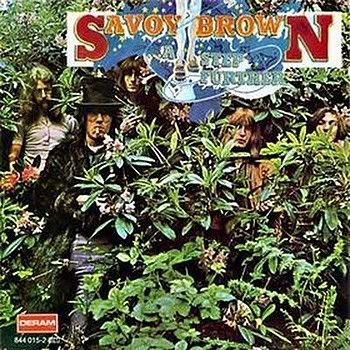
Savoy Brown


savoybrown-astepfurther1969


Savoy Brown - A Step Further - 1969 - Parrot

Terrific early sixties blues rock album from Savoy Brown. One of the earliest of British blues bands, Savoy Brown (with founder guitarist and longtime member Kim Simmonds at the helm) helped launch the U.K. blues/rock movement that paved the way for such acts as Led Zeppelin. In 1969 they captured the spirit of the band's exuberant live performances on this album with a twenty minute rendition of "The Savoy Brown Boogie," dedicated to fans in Detroit, where Savoy Brown were really appreciated. Check out their other albums, the hard rocking Rock And Roll Warriors (1981) and the acoustic blues album Slow Train (1986 on Relix). Great stuff.

TRACKS

1. Made Up My Mind - Chris Youlden
2. Waiting In The Bamboo Grove - Kim Simmonds
3. Life's One Act Play - Chris Youlden
4. I'm Tired/Where Am I - Chris Youlden, Willis, Brown
5. Savoy Brown Boogie (Live): Feel So Good/Whole Lotta Shakin' Goin' On/Little Queenie/Purple Haze... [Live][Medley] - Chuck Berry, Chris Youlden, Kim Simmonds, Williams, Willis, Ross Lomas

CREDITS

Kenny Wheeler (Trumpet), Bob Hall (Piano), Bob Hall (Trumpet), Bob Hall (Violin), Don Lusher (Trombone), Mike Vernon (Percussion), Mike Vernon (Bells), Mike Vernon (Producer), Mike Vernon (Cowbell), Chris Youlden (Trumpet), Chris Youlden (Violin), Chris Youlden (Vocals), Eddie Blair (Trumpet), Des Bradley (Violin), Savoy Brown (Handclapping), Savoy Brown (Main Performer), Raymond Davis (Flugelhorn), Raymond Davis (Horn), Roger Earl (Trumpet), Roger Earl (Violin), Roger Earl (Conga), Roger Earl (Drums), Roger Earl (Vocals), John Edwards (Trombone), Bob Efford (Saxophone), Bob Efford (Sax (Tenor)), David Grinsted (Engineer), Bobby Haughey (Flugelhorn), Bobby Haughey (Horn), Anthony Hawkins (Remastering), Don Honeywell (Saxophone), Don Honeywell (Sax (Baritone)), Butch Hudson (Trumpet), Rex Morris (Saxophone), Rex Morris (Sax (Tenor)), Terry Noonan (Arranger), Terry Noonan (Conductor), Lonesome Dave Peverett (Guitar), John Punter (Assistant Engineer), Phil Reid (Violin), Lionel Ross (Cello), John Shineborne (Cello), Kim Simmonds (Guitar), Kim Simmonds (Harmonica), Kim Simmonds (Trumpet), Kim Simmonds (Violin), Kim Simmonds (Cowbell), Tony Stevens (Bass), Tony Stevens (Percussion), Charles Vorzanger (Violin), Colin Freeman (Assistant Engineer), Tone Stevens (Bass), Tone Stevens (Trumpet), Tone Stevens (Violin), Tone Stevens (Conga), Tone Stevens (Drums), David Bellman (Viola), Percy Coates (Violin), Jack Fields (Violin), Maurice Loban (Viola), John Meek (Viola), John Ronayne (Violin), Louis Rose (Viola), John Tonayne (Violin), John Tracy (Liner Notes), John Tracy (Coordination), Terence Ibbott (Photography), Don Honeywill (Sax (Baritone))

REVIEW

With Kim Simmonds and Chris Youlden combining their talents in Savoy Brown's strongest configuration, 1969's A Step Further kept the band in the blues-rock spotlight after the release of their successful Blue Matter album. While A Step Further may not be as strong as the band's former release, all five tracks do a good job at maintaining their spirited blues shuffle. Plenty of horn work snuggles up to Simmonds' guitar playing and Youlden's singing is especially hearty on "Made up My Mind" and "I'm Tired." The first four tracks are bona fide Brown movers, but they can't compete with the 20-plus minutes of "Savoy Brown Boogie," one of the group's best examples of their guitar playing prowess and a wonderful finale to the album. This lineup saw the release of Raw Sienna before Lonesome Dave Peverett stepped up to the microphone for Looking In upon the departure of Youlden, but the new arrangement was short lived, as not long after three other members exited to form Foghat. As part of Savoy Brown's Chris Youlden days, A Step Further should be heard alongside Getting to the Point, Blue Matter, and Raw Sienna, as it's an integral part of the band's formative boogie blues years. © Mike DeGagne, All Music Guide, © 2007 Answers Corporation. All rights reserved

5.8.07

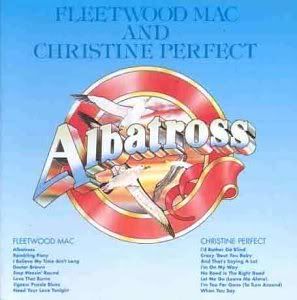
Fleetwood Mac/Christine Perfect


fleetwoodmacchristineperfect-albatross


Fleetwood Mac/Christine Perfect - Albatross - 1968/1969? - CBS/Embassy?

This LP is a great recording, featuring eight tracks by Fleetwood Mac, and eight by Christine Perfect, aka Christine McVie. If you have any info on this album, please post. Sound could be better as its a 128 Kbps posting. A.O.O.F.C would be interested in higher bitrate recordings.


TRACKS


A1 Fleetwood Mac Albatross (3:10)
A2 Fleetwood Mac Rambling Pony (2:40)
A3 Fleetwood Mac I Believe My Time Ain't Long (2:55)
A4 Fleetwood Mac Doctor Brown (3:44)
A5 Fleetwood Mac Stop Messin' Round (2:18)
A6 Fleetwood Mac Love That Burns (5:02)
A7 Fleetwood Mac Jigsaw Puzzle Blues (1:33)
A8 Fleetwood Mac Need Your Love Tonight (3:27)

B1 Christine Perfect I'd Rather Go Blind (3:14)
B2 Christine Perfect Crazy 'Bout You Baby (3:01)
B3 Christine Perfect And That's Saying A Lot (2:57)
B4 Christine Perfect I'm On My Way (3:08)
B5 Christine Perfect No Road Is The Right Road (2:48)
B6 Christine Perfect Let Me Go (Leave Me Alone) (3:33)
B7 Christine Perfect I'm Too Far Gone (To Turn Around) (3:25)
B8 Christine Perfect When You Say (3:14)

27.7.07

Steamhammer


steamhammer-mk21969

Steamhammer - Mk II - 1969 - CBS UK

This is mainly a well structured blues rock album, with great jazzy improvisations. Steamhammer was a very prominent live act in the sixties, especially in Germany. An unusual band in that their music has been categorised as progressive blues, which was a rather unusual music style in the late sixties. There is nothing groundbreaking here, but the album is enjoyable, and well worth listening to for its variety of expertly played musical fusions.

ORIGINAL TRACKS

1. Supposed To Be Free - White (5:59)
2. Johnny Carl Morton - Jollife (4:38)
3. Sunset Chase - Pugh (3:02)
4. Contemporary Chick Con Song - White/Pugh/Jollife/Bradley/Davy (3:49)
5. Turn Around - Joliffe (3:36)
6. 6/8 For Amiran - White/Jollife (3:04)
7. Passing Through - White (5:17)
8. Down Along The Grove - White (0:47)
9. Another Travelling Tune - White/Pugh (16:23)
10. Fran And Dee Take a Ride - White (2:58)

BONUS CD TRACKS

11. Junior's Wailing (single version) - White/Pugh (3:30)
12. Windmill - Quittenton/White (4:28)
13. Autumn Song - White/Jollife (4:09)
14. Blues For Passing People - Steamhammer (6:26)

BAND

- Steve Jolliffe / flute, harpsichord, keyboards, saxophone (Alto), vocals, wind
- Kieran White / guitar, harmonica, Jew's-Harp, vocals
- Mickey Bradley / percussion, conga, drums
- Steve Davy / bass, guitar (bass), vocals
- Martin Pugh / guitar, guitar (electric), vocals

REVIEW

The second version of the British combo Steamhammer released its first LP utilizing the talents of Steve Davy (bass), Martin Pugh (guitars), and Kieran White (vocals/guitar/harmonica/Jew's harp) from the original band as well as new recruits Steve Jolliffe (woodwind/brass/harpsichord/vocals) and Mick Bradley (drums). It was the blues that initially drove the combo on its debut long-player, Reflection (1969), likewise known as Junior's Wailing. This lineup adds more exploratory and intricate melodies, courtesy of the multi-instrumental talents and sonic sculpting of future Tangerine Dream member Jolliffe. While this version of the band would not remain past this album, its unique fusion would arguably peak on Mountains (1970), the follow-up to MK II (1969). There are definite shapes of things to come throughout this effort, thanks to the aggressive interaction of the new recruits. They immediately step up to the plate, providing a variety of interesting melodic and instrumental textures. These range from the full-speed gallop of Jolliffe's "Johnny Carl Morton" or the Baroque waltz "Turn Around" -- both of which are punctuated by some prominent harpsichord interjections reminiscent of other U.K. progressive groups such as Family and Blossom Toes. Pugh's guitar work is another of the band's conspicuous assets, as he is able to fluidly waft between the acoustic romanticism of the diminutive "Sunset Chase" to the bluesy and tongue-in-cheek "Contemporary Chick Con Song." The latter track includes a stretched-out instrumental jam that captures Pugh's criminally underrated electric fretwork. Steamhammer's various and seemingly disparate musical elements coalesce on the manic "6/8 for Amiran." They blend the complexities inherent in the time signature with a tightly executed and churning blues -- much in the same way that early Jethro Tull was able to do on sides such as "Nothing Is Easy" or "For Our Mothers." The second side consists of a suite containing "Down Along the Grove," "Another Travelling Tune," and "Fran and Dee Take a Ride." This 16-plus minute epic allows Steamhammer to improvise and stretch out. The open structure makes room for the various musical styles to be thoroughly explored with more intricacy than a majority of the three- and four-minute tunes. The double lead electric guitars, courtesy of the song's co-authors, Pugh and White, blend well with Jolliffe's jazzy sax and flute improvisations. Enthusiasts are encouraged not only to seek this platter, but the Mountains (1970) follow-up as well. © 2007 Lindsay Planer, All Music Guide

BIO (Wikipedia)

Steamhammer was a blues-rock band from Worthing, England. The band was founded in 1968 by Martin Quittenton (guitar) and Kieran White (vocals, guitar, harmonica). The first stable lineup consisted of Quittenton, White, Martin Pugh (guitar), Steve Davy (bass), and Michael Rushton (drums). This version of the band acted as backing band for Freddie King on one of his tours of England. The band's first album, Reflection, was released in 1969. It included covers of "You'll Never Know" by B. B. King and "Twenty-Four Hours" by Eddie Boyd as well as original songs by White, Quittenton, and Pugh. Session musicians Harold McNair (flute) and Pete Sears (piano) also played on the album. This album was not commercially successful, but the band became a popular live act, especially in West Germany. In the summer of 1969, Quittenton and Rushton left the band, and Steve Jollife (saxophone, flute) and Mick Bradley (drums) joined the band. This version of the band recorded the album Mk II, released in 1969. It consisted entirely of original songs, and the musical style had more jazz and progressive rock influences. Jollife left the band in 1970. The remaining band members recorded the album Mountains, which was released in 1970. This album included a cover of "Riding on the L & N" by Lionel Hampton and seven original songs. In 1971, White and Davy left the band, and Louis Cennamo (bass) joined the band. This lineup, along with session vocalist Garth Watt-Roy, recorded the album Speech, which was released in 1972. It consisted of three long, mostly instrumental songs. Bradley died of leukemia in 1972, leading to the break-up of the band. Pugh and Cennamo went on to play in Armageddon. After that band broke up, Cennamo joined Illusion. White recorded a solo album, Open Door, which was released in 1975. Quittenton played guitar and co-wrote songs on albums by Rod Stewart. Jollife joined Tangerine Dream in 1978 and played on the album Cyclone.