A.O.O.F.C
recommends
Mizar6

babydancing


Get this crazy baby off my head!

Showing posts with label Seventies Blues/Rock. Show all posts

7.4.14

Alvin Lee & Ten Years Later


Alvin Lee & Ten Years Later - Live At Rockpalast (Audio CD) - 2013 - Repertoire

As with many of the other English beat groups of the '60s, Alvin Lee cut his musical teeth in Hamburg, Germany in a band called the Jaybirds. By 1966, back in England, he had changed the name of his band to Ten Years After and was rapidly becoming a major attraction because of the virtuosity of his solo work. Most Americans first became familiar with Lee through his appearance at Woodstock, although he remained active throughout the decades that followed; among his releases were 1974's In Flight, 1986's Detroit Diesel, and 1996's Live in Vienna. Alvin Lee died on March 6, 2013 due to complications from a routine surgical procedure. © All Music Guide © 2013 Rovi Corp | All Rights Reserved http://www.allmusic.com/artist/alvin-lee-mn0000011620

The great Alvin Lee passed away on 6th March 2013 while he was planning on recording an album of Chicago blues. Alvin was also due to appear with Johnny Winter at Paris Olympia in April, 1978. Sadly these events never came to pass. Some would say that Alvin Lee was a better guitarist than he got credit for. Fortunately, releases like this live Rockpalast album and a back catalogue of great albums will let current and future generations enjoy “the fastest guitar player in the West”, one of the unsung heroes of rock and blues, and a legendary rocker at the peak of his powers. Alvin Lee made a huge contribution to great rock music and will always be sorely missed. Listen to Alvin Lee's blistering "In Flight [live]" album, and Ten Years After's classic "Cricklewood Green" album. N.B: This audio disc is the second CD of a DVD/CD set of Alvin with bassist Mick Hawksworth and drummer Tom Compton in concert at at Grugahalle, Essen, Germany on 15/9/78 [All tracks @ 320 Kbps: File size = 159 Mb]

TRACKS / COMPOSERS

1 Gonna Turn You On – Alvin Lee 4:22
2 Help Me (Baby) – Sonny Boy Williamson 8:47
3 Ain’t Nothin’ Shakin’ – Alvin Lee 14:45
4 Bass Boogie – Alvin Lee 7:11
5 Hey Joe – William M.Roberts 7:17
6 I’m Going Home – Alvin Lee 9:35
7 Choo Choo Mama- Andy Waterworth & Eva Maria Fisher 1:54
8 Rip it Up – Blackwell & Marascalo 2:28
9 Sweet Little Sixteen – Chuck Berry 3:37
10 Roll Over Beethoven – Chuck Berry 3:23

MUSICIANS

Alvin Lee – Guitar, Vocals
Mick Hawksworth – Bass
Tom Compton – Drums

BIO

Born in Nottingham England, ALVIN LEE began playing guitar age 13 and formed the core of the band Ten Years After by aged 15. Originally influenced by his parent's collection of jazz and blues records, it was the advent of rock and roll that truly sparked his interest and creativity, and guitarists like Chuck Berry and Scotty Moore provided his inspiration. The Jaybirds, as Lee's early band was called, were popular locally and had success in Hamburg, Germany, following the Beatles there in 1962. But it wasn't until the band moved to London in 1966 and changed its name to TYA that international success beckoned. The band secured a residency at the legendary Marquee Club, and an invitation to the famous Windsor Jazz & Blues Festival in 1967 led to their first recording contract. The self titled debut album surprisingly received play on San Francisco's underground radio stations and was enthusiastically embraced by listeners, including concert promoter Bill Graham who invited the band to tour America for the first time in the summer of 1968. Audiences were immediately taken with Lee's distinctive, soulful, rapid fire guitar playing and the band's innovative mix of blues, swing jazz and rock, and an American love affair began. TYA would ultimately tour the USA 28 times in 7 years, more than any other U.K. band. Appearing at the famed Woodstock Festival, Lee's virtuoso performance was one of the highlights and remains today a standard for many other guitarists. Captured on film in the documentary of the festival, his inspired playing catapulted him into superstardom, and soon the band was playing arenas and stadiums around the globe. Although Lee later lamented that he missed the intimacy of smaller venues, there is no denying the impact the film made in bringing his music to a worldwide audience. TYA had great success, releasing ten albums together, but by 1973 Lee was feeling limited by the band's style. With American gospel singer Mylon LeFevre and a host of rock talents like George Harrison, Steve Winwood, Ron Wood and Mick Fleetwood , he recorded and released On The Road To Freedom, a highly acclaimed album that was at the forefront of country rock. A year later, in response to a dare, Lee formed Alvin Lee & Company to play a show at the Rainbow in London and released it as a double live album, In Flight. An energetic mix of rhythm & blues and rock, with a tribute to Elvis Presley thrown in for good measure, Lee once, in his understated fashion, called this band "a funky little outfit". They were far more than that and various members of the band continued on with Lee for his next two albums, Pump Iron and Let it Rock. He finished out the 70s with a powerhouse trio he called Ten Years Later who also released two albums, Ride On and Rocket Fuel, and toured extensively throughout Europe and the United States. The 80s brought another change in Lee's direction, with two albums that were strong collaborations with Rare Bird's Steve Gould and an extensive tour with the Rolling Stones' Mick Taylor joining his band. Lee's overall musical output includes more than 20 albums, including 1985's Detroit Diesel and the back to back 90s collections of Zoom and 1994 (I Hear You Rocking). Guest artists on both albums include George Harrison, whose brilliant slide guitar perfectly complements Lee's lead. Their duet on 1994's The Bluest Blues led one reviewer to call it "the most perfect blues song ever recorded." "Alvin Lee in Tennessee", released in 2004, was recorded with rock and roll legends Scotty Moore and D.J. Fontana. The critically acclaimed album features an upbeat selection of songs that are timely and forward looking, yet borrow from Lee's beloved 50s rock and roll. It was followed in 2007 by Saguitar, a uniquely varied collection of songs that flowed from melancholic blues to raucous rock to an innovative interpretation of rap. Throughout it all, Alvin Lee managed to stay true to himself, making the music he wanted without outside influence or expectations. His most recent CD "Still On the Road to Freedom" , released in August 2012, takes the listener on an musical journey to the past and present and back again, enthralling us with his talent and music and proving without a doubt that he was able to do it his way...and still deliver the goods. On March 6, 2013, Alvin Lee passed away from unforseen complications following a routine surgical procedure for atrial arrhythmia. He is survived by his wife Evi, daughter Jasmin, former partner Suzanne (Jasmin's mother), sisters Irma and Janice and scores of fans around the world. Although he has left us, his music will live on. © 2012 Alvin Lee. all rights reserved. http://alvinlee.com/biography.html

6.3.14

Canned Heat


Canned Heat ‎- Live At Topanga Corral - 1970 - Wand

Live at Topanga Corral is a 1970 live album by Canned Heat. The album is taken from a 1968 concert at the Kaleidoscope in Hollywood, California and not at the Topanga Corral in western Los Angeles County as the title suggests. Canned Heat was under contract to Liberty Records at the time and Liberty did not want to do a live album, so manager Skip Taylor told Liberty that the album had been recorded in 1966 or 1967 (when CH were not under contract) at the Topanga Corral and sold a live tape of a Canned Heat Kaleidoscope gig recorded in July 1968 to Wand Records to avoid legal complications. The album has been released under dozens of different titles and track listings. SQ is fair to good, but gives a good idea of the late ‘70’s raw blues boogie sound of one of the greatest rock bands of all time. Has anybody heard of a remastered issue of this album? [All tracks @ 320 Kbps: File size = 103 Mb]

TRACKS / COMPOSERS

A1 Bullfrog Blues - William Harris 7:21
A2 Sweet Sixteen - Joe Josea / R.C. King 10:57
A3 I'd Rather Be The Devil - Elmore James, Robert Johnson 5:10
B1 Dust My Broom - Elmore James 5:46
B2 Wish You Would - Billy Boy Arnold 8:03
B3 When Things Go Wrong - A. Leigh aka Bob Hite 9:11

N.B: These blues tracks go back a long way and the composers listed here are not necessarily the original composers

CANNED HEAT

Henry Vestine - Lead Guitar
Alan Wilson - Slide Guitar, Harmonica, Vocals
Larry Taylor - Electric Bass
Fito De La Parra - Drums
Bob Hite - Vocals

31.1.14

Taste (Rory Gallagher Related)


Taste - Best of Taste - 1994 - Polydor (Germany)

Taste was a blues rock trio formed in 1966 by the late, great Irish guitarist and songwriter Rory Gallagher, the late bassist Eric Kitteringham and drummer Norman Damery. Eric and Norman were replaced in 1968 by Richard McCracken and John Wilson. The band recorded three studio and two live albums including the powerful 1970 "Live at the Isle of Wight" album. In 1970 Taste split and Rory Gallagher began his all too short solo career. Taste compilation albums have been released in dozens of different versions. This one is a 1994 issue from the German Polydor label with tracks recorded between 1969 and 1970. Fifteen of the eighteen tracks are Rory Gallagher originals. Sound quality varies, but in general most of the tracks are of better sq than those from the original albums. This compilation may be a collection of re-mastered tracks, but the album notes don’t specify this. A lot of this stuff is unsophisticated, raw, blues rock and Rory Gallagher was still evolving into one of the great blues guitarists, but this kind of music would still put many of today’s so called “blues rock” bands to shame. Listen to Taste’s “On the Boards” album, and Rory Gallagher’s exceptional “Calling Card” album. Read more about Taste @ http://en.wikipedia.org/wiki/Taste_(band) [All tracks @ 320 Kbps: File size = 177 Mb]

TRACKS / COMPOSERS

1. Blister on the Moon - Gallagher (3:26)
2. Leaving Blues - Huddie William Ledbetter (4:16)
3. Sugar Mama - Gallagher (7:15)
4. Same Old Story - Gallagher (3:33)
5. Catfish - Trad. arr. Gallagher (8:04)
6. What's Going On - Gallagher (2:48)
7. Railway and Gun - Gallagher (3:38)
8. Morning Sun - Gallagher (2:39)
9. Eat My Words - Gallagher (3:47)
10. I'll Remember - Gallagher (3:02)
11. I'm Moving On - Clarence Eugene Snow (2:30)
12. If The Day Was Any Longer - Gallagher (2:10)
13. If I Don't Sing, I'll Cry - Gallagher (2:40)
14. Born on the Wrong Side of Time - Gallagher (4:01)
15. Dual Carriageway Pain - Gallagher (3:13)
16. On The Boards - Gallagher (6:02)
17. It's Happened Before, It'll Happen Again - Gallagher (6:33)
18. Hail - Gallagher (2:35)

BAND

Rory Gallagher - Guitar, Sax, Harmonica, Vocals
Richard "Charlie" McCracken - Bass
John Wilson - Drums

BIO

Taste Profile: Formed: 1966 in Cork, Ireland: Disbanded: 1970 in Belfast, Ireland: - During the latter half of the 1960s, during the peak of the British blues-rock craze, Ireland's Taste, featuring Rory Gallagher, impressed crowds wherever they played. Featuring Gallagher's extraordinary fretwork and dynamic showmanship, the band toured with superstars like Yes and Blind Faith, and even performed at the 1970 Isle of Wight Festival. Yet Taste never caught a break, and although influential and popular in England and Ireland, they never broke through to a U.S. audience. - The Taste: Originally called The Taste, the band was formed in 1966 by Rory Gallagher with bassist Eric Kitteringham and drummer Norman Damery. The band scaled its name back to just "Taste," performed in Hamburg, Germany and toured Ireland before becoming the house band at the Maritime Hotel, a popular R&B club in Belfast. After performing in the U.K. in 1968, Gallagher broke up the band. Relocating to London, the 20-year-old guitarist put together a new version of Taste with bassist Richard McCracken and drummer John Wilson. This would become the best-known of the band's two line-ups, signing with Polydor Records and touring the United States and Canada with Blind Faith. - On The Boards: Taste released two studio albums during the band's tenure: the self-titled Taste in 1969 and On The Boards in 1970. The critically-acclaimed On The Boards entered the Top 20 in England and featured a mix of guitar-driven blues, traditional boogie-rock, and even a pair of acoustic ballads, all showcasing Gallagher's flaming fretwork and bottleneck slide guitar skills. Taste performed at the 1970 Isle of Wight Festival with such legends as Jimi Hendrix and the Who, the audience calling the band back onstage for an incredible seven encores. Taste performed one more round of shows in Europe, returning to Belfast for a farewell show on New Year's Eve. Breaking up the band, Gallagher would go on to pursue a significant, moderately successful solo career. A live album, showing the band at its peak, was released in 1971, as was First Taste, a collection of archival material from the band's early (pre-U.K.) years. Live at the Isle of Wight, featuring Taste's incendiary 1970 festival performance, was finally released in 1992. © 2014 About.com. All rights reserved. http://blues.about.com/od/artistprofiles/p/TasteProfile.htm

29.3.13

Stan Webb


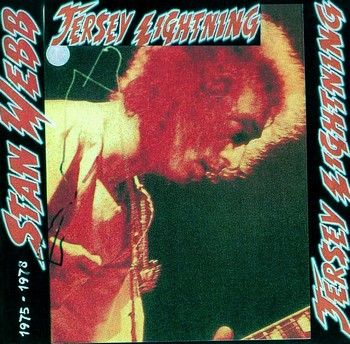
Stan Webb - Jersey Lightning - 1975-1978 - 2000 - Indigo

Great classic British blues compilation of 15 digitally remastered tracks from Stan "The Man" Webb, one of the UK''s greatest bluesmen. The tracks were recorded between 1975 and 1978 and the album contains some very rare studio tracks on CD for the first time. Audio quality varies on tracks. You may need to up the volume at times. Can anybody supply dates and band line-ups for these tracks? Buy Ruby Turner's great "Call Me By My Name" album featuring Stan Webb on guitar and listen to Chicken Shack's classic "Imagination Lady".Check out Stan Webb's Chicken Shack’s “Still Live After All These Years” and Chicken Shack’s “Goodbye” albums on this blog [All tracks @ 320 Kbps: File size = 131 Mb]

TRACKS / COMPOSERS

1. Standing On The Border - Lance Alexander / Stan Webb
2. It's Alright - Lance Alexander / Stan Webb
3. Keep Your Love - Blunt / Stan Webb
4. Can't Keep You Satisfied - Blunt / Stan Webb
5. Jersey Lightning - Stan Webb
6. Evil - Willie Dixon
7. Ain't No Magic - Blunt / Stan Webb
8. Crying Smiling - Blunt / Stan Webb
9. The End - Blunt / Stan Webb
10. Use What You've Got (Doesn't Matter About Your Size)- Blunt / Stan Webb
11. It Wasn't Me (All About Rumours)- Blunt / Stan Webb
12. Little Bird - Stan Webb
13. Emily (Little Girl)- Stan Webb
14. Let Me Love You Baby - Willie Dixon
15. Shake Your Money Maker - Elmore James

BIO

So where does it all begin? According to recent CD releases Stan was born in London on February 3 1946, and then at an early age moved to Blakedown in Worcestershire, and eventually became based in nearby Kidderminster. In fact Stan's first instrument was the old favourite of the time - the tea-chest bass, an essential item for any skiffle band. It was not until he heard Barney Kessel playing guitar on an Oscar Peterson record that he decided to take up the guitar.Whatever, it was in Kidderminster that Stan put together his first group - the Blue Four. Pete Frame's Family Tree describes how his first real band was Sounds of Blue formed in 1964, a Stourbridge-based r n' b band.It included Christine Perfect, Andy Silvester and Chris Wood (later to join Traffic) amongst others in their line up. On a personal note, I was actually living in Stourbridge at the time, but I must admit I don't recall seeing Sounds of Blue although the lead singer's name (Dave Yeats) does ring a bell from my schooldays. Anyway, moving on from Sounds of Blue, in early 1965 Stan put together the first incarnation of Chicken Shack with Andy from Sounds of Blue plus Alan Morley, and then Al Sykes and then Hughie Flint and finally Dave Bidwell on drums. This line-up paid their almost obligatory rock dues in Hamburg (five hour sets at the Star Club) for a couple of years before returning to the Midlands in 1967. It was then that Christine Perfect joined them and they recorded their first album for Blue Horizon. (They had sent Mike Vernon a tape, but because the quality wasn't brilliant he came up to the Midlands to see them...and I suppose the rest is history.)You can read an account of their set at the 8th National & Jazz Blues Festival at this time here. However after the first two albums, Christine Perfect left in August 1969, ironically just as Chicken Shack achieved chart success with the single 'I'd Rather Go Blind'. Christine was replaced by Paul Raymond, ex-Plastic Penny. This line up recorded two further albums for Blue Horizon. However by the recording of the last Blue Horizon album (Accept) there were clear musical differences between Stan and Mike Vernon, and in many ways the split was inevitable, although Chicken Shack moved labels anyway. With the loss of the Blue Horizon deal, at the end of 1970 Stan disbanded this version of Chicken Shack (apparently Kim Simmonds got Paul Raymond first). According to a Canterbury Scene web site, Pip Pyle was a drummer with Chicken Shack around this time - for a very short time. He claims he was fired by Stan after laughing at his version of If I Were A Carpenter! Whatever, in early 1971 Stan launched his new three-piece set up. This version of Chicken Shack had, besides Stan, Paul Hancox on drums and John Glascock on bass. John Glascock later joined Jethro Tull, and subsequently tragically died. However it would appear that this line up lasted just a year before further changes came about - John Glascock being replaced by Bob Daisley, and then just as Unlucky Boy was being released it was all change yet again. Basically Stan's rhythm section left. For replacements he got David Wilkinson (remember that name please) on keyboards, Alan Powell on drums and Rob Hull on bass. However no sooner had they recorded a live album, with it all ready for release, when in 1974 Stan announced he was disbanding Chicken Shack and joining a reformed Savoy Brown with Kim Simmonds and Miller Anderson. By all accounts their live performances were good, and they recorded one album Boogie Brothers, but the tensions of having three composers, three guitarists, and, I imagine, three egos on board led to its inevitable demise. Kim Simmonds reformed Savoy Brown bringing back in Paul Raymond on keyboards and Dave Bidwell on drums, while Stan put together Broken Glass featuring Robbie Blunt on guitar, Mac Poole on drums and Rob Rawlinson on bass - Miller Anderson was still around as well. Broken Glass perhaps fitted in well with the kind of mid seventies calm before the punk storm, and released one album in 1975, toured for a bit, but after that they broke up (1976), and Stan was back on his own with the Chicken Shack name. For the next few years it gets difficult to track Stan's progress and bloody frustrating to get hold of his recorded output. In effect Stan put together a touring and occasional recording band. According to Pete Frame's Family Tree, Chicken Shack members during this time included Paul Martinez and Steve York on bass, Robbie Blunt on guitar, Ed Spivock on drums, and Dave Winthrop on sax. Stan continued to build on his strong popularity on the continent, especially Germany, and recorded two albums in the late seventies. Then in October 1979 a new version of Chicken Shack, with Paul Butler (ex-Jellybread, Punch n'Judy and the Keef Hartley Band) on guitar, Keef Hartley himself on drums and Bob Daisley back on bass played a one-off gig at Banbury football ground. Hmm, I was living in Banbury at the time and had no bloody idea such a gig took place till now! However it was with a rather different line-up that Stan took Chicken Shack into the 1980s. In May 1980 Stan put together yet another version of Chicken Shack. The only survivor from Banbury was Paul Butler, joining them on bass was Alan Scott and ex- TYA drummer Ric Lee. Alan Scott was soon to be replaced by Andy Pyle who was ex-Juicy Lucy, Savoy Brown, Blodwyn Pig, Colosseum II, Kinks, Keef Hartley Band amongst others! Stan and this line-up, augmented by Tony Ashton back on keyboards recorded the live Roadies Concerto album (released April 1981)which featured a more bluesy sound. However once again this line up was not to last the course, and Stan went into 1982 with a new band calling itself Stan Webb's Speedway. This featured Andy Pyle on bass, Russ Alder on drums and Miller Anderson back on second guitar. By 1983 it was back with Stan Webb's Chicken Shack, but there wasn't a really settled line-up for the next three years which saw on occasions Miller Anderson as well as Andy Scott and Andy Pyle on bass, Roger Saunders on guitar and John Gunzell on drums. By 1986 and the release of 39 Bars Stan was supported by John Gunzell on drums, Jan Connolly(Campbell?) on bass, Dave Winthrop back on saxophone and David Wilkey (or is that Wilkinson?) on keyboards. However in1987 he was touring with a line up of himself plus David Wilkinson on keyboards, Bev Smith on drums and Wayne Terry and later David Wintour on bass. By 1988 Gary Davies on 'back up guitar' had been added to the line up, and they were very much a blues band again. In 1989 a live album was released. In 1991 a new studio album, Changes, was released which revealed that James Morgan was now to be found on bass. This album featured a more mellow Stan, although he still found time to showcase a revamping of I'd Rather Go Blind and Poor Boy. However by 1993 and the release of Plucking Good it appeared that David Wilkinson was no longer around. This new line up recorded another live album in 1995, and carried on as a four-piece until 1998 when James Morgan was replaced by Jim Rudge. This was the line-up which took Stan into the 21st Century, but in 2002 Bev left, and after a couple of drummers Stan has settled with Mick Jones, and this is the current line-up in 2004 © 2009 Stan Webb's Chickenshack. All Rights Reserved

ABOUT STAN WEBB / CHICKEN SHACK

Formed in 1967, Chicken Shack consisted of Stan Webb on guitar/vocal, Andy Sylvester on bass, Christine Perfect on vocals/keyboards, and Alan Morley on drums. An earlier 1964 incarnation had been called 'Sounds of Blue' and Christine played in this band while a student at art college in Birmingham. Sounds of Blue dispanded after a year when Christine and another member left Birmingham for careers in London. Then, at the beginning of 1967, Andy once Chicken Shack again contacted Chris and suggested that she rejoin her former mates in a new band. (The group got their name from the chicken coup in Kidderminster where the band often rehearsed.) Chris admits that she was not the most accomplished blues pianist when she joined the group, but developed her own style from listening to Freddy King records. Chicken Shack made their public debut at the Great Britain's National Blues & Jazz Festival at Windsor along with Fleetwood Mac on August 13, 1967-- "There were two stages at Windsor, the main one an open-air ramshackle structure, the other inside a marquee. Fleetwood Mac had their initiation on the main stage but much was made of Chicken Shack's tented debut." The group became the second major signing of the Blue Horizon record label (co-founded by Mike Veron), the first being Fleetwood Mac. Chicken Shack's first two albums,Forty Blue Fingers Freshly Packed and Ready to Serve and OK Ken?, were quite successful, with much of the credit due to the fact that they had a beautiful, talented, female keyboardist and vocalist-- something that most definitely added individuality to the group in the male-dominated late 60's music scene. Christine's version of Etta James' 'I'd Rather Go Blind' was a massive hit, and she was voted Best Female Vocalist in the Melody Maker polls two years running. After Christine married John McVie and left the band, Stan Webb did carry on with the band in various incarnations, but Chicken Shack never quite matched their earlier success. The 'irrepressible' Stan Webb still lives in Kidderminster in a house that is filled with twenty-nine years of Chicken Shack memoribilia. The talented, yet relatively unrecognized, guitarist has this to say about the way major success has eluded him: "Some people say, 'You should be on stage at the Albert Hall, not Eric Clapton.' And I think, well, I don't agree with that, but I should certainly be able to go on there as well. But I'm happy with what's happening now. I've done the years and I'm getting more respect than I ever did then. It's worked for me." [ source: The Penguin Biographies ]

CHICKEN SHACK BIO (WIKI)

Chicken Shack was a British blues band, primarily of the late 1960s, consisting of Christine Perfect (vocals and keyboards), Stan Webb (guitar and vocals), Andy Sylvester (bass guitar), and Alan Morley (drums). The band was formed in 1967 and reputedly named themselves after the chicken coop in Kidderminster where they rehearsed. Their first concert was at the 1967 National Blues and Jazz Festival at Windsor and they were signed by the Blue Horizon record label in the same year. Chicken Shack enjoyed modest commercial success, with Christine Perfect being voted Best Female Vocalist in the Melody Maker polls, two years running. Christine Perfect left the band in 1969 when she married John McVie of Fleetwood Mac. Pianist Paul Raymond, bassist Andy Sylvester, and drummer Dave Bidwell all left in 1971 to join Savoy Brown. Although the band went through several subsequent incarnations, it never equalled its earlier successes. However, Webb remains as its only constant band member.

MORE ABOUT STAN WEBB

In 1968 Chicken Shack were a major signing to MIKE VERNON’S now legendary BLUE HORIZON label. Led by the mercurial Stan Webb on guitar and vocals, Chicken Shack were a band brimming full of talent, far outweighing the bands, groups and solo performers purveying the BLUES – a musical tradition in many forms, taken from the ‘Folk Roots Of Black America’. Probably the bands most well known member was CHRISTINE PERFECT (later McVie) who went on at a later date to even greater fame and fortune with FLEETWOOD MAC. The late sixties were a prolific time for Chicken Shack with their first two albums “40 Blue Fingers Freshly Packed And Ready To Go” and “O.K. Ken” storming into the U.K. top twenty, whilst the singles “When The Train Comes Back” and “Tears In The Wind” also scored heavily in the charts. Stan’s blistering guitar style matched with a huge stage presence have made Chicken Shack a firm favourite of rock and blues fans everywhere. Since those heady days of the late sixties a further fifteen albums have been released together with numerous compilations proving that Stan, really is “The Man”.Throughout a distinguished career Stan Webb has played and recorded with the very best, including, STEVIE WONDER, HOWLING WOLF, TAJ MAHAL, PETER GREEN and CANNED HEAT, whom he joined on guitar for a U.K, tour following the departure of the bands guitarist. As the ‘60’s have given way to the ‘70’s; ‘80’s and ‘90’s, Stan Webb and Chicken Shack show no sign of slowing down, continually touring the U.K. and Europe to packed houses and rave reviews. In 1997 Stan received the BLUE HEART AWARD for services to blues in Germany, in 1996 that went to BB KING, a glowing testament to Stan Webb and his ongoing love of playing the blues. 2006 saw Stan embarked on an extension UK tour with John Mayall. “Stan The Man” shows no sign of slowing down.

23.5.12

Juicy Lucy


Juicy Lucy - Pretty Woman - 1998 - Delta Music Ltd. (Germany)

Good compilation album which contains 14 of JL's old standards from the 1969-1971 period when the band dealt primarily in blues rock. If you are a Juicy Lucy fan you will probably have all these tracks in your collection. "Pretty Woman" has been released under various other names on a myriad of labels. However SQ on this German release is slightly better than many other JL compilations doing the rounds and is a fine example of great early '70's British blues rock. Check this blog for other JL releases [All tracks @ 320 Kbps: File size = 135 Mb]

TRACKS / COMPOSERS

1 Who Do You Love - McDaniels 3:00
2 Midnight Rider - Allman 3:13
3 Pretty Woman - Williams 3:13
4 Willie The Pimp - Zappa: Lie Back And Enjoy It - Williams 7:06
5 Just One Time - Hubbard, Campbell 4:37
6 I'm A Thief - Campbell, Williams, Moody 3:45
7 Built For Comfort - Dixon 5:59
8 Chicago North Western - Hubbard, Campbell 4:03
9 Hello L.A. By Bye Birmingham - Davis, Bramlett 4:10
10 Thinking Of My Life - Williams 4:27
11 Whisky In My Jar - Moody, Ellis, Williams 3:59
12 Mr Skin - California, Spirit 3:44
13 Sunday Morning - Williams, James 3:50
14 Walking Down The Highway - Owen, Campbell, Mercer 4:45

MUSICIANS

Neil Hubbard - Guitar
Glenn Ross Campbell - Steel Guitar
Keith Ellis - Bass
Pete Dobson - Drums
Chris Mercer - Saxophone
Ray Owen - Vocals

BIO

Saucy blues-rockers Juicy Lucy formed in 1969 from the ashes of cult-favorite garage band the Misunderstood, reuniting vocalist Ray Owen, steel guitarist Glenn "Ross" Campbell, and keyboardist Chris Mercer; with the additions of guitarist Neil Hubbard, bassist Keith Ellis, and drummer Pete Dobson, the group immediately notched a U.K. Top 20 hit with their reading of the Bo Diddley perennial "Who Do You Love," with their self-titled debut LP falling just shy of the Top 40. Ex-Zoot Money singer Paul Williams, guitarist Mick Moody, and drummer Rod Coombes replaced Owen (who exited for a solo career), Hubbard, and Dobson for 1970's Lie Back and Enjoy It, with bassist Jim Leverton assuming Ellis' duties for the follow-up, 1971's Get a Whiff a This. The constant turnover clearly took its toll on the group both creatively and commercially, with co-founders Campbell and Mercer both exiting prior to the fourth Juicy Lucy album, 1972's Pieces, which was recorded by a makeshift lineup of Williams, Moody, keyboardist Jean Roussel, and the former Blodwyn Pig rhythm section of bassist Andy Pyle and drummer Ron Berg. Juicy Lucy finally disbanded shortly thereafter. Ray Owen revived the name in 1995 for the album Here She Comes Again which found Mike Jarvis (guitar), Andy Doughty (bass), and Spencer Blackledge (drums) rounding out the band. A couple of years later, this version of the band broke up, but Owen wanted to keep on going, especially when he formed a musical partnership with a guitarist known as Mr. Fish. Legal problems kept the new band from using the Juicy Lucy name so they gigged as Ray Owen's Moon. By 2004, bassist Fudge and drummer Fletch had joined the band and the legal issue was settled. The new Juicy Lucy spent 2006 working on a new album and touring the U.K. with Nazareth. © Jason Ankeny © 2012 Rovi Corporation. All Rights Reserved http://www.allmusic.com/artist/juicy-lucy-p18591/biography

BIO (WIKI)

Juicy Lucy is a blues-rock band formed on April 1, 1969. After the demise of The Misunderstood, vocalist Ray Owen, steel guitarist Glenn Ross Campbell, and saxophone player Chris Mercer formed Juicy Lucy. The group later recruited guitarist Neil Hubbard, bassist Keith Ellis, and drummer Pete Dobson. The band immediately notched a UK Top 20 hit with their cover version of the Bo Diddley perennial "Who Do You Love?" Their self-titled debut album then fell just shy of the Top 40 in the UK Albums Chart. The album's cover featured a burlesque dancer named Zelda Plum, naked except for a covering of fruit. Line-up changes were quickly afoot as ex-Zoot Money singer Paul Williams, guitarist Micky Moody, and drummer Rod Coombes replaced Owen (who exited for a solo career), Hubbard, and Dobson for 1970's Lie Back and Enjoy It (#53 -(#53 - UK Albums Chart ). In May 1970, the band appeared at the annual NME poll-winners concert. Another bassist, Jim Leverton, assumed Ellis' duties for the follow-up, 1971's Get a Whiff a This. In August 1971, Juicy Lucy appeared on the bill at the Weeley Festival near Clacton-on-Sea, Essex. The constant turnover clearly took its toll on the group both creatively and commercially, with co-founders Campbell and Mercer, plus Coombes exiting prior to the fourth Juicy Lucy album, 1972's Pieces. This was recorded by a makeshift line-up of Williams, Moody, keyboardist Jean Roussel, and the former Blodwyn Pig rhythm section of bassist Andy Pyle and drummer Ron Berg. Juicy Lucy disbanded shortly thereafter. Micky Moody (born 30 August 1950, in Middlesbrough), later joined the inaugural Whitesnake line-up in 1978. Before then he was a member of another rock outfit Snafu between 1973 and 1976. Moody also released the bluesy solo album I Eat Them For Breakfast in 2001. Plus, Juicy Lucy's version of the song "Who Do You Love?" was featured in Shellshock: Nam '67. Founder member Ray Owen revived the name in 1995 for the album Here She Comes Again which found Mike Jarvis (guitar), Andy Doughty (bass), and Spencer Blackledge (drums) rounding out the band. A couple of years later this version of the band broke up but Owen wanted to keep on going, especially when he formed a musical partnership with a guitarist known as Mr. Fish. Legal problems kept the new band from using the Juicy Lucy name, so they gigged as Ray Owen's Moon (Moon being the title of Ray Owen's 1971 solo album). By 2004 bassist Fudge and drummer Fletch had joined the band and the legal issue was settled. The new Juicy Lucy spent 2006 working on a new album (subsequently titled Do That And You'll Lose It), and touring the UK with fellow rock veterans Nazareth. They played the Cambridge Rock Festival in 2007. The link with the past though is not forgotten, and the modern day Juicy Lucy still plays "Mississippi Woman", "Who Do You Love?" and more from their first album. In 2009 a new line up formed as, due to health problems, Owen was unable to continue on a regular basis. The band is now fronted by singer/ guitarist Mr Fish, Fletch (drums) and James (bass), and is still touring the UK. Owen now performs occasionally as Ray Owen's Juicy Lucy, accompanied by Mike Jarvis and Spencer Blackledge from the 1990s incarnation of the band. The band name is inspired by the character in The Virgin Soldiers (1966) by Leslie Thomas

29.3.12

Free


Free - Molten Gold: The Anthology - 1993 - Island

With their big riffs and bluesy melodies, Free virtually defined hard rock in the early '70s, and Molten Gold: The Anthology shows that this wasn't such a meagre achievement. Throughout the two discs, it becomes clear that the key to Free's rock & roll was their rhythm section, which powered their riffs to perfection. This is the definitive Free, two discs of pure hard rock. © Stephen Thomas Erlewine © 2012 Rovi Corporation. All Rights Reserved http://www.allmusic.com/album/molten-gold-the-anthology-r189963

Free's original line-up of Paul "The Voice" Rodgers, Andy Fraser, Simon Kirke, and the late Paul Kossoff created some of the mightiest sounds of 60's and 70's rock and blues rock. Free were a monumental band in rock history, and their 1968 "Tons of Sobs" album is now regarded as one of the all time greatest rock albums. There is nothing on this album that hasn't been released already, but it's arguably Free's best compilation album, and is VHR by A.O.O.F.C. [All tracks @ 320 Kbps: 2 x rar files: Pt 1 (Disc 1) = 153 Mb, & Pt 2 (Disc 2) = 136 Mb]

TRACKS

DISC ONE

1 I'm A Mover 2:55
2 The Hunter 4:12
3 Walk In My Shadow 3:29
4 I'll Be Creepin' 3:26
5 Songs Of Yesterday 3:33
6 Woman 3:48
7 Broad Daylight 3:14
8 Mouthful Of Grass 3:34
9 All Right Now 5:32
10 Oh I Wept 4:26
11 Heavy Load 5:17
12 Don't Say You Love Me 6:01
13 The Stealer 4:23
14 The Highway Song 4:14
15 Be My Friend 5:45
16 Soon I Will Be Gone 3:01

Tracks 1, 4-12, & 14-16 composed by Andy Fraser & Paul Rodgers: Track 2 composed by Al Jackson, Jr., Booker T. Jones, Donald "Duck" Dunn, Junior Wells, & Steve Cropper: Track 3 composed by Andy Fraser, Paul Kossoff, Paul Rodgers, & Simon Kirke: Track 13 composed by Andy Fraser, Paul Kossoff, & Paul Rodgers

Tracks 1-3 from the album Tons Of Sobs (1968)
Tracks 4-8 from the album Free (1969)
Tracks 9-12 from the album Fire And Water (1970)
Tracks 13-16 from the album Highway (1970)

DISC TWO

1 My Brother Jake 2:53
2 Fire And Water 4:02
3 Ride On Pony 4:31
4 Mr. Big 6:12
5 Time Away 5:47
6 Molten Gold 5:48
7 Catch A Train 3:25
8 Travelling Man 3:20
9 Little Bit Of Love 2:32
10 Sail On 3:04
11 Wishing Well 3:39
12 Come Together In The Morning 4:37
13 Travelling In Style 4:01
14 Heartbreaker 6:12

Tracks 1-3 composed by Andy Fraser & Paul Rodgers: Tracks 4,7,8,9,10 & 13 composed by Andy Fraser, Paul Kossoff, Paul Rodgers, & Simon Kirke: Track 5 composed by John Martyn & Paul Kossoff: Track 6 composed by Paul Kossoff: Track 11 composed by John "Rabbit" Bundrick, Paul Kossoff, Paul Rodgers, Simon Kirke, Tetsu Yamauchi: Tracks 12 & 14 composed by Paul Rodgers

Tracks 1-4 from the album Free Live! (1971)
Tracks 2-4 recorded live at Croydon
Tracks 5-6 from the album Paul Kossoff - Back Street Crawler (1973)
Tracks 7-10 from the album Free At Last (1972).
Tracks 11-14 from the album Heartbreaker (1972)

BAND

Paul Rodgers - Electric & Acoustic Guitar, Vocals, Vocal Harmony
Paul Kossoff - Lead Guitar
Andy Fraser - Bass
Simon Kirke - Drums, Percussion

OTHER MUSICIANS

Tetsu Yamauchi - Bass, Percussion
John "Rabbit" Bundrick - Organ, Piano, Electric Piano, Chimes, Vocals
John Martyn - Guitar
Rebop Kwaku Baah - Conga

SHORT BIO

Famed for their perennial "All Right Now," Free helped lay the foundations for the rise of hard rock, stripping the earthy sound of British blues down to its raw, minimalist core to pioneer a brand of proto-metal later popularized by 1970's superstars like Foreigner, Foghat and Bad Company. Free formed in London in 1968 when guitarist Paul Kossoff, then a member of the blues unit Black Cat Bones, was taken to see vocalist Paul Rodgers' group Brown Sugar by a friend, drummer Tom Mautner. After deciding to form their own band, Kossoff and Rodgers recruited drummer Simon Kirke (since Mautner was at university) and 16-year-old bass phenom Andy Fraser from the ranks of John Mayall's Bluesbreakers; with the aid of Alexis Korner, who also suggested the name Free, the fledgling band signed to the Island label, issuing their bluesy debut Tons of Sobs in 1968. Free's eponymous 1969 follow-up expanded on their roots-based sound, incorporating rockers like Albert King's "The Hunter" as well as muscular ballads like "Lying in the Sunshine" into the mix. Although both of the first two albums fared poorly on the charts, 1970's Fire and Water became a tremendous hit on the strength of the primal "All Right Now," a Top Five smash powered by Rodgers' gritty, visceral vocals. After headlining 1970's Isle of Wight festival, the group appeared destined for superstardom, but the LP Highway did not fare nearly as well as anticipated, and after a grueling tour which yielded 1971's Free Live, the band dissolved amidst ego clashes and recriminations. While Rodgers went on to form Peace and Fraser founded Toby, Kossoff and Kirke teamed with bassist Tetsu Yamauchi and keyboardist John "Rabbit" Bundrick to record the album Kossoff, Kirke, Tetsu and Rabbit. When none of these new projects proved successful, the original lineup of Free re-formed to record 1972's Free at Last, which launched the hit "Little Bit of Love." However, drug problems nagged the group, as Kossoff's longtime battle with heroin continued to worsen; soon Fraser exited to form Sharks with Chris Spedding, leaving Rodgers and Kirke to record the majority of 1973's Heartbreaker while a drug-addled Kossoff watched from the sidelines. Soon, the group disbanded again, this time for good: while Rodgers and Kirke went on to found Bad Company, Kossoff formed Back Street Crawler before dying of a drug-induced heart attack on March 19, 1976. © Jason Ankeny © 2012 Rovi Corporation. All Rights Reserved http://www.allmusic.com/artist/free-p4308/biography

12.1.12

John Mayall


John Mayall - Stormy Monday - 1994 - Spectrum

An obscure compilation album from John Mayall featuring session and live tracks recorded between 1966 and 1972. The album features appearances by Eric Clapton, Peter Green, Jack Bruce, Aynsley Dunbar, and more. Terrific stuff, and a testament to John Mayall's legendary status as one of the world's greatest Bluesmen. The album is VHR by A.O.O.F.C. Listen to John's classic "Crusade" and "The Turning Point" albums, and search this blog for related releases [Tracks @ 192-320 Kbps: File size = 73.4 Mb]

TRACKS / RECORDING DETAILS

1 Oh, Pretty Woman - Date Performance: 1967-07-00 3:40
2 Sitting In The Rain - Recorded during the "A Hard Road" sessions: Date Performance: 1966-10-11 2:56
3 Long Gone Midnight - Recorded between August 26-28,1968 at Decca's West Hampstead Studios: Date Performance: 1968-08-000 3:27
4 No Reply - Date Performance: 1968-04-00 3:09
5 Hartley Quits - Recorded at Decca Studios, West Hampstead, London: Date Performance: 1968-04-00 2:55
6 Jenny - Recorded at Decca's West Hampstead Studios: Date Performance: 1967-12-04 4:36
7 Room To Move - Recorded live at the Fillmore East, New York: Date Performance: 1969-07-12 4:59
8 Stormy Monday [Live] - (Billed as "They Call It Stormy Monday"): Date Performance: 1966-03-17 4:23
9 Don't Pick A Flower - Date Performance: 1970 3:53
10 Thinking Of My Woman - Date Performance: 1970 2:32
11 Don't Waste My Time - Date Performance: 1970 3:10
12 Plan Your Revolution - Date Performance: 1970 2:38
13 Took The Car - Recorded at Larrabee Studio's, Los Angeles: Date Performance: 1970-07-00 4:00
14 Moving On [Live] - (Billed as "Time's Moving On"): Recorded live at the Whiskey A Go-Go, Los Angeles: Date Performance: 1972-07-00 4:26

Track 1 by A.C. "Moolah" Williams: Track 5 by Mick Taylor: Track 8 by T-Bone Walker: Tracks 2,3,6,7,10,12,13,14 by John Mayall: Track 4 by John Mayall/Mick Taylor: Track 9 by John Mayall/Jon Mark: Track 11 by John Mayall/Steve Thompson

MUSICIANS

John Mayall - Guitar, 12-String Guitar, Slide Guitar, Harmonica, Piano, Organ, Keyboards, Tambourine, Vocals
Eric (Patrick) Clapton, Peter Green, Freddy Robinson, Mick Taylor, Harvey Mandel, Jon Mark - Guitar
John McVie, Larry Taylor, Victor Gaskin, Stephen Thompson, Tony Reeves - Bass
Aynsley Dunbar, Colin Allen, Jon Hiseman, Keef Hartley, Jack Bruce (John Symon Asher), Hughie Flint - Drums
Dick Heckstall-Smith, Rip Kant, Chris Mercer, Clifford Solomon, Ernie Watts, Fred Jackson - Saxophone
Charles Owen, Johnny Almond - Saxophone, Flute
Blue Mitchell, Henry Lowther - Trumpet
Don (Sugarcane) Harris - Violin

BIO

As the elder statesman of British blues, it is John Mayall's lot to be more renowned as a bandleader and mentor than as a performer in his own right. Throughout the '60s, his band, the Bluesbreakers, acted as a finishing school for the leading British blues-rock musicians of the era. Guitarists Eric Clapton, Peter Green, and Mick Taylor joined his band in a remarkable succession in the mid-'60s, honing their chops with Mayall before going on to join Cream, Fleetwood Mac, and the Rolling Stones, respectively. John McVie and Mick Fleetwood, Jack Bruce, Aynsley Dunbar, Dick Heckstall-Smith, Andy Fraser (of Free), John Almond, and Jon Mark also played and recorded with Mayall for varying lengths of times in the '60s. Mayall's personnel has tended to overshadow his own considerable abilities. Only an adequate singer, the multi-instrumentalist was adept in bringing out the best in his younger charges (Mayall himself was in his thirties by the time the Bluesbreakers began to make a name for themselves). Doing his best to provide a context in which they could play Chicago-style electric blues, Mayall was never complacent, writing most of his own material (which ranged from good to humdrum), revamping his lineup with unnerving regularity, and constantly experimenting within his basic blues format. Some of these experiments (with jazz-rock and an album on which he played all the instruments except drums) were forgettable; others, like his foray into acoustic music in the late '60s, were quite successful. Mayall's output has caught some flak from critics for paling next to the real African-American deal, but much of his vintage work -- if weeded out selectively -- is quite strong; especially his legendary 1966 LP with Eric Clapton, which both launched Clapton into stardom and kick-started the blues boom into full gear in England. When Clapton joined the Bluesbreakers in 1965, Mayall had already been recording for a year, and been performing professionally long before that. Originally based in Manchester, Mayall moved to London in 1963 on the advice of British blues godfather Alexis Korner, who thought a living could be made playing the blues in the bigger city. Tracing a path through his various lineups of the '60s is a daunting task. At least 15 different editions of the Bluesbreakers were in existence from January 1963 through mid-1970. Some notable musicians (like guitarist Davy Graham, Mick Fleetwood, and Jack Bruce) passed through for little more than a cup of coffee; Mayall's longest-running employee, bassist John McVie, lasted about four years. The Bluesbreakers, like Fairport Convention or the Fall, was more a concept than an ongoing core. Mayall, too, had the reputation of being a difficult and demanding employer, willing to give musicians their walking papers as his music evolved, although he also imparted invaluable schooling to them while the associations lasted. Mayall recorded his debut single in early 1964; he made his first album, a live affair, near the end of the year. At this point the Bluesbreakers had a more pronounced R&B influence than would be exhibited on their most famous recordings, somewhat in the mold of younger combos like the Animals and Rolling Stones, but the Bluesbreakers would take a turn for the purer with the recruitment of Eric Clapton in the spring of 1965. Clapton had left the Yardbirds in order to play straight blues, and the Bluesbreakers allowed him that freedom (or stuck to well-defined restrictions, depending upon your viewpoint). Clapton began to inspire reverent acclaim as one of Britain's top virtuosos, as reflected in the famous "Clapton is God" graffiti that appeared in London in the mid-'60s. In professional terms, though, 1965 wasn't the best of times for the group, which had been dropped by Decca. Clapton even left the group for a few months for an odd trip to Greece, leaving Mayall to straggle on with various fill-ins, including Peter Green. Clapton did return in late 1965, around the time an excellent blues-rock single, "I'm Your Witchdoctor" (with searing sustain-laden guitar riffs), was issued on Immediate. By early 1966, the band was back on Decca, and recorded its landmark Bluesbreakers LP. This was the album that, with its clean, loud, authoritative licks, firmly established Clapton as a guitar hero, on both reverent covers of tunes by the likes of Otis Rush and Freddie King and decent originals by Mayall himself. The record was also an unexpected commercial success, making the Top Ten in Britain. From that point on, in fact, Mayall became one of the first rock musicians to depend primarily upon the LP market; he recorded plenty of singles throughout the '60s, but none of them came close to becoming a hit. Clapton left the Bluesbreakers in mid-1966 to form Cream with Jack Bruce, who had played with Mayall briefly in late 1965. Mayall turned quickly to Peter Green, who managed the difficult feat of stepping into Clapton's shoes and gaining respect as a player of roughly equal imagination and virtuosity, although his style was quite distinctly his own. Green recorded one LP with Mayall, A Hard Road, and several singles, sometimes writing material and taking some respectable lead vocals. Green's talents, like those of Clapton, were too large to be confined by sideman status, and in mid-1967 he left to form a successful band of his own, Fleetwood Mac. Mayall then enlisted 19-year-old Mick Taylor; remarkably, despite the consecutive departures of two star guitarists, Mayall maintained a high level of popularity. The late '60s were also a time of considerable experimentation for the Bluesbreakers, which moved into a form of blues-jazz-rock fusion with the addition of a horn section, and then a retreat into mellower, acoustic-oriented music. Mick Taylor, the last of the famous triumvirate of Mayall-bred guitar heroes, left in mid-1969 to join the Rolling Stones. Yet in a way Mayall was thriving more than ever, as the U.S. market, which had been barely aware of him in the Clapton era, was beginning to open up for his music. In fact, at the end of the 1960s, Mayall moved to Los Angeles. Released in 1969, The Turning Point, a live, all-acoustic affair, was a commercial and artistic high point. In America at least, Mayall continued to be pretty popular in the early '70s. His band was no more stable than ever; at various points some American musicians flitted in and out of the Bluesbreakers, including Harvey Mandel, Canned Heat bassist Larry Taylor, and Don "Sugarcane" Harris. Although he's released numerous albums since and remained a prodigiously busy and reasonably popular live act, his post-1970 output generally hasn't matched the quality of his '60s work. Following collaborations with an unholy number of guest celebrities, in the early '80s he re-teamed with a couple of his more renowned vets, John McVie and Mick Taylor, for a tour, which was chronicled by Great American Music's Blues Express, released in 2010. It's the '60s albums that you want, though there's little doubt that Mayall has over the past decades done a great deal to popularize the blues all over the globe, whether or not the music has meant much on record. © Richie Unterberger © 2012 Rovi Corporation. All Rights Reserved http://www.allmusic.com/artist/john-mayall-p4860/biography

26.7.11

Rory Gallagher


Rory Gallagher - Notes From San Francisco (Disc 3): The Osaka Jam Sessions - 2011 - Sony

Between October 25th and November 5th 1977, Rory and his band played seven official gigs in Japan in venues at Nagoya, Hiroshima, Tokyo, and Osaka. Shortly after the band's final concert at the Nakano Sun-Plaza Hall in Tokyo on November 5th, 1977, the band flew to L.A to record a new album which remained unreleased until this year (2011), and entitled "Notes From San Francisco".The nine tracks here were recorded in a studio in Osaka, possibly during November 1977. Tracks are taken from a deluxe version of Rory Gallagher's "Notes From San Francisco" CD. Sound quality for a recording of this nature is poor. Some restoration work has been carried out on the tracks, but don't expect any sonic miracles! These are just rehearsals with plenty of band conversation, track interruptions, and abrupt endings. At times, Rory's vocals are barely audible in the mix. Nevertheless, there is enough guitar work here to keep any lover of great blues guitar happy, and it's great to hear Rory jamming the songs with his band for the proposed new album. Fans of Rory will hardly complain about this collection! (All tracks @ 320 Kbps. File size = 112 Mb). Check out http://www.todayfm.com/Competitions/rorygallagher.aspx for more on the making of the "Notes From San Francisco" album. If you're not familiar with the late Irish guitar giant, just type Rory Gallagher into any search engine

TRACKS

1 Rue the Day 4:20
2 Wheels Within Wheels 5:23
3 Out On the Tiles 6:32
4 B Girl 10:30
5 Cut a Dash 6:44
6 Brute Force & Ignorance 8:05
7 Cruise On Out 5:27
8 Persuasion 4:49
9 Overnight Bag 5:25

All songs composed by Rory Gallagher

BAND

Rory Gallagher - Guitars, Vocals
Gerry McAvoy - Bass
Lou Martin - Keyboards
Rod de'Ath - Drums

4.6.11

The John Dummer Blues Band


The John Dummer Blues Band - Lost 1973 Album - 2008 - Angel Air Records

The John Dummer Blues Band's reputation as one of those groups that hung forever on the cusp of a major step forward, but never quite made it over the top, is one of those odd little injustices with which the British blues scene forever prickles. There is simply no way of judging why one band made it while another failed to crackle, but Dummer and company were unluckier than most and, by 1973, their fortunes had reached rock bottom. Vertigo, their home for two albums, was about to let them go as part of the company-wide purge that so devastated what had once been one of Britain's most visionary record labels -- and when the bandmembers returned to the studio, it was in the knowledge that they had one last chance to convince the bigwigs to keep them on board. They should have succeeded, too. The result is a pièce de rĂ©sistance, a sparkling album that not only packs some of the band's best ever recordings, but also boasts one of their strongest ever lineups: organist Colin Earl and guitarists Dave Kelly and Pete Emery, a rhythm section of Ian Thompson and Pick Withers, and, on saxophone, the legendary Graham Bond. But somehow it all slipped through the cracks. Within a year, Bond was dead; this may well have been his last ever recording session, a manic four-day span that saw no less than 11 tracks kicked out, and then abandoned. Before that, though, Vertigo did indeed pass on the album, and attempts to land a U.S. deal via the Foghat connection (Colin Earl, of course) were doomed to failure. The tapes were shelved, the band broke up, and it would be 35 years before anybody ever thought to give them another listen. Now, however, they are where they belong, on the streets and still sparkling as brilliantly as the best of the Dummer band ever did. © Dave Thompson © 2011 Rovi Corporation. All Rights Reserved http://www.allmusic.com/album/lost-1973-album-r1442486/review

John Dummer may be best known as a member of the late '70's British doo-wop revival band, The Darts. However, from the late '60's to the early '70's, he recorded some good Chicago Blues rock albums with The John Dummer Blues Band. The band were a fairly successful hard-working live act, and were popular on the blues clubs and college scene. They also supported some top acts like Howlin' Wolf and John Lee Hooker on UK tours. In it's relatively short history, the band went through numerous personnel changes and included musicians like Graham Bond, Dave Kelly, Jo Ann Kelly, Tony McPhee and Pick Withers. The albums, "The John Dummer Band", and "Cabal" from 1969 are good albums and worth hearing. The "Lost 1973 Album" posted here was lying in the vaults for over 30 years before it saw an official release. It's a fairly typical album of the period with blues, folk, and country undertones and a good collection of songs with great musicianship

TRACKS

1 La Lady 2:39
2 Sunny Wine Song 3:17
3 Short Haul Line 3:15
4 Reach for Me 4:29
5 Goin Home 3:51
6 Bad Dream 6:19
7 Good Rockin Man 4:01
8 Undying Love 5:15
9 Whos Foolin Who 5:40
10 Stealin 2:31
11 Keep It in My Mind 7:19

BAND

Dave Kelly - Guitar, (Vocals on Tracks 1-5, & 7-11)
Pete Emery - Guitar
Ian "Thump" Thompson - Bass Guitar
Colin Earl - Keyboards
Pick Withers - Drums
John Dummer - Percussion (Vocals on Track 6)
Graham Bond RIP - Saxophone

SHORT BIO

This blues outfit formed in the Summer of 1967 in London. By the beginning of 1968, Tony Walker and Roger Pearce had both quit the music business. The next line-up was playing solid Chicago-styled blues. In July 1968, they turned professional. By now, Steve Rye had departed for Simon and Steve, and Tony McPhee, a friend of Dave Kelly's, came in on guitar. However, McPhee's stay was brief - a few month later he left to join The Groundhogs. Their two albums for Mercury are the most sought-after by collectors.Dummer followed this with Music Band, a venture with violinist Nick Pickett, which achieved little here but had a French hit with “Nine By Nine”. Shortening their name to John Dummer, they signed to Vertigo, recording “Blue”, with a cover designed by Roger Dean. The music was still competent blues-rock, but nowhere near as good as their earlier, late-sixties offerings on Mercury. Then, teaming up again with his original guitarist Dave Kelly, Dummer recorded “Oobleedooblee Jubilee” with a country-influenced band. This was a dreadful album, and Dummer went on to hit the skins for another appalling (if commercially successful) band, Darts.Only his early albums are recommended. John Dummer's Famous Music Band's French hit, “Nine By Nine” can also be heard on Vertigo's 1971 compilation, “Heads Together, First Round”. - from The Tapestry of Delights - The Comprehensive Guide to British Music of the Beat, R&B, Psychedelic and Progressive Eras 1963-1976, Vernon Joynson

BIO (WIKI)

The John Dummer Band also known as John Dummer's Blues Band, John Dummer's Famous Music Band, John Dummer's Ooblee Dooblee Band and The John Dummer Band Featuring Nick Pickett was a British blues band, of the 1960s and 70s, who "hung forever on the cusp of a major step forward, but never quite made it". It was noted for its extensive roster of members, including Graham Bond, Dave Kelly, Jo Ann Kelly, Tony McPhee and Pick Withers, and for supporting US bluesmen such as Howlin' Wolf and John Lee Hooker on UK tours. The band was formed by drummer John Dummer (born 19 November 1944, Surbiton, Surrey). He formed Lester Square and the G.T's in 1963, and toured the UK and Germany for 2 years, before briefly leaving the music industry. He formed the John Dummer Blues Band in 1967. The original line up included Dummer (drums); Dave Kelly and Roger Pearce (guitars); Tony Walker (bass); and Steve Rye (harmonica). Walker, Rye and Pearce left and Bob Hall (piano), John O'Leary (harmonica) and Iain "Thunder" Thompson (bass) joined. The band then turned professional and Tony McPhee joined, before they recorded their first album Cabal (1968). Soon after, McPhee left to reform The Groundhogs being replaced by Adrian Pietryga for the second album John Dummers Band By the third album Famous Music Band (1970) Stephen Miller (piano);and Adrian Pietryga (guitars); Iain Thompson and Keith Tillman (bass); Jo Ann Kelly (vocals) and Miller and Tillman left and McPhee left to reform The Groundhogs being replaced by Nick Picket . the Kelly siblings and Hall had left, whilst John Fairweather (harmonica) and Chris Tengrove (sax) joined. After the third album the band "drifted apart", only to reform when they discovered that their song "Nine By Nine" from their third album was #1 in France. By the next album Blue (1972) the band had reduced to a four-piece (Dummer, Pickett, Pietryga and Thompson) Oobleedoobleejubilee (1973) again included the Kelly siblings, along with Michael Evans (violin) and Roger Brown (vocals). The next album, also including Graham Bond (sax), Pick Withers (drums), Pete Emery (guitar) and Colin Earl (Foghat) (keyboards) was shelved, and the band broke up in 1974, the last album was finally released in 2008 as the Lost 1973 Album. John Dummer became a Promotion Manager; spending 3 years at MCA and a year at Electra, before joining A&M. In 1977 he became the drummer with Darts, joining former Dummer Band members Thompson and Currie, and wrote songs including Dart's "Can't Get Enough Of Your Love", which reached #45 on the UK singles chart, before leaving in 1980. His next group, True Life Confessions, featured his wife Helen April, second drummer Manic Esso from The Lurkers, bassist Harry Kakouli from Squeeze, guitarist Mark Nevin and two Afro-French girl singers. They issued several records on A&M, but none charted. Dummer and his wife also performed as a duo, and had a UK top 50 single with their version of "Blues Skies" and were also known for "Own Up If You're Over 25". He then managed The Screaming Blue Messiahs for three years, before restoring properties in France and Portugal. He formed Screwy Truants with French musicians, sang and played harmonica with French guitarist Jean-Claude Manuel, and drummed with harmonica player and blues singer Nico Toussaint. He is currently an antiques trader, furniture restorer and novelist.

10.3.11

Potliquor


Support Real Music

Potliquor - Louisiana Rock and Roll - 1972 - Janus Records

"As for "Louisiana Rock and Roll", it rocks! From the opening of "You Can't get there form Here", to the closing track, "Guitar Boogie", this is one of the finest rock and roll records I have ever heard. Favorite songs include the two mentioned, along with "Waitin' for me at the River", "St. Jude's Blues" and the title track. 5 Stars for "Louisian Rock and Roll". Pot Liquor rocked my generation". By & © A. Blossman "Trey Blossman/Music Freak" (Mandeville, La. United States). © 1996-2011, Amazon.com, Inc. or its affiliates http://www.amazon.com/Louisiana-Rock-and-Roll/dp/B001AQUIYG

Potliquor hailed from Louisiana and straddled the line between country, blues, southern rock and hard rock...all the while throwing in horns just to keep things fresh. With a powerful singer in George Ratzlaff, Potliquor were able to muster some pretty inspired moments on vinyl. "Pot Liquor was a top regional touring act. Like many great acts, they never sold records like they should have. But they did tour, and expose many young southerners to what amounts to some of the first "southern rock" bands. Some of the best music, ever! And, the best name ever for a southern rock band! - http://www.jcrmusicnews.com/en/catalogs/details/11420/sixties-&-seventies/potliquor-louisiana-rock-and-roll

Potliquor originally formed in 1969 in Baton Rouge, Louisiana. They recorded three albums for the Janus record label; "Levee Blues" 1970, "First Taste" 1971, and "Louisiana Rock & Roll" 1972 (posted here). In early 1972, the band had a single called “Cheer" (from the "Levee Blues" album), which received regular airplay on many L.A radio stations. Their last album "Potliquor" was released in 1979 on Capitol. None of these albums sold in any great numbers even though the band was a successful touring act, and played some great live concerts. The band regularly played Baton Rouge's Independence Hall, and The Kingfish venues. They opened for bands like Steely Dan, Fleetwood Mac, Savoy Brown, Santana, Charlie Daniels, and The Eagles, but never attained a fraction of the success of any of these acts. Their music combined elements of country, blues, southern rock, hard rock, and even Gospel, often backed by a great horn section and some great female vocalists. Sometimes Potliquor's sound is reminiscent of the Atlanta Rhythm Section, but bluesier. Bassist, Leon Medica has had a very successful career. Check him out @ http://www.laleroux.com/HTMLPages/leon.html In the early 80's Jerry Amoroso worked in the New Generation record store in Baton Rouge. He also owned/owns The Italian Thunderbolt restaurant in Baton Rouge. Jerry may still be on Facebook. Check him out. George Ratzlaff, now a committed Christian made a name in the advertising business while still writing songs earning recognition as a Grammy nominated songwriter under the name George Brantley. He is still recording Christian music. If anybody has any info on guitarist, Les Wallace, please contact this blog. "Louisiana Rock and Roll" is an obscure album, but a good one, and deserves a hearing from anybody interested in good music, especially good early'70's Southern rock. The album is HR by A.O.O.F.C. Listen to the band's great 1970 "Levee Blues" album

TRACKS / COMPOSERS

1. You Can't Get There from Here - Casey Kelly
2. Waitin' for Me at the River - George Ratzlaff
3. Taj and Johnny's Blues - Taj Mahal / Jimmy Reed
4. Rip It Up - Les Wallace / Loretta Wallace *
5. "H" - Les Wallace / Loretta Wallace *
6. Louisiana Rock 'n' Roll - George Ratzlaff
7. St. Jude's Blues - Jerry Amoroso
8. Born Under a Bad Sign - William Bell / Booker T. Jones
9. Guitar Boogie - George Ratzlaff
10. For You - Les Wallace

N.B: Some issues of this album include * as one track, making a nine track album. There are CD issues of the album with a bonus track, "Ridin' On The Rolls"

BAND

Les Wallace - guitar, vocals
George Ratzlaff - rhythm guitar, keyboards, harp, percussion, vocals
Leon Medica, Guy Schaeffer - bass, vocals
Jerry Amoroso - piano, drums, tambourine, congos, vocals
Cy Frost - Moog synth
Bud Brasher, Art De Cesare, Charlie Depuy, Lee Fortier, Bill Ludwig, Nick Rousee, Pete Verbois - horns
New Orleans Symphony, Baton Rouge Symphony - strings

28.12.10

Johnny Winter


.


Johnny Winter - Live Johnny Winter And - 1971 - Columbia

In its time, this was an enormously popular live album, especially among high-school kids just starting to discover blues-rock in the early '70s. Derived from live performances at the Fillmore East and at Pirate's World in Dania, FL, it is probably, in fairness, the best representation of Johnny Winter's sound from his prime years that one is likely to find -- the pity is that it's only about 40 minutes long, and is weighted very heavily toward Winter's covers of well-known rock & roll numbers. Considering that it was recorded along a tour promoting the Johnny Winter And album, one would expect that the band would have done a considerable number of tracks from that record, none of which are represented here. The highlights are of considerable value, however, including a searing rendition of the Stones' "Jumpin' Jack Flash" sandwiched between some much older repertory ("Great Balls of Fire," "Long Tall Sally," "Johnny B. Goode," etc.). Except for the opener, "Good Morning Little School Girl," on which Winter and the band try to show how many notes they can hit as quickly as they can, the players generally try for something a little more subtle and interesting, and one wishes that more of what they did had used the slow blues groove they settle into on "It's My Own Fault." Their version of "Great Balls of Fire" has some of that, mostly by default (no one did the song faster than Jerry Lee Lewis anyway), and also enough energy so one doesn't even "miss" the piano one usually expects somewhere in the song; "Long Tall Sally," by contrast, kicks in on overdrive and takes off from there. But for all of the musical virtues (and obvious joy) that Winter and company bring to those standards, the most interesting cuts here are "It's My Own Fault" and Winter's own "Mean Town Blues," and one wishes that there were more such tracks here. In that regard, it might be worthwhile for someone at Sony/Legacy to do a serious vault search and see if there are surviving tapes of any other numbers recorded from the two shows (and was it just two?) that were recorded for this album. © Bruce Eder © 2010 Rovi Corporation. All Rights Reserved http://www.allmusic.com/album/live-johnny-winter-and-r22058/review
Recorded live at Bill Graham's Fillmore East and Pirate's World, Dania, Florida, this is terrific early '70's blues rock from the great Johnny Winter and his band which includes Rick Derringer on guitar and vocals. This album is VHR by A.O.O.F.C. Johnny remains one of the preeminent white bluesmen of his generation. It's a pity the album is so short, but there is a double LP album "And And Live" available which contains both albums "Johnny Winter And" and "Live Johnny Winter And." Check out http://www.yee.ch/winter/winter_bio.html for info on Johnny's early career. Listen to Johnny Winter's classic 1969, "The Progressive Blues Experiment" album. Later albums like "Third Degree" and "Guitar Slinger" are all great examples of Johnny Winters talent. Check out Johnny Winter's "A Rock n' Roll Collection" @ JWINT/AR&RCOLL and his "Live In NYC '97" album @ JWINT/LIVENYC97

TRACKS / COMPOSERS

1."Good Morning Little School Girl" - Sonny Boy Williamson 4:35
2."It's My Own Fault" - John Lee Hooker, B.B. King, Jules Taub 12:14
3."Jumpin' Jack Flash" - Mick Jagger, Keith Richards 4:26
4."Rock And Roll Medley" - 6:46
a."Great Balls Of Fire" - Otis Blackwell, Jack Hammer
b."Long Tall Sally" - Robert "Bumps" Blackwell, Enotris Johnson, Richard Penniman (aka Little Richard)
c."Whole Lotta Shakin' Goin' On" - Dave "Curlee" Williams, James Faye "Roy" Hall
5."Mean Town Blues" - Johnny Winter 8:59
6."Johnny B. Goode" - Chuck Berry 3:22

BAND

Johnny Winter - Vocals, Guitar, Harmonica
Rick Derringer - Vocals, Guitar
Randy Jo Hobbs - Vocals, Bass
Bobby Caldwell - Drums, Percussion

REVIEWS

The band (And) were miraculous live. The sight of taill, spectral milk white Winter bounding across the stage to tower over the dark, stocky little Derringer, defiantly blowing hot licks and slick tricks right back at him, is one of the definitive images of the rock and roll concertm and the beautiful blistering sound track of those gigs can be heard on: Johnny Winter And Live. For my money Johnny Winter is the finest working white blues guitarist (an outrageous claim but not indefensible. - New Musical Express 15-Jul-1972:

Without doubt a true live classic. Recorded in 1971, mainly at the legendary Fillmore East, the Texan bluesrock albino presents himself from his best side. Tender and bitter blues stands against tough rock 'n' roll remakes like "Great Balls Of Fire", "Long Tall Sally" or "Johnny B. Goode". Despite occasional disharmonies the virtuose guitar fights between Winter and Rick Derringer seek for ones of same birth. In intensity, "Jumpin' Jack Flash" is far beyond the Rolling Stones original recording. - ME/SOUNDS 9/93: *****

Johnny Winter And: Live (Columbia 30475, 1971)-If Jimi Hendrix is the definitive interpreter of Bob Dylan ("All Along the Watch Tower," "Like A Rolling Stone"), then Johnny Winter is the definitive interpreter of the Rolling Stones. "Jumpin' Jack Flash" is as final a statement in Rock Music as can be hoped for. Add a corrosive "Johnny B. Goode" to the mix and the listener is transported to some Hard Rock Nirvana where Britney Spears and N'Cync are no where to be found. Oh, did I mention Winter could sing the blues? © http://www.yee.ch/winter/Disco2/winter_disco2_andlive.html
Johnny Winter and Live: Wow!!! What a hell of a live performance!! Johnny's slide and lead playing on his gem really pushes Rick Derringer to have to play his ass off! From the opening track of "Good Morning little School Girl", you these guys mean serious business up on the stage, at that time! Their version of Jumpin' Jack Flash" makes me forget who really wrote this song (nothing personal Mick and Keith). They tend to take this classic to the next level, which most artist can't even come close to doing in their lifetime! The first track on side two, Rock and Roll Melody: Great Balls of Fire, Long Tall Sally, into A Whole Lot of Shakin' Going On is nothing to be reckon' with! Again Johnny has Rick pushed to a blistering edge, when he does his solo on "Great Balls of Fire"!!! Also what's amazing is all the lushful playing Johnny does behind Rick to really compliment his! The whole band brings the end of this amazing R&R Melody to a "full tilt peak" at the end of "Whole Lot of Shakin' Going On"!!! You can really hear the crowd's response to this classic performance afterwards as well (Damn!! I wish I was there!!)! "Mean Town Blues" is quite a follow up to the R&R Melody, you talk about Johnny's blues playing and singing, it's all there in this track. I once heard Buddy Guy mentioned he was the blues, well nothing personal Buddy, but I think Johnny deserves that under his belt! To me, Johnny is "truly the blues"! Why? He's really lived a hard blues life, plays and sings it like he's going to die the next moment, and is presently in a state of very ill health and condition, while all these other cats like Buddy Guy and BB King are reaping their rewards of digging in dirt to finally enjoy their gold mine they currently have and are well enjoying. Ok, enough of the side line talk, and I want to finish up with the last track "Johnny B. Goode", a great track and performance to end this classic live album with! The only thing I have to say is, I wish it was a double album with more juicy songs from the tour they did that year!!! © Daniel Larsen http://www.yee.ch/winter/Disco2/winter_disco2_andlive.html

SHORT BIO

Blues guitarist Johnny Winter became a major star in the late '60s and early '70s. Since that time he's confirmed his reputation in the blues by working with Muddy Waters and continuing to play in the style, despite musical fashion. Born in Beaumont, TX, Winter formed his first band at 14 with his brother Edgar in Beaumont, and spent his youth in recording studios cutting regional singles and in bars playing the blues. His discovery on a national level came via an article in Rolling Stone in 1968, which led to a management contract with New York club owner Steve Paul and a record deal with Columbia. His debut album (there are numerous albums of juvenilia), Johnny Winter, reached the charts in 1969. Starting out with a trio, Winter later formed a band with former members of the McCoys, including second guitarist Rick Derringer. It was called Johnny Winter And. He achieved a sales peak in 1971 with the gold-selling Live/Johnny Winter And. He returned in 1973 with Still Alive and Well, his highest-charting album. His albums became more overtly blues-oriented in the late '70s and he also produced several albums for Muddy Waters. In the '80s he switched to the blues label Alligator for three albums, and has since recorded for the labels MCA and Pointblank/Virgin. The early-2000s were quiet as far as new Winter recordings, but there were a number of significant reissues. Alligator issued the best of their years with the artist as Deluxe Edition in 2001, Columbia/Legacy covered his 1969-1971 period with their 2002 release Best of Johnny Winter, and Fuel 2000 came up with Winter's earliest recordings and compiled them on 2003's Winter Essentials 1960-1967. Sony reissued Winter's 1969 self-titled album with five bonus tracks in 2004, the same year the man returned with his first new album in nearly eight years, I'm a Bluesman. The archival reissues continued with Fuel's Introduction to Johnny Winter in 2006, which collected sides Winter recorded in his pre-Columbia years between 1960 and 1967 for the Dart, KCRO, Frolic, Todd, Hall-Way, and Pacemaker imprints. © William Ruhlmann, allmusic.com


.

BIO (WIKIPEDIA)

John Dawson "Johnny" Winter II, (b. February 23, 1944), Beaumont, TX, United States is an American blues guitarist, singer and producer. Johnny and Edgar Winter were nurtured at an early age by their parents in their musical pursuits. Johnny Winter is known for his southern blues and rock and roll style, as well as his physical appearance. Both he and his brother were born with albinism. Johnny Winter first began performing at an early age with his younger brother, Edgar Winter. Johnny's very first TV appearance was on a local childrens television show that aired in Houston and Beaumont markets called the Don Mahoney and Jeana Claire show. Don Mahoney was a blind singing cowboy/kiddie show host in the Houston area for many years. Jeana Claire was his sidekick and a former Louisiana Hayride backing vocalist. Their show ran in one form or another on Houston television from the early fifties, on into the late '80's (including reruns on Access Cable). Johnny and Edgar appeared on Mahoney's show when they were about ten years old, playing ukelele and singing. Unfortunately, archival footage of the Winter brothers appearance was destroyed; while Don did save some kinescopes of his shows from the fifties, Johnny and Edgar's duo was not one of them. His recording career began at the age of 15, when their band Johnny and the Jammers released "School Day Blues" on a Houston record label. During this same period, he was able to see performances by classic blues artists such as Muddy Waters, B. B. King and Bobby Bland. In 1968, Winter began playing in a trio with bassist Tommy Shannon and drummer Uncle John Turner. An article in Rolling Stone Magazine, written by Larry Sepulvado helped generate interest in the group. The album Johnny Winter was released near the end of that year. The following year they performed at numerous rock festivals including Woodstock. Contrary to urban legend, however, Johnny did not perform with Jimi Hendrix and Jim Morrison on the infamous Hendrix bootleg recording "Woke up this Morning and Found Myself Dead" from New York City's Scene Club. In his own words, "...I never even met Jim Morrison! There's a whole album of Jimi and Jim and I'm supposedly on the album but I don't think I am `cause I never met Jim Morrison in my life! I'm sure I never, never played with Jim Morrison at all! I don't know how that [rumour] got started." Winter struggled with a heroin addiction in the early part of his career. After eventually recovering from the addiction, in 1973, he returned to the music scene in classic form with Still Alive and Well, a song written by Rick Derringer saluting Winter for overcoming his addiction. In live performances, Winter often tells the story about how, as a child, he dreamed of playing with the blues guitarist Muddy Waters. In 1977, he accomplished this goal and produced the Muddy Waters album Hard Again. In 1978, he experienced continued success with the production of Waters' I'm Ready. He followed this in 1980, by producing Muddy's final effort, the album King Bee. Their partnership produced a number of Grammy Award-winning recordings throughout, and he recorded the album Nothing but the Blues with members from Muddy Waters' band. There are quite a few Johnny Winter albums that are considered "non-official." A majority of these albums were produced by Roy Ames, owner of Home Cooking Records/Clarity Music Publishing. According to an article from the Houston Press , Johnny Winter left town for the express purpose of getting away from him. Ames died on August 14, 2003 of natural causes at age 66. As Ames left no obvious heirs, the ownership rights of the Ames master recordings remains unclear.As Johnny stated in an interview when the subject of Roy Ames came up, "This guy has screwed so many people it makes me mad to even talk about him."In a recent interview,Winter explained his current approach to music: "Most of the stuff I do is fairly old," he says, which befits the lifelong bluesman. But don't expect to hear "Rock 'n' Roll Hoochie Koo", (even though that was one of his signature songs back in the day). On this tour, Winter says firmly, "we're not playing any rock and roll at all." Despite experiencing several health crises in recent years, rendering him incapable of performing without being seated, Winter still tours regularly. Sitting down, the venerated musician concentrates on blues numbers and eschews his rock hits. Fans at an August 23, 2008 show in Bowling Green, Kentucky were therefore surprised when he covered not only blues songs such as Jimi Hendrix's "Red House" and Ray Charles' "Blackjack", but also two popular rock and roll songs: the Rolling Stones' "It's All Over Now", and Bob Dylan's "Highway 61 Revisited". Winter produced two Grammy Award-winning albums by Muddy Waters, Hard Again and I'm Ready. At least three of his own albums were also nominated for Grammy awards. He was one of the many acts to perform at the Woodstock Festival, playing a nine song set that featured his brother Edgar Winter, on two of the songs. He was on the cover of the first Guitar World in 1980. In 1988, he was inducted into the Blues Foundation Hall of Fame. The Smashing Pumpkins paid homage to Winter by recording an instrumental song titled "Tribute to Johnny", in which they try to emulate Winter's unique sound. The song was originally intended for their highly acclaimed 1995 album Mellon Collie and the Infinite Sadness but was rejected and eventually turned as b-side on their Zero single and also was included in their box-set The Aeroplane Flies High.

28.11.10

Roy Buchanan


.

Roy Buchanan - Live In U.S.A. & Holland 77- 85 - 1991 - Silver Shadow

If you like the styles of Jeff Beck, Rory Gallagher, SRV, or Jimi, you may appreciate the late Roy Buchanan's great talent. Chet Atkins once said "that Roy's pickin' is just about the best there is". Although Roy Buchanan was regarded as a great musician by people like Lennon, Clapton, Jeff Beck, Robbie Robertson, Billy Gibbons, and influenced some of these people, he has never been a household name to "Joe Public". A TV documentary, "The Best Unknown Guitarist in the World" was broadcast in the early seventies, and Jeff Beck dedicated his cover of Stevie Wonder's "Cause We've Ended As Lovers" to Buchanan on his 1975 Blow by Blow album. Roy Buchanan, himself once said, "Probably the reason I never made it big was because I didn't care whether I made it big." Roy Buchanan remains a very much overlooked bluesman, and master of the Fender Telecaster. The album notes on this live album states that Tracks 1-8 were recorded at My Father's Place, Roslyn, New York, on September 27, 1977, and Tracks 9-13 were recorded in Amsterdam, Holland, on February 2, 1983. (Roy played Amsterdam in 1985). The first eight tracks sound like a radio recording and sound quality is fair to good. The last five tracks are most likely from a soundboard recording of decent quality. The album notes list the artists playing as Roy Buchanan on guitar and vocals, Larry Exum on bass and vocals, and Morris Jennings on Drums. However, Tracks 1, 2, 7, & 13 are mislabelled on the cover, and Tracks 3, 5, & 9 may not be correctly titled. Also, some catalogues list this album as an official release. Other sources say the album was never officially sanctioned. The track list posted here has been amended but may still not be correct. Any info on this album would be appreciated. Buy Roy Buchanan's great 1973 "Second Album" album. His "Roy Buchanan American Axe: Live In 1974" is also an outstanding album. Check out the great tribute album, "Fred Chapellier & Friends - A Tribute To Roy Buchanan". Roy's "Master Series" compilation album is @ ROYBUCH/MS and his "Messiah On Guitar" album @ ROYBUCH/MOG

TRACKLIST / COMPOSERS [NOT DEFINITIVE]

1 I'm a Ram - Green "Teenie" Hodges
2 Honky Tonky
3 My Baby Says She's Gone
4 Further On Up The Road - Mack Veasey Robey
5 Blues Before The Sunrise
6 Slow Down - Larry Williams
7 I'm Evil - Roy Buchanan
8 I'm a Lonesome Fugitive - Casey Anderson, Liz Anderson
9 Honky Tonky in F
10 Sweet Dreams - Don Gibson
11 Peter Gunn - Henry Mancini
12 Roy's Blues aka Roy's Bluz / Night Train - Roy's Bluz by Roy Buchanan
13 The Messiah Will Come Again - Roy Buchanan

MUSICIANS [NOT DEFINITIVE]

Roy Buchanan - guitar and vocals
Larry Exum - bass and vocals
Morris Jennings - drums

BIO

Roy Buchanan has long been considered one of the finest, yet criminally overlooked guitarists of the blues rock genre whose lyrical leads and use of harmonics would later influence such guitar greats as Jeff Beck, his one-time student Robbie Robertson, and ZZ Top's Billy Gibbons. Although born in Ozark, AR, on September 23, 1939, Buchanan grew up in the small town of Pixley, CA. His father was both a farmer and Pentecostal preacher, which would bring the youngster his first exposure to gospel music when his family would attend racially mixed revival meetings. But it was when Buchanan came across late-night R&B radio shows that he became smitten by the blues, leading to Buchanan picking up the guitar at the age of seven. First learning steel guitar, he switched to electric guitar by the age of 13, finding the instrument that would one day become his trademark: a Fender Telecaster. By 15, Buchanan knew he wanted to concentrate on music full-time and relocated to Los Angeles, which contained a thriving blues/R&B scene at the time. Shortly after his arrival in L.A., Buchanan was taken under the wing by multi-talented bluesman Johnny Otis, before studying blues with such players as Jimmy Nolen (later with James Brown), Pete Lewis, and Johnny "Guitar" Watson. During the mid- to late '50s, Buchanan led his own rock band, the Heartbeats, which soon after began backing rockabilly great Dale ("Suzy Q") Hawkins. By the dawn of the '60s, Buchanan had relocated once more, this time to Canada, where he signed on with rockabilly singer Ronnie Hawkins. The bass player of Ronnie Hawkins' backing band, the Hawks, studied guitar with Buchanan during his tenure with the band. Upon Buchanan's exit, the bassist-turned-guitarist would become the leader of the group, which would eventually become popular roots rockers the Band: Robbie Robertson. Buchanan spent the '60s as a sideman with obscure acts, as well as working as a session guitarist for such varied artists as pop idol Freddy Cannon, country artist Merle Kilgore, and drummer Bobby Gregg, among others, before Buchanan settled down in the Washington, D.C., area in the mid- to late '60s and founded his own outfit, the Snakestretchers. Despite not having appeared on any recordings of his own, word of Buchanan's exceptional playing skills began to spread among musicians as he received accolades from the likes of John Lennon, Eric Clapton, and Merle Haggard, as well as supposedly being invited to join the Rolling Stones at one point (which he turned down). The praise eventually led to an hour-long public television documentary on Buchanan in 1971, the appropriately titled The Best Unknown Guitarist in the World, and a recording contract with Polydor Records shortly thereafter. Buchanan spent the remainder of the decade issuing solo albums, including such guitar classics as his 1972 self-titled debut (which contained one of Buchanan's best-known tracks, "The Messiah Will Come Again"), 1974's That's What I Am Here For, and 1975's Live Stock, before switching to Atlantic for several releases. But by the '80s, Buchanan had grown disillusioned by the music business due to the record company's attempts to mold the guitarist into a more mainstream artist, which led to a four-year exile from music between 1981 and 1985. Luckily, the blues label Alligator convinced Buchanan to begin recording again by the middle of the decade, issuing such solid and critically acclaimed releases as 1985's When a Guitar Plays the Blues, 1986's Dancing on the Edge, and 1987's Hot Wires. But just as his career seemed to be on the upswing once more, tragedy struck on August 14, 1988, when Buchanan was picked up by police in Fairfax, VA, for public intoxication. Shortly after being arrested and placed in a holding cell, a policeman performed a routine check on Buchanan and was shocked to discover that he had hung himself in his cell. Buchanan's stature as one of blues-rock's all-time great guitarist grew even greater after his tragic death, resulting in such posthumous collections as Sweet Dreams: The Anthology, Guitar on Fire: The Atlantic Sessions, Deluxe Edition, and 20th Century Masters. © Greg Prato, allmusic.com

BIO (Wikipedia)

Roy Buchanan (September 23, 1939 - August 14, 1988) was an American guitarist and blues musician. He is noted for his use of note bending, volume swells, staccato runs, and pinch harmonics. Buchanan was a pioneer of the Telecaster sound. Roy Buchanan was born in Ozark, Arkansas and was raised both there and in Pixley, California, a farming area near Bakersfield. His father Bill was a sharecropper in Arkansas and a farm laborer in California (but not a preacher, as Buchanan often told interviewers). Buchanan related how his first musical memories were of racially-mixed revival meetings his family would attend. "Gospel," he recalled, "that's how I first got into black music". He in fact drew upon many disparate influences while learning to play his instrument (although he later claimed his aptitude was derived from being "half-wolf"). He initially showed talent on the steel guitar before switching to the standard instrument in the early 50's. In 1958, Buchanan made his recording debut with Dale Hawkins, including playing the solo on "My Babe" for Chicago's Chess Records. Two years later, during a tour through Toronto, Buchanan left Dale Hawkins to play for his cousin Ronnie Hawkins and tutor Ronnie's guitar player, Robbie Robertson. Buchanan soon returned to the U.S. and Ronnie Hawkins' group later gained fame as The Band. The early 60's found Buchanan performing numerous gigs as a sideman with multiple rock bands, and cutting a number of sessions as guitarist with musicians such as Freddy Cannon and Merle Kilgore. Buchanan's 1962 recording with drummer Bobby Gregg, "Potato Peeler", first introduced the trademark Buchanan pinch harmonics. An effort to cash in on the British Invasion caught Buchanan with The British Walkers. In the mid-'60's, Buchanan settled down in the Washington, DC area, playing as a sideman before starting his own groups. One of these groups was called The Snakestretchers, an allusion to Buchanan's disdain for the vagaries of the band experience. The Snakestretchers became a semi-permanent combo for Buchanan starting in this period, with whom he made his first acclaimed recording as a front man. Danny Gatton was another respected Telecaster master who lived in Washington, D.C. at that time. Both musicians gained reputations as under-appreciated guitarists. In 1971, riding on word-of-mouth reputation that included praise from John Lennon, Eric Clapton, Merle Haggard, and an alleged invitation to join the Rolling Stones, Buchanan gained national notoriety as the result of an hour-long Public broadcasting television documentary. Entitled "The Best Unknown Guitarist In The World", the show rejuvenated a contract with Polydor and began a decade of national and international touring. He recorded five albums for Polydor (one went gold) and three for Atlantic Records (one gold), while playing most major rock concert halls and festivals. Finally, Buchanan quit recording in 1981, vowing never to enter a studio again unless he could record his own music his own way. Four years later, Buchanan was coaxed back into the studio by Alligator Records. His first album for Alligator, When a Guitar Plays The Blues, was released in the spring of 1985. It was the first time he was given total artistic freedom in the studio. It was also his first true blues album. Fans quickly responded, and the album entered Billboard's pop charts and remained on the charts for 13 weeks. Music critics, as well as fans, applauded Roy's efforts with favorable reviews. His second Alligator LP, Dancing on the Edge, was released in the fall of 1986. The album, featuring three songs with special guest, rock'n'soul vocalist Delbert McClinton, won the College Media Journal Award for Best Blues Album of 1986. He released the twelfth LP of his career and his third for Alligator, Hot Wires, in 1987. In addition to Donald Kinsey (formerly with Albert King and Bob Marley and The Wailers), keyboardist Stan Szelest, and Larry Exum (bass) and Morris Jennings (drums), this album includes guest vocals by veteran soul singer Johnny Sayles and blues singer Kanika Kress. Buchanan used a number of guitars throughout his career, although he was most often associated with a 1953 Telecaster guitar, which he used to produce his trebly signature tone. Rarely did Buchanan utilize 'stomp boxes' although later live performances utilized a digital delay. The 'sound' of Buchanan is essentially a Telecaster to an overdriven Fender amp on 10. Buchanan taught himself many guitar styles, including the 'chicken pickin' style. He sometimes used his thumb nail rather than a plectrum and also employed it to augment his index finger and plectrum. Holding his thumb at a certain angle, Buchanan was able to hit the string and then partially mute it, suppressing lower overtones and exposing the harmonics, a technique now known as 'pinch harmonics'. Buchanan had the ability to execute pinch harmonics on command, and could mute individual strings with free right-hand fingers while picking or pinching others. Having first trained as a lap steel guitarist, Buchanan would often imitate its effect and bend strings to the required pitch, rather than starting on the desired note. This was particularly notable in his approach to using double and triple stops. Staccato hammer-on/offs and volume/tone knob sound effects were also used by Buchanan. Buchanan honed his live technique through many years of playing dance halls and bars. Buchanan played Carnegie Hall several times, and is perhaps the only lead guitarist to have consistently headlined there for over 15 years. Buchanan encouraged a tradition of 'roots' performances that grew out of country, blues, and especially rock and roll. He often stuck around long after shows to talk with loyal fans. Many live CDs were released after his death. Buchanan's long-standing alcohol and substance abuse problems seemed to worsen with time, culminating on August 14th, 1988, when Buchanan was arrested for public intoxication. Several hours later Buchanan was found hanging by his own shirt in his cell in the Fairfax County Jail. His cause of death was officially recorded as suicide, a finding disputed by Buchanan's friends and family.Roy's musical career took him from underground club gigs in the sixties and seventies to national television, gold record sales, and worldwide tours in the eighties with the likes of Lonnie Mack, the Allman Brothers, Willie Nile. Even posthumously, he has the respect of many guitarists and a large number of fans, particularly for his unique sound. Buchanan was noted for the ability to get 'wah wah' and 'violin swell' effects from his Telecaster by use of the instrument's knobs and a plectrum. Finally, he was a pioneer in the use of pinch harmonics, and some of rock's most notable guitarists acknowledge Buchanan's mastery of the technique. British guitar legend Jeff Beck dedicated his performance of a Stevie Wonder composition "Cause We've Ended As Lovers" to Buchanan on his 1975 landmark album Blow by Blow. In 2006, the Academy Award-winning Best Picture, The Departed by Martin Scorsese, ends with Buchanan's soulful instrumental treatment of the Don Gibson country music classic, "Sweet Dreams," as the credits begin to roll. In 2007, French blues guitarist Fred Chapellier released a CD entitled "Tribute to Roy Buchanan featuring a guest appearance from former Buchanan lead vocalist Billy Price.