A.O.O.F.C
recommends
Mizar6

babydancing


Get this crazy baby off my head!

7.8.10

Rob Orlemans & Half Past Midnight


Photobucket

Rob Orlemans & Half Past Midnight - Libertyville - 2006 - Silvercoast

Blues-rock power trio Rob Orlemans & Half Past Midnight has inspired enthusiasm and loyalty among fans around the world through their explosive live performances and exceptional musicianship. The band is a frequent headliner at Blues festivals throughout Europe, and has earned a growing audience for their live performances in the USA, most countries in Europe . For years, the band toured with the legendary Curtis Knight, mentor of Jimi Hendrix, and they recorded several albums together. The new studio album : "Libertyville" gets incredible reviews and airplay all over the world. © www.recordheaven.net

Excellent new studio disc from this killer obscure blues/rock power trio axeslinger from Holland featuring 12 tracks of low-down, solid, in your face, boogie-fied, bluesy heavy guitar riffage that will rock your blues away. © http://www.cdbaby.com/cd/roborlemans

Blues rock of the highest calibre from Rob Orlemans & Half Past Midnight. HR by A.O.O.F.C. Buy the band's great "Live In Chicago" album

TRACKS / COMPOSERS

1- Fuzzbox Boogie - Rob Orlemans
2- Jake's Mojo - Orlemans, Dawson
3- Down On Parchman Farm - Orlemans, Alison
4- When The Haze Is Gone - Rob Orlemans
5- 100.000 Dollars - Orlemans, Tromp
6- Blues For Money - Orlemans,
7- Go Down - Orlemans, McNear
8- The Devil Told Me - Orlemans
9- Libertyville - Orlemans
10- Blues Out Of Hell - Orlemans
11- Heartbreaking Money - Orlemans
12- Susie Q - Hawkins / NightLicks (Live) - Orlemans / Live In The USA - Hawkins

BAND

Rob Orlemans - Guitar, Vocals
Piet Tromp - Bass
Yuri Yeryomin - Drums

WITH

Jacob Dawson - Vocals, Lead Guitar, Rhythm Guitar on Track 2 (with Rob Orlemans )
Jeremy Aussems - Lead Guitar on Track 9 (with Rob Orlemans)
Henk-Jan Verstege - Drums on Tracks 1, & 2
Micha - Percussion on Tracks 10, & 11
Rene Schutte - Hammond on Track 2
Dennis O'Connor - Mouth Harp on Track 3

ABOUT THE BAND

Blues-rock power trio Rob Orlemans & Half Past Midnight has inspired enthusiasm and loyalty among fans around the world through their explosive live performances and exceptional musicianship. The band is a frequent headliner at Blues festivals throughout Europe, and has earned a growing audience for their live performances in the USA, Europe and at home in The Netherlands. Their CD release "Live In Chicago" was recorded in the Blues capital of the world, and features several renown guest performers from Chicago's Blues community.(Jacob Dawson, Tommy McCrackin) The CD has been enjoying extensive airplay on radio stations and blues programs throughout Europe and the USA. Blues magazines and web sites have been generous in their praise for "HPM: Live In Chicago". For years, Rob Orlemans toured with the legendary Curtis Knight, mentor of Jimi Hendrix, and they recorded several albums together. Half Past Midnight’s appearances at major European blues festivals are eagerly anticipated by the group’s dedicated fans. The "face" of the band is Rob Orlemans, an innovative and entertaining southpaw guitarist, steeped in guitar lore who has a dynamic, exciting guitar style and sound. In recent years, Rob has led the band to a remarkable international breakthrough. Half Past Midnight's incredible rhythm section, comprised of super drummer Ernst van Ee and Piet Tromp ,a great player on the bass, delivers a powerful yet fluid foundation for Rob's guitar pyrotechnics. The studio album “LIBERTYVILLE” has received great reviews and sales figures. “OPEN THE CAGE” the live DVD with spec.features is a real blast! “INTO THE SPIRIT” is the new upcoming release. © 2010 Rob Orlemans & Halfpastmidnight http://www.halfpastmidnight.nl/press.htm

Lizzy Parks


Photobucket

Lizzy Parks - This And That - 2009 - Tru Thoughts

Well, she’s more than just a lovely person, she’s got a voice to match. And she’s got the good sense to signed up to Tru-Thoughts and work with the jazz giants Riaan Vosloo and Benedic Lamdin, they of the incredible Nostalgia 77 Sessions with Keith and Julie Tippett that came out last month, see review HERE), so ‘prolific’ is their middle names and in addition to the album Raise The Roof, this is a bonus edition if you like. And if you’ve got Shapes 09:01 you’ll know what a great mix that have done on ‘Raise The Roof’. Sadly, that’s not included on This And That as this album concentrates on Ms. Parks in an acoustic setting; of the 9 tracks, five are acoustic versions. And if you know either of those versions of ‘Raise The Roof’, this downtempo string quartet assisted version is the killer defining version (yep, it’s that good!) And the tone is set by the opener ‘This And That’ that’s not much more than Lizzy and the piano of Riaan Vosloo and ‘Soul Bird’ is a Lizzy only version. The acoustic ‘Forever And A Day’ is so stripped as it showcases Lizzy’s vocals with acoustic guitar (Max Gilkes) and a glorious flute solo, it makes you want to live, “forever and a day”. Jazzy mixtape material par excellance. And then ‘Time’ and ‘Eyes Of A Child’ reminds me of some of Deborah Jordan’s recent material; GP should have played both these tracks on his ‘Strings, Things and Cinematic Voices’ last week; or if you’re the other side of pond, think Mia Doi Todd with strings - stunning! There’s two cover versions on the album, ‘A Taste Of Honey’ (as in the 60s film) and showing off her love of jazz (in case you were in any doubt), Wayne Shorter’s ‘Deluge’. Oh yes! Both tracks are so late nite soul-jazz with percussion from Will Fry, Mark Hanslip on sax, Riaan on bass with the added bonus of a string section on ‘A Taste Of Honey’. The deluge is starting for Lizzy Parks and if you don’t know already, you need the albums by Malatu/Heliocentrics, Stonephace, Nostalgia 77 Sessions, Emanative, Get The Blessing and now, the sublime mellow out of This And That. If you don’t get this album, I’ll raise the roof - Parks brings us cosmic psychedelic-soul-jazz love from Devon via Birmingham, Brighton and London. Hectic Mix nominations: ‘Deluge’, ‘Soul Bird’, ‘This And That’, ‘A Taste Of Honey’ © Gerry Hectic Friday 19 June 2009 © Some Rights Reserved FLY 2010 http://www.flyglobalmusic.com/fly/archives/europe_reviews/lizzy_parks_this_and_that.html

Lizzy Parks’ "This And That" has been called a "fully acoustic, heart stopping affair". It is great to hear high calibre soul jazz albums of this quality still being recorded. A great album from a lady with a wonderful voice and superb songwriting talents. Buy her " Raise the Roof" album and promote this talented lady

TRACKS / COMPOSERS

1 This And That - Benedic Lamdin, Lizzy Parks,, Riaan Vosloo
2 Forever And A Day (Acoustic Version) - Benedic Lamdin, Lizzy Parks, Riaan Vosloo
3 Deluge - Wayne Shorter
4 Soul Bird (Acoustic Version) - Benedic Lamdin, Lizzy Parks, Riaan Vosloo
5 A Taste Of Honey - Ric Marlow, Bobby Scott
6 Time (Acoustic Version) - Benedic Lamdin, Lizzy Parks, Riaan Vosloo
7 Eyes Of A Child - Benedic Lamdin, Lizzy Parks, Riaan Vosloo
8 Raise The Roof (Acoustic Version) - Benedic Lamdin, Lizzy Parks, Riaan Vosloo
9 Leaving Home (Acoustic Version) - Benedic Lamdin, Lizzy Parks, Riaan Vosloo

MUSICIANS

Lizzy Parks - Vocals
Max Gilkes - Guitar
Riaan Vosloo - [Strings Arrangement], Double Bass, Piano
Will Fry - Percussion
Mark Hanslip - Saxophone
Mark Hanslip - Flute
Robin Martin , Rose Redgrave , Roz Gladstone , Sophie Ryan - Strings [String Quartet]

BIO

Blending the female singer songwriter tradition with influences from the cutting edge of Björk to the soaring jazz melodies of Ella Fitzgerald. A stunningly talented singer, Lizzy Parks caught Tru Thoughts’ attention via her involvement with the Nostalgia 77 and Nostalgia 77 Octet projects. She has loved and lived music all her life with the help of an old clarinet (in the very early years), piano, tenor sax and, of course, her vocal chords. She grew up in Devon in the South West of England but opted for a taste of city life when she moved to Birmingham to study Jazz at university. There she did most of her growing up (musically and the rest!) and had the pleasure of playing with some great musicians including Chris Bowden (a killer sax player) who asked her to sing on his ‘Slightly Askew’ album for Ninja Tune in 2001. This and other early successes set the scene for her musical journey. Further sessions followed for various labels and artists including tracks such as Nostalgia 77’s ‘Hope Suite’ for Tru Thoughts, which was nominated for Gilles Peterson’s BBC Radio One’s Track of the Year 2005, and Will Saul’s ‘Space Between’ (Simple). She then worked on her debut album ‘Watching Space’ in 2005 for indie label The Birds and settled in North London where she lives and works, on her own music and a variety of new and exciting projects with artists including Nostalgia 77. She can frequently be found live on stage with the Nostalgia 77 Octet and on occasion The Heritage Orchestra (Brownswood) and of course in her own band, as, you guessed it, Lizzy Parks. Over the years Lizzy has performed at some wonderful venues including The Jazz Café, Cargo, The National Theatre, The Royal Festival Hall, The Spitz, Ronnie Scotts, Birmingham Symphony Hall, Glastonbury Festival, The Royal Liverpool Philharmonic Hall and the Gateshead International Jazz Festival, as well as internationally in Denmark, Portugal, Bratislava, Athens, Ghent, Belgium and Germany. Lizzy describes her music: “To be honest, I love a lot, I listen a lot and I sing a lot and I’m always happiest sharing what I can find with anyone who’ll take the time to listen”. At the Big Chill 2008, she did just that, with a series of impromptu acoustic performances that drew an impressive crowd of revellers, curious to see who was behind the dulcet tones they could hear drifting along on the breeze. Lizzy’s debut album for Tru Thoughts (produced by Nostalgia 77) came out on 22nd September 2008, entitled Raise the Roof. It was preceded by a 7” single of the same name in August. The quirky, soulful jazz and stunning live musicianship of these releases garnered fantastic reactions from tastemakers around the world – including Laurent Garnier, Pete Isaac (Jelly Jazz) and Gilles Peterson, who has supported tracks on his BBC Radio 1 show – and firmly cemented Lizzy’s reputation as a bona fide soulful chanteuse for our times. In 2009, hot on the heels of her debut album, Lizzy Parks is taking her talent in a new direction with an acoustic album entitled This And That. A collection of totally new and exclusive acoustic material, interspersed with gloriously re-worked acoustic versions of songs from her previous album, ‘This And That’ sees Lizzy exploring new terrain, dipping into the worlds of folk, jazz and soul with her characteristic charm and lightness of touch. © www.myspace.com/lizzyparksmusic © 2010 Tru Thoughts http://www.tru-thoughts.co.uk/artists/lizzy-parks

6.8.10

David Bowie


Photobucket

David Bowie - VHI Storytellers (CD 1) - 2009 - EMI

VH1's sadly short-lived series Storytellers was ideal for an old charmer like David Bowie, giving him an intimate platform to spin stories both old and new. When he appeared on the show on August 23, 1999, he was a few months away from releasing Hours..., an album where he comfortably came to terms with his past, so it fits that he's looking back fondly here, telling stories about the Mannish Boys and Iggy Pop, sliding the new tunes "Thursday's Child" and "Seven" in between "Life on Mars?" and "Drive-In Saturday," plus "Can't Help Thinking About Me," a single he released with the Lower Third in 1965. These are all good, relaxed, unplugged readings, but the chief attraction of VH1 Storytellers is, appropriately enough, those stories Bowie tells, as they not only offer a glimpse into the creation of these songs, they do what great stories should do: they entertain. [VH1 Storytellers is available as a CD/DVD package, with the CD containing a mere eight songs and the DVD containing a full program of 12 tunes, adding "Always Crashing in the Same Car" and Tin Machine's "I Can't Read" into the mix.] Stephen Thomas Erlewine © 2010 Rovi Corporation. All Rights Reserved http://allmusic.com/cg/amg.dll?p=amg&sql=10:wnfwxzr0ldke

Recorded live at Manhattan Center Studios, New York, on 23-08-99 as part of the VH1 Storytellers series, to promote his 'Hours' album, this concert is remembered by Bowie fans as a highlight of VHI's Storytellers series. There is great banter with the audience, and the musicianship is superb.The album was released as a CD/DVD featuring the original televised performance of eight songs, plus an additional four songs that were taped, but were not featured during the original air date. The DVD bonus tracks are "Survive", " I Can't Read", "Always Crashing in the Same Car", and "If I'm Dreaming My Life", none of which are included on this post. If you are not familiar with Bowie's live act, this album is a great introduction to the rock superstar. It also takes a fresh look at a legend for the diehard Bowie fan. The album is VHR by A.O.O.F.C. Give David Bowie's fabulous classic "Aladdin Sane" album a listen. Read the great man's bio @ http://en.wikipedia.org/wiki/David_Bowie

TRACKS / COMPOSERS

1 Life on Mars? - David Bowie
2 Conversation/Rebel Rebel - David Bowie
3 Thursday's Child - David Bowie, Reeves Gabrels
4 Can't Help Thinking About Me - David Bowie, The Lower Third
5 China Girl - David Bowie, Iggy Pop
6 Seven - David Bowie, Reeves Gabrels
7 Drive-In Saturday - David Bowie
8 Word on a Wing - David Bowie

MUSICIANS

David Bowie - Guitar, Vocals
Mark Plati, Reeves Gabrels - Guitar
Gail Ann Dorsey - Bass, Vocals
Mike Garson - Piano, Keyboards
Sterling Campbell - Percussion, Drums
Holly Palmer, Lani Groves - Vocals (bckgr)
Ray Davies - Inspiration

5.8.10

Peter Erskine


Photobucket

Peter Erskine - Peter Erskine - 1982 - Contemporary

Drummer Peter Erskine's debut as a leader (originally made for Contemporary and reissued on CD in the OJC series) finds him using top players (most of whom had played with Steps Ahead) in various combinations. Erskine performs a few of his own originals (including an 11-minute "All's Well That Ends" and a short drum solo) plus "My Ship," Wayne Shorter's "E.S.P.," and Bob Mintzer's "Change of Mind." With such musicians as trumpeter Randy Brecker, tenors Michael Brecker and Mintzer, pianist Kenny Kirkland, and vibraphonist Mike Mainieri getting some solo space, this post-bop music (from an often-overlooked set) is of consistent high quality © Scott Yanow © 2010 Rovi Corporation. All Rights Reserved http://www.allmusic.com/cg/amg.dll?p=amg&sql=10:jzftxqugldke

One of the greatest drummers of modern times, and a highly sought after session musician. This s/t album brilliantly demonstrates Peter Erskine's drumming style. Listen to Andy Laverne's "Liquid Silver" album, Weather Report's "Night Passage" featuring Peter Erskine, and Peter's own "Motion Poet" album

TRACKS / COMPOSERS

Leroy Street - R. Brecker, Erskine (7:55)
In Statu Nascendi - Erskine (1:30)
E.S.P. - Wayne Shorter (2:58)
Change of Mind - Bob Mintzer (7:29)
All's Well That Ends - Erskine (11:08)
My Ship - Kurt Weill, Ira Gershwin (5:44)
Coyote Blues - Erskine (4:42)

MUSICIANS

Peter Erskine (Synthesizer), (Percussion), (Drums), (Oberheim)
Eddie Gomez (Bass)
Don Grolnick (Synthesizer), (Piano), (Piano (Electric)
Kenny Kirkland (Piano)
Don Alias (Percussion), (Conga), (Drums), (Shaker)
Eliane Elias (Percussion)
Michael Brecker, Bob Mintzer (Saxophone), (Tenor Sax)
Randy Brecker (Trumpet), (Flugelhorn)
Bob Mintzer (Bass Clarinet)
Mike Mainieri (Vibraphone)

BIO

A highly skilled, versatile drummer, Peter Erskine has anchored big bands and jazz-rock/fusion groups. He's known for sophisticated rhythms, distinctive accompaniment, and powerful, rippling solos. Erskine began drumming at three, and participated in Stan Kenton's National Stage Band Camps from the age of six. He studied with Alan Dawson and Ed Soph, attending the Interlochen Arts Academy in Michigan and Indiana University. He played with Kenton from 1972 to 1975, then from 1976 to 1978 with Maynard Ferguson. Erskine joined Weather Report in 1978, and was their drummer and percussionist until 1982. He also did several West Coast sessions in the late '70s, and was a member of Steps and Steps Ahead. During the '80s he worked with John Abercrombie's groups and the quartet Bass Desires. Erskine has recorded as a leader for Contemporary, Denon, Ah Um, RCA/Novus, and Passport Jazz. He's worked with Joe Farrell, Marc Johnson, Mike Brecker, Randy Brecker, John Scofield, Bob Mintzer, Lew Soloff, Kenny Kirkland, Mike Mandel, and Kenny Werner, among others. He has several sessions available on CD. Ron Wynn © 2010 Rovi Corporation. All Rights Reserved http://www.allmusic.com/cg/amg.dll

Guitar Shorty


Photobucket

Guitar Shorty - Roll Over, Baby - 1998 - Black Top

William Kearney aka Guitar Shorty keeps it lean, mean and direct on this outing. Recorded in New Orleans, this session features his regular road band, abetted by Mark "Kaz" Kazanoff and some top N.O. players like Buckwheat Zydeco bassist Lee Allen Zeno. Shorty penned seven of the 12 tunes aboard, and the mix on this album runs from Texas shuffles ("Sugar Wugar," "I'm Going Back to Houston"), low down blues ("I Wonder Who's Sleeping in My Bed," "You're a Troublemaker," "Me and You Last Night") to New Orleans rock & roll ("I Want to Report a Crime," "Hard Time Woman," "The Porkchop Song" and the title track) and funk ("Don't Mess with My Woman," "Let's Get Close"), plus a heartfelt tribute to Hendrix on an extended workout on "Hey Joe." A wide and varied session that showcases the guitarist's wide-ranging chops and skills. © Cub Koda © 2010 Rovi Corporation. All Rights Reserved http://www.allmusic.com/cg/amg.dll?p=amg&sql=10:avfpxqyjld0e

One of the most underrated guitarists playing today, the great Texan bluesman Guitar Shorty (David Kearney) can turn out some classy scorching slow burning blues. "Roll Over, Baby" is a great album up to his usual high standards. It arguably is his "best" album. The Chicago Tribune described Guitar Shorty's music as "Defiant, electric blues with piercing intensity and raw venom that'll leave your ears singed." A great album from a man who needs to be heard by more people. Listen to Guitar Shorty at his best on his "My Way or the Highway" album, and buy his brilliant "We the People" album. His "Get Wise To Yourself" album is @ GUITSHO/GW2Y

TRACKS / COMPOSERS

1 I Want to Report a Crime - Jerry Williams 4:06
2 Roll over, Baby - Jerry Williams 4:48
3 Sugar Wugar - D.Kearney, H.Scott 4:46
4 You're a Troublemaker - D.Kearney, H.Scott 5:21
5 Don't Mess With My Woman - D.Kearney 4:36
6 Me and You Last Night - Jerry Williams 3:20
7 Let's Get Close - D.Kearney 3:10
8 I Wonder Who's Sleeping in My Bed - D.Kearney 7:04
9 The Porkchop Song - Jerry Williams 2:46
10 I'm Going Back to Houston - D.Kearney 4:16
11 Hard Time Woman - E.Alexander, D.Kearney 4:14
12 Hey Joe - Billy Roberts, Dino Valenti 7:15

MUSICIANS

Guitar Shorty - Guitar, Vocals
Lee Allen Zeno - Bass, Rubboard
David Torkanowsky - Organ, Piano, Wurlitzer
Shannon Powell, Kenneth Blevins, Danny Pucillo - Drums
Mark "Kaz" Kazanoff - Sax (Baritone), Sax (Tenor)
Ernest Youngblood, Jr. - Sax (Tenor)
Gary Slechta, Jamil Sharif - Trumpet
Rick Trolsen - Trombone

BIO

When he's not turning somersaults, doing backward flips, and standing on his head — all while playing, of course — Guitar Shorty is prone to cutting loose with savagely slashing licks on his instrument. Live, he's simply amazing — and after some lean years, his recent albums for Black Top and Evidence have proven that all that energy translates vividly onto tape. Born David Kearney on September 8, 1939, in Houston, TX, he started playing guitar at an early age. His early influences included fellow blues guitar slingers B.B. King, Guitar Slim, T-Bone Walker, and Earl Hooker. By the time he was 17, Kearney was already gigging steadily in Tampa, FL. One night, he was perched on the bandstand when he learned that the mysterious "Guitar Shorty" advertised on the club's marquee was none other than him! His penchant for stage gymnastics was inspired by the flamboyant Guitar Slim, whose wild antics are legendary. In 1957, Shorty cut his debut single, "You Don't Treat Me Right," for Chicago's Cobra Records under Willie Dixon's astute direction. Three superb 45s in 1959 for tiny Pull Records in Los Angeles (notably "Hard Life") rounded out Shorty's discography for quite a while. During the '60s, he married Jimi Hendrix's stepsister and lived in Seattle, where the rock guitar god caught Shorty's act (and presumably learned a thing or two about inciting a throng) whenever he came off the road. Shorty's career had its share of ups and downs — once he was reduced to competing on Chuck Barris' zany Gong Show, where he copped first prize for delivering "They Call Me Guitar Shorty" while balanced on his noggin. Los Angeles had long since reclaimed Shorty by the time things started to blossom anew with the 1991 album My Way or the Highway for the British JSP logo (with guitarist Otis Grand in support). From there, Black Top signed Shorty; 1993's dazzling Topsy Turvy, 1995's Get Wise to Yourself, and 1998's Roll Over, Baby have been the head-over-heels results so far. In 2001, the appropriately titled I Go Wild was released on the Evidence label, proving that Guitar Shorty has no intentions of slowing down; he remains a master showman and lively blues guitarist. Watch Your Back appeared in spring 2004. A single-disc overview of his career, The Best of Guitar Shorty, appeared from Shout! Factory in 2006, as well as a new studio album, We the People, from Alligator Records. © Bill Dahl & Al Campbell, allmusic.com

MORE ABOUT GUITAR SHORTY (DAVID KEARNEY) / ALBUMS

"Defiant, electric blues with piercing intensity and raw venom that'll leave your ears singed" -- Chicago Tribune. Guitarist/vocalist and blues legend Guitar Shorty is a man of the people. With the ability to pack clubs and festivals as one of the blues' most celebrated live performers (even before he had any nationally available recordings) and now among the top-selling recording artists in the blues world, he is clearly the people's choice. Between his blistering, rocked-out guitar work and his fierce, soulful vocals, the power of his music is unmatched, and his perceptive and meaningful lyrics unique among modern bluesmen. Credited with influencing both Jimi Hendrix and Buddy Guy, Shorty has been electrifying audiences for five decades with his supercharged live shows and his incendiary recordings (beginning in 1957 with a Willie Dixon-produced single on the Cobra label). Through the years, Shorty has performed with blues and R&B luminaries like Ray Charles, Sam Cooke, B.B. King, Guitar Slim and T-Bone Walker. Although he had recorded a handful of singles for a variety of labels, it wasn't until the 1990s that the wider world opened its collective ears to one of the blues' most exciting performers. His albums since then all received massive critical acclaim, and his legendary live performances have kept him constantly in demand all over the world. His 2004 Alligator Records debut, WATCH YOUR BACK, became the best received, best-selling album of his career. GuitarOne magazine said, "Guitar Shorty is a superb bluesman who can scorch your ears off with lethal licks and heavyweight blues-rock grooves." With his new CD, WE THE PEOPLE, he's prepared to continue what he's started, taking his music, and his fans, to deeper places and even greater heights. Produced by Wyzard and Brian Brinkerhoff, WE THE PEOPLE finds Guitar Shorty singing and playing with ferocious urgency and a fierce righteousness. WE THE PEOPLE burns with heavy rock and roll fire from start to finish, putting Shorty's infectious energy and guitar pyrotechnics on full display. And more than ever before, his songs tell the story of the harsh realities of everyday life in terms both stark (We The People), pointed (Cost Of Livin') and poignant (Down That Road Again). What he began with WATCH YOUR BACK, Shorty accelerates with WE THE PEOPLE, creating an album that is as memorable for its menacing guitar work and defiant vocals as it is for its incisive and wide-ranging stories. Guitar Shorty was born David William Kearney on September 8, 1939 in Houston, Texas and raised in Kissimmee, Florida by his grandmother. He began playing guitar as a young boy, excited by the sounds of B.B. King, Guitar Slim, T-Bone Walker and Earl Hooker. His first lessons came from his uncle, but when it became clear that the youngster was serious about his music, his grandmother hired a tutor for him. "I learned so fast I was always two or three pages ahead of my teacher," he recalls. After a move to Tampa when he was 17, Kearney won a slot as a featured guitarist and vocalist in Walter Johnson's 18-piece orchestra. Being younger—and shorter—than the rest of the band, the club owner bestowed the name Guitar Shorty on him, and it stuck. After a particularly strong performance in Florida, the great Willie Dixon, who was in the audience, approached Shorty and said, "I like what you're doing. You've got something different. I gotta get you in the studio." A few weeks later Shorty was in Chicago and, backed by Otis Rush on second guitar, he cut his first single, Irma Lee b/w You Don't Treat Me Right, for Chicago's famed Cobra Records (the first label home for Rush, Magic Sam and Buddy Guy) in 1957. "Willie Dixon was a huge influence on me and my singing," Shorty remembers. "If it hadn't been for him, I never would have recorded." After recording the Cobra single, Shorty's fortunes continued to rise, as the great Ray Charles hired the young guitar slinger as a featured member of his road band. While touring Florida, Shorty met one of his idols—guitarist/vocalist Guitar Slim, famous for his hit Things That I Used To Do as well as for his wildman stage antics. Slim's manager offered Shorty the opening slot on the guitarist's upcoming tour, and Shorty jumped at the chance, following his hero to New Orleans. Inspired by Slim, Shorty began incorporating some of the older artist's athletic showmanship into his own performances. Before long, he was doing somersaults and flips on stage. Between his blistering talent and his wild stage shows, Guitar Shorty found his audience growing even larger. He recorded three 45s for the Los Angeles-based Pull Records label in 1959. Those six sides—all Guitar Shorty originals incorporating techniques learned from Willie Dixon—showcased his first-rate vocals and his dynamic guitar style. He gigged steadily through the late 1950s and 1960s, working with Little Milton, B.B. King, Lowell Fulson, Sam Cooke, Otis Rush, Johnny Copeland and T-Bone Walker. Settling down in Seattle, he married Marsha Hendrix, Jimi's stepsister. Hendrix loved his guitar-playing brother-in-law, and confessed that in 1961 and 1962 he would go AWOL from his Army base in order to catch Shorty's area performances, picking up licks and ideas. "I'd see Jimi at the clubs," Shorty recalls. "He'd stay in the shadows, watching me. I hear my licks in Purple Haze and Hey Joe. He told me the reason he started setting his guitar on fire was because he couldn't do the back flips like I did." Guitar Shorty moved to Los Angeles in 1971 and worked as a mechanic during the day while playing gigs at night until 1975, when he again became a full-time musician. He had his share of career tribulations, though, including a performance (albeit a winning one) on The Gong Show in 1978, playing guitar while standing on his head. After overcoming a serious auto accident in 1984, he recorded an EP for Big J Records and a few more singles (this time for Olive Branch Records) in 1985, showcasing his fat-toned guitar licks and deep blues vocals. The strength of these recordings kept him busy on the club scene, and he eventually landed a British tour in 1990. Guitar Shorty cut his debut album for the JSP label in 1990 while on tour in England. Released in 1991, My Way Or The Highway received the Blues Music Award for "Contemporary Foreign Blues Album Of The Year" and revitalized Shorty's career in the U.S. With all the attention Shorty received, the New Orleans-based Black Top label signed him and released three albums (Topsy Turvy, Get Wise To Yourself and Roll Over, Baby) during the 1990s, and in 2001 Evidence Records issued I Go Wild. All received an abundance of positive press as he barnstormed his way across the U.S. and around the world, with stops in Europe, China and Malaysia. The Chicago Tribune declared, "Shorty's forte is his high-energy style and fluid, imaginative fretboard work." DownBeat raved, "Guitar Shorty's music is a funky, boisterous buffet of off-the-wall blues fun." Appearances at major festivals like The Monterey Bay Blues Festival, The San Francisco Blues Festival and The King Biscuit Blues Festival brought him to larger and larger audiences. At the 1998 Chicago Blues Festival, Shorty opened for his old boss Ray Charles and thrilled an audience of thousands with his jaw-dropping stage show. With the release of WATCH YOUR BACK in 2004, Guitar Shorty's long rise to blues stardom grew exponentially. The outpouring of soulful emotion, the power of his playing and the strength of the material added up to the toughest album of Shorty's renowned career. Living Blues called Shorty "a blues rock original [who plays] screaming, empowered guitar and sings with streetwise defiance." Now, with WE THE PEOPLE Guitar Shorty delivers a moving and soulful statement, featuring some of the most fire-coated fretwork he has ever laid down and the most thought-provoking songs he's ever recorded. He's playing with a passion and dedication almost unmatched in today's music scene. With dates constantly being added to his tour calendar, this guitar-wielding, soul-singing, rock-solid performer is set to bring his mind-expanding music to locations North, South, East and West. Always a celebrated live performer and now a top-selling recording artist as well, Guitar Shorty will no doubt find that WE THE PEOPLE will once again make him the people's choice. © www.intrepidartists.com

4.8.10

Russell Gunn


Photobucket

Russell Gunn - Ethnomusicolgy Volume 3 - 2003 - Justin Time

Trumpeter/composer Russell Gunn continues his music lesson for the world with Ethnomusicology Volume 3 — a rich fusion of sound that's part jazz, part spoken word, part techno, part hip hop. Ethnomusicology Volume 3 is the ninth album from Gunn, twice nominated for a Grammy for the first two CDs in this series — Ethnomusicology Volume 1 and Ethnomusicology Volume 2. Gunn produced the collection and composed or collaborated on seven cuts on the latest CD. The thread running through each of the diverse cuts is the theory that most modern music can trace its roots to the African-American community. Gunn combines traditional jazz riffs with hard rock guitars, turntable artists, funk bass... sometimes all on the same track. The emotional landscape is equally diverse, celebrating old friends, hometowns and even hate crimes and discrimination. Gunn weaves together elements of Cuban, Brazilian, African, Washington, D.C.'s "Go-Go" music and hip hop into a progressive jazz style. Gunn grew up on the mean streets of East St. Louis, and his first aspiration was to be a rapper. He took up the trumpet in the fourth grade, and he's been creating a furious fusion of both music genres ever since. He first drew notice playing at New York City's famed Blue Note club and soon earned a place on the Lincoln Center Jazz Orchestra, and has been touring on his own and as part of other bands since the mid-1990s. Copyright 2010 NPR http://www.discogs.com/Russell-Gunn-Ethnomusicolgy-Volume-3/release/1735251

Maybe more commercial, and less original than other albums in this series, but good, nevertheless. If you are not into rap/hip-hop, you may not like this album, but there are other musical elements like prog.jazz, rock, and soul funk on the album, and musically there is a lot to recommend it. Check out his brilliant "Gunn Fu" album

TRACKS / COMPOSERS

1 Celebrity Room Intro - Russell Gunn 0:46
2 No Separation - Russell Gunn 4:11
3 The Critic's Song - Russell Gunn 2:52
4 Variations (On A Conspiracy Theory) - Russell Gunn 6:04
5 East St. Louis - Russell Gunn 5:44
6 John Wicks - Russell Gunn 7:03
7 Yesterdays - Jerome Kern, Otto Harbach 7:31
8 Strange Fruit - Lewis Allan, Lewis Allen 4:03
9 Stranger Fruit - Russell Gunn, Jody Merriday 7:01

MUSICIANS

Russell Gunn - Trumpet, Flugelhorn, Keyboards, Soloist, Electric Trump
Carl Burnett - Guitar (Acoustic), Guitar (Electric)
Carlos Henderson - Bass (Electric), Bass (Acoustic)
Marc Cary - Piano, Soloist
Nick Rolfe - Piano, Korg Synthesizer, Fender Rhodes, Soloist
James Hurt - Synthesizer, Soloist
Dana Murray, Rocky Bryant - Drums
Kahlil Kwame Bell - Percussion
Oliver Lake - Sax (Alto), Soloist
Kebbi Williams - Sax (Tenor), Soloist, Electric Saxophone
Antoine Drye - Trumpet, Flugelhorn
Duane Eubanks - Trumpet
Vincent Chancey - French Horn
Stefon Harris - Vibraphone, Soloist
DJ Neil Armstrong - Turntables, Soloist
Montez Coleman - Voices
Kenny "Blue" Campbell, Gary Noble, Todd Britt - Performers

BIO

Trumpeter/multi-instrumentalist Russell Gunn was born and raised in Illinois; weaned on rap, he turned to jazz in his professional pursuits, although hip-hop remained a primary influence on his work. First attracting the attention of critics and audiences through his contributions to Wynton Marsalis' Blood on the Fields, Gunn also backed the likes of Jimmy Heath, Roy Hargrove, James Moody, and R&B hitmaker Maxwell, appearing on the latter's MTV Unplugged session. After a handful of independent releases, he signed to Atlantic to issue the solo Ethnomusicology, Vol. 1 in early 1999. That album was nominated for a Grammy in 2000. Smokingunn followed a year later and, in 2001, Gunn explored more of the same themes as the first volume of Ethnomusicology with Ethnomusicology, Vol. 2. Since that time, Gunn has released two more volumes in his "Ethnomusicology" series, including Ethnomusicology, Vol. 3 and Ethnomusicology, Vol. 4: Live in Atlanta. In 2007, the trumpeter paid homage to fellow St. Louis, IL, native and trumpet icon Miles Davis with Russell Gunn Plays Miles. © Jason Ankeny © 2010 Rovi Corporation. All Rights Reserved http://www.allmusic.com/cg/amg.dll

3.8.10

Dave Pike


Photobucket


Dave Pike - The Doors Of Perception - 1970 - Vortex

Although the music could be classified as "free jazz" or avant garde jazz, which sometimes deters people from listening to this kind of music, it's a great album full of experimental modal jazzed-out pieces with some heavy psychedelic soul jazz grooves from Dave Pikes vibraphone and marimba, and with just enough echo to make it "trippy". There's also fuzz bass and some rainstorm sound effects. Very accessible, listenable, and enjoyable. It is worthwhile listening to Dave Pike's "Pike's Groove" album


TRACKS

A1 Free Improvisation 3:06
A2 The Drifter 7:09
A3 The Doors Of Perception 3:29

B1 Ballad 5:30
B2 Anticipation 8:05

All music composed by Dave Pike

MUSICIANS

Electric Bass - Chuck Israel
Piano - Don Friedman
Drums - Arnie Wise
Alto Saxophone - Lee Konitz
Tenor Saxophone, Clarinet - Eddie Daniels
Marimba, Vibraphone - Dave Pike

REVIEWS

Friedman's hip piano work. "Ballad," on the other hand, is relatively straight, sweet, soft, and tender, but again features those spacy vibes. The whole joint gets taken out the door with "Anticipation," a hard bop number with great alto work from Konitz (albeit sounding a little warped by shifting primitive stereo effects) and Daniels that alternates between the latter's down-and-dirty blowing and the former's elegant phrasing. The rhythm section just dazzles, with Friedman doing some of his best work in both comping and soloing here. He's deep into the groove laid down by Wise and Israel — the latter of whom walks that line and gets good wood on his upright. When Pike enters with his bright vibes, the whole thing moves off into jazz via the Jetsons! While The Doors of Perception may not be every Pike fan's cup of what have you, it will certainly appeal to those who dug his sides for the German MPS label in the early '70s. The bottom line: there is so little of his work available on CD in America anyway that this one — particularly as a budget release — is well worth plunking down the cash for. © Thom Jurek © 2010 Rovi Corporation. All Rights Reserved http://www.allmusic.com/cg/amg.dll?p=amg&sql=10:dxfyxqrgldse


Groovily tripped-out work from vibist Dave Pike – and one of the few American albums that matches the experimental sound of his work for MPS! The session's often quite free and open – in a way that not only uses odd instrumental combinations and arrangements, but which also features some offbeat production by Herbie Mann that further abstracts the sound! Elements of Pike's earlier work shine through in a few of the more straightforward groovers, but his new European-endowed sense of hipness wins in the end – thanks to a good deal of modal grooves, psychedelic elements, and even a bit of fuzzy Fender bass! Other players include Lee Konitz on alto sax, Don Friedman on piano, Chuck Israel on bass (electric and acoustic), and Eddie Daniels on tenor and clarinet – and titles include "Free Improvisation", "The Drifter", "Ballad", "The Doors Of Perception", and "Anticipation". © 1996-2010, Dusty Groove America, Inc. http://www.dustygroove.com/item.php?id=2y6wfmww4v

BIO (WIKIPEDIA)

David Samuel Pike (born March 23, 1938 in Detroit) is a jazz vibraphone player. He learned drums at the age of eight and is self-taught on vibes. He has also played marimba, particularly with Herbie Mann. Lionel Hampton, Milt Jackson, and Cal Tjader were early inspirations for him. He began putting an amplifier on his vibes when working with flautist Herbie Mann in the early 1960s. There are several other works he did inspired by Brazilian jazz, Latin jazz, or world music. By the late 1960s, Pike's music became more exploratory, contributing a unique voice and new contexts that pushed the envelope in times remembered for their exploratory nature. "Doors of Perception," released in 1970 for the Atlantic Records subsidiary Vortex Records and produced by former boss Herbie Mann, explored ballads, modal territory, musique concrete, with free and lyrical improvisation, and included musicians like alto saxophonist Lee Konitz, bassist Chuck Israels (of Bill Evans and Ornette Coleman fame) and the vastly underrated pianist Don Friedman whose artistry was up to the task of finding new spaces in the jazz idiom. Pike's move to Europe and tenure at MPS/Saba records produced some of the most original jazz of the period. With the collaboration of Volker Kriegel (guitar), J. A. Rettenbacher (acoustic and electric bass), and Peter Baumeister (drums), he formed the Dave Pike Set. The group recorded 6 brilliant records from 1969-1972 that spanned the gamut from funky grooves to free, textural territory. The group, though short-lived, created a unique identity and textural palette. Kriegel's compositional and instrumental (playing acoustic, classical, and electric guitar as well as sitar) contributions to the group helped set the Dave Pike Set's sound apart, organically incorporating influences from jazz, soul jazz, psychedelia, avant garde music, and world (Indian, Brazilian, Latin and Middle Eastern sounds) music.

2.8.10

Raful Neal


Photobucket

Raful Neal - Louisiana Legend - 1987 - Fantastic/King Snake

Kenny Neal's dad Raful is a longtime Baton Rouge swamp blues stalwart whose own discography is way sparser than it should be. This album, first out on Bob Greenlee's King Snake logo, is an atmospheric indication of what the elder Neal can do with a harmonica, mixing covers ("Steal Away," "Honest I Do," "No Cuttin' Loose") with spicy originals. © Bill Dahl, All Music Guide © 2010 Answers Corporation http://www.answers.com/topic/louisiana-legend

The late Raful Neal from Baton Rouge, was a powerhouse blues harmonica player. He had a heavy, gut-grabbing style of blues, reminiscent of Solomon Burke at times, but with a personal stamp best heard in tracks like his wrenching "Down and Out". His laid-back vocals and powerful harmonica was the soul of South Louisiana blues. He was influenced in his early days by artists like Howlin' Wolf, Muddy Waters and Little Walter, and in his later life he played with greats like Buddy Guy. A brilliant harmonicist, this album is a perfect example of pure Baton Rouge home blues.The album was co-produced by his son Kenny Neal, who also plays lead guitar. Buy Raful's great "I Been Mistreated" album

TRACKS / COMPOSERS

Luberta - Raful Neal
Steal Away - Jimmy Hughes
Blues On The Moon - Raful Neal
Down And Out - Raful Neal
You Don't Love Me (Anymore) - Daniels, Marks, Moore
No Cuttin' Loose - Daniels, Marks, Moore
Been So Long - Raful Neal
Late In The Evening - Raful Neal
Honest I Do - Jimmy Reed, Ewart Abner
Let's Work Together - Wilbert Harrison

MUSICIANS

Kenny Neal (Lead Guitar)
Bryan Bassett (Guitar)
Bryan Lancaster, Ernie Lancaster (Rhythm Guitar)
Bob "Rattlesnake" Greenlee (Bass), (Baritone Sax)
Red Simpson, Barry Rupp (Keyboards)
Jimmy Payne, Scott Corwin, Denny Best (Drums)
Noble "Thin Man" Watts (Trombone), (Tenor Sax)
Jon Paltishall (Trombone)
Bruce Staelens (Trumpet)
Raful Neal (Harmonica), (Vocals)

BIO

When he wasn't busy siring progeny (the Neal household produced ten kids, most of them seemingly now playing the blues), Raful Neal was staking his claim as one of the top harpists on the Baton Rouge blues front. Unfortunately, until recently, his discography didn't reflect that status — but albums for Alligator and Ichiban have righted that injustice. Born in Baton Rouge in 1936, Neal took up the harp at age 14, tutored by a local player named Ike Brown and influenced by Chicago mainstay Little Walter. Neal's first band, the Clouds, also included guitarist Buddy Guy. This was the band Little Walter heard while in Baton Rouge and invited them to move up to Chicago and fill in at the gigs Walter couldn't make. Guy jumped at the chance but Neal decided to stay in Louisiana and raise his family. The harpist debuted on vinyl in 1958 with a 45 for Don Robey's Houston-headquartered Peacock Records. But "Sunny Side of Love," fine though it was, didn't lead to an encore for Peacock or anywhere else until much later, when Neal turned up with 45s on Whit, La Louisiane, and Fantastic. Neal's debut album, the aptly titled Louisiana Legend, first emerged on Bob Greenlee's King Snake Records and was picked up by Alligator in 1990. I Been Mistreated, Neal's equally swampy follow-up, was released on Ichiban the following year; sons Noel (on bass) and Raful Jr. (on guitar) pitched in to help their old man out. Neal toured around the world and in 1997 he contributed harp to a couple of tracks on Tab Benoit's Live: Swampland Jam record. The understated but solid Old Friends appeared in 1998. After a long bout with cancer, Raful Neal died on September 1, 2004, after a long bout with cancer. © Bill Dahl © 2010 Rovi Corporation. All Rights Reserved http://www.allmusic.com/cg/amg.dll?p=amg&sql=11:0ifuxq95ld0e~T1

BIO (WIKIPEDIA)

Raful Neal (6 June, 1936 – September 1, 2004 was an American, Louisiana blues singer, harmonicist and songwriter. Born in Baton Rouge, Louisiana, Neal took up the blues harp at age 14, tutored by a local player named Ike Brown and influenced by Little Walter. Neal's first band, the Clouds, also included the guitarist, Buddy Guy. Neal debuted on vinyl in 1958 with a single for Don Robey's Houston, Texas based Peacock Records. But "Sunny Side of Love" was not successful. Neal's debut album, Louisiana Legend, first emerged on King Snake Records and was picked up by Alligator Records in 1990. I Been Mistreated, Neal's follow-up, was released on Ichiban Records the following year. Neal toured around the world and in 1997 he contributed harp to a couple of tracks on Tab Benoit's Live: Swampland Jam record. Neal's next long-player, Old Friends, appeared in 1998. After a long bout with cancer, Neal died in Baton Rouge, in September 2004. Nine of his ten children are also blues musicians, and several performed with him on his later releases on the Alligator label.

1.8.10

Pete York


Photobucket

Pete York - Superblues - 1994 - Koch

"Superblues" was recorded live on tour at the Zelt Music Festival in Freiburg, Germany on June 19th 1991. It contains a cover of John Lee Hooker's "Dimples" which was the first single released by The Spencer Davis Group in 1964, and a great cover of Ashton, Gardner and Dyke's brilliant 1971 hit, "Resurrection Shuffle". "Lover Man" was a 1941 hit especially composed for Billie Holiday. Musicians include Tony Ashton on vocals and keyboards, Chris Farlowe on vocals, and Miller Anderson and Spencer Davis on guitar and vocals. The album covers many different music styles, including jazz, rock, R&B, and soul. A great album and HR by A.O.O.F.C. Check out Pete York's "Wireless" album, "Hardin & New York", and "The Best Of The Spencer Davis Group"

TRACKS / COMPOSERS

"High Heel Sneakers" (Higginbottam)
"Flip, Flop And Fly" (Calhoun/Turner)
"Parchman Farm" (Mose Allison)
"Lover Man" (Davis/Ramirez/Sherman)
"Dimples" (Hooker/Bracken)
"Born Again"/"Get Back" (Davis/Dean + Lennon/McCartney)
"Ain't No Love In The Heart Of The City" (Price/Walsh)
"Never Too Old To Rock" (Jupp/East)
"Resurrection Shuffle" (Ashton)
"Out Of Time" (Jagger/Richards)
"Johnny B. Goode" (Chuck Berry)

MUSICIANS

Miller Anderson, Spencer Davis (g, voc)
Gary Twigg, Harvey Weston (b)
Wolfgang Dahlheimer (keyb)
Eddie Hardin, Tony Ashton (keyb, voc)
Pete York (dr, lead vocals on "Flip, Flop And Fly")
Dick Morrissey (sax)
Roy Williams (tromb)
Chris Farlowe (voc)
Bea Gebauer (lead vocals on "Lover Man")

BIO

PETE was born in Middlesbrough, England on 15th August 1942. The Second World War was raging but he had nothing to do with it. 1950 - He began to play on a toy drum and his mother's cooking pots while listening to American jazz on the radio; probably his first exposure to drum legend, Gene Krupa. Pete played drums throughout his school years and joined the Trent College Jazz Club, School Orchestra and Army Cadet Force Band. On leaving school in 1960 he had acquired some rudimentary technique on the drums and his enthusiasm was growing fast for a life in music. He went to Birmingham and soon got involved in the music scene there, playing everything from Dixieland to modern jazz. In 1962 came his first TV appearance with an award-winning new jazz group. Pete had also begun to play blues and R & B with Spencer Davis, Steve and Muff. Eventually the Spencer Davis Group would record in 1964. The record releases that followed resulted in critical acclaim in many countries and ever-increasing chart success. "Keep On Running" reached Number One in 1965 to be followed in the next year by "Somebody Help Me", "When I Come Home", Gimme Some Lovin'" and "I'm A Man". Pete appeared with the SDG in several films, countless TV shows around the world and is heard on all the million selling singles and albums. But there always comes that time to move on and Steve and Muff had already left. In 1969 Pete left Spencer on friendly terms to form a unique duo with Eddie Hardin. Hardin & York were sometimes dubbed "the World's Smallest Big Band" and released several albums with great success, especially in Europe. The duo often played as opening act for bands like Deep Purple and it is from this time that Pete's friendship with Jon Lord and Ian Paice stems. The 70´s - By 1972 Pete York's Percussion Band had hit the road. It featured a brass section and three drummers as well as guitarist/singer Miller Anderson. Occasional guest drummers in this adventure were Ian Paice, Keef Hartley, Roy Dyke and Keith Moon. Klaus Doldinger was a much acclaimed saxophonist bandleader from Germany and in 1973 he put together a package including his own Passport group plus guests, Alexis Korner, Brian Auger, Johnny Griffin and Pete York. It was a mixture of stylists and it worked beautifully. The next year came a call from Jon Lord for Pete to play with "Rock Meets Classic" an experimental mix of rock group and orchestra which Jon had pioneered with Deep Purple a couple of years earlier. This year of 1974 also included a revival of the Spencer Davis Group for American and European tours. Six weeks in Bali with Eberhard Schoener and a German film crew resulted in the album and TV special "Bali Agung" in 1975. In the same year Klaus Doldinger invited Pete to tour again with Johnny Griffin, Les McCann and Buddy Guy. The recording of Jon Lord's "Sarabande" also took place during this year. In 1976 Pete could not resist Chris Barber's invitation to play "Echoes of Ellington" with his band and Russell Procope and Wild Bill Davis from the Duke Ellington Orchestra. Pete stayed happily with the band to tour Africa and Australia and accompany exciting guests. In spite of playing more than 250 shows a year Pete took time to marry Mecky on 16 June 1977 and their village wedding was a star-studded event with everyone from the Purples to the Barbers showing up. Trummy Young from the Louis Armstrong All Stars and John Lewis from the Modern Jazz Quartet joined the Barber Band for "Swing Is Here" in 1978. The 80´s - The formation of Pete York's New York took Pete away on tour a lot . Daughter Stephanie was born on 3 May 1979. The responsibility of keeping a regular band on the road as Chris Barber had always done was not easy but Pete kept it going until 1983 and produced several recordings of their jazz-rock music. There were many other sideman gigs for Pete, such as with Dr John and Charlie Watts Rocket 88. The Rock and Blues Circus made its first tours with Chris Farlowe, Jon Lord and Colin Hodgkinson and there were Direct to Disc albums produced. In 1984 Pete moved to Germany with Mecky and Stephanie and a new phase of life began for them. Pete decided to invite some of his old colleagues to tour under the motto "Pete York Presents...." Spencer, Chris Farlowe and Brian Auger all came on the road with Pete and frequent rhythm partner Colin Hodgkinson. A chance meeting with TV director Michael Maschke led to discussions about various TV projects and the idea for " Superdrumming" was born. Brian, Colin and Pete continued touring and made TV shows which included their comic lunacy as well as some great music. In 1986 a cartoon film scripted by Pete and called "Dracula Junior" was completed involving their music and voice talents. By now the group had been christened "Daddy and the Steamers" by Stephanie. Pete had long wanted to play some straight swinging jazz with some of his old friends and the opportunity came in 1987. The TV series "Villa Fantastica" was written by Pete and directed by Michael Maschke. Every show featured a live number played by a swinging quintet, Roy Williams, Dick Morrissey, Brian Auger, Harvey Weston and Pete. Pete was writing and performing in the series "Vorhang Auf" and the first series of "Superdrumming" featuring Ian Paice, Louie Bellson, Cozy Powell, Gerry Brown and Simon Phillips was filmed in a church during a snowy February. The next year, 1988, the production of the second series of "Superdrumming" featured Billy Cobham, Bill Bruford, Dave Mattacks, Zak Starkey, Nicko McBrain, Jon Lord and Eddie Hardin. In 1989 there were tours with Chris Farlowe, Zoot Money, Tony Ashton, Jon Lord, Miller Anderson, Colin Hodgkinson and Pete in an All Star group. The "Superdrumming" TV show won a Silver Award in America and a third series was planned. By now the location was a disused steelworks and the guests included Jon Hiseman, Steve Ferrone, Mark Brzezicki, Trilok Gurtu and the return of Ian Paice. The band on this series featured Miller, Colin, Brian, Jon and Barbara Thompson. There were also more TV tapings of "Villa Fantastica" with the Swing band plus singers Maria Muldaur and Zoot Money. The success of live gigs with the Swingers encouraged Pete to take a jazz group on the road. The 90´s - "Superdrumming" was now well-known in Germany and in 1990 an invitation came to present it live in Freiburg. The drummers were Ian Paice, Jon Hiseman, Cozy Powell and Pete together with the All Star band. The show was sold out in a couple of hours. Daddy and the Steamers continued to tour and Pete played in a duo with Brian Auger. January of 1991 saw the first extended jazz tour "Hollywood Swing" featuring the musicians from "Villa Fantastica" and the tours would go out every January for the next ten years. The Freiburg Festival invited Pete to organise a week of events involving around forty of his musical friends. There were concerts of "Superblues", "Wind In The Willows", "Lady Sings The Blues" and "Hollywood Swing" which featured many of the stars from Pete's life in music. Pete's Fiftieth Birthday was celebrated with a big open-air bash in Switzerland in August 1992. Musicians from all Pete's bands and projects came together to play for a crowd of 8000. On a TV Award show Pete's Sixties All Stars with Jon Lord, Spencer Davis, Eddie Hardin and Paul Jones had the celebrity audience dancing in the aisles with a medley of their hits. The revival of interest in Sixties music led to more offers for the Spencer Davis Group and they played to 10,000 people at a festival in Scotland and 15,000 in Amsterdam. The old hits like "Gimme Some Lovin" were being used in Hollywood movies. In August Pete took a five piece band into Europe's biggest Variety theatre in Berlin for a three month run. There were more jazz gigs, more Spencer Davis gigs in 1994 but the highspots were concerts with Jon Lord and Orchestra. By the following year this project was known as Jon Lord and the Gemini Band. 1995 was the debut year of the Pete York Big Band playing a programme of swing classics. All the old Spencer Davis Group recordings were now available in a CD box set and, during a sell-out week in Birmingham, Steve and Muff Winwood both came along to hear the band. The Birmingham International Jazz Festival invited Pete to play for a week and at the same time rehearse and premiere the Tribute to Gene Krupa "Drummin' Man" which Pete had devised. The swing band was now called the Blue Jive Five and the first CD "Listen here" was released. "Drummin' Man" was booked onto jazz festivals from Finland to Cork. Pete performed with the Big Band and the Steamers under the sponsorship of a cooking pot company who constructed a drum set made of kitchen equipment. It was back to his beginnings on Mum's pans and created great public interest. Amongst the many projects Pete had been involved in the Krupa Tribute was dear to his heart and in 1998 he was invited on a similar show for the Hundredth Birthday of George Gershwin. But this time with a string orchestra and he had to play drums and percussion on "Rhapsody in Blue" as well as playing and singing the Gershwin standards. The Centenary year of Duke Ellington was 1999 and this was irresistible to Pete. Once again the strings swung with the jazz combo as Pete sang some of his favourite items of Ellingtonia. As in any other year there were tours with the perennial colleagues but new friends were made such as the original Duke Ellington bass player, Jimmy Woode. He would join the Pete York All Star Jazz Band for concerts in 2000 to honour the Centenary of jazz great, Louis Armstrong. Today - Pete's old friendship with Eddie Hardin continued and, when Eddie announced himself ready to return to the road after many years running his own studio in the South of France, a revival of Hardin and York pleased the many fans. In early 2001 it was possible to tour England with "Drummin' Man" featuring the cream of the British jazz scene. Another happy re-union with Jon Lord in Zermatt resulted in them performing Jon's chamber music for an international symposium of Nobel prize winners. And the SDG made its annual trip around Europe with Eddie Hardin back on the organ. A major tour of the UK was a highlight of early 2002 with the SDG headlining for the Troggs and the Yardbirds in a package presentation such as they had not appeared on since the Sixties. 53 days on the road performing 46 shows in 43 cities and towns. The last night was at the Royal Albert Hall and the SDG segment of the show was released on DVD. Hardin & Yorks "Wind In The Willows" and "Pete York's Super Drumming", both filmed some years before, also appeared on DVD. These releases were a satisfying way for Pete to celebrate his 60th birthday in this year, as well his 25th wedding anniversary with Mecky. In September Pete staged a sell-out concert with an all-star cast in Starnberg playing swing and R&B. A trio with Helge Schneider and Jimmy Woode had already proved a success and Helge produced a film "Jazz Club" in which the trio played a central part. This would arrive in German cinemas in 2004. © 2007 www.drumsoloartist.com http://www.drumsoloartist.com/Site/Drummers3/Pete_York.html

31.7.10

Lou Reed


Photobucket

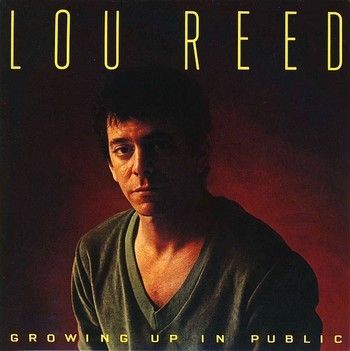
Lou Reed - Growing Up In Public - 1980 - Arista

The power of the Tower card come tumbling down, Growing Up In Public is the cartoon coloring book version of one man’s descent into the hell of the past. Similar to Alice Cooper’s From The Inside (another underrated favorite of mine), this album delivers a dire message in upbeat and almost childlike arrangements. It’s a deception, of course, and one need look no deeper than the groundbreaking guitar-synth work of Chuck Hammer to hear the lightning that rumbles Reed’s childhood fantasies. The opening “How Do You Speak To An Angel” is all polite and stuttering sweetness until the shocking guitar-synth solo comes crashing in, and you hear the rage underneath the impotence. The next track, “My Old Man,” reveals the source of that rage, and so begins a series of vignettes from a troubled childhood (“Smiles,” “Standing On Ceremony”) and ineffectual adulthood (“So Alone,” “The Power of Positive Drinking”). Yet, listening to this record, you’ll think Reed has gone soft. It’s the closest he’s come to making a pop album, with pleasant piano chords and bouncy bass guitar lines. The lyrics are another story; they talk of repression, anger and futility. The breakthrough moment occurs on “Think It Over,” when all of the bitterness is set aside for a shot at real love. In the interest of fair disclosure, I did own this on a cassette and played it in my car constantly, so familiarity may have bred fidelity. That would explain Tony Banks’ The Fugitive anyway. But I owned Street Hassle on cassette and that never got under my skin like Growing Up In Public. I certainly wouldn’t put Public on the same pedestal as Berlin, but song for song it’s one of the most likeable Lou Reed records I own; arguably the best of the comedic/tragic albums that would include Mistrial and Legendary Hearts. © 2009 Connolly & Company. All rights reserved http://www.connollyco.com/discography/lou_reed/growing.html

Check out lou Reed's classic "Coney Island Baby", "Sensations", and "Transformer" albums, and The Velvet Underground's brilliant "Loaded" album

TRACKS

1."How Do You Speak To An Angel?" – 4:08
2."My Old Man" – 3:15
3."Keep Away" – 3:31
4."Growing Up In Public" – 3:00
5."Standing On Ceremony" – 3:32
6."So Alone" – 4:05
7."Love Is Here to Stay" – 3:10
8."The Power Of Positive Drinking" – 2:13
9."Smiles" – 2:44
10."Think It Over" – 3:25
11."Teach The Gifted Children" – 3:20

All songs composed by Michael Fonfara & Lou Reed

MUSICIANS

Lou Reed: guitar, vocals
Michael Fonfara: keyboards, guitar
Chuck Hammer: guitar, guitar synthesizer
Stuart Heinrich: guitar, background vocals
Ellard "Moose" Boles: bass, background vocals
Michael Suchorsky: drums

REVIEWS

Aw, not too good. A lot of life philosophy, which may or may not speak to you, and a definite lack of care for the music. Best song: THE POWER OF POSITIVE DRINKING

Track listing: 1) How Do You Speak To An Angel; 2) My OId Man; 3) Keep Away; 4) Growing Up In Public; 5) Standing On Ceremony; 6) So Alone; 7) Love Is Here To Stay; 8) The Power Of Positive Drinking; 9) Smiles; 10) Think It Over; 11) Teach The Gifted Children.

Lou entered the Eighties completely 'ready to suck', as might be said. It's not that he was being misled by robotic, technophilic production, a thing all too common for elder stars in the decade; it's just that it was much and much too hard for him to remain on the leading edge of musical innovation. Just take a look at this record. You might notice these hardly impressive numbers that I put up there in the beginning and think that I completely condemn this album as a rotten one or something. Actually, not at all: I don't really mind listening to this stuff, just as I don't really mind listening to, say, Bob Dylan's contemporary stuff (although he did release his worst album ever that year). It's fairly decently produced, too - the band is stripped down once again, with the main emphasis on a couple electric guitars and the rhythm section, and only Michael Fonfara's annoying synths manage to spoil the picture from time to time. Plus, the record is not too long: eleven cuts, none of which go over four minutes, so if you don't like a song, chances are it'll go away before you even have the chance to express your disappointment. The problem is, there's hardly a good song here you'll like in all. And a major problem it is, as the tracks on this record hardly even fit the definition of 'song'. Much more often, it's just pieces of entertaining or not that enetertaining monolog set to a certain musical backing. 'So what's the deal?', you'll say. 'It's Lou's usual approach - mumbling out his life philosophy to some musical backing or other.' True, of course, but there comes a time, every now and then, when the formula begins to get on your nerves, especially when there are next to no musical ideas at all to back it. In the past, Lou used spare arrangements as well, but he always managed to make them moody and enthralling enough to fit in with the words and the overall message. On Growing Up In Public, the music seems kinda... in the way, if you know what I mean. In the way of 'poetry'. I can easily imagine this album not having any music at all - you know, just 'Lou Reed-ing Poetry'. No cool vocal harmonies here, no delicious slide guitar, no lounge trumpets, no impressive guitar solos; like I said, the only musically significant element here are Michael Fonfara's synthesizers which mostly stay in the background but sometimes get into the spotlight a bit too much and give the song an ultra-banal Eighties' feel which it really does not need at all, as in the case of the pathetic instrumental break on 'How Do You Speak To An Angel'. Growing Up In Public is basically a concept album (big surprise) about, well, growing up, whether it be in public or not. Thus, it happens to contain more than a fair share of autobiographic songs, rendering it perhaps the most important self-describing album in Lou's career. The more personal song thematics range from first youth reminiscences ('How Do You Speak To An Angel') to rough parental relations ('My Old Man') to problems with establishing social contact (title track) and, well, the themes are many and they're not all that unusual for an autobiographical cycle. The lyrics are also nothing really special: 'My Old Man' even borders on banal, if not for the somewhat unexpected ending. I mean, most of this stuff is nice, but then again, so are hamburgers. I'd come to expect something more deep and thought-provoking from Lou: this autobiographical cycle is to, say, Coney Island Baby as the Kinks' later obnoxious rock operas are to their early deeply intelligent and sharp concept albums. On this here record Lou is probably at his best when the songs are quiet and relaxed; my favourite is the pleasant little reggae-ish shuffle 'The Power Of Positive Drinking'. It might feel out of place on the album, as it's essentially a funny throwaway - come on now, how come a song with lyrics like 'Some say liquor kills the cells in your head/And for that matter so does getting out of bed' belongs on here? But I love it all the same. Then there's 'Teach The Gifted Children' which (a) closes the album (so you're particularly grateful to it), (b) clocks in at 3:20 (so you're able to breathe with relief), (c) has by far the most interesting lyrics on the album (so you say: 'He's smart! He kept the best bit for the end!'), and (d) tries to sound very emotional and climactic and maybe even cathartic, but fails, because the message is definitely unclear (what's the whole business with 'take me to the river' really about?) and the musical backing is monotonous and boring. So you say: 'Yeah, he's a genius, but he sucks!' None the more so than on the faster numbers, though - 'Smiles' and 'So Alone' just bug me, especially the latter where Lou gets extremely hoarse and implores you to 'shake your booty' in that exact intonation. Nah. The only other tracks which I can remind as possessing interesting moments are the title track, that had a strange trumpet-imitating synth riff over it, kinda reminding you of the old Transformer days, and the already mentioned 'How Do You Speak...' with its weird time changes and twisted refrains. Everything else is simply forgettable - take Coney Island Baby, substitute all the subtle instrumentation and romantic mood with emotionless, noodling generic guitars and dreary whining and you get Growing Up. Forgettable. Whew. Don't believe me? Just take a look at the album cover for CIB and this one. See the difference? Same goes for the music. © Only Solitaire - George Starostin's Music Reviews © http://starling.rinet.ru/music/reed.htm#Public

Growing Up in Public was a transitional album for Lou Reed; it was his last set with his long-running road band (dominated by keyboardist Michael Fonfara), and while the fleshed-out arrangements are of a piece with Reed's work on Rock & Roll Heart and The Bells, the lyrics of the best songs anticipate the directly personal, emotionally naked songwriting that marked the two extraordinary albums that would follow, The Blue Mask and Legendary Hearts. "How Do You Speak to an Angel," "My Old Man," and "Standing on Ceremony" deal with Reed's family issues with a direct force he hadn't summoned since "Kill Your Sons" (we'll leave it to others to debate their accuracy), and "So Alone" and "Keep Away" both offer a trenchant but heart-rending look at modern relationships. And "The Power of Positive Drinking" is amusing, but rather surprising coming from a guy who would give up alcohol and drugs a year after this was released. Growing Up in Public didn't get much notice on its initial release, but all these years later it sounds like a dry run for what was to be the most creatively fruitful period of Lou Reed's solo career. © Mark Deming © 2010 Rovi Corporation. All Rights Reserved http://www.allmusic.com/cg/amg.dll?p=amg&sql=10:etanqj6bojda

BIO

The career of Lou Reed defies capsule summarization. Like David Bowie (whom Reed directly inspired in many ways), he has made over his image many times, mutating from theatrical glam rocker to scary-looking junkie to avant-garde noiseman to straight rock & roller to your average guy. A firmer grasp of rock's earthier qualities has ensured a more consistent career path than Bowie's, particularly in his latter years. Yet his catalog is extremely inconsistent, in both quality and stylistic orientation. Liking one Lou Reed LP, or several, or all of the ones he did in a particular era, is no guarantee that you'll like all of them, or even most of them. Few would deny Reed's immense importance and considerable achievements, however. As has often been written, he expanded the vocabulary of rock & roll lyrics into the previously forbidden territory of kinky sex, drug use (and abuse), decadence, transvestites, homosexuality, and suicidal depression. As has been pointed out less often, he remained (and remains) committed to using rock & roll as a forum for literary, mature expression well into middle age, without growing lyrically soft or musically complacent. By and large, he's taken on these challenging duties with uncompromising honesty and a high degree of realism. For these reasons, he's often cited as punk's most important ancestor. It's often overlooked, though, that he's equally skilled at celebrating romantic joy, and rock & roll itself, as he is at depicting harrowing urban realities. Although Reed achieved his greatest success as a solo artist, his most enduring accomplishments were as the leader of the Velvet Underground in the '60s. If Reed had never made any solo records, his work as the principal lead singer and songwriter for the Velvets would have still ensured his stature as one of the greatest rock visionaries of all time. The Velvet Underground are discussed at great length in many other sources, but it's sufficient to note that the four studio albums they recorded with Reed at the helm are essential listening, as is much of their live and extraneous material. "Heroin," "Sister Ray," "Sweet Jane," "Rock and Roll," "Venus in Furs," "All Tomorrow's Parties," "What Goes On," and "Lisa Says" are just the most famous classics that Reed wrote and sang for the group. As innovative as the Velvets were at breaking lyrical and instrumental taboos with their crunching experimental rock, they were unappreciated in their lifetime. Five years of little commercial success was undoubtedly a factor in Reed leaving the group he had founded in August 1970, just before the release of their most accessible effort, Loaded. Although Reed's songs and streetwise, sing-speak vocals dominated the Velvets, he was perhaps more reliant upon his talented collaborators than he realized, or is even willing to admit to this day. The most talented of these associates was John Cale, who was apparently fired by Reed in 1968 after the Velvets' second album (although the pair have worked together on various other projects since then). Reed has a reputation of being a difficult man to work with for an extended period, and that has made it difficult for his extensive solo oeuvre to compete with the standards of brilliance set by the Velvets. Nowhere was this more apparent than on his self-titled solo debut from 1971, recorded after he'd taken an extended hiatus from music, moving back to his parents' suburban Long Island home at one point. Lou Reed mostly consisted of flaccid versions of songs dating back to the Velvet days, and he could have really used the group to punch them up, as the many outtake versions of these tunes that he actually recorded with the Velvet Underground (some of which didn't surface until about 25 years later) prove. Reed got a shot in the arm (no distasteful pun intended) when David Bowie and Mick Ronson produced his second album, Transformer. A more energetic set that betrayed the influence of glam rock, it also included his sole Top 20 hit, "Walk on the Wild Side," and other good songs like "Vicious" and "Satellite of Love." It also made him a star in Britain, which was quick to appreciate the influence Reed had exerted on Bowie and other glam rockers. Reed went into more serious territory on Berlin (1973), its sweet orchestral production coating lyrical messages of despair and suicide. In some ways Reed's most ambitious and impressive solo effort, it was accorded a vituperative reception by critics in no mood for a nonstop bummer (however elegantly executed). Unbelievably, in retrospect, it made the Top Ten in Britain, though it flopped stateside. Having been given a cold shoulder for some of his most serious (if chilling) work, Reed apparently decided he was going to give the public what it wanted. He had guitarists Steve Hunter and Dick Wagner (who had already played on Berlin) give his music a pop-metal, more radio-friendly sheen. More disturbingly, he decided to play up to the cartoon junkie role that some in his audience seemed eager to assign to him. On-stage, that meant shocking bleached hair, painted fingernails, and simulated drug injections. On record, it led to some of his most careless performances. One of these, the 1974 album Sally Can't Dance, was also his most commercially successful, reaching the Top Ten, thus confirming both Reed's and the audience's worst instincts. As if to prove he could still be as uncompromising as anyone, he unleashed the double album Metal Machine Music, a nonstop assault of unlistenable electronic noise. Opinions remain divided as to whether it was an artistic statement, a contract quota-filler, or a slap in the face of the public. While Reed has never behaved as outrageously (in public and in the studio) as he did in the mid-'70s, there was plenty of excitement in the decades that followed. When he decided to play it relatively straight, sincere, and hard-nosed, he could produce affecting work in the spirit of his best vintage material (parts of Coney Island Baby and Street Hassle). At other points, he seemed not to be putting too much effort into any aspect of his songs ("Rock and Roll Heart"). With 1978's Take No Prisoners, he delivered one of the weirdest concert albums of all time, more of a comedy monologue (which not too many people laughed hard at) than a musical document. Reed had always been an enigma, but no one questioned the serious intent of his work with the Velvet Underground. As a soloist, it was getting impossible to tell when he was serious, or whether he even wished to be taken seriously anymore. At the end of the '70s, The Bells set the tone for most of his future work. Reed would settle down; he would play it straight; he would address serious, adult concerns, including heterosexual romance, with sincerity. Not a bad idea, but though the albums that followed were much more consistent in tone, they remained erratic in quality and, worse, could occasionally be quite boring. The recruitment of Robert Quine as lead guitarist helped, and The Blue Mask (1982) and New Sensations (1984) were fairly successful, although in retrospect they didn't deserve the raves they received from some critics at the time. Quine, however, would also find Reed too difficult to work with for an extended period. New York (1989) heralded both a commercial and critical renaissance for Reed, and in truth it was his best work in quite some time, although it didn't break any major stylistic ground. Reed works best when faced with a challenge, which arrived when he collaborated with former partner John Cale in 1990 on a song cycle for the recently deceased Andy Warhol. In both its recorded and stage incarnations, this was the most experimental work that Reed had devised in quite some time. Magic and Loss (1992) returned him to the more familiar straight rock territory of New York, again to critical raves. The re-formation of the Velvet Underground for a 1993 European live tour could not be considered an unqualified success, however. European audiences were thrilled to see the legends in person, but critical reaction to the shows was mixed, and critical reaction to the live record was tepid. More distressingly, old conflicts reared their head within the band once again, and the reunion ended before it had a chance to get to America. Cale and Reed at this point seem determined never to work with each other again (the death of Velvet Underground guitarist Sterling Morrison in 1995 seemed to permanently ice prospects of more VU projects). In 1996, the surviving Velvet Underground members were inducted into the Rock and Roll Hall of Fame, performing a newly penned song for their fallen comrade, Morrison. Reed closed the '90s with an album that saw him explore relationships, 1996's Set the Twilight Reeling (many speculated that the album was biographical and focused on his union with performance artist Laurie Anderson), which didn't turned out to be one of Reed's more critically acclaimed releases. He also found time to compose music for the Robert Wilson opera Timerocker, and in 1998, released the "unplugged" album Perfect Night: Live in London. The same year, Reed was the subject of a superb installment of the PBS American Masters series that chronicled his entire career (eventually released as a DVD, titled Rock and Roll Heart). 2000 saw Reed's first release for Reprise Records, Ecstasy, a glorious return to raw and straightforward rock, a tour de force that many agreed was his finest work since New York. Another collaboration with Robert Wilson, POE-try, followed in 2001 and continued its worldwide stage run through the year. Including new music by Reed and words adapted from the macabre texts of Edgar Allan Poe, POE-try led to Reed's highly ambitious next album, The Raven. Animal Serenade, a double-disc set recorded at the Wiltern Theater in Los Angeles during his 2003 world tour, was issued in spring 2004. The live effort is Reed's tribute of sorts to his celebrated Rock N Roll Animal concert album, which was released 30 years before. In 2007 Reed released Hudson River Wind Meditations, a four-song experimental sound collage that celebrated both the best and worst aspects of Metal Machine Music. Reed's solo work ultimately cannot stack up to his Velvet output, despite its many highlights. Still, most would have to concede that with the exception of Neil Young, no other star that rose to fame in the '60s has continued to push himself so diligently into creating work that is meaningful and contemporary. If that means he relies on stock musical and lyrical ideas at times (as Young does), it also means he's proved that rock can remain relevant to listeners other than hormone-crazed teenagers. © Richie Unterberger & Greg Prato © 2010 Rovi Corporation. All Rights Reserved http://www.allmusic.com/cg/amg.dll?p=amg&sql=11:0ifrxqr5ldje~T1
Missy Burgess


Photobucket

Missy Burgess - Lemon Pie - 2008 - Missy Burgess

"Ottawa’s Missy Burgess is as credible a blues interpreter as she is a singer/songwriter. Here Burgess covers Robert Johnson’s suggestive “Come On In My Kitchen”, catches the moodiness of Jann Arden’s “It Looks Like Rain”, and delivers a rich, bittersweet take on her own lovelorn “Blue Sweater”. Front and centre, right where they belong, are Burgess’ direct, smoky vocals, sometimes reminiscent of her old pal Penny Lang’s. Exquisite playing. Good tunes and monstrous production from James Stephens. Willie P. Bennett can be found playing harmonica on this gem of a CD. Pick it up now!" - Pat Langston (Ottawa Citizen, Jan. 12/08)

Growing up in a large family had its benefits. You could train yourself to live in a different land even though chaos was all around you. As a young teen, Missy would climb into her brother's tree house and imagine herself singing late at night in some obscure small room in New York City and walking the streets alone as she thought all musicians did. By the time she was 15 years old she had heard all her father's jazz and big band albums over and over and had attended numerous concerts where her brother, Michael sang beautiful Gregorian chant with St. Michael's Choir School in downtown Toronto. She loved music, and belonged to many church choirs, but it took on new meaning when her father brought home a record of Fats Waller because it introduced a sound for her that made her want to sing. She bought a guitar and liked spending hours learning how to play it. But it took many years of living before Missy finally realized the need to take music seriously. Since 1996 Missy has performed on main stages from The National Arts Centre in Ottawa to Boston's Regent Theatre to The Angola Prison for Women in Louisiana.She has recorded 2 albums. Pour Me a Song features veteran folk singer Penny Lang as a guest singer. Her latest album Lemon Pie features the late Willie P. Bennett as a guest back up singer and harmonica player. As well Lemon Pie features the virtuoso guitar playing of Vince Half hide along with the wonderful sax of Petr Cancura. Website: Missyburgess.com

Great blend of roots blues with a touch of folk and jazz. Very much in the style of the early Maria Muldaur. Listen to her "Pour Me A Song" album

TRACKS / COMPOSERS

1. Blue Dog Man - Missy Burgess, Vince Halfhide
2. Lemon Pie - Missy Burgess, Vince Halfhide
3. Come On In My Kitchen - Robert Johnson
4. Sweet Dreams - Missy Burgess, Vince Halfhide
5. It Looks Like Rain - Jann Arden Richards, Robert Foster
6. Blue Sweater - Missy Burgess, Vince Halfhide
7. Make Me A Pallet On Your Floor - Trad.
8. Sparrows - Missy Burgess, Vince Halfhide
9. Just Like Roses Do - Missy Burgess, Vince Halfhide
10. Basket of Blues - Missy Burgess
11. Little Man - Teddy Edwards
12. When I Go - Alrick Huebener, Missy Burgess, Vince Halfhide

MUSICIANS

Missy Burgess - Vocals, Guitar
Vince Halfhide - Guitar
Alrick Huebener - Bass
Petr Cancura - Sax
Willie P. Bennett RIP - Harmonica, Backing Vocals
Penny Lang - Guest Vocals

30.7.10

Daevid Allen


Photobucket

Daevid Allen - Alien in New York [EP] - 1983 - Charly Records

Daevid Allen, born 1938 in Melbourne, Australia, was one of the founders of the British progressive rock band the Soft Machine in 1966. After recording just one album with the group, he became the founder/leader of Gong, which he left in 1973 to begin a solo career (though his first solo album, Banana Moon, was released in 1971 while he was still in the group). Allen explored his quirky, folky take on rock throughout the '70s and '80s on albums like 1976's Good Morning and 1983's Alien in New York. His solo work also included collaborations with underground rock impresario Kramer like 1993's Who's Afraid? and 1996's Hit Men, which was released on Kramer's Shimmy Disc label. Allen returned in 1999 with Money Doesn't Make It, followed a year later by Stroking the Tail of the Bird. Nectans Glen also followed in 2000. In 2003 Allen formed a new version of Gong with members of the Japanese collective known as Acid Mothers Temple, as well as playing and releasing material with his California-based band University of Errors. He continues to release numerous live sets and one-off collaborations in limited editions on various independent labels under his own and various group names. A best-of, Man From Gong, which only scratches the surface of his lengthy discography, appeared from Snapper Music in 2006. © William Ruhlmann, All Music Guide

If you like the quirky, eccentric and original jazz rock sound of Can, and Robert Wyatt/Soft Machine, you may like this EP. Although Daevid Allen's work is often intricate, complex, and very unorthodox, it is never boring and all his music is accessible and worth listening to. Daevid's "Australia Aquaria" album is @ DAEVALL/AUSAQU

TRACKS / COMPOSERS

1 Bananareggae - Allen 4:21
2 Are You Ready - Allen, John Hill 3:30
3 Oo la La - Allen 3:26
4 Side Windo - Allen

Photobucket

MUSICIANS

Daevid Allen - Guitar, Vocals
Bill Laswell - Bass
Bill Bacon, Fred Maher - Drums
Ralph Carney - Sax (Bass)
Gary Window - Sax (Tenor)
Mars Williamson - Baritone Sax
Mark Kramer - Trombone, Synth
The Bergerettes - Choir on Track 1

Bushmaster featuring Gary Brown


Photobucket

Bushmaster featuring Gary Brown - Live & Blue - 2008 - Bushmaster

Produced, and Performed by Gary D. Brown of the band Bushmaster: featuring Jay Turner on Bass; Mark St. Pierre and Joe Schrum on drums/percussion. Independently Released in the Spring of 2008, Bushmaster's third CD is an inspiring collection of original tunes and re-energized blues classics. Recorded live in Carlisle, PA, at two gigs, this album captures the energy and "musical conversations" that occur when Gary and Jay take the stage together. Influenced by a host of blues greats, including Alec Rice "Sonny Boy Williams II" Miller, McKinley "Muddy Waters" Morganfield, Eddie Boyd, George "Buddy" Guy, Albert Collins, Roy Alfred, Ray Charles, Elmore James, and many others, the music on this CD is sure to please a wide spectrum of blues music lovers. [http://www.youtube.com/user/trudimbrown]

Bushmaster, featuring Gary Brown on Guitar and Vocals, is a blues-rock power trio based in the Central PA/MD/DC area. Subscribe to our channel to get updates on all the latest clips as they happen. Check out more about the band at www.MySpace.com/BushmasterBlues [http://www.youtube.com/user/trudimbrown]

Gary Brown (Guitar/Vocals) is a DC area native (Palmer Park) with 30+ years playing experience. After picking up his first guitar (an old Guild acoustic) at age 14, the 45 year old Brown quickly progressed to electric and after stints with various local bands, most notably The Spoilers, and sitting in around DC area clubs he decided to take the plunge and form his own group in 1992. [http://www.youtube.com/user/trudimbrown]

Buy the band's great "Drowning on Dry Land" album, and support the blues

TRACKS / COMPOSER INFO.

1. Night Shift - Gary Brown
2. Have You Ever Been Mistreated (Nine Below Zero) - Improvised lyrics based on both "Nine Below Zero" by Alec Rice "Sonny Boy Williams 11" Miller as sung by Muddy Waters, and "Five Long Years" by Eddie Boyd as sung by Buddy Guy
3. Lights On, Nobody Home - Improvised lyrics based on "Lights Are On, But Nobody's Home by Gwendolyn Collins as sung by Albert Collins
4. I Got News - Improvised lyrics based on "I've Got News For You" by Roy Alfred as sung by Ray Charles
5. Drowning On Dry Land - Gary Brown
6. Nappy's Boogie - Gary Brown
7. Thousand Miles From Nowhere - Gary Brown
8. Four Times Better - Gary Brown
9. Good Life - Gary Brown
10. The Sky Is Crying [Bonus Track] - Improvised lyrics based on "The Sky Is Crying" by Elmore James, Clarence Lewis, & Bobby Robinson as sung by Elmore James

MUSICIANS

Gary Brown - Lead Guitar/Vocals on all tracks except "I Got News"
David Ison - Rhythm Guitar, Vocals on "I Got News"
Dayne Shannon - Guitar Solo on "Good Life"
Jay Turner - Bass
Mark St. Pierre - Drums/Percussion on "Night Shift", "Have You Ever Been Mistreated (Nine Below Zero)", "I Got News", & "Good Life"
Joe Schrum - Drums/Percussion on "Lights On", "Nobody Home", "Drowning On Dry Land", "Nappy's Boogie", "Thousand Miles From Nowhere", "Four Times Better", & "The Sky Is Crying"

29.7.10

Katamaran


Photobucket

Katamaran - Café Florian - 1978 - pläne

Katamaran was a lively fusion combo from Heidelberg, Baden-Württemberg, Germany, and often compared to the jazzy progressive rock band of the late-70's, Guru Guru. Percussionist, Waldemar Karpenkiel's brother Jogi was in Guru Guru in 1976/77 (both being from Kollektiv) and naturally influences rub off. Katamaran were unique in many ways, not least so for a heavy reliance on percussion and two wind players, and were comparable in feel to many East Euro fusion bands of the era. "Café Florian" is a good jazz rock/fusion album in the style of artists like Chick Corea, or Weather Report . Try and listen to Katamaran's 1977 s/t album. For music in the same genre, listen to Kollektiv's "SWF-Sessions Volume 5", and Guru Guru's "Don't Call Us, We Call You" albums

TRACKS

A1 Café Florian 11:03
A2 Plaza De La Trinidad 3:34
A3 Das Stück Mit Der Quarte 7:40

B1 Chromadur 14:05
B2 Kurt 7:50

All tracks composed by Wolf Burbat

BAND

Franz Holtmann - Guitar
Dago Dombrowski - Bass, Percussion
Wolf Burbat - Piano, Electric Piano, Synthesizer [2 Arp Axxe, Polymoog], Flute
Rudi Marhold - Drums, Percussion
Waldemar Karpenkiel - Percussion
Roland Schmitt - Saxophone [Tenor, Soprano]

Albatross


Photobucket

Albatross - Rockin' The Sky - 1975 - Dominion

Hard rock with progressive, and psychedelic touches. Slightly commercial Southern rock, but a well above average mid 70's rock album by good musicians. There are many bands with the sane name. This band may originally have been based in Salem, Virginia? Any information is appreciated

SIDE ONE

1-Out Of Control - Reid, Ward, George (4:00)
2-After The Fire - Reid, Weaver (4:48)
3-Spare A Dime - Reid, Weaver (3:20)
4-About Losing - Reid, Ward, George (3:27)
5-Back Street Lover - Reid, Ward (3:53)

SIDE TWO

1-Same Old Song - Reid, Ward, George (3:38)
2-No Reason To Cry - Ward, George (2:34)
3-On The Run - Reid, Weaver (2:38)
4-Yankee Jam - Ward (2:14)
5-Both Sides Now - Reid, Ward, George (2:14)
6-Other Side Of Town - Reid, Ward (2:55)
7-Mean Woman Blues - Reid, Ward (3:45)

BAND

GARY WARD - Lead Guitar/B.Vocal
CHRIS MASSIE - Guitar
RUDY WEAVER - Bass Guitar/B.Vocal
HENRY REID - Keyboards
JOE CAMPBELL - Drums/B.Vocal
MIKE GEORGE - Lead Vocal