A.O.O.F.C
recommends
Mizar6

babydancing


Get this crazy baby off my head!

11.12.09

Elkie Brooks


Rich Man's Woman - Elkie Brooks - 1975 - A&M Records

Elkie Brooks has long been one of Britain's greatest and most enduring jazz blues singers. She may be remembered by many people as a member of the brilliant but short lived blues rock band, Vinegar Joe, which also included the late Robert Palmer. The self titled 1972 "Vinegar Joe" album, featuring Elkie Brooks is a classic early seventies blues rock album, and worth listening to. "Rich Man's Woman" is not one of her best albums. The voice is terrific, but much of the material is weak. May be for diehard fans only. Also, the sound quality on the album is only average, and there are a few sound "glitches" also. You have been warned! For a better idea of Elkie's talent, listen to her "No More the Fool", and "Pearls" albums. Elkie's "Nothing But The Blues" album can be found @ ELKBR/NBTB and Vinegar Joe's "Six Star Gypsies" album is @ VINJO/6*G

TRACKS / COMPOSERS

SIDE 1

1. Where Do We Go from Here (Rich Man's Woman)
(Elkie Brooks) 3:46
2. Take Cover
(Michael Brown–Ian Lloyd) 3:03
3. Jigsaw Baby
(Elkie Brooks–Bruce Foster) 5:18
4. Roll Me Over
(Elkie Brooks) 3:02
5. He's a Rebel
(Gene Pitney) 2:55

SIDE 2

1. One Step on the Ladder
(Elkie Brooks) 5:24
2. Rock and Roll Circus
(Bob Segarini) 4:21
3. Try a Little Love
(Elkie Brooks) 3:54
4. Tomorrow
(Dave Courtney–Leo Sayer) 3:59

MUSICIANS

Lead Vocals Elkie Brooks
Guitars Steve Burgh, Ben Benay
Bass Dennis Kovarik, Max Bennett
Keyboards Bruce Foster, David Paich
Synthesizers Mike Boddicker
Drums David Kemper, John Guerin
Percussion Alan & Gene Estes
Saxophones Nino Tempo
Backing Vocals Elkie Brooks, Stan Farber, Venetta Fields, Gerry Garrett, Jim Gilstrap, Ron Hicklin, Clydie King, Gene Morford, Verlane Rogers, Jerry Whitman

BIO

British pop-jazz-blues crooner Elkie Brooks (born Elaine Bookbinder) dominated U.K. radio in the late '70s with a series of hit singles that established her as "the biggest-selling female album artist in the history of the British pop charts." The Manchester native, who grew up in an extremely musical family, left school at the age of 15 to join a dance band in London. She eventually mad the jump to radio, as well as numerous appearances with legendary jazz bandleader Humphrey Lyttelton, before embarking on a career in pop music. The early '60s saw the budding young singer releasing singles for Decca and EMI, as well as opening for everyone from Carl Perkins to the Beatles, but commercial success remained elusive. She joined the blues-rock band Dada in 1970, which would eventually find success through a name change (Vinegar Joe) and the arrival of a new vocalist, Robert Palmer. The popular group released three beloved records before disbanding in 1974, and after a brief stint with U.S. Southern rock band Wet Willie, Brooks decided to take another crack at a solo career. The resulting Rich Man's Woman, Two Days Away, Shooting Star, Live & Learn, Pearls, and Pearls II, as well as frequent sold-out tours and numerous silver, gold, and platinum recordings, would go on to cement her reputation well into the 21st century. © James Christopher Monger, All Music Guide

BIO (WIKIPEDIA)

Elkie Brooks (born Elaine Bookbinder, 25 February 1945 in Broughton, Salford) is an English singer, formerly a vocalist with Vinegar Joe, and later a solo artist. She is known for her husky voice. Brooks was born to Jewish parents in Salford, England and grew up in Prestwich. She attended North Salford Secondary Modern School. A professional singer since she was fifteen, Brooks' debut, a cover of Etta James's "Something's Got A Hold On Me", was released on Decca in 1964. She spent most of the 1960s on Britain's jazz scene.It was on the jazz scene she met Humphrey Lyttelton the two remained friends till Lyttelton's death in 2008. Impressed by Steve Marriott's vocal and stage performances, she helped the mod band Small Faces with their early career by introducing them at several venues. In the early 1960s Brooks supported The Beatles in their Christmas show in London. She also toured the U.S with The Animals, among other acts and also supported Jimi Hendrix.After she met husband Pete Gage, she joined the short-lived fusioneers Dada before forming Vinegar Joe with Gage and Robert Palmer. After three albums, they split up in 1974, and Brooks and Palmer both went solo. After a time as backing singer with the American southern boogie band Wet Willie, she returned to England. Her first solo album on A&M records Rich Man's Woman (1975) came before a run of sixteen UK hit albums in twenty-five years, starting with Two Days Away, produced by the legendary duo Leiber & Stoller, who had also worked with Elvis Presley and many others (1977). Brooks wrote some tracks with Leiber and Stoller. The hits "Pearl's a Singer", "Sunshine After the Rain" came from this album. "Lilac Wine", Don't Cry Out Loud, came later. The albums Shooting Star (1978), Live and Learn (1979), Pearls (at the time, the largest selling album by a British female artist) (1981), "Fool (If You Think It's Over)" was a hit for Brooks taken from this album. Written by Chris Rea. Pearls II (1982), Minutes (1984) and Screen Gems the first album to be produced on CD in the UK (1984) were all UK chart successes. In 1986 No More the Fool gave her biggest hit single to date while the parent album reached the top 5. Following chart success ensued with the albums The Very Best of (1986), Bookbinders Kid On Bookbinders Kid, she covered "What's The Matter Baby" previously recorded by Timi Yuro. Yuro got in touch with Brooks to compliment her. (1988), Inspiration (1981), Round Midnight (1993), Nothin' But the Blues (1994), Amazing (1996) and The Very Best of (1997). In 1980 Brooks performed at the Knebworth festival with The Beach Boys, Santana and Mike Oldfield. Brooks' success has earned her recognition by the Guinness Book of Records as the most charted British female album artist of the last 30 years. Pearls stayed in the charts for 79 weeks and was still there when Pearls II charted a year later. In March 2003 she participated in the ITV music talent show Reborn in the USA, alongside musicians such as Peter Cox (Go West Singer), Tony Hadley and Leee John. The Electric Lady album (2005) saw a return to her blues and rock roots, featuring self-penned tracks alongside re-workings of numbers by The Doors, Bob Dylan, Paul Rodgers and Tony Joe White. The following year saw the release of her first official DVD, titled Elkie Brooks & Friends: Pearls featuring an array of guest musicians. Brooks is currently working on her 20th studio album. A popular live attraction, Brooks has toured almost every year during her solo career. Her 1982 UK concert tour was seen by more than 140,000 people in just three months.She has performed at every major UK theatre including sell out runs at the London Palladium, Dominion Theatre, Hammersmith Apollo, Ronnie Scott's, Royal Albert Hall and Wembley Arena.

10.12.09

Tommy Castro


Tommy Castro - Gratitude - 2003 - Heart & Soul

As its title suggests, Tommy Castro's seventh album is a note of thanks to the artists who inspired the West Coast guitarist/vocalist. While rocking R&B and blues greats like B.B. and Albert King, Chuck Berry and Buddy Guy are obvious choices, Castro digs deep into their catalogs. He covers B.B. King's "Bad Case of Love," Albert King's "Everybody Want to Go to Heaven," Berry's "Tulane," and Guy's version of Willie Dixon's "When My Left Eye Jumps." More interesting, though, are Castro's '60s soul roots which he acknowledges in versions of songs made popular by Wilson Pickett (a powerful "I Found a Love"), Sam & Dave (Curtis Salgado joins in on a duet of "I Take What I Want"), Otis Redding (a thumping "Lovey Dovey" with Sista Monica Parker taking the Carla Thomas part) and James Brown (a swinging "I Feel That Old Feeling Coming On," which is a departure from Brown's usual funky work). Less successful are Castro's takes on Howlin' Wolf's "44" where his direct approach loses the original's voodoo marching vibe. John Lee Hooker's "Serve You Right to Suffer" sounds more like the J. Geils Band's cover than Hooker's spooky approach, with an ill-advised rocking middle section that misses the song's intent. Much better is Castro's succinct, sharp cover of Muddy Waters' "I Wants to Be Loved" where he toughens up the attack but maintains the tune's defiant drive. Pianist John Turk helps fatten the sound, keeping it raw with his work on the album's slow blues workouts such as Guy's ."..Left Eye" and Ray Charles' "Come Back Baby." Castro is loose and tough, with his gritty voice and thick, clean guitar lines sounding confident and assertive. More than just a holding pattern until he writes new tunes, Gratitude is not only an enjoyable peek inside Tommy Castro's influences but a fascinating compilation of generally underexposed material from blues, soul and R&B greats. © Hal Horowitz, All Music Guide

"Gratitude" is a cover album of Tommy Castro's greatest heroes. One of today's great blues guitatists, Tommy has produced a string of great albums, and has also played and recorded with numerous blues legends. "Gratitude" is a terrific album. It is not all blues, or blues rock. There is a liberal sprinkling of soul here as well. Somgs like Wilson Pickett's " Found a Love", Isaac Hayes' "Take What I Want", and Ray Charles' "Come Back Baby" are done really well. It is often argued that Tommy Castro is better playing straightforward blues. Well, on this album he also covers songs by John Lee Hooker, Willie Dixon, Albert King, and others. Terrific stuff, and HR by A.O.O.F.C. Tommy's "Live at the Fillmore" album is @ TOMCAS/LATF The Tommy Castro, Jimmy Hall, Lloyd Jones "Triple Trouble" album is @ TOMCAS/JIMHALL/LLOTDJONES/TT "The Essential Tommy Castro" album is located @ TOMCAS/ESS His "Can't Keep A Good Man Down" album can be found @ TOMCAS/CKAGMD Check out Tommy's "No Foolin'" album @ TOMCAS/NF and his outstanding "Exception To The Rule" album is a nust have @ http://www.megaupload.com/?d=7AGHG13G

TRACKS / COMPOSERS

1 It Serves You Right to Suffer - John Lee Hooker
2 Bad Case of Love - Irving, Curtis/Joe Josea
3 Tulane - Chuck Berry
4 I Want to Be Loved - Willie Dixon
5 Come Back Baby - Ray Charles
6 Lovey Dovey - Memphis Curtis
7 Everybodys Want to Go to Heaven - Albert King
8 I Feel That Old Feeling Coming On - Knox/Scott
9 I Take What I Want - Isaac Hayes, Mabon "Teenie" Hodges
10 When My Left Eye Jumps - Willie Dixon
11 44 - Chester Arthur Burnett
12 I Found a Love - Wilson Pickett, Willie Schofield, Bob West

MUSICIANS

Tommy Castro (Guitar), (Vocals)
Randy McDonald (Bass)
John Turk (Organ), (Piano), (Vocals (Background)
Billie Lee Lewis (Drums)
Keith Crossan (Saxophone)
Tom Poole (Trumpet)
Curtis Salgado (Harmonica), (Vocals), (Vocals (Background)
Sista Monica Parker (Vocals)

BIO

According to all the press and hype and hoopla, Tommy Castro is pegged as the next big star of the blues. Long a favorite among Bay Area music fans, Castro — in the space of two album releases — has taken his music around the world and back again with a sheaf of praise from critics and old-time blues musicians alike. His music is a combination of soul-inflected rockers with the occasional slow blues or shuffle thrown into the mix to keep it honest. His vocals are laid-back and always a hair behind the beat, while his scorching guitar tone is Stevie Ray Stratocaster-approved. Crossover success does not seem out of the question. Born and raised in San Jose, CA, Castro started playing guitar at the tender age of ten. Initially inspired by Mike Bloomfield, Eric Clapton, and Elvin Bishop, he started the inevitable journey into the roots of his heroes and discovered and quickly became enamored of B.B. King, Buddy Guy, Elmore James, Muddy Waters, and Freddie King. His vocal styling came from constant listening to Ray Charles, Wilson Pickett, James Brown, and Otis Redding. After playing with numerous Bay Area groups honing his chops, he landed a gig playing guitar for the San Francisco band the Dynatones, who were then signed to Warner Brothers. The two-year stint augured well for Castro, playing to the biggest crowds he had seen up to that point and backing artists as diverse as Carla Thomas and Albert King. Returning to San Francisco, Castro formed his own group and in 1993 released his first self-produced album, No Foolin', on the dime-sized Saloon label. That same year also saw him winning the Bay Area Music Award for Best Club Band, an honor he duplicated the following year. Working as the house band on NBC's Comedy Showcase, airing after Saturday Night Live, only boosted his visibility and name value. In 1997, he won Bammies for Outstanding Blues Musician and for Outstanding Blues Album for his debut release on Blind Pig Records, Exception to the Rule. Also in 1997 Castro and his band began a three-year stint working as the house band on NBC's Comedy Showcase, which aired after Saturday Night Live. Live at the Fillmore was released in early 2000, and with everyone from industry insiders to B.B. King singing his praises, Castro appeared to be headed for bigger and better things. It was not to be, however, as in 2001 he left Blind Pig Records and recorded Guilty of Love for the small 33rd Street label. Blind Pig closed the books on their association with Castro in 2002 by releasing the career retrospective The Essential Tommy Castro. Gratitude appeared from Heart and Soul in 2003, followed by Triple Trouble (with Jimmy Hall and Lloyd Jones) later that same year from Telarc. 2005 saw Castro return to the Blind Pig label for the release of Soul Shaker, followed by Painkiller in 2007. © Cub Koda, allmusic.com

MORE ABOUT TOMMY CASTRO

b. San Jose, California, USA. Castro and his music sit squarely at the centre of an evolving tradition of rock and blues. His early heroes were Eric Clapton, Mike Bloomfield and the Rolling Stones, which led him further back to the music of Muddy Waters, Freddie King, Otis Redding and Wilson Pickett. All these artists - and more - have influenced Castro in his own writing, singing and guitar playing. Castro spent many years playing with bands in the San Francisco Bay Area, and toured for two years with the Dynatones. He formed the Tommy Castro Band in 1991, which was named Club Band Of The Year for the Bay Area in 1993, and again in 1994. Regular band members have included Randy MacDonald (bass/vocals), Keith Crossan (saxophone/vocals), Billy Lee Lewis (drums/vocals), and Chris Sandoval (drums/percussion). Castro consolidated the band's success by recording Exception To The Rule, his debut album on Blind Pig Records in 1995 (the 1993 release No Foolin' had appeared on the tiny Saloon label). The band continued to record with Blind Pig over several albums - Can't Keep A Good Man Down, Right As Rain, Live At The Fillmore, and The Essential Tommy Castro, a greatest hits collection. Overall the songs followed an upbeat, blue-collar tone, full of horns and machismo. Contrasting soulful numbers included "Just A Man" on Right As Rain. In 2001 the Tommy Castro Band moved over to 33rd Street Records for Guilty Of Love and then to Heart And Soul for 2003's Gratitude, a cover album of Castro's greatest heroes. Castro earned praise and respect from many of his idols, even getting the opportunity to play with them, opening for B.B. King on tour in 2001 and 2002. His band's music gained mainstream appeal through being featured in US network television programmes, and through a residency as the house band for NBC-TV's Comedy Showcase. The eclectic flavour of 2005's Soul Shaker, marking his return to Blind Pig, featured more original compositions from Castro, who wrote or co-wrote all the tracks. Although horns and guitars still dominated, the fusion was more varied. Notable tracks included the wistful "Anytime Soon" and "The Crossanova", characterised by Crossan's funky flute. © IPC MEDIA 1996-2009, All rights reserved

9.12.09

Leigh Stephens (Blue Cheer Related)


Leigh Stephens - And A Cast Of Thousands - 1971 - Charisma

Cast Of Thousands is the second solo album release from Blue Cheer frontman Leigh Stephens. Originally recorded and released in the U.K. in 1971 on the Charisma label, this album is dramatically different from his debut, Red Weather. Cast Of Thousands journeys into more of a jazz, AOR style on most of its tracks. The overabundance of horns and female backup vocals makes it rather annoying at times, but Stephens' superb guitar work does manage to shine through in places. This CD has been re-released in a slightly oversize cardboard gatefold sleeve which reproduces the original albums' graphics. For hardcore Stephens fans or Blue Cheer completists only. © Keith Pettipas, All Music Guide

Leigh lets his blues roots show through, but in the bizarre context of show-tune-style female vocals and horns. The riffs are great and there are plenty of signature guitar moments... odd timed chord changes, sonic buffets of tone... with a rough, Stonesy "Sticky Fingers" texture underneath it all. It's just, well, kind of odd. Standout tracks include the bluesy "Simple Song", Zep-meets-Stones "Oh Lord", and the closing track "Chunk of Funk", a joyous jam with chicks singing over and over "Break me off a chunk of funk / Break me off a chunk of funk..." Folks with ADD will appreciate this album more, perhaps; it's chock full of jarring segues and busy layering. It grows on you, though, mostly for the guitar work, which is really solid. [Please respect that this site and its contents which are copyright 2000 - 2006 and are the intellectual property of the webmaster. Please don't use parts of or words from this site without permission from the Webmaster. Thanks! [© http://www.leighstephens.com/discography.htm

Some of the best English “psychedelic” musicians of the sixties and seventies, including Mick Waller, Dick Morrisey, Tony Ashton & Glenn Cornick played with .Leigh Stephens on this album. The album is more progressive than Leigh’s other solo ventures, and despite all the criticisms of the album, Leigh composed some good songs and also played great guitar on "And A Cast Of Thousands". Listen to his "Red Weather" album, and also Blue Cheer's great "Vincebus Eruptum" album

TRACKS

The world famous soul transplant
Medicine man
Simple song
Handful of friends
Oh Lord
Jumping Jack Flash
Sweet Love Of Mine
Chunk Of Funk

MUSICIANS

Leigh Stephens Guitar, Keyboards, Vocals
Trevor Op, Paul Maintenance Guitar, Vocals
Pete Sears, Kim Gardner, Glen Cornick Bass
Tony Ashton, Bob Andrews Piano
Roy Dyke, Kevin Westlake, Mickey Waller Drums
Dick Morrissey, Dave Quincy, Geoff Peach, Lyle Jenkins, David Jackson Saxophone
Noel Norris, Dave Caswell Trumpet
Peter Ross, Charlene Collins, Aliki Ashman, Elizabeth Legworthy Vocals

BIO

Rock guitarist Leigh Stephens was a founding member of the power trio Blue Cheer, a hard rock band based in San Francisco, along with bassist/vocalist Dickie Peterson and drummer Paul Whaley. The group was signed to Philips Records and released its debut album, Vincebus Eruptum, in January 1968. Containing a Top 20 revival of Eddie Cochran's "Summertime Blues," the LP soared to number 11 in the Billboard chart. Less successful was the follow-up, Outsideinside, released in August 1968, which reached the Top 100. In late 1968, Stephens, who later described himself as the only member of Blue Cheer not to be "chemically challenged" (i.e., using drugs), was asked to leave the group after criticizing the behavior of his bandmates. He signed a solo deal with Philips and moved to Great Britain, where he recorded his debut solo album, Red Weather (February 1969). Returning to San Francisco, he formed a new band, Silver Metre, with singer Jack Reynolds, bass and keyboard player Pete Sears, and drummer Mick Waller. The band signed to National General Records and released one self-titled album, which was notable for containing three Elton John/Bernie Taupin songs, two of which, "Country Comforts" and "Now They've Found Me" (a/k/a "Ballad of a Well-Known Gun") had not yet appeared on an Elton John album. Silver Metre broke up in November 1970, and Stephens recorded a second solo album, Cast of Thousands (1971) for the British Charisma label. He then formed a new band, Pilot, which featured Waller, guitarist Bruce Stephens (who had been a replacement member of Blue Cheer), bassist Neville Whitehead, and Martin Quittenton. They signed to RCA Victor Records and released a self-titled debut album in 1972, after which Leigh Stephens left the group. His next band was called Foxtrot and featured keyboard player George Michalski, bassist/vocalist Gary Richwine, and drummer David Beebe. They signed to Motown Records and recorded an album in 1974, but it was never released. More abortive projects followed during the 1970s and into the ‘80s, but Stephens did not have another legitimate record release until 1998, when he was a member of a band called Chronic with a "K" also featuring singer/keyboardist Melissa Olsen, bassist Ron Stone, and drummer Ryan Goodpastor that released Ride the Thunder on ChroniCorp Records. In 2004, Stephens self-released his third solo album, High Strung/Low Key. © William Ruhlmann, allmusic.com, http://allmusic.com/cg/amg.dll?p=amg&sql=11:3pftxq95ldde~T1

8.12.09

John Sebastian


John Sebastian (John B. Sebastian) - John B. Sebastian - 1970 - Reprise

When he led the Lovin' Spoonful from 1965 to 1967, John Sebastian experimented with a variety of styles, expanding from the folk, jug band, and rock & roll that were the band's basic mixture to include everything from country ("Nashville Cats") to orchestrated movie scoring ("Darling, Be Home Soon"). Freed from the confines of a four-piece band, he stretched further on his debut solo album, including the samba-flavored "Magical Connection" and the R&B-styled "Baby, Don't Ya Get Crazy" (complete with the Ikettes on backup vocals) in addition to traditional country on "Rainbows All Over Your Blues," which spotlighted Buddy Emmons on pedal steel guitar. But there were also delicate ballads like the string-filled "She's a Lady," a stripped-down remake of "You're a Big Boy Now," and "The Room Nobody Lives In," the last performed with only a harmonium and bass guitar. And there were pop/rock songs like "Red-Eye Express," "What She Thinks About," and the utopian "I Had a Dream" that you could imagine having fitted easily into the Spoonful's repertoire. The songs continued Sebastian's trend toward a more personal writing style, many of them containing images of travel that corresponded to his peripatetic lifestyle. Like Paul McCartney's McCartney, which followed it into the marketplace by a few months, the album was an eclectic but low-key introduction to the solo career of a former group member whose band was known for more elaborate productions, and all the more effective for that. (John B. Sebastian was the subject of a legal dispute between MGM records and Reprise records, with Reprise winning out, although MGM briefly issued its own version of the LP, apparently taken from a second-generation master. The MGM version is sonically inferior to the Reprise one and has different artwork, but the contents of the two LPs are identical.) © William Ruhlmann, allmusic.com, http://www.allmusic.com/cg/amg.dll?p=amg&sql=10:k9fexqy5ldse

John Sebastian's first post-Lovin' Spoonful solo album was released by Warner/Reprise in 1970 (and reissued on CD in 2007), and yielded the Top-20 hit ballad, "I Had a Dream," but the lesser-known tracks are also terrific, and demonstrate why Sebastian was considered a songwriter's songwriter. "Red Eye Express" is a bit of sloppy garage rock, while the gorgeous "She's a Lady," and the Dylanesque "How Have You Been" are perfect folk songs. "What She Thinks About" rocks like a glam band, "Rainbows All Over Your Blues" flirts with country, and "Magical Connection" is like a psychedelic Burt Bacharach tune. Younger fans will be surprised at how well this material has traversed the years. © 1996 - 2009 CD Universe

Another great artist who we don'y hear enough of nowadays. John Sebastian seems to have been around forever. "John B. Sebastian" is a good album from 1970, and a good example of John's eclectic songs. Always a great songwriter, "She's a Lady" and "I Had a Dream" are now regarded as standards, and have been recorded by numerous artists. Many of John's songs are optimistic, upbeat and cheerful, and "Red-Eye Express," is a good example of that style. This album is now forty years old, and one or two songs may sound dated. "How Have You Been" is a good song, but somehow it sounded better during the sixties era. However, don't let that put you off the album. It's purely an opinion, and not a major criticism, and "dated" certainly doesn't mean bad! When asked about his great sixties band, "The Lovin' Spoonful ", John Sebastian said "it sounded like a combination of "Mississippi John Hurt and Chuck Berry". These influences can be heard on this album, which is full of eclectism. There are folk, country, jug band, blues, and pop rock sounds throughout the album. John Sebastian's solo career was never as successful as his Lovin' Spoonful days, and much of his lack of success was due to contractual crap, and delays in releasing his albums by record companies. John Sebastian is a great artist, and "John B. Sebastian" is a rewarding listen. Try and listen to his "Cheapo-Cheapo Productions Presents Real Live John Sebastian". If you are interested in this album, please contact A.O.O.F.C.

TRACKS

1."Red-Eye Express" – 2:57
2."She's a Lady" – 1:45
3."What She Thinks About" – 3:04
4."Magical Connection" – 2:49
5."You're a Big Boy Now" – 2:49
6."Rainbows All Over Your Blues" – 2:27
7."How Have You Been" – 4:12
8."Baby, Don't Ya Get Crazy" – 3:00
9."The Room Nobody Lives In" – 3:13
10."Fa-Fana-Fa" – 2:48
11."I Had a Dream" – 2:46

All songs composed by John Sebastian

N.B: Detailed track info can be found @ http://www.tctv.ne.jp/m-site/johnsebastian/JB7002.html

MUSICIANS


John Sebastian – vocals, guitar, harmonica, percussion
Stephen Stills – guitar, harmony vocals
David Crosby – guitar, harmony vocals
Danny Weiss – guitar
Buddy Emmons – pedal steel guitar, Moog synthesizer
Harvey Brooks, Ray Neopolitan – bass
Paul Harris – organ, keyboards
Dallas Taylor – drums
Reinol Andino – conga
Bruce Langhorne – tambourine
Jose Cuervo, Burt Collins – horn
Buzzy Linhart – vibraphone
Mr. Beutens and Mrs. Stanley and Friends – flute, lute, viol
Gayle Levant – harp
The Ikettes – background vocals
Graham Nash – harmony vocals

LINER NOTES FOR JOHN SEBASTIAN'S JOHN B. SEBASTIAN

When John Sebastian started his solo career in the late 1960s, Warner Brothers seemed like a logical home for him, as the label was at the forefront of signing artists who were part of the emerging singer-songwriter boom. His debut solo album unfortunately got delayed, and its impact diluted, by a contract dispute whose details are peculiar even by the idiosyncratic standards the record business brings to such situations. Fortunately, however, the characteristic good-natured cheer of Sebastian's music remained unaffected, and the record was the most commercially successful of his solo LPs, reaching #20 upon its release in 1970. The album, however, had been done for a while before it found release. To get to the bottom of that knot, it's necessary to backtrack to around 1968, when Sebastian was leaving both the Lovin' Spoonful and that group's label, Kama Sutra Records. A couple of tracks that ended up on John B. Sebastian, "She's a Lady" and "The Room Nobody Lives In," were released as a single on Kama Sutra during this transitional period. Sebastian, however, wanted to begin his career as a solo act with Warner Brothers, and worked on his debut LP with that label in mind for its release. "MGM [Kama Sutra's parent company] was asking me for more Lovin' Spoonful albums, claiming that I owed them," remembers Sebastian today. "At that point, [manager] Bob Cavallo went to [Warner Brothers executive] Mo Ostin. They had a very good relationship, and it was Mo's feeling that MGM was asking me for something that wasn't theirs to ask. He said, 'Look, I'll buy this contract out.' That was really what happened." For his part, Sebastian was eager to do an album with some of the musician friends he'd long admired. With the Spoonful, he explains, "Although it had been a tremendously popular thing, what we were finding at the point at which we were sort of on our last record was it felt like we were at the upper limits of our own musical abilities. I wanted this opportunity to play with the same guys I'd been playing with when we were all broke"—Sebastian, it's sometimes forgotten, having been a session musician himself in New York before the Lovin' Spoonful took off, contributing to recordings by key early folk-rockers such as Fred Neil and Tim Hardin. "That included [drummer] Dallas Taylor, Steve Stills, [bassist] Harvey Brooks, [keyboardist] Paul Harris. These were very often New York buds from before all of this. I felt like, well, wait a minute, if I was playing with Dallas Taylor, I can play a syncopated beat! It all made a lot of sense to me, that I could kind of move on musically." Another old friend, Paul Rothchild (who'd produced some sessions for Elektra Records on which Sebastian played in his early days, including ones for Fred Neil), would produce the album, mostly recorded in Elektra's Los Angeles studios. "I would say that familiarity is really valuable in these kind of relationships, and I had had a terrific run with [Lovin' Spoonful producer] Erik Jacobsen," observes John. "However, towards the tail end of the Spoonful, there were some kind of, I think, bad feelings. The Spoonful, essentially, had fired Erik from one last project, and it took me a few years to regain my friendship the same way. By the time Tarzana Kid [Sebastian's 1974 album, co-produced by John and Erik] came along, we managed to work it out. But that first album was totally because the other producer that I was really familiar and comfortable [with]—and he'd seen me at my worst already—was Paul Rothchild. I know that it was also a project Paul wanted to do." In addition to using Taylor (most famous for drumming with Crosby, Stills, Nash, & Young in the late 1960s and early 1970s), Brooks, and Harris on many of the tracks, John B. Sebastian also had notable guest appearances from Stephen Stills (who played guitar on "Baby, Don't Ya Get Crazy" and "She's a Lady"), David Crosby (who also played guitar on "She's a Lady"), Graham Nash (who contributed a high harmony vocal to "What She Thinks About"), pedal steel player Buddy Emmons, and Buzz Linhart. As he expected, the tracks allowed Sebastian to go into some directions he hadn't been able to explore in the Lovin' Spoonful, even on a remake of "You're a Big Boy Now," which the Spoonful had released as the soundtrack theme to the Francis Ford Coppola-directed movie of the same name. "Ones that would work were the only ones I'd do, I think," responds Sebastian when asked why he occasionally revisited Spoonful songs on his solo records. "'You're a Big Boy Now' was great fun as a one-guitar-one-voice thing, because I'd already had the opportunity to hear it orchestrated and kinda big on the soundtrack album." Another song on the LP, "The Room Nobody Lives In," would be the recipient of two quite different cover versions by fellow stars, many years apart. Cass Elliot interpreted it on her 1968 solo album, Dream a Little Dream of Me, which ended up coming out far in advance of John B. Sebastian. "We were very, very tight as friends, and it was sort of frustrating that her record-making process was so tied up," remarks John. "It was a big deal to get Cass to wrap that voice around that song, 'cause I knew she could do it beautifully." Then in 1989, Elvis Costello put it out as a single-only track, though it's now available as a bonus cut on the expanded CD reissue of his Spike album. "I like both of them," says Sebastian of Elliot and Costello's covers. "Elvis's version is more wrenching in some ways, just 'cause of the quality of his voice." Certainly the most well-known song on John B. Sebastian is "I Had a Dream," famous for its inclusion (as the opening track no less) on the Woodstock soundtrack, where it was performed by Sebastian with just voice and acoustic guitar. John hadn't expected to be performing at the festival, and played as a spur-of-the-moment favor when the stage's rainwater had to be swept off, necessitating an unplugged performer if any music was to be heard at all. The studio version is considerably lusher, with not just a full band, but also harp and a Paul Harris orchestral arrangement. "'I Had a Dream' is probably a really well-realized style that was really going out right about then," he laughs. "I really enjoyed having the swing of a jazz waltz, the way that Dallas played it, and being able to arrange a little bit. I believe Paul and I did that; Paul Harris, mostly. And 'She's a Lady' was kind of an attempt at bringing Renaissance instruments to something vaguely rock'n'roll. Again, an idea whose time has definitely passed! Everybody wanted to be tough and mean by now." "By now" being January 1970, when the album found release, though it had been recorded considerably earlier. MGM contended that the Lovin' Spoonful, though now defunct, owed it another album, and that it had the right to release the LP. An MGM version of John B. Sebastian (with a different cover than the one used on the Reprise version) appeared, unauthorized by the artist. While the Reprise edition is by far the more common one, the availability of the MGM version couldn't help but cause confusion and hurt Sebastian commercially. "It hurt everything," emphasizes John. "It made for confusion that didn't need to be there. Who knows, it might have done a little better [if MGM hadn't put out its LP]. But the important thing was losing that year and a half. Because music, especially our popular music, changes so fast that the shelf life on a style can be six months, and I was very aware of that. It was one of the first [albums] of the sort of singer-songwriter guys out of the box, but you couldn't realize it by the time the album came out, 'cause so many other guys with the same approach by then had gotten out there." MGM wasn't done with its troublemaking, putting out an unauthorized live Sebastian album shortly afterward. That inspired Sebastian and Reprise to counteract with a concert album of their own, 1971's Cheapo Cheapo Productions Presents Real Live, also issued on CD by Collectors' Choice Music. © Richie Unterberger, contents copyright Richie Unterberger, 2000-2009 unless otherwise specified. http://www.richieunterberger.com/sebastian1.html

BIO

John Sebastian has had a varied career as a singer, songwriter, and musician. As the leader of the folk-rock band the Lovin' Spoonful, he was responsible for a string of Top Ten hits in 1965-1967 that included the chart-toppers "Daydream" and "Summer in the City," and he returned to number one in 1976 as a solo artist with "Welcome Back." He wrote or co-wrote those hits as well as many others, along with songs used on Broadway and in the movies. And as an instrumentalist, primarily playing harmonica, he has accompanied a wide range of artists including Judy Collins, Crosby, Stills & Nash, the Doors, Bob Dylan, the Everly Brothers, Art Garfunkel, Gordon Lightfoot, Laura Nyro, Graham Parker, Dolly Parton, Peter, Paul & Mary, John Prine, and Bonnie Raitt. Sebastian's father was a classical harmonica player, his mother a writer of radio shows. He grew up in Greenwich Village, where he applied the knowledge of the harmonica he gleaned from his father to the music of the folk revival that was taking place in his neighborhood in the late '50s and early '60s. By the age of 16, he was stepping onto the stages of coffeehouses and folk clubs, and by the age of 18 he was appearing as a sideman on recordings. In 1964, he joined the Even Dozen Jug Band, which made a self-titled album for Elektra Records before splitting up. He was also briefly in the Mugwumps, along with future Lovin' Spoonful guitarist Zal Yanovsky and future members of the Mamas and the Papas Cass Elliot and Denny Doherty. In the winter of 1964-1965, he and Yanovsky began assembling the quartet that would become the Lovin' Spoonful, eventually adding bass player Steve Boone and drummer Joe Butler. In the meantime, he continued his session work, including playing bass on Bob Dylan's first electric album, Bringing It All Back Home. The Lovin' Spoonful signed to Kama Sutra Records (an offshoot of MGM Records) and in the summer of 1965 released their first single, "Do You Believe in Magic," on which he sang lead vocals (as he did on all the group's singles while he was a member, in addition to writing or co-writing all their hits). It peaked in the Top Ten, and so did its follow-up, "You Didn't Have to Be So Nice," while a Do You Believe in Magic album, released in the fall, spent eight months in the charts. The third Lovin' Spoonful single, "Daydream," was a number one hit, accompanied by a Daydream LP that reached the Top Ten. The group's fourth single, "Did You Ever Have to Make Up Your Mind?," had already appeared on Do You Believe in Magic, but that didn't keep it from reaching the Top Five, and the fifth single, the timely "Summer in the City," became a gold-selling number one hit upon its release in the summer of 1966. The next Lovin' Spoonful release was a soundtrack album for the Woody Allen film What's Up, Tiger Lily?, released in September. Then came their sixth consecutive Top Ten hit, "Rain on the Roof," followed by their seventh, "Nashville Cats," which reached its peak in January 1967, simultaneous with a Top 20 showing for the band's third album, Hums of the Lovin' Spoonful, which spent six months in the charts. In the spring, the Lovin' Spoonful scored a second motion picture, Francis Ford Coppola's You're a Big Boy Now, from which came their next single, the Top 20 hit "Darling, Be Home Soon." "Six O'Clock" gave them another Top 20 hit by June. That summer, the band ran into difficulties. Yanovsky and Boone were arrested on drug charges, resulting in Yanovsky's departure from the group; his replacement was Jerry Yester. They also parted ways with their producer, Erik Jacobsen. "She's Still a Mystery" became their eleventh consecutive Top 20 hit in November, but Sebastian was becoming dissatisfied, and after completing a fourth LP, Everything Playing (which produced a minor chart entry in "Money"), released at the end of the year, he quit the band. During 1968, he began working on solo material, considering, but ultimately rejecting, an offer to join a trio of his friends who went on to become Crosby, Stills & Nash. He also wrote some songs used in a Broadway play, Jimmy Shine, starring Dustin Hoffman; among them was "She's a Lady," a minor chart entry for him at the end of 1968. That single was released on Kama Sutra, but Sebastian had determined to leave the label and he signed to Warner Bros. Records' Reprise subsidiary. Kama Sutra, however, felt he still owed them an album, and a legal battle ensued which delayed the release of his debut solo album for a year. Although Reprise won the right to release John B. Sebastian, and did so in January 1970, Kama Sutra's parent company, MGM, using second-generation tapes of the record in its possession, also put out its own version of the LP, which was then withdrawn. In the meantime, Sebastian had made an inadvertent but memorable appearance at the Woodstock Festival in August 1969. Not scheduled to appear, but nevertheless present backstage (and somewhat the worse for wear due to recreational drug use), he was pressed into service during a set change and gave a brief, well-received performance. Hobbled by the MGM counterfeit, John B. Sebastian nevertheless managed to make the Top 20 in the spring of 1970 and Sebastian's solo career really took off when he was featured on the chart-topping Woodstock soundtrack album in May and in the documentary film that opened in August. Unfortunately, MGM wasn't through harassing him. The label obtained a tape of a concert he performed in July 1970 and released it under the title John Sebastian Live. Another legal battle ensued, and this album too was withdrawn. But Sebastian was determined to put out a competing album as well, and the result was Cheapo-Cheapo Productions Presents Real Live John Sebastian, released in March 1971. Both albums took advantage of the singer's iconic status as a rock festival favorite, brandishing his acoustic guitar, wearing a tie-dyed denim suit, and pleasing giant crowds at such Woodstock-like events as the Atlanta Pop Festival, the Isle of Wight Festival, and the Festival of Life in 1970-1971. Sebastian released his second studio album, The Four of Us, in August 1971, featuring the ambitious title track, which took up all of side two; it sold disappointingly. Tarzana Kid, which followed in September 1974, missed the charts entirely, and Sebastian's recording career was virtually moribund when he was asked to write a theme song for a new television series, Welcome Back, Kotter, which premiered in September 1975. Sebastian was also heard singing his song, "Welcome Back," over the credits each week. Welcome Back, Kotter became a success, and Reprise released a single version of the song, which topped the charts in May 1976 and went gold. A Welcome Back LP also returned Sebastian to the album charts. But that disc completed his recording contract, and "Welcome Back" proved to be a one-off success rather than a real commercial comeback. For the next 17 years, Sebastian performed concerts, made guest appearances on other artists' records, and did occasional soundtrack work. In 1993, the independent Shanachie Records label finally put out his fifth studio album, Tar Beach. He then teamed up with a group of old friends and returned to playing the jug band music he had started with back in Greenwich Village more than 30 years before, forming a group he called John Sebastian and the J-Band and issuing I Want My Roots (1996) and Chasin' Gus' Ghost (1999). As part of the Lovin' Spoonful, he was inducted into the Rock and Roll Hall of Fame in 2000. © William Ruhlmann, allmusic.com, http://www.allmusic.com/cg/amg.dll?p=amg&sql=11:0ifixqr5ldke~T1

Jeff Maylin


Jeff Maylin - Satori In Blue - 2005 - No Cover Productions

"Jeff is a player who often colors outside the lines, but his music is as real as it gets, and he is a very good songwriter as well". © 2007-2009 PayPlay LLC. All rights reserved

Bio / Background: This is a cd which features 11 originals and 1 cover tune giving us a look inside the musical mind of Jeff Maylin. Jeff also has 2 other cd's out which He released on his own "The Kat & The Blues" and "The Blue" but this cd "Satori In Blue" is his best effort to date. © 2007-2009 PayPlay LLC. All rights reserved

Dynamic Detroir blues from a great blues rock band. Jeff's blues are Influenced by artists like Stevie Ray Vaughan, Muddy Waters, Albert Collins, Buddy Guy, and John Lee Hooker. Jeff Maylin penned 11 of the tracks on this rockin' album. Chreck out his "The Blue" album. Info on this artist/band and album is sketchy, but Jeff Maylin deserves to be heard by a wider audience. Any info on Jeff's musical background, and band line-up, (especially on this album), would be very much appreciated

TRACKS

1 Standing at the Crossroads
2 When the Deal Went Down
3 Blues Woman
4 Rocke
5 Back Door Man
6 Lonely Room
7 Drive My Car
8 Raining in Detroit
9 Cold Cold Night
10 Listen Baby
11 The Kat Song
12 Song for Paula

All songs composed by Jeff Maylin, except "Back Door Man", by Willie Dixon

BAND

Jeff Maylin, Stuart Bloom, Daryl Lee, Jeremy Kanouse [ N.B: Musicians on album probably differ ]

7.12.09

Splinter


Splinter - Dark Horse Demos 1972 - 1975 - Dark Horse Records

Issued in 1975 by Dark Horse Records but never commercially released. The album was a promo test pressing of acoustic demos. The album has been circulated under different titles, including "Acoustic Demos", and "Splinter Unplugged 1972". In fact, the album has no officially defined title. The disc/s were issued to selected media personnel and radio stations only. The track, "Love Is Not Enough" was officially released as a Japanese single in November 1976 (Warner-Pioneer) and re-recorded for Splinter's official "Two Man Band" LP, in 1977. The LP's tracks are all acoustic (6 & 12-string) demos. There are only vocals, and acoustic guitars on the album. There is no producer listed. The recording has no official catalog number or record distributor listing. The album was obviously intended, at some stage, for an official release. It was supposedly recorded in a day, at F.P.S.H.O.T, in 1972, with no overdubs. Without proper production, the album sounds more like a "folk". than a "pop" or pop rock album, but this is certainly no criticism. All the songs are well written, with good lyrics, vocal harmonies, and some great guitar playing. This was Splinter at their acoustic best. It would have interesting to hear the fully produced, finished version of this album.
Not to be confused with Peter Green's Splinter group, Splinter was an English pop rock duo with folk touches who were together from 1974 to 1984. In the same mould as Gallagher & Lyle, and the early Gerry Rafferty, the band's nucleus of Bill Elliott, and Bobby Purvis were excellent musicians and songwriters, and are probably best remembered for their great "Costafine Town" and "China Light" songs. However, the band should be remembered for more than those two songs, as they released a few albums, all with some beautifully written, melodic pop rock songs. Splinter had strong Beatle connections, especially with John Lennon, and Badfinger, and it was George Harrison who saw the duo's potential, and contributed to Splinter's musical output. Try and find Splinter's "The Place I Love", and "Two Man Band" albums. "The Place I Love" is a fabulous but neglected album. The late George Harrison produced the album, and played on all tracks. Splinter's "Harder To Live" album can be found on this blog


TRACKS / COMPOSERS

SIDE 1

1. Split Crow Road [Purvis] (3:20)
lead vocals: Bill & Bobby
Bobby Purvis: "This one's a song where we come from. I don't know if anybody [to studio audience in Rochester, NY] knows the north of England. Has anybody been to the north of England? No? Don't know what you're missing." Bill Elliott: "You're not missing very much." Bobby: "Well, we've got sort of what you might call a ghetto, you know, and they sort of demolished this part I'm gonna sing about; it's called Split Crow Road. It's no longer there, but it used to be a pretty nice place, you know."
Identical to the live version performed at WCMF-FM in Rochester, NY on November 5, 1975.
2. This Is My Corner [Purvis] (3:35)
lead vocals: Bobby & Bill
3. Why Can't We Live By The Sea? [Purvis] (1:47)
lead vocals: Bobby & Bill
4. Raincoat Salesman [Purvis & Elliott] (2:26)
lead vocals: Bill & Bobby
5. This Time We're Gonna Come Through [Purvis] (2:36)
lead vocals: Bobby (+Bill)
6. Don't Get Under My Feet [Purvis] (3:11)
lead vocals: Bill & Bobby
7. Christmas Time Feeling [Purvis] (2:50)
lead vocals: Bill & Bobby

SIDE 2

1. Re-directed [Purvis & Elliott] (1:59)
lead vocals: Bill & Bobby (duet)
2. Railway [Purvis] (2:26)
lead vocals: Bobby & Bill (trading verses)
3. Little Piece Of Luck [Purvis & Elliott] (2:12)
lead vocals: Bobby & Bill
4. Down By The Albion [Purvis & Elliott] (2:22)
lead vocals: Bobby & Bill
5. City Lady [Purvis & Elliott] (3:20)
lead vocals: Bobby (+ Bill)
6. Love Is Not Enough (To Stay Alive) [Purvis] (2:39)
lead vocals: Bill & Bobby
This was recorded for a single release (A-side) in Japan in November 1976 and remade for the "Two Man Band" LP in 1977. This demo is excellent.

All of the songs were published 1975 Ganga Publishing B.V.

BIO (WIKI)

Splinter was a two-man vocal group from South Shields, England, consisting of Bill Elliott (William Elliott) and Bobby Purvis (Robert J Purvis), who formed in 1974. They were connected with George Harrison, of The Beatles and had groups of instrumentalists to back them on each album. One of those musicians was a guitarist known as Hari Georgeson (Harrison's pseudonym). Splinter was the first artist signed to Harrison's Dark Horse Record label, when it was still partnered with A&M Records. All of Splinter's albums are out of print. Splinter, who had worked together at various times in the Newcastle and London music scenes, first came to the attention of Harrison through Mal Evans who was involved with both groups. Harrison was impressed with one of their songs which he felt would be ideal for an Apple film, Little Malcolm and his Struggle with The Eunuchs. Harrison initially wanted to sign Splinter to Apple Records and arranged sessions at Apple Studios to work on the song - he brought in Pete Ham from Badfinger to participate. Entitled "Lonely Man" plans were made for the song to be released as an Apple single and Splinter were shown performing the piece in the film. However, as Apple fell apart Harrison decided to establish his own record label, and once he heard more Splinter material he invited them to record an album. Work on this spanned 18 months. Also in this period Purvis and Elliot co-wrote the song "Kyle" with Gary Wright - it appeared on the 1974 Spooky Tooth album, The Mirror. On their debut album The Place I Love, Harrison produced and played guitar on all the songs. Other musicians included Alvin Lee, Billy Preston, Gary Wright, Jim Keltner, and Klaus Voorman. Most of the songs were written by Purvis, with Elliott co-writing lyrics on "China Light" and "Costafine Town". "Costafine Town" was an international hit single, reaching the Top 10 in Australia and South Africa and the Top 20 in the United Kingdom. Both this single and album also appeared on the United States Billboard Hot 100 chart. The follow-up single, "Drink All Day", was banned in the UK by the BBC for the inclusion of the word "bloody". In preparing for a second Splinter album in 1975 Harrison recorded them at his Friar Park studio. Harrison pressed this as a private album on Dark Horse Records. On Harder To Live, Splinter's second album, Harrison only participated on one track. "Lonely Man" was co-produced by Harrison and Tom Scott, and Harrison played guitar. It was used in the 1974 movie Little Malcolm And His Struggle Against The Eunuchs, which was Harrison's first foray into film production. "Lonely Man" was a hit in Japan, and in recording a version of the song in Japanese, Splinter became the first western artists to sing in Japanese. They were helped to achieve this by the Japanese actor and singer, Masatoshi Nakamura. Another set of musicians provide backing (Chris Spedding, Waddy Wachtel and John Taylor). Also in this period Splinter won the Outstanding Song Award at the 1976 Yamaha World Popular Song Festival at the Budokan in Tokyo with the song "Love Is Not Enough". This performance was released on an album that documented this annual song festival. As a result of this success, "Love Is Not Enough" was released as a single in Japan. This first version was produced by Tom Scott, and is a different arrangement from the one that subsequently appeared on Two Man Band. Although the duo of Purvis and Elliott continued to perform together until 1984, the 1977 release Two Man Band was the last Splinter album released in most countries, including the United States. Harrison is credited as co-executive producer, and played some of the guitar. The main production duties were entrusted to Norbert Putnam. Although Two Man Band was Splinter's last release in the U.S. and most other parts of the world, the duo did record two more albums that were each released in no more than two countries. Both albums were done without Harrison. The first of these, titled Streets At Night, was released only in Japan in 1979. Purvis and Elliott produced and arranged this album themselves. This album had Alan Clark who played keyboards, synthesizers, and clavinet. In this period Splinter were associated with the Japanese music TV station, NTVM, and worked with the Japanese rock band, Godiego. A single of Splinter singing the Godiego song "Ghandara" (associated with the TV show Monkey) was released, and they also appeared on a compilation album, Our Favourite Songs, a set led by members of Godiego. The final Splinter album was Splinter, which was released in the UK in 1980 on the Bellaphon label. (The album was also issued in Japan the following year under the title Sail Away, with a song called "Pigalle" used in place of "All That Love". They finally split in 1984. In recent years, Purvis has re-emerged as a performer and composer, working for a British cancer research charity.

MORE ABOUT SPLINTER

Not too many people remember Splinter, which is a shame on a number of counts. For starters, their sound — an amalgam of mainstream electric rock with pop and folk elements, surprisingly similar to Badfinger — was intrinsically satisfying and made them one of the more pleasing and promising groups of the mid-'70s. For another, they were one of the few genuinely bright discoveries to come out of the Beatles' orbit in the period after the breakup of Apple. And they cut one great album featuring some superb work by George Harrison as a producer and musician. Co-founder Bill Elliott had already worked on the periphery of the Beatles' orbit in 1970 when, as part of the Elastic Oz Band (sometimes billed as "Bill Elliott & the Elastic Oz Band"), he'd worked with John Lennon on the single "Do the Oz," recorded to raise money and enlist support for the underground Oz magazine, which was being suppressed in England. The two singers, who harmonized very attractively together, hooked up with George Harrison just as the latter was setting up his own Dark Horse Records label. That ill-starred venture coincided with Harrison's disastrous 1974 tour of the United States and the release of his own Dark Horse album — ironically enough, Splinter's debut LP and single were better received by those who heard them than Harrison's own album, which was doubly funny since the ex-Beatle guitarist lavished more attention on their LP The Place I Love than he evidently did on his own album. The duo sang beautifully — Elliott's vocalizing recalled John Lennon, and their harmonizing brought to mind not only the group Badfinger at their best, but also memories of the finer massed vocal sections of All Things Must Pass. Moreover, Harrison's guitars (many of them, overdubbed many times), percussion, and keyboards were all over the album, along with Klaus Voormann's bass and some piano and organ by Billy Preston, thus establishing an even closer connection with the late Apple organization and its sound. Harrison's appearances throughout the album were under various guises: "Hari Georgeson," "P. Roducer," and "Jai Raj Harisein." The Splinter debut album and the accompanying single "Costafine Town" made the lower reaches of the American Top 100, but this was their only brush with success. They cut two more albums over the next three years, Harder to Live and Two Man Band, under the aegis of Dark Horse Records, and, after touring for a few more years, they finally split up in 1984. In recent years, Bob Purvis has re-emerged as a performer and composer, doing charity work for a British cancer research charity. © Bruce Eder, allmusic.com, http://www.allmusic.com/cg/amg.dll?p=amg&sql=11:0pfixq95ldse~T1

6.12.09

Charlie Musselwhite


Charlie Musselwhite - Rough Dried: Live At The Triple Door - 2008 - Henrietta

Charlie Musselwhite was born on January 31, 1944, in Kosciusko, Mississippi. As a boy he moved to Memphis with his musical family, and in the early 1960s, went to Chicago, where he played with everyone from John Lee Hooker to Mike Bloomfield. Recorded live at The Triple Door in Seattle, WA, May 20, 2007, "Rough Driedi" is a terrific album. Charlie and his band expertly play a mix of twelve houserockin', scorched-earth, and slow blues tunes to an appreciative audience. Buy his "Delta Hardware" album, and listen to his superb "Stand Back! Here Comes Charley Musselwhite's Southside Band" album.

TRACKS

1. River Hip Mama
2. If I Should Have Bad Luck
3. Strange Land
4. Rough Dried Woman - Magic Slim
5. Blues Overtook Me
6. Feel It In Your Heart
7. Wild Wild Woman - Johnny Young
8. She May Be Your Woman
9. Long Lean Lanky Mama
10. Movin' and Groovin'
11. Drop Down Baby
12. Cristo Redentor - Duke Pearson

All songs composed by Charlie Musselwhite, except where stated

BAND

Charlie Musselwhite - vocals, harmonica
Kid Andersen - guitar
Rnady Bermudes - bass
June Core - drums


BIO

Harmonica wizard Norton Buffalo can recollect a leaner time when his record collection had been whittled down to only the bare essentials: The Paul Butterfield Blues Band and Stand Back! Here Comes Charley Musselwhite's South Side Band. Butterfield and Musselwhite will probably be forever linked as the two most interesting, and arguably the most important, products of the "white blues movement" of the mid- to late '60s — not only because they were near the forefront chronologically, but because they each stand out as being especially faithful to the style. Each certainly earned the respect of his legendary mentors. No less than the late Big Joe Williams said, "Charlie Musselwhite is one of the greatest living harp players of country blues. He is right up there with Sonny Boy Williamson, and he's been my harp player ever since Sonny Boy got killed." It's interesting that Williams specifies "country" blues, because, even though he made his mark leading electric bands in Chicago and San Francisco, Musselwhite began playing blues with people he'd read about in Samuel Charters' Country Blues — Memphis greats like Furry Lewis, Will Shade, and Gus Cannon. It was these rural roots that set him apart from Butterfield, and decades later Musselwhite began incorporating his first instrument, guitar. Born in Kosciusko, MS, in 1944, Musselwhite's family moved north to Memphis, where he went to high school. Musselwhite migrated north in search of the near-mythical $3.00-an-hour job (the same lure that set innumerable youngsters on the same route), and became a familiar face at blues haunts like Pepper's, Turner's, and Theresa's, sitting in with and sometimes playing alongside harmonica lords such as Little Walter, Shakey Horton, Good Rockin' Charles, Carey Bell, Big John Wrencher, and even Sonny Boy Williamson. Before recording his first album, Musselwhite appeared on LPs by Tracy Nelson and John Hammond and dueted (as Memphis Charlie) with Shakey Horton on Vanguard's Chicago/The Blues/Today series. When his aforementioned debut LP became a standard on San Francisco's underground radio, Musselwhite played the Fillmore Auditorium and never returned to the Windy City. Leading bands that featured greats like guitarists Harvey Mandel, Freddie Roulette, Luther Tucker, Louis Myers, Robben Ford, Fenton Robinson, and Junior Watson, Musselwhite played steadily in Bay Area bars and mounted somewhat low-profile national tours. It wasn't until the late '80s, when he conquered a career-long drinking problem, that Musselwhite began touring worldwide to rave notices. He became busier than ever and continued releasing records to critical acclaim. His two releases on Virgin, Rough News in 1997 and Continental Drifter in 2000, found Musselwhite mixing elements of jazz, gospel, Tex-Mex, and acoustic Delta blues. After signing with Telarc Blues in 2002, he continued exploring his musical roots by releasing One Night in America. The disc exposed Musselwhite's interest in country music with a cover version of the Johnny Cash classic "Big River," and featured guest appearances by Kelly Willis and Marty Stuart. Sanctuary, released in 2004, was Musselwhite's first record for Real World. © Dan Forte & Al Campbell, http://allmusic.com/cg/amg.dll?p=amg&searchlink=CHARLIEMUSSELWHITE&sql=11:fifuxq95ld0e~T1

Pip Pyle


Pip Pyle - 7 Year Itch - 1998 - Voiceprint

"7 Year Itch" was seven years in production, and is a good album by the late Pip Pyle, a key figure of the British Canterbury Rock scene, who played drums for Caravan and Gong. Hatfield and the North, Chicken Shack, and National Health are three more of the illustrious bands that Pip played in. Pip was also a brilliant composer. Pip referred to "7 Year Itch" as "a collection of songs and instrumental pieces written over the last ten years that no-one seemed to want to play, plus a demented cover of "Strawberry Fields Forever". "SFF" is definitely not a "demented" cover. In fact, it stays fairly close to the Beatle's original. So, the description slightly underrates the album, as it is much more than that. The album is a very good example of "modern" Canterbury Rock. The album tends to concentrate more on songs, than long instrumental passages, but that is not a criticism. The list of experienced musicians on the album, is impressive. It includes many Canterbury Rock greats, who play some great music on the album. Pip's "Up!" and "Instants" albums are also wonderful recordings, and it would be a shame to ignore them

TRACKS / COMPOSERS / MUSICIANS

1 7 Sisters - Pyle 8:48
Double Bass - Paul Rogers
Guitar - Phil Miller
Keyboards - Dave Stewart
Keyboards, Programmed By, Drums - Pip Pyle
Percussion - Pierre Marcault
Saxello - Elton Dean
Trombone - Yves Favre
Trumpet - Jean-François Canape
Tuba - Michel Godard
Voice - Richard Sinclair
2 Chinese Whispers - Pyle 4:10
Bass - Freddy T Baker
Guitar - Phil Miller
Keyboards, Programmed By, Drums - Pip Pyle
Percussion - Pierre Marcault
Vocals - Jakko M Jakszyk
3 Strawberry Fields Forever - Lennon/McCartney 4:53
Bass [Electric] - Hugh Hopper
Double Bass - Paul Rogers
Guitar - Phil Miller
Keyboards, Programmed By - Dave Stewart
Keyboards, Programmed By, Drums - Pip Pyle
Lead Vocals - Barbara Gaskin
Piano - Lydia Domancich
Trumpet - Jean-François Canape
Tuba - Michel Godard
Vocals - John Greaves
4 7 Year Itch - Pyle 3:33
Bass - Freddy T Baker
Guitar - François Ovide
Keyboards, Programmed By, Drums - Pip Pyle
Lead Vocals, Bass Guitar [Fuzz] - John Greaves
Vocals - Jakko M Jakszyk
5 I'm Really Okay - Pyle/Cahen 5:10
Cymbal - Pip Pyle
Keyboards - Dave Stewart
Lead Vocals, Backing Vocals - Barbara Gaskin
Percussion - Pierre Marcault
6 Once Around The Shelves - Pyle 4:07
Bass - Freddy T Baker
Guitar, Flute - Jakko M Jakszyk
Keyboards, Programmed By, Drums - Pip Pyle
Percussion - Pierre Marcault
Piano - Lydia Domancich
7 Long On - Pyle 7:18
Acoustic Guitar, Electric Guitar - François Ovide
Bass [Electric] - Freddy T Baker
Double Bass - Paul Rogers
Keyboards, Programmed By, Drums - Pip Pyle
Saxophone [Tenor] - Alain Guillard
Trombone - Yves Favre
Trumpet - Jean-François Canape , Yvon Guillard
Tuba - Michel Godard
Vocals - Jakko M Jakszyk
8 Shipwrecked (With Idle Hands) - Pyle 7:44
Acoustic Guitar [Slide], Electric Guitar [Rhythm] - François Ovide
Backing Vocals - Richard Sinclair
Bass - Freddy T Baker
Electric Guitar [Slide], Soloist [Guitar] - Phil Miller
Organ, Programmed By, Drums - Pip Pyle
Percussion - Pierre Marcault
Soloist [Keyboards] - Dave Stewart
Trombone - Yves Favre
Trumpet - Jean-François Canape
Tuba - Michel Godard
Vocals - Jakko M Jakszyk
9 L'Etat Des Choses - Knieper/Pyle 7:51
Bass [Fuzz, Wah Wah, Backwards, Double Speed] - Hugh Hopper
Percussion - Pierre Marcault
Sampler [Assistance] - Lydia Domancich
Tape [Loops], Keyboards, Percussion, Arranged By - Pip Pyle
10 Foetal Fanfare Fandango - Pyle 2:52
Drums [Military] - Pip Pyle
Saxello - Elton Dean
Saxophone [Alto] - Didier Malherbe
Saxophone [Tenor] - Alain Guillard
Trombone - Yves Favre
Trumpet - Jean-François Canape , Yvon Guillard
Tuba - Michel Godard

MUSICIANS ONLY

Pip Pyle - Organ, Arranger, Cymbals, Drums, Keyboards, Programming, Producer, Loops
Jakko M. Jakszyk - Guitar, Flute, Vocals
Phil Miller - Guitar, Guitar (Electric), Slide Guitar
Francois Ovide - Guitar (Acoustic), Guitar (Electric), Guitar (Rhythm), Slide Guitar
John Greaves - Guitar (Bass), Vocals
Hugh Hopper - Bass
Paul Rogers - Double Bass
Dave Stewart - Keyboards, Programming
Pierre Marcault - Percussion
Didier Malherbe - Sax (Alto)
Alain Guillard - Sax (Tenor)
Elton Dean - Saxophone
Jean-François Canape, Yvon Guillard -Trumpet
Yves Favre - Trombone
Michel Godard -Tuba
Richard Sinclair - Vocals
Barbara Gaskin - Vocals, Vocals (bckgr)

REVIEWS

This is, essentially, Pip's only solo album, as all the other albums under his name were basically bands or collaborative projects. So, this was his show and he did somethings that people weren't expecting. If you knew Pip and his humor, you won't find that surprising at all. "It was always clear (to me, anyway) from his compositions for Hatfield and the North or National Health that there was a lot more to Pip Pyle than just being a drummer of astonishing brilliance, and this album largely confirms it. There are a couple of tracks on it which don't really grab me (specifically "Long On" and "Shipwrecked (with idle hands)", but I would say that the album is worth buying for the beautiful "7 Sisters" alone, and there is a lot more very worthwhile music here, too. Phil Miller in particular shines amongst a cast of fabulous musicians."-M. Sommers "Contrary to what you might expect, this isn't jazz-rock, but a collection of (mostly) wonderful songs in very different styles, similar in concept to Kevin Ayers's WHATEVERSHEBRINGSWESING or Robert Wyatt's COMICOPERA. Pip Pyle has drawn from an astonishing pool of musicians, in order to unite a number of highly disparate elements, and the result will be a very pleasant surprise to all 'Canterbury' fans.It took Pyle about seven years to record this album and get it released (hence the title!), but 'its conception goes even further back' (he says in the liner notes) 'maybe twenty years', which means it must have been on his mind ever since the break-up of the extraordinary National Health. A large number of 'Canterbury' stalwarts appear on the album. Apart from Pyle himself (who never once pushes his drumming to the foreground), there are significant contributions from Dave Stewart, Barbara Gaskin, Phil Miller, Richard Sinclair, John Greaves, Hugh Hopper, Elton Dean, Didier Malherbe and others. The (almost) nine-minute opening track, 'Seven Sisters' provides us with a de facto reunion (on record, at least) of the Hatfields... Judging from this one, it seems Pip would have kept surprising us with delightful new products every four years or so (every SEVEN, perhaps?) just like Robert Wyatt now tends to do, but unfortunately Pip's untimely death (in 2006) has put an end to such hopes. By the way, it came as a surprise to me that this album (released in 1998!) had never been reviewed here. In fact, I only found out about ITCH because it was called one of the best 'Canterbury' albums by Jonathan Coe, author of that highly readable novel, THE ROTTERS CLUB. Soft Machine, Health & Hatfield freaks, you need not hesitate: SEVEN YEAR ITCH will brighten up your day."-progarchives.com, © 2009 Wayside Music , http://www.waysidemusic.com/ProductInfo.aspx?productid=VP%20198

Made over the course of six years and one legal battle with a recording studio, the premiere Canterbury drummer finally busted through with his first solo effort, with a focus on the song rather than musicianly pyrotechnics. The first track, "7 Sisters," is my favorite on the album, a superb rekindling and updating of Hatfield and the North, capped off with a shining performance by Richard Sinclair on vocals. Structurally and in terms of mood, the piece is like a Canterburian inverted "Layla," where the gentle, melodious ballad part comes first with lyrics, then slowly drifts into heavy instrumental madness with all participants improvising at once. Many of the tracks have that characteristic sing-song whimsy of Hatfield, where for all practical purposes you picture Richard Sinclair singing even when he's not. However, you also get departures like "L'Etat des Choses," an experimental instrumental that hangs about like a grey cloud, followed up directly with "Foetal Fanfare Fandango," aptly described by Pip himself as a "drunken military marching band on Sunday." There were a couple of tracks on here that I didn't care for all that much. "Strawberry Fields Forever," featuring Barbara Gaskin on lead, is not surprisingly more in line with the updated golden oldies covers to be found on the Stewart & Gaskin albums. Again, it's just another example of picking a tune where further tampering is invariably just going to produce a shadow. Still, I have to admit the exact replication of the opening mellotron notes on The Beatles original was a clever touch. The whimsical jam that the song breaks into is certainly a different perspective, but strays a bit too far from the spirit of the song, a delicate mixture of sweet-and-sour introspection. "Seven Year Itch," features what I guess we could call 'method singing' from John Greaves (i.e., he actually got wasted to do the vocal track at the end), but for all the intended drama, his ravings can't be heard very well, making the whole thing in the end just seem a garbled, over-the-top curiosity rather than the bucket of vitriol it was ostensibly written to convey. Still, this is a very enjoyable album overall. Probably not surprisingly given his jazz-rock background and years of experience, Pip's ability as a writer is beyond that of most other rock drummers, and that of most rock musicians, while we're at it. Deserves your support, so pick it up and give it a spin. - review © Joe McGlinchey — 10-10-03, © ground and sky 1999-2008, http://www.progreviews.com/reviews/display.php?rev=pp-7yi

BIO (WIKI)

Phillip "Pip" Pyle (4 April 1950 - 28 August 2006) was an English-born drummer from Sawbridgeworth, Hertfordshire, who later resided in France. He is best known for his work in the progressive rock bands Hatfield and the North and National Health Pyle joined Phil Miller, a friend from kindergarten, and Phil's brother Steve in forming Bruno's Blues Band, which rapidly evolved into Delivery. However, Pyle left the band in 1970 after arguing with singer Carol Grimes. He briefly played in blues band Chicken Shack and Khan. In 1971, drummer Robert Wyatt asked Pyle to play instead of him on one track of Daevid Allen's solo album Banana Moon. From this, Pyle joined Allen in Gong. While only in the band for 8 months, Pyle plays on both Camembert Électrique and Continental Circus. Pyle was replaced by Laurie Allan, but rejoined Gong for a period in the 1990s. In 1972, Pyle worked with Paul Jones (who had been singing with Manfred Mann), before founding Hatfield and the North with the Miller brothers in 1972. Steve Miller was soon replaced in the band and the line-up eventually settled on Pyle, Phil Miller, Richard Sinclair and Dave Stewart. Hatfield and the North was released in 1974, while a second album, The Rotters' Club, followed the next year. As well as drumming, Pyle wrote many of the band's lyrics. Following Hatfield, Pyle joined Miller and Stewart in National Health as well as playing in other projects, including Soft Heap with Hugh Hopper, Elton Dean and Alan Gowen. He also played on Neil's Heavy Concept Album (1984), a spin-off from the television series The Young Ones with which Stewart was involved. In 1984, Pyle met Sophia Domancich and the two had a relationship for many years. Pyle also started his own band, Pip Pyle's Equip'Out, including Domancich. Equip'Out released Equip'Out, Up! and Instants. He released one solo album, Seven Year Itch, in 1998 with guests including Miller, Sinclair, Stewart, Dean (Saxello), Hopper (bass), Jakko Jakszyk, Barbara Gaskin, John Greaves (vocals), François Ovide, Fred T. Baker (bass), Paul Rogers (double bass), Lydia Domancich (piano, Sophia's sister) and Didier Malherbe (alto sax). Pyle also played in Miller's band In Cahoots from 1982 to 2001, appearing on Cutting Both Ways, Split Seconds, Live 86-89, Live in Japan, Recent Discoveries, Parallel and Out of the Blue. His last projects were his group Bash!, featuring the French guitarist Patrice Meyer, Fred Baker on bass and Alex Maguire on keyboards, and a Hatfield and the North reunion (also with Maguire). Bash! released the live album Belle Illusion (Cuneiform Records), but only played five live shows in total (including Progman Cometh), finding it difficult to attract interest from venues. In 2005 Pyle joined Phil Miller and Richard Sinclair in a Hatfield and the North reformation, with Alex Maguire handling the keyboards. On January 29th, all three were reunited for the first time in 15 years when Pyle sat in with the Richard Sinclair Band for a few old numbers ("Above And Below", "Share It", "Halfway Between Heaven And Earth" and "Didn't Matter Anyway") during a gig at Whitstable's Horsebridge Arts Centre. The rejuvenated Hatfield made its official live debut on March 18th, 2005 at the Mean Fiddler in London, and a brief tour of Europe followed in June. More international touring followed in 2005-06, including dates in Japan, Mexico, the USA and Europe. On August 26th Pyle played his last gig in Groningen, The Netherlands. He died in a Paris hotel early in the morning of August 28th shortly after returning to France.

MORE ABOUT PIP PYLE

Drummer Pip Pyle had been involved with so many Canterbury scene bands that one interviewer asked the entirely valid question, "How is it you never managed to play with Soft Machine?" ("Well, I never got asked, I guess" was Pyle's reply). He wasn't there at the beginning, but Pyle was Gong's drummer when they solidified a lineup around 1971. A year of the communal life with his Gong bandmates was enough for Pyle, but the drummer would occasionally drop in on the band throughout his career and has always had kind things to say about Gong's leader, Daevid Allen. In 1972, he formed Hatfield and the North with Richard Sinclair and Phil Miller. Critically loved but without any commercial success, the band ground down to a halt in 1975. After the short-lived Shortwave with Hugh Hopper, Miller and Pyle started a new band with Alan Gowen, the beloved National Health. Although the proggy band was slow with the output, National Health had a loyal following until they dissolved in 1982. Pyle and Gowen had also taken a break from the band in 1979 to reunite with Hopper for another short-lived band, Soft Heap, while later Pyle rekindled his musical relationship with Miller for his '80s-and-beyond band, In Cahoots. The early '90s found Pyle back in Gong for the "Shapeshifter Gong" era and its resulting Shapeshifter album. By the end of the decade, the drummer looked to front his own band and ended up with two. The 7 Year Itch album from 1998 was a solo Pyle affair, but 2000's Equipe Out was released under the name Pip Pyle's Equipe Out with Hopper, Elton Dean, Didier Malherbe, and Sophia Domancich rounding out the group. His other band, Pip Pyle's Bash!, with Patrice Meyer, Alex Maguire, and Fred Baker, premiered with 2004's Belle Illusion on Cuneiform. Equipe Out returned in 2005 with Instants on the Canterbury-loving label Hux. 2005 also saw the reunion of Hatfield and the North. The group toured up until Pyle's death on August 28, 2006. © David Jeffries, allmusic.com, http://www.allmusic.com/cg/amg.dll?p=amg&searchlink=PIPPYLE&sql=11:k9fuxqegldse~T1

4.12.09

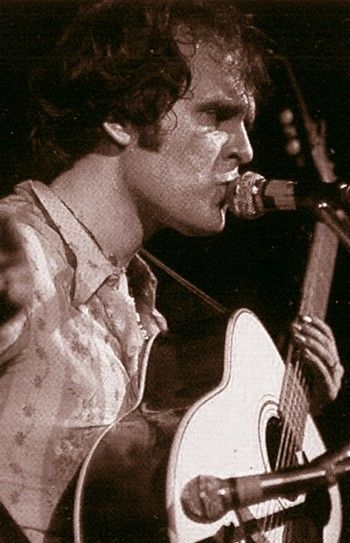
Tim Hardin


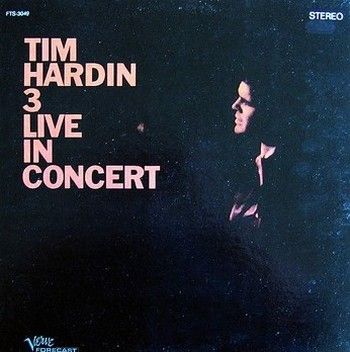
Tim Hardin - Tim Hardin 3 Live In Concert - 1968 - Verve Forecast

Rolling Stone (2/1/69, p.29) - "...There is, to be sure, a very heavy charisma about Hardin and this album, recorded live at New York's Town Hall...is evidence of both devotion and charisma..."

Originally titled Tim Hardin 3, this set was recorded live in 1968 with a backing band comprised primarily of jazz musicians. The support crew is a bit tentative; it's evident that they hadn't played much with Hardin, and in places the tempo comes close to breaking down. It's still a good, effective performance; Hardin is in good voice (a condition which apparently couldn't be readily counted on, even in his early days), and on the songs that had already been released on his first two albums, the arrangements vary from the recorded versions in interesting fashions. Live in Concert includes renditions of most of his best early compositions ("If I Were a Carpenter," "Red Balloon," "Reason to Believe," "Misty Roses," "Lady Came From Baltimore," "Black Sheep Boy") and half a dozen Hardin originals that didn't make it onto his first pair of albums. The best of these is the Lenny Bruce tribute, "Lenny's Tune," which Nico covered on her first solo album (where it was retitled "Eulogy to Lenny Bruce"). The 1995 CD reissue of this album adds three previously unreleased bonus tracks from the same concert. © Richie Unterberger, allmusic.com

A great live concert, recorded at the Town Hall in NYC on April 8, 1968. The late Tim Hardin never achieved the success he truly deserved, but he was a great singer-songwriter , with a very distinctive voice. Tim's music style was fundamentally Chess blues influenced by artists like Mose Allison, Ray Charles, and Lefty Frizell. Tim once said that "I've always thought of myself as a jazz singer. Jazz to me is just personal. Everyone who is a jazz player, according to my definition, plays like only he (Lefty Frizell) plays. No one else plays that way. I also feel that jazz is blues is jazz is blues is... Blues is not a restrictive term... If it ain't true it ain't jazz and if it's true it's the blues". He tragically died at 39 years of age, but even today he remains a very influential artist, and his songs are consistently being covered by other artists. Listen to Tim Hardin's brilliant "Tim Hardin 1", and "The Shock of Grace" albums, and give a listen to Paul Weller's outstanding "Studio 150" album, on which he does a marvellous cover of Tim Hardin's "Don't Make Promises".

TRACKS

A1 The Lady Came From Baltimore 2:00
A2 Reason To Believe 2:30
A3 You Upset The Grace Of Living When You Lie 4:05
A4 Misty Roses 4:35
A5 Black Sheep Boy 2:05
A6 Lenny's Tune 6:45

B1 Don't Make Promises 4:02
B2 Danville Dame 6:15
B3 If I Were A Carpenter 3:20
B4 Red Balloon 3:21
B5 Tribute To Hank Williams 3:55
B6 Smugglin' Man 3:30

All songs composed by Tim Hardin

MUSICIANS

Guitar, Vocals, (Piano on track A6) - Tim Hardin
Guitar - Daniel Hankin
Bass - Eddie Gomez
Piano, Clavinet - Warren Bernhardt
Drums - Donald MacDonald
Vibraphone - Mike Mainieri

BIO (WIKIPEDIA)

Timothy James Hardin (December 23, 1941 – December 29, 1980, was an American folk musician and composer. He is best remembered for writing the Top 40 hits "If I Were a Carpenter", covered by Bobby Darin and Robert Plant, and "Reason to Believe", covered by Rod Stewart, as well as his own recording career. Hardin dropped out of high school at age 18 to join the Marine Corps. He spent part of 1959 in Vietnam as a military advisor. He told the story that his sergeant was killed on patrol that year, but because the US didn't admit to any military dead until 1961, his sergeant was listed as having been killed that year. Hardin is said to have discovered heroin in Vietnam. After his discharge he moved to New York City in 1961, where he briefly attended the American Academy of Dramatic Arts. He was dismissed because of truancy and began to focus on his musical career by performing around Greenwich Village, mostly in a blues style. After moving to Boston in 1963 he was discovered by the record producer Erik Jacobsen (later the producer for The Lovin' Spoonful), who arranged a meeting with Columbia Records. In 1964 he moved back to Greenwich Village to record for his contract with Columbia. The resulting recordings were considered a failure by Columbia, which chose not to release them and terminated Hardin's recording contract. After moving to Los Angeles, California in 1965, he met actress Susan Morss (known professionally as Susan Yardley), and moved back to New York with her. He signed to the Verve Forecast label, and produced his first authorized album, Tim Hardin 1 in 1966. This album saw a transformation from his early traditional blues style to the folk style that defined his recording career. This LP contained "Reason To Believe" and the ballad "Misty Roses" which did receive Top 40 radio play. Tim Hardin 2 was released in 1967 and contained one of his most famous songs, "If I Were a Carpenter". An album entitled This is Tim Hardin, featuring covers of "House of the Rising Sun", Fred Neil's "Blues on the Ceilin'" and Willie Dixon's "Hoochie Coochie Man", among others, appeared in 1967, on the Atco label. The liner notes indicate the songs were recorded in 1963–1964, well prior to the release of Tim Hardin 1 by Verve Records. Tim Hardin 3 Live in Concert, released in 1968, was a collection of live recordings along with re-makes of previous songs; it was followed by Tim Hardin 4, another collection of blues-influenced tracks believed to date from the same period as This is Tim Hardin. In 1969, Hardin again signed with Columbia and had one of his few commercial successes, as a non-LP single of Bobby Darin's "Simple Song of Freedom" reached the US Top 50. Hardin did not tour in support of this single and a heroin addiction and stage fright made his live performances erratic. Also in 1969 he appeared at the Woodstock Festival where he sang his famous "If I Were a Carpenter" song. He recorded three albums for Columbia—Suite for Susan Moore and Damion: We Are One, One, All in One; Bird on a Wire; and Painted Head—none of which sold well. His output as a songwriter decreased and eventually ceased during this period, a circumstance blamed on his ongoing drug problems. In 1973, Hardin appeared on stage with Harry Chapin as part of Chapin's concert in Potsdam, New York. They jammed on a blues riff that survives in a bootleg recording. Some of the topics covered in the seven minute jam include drug use, travel and death. In Chapin's introduction, he makes reference to Hardin's participation as a session musician on his first two albums. During the following years Hardin moved between England and the U.S. His heroin addiction had taken control of his life by the time his last album, Nine, was released on GM Records in the UK in 1973 (the album did not see a US release until it appeared on Antilles Records in 1976). He sold his writers' rights in the late 1970s. Tim Hardin died of a heroin and morphine overdose in 1980, and is buried in the Twin Oaks Cemetery in Turner, Oregon.


MORE ABOUT TIM HARDIN

A gentle, soulful singer who owed as much to blues and jazz as folk, Tim Hardin produced an impressive body of work in the late '60s without ever approaching either mass success or the artistic heights of the best singer/songwriters. When future Lovin' Spoonful producer Erik Jacobsen arranged for Hardin's first recordings in the mid-'60s, Hardin was no more than an above-average white blues singer, in the mold of many fellow folkys working the East Coast circuit. By the time of his 1966 debut, however, he was writing confessional folk-rock songs of considerable grace and emotion. The first album's impact was slightly diluted by incompatible string overdubs (against Hardin's wishes), but by the time of his second and best LP, he'd achieved a satisfactory balance between acoustic guitar-based arrangements and subtle string accompaniment. It was the lot of Hardin's work to achieve greater recognition through covers from other singers, such as Rod Stewart (who did "Reason to Believe"), Nico (who covered "Eulogy to Lenny Bruce" on her first album), Scott Walker (who sang "Lady Came From Baltimore"), Fred Neil ("Green Rocky Road" has been credited to both him and Hardin), and especially Bobby Darin, who took "If I Were a Carpenter" into the Top Ten in 1966. Beleaguered by a heroin habit since early in his career, Hardin's drug problems became grave in the late '60s; his commercial prospects grew dimmer, and his albums more erratic, although he did manage to appear at Woodstock. His end was not a pretty one: due to accumulated drug and health problems, as well as a scarcity of new material, he didn't complete any albums after 1973, dying of a drug overdose in 1980. © Richie Unterberger, allmusic.com

2.12.09

Tino Gonzales


Tino Gonzales - A Heart Full of Blues - 1997 - Dixiefrog

The Chicago bornTino Gonzales, a bluesman with a conscience, plays the blues with guts, attitude, and a dynamic force. Some music critics have labelled Tino Gonzales "the Latin-American Stevie Ray Vaughan", and the man plays a mean guitar. Many of Tino's songs are about social and political themes. Tino Gonzales is well known for his strong socio-political conscience, and his views on "Governmental policies". This may have deterred some blues rock fans from listening to more of his music, which is never dull or boring. On "A Heart Full of Blues", Tino aims for a more apolitical blues rock sound. He penned six songs on this album, but also covers some great standards by Chester Burnett, Michael Bloomfield, Buddy Miles, Duke Robillard, and others. Fundamentally the album is American blues roots music, with a modern touch. The songs are full of melodic, agressive, punchy blues/rock grooves, and sound great. Buy Tino's great "Double Feature" album, and check out his "Nuke the World" album @ TINOGZ/NTW

TRACKS / COMPOSERS

1 Young Thing - Tino Gonzales 5:12
2 Talk About Love - Ray Agee 4:05
3 Piece of Work - Tino Gonzales 4:40
4 Come Baby - Tino Gonzales 5:51
5 Big Boss Man - Al Smith, Luther Wilson, Luther Dixon 4:44
6 Who's Been Talking - Chester Arthur Burnett 4:52
7 Twine Time - Andre Williams, Verlie Rice 3:29
8 Texas - Michael Bloomfield, Buddy Miles 8:54
9 Body and Fender Man - Duke Robillard, Robozilla, Duke, Doc Pomus 4:17
10 Poverty - McKinley Mitchell, Mitchell, McRowley 4:03
11 Leave Me Alone - Ray Agee 3:31
12 It's a Rock N' Roll World - Tino Gonzales 5:13
13 Best Thing I Ever Had - Tino Gonzales 5:49
14 Midnight Blues - Tino Gonzales 8:06

MUSICIANS

Tino Gonzales - Guitars, Vocals
Harvey Brooks, John Eatmon - Bass
Paul Harris, Jeff Knoettner - Keyboards
Gary Gold, Ezell Jones Jr - Drums
Arnie Lawrence - Saxophone
John Popper, Steve Guyger - Harmonicas
Loretta Modern - Background Vocal

BIO

Born in the Bluestown of Chicago in 1951, Tino Gonzales, grew up with the soul sounds of Black music ­ Blues, R & B, Jazz, and Soul all have contributed to his musical foundations. Having served his apprenticeship with a wide range of blues and jazz greats he eventually set off on his solo Blues career in 1985. But as a Mexican American with a streak of Arabic heritage, the Latin blood flows equally in his veins. His music encompasses all of these varied cultural influences resulting in a unique sound that can not easily be labelled in terms of conventional categories ­ but if one had to sum it up in one word it would have to be passion! Gonzales’ incredible virtuoso style is so fluid one gets the impression he pours his soul right into his guitar as he floats up and down its neck, coaxing from it sounds and vibrations hitherto unknown ­ even to the most ardent blues connoisseurs. He changes styles more often than many blues musicians know how to change keys and any direction he chooses, whether latin, jazz or soul, he plays with the same passionate fire and fluidity. As top US westcoast DJ Steve Pringle from KMHD radio in Portland, Oregon recently put it, “I have no frikken idea why you aren’t better known. Not for lack of talent, sound, writing…it’s all good!” One of the reasons undoubtedly is Gonzales free-spirited and independent way of thinking, which has earned him the reputation of a maverick in the business. He resisted the temptation of signing with major labels on more than one occasion, because he refused to let himself be exploited, run down and spat out by the industry as he has seen happening to so many of his friends and peers. Instead, he decided to go his own way, often a rough and tumble road, but free at least. After years of touring the US and Canada Gonzales grew tired of the same old Club and Festival scene, packed his Hobo bag and decided to sail east. Since his arrival on European shores two years ago Gonzales has certainly made some big waves over here. Having finally found a label he could work with he decided to sign with Dixiefrog, a French Blues label with a human touch. So far he has recorded three albums for them, each one a masterpiece in its own right with the unique Tino Gonzales touch. The last one, “Modern Day Hobo” was recorded in Germany and received rave reviews in thei nternational press. It reflects the beginnings of a process of transformation and artistic growth that is becoming even more apparent in his new album, “A World of Blues”. Travelling throughout Europe, from France, Belgium, Holland, Luxemburg and Germany, to Spain, Italy and even Slovenia, Gonzales has become deeply influenced by the Old World roots of the same soulful music he grew up on in the States. Spanish, Gypsy, Arabic and African influences, which originally contributed to both, Latin and Black American music, have all found their way into his repertoire. His new Album, “A The World Of Blues”, the 4th for Dixiefrog, pays tribute to these Old World roots of the blues as he masterfully manages to weave gypsy accordion, African kora and world percussion sounds into his unique blend of Latin Jazz/Blues fusion. The result is a phenomenal melange of musical influences all of which speak the same language – passion. Passion for music, passion for love, passion for life ­ and compassion for the blues of the world. Gonzales’ passion is not just show. He deeply cares about humanity and planet earth. To him the essence of blues is not only about the sense of desperation rooted in slavery or variations on the theme of personal misery, but instead conveys a message that applies to the human condition everywhere, and throughout all of time. He sings the blues of the American Indians, the Blues of drug addicts, and the blues of the world. One of the songs on the new album, an exquisite slow blues tune ­it gives a message of peace to the blues of the world, appealing to each and everyone of us not to add “No More Misery”. © www.metisse-music.com

1.12.09

Samoa Wilson with the Jim Kweskin Band


Samoa Wilson with the Jim Kweskin Band - Live the Life - 2004 - Blix Street Records

"From swing to gospel, it's a gorgeous, fun sound." The Boston Herald, Aug. 14, 2004

"But the best moments come when she sings with Kweskin on the happy "What A Little Moonlight Can Do." Tab Newspapers, Boston, Aug. 12, 2004

Samoa Wilson, the Boston-bred roots singer, was raised on folk-influenced Americana classic Americana music. Jim Kweskin is a great family friend, and eventually the two artists merged their talents. Samoa joined Jim's current band in 1997. "Live the Life" is Samoa's first "real" album. As in the "Now and Again" album, she has again recorded with the great Jim Kweskin Band, but here she sings eight solo numbers, two duets with Jim, and two Jim Kweskin Band instrumentals. Just like the "Now and Again" album, "Live the Life" is another glorious slice of authentic Americana music. Jim Kweskin (and his Jug Band) is one of the greatest Americana/folk traditionalists and preservationists of modern times, and has made some classic albums. However, on this album, Samoa Wilson is the "icing on the cake". Her gorgeous, pure voice has to be heard to be believed. Find out more about Samoa Wilson, Jim Kweskin, and the brilliant Jim Kweskin Band with Samoa Wilson's "Now And Again" album @ JKWEK/SAMOAW/N&A

TRACKS / COMPOSERS

I'm Gonna Live The Life - Rev. Thomas A. Dorsey
Sun Goin' Down - Samoa Wilson
What A Little Moonlight Can Do - Harry Woods
Organ Grinder's Swing - Irving Mills, Will Hudson, Mitchell Parish
Some Of These Days - Shelton Brooks
Oh Papa Blues - Ma Rainey
Choo Choo Ch'Boogie - Denver Darling, Milt Gabler, Vaughn Horton
Dedicated To You - Sammy Cahn, Saul Chaplin, Hy Zaret
Can't Help Lovin' That Man - Jerome Kern, Oscar Hammerstein II
C Jam Blues - Duke Ellington
St. Louis Blues - W.C. Handy, L. Mario Henderson
Goodnight My Love - Mack Gordon, Harry Revel

MUSICIANS

Samoa Wilson (vocals)
Jim Kweskin (vocals, guitar, banjo)
Titus Vollmer (acoustic guitar)
Matthew Berlin (bass)
Leo Blanco (piano)
John Ramsey, Jerome Deupree (drums)
Mickey Bones (military snare drum)
Paloma Ohm (drums, alto sax)
Bruce Millard (mandolin)
Matt Leavenworth (fiddle)
Geordie Gude (vocals, harmonica)

REVIEWS

Jim Kweskin, whose history goes back to the birth of the Cambridge folk scene, said he revived his respected jug band and his career a few years ago for just one reason: to introduce listeners to the young vocalist Samoa Wilson. That’s understandable. Wilson has a sweet, soft-edged guileless voice that’s easy on the ears, whether she’s delivering her own heartbreaker "Sun Going Down" (made more poignant by crying slide dobro) or sashaying through standards ranging from a blithe, fiddle-driven "What a Little Moonlight Can Do" to the Ma Rainey homage "Oh Papa Blues." The expert band get turned loose, too, with the instrumentals "Organ Grinder’s Swing" and Duke Ellington’s "C Jam Blues." Which makes this album well-balanced and thoroughly entertaining. © TED DROZDOWSKI, © 2005 Phoenix Media/Communications Group, www.bostonphoenix.com/boston/music/otr/documents/04187440.asp

It's testament to the Boston-bred, folk-influenced American roots singer that her own composition, the bluesy and romantic "Sun Going Down" -- which she wrote at the tender age of 16 -- could follow her rendition of Tommy Dorsey's "I'm Going to Live the Life I Sing About" and not only measure up, but surpass it in emotional intensity. Samoa Wilson's upbringing was filled with classic Americana music and multi-instrumentalist Jim Kweskin (founder of the early-'60s group the Jim Kweskin Jug Band) was an extended family member, so it was only a matter of time before they merged their talents. She joined his current band in 1997 and appeared on four tracks from Now and Again, Kweskin's first album in over 20 years. This colorful solo project grew naturally out of that, and Kweskin fans will be happy to note that the band is in full swing between vocal passages on witty, spirited tracks like "What a Little Moonlight Can Do." Geordue Gude's harmonica drives the front-porch blues of "Organ Grinder's Song," one of the few instrumental tracks between Wilson's solo numbers and vocal duets with Kweskin. The production is sparse and straightforward, lending a historical authenticity to classics like "Oh Papa Blues," originally recorded by Ma Rainey in 1927. Other unforgettable covers include the singalong "Choo Choo Ch-Boogie" and a heartfelt twist on W.C. Handy's "St. Louis Blues." © Jonathan Widran, All Music Guide