
A.O.O.F.C
recommends
Mizar6

babydancing


Get this crazy baby off my head!

5.1.09

Elephant9


Elephant 9 - Dodo Voodoo -2008 - Rune Grammofon

"This ferocious drum/bass/organ assault opens the Norwegian jazz trio´s debut album and manages to retain a weapons-grade level of instrumental mayhem throughout. Not for the faint of heart". - Mojo´s Top 10 (UK)

Elephant9, yet another side-project-slash-collaboration-slash-new-artistic-venture from the Rune Grammofon collective, is a trio gone wild on organ and LSD. Dodovoodoo, their first recording after a few years of live touring, managed to capture (on tape, no less) the sweat-flinging exuberance their performances reportedly consist of. As you can probably imagine, jazz plus live improv plus tons of energy plus a reputation for the unconventional equals a continuous stream of music with many variations on the same theme, rather than an album of concretely separate tracks. The first and title track is a tossup of Beefheart, Acid Mothers Temple, and other Grammofon influences (Supersilent, The National Bank, and Shining are represented by keyboardist Ståle Storløkken, bassist Nikolai Eilertse, and drummer Torstein Lofthus, respectively). The band explodes out of the gates with Shining-like energy, improvised organ bits, ridiculous cymbal use, and a bizarre, jerky, groovy refrain. The second, “I Cover The Mountaintop,” slows everything down to a Supersilent tempo, with Supersilent’s machine wail and abstract drumming to boot. Rather than build into the trademark doom-knell, it develops into a fairly well-structured jazz tune and brings back that psychedelic energy. Elephant9 works in this general area with moderate success until the sixth track, “Doctor Honoris Causa,” when they slow back down to more minimalist territory for thirteen minutes of wicked dynamics and impressive self-control. The sound gets more intelligence: stronger refrains get used as launching points for more interesting bits of improv. The album fades out on this note, as closing song, “Directions,” adds another seven minutes of guitar-feedbacking, pitch-twisting, wave-riding soundscapes. You can tell that Dodovoodoo is but a foreshadow of yet more amazing live shows, less an album than a calling card. And once again I’m pouting, because I can’t afford to fly overseas to catch the full intensity of this group before they inevitably embark on new projects. © Allana Mayer, All content is copyright of the authors, 2008, /www.mondomagazine.net

Heavy, progressive, electric jazz rock from the Norwegian Elephant 9, a very popular band in Norway now for two or three years. One review described the sound as "a raucous blend of psychedlica rock and soul jazz". Whatever the description, it's different, and even with the modern Scandinavian sound, there are still elements of early Beefheart, ELP, and King Crimson in the mix, with strong traces of the early '70s jazz fusion sound of John Mclaughlin. Two of the songs on the album, "Directions" and "Dr. Honoris Causa," were composed by Joe Zawinul, who played with Miles Davis. This is really inventive jazz based progressive psychedelic rock, and sounds great, especially the brilliant keyboard work from Stale Storlokken, who also composed three of the albums' tracks. N.B: This album was also released on a limited edition vinyl disc, with Track 5, "Misdirection" excluded. For more music of this type, try and listen to Oskar Schönning's "Happy Jazz" album

TRACKS / COMPOSERS

1 Dodovoodoo (5:12) - Ståle Storløkken
2 I Cover The Mountain Top (9:01) - Ståle Storløkken
3 Skink (5:38) - Nikolai Hængsle Eilertsen
4 Hymne (5:30) - Ståle Storløkken
5 Misdirection (2:26) - unknown
6 Doctor Honoris Causa (13:01) - Joe Zawinul
7 Directions (7:39) - Joe Zawinul

BAND

Bass, Electric Guitar - Nikolai Hængsle Eilertsen
Drums - Torstein Lofthus
Electric Piano [Fender Rhodes], Organ [Hammond], Synthesizer - Ståle Storløkken

REVIEWS

Some combos head back to the grooving organ trio sound of the 1960s and 70s in a cool-headed, urbane fashion, clicking their fingers and setting their berets at a jaunty angle. Elephant9 have set fire to all headgear, shaking free their straggly manes for a deranged session of acid prog headbanging. This might be the Norwegian trio's debut disc, but we already know keyboardist Ståle Storløkken from his many years with Supersilent, and drummer Torstein Lofthus will be familiar to many as a member of Shining, those fellow purveyors of Gothic thrash-prog. It's only bassist Nikolai Haengsle who is unfamiliar outside Norway. Subtlety is employed only occasionally, as the trio hurtles straight into the maelstrom that is the album's title cut. It's Emerson, Lake & Palmer territory, perhaps. The riffing is single-minded, but the structure is jerkily funky, or maybe funkily jerky. Recording live in the studio, Elephant9 careen along with spiny edges, knocking down any obstacles. The second tune, I Cover The Mountain Top, might hang back for a moment, caught in a ponder, but before long, the meat is out of the freezer, decaying fast. Storløkken revels in the extremity of his distortion, turning Fender Rhodes electric piano and Hammond organ into percussive instruments. The Lofthus approach to drumming is to let the avalanche fall, although not without some complicated wrist-flicks and lightning strikes around his heavy skins. Haengsle's bass is a crushing, cumulative presence. Some numbers might begin sensitively, but their ultimate destiny lies in a thundering brawl. The only exception is Hymne, which remains in a creepy state. Misdirection is a churning funk snapshot, followed by the cosmic chills of Doctor Honoris Causa and Directions, a double dose of Joe Zawinul composition which takes the trio into its most jazzy state, Storløkken revelling in the physicality of key contact, jabbing out tight bursts of frazzled phrasing. Again, there's a pause for abstraction, but not before the thundering leviathan tumble makes its return. This disc is exciting enough, but Elephant9's full damage is probably done during a live show, in front of a very worried audience. © Martin Longley, 30 July 2008, www.bbc.co.uk/music

(Shockingly great Norwegian jazz-rock band who add a bit of modernity and noise to the old school sound of overdriven organ and Rhodes piano (plus some synthesizer), along with electric bass and drums. Definite hints and helpings of Miles circa 1971, early Weather Report (Live in Japan era) and even Tony Williams Lifetme. And on top of everything else, after slaying us with the originals, the last two songs are covers of "Doctor Honoris Causa" and "Directions". If this was released 35 years ago, this would be at the very top of the Kozmigroove pile! Highly recommended! © Waysidemusic (US)

Elephant9 are a Norwegian power trio whose music may look back a bit, but is firmly rooted in the 21st century. Comprised of keyboard player Ståle Storløkken (from vanguard electronic jazz mavens Supersilent), bassist Nikolai Eilertsen (National Bank), and drummer Torstein Lofthus (Shining), Elephant9 have come up with something that simultaneously references Brian Auger's early Oblivion Express, the 1973 Dark Magus/Agharta period of Miles Davis, the more free-form side of Weather Report's Live in Tokyo, and the Deep Purple of "Hush," all with three players and none of them a guitarist. More righteous still is that this trio record from Rune Grammofon, a label that in 2008 has come into its own, has a particular sound, and puts all manner of combinations together in creating a "supergroup" atmosphere. But Elephant9 are totally different. The set was recorded live in the studio, to analog tape. Storløkken stays away from synths for the most part and concentrates on organs (Hammond B-3, church, and Wurlitzer) and Rhodes piano. The grooves here are voluminous, yet they do not remotely sound like the Blue Note/Prestige soul-jazz organ trios of the mid-'60s. Instead, they come from the fringes, from the spaced-out side of electric jazz. They may touch on prog, but that's all; instead, the music is more darkly psychedelic, funky, ruinously loose jazz that pulses with an insistent overdriven energy that puts them in a league of their own. For those who choose to encounter it, Dodovoodoo will offer many surprises, all of them timeless and engaging. It is not only one of the best recordings of the year, it may be one of the best in the first decade of the 21st century. Keep an eye out for Elephant9 -- they're amazing. © Allmusic (US)

Norwegian trio unleash furious prog-jazz debut. Ståle Storløkken, Nikolai Eilertsen and Torstein Lofthus open their woozy cacophony of psychedelic jazz-rock with a feverish instrumental that sets the tone for the next 40 minutes of pulverising avant sounds. The breathless energy levels - Lofthus´ rapacious drumes rarely stop rolling - are only matched by Storløkken´s organ/synth mastery and it´s the latter´s nimble-fingered abandon that fills Skink, the title track and the relatively conventional funk grooves of Misdirection with the confidence and brio that make this record so exciting. Its reference points all lie in the late 60s/early 70s fusion explosion - they even cover two Joe Zawinul numbers - and the band´s decision to use analogue studio equipment only emphasises their desire to re-capture some of that era´s experimental, overdriven fury. Another very welcome release from Scandinavia´s most outré label. 4/5. © Mojo (UK)

Whoooooooo, prog on that! That is one filthy dirty overdriven Hammond, you can smell the overheating Lesley cabinets and the analogue warmth from here. Seriously self indulgent monster slabs of progressive jazz rock. What we have here is full on hard boiled gloriously good instrumental progressive Seventies jazz rock. Now when I say hard-boiled don’t go running with the idea of Flying Luttenbachers and violent discordant progressive jazz noise, no, this is more like throbbing pulsing atmospheric tuneful Emerson Lake And Palmer without the embarrassing cheese and those awfully naff vocals - this is all the cool bits of ELP delivered with uncompromising King Crimson meets Sonic Youth attitude. Drenched in the lead lines of that late 60’s early 70’s Hammond organ and electric piano and laced with the moves of a really versatile drummer and nailed down bass player, Elephant 9 are a really powerful trio. There’s a pure joy here in the playing (and listening) - some imaginative playing, the occasional journey in to dark psychedelic side rooms, never ever does it get anywhere near losing attention or direction though, even the mind expanding slices are focussed and forward moving. This is a full on old school prog rock treat, proper prog. We’ve come to expect a certain challenging standard from the excellent Rune Grammofon label now, they’ve done it again this time. Highly recommended delight of an album. © Organ (UK)

Fabulous, freaky-deaky Scandi-jazz debut. The teeming endlessly cross-collaborative Norwegian avant-jazz scene has thrown up yet another impressive outfit in the shape of Elephant9. Ståle Storløkken (also of Supersilent) takes the melodic reins on the trio´s debut LP, his work on Fender Rhodes, Hammond and synthesiser focused on the jazzy and freeform, but also sourcing 60s and 70s psych/cosmic rock, Reichian minimalism and ecclesiastical music. 4/5. © Uncut (US)

Here´s where Ståle Storløkken gets to play all the keyboard solos he usually represses when providing sombre shades for Supersilent - splurging forth like a great lanced boil of gross-out exuberance. Complemented by a young rhythm section plucked from the Norwegian rock scene, this power keyboard trio trashes out an unabashed late 60s / early 70s prog sound with sturdily dependable oldschool analogue keyboards and heavily jammed jazz-rock rhythms. Hammond organ rules the day, one moment preposterously epic and blustering like Keith Emerson at his most bombastic, the next funkily percussive like Focus´ Thijs Van Leer. But there´s a lot of jazz here too. The album comes full circle back to the birth of jazz-rock with a relentless, bone-crushing ride through Joe Zawinul´s "Directions" - a rolling vista of wah-wah bass, tightly controlled stabs of funk and Storløkken at his most joyously uninhibited. For 48 glorious minutes, it´s like punk never happened. © Jazzwise (UK)

The trio have applied unfussy Scandinavian good taste to an unholy mish-mash of Bitches Brew Miles Davis, Mahavishnu Orchestra and Cream (if Eric had ditched the Strat for a Hammond) and miraculously they´ve come out of it not reeking of patchouli and jazz-fags. Even with the occational alarming wig-out, what dominates is not showy-off noodling but rock-solid driving funk - head-nod, not chin-stroke. Alright, it isn´t easy listening, but it´s grøøvy, baby: very grøøvy. © The Word (UK)

Swdish psych-folkies/prog-rockers Dungen release a new LP later this year, but this Norwegian trio´s debut should keep fans happy in the meantime. On more of a Scandi-jazz tip - but with nods to Hendrix, Berlin-era Bowie, Tangerine Dream and Fripp alongside mid-70s Miles - it centres around Ståle Storløkken´s chunkily funky organ/electric piano chops and should see analogue fetishists in seventh heaven. © Time Out (UK)

Mixing superb musicianship and complex rhythms with more considered, experimental pieces that use space to the full. © Hi-Fi World (UK)

More mind-boggling experimental racket from the long strip of land that stops the Swedish west coast falling into the sea and seems to be positively awash with modern-jazz and extreme-noise merchants. Featuring Supersilent and Humcrush keyboard whizz Ståle Storløkken, Shining’s thunder-house drummer Torstein Lofthus and bass player Nikolai Eilertsen Dodovoodoo, sounds not unlike Emerson Lake & Palmer on acid but without the pomp, welding jazzy rock passages to prog fuelled psychedelia, this is nonetheless oddly accessible and once agian highlights just how musically fecund Norway is right now. © Total Music (UK)

A whirlwind collection of Hammond B3 and Wurlitzer-based prog-improvisation. Taking cues from Larry Young (especially his work with the Tony Williams Lifetime and, of course, Bitches Brew-era Miles Davis), Dodovoodoo jumps right into the fray on the opening title track with a hamfisted blast of organ-driven skonk. © Global Rhythm (US)

The moment you´ve all been waiting for - it´s time for another tasty Rune joint. Yet, Elephant9 are a slightly different breed; for example, their fuzzy organ songs explode like Soiled Mattress & The Springs (on acid), Torstein Lofthus, the drummer of this trio, has at least seven arms, and one of them (I can´t write his name because of too many weird Norwegian letters) normally plays in your favourite Pop group Supersilent. In short: It´s dodovoodoolicious supreme. © Lodown (DE)

Here we have something that might again be labelled with jazz again. Or you might think so at first. The title track and opener rocks like hell. Keyboard (Ståle Storløkken), bass (Nikolai Eilertsen) and drummer Torstein Lofthus (great!) go for a short, serious and target-oriented bashing, which is really nice, and it sounds like a statement. And in that style they carry on. From the beginning you feel like the late Sixties / early Seventies. The repetitions are there, but also the sound (I know, I can not be more abstract than that) but it reminds of Can and Jimi Hendrix, but *today*. And this is very exciting, especially because Elephant9 in no way is a retro band. And I am not at all sure if they will like the comparison. But the comparison will be explained in the same moment, or at least emphasised, if you think about the fact, that the album was recorded live in one single go. From this viewpoint Dodo Voodoo is more a rock- than a jazz-album, because even if the organ sounds like Jimmy Smith, it is more like the Doors, knocking at the doors (ha!). Five of the seven songs are originals, and those all, with the exception of „Hymne“, are all great prog/rock/jazz with depth. The last two ones are by Joe Zawinul, which might be seen as a tribute. At both („Doctor Honoris Causa“ and „Directions“) it is easy to hear, that they have been written by someone else, but Elephant9 add so much fire to these songs, that you want to listen to them all over again. © Monochrom (AT)

Little Feat


Little Feat - As Time Goes By: The Very Best of Little Feat - 1993 - Warner Bros

Enough has been said on this blog about Little Feat, so here's some more info to bore your cotton socks off! This is the best LF compilation ever released. It contains all their best works, and is a first class introduction to Little Feat's music. To continue the boredom, and this has been stated a quintozillion times (I just invented that word now!) on A.O.O.F.C, - listen to the band's Coup de grâce, "The Last Record Album". Check out other albums by the band on this blog. "Feats will never fail you". "As Time Goes By" is VHR by A.O.O.F.C

TRACKS / COMPOSERS

01 Dixie Chicken George, Kibbee
02 Willin' George
03 Rock 'N' Roll Doctor George, Kibbee
04 Two Trains George
05 Truck Stop Girl George, Payne
06 Fat Man in the Bathtub George
07 Trouble George
08 Sailin' Shoes George
09 Spanish Moon George
10 Feats Don't Fail Me Now Barrere, George, Kibbee
11 Oh, Atlanta Payne
12 All That You Dream Barrere, Payne
13 Long Distance Love George
14 Mercenary Territory George, Hayward
15 Rocket in My Pocket George
16 Texas Twister Barrere, Kibbee, Payne
17 Let It Roll Barrere, Kibbee, Payne
18 Hate to Lose Your Lovin' Paul Barrére, Craig Fuller
19 Old Folks' Boogie Paul Barrére
20 20 Million Things Lowell George, Jed Levy

4.1.09

V.A - Rock and Roll Doctor: Lowell George Tribute - 1998 (Little Feat related)


Various Artists - Rock and Roll Doctor: Lowell George Tribute - 1998 - CMC International

A sincere tribute album to the late,great singer/songwriter/slide guitarist, and founder of Little Feat, Lowell George, who began his career doing sessions for Frank Zappa. Lowell George's unique style of slide playing has never been equalled by others. He also was a wonderful vocalist, and his brilliant songwriting never got the credit it deserved. In fact, Little Feat are the type of band who are more criticially acclaimed than commercially successful. In the seventies, Mick Jagger and Jimmy Page once cited Little Feat as one of their favourite bands. This album is a big gamble, as any attempt to interfere with Lowell George's great songs can produce some very negative reactions. However his songs here are given very sympathetic interpretations, and the incredible list of musicians on this album have taken Lowell's music very seriously. Lowell's daughter Inara sings "Trouble" on the album, but people like J.D. Souther, Jackson Browne, Bonnie Raitt, Randy Newman, Phil Perry, Valerie Carter and many, many more give it all they've got. Lowell George's idiosyncratic sense of humor and surreal lyrics were probably the most distinguishing features of Little Feat in the band's early history, not to mention his guitar style. Songs like "Dixie Chicken" and "Fat Man in the Bathtub" are examples of this sound. Paul Barrere who plays the slide parts for Little Feat has never made a conscious effort to copy the legato lines that Lowell George magically squeezed out of his guitar . Paul is quoted as saying, "The fact that we are playing his songs is the big tribute". Check out Lowell's "Thanks I'll Eat It Here" album, and listen to Little Feat's masterpiece, "The Last Record Album".The tracks, ""Long Distance Love" and "One Love Stand" on TLRA are perfect examples of Lowell George's beautifully extended compressed guitar lines. If you're interested in some great Little Feat live recordings, check out Little Feat/Live Read Lowell George's biography @ LGEORGE/BIO/WIKI

TRACKS / PERFORMERS

01. Cold, Cold, Cold - Bonnie Raitt and Little Feat
02. Feets Don't Fail Me Now - Taj Mahal
03. Roll Um Easy - J.D. Souther
04. Rocket In My Pocket - The Bottle Rockets and David Lindley
05. Sailin' Shoes - Randy Newman and Valerie Carter
06. I've Been The One - Jackson Browne
07. Two Trains - Allen Toussaint/Leo Nocentelli
08. Long Distance Love - Keisuke Kuwata/Merry Clayton
09. Rock And Roll Doctor - Eddie Money/Buddaheads
10. Straight From The Heart - Chris Hillman/Jennifer Warnes
11. Honest Man - Little Feat
12. Spanish Moon - Phil Perry/Merry Clayton/Ricky Lawson
13. Trouble - Inara George
14. Lowell's Voice - Lowell George

MUSICIANS

Paul Barrére Guitar, Harmonica, Vocals, Slide Guitar
David Lindley Slide Guitar
Chris Hillman Acoustic Guitar, Vocals
Tony Maiden, Scott Goudeau, Taj Mahal, Fred Tackett, Tom Parr, John Porter, Ry Cooder Guitar
John Jorgenson Acoustic Guitar, Guitar
Brian Henneman Guitar, Vocals
Bonnie Raitt Slide Guitar, Vocals
Ingber Ira Guitar, Organ
Mark Goldenberg Guitar, Keyboards
Alan Mirikitani Guitar, Percussion, Background Vocals
Cory Sipper, Bobby Schneck Guitar, Background Vocals
Carl Sealove, Shaun Murphy, Jimmy Haslip, Charles Moore, Randy Jackson, Larry Fulcher, Tom Ray Bass
Kevin McCormick Electric Bass, Acoustic Bass
Norman Ludwin String Bass
Bill Payne Piano, Hammond Organ, Wurlitzer
Mick Weaver, Jeffrey Young Organ
Van Dyke Parks Piano, Accordion
Jai Winding, Jon Cleary Piano
Leo Nocentelli Piano, Vocals
Arlan Schierbaum, Ellis Hall, Skip Edwards Keyboards
Richard Hayward Drums, Vocals
J.D. Souther Percussion, Drums, Background Vocals
Mark Ortman, Bernard "Bunchy" Johnson, Mauricio-Fritz Lewak, Steve Duncan, Kenny Aronoff, Tony Braunagel Drums
Ian Zenith, Ricky Lawson Percussion, Drums
Stephan "Kenyatta" Simon Percussion
Sam Clayton Percussion, Vocals
Brian "Breeze" Cayolle Baritone Saxophone, Tenor Saxophone
Don Markese Tenor Saxophone
Joe Sublett, Clarence Clemons Saxophone
Cory Reeves Alto Clarinet
Tracy Griffin, Wil Miller, Harry Kim, Darrell Leonard Trumpet
Arturo Velasco Trombone
John Wittenberg, Mario de Leon Violin
Erika Duke-Kirkpartick Cello
David Stenske, Karie Prescott Viola
Jennifer Warnes Vocals, Background Vocals
Randy Newman, Kenny Gradney, Valerie Carter, Phil Perry, Allen Toussaint, Keisuke Kuwata, Jackson Browne Vocals
Maxine Waters, America Butler, Carlene Smith, Julia Waters, Karla Bonoff, Raymond Anthony Myles, Eunice Green, Kenny Edwards, Merry Clayton Background Vocals
Peter Kent Concert Master
Jim Keltner Sampling
Eddie Money
Buddaheads
Inara George
The Bottle Rockets


REVIEWS

Bonnie Raitt, Randy Newman, and Taj Mahal are among the artists assembled here to on Rock and Roll Doctor: A Tribute to Lowell George give the late Little Feat founder his props. Cynics could carp that these respectful takes on George's funk-inflected Southern boogie and winsome country blues might have been a tad less trad (the guy was a one-time Frank Zappa sideman, after all), but Doctor is still as dependably satisfying as a plate of greasy barbecued ribs. One question: How come no one saw fit to try their hand at George's masterpiece, ''Willin'''? B © Tom Sinclair, © 2008 Entertainment Weekly and Time Inc. All rights reserved

As the guitarist, vocalist and primary songwriter for Little Feat, Lowell George was one of the biggest cult heroes of the '70s, creating a body of work that was deeply set within the blues tradition yet fiercely idiosyncratic and weird. It was the kind of music that earns a large cult following, but doesn't guarantee good covers, since its very quirkiness is among its most appealing traits. Basically, it's a question of matching the right artist with the right song, something that happens about half of the time on Rock N Roll Doctor (A Tribute to Lowell George). By the time the tribute record was released in 1998, his "Willin'" had long been established as a classic, the kind of song that could be covered by anyone -- along with "Dixie Chicken," it's one of the rare universal songs in George's catalog -- but Rock N Roll Doctor doesn't include either of those songs, or "Fat Man in the Bathtub." Instead, its 13 tracks are all relatively obscure, known to hardcore fans but not casual listeners, and this album is a record made by hardcore fans for hardcore fans. That doesn't mean it's necessarily all successful. Eddie Money wasn't really meant to sing the title track, and a couple of cuts, ironically including Little Feat's reworking of "Honest Man," are a bit too reverant to his memory (the group erases that negative with a storming "Cold, Cold, Cold," performed as a duet with Bonnie Raitt). But the best songs -- the Bottle Rockets and David Lindley's "Rocket in My Pocket," Jackson Browne's "I've Been the One," Taj Mahal's "Feats Don't Fail Me Now," J.D. Souther's "Roll Um Easy," Allen Toussaint & Leo Nocentelli's "Tow Trains" and especially Randy Newman & Valerie Carter's "Sailing Shoes" -- demonstrate that George's songs can live on, provided that the artists perform them with as much imagination as he wrote them with. © Stephen Thomas Erlewine, allmusic.com

3.1.09

Little Feat


Little Feat - Ain't Had Enough Fun - 1995 - Zoo Entertainment

"Lowell George may have long gone, but the band's rollingly funky ways remain in place." © Q Magazine


In 1995 with the arrival of vocalist Shawn Murphy, LF proved with this album that they were still terrifyingly good, and a major force to be reckoned with. After a spell in the doldrums, Little Feat returned with a great album containing their "normal" crazed mixture of cajun, rock, and blues, played with the passion and soul of a band that for a long time had forgotten their "Dixie Chicken" and "Sailin' Shoes" days. This album is HR by A.O.O.F.C, Check out the band's "Under The Radar" album @ LFEAT/UTR and "Shake Me Up" @ LFEAT/SMU However, it is the opinion of A.O.O.F.C, that Little Feat's 1975 album, "The Last Record Album," is the jewel in LF's crown, has not been bettered by the band, and remains one of the greatest, and possibly most underrated rock recordings of all time. Check it out! Read the great band's bio @ LFEAT/BIO/WIKI

TRACKS / COMPOSERS

1 Drivin' Blind (Payne, Wray) 5:12
2 Blue Jean Blues (Barrère, Payne, Tackett, Wray) 6:06
3 Cadillac Hotel (Payne, Wray) 5:35
4 Romance Without Finance (Clayton, Kibbee, Payne) 4:05
5 Big Bang Theory (Barrère, Murphy, Payne, Tackett, Wray) 5:32
6 Cajun Rage (Barrère, Kibbee, Wray) 5:30
7 Heaven's Where You Find It (Barrère, Murphy, Payne, Tackett) 5:03
8 Borderline Blues (Barrère, Murphy, Payne, Tackett, Wray) 7:43
9 All That You Can Stand (Barrère, Payne, Wray) 6:35
10 Rock & Roll Everynight (Barrère, Murphy, Payne, Tackett, Wray) 5:06
11 Shakeytown (Barrère, Kibbee) 5:12
12 Ain't Had Enough Fun (Barrère, Murphy, Payne, Strand, Tackett) 3:27
13 That's a Pretty Good Love (Lucas, Mendelsohn) 4:50

BAND

Paul Barrère - guitar, dobro, vocals
Bill Payne - keyboards, vocals
Sam Clayton - percussion, vocals
Kenny Gradney - bass
Richie Hayward - drums, vocals
Shaun Murphy - vocals, percussion
Fred Tackett - guitar, mandolin

ADDITIONAL MUSICIANS

Darrell Leonard - trumpet (2, 3, 10, & 13) [ Texicali Horns ]
Joe Sublett - tenor saxophone (2, 3, 10, & 13) [ Texicali Horns ]
David Woodford - tenor and baritone saxophone (2, 3, 10, & 13) [ Texicali Horns ]
Piero Mariani - electronic percussion ( 1,2,6-9) [ Texicali Horns ]
Van Dyke Parks - accordion (12)

REVIEWS

Little Feat ain't failed us yet as the revived institution returns ever closer to its Dixie-fried roots. The musicianship is predictably superb and Paul Barrere again keeps the spirit of Lowell George alive with his singing and slide guitar (namely, "Blue Jean Blues" and "Cajun Rage"). Yet it's newcomer Shaun Murphy who could put the band's 13th album on the map. Her superb, Bonnie Raitt-like vocals make "Big Bang Theory" and the swamp gumbo "Romance Without Finance" gritty winners. © Jeff Bateman, Amazon.com

The members of the group that has the legal right to call itself "Little Feat" perhaps are to be complemented for their realization, after three albums, that having Craig Fuller imitate the voice of the band's deceased founder, Lowell George, was ethically suspect. Or maybe they didn't realize; this album's liner notes say only that "mister fuller decided that the road life was not for him." In any case, the surviving "featsters" have cast against type, recruiting one Shaun Murphy, who can't imitate George but certainly can imitate longtime Feat booster Bonnie Raitt. The addition of a female voice allows for greater variety in lyric-writing and some entertaining call-and-response singing, however, and more important, it begins to free the group from the ghost of Lowell George. The featsters locate themselves more than ever in the mythology of New Orleans, alternating second-line rhythms with John Lee Hooker boogie. One may still wish they had found another name to distinguish themselves from George's group, but Ain't Had Enough Fun is a worthy addition to their catalog on its own terms. © William Ruhlmann, allmusic.com

BIO

Though they had all the trappings of a Southern-fried blues band, Little Feat were hardly conventional. Led by songwriter/guitarist Lowell George, Little Feat were a wildly eclectic band, bringing together strains of blues, R&B, country, and rock & roll. The bandmembers were exceptionally gifted technically and their polished professionalism sat well with the slick sounds coming out of southern California during the '70s. However, Little Feat were hardly slick -- they had a surreal sensibility, as evidenced by George's idiosyncratic songwriting, which helped the band earn a cult following among critics and musicians. Though the band earned some success on album-oriented radio, the group was derailed after George's death in 1979. Little Feat re-formed in the late '80s, and while they were playing as well as ever, they lacked the skewed sensibility that made them cult favorites. Nevertheless, their albums and tours were successful, especially among American blues-rock fans.However, Little Feat wasn't conceived as a straight-ahead blues-rock group. Its founding members, Lowell George (vocals, guitar, slide guitar) and Roy Estrada (bass), were veterans of Frank Zappa's Mothers of Invention. George had a long musical career before joining the Mothers. As a child, he and his brother Hampton performed a harmonica duet on television's Ted Mack's Original Amateur Hour. During high school, he learned how to play flute, which led to him appearing as an oboist and baritone saxophonist on several Frank Sinatra recording sessions. He formed the folk-rock group the Factory with drummer Richard Hayward in 1965. Before disbanding, the Factory made some recordings for Uni Records, but the tapes sat unreleased until the 1990s. Following the group's demise, George joined the Mothers of Invention, where he met Estrada. Zappa convinced George to form his own band after hearing "Willin'," but the guitarist was reluctant to begin a band until he participated in a brief Standells reunion. George and Estrada formed Little Feat in 1969 with Hayward and keyboardist Billy Payne. Neither its eponymous first album in 1971 nor 1972's Sailin' Shoes were commercial successes, despite strong reviews. As a result, the group temporarily disbanded, with Estrada leaving music to become a computer programmer. When the group reconvened later in 1972, he was replaced by New Orleans musician Kenny Gradney. In its second incarnation, Little Feat also featured guitarist Paul Barrére and percussionist Sam Clayton, who gave the music a funkier feeling, as demonstrated by 1973's Dixie Chicken. The band toured heavily behind the record, building a strong following in the South and on the East Coast. Nevertheless, the group remained centered in Los Angeles, since the members did a lot of session work on the side. Though the band was earning a cult following, several members of the group were growing frustrated by George's erratic behavior and increasing drug use. Following 1974's Feats Don't Fail Me Now, Barrére and Payne became the band's primary songwriters and they were primarily responsible for the jazzy fusions of 1975's The Last Record Album. Little Feat continued in that direction on Time Loves a Hero (1977), the double-live album Waiting for Columbus (1978), and Down on the Farm (1979). Frustrated with the band's increasingly improvisational and jazzy nature, George recorded a solo album, Thanks I'll Eat It Here, which was released in 1979. Following its release, George announced that Little Feat had broken up, and he embarked on a solo tour. Partway through the tour, he died of an apparent heart attack. Down on the Farm was released after his death, as was the rarities collection Hoy-Hoy! (1981).After spending seven years as sidemen, Payne, Barrére, Hayward, Gradney, and Clayton re-formed Little Feat in 1988, adding vocalist/guitarist Craig Fuller and guitarist Fred Tackett. The heavily anticipated Let It Roll was released in 1988 to mixed reviews, but it went gold. Each of the group's subsequent reunion albums -- Representing the Mambo (1989), Shake Me Up (1991), and Ain't Had Enough Fun (1995) -- sold progressively less, but the band remained a popular concert attraction. On the latter album, the band traded the strongly Lowell George-esque voice of Fuller for female singer Shaun Murphy; this lineup went on to release Under the Radar in 1998 and Chinese Work Songs in 2000. Numerous compilations and live recordings peppered the next few years, followed by 2003's Kickin' It at the Barn, the group's first album for their own indie label, Hot Tomato Records. Rocky Mountain Jam arrived in early 2007. © Stephen Thomas Erlewine, All Music Guide

Little Feat


Little Feat - Live from Neon Park - 1996 - Zoo

Live from Neon Park is a brilliant two disc live album from the magnificent Little Feat. The tracks were recorded in concert at The Roseland Theater, Portland, Oregon on December 12-13, 1995, The Fillmore Auditorium, San Francisco, California on December 14, 1995, and House Of Blues, Los Angeles, California on December 19-20, 1995. The objective of these concerts were to promote their critically acclaimed "Ain't Had Enough Fun" album , the first LF album to feature the great Shaun Murphy on vocals. The band play most of their best loved tunes here, and do it in great style. This is Little Feat at their best, and even without the late great Lowell George, this is more like the Little Feat band of old. Check out the "Ain't Had Enough Fun" album on this blog.


TRACKS / COMPOSERS
DISC 1:

"Introductions" – 1:47
"Two Trains" (George) – 5:43
"Spanish Moon/Skin It Back" – 10:23
"Rock and Roll Everynight" – 5:07
"Down on the Farm" (Barrère, Barrère) – 6:23
"Willin'" (George) – 5:41
"Hate to Lose Your Lovin'" (Barrère, Fuller) – 4:21
"Can't Be Satisfied/They're Red Hot (Hot Tamales) [medley]" (Johnson, Waters) – 4:49
"Cadillac Hotel" (Payne, Wray) – 6:50
"Changin' Luck" (Fuller, Payne, Tackett) – 7:22
"You're Taking Up Another Man's Place" – 6:54
"Oh, Atlanta" (Payne) – 5:35

DISC 2:

"Texas Twister" (Barrère, Kibbee, Payne, Tackett) – 5:17
"Fat Man in the Bathtub" (George) – 7:11
"Representing the Mambo" (Barrère, Park, Payne, Tackett) – 7:51
"Long Distance Love" (George) – 3:35
"Rad Gumbo" (Barrère, Clayton, Gradney, Kibbee, Park, Payne) – 3:54
"Dixie Chicken" (George, Kibbee) – 17:28
"Feats Don't Fail Me Now" (Barrère, George, Kibbee) – 7:49
"Sailin' Shoes" (George) – 5:13
"Let It Roll/High Roller" [Acoustic] – 12:07

MUSICIANS

Paul Barrere (guitar, vocals)
Fred Tackett (guitar, mandolin, trumpet)
Bill Payne (keyboards, vocals)
Kenny Gradney (bass)
Richie Hayward (drums, vocals)
Sam Clayton, Shaun Murphy (percussion, vocals)

EXTRA MUSICIANS

Craig Fuller (vocals, mandolin)
Inara George (vocals)
Miles Tackett (guitar)
Joel Tepp (clarinet)
Piero Mariani (electronic percussion)
The Texicali Horns:- David Woodford (tenor & baritone saxophones); Joe Sublett (tenor saxophone); Darrell Leonard (trumpet)

2.1.09

Caravan


Caravan - Songs for Oblivion Fishermen - 1998 - Hux

This is a collection of unreleased "BBC sessions" recorded between 1970 and 1974. "Songs for Oblivion Fishermen" contains some previously unreleased versions of the bands' tunes. It is great to hear some different versions of the great Canterbury Rock band's songs. There has been some controversy as to whether the original BBC tapes were used for some of the tracks on this compilation. Also, the tracks span a four year period, and sound quality varies from track to track. It is also a 128 version, however in general, sound quality is quite good. Caravan are a unique band whose intricate and melodic jazz based progressive rock now spans four decades. They were one of the greatest progressive jazz based rock bands on the "Canterbury Scene" in Britain, during the seventies, and created some brilliant music, often with unusual rhythmic patterns. Listen to their classic "In the Land of Grey and Pink" album. For nusic in the same vein, check out albums by "Hatfield And The North", "Matching Mole", and some of the early Robert Wyatt/"Soft Machine" albums. You can find info on Caravan's "Canterbury Comes To London" album @ CVAN/CC2L

TRACKS / COMPOSERS

1 Hello, Hello - Coughlan, Hastings, Sinclair, Sinclair
2 If I Could Do It All over Again, I'd Do It All over You - Coughlan, Hastings, Sinclair, Sinclair
3 As I Feel I Die - Coughlan, Hastings, Sinclair, Sinclair
4 Love Song Without Flute - Coughlan, Hastings, Sinclair, Sinclair
5 Love to Love You (And Tonight Pigs Will Fly) - Coughlan, Hastings, Sinclair, Sinclair
6 In the Land of Grey and Pink - Coughlan, Hastings, Sinclair, Sinclair
7 Memory Lain Hugh - Hastings
8 A Hunting We Shall Go/Backwards - Hastings, Ratledge
9 Love in Your Eye - Coughlan, Hastings, Sinclair
10 Mirror for the Day - Hastings
11 For Richard - Coughlan, Hastings, Sinclair, Sinclair
12 Virgin on the Ridiculous - Hastings

MUSICIANS

Pye Hastings Guitar, Vocals
Richard Sinclair Bass, Guitar (Bass), Vocals
John G. Perry Guitar (Bass)
Richard Coughlan Drums
Geoffrey Richardson Viola
Dave Sinclair Keyboards, Vocals

REVIEW

This is the first of two collections of material Caravan recorded for the BBC, spanning the years 1970-1974. Caravan is one of the most versatile of the Canterbury family of English psychedelic and progressive rock, capable of winsome, witty pop songs as well as complex but melodic extended workouts. Songs for Oblivion Fishermen features examples of both styles. Half the disc features the band's original lineup with highly rated bassist Richard Sinclair. For the seasoned Caravan enthusiast, the repertoire is somewhat predictable, including standards "If I Could Do It All Over Again, I'd Do It All Over You," "Hello Hello," "In the Land of Grey and Pink," and "Memory Lane Hugh." To the band's credit, it does not attempt to recreate its studio recordings note for note, adding interest for longtime fans. Also included are two songs that were never released on Caravan's studio albums, "Mirror for a Day" and "Virgin on the Ridiculous." Newcomers could find this collection a good first pick, as it provides a warm welcome to the band's sound and approach as well as a good cross-section of its catalog. Songs for Oblivion Fishermen is a valuable addition to Caravan's discography. © Jim Powers, allmusic.com

ABOUT CARAVAN

Caravan was one of the more formidable progressive rock acts to come out of England in the 1960s, though they were never much more than a very successful cult band at home, and, apart from a brief moment in 1975, barely a cult band anywhere else in the world. They only ever charted one album in their first six years of activity, but they made a lot of noise in the English rock press, and their following has been sufficiently loyal and wide to keep their work in print for extended periods during the 1970s, the 1990s, and in the new century. Caravan grew out of the breakup of the Wilde Flowers, a Canterbury-based group formed in 1964 as an R&B-based outfit with a jazzy-edge. The Wilde Flowers had a lineup of Brian Hopper on guitar and saxophone, Richard Sinclair on rhythm guitar, Hugh Hopper playing bass, and Robert Wyatt on the drums. Kevin Ayers passed through the lineup as a singer, and Richard Sinclair was succeeded on rhythm guitar by Pye Hastings in 1965. Wyatt subsequently became the lead singer, succeeded by Richard Coughlan on drums. Hugh Hopper left and was replaced by Dave Lawrence then Richard Sinclair, and Dave Sinclair, Richard's cousin, came in on keyboards. Finally, in 1966, Wyatt and Ayers formed Soft Machine and the Wilde Flowers dissolved. In the wake of the earlier group's dissolution, Hastings, Richard Sinclair, Dave Sinclair, and Richard Coughlan formed Caravan in January of 1968. The group stood at first somewhat in the shadow of Soft Machine, which became an immediate favorite on the London club scene and in the press. This worked in Caravan's favor, however, as the press and club owners began taking a long look at them because of the members' previous connections. A gig at the Middle Earth Club in London led to their being spotted by a music publishing executive named Ian Ralfini, which resulted in a publishing deal with Robbins Music and then, by extension, a recording contract with MGM Records on their Verve Records imprint, which the American label was trying to establish in England. Their self-titled debut album was a hybrid of jazz and psychedelia, but also enough of a virtuoso effort to rate as a serious progressive rock album at a time when that genre wasn't yet fully established; along with the the Nice albums on Immediate and The Cheerful Insanity of Giles, Giles & Fripp, it planted the roots of progressive rock. The Caravan album never sold in serious numbers, and for much of 1968 and early 1969, the members were barely able to survive -- at one point they were literally living in tents. And then, to add insult to injury, the record disappeared as MGM's British operation shut down in late 1968. Out of that chaos, however, the group got a new manager in Terry King and, with the help of a fledgling producer named David Hitchcock (who'd seen the band in concert), a contract with England's Decca Records, which was a major label at the time. Their Decca debut album, If I Could Do It All Over Again, I'd Do It All Over You, released in early 1970, was a major step forward and, indeed, a milestone in their history, establishing the mix of humor and progressive sounds, including classical, jazz, and traditional English influences that would characterize the best of their work over the next six years. Moreover, with Decca's then-formidable distribution behind it, the album got into stores and was heard and even sold well on university campuses. Suddenly, Caravan was an up-and-coming success on the college concert circuit, even making an appearance on British television's Top of the Pops. With national exposure and a growing audience, the group was at a make-or-break moment in their history. They rose to the occasion with their second Decca LP, In the Land of Grey and Pink, which showed off a keen melodic sense, a subtly droll wit, and a seductively smooth mix of hard rock, folk, classical, and jazz, intermingled with elements of Tolkien-esque fantasy. The songs ranged from light, easy-to-absorb pieces such as "Golf Girl" to the quietly majestic "Nine Feet Underground," a 23-minute suite that filled the side of an LP. One of the hardest-rocking yet musically daring extended pieces to come out of the early progressive rock era, "Nine Feet Underground" didn't seem half as long as its 23 minutes and it was a dazzling showcase for Pye Hastings' searing lead guitar and Dave Sinclair's soaring organ and piano work. Although few observers realized it at the time, the suite's length pointed up a problem that the group faced fairly consistently -- in contrast to most progressive rock outfits of the era, Caravan was inventive enough to justify extending even the relatively simple songs in their repertory to running times of six or seven minutes, and they were also extremely prolific. Those two situations meant that they were frequently forced to leave perfectly good songs off their albums and to edit those that they did issue. Most listeners didn't find this out until a wave of Caravan reissues arrived in 2001 with their running times extended 10-25 minutes each by the presence of perfectly good, previously unissued songs and unedited masters of previously released songs. Keyboard player and singer Dave Sinclair left the group's lineup in 1971, joining his ex-Wilde Flowers bandmate Robert Wyatt in the latter's new group, Matching Mole, and he was succeeded by Stephen Miller of the jazz-based band Delivery, who lasted through one album, Waterloo Lily" (1972), moving them in a much more bluesy direction. Friction between the members resulted in Miller's departure and the exit of Richard Sinclair, who subsequently put together Hatfield and the North. When the smoke cleared, Caravan was back as a five-piece which included Geoff Richardson on the electric viola, which added a new and rich timbre to their overall sound. By the time they cut their next album, For Girls Who Grow Plump in the Night, Dave Sinclair was back on keyboards. The album was a success, as was its follow-up, Caravan & the New Symphonia, a live 1973 performance accompanied by a full orchestra, released the following year. The group was poised to try for a breakthrough in America and, toward that end, took on Miles Copeland as their manager. They ended up on a 50-date tour of the United States and Canada where the response was positive. They also released a new album, Cunning Stunts, that became their first chart LP, not only in England but also in America (albeit at number 124) and most of Europe as well. Unfortunately, Cunning Stunts, for all of its sales success, was an ending rather than a new beginning -- the group parted company with Decca Records after its release. They recorded Blind Dog at St. Dunstan's for the Copeland-owned BTM Records the following year, and Better by Far for the Arista label the year after that, but by that time, their moment seemed to have passed, and they seemed increasingly out-of-step with the burgeoning punk rock boom. Caravan ceased activity in the early '80s, following the release of The Album and Back to Front, both recorded for Kingdom Records, owned by their former manager Terry King. Their history seemed to have ended, and then in 1990, the original quartet of Pye Hastings, Richard Sinclair, Dave Sinclair, and Richard Coughlan were reunited for what was supposed to be a one-off concert for a television special. The performance and the sales of an accompanying live album proved so encouraging that Caravan came together once more for a second career. The group has been back together in one lineup or another ever since, (mostly filled out by ex-members of Camel, among other latter-day personnel), with new recordings emerging steadily. Equally important, someone at English Decca (by then part of Polygram, which became part of MCA) took it upon themselves to raid the vaults in 1999-2000 and prepare vastly expanded reissues of the group's entire Verve/Decca catalogs. The result was the availability of more Caravan music and more of their classic '60s and '70s recordings than had been in print at any time in their history. © Bruce Eder, All Music Guide

BIO (Wikipedia)

Caravan are an English band from the Canterbury area, founded by former Wilde Flowers members David Sinclair, Richard Sinclair, Pye Hastings and Richard Coughlan. Caravan rose to success over a period of several years from 1968 onwards into the 1970s as part of the Canterbury scene, blending psychedelic rock and jazz to create a distinctive sound like their contemporaries Soft Machine. Caravan still remains active as a live band in the 21st century. Following the dissolution of their former band, Wilde Flowers, David Sinclair, Richard Sinclair, Pye Hastings and Richard Coughlan formed Caravan in 1968. The band became the first British act to sign for American record label, Verve, who subsequently released the band's debut LP, Caravan, later the same year. After this Verve closed their rock and pop division, causing Caravan to move to Decca Records for the release of If I Could Do It All Over Again, I'd Do It All Over You in 1970, from which the title track gained the band an appearance on Top Of The Pops, and then Deram (Decca's progressive subsidiary) for 1971's In the Land of Grey and Pink. After the third album's release Sinclair chose to leave the group, to be replaced by Steve Miller. The change in keyboardist caused a change in musical direction, and the band's next album, Waterloo Lily, was distinctly more jazz influenced than earlier work. This caused some unrest for followers of the group, and the band disintegrated soon after Waterloo Lily's release, leaving just Hastings and Coughlan. The duo recruited viola player Geoffrey Richardson, bassist Stu Evans and keyboardist Derek Austin and toured extensively. This line-up did not make any recordings before Evans was replaced by John Perry and Dave Sinclair rejoined the group in 1973. The resulting album For Girls Who Grow Plump in the Night was cited as a return to form and is now heralded as one of the group's finest moments. A regular cult favourite, the band's chart performance in the UK and US was minimal, charting one album, Cunning Stunts at US#124. In the UK, Cunning Stunts (#50) and Blind Dog at St. Dunstan's (#53) were their only hits. A loyal following has ensured steady back catalogue sales and a lengthy live career for the band, who continue to this day featuring founder members Pye Hastings (guitar, vocals, songwriting) and Richard Coughlan (drums). Caravan's best-known recording is the 1971 set In the Land of Grey and Pink, their second album for Decca. 30 years after it's release this album finally received a platinum disc for sales of over 100,000. It has been said of that album that it "showed off a keen melodic sense, a subtly droll wit, and a seductively smooth mix of hard rock, folk, classical, and jazz, intermingled with elements of Tolkien-esque fantasy".A fair summary of Caravan's late sixties to late seventies work. Prolific and inventive, the band appeared to have too many ideas to produce direct, radio-friendly singles. 21st century reissues of their albums featured lengthy tracks, previously unissued, demonstrating the huge amount of releasable material that had failed to make their 1970s albums. The band were largely dormant in the eighties until a 1990 reunion, planned as a one-off for television, restarted their career. Latterly they have also achieved steady sales and a fan following with the support of the more eclectic corners of radio, like BBC Six Music's "Freak Zone" and the growing re-emergence of progressive rock. They released Unauthorised Breakfast Item album in 2003.

Carole King


Carole King - Hardrock Cafe - 2005 - Falcon

Good compilation album featuring many of the classic King, King/Goffin numbers. There is no need to elaborate on the talents of this lady. Suffice to say that the lady is a legend, and her "Tapestry" album is probably owned by half the world's population. At one point in time, the album spent over six years in the charts, and is still selling today, especially with the new edition on release. Although she has written many memorable songs for other artists, her song, "You've Got a Friend," a huge hit for James Taylor has got to be one of the most beautiful and endearing pop songs ever written. There is info on her "One To One" album @ CKING/121

TRACKS

1. It's Too Late
2. So Far Away
3. I Feel The Earth Move
4. Been To Canaan
5. Brother Brother
6. It Might As Well Rain Until September
7. Jazzman
8. Smackwater Jack
9. Believe In Humanity
10. Only Love Is Real
11. Sweet Seasons
12. Corazon
13. Nightingale
14. Hardrock Cafe

N.B: It is not easy to find detailed info about this album. It has definitely been released as a 45 track, 3 CD set by Falcon (UK) records in 2005. Falcon also issued a condensed 14 track single CD album which is posted here. Another Carole King "Hardrock Cafe" album has been issued on PHANTOM SOUND AND VISION records. Any info would be appreciated on this release.


BIO [ © David Collins [ from Contemporary Musicians, December 1991 , Volume: 6, by David Collins , www.concentric.net/~Jjones24/carole.html]

An introspective, stage-frightened woman with a wispy though resonant voice, Carole King seemed an unlikely bet in the early 1970s to become one of the top-selling recording artists of all time. But she moved quickly into that elite class with just one album, 1971's Tapestry, which by itself has sold more than 14 million copies worldwide and was the best-selling LP of all time until the Bee Gees surpassed it at the height of the disco craze with their Saturday Night Fever soundtrack. While Tapestry made King a household name as a singer, her previous career as a songwriter had already firmly established her reputation in recording industry circles. As Jon Pareles and Patricia Romanowski reported in the Rolling Stone Encyclopedia of Rock, "King has had two outstanding careers. Throughout the Sixties, she was one of pop's most prolific songwriters, writing the music to songs like 'Will You Love Me Tomorrow' and 'Up on the Roof,' with most lyrics by her first husband, Gerry Goffin. Then in 1971, with her multimillion-selling Tapestry, she helped inaugurate the Seventies' singer/songwriter style." King seemed to arrive at the peak of her talents just in time to take advantage of a post-psychedelic generation that yearned for songs with a more personal, acoustic sound and lyrics that reflected simpler values. Actually, King's arrival at the superstar level was due more to a long fermentation in the shadows of the music industry. Born Carole Klein on February 9, 1942, in Brooklyn, New York, King took an early interest in music and had formed her first band, the Co-sines, while still in high school. While attending Queens College, King met Goffin; the two began what would become a long personal and professional relationship. Along with notable songwriters Neil Sedaka--a childhood friend of King's--Cynthia Weil, and Barry Mann, King and Goffin joined Al Nevins and Don Kirshner's Aldon Music company and composed hundreds of songs in the Brill Building's cubicles, famous for incubating hit songs for decades. In 1961, King--who was not yet 20--and Goffin had their first hit when "Will You Love Me Tomorrow" became a Number One single for the Shirelles. In the early 1960s there was a strong push among music publishers for songs written exclusively for black artists; King's longtime interest in rhythm and blues stylings gave her a head start on the competition, as evidenced by the Drifters's Top Ten hit with the King-Goffin composition "Up on the Roof." Soon, Goffin and King were the hottest songwriters in the business. They followed their chart-topping success with the hits "Hi-De-Ho" for Blood, Sweat, and Tears, "One Fine Day" for the Chiffons, "Natural Woman" for Aretha Franklin, "Oh, No, Not My Baby" for Maxine Brown, and "Locomotion," the Number One hit the Goffins wrote for their seventeen-year-old baby-sitter, Little Eva. As Jon Landau wrote in Rolling Stone: "The songs of Goffin and King are superb examples of the songwriting craft of the Sixties. Finely honed to meet the demands of the clients who commissioned them, and written with the requirements of AM radio always firmly in mind, they still managed to express themselves in a rich and personal way. Like Hollywood directors who learned how to make the limitations of the system work for them and in the process created something of their own pop vision." A mid-1960s attempt by Goffin, King, and Al Aronowitz to launch their own Tomorrow label failed, as did the Goffin marriage, which ended in divorce and King's move to Los Angeles with their two daughters. King was relatively inactive during this period, although she did continue to write both music and lyrics. In 1968 she formed a group called The City with bassist Charles Larkey--who would become her second husband--and Danny Kortchmar, a former member of the New York City club band Flying Machine, who introduced King to that group's vocalist, James Taylor. Because of King's stage fright, The City never toured; their only LP was an unsuccessful effort for Lou Adler's Ode label called Now That Everything's Been Said . At this point it was Taylor who provided the encouragement King needed to take the next logical step in her career. Taylor had been much impressed by many of King's compositions for The City, particularly "You've Got a Friend," which he later turned into a hit himself. Taylor urged King to continue to write and record her own songs; the result was the 1970 album Writer, which displayed flashes of a new maturity in King's writing along with her richly textured piano chords. Writer enjoyed just enough success to merit another solo effort, Tapestry, which featured the hits "I Feel the Earth Move," "So Far Away," "It's Too Late," and King's own version of "You've Got a Friend," which Taylor had already taken to Number One on U.S. charts. Tapestry made it to Number One on the album charts, scored four Top Ten hit singles, and remained on the charts for 302 straight weeks--until 1977. Understandably, King could never quite duplicate the incredible success of Tapestry, but for a period of years after its release she continued to produce quality work on LPs like Music, Rhymes and Reason, Fantasy, and Wrap Around Joy. King switched to Capitol Records in 1975 and immediately produced the gold record Simple Things, but it seemed clear by this time that her most productive period had passed. She continued recording into the 1980s, but sporadically and never with as much success as in earlier years. By that time she had become something of a recluse, preferring to live quietly in her Idaho home and make only a few concert appearances. King did, however, break new ground in her career in 1988 by appearing in an off-Broadway play called A Minor Incident.

1.1.09

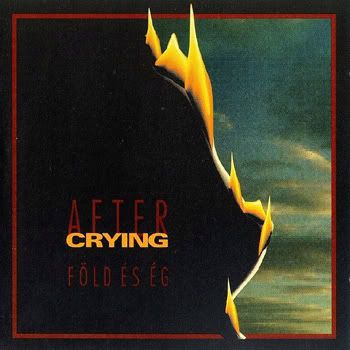
After Crying


After Crying - Föld és Ég - 1994 - BG (Hungary)

Great classically influenced album of symphonic style rock, very much in the same mould as Emerson, Lake and Palmer and King Crimson . Check out the band's 1990 "Overground Music" album

TRACKS / COMPOSERS

1. Manticore érkezése I (1:50)- Vedres, Winkler
2. Manticore érkezése II (6:37)- Egervari, Gacs, Pejtsik, Winkler
3. Enigma (1:25)- Egervari, Winkler
4. Rondo (3:40)-Vedres
5. Zene gitárra (3:20)- Torma
6. Leltár(4:02)- Jozsef, Vedres
7. Cisz-Dór koncertetüd (3:22)-Vedres
8. Puer natus in Bethlehem (6:02) - Vedres
9. Júdás (9:40)- Egervari, Gacs, Gorgenyi, Pejtsik, Torma, Vedres, Winkler
10. Bár éjszaka van (7:06)- Egervari, Gacs, Pejtsik, Torma, Vedres
11. Kétezer év (13:20)- Egervari, Gacs, Gorgenyi, Pejtsik, Torma, Vedres

BAND

Vedres Csaba - piano
Pejtsik Péter - cello, synths, bass
Winkler Balázs - trumpet, synths
Gacs László - drums
Egervári Gábor - flute
Torma Ferenc - guitar

REVIEWS

The keyboard bombast that opens the album illustrates that Föld és ég is a very different beast than its classic predecessor, Megalázottak és Megszomorítottak. On the two part "Manticore" piece, keyboardist/pianist Vedres Csaba opts for a over-the-top Keith Emerson approach, a style that is carried through most of the early tracks on the album (with the exception of the beautiful, but short, "Enigma" interlude). The self-conscious titling of these tracks (the first four), and the rather overt similarities to ELP gives the impression of a purposeful tribute to the group. For me, this first portion of the album isn't exactly a highlight. I've never been a huge ELP fan, and frankly these songs don't do a whole lot for me, though I certainly don't skip by them when I'm listening to the album either. They are well done for what they are. The next three tracks are sort of transitional pieces, one a solo acoustic guitar piece, then a charming choir-like piece and finally a classical piano piece. Only then, after 7 tracks, do things really get good. "Puer natus in Bethlehem" is the first track that really recalls the haunting chamber progressive of the previous album, as an exquisite trumpet line hangs over a bed of melodic strings, giving off a reverential, almost religious air. "Júdás" tends to rock out a little more, but still scratches that itch for an overwhelming classical feel, with churning cellos, racing horn lines and occasional Frippian guitar textures. "Bár éjszaka Van" is yet another haunting track, a spoken word piece backed by classical piano motifs. Then, finally, we have the absolute masterpiece of the album, and definitely a perfect illustration of the classic After Crying sound. "Kétezer év" is absolutely glorious, and at the longest playing time on the album is without a doubt worth the price of admission alone. All the hallmarks of the classic After Crying sound, albeit with a greater emphasis on the vocals, which are absolutely gorgeous. Overall, though the truly classic portion of the album makes up only four tracks, they are fairly lengthy and make the album an extremely solid buy. Though the first portions are certainly not unpleasant by any means, I find that they do bring the album down a tad from the previous heights of Megalázottak és Megszomorítottak. Check out that album first, and if you like it, by all means head over to Föld és ég. One of the pillar After Crying albums. © Greg Northrup [April 2001] © 2002, The Giant Progweed

Föld és ég is the 1994 release from Hungarian band After Crying. It is a departure in styles from the morose, pseudo-chamber sound of the previous album, heading towards a more symphonic and Emerson-influenced style. The first three or four tracks have the strongest Emerson influence, utilizing similar attacks on organ and piano. The ELP-style antics are given a somewhat alien mood by the presence of the Hungarian vocals. This music is all fairly successful, if not groundbreaking.The extended pieces which close out the album are the most noteworthy, however, marking After Crying's move into their own sound. The somber mood of the previous album still comes through in parts, as do touches of ELP and King Crimson, but the sound of "Judas", or "Kétezer év" is, ultimately, the band's own. Featuring an element of softness not unlike the Italian classics, but with the tasteful use of string and horns adding another tonal element. "Bár éjszaka van", on the other hand, hearkens back to the sound of the previous album. All in all, the second half of the album will make it of general interest, even to those for whom the ELP-isms at the beginning are of less interest. © Sean McFee , © ground and sky 1999-2008

This album is basically two albums on one disc. The first half consists of After Crying as Keith Emerson worshippers: the keyboardist steals shamelessly from Emerson, and After Crying ends up sounding like nothing much more than an uncommonly good ELP clone. However, after these tracks are over (and they're not bad by any means - I like them better than ELP themselves - just unexpected!), the music becomes more like what I was expecting. Towards the latter half of the album, the music becomes somber, lush, and beautiful, as one might expect from this band. Föld és ég has an almost religiously sober feel that's delicious. The wonderful male voice of the lead singer lends itself very, very well to this music - I kind of felt that the vocals got in the way on De Profundis, but here they complement the music and help to create an emotionally-charged sound which ranges from somber to hopeful to inspiring. Wonderful stuff. The chamber-rock instrumentation is great as well: electric guitars and keyboards backed by excellent strings and brass work. The best track is by far the closer, with the gorgeous vocals undercut by gently rolling piano (a la the end of "A gadarai megszállott" from Megalázottak és megszomorítottak), and with the occasional outburst from cello and horns. Unlike some other After Crying works, this piece is somber but hopeful, and is one of the most effective pieces in their repertoire. The disc is worth getting just for this song, but the rest is very good as well - especially if you like ELP. © Brandon Wu , © ground and sky 1999-2008

BIO

One of the most innovative bands on the Hungarian music scene is the experimental After Crying. Comprised of extremely talented musicians, After Crying stands in the forefront of "intelligent" music in Hungary and beyond -having found a significant following as far as Venezuela. Merging elements of various genres of music, such as rock and classical, the final product is nothing short of challenging for the listener. The musicianship of After Crying's eight members is definitely one of the band's strengths. The members are all specially trained, many at the Music Academy or Conservatory. The core of the band, which defines the band's direction, is composed of Gábor Egervári (flute, lyrics, concert engineer), Tamás Görgényi (lyrics, art director, concepts, vocals), Péter Pejtsik (cello, bass, vocals, composer), Ferenc Torma (guitar, keyboards, vocals, composer), and Balász Winkler (trumpet, keyboards, vocals, composer). This core is augmented by Zoltán Lengyel (keyboards), Zsolt Madai (drums, percussion, keyboards) and Gábor Légrádi (vocals). One of the interesting aspects of After Crying's live performances is way in which the musicians change instruments or at times play two instruments simultaneously to keep the music flowing at its most complex moments.Each recording the band produced seemed to feature yet another set of creative compositions played to perfection, ranging from the haunting passages on De Profundis to the two-part Keith Emerson-tribute "Manticore érkezése" on Föld és ég. The band went through many member changes through the years, but the departure of former primary composer Csaba Vedres in 1994 served as a definite turning point. Since then, the band has remained solidly intact with its current eight-member line-up, with the core five composing the music. Péter Pejtsik told Progression magazine, "The strange thing about After Crying is, indeed, the fact that we are all extremely good musicians. Because of the ease with which our members read their scores, I'm allowed the opportunity to write various arrangements for our compositions."The band also takes a more-than-serious approach to live performances - rather akin to classical than rock. Görgényi explains: "We always prepare ourselves for every single concert as if it were the one and only in our life. There's no easy gig for us, even if we play the same programme at consecutive shows. That is the greatest part of the whole thing, to go and get the audience at every place." That approach has paid off, as the band is frequently invited to various music festivals around the world, headlining in places as close as Italy to as far as Mexico.Finally, Central Europe Review asked Görgényi about the music scene in Hungary today: "It is quite a flat scene. A million cheap bands and performers chasing big money, trying to copy the biggest and smaller Western stars, who do the exact same stupid music." All members of After Crying are quick to praise Gergely Böszörményi, publisher of the band's music, for having the vision to promote and support this part of Hungarian music. After Crying is an experience to be enjoyed both on record and in concert. It is a musical phenomenon, requiring the undivided attention of its listeners. Fans who discover After Crying come back for the challenge repeatedly, and the band's eight brilliant musicians are more than happy to reciprocate and meet that challenge each time. © Mel Huang, © 2000 - Central Europe Review and Internet servis, a.s. All Rights Reserved, www.ce-review.org/00/12/huang12.html

MORE ABOUT AFTER CRYING

After Crying is a Hungarian musical ensemble, established in 1986, which composes and performs contemporary classical music or symphonic rock. They use instruments ranging from classical acoustical instruments like cello, trumpet, piano, flute to the instruments of a modern rock band. They sometimes perform with traditional chamber or symphony orchestras. Their studio albums contain numerous variations in instruments and composition. Though the band has been on an extended hiatus, they announced in January 2008 that they are now "waking up" from their "silent times," playing a light concert schedule as Gábor Egervári recovers from an unsaid illness. [ [http://blog. myspace.com/index.cfm?fuseaction=blog.view&friendID=322853932&blogID=351324486 After Crying's Myspace Blog, January 25, 2008] ]

Dada


Dada - Dada - 1971 - Atlantic

Very rare 1971 album from Dada. Dada were a­ nine piece Atlantic Records soul/jazz rock band with Robert Palmer, Elkie Brooks,and Jimmy Chambers among it's members. The great British R'n'B/Blues Rock band, Vinegar Joe evolved from this extremely obscure band. The album was reissued in 1991 on Linea Records, Germany, but the Atlantic original vinyl LP was released in a "Mono" version. Hands up who knows what that word means ! The album is an unusual mix of psychedelic rock with everything else in the mix. There is a cover of Jagger & Keith Richards "The Last Time" and "Aspen, Colorado" by Tony Joe White, both of which are done really well. Early seventies eclectic rock, and in ways, reminiscent of some of Moby Grape's early recordings. An unusual, but very good recording from Dada, with great musicianship, and first class vocals from the great Elkie Brooks. A.O.O.F.C would be very interested in more info about this band, and your opinion on this album. Check out Vinegar Joe's "Six Star Gypsies" album for similarities.

TRACKS / COMPOSERS

1. Big Dipper (By Pete Gage & Paul Korda)
2. The Last Time (By Mick Jagger & Keith Richrds)
3. This Is My Song (By Pete Gage & Paul Korda)
4. Seed Of Peace (By Paul Korda & Don Shinn)
5. Organ Interlude (By Don Shinn)
6. Tonite Is (By Paul Korda & Don Shinn)
7. She Walks Away (By Pete Gage & Zagni)
8. Aspen, Colorado (By Tony Joe White)
9. Eyes Of The Warren (By Don Shinn)
10. Jasamin (By Paul Korda)
11. Dada (By Paul Korda)

BAND

Elkie Brooks - Vocals
Paul Korda - Vocals
Jimmy Chambers - Vocals, Percussion
Pete Gage - Guitar, Bass
Don Shinn - Keyboard, Organ, Bass, Vibes
Martyn Harryman - Drums, Percussion
Barry Duggan - Alto Sax, Baritone Sax, Flutes
Malcolm Capewell - Tenor Sax, Flute
Ernie Luchlan - Trumpet, Fluegelhorn

Vinegar Joe


Vinegar Joe - Six Star Gypsies - 1993 - Edsel

Vinegar Joe, a very short lived British R&B/blues rock band in the early seventies, is noted for having Elkle Brooks and the late Robert Palmer among it's members. The band evolved from Dada, a­ nine piece Atlantic Records soul/jazz rock band with Robert Palmer, Elkie Brooks,and Jimmy Chambers among it's members. Robert Palmer, and Elkie Brooks both had previously unsuccessful solo careers. Manchester born, Elkie Brooks, had been singing and recording since the early sixties. She appeared on several tours with The Animals, Carl Perkins, The Nashville Teens, and once supported The Beatles on tour. She has long been one of the world's great soul/blues vocalists but somehow she was a latecomer to success. Gage had played with The Zephyrs, Geno Washington and The Ram Jam Band with some success. Vinegar Joe were a great live band, and played the Reading Rock Festival in 1972. Even though they recorded three critically acclaimed studio albums, Vinegar Joe, Rock And Roll Gypsies, and Six-Star General, they never made it big time in the record selling stakes. They dissolved VJ in 1973 and Palmer, Brooks and Hartley went on to achieve great success. This 1993 compilation album from Vinegar Joe is a selection of tracks from the 1972 album, "Rock & Roll Gypsies", and the 1973 album, "Six Star General". For some strange reason, it is reissued with the same front artwork as the 1973 "Six Star General"album . Slightly confusing, but totally irrelevant to the album's music content which is really good. There are thirteen great tracks here that should please any rock music lover. Boogie, soul, blues, R n B, and even a splash of country rock. A very talented band who could have been huge, but as stated earlier, they had great success individually, and will not be forgotten. Check out Elkie Brooks' "Live And Learn album" and Robert Palmer's brilliant "Sneakin' Sally Through the Alley" album featuring the late great Lowell George of Little Feat.

TRACKS / COMPOSERS

1 Charley's Horse - Gage, York
2 Rock & Roll Gypsies - Davis, Tillison
3 Falling - Palmer
4 It's Getting to the Point - Gage
5 Angel - Hendrix
6 No One Ever Do - Gage
7 Forgive Us - Palmer
8 Proud to Be (A Honky Woman) - Gage
9 Dream My Own Dreams - Palmer
10 Stay True to Yourself - York
11 Black Smoke from the Calumet - Gage
12 Talkin' 'Bout My Baby - Fraser
13 Fine Thing - Palmer

BAND

Elkie Brooks Vocals
Jim Mullen Guitar
John Woods Drums
Keef Hartley Drums
Mike Deacon Keyboards
Pete Gage Piano, Guitar, Producer
Pete Gavin Drums
Steve York Harmonica, Bass

REVIEW

A 13-song CD assembled from the best tracks off of Six Star General and Rock 'n' Roll Gypsies, the band's second and third albums, respectively. Elkie Brooks tries hard to be like a kind of white version of Tina Turner, and doesn't do badly, and the playing is first-rate; the band's rhythm section was always solid no matter who was in it, and Gage's guitar work was lithe and aggressive. The songs are all good, ranging from searing R&B to straight-ahead rock & roll, and the recordings provide a glimpse of the kind of surging, energetic performances that made their shows a major attraction — it's a pity there aren't any live tapes. © Bruce Eder, allmusic.com

SHORT BIO

Vinegar Joe might very easily have been Island Records' answer to the Allman Bros. or Wet Willie. A sextet formed out of a busted big-band rock outfit called Dada, they were brought together at the suggestion of Island founder Chris Blackwell. Elkie Brooks (vocals), Robert Palmer (vocals, guitar), Pete Gage (guitars, piano), and Steve York (bass, harmonica), were at the core of the group, with Tim Hinkley and then Mike Deacon on keyboards, and Conrad Isadore and Keef Hartley, and then John Woods and Pete Gavin on drums--the band cut three albums for between 1971 and 1973. Their live shows were well reviewed and attracted significant audiences in England, but this was never reflected in their record sales. They split up in 1973, with Robert Palmer becoming an international star as a pop-rock blue-eyed soul singer and Elkie Brooks a success as an MOR singer with Pete Gage as her arranger. © Bruce Eder, All Music Guide

Otis Rush


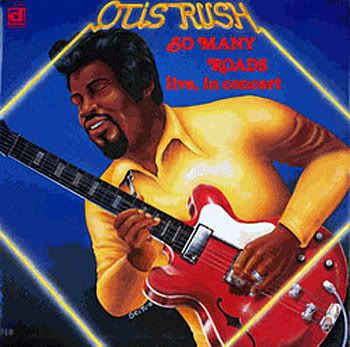
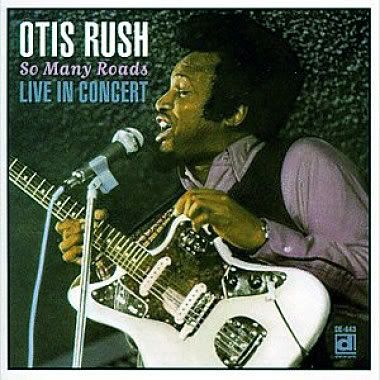
Otis Rush - So Many Roads Live In Concert - 1978 - Delmark

There's a pile of Otis Rush live albums in the bins now, but this was the one that made everybody sit up and take notice and it's still his best. Recorded live outdoors in a Tokyo park in the Summer of 1975 with thousands of fans hanging on every note and word, Otis digs deep and delivers some of the most inspired singing and playing he's ever comitted to magnetic tape. All the performances are of a nice, comfortable lenth with none of the interminable soloing that mars other Rush live sets. This is the one to have. © Cub Koda, allmusic.com


On this wonderful live album, the esteemed back up band complement Otis Rush perfectly, and he steals the show with his fluid skill on the fretboard and his intense passionate vocals. A great live album with terrific audience feedback. Check out Otis' brilliant "Any Place I'm Going" album, and the blues masterpiece, "Door to Door (With Albert King)", which showcases the two Bluesmasters at their brilliant best.

The 1995 Delmark CD 13 track release with 4 bonus * tracks is posted here with the following track / composer sequence -

1 Introduction - Rush, Otis [Bonus] *
2 Will My Woman Be Home Tonight (Blue Guitar) - Hooker, Earl
3 Every Day I Have the Blues - Memphis Slim
4 I Can't Quit You Baby - Dixon, Willie
5 Crosscut Saw - Ford, R.G.
6 Looking Back (Take A Look Behind) - Benton, Brook/Hendricks, Belford/Otis, Clyde
7 Chitlins con Carne - Burrell [Bonus] *
8 I've Got News for You - Alfred [Bonus] *
9 Mean Old World - Walker, Walker [Bonus] *
10 All Your Love (I Miss Loving) - Rush, Otis
11 So Many Roads, So Many Trains - Paul, Marshall
12 Gambler's Blues - King, Albert
13 Three Times a Fool - Rush, Otis

BAND

Otis Rush (vocals, guitar);
Jimmy Johnson (guitar);
Sylvester Boines (bass);
Tyrone Centuray (drums).

Recorded July 20 & 29, 1975 at Hibiya Park in Tokyo, Japan

Originally released on vinyl in 1978 on Delmark records with the following 9 tracks / composers -

1 Will My Woman Be Home Tonight - Hooker, Earl
2 Every Day I Have the Blues - Memphis Slim
3 I Can't Quit You Baby - Dixon, Willie
4 Crosscut Saw - Ford, R.G.
5 Looking Back[Take A Look Behind] - Benton, Brook/Hendricks, Belford/Otis, Clyde
6 All Your Love (I Miss Loving) - Rush, Otis
7 So Many Roads, So Many Trains - Paul, Marshall
8 Gambler's Blues - King, Albert
9 Three Times a Fool - Rush, Otis

REVIEW

The 1995 CD release of this title, complete with a bit more than an extra ten minutes of material, looks good on paper and received lots of praise. The original album release is among much live material by this artist that haunts the used-record pile, possibly because when blues fans begin culling through their collection, it is titles such as this that get the boot. Not that this is terrible or anything. Otis Rush is one of the finest blues guitarists, ever. He has made some records that are fantastic. On this one, he is in front of a huge live audience in Japan. The performance is reminiscent of some of the live albums by B.B. King. Backup is sparse in comparison, though. There are only drums and bass, plus second guitarist Jimmy Johnson, a capable player who is mixed pretty far to the background, sticking closely to chords or riff patterns. Blues purists will raise an eyebrow over the way the drummer and bassist play, ever mindful of the fact that Rush was a heavy guitarist who liked to stretch out and build intensity in his solos. His string-bending prowess never fails to surprise, and he also has other tricks for the fretboard, including feedback and ecstatic chording at the climax of an improvisation. Listeners familiar with the way bass and drums pursue a soloist in a fusion jazz band will have an inkling of the way bassist Sylvester Boines and drummer Tyrone Centuray attack the guitar happenings here. There are plenty of familiar gambits, such as suddenly doubling or even tripling the time at the turnaround, heavy-handed use of hi-hat splashes, and intense, synchronized accents that bring to mind the time the guy upstairs decided to demonstrate dance steps at three in the morning. "Crosscut Saw" is a version of this blues standard as if Rush had written it, every guitar lick delivered piping hot, fresh from the guitarist's bakery. It all adds up to showmanship and virtuosity, yes. What is missing is the really deep feeling of the blues. It just doesn't happen on this record. Deep as Rush's guitar burrows into one's soul, however, the listener might not even miss it. © Eugene Chadbourne, All Music Guide


SHORT BIO [ Source: The Encyclopedia of Popular Music by Colin Larkin. Licensed from Muze. ]

29 April 1934, Philadelphia, Mississippi, USA. A left-handed blues guitarist, Rush moved to Chicago where his impassioned singing and playing on "I Can't Quit You Baby" brought a Top 10 R&B hit in 1956. He became one of the "young turks" of the Chicago scene together with Buddy Guy, Freddie King and Magic Sam. "I Can't Quit You Baby" and other Cobra Records recordings ("Double Trouble", "All Your Love") from the same era inspired British guitarists such as Peter Green, Eric Clapton and Mick Taylor, who strived to recreate the starkly emotive quality of his solos. John Mayall opened the pivotal Blues Breakers With Eric Clapton with "All Your Love" and continued by making Rush more widely known in the UK with recordings of "So Many Roads", "I Can't Quit You Baby" (also recorded by Led Zeppelin) and "Double Trouble". In the early 60s, Rush recorded for Chess Records and Duke where "So Many Roads" and "Homework" became his best-known songs. As blues declined in popularity with black audiences, he turned increasingly to college concerts and collaborations with white blues artists such as Mike Bloomfield, with whom he made an album for Cotillion in 1969. During the 70s, Rush toured Europe and Japan, recording in Sweden, France and Japan as well as making two albums for Chicago-based label Delmark Records. Right Place, Wrong Time had been made in 1971 for Capitol Records with producer Nick Gravenites, but was only issue five years later. Rush performed and toured less frequently in the 80s, although an album made at the 1985 San Francisco Blues Festival showed him to be on top form. Rush's influence has always been greater than his commercial standing and like Buddy Guy, his former stablemate at Chess, he has become a guitarist's guitarist. In the blues boom of the early 90s Rush was tagged to benefit in a similar way to John Lee Hooker and Buddy Guy. John Porter, the producer of Guy's excellent Damn Right, I've Got the Blues, was enlisted to work on 1994's Ain't Enough Comin' In. On this, his best work for many a year, Rush demonstrated total confidence and experience and was well supported by Mick Weaver (organ), Bill Payne (piano) and Greg Rzab (bass). The 1998 studio follow-up Any Place I'm Going, recorded for new label House Of Blues, continued the good run with some excellent brass backing adding a thick layer to Rush's blend of soul and blues.


BIO
Breaking into the R&B Top Ten his very first time out in 1956 with the startlingly intense slow blues "I Can't Quit You Baby," southpaw guitarist Otis Rush subsequently established himself as one of the premier bluesmen on the Chicago circuit. He remains so today. Rush is often credited with being one of the architects of the West side guitar style, along with Magic Sam and Buddy Guy. It's a nebulous honor, since Otis Rush played clubs on Chicago's South side just as frequently during the sound's late-'50s incubation period. Nevertheless, his esteemed status as a prime Chicago innovator is eternally assured by the ringing, vibrato-enhanced guitar work that remains his stock-in-trade and a tortured, super-intense vocal delivery that can force the hairs on the back of your neck upwards in silent salute. If talent alone were the formula for widespread success, Rush would currently be Chicago's leading blues artist. But fate, luck, and the guitarist's own idiosyncrasies have conspired to hold him back on several occasions when opportunity was virtually begging to be accepted. Rush came to Chicago in 1948, met Muddy Waters, and knew instantly what he wanted to do with the rest of his life. The omnipresent Willie Dixon caught Rush's act and signed him to Eli Toscano's Cobra Records in 1956. The frighteningly intense "I Can't Quit You Baby" was the maiden effort for both artist and label, streaking to number six on Billboard's R&B chart. His 1956-58 Cobra legacy is a magnificent one, distinguished by the Dixon-produced minor-key masterpieces "Double Trouble" and "My Love Will Never Die," the nails-tough "Three Times a Fool" and "Keep on Loving Me Baby," and the rhumba-rocking classic "All Your Love (I Miss Loving)." Rush apparently dashed off the latter tune in the car en route to Cobra's West Roosevelt Road studios, where he would cut it with the nucleus of Ike Turner's combo. After Cobra closed up shop, Rush's recording fortunes mostly floundered. He followed Dixon over to Chess in 1960, cutting another classic (the stunning "So Many Roads, So Many Trains") before moving on to Duke (one solitary single, 1962's "Homework"), Vanguard, and Cotillion (there he cut the underrated Mike Bloomfield-Nick Gravenites-produced 1969 album Mourning in the Morning, with yeoman help from the house rhythm section in Muscle Shoals). Typical of Rush's horrendous luck was the unnerving saga of his Right Place, Wrong Time album. Laid down in 1971 for Capitol Records, the giant label inexplicably took a pass on the project despite its obvious excellence. It took another five years for the set to emerge on the tiny Bullfrog label, blunting Rush's momentum once again (the album is now available on HighTone). An uneven but worthwhile 1975 set for Delmark, Cold Day in Hell, and a host of solid live albums that mostly sound very similar kept Rush's gilt-edged name in the marketplace to some extent during the 1970s and '80s, a troubling period for the legendary southpaw. In 1986, he walked out on an expensive session for Rooster Blues (Louis Myers, Lucky Peterson, and Casey Jones were among the assembled sidemen), complaining that his amplifier didn't sound right and thereby scuttling the entire project. Alligator picked up the rights to an album he had done overseas for Sonet originally called Troubles, Troubles. It turned out to be a prophetic title: much to Rush's chagrin, the firm overdubbed keyboardist Lucky Peterson and chopped out some masterful guitar work when it reissued the set as Lost in the Blues in 1991. Finally, in 1994, the career of this Chicago blues legend began traveling in the right direction. Ain't Enough Comin' In, his first studio album in 16 years, was released on Mercury and ended up topping many blues critics' year-end lists. Produced spotlessly by John Porter with a skin-tight band, Rush roared a set of nothing but covers — but did them all his way, his blistering guitar consistently to the fore. Once again, a series of personal problems threatened to end Rush's long-overdue return to national prominence before it got off the ground. But he's been in top-notch form in recent years, fronting a tight band that's entirely sympathetic to the guitarist's sizzling approach. Rush signed with the House of Blues' fledgling record label, instantly granting that company a large dose of credibility and setting himself up for another career push. It still may not be too late for Otis Rush to assume his rightful throne as Chicago's blues king. © Bill Dahl, allmusic.com

Otis Rush


Otis Rush - Any Place I'm Going - 1998 - House of Blues

A Grade A Grammy award winning album of bitter- sweet Chicago soul and blues, smooth on the surface, but with an underlying raw edge. Buy his famed "Right Place, Wrong Time" album, and listen to his masterful "Lost in the Blues" album.

TRACKS / COMPOSERS

You Fired Yourself - Willie Mitchell, Thomas Bingham
Keep on Loving Me Baby - Otis Rush
Part Time Love - Clay Hammond
I Got the Blues - Leo Nocentelli
The Right Time - Lew Herman
Looking Back - Otis Rush
Any Place I'm Going (Beats Any Place I've Been) - Will Jennings, John Porter, Otis Rush
Laughin' and Clownin' - Sam Cooke
Pride and Joy - Marvin Gaye, William "Mickey" Stevenson, Norman Whitfield
Have You Ever Had the Blues - Lloyd Price, Harold Logan
Walking the Back Streets and Crying - Sandy Jones

MUSICIANS

Otis Rush (Guitar) , (Vocals)
Leroy Hodges (Guitar (Bass))
Thomas Bingham (Guitar (Rhythm)
Steve Potts (Percussion), (Drums)
Lester Snell (Organ), (Piano)
Scott Thompson (Trumpet)
James Mitchell (Sax (Baritone)
Mashaa, William Brown, Bertram Brown (Vocals (Background)
Recorded at Royal Recording Studio, Memphis, Tennessee.

REVIEWS

This album on the House of Blues label is a bit smoother and more slickly produced (by Rush and famed Memphis producer Willie Mitchell) than Rush's classic, rough-edged Chess recordings, but there's still plenty here to like. With a solid horn section backing him on most cuts, Rush gets ample room to show off his razor-sharp guitar chops. And his distinctive, emotionally charged voice remains a true blues treasure. In addition to his own no-nonsense originals, Rush draws on some familiar tunes from classic soul and blues performers like Marvin Gaye, Sam Cooke, Nappy Brown, and Little Milton. © Joel Roberts Alll Music Guide

As a Chicago born and bred reviewer, I have always been a fan of the blues artists that have called Chi town home. And there is no better representative of the sound than bluesman "Otis Rush," who has been a presence since '56. What he hasn't been, is recording his own albums, at least for the past four years, outside of re-releases of older material, all on indy labels. Now The House of Blues has brought us a new album filled with revivals of classic blues music, played by Otis in his inimitable style. Known for his lefthanded, upside down guitar play (using a right-handed Gibson), Otis delivers solid licks full of intensity that show he's a master of the craft, with eleven slices of prime blues. He reprises his own first hit, "Keep On Loving Me Baby," and adds a new one, "Any Place I'm Going." He revives such classics as "Sam Cooke's" "Laughin' and Clownin'," the perfect song to showcase his intense vocals, while "Lloyd Price's" "Have You Ever Had The Blues," "Nappy Smith's" "The Right Time" and "Little Milton's" "Walking The Back Streets and Crying," are full of the vibrato-rich guitar play that defines the "West Side" style. The opening cut, producer Willie Mitchell's "You Fired Yourself," gets you hooked from the first guitar riffs. Otis' "I told you so" vocal expression sets the tone for the whole album. Kudo's to the producer for knowing his own music enough to pick out this song for Otis to do. Turn up the volume you're in for a treat, for this is also a technically clean disc. Want to hear a guitar talk to you? Listen to the opening of "Keep On Loving Me Baby," and compare it to the vocals from Otis that follow. The inflection in his voice is the same you heard from his guitar a moment before. Otis once said you didn't have to have the blues to play them and you certainly don't have to have them to listen to them. So give yourself a "Rush" and you'll be glad to say "I Got The Blues." Review Donn Jehs, © 1998 by Mary Ellen Gustafson, www.music-reviewer.com/12_98/soul16b.htm

BIO

Breaking into the R&B Top Ten his very first time out in 1956 with the startlingly intense slow blues "I Can't Quit You Baby," southpaw guitarist Otis Rush subsequently established himself as one of the premier bluesmen on the Chicago circuit. He remains so today. Rush is often credited with being one of the architects of the West side guitar style, along with Magic Sam and Buddy Guy. It's a nebulous honor, since Otis Rush played clubs on Chicago's South side just as frequently during the sound's late-'50s incubation period. Nevertheless, his esteemed status as a prime Chicago innovator is eternally assured by the ringing, vibrato-enhanced guitar work that remains his stock-in-trade and a tortured, super-intense vocal delivery that can force the hairs on the back of your neck upwards in silent salute. If talent alone were the formula for widespread success, Rush would currently be Chicago's leading blues artist. But fate, luck, and the guitarist's own idiosyncrasies have conspired to hold him back on several occasions when opportunity was virtually begging to be accepted. Rush came to Chicago in 1948, met Muddy Waters, and knew instantly what he wanted to do with the rest of his life. The omnipresent Willie Dixon caught Rush's act and signed him to Eli Toscano's Cobra Records in 1956. The frighteningly intense "I Can't Quit You Baby" was the maiden effort for both artist and label, streaking to number six on Billboard's R&B chart. His 1956-58 Cobra legacy is a magnificent one, distinguished by the Dixon-produced minor-key masterpieces "Double Trouble" and "My Love Will Never Die," the nails-tough "Three Times a Fool" and "Keep on Loving Me Baby," and the rhumba-rocking classic "All Your Love (I Miss Loving)." Rush apparently dashed off the latter tune in the car en route to Cobra's West Roosevelt Road studios, where he would cut it with the nucleus of Ike Turner's combo. After Cobra closed up shop, Rush's recording fortunes mostly floundered. He followed Dixon over to Chess in 1960, cutting another classic (the stunning "So Many Roads, So Many Trains") before moving on to Duke (one solitary single, 1962's "Homework"), Vanguard, and Cotillion (there he cut the underrated Mike Bloomfield-Nick Gravenites-produced 1969 album Mourning in the Morning, with yeoman help from the house rhythm section in Muscle Shoals). Typical of Rush's horrendous luck was the unnerving saga of his Right Place, Wrong Time album. Laid down in 1971 for Capitol Records, the giant label inexplicably took a pass on the project despite its obvious excellence. It took another five years for the set to emerge on the tiny Bullfrog label, blunting Rush's momentum once again (the album is now available on HighTone). An uneven but worthwhile 1975 set for Delmark, Cold Day in Hell, and a host of solid live albums that mostly sound very similar kept Rush's gilt-edged name in the marketplace to some extent during the 1970s and '80s, a troubling period for the legendary southpaw. In 1986, he walked out on an expensive session for Rooster Blues (Louis Myers, Lucky Peterson, and Casey Jones were among the assembled sidemen), complaining that his amplifier didn't sound right and thereby scuttling the entire project. Alligator picked up the rights to an album he had done overseas for Sonet originally called Troubles, Troubles. It turned out to be a prophetic title: much to Rush's chagrin, the firm overdubbed keyboardist Lucky Peterson and chopped out some masterful guitar work when it reissued the set as Lost in the Blues in 1991. Finally, in 1994, the career of this Chicago blues legend began traveling in the right direction. Ain't Enough Comin' In, his first studio album in 16 years, was released on Mercury and ended up topping many blues critics' year-end lists. Produced spotlessly by John Porter with a skin-tight band, Rush roared a set of nothing but covers — but did them all his way, his blistering guitar consistently to the fore. Once again, a series of personal problems threatened to end Rush's long-overdue return to national prominence before it got off the ground. But he's been in top-notch form in recent years, fronting a tight band that's entirely sympathetic to the guitarist's sizzling approach. Rush signed with the House of Blues' fledgling record label, instantly granting that company a large dose of credibility and setting himself up for another career push. It still may not be too late for Otis Rush to assume his rightful throne as Chicago's blues king. © Bill Dahl, allmusic.com