A.O.O.F.C
recommends
Mizar6

babydancing


Get this crazy baby off my head!

10.4.09

Allman Brothers Band


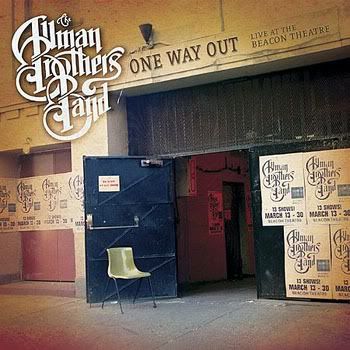
Allman Brothers Band - One Way Out: Live At The Beacon Theater - 2004 - Sanctuary

A brilliant, and important live album from the great Allman Brothers Band It's universally recognized that this band has always been one of the greatest rock bands ever. This band have undergone unbearable misery and tragedy, and are still rockin'.The line up on this album is arguably the best since the death of the great Duane Allman. Warren Haynes, and Derek Trucks are masters of the guitar, and contribute immensely to this album. You may have heard most of these tracks before, but the line up here put a new twist on everything, and revitalise the legendary band. This is one of the best modern day live rockin' albums you will ever hear, and is VHR by A.O.O.F.C. If you haven't already heard the Allman Brothers' classic "Eat A Peach", and "At Fillmore East"albums, try and listen to them when you have some spare time. Great rock like this will never die.

TRACKS / COMPOSERS

DISC 1

"Statesboro Blues" (McTell) - 5:22
"Don't Keep Me Wonderin'" (Allman) - 4:12
"Midnight Rider" (Allman, Payne) - 3:16
"Rockin' Horse" (Allman, Haynes, Pearson, Woody) - 10:12
"Desdemona" (Allman, Haynes) - 13:27
"Trouble No More" (Waters) - 3:45
"Wasted Words" (Allman) - 7:51
"Good Morning Little Schoolgirl" (Williamson) - 9:01
"Instrumental Illness" (Burbridge, Haynes) - 16:42

DISC 2

"Ain't Wastin' Time No More" (Allman) - 6:29
"Come and Go Blues" (Allman) - 6:03
"Woman Across the River" (Crutcher, Jones) - 6:38
"Old Before My Time" (Allman, Haynes) - 5:37
"Every Hungry Woman" (Allman) - 5:21
"High Cost of Low Living" (Allman, Anders, Burgin, Haynes) - 8:42
"Worried Down with the Blues" - 7:58
"Dreams" (Allman) - 12:49
"Whipping Post" (Allman) - 15:31

BAND

Gregg Allman - Hammond B-3 organ, piano, acoustic guitar, lead vocals
Jaimoe - drums (left side)
Butch Trucks - drums (right side)
Warren Haynes - lead and slide guitars (right side), lead and background vocals
Marc Quinones - congas, percussion, background vocals
Oteil Burbridge - bass
Derek Trucks - lead and slide guitars (left side)

REVIEWS

To be perfectly honest, I didn't pick up the new live album One Way Out because I'm a huge fan of the Allman Brothers. I picked it up for much the same reason I got last year's studio album, Hittin' The Note - the presence of slide-guitar monster Derek Trucks and equally monstrous bassist Oteil Burbridge. The Allmans are one of those bands whose music has infiltrated the musical landscape - classic rock stations play their old hits on a pretty regular basis. It was pretty easy to ignore it when I was younger - it was just southern rock, and all I could see was a bunch of drugged out hippies sittin' round jamming on the front porch complete with that big guy in the overalls hunched over and blowin' into a jug. Of course, the generalization is wildly inaccurate - on the surface the Allman Bros. may invoke jaded images like that, but upon closer inspection this is music more closely related to the blues and even jazz at times than rock. How many times have you heard "Midnight Rider"? I know I heard it so often I thought I'd never want to hear it again. And yet somehow the version on One Way Out is so invigorating it's like a new song. Truck's slide work howls from your left speakers and more often than not I found myself transfixed by his playing. Burbridge's bass work rarely takes center stage, instead burbling insistently in the background and providing a thick, meaty foundation. While the older material may not be the most challenging for such a tremendously talented bassist, every note and lick oozes with evidence of his proficiency. The tendency for bands like this - bands that are known for their jamming - is to just rely on jamming, period. This has always been my problem, I find that most of the bands who jam simply lack the chops and taste to maintain my interest for long as they fall back on repetition and simple variations of riffs. The Allman Bros. perfected the art of jamming long ago, and One Way Out doesn't lack for it. Numerous tracks venture past the 10 minute mark, but don't drag on so long that you forget what song you're even listening to. Along with the Brothers' hallmark jam, "Whipping Post," the band stretches out on newer tracks like Hittin' The Note's "Instrumental Illness" (16 minutes of it!) and "Desdemona," but it's the jazzy change-ups of "Woman Across The River" that fascinates me no end. I can't get enough of the band slipping from up-tempo to down-tempo blues during the chorus, and then turning it right back around with a catchy little motif that's repeated throughout the tune - I could have listened to a lot more of this than the just under seven minutes provided on One Way Out. I've always been intrigued by the two-drummer system employed by the Allmans - "why is this necessary?" I often wondered. On a cursory examination, the drumwork appears to be pretty straight-ahead - and maybe that's simply an unfortunate side-effect of listening to radio hits - but live the rhythm section is dense and complex, with each drummer filling in around the other. Heck, there's even room for a separate percussionist. You'd think all this drumming would overload the mix, but it doesn't - Butch Trucks (Derek's cousin) occupies the right half of the auditory field and Jaimoe fills out the left with percussion bits peeking out in between the two. What could be an aural mess is just the opposite. The mix on One Way Out is fantastic - so clear that everyone's parts are exquisitely defined, each being given plenty of room and space and yet it never sounds weak. One Way Out is just plain fun to listen to. An incredible concert and the beautiful presentation assure this will rank as one of my favorite releases of the year. © Tom Johnson, May 04, 2004, http://blogcritics.org/music/

Do we really need another live double CD by the Allman Brothers Band? Oh yeah. In fact, when they play this well, we need them in droves. This collection marks the second time the Allman Brothers have issued music from their storied shows at the Beacon Theater in New York. The first, Peakin' at the Beacon, was issued in 2000 with Dickey Betts and Derek Trucks in the lineup. Betts had not yet been fired and Warren Haynes was yet to return to the fold. While Betts is a singular voice and is one of the pillars of the ABB's sound, this new version of the band with Trucks and Haynes manning the guitars has gelled into a formidable unit; in fact, they are something spectacular. Add to the fact that Gregg Allman is singing and playing better than at any time in his life (and Haynes is no slouch either), and you have the best live band in the world, bar none. A major plus on this outing is that with the exception of a handful of tracks — "Statesboro Blues," "Wasted Words," "Ain't Wastin Time No More," "Dreams," and "Whipping Post" (which closes the set) — the other 13 cuts are not usually found on the Brothers' live sets. The versions of the classics are as tough and reverent as can be expected; there is no burden placed on these tracks by virtue of their weight and status in the band's canon — which speaks plenty for the power and acumen of these versions. And on the other tunes, including classics like "Midnight Rider" and "Trouble No More," Gregg's powerful country ballad "Old Before My Time," the funky, burning read of "Good Morning Little Schoolgirl," "Woman Across the River," and "Worried Down With the Blues," the band is completely unified. Jaimoe and Butch Trucks weave in and through one another to provide an edgy, rollicking ballast to the separate-channel guitars of Derek Trucks and Haynes, who don't duel so much as propel one another to flights of six-string soulfulness and dizzying high-wire pyrotechnics — Derek's slide playing is otherworldly; it's full of Indian modal and jazz scales, and Haynes, is, well, Warren Haynes. The other notable thing about One Way Out is its sound. Never has a live mix come across with such immediacy and dynamic tension. This is the sound of a band in the room with you. You are hearing the music as it was made from the stage; the listener is in the mix, not in front of it. Pair this with Hittin' the Note, the studio album from 2003, and you have the sound of a band that has no peers. One Way Out is essential for anyone interested in rock & roll. Period. © Thom Jurek, allmusic.com

Freakin' at the Beacon... It has evolved into more than just a series of gigs; it has become a tradition. Gregg Allman and company roll the tour bus into New York City every spring and settle in for a two-week stand at the Beacon Theatre. What group commands that kind of respect or fan support? Only the Allman Brothers Band, that’s who. And with the new double live CD recorded from consecutive evenings in March 2003, all doubts are dispelled as to who the finest live jammers are. Forget the Dead and Phish, they’re not even close, as the Allmans and the Beacon have become synonymous with extended play brilliance. Into his fourth decade assembling the musicians, Gregg Allman has done a remarkable job of juggling personnel and keeping his charges functioning as a cohesive unit. Warren Haynes is completely at ease dueling with wunderkind Derek Trucks, as the pair strum and slide their way through two and a half hours of blues drenched classics. Jaimoe, Butch Trucks, and Mark Quinones effortlessly trade percussion licks, while bassist Oteil Burbridge follows, having found his niche replacing the late Allen Woody. And of course there’s Allman himself, whose flowing keyboard work and ragged vocals sound as good as ever. For everyone’s listening pleasure, the twin discs offer up 18 tracks of set list standards and surprises, short takes and full blown explorations. From disc one’s opening of “Statesboro Blues”, the band is in prime form, slowly burning up the 13-plus-minute “Desdemona” to a rollicking jaunt through “Trouble No More”. Even the staple “Midnight Rider” shines with new luster. The set is flawless in all respects, and is punctuated by the phenomenal Haynes led closer, “Instrumental Illness”. Could it get any better? Obviously it can, as disc two is even more impressive than its counterpart. The band delves into the deepest recesses of its blues sensibilities, contrasting the somber “Old Before My Time” with the smoldering “Worried Down with the Blues”. As with any Allmans’ concert however, the absolute best is left for last. Two tracks, a 28-minute finale, enough said. OK, just a few more words… “Dreams” and “Whipping Post”. As strong a performance as these discs provide, there is one small gripe that aficionados may voice. Although the overall sound is crisp through out, particularly for a live recording, Burbridge’s bass is frustratingly quiet. A shame really, as he contributes some fine low-end rumble that would be fully appreciated if miked up a bit more. That minor issue aside, the most amazing aspect of One Way Out is how it compares to the Allmans’ classic live albums, Atlanta International Pop Festival and Live at Fillmore East. While the talents of Duane Allman and Berry Oakely can never be truly equaled, the band has stood the test of time. Even the departure of Dickey Betts has not hampered the band’s trademark sound and penchant for playing live. A good thing for the Allman faithful, as the summer tour season is now upon us. And if the band doesn’t equal its level of excellence on any stage other than the Beacon, so be it, Spring 2005 isn’t that far off. But if One Way Out is the Allman’s new millennium sign of things to come, then kick back and relax, ‘cause Gregg and the boys still got it… © Adam Williams, 14 June 2004, © 1999-2008 PopMatters.com. All rights reserved

BIO

The story of the Allman Brothers Band is one of triumph, tragedy, redemption, dissolution, and a new redemption. Over nearly 30 years, they've gone from being America's single most influential band to a has-been group trading on past glories, to reach the 21st century as one of the most respected rock acts of their era. For the first half of the 1970s, the Allman Brothers Band was the most influential rock group in America, redefining rock music and its boundaries. The band's mix of blues, country, jazz, and even classical influences, and their powerful, extended on-stage jamming altered the standards of concert performance — other groups were known for their on-stage jamming, but when the Allman Brothers stretched a song out for 30 or 40 minutes, at their best they were exciting, never self-indulgent. They gave it all a distinctly Southern voice and, in the process, opened the way for a wave of '70s rock acts from south of the Mason-Dixon Line, including the Marshall Tucker Band, Lynyrd Skynyrd, and Blackfoot, whose music, at least initially, celebrated their roots. And for a time, almost single-handedly, they also made Capricorn Records into a major independent label. The group was founded in 1969 by Duane Allman (b. Nov. 20, 1946-d. Oct. 29, 1971) on guitar; Gregg Allman (b. Dec. 8, 1947) on vocals and organ; Forrest Richard ("Dickey") Betts (b. Dec. 12, 1943) on guitar; Berry Oakley (b. Apr. 4, 1948-d. Nov. 12, 1972) on bass; and Claude Hudson ("Butch") Trucks (b. May 11, 1947) and Jaimoe (Johnny Lee Johnson) Johanson (b. July 8, 1944) on drums. Duane and Gregg Allman loved soul and R&B, although they listened to their share of rock & roll, especially as it sounded coming out of England in the mid-'60s. Their first group was a local Daytona Beach garage band called the Escorts, who sounded a lot like the early Beatles and Rolling Stones; they later became the Allman Joys and plunged into Cream-style British blues, and then the Hour Glass, a more soul-oriented outfit. The group landed a contract with Liberty Records with help from the Nitty Gritty Dirt Band, but the company wasted the opportunity on a pair of over-produced albums that failed to capture the Hour Glass' sound. The group split up after Liberty rejected a proposed third LP steeped in blues and R&B. Duane Allman began working as a session guitarist at Fame Studios in Muscle Shoals, AL, and it was there, appearing on records by Wilson Pickett, Aretha Franklin, John Hammond, and King Curtis, among others, that he made his reputation. In 1969, at the coaxing of ex-Otis Redding manager Phil Walden, Allman gave up session work and began putting together a new band — Jaimoe came aboard, and then Allman's longtime friend Butch Trucks and another Allman friend, Berry Oakley, joined, along with Dickey Betts, with whom Oakley was playing in a group called Second Coming. A marathon jam session ensued, at the end of which Allman had his band, except for a singer — that came later, when his brother Gregg agreed to join. They were duly signed to Walden's new Capricorn label. The band didn't record their first album until after they'd worked their sound out on the road, playing heavily around Florida and Georgia. The self-titled debut album was a solid blues-rock album and one of the better showcases for guitar pyrotechnics in a year with more than its share, amid albums by Cream, Blind Faith, the Jeff Beck Group, and Led Zeppelin. It didn't sell 50,000 copies on its initial release, but The Allman Brothers Band impressed everyone who heard it and nearly everyone who reviewed it. Coming out at the end of the 1960s, it could have passed for a follow-up to the kind of blues-rock coming out of England from acts like Cream, except that it had a sharper edge — the Allmans were American and Southern, and their understanding of blues (not to mention elements of jazz, mostly courtesy of Jaimoe) was as natural as breathing. The album also introduced one of the band's most popular concert numbers, "Whipping Post." Their debut album attracted good reviews and a cult following with its mix of assured dual lead guitars by Duane Allman and Dickey Betts, soulful singing by Gregg Allman, and a rhythm section that was nearly as busy as the lead instruments, between Oakley's rock-hard bass and the dual drumming of Trucks and Johanson. Their second album, 1970's Idlewild South, recorded at Capricorn's studios in Macon, GA, was produced by Tom Dowd, who had previously recorded Cream. This was a magical combination — Dowd was completely attuned to the group's sound and goals, and Idlewild South broadened that sound, adding a softer acoustic texture to their music and introducing Betts as a composer (including the original studio version of "In Memory of Elizabeth Reed," an instrumental tribute to Miles Davis that would become a highlight of their shows, in many different forms, for the next 30 years). It also had a Gregg Allman number, "Midnight Rider," which became one of the band's more widely covered originals and the composer's signature tune. By this time, the band's concerts were becoming legendary for the extraordinarily complex yet coherent interplay between the two guitarists and Gregg Allman's keyboards, sometimes in jams of 40 minutes or more to a single song without wasting a note. And unlike the art rock bands of the era, they weren't interested in impressing anyone with how they played scales, how many different tunings they knew, or which classical riffs they could quote. Rather, the Allmans incorporated the techniques and structures of jazz and classical into their playing. In March of 1971, the band played a series of shows at the Fillmore East that were recorded for posterity and subsequently transformed into their third album, At Fillmore East. This double LP, issued in July of 1971, became an instant classic, rivaling the previous blues-rock touchstone cut at the Fillmore, Cream's Wheels of Fire. Duane Allman and his band were suddenly the new heroes to millions of mostly older teenage fans. Although it never cracked the Top Ten, At Fillmore East was certified as a gold record on October 15, 1971. Duane Allman was killed in a motorcycle accident 14 days later. The band had been midway through work on its next album, Eat a Peach, which they completed as a five-piece, with Dickey Betts playing all of the lead and slide guitar parts. Their second double album in a row became another instant classic, and their first album to reach the Top Ten, peaking at number five. Despite having completed Eat a Peach, the group was intact in name only. Rather than try to replace Duane Allman as a guitarist, they contrived to add a second solo instrument in the form of a piano, played by Chuck Leavell. The group had already begun work on a long-delayed follow-up to Eat a Peach, when Oakley was killed in a motorcycle accident only a few blocks from Allman's accident site. Lamar Williams (b. Jan. 15, 1949-d. Jan. 25, 1983) was recruited on bass, and the new lineup continued the group's concert activities, as well as eventually finishing the band's next album, Brothers and Sisters. which was released on August 1, 1973. During the extended gap in releases following Eat a Peach, Atco reissued The Allman Brothers Band and Idlewild South together as the double LP Beginnings, which charted higher than either individual release. Brothers and Sisters marked the beginning of a new era. The album had a more easygoing and freewheeling sound, less bluesy and more country-ish. This was partly a result of Capricorn losing the services of Tom Dowd, who had produced their three previous albums. Additionally, Dickey Betts' full emergence as a songwriter and singer as well as the group's only guitarist, playing all of the lead and slide parts, altered the balance of the group's sound, pushing forth his distinct interest in country-rock. Betts also became the reluctant de facto leader of the band during this period, not from a desire for control as much as because he was the only one with the comparative stability and creative input to take on the responsibility. The record occupied the number one spot for six weeks, spurred by the number two single "Ramblin' Man," and became their most well-known album. It was an odd reversal of the usual order of success for a rock band — usually, it was the release of an album that drew the crowds to concerts, but in this case, the months of touring the band had done paved the way for the album. The fact that it kept getting pushed back only heightened the fans' interest. Ironically, Brothers and Sisters was a less challenging record than the group's earlier releases, with a relatively laid-back sound, relaxed compared to the groundbreaking work on the group's previous four albums. But all of this hardly mattered; based on the reputation they'd established with their first four albums, and the crowd-pleasing nature of "Ramblin' Man" and the Dickey Betts-composed instrumental "Jessica," the group was playing larger halls and bigger crowds than ever. An entire range of Southern rock acts had started to make serious inroads into the charts in the wake of the Allman Brothers. Labels such as MCA and even Island Records began looking for this same audience, signing acts like Lynyrd Skynyrd and Blackfoot, respectively, among others. For the first time since the mid-'50s, the heyday of the rockabilly era, a major part of the country was listening to rock & roll with a distinctly Southern twang. The band began showing cracks in 1974, as Gregg Allman and Dickey Betts both began solo careers, recording albums separately from the group. Allman married Cher (twice), an event that set him up in a Hollywood-based lifestyle that created a schism with the rest of the band. They might have survived all of this, but for the increasing strain of the members' other personal habits — drugs and alcohol had always been a significant part of the lives of each of the members, except perhaps for Jaimoe, but as the strain and exhaustion of touring continued, coupled with the need to produce new music, these indulgences began to get out of control, and Betts' leadership of the group created a further strain for him. The band's difficulties were showcased by their next album, the highly uneven Win, Lose or Draw, which lacked the intensity and sharpness of their prior work. The whole band wasn't present for some of the album, and Gregg Allman's involvement with Cher, coupled with his serious drug problems, prevented him from participating with the rest of the group — his vocals were added separately, on the other side of the country. The band finally came apart in 1976 when Allman found himself in the midst of a federal drug case against a supplier and agreed to testify against a friend and band employee. Leavell, Johanson, and Williams split to form Sea Level, which became a moderately successful band, cutting four albums for Capricorn over the next four years, while Betts pursued a solo career. All of them vowed never to work with Gregg Allman again. Amid this split, Capricorn Records, reaching ever deeper into its vaults for anything that could generate income, issued two collections, a double-LP live collection called Wipe the Windows, Check the Oil, Dollar Gas, showcasing the Brothers and Sisters-era band at various concerts, and a double-LP best-of package, And the Road Goes On Forever. Wipe the Windows was a modest seller, appearing as it did when the group's sales had already fallen off, and it was compared unfavorably with the legendary work on At Fillmore East. The studio compilation passed with barely a ripple, however, because most fans already had the stuff on the original albums. They were all back together by 1978, however, and over the next four years the group issued a somewhat uneven series of albums. Enlightened Rogues (1979) somewhat redeemed their reputations — produced by Tom Dowd, who had always managed to get the very best work out of the group, it had more energy than any record they'd issued in at least six years. It also restored the two-guitar lineup, courtesy of Dan Toler (from Dickey Betts' solo band), who was brought in when Chuck Leavell (along with Lamar Williams) refused to return to the Allmans. By that time, however, the Allmans were fighting against time and musical trends. Disco, punk, and power pop had pretty much stolen a march on the arena acts epitomized by the Allmans; whatever interest they attracted was a matter of nostalgia for their earlier releases. The group was in danger of becoming arena rock's third big oldies act (after the Moody Blues and Paul McCartney's Wings). Additionally, their business affairs were in a shambles, owing to the bankruptcy of Capricorn Records in late 1979. When the fallout from the Capricorn collapse settled, PolyGram Records, the company's biggest creditor, took over the label's library, and the Allman Brothers were cut loose from their contract. Their signing to Arista enabled the group to resume recording. What they released, however, was safe, unambitious, routinely commercial pop/rock, closer in spirit to the Doobie Brothers than their own classic work, and a shadow of that work, without any of the invention and daring upon which they'd built their reputations. The group's fortunes hit a further downturn when Jaimoe was fired, breaking up one of the best rhythm sections in rock. For most of the 1980s, the group was on hiatus, while the individual members sorted out their personal and professional situations. During those years, only Dickey Betts seemed to be in a position to do much with his music, and most of that wasn't selling. In 1989, the band was reactivated again, partly owing to PolyGram's decision to issue the four-CD box set retrospective Dreams. That set, coupled with the reissue of their entire Capricorn catalog on compact disc in the years leading up to the box's release, reminded millions of older listeners of the band's greatness, and introduced the group to millions of people too young to have been around for Watkins Glen, much less the Fillmore shows. They reunited and also restored the band's original double-lead-guitar configuration, adding Warren Haynes on lead guitar alongside Dickey Betts, with Allen Woody playing bass; Chuck Leavell was gone, however, having agreed to join the Rolling Stones on tour as their resident keyboard player, and Lamar Williams had succumbed to cancer in 1983. The new lineup reinvigorated the band, which signed with Epic Records and surprised everyone with their first release, Seven Turns. Issued in 1990, it got some of the best reviews and healthiest sales they'd had in more than a decade. Their subsequent studio albums failed to attract as much enthusiasm, and their two live albums, An Evening With the Allman Brothers Band and 2nd Set, released in 1992 and 1995, respectively, were steady but not massive sellers. Much of this isn't the fault of the material so much as a natural result of the passage of time, which has left the Allmans competing with two decades' worth of successors and rivals. The group has stayed together since 1989, overcoming continuing health and drug problems, which have occasionally battered their efforts at new music. They remain a top concert attraction 25-plus years after their last historically important album, easily drawing more than 20,000 fans at a time to outdoor venues, or booking 2,000-seat theaters for three weeks at a time. Their back catalog, especially the first five albums, remain consistent sellers on compact disc and recently returned to the reconstituted Capricorn label (still a home for Southern rockers, including the latter-day Lynyrd Skynyrd, as well as reissues of Elmore James and other classic bluesmen), under a 1997 licensing agreement that has resulted in their third round of digital remastering. Apart from their Arista releases, the Allman Brothers Band has remained remarkably consistent, altering their music only gradually over 30 years. They sound more country than they did in their early days, and they're a bit more varied in the vocal department, but they have still been soaring at their concerts and on most of their records over the last ten-plus years. © Bruce Eder, allmusic.com

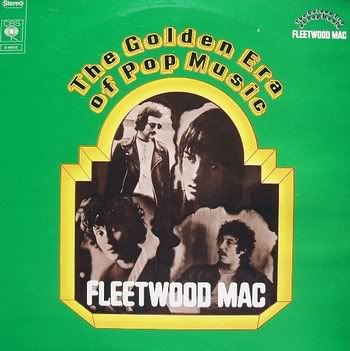
Fleetwood Mac


Fleetwood Mac - The Golden Era Of Pop Music - 1972 - CBS (Netherlands)

All Fleetwood Mac fans most likely have all these tracks in their record collection, and probably in better sound quality. This is a Dutch CBS 2 x LP import vinyl compilation, and is a collection of 24 of some of the early Fleetwood Mac's best blues tracks. The album is a 128 bit version, so if you're a devoted audiophile, you might not feel it worthwhile to listen to this album. If you are not too familiar with the legendary Peter Green, and Fleetwood Mac, then this album will give you an idea of just how good the band were. Undoubtedly one of the greatest blues bands of all time. Peter Green remains a british blues institution, and there is no need to elaborate on his guitar playing and songwriting skills. Listen to FM's ""Mr. Wonderful" album. There is info on Fleetwood Mac's revamped "Madison Blues" album @ FLMAC/MADBLS You can find Christine Perfect's (McVie) 1970 s/t album @ CHRISPER/ST Check out Peter Green's "A Fool No More" album @ PGRN/AFNM and Mick Fleetwood's "The Visitor" album is available @ MFWD/TVSTR Read this amazing band's bio @ FLMAC/BIO/WIKI

TRACKS / COMPOSERS

A1 Black Magic Woman - P.A Green (2:50)
A2 Jigsaw Puzzle Blues - D.Kirwen (1:33)
A3 Stop Messin' Round -P.A Green/C.G Adams (2:35)
A4 Doctor Brown- B.Brown (3:43)
A5 Evenin' Boogie - J.Spencer (2:39)
A6 Albatross - P.A Green (3:07)

B1 Need Your Love So Bad - John/Allen (3:36)
B2 I've Lost My Baby - J.Spencer (4:14)
B3 Coming Home - E.James (2:38)
B4 I Believe My Time Ain't Long - E.James (2:55)
B5 The Sun Is Shining - E.James (3:05)
B6 Rollin' Man - P.A Green/C.G Adams (2:50)

C1 My Heart Beat Like A Hammer - J.Spencer (2:55)
C2 Merry Go Round - P.A Green (4:05)
C3 Long Grey Mare - P.A Green (2:15)
C4 Hellhound On My Trail - Trad. Arr. by P.A Green (2:00)
C5 Shake Your Moneymaker - E.James (2:55)
C6 Looking For Somebody - P.A Green (2:50)

D1 No Place To Go - C.Burnett (3:20)
D2 My Baby's Good To Me - J.Spencer (2:50)
D3 I Loved Another Woman - P.A Green (2:55)
D4 Cold Black Night - J.Spencer (3:15)
D5 The World Keep On Turning - P.A Green (2:30)
D6 Got To Move - Homesick James Williamson (3:20)

BAND

Mick Fleetwood - Drums
Peter Green - Vocals, Guitar
Danny Kirwan - Guitar, Vocals
John McVie - Bass
Jeremy Spencer - Guitar, Slide Guitar, Vocals

9.4.09

Jimmy Crimmins


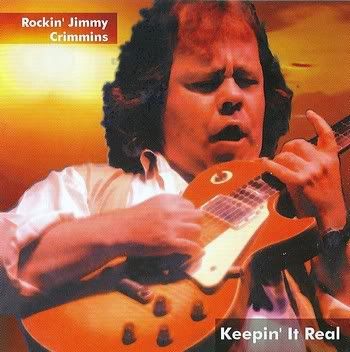
Rockin Jimmy Crimmins - Keepin It Real - 2003 - Bluzone

A wonderful, sophisticated soul/blues/jazz album from Jimmy Crimmins. This guy is an exceptional guitarist, and this is an exceptional album, HR by A.O.O.F.C. This guy could be the new Albert Collins, or Freddie King. An outstanding guitarist who can pen a mean tune, and his vocals are not half bad either. Backed by a basic, but talented three piece band on drums, bass, and keyboards, Jimmy creates some Grade A sounds. Buy this album. If talent like this is not promoted, and heard by more people worldwide, then it's a sad day for music. Watch out for other releases by this great guitarist.

TRACKS

1 Makin' Such a Fuss
2 Footsteps
3 Deep Blue Sea
4 Evil Mood
5 Educated Fool
6 In This World Without You
7 That Woman
8 Come Home
9 Baby Don't You Leave Me
1 0Mr. Friendly

All tracks composed by Jimmy Crimmins, except "Deep Blue Sea" by Crimmins, & Fischer

BAND

Jimmy Crimmins - Guitar, Vocals
Jim Denk - Bass
Tom Reynolds - Keyboards
Craig Panosh - Drums

PRESS QUOTES

"With all that exposure to great Artists, I'm still blown away by the way you've mastered your vocal & guitar skills. You reveal your soul unlike very few I have ever heard. You're truly Rockin!" -- Thom Fowle, Gibson Guitars, Nashville, Tn.

"Keepin It Real" smokes with easy confidence" -- Blues News, Las Vegas, NV.
"Jazzy Blues? Bluesy Jazz? Who cares??? This is 100% unadulterated cliche free rockin' tone fest" -- Steve, Two Guys Music, Rhode Island

"Blending in subtle elements of jazz to create a genuinely unique and enjoyable style of blues, Jimmy Crimmins plays tasty blues and blues-rock which is both moderately aggressive and soulful." -- Herm, Electric Blues Radio, Florida

“Jimmy Crimmins is both a powerhouse and passionate guitarist as well as a solid vocalist and songwriter. His nickname is a bit misleading, as while he certainly is a rockin guitarist, he is also substantially flavored with equal portions of blues and jazz, …sort of Robben Ford-ish with more guts and energy.” -- Tom Branson, Blues Rockers

“Jimmy Crimmins is a guitar-players guitar player.” -- Blues Freepress - England


“Rockin' Jimmy Crimmins shows on keepin' it real that as a guitarist he is phenomenal. He can run the gamut from Robert Jr. Lockwood to Albert Collins and beyond, makes this one for all guitar lovers in the house.” -- Norman Darwen - Blues in Britain magazine

“Jimmy Crimmins sure does have plenty of beefy guitar, turned up it gets better.” -- Blues Matters - Europe

“The Bluesman, Rockin' Jimmy Crimmins from Wisconsin, brilliantly plays guitar, he is a great guitar master.” -- Jazz News - Russia

“Rockin' Jimmy Crimmins is a monster player. There are plenty of good players out there, but few with as dazzling command of the instrument. It's gonna take a player with big chops to get close to what he's laying down. This is hot stuff.” -- Mark Gallo - Blues Bytes

“Keepin' It Real is the latest CD from guitarist Rockin' Jimmy Crimmins and it contains two instrumentals. Mr. Friendly is jazzy with guitar ranging from cool to intense in a matter of minutes, but Footsteps is a very impressive Rhythm & Blues workout by a master.” -- Pipe Line Magazine - London

“With a nickname Rockin' on the cover, opening up the CD cover and placing it on the machine, one is expecting to get pulsating Rockin' Blues... what a surprise! Crimmins displays succinct, fluid jazz-influenced phrasing on the guitar. True, the first cut, "Makin' such a fuss" is rock-based blues, but is tastily delivered. "Deep Blue Sea" reveals Crimmins' soulful vocals on this rendition with some hot, beefy guitar licks. Every cut is enjoyable and the original quality of all the songs is refreshing.”-- Dorothy Hill - Jazz Now

“Jimmy's playing style on this album evokes memories of Albert Collins at his coolest, mixed with a slightly jazzy tinged edge, laced throughout with more than a couple of shots' of Chicago blues. An, album well worth investigation.”-- Brian Harman, Blues in the South, England "

A powerful, energetic bright rock-blues CD precisely and tastefully performed by a really shinning elegant guitar player. Great...."-- La Hora Del Blues, Barcelona

REVIEWS

Because of the genuine emotion -- and real, pure, unadulterated guitar and tube-amp tones (no digital, simulated, imitation tones here) -- Wisconsin guitarist/vocalist Jimmy Crimmins chose to call his new CD, " Keepin' It Real ". Crimmins is one of those rare musicians with a technique so advanced that it evaporates in the heat of his self-expression. On this disc, which may represent some of his finest playing, Jimmy surrounds himself with the hottest musicians he could find and unleashes the guitaristic power that has made him a cult figure in music industry circles. Two instrumentals are featured, including "Mr. Friendly" and "Footsteps". So position yourself between two speakers and prepare yourself for some fat, all-natural and unprocessed guitar tones, hip songwriting and blistering guitar work! © 1996-2008 Guitar Nine Records

File under Blues-rock. This CD will be widely accepted by all lovers of blues guitar with rock overtones and there’s plenty of that to enjoy here. Little Jimmy Crimmins is a seasoned player with chops and substance with feeling for tradition. Backed by an excellent band Little Jimmy offers 10 of his original songs based on familiar song structures and licks made famous by the likes of Albert Collins (Mr.Friendly), Freddie King (That Woman), New Orleans stuff (Come Home), even some Santanaesque grooves (Evil Mood). “Footsteps” is a great instrumental, imagine Bugs Henderson playing uptempo with Booker T. & The MG’s ! A couple of heavy electric shuffles will have fans of the genre smiling (Makin’ Such A Fuss, In This World Without You, Educated Fool). His writing exposes man-woman relations, stuff we all face one way or another. “Keepin’ It Real” is a fine release that should bring Little Jimmy Crimmins wider exposure and I think he should try Europe as soon as possible, musicians like him would go down well there! © Vasja Ivanovski, © 2005 Ray M. Stiles & Blues On Stage

I haven't been this excited about a guitar player since I first heard Warren Haynes some 15 years ago. Jimmy Crimmins is a monster guitar player. He as a great feel for the music and isn't afraid to push the envelope. His solos are huge, swirling, festive, passionate, tasteful and joyful. He has a command of the guitar that comes along every decade or so if we are lucky. He sings with conviction and soul. This CD is a "must have" guitar album... If you are a guitar fan you must have this in your collection. Jimmy is joined on the CD by Tom Reynolds on Keyboards, Craig Panosh on Drums and Jim Denk on Bass. They are a great band and add much to the overall sound. My favorite tunes are, "Making Such A Fuss" which opens with some of the most joyous guitar playing I have heard. "Deep Blue Sea" is a classic slow blues which showcases Jimmy's perfect phrasing and sensuous licks, fat with an edge. "Educated Fool" is a wonderful shuffle and Jimmy scorches this one with his blow torch guitar...the man can play. "That Woman" kills me every time I listen to it. I wish I had written this song!! I wish I could play guitar like this! "Come Home" is a rhumba in the vein of Albert Kings "Crosscut Saw". Some very tasty understated guitar on this one. The whole CD is just top of the line blues, with guitar playing that can be as tender as a grandmothers hug or as hot as a back alley love affair.. Jimmy Crimmins should be a household name, and I'm sure he soon will be. © Johnny Mannion, © www.johnnymannion.com/Reviews.html

Rockin' Jimmy Crimmins may be one of the most exceptional, soulful blues/jazz guitarists on the scene today. Other guitarists are amazed with his technique. Blues fans are are floored by his emotional, confident playing. Jazz cats dig his harmonically sophisticated phrasing and mature song writing. Everyone else just listens and feels their soul lifted by an honest musician with something to say. © www.rockinjimmy.com

SHORT BIO

Rockin' Jimmy Crimmins -- one of the most exceptional jazz/blues guitarists on the scene today -- was born in Madison, Wis. He started on the instrument early, making his first live appearance at the age of 13. While attending high school and gigging on the weekend, Jimmy became obsessed with learning from the masters. He wore out every B.B. King, Freddy King and Paul Butterfield album he could get his hands on. After graduation, Jimmy hit the road with the area's most popular blues bands, performing five to six nights a week. Then, one winter's evening in the early '70s, Jimmy's world really turned when he was introduced to George Benson at a Madison coffee house. Already very much into Wes Montgomery and Herb Ellis, that meeting took Jimmy to the next plateau. Later, at a gig in Milwaukee, Jimmy heard that George Pritchett, guitarist with the Buddy Rich band, was teaching at a music store in town. He studied with the dexterous jazz master briefly, while attending the Milwaukee Conservatory of Music. While learning all he could about Pritchett's effortless command of the fretboard, Jimmy unlocked the secret behind the way masters practice the instrument. This simple secret became the catalyst for Jimmy's first guitar instructional manual -- ROCKIN' JIMMY'S DAILY GUITAR WORKOUT. In a quest for more knowledge of the instrument and the music business, Jimmy moved to West Hollywood, Cal., where he landed a position with the world's largest music retailer, Guitar Center Hollywood. There he would learn from the best, see and hear the best and get to play with the best. For 14 years, he hung out with, gigged with and got to understand the inner workings of the hottest musicians on the planet. Jimmy's emotive style landed him on stage with major players -- including the Blues Brothers -- and Jim played the last performance with the duo from Saturday Night Live before frontman John Belushi's death. The last two years Jimmy’s gigged over 300 shows from Buddy Guy’s Legends to Luther’s Blues, the Jazz Company Disney World and also blues club of the year Blues on Grand. Today, Jim is back in his home state of Wisconsin where he continues his love affair with the instrument. From his home base in Green Bay, he teaches, records and embarks on tours to the delight of thousands who groove on his sophisticated blues sound infused with soul. A life spent mastering an instrument and a soul full of blues combine to make Jimmy a must-see live and a must-hear on compact digital disc. In a world of make-believe, Rockin' Jimmy is truly KEEPIN' IT REAL. © www.rockinjimmy.com/index.htm

7.4.09

Jay Gordon


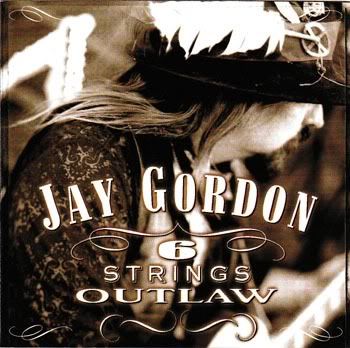
Jay Gordon - 6 Strings Outlaw - 2004 - Dixiefrog

rockontour.com wrote about Gordon’s performance at the 2004 Crossroads Guitar Festival in Dallas, Texas, where he played alongside Eric Clapton, B.B. King, Jeff Beck and Carlos Santana: "On Day #2 of the Crossroads Guitar Festival, Jay Gordon ignited the day with an opening performance at 10 a.m. Those who were ready to rock were treated to an awesome show! As soon as Jay and his band mates began with "Big Boss Man," the stage was set for rockin.’ Their interpretations of these blues standard coaxed more festival goers to the Ernie Ball Stage. Attired in black leather and suede, Jay and his Fender Strat created metallic blues. Their third song, "Blacktop Alley," is an original work off Gordon's "Electric Xydeco" album with awesome guitar highlights. His first album, "Blues Infested", produced the fourth and sixth songs for the concert. By the time Gordon belted out "Can't Shake This Feeling," the audience wasn't leaving. Another original from Gordon's "6 Strings Outlaw" album, "Fire and Brimstone Boogie" lived up to its title's reputation. It was unique and exhilarating at the same time! All the while, (bassist) riffs and double bass drum thunder support. This is definitely a power trio!!! The audience felt as if they were at an outdoor evening fiery blues concert and here it was not even noontime yet. Gordon literally slid into his fourth original of the performance with "Voodoo Boogie," using slide guitar with glistening leads. The band next covered "Stranger Blues," which they rejuvenated. Their last song was the best rendition of "Mustang Sally" I've heard in a long time! Jay's vocals are vibrant and intense."

“(Gordon is) an amazing musician. Jay must be L.A.’s best-kept musical secret." writes Neil Flowers from Valley Scene Magazine, who saw the fiery guitarist perform live recently. “Buddy Guy. Clapton. BB King. Hendrix. Townsend. Stevie Ray Vaughn. Guitar gods every one. Now maybe you won't believe what you are about to read because this report comes from a tiny bar in Burbank and concerns a musician you almost certainly have never heard of, “ continues Flowers. “But here's the truth flat out straight as I can put it: Add Mr. Gordon's name to the six that begin the previous paragraph. And I declare by Willie McTell, Elmore James, and everything holy that this ain't hype.”

According to amazon.com, "Jay Gordon, the no-mercy guitar player, is back with his howlin' and moanin' blues! ", and that just about sums up this relentless, steam driven, Stevie Ray Vaughan inspired blues rock album. Check out the seventeen minute version of "The Sky Is Crying". Dynamic stuff! Buy Jay's great "Broadcasting The Blues" album, and promote this guy. The Jay Gordon & the Penetrators "Gold Rings, Silver Bullets" is another great hard rockin' blues album

TRACKS

Fire & Brimstone Boogie
Let It Ring
The Original Sin
Freight Train
Lost in Time
Pain Jay Gordon
Juke Joint
Propaganda
Stretchneck Lill
47 Beers
The Sky Is Crying

All songs composed by Jay Gordon, except "The Sky Is Crying" by Elmore James, Clarence Lewis, M. Levy

MUSICIANS

Jay Gordon (vocals, guitar, slide guitar, harmonica)
Russ Greene (bass instrument)
John Schayer (bass guitar)
DJ Johnny Walker, Lee Davis, Butch Black (drums)

SHORT BIO

Electric blues guitarist Jay Gordon recorded a series of albums for Blue Ace that inspired comparisons to such legendary guitarists as Jimi Hendrix and Stevie Ray Vaughan. Beginning with Blues Infested (1994), Gordon won much praise from the blues community. Each successive album became increasingly successful -- Broadcasting the Blues Live (1996), Electric Redemption (1998), and so on -- and the guitarist soon found himself being compared to some of the most legendary guitarists to ever play electric blues. In 2000, Gordon collaborated with Phillip Walker on the Jaywalkin album for Blue Ace, yet another accomplishment for the celebrated guitarist. Furthermore, in addition to his guitar playing, Gordon also produces and sings on many of his own recordings. © Jason Birchmeier, All Music Guide

Cuong Vu


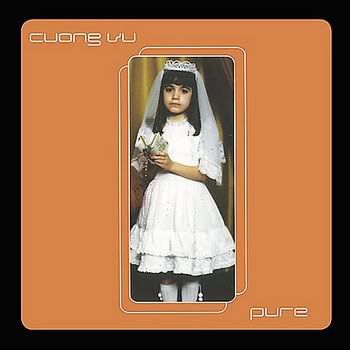
Cuong Vu - Pure - 2000 - Knitting Factory Records

This jazz trio album, lead by trumpeter Vu, uses virtuosity, imagination and live electronic manipulations to make a thunderous and wonderful little album of what might be called "free jazz." © Keving O'Toole, wwuh.org

An excellent jazztronica album from the free jazz trumpeter Cuong Vu. Experimental, original, and accessible. You will really get into the great rhythms here. Really innovative basswork from Stomu Takeishi make this an album well worth listening to. Listen to Cuong Vu's "It's Mostly Residual" album. Give this music a chance. Don't be put off by the terms "avant garde" or "free jazz". Albums like these are full of musical merit, and need to be listened to carefully. They will pay dividends to the genuine modern jazz music lovers, or any music lover.

TRACKS

1 Faith
2 Vina, All Grown Up
3 Pitter-patter
4 Child-like
5 I Shall Never Come Back
6 Pure

All tracks composed by Cuong Vu, except "Pure" by John Hollenbeck, Stomu Takeishi, Cuong Vu

MUSICIANS

Stomu Takeishi - bass instrument
Cuong Vu - trumpet
John Hollenbeck - drums

REVIEWS

Trumpeter Cuong Vu, with the release of his third leader session, has to be counted as one of the major jazz instrumentalists working in the spirit of the best fusion. On Come Play With Me, Vu's raw, breathy tone is shrouded in refracting, misty clouds of echo, delay and feedback, all of which serve to intensify the instrument's essential brassy qualities. The result is something both hard-boiled and dream-like. © Joe Milazzo, onefinalnote.com

It’s pure art. Cuong Vu has dug so deep into himself that the ineluctable ghost of Miles Davis just isn’t an issue, even in an electronically oriented arena like Pure’s, where you’d think that, between 1968 and 1975, Miles did everything that could be done. Drummer John Hollenbeck slugs the toms a lot, plays sparely and with a wide range of volume, uses subtle repetition in a way that you wouldn’t have called a groove till you found yourself stomping your foot on the floor. Bassist Stomu Takeishi, who plucks so busily way up the neck when he’s with Erik Friedlander, completely reinvents himself with Vu, squeezing his mud way down between the beats; mutant loops of his riffs are also used here and there as thematic material. Vu himself is determined to play nothing that’s meaningless. He drones essential planes of sustain, sketches slow minisongs of improvisation one after the other, finds brand-new tonal regions of his horn, sometimes sounding like he’s stuffed his cheeks with popcorn just for the effect it’ll produce. And whoever oversaw the electronic touches (Vu? co-producer Laurent Brondel?) cut them in with diamond precision, using them as accents rather than as ends in themselves. All are terrific. But at least once, take the full 18 minutes and pay strict attention to “I Shall Never Come Back.” It starts with sparse echoes in an empty room, follows with some truly scary monster-bass effects, cuts loose the drums for an episode of soulless brutality, then ushers in a trumpet passage that reveals everything about anguish and despair in flat, naked beauty before introducing a beat and an echoing finale that can’t represent anything but a man staggering self-pitilessly toward his death. It will shake you. © Greg Burk, LA Weekly

With Pure, Cuong Vu seems to have created the jazz version of a rock music power trio. Just imagine his trumpet as the guitar hero-style lead instrument on this session, meshed with Stomu Takeishi's very obviously electric bass and John Hollenbeck's inventive drumming. That done you can easily think of the three as a very sophisticated version of Rush, Triumph or Z.Z. Top. More seriously, the reason this CD is so impressive is despite -- or perhaps because of -- their power, the trio members are versatile enough to adapt many different musical forms to their own ends. Take the 17 and 1/2 minute "I Shall Never Come Back," for example. It gradually evolves from a spacey, electronics-tinged trumpet tone exploration to an out-and-out rocker, complete with auditorium shaking drumbeats and Brontosaurus tooth chomping bass rhythm. © Ken Waxman, Jazz Weekly

Cuong Vu and his associates are creating a world of their own, presenting very long pieces based on the threesome of drums, bass, and trumpet. And if their jazz is of the experimental kind, it remains -- but for the rare noisy digressions -- very melodic. One will not find a classic type of jazz drumming here, since the drums are used as an instrument capable of making tunes. Stomu Takeishi plays the bass in a post-rockish style. Vu does not blow his trumpet like a crazy jazzman; well, he occasionally does, and at those times, it feels good. On the contrary, Vu takes his time for each note, letting it sound in a way that brings out all the trumpet's sonorousness. Sometimes, listeners may even wonder whether it is a trumpet or not, particularly when it gives the impression of a guitar solo. Most of the compositions follow the pattern of being calm at the beginning, creating tension, reaching a climax, and returning to normal. The pieces range from eight to 18 minutes in length and -- despite the tensions in them -- after hearing Pure, one thinks of the album's cooler aspects. © Romain Guillou, All Music Guide

BIO

Trumpeter Cuong Vu has gained increasing recognition as a great young talent through his live appearances and session work with some of today's top avant-garde jazz musicians, his membership in the Pat Metheny Group, and his leadership of a jazztronica trio also featuring bassist Stomu Takeishi along with some of the most exciting drummers on the cutting-edge jazz scene. Born into a musical family in Vietnam (his mother was a Vietnamese pop singer and his father was a multi-instrumentalist), Vu and his mother moved to the U.S. and settled in Seattle, WA, when he was six years old. He became enamored with the saxophone, one of his father's instruments, and finally asked his mother for a trumpet when he was 11. Vu was later awarded a scholarship at the New England Conservatory of Music, where he studied under Joe Maneri, who had a big influence on Vu. While studying in Boston, he was also positively affected by local improvised music act the Fringe. After graduating with a B.A. in jazz studies, Vu moved to New York and settled into the city's so-called downtown scene during the 1990s, performing with the likes of Dave Douglas, Bobby Previte, Chris Speed, Andy Laster, Jamie Saft, and Gerry Hemingway. Vu was also a member of drummer George Schuller's Orange Then Blue big band and Jeff Song's Lowbrow. In addition to these projects, Vu led his own groups, including Scratcher and Vu-Tet. March 2000 brought the release of his album Bound (featuring percussionist Jim Black, keyboardist Saft, and bassist Takeishi) on the Brooklyn-based OmniTone label. The same fall, Pure was released on the Knitting Factory label; the CD featured the trio of Vu, Takeishi, and drummer John Hollenbeck. A year later, the trio released a second Knitting Factory CD, Come Play with Me. One might have expected the subsequent demise of the Knitting Factory label to diminish Vu's profile somewhat, but instead the trumpeter found himself performing and recording for his largest audience yet after being tapped by jazz star Pat Metheny to join the guitarist's band. Vu toured extensively with the Pat Metheny Group and appeared on Metheny's CDs Speaking of Now (a 2002 Grammy winner for Best Contemporary Jazz Album) and Way Up (2005). During the early 2000s Vu also joined pianist Myra Melford's quintet The Tent. In 2005 Vu released It's Mostly Residual, his fourth CD as a leader, on the Japanese Intoxicate label. The CD again featured Vu and Takeishi, this time with a new drummer, Ted Poor, who propelled the band forward in the spirit of Vu's previous exemplary percussionists Black and Hollenbeck. And none other than Bill Frisell is featured as a guest star throughout the CD, proving that Pat Metheny is not the only high-profile jazz guitarist who finds musical common ground with one of the most innovative trumpeters on the modern creative jazz scene. [It's Mostly Residual can be purchased directly through Cuong Vu's website at www.cuongvu.com.] © Joslyn Layne & Dave Lynch, All Music Guide

6.4.09

Bruce Conte


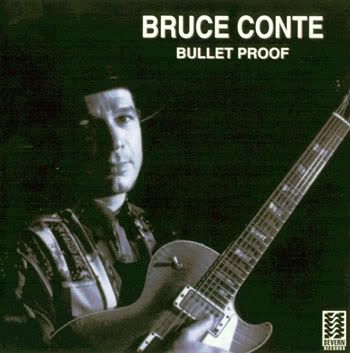
Bruce Conte - Bullet Proof - 2002 - Severn

"I think Bruce Conte is one of the best guitarist in the business. (Bullet Proof) fits the currebt Blues style while retaining the Funk and R&B sound Bruce if famous for. I enjoy his new CD immensely." Steve Perry, Journey

Bullet Proof is the first solo release from former Tower of Power guitarist Bruce Conte. These 12 tracks combine smooth blues, jazz, and soul featuring other T.O.P. alumni Lenny Williams, Windy Barnes, and former member of Rufus Gavin Christopher. Former vocalist for T.O.P. Bobby Kimball provides vocals on "Chasin' the Blues." Fans of radio-friendly soul-blues will enjoy this 2002 release on the Severn label. © Al Campbell, allmusic.com

A really cool jazz/soul/blues/funk album from the ex-TOP guitarist, Bruce Conte. It may be a bit on the "commercial" side, but it's not an ordinary "run of the mill" commercial venture. This is an exceptional album, with some brilliant playing from Bruce. His backing players/vocalists are faultless. Track 9, "Bulletproof" was co-written with members of the Robert Cray Band, and if you like Robert Cray's smooth soul blues style, then "Bullet Proof" should appeal to you. This album is HR by A.O.O.F.C. Listen to his "Right from My Heart" album, and check out Tower Of Power's great "Back To Oakland" album which can be found @ TOP/B2OAKL The band's "Urban Renewal" album is also worth a listen. There is also info on T.O.P's "In The Slot" album @ TOP/ITS Check out the TOP albums, "Live And In Living Color" @ TOP/LAILC "The Very Best Of Tower Of Power The Warner Years" @ TOP/TVBOTOP/TWY and their "Ain't Nothin' Stoppin' Us Now" album@ TOP/ANSUN All the aforementioned albums feature the huge talent of Bruce Conte. N.B: This album was first released in 2000 on Papa Records, entitled "Rhythm Meets the Blues".

TRACKS / COMPOSERS

1 Too Much Cool - Conte, Head
2 Nowhere to Go - Caddick, Johnson
3 I Met a Girl - Reddick
4 Chasin' the Blues - Head
5 Mojo Mambo - Woods
6 Just Won't Act Right - Ellison, Schwartz, Scott
7 Too Sad to Sing the Blues - Kerley, Scarlett
8 It's Always Darkest Before the Dawn - Conte
9 Bullet Proof - Cousins, Hayes, Polcino, Scott
10 Feel So Bad - Willis
11 There's Room at the Top - Papazian
12 Snatch It Back and Hold It - Guy, Wells

MUSICIANS

Bruce Conte - guitar
Hanz Zermuehlen - keyboards
Michael Acosta - saxophone
Ellis Hall, Windy Barnes, Tim Scott, Ed Riddick, Gavin Christopher, Bobby Kimball, Lenny Williams - vocals

REVIEWS

Bruce Conte's name should be recognized well outside the blues idiom, coming from a tenure of seven years and eight recordings with Tower Of Power, but there's little question that his efforts work seamlessly with a blues-roux as the main ingredient. Originally worked up in 2000, this previously unreleased, self-produced offering has everything necessary to garner a wide audience. "Too Much Cool" leads off with a funky groove and the rasping vocals of Gavin Christopher (formerly of Rufus) while Conte steps up with some solid blues chops on guitar, and Ellis Hall exercises his gripping voice for "Nowhere To Go," with a back-and-forth feel that settles into an R&B workout. "I Met A Girl" features Ed Reddick at the microphone on a stop-time blues with fine horn charts and more excellent guitar from Conte's battered Les Paul, and Bobby Kimball (Toto) puts out some hefty singing on "Chasin' The Blues," which also features Andre Roberson's simmering sax work. Christopher has the spotlight on the New Orleans-flavored "Mojo Mambo" and "Just Won't Act Right," a sizzling shuffle, shows Tim Scott to be a potent singer, while Windy Barnes opens the furnace door for "Too Sad To Sing The Blues," her vocals a standout. Conte takes his first of two spots singing on the slow and gripping original, "It's Always Darkest Before The Dawn," and there's little doubt his voice has the ability to be as spellbinding as his guitar, while Lenny Williams, former Tower Of Power bandmate, takes the point for the title track offering striking, soulful vocals. The Chuck Willis gem, "Feel So Bad," finds Conte behind the microphone once again, and makes one wonder why his voice only shows up twice, he's simply that good. There's a definite Tower Of Power feel on "There's Room At The Top" with Gavin Christopher handling the lead spot for his third track, and closing out with Junior Wells' classic, "Snatch It Back And Hold It," nearly vocal-less, gives Conte more room to stretch out. Tower Of Power was one of the more impressive bands from a number of years ago to make the charts while using blues for its foundation, and Bruce Conte's work then was no more stellar than here, on "Bullet Proof." His guitar abilities seem endless, yet there's no grandstanding, and as a producer, he has managed to bring the absolute best out of the wide and varied cast on this CD. Carrying a band of at least a dozen people, to handle the excellent variety on this offering, probably won't happen on the festival or spotlight club circuit, but with Conte's soul-drenched pipes, he could strip back the fat and still be a showstopper with half that number. © Craig Ruskey, April 2002, © Blues On Stage (www.mnblues.com) CD Review

Severn Records is pleased to release Bullet Proof, the self-produced, previously unreleased work from former Tower of Power guitarist Bruce Conte. Originally pressed in 2000 under the name Rhythm Meets the Blues, this is the debut Blues recording for the veteran guitar player. After a stint in Las Vegas in the 80's and a brief retreat into Jazz the following decade, Bruce Conte is back on familiar ground, flexing his soul and funk-drenched skills on Bullet Proof. His playing is polished and refined, devoid of the wearing, over the top histrionics often found in today's guitar-driven recordings, and the material he's chosen for Bullet Proof is the perfect showcase for Conte's tasteful fretwork. "Snatch It Back" is a prime example of Conte's understated yet effective approach, adding a cool sense of "hip" to the popular standard. Further evidence can be heard on "I Feel So Bad" and the self penned "It's Always Darkest Before The Dawn," both of which feature Bruce behind the microphone. A veritable who's who of L.A. musicians join Conte, including several guest vocalists. Former TOP band mate Lenny Williams turns in a chilling performance on the title track; a Memphis gem with its sultry melody and Williams' soulful interpretation. Powerhouse songbird Windy Barnes turns up the heat on "Too Sad To Sing the Blues," a number sure to win over the most critical blues fan, and Ed Reddick delights listeners with the playful "I Met A Girl". Gavin Christopher, better known for his days leading Rufus, sings three numbers here beginning with "Too Much Cool," a sophisticated funk number co-written by Conte. Christopher also delivers top notch performances on both the New Orleans flavored "Mojo Mamma" where saxophonist Michael Acosta steps into the spotlight for a winning performance, and "There's Room At the Top," a super-charged number steeped in the Tower Of Power tradition. Bruce recruited additional TOP alumni for the project including Bobby Kimball, the Grammy Award winning vocalist from Toto, who lends his talents to the impassioned "Chasin' The Blues". Bassist singer, songwriter Tim Scott adds another original to the track list with his "Just Won't Act Right" and Ellis Hall, whose impressive resume includes several motion picture soundtracks plus keyboard work on Kenny G's Duotones, takes lead on "Nowhere to Go". Rounding things out is a tight ensemble cast led by keyboardist and engineer Hans Zermuelhen. In al, Bruce Conte and friends dish up an exciting and original recording that is sure to please. [Press Release 2002, Severn Records ] www.jazzinternet.com/bluenotes/conte.htm

BRUCE CONTE AUTOBIO

I started playing professionally at 13 years old. When I was 16, I had a #1 hit record in my Hometown with a band called Road Runner. In the old days, DJ’s would play your record for a little money. My Cousin, Victor Conte and I started a band called Common Ground and played in the local Club scene where we developed our R&B and Jazz styles from 1967 – 1969 . In 1970 I moved to the San Francisco Bay Area to join a local band called Loading Zone along with member Tom Coster (from Santana), Linda Tillary, Tony Smith and Doug Rauch. We had three albums out and played The Fillmore and we opened up for Tower of Power. We also shared a rehearsal hall with them and a bond began to form. I started to co-write songs with Emilo and Doc of Tower of Power and in September of 1972, they hired Lenny Pickett and I from the Loading Zone. I started with Tower of Power and played on 8 Albums. It was one of my life’s greatest musical experiences. In 1979, Victor Conte and I started a band called Jump Street featuring Gavin Christopher. We were Managed by Herbie Hancock’s Manager David Robinson. Our record deal ultimately fell through. Since it didn’t materialize, the band broke up in 1981. I then joined forces with legendary singer Lydia Pense of the group Cold Blood. I was involved with Lydia for 24 months, and then in 1983 I started a small quintet and worked the Bay Area club scene in a band called Hot Street. In 1984, I got a house gig at a Bay Area night club called Frenchy’s and had a slick R&B show band called Power Play. We recorded two albums, in which I co-wrote songs and played guitar, that were never released. We then started working 9 months per year for Hilton Hotels in Reno and Las Vegas. Within a two-year period, the group got burned out. In 1986 I was getting jobs in Casino’s and the money was good, the work consistent so it was hard to leave that circuit. I worked a house gig at the Peppermill in Reno, Nevada for one year with Detroit based singer Tommy Bell. In 1987 I joined a group called Sante Fe with band leader Jerry Lopez (who is currently working with Ricky Martin) and moved to Las Vegas. In 1988, I sold my home in San Francisco and moved to Los Angeles. I started playing with local drummer, Sal Rodriguez, currently with the group War and also Bobby Espinosa, current leader with the group El Chicano. I have spent 10 years, made one album entitled Painting the Moment with El Chicano in which I co-wrote and played guitar. In 1999 I was featured on a Rhino Records release entitled Anthology by Tower of Power. I have recorded three solo albums: 'Right From My Heart' (Jazz) in October of 1997, "Rumor Has It" (Jazz) released in the fall of 1999 and "Rhythm Meets The Blues." (Blues) which was released late in the year of 2000. I recorded and co-wrote with Rick Braun on his album Full Stride, a song entitled Moonshot, which is being played on Smooth Jazz Stations through out the United Sates. I also recorded with Rocco Prestia for Rocco's solo CD, Everybody on the Bus. www.BruceConte.com was most recently launched the Summer of 2001. I have played music for the last 37 years and am looking forward to many more years to come. Summer 2001 signed a recording contract with an East Coast Blues label. © www.smooth-jazz.de/Artists4/Conte_Bruce.htm

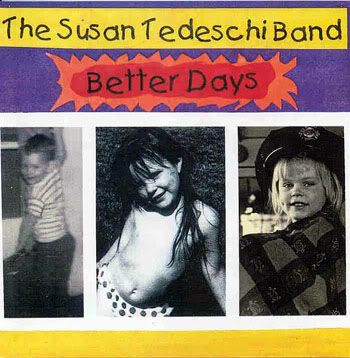
The Susan Tedeschi Band


The Susan Tedeschi Band - Better Days - 1995 - OarFin

"Better Days", Susan Tedeschi's debut album was made on a shoestring budget. The album was released in December, 1995 on OarFin Records, received much critical acclaim, and paved the way for a successful career for this talented Blueslady who is influenced by artists like Bonnie Raitt, and Janis Joplin. Five of the tracks on "Better Days" were either written or co-written by Susan, and the album also includes good covers of Grainger, & Robbins "Ain't Nobody's Business", Elmore James, & Morgan Robinson's "It Hurts Me Too" and Lieber/Stoller's classic, "Hound Dog". "Better Days" is a great blues album, and as her songwriting and guitar technique improved, so did her later albums. Buy Susan's brilliant 1998 "Just Won't Burn" album which was released in February 1998 to rave reviews. For similar music in this genre, check out Sue Foley's "Big City Blues" album, and Joanna Connor's "Living on the Road" album. There is info on Joanna's album at JOACON/LOTR

TRACKS / COMPOSERS

It's up to You - Susan Tedeschi, Jim Lamond
Gonna Write Him a Letter - Susan Tedeschi
Love Never Treats Me Right - Susan Tedeschi
It Hurts Me Too - Elmore James, Morgan Robinson
Locomotive - Susan Tedeschi
You're on My Hair [Instrumental] - Susan Tedeschi
Better Days - Adrienne Hayes
Hound Dog - Jerry Leiber, Mike Stoller
I Don't Want Nobody - Robey
Ain't Nobody's Business - Porter Grainger, Everett Robbins

MUSICIANS

Susan Tedeschi - (Guitar), (Guitar (Rhythm)), (Vocals)
Adrienne Hayes - (Guitar), (Guitar (Rhythm)), (Slide Guitar)
Jim Lamond - (Bass)
Mike Mike Aiello - (Drums)
Annie Raines - (Harmonica)

N.B: Album is also available with four bonus tracks, "Kansas City", "Crossroads", "Crazy", and "Rock And Roll".

REVIEWS

The Boston favorite's 1995 debut clearly highlights her greatest strength: her voice. Susan Tedeschi has been singing since she was 4 years old, and it shows; her voice has the power and control that comes from long experience. If her version of "Hound Dog" doesn't blow the top off of Big Mama Thornton's original, it's still a strong effort, and she's just as good with her own material. The title track--penned by Adrienne Hayes, guitarist for Tedeschi's band--is especially good, as the slow tempo allows Tedeschi to stretch her pipes a bit. Unfortunately, even by the release of Just Won't Burn, Tedeschi's guitar hadn't caught up with her voice, and the discrepancy is even more obvious here--there's a spark, but it doesn't quite catch fire. Still, there's no question that her heart's in the right place, and if her guitar work continues to improve, there'll be no stopping her. © Genevieve Williams, © amazon.com

Originally released in 1995, Better Days was re-released after the success of Just Won't Burn created a legion of blues fans wanting more of Susan Tedeschi. This record finds Tedeschi's guitar prowess and eminent vocals proliferating the musical landscape in the same manner of blues legends who have gone before her. The tracks "It Hurts Me Too" and "Ain't Nobody's Business" are classic slow, bluesy songs complete with emotional vocal wailings that are sure to bring the house down when performed in a live arena. She picks up the pace with "Locomotive" and "I Don't Want Nobody," showing off her six-string skills. While there is no question that Tedeschi is a true talent and a blues force to be reckoned with, the musical arrangements could be improved by using a less-formulaic blues structure and attempting to offer something more contemporary. She has proven herself worthy of sharing the stage with the masters; her next challenge should be to break away and create her own sound. © Erik Crawford, All Music Guide

BIO (Wikipedia)

Susan Tedeschi (November 9, 1970 in Boston, Massachusetts) is an American blues and soul artist. Susan Tedeschi grew up in Norwell, Massachusetts and attended the Berklee College of Music where she received her bachelor of music in composition and performance. Tedeschi had always been musically inclined, performing in musicals, singing for family members, and listening to her father's record collection. She formed a band in high school called the Smoking Section at age 15, sang in a Gospel choir at Berklee and performing show tunes on the Spirit of Boston and began sitting in with local blues jams at venues in Boston. She formed the Susan Tedeschi Band in 1994, featuring Tom Hambridge and Adrienne Hayes. In 1995 she began playing guitar and honed her skills and in December the band released Better Days to regional audiences. Record contracts were difficult to keep together; however, recording sessions from 1997 were acquired by Richard Rosenblatt, and the band was signed to Tone-Cool Records and Just Won't Burn was released in February 1998 to rave reviews from blues publications. For 1998 and 1999 Susan Tedeschi toured extensively throughout the United States and her spectacular stage presence and powerful voice drew larger crowds. Eventually Tedeschi was opening for John Mellencamp, B.B. King, Buddy Guy, The Allman Brothers Band, Taj Mahal and Bob Dylan. In 2000, Just Won't Burn reached Gold record status for sales of 500,000 in the United States, rare for a blues production. She recorded two tracks with Double Trouble band members Chris Layton and Tommy Shannon for their album. Susan Tedeschi's voice has been described as a blend of Bonnie Raitt and Janis Joplin, though she explains this is due to sharing the same influences as the two. Her guitar playing is influenced by Buddy Guy, Johnny "Guitar" Watson, Stevie Ray Vaughan, Freddie King and Doyle Bramhall II. In 2001, she married former child prodigy and Allman Brothers Band guitarist Derek Trucks, who also leads his own Derek Trucks Band, and is nephew of founding Allmans drummer Butch Trucks. Tedeschi and Trucks met when she was the opening act on the Allman Brothers Band's 1999 Summer Tour. They have two children, Charlie and Sophia, and reside in Jacksonville, FL. In 2007, Tedeschi and Trucks went on tour together under the name Soul Stew Revival. She is the granddaughter of Nick Tedeschi and great-granddaughter of Angelo Tedeschi, both supermarket magnates who were well known in Massachusetts.


MORE ABOUT SUSAN TEDESCHI

Guitarist, singer and songwriter Susan Tedeschi is part of the new generation of blues musicians looking for ways to keep the form exciting, vital and evolving. Tedeschi's live shows are by no means straight-ahead urban blues. Instead, she freely mixes classic R&B, blues and her own gospel and blues-flavored original songs into her sets. She's a young, sexy, sassy blues belter with musical sensibilities that belie her years. Tedeschi began singing when she was four and was active in local choir and theater in Norwell, a southern suburb of Boston. She began singing at 13 with local bands and continued her music studies at Berklee, honing her guitar skills and also joining the Reverence Gospel Ensemble. She started the first incarnation of her blues band upon graduating in 1991, with vocalist/guitarist Adrienne Hayes, a fellow blues enthusiast whom she met at the House of Blues in Cambridge, Massachusetts. Bonnie Raitt, Janis Joplin and Boston-area singer Toni Lynn Washington were Tedeschi's most important influences; in starting her band, in fact, she used Washington's backing band and hustled up gigs on nights when Washington and her band were not already booked. Since they began performing around Boston's fertile blues scene, Tedeschi and her band developed into a tightly knit, road-ready group, and have played several major blues festivals. Guitarist Sean Costello has since replaced original guitarist and co-vocalist Hayes, who left the group to pursue her own musical interests. The Susan Tedeschi Band's first album, Just Won't Burn, was released on the Boston-based Tone-Cool Records in early 1998. The band for her debut on Tone-Cool includes guitarist Costello, bassist Jim Lamond and drummer Tom Hambridge; guitarist Hayes also contributes. Just Won't Burn is a powerful collection of originals, plus a sparkling cover of John Prine's "Angel From Montgomery." Tedeschi and band also do justice to a tune Ruth Brown popularized, "Mama, He Treats Your Daughter Mean," and Junior Wells' "Little By Little." The appropriately titled Wait for Me appeared in 2002 and was followed two years later by the CD and DVD Live From Austin TX. Hope and Desire from 2005 found Tedeschi on the Verve label. © Richard Skelly, All Music Guide

5.4.09

Everything But The Girl


Everything But The Girl - Acoustic - 1992 - Atlantic

Here is a stunning acoustic collection of sophisticated jazz pop-tronica by Ben Watt and Tracey Thorn. EBTG had their first indie hit with a samba version of Porter’s “Night And Day” and two years later hit the Top 40 with “Each And Every One,” from their great debut album, Eden. They simplified their sound with 1988’s Idlewild and had a big hit with “I Don’t Want To Talk About It.” In 1994, they became more electronica orientated when they joined the hugely popular electronic, trip-hop outfit, Massive Attack, on the hit single “Protection” featuring Tracey Thorn’s vocals. In 1994, EBTG developed a more sensuous club sound, reminiscent of Sade, with their album Amplified Heart. Their albums, 1996’s Walking Wounded and 1999’s Temperamental, established them as a serious force in the jazz pop genre. Much of EBTG's music is associated with clubbers, but even if you're not into music of that genre, you should find something to enjoy in this album, as it is also a brilliant album for serious music fans, and is VHR by A.O.O.F.C. You will not be disappointed by this acoustic jazz pop album. As well as their own compositions, Ben and Tracey cover songs by Springsteen, Cyndi Lauper, Elvis Costello, and Tom Waits. Check out their "Walking Wounded" album, and buy Tracey Thorn’s great 2007 solo album, "Out of the Woods." For similar music in this vein, it is worthwhile listening to the "Matt's Mood" album by Matt Bianco, and Sade's great "Diamond Life" album.

TRACKS / COMPOSERS

1 Love Is Strange - Smith, Baker
2 Tougher Than The Rest - Springsteen
3 Time After Time - Lauper, Hyman
4 Alison - Costello
5 Downtown Train - Waits
6 Driving - Watt
7 One Place - Thorn
8 Apron Strings (Live) - Watt/Thorn [Recorded Live In Minneapolis / St. Paul]
9 Me And Bobby D - Watt/Thorn
10 Come On Home - Watt/Thorn
11 Fascination (Live) - Thorn [Recorded Live In Manchester]

All tracks recorded at Livingston, London, except where stated

MUSICIANS

Ben Watt - Guitar [Guitars], Piano, Vocals
Tracey Thorn - Vocals

ADDITIONAL MUSICIANS

Steve Pearce - Bass Guitar, Track 1
Damon Butcher - Additional Keyboards, Track 5
Martin Ditcham - Percussion, Tracks 7, & 9
Dick Oatts - Soprano Saxophone, Track 11

BIO (Wikipedia)

Everything but the Girl (EBTG) is a two-person English band formed in Hull in 1982. The band's members are lead singer and sometime-guitarist Tracey Thorn (born September 26, 1962), and guitarist, keyboardist & vocalist Ben Watt (born December 6, 1962). Watt and Thorn are also a couple; they are intensely private about their relationship and personal life. It was not a publicized fact for some time that they were a couple, or that they had subsequently married. The duo have a strong desire to raise their three children outside of the spotlight. When Thorn and Watt met, their paths were very similar; they were both attending the University of Hull, and both had signed to independent record label Cherry Red Records as solo artists. Thorn was also a member of the trio Marine Girls, and Watt contributed a photograph to the cover of their first album, Lazy Ways. The pair each had solo album releases through Cherry Red Records: Thorn’s 1982 L.P. was A Distant Shore, an eight-track mini-album. Watt’s L.P. was entitled North Marine Drive. They formed a duo and took their unusual name "Everything but the Girl" from the slogan of well-known Hull shop Turner's furniture on Beverley Road. EBTG's debut single, a cover version of Cole Porter's "Night and Day", was released in June 1982. Following steady sales and exposure from the Pillows & Prayers compilation album, the single was re-issued in August 1983. Their first album was released in 1984 in the UK as Eden. 1984 also saw the UK release of singles "Mine", and "Native Land". Their first UK hit single, "Each and Every One", had a jazzy sound, and EBTG was considered part of the jazz/pop movement known as sophisti-pop that included other British acts like Sade, Matt Bianco, and The Style Council, on whose CafĂ© Bleu album they guested. EBTG and Sade both worked with producer Robin Millar and engineers Ben Rogan and Mike Pela for their debut albums. Although Eden was released in the UK, a different recording, Everything But the Girl, was released in the United States. The U.S. release contained about half the tracks from "Eden", along with some different tracks, including 'Mine' and 'Native Land'. The U.S. release balanced the bossa nova stylings of the British version with a more folk rock aesthetic, helping to establish the group's eclectic musicality. Subsequent releases underscored EBTG's versatility and range. Their 1985 album Love Not Money featured a shimmering pop sound with jangly guitars, and included a cover version of The Pretenders' song "Kid" (not on the UK L.P.). The lyrics have strong social and political content. "Angel" comments upon child poverty and public attitudes towards it. "Sean" is a bitter comment on the Northern Ireland troubles. "Ugly Little Dreams" comments upon male attitudes to intelligent women and is dedicated to actress Frances Farmer. "Angel" was also released as a single in the UK. The following year they released the self-produced Baby the Stars Shine Bright, an album of original pop songs recorded with an orchestra. They revealed the album's inspiration by their choices of B-sides for its single releases: one finds songs from Bacharach and Jimmy Webb on the 12" versions (as well as a cover of Patsy Cline's "I Fall to Pieces"). The first single was "Come On Home", followed by "Don't Leave Me Behind". While the jump from jazz to post-Smiths rock (with the release of Love Not Money) may have jarred some of their audience, the move to orchestral pop was much bolder and foretold the stylistic swap they'd make ten years later with Walking Wounded. In 1988, EBTG released Idlewild, a collection of mature songs that began a trend towards middle-of-the-road, adult-orientated contemporary music. A cover version of Danny Whitten's "I Don't Want to Talk About It" (previously a hit by Rod Stewart) was released as a non-L.P. single; it achieved a high UK chart position and was later added to the album. Around this time, Lloyd Cole and the Commotions asked Tracey to contribute vocals to the song "Big Snake" on their final studio album Mainstream. Tommy Lipuma produced the band’s 1990 album The Language of Life. The album, which featured the single "Driving", was another lush pop effort, but with a more contemporary sound. Jazz great Stan Getz contributed a solo. Next came Worldwide, and its single "Old Friends" in 1991. Worldwide's lyrics revolve around the themes of relationships, travel and personal memories. 1992 saw another UK hit single with the release of the Covers E.P. The lead track was "Love Is Strange", and the E.P. featured cover versions of Bruce Springsteen's "Tougher Than the Rest"; Cyndi Lauper's "Time after Time" and Elvis Costello's "Alison". These four tracks were included on the U.S.-only album Acoustic. In 1993, EBTG released a cover version of Paul Simon's "The Only Living Boy in New York" as a single in the UK. The duo were forced to curtail recording and touring for a few years when Watt contracted Churg-Strauss syndrome, an autoimmune disease (he subsequently wrote a memoir, Patient, about his ordeal). The next work of original music was not until 1994, when EBTG released Amplified Heart. Although most of the music was still acoustic-based, it had a much more contemporary feel. Producer Todd Terry remixed the track "Missing", and when EBTG released the remix as a single, it became a huge international hit. It hit the top of nearly every chart around the world, and charted in the U.S., a feat that had previously eluded the band. The track reached number two and stayed in the U.S. Billboard Hot 100 for well over a year. The success of that track, along with a collaboration Thorn did with the bands Massive Attack and Deep Dish, influenced them and helped usher the band into a more electronic sound. Having completed contractual obligations to WEA, they were free to shop their recordings and had full ownership of their future recorded works. They signed licensing deals with Virgin Records for the United Kingdom and Europe, and Atlantic Records for the United States and Canada. Their subsequent albums Walking Wounded and Temperamental, showed the band's musical progress as well as established Ben Watt as a notable dance music producer. Between the two albums he produced "Stars All Seem To Weep" for Beth Orton, and it immediately garnered attention. This would bolster his growing reputation as a D.J. and producer.

4.4.09

The Incredible Blues Puppies


The Incredible Blues Puppies - Puppy Fat - 2005 - Note Records

A Grade A rockin' blues album by a relatively new band, but composed of four hugely talented musicians with a very experienced blues background - Alan Glen (Yardbirds, Nine Below Zero, the Barcodes, Little Axe), Dino Coccia (Larry Garner, James Carr, Tutu Jones, the Barcodes), John O’eilly, (the Blues Engineers, the Big Town Playboys, Sugar Blue) and Jim Mercer (Paul Lamb & the Kingsnakes, the Muddy Waters Band, Pinetop Perkins). Contains originals, and great covers of songs like Mississippi Fred McDowell's "61 Highway", Taj Mahal's "Good Morning Miss Brown", and T-Bone Walker's "T Bone Jumps Again" The band have an original sound, and cover jive, jump, swing, and blues in the great Chicago blues tradition. Promote this band. See if you can locate their second album, "In The Doghouse". It's really worth buying. Check out the band's website @ www.incrediblebluespuppies.co.uk

TRACKS / COMPOSERS

1 Another Kinda Love - Glen / Greaves / O'Neil / Giddings / McAvoy
2 Good Morning Miss Brown - Taj Mahal
3 Puppy Fat - Glen / Coccia / Briggs / Mercer
4 Angle Of Dissent - Coccia
5 Man Down There - G. L. Crockett
6 T Bone Jumps Again - T-Bone Walker
7 61 Highway - Mississippi Fred McDowell / Arr. Mercer
8 Just a Little Bit - Rosco Gordon
9 Walking To My Baby - Kim Wilson
10 7 Years Too Late - Coccia / Arr. Mercer

MUSICIANS

The Incredible Blues Puppies -

Alan Glen - Vocal, Guitar, Harmonica
John O'Reilly - Vocal, Guitar
Jim Mercer - Vocal, Bass
Dino Coccia - Drums, Percusion

Guest Musicians -

Dave Briggs - Vocal, Guitar
Bob Haddrell - Vocal, Wurlitzer
Roger Cotton - Hammond C3

SHORT BIO

The Incredible Blues Puppies have a long and celebrated musical pedigree, having run with some of the best blues hounds around. Their performances have the kind of musical passion that leaves an audience howling for more. ALAN GLEN (vocals, guitar, harmonica) Alan was a member of 'The Yardbirds' between 1996 and 2003,and features on their new album "Birdland", with Jeff Beck, Brian May and others. Alan has also recorded 4 albums with 'Nine Below Zero' (Alan was a member between 1991 and 1995), 'Little Axe' (3 Albums ), 'Dr Feelgood', Alannah Myles, 'Dub Syndicate', Junior Delgado, 'Papa George', Daniel Smith and 'Sonny Black &The Dukes'. Alan features on the 'Little Axe CD 'Hard Grind' ,and the brand new " Champagne & Grits" ( Virgin 'Real World' CDRW 119 ). Alan has performed with Eric Clapton, B.B.King, 'Slash', Steve Vai, Steve Lukather, Hubert Sumlin, John Mayall, Peter Green and 'Skunk' Baxter and has played at 'The Royal Albert Hall' (many times), 'The Hilton' - Las Vegas, Hollywood 'House of Blues', and Montreux and Nice Jazz Festivals, as well as various TV and Radio performances. JOHN O'REILLY (vocals, guitar) John has long been recognised as one of the hardest working artists on the British Blues scene, working with his band The Blues Engineers. He has also played with 'The Big Town Playboys' and 'Sugar Blue'. Described as a cross between Rory Gallagher and George Thoroughgood, his guitar style incorporates elements of both Texas and Chicago blues. He also plays fine rocking slide guitar. JIM MERCER (vocals, upright & electric bass) Jim has been a member of 'Paul Lamb & The Kingsnakes' (between 1994 and 2000 ), Gordon Smith Band, Shakey Vick Band and Johnny Mars Band. He has also performed with Pinetop Perkins, Muddy Waters and Jerry Portnoy. Currently he is working with Daniel Smith. DINO COCCIA (drums) Dino's career has been one of great variety since turning professional at the age of 17 in 1967. Since first working abroad with 'The Healers', he has played and recorded worldwide. His session credits include jingles, work with pop artists, Blues and Jazz. He has worked with Andy Shepard, Alan Barnes, Patrick Moraz and Grace Jones. On the Blues scene he has backed up James Carr, Byther Smith, John Primer, Katie Webster, Jo-Ann Kelly, Mr. T. 99, Tutu Jones, Homesick James, and Larry Garner. In America he has worked with J.D. Nicholson, Harmonica Fats, and Lowell Fulson. He also plays on Daniel Smith's 2 CDs and Sonny Black's second CD. Dino has released his own new CD "WildSpace", featuring Alan Barnes (sax), Dave Newton (piano) and other British blues artists. © www.smallplanetmusic.com/incredible_blues_puppies.htm

Teresa James And The Rhythm Tramps


Teresa James And The Rhythm Tramps - The Rhythm Method - 2004 - Jesi-Lu

"Teresa James is a true original. When she sings you can feel it in your bones." © Levon Helm, "The Band". "...She is one of the most honest, gutsy, incredible singers you'll find. The Texas-bred James takes creative chances, investing amazing soul and spirit in her music." © The Pasadena Weekly. "I haven't heard pipes of this caliber in a long time..........I think this is an amazing body of work.....this lady has star written all over her!" James "Blues-Hound" Kagel - Producer/Programmer KPFT Houston

This is a relevant quote from a music website about Teresa James, - "Teresa is where Texas meets New Orleans-funky and greasy-and everyone has a good time! Texas-born Teresa James has been called "a singer's singer" - but she deserves wider recognition". She certainly does. Teresa has worked with Tommy Castro, Bonnie Raitt, and Levon Helm, and has appeared on albums by Randy Newman, and Walter Trout. Her great voice, as always, steals the limelight on this album. Teresa and her band, The Rhythm Tramps, join up with some legendary guest players who explore the blues, roots rock, gospel, folk, and soul music of Memphis, New Orleans, and Texas, and the album features some great songs by artists like Delbert McClinton, Jerry Williams, Al Kooper, and Terry Wilson. This great upbeat album will grab your attention right from Track 1. Teresa's Americana-infused soul-blues is very reminiscent of early seventies Delaney & Bonnie recordings, and that's one hell of a compliment to Teresa James and her terrific back up band, including the great guest guitarist, Dean Parks. If you like Marcia Ball, Susan Tedeschi, Bonnie Raitt, and Little Feat, you will find many of their influences stamped on this album. A great release from a very underrated vocalist. Talent like this should be rewarded. "Rhythm Method" is HR by A.O.O.F.C. Find "Teresa James & The Rhythm Tramps - Live" album @ TJ&TRT/LIVE and there is news about her "Oh Yeah" album @ TJ&TRT/OY

TRACKS / COMPOSERS

1 Nobody Rings My Bell (Quite Like That!) Wilson 3:46
2 Can't Say No Raven, Wilson 4:11
3 Sure Gonna Make You Feel Good Williams 2:23
4 Louisiana Moon Wilson 3:54
5 That Cat's in the Doghouse Wilson 3:49
6 Better Off With the Blues Fritts, McClinton, Nicholson 4:39
7 Back into Her Heart Wilson 4:21
8 Just When I Thought Wilson 4:08
9 That Good Man's Gone Wilson 3:22
10 Something's Broke Wilson 4:14
11 Going With the Flo Wilson 4:24
12 The Same Man Wilson 3:35
13 I Love You More Than You'll Ever Know Kooper 6:22
14 Big Top Hat Bruton 4:17

MUSICIANS

Teresa James Piano, Vocals (bckgr), Melodica, Wurlitzer
Dean Parks Guitar
James Pennebaker Guitar, Guitar (Rhythm)
Billy Watts Guitar, Vocals (bckgr)
Stephen Bruton Bottleneck Guitar
David Raven Bass
Daniel Timms, Kevin McKendree Piano
John "Rabbit" Bundrick Organ (Hammond)
John Herron Wurlitzer
James Cruce, Tom Fillman, Tony Braunagel Drums
Terry Townson Trumpet, Vocals (bckgr), Horn Arrangements
Jerry Peterson Saxophone, Sax (Baritone), Soloist
Don Wise Saxophone
Lee Thornberg Brass, Horn Arrangements
David P. Jackson Accordion
Debra Dobkin Percussion, Vocals (bckgr)

REVIEWS

With her raspy voice and catchy tunes, Teresa James has been compared to the venerable Bonnie Raitt. With the release of Teresa’s latest album working with her band, The Rhythm Tramps, Teresa has solidified her standing as a woman who sings as a healthy Janis Joplin and plays piano like Dr. John’s little sister. Born in Houston, Texas, Teresa has spent the past few years living in Los Angeles, creating and performing with her band, The Rhythm Tramps. Teresa has performed live with such legendary artists as Levon Helm of The Band, Pat Benatar, Bonnie Raitt, Lee Roy Parnell, Delbert McClinton, Kirk Whalum, Paul DeLay, Jeffrey Osborne and Asleep At The Wheel among others. Her voice is featured on albums by Kirk Whalum, Stephen Bruton, Glen Clark, Randy Newman and blues artists Corey Stevens and Walter Trout. She even did a duet with Mickey Mouse on the Disney album, "Mickey's Comedy for Kids". Teresa’s passionate, blues drenched vocals alongside the boundless talent of The Rhythm Tramps lend themselves to inspiring live performances, one of which was recorded in 2000’s Teresa James and the Rhythm Tramps Live. Though this was only the band’s second album, their teeth were cut on the road performing with the likes of Bonnie Raitt, Delbert McClinton, Paul DeLay, and Lee Roy Parnell. The band’s latest release, The Rhythm Method, continues the tradition and ensures the band will be around for a long time to come. © www.tallstacks.com

With her fourth CD, Teresa James and Terry Wilson have crafted an album that covers an amazing amount of ground - from the rocking Texas style "Nobody Rings My Bell", to a soulful cover of Al Kooper's " I Love You More Than You'll Ever Know" and then take you to Memphis with "A Good Man's Gone" onto a New Orleans Old Quarter visit with the haunting "Louisiana Moon". Along with her band The Rhythm Tramps, Teresa calls in some of her musician friends from L.A.'s finest and some legendary players.....(Johnny Lee Schell and Dean Parks on guitars and Tony Braunagel, Tom Fillman and David Raven on drums along with Danny Timms on piano and Lee Thornberg (on some horn arrangements as well as trumpet) to join her and have some fun........Then they go on and recuit internationally with their pals John Rabbit Bundrick on B-3 organ (from The Who)...Delbert McClinton's horn section, Terry Townson and Don Wise join her on several tunes along with Delbert's keyboardist, Kevin McKendrie on piano and Big & Rich's James Pennebaker on guitar. © cdbaby.com

ABOUT TERESA JAMES

Originally from Houston, Texas, Teresa now lives in Los Angeles where she works with her band, The Rhythm Tramps. They have been working together for several years in the LA area and at blues festivals around the country, and throughout Europe. The band has been a featured act the last 7 years on Delbert McClinton’s Sandy Beaches Blues Cruise. She has performed live with such legendary artists as Levon Helm, Delbert McClinton, Bonnie Raitt, Kirk Whalum, Marcia Ball, Tommy Castro, Al Anderson, Asleep at the Wheel, Lee Roy Parnell, and many others. Her voice is featured onalbums by Kirk Whalum, Randy Newman, Tommy Castro, Lee Roy Parnell, Walter Trout, Stephen Bruton, and Glen Clark, among many. She has sung for television and movie soundtracks; She and her band can be heard in the movie, “Holes”. Teresa’s band is an eclectic mix of Los Angeles based musicians who have worked with a wide range of artists including: Jimmy Reed, Eric Burdon, Jackson Browne, Taj Mahal, Bonnie Raitt, Kim Carnes, Jennifer Warnes, Was Not Was, Johnny Nash and many, many others. As one listener put it: “There are no clichĂ©s in this band…” Together they have created a sound that is funky and greasy, where New Orleans meets Texas Blues and everyone has a good time. © 1998--2007 Jesilu Management, All Rights Reserved

3.4.09

Ayers Rock


Ayers Rock - Hot Spell - 1980 - Red Rock Records

If you like the jazz fusion of Weather Report, Spyro Gyra, and Fourplay, then you may like this album by this Australian jazz/jazz fusion band. Ayers Rock were a popular band from the mid seventies to the early eighties, mostly in the Australasian region. The band were never prolific as regards recorded output, but their musicianship and compositional skills were first class. As is normal with bands like these, they will always be compared with jazz fusion outfits like Weather Report, Spyro Gyra, and Fourplay, although less complex, and more melodic. But don't let these comparisons deter you from buying this album. "Hot Spell" is a very good album from this band who split in 1981. It contains great vocals, and some tasty guitar from Chris Brown, and Jimmie Doyle. It has some great melodies, and the album will "grow on you" after a few listens. Try and find their "Big Red Rock" and "Beyond" albums, which are arguably more inventive and stronger on the fusion side. If you are genuinely interested in the music of Ayers Rock, please contact A.O.O.F.C

TRACKS / COMPOSERS

1 So Deep in Love [Cowan]
2 Sister Feels She Should [Caisey]
3 Fools Romance [Doyle-Stuart]
4 Love Somebody [Brown]
5 Moomba Song [Brown-Doyle]
6 On the Avenue [Cowan]
7 City Nite Life [Cowan]
8 Sandcastles [Cowan]
9 Islands [Doyle-Stuart]
10 On the Road [Doyle]
11 Distant Places [Cowan]

BAND

Chris Brown / guitar, vocals
Andy Cowan / keyboards, vocals
Jimmie Doyle R.I.P / guitar, vocals
Hamish Stuart / drums, vocals
Keith Caisey / percussion
Steve Hogg / bass

ABOUT AYERS ROCK

Chris Brown / guitar, vocalsSpectrum. He left that band in late 1970, just after recording their first LP, and he became an in-demand session player, as well as working in a series of loosely connected groups including King Harvest (where he first teamed up with McGuire and Doyle) and Friends with Leo De Castro. Duncan McGuire was a true rock veteran (and one of the unsung heroes of Aussie music). His first band was The Phantoms way back in 1959. He was a member of The Epics (1962-64), who backed Little Pattie live and on her early Singles and first album, as well as playing with Reg Lindsay, Johnny Ashcroft, Brian Davies, Jay Justin and Johnny O'Keefe. From 1966-68 he was a member of The Questions (Doug Parkinson's first major band) which also included Ray Burton and Doug Lavery (who later joined The Valentines and Axiom). McGuire stayed with Parkinson through In Focus and Fanny Adams before shifting to Melbourne and playing with King Harvest and Friends. Jimmy Doyle had been a member of the backing bands for The Delltones and Dig Richards, and during the early Sixties he also worked as the musical director for renowned honky-tonk pianist Winifred Atwell. Ray Burton had been the rhythm guitarist in the Dave Bridge Quartet in the early Sixties, and then a member of the Delltones' backing band, after which he joined the first lineup of successful Sydney harmony-pop group The Executives. He worked variously with Doyle, McGuire and Kennedy in King Harvest, Doug Parkinson In Focus and Friends. He relocated to the USA in the early 70s, where he worked Helen Reddy and co-wrote her 1972 international mega-hit "I Am Woman". In 1973 the above-named four took the logical step and formed their own band, McGuire Kennedy Burton. Later in the year, they added another player, multi-intrumentalist Col Loughnan. Col had actually started his career as lead singer with Sydney vocal group The Crescents. In 1962 Col was recruited to replace Noel Widerberg, lead singer with The Delltones, who had been tragically killed in a car accident earlier in the year. Col performed with The Delltones for five years (1962-67). In the late Sixties Col returned to his first love, jazz, and his prowess on a wide range of instruments (alto, tenor and baritione saxophones, flute, keyboards and percussion) gave the Ayers Rock sound a distinctive edge. With Loughnan on board, the new band changed their name to the more marketable (and patriotic) Ayers Rock. They were one of the first groups signed to Michael Gudinski's newly established Mushroom label, and their debut single, "Rock'n'Roll Fight", was issued at the end of 1973. They performed at Sunbury '74 and one track from their set, Ray Burton's "Morning Magic", was included on the Highlights of Sunbury 1974 LP, which has recently been re-released in the 2-CD set Highlights of Sunbury 1973 and 1974 on Michael Gudinski's Liberation Blue label. These tracks are the only extant Ayers Rock recordings to feature Burton, who left the band during 1974. Col Loughnan's official website features a superb colour clip of the group performing live at Sunbury, with excellent sound. He was replaced by singer-guitarist Chris Brown, whose previous credits included a stint in Little Sammy & The In People, the noted '60s Sydney club outfit led by singer Sam "Little Sammy" Gaha (father of TV's Eden and Danielle Gaha); although not commercially successful, this notable band variously included Brown, Harry Brus, Michael Carlos, Barrie McAskill, Col Nolan and Janice Slater. Ayers Rock's debut album Big Red Rock was taped live before an invited audience at Armstrong's Studios in Melbourne over two nights in September 1974. The live-in-the-studio approach worked extremely well for Ayers Rock, and the album clearly demonstrated why their awesome live 'chops' had made them such a popular concert attraction. But it also was something of a necessity for the cash-strapped label -- they took the same approach with andnother early signing, Mackenzie Theory. The Ayers Rock LP reportedly cost Mushroom a mere $5000 to record. Big Red Rock was an early critical and commerical success for Mushroom, showcasing the band's considerable prowess and the material was a good balance between the more commercial song-based material of McGuire and Brown and the more adventurous instrumentals. The LP features three songs by McGuire, including their memorable second single, the Latin-flavoured "Lady Montego", a song that dated back to McGuire's stint in Friends; an earlier, slower version appears (in a live recording) on the Garrison: The Final Blow LP. Big Red Rock also features two excellent pieces by Loughnan, two songs by Chris Brown, and a dazzling cover of Joe Zawinul's "Boogie Woogie Waltz", originally recorded by Weather Report (who were at that time virtually unknown in Australia). Loughnan's power-jam "Crazy Boys" is also worth hearing for its hilarious intro; dedicated to an unnamed Sydney hamburger joint, it includes a sly reference to a "Gudinski burger" and very funny joke about "Dr Hopontopovus, the Greek gynaecologist". As Vernon Joyson has noted, Ayers Rock's recordings suggest that there was some dilemma about whether they should pursue a more expansive instrumental-based approach or opt for a more song-based commercial sound. From the evidence of Big Red Rock, its arguable that its the instrumental tracks -- "Crazy Boys", "Big Red Rock" and the brilliant cover of "Boogie Woogie Waltz -- that stand up best today, but the demands of radio airplay and gigging meant that this dilemma was never satifactorily resolved, and the group's relatively short lifespan and small catalogue meant that they never really got the chance to reach their full potential. In the late 1975 Ayers Rock performed at the final gigs at Melbourne's fabled Reefer Cabaret. Live versions of the Stones' "Gimme Shelter" and "Boogie Woogie Waltz" were included on the double-album A-Reefer-Derci, culled from performances from the last two nights on 30 and 31 December 1975, and released by Mushroom in 1976. Like Mushroom's earlier Garrison: The Final Blow set, it commemorated the closure of the venue and was a means of thanking the Reefer Cabaret for supporting Mushroom's artists during 1974-75. During '75-76, Kennedy began working with Marcia Hines and they later became engaged, which led to him leaving Ayers Rock in 1976. He was replaced for a time by Russell Dunlop, who, like Kennedy, was a seasoned veteran, and a respected session player and producer, but his permanent replacement was hotshot young drummer Hamish Stuart, who has since become a mainstay of the Sydney music scene and one of the most respected drummers in the country. At this point the group also added a permanent keyboard player, Andy Cowan (ex Madder Lake). Ayers Rock's second LP Beyond was not quite as successful sales-wise, but no less impressiv musically. By this time the emphasis had shifted to longer works that allowed the band to showcase its considerable improvisational skills, and the LP consists of just six tracks, three each by Col Loughnan and Chris Brown. One of Brown's songs, "Little Kings", was lifted to become their third single. Recorded in Los Angeles, the album was vastly more expensive to record than its predecessor, reportedly costing Mushroom a whacking $60,000, but by this time Mushroom's coffers had been swelled by the massive success of Skyhooks. The LP was also released in the USA, with different cover art. Their fourth and final single for Mushroom, "Song For Darwin" (May 1976) was inspired by the Cyclone Tracy disaster that had devastated the city on Christmas Day 1975. After parting with Mushroom, the band broke up for about three years, but it was reformed by Brown, Doyle, Stuart and Cowan in 1979 and they established their own label, Red Rock. A new single, "On The Avenue" was released at the end of 1979, followed by "Lies" in early 1980, both issued through Polydor. The singles were both included on their third and final LP Hotspell, distributed by RCA. Unfortunately, the album was not successful and the band broke up in 1981. Founding members Jimmy Doyle and Duncan McGuire have, sadly, both since passed away; Duncan died in 1986 from a brain tumour and Jimmy died in May 2006 from liver cancer. On a happier note, we are pleased to report that Mark Kennedy, Col Loughnan and Ray Burton are all still going strong. Ray has his own website, faeturing great information and images of his career, past and present. Col has recently released a new CD, Ellen St, and his earlier collaboration with guitarist Steve Murphy, entitled Feel The Breeze, is also highly recommended. Both are available from Col's website, which is listed below. © www.milesago.com/artists/ayers.htm