A.O.O.F.C
recommends
Mizar6

babydancing


Get this crazy baby off my head!

10.6.10

Passport


Photobucket

Passport - Second Passport - 1972 - Atlantic

From the early 70's up to the early 90's, Passport, founded by the great jazz saxophonist and composer from Berlin, Klaus Doldinger was the leading European jass-fusion group. This album is a a wonderful mix of jazz-rock and 70s jazzy fusion/funk put together with care. There shades of the fusion of Herbie Hancock, and the melodic structures of China Crisis. Buy Passport's excellent "Cross-Collateral" album for even better fusion grooves. Passport's "Man In The Mirror" album @ PPORT/MITM and the "Passport [aka Doldinger]" album @ PPORTakaDOLDINGER Read Klaus Doldinger's bio here

TRACKS

A1 Mandragora 3:46
A2 Nexus 5:23
A3 Fairy Tale 7:32
A4 Get Yourself A Second Passport 4:03

B1 Registration O 9:24
B2 Horizon Beyond 6:46
B3 The Cat From Katmandu 4:38

All tracks composed by Klaus Doldinger, except A3 (Trad.)

MUSICIANS

Electric Piano, Saxophone [Soprano], Saxophone [Tenor], Synthesizer [Moog] - Klaus Doldinger
Bass, Guitar - Wolfgang Schmid
Electric Piano, Organ - John Mealing
Drums - Bryan Spring

BIO

The master of the German jazz and fusion/funk scene, Klaus Erich Dieter Doldinger was born on the 12th of may in 1936 in Berlin, Germany. He was from an early age interested in music and started, by the age of eleven, to play the piano and to take piano lessons. He began studying music at Robert Schuman Conservatoire in Dusseldorf, and at the age of 16 he traded the piano for the clarinet. The step from the clarinet to the saxophone was not very far, and soon the sax became his first and also most creative instrument. Doldinger's biggest influences during this period was jazz and in perticular jazz musicians as Sidney Bechet and tenorsaxophone player, 'Lucky' Thompson. His great interest in jazz soon drove him into Germany's absolute Dixieland circuits, and during the 1950s he came to perform and play with the famous German Dixieland band, Dusseldorf Feet farmers among others.Doldinger was however looking for something more and deeper within his music. He wanted a more direct and a more personal contact with the music and with his audience and that was something that either the Dixieland, nor the traditional jazz, was able to offer him. He therefore gave his influences from slick, cool and intellectual saxophone players as Lee Konitz and Stan Getz free space within his playing. He also got more involved in blues, be-bop and hard bop. He soon started playing with artists like Kenny Clarke, Ron Ellis, Roland Kovac Quintet and Werner Giertz Combo. In the beginning of the 60s Doldinger had developed his sax skills, and he was now recognized as a very gifted and talented saxophone player, which resulted in several performances with legendary musicians as organ player Johnny Griffin, Benny Bailey and trumpet player Donald Byrd among others.In 1962 he formed his own group, the Klaus Doldinger Quartet. After playing many years with Ingfried Hofmann, Doldinger had developed such a "black" sound in his saxophone that he among American jazz critics was known as "the black tenor from the Southside of Chicago", without any of the journalists knowing his German background. In 1964 Doldinger went on his first tour abroad. In 1970 he took another big step in his own musical career and formed his now legendary fusion group Passport, and by doing so, he wrote international jazz history. His intentions with Passport was to explore the combination of more rock-like-rhythms with advanced jazz improvisation. © http://hem.passagen.se/daveo/klaus_english.htm

MORE ABOUT PASSPORT

Passport is the creation of saxophonist Klaus Doldinger, who has stated that Passport is not so much a set group but a label and a name for his many projects. Doldinger, who had started out playing Dixieland back in the 1950s, by the following decade was a modern tenor-saxophonist who also worked in the studios. His mind has always remained quite open and in 1970 he formed Passport so as to explore the combination of advanced jazz improvising with rockish rhythms. Passport matches Doldinger's reeds (tenor, soprano, flute and occasional keyboards) with an electric rhythm section. The group's first recording (1970's Passport) also included Olaf Kubler on second tenor and flute, organist Jimmy Jackson, electric bassist Lother Maid and drummer Udo Lindenberg. Soon the group went through the first of several complete turnovers. The mid-1970's version usually teamed Doldinger with keyboardist Kristian Schultze, electric bassist Wolfgang Schmid and drummer Curt Cress and by 1978 it had changed drastically again. However, no matter who was in the rhythm section, Klaus Doldinger's lead voice and his band's musical direction remained consistent through the years. Passport has made numerous recordings, particularly for Atlantic. © Scott Yanow, All Music Guide

Rickie Lee Jones


Photobucket

Rickie Lee Jones - Flying Cowboys - 1989 - Geffen Records

Flying Cowboys is an album by Rickie Lee Jones, released in September 1989 and produced by Walter Becker of Steely Dan. After the release of The Magazine in 1984, Jones retreated from the limelight. She married a French musician, Pascal Nabet-Meyer, and gave birth to a daughter, Charlotte, in 1988 while working on her fourth full-length studio album. Jones had been writing and working on new material for several years before the recording work commenced in 1988, with Becker as producer. Jones had expressed admiration for the work of Steely Dan, particularly their album The Royal Scam (1976). - [from Wikipedia]

St Petersburg Times, Oct.13, 1989 (4/5) - "[She] embraces adulthood and real life without sacrificing her cool, bohemian edge.": Time, Oct.23, 1989 - "In Flying Cowboys...she sets down a kind of mystical confessional, full of allusive autobiography and reflective nonchalance. It has the breadth of an important book and the emotional impact of great rock 'n' roll." : Rolling Stone, Nov.2, 1989 (4/5)- "While it explores a wealth of themes and musical styles, the album unfolds with the ongoing grace of one long song. What provides unity to the album's varied elements is its seductive rhythmic flow, the down-home surrealism of Jones's lyrics, the clarity and intelligence of Walter Becker's production and, of course, the sensual elasticity of Jones's extraordinary singing." : New York Times, Dec.24, 1989 - Best of 1989 - "Ms. Jones's newest suite of enigmatic dream songs drenched in personal mythology is an eccentric tour de force, as rich in imagery as it is self-dramatizing."

Like only a handful of her contemporaries, Rickie Lee Jones creates music that defies clear-cut labeling. You can hear elements of old-school country, jazz, and a Fleetwood Mac-esque brand of pop in her tunes. Clearly though, her music is lyric driven, and FLYING COWBOYS is no exception. Each tune is poetic, and the passion of Jones's singing supports songs about loneliness and despair, and, alternately, the occasional ode to triumph and joy. The latter is best epitomized by the first track on the album, "The Horses," a gorgeous song dedicated to Jones's daughter. Producer Walter Becker places his distinctive stamp on FLYING COWBOYS. Employing many of Becker's longtime associates (including saxophonist Bob Sheppard, who shines on "Don't Let the Sun Catch You Crying"), and other elite Los Angeles studio pros, the record carries that signature, studio-honed sound that he helped to define with Steely Dan. © 1996 - 2010 CD Universe http://www.cduniverse.com/search/xx/music/pid/1026716/a/Flying+Cowboys.htm

Five years after the disappointing The Magazine, Rickie Lee Jones returned to form with Flying Cowboys, which shared much of the playful, childlike charm of her debut, Rickie Lee Jones, and some of the musically diffuse, lyrically ambitious form of its follow-up, Pirates. From the opening track, "The Horses," which suggested a mother's delight with her child as much as a lover's devotion, Jones reintroduced the joyous tone of her early work as well as establishing the Western theme that would run through the album — cowboys, rodeos, horses, deserts — without adding up to an actual storyline. The easy rhythms and lazy, flexible singing on the first few songs were reminiscent of Laura Nyro's work with Labelle on their Gonna Take a Miracle album, after which Jones branched out into reggae and folk-blues, coming up with an affectionate bluesman voice on "Ghost Train." "Satellites," the college radio hit, used the sprung rhythms and surprising choral parts familiar from her popular early songs. If Jones could be obscure and unfocused as a writer, that weakness was also her strength, since it was an expression of the imagination that also produced her most striking musical effects. Producer Walter Becker may have helped keep things from getting as grandiose as they had on The Magazine, but it was really the artist herself who managed to rein in from that album's self-importance. If what resulted was not as accomplished as Pirates, it was the most accessible and enjoyable music Jones had made since her debut. © William Ruhlmann © 2010 Rovi Corporation. All Rights Reserved http://www.allmusic.com/cg/amg.dll?p=amg&sql=10:j9fixq95ldae

A wonderful album, lyrically and musically. Some of the musicians on this album include Buzz Feiten, Dean Parks, Greg Phillinganes, Michael Omartian, and Randy Brecker. The great Walter Becker produced the album. He plays bass on "Flying Cowboys", and co-wrote "The Horses" with Rickie. The "Immortal" Roger Nichols had a hand in the mixing. The album has the unique Walter Becker/Steely Dan stamp all over it, and is VHR by A.O.O.F.C. Read Rickie's bio here @and watch her video of "Flying Cowboys" @ RLJ/FC Check out RLJ's 1979 s/t album, and also her brilliant "The Evening of My Best Day" album.

TRACKS / COMPOSERS

A1 The Horses - Rickie Lee Jones, Walter Becker 4:47
A2 Just My Baby - Rickie Lee Jones, Pascal Nabet-Meyer 4:44
A3 Ghetto Of My Mind - Rickie Lee Jones, Pascal Nabet-Meyer 6:12
A4 Rodeo Girl - Rickie Lee Jones 4:50
A5 Satellites - Rickie Lee Jones 4:54
A6 Ghost Train - Rickie Lee Jones 4:16

B1 Flying Cowboys - Rickie Lee Jones, Pascal Nabet-Meyer, Sal Bernardi 5:02
B2 Don't Let The Sun Catch You Crying - Freddie Marsden, Gerry Marsden, Leo Maguire, Les Chadwick 4:13
B3 Love Is Gonna Bring Us Back Alive - Rickie Lee Jones, Pascal Nabet-Meyer 4:51
B4 Away From The Sky - Rickie Lee Jones 5:30
B5 Atlas' Marker - Rickie Lee Jones 5:58

CREDITS

Synthesizer, Guitar, Vocals; All instruments on A4 - Rickie Lee Jones
Guitar - Buzz Feiten (tracks: A1, A3, A5, B3) , Dean Parks (tracks: A1 to A3, A5, B1, B4, B5), Sal Bernardi on B1
Bass - Walter Becker on B1, Rob Wasserman on B2, Neil Stubenhaus (tracks: A1, A3, A5, B3, B5), Bass - Ed Alton on A2
Drums - John Robinson (tracks: A1, A3, A5, B3) , Peter Erskine (tracks: B1, B5)
Drum Programming - Chris Dickie on A4
Percussion - Bob Zimmitti (tracks: A3, A5), Michael Fisher on A2, Paulinho Da Costa on B2
Programmed By, Percussion - Pascal Nabet-Meyer on B5
Keyboards - Greg Phillinganes (tracks: A1, A3, A5)
Organ [Hammond B3] - Greg Mathieson on B3
Organ - William "Smitty" Smith on A1
Piano - Michael Omartian on A1
Saxophone - Bob Sheppard (tracks: A5, B2)
Saxophone [Tenor] - Marty Krystall on B3
English Horn, Clarinet - Marty Krystall on B1
Trumpet - Vince Mendoza on B1, Randy Brecker on B5
Vibraphone - Gary Coleman on A2
Effects - Jim Keltner on A6
Programmed By - Michael Bernard (tracks: A6, B2, B5)
Mastered By - Chris Bellman (tracks: A2, B3)
Mixed By - Greg Penny , Roger Nichols
Producer - Walter Becker

Photobucket

BIO
Once touted as the natural successor to Joni Mitchell, singer/songwriter Rickie Lee Jones proved no less idiosyncratic or mercurial; like Mitchell, Jones experienced significant commercial success at the outset of her career, but a restless creative spirit — combined with a stubborn refusal to fit comfortably into any one musical niche — sealed her ultimate destiny as that of a highly regarded cult heroine. Jones was born on November 8, 1954, in Chicago, but the volatile relationship between her mother and father resulted in an upbringing that led her everywhere from Phoenix, AZ, to Olympia, WA, where an expulsion ended her school career. As a teen, Jones began drinking heavily, and eventually she left home and began drifting up and down the West Coast before settling in Los Angeles in the mid-'70s. There she worked a series of waitressing jobs while occasionally performing in area clubs, where she sang and honed her unique, Beat-influenced spoken word monologues. She also began a relationship with fellow boho Tom Waits. Her first measure of success was as a songwriter; after her friend Ivan Ulz sang Jones' composition "Easy Money" over the phone to Lowell George, the ex-Little Feat frontman included it on his album Thanks I'll Eat It Here. Then in 1978 Jones' four-song demo came to the attention of Warner Bros. executive Lenny Waronker, who enlisted Russ Titleman to co-produce her self-titled 1979 debut LP. Spurred by the success of the jazz-flavored hit single "Chuck E's in Love," Rickie Lee Jones became a smash both commercially and critically, earning praise for Jones' elastic vocals, vivid wordplay, and unique fusion of folk, jazz, and R&B. With 1981's follow-up, Pirates, she gave early notice that her music would not sit still; employing longer and more complex song structures, her lyrics tackled themes of evolution, change, and death. Two years later, she returned with Girl at Her Volcano, an EP collection of live jazz standards and studio outtakes; with 1984's The Magazine, she made another left turn, teaming with composer James Newton Howard for her slickest, most synth-driven outing to date. Problems with alcohol, business difficulties, and the birth of a daughter effectively sidelined Jones for much of the decade; she did not resurface until 1989's sterling Flying Cowboys, produced by Steely Dan's Walter Becker and recorded with the aid of the wonderful Scottish trio the Blue Nile. Don Was took over the production reins for 1991's Pop Pop, on which Jones covered ballads ranging in origin from Tin Pan Alley to the Haight-Ashbury while backed by jazz players including Charlie Haden and Joe Henderson. After 1993's Traffic from Paradise, she embarked on an acoustic tour; Naked Songs, a document of those unplugged shows, followed in 1995. Ghostyhead was released in 1997 and the standards record It's Like This appeared three years later. She returned to original material in 2003 with The Evening of My Best Day, an album that expressed her anger with contemporary American politics. During the summer of 2005, Rhino released the three-CD anthology Duchess of Coolsville. Two years later, The Sermon on Exposition Boulevard, a stunning collection of songs based on friend Lee Cantelon's 1997 book The Words, came out. Balm in Gilead followed in 2009. © Jason Ankeny © 2010 Rovi Corporation. All Rights Reserved http://www.allmusic.com/cg/amg.dll?p=amg&sql=11:kifexqe5ldse~T1

9.6.10

Shaun Murphy


Photobucket

Shaun Murphy - Livin' The Blues - 2009 - Vision Wall Records

"A truly great voice doing a pure blues album. Heaven!" - Bob Seger: "She brings heart and soul everytime she walks on stage and sings!" - Coco Montoya: With a voice that's a gift from the heaven's and a platinum resume, Shaun delivers a soulful package with a pedigree. This is a MUST HAVE CD. - Jimmy Hall: Shaun's one of my favorite singers and she's out in full, soulful force on this one! - Bonnie Raitt
A terrific album from the great soul blues vocalist, and HR by A.O.O.F.C

TRACKS / COMPOSERS

1."Ocean Of Tears" (Wyche, McRea) - 4:16
2."Someone Else Is Steppin' In" (Lasalle) - 4:29
3."It Takes A Lot To Laugh, It Takes A Train To Cry" (Bob Dylan) - 5:25
4."Livin' The Blues" (J. Cotton, A. Russell, D. Jones, C. Anderson) - 3:10
5."That's A Pretty Good Love" (B. Lucas, F. Mendelsohn) - 3:53
6."Come To Mama" (Mitchell, Randle) - 5:04
7."Love To Burn" (Gray, Rector, Bud Reneau) - 2:58
8."I Still Believe In The Blues" (Evans) - 3:57
9."You're Taking Up Another Man's Place" (Hayes, Porter) - 6:49
10."Can't No Grave Hold My Body Down" (Farris) - 4:13
11."Hound Dog" (Lieber, Stoller) - 3:15
12."Rock And Roll Everynight" (Bill Payne, Bill Wray, Paul Barrere, Shaun Murphy, Fred Tackett) - 4:31
13."It Feels Like Rain" (John Hiatt) - 6:33

MUSICIANS

Shaun Murphy - lead vocals
Kenne Cramer - guitar, vocals
Randy Coleman - bass, vocals
Larry Van Loon - keyboards, vocals
Mike Caputy - drums
Piero Mariani - percussion on Ocean Of Tears, That's A Pretty Good Love, Come To Mama, Love To Burn, and It Feels Like Rain
Tim Gonzalez - harmonica on Come To Mama

REVIEW

When doing a review, I generally don't get into bio's too much. It's what I'm listening to that needs to impress me. On the other hand, there aren't very many bio's that have awed me as much as the one I just read. Trust me, if you ever hear Shaun Murphy say "been there - done that", bet on it that she has. As if working in bands of such greats as Bob Seger, Bruce Hornsby, Glen Frey, and Joe Walsh, and recording with other greats like Phil Collins, Leon Russell, Ted Nugent, Alice Cooper and many others too numerous to name weren't enough - Shaun's also appeared in several well known hit productions on Broadway. Oh, and let's not forget the opportunities - yes, more than one - of a lifetime that came when she was asked to record and tour with Eric Clapton and later on become a fifteen year member of Little Feat. Very impressive. And by the way, the disc is as well. On "Livin' The Blues", vocalist Shaun Murphy's band consists of Randy Coleman on bass and vocals, Larry Van Loon on keyboards and vocals, Kenne Cramer on guitar and vocals, and Mike Caputy on drums, with special guests Piero Mariani on percussion and Tim Gonzalez on Harmonica. Several of Shaun's vocal talents - her soulful style, voice strength and range - are quickly introduced on "Ocean Of Tears", the discs opening track. Besides the great vocals, this one features some very nice keyboard highlights. Although it was written by Bob Dylan, the way Shaun sings "It Takes A Lot To Laugh It Takes A Train To Cry", the song should have been re-titled "Blues Belting 101". It should also be required listening for any aspiring female blues artists. Being the slow blues burner that it is, the track also features some great lead guitar and piano highlights. Even with the cool background jive talkin', "That's A Pretty Good Love" is all about the rhythm. Randy, Kenne, Mike and Piero are at discs best right here. If this one doesn't get your foot tapping, you might want to check your pulse. "Love To Burn" is another one that should get some.... oh make that all... of your body parts moving. This one features the whole band in a very tight and quite funky groove. The three minutes this track lasted was not nearly enough for this listener... thank goodness for replay buttons. I'm finding it difficult to express how "I Still Believe In The Blues" just made me feel. The song was so smoothly and so perfectly sung and performed. I'm just going to say that you've got to hear this one for yourself, and leave it at that. Excuse me while I go listen a few more times. It's fitting that one of the best songs on the disc - "It Feels Like Rain" - be the longest. Every second of it's six and a half minutes was a pleasure to listen to. The soft, yet piercing guitar riffs, the ever present sound of the keyboards, the relaxing rhythm and the intense and sensitive vocals all bring this one perfectly together. If you thought Buddy did it good, ya gotta hear this version. Other tracks on "Livin' The Blues" include: "Someone Else Is Steppin' In" , "Livin' The Blues", "Come To Mama", "Taking Up Another Man's Place", "Can't No Grave Hold My Body Down", "Hound Dog", and "Rock And Roll Everynight". To get yourself a copy of "Livin' The Blues" - and I highly recommend that you do, and to learn more about the incredible career of Shaun Murphy, just go to www.shaunmurphyband.com. And please, make sure you tell her the Blewzzman sent ya. BY PETER "BLEWZZMAN" LAURO, © October 2009 © Peter "Blewzzman" Lauro Blues Editor @ www.Mary4Music.com © http://www.mary4music.com/CD49.html

ALBUM NOTES

Shaun found her way to the Blues stage in 1969 at the first Ann Arbor Blues Fest, and was completely smitten. Getting to play at such an important milestone festival must have had her head spinning. That was her awakening to the Blues, and she couldn’t have been among a better line-up: Son House, Muddy Waters, BB King, Freddy King, Lightin’ Hopkins, and the list went on and on….Solidified into the Detroit music scene, she found her calling, but it was to be a bit illusive, while she continued her music ‘education’ over the years, starting with such notables as; Bob Seger, in ’73 with the Recording of Katmandu, under the pseudonym, Stoney. She worked with Bob and his band, The Borneo Band, along with some of the Silver Bullet boys, Chris Campbell, Alto Reed, and Drew Abbott, and throw in a couple of Tulsa boys, Jamie Oldaker and Dick Sims. When Bob decided to take a different direction she was free to pursue another of her loves, acting, where she was able to snag two different life changing musical plays: Hair and Sgt. Pepper’s Lonely Heart’s Club Band On The Road. Appearing in both of the Broadway productions, as well as a number of other run of the play casts. Having been in Hair afforded her the opportunity to land a recording contract with Motown Records, along with Meatloaf, to record the album Stoney And Meatloaf. Right after the recording of the record, Motown moved out to Los Angeles and Shaun went with them. After a short stay in LA, she then headed back to the music scene she was so familiar with, Detroit. She got back in touch with Seger’s manager, Punch Andrews, and it just so happened, Bob was, again, looking for a singer. She started working with Bob immediately on the road. By then, the Silver Bullet Band was pretty much intact and she’s been touring with Bob constantly since ’78. Taking some time off the road, she was contacted by an old friend, Marcy Levy, (of Leon Russell and Eric Clapton fame) that Eric Clapton was doing a record with Phil Collins producing, and would she be interested in coming to Montserrat to record the BG’s on his Behind The Sun’s album. The experience was thrilling, to get back to her roots, and with the guitar god himself. She, of course, said yes! With the volcano steaming in the background, near the studio, worrisome to say the least, they recorded this great record, and after the second song, Eric asked her is she’d like to do the tour, well, you can only imagine the ‘walking on air’ feelings she must have had. One of her extreme idols was gong to be a band mate…too good to be true. To sit on and off stage for the next three tours and listen to the golden tones that came off his guitar was almost too much. Later there was even another, although short lived tour in Canada. She will always be thankful for the experience, and the grace of Mr. Clapton. Back on the road with Seger, with hardly a couple of weeks off from Clapton, with his ’86 tour, she met up with Bill Payne and Fred Tackett, two of the members of the legendary band Little Feat. As tours go, making friends comes easy and when the tour was over, Bill Payne asked Shaun and Bob to sing some things on their new regrouped band’s CD, Let It Roll. As it happened, Shaun had moved back out to LA, and when Feat recorded their next CD, Representing The Mambo, she was asked to come in for more backgrounds, as well as the next, Shake Me Up. She went on to tour with Seger to the present, with some other tours here and there along the way, with such notables as Bruce Hornsby, Joe Walsh and Glenn Frey with Television appearances with John Hiatt and Herbie Hancock. She found herself back in Feat camp after that the singer, Craig Fuller, left the band, and they asked her to join as a full member, which she did without a bat of the eye. Seeing all of her favorite genres, wrapped into one with these boys, she couldn’t have been happier, and for the next 15 years, it was her home. Till recently parting with her long time cohorts, she then realized, she’d come full circle back to where she started, in the world of the Blues, wanting to take her place along side some of her favorite idols; Koko Taylor, Etta James, Big Mama Thornton, and Big Maybelle, paying special homage to Miss Taylor and Miss James on her new CD. http://www.cdbaby.com/cd/shaunmurphy

BIO (WIKIPEDIA)

Shaun Murphy, born Sheryl Murphy and also known as Stoney is an American singer best known for her work with Bob Seger, Eric Clapton and Little Feat. Shaun Murphy was born in Omaha, Nebraska, lived with her family as a child in Omaha and then in Cedar Rapids, Iowa, prior to moving to Detroit, Michigan in high school. She is best described as a blue-eyed soul singer, and arguably, the best of the female genre in that category, living today. She teamed with several other "girl bands" while in Detroit, prior to being noticed by an employee of Motown Records in a local theatre production along with recording artist Meat Loaf. The two were signed by Rare Earth Records, a division of Motown Records as Stoney and Meatloaf. The pairing was short-lived, and became defunct, as a decision of Motown management. Only Murphy was retained under contract after the breakup of the duo. After a period of inactivity with the new division of Motown, she grew impatient and left, and headed back to Detroit to work with Bob Seger for the second of many times to come. Then in '84 &'85 back out to Los Angeles where she soon found herself recording and touring with Eric Clapton. She has sung, toured, and recorded with such notables as The Moody Blues, Bob Seger, Maria Muldaur, Bruce Hornsby, Michael Bolton, Coco Montoya. and Alice Cooper. In the liner notes of Bob Seger's live album Nine Tonight, she is credited for singing backup vocals for the entire tour. Murphy also toured with Bob Seger on his recent 2006–2007 Face the Promise Tour, as well as all tours and studio work with Bob since 1978. In September 1993, Murphy joined Little Feat as a lead singer replacing Craig Fuller. Murphy is quoted as saying that she took no one's place, nor would she, as a lead singer with Little Feat. Murphy left the band at the end of February 2009, after 16 years' tenure and over 1,400 live appearances. She is now pursuing her blues and soul solo project.

8.6.10

Larry Carlton


Photobucket

Larry Carlton - Strikes Twice - 1980 - Warner Bros. Records

"Strikes Twice" is not Larry Carlton's strongest album, and he wouldn't win any prizes for his vocals. However it's still a good album from the legendary L.A session guitarist, and the quality of his guitar skills is exceptional. If you haven't heard Larry's guitar solo on Steely Dan's "Kid Charlemagne" song, you are missing an incredible piece of musicianship. Check out his "Larry Carlton Live in Tokyo with special guest Robben Ford" @ LCARLT/LITwROBFD His "Sapphire Blue", and "Last Nite" albums are also outstanding recordings from this incredibly talented guitarist

TRACKS

A1 Strikes Twice 5:23
A2 Ain´t Nothin´ For A Heartache 3:17
A3 Midnight Parade 5:03
A4 The Magican 4:13

B1 Springville 6:36
B2 Mulberry Street 7:13
B3 In My Blood 4:09
B4 For Love Alone 5:00

All tracks composed by Larry Carlton, except A4 and B3 by Larry Carlton, & John Townsend, and A2 by Kerry Chater, & Baron Longfellow

MUSICIANS

Larry Carlton - Guitar [Electric], Guitar [Synthesizer] - (tracks: A2, A3, B2), Bass [Electric] - (tracks: B4), Percussion - (tracks: B4), Lead Vocals - (tracks: A2, A4, B3), Drums - (tracks: B4), Electric Piano - (tracks: B4)
Pops Popwell - Bass [Electric] - (tracks: A1 to B3)
Greg Mathieson - Electric Piano - (tracks: A1 to A3), Keyboards [Cs 80] - (tracks: A4, B1), Organ - (tracks: B1 to B3), Synthesizer [Mini-moog] - (tracks: B3), Synthesizer [Oberheim] - (tracks: A4)
Don Freeman - Electric Piano - (tracks: A1, A4, B1, B4)
Terry Trotter - Electric Piano - (tracks: B2)
Brian Mann - Keyboards [Cs 89 Solo] - (tracks: A1), Synthesizer [Oberheim] - (tracks: B4)
John Ferraro - Drums - (tracks: A2 to B3)
Paulinho Da Costa - Percussion - (tracks: A1 to B2)
Don Freeman - Clavinet - (tracks: A2 to A4, B3)

BIO

Like so many other Los Angeles studio musicians, guitarist and composer Larry Carlton was faced with a choice a number of years back: whether to go solo and develop a name for himself under his own name or to continue the less risky, more lucrative existence as a session guitarist, making good money and recording with prominent musicians. Fortunately for fans of this eclectic guitarist, he chose the former, and has recorded under his own name for Warner Bros., MCA Records and GRP Records since 1978. Carlton's studio credits from the 1970s and early '80s include musicians and groups like Steely Dan, Joni Mitchell, Michael Jackson, Sammy Davis Jr., Herb Alpert, Quincy Jones, Bobby Bland, Dolly Parton, Linda Ronstadt and literally dozens of others. Among his more notable projects as a session guitarist were Joni Mitchell's critically acclaimed Court and Spark album and Donald Fagen's Nightfly album. For much of the 1970s, Carlton was active as a session guitarist, recording on up to 500 albums a year. Although he recorded a number of LPs under his own name as early as 1968's With a Little Help from My Friends (Uni), and 1973's Singing/Playing, he didn't land a major-label contract until 1978, when he signed with Warner Bros. Carlton began taking guitar lessons when he was six. His first professional gig was at a supper club in 1962. After hearing Joe Pass on the radio, he was inspired to play jazz and blues. Wes Montgomery and Barney Kessel became important influences soon after he discovered the jazz guitar stylings of Pass. B.B. King and other blues guitarists had an impact on Carlton's style as well. He honed his guitar-playing skills in the clubs and studios of greater Los Angeles. He attended a local junior college and Long Beach State College for a year until the Vietnam War ended. Carlton toured with the Fifth Dimension in 1968 and began doing studio sessions in 1970. His early session work included studio dates with pop musicians like Vicki Carr, Andy Williams and the Partridge Family. In 1971, he was asked to join the Crusaders shortly after they'd decided to drop the word "Jazz'' from their name, and he remained with the group until 1976. In between tours with the Crusaders, he also did studio session work for hundreds of recordings in every genre. But it was while he with the Crusaders that he developed the highly rhythmic, often bluesy style he has now. His credits include performing on more than 100 gold albums. His theme music credits for TV and films include Against All Odds, Who's the Boss, and the theme for Hill Street Blues. The latter won a Grammy award in 1981 for Best Pop Instrumental Performance. Carlton delivered his self-titled debut for Warner Bros. in 1978, shortly after he was recognized for his ground-breaking guitar playing on Steely Dan's Royal Scam album. (Carlton contributed the memorable guitar solo on "Kid Charlemagne.'') He released four more albums for Warner Bros., Strikes Twice (1980), Sleepwalk (1981), Eight Times Up (1982), and the Grammy-nominated Friends (1983), before being dropped from the label. He continued studio session work and touring in between, emerging again in 1986 on MCA Records with an all-acoustic album, Discovery, which contained an instrumental remake of Michael McDonald's hit, "Minute by Minute." The single won a Grammy Award for Best Pop Instrumental Performance in 1987. Carlton's live album, Last Nite, released in 1987, got him a Grammy nomination for Best Jazz Instrumental Performance. While working on his next album for MCA, On Solid Ground, Carlton was the victim of random gun violence, and was shot in the throat by gun-wielding juveniles outside Room 335, his private studio near Burbank, California. The bullet shattered his vocal cord and caused significant nerve trauma, but through intensive therapy and a positive frame of mind, Carlton completed work on On Solid Ground in 1989. Carlton formed Helping Innnocent People (HIP), a non-profit group to aid victims of random gun violence. Carlton's most recent albums include two releases in 1996 for GRP Records, Gift and With a Little Help from My Friends. His other recordings include 1990's Collection and 1992's Kid Gloves for the same label, Playing/Singing (1995, Edsel), and Renegade Gentleman, a 1993 release for GRP. Despite the tragedy that was foisted on him in the late '80s after he was shot by gun-wielding infidels, dragging him through a long and dark period of hospitalization and rehabilitation, Carlton's output over the years has been steady through the 1980s and 1990s. Carlton seems to have slowed down his touring schedule a bit, but certainly not his recording schedule. Always happy to meet with the press, Carlton has a sweet, peaceful personality, and one can hear it in his unique, rhythmic, warm guitar chords and ringing guitar tones. © Richard Skelly, All Music Guide

6.6.10

Lindisfarne


Photobucket

Lindisfarne - Magic In The Air - 1978 - Mercury

"Magic In The Air" features the great Geordie band live at Newcastle City Hall on Christmas Eve 1977. Lindisfarne were not the first Geordies to put Newcastle or Tyneside, England on the rock music map. Throughout the 1960s, Eric Burdon (from Newcastle) & The Animals were a prominent British Beat and R ‘N’ B band. Lindisfarne was, however, the first band to bring the sound of "working class" Geordie dialect and folk rock to the rock scene through the Sixties and Seventies. Like many bands over-hyped by the media, Lindisfarne was first lauded to "the high heavens" by the press and then like so many more great bands, relegated to the scrapheap of rock history. Search this blog for more Lindisfarne and Alan Hull releases

TRACKS / COMPOSERS

A1 Lady Eleanor - Alan Hull
A2 Road To Kingdom Come - Rod Clements
A3 Turn A Deaf Ear - Rab Noakes
A4 January Song - Alan Hull
A5 Court In The Act - Alan Hull

B1 No Time To Lose - Alan Hull
B2 Winter Song - Alan Hull
B3 Uncle Sam - Simon Cowe
B4 Wake Up Little Sister - Alan Hull *
B5 All Fall Down - Alan Hull

C1 Meet Me On The Corner - Rod Clements
C2 Bye-Bye Birdie - Trad.
C3 Train In G Major - Rod Clements *
C4 Scarecrow Song - Alan Hull
C5 Dingley Dell - Alan Hull
C6 Scotch Mist - Rod Clements/Simon Cowe/Alan Hull/Ray Jackson/Ray Laidlaw

D1 We Can Swing Together - Alan Hull
D2 Fog On The Tyne - Alan Hull
D3 Clear White Light - Alan Hull

N.B: * From vinyl

BAND

Alan Hull (Guitar (Acoustic), Bass, Guitar, Piano, Guitar (Electric), Keyboards, Vocals)
Simon Cowe (Guitar (Acoustic), Guitar, Mandolin, Piano, Guitar (Electric), Vocals)
Rod Clements (Fiddle, Guitar, Keyboards, Vocals, Fretless Bass)
Ray Jackson (Guitar, Harmonica, Mandolin, Percussion, Vocals
Ray Laidlaw (Drums, Percussion)

BIO

Lindisfarne barely command more than a footnote in most rock reference books. During the early '70s, however, Lindisfarne were one of the hottest folk-based rock bands in England, with chart placements on two of their albums that rivaled Jethro Tull, and had them proclaimed one of the most important groups of the decade. With a sound that mixed plaintive folk-like melodies, earthy but well-sung harmonies, and acoustic and electric textures, the group seemed poised for international success, when a series of unfortunate artistic decisions, followed by a split in their lineup, left them bereft of audience and success. Singer/guitarist Alan Hull (b. Feb. 20, 1945), guitarist Simon Cowe (b. Apr. 1, 1948), mandolin player Ray Jackson (b. Dec. 12, 1948), bassist/violinist Rod Clements (b. Nov. 17, 1947), and drummer Ray Laidlaw (b. May 28, 1948) all hailed from Newcastle-on-Tyne, England, and the surrounding area. At some point, they were known as Downtown Faction, but they took their familiar musical form under the name Brethren. The band became a very popular act on the college circuit, playing what was known as "good-time" music, singalong numbers resembling (or directly derived from) pub songs in which audiences could luxuriate, usually with Jackson's harmonica honking along. Alan Hull had a background in folk music that enabled him to freely incorporate that influence, and he was the major songwriter and singer in the band. In 1968, they discovered that an American group was already using the name Brethren, and the Newcastle group rechristened itself Lindisfarne, taken from the name of an island off the coast of Northumberland in Northern England — the island Lindisfarne (also known as Holy Island) is most famous for its early medieval monastery and castle and the ancient "Lindisfarne Gospels" medieval manuscript. The new name fit the times and the group's sound, which was evolving in the direction of folk-style music. The group was signed to Tony Stratton-Smith's Charisma Records, England's premiere progressive rock label, in 1970. They released their first (and best) album, Nicely Out of Tune, that same year. Their debut album captured the group's best attributes, a rollicking, upbeat, optimistic collection of hippie/folk music, somewhere midway between Fairport Convention and the early Grateful Dead, with a peculiarly urban, English working-class ambience. Their "Englishness," coupled with the occasionally uneven quality of their songwriting, may explain one major reason why Lindisfarne never achieved more than a tiny cult following in the United States. Nicely Out of Tune contained one wistfully romantic number, "Lady Eleanor," which became a favorite number in the band's concert repertoire, and seemed destined to find an audience. The album and the "Lady Eleanor" single failed to chart, but Lindisfarne's live shows only grew in popularity — by the end of 1970, they were able to ask for £1500 a night from promoters, a far cry from the £300 they had been getting on the college circuit. Their second album, Fog on the Tyne, released in 1971, marked their commercial breakthrough — a collection of earthy, folk-type pub songs, Fog on the Tyne entered the British charts in October of that year and began a slow climb into the middle reaches. In February of 1972, however, the group's label belated issued a single from the album, "Meet Me on the Corner." That record was number five on the charts the following month, while Fog on the Tyne suddenly rose to the number one spot. Within a matter of weeks, Nicely Out of Tune entered the charts for the first time and eventually hit number eight; "Lady Eleanor," reissued in June of 1972, made it to number three. That was when the media hype kicked in, raising expectations and aspirations for a group that, until four months earlier, had been a pleasant folk-rock outfit with a solid cult following. Alan Hull was referred to in the press as the most important new songwriter since Bob Dylan, and Lindisfarne were saddled with the designation as "the 1970s Beatles." Up to this time, the group had played in England and Wales, but, apart from one show in Scotland and individual forays to Paris and Holland, its members hadn't even pondered the notion or implications of an international career. It all seemed too good to last, and it was. Later in 1972, after a frantic period capitalizing on one massive success after another, the band released its third album, Dingly Dell. The album was troubled from the start. The record's producer was Bob Johnston, the American who had worked on Bob Dylan's John Wesley Harding, among many other records, and who had also produced Fog on the Tyne. The bandmembers had a falling out with Johnston over Dingly Dell, and remixed the album themselves immediately prior to release. The resulting record had a very crisp sound, very up-front, and more of a mainstream hard rock sound than their previous two long-players. Unfortunately, this was not the move that the critics had wanted or expected of the band — they wanted a richer, more progressive folk-type sound, in some ways closer to Fairport Convention, not the harder, more basic sound that they found here. Additionally, the songwriting didn't match the prior two albums, and nobody was drawing comparisons between Alan Hull and Dylan over the songs on Dingly Dell. Ironically, this album came out at just about the time Lindisfarne were in the process of gaining a small following in America, although they never really had much chance of succeeding. Their association with Charisma Records meant that they were afforded a listen by the American progressive rock audience, and to some limited extent their mixture of folk and rock was "progressive." In reality, Lindisfarne were closer in spirit and music to such hard-rocking bands as Brinsley Schwarz, Bees Make Honey, and Eggs Over Easy, utterly lacking the pretensions needed for a prog rock band. Under other circumstances, the album would have been passed over by most critics as nothing more than a slightly disappointing lapse, but reviewers and journalists seemed bent on revenge for Lindisfarne's failure to rise to the praise and hype lavished on them over the previous year. The record and the group were universally savaged, although Dingly Dell still got to number five on the charts and yielded one modest hit, "All Fall Down." They toured America, but discovered that American listeners and critics found their sound too peculiarly English — in the wrong ways — to really accept Lindisfarne. The group was never remotely as popular as its Charisma labelmates Genesis, who were eagerly snapped up by Atlantic Records once their Charisma contract was up. Cowe, Laidlaw, and Clements exited the band in early 1973 and formed a new group called Jack the Lad, which specialized in a harder, more basic pub rock sound, and went on to release three albums on Charisma. A live Lindisfarne album, featuring the original lineup and songs mostly from the first three albums, was issued by Charisma in 1973, but it was at best a holding action. Later that year, Alan Hull and Ray Jackson were back leading a new Lindisfarne lineup, featuring Ken Craddock on guitar, keyboards, and vocals; Charlie Harcourt on guitars; Tommy Duffy on bass and vocals; and Paul Nichols on drums. Their first album, Roll on Ruby, was a critical and commercial failure. Hull embarked on a solo recording career at around this same time, which seemed to draw away still more of the band's original audience. As the principal songwriter and voice of the group, and one of two original members, he held Lindisfarne's public better than the new Lindisfarne did. The band switched to Warner Bros. for its next album, Happy Daze, which fared no better. By 1977, Jack the Lad had called it quits and Cowe, Clements, and Laidlaw were back with Lindisfarne. Hull also recorded with Laidlaw and Craddock under the group name Radiator on the Rocket label, releasing a single album, entitled Isn't It Strange. Lindisfarne switched labels again to Mercury and debuted with a double live album, Magic in the Air, with songs drawn from the group's first three albums. The band remained intact and on Mercury for two more long-players, released to little lasting commercial avail: Back and Fourth (1978), which yielded a pair of modest hits in Alan Hull's "Run for Home," a song that sounds more like Springsteen than Springsteen does, and "Warm Feeling"; and The News (1979). They remained a reasonably popular concert attraction — especially in Newcastle and the surrounding area — into the early '80s, and have continued to record and reunite for concerts periodically in the years since. During the early '80s, they organized Lindisfarne Musical Productions and began releasing their work on the LMP label, including a live album cut in 1983. Their live recordings, featuring new renditions of their classic early-'70s material, seem to draw the greatest enthusiasm. Alan Hull has also maintained a separate solo career, and fans of the group should definitely own his Back to Basics CD, on which he does live acoustic versions of his best songs from 1970 onward. © Bruce Eder © 2010 Rovi Corporation. All Rights Reserved http://www.allmusic.com/cg/amg.dll?p=amg&sql=11:09fexqu5ldte~T1


5.6.10

Lindisfarne


Photobucket

Lindisfarne - Promenade - 2002 - Park

A good album from the great British folk rock band, Lindisfarne, well-known in the british folk-rock scene for many years.This album should not be compared with '70's Lindisfarne albums like the classic "Nicely Out of Tune" or "Fog on the Tyne", however the music is played in the best english folk-rock and singer/songwriter style. There are some nice blues touches throughout the album, and the musicianship is wonderful. Lindisfarne line-ups have undergone many changes throughout the years, but two of the original members of the band, bassist/violinist Rod Clements, and drummer Ray Laidlaw play on this album. The late, great Alan Hull, one of the founding members of Lindisfarne, and a brilliant musician/songwriter passed away in 1995, and is still sorely missed in Tyneside, England, and by thousands of music lovers worldwide. Acoustic versions of Alan's beautiful "Lady Eleanor", "Run For Home", and "Fog on the Tyne" songs can be found on his "Back To Basics" album @ ALHULL/B2B Listen to Alan's outstanding "Phantoms" album, and Lindisfarne's classic "Nicely Out of Tune", and "Fog on the Tyne" albums

TRACKS / COMPOSERS

1. This Guitar Never Lies - Clements/Stonier
2. When Jones Gets Back to Town - Clements/Stonier
3. This Too Will Pass - Clements/Stonier
4. Coming Good - Clements/Hull-Denholm/Stonier
5. Candlelight - Clements/Hull-Denholm/Stonier
6. Freedom Square - Clements
7. Under the Promenade - Thomson
8. Rock 'N' Roll Phone - Clements/Mitchell/Stonier
9. Unfinished Business - Clements/Stonier
10. Happy Birthday Dad - Mitchell
11. Walking Back to Blueberry Hill - Mitchell
12. Significant Other - Clements/Stonier
13. Remember Tomorrow - Clements/Hull-Denholm/Stonier

MUSICIANS

Billy Mitchell - Guitar, Mandolin, Harmonica, Vocals
Dave Hull Denholm - Guitar, Harmonica, Vocals
Rod Clements - Bass Guitar, Violin
Ian Thomson - Bass
Ray Laidlaw - Drums

WITH

Paul Thompson, Paul Burgess, Ewan Davies, Will Bartle, Thea Gilmore, Nigel Stonier

LINDISFARNE BIO

Lindisfarne barely command more than a footnote in most rock reference books. During the early '70s, however, Lindisfarne were one of the hottest folk-based rock bands in England, with chart placements on two of their albums that rivaled Jethro Tull, and had them proclaimed one of the most important groups of the decade. With a sound that mixed plaintive folk-like melodies, earthy but well-sung harmonies, and acoustic and electric textures, the group seemed poised for international success, when a series of unfortunate artistic decisions, followed by a split in their lineup, left them bereft of audience and success. Singer/guitarist Alan Hull (b. Feb. 20, 1945), guitarist Simon Cowe (b. Apr. 1, 1948), mandolin player Ray Jackson (b. Dec. 12, 1948), bassist/violinist Rod Clements (b. Nov. 17, 1947), and drummer Ray Laidlaw (b. May 28, 1948) all hailed from Newcastle-on-Tyne, England, and the surrounding area. At some point, they were known as Downtown Faction, but they took their familiar musical form under the name Brethren. The band became a very popular act on the college circuit, playing what was known as "good-time" music, singalong numbers resembling (or directly derived from) pub songs in which audiences could luxuriate, usually with Jackson's harmonica honking along. Alan Hull had a background in folk music that enabled him to freely incorporate that influence, and he was the major songwriter and singer in the band. In 1968, they discovered that an American group was already using the name Brethren, and the Newcastle group rechristened itself Lindisfarne, taken from the name of an island off the coast of Northumberland in Northern England — the island Lindisfarne (also known as Holy Island) is most famous for its early medieval monastery and castle and the ancient "Lindisfarne Gospels" medieval manuscript. The new name fit the times and the group's sound, which was evolving in the direction of folk-style music. The group was signed to Tony Stratton-Smith's Charisma Records, England's premiere progressive rock label, in 1970. They released their first (and best) album, Nicely Out of Tune, that same year. Their debut album captured the group's best attributes, a rollicking, upbeat, optimistic collection of hippie/folk music, somewhere midway between Fairport Convention and the early Grateful Dead, with a peculiarly urban, English working-class ambience. Their "Englishness," coupled with the occasionally uneven quality of their songwriting, may explain one major reason why Lindisfarne never achieved more than a tiny cult following in the United States. Nicely Out of Tune contained one wistfully romantic number, "Lady Eleanor," which became a favorite number in the band's concert repertoire, and seemed destined to find an audience. The album and the "Lady Eleanor" single failed to chart, but Lindisfarne's live shows only grew in popularity — by the end of 1970, they were able to ask for £1500 a night from promoters, a far cry from the £300 they had been getting on the college circuit. Their second album, Fog on the Tyne, released in 1971, marked their commercial breakthrough — a collection of earthy, folk-type pub songs, Fog on the Tyne entered the British charts in October of that year and began a slow climb into the middle reaches. In February of 1972, however, the group's label belated issued a single from the album, "Meet Me on the Corner." That record was number five on the charts the following month, while Fog on the Tyne suddenly rose to the number one spot. Within a matter of weeks, Nicely Out of Tune entered the charts for the first time and eventually hit number eight; "Lady Eleanor," reissued in June of 1972, made it to number three. That was when the media hype kicked in, raising expectations and aspirations for a group that, until four months earlier, had been a pleasant folk-rock outfit with a solid cult following. Alan Hull was referred to in the press as the most important new songwriter since Bob Dylan, and Lindisfarne were saddled with the designation as "the 1970s Beatles." Up to this time, the group had played in England and Wales, but, apart from one show in Scotland and individual forays to Paris and Holland, its members hadn't even pondered the notion or implications of an international career. It all seemed too good to last, and it was. Later in 1972, after a frantic period capitalizing on one massive success after another, the band released its third album, Dingly Dell. The album was troubled from the start. The record's producer was Bob Johnston, the American who had worked on Bob Dylan's John Wesley Harding, among many other records, and who had also produced Fog on the Tyne. The bandmembers had a falling out with Johnston over Dingly Dell, and remixed the album themselves immediately prior to release. The resulting record had a very crisp sound, very up-front, and more of a mainstream hard rock sound than their previous two long-players. Unfortunately, this was not the move that the critics had wanted or expected of the band — they wanted a richer, more progressive folk-type sound, in some ways closer to Fairport Convention, not the harder, more basic sound that they found here. Additionally, the songwriting didn't match the prior two albums, and nobody was drawing comparisons between Alan Hull and Dylan over the songs on Dingly Dell. Ironically, this album came out at just about the time Lindisfarne were in the process of gaining a small following in America, although they never really had much chance of succeeding. Their association with Charisma Records meant that they were afforded a listen by the American progressive rock audience, and to some limited extent their mixture of folk and rock was "progressive." In reality, Lindisfarne were closer in spirit and music to such hard-rocking bands as Brinsley Schwarz, Bees Make Honey, and Eggs Over Easy, utterly lacking the pretensions needed for a prog rock band. Under other circumstances, the album would have been passed over by most critics as nothing more than a slightly disappointing lapse, but reviewers and journalists seemed bent on revenge for Lindisfarne's failure to rise to the praise and hype lavished on them over the previous year. The record and the group were universally savaged, although Dingly Dell still got to number five on the charts and yielded one modest hit, "All Fall Down." They toured America, but discovered that American listeners and critics found their sound too peculiarly English — in the wrong ways — to really accept Lindisfarne. The group was never remotely as popular as its Charisma labelmates Genesis, who were eagerly snapped up by Atlantic Records once their Charisma contract was up. Cowe, Laidlaw, and Clements exited the band in early 1973 and formed a new group called Jack the Lad, which specialized in a harder, more basic pub rock sound, and went on to release three albums on Charisma. A live Lindisfarne album, featuring the original lineup and songs mostly from the first three albums, was issued by Charisma in 1973, but it was at best a holding action. Later that year, Alan Hull and Ray Jackson were back leading a new Lindisfarne lineup, featuring Ken Craddock on guitar, keyboards, and vocals; Charlie Harcourt on guitars; Tommy Duffy on bass and vocals; and Paul Nichols on drums. Their first album, Roll on Ruby, was a critical and commercial failure. Hull embarked on a solo recording career at around this same time, which seemed to draw away still more of the band's original audience. As the principal songwriter and voice of the group, and one of two original members, he held Lindisfarne's public better than the new Lindisfarne did. The band switched to Warner Bros. for its next album, Happy Daze, which fared no better. By 1977, Jack the Lad had called it quits and Cowe, Clements, and Laidlaw were back with Lindisfarne. Hull also recorded with Laidlaw and Craddock under the group name Radiator on the Rocket label, releasing a single album, entitled Isn't It Strange. Lindisfarne switched labels again to Mercury and debuted with a double live album, Magic in the Air, with songs drawn from the group's first three albums. The band remained intact and on Mercury for two more long-players, released to little lasting commercial avail: Back and Fourth (1978), which yielded a pair of modest hits in Alan Hull's "Run for Home," a song that sounds more like Springsteen than Springsteen does, and "Warm Feeling"; and The News (1979). They remained a reasonably popular concert attraction — especially in Newcastle and the surrounding area — into the early '80s, and have continued to record and reunite for concerts periodically in the years since. During the early '80s, they organized Lindisfarne Musical Productions and began releasing their work on the LMP label, including a live album cut in 1983. Their live recordings, featuring new renditions of their classic early-'70s material, seem to draw the greatest enthusiasm. Alan Hull has also maintained a separate solo career, and fans of the group should definitely own his Back to Basics CD, on which he does live acoustic versions of his best songs from 1970 onward. © Bruce Eder © 2010 Rovi Corporation. All Rights Reserved http://www.allmusic.com/cg/amg.dll?p=amg&sql=11:09fexqu5ldte~T1

4.6.10

Alan Hull


Photobucket

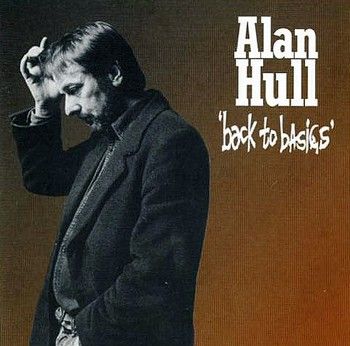
Alan Hull - Back To Basics - 1994 - Mooncrest

Recorded live at the Mean Fiddler and Blackheath Concert Halls in London during January of 1994, this record is very much a best of Alan Hull, and virtually indispensable to any fan of Lindisfarne. Cut with Kenny Craddock backing Hull on keyboards, accordion, second guitar, and vocals, this hour-long release features Hull singing in a grittier, more immediate style than one normally associates with his music, his rough, expressive voice bringing a new level of involvement to the music, even beyond what one would expect from the leader of Lindisfarne. The songs include "Lady Eleanor," "Poor Old Ireland," "January Song," "All Fall Down," "Run For Home," and "Fog On The Tyne." "Run For Home," in particular, gets about the best performance it has ever received, and has to be heard in this "unplugged" version. All can be counted among the best of many live versions of these numbers, unless high wattage and heavy amplification are a special concern. Not only a great showcase for Hull, but also a superb example of modern singer-songwriter style folk-rock, and it's great fun, too. © Bruce Eder, All Music Guide © 2010 Answers Corporation http://www.answers.com/topic/back-to-basics-alan-hull-album

Lindisfarne, founded in 1970 and fronted by Alan Hull were one of the great British folk rock groups of the '70's. By 1972 they were one of the biggest names in British rock music. Much of the Tyneside band's music had a melancholic beauty, and many of the songs' lyrics expressed a deep love and pride for their N.E England "Geordie" roots. Although the band's music had a strong element of humour, songs like "Meet Me On The Corner","Run For Home", "We Can Swing Together", "Fog On The Tyne" and the beautiful, almost ethereal "Lady Eleanor" expressed the band's passion and love for Newcastle and the surrounding areas. In the early '70's, when Lindisfarne released the great "Nicely Out of Tune", and "Fog on the Tyne albums, Alan Hull was being compared to artists like Bob Dylan for his evocative songwriting skills. Lindisfarne split in 1975 but at the end of 1977 the band's original line-up reformed after an acclaimed Christmas concert in Newcastle's City Hall. "Back To Basics" is a wonderful live acoustic set recorded in January 1994 at the Mean Fiddler and Blackheath Concert in London. The late Kenny Craddock on keyboards, accordion, second guitar and vocals backs Alan. This great recording features 15 great Alan Hull songs which cover the years from 1970, up to his death in 1995, and includes some of his great compositions with Lindisfarne. The album is VHR by A.O.O.F.C. Listen to Alan's outstanding "Phantoms" album, and Lindisfarne's classic "Nicely Out of Tune", and "Fog on the Tyne" albums. Kenny Craddock's "Mad as the Mist and Snow" album is also a rewarding listen

TRACKS

1. United states of mind
2. Poor old Ireland
3. All fall down
4. Lady Eleanor
5. Winter song
6. Walk in the sea
7. Mother Russia
8. This heart of mine
9. Mr. Inbetween
10. January song
11. Breakfast
12. Day of the Jackal
13. O no, not again
14. Run for home
15. Fog on the Tyne

All songs composed by Alan Hull, except "This Heart Of Mine" by Alan Hull, and Kevin Phillipson

CREDITS

Alan Hull (Guitar), (Piano), (Keyboards), (Vocals), (Producer)
Ken Craddock (Guitar), (Accordion), (Keyboards), (Vocals)

BIO

Best known as the co-founder, leader, and principal songwriter of the Newcastle folk-based rock band Lindisfarne, Alan Hull also pursued a successful career as a solo performer, specializing in original songs. At one time, amid Lindisfarne's early successes, Hull was being hailed as the most innovative songwriter since Bob Dylan, and although Lindisfarne's subsequent albums didn't remotely achieve this level of promise, his solo material was consistently strong. Hailing from Newcastle, where he was born in 1945, Hull took up the guitar as a boy, and became a member of the band the Chosen Few alongside keyboard player (and future Ian Dury alumnus) Mickey Gallagher, in 1962. That band, which specialized in Tamla-Motown covers, was signed to Pye Records for a time and Hull first emerged as a songwriter of considerable promise within their ranks, generating some very strong original numbers including the single "Today Tonight and Tomorrow." Hull exited the group in 1966 and gravitated toward a more folk-oriented sound in his playing, singing, and songwriting, which brought him into a band called Downtown Faction, who eventually evolved into Lindisfarne; he supported himself one year by working as a nurse at a mental hospital, before Lindisfarne came together. As author of many of their most popular songs as well as one of their principal singers, Hull came to be regarded as the de facto leader of the group, which may have contributed to its splintering in 1973. He recorded solo albums periodically beginning with 1973's Pipedream on the Charisma label, which included the services of second-generation Lindisfarne guitarist/keyboardman Ken Craddock as well as original members Ray Jackson and Ray Laidlaw. His second album, Squire, was released in 1975 by Warner Bros., while his third, Phantoms (1979), was done for Elton John's Rocket Records label. At its best, Hull's songwriting featured fluid, deceptively catchy, and pleasing melodies, and rich, deeply evocative phrasing and imagery. His "Fog on the Tyne" remains a classic, a Dylanesque account of life in Newcastle in the late '60s, and he has also written in a more popular vein, with songs such as "Run for Home" (which, with its achingly beautiful chorus, ought to have been an international hit), which sounds almost more like Bruce Springsteen than Bruce Springsteen did. In 1994, he recorded Back to Basics, a live all-acoustic survey of the best of his songwriting from 1970 onward. On November 17, 1995, while working on a new album, Hull died suddenly of what was determined to be a heart thrombosis. Lindisfarne has continued to perform in the years since, and recordings of Hull's have continued to surface from various sources, including radio performances going back to the early '70s. Bruce Eder © 2010 Rovi Corporation. All Rights Reserved. http://www.allmusic.com/cg/amg.dll?p=amg&sql=11:j9ftxqu5ldke~T1

KEN CRADDOCK BIO (WIKIPEDIA)

Kenny Craddock (18 April 1950 - 30 May 2002) was an instrumentalist, composer and producer. Throughout his career he worked with artists including Ringo Starr, Ginger Baker, Billy Bragg and Gerry Rafferty. He collaborated with Alan Hull and Lindisfarne and acted as musical director for Van Morrison and Mary Black. Craddock began touring with Van Morrison in the early 1980s, playing keyboards until around 1985. Craddock, though, had a written a song based upon a W.B. Yeats poem called "Before the World", which Morrison said he would like to record. "Before the World Was Made" was adapted by Morrison with music by Craddock, and appeared on the 1993 album Too Long in Exile. In the nineties, he provided, with Colin Gibson, the incidental music to Steven Moffat's sitcom Joking Apart. Craddock himself performed the show's theme song, a cover version of Chris Rea's "Fool (If You Think It's Over)". Around this time, Craddock toured with Paul Brady. Craddock moved to Portugal in 2001, where he died in a car crash after completing his first solo album, Mad as the Mist and Snow.

LINDISFARNE BIO

Lindisfarne barely command more than a footnote in most rock reference books. During the early '70s, however, Lindisfarne were one of the hottest folk-based rock bands in England, with chart placements on two of their albums that rivaled Jethro Tull, and had them proclaimed one of the most important groups of the decade. With a sound that mixed plaintive folk-like melodies, earthy but well-sung harmonies, and acoustic and electric textures, the group seemed poised for international success, when a series of unfortunate artistic decisions, followed by a split in their lineup, left them bereft of audience and success. Singer/guitarist Alan Hull (b. Feb. 20, 1945), guitarist Simon Cowe (b. Apr. 1, 1948), mandolin player Ray Jackson (b. Dec. 12, 1948), bassist/violinist Rod Clements (b. Nov. 17, 1947), and drummer Ray Laidlaw (b. May 28, 1948) all hailed from Newcastle-on-Tyne, England, and the surrounding area. At some point, they were known as Downtown Faction, but they took their familiar musical form under the name Brethren. The band became a very popular act on the college circuit, playing what was known as "good-time" music, singalong numbers resembling (or directly derived from) pub songs in which audiences could luxuriate, usually with Jackson's harmonica honking along. Alan Hull had a background in folk music that enabled him to freely incorporate that influence, and he was the major songwriter and singer in the band. In 1968, they discovered that an American group was already using the name Brethren, and the Newcastle group rechristened itself Lindisfarne, taken from the name of an island off the coast of Northumberland in Northern England — the island Lindisfarne (also known as Holy Island) is most famous for its early medieval monastery and castle and the ancient "Lindisfarne Gospels" medieval manuscript. The new name fit the times and the group's sound, which was evolving in the direction of folk-style music. The group was signed to Tony Stratton-Smith's Charisma Records, England's premiere progressive rock label, in 1970. They released their first (and best) album, Nicely Out of Tune, that same year. Their debut album captured the group's best attributes, a rollicking, upbeat, optimistic collection of hippie/folk music, somewhere midway between Fairport Convention and the early Grateful Dead, with a peculiarly urban, English working-class ambience. Their "Englishness," coupled with the occasionally uneven quality of their songwriting, may explain one major reason why Lindisfarne never achieved more than a tiny cult following in the United States. Nicely Out of Tune contained one wistfully romantic number, "Lady Eleanor," which became a favorite number in the band's concert repertoire, and seemed destined to find an audience. The album and the "Lady Eleanor" single failed to chart, but Lindisfarne's live shows only grew in popularity — by the end of 1970, they were able to ask for £1500 a night from promoters, a far cry from the £300 they had been getting on the college circuit. Their second album, Fog on the Tyne, released in 1971, marked their commercial breakthrough — a collection of earthy, folk-type pub songs, Fog on the Tyne entered the British charts in October of that year and began a slow climb into the middle reaches. In February of 1972, however, the group's label belated issued a single from the album, "Meet Me on the Corner." That record was number five on the charts the following month, while Fog on the Tyne suddenly rose to the number one spot. Within a matter of weeks, Nicely Out of Tune entered the charts for the first time and eventually hit number eight; "Lady Eleanor," reissued in June of 1972, made it to number three. That was when the media hype kicked in, raising expectations and aspirations for a group that, until four months earlier, had been a pleasant folk-rock outfit with a solid cult following. Alan Hull was referred to in the press as the most important new songwriter since Bob Dylan, and Lindisfarne were saddled with the designation as "the 1970s Beatles." Up to this time, the group had played in England and Wales, but, apart from one show in Scotland and individual forays to Paris and Holland, its members hadn't even pondered the notion or implications of an international career. It all seemed too good to last, and it was. Later in 1972, after a frantic period capitalizing on one massive success after another, the band released its third album, Dingly Dell. The album was troubled from the start. The record's producer was Bob Johnston, the American who had worked on Bob Dylan's John Wesley Harding, among many other records, and who had also produced Fog on the Tyne. The bandmembers had a falling out with Johnston over Dingly Dell, and remixed the album themselves immediately prior to release. The resulting record had a very crisp sound, very up-front, and more of a mainstream hard rock sound than their previous two long-players. Unfortunately, this was not the move that the critics had wanted or expected of the band — they wanted a richer, more progressive folk-type sound, in some ways closer to Fairport Convention, not the harder, more basic sound that they found here. Additionally, the songwriting didn't match the prior two albums, and nobody was drawing comparisons between Alan Hull and Dylan over the songs on Dingly Dell. Ironically, this album came out at just about the time Lindisfarne were in the process of gaining a small following in America, although they never really had much chance of succeeding. Their association with Charisma Records meant that they were afforded a listen by the American progressive rock audience, and to some limited extent their mixture of folk and rock was "progressive." In reality, Lindisfarne were closer in spirit and music to such hard-rocking bands as Brinsley Schwarz, Bees Make Honey, and Eggs Over Easy, utterly lacking the pretensions needed for a prog rock band. Under other circumstances, the album would have been passed over by most critics as nothing more than a slightly disappointing lapse, but reviewers and journalists seemed bent on revenge for Lindisfarne's failure to rise to the praise and hype lavished on them over the previous year. The record and the group were universally savaged, although Dingly Dell still got to number five on the charts and yielded one modest hit, "All Fall Down." They toured America, but discovered that American listeners and critics found their sound too peculiarly English — in the wrong ways — to really accept Lindisfarne. The group was never remotely as popular as its Charisma labelmates Genesis, who were eagerly snapped up by Atlantic Records once their Charisma contract was up. Cowe, Laidlaw, and Clements exited the band in early 1973 and formed a new group called Jack the Lad, which specialized in a harder, more basic pub rock sound, and went on to release three albums on Charisma. A live Lindisfarne album, featuring the original lineup and songs mostly from the first three albums, was issued by Charisma in 1973, but it was at best a holding action. Later that year, Alan Hull and Ray Jackson were back leading a new Lindisfarne lineup, featuring Ken Craddock on guitar, keyboards, and vocals; Charlie Harcourt on guitars; Tommy Duffy on bass and vocals; and Paul Nichols on drums. Their first album, Roll on Ruby, was a critical and commercial failure. Hull embarked on a solo recording career at around this same time, which seemed to draw away still more of the band's original audience. As the principal songwriter and voice of the group, and one of two original members, he held Lindisfarne's public better than the new Lindisfarne did. The band switched to Warner Bros. for its next album, Happy Daze, which fared no better. By 1977, Jack the Lad had called it quits and Cowe, Clements, and Laidlaw were back with Lindisfarne. Hull also recorded with Laidlaw and Craddock under the group name Radiator on the Rocket label, releasing a single album, entitled Isn't It Strange. Lindisfarne switched labels again to Mercury and debuted with a double live album, Magic in the Air, with songs drawn from the group's first three albums. The band remained intact and on Mercury for two more long-players, released to little lasting commercial avail: Back and Fourth (1978), which yielded a pair of modest hits in Alan Hull's "Run for Home," a song that sounds more like Springsteen than Springsteen does, and "Warm Feeling"; and The News (1979). They remained a reasonably popular concert attraction — especially in Newcastle and the surrounding area — into the early '80s, and have continued to record and reunite for concerts periodically in the years since. During the early '80s, they organized Lindisfarne Musical Productions and began releasing their work on the LMP label, including a live album cut in 1983. Their live recordings, featuring new renditions of their classic early-'70s material, seem to draw the greatest enthusiasm. Alan Hull has also maintained a separate solo career, and fans of the group should definitely own his Back to Basics CD, on which he does live acoustic versions of his best songs from 1970 onward. © Bruce Eder © 2010 Rovi Corporation. All Rights Reserved http://www.allmusic.com/cg/amg.dll?p=amg&sql=11:09fexqu5ldte~T1

2.6.10

Silent Partners


Photobucket

Silent Partners - If It’s All Night, It’s All Right - 1989 - Antones

A short lived makeshift band co-founded in 1987 Sacramento CA, by Russell Jackson, the great bassist from Memphis, TN, and drummer Tony Coleman from Kissemee in Florida. The late, great guitarist and keyboardist, Mel Brown was also a member of the band. "If It’s All Night, It’s All Right" was the only official studio album release from this band of sidemen, but it's a terrific album of blues, soul blues, R&B, and electric blues rock. Musicians include Mark "Kaz" Kazanoff on harmonica and saxophone, and Angela Strehli on background vocals.

TRACKS / COMPOSERS

1. Under Yonder - Mel Brown, Russell Jackson, Tony Coleman
2. Love Somebody - Jimmy Dawkins
3. I Don't Want No Woman - Don Robey
4. Hey Little Girl - Joy Boyers, Professor Longhair, Russell Jackson
5. Phone Booth - Dennis Walker, Mike Vannice, Richard Cousins, Robert Cray
6. Cleo's Back - Willie Woods
7. If It's All Night, It's All Right - Russell Jackson
8. I Didn't Know - Tony Coleman
9. Money (That's What I Want) - Berry Gordy Jr., Janie Bradford
10. Money Talks - Tony Coleman; Vernon Reid
11. Two Steps from the Blues - Deadric Malone, John Riley Brown

MUSICIANS

Mel Brown RIP (vocals, guitar, keyboards) BIO @ http://www.melbrownblues.com/mbrownreview1.html
David Gonzalez (guitar)
Derek O'Brien (rhythm guitar, background vocals)
Russell Jackson (bass, vocals) BIO @ http://www.myspace.com/therusselljacksonbandpage
Junior Brantley (organ)
Tony Coleman (vocals, drums, background vocals) BIO @ http://www.kingsnakerecords.com/artists/tonycoleman
Mark "Kaz" Kazanoff (harmonica, saxophone)
Paul Orta (harmonica)
Donna Pearl, Angela Strehli (background vocals)

1.6.10

Stan Webb's Chicken Shack


Photobucket

Stan Webb's Chicken Shack - Still Live After All These Years - 2004 - Mystic

This brilliant live album celebrated Stan Webb's 40th anniversary as a professional musician, of which 39 years had been spent keeping his legendary Chicken Shack band together. Recorded at the Capitol Musiktheater, Paderborn, Germany on the 26th and 27th March 2003, this is one of the best Chicken Shack albums ever released, and also one of the the band's best live concert performances. "Stan The Man" and his band, backed by The Shadow Horns display how blues rock should be played. Stan's voice is better than ever. He is really enjoying himself, and his exuberance really comes across. His guitar skills are really special, without him ever being too "flashy" or "going over the top". Magical stuff, and VHR by A.O.O.F.C. Search this blog for more Chicken Shack/Stan Webb's Chicken Shack releases

TRACKS / COMPOSERS

1. So Tell Me Now - Stan Webb
2. The Thrill Is Gone - Bill Foster, Ellington Jordan
3. Reconsider Baby - Lowell Fulson
4. (You Are) The Sweetest Little Thing - Stan Webb
5. I Know, You Know - Stan Webb
6. Saw Her Standing There - John Lennon, Paul McCartney
7. Night Life - Baskirk, P., Walt Breeland, Willie Nelson
8. The Chicken Shack Opera - Stan Webb
9. (Oh Please) Doctor Brown - Trad.
10. I'd Rather Go Blind - Bill Foster/Ellington Jordan

MUSICIANS

Stan Webb - Guitar, Vocals
Gary Davies - Guitar
Jim Rudge - Bass
Mick Jones - Drums
Rudiger Baldauf - Trumpet (The Shadow Horns)
Frank Kirchner - Saxophones (The Shadow Horns)
Peter Zagona - Baritone Sax (The Shadow Horns)

ABOUT STAN WEBB / CHICKEN SHACK

Formed in 1967, Chicken Shack consisted of Stan Webb on guitar/vocal, Andy Sylvester on bass, Christine Perfect on vocals/keyboards, and Alan Morley on drums. An earlier 1964 incarnation had been called 'Sounds of Blue' and Christine played in this band while a student at art college in Birmingham. Sounds of Blue dispanded after a year when Christine and another member left Birmingham for careers in London. Then, at the beginning of 1967, Andy once Chicken Shack again contacted Chris and suggested that she rejoin her former mates in a new band. (The group got their name from the chicken coup in Kidderminster where the band often rehearsed.) Chris admits that she was not the most accomplished blues pianist when she joined the group, but developed her own style from listening to Freddy King records. Chicken Shack made their public debut at the Great Britain's National Blues & Jazz Festival at Windsor along with Fleetwood Mac on August 13, 1967-- "There were two stages at Windsor, the main one an open-air ramshackle structure, the other inside a marquee. Fleetwood Mac had their initiation on the main stage but much was made of Chicken Shack's tented debut." The group became the second major signing of the Blue Horizon record label (co-founded by Mike Veron), the first being Fleetwood Mac. Chicken Shack's first two albums,Forty Blue Fingers Freshly Packed and Ready to Serve and OK Ken?, were quite successful, with much of the credit due to the fact that they had a beautiful, talented, female keyboardist and vocalist-- something that most definitely added individuality to the group in the male-dominated late 60's music scene. Christine's version of Etta James' 'I'd Rather Go Blind' was a massive hit, and she was voted Best Female Vocalist in the Melody Maker polls two years running. After Christine married John McVie and left the band, Stan Webb did carry on with the band in various incarnations, but Chicken Shack never quite matched their earlier success. The 'irrepressible' Stan Webb still lives in Kidderminster in a house that is filled with twenty-nine years of Chicken Shack memoribilia. The talented, yet relatively unrecognized, guitarist has this to say about the way major success has eluded him: "Some people say, 'You should be on stage at the Albert Hall, not Eric Clapton.' And I think, well, I don't agree with that, but I should certainly be able to go on there as well. But I'm happy with what's happening now. I've done the years and I'm getting more respect than I ever did then. It's worked for me." [ source: The Penguin Biographies ]

CHICKEN SHACK BIO (Wikipedia)

Chicken Shack was a British blues band, primarily of the late 1960s, consisting of Christine Perfect (vocals and keyboards), Stan Webb (guitar and vocals), Andy Sylvester (bass guitar), and Alan Morley (drums). The band was formed in 1967 and reputedly named themselves after the chicken coop in Kidderminster where they rehearsed. Their first concert was at the 1967 National Blues and Jazz Festival at Windsor and they were signed by the Blue Horizon record label in the same year. Chicken Shack enjoyed modest commercial success, with Christine Perfect being voted Best Female Vocalist in the Melody Maker polls, two years running. Christine Perfect left the band in 1969 when she married John McVie of Fleetwood Mac. Pianist Paul Raymond, bassist Andy Sylvester, and drummer Dave Bidwell all left in 1971 to join Savoy Brown. Although the band went through several subsequent incarnations, it never equalled its earlier successes. However, Webb remains as its only constant band member.

MORE ABOUT STAN WEBB

In 1968 Chicken Shack were a major signing to MIKE VERNON’S now legendary BLUE HORIZON label. Led by the mercurial Stan Webb on guitar and vocals, Chicken Shack were a band brimming full of talent, far outweighing the bands, groups and solo performers purveying the BLUES – a musical tradition in many forms, taken from the ‘Folk Roots Of Black America’. Probably the bands most well known member was CHRISTINE PERFECT (later McVie) who went on at a later date to even greater fame and fortune with FLEETWOOD MAC. The late sixties were a prolific time for Chicken Shack with their first two albums “40 Blue Fingers Freshly Packed And Ready To Go” and “O.K. Ken” storming into the U.K. top twenty, whilst the singles “When The Train Comes Back” and “Tears In The Wind” also scored heavily in the charts. Stan’s blistering guitar style matched with a huge stage presence have made Chicken Shack a firm favourite of rock and blues fans everywhere. Since those heady days of the late sixties a further fifteen albums have been released together with numerous compilations proving that Stan, really is “The Man”.Throughout a distinguished career Stan Webb has played and recorded with the very best, including, STEVIE WONDER, HOWLING WOLF, TAJ MAHAL, PETER GREEN and CANNED HEAT, whom he joined on guitar for a U.K, tour following the departure of the bands guitarist. As the ‘60’s have given way to the ‘70’s; ‘80’s and ‘90’s, Stan Webb and Chicken Shack show no sign of slowing down, continually touring the U.K. and Europe to packed houses and rave reviews. In 1997 Stan received the BLUE HEART AWARD for services to blues in Germany, in 1996 that went to BB KING, a glowing testament to Stan Webb and his ongoing love of playing the blues. 2006 saw Stan embarked on an extension UK tour with John Mayall. “Stan The Man” shows no sign of slowing down.

Robert Palmer


Photobucket

Robert Palmer - Rhythm & Blues - 1999 - Eagle Records

The late Robert Palmer is mainly remembered for his great eighties albums like "Pride", and "Heavy Nova". "Rhythm & Blues" is regarded as one of his"weaker" albums. This late nineties album was a commercial failure. There is nothing here to compare with the "power pop" of "Addicted to Love", "Hyperactive" or "I Didn't Mean to Turn You On". But even if the album is not strong on the pop rock side, there are still some very good "soul" reggae, and funk elements on the album. "Let's Get It On 99" is a great cover of the Marvin Gaye soul classic, and Robert's vocals are great. The album definitely lacks the cohesiveness, panache, power, eclectic mix of musical styles and sophistication of some of his earlier albums, but songs like the late Lowell George's "Twenty Million Things", and Robert's own "Stone Cold" are great songs and compensate for some of the album's failings. Little Feat's Bill Payne also plays on the album. Listen to Robert Palmer's "Woke Up Laughing", and "Riptide" albums, and check out some of his earlier work like Vinegar Joe's "Six Star Gypsies" album on which he played with Elkie Brooks, and Keef Hartley. His "Some People Can Do What They Like" album is @ ROBPALM/SPCDWTL N.B: Some UK & Canadian releases contain the track "Tennis", posted here. Other releases of this album exclude this track and include the Palmer penned "Dance for Me" which can also be found on Robert Palmer's "Pride" album

TRACKS / COMPOSERS

1 True Love - Sharon O'Neill/Robert Palmer 4:19
2 No Problem - Robert Palmer 3:35
3 I Choose You - Willie Hutch/Robert Palmer 4:18
4 Stone Cold - Robert Palmer 4:28
5 Sex Appeal - Robert Palmer 4:34
6 Work To Make It Work 99 - Robert Palmer 3:33
7 All The Will In The World - Robert Palmer 4:57
8 You're Not The Only One - Robert Palmer 3:39
9 Mr. Wise Guy - Robert Palmer 3:32
10 Let's Get It On 99 - Marvin Gaye/Robert Palmer/Edward Townsend 4:09
11 Tennis - Robert Palmer 4:12
12 Twenty Million Things - Lowell George/Levy, J. 3:07

Personnel: -

Robert Palmer (vocals, various instruments); Mary Ambrose (vocals, strings); Sharon O'Neill, David Grant, The Big Sound (vocals); Mauro Spina, James Palmer (percussion); Alan Mansfield, Bertram Engel, Ken Taylor, Pascal Kravetz, Carl Carlton, Bill Payne.

BIO (Wikipedia)

Robert Allen Palmer (January 19, 1949 - September 26, 2003), born in Batley, Yorkshire, England, was a British singer. He was known for his soulful voice and the eclectic mix of musical styles on his albums, combining soul, jazz, rock, blues, and even yodelling. The son of a British serviceman stationed in Malta, Palmer moved with his family to Scarborough, Yorkshire in 1959. Influenced as a child by blues, soul, and jazz music on American Forces Radio, Robert Palmer joined his first band, Mandrake Paddle Steamer, at the age of 15 while still an art student at Scarborough Technical College. His first major break came with the departure of singer Jess Roden from the band The Alan Bown Set in 1969, after which Palmer was invited to London to sing on their single "Gypsy Girl". The vocals for the album The Alan Bown!, originally recorded by Roden (and released in the US that way), were re-recorded by Palmer after the success of the single. In 1970, Palmer joined the 12-piece jazz-rock fusion band Dada, which featured singer Elkie Brooks. The band lasted a year, after which Brooks and Palmer formed the critically acclaimed but commercially unsuccessful rhythm and blues group, Vinegar Joe; Palmer sang and played rhythm guitar. Signed to the Island Records label, they released three albums: Vinegar Joe (1972), Rock 'n' Roll Gypsies (1972), and Six Star General (1973). On the basis of his youthful looks, strong stage presence, and soulful voice, Island Records signed Palmer to a solo deal. His first solo album Sneakin' Sally Through the Alley recorded in New Orleans, Louisiana in 1974, was heavily influenced by the music of Little Feat and the funk fusion of The Meters who acted as backing band along with producer/guitarist Lowell George of Little Feat. His first single was a cover of Little Feat's "Sailin' Shoes". Although moderately successful in the UK, both the album and single reached the Top 100 in the US. Subsequently relocating from London to New York City with his wife, Palmer released Pressure Drop in 1976 (featuring famed Motown bassist James Jamerson). An album infused with his interests in reggae and rock music, it was noted for its cover art of a nude girl on a balcony rather than any commercially successful songs. He toured with Little Feat to promote that album. However, with the failure of the follow-up Some People Can Do What They Like, Palmer decided to move to the Bahamas; after that, his "expatriate lifestyle" was likely to receive more coverage than his music in British newspapers. In 1978, he released Double Fun, a collection of Caribbean-influenced rock, which reached the Top 50 on the US Billboard magazine charts and scored a Top 20 single with the Andy Fraser-penned "Every Kinda People". Palmer's next album was an artistic departure, concentrating on a rockier direction. Secrets produced his second Top 20 single with Moon Martin's "Bad Case of Loving You (Doctor, Doctor)". The 1980s saw Palmer reach the peak of his commercial success. The album Clues, produced by Gary Numan, generated hits on both sides of the Atlantic, first with the radio-friendly single "Johnny and Mary" and then "Looking for Clues". Catchy videos matching the synth pop stylings of New Wave gave him much needed exposure to a younger audience. The success was repeated with the 1982 EP release of Some Guys Have All the Luck. In 1985, Palmer joined drummer Tony Thompson and Duran Duran guitarist Andy Taylor and bass player John Taylor to form the band Power Station. Their eponymous album reached the Top 20 in the UK and the US and spawned two hit singles with "Some Like It Hot" and the T. Rex cover "Get It On". (The video of "Some Like It Hot" featured model Caroline Cossey.) Palmer performed live with the band only once that year, on Saturday Night Live; the band toured with singer Michael Des Barres when Palmer bowed out at the last moment to go back into the studio to further his newly revitalized solo career. Palmer recorded the album Riptide (1986), which featured the Number 1 single "Addicted to Love". The single was accompanied by a memorable and much parodied music video, directed by Terence Donovan, in which Palmer is surrounded by a bevy of near-identically clad, heavily made-up female "musicians". The singles "Hyperactive" and "I Didn't Mean to Turn You On" also performed well. In 1987, he won the Grammy Award for Best Male Rock Vocal Performance for his song "Addicted to Love". Palmer was approached by Little Feat to replace Lowell George as they prepared their 1987 reunion, but had to decline for contractual reasons. In 1987, Palmer moved to Lugano, Switzerland and set up his own recording studio. Producing Heavy Nova in 1988, Palmer again returned to experimenting, this time with bossa nova rhythms, heavy rock, and white soul balladeering. He repeated his previous success with "Addicted to Love" with the video of "Simply Irresistible", again Palmer with a troupe of female "musicians". The ballad "She Makes My Day" also proved to be a hit. In 1989, he won a second Grammy for "Simply Irresistible". Rolling Stone magazine voted Palmer the best-dressed rock star for 1990. Palmer collaborated with UB40 for his next album, Don't Explain. Released in 1990, it featured the Bob Dylan-penned Top 10 single "I'll Be Your Baby Tonight" and the Top 20 "Mercy Mercy Me". Throughout the 1990s, Palmer ventured further into diverse material. The 1992 album Ridin' High was a tribute to the Tin Pan Alley era. In 1995, Palmer reunited with other members of The Power Station to record a second album. Bassist John Taylor eventually backed out of the project (due to personal problems), to be replaced by Chic member Bernard Edwards. Palmer and the rest of the band completed the album Living In Fear (released in 1996), and had just begun touring when Edwards died of pneumonia. The next few years saw more touring and more compilations; the next release of new material, Rhythm and Blues (1999) contained a mixture of Little Feat influenced songs, rock, and pop. His final release, Drive (2003), was critically hailed as his grittiest and most heartfelt album of his career. Inspired by a previous collaboration with Carl Carlton on a Robert Johnson tribute album, Drive featured covers of fifteen blues standards, plus the original track "Lucky". Palmer, who made his home in Lugano, Switzerland for the past 15 years, died in Paris France of a heart attack at the age of 54. He is interred at the cemetery in Lugano.