A.O.O.F.C
recommends
Mizar6

babydancing


Get this crazy baby off my head!

27.12.08

Moloko


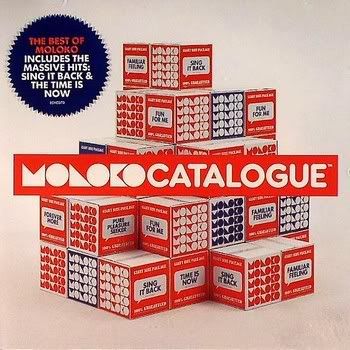
Moloko - Catalogue - 2006 - EMI/Echo (USA)

A great collection of Moloko's biggest hits and best album tracks. This is romantic funky, and stylish, with a great electronic groove. Roisin Murphy's distinctive vocals and Mark Brydon's production skills have now proven to be a winning combination. These tracks are not just dance anthems. They can also be judged on their own merits as original, and inventive electronic pop, and can also be taken seriously by lovers of any music genre. A great album, and it's well worth checking out Moloko's other albums. For more music in the same vein, listen to Morcheeba, and Zero 7. N.B: Catalogue /was released in the UK as a two disc set, containing Moloko's singles and a track exclusive to this compilation, "Bankrupt Emotionally". The second disc is a live recording of a concert recorded in 2003 at Brixton Academy. Catalogue is also available as a bonus disc in three different exclusive versions as digital downloads, one each for iTunes, Napster and MSN. These exclusive downloads are made up of live versions, remixes of Moloko tracks and B-sides. This is the U.S 13 track version, and does not contain the second disc.

TRACKS

1 The Time Is Now
2 Sing It Back
3 Fun For Me
4 Familiar Feeling
5 Pure Pleasure Seeker
6 Cannot Contain This
7 Bankrupt Emotionally
8 Day For Night
9 Indigo
10 The Flipside
11 Where Is The What If The What Is In Why?
12 Forever More
13 Statues
Tracks 1, 2, 3, 5, 8, 9, 10, & 11 composed by Mark Brydon, Roisin Murphy. Tracks 4, 6, 7, 12, & 13 composed by Mark Brydon, Eddie Stevens, Roisin Murphy

CREDITS

Arik Marshall (Guitar)
Eddie Stevens (Piano), (Keyboards), (Programming), (String Arrangements), (Brass Arrangement)
Paul Slowley (Drums)
Tony Finigan, Christine Jady, Andrew Fuller, Sophie Harris , Joy Hawley, Anne Lines (Cello)
Susan Dench (Viola), (Vocals)
Audrey Riley (Cello), (Conductor), (String Arrangements)
Winston Rollins (Trombone)
Leo Payne, Ann Morgee, Brigett Davey, Helen Paterson, Kathy Share, Laura Melhuish, James Harris, Emma Welton, Richard George, Charles Mutter, Liz Partridge, Clare Thompson, Harriet Davies, Gregory Warren-Wilson, Chris Tombling, Juliet Snell (Violin)
Simon Finch, Henry Collins (Trumpet)
Rachel Syms (Bassoon)
Richard Steggall (Horn)
N. Bray, Graeme Flowers, Chris Storr, Dominic Glover (Trumpet), (Flugelhorn)
Barnaby Dickinson, Nichol Thompson (Trombone)
Peter North (Trombone (Bass)
Danny Manners, Elizabeth Bradley, Bill McGee, Corin Long (Double Bass)
James A. Hunt (Saxophone)
Nick Charles (Sax (Bass)
Ben Castle (Sax (Tenor)
James Knight (Sax (Alto)), (Sax (Tenor)
Clare Finmore, Peter Collyer, Peter Lale, Catherine Musker, Chris Pitsillides, Richard Nelson (Vocals)
Lisa Millett, Steve Edwards (Vocals (Background)
Matthew Sime (Engineer)
Mark Brydon (Programming), (Producer), (Engineer), (Mixing)
Michael Lenge, Boris Dlugosch (Producer), (Remixing)
Steve Orchard (String Engineer)
Matthew Lawrence (Engineer), (Mixing)
Rohan Onraet, Chris Barrett, Gavin Goldberg (Assistant Engineers)
Ian Porter (Programming)

REVIEWS

Released three years after their final album, Statues, a Moloko best-of was long overdue. Fortunately, the straightforwardly named Catalogue delivers an impeccably edited collection of the duo's eclectic, ahead-of-the-curve music, gathering their biggest hits and key album tracks. Gorgeous romanticism, drop-dead style, and a funky sense of humor -- not to mention Roisin Murphy's charismatic vocals and Mark Brydon's forward-thinking production skills -- were the key ingredients in Moloko's freewheeling mix of dance, pop, and rock, all of which are on display throughout Catalogue and especially on its first five tracks, which are, not coincidentally, the duo's most popular singles. "Fun for Me" and "Pure Pleasure Seeker" are quintessential examples of Moloko's sexy, mischievous take on dance anthems; "The Time Is Now" and "Familiar Feeling" are searching-but-glamorous ballads; and of course, the pair's breakthrough single "Sing It Back" is as alluring as it is inventive. Unlike some best-ofs, which have to stretch to fill out an album's worth of tracks, Catalogue is a welcome reminder of how strong Moloko's overall body of work is. From Do You Like My Tight Sweater?'s "Day for Night" and "Where Is the What If the What Is in Why?" to the title track of Statues, each song on the collection holds up. Catalogue's only flaw -- if it can be called that -- is that it doesn't include many of the flights of fancy that made Moloko's albums so distinctive. The closest the collection gets to the duo's deeply kooky side is the cryptic but irresistible shuffle of "Indigo" and the playful pop of "The Flipside." This is a minor drawback though -- Catalogue is a great Moloko primer, and any newcomers charmed by the songs here have even more to discover on the full-length albums. © Heather Phares, All Music Guide

Blossoming from a self-titled EP in 1995, Moloko has steadily built an international following and a healthy catalog. With six LPs, an EP, and a DVD documentary under their belt it was time to pull out the Best Of. Here are their finest early tracks and several tracks previously unreleased in the US. This record follows the underground success of lead singer Roisin Murphy's solo recording, "Ruby Blue". © amazon.com


BIO

The Sheffield-based dance-pop duo Moloko is the end result of Irish-born singer Roisin Murphy's attempt to pick up mixer/producer Mark Brydon at a 1994 party with the come-on, "Do you like my tight sweater? See how it fits my body." Brydon saw musical potential in her attitude, and the two formed a creative and romantic partnership.Murphy, who had never sung outside of the shower before, was a newcomer to the music business. However, Brydon had many years of experience with U.K. house music acts House Arrest and Cloud 9, helped found Sheffield's Fon studios, and remixed artists like Eric B & Rakim and Psychic TV. Soon after forming Moloko, they released their debut single, "Where Is the What If the What Is in the Why?," and signed to Echo Records. The band's full-length debut, inevitably named Do You Like My Tight Sweater?, came out in 1995 and was an equal mix of Murphy's slinky attitude and Brydon's musical prowess. The album combined dance, funk, and trip-hop elements in an approach similar to Portishead or Massive Attack but with a sense of humor and sass unique to Moloko. Though the album's U.S. release occurred nearly a year later, the single "Fun for Me" was featured prominently on the Batman & Robin soundtrack and received some radio airplay.Moloko toured with kindred musical spirits such as Pulp, built a home studio, and recorded the follow-up to Do You Like My Tight Sweater?, titled I Am Not a Doctor. Released in 1998 (and late 1999 in the U.S.), the album continued in Moloko's witty, funky tradition and featured their breakthrough single, "Sing It Back." The group's third album, Things to Make and Do, which included the hits "The Time Is Now," "Pure Pleasure Seeker," and "Indigo," was issued in the U.K. in the spring of 2000 and was released in the States later that year via Roadrunner. Brydon and Murphy's romantic relationship ended just before they began work on 2002's Statues; after finishing the tour supporting the album, Moloko disbanded. © Heather Phares, All Music Guide

26.12.08

Dave Hole


Dave Hole - The Live One - 2003 - Alligator Records

"..a one-way journey to sonic joy" - LIVING BLUES. "Exhilaratingly relentless, he produces solo upon blistering solo." © GUITAR WORLD

A brilliant album from Dave Hole. His slide playing technique is amazing, and this live album is a powerful testament to Dave Hole's high voltage guitar wizardry. Check out, "Purple Haze" and "Bullfrog Blues". This guy takes no prisoners! Buy his "Ticket to Chicago" or "Working Overtime" albums. If you are a Rory Gallagher or SRV disciple, you will really enjoy this powerhouse album. There's info on Dave's "Rough Diamond" album @ DHOLE/RDIAM

TRACKS

1 Intro
1 Jenny Lee
2 Demolition Man
3 Short Fuse Blues
4 Keep Your Motor Running
5 Every Girl I See - Dixon, Murphy
6 Up All Night Thinking
7 Purple Haze - Hendrix, Jimi
8 Berwick Road
9 Take Me to Chicago
10 How Long?
11 Bullfrog Blues - Harris
All somgs composed by Dave Hole, except where stated. Recorded live in Chicago, Illinois and Perth, Australia.

BAND

Dave Hole (vocals, guitar)
Bob Patient (keyboards)
Roy Daniel (bass)
J Mattes, Ric Eastman (drums)

REVIEWS

THE LIVE ONE (BCD 1008) is the record Dave Hole's fans have been clamouring for. Over the course of 7 studio albums and 10 world tours, the Australian slide guitar monster has received endless requests for a record that captures the full-on energy of his ferocious live shows. Bursting with hard-charging rockers and simmering slow blues, THE LIVE ONE delivers the goods. Recorded in Chicago and Perth, the performances are drenched in waves of fret-melting guitar riffs that infuse the spirit of blues-rock slide legends such as Duane Allman and Johnny Winter. On THE LIVE ONE , with his furious energy and amazing "over-the-top" style of playing, Dave Hole carves his own place deep in the pantheon of slide guitar greats. The album is released on Alligator records in the USA, Provogue Records in Europe and Black Cat (through Shock Records) in Australia. Jam packed with soaring slide guitar and passionate vocals it faithfully captures the full-blooded excitement of Hole's live shows and is bound to hit home with his many fans world-wide. THE LIVE ONE is truly a power-house representation of a one-of-a-kind talent. "Nothing interferes with Hole's searing guitar when he is in full flight," said Rolling Stone. Guitar World agreed, saying, "Hole produces solo upon blistering solo with slide work that is exhilaratingly relentless." © www.tourwork.net/Dave%20Hole%20Profile%20GB.htm

While subtlety isn't exactly his strong suit — especially live — it's also not what Dave Hole fans expect out of their Australian slide guitar slinger. The word "ferocious" best describes his over-the-fret, over-the-top technique, and what was merely intense on his studio albums gets kicked up a few notches in concert. Like George Thorogood, Hound Dog Taylor, or Rory Gallagher (whose vocal phrasing is also an influence), he's nailed his niche, best described as explosive Elmore James. Hole happily plays to his strengths without pushing the boundaries past where his fans comfortably expect. In other words, if you're already hooked through any of his six previous studio discs, you'll want to own this inflammatory live set. Even on a slow blues like "Short Fuse Blues," Hole cranks out squealing, screeching sounds with machine gun velocity. Covers of Willie Dixon's "Every Girl I See," "Bullfrog Blues," (a longtime Gallagher concert favorite) and a nearly seven-minute "Purple Haze" provide familiar songs over which he lays his slide shenanigans to deliver high-octane, crowd-pleasing thrills. Things calm down — temporarily — on the Celtic-styled instrumental ballad "Berwick Road," the album's only respite from the fuel-igniting guitar sparks that shoot out of Hole's frets. The super-charged performance is a lot to handle for all but the most committed. However, if you're already on the Hole-train, The Live One is a locomotive-sized dose of what you've bought a ticket for. © Hal Horowitz, allmusic.com

Australian Dave Hole is a guitar-hero-in-waiting of the first magnitude, it's just a matter of exposure. This guy's a monster." © JAZZ AND BLUES, U.S.A

..just take in the eight brilliantly sustained minutes of 'Up All Night Thinking' and prepare to hear your jaw hitting the floor." © BILLBOARD MAGAZINE, U.S.A. OCTOBER, 1993

Exhilaratingly relentless ... he produces solo upon blistering solo." © GUITAR WORLD

the man and his guitar were all-encompassing. This was exciting, not just for the Australian Blues-rocker but for the entire audience at 'Legends'. Hole burned down Buddy Guy's place Friday for two amazing sets. His lightening delivery and screaming slide, which sounded almost like a falsetto vocal at times, were works of art." © CHICAGO SUN-TIMES, U.S.A. - Live Review.

Fast, flashy, steel-cylinder-on-steel-string slide work ... clearly stresses the instrumental pyrotechnics of such guitar heroes as Stevie Ray Vaughan and Jeff Healey. Hole's distinguishing trademark is his ability to play melodic slide phrases with lots of embellishments over galloping rhythms." © WASHINGTON POST

Your jaw drops in amazement as you listen to the sizzling complexity of his playing. He sings with the same plaintive, sandpapery gruffness we associate with Eric Clapton or Robin Trower. As for his playing, Hole is just a natural blues-guitar star." © DENVER POST

"Years from now, Blues aficionados may still be talking about the time in November, 1993 when slide guitarist Dave Hole first came to town. An extraordinary musician and nascent star, Hole is often compared to the late Stevie Ray Vaughan, but he plays with depth of feeling that owes more to early bottleneck men like Blind Willie Johnson." © NEW YORK MAGAZINE, U.S.A. - Live review.

Dave Hole is one of the best slide guitar players ever. His relentless slide strafes and searing single-line solos come at you like a runaway truck down a mountain grade." © DETROIT FREE PRESS

Yes, Dave Hole is that good. If this guy played with any more feeling, he'd have to go on Prozac. He is not only a superb guitarist with a distinctive sound, he performs heart-felt vocals with the depth and credibility of any blues headliner touring today ... hard driving rocking blues ... he is electricity incarnate!" © BLUES REVIEW

"Another sizzling side of modern blues-rock ... original, reverent solo and acoustic tributes to the rural and urban styles that inspired him. Hole sings with passion, but it's his ever -- fiery, Duane Allman-style slide that's the source of listener whiplash here." © GUITAR FOR THE PRACTICING MUSICIAN

BIO

Australian slide guitarist Dave Hole is noted for his energetic, high-volume rock & roll/blues music and unusual playing style. Though left-handed, Hole plays guitar right-handed and developed a technique to compensate for a finger injury in which he places his fingers over the top of the neck. He also uses a pick for a slide and utilizes fingerpicking when playing normally. Born on March 30, 1948, in England, but raised from age four in Perth, Australia, Hole became interested in blues guitar around age six after hearing a schoolmate's Muddy Waters album. He received his first guitar at age 12, but became discouraged trying to learn it by himself (teachers were in short supply in isolated Perth) and abandoned it until he was 16. This time, he began picking up riffs and techniques from records. Primary influences include Eric Clapton, Jimi Hendrix, Robert Johnson, Elmore James, and Mississippi Fred McDowell. Hole became a professional in 1972 when working with a band in London. Returning to Perth in 1974, he began his long stint touring the western Australian club circuit, playing 20 years in remote towns before making Short Fuse Blues, an album he financed, produced, and recorded with his band Short Fuse in three days in 1990. He then hawked the album during club performances and on a whim, sent a copy to Guitar Player magazine in the U.S. The editor listened to it, liked it, wrote a praise-filled article hailing him as the newest guitar wizard and comparing him to such greats as Stevie Ray Vaughan and Albert King. He then helped Hole land a distribution deal with Alligator Records and released Working Overtime (1993), Steel on Steel (1995), Under the Spell (1999), and Outside Looking In (2001). With each new release, Dave Hole continues to build a respectable following in the U.S. and European blues scene that grows stronger every year. © Sandra Brennan & Al Campbell, allmusic.com


MORE ABOUT DAVE HOLE

Dave Hole is a real self-taught man because it was difficult to get any blues records on a regular basis in Australia when he was a child. At first, only Eric Clapton and Jimi Hendrix albums were easily available, so he listened to their records over and over again, absorbing all he could from these blues masters. Then, either by accident or by fate, Hole broke his little finger in a football game. The only way he could continue to play without pain was to play slide guitar and to put the slide on his index finger and hang his hand over the top of the guitar neck. When his finger healed, Hole never turned back. After self producing his debut album in 1991, a review appeared in the American "Guitar Player" magazine in April of that year, followed by a July 1991 feature story which launched Hole to stardom. Then Alligator Records president Bruce Iglauer took a chance and signed the only non U.S. based artist in the label’s 30-year history. It wasn’t just the critics who were paying attention. Metallica’s Kirk Hammett named Dave Hole as one of his favourite guitarists, saying, "His slide playing kills me." And when veteran rock and blues guitarist Gary Moore heard "Short Fuse Blues" , he was so impressed he invited Dave to join him on two European tours. © Bluesweb.com Dixiefrog 2006

Ten Years After


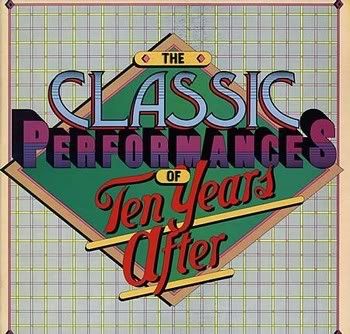
Ten Years After - The Classic Performances - 1976 - Chrysalis (Germany)

This is a very underrated compilation album from the great British blues rock band. The album received poor reviews when first released. As usual, as in all compilation albums, somebody's favourite track/s are omitted, which always leads to mixed reviews. Alvin Lees' brilliant guitar was the nucleus of Ten Years After's sound. A terrific, no frills blues rock album, and great to hear. The album is a vinyl rip, and sound is a bit "crackly" in spots, but it won't spoil your enjoyment too much. Check out their albums, " Cricklewood Green ", and " Ssssh ". To hear the band at their best, listen to their "Live At The Fillmore East 1970" album. N.B: "The Classic Performances" was later released on an 11 track CD, with the bonus track, "Love Like A Man". There is info on TYA "Now" album @ TYA/NOW and check out the "Alvin Lee In Tennessee" album @ ALEE/TSEE

TRACKS

A1 I'd Love To Change The World (3:43)
A2 Baby Won't You Let Me Rock 'n Roll (2:15)
A3 It's Getting Harder (4:24)
A4 One Of These Days (5:55)
A5 I'm Going Home (2:49)

B1 Choo Choo Mama (3:58)
B2 Positive Vibrations (3:58)
B3 Tomorrow I'll Be Out Of Town (4:27)
B4 Good Morning Little Schoolgirl (7:58)
B5 Rock 'n Roll Music To The World (3:49)
All songs composed by Alvin Lee, except Track, B4 by Sonny Boy Williamson

BAND

Alvin Lee Guitar, Vocals
Leo Lyons Bass
Chick Churchill Drums, Keyboards
Ric Lee Drums

REVIEW

Often tagged as a second generation blues boogie band, Ten Years After actually showed somewhat more musical dexterity than their Fillmore-clogging peers. The atmospheric "I'd Love to Change the World", for instance, sounds like it came from a completely different band than the clavinet-driven funk of "It's Getting Harder". Neither of those cuts, of course, have much in common musically with what Ten Years After will most likely remain forever famous, their 10 minute version of "I'm Going Home" from Woodstock. It's included here, albeit edited down to a mere 3 minutes, which means it's only got the first and last verses and omits the incessant guitar and bass noodling. Purists may carp, but this album really isn't meant for them. Rather, it's meant to introduce newcomers unaware of much of Ten Years After's catalogue to their lesser known tunes that sound different from that. Besides, the inclusion of "Good Morning Little Schoolgirl", with its extended guitar solos, makes up for it in spades. It's true that Ten Years After never matched their musical prowess with lyrical depth, and that even at their best, they never showed the vision of a Led Zeppelin, but for above average early ‘70s blues-rock, this collection will fit the bill nicely. © Victor W. Valdivia, allmusic.com

SHORT BIO

Ten Years After is a British blues-rock quartet consisting of Alvin Lee (born December 19, 1944), guitar and vocals; Chick Churchill (born January 2, 1949), keyboards; Leo Lyons (born November 30, 1944) bass; and Ric Lee (born October 20, 1945), drums. The group was formed in 1967 and signed to Decca in England. Their first album was not a success, but their second, the live Undead (1968) containing "I'm Going Home," a six-minute blues workout by the fleet-fingered Alvin, hit the charts on both sides of the Atlantic. Stonedhenge (1969) hit the U.K. Top Ten in early 1969. Ten Years After's U.S. breakthrough came as a result of their appearance at Woodstock, at which they played a nine-minute version of "I'm Going Home." Their next album, Ssssh, reached the U.S. Top 20, and Cricklewood Green, containing the hit single "Love Like a Man," reached number four. Watt completed the group's Decca contract, after which they signed with Columbia and moved in a more mainstream pop direction, typified by the gold-selling 1971 album A Space in Time and its Top 40 single "I'd Love to Change the World." Subsequent efforts in that direction were less successful, however, and Ten Years After split up after the release of Positive Vibrations in 1974. They reunited in 1988 for concerts in Europe and recorded their first new album in 15 years, About Time, in 1989 before disbanding once again. In 2001, Ric Lee was preparing the back catalog for rerelease when he discoverd the Live at the Fillmore East 1970 tapes. He approached Alvin about getting back together to promote the lost album, but Alvin Lee declined. The rest of the band was up for it, though, and together with guitarist Joe Gooch, Ten Years After started touring again. In addition to touring the world, this new incarnation recorded their first new material in about a decade and a half and released Now in 2004 and added the live double CD set Roadworks in 2005. © William Ruhlmann, allmusic.com

BIO (Wikipedia)

Ten Years After are an English blues rock band, most popular in the late 1960s and early 1970s. After several years of local success in the Nottingham/Mansfield area as a band known since 1962 as The Jaybirds (its core was formed in late 1960 as Ivan Jay and the Jaycats), and later as Ivan Jay and the Jaymen, Ten Years After was founded by Alvin Lee and Leo Lyons. Ivan Jay sang lead vocals from late 1960 to 1962 and was joined by Ric Lee in August 1965, replacing original drummer Dave Quickmire, who had joined in 1962. In 1966 The Jaybirds moved to London, where Chick Churchill joined the group. That November the quartet signed a manager, Chris Wright, and decided to change their name to Blues Trip, Blues Yard (under which they played a show at the legendary Marquee Club supporting Bonzo Dog Band), and finally in November 1966, to Ten Years After ( in honour of Elvis Presley, an idol of Lee's whose momentous year in rock, 1956, helps to better explain the band's title). They became the first band of the soon-to-be Chrysalis Agency. They secured a residency at the Marquee, and received an invitation to play at the renowned Windsor Jazz Festival in 1967. That performance led to a contract with Deram, a subsidiary company of Decca – the first band so signed without a hit single. In October, their 1967 self-titled debut album was released. In 1968, after touring Scandinavia and the United States, Ten Years After released their second album, live Undead, which brought their first classic, "I'm Going Home." This was followed in February 1969 by studio issue, Stonedhenge, a British hit, that included another classic, "Hear Me Calling" (it was released also as a single, and covered in 1972 by British glam rock rising stars, Slade). In July 1969 they appeared at the Newport Jazz Festival, in the first event to which rock bands were invited. In August, the band performed a breakthrough American appearance at Woodstock; their furious-to-soft-to-furious rendition of "I'm Going Home" was featured in both the subsequent film and soundtrack album and catapulted them to star status. During 1970, Ten Years After released "Love Like a Man," their only hit in the UK Singles Chart. This song was on their fifth album, Cricklewood Green. The name of the album comes from a friend of the group who lived in Cricklewood, London. He grew a sort of plant which was said to have hallucinogenic effects. The band did not know the name of this plant, so they called their album Cricklewood Green. It was the first record to be issued with a different playing speed on both sides – one a three-minute edit at 45rpm, the other, a nine-minute live version at 33rpm. In August, Ten Years After played the Isle of Wight Festival 1970 to an audience of 600,000. In 1971, the band released the album A Space in Time which marked a move toward more commercial material. It featured their biggest hit, "I'd Love To Change The World." But a few albums later, the band broke up after the 1974 album "Positive Vibrations." They re-united in 1983 to play the Reading Rock Festival and this performance was later released on CD as "The Friday Rock Show Sessions - Live At Reading '83' ". In 1988, they re-united for a few concerts and recorded the album About Time (1989). Alvin Lee has since then mostly played and recorded under his own name. In 2004, the other band members replaced him with Joe Gooch and recorded the album Now. Material from the following tour was used for the 2005 double album Roadworks. Ric Lee is currently in a band called The Breakers, along with Ian Ellis (Clouds).

24.12.08

Steely Dan


Steely Dan - Billboard Live - Tokyo 24.8.07 - Zooye

Becker & Fagen had played Japan in 2000, but between 18/8/07 and 5/9/07, They played 15 concerts in Japan, as part of their "Heavy Rollers" tour. During this tour, they officially opened a chain of new Billboard Live clubs. The played six gigs in Tokyo, six in Osaka, and three in Fukuoka - all at Billboard Live clubs. Their first gig at the Billboard in Tokyo on 18/8/8 marked the official opening of the small club. It is circulating as an "unofficial" recording. This recording from the Billboard Live, Tokyo on 24/8/08 has also been released on CDR as "Steely Dan - Tokyo Last Night 2007, Live at Billboard, Live Tokyo, Tokyo, Japan, August 24th, 2007 (2nd Show) heavy rollers tour 2007" on ZOOYE. The Billboard Live venue in Tokyo is an intimate club, and will only hold an audience of 300 people or so. The band gave a decent performance with an appreciative audience. The sound quality on this recording is above average, but only fair. There are very few live Dan recordings of really good sound quality. If you are not familiar with Steely Dan, aka Walter Becker, & Donald Fagen, buy the Dan's "Aja" album, and any of their other albums. Donald Fagen's "The Nightfly" is great work of sonic art, and should be heard by anybody remotely interested in music of any genre.

TRACKS

01. Intro (Jeri) [fade-in]
02. Time Out Of Mind
03. Bad Sneakers
04. Hey Nineteen
05. Daddy Don't Live In That New York City No More
06. Green Earrings
07. Dirty Work
08. Josie - Band Introductions
09. Chain Lightning
10. Do It Again
---> encore
11. Peg
12. Pretzel Logic
13. Outro (Carolyn)
All tracks composed by W.Becker, & D.Fagen

MUSICIANS

Donald Fagen - Keyboards and Vocals
Walter Becker - Guitar and Vocals
Jon Herington - Guitar
Jeff Young - Keyboards and Backing Vocals
Keith Carlock - Drums
Freddie Washington - Bass
Michael Leonhart - Trumpet
Jim Pugh - Trombone
Walt Weiskopf - Sax
Roger Rosenberg - Baritone Sax
Carolyn Leonhart-Escoffery, Cindy Mizelle - Backing Vocals

22.12.08

Bonnie Raitt


Bonnie Raitt - Takin' My Time - 1973 - Warner Brothers

TAKIN' MY TIME falls between Bonnie Raitt's superb second album GIVE IT UP and the more commercially minded yet less artistically successful STREETLIGHTS. Fortunately, TAKIN' MY TIME has more in common with its predecessor; it contains thesame stylistic mixed bag as GIVE IT UP (with the bumps between blues, folk, R&B, and early-'70s soft rock smoothed overbeautifully), and the same intensity and focus in performance. Unlike GIVE IT UP, TAKIN' MY TIME contains no originals,but given the consistently high quality of Raitt's selection and treatment of covers, it hardly matters. (Raitt has an uncanny knack for making covers her own). Raitt looks directly to her influences on a version of the Martha and the Vandellas' R&B classic "You've Been In Love Too Long", which kicks off the album, then looks further back with an acoustic rendition of Mississippi Fred McDowell's "Write Me A Few of Your Lines/Kokomo Blues", proving her grasp of the genre. But the record's highlights encompass more contemporary fare, such as Jackson's Browne's "I Thought I Was A Child", MoseAllison's "Everybody's Cryin' Mercy", and Randy Newman's "Guilty", with a light calypso "Wah She Go Do" balancing out these more plaintive compositions. A stellar cast of musicians, including members of Little Feat, Taj Mahal, and Ernie Watts (who played saxophone for the Rolling Stones) puts TAKIN' MY TIME just behind GIVE IT UP as Raitt's best album. © Amazon.com

Bonnie started her career as a blues player in venues around Philadelphia and Cambridge, opening for great musicians like Howlin' Wolf, Mississippi Fred MeDowell and Sippie Wallace. She was one of the few women im the early seventies to master the bottleneck guitar. Over the years she gradually expanded her musical horizons, and mow sings songs of all musical genres by many different songwriters. She also composes many of her own songs. She is one of contemporary music's most inventive and influential performers. "Takin' My Time" is an outstanding album, which fully exposes the wonderful diverse talents of Bonnie Raitt. Strangely, the album only reached No.87 in the 1973 Billboard charts. In retrospect, it contains some of the best performances of her recording career, featuring songs by Mose Allison, Jackson Browne, Randy Newman and blues legend Fred McDowell. Bonnie is backed by an incredible list of musicians, including Taj Mahal and Lowell George, Bill Payne and Paul Barrere from Little Feat. The songs range from the calypso style of "Wah She Go Do," to the pure blues of the Fred McDowell medley "Write Me A Few Of Your Lines/ Kokemo Blues,". This album is HR by A.O.O.F.C. Listen to her classic debut s/t album for WB, which contains songs by Stephen Stills and Paul Seibel. Her 1972 album, "Give It Up " is another outstanding album from one of the great artists of our times.

TRACKS / COMPOSERS

A1.You've Been in Love Too Long (3:40)
(Ivy Hunter/Clarence Paul/William Stevenson)
A2. I Gave My Love A Candle (4:20)
(Joel Zoss)
A3. Let Me In (3:33)
(Yvonne Baker)
A4.Everybody's Cryin' Mercy (3:25)
(Mose Allison)
A5.Cry Like A Rainstorm (3:50)
(Eric Kaz)

B1.Wah She Go Do (3:15)
(McCartha Lewis)
B2.I Feel the Same (4:39)
(Chris Smither)
B3.I Thought I Was A Child (3:44)
(Jackson Browne)
B4.Write Me A Few of Your Lines/Kokomo Blues (4:34)
(Fred McDowell)
B5.Guilty (2:58)
(Randy Newman)

CREDITS

Bonnie Raitt - acoustic guitar, guitar, electric guitar, vocals, background vocals, handclapping, bottleneck guitar
Paul Barrére - guitar, electric guitar
George Bohannon - trombone
Oscar Brashear - flugelhorn, horn
Bud Brisbois - horn
Sam Clayton - conductor, conga
Carol Farhat - handclapping
Glenn Ferris - horn
Freebo - bass, tuba, vocals, background vocals, fretless bass
Lowell George - guitar, slide guitar
John Hall - guitar, electric guitar, background vocals, handclapping, mellotron
Bob Hardaway - horn
Robert Hardaway - horn
Milt Holland - percussion, tabla, tambourine, timbales, claves, shaker
Carl Huston - handclapping
Kirby Johnson - conductor
Jim Keltner - drums
Marty Krystall - horn
Taj Mahal - bass, guitar, harmonica, vocals, background vocals, acoustic bass
Earl Palmer - drums
Van Dyke Parks - piano, keyboard, vocals, background vocals
Bill Payne - organ, piano, keyboard, electric piano, vocals, background vocals
Joel Peskin - horn
Nat Seligman - handclapping
Anthony Terran - horn
Tony Terran - horn
Ernie Watts - soprano saxophone

Producers - John Hall, Lowell George

REVIEWS

This album is an overlooked gem in the catalog of Bonnie Raitt. On Takin' My Time, she wears her influences proudly in an eclectic musical mix containing blues, jazz, folk, New Orleans R&B, and calypso. Although she did not write her own material for this album, she demonstrates an excellent ear for songs and chooses material from some of the best songwriters of the day. She is a great interpreter, and her renditions of Jackson Browne's "I Thought I Was a Child" and Randy Newman's "Guilty" from this album are the definitive versions of these songs. The highlights of this album are the romantic ballads "I Gave My Love a Candle" and "Cry Like a Rainstorm," where Raitt adds an emotional depth to the performance unusual for such a young woman. (Perhaps that's a result of her spending time with elder statesmen of the blues community such as Mississippi Fred McDowell and Sippie Wallace.) Although the faster-paced songs like the calypso "Wah She Go Do" seem a little out of place, the playful tune is welcome among an album filled with the heartache of the slower tunes. Despite being a relative newcomer, Raitt had already earned the respect of her mentors and her peers, as evidenced by the musical contributions of Taj Mahal, and Little Feat members Lowell George and Bill Payne on the album. This is the last consistent album she would make until her comeback in the mid-'80s. © Vik Iyengar , All Music Guide

Along with Give It Up, Bonnie Raitt's third album, Takin' My Time, stands as her finest work prior to her 1989 critical and commercial watershed, Nick of Time. Featuring an eclectic mix of pop, rock, blues, and soul, the material ranges from Eric Kaz's powerful ballad "Cry Like a Rainstorm" and Jackson Browne's "I Thought I Was a Child" to the snappy acoustic blues of Mississippi Fred McDowell's "Write Me a Few of Your Lines/Kokomo Blues" and the charming calypso "Wah She Go Do." Raitt is backed on the album by members of Little Feat as well as Taj Mahal, legendary New Orleans drummer Earl Palmer, and Rolling Stones sax man Ernie Watts, giving the album a loose, grooving vibe. Her versions of Mose Allison's smoldering "Everybody's Cryin' Mercy" and Randy Newman's sly "Guilty" are real standouts. © Daniel Durchholz , © Amazon.com


SHORT BIO

Bonnie Raitt, born in 1949, American guitarist, singer, and composer, winner of numerous Grammy Awards. Raitt is known for her soulful ballads and blues-influenced rock songs as well as her distinctive slide-guitar playing. Raitt was born in Burbank, California, and attended Radcliffe College in Cambridge, Massachusetts. As a child in summer camp, Raitt (whose father, John Raitt, was a musical-comedy star) discovered the protest folk music of Pete Seeger and Joan Baez. She taught herself to play the guitar by listening to records of such blues musicians as Mississippi John Hurt. During a hiatus from college, Raitt worked for a Quaker organization in Philadelphia, Pennysylvania, and also performed in small coffeehouses, where she met some of her blues heroes such as Son House and John Lee Hooker. After she had gained a reputation among folk and blues fans, Raitt was signed to a record contract by Warner Bros. Her first album, Bonnie Raitt (1971), was followed by Give It Up (1972) and Takin' My Time (1973). Subsequent recordings—among them Streetlights (1974), The Glow (1979), Green Light (1982), and Nine Lives (1986)—were critically well received but failed to sell in great numbers. That changed with Nick of Time (1989), which featured a number of popular songs (including “Have a Heart” and “Thing Called Love”) and garnered three Grammy Awards, including album of the year. She also won a Grammy for her duet with John Lee Hooker on his album The Healer (1989). This success continued with Luck of the Draw (1991), which won three more Grammys, and Longing in Their Hearts (1994), which won the Grammy Award for pop album of the year. Other albums by Raitt include Fundamental (1998) and Silver Lining (2002). An active Quaker, Raitt champions social causes, is an active environmentalist, and has worked for victims of political persecution in Latin American countries. She was inducted into the Rock and Roll Hall of Fame in 2000. © 1993-2008 Microsoft Corporation. All Rights Reserved

MORE ABOUT BONNIE RAITT

Long a critic's darling, singer/guitarist Bonnie Raitt did not begin to win the comparable commercial success due her until the release of the aptly titled 1989 blockbuster Nick of Time; her tenth album, it rocketed her into the mainstream consciousness nearly two decades after she first committed her unique blend of lues, ock, and R&B to vinyl. Born in Burbank, CA, on November 8, 1949, she was the daughter of Broadway star John Raitt, best known for his starring performances in such smashes as +Carousel and +Pajama Game. After picking up the guitar at the age of 12, Raitt felt an immediate affinity for the lues, and although she went off to attend Radcliffe in 1967, within two years she had dropped out to begin playing the Boston folk and lues club circuit. Signing with noted lues manager Dick Waterman, she was soon performing alongside the likes of idols including Howlin' Wolf, Sippie Wallace, and Mississippi Fred McDowell and in time earned such a strong reputation that she was signed to Warner Bros. Debuting in 1971 with an eponymously titled effort, Raitt immediately emerged as a critical favorite, applauded not only for her soulful vocals and thoughtful song selection but also for her guitar prowess, turning heads as one of the few women to play bottleneck. Her 1972 follow-up, Give It Up, made better use of her eclectic tastes, featuring material by contemporaries like Jackson Browne and Eric Kaz, in addition to a number of R&B chestnuts and even three Raitt originals. 1973's Takin' My Time was much acclaimed, and throughout the middle of the decade she released an LP annually, returning with Streetlights in 1974 and Home Plate a year later. With 1977's Sweet Forgiveness, Raitt scored her first significant pop airplay with her hit cover of the Del Shannon classic "Runaway"; its follow-up, 1979's The Glow, appeared around the same time as a massive all-star anti-nuclear concert at Madison Square Garden mounted by MUSE (Musicians United for Safe Energy), an organization she'd co-founded earlier. Throughout her career, Raitt remained a committed activist, playing hundreds of benefit concerts and working tirelessly on behalf of the Rhythm and Blues Foundation. By the early '80s, however, her own career was in trouble -- 1982's Green Light, while greeted with the usual good reviews, again failed to break her to a wide audience, and while beginning work on the follow-up, Warners unceremoniously dropped her. By this time, Raitt was also battling drug and alcohol problems as well; she worked on a few tracks with Prince, but their schedules never aligned and the material went unreleased. Instead, she finally released the patchwork Nine Lives in 1986, her worst-selling effort since her debut. Many had written Raitt off when she teamed with producer Don Was and recorded Nick of Time; seemingly out of the blue, the LP won a handful of Grammys, including Album of the Year, and overnight she was a superstar. 1991's Luck of the Draw was also a smash, yielding the hits "Something to Talk About" and "I Can't Make You Love Me." After 1994's Longing in Their Hearts, Raitt resurfaced in 1998 with Fundamental. Silver Lining appeared in 2002, followed by Souls Alike in 2005, both on Capitol Records. A year later, Bonnie Raitt and Friends was released, featuring guest appearances from Norah Jones and Ben Harper among others. © Jason Ankeny, All Music Guide

Lawton Dunning Project


Lawton Dunning Project - One More Night - 2002 - Classic Rock Legends Ltd. (UK)

Former vocalist John Lawton, the great vocalist from Uriah Heep and Lucifer's Friend teamed up with bassist Steve Dunning to form The Lawton Dunning Project, and this CD features the band in full flight during a performance at the Mean Fiddler, London in May 2002. The Lawton Dunning Project: One More Night is also available on DVD, with bonus footage, tracks, etc. Nothing "earth shattering" here, but if you need a dose of good 'ol Rock 'n' Roll, with a few ballads thrown in, this is for you.

TRACKS / COMPOSERS

1. Still Payin' My Dues to the Blues Lawton/Pabst
2. Feelings Hensley
3. Burning Ships Lawton/Hesslein/Hor
4. Firefly/Come Back to Me Kerslake/Hensley
5. Wise Man Hensley
6. I'm Alive Lawton
7. Rain Hensley
8. Don't Kill the Fire Lawton
9. Tonight Lawton
10. I've Been Hurt Hensley
11. Shoulder to Cry On Dunning
12. One More Night Hensley

BAND

John Lawton - vocals, harmonica, ac.guitar
Steve Dunning - bass, guitars
Erol Sora - guitars
Graham Hulme - ac.guitar, bass
Chris Jones - drums
+ Rob Mack - sax
+ Ian Jennings - keyboards (Mostly Autumn)

20.12.08

Kenny "Blue" Ray


Kenny "Blue" Ray - Fired Up! - 1994 - Blue Ray

Although this album is very SRV influenced, (The album, in part is dedicated, to the Vaughan brothers), Kenny "Blue" Ray has his own instrumental technique, and he uses it to great effect on some classic numbers by Magic Sam, Little Milton, Freddy and Albert King, Bobby Bland, Howlin' Wolf and A.C. Reed, while also presenting seven original compositions. Rather than play jaw dropping, mind blowing solos, Kenny "Blue" Ray plays with a subtleness, and dexterity, that beautifully ekes the blues out. Little Danny's heartfelt singing complements Kenny "Blue" Ray's beautifully understated guitar work perfectly. An excellent album. Listen to, and/or buy Kenny "Blue" Ray's "Way Down In Memphis" and "Blues Obsession" albums. They are both tremendous blues rock albums.


TRACKS / COMPOSERS

1 Squeezin` - Kenny "Blue" Ray
2 Everythings Gonna Be Alright - Magic Sam
3 Fired Up! - Kenny "Blue" Ray / Rock Hendricks
4 Found Me A New Love - Little Milton
5 Just Pickin` - Freddie King
6 Ridin` In The Moonlight - Howlin' Wolf
7 Little Voice - A.C Reed
8 Tele Talk - Kenny "Blue" Ray
9 Crib Theme - Kenny "Blue" Ray / Rock Hendricks / Duke Jethro / June Core
10 Honey Bee - Bobby Bland
11 Where`s My Cadillac? - Kenny "Blue" Ray
12 Blues For Albert King - Kenny "Blue" Ray
13 The Bushmaster - Kenny "Blue" Ray

BAND

Kenny "Blue" Ray - Lead & Rhythm Guitar
Little Danny - Vocals & Harmonica
Burt Winn - Bass
Jim Overton - Drums
Mike Schermer - Rhythm Guitar (Tracks, 7, & 12)


BIO
Guitarist Kenny "Blue" Ray (Born: Jan 11, 1950 in Lodi, California) has the kind of fat guitar overtones, complex chord changes and lightning-fast chops that tend to draw rock fans into the blues fold. Not unlike Stevie Ray Vaughan, Ray's playing owes almost as much to his rock influences as to his blues mentors. Ray's resume includes performances and recording sessions with William Clarke, Little Charlie and the Nightcats, Charlie Musselwhite, Smokey Wilson, and a bevy of other West Coast blues stylists. Ray first became interested in music via his father, who played guitars, harmonica, fiddle and piano. Seeing Elvis Presley perform on the Ed Sullivan Show was a turning point for him, and later that year, his father bought him a guitar. As a youngster, Ray would listen to disc jockey Wolfman Jack at night, listening to music by Jimmy Reed, Howlin' Wolf and others. Ray often skipped school to play guitar with his friends. He made his amateur debut at a high school dance in the mid-1960s. While in the Air Force, Ray was stationed in London from 1969 to 1972. There, he met Ferdnand Jones and began playing '60s-style soul and blues. After coming back to the U.S., Ray toured with the Paul Hermann Band until 1975, when he took a job as lead guitarist with Little Charlie and the Nightcats, then a regional northern California band. In 1976, Ray left the Nightcats to head back to Los Angeles. There, he became part of the house band at a club run by guitarist and singer Smokey Wilson. Onstage at Wilson's Pioneer Club, Ray had the chance to back up legendary artists like Big Joe Turner, Pee Wee Crayton, Lowell Fulson and Big Mama Thornton. A few years later, Ray made his recording session debut with the likes of harmonica player William Clarke and vocalist Finis Tasby. After moving to Austin, Texas in 1980, Ray joined the Marcia Ball Band, touring with her for four years around the Texas Triangle. Ray can be heard on Ball's 1985 album for Rounder, Soulful Dress. He befriended guitarist Stevie Ray Vaughan and continued his career as a session man, recording with Ball, Mitch Woods, Charlie Musselwhite, Greg "Fingers" Taylor, Ron Thompson, and Tommy Castro, among dozens of others. By 1990, Ray decided it was time to start leading his own band, and in 1994, he recorded Fired Up!, the first album for his own Blue Ray/Tone King label. Ray's releases helped broaden his touring base beyond central Texas and northern California. His other mid-1990s recordings include Cadillac Tone (1995), Pull the Strings (1996), and Git It! (1997), all for his own Blue Ray/Tone King label. Most recently, Ray recorded In All of My Life (1997) for the London-based JSP Records. He was accompanied by John Firmin (tenor sax), of the Johnny Nocturne Band, as well as Rob Sudduth of Huey Lewis and the News on baritone and tenor saxes. On record and on stages around the U.S., Ray's guitar playing reflects his smorgasbord of influences: Albert King, Stevie Ray Vaughan, Albert Collins, and Aaron "T-Bone" Walker. His vocals are powerful and soul-filled. Ray continues to tour around the U.S., Canada and Europe. © Richard Skelly, All Music Guide

MORE ABOUT KENNY "BLUE" RAY

One of the most interesting features on the modern blues scene has been the advent of the non-singing guitarist/bandleader, artists like Ronnie Earl, Anson Funderburgh, and Little Charlie Baty, whose prowess as instrumentalists has led to their names appearing on billboards and CD sleeves with the vocalists appearing as "featured artists."To the above list of talented instrumentalists, you can now add the name of Kenny Blue Ray. Kenny is a blues veteran of 35 years whose pedigree includes recording and appearing with artists the caliber of William Clarke, Little Charlie and the Nightcats, Charlie Musselwhite, Smokey Wilson, Albert Collins, and Stevie Ray Vaughan.Kenny Ray was born in California on January 11, 1950. His interest in music was forged by his father, who played guitar, harmonica, accordion, piano and fiddle. Seeing Elvis perform on the Ed Sullivan show in 1956 sealed Kenny's passion to play guitar.His father bought Kenny his first guitar in 1958 for $7.00, a Stella. His dad later bought Kenny his first real guitar, a 1959 black Danelectro for $38.50.Kenny's obsession with the blues was triggered by the infamous Wolfman Jack, when as an eleven year old, Kenny would lie in bed listening as his older sister played the radio to the sounds of Jimmy Reed and Howlin' Wolf on XERB-FM, from Chula Vista, California, and was inspired by music that Kenny claims "just totally blew my mind."Kenny and his friends would skip school to learn Albert King's album, "Born Under A Bad Sign" and B.B. King's live album, "Blues Is King."Serving in the Air Force from 1969-72, Kenny was based in London, England, where he hooked up with ex-Jr. Walker band member Ferdnand Jones in a nine piece soul review called El Jade, where they covered Al Green, Aretha Franklin and "lots of blues." On his return to the States, Kenny spent two years touring California with the Paul Herman Band. In 1975 he took over the guitar spot in Little Charlie and the Nightcats, which at the time was fronted by Charlie Baty on guitar, harp and vocals. Rick Estrin joined the band in 1976, and not long after Kenny left and moved to Los Angeles where he became a member of the houseband at Smokey Wilson's Pioneer club, backing artists like Big Joe Turner, Pee Wee Crayton, Lowell Fulson, and Big Mama Thornton. The late 70's were a productive time for the blues in LA, and Kenny became immersed in the Watts scene and made his recording debut with William Clarke and Hollywood Fats ("Diggin' My Potatoes") and Finis Tasby (a set which remains unreleased) in 1978.In 1980, Kenny moved to Austin, Texas, where he joined the Marcia Ball Band, touring with her for four years on the Crawfish Circuit and appearing on her 1985 Rounder release "Soulful Dress." During this time Kenny met and became good friends with Stevie Ray Vaughan. Further recording sessions followed with Greg "Fingers" Taylor ("Harpoon Man"), Marcia Ball on Varrick, Mitch Woods, Charlie Musselwhite, Ronnie Earl and the Roomful of Blue Horns on Blind Pig ("Solid Gold Cadillac"), and sessions with Tommy Castro, Ron Thompson, Gary Smith, and others. In 1990, Kenny, with his big, fat toned, Texas guitar sound liberally laced with Albert King and Magic Sam and honed to perfection, took center stage and formed his own band.In 1994, Kenny released the first of nine CD's on his own Tone King label. Each CD garnered critical acclaim from all corners of the blues world, and amazingly, each surpassing the previous in sheer quality. Few artists could release so many CD's in such a short period of time without staleness and a sense of repetition setting in.Since 1994, Kenny has put out two to three CD's a year, as well as producing and playing on other recording artists' projects. Kenny is a big fan of Jazz as well, especially the bluesy side of Brother Jack McDuff, Jimmy Smith, and Jimmy McGriff.Kenny has appeared on 40 CD's and albums since he began his music career. He's also done seven blues guitar instructional videos, and he plans to do a Chicago blues guitar instructional video in the near future.Kenny had the great honor of working with Little Charlie & The Night Cats, William Clarke (Kenny's favorite), James Harman, Shakey Jake Harris, Rod Piazza and Gary Smith. Blues harp is another favorite of Kenny's!Kenny's biggest influences on guitar are Albert King, T-Bone Walker, John Lee Hooker, Albert Collins, Robert Lockwood, Jr., B.B. King, Freddie King, Kenny Burrell, Wes Montgomerey, and Johnny "Guitar" Watson. Kenny also digs Jimmie Vaughan and Anson Funderburgh.Kenny uses Kenny "Blue" Ray Signature Series guitars. Kenny brings his years of first-hand experience to the design and development of fine blues guitars. He offers these under the "Blueray Guitars" name. These guitars are very 50s & 60's looking, and have a distinctive West Coast, Texas, or Chicago blues sound.Stevie Ray Vaughan, T-Bone Walker, Albert Collins, B.B., Freddie, Albert King or whatever your blues reference - Kenny Blue Ray guarantees "Blues Satisfaction". © Richard Skelly, All Music Guide
http://home.earthlink.net/~blueray/index.htm

19.12.08

Blue


Blue - Life In The Navy - 1974 - RSO / Polydor

Blue, the engaging, melodic pop rock band from Scotland played on the world famous BBC John Peel Radio Sessions programme seven times during the 1970's. John Peel, himself said "That Blue are a remarkably fine band is beyond dispute". Many people associate John with obscure avant garde progressive rock. True, he did promote music of this genre, but he always "had his ears open" for current talent, and noticed the quality in Blue's music. The band's s/t debut album was critically received by Radio stations and media throughout the world. At one stage, in the early seventies, Blue's Hugh Nicholson played with the brilliant and very successful Scottish pop rock band, Marmalade. He wrote two of Marmalade's great songs, "Cousin Norman" and "Radancer". Hugh wrote the majority of Blue’s material, and the song "Gonna Capture Your Heart", from the 'Another Night Time Flight' album, written by Hugh, is a good quality pop song . It was a minor hit for Blue, Stateside, but is still a well remembered tune, and still receives regular airplay. Blue's music may be classified as "pop" music, but not in the same sense as some of the ultra-commercial,, mid-seventies bands like the Bay City Rollers, Mud, and dozens more. These guys were of the same ilk as other contemporaries, like Gallagher & Lyle, and McGuinness Flint. They could play, and write high quality material. They were not "manufactured" and appealed to many rock music lovers. Much of this popularity was due to the late, great John Peel, who knew good music when he heard it. Hugh Nicholson, himself was quoted as saying, - "We weren't formed for any specific market,". "Nowadays, they manufacture a lot of bands." Rolling Stone magazine once hailed their music as "the kind of record I can't get enough of". "Sad Sunday" is a good song with excelent guitar work, but all the songs are good. Try and listen to Blue's debut s/t album. It is full of clever, melodic, and very catchy songs. It received some great reviews on it's 1973 release. "Life In The Navy" is arguably a better album. For albums in the same vein, listen to Crosby Stills Nash & Young's "Déjà Vu" album, and 10 cc's "Bloody Tourists " album. NOTE - A.O.O.F.C is not saying that "Life In The Navy" is a classic album like the aforementioned recordings, but there are similarities with the sound of CSN,&Y, and the clever lyrics, and melodies of 10 cc.

TRACKS

Sweet Memories
Lonesome
Sad Sunday
Atlantic Ocean
Love
Max Bygraves
You Give Me Love
Big Bold Love
Mr. Moon
Let's Talk it Over

CREDITS

Ian McMillan - bass, vocals
Hugh Nicholson - guitar, piano, vocals
Robert 'Smiggy' Smith - guitar, vocal
Timmy Donald - drums, vocals
Guest pedal steel player - Ben Keith

Recorded at Alembie Studios, San Francisco, & produced by Elliot (Mc) Mazer

ABOUT BLUE

Blue was a British pop/rock group formed in Glasgow, Scotland, in 1973 by Timmy Donald (b. 1946, Bristol, Avon, England) (drums), Ian MacMillan (b. 1947, Paisley, Strathclyde, Scotland) (bass, guitar, vocal), and Hugh Nicholson (b. 1949, Rutherglen, Strathclyde, Scotland) (guitar, vocal, keyboard). Signed to Elton John's Rocket Records label (John also produced them), they released their self-titled debut album, then added Robert "Smiggy" Smith (b. 1946, Kiel, Germany) (guitar) for their second, Life in the Navy. They were then reorganized, with MacMillan and Nicholson remaining and adding Charlie Smith (drums) and David Nicholson (guitar). This lineup scored a U.S. singles chart entry and U.K. Top 40 hit with "Gonna Capture Your Heart" and recorded the third album Another Night Time Flight (1977) and the fourth album Fool's Party (1979), after which Blue broke up. © William Ruhlmann, allmusic.com

MORE ABOUT BLUE

BLUE began life in 1973 with Hugh Nicholson, formally of 'The Scots of St James' 'The Poets' and Marmalade. Ian MacMillan of 'The Boots' The Sabres' 'White Trash' and 'Cody', plus drummer Timi Donald from 'The Pathfinders', 'Quiver' and 'White Trash'. They signed a recording agreement with Robert Stigwood's record label RSO and their debut album 'BLUE' received critical acclaim worldwide from the likes of 'Rolling Stone' magazine, Radio 1's 'John Peel' Melody Maker, Billboard and many more. 'Red Light Song', 'I Wish I Could Fly' and 'Look Around' were performed on the BBC's 'Old Grey Whistle Test'. These were followed by the turntable hit 'Little Jody' which featured a new recruit to Blue ex Stone The Crows guitarist Jimmy McCulloch, who later left to join Paul McCartney's 'Wings'. Blue then embarked on a coast to coast US tour with replacement guitarist Robert Smith (Smiggy) playing alongside Muddy Waters, Taj Mahal, The Beach Boys. The second album for RSO, 'Life in the Navy' was recorded and produced in San Francisco by Elliot Mazer, who had just produced the 'Harvest' album for Neil Young. Blue toured extensively in the UK and Europe promoting the album. After this period drummer Timi Donald along with Guitarist Smiggy left the group to be replaced temporarily by drummer and percussionist Jeff Allen formally of 'East of Eden' 'The Beatstalkers' and having also performed with 'Van Morrison', 'John Martyn' and 'Mick Taylor'. Dean Ford lead singer with Marmalade helped out with vocals and harmonica on the 'John Peel Sessions'. Hugh's brother David Nicholson having played with 'The Poets' 'Matthew's Southern Comfort' came in on bass guitar and keyboards with Charlie Smith drummer of 'Dream Police' and 'Marsha Hunt's 22' replacing Jeff during the Rocket Records period. Sir Elton John saw Blue performing at a Kiki Dee concert in Bradford, England in 1976 and signed them to his Rocket Records label. The debut album 'Another Night Time Flight' produced by Elton and Clive Franks launched Blue into the USA and UK singles charts with Hugh's composition 'Gonna Capture Your Heart'.Tours in the USA and the UK followed with Blue playing alongside KiKi Dee, Jimmy Buffet, The Small Faces, Leo Sayer and on their performance at the Reading Festival Elton joined them on-stage playing piano. The second Rocket album 'Fools' Party' was promoted in Germany touring the country with top German group 'Lake'. In October 1979 the group relocated to Los Angeles, parting company with Rocket Records. They continued performing at various venues throughout California including a residency at the Central Club (later The Viper Club), The Palomino,The Troubadour and The Roxy where they played alongside The Band whose guests were Dr John and Joe Cocker. Their album 'The LA Sessions' was recorded at The Band's (The Last Waltz) Shangri-la Studios, Zuma beach, California. In 1983 Hugh returned to the UK where he continued writing and recording. Ian MacMillan joined Hugh on various sessions. © www.ncorps.eu/acatalog/BLUE_HISTORY.html

BIO (Wikipedia)

Blue was a Scottish pop/rock musical band, which was formed in Glasgow in 1973. Formed and fronted by ex-Marmalade guitarist Nicholson, Blue signed to RSO Records and released eponymous debut album the same year. Nicholson was a member of Marmalade between 1971 and 1973, writing fifteen songs to fulfil their Decca recording contract including the hits 'Cousin Norman, Back On The road, and Radancer before he left to form Blue. He wrote the majority of Blue’s material, including their most recognised number - "Gonna Capture Your Heart". Earlier in his life, he had been a member of the 1960s Scottish rock outfit, The Poets. Debut single "Little Jody" on RSO Records, was a turntable hit but failed to chart. It was recorded before the late Jimmy McCullough joined the band, a revised version of the it appeared on a compilation CD 'Blue 20'around 2003, and was highly praised by Radio 1 presenter John Peel attracting a certain amount of airplay,when it was originally released but did not chart. They then added another guitarist, Robert 'Smiggy' Smith (born 1946, Kiel, Germany) before recording and issuing their second LP - Life in the Navy for RSO. This revised line-up did not last for long, following a dispute with RSO, only MacMillan and Nicholson remained. The duo then added Charlie Smith (drummer) and David Nicholson (Bass), and it was this line-up that signed to Elton John's Rocket Records Label and scored a U.S. Billboard Hot 100 chart entry, and UK Singles Chart Top 40 hit, with "Gonna Capture Your Heart" their debut release from the 'Another Night Time Flight' album which was produced by Elton and Clive Franks. Blue were to release two other singles from the album which were turntable hits but failed to enter the top forty singles chart. They released one other album for Rocket Records 'Fools' Party'in 1979 before parting with the company and re-locating to Los Angeles, California, where they spent 3 years compiling new material and playing the local clubs like The Roxy with 'The Band'(Bob Dylan's), The Troubadour, The Palomino, Madame Wong's and the Central Club (later The Viper). Unsuccessful in securing a record contract with their new material, they returned back to the UK in 1983, shortly before which Blue released the single 'Don't Wanna Make You Cry'/ 'Moonlight' on the Zuma Label (ZOOM 1, 1982). Hugh Nicholson also released 'Love You Made A Fool Of Me' (ZOOM 4, 1984), and whilst continuing to record with Ian MacMillan also wrote and produced four songs for Gary Numan 'Radio Heart' 'London Times' 'All Across The Nation and 'Like A Refugee (I Won't Cry)' All entered the UK Singles chart apart from 'Like a Refugee.' In 2003 the remaining personnel Hugh & David Nicholson and Ian MacMillan took the then high flying boy band Blue to court. It was a high profile High Court case over the use of the band’s name. But the 1970s band Blue under extreme pressure from the judge who had opined that "it is not difficult to distinguish between the present day pop group, and the original users of the group's title". subsequently came to an agreement that they could continue to share the name.

18.12.08

Edgar Winter


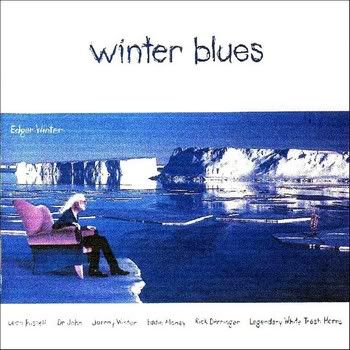
Edgar Winter - Winter Blues - 1999 - Rhino Records (USA)

A great electric blues rock album from Edgar Winter. There are no stand - out tracks, but the all star cast and great musicianship make for great listening. Buy his "Jazzin' the Blues" album, and give his great " Live in Japan" album a hearing.

TRACKS / COMPOSERS

1 Good Ol' Shoe (with Leon Russell)
2 Nu'orlins (with Dr. John/Bobby Kimball)
3 Texas
4 New Millennium (with Rick Derringer)
5 On the Tip of My Tongue (with Johnny Winter/Rick Derringer)
6 White Man's Blues (with Rick Derringer)
7 They Only Come Out at Night (with Frankie Sullivan)
8 It's Only Money (with Eddie Money)
9 Show Your Love
10 You Are My Song

All tracks composed by Edgar Winter, except Track 6, by Rick Derringer, Edgar Winter, Track 7, by Edgar Winter, Frankie Sullivan, and Track 10, by Edgar Winter, Curt Coumo

MUSICIANS

Edgar Winter (vocals, alto & baritone saxophones, piano, organ, synthesizer)
Johnny Winter, Rick Derringer, Frankie Sullivan, Mitch Perry (guitar)
Leon Russell, Dr. John (piano)
Vail Johnson, Mike McKinney, Charlie Torres (bass)
Rick Latham, Sterling Campbell (drums)
Louis Conte, Chuck Silverman (percussion)
Jon Smith (tenor saxophone)
Ken Tussing (trombone)
Steve Howard (trumpet)
Dean Roubicek (clarinet)
John Paris (harmonica)
Westy Westenhofer (sousaphone)
John Massari (strings)
Eddie Money, Bobbie Kimball (vocals)
Carl Anderson, Billy Trudel, John Mahon, Monte Kelley, Paul Pesco (background vocals)

REVIEW

Through steady work, Edgar Winter kept himself visible throughout the '90s, culminating with a pair of solid efforts for Intersound. Those appeared under the radar of popular consciousness, known only to hard rock and blues-rock fans. For the general public, Winter re-entered consciousness through a series of television commercials -- usually, they just featured his songs, but he was the star in a clever Miller campaign that suggested Winter and George Hamilton were twins -- along with a prominent song in the political satire Wag the Dog. All of this led to a contract with Pyramid Records and Winter Blues, his first large-scale, heavily promoted release in nearly 20 years. As is customary for any comeback release, Winter Blues is flush with cameos, but this time around, they make sense -- brother Johnny, Rick Derringer and Leon Russell have been long-time colleagues of Edgar, while Dr. John and (surprisingly) Eddie Money fit in quite nicely. Their presence is welcome, since Winter has never been the strongest of frontmen and they never take away from his guitar playing, which remains the best reason to hear Winter Blues. Anyone that paid attention to his Intersound releases would have realized that Winter has been cutting good, solid records in the '90s and this is no different, but anyone that hasn't followed him will be surprised how consistent this is. Really, there's nothing new here, since it's in the vein of his electrified blues and hard rock of the '70s, but it's done well and performed with conviction, resulting in an album that may not reach the heights of his classics, but certainly is among his most enjoyable and consistent works. In other words, it will please both the hardcore fans and listeners in the process of (re)discovering Winter. © Stephen Thomas Erlewine, All Music Guide


BIO
Although he's often skirted the edges of blues music, at heart, saxophonist, keyboardist and composer Edgar Winter is a blues musician. Raised in Beaumont, TX, the younger brother of ukulele player and guitarist Johnny Winter, Edgar Winter has always pushed himself in new directions, synthesizing the rock, blues and jazz melodies he hears in his head. As a consequence, his fan base may not be what it could have been, had he made a conscious effort -- like his brother Johnny -- to stay in a blues-rock mold over the years. He's one musician who's never been afraid to venture into multiple musical arenas, often times, within the space of one album, as in his debut, Entrance (1970 Columbia Records). Edgar Winter, the second son of John and Edwina Winter, was born December 28, 1946 in Beaumont, TX, and much of the credit for Edgar and Johnny's early musical awareness must go to the brothers' parents, who have been a constant source of encouragement throughout their respective musical careers. The boys' father sang in a barbershop quartet, in their church choir, and played saxophone in a jazz group. Edgar and Johnny, who's three years older, began performing together as teens, playing local watering holes like Tom's Fish Camp before they were old enough to drink. The pair's early R&B and blues groups included Johnny and the Jammers, the Crystaliers and the Black Plague. In high school, Edgar became fascinated with the saxophone stylings of Julian "Cannonball" Adderley and Hank Crawford, and he began playing alto sax in earnest. As a pre-teen, he had played ukulele, like his older brother. But by the time he was of college age, Edgar had become competent on keyboards, bass, guitar and drums. Edgar was signed to Epic Records in 1970 after performing on his brother's Second Winter album. He recorded Entrance, his debut, which featured himself on most of the instruments. After radio success accompanying his brother on Johnny Winter And, he formed a large horn ensemble called White Trash. Although it was a short-lived group which broke up in mid-'72, Winter assembled another group to record two more albums for Epic Records, White Trash and Roadwork. Winter's single, "Keep Playing That Rock 'n' Roll," reached number 70 on the U.S. rock radio charts, and the album Roadwork hit number 23 on the album charts. By the summer of 1972, through constant touring, (and a ready willingness to do interviews, unlike his older brother), Winter formed the Edgar Winter Group in the summer of 1972. In January, 1973, Epic released They Only Come Out at Night, produced by guitarist Rick Derringer, which reached number three in the U.S. This album had Winter's most famous song, "Frankenstein," which reached number one in the U.S. in May of 1973. Later that year, "Free Ride" from the same album reached number 14. Although he's never matched that kind of commercial radio success again, Winter has continued to tour and record at a prolific pace. He relocated from New York City to Beverly Hills in 1989 to pursue movie score work, which he's had some success with, most notably with a slightly reworked version of "Frankenstein" for the movie Wayne's World II. Although his early-'70s albums like Entrance, White Trash, They Only Come Out at Night and Shock Treatment are bluesier affairs than some of his later albums, there are blues tunes like "Big City Woman" on one of his 1990s releases, Not a Kid Anymore (1994), on the Intersound label, and 1999's Winter Blues was almost wholly devoted to the idiom. A good introduction to Winter for those who weren't around in the early '70s is The Edgar Winter Collection (1993) on Rhino Records. © Richard Skelly, All Music Guide

Paul Carrack


Paul Carrack - Satisfy My Soul - 2000 - Carrack-UK

Seventh solo album from the man of a thousand guest appearances and part- time bands. Essentially a family man amazed to have found himself, decades on from the initial rush of Merseybeat, a survivor of the cruel ebbs and flows of musical fashion, this is Carrack saying, "No more rock star pretences - this is who I am and what I have to say. "What he has to say will, in fact, strike chords with thousands of everyday people whose monochrome lives take constant solace in sunlit dreams. Classic soul and pop values deliver here a sound more organic and less bombastic than Carrack's work with Mike & The Mechanics. Three tracks are co-written with Chris Difford, but the most powerful is self-penned "Running Out Of Time" - an exquisitely British take on Bryan Adams "Summer Of 69" vibe: "Beating time on cardboard boxes/in an attic cold as ice/We were Freddie And The Dreamers/with stars before our eyes." This album is the sound of the small man coming through and doing the do with class and dignity. © Colin Harper, Mojo

Great album from Paul Carrack. His name may be unfaniliar to many, but his great soulful voice is one of the most recognizable voices in the rock business. He has been a member of several bands including Ace, Squeeze, Mike + The Mechanics, and Roxy Music, been a session and touring musician for several others, and has enjoyed success as a solo artist as well. His distinctive voice shows up on some of his affiliated bands' best-known hits, two of the most memorable being "How Long" with Ace, and "Tempted" with Squeeze. Check out his 1980 "Nightbird" album

TRACKS

1 - Satisfy My Soul (3:28)
2 - Together (4:06)
3 - Where Would I Be (4:28)
4 - My Kind (4:26)
5 - Inspire Me (3:55)
6 - The Only One (5:01)
7 - How Wonderful (3:46)
8 - Running Out Of Time (4:24)
9 - Better Then Nothing (4:04)
10 -Time Passes (4:34)
11 - Make Your Mind Up (4:19)

All tracks composed by Paul Carrack, except Tracks 1, 6, & 7, by Carrack, Difford, and Track 8, by Carrack, Rutherford
There is a 2 CD 2001 issue of "Satisfy My Soul" available which ncludes five bonus tracks, - 'Silent Running' (Live), 'Eyes Of Blue' (Live), 'Bring It On Home To Me' , "My Kind" (Radio Edit), & a CD enhanced interview & performances.

MUSICIANS

Paul Carrack (vocals, guitar, keyboards, bass, drums)
Steve Beighton (saxophone)
David Crichton (string synthesizer)
Andy Newmark, Ian Thomas (drums)
Lee Russell (loops)
Lindsay Dracass (background vocals)

REVIEWS

Widely respected as a session-man, Paul Carrack has yet to break through on his own. On the strength of this solo album, recognition is long overdue for Sheffield's doyen of white soul. Solo is the key word - Carrack not only composed most of the 11 tracks and played guitar, bass and keyboards on all of them, but also produced, engineered and published the CD. The title track sets the tone: moodily laid-back soul with echoes of The Drifters, Otis, Ben E King, or - in the punchier numbers - the heyday of the Stax and Mussel Shoals studios. Laced through with wickedly bluesy guitar licks, this is excellent stuff. Long live northern soul. © ANDY FARQUARSON, Independent, The (London), May 28, 2000, © 2000 Newspaper Publishing PLC, Provided by ProQuest Information and Learning Company. All rights Reserved.

Englishman Paul Carrack has possessed one of the most familiar voices in pop music since the 1970s. His soulful performances can be heard on hits by Ace ("How Long"), Mike + the Mechanics ("The Living Years," "Silent Running"), and Squeeze (the '80s classic "Tempted"). Carrack has also scored as a solo artist with the hits "Don't Shed a Tear" and "I Live By the Groove." With Satisfy My Soul (2000), Carrack has crafted another collection of melodic pop songs. Though some of the material is weak, his distinctive vocal gifts make even the most mediocre song worth hearing. There is certainly no shortage of catchy tunes on Satisfy My Soul. Both "My Kind" and the funky "Better Than Nothing" rank as some of Paul Carrack's best material, and "Inspire Me" is a dead ringer for '80s-era Hall & Oates. Satisfy My Soul also includes collaborations with Carrack's former bandmates Chris Difford (Squeeze) and Mike Rutherford (Genesis, Mike + the Mechanics). The title track (written with Difford) is a tuneful, upbeat ballad that sounds similar to Sam Cooke, and "Running Out of Time" (with Rutherford) is an edgy, soulful rocker. Carrack, who also produced, should be commended for his straightforward approach on Satisfy My Soul. Instead of resorting to pretentious production techniques and overblown arrangements in an attempt to sound contemporary, Carrack keeps things simple, wisely allowing his vocals to take center stage. While the melodies remain strong for the most part, some of the material suffers from trite lyrics ("She's my girl/Any fool can see," from "My Kind"). However, Carrack more than compensates for the clichés with his superb vocal performances; he sounds just as good here as he did on "Tempted" almost 20 years earlier. Satisfy My Soul was released in an era when disposable, over-produced pop ruled the airwaves. The album certainly won't sell as many copies as Backstreet Boys and Britney Spears albums did at the turn of the millennium, but Carrack has proven for decades he is a true pop craftsman. Satisfy My Soul is further evidence of Paul Carrack's ability to remain an engaging, solid performer, even when the music business is dominated by fads and marketing gimmicks. © William Cooper, All Music Guide

BIO

After years spent bringing a little soul to artists as diverse as Mike & The Mechanics, Nick Lowe, and Squeeze, singer's singer Paul Carrack makes his most persuasive play so far with the release of his stunning new album Satisfy My Soul. Recorded with minimal outside assistance at his Hertfordshire home studio, the album represents a quantum leap beyond Paul's previous work, showcasing his songwriting abilities and allowing his natural soul qualities to shine through with a new clarity and power. In the past, he's often tended to let others mould and direct his considerable talents, but Satisfy My Soul serves to re-establish Paul Carrack as a major solo artist, with both the vision and the capabilities to take control of his own career, and the musical instinct to know which direction it should take. A lot of people are going to be pleasantly surprised by this latest chapter in the life of one of pop music's most distinctive voices. Paul was first bitten by the music bug as a small child back in his native Sheffield, where he would bash away at a home-made drumkit up in his parents' attic, playing along with an old wind-up gramophone. By the time he reached his teens, the Mersey Boom was in full swing, and the young Carrack proceeded to swindle his way into a series of local bands, learning to play the organ and following the gig circuit to Germany, where he underwent the obligatory Hamburg nightclub baptism, as pioneered by such as The Beatles. In the early '70s, his progressive rock outfit Warm Dust released a few albums, but it was only when his pub-rock band Ace had a huge global hit with his song How Long that Paul's career really started to take off. Immediately, the band was catapulted from the British college circuit into huge American arenas, as How Long soared into the US singles chart, eventually reaching #1. When Ace broke up toward the end of the '70s, Paul found himself wrong-footed by the punk-rock boom, but secured some session work, playing on albums by Frankie Miller and Roxy Music, and touring with Roxy, an experience which gave him a taste for the big time. Paul's 1980 solo debut, Nightbird, failed to establish him as an artist in his own right, so he continued playing sessions, biding his time, and honing his talents as a musician and songwriter. As the '80s proceeded, Paul reached a rapprochement with the new-wave scene, playing on albums by The Undertones, The Smiths, and The Pretenders, and joining Squeeze for their masterwork East Side Story, helping redefine the group's profile with his soulful vocal on the hit single Tempted. After leaving Squeeze, obstensibly to pursue a solo career, he hooked up with Nick Lowe, an association which, though resolutely out of step with public taste and radio formats, would nevertheless generate five albums for Lowe and another for Paul, 1982's Suburban Voodoo. Though largely ignored in the UK, the album was a critical success in the US, where it was cited as one of Rolling Stone Magazine's Top 20 Albums of the Year. I Need You, a Carrack composition lifted from the album, provided him with another US Top 40 hit, and was subsequently covered by Linda Ronstadt & Aaron Neville. The biggest break in Carrack's career came in 1985 when he was invited to contribute vocals to a solo album being recorded by Genesis guitarist Mike Rutherford. Despite the apparent differences in their musical styles, the very first track Paul sang on, Silent Running, became a hit on both sides of the Atlantic. Encouraged by such instant success, Mike & The Mechanics developed into more of a group, touring America extensively and securing a string of hit albums and singles over the next decade. Before they could produce a follow-up album, however, Paul found time to sing and play on Roger Waters' Radio KAOS album and record another solo album of his own, 1987's One Good Reason, scoring another couple of hits through the title track and Don't Shed a Tear, which again broke into the US Top Ten, staying on Billboard's Hot 100 for nearly half a year. Even better was to come when Mike & The Mechanics resumed recording. Sung by Paul, the title-track of their second LP The Living Years was a huge worldwide hit, peaking at number one in America, and hoisting the band to megastar status. Further touring was followed by another Carrack solo album, 1989's Groove Approved, whose standout track - the Motown-flavoured Carrack / Lowe composition Battlefield - was later covered by Diana Ross. The following year, Paul was co-opted to perform at Roger Waters' grandiose presentation of The Wall in Berlin, where he sang Hey You in front of over 250,000 people. A third Mike & The Mechanics album, 1991's Word of Mouth, saw Carrack's creative input increasing, with four songwriting credits; and also donated a performance of Ain't That Peculiar recorded with Paul Shaffer's house band on Late Night with David Letterman to Nobody's Child, a charity album for Romanian orphans. Between tours again, in 1993 Paul busied himself with Spin 1ne 2wo, a classic rock covers collaboration with Rupert Hine, Tony Levin, and Steve Ferrone, and rejoined Squeeze for their Some Fantastic Place album. The next year was spent touring the world with Squeeze, working on an ultimately abortive band project with Don Felder, Timothy Schmidt, and Joe Walsh of The Eagles (which nevertheless garnered Paul an award for the most played song in America that year, when the reformed Eagles covered Love Will Keep us Alive, a song he co-wrote with Peter Vale and Jim Capaldi), and recording another Mike & The Mechanics album, Beggar on A Beach of Gold. This contained another couple of Carrack co-compositions, including his collaboration with Mike Rutherford, the hit single Over my Shoulder, which revived the band's flagging fortunes in the UK and Europe, paving the way for a subsequent Greatest Hits compilation. Paul's fifth solo album, Blue Views, appeared in 1995, and despite problems occasioned by the collapse of the record label, it was still highly successful in Europe, earning him a gold disc in Spain. When it was finally released a couple of years later in America on another label, the single For Once in Our Lives became a Top Five hit on Billboard's Adult Contemporary chart, cementing Carrack's growing reputation as a singer-songwriter of class and distinction. He was also developing a parallel reputation as an able and accomplished sideman to the stars, playing keyboards on albums by Eric Clapton, BB King, Simply Red, Mark Knopfler and Elton John, and being invited by Elton to play on Something About the Way You Look Tonight, which, as the B-side of "Candle in the Wind '97," is officially the biggest-selling single ever. Unfortunately, a management change at EMI resulted in his next album, Beautiful World failing to get the promotional push it deserved, and a bitterly dissillusioned Paul elected to take matters more into his own hands. After years spent biding his time, contributing to other musicians' projects and allowing outside producers to impose their designs on his material, it was a long overdue move, and one which reflected Paul's growing belief in himself as a singer-songwriter. Accordingly, he recorded his new album, "Satisfy My Soul" at his home studio, relying on his own musical instincts and playing everything himself, with the exception of the sax parts (which are by Steve Beighton), some backing vocals (by Lindsay Dracass) and some of the drum parts (by Ian Thomas or Paul's old chum Andy Newmark, the former Sly & The Family Stone sticksman.) Steeped in the classic and funk sounds of the '60s and '70s, but with an ear firmly trained on the future, Satisfy My Soul is clearly a labour of love, and features some of Carrack's most accomplished songwriting, with three tracks being co-written by Squeeze lyricist Chris Difford. Carrack's journey to make a record that truly does satisfy his soul has come full circle. "I've been doing this a long time, and I've often made it quite difficult for myself, one way or another, but I'm at the point now where I just want to enjoy my musicality, and I have the technical resources and the stability to be able to follow my instincts more confidently. Alot of the time, I've gone against my own instincts, but I'm not fighting them any more, I'm doing what comes naturally now. I'll be happy just to reach the people who already like what I do, but who knows, by making a more personal record, I might reach more people anyway." Satisfy My Soul brings Carrack to Compass Records, also the American home to other British popsters Robbie McIntosh, Hamish Stuart, Eddi Reader, Boo Hewerdine and Clive Gregson. © 2003-2008 Compass Records. All Rights Reserved


MORE ABOUT PAUL CARRACK

Paul Carrack was pop music's ultimate journeyman. A vocalist and keyboardist who enjoyed considerable success over the course of his lengthy career while in the service of bands ranging from Ace to Squeeze to Mike + the Mechanics, his finest work often came at the expense of his own identity as a performer; indeed, of the many big hits on which the unassuming singer was prominently featured, only one, 1987's "Don't Shed a Tear," bore his own name. Carrack was born April 22, 1951, in Sheffield, England; he joined the pub rock group Ace in 1972, eventually writing and singing their debut single, "How Long." After reaching the Top 20 in the group's native Britain, the record hit the number-three position in the U.S.; however, after subsequent material failed to match the success of "How Long," Ace disbanded in 1977, and Carrack signed on with country artist Frankie Miller. He soon resurfaced in Roxy Music, appearing on the LPs Manifesto and Flesh and Blood before releasing his solo debut, Nightbird, in 1980. Carrack next joined Squeeze, replacing keyboardist Jools Holland; in addition to contributing to the group's 1981 creative pinnacle East Side Story, he also assumed lead vocal duties on the single "Tempted," their best-remembered hit. However, Carrack's stay in Squeeze was brief, and after working with Nick Lowe he again attempted to forge a solo career with the 1982 LP Suburban Voodoo, cracking the U.S. Top 40 with the single "I Need You." A tenure as a sideman with Eric Clapton followed, and in 1985 he joined Genesis' Mike Rutherford in his side project Mike + the Mechanics. Their hits include "Silent Running (On Dangerous Ground)" and "All I Need Is a Miracle." While remaining a rather anonymous figure at home, Carrack achieved a higher level of visibility in America as a result of Mike + the Mechanics' success; subsequently, his third solo album, One Good Reason, proved to be by far his most popular effort to date, with the single "Don't Shed a Tear" reaching the Top Ten. Another tenure with the Mechanics followed, and with the title track of 1988's The Living Years, the group scored their first number-one hit. After the 1989 Carrack solo LP Groove Approved, Mike + the Mechanics issued 1991's Word of Mouth, which failed to repeat the chart performance of its predecessors; by 1993, Carrack was again a member of Squeeze, appearing on the album Some Fantastic Place and also resuming lead chores for a re-recording of "Tempted." However, he was once again back in the Mechanics' fold for 1995's Beggar on a Beach of Gold; the solo Blue Views was issued the next year, followed in 1997 by Beautiful World. Satisfy My Soul was issued in 2000, his first album for Compass Records. © Jason Ankeny, allmusic.com

The Blues Band


The Blues Band - Ready - 1980 - Baton Productions Ltd. (Sweden)

In 1979 Paul Jones, ex UK band Manfred Mann, was working as an actor in London’s West End , and playing a few harmonica sessions as a day job.. He missed playing the Blues, and contacted his old Manfred Mann buddy, Tom McGuinness, with the idea of forming a part-time blues band that could gig around London’s pubs for fun and some badly needed spare cash. Jones and McGuinness also managed to get drummer, Hughie Flint who had played with John Mayall. Tom McGuinness and Hughie Flint had been mainstays of McGuinness Flint, the popular seventies British rock band. Dave Kelly, a good vocalist, and bottleneck guitar player with The John Dummer Blues Band was at a loose end at the time, and joined the band with bass player, Gary Fletcher, a friend of Dave Kelly, who incidentally was the brother of the amazing blues singer, Jo Ann Kelly. The Blues Band are still playing the occasional gig today. They are a bunch of very experienced musicians who have undergone numerous personnel changes, and still play the blues with the best of them. This is a great album, with some well written songs by Paul Jones and Stonebridge/McGuinness, along with other great British songsters/players, but there are also some great covers of songs by Muddy Waters, Willie Dixon, and Ray Charles. Speaking of Ray Charles, it is worth buying The Blues Band's great tribute album to the genius of soul, " Thank You Brother Ray" and try and listen to the band's great "Live at the BBC" album.

TRACKS / COMPOSERS

A1 Twenty Nine Ways - Willie Dixon
A2 Find Yourself Another Fool - Stonebridge/McGuinness
A3 Noah Lewis Blues - Paul Jones
A4 Hallelujah I Love Her So - Ray Charles
Piano - Geraint Watkins
A5 Treat Her Right - Roy Head
A6 Lonely Avenue - Doc Pomus
Backing Vocals - Paulettes, The

B1 I'm Ready - McKinley Morganfield
B2 Green Stuff - Gary Fletcher
B3 Hey Hey Little Girl - Stonebridge/McGuinness
B4 Can't Hold On - Paul Jones
B5 Sus Blues - Dave Kelly
B6 The Cat - The Blues Band

N.B: There are various issues of this album. Some Arista editions of the album replace Track A5 "Treat Her Right" with "Maggie's Farm" . The album has also been included on a 2 CD set (Two LP's on 2 CD's) called "Blues Band Bootleg/Ready" with 14 tracks. The album posted here is the 1980 Swedish LP version on the Baton Productions Ltd label

BAND

Paul Jones - vocals, harmonica
Dave Kelly - vocals, slide guitar
Gary Fletcher - bass, background vocals
Hughie Flint - drums, percussion
Tom McGuinness - guitar, background vocals
Ian Stewart - piano

BIO (Wikipedia)

The Blues Band were formed in Britain in 1979 by Paul Jones, former lead vocalist and harmonica player with Manfred Mann in the 1960s, and vocalist/slide guitarist Dave Kelly, who had formerly played with the John Dummer Blues Band, Howlin' Wolf and John Lee Hooker among others. Also in the band’s first line-up were bassist Gary Fletcher, Jones’s former Manfred Mann colleague, guitarist Tom McGuinness, and drummer Hughie Flint, the two latter having been the mainstay of McGuinness Flint. They originally got together just for fun, but in the process stayed together far longer than any of their previous groups had ever managed to do. Their first album, The Official Blues Band Bootleg Album, a mixture of blues standards and original songs – notably the Jones-McGuinness composition "Come On In", and their long-standing stage favourite "Flatfoot Sam" - initially attracted no interest from major record companies, so they pressed a limited run of 3,000 themselves, hand-stamped their logo on the cardboard sleeve, and signed them all. After unqualified endorsement from BBC Radio 1 presenter Simon Bates and others, media interest resulted in a recording contract with Arista Records, who gave the album an official release. In 1982 Flint left, and was replaced by former Family drummer Rob Townsend. They briefly disbanded later that year after recording a live album, Bye Bye Blues, released in 1983, but reformed soon afterwards. They have remained a constant factor on the music scene ever since, unfazed by lack of chart success (after the first few years, as demonstrated below), happy to combine a regular schedule of touring and recording around their other commitments. More recent albums include Back For More, Homage, Brassed Up, Wire Less, Fat City, and Thank You Brother Ray, the last being a set of cover versions of Ray Charles songs, recorded as a tribute. Jones, McGuinness and Townsend are also members of The Manfreds, a virtual reincarnation of Manfred Mann, though because of the non-participation of the eponymous keyboard player of the 1960s outfit, legal reasons and courtesies require them to assume the name 'Manfreds'. Jones and Kelly sometimes play gigs as a duo, and Kelly performs with The Dave Kelly Band (generally The Blues Band without Jones). As the band themselves often joke, "The music industry doesn’t bother us and we don’t bother them."

SHORT BIO

England's the Blues Band is led by ex-Manfred Mann vocalist Paul Jones and guitarist/vocalist Dave Kelly, who, before forming the group in 1979, had been a member of the John Dummer Blues Band and issued several solo recordings on his own (Kelly had also received praise for his playing by such blues legends as Howlin' Wolf and John Lee Hooker). After hooking up with friend/bassist Gary Fletcher, the seeds for the Blues Band were sown, resulting in countless albums (including such titles as 1980's Official Bootleg Album and Ready, 1981's Itchy Feet, 1982's Brand Loyalty which featured new member ex-Family drummer Rob Townsend, 1983's Bye Bye Blues, 1986's These Kind of Blues, 1989's Back for More, 1991's Fat City, 1993's Homage, and 1995's Wire Less, among others). In addition, Kelly formed the Dave Kelly Band in the mid-'80s (issuing four albums), penned music for commercials and such projects as BBC TV's King of the Ghetto and The Comic Strip Presents Strike!, has been voted Best Acoustic Artist by BBC polls throughout the '90s, and is an honorary patron of the London Guitar College with Hank Marvin. © Greg Prato, All Music Guide