
A.O.O.F.C
recommends
Mizar6

babydancing


Get this crazy baby off my head!

20.11.09

Casiopea


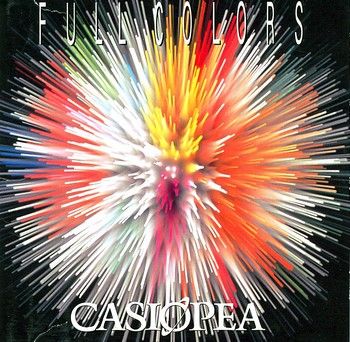
Casiopea - Full Colors - 1991 - Pioneer LDC

The Japanese outfit, Casiopea are huge in the Australasian and S.E Asia area , but are not as well known in the West as they should be, despite having toured globally, and with artists like Randy and Michael Brecker, and members of Fourplay, including Lee Ritenour, Harvey Mason, Nathan East and Don Grusin. If you like jazz fusion, expertly played, then you may like "Full Colors". The album may be a bit more "lightweight" than other Casiopea releases, but the superb musicianship is still here. Listen to ""Fightman", a great track, and one of the band's biggest hits. Casiopea have released many albums, many of which are only available as ovepriced Japanese imports. If you can find it , at a reasonable price, buy their 1981 album, "Eyes of the Mind", one of the best fusion albums of the early 80's. N.B: Akira Jimbo and Tetsuo Sakurai are mot playing on this album, having departed the band in 1989. This album was later released in a remastered version, with fantastic sound quality. However, the album posted here is ok, audiowise, and is very enjoyable. For more great jazz fusion, check out the following albums, :- The Yellowjacket's "Four Corners", Weather Report's "Black Market", Fourplay's "Between the Sheets", Michael Franks and Crossfire "Live", Spyro Gyra's "Down the Wire", John McLaughlin and Chick Corea's "Five Peace Band Live", and Brand X's "Morrocan Roll". Casiopea's "Made In Melbourne" album can be found @ CSPEA/MIM

TRACKS / COMPOSERS

1. "Fight Man" Issei Noro 3:17
2. "The Sky" Issei Noro 4:03
3. "Passionate Voltage" Issei Noro 2:47
4. "Purple Hours" Issei Noro 4:00
5. "Final Chance" Minoru Mukaiya 3:23
6. "Akappachi-ism" Yoshihiro Naruse, Issei Noro 3:03
7. "Private Sunday" Issei Noro 3:55
8. "Search My Heart" Minoru Mukaiya 4:40
9. "Street of Dreams" Issei Noro 4:22
10. "Navigators" Issei Noro 3:49
11. "Once In A Blue Moon" Minoru Mukaiya 3:37
12. "Top Wind" Issei Noro 4:12

MUSICIANS

Issei Noro - Electric guitar, Acoustic guitar
Yoshihiro Naruse - Electric Bass
Minoru Mukaiya - Keyboards
Masaaki Hiyama - Drums
Gen Ogami(Orquesta de la Luz) - Timbales & Percussions
Carlos Kanno(Orquesta de la Luz) - Bongo & Percussions
Gen Date(Orquesta de la Luz) - Conga & Percussions

BIO

Casiopea was formed in the late 70's by guitarist Issei Noro, keyboardist Minoru Mukaiya, bassist Tetsuo Sakurai, and drummer Takashi Sasaki, and the quartet released its first, self-titled album in May of 1979. Containing high-energy, yet melodic contemporary jazz and fusion and featuring arrangements fleshed out by a horn section consisting of Michael Brecker, Randy Brecker, and David Sanborn, the album set the tone for the band's many future releases and remains one of their best. The song "Midnight Rendezvous" is still a concert staple.
The band's follow-up, Super Flight, was released only six months later, the short gap between the albums being characteristic of the band's prolific output. Thunder Live, the first of several live albums to be put out by the group, followed in 1980. This album marked the first apperance of drummer Akira Jimbo, who replaced Sasaki after the first two studio albums. Jimbo, a world-class fusion drummer renowned for his mastery of 4-way independence (independent movement of the four limbs), completed a line-up that would remain stable for most of the decade. Several albums followed in rapid succession. 1981 saw the band seeking outside help to handle the production chores and turned to ace drummer Harvey Mason (today perhaps best known to smooth jazz fans as a member of Fourplay) for the album Eyes of the Mind, recorded in L.A. Mason's influence lent the group's music a more American sound, and his and Paulinho da Costa's percussion work contributed to making this one of the quartet's best releases. The album was recorded on 32-track digital equipment, practically unheard of in those days. Mason also acted as executive producer on the band's next album, Cross Point. In 1982 followed Mint Jams, a live album recorded in Japan and containing first-rate examples of the band's live performances at this stage in their career. For their next studio album, the band once again turned to guest players. 4x4 - Four By Four, released in late 1982, features Lee Ritenour, Don Grusin, Nathan East, and Harvey Mason, and contains some very interesting arrangements with two players on each instrument. Ritenour also contributed a song and did some of the arrangements, including the surprising choice of Ravel's "Pavane Pour Un Infante Défunte". By this time, Casiopea's reputation was starting to spread outside Japan, and in 1983 the band performed live in England for the first time. Later that same year, they recorded their tenth album, Jive Jive, in London. The year 1989 turned out to be a watershed in Casiopea's career. After a few years of tension within the band, drummer Akira Jimbo and bassist Tetsuo Sakurai left to pursue solo careers (to be covered in future editions of this column), and the two remaining members came close to calling it quits. It is the only year in the band's history that did not see the release of a studio or live album from the fusion foursome. A laserdisc was released, but no album. However, replacements were found, and in 1990, Casiopea returned with The Party, the first album to feature new members Yoshihiro Naruse and Masaaki Hiyama. With his energetic stage presence, Naruse seemed to inject some new energy into the band, and the quartet was set to enter the 90's with a more aggressive and slightly more hard-edged sound. One of Japan's premier bass players, Naruse has a distinct style (partly due to his frequent use of double strings), and like Sakurai before him, is a master slapper. With this new line-up, Casiopea recorded two more studio albums, 1991's Full Colors and 1992's Active, as well as another live album, We Want More. In late 1992, Hiyama was replaced by Noriaki Kumagai on drums, and with him on board, the band recorded Dramatic, released in 1993. More varied both in terms of arrangements and songwriting, the album stands out as one of the band's best 90's releases. In 1994, Casiopea was particularly busy. May saw the release of Answers, a new studio album recorded in Hawaii. For its 25th album, released only three months later, the band decided to try something different. The result was Hearty Notes, a kind of "unplugged" recording featuring only acoustic instruments. In December followed Asian Dreamer, a double CD containing new versions of 20 classic Casiopea songs. Not about to slow down even after this busy year, Casiopea returned in 1995 with a new studio recording called Freshness. In 1996, the band appeared at the North Sea Jazz Festival in the Hague, Holland following the recording of a new album in Amsterdam. Later that year, Kumagai left the band, and rather than finding a permanent replacement, the remaining members decided to call upon a couple of old friends for the recording of their next album, Light and Shadows. Reuniting with Harvey Mason, the band recorded three tracks in L.A., while former member Akira Jimbo occupied the drum chair on the remaining eight tracks. With Jimbo back as an "associate member" and even contributing a few songs, Casiopea recorded two more studio albums, including 1999's Material, which marked the 20th anniversary of the band's debut. Following the release of the new CD, the band embarked on a tour of Japan, with a special anniversary concert taking place in Tokyo. With Jimbo behind the drums, the band was joined by some special guests during the second part of the show: former members Tetsuo Sakurai and Noriaki Kumagai, as well as keyboardist Hidehiko Koike, who was a member of the band in the 70's before they got a record deal. The show was recorded and filmed, and a double live CD called 20th came out in early 2000. The first disc is devoted mainly to recent material, but also includes a 37-minute medley structured as a flashback chronicling each year in the band's history. Each song in the medley is a year older than the previous one, until the band ends up playing "Space Road" from their first album in 1979. The second disc is devoted to the guest portion of the show, including some very potent drum and bass battles between the current and former members. The whole show was also released on VHS video and DVD. With new studio albums, Bitter Sweet and Main Gate, having been released in 2000 and 2001, Casiopea has entered the 21st century as prolific and energetic as ever. The band has also entered the world of DVD's: The DVD version of their double live CD has already been mentioned above, and other notable titles available are Casiopea Live History Part 1 and Part 2, which both are double DVD's containing 2 concert recordings each, from 1985, 1986, 1988, and 1992. The first disc in Casiopea Live History Part 2 is the video version of the World Live '88 CD release mentioned above, with recordings from Brazil, Australia, Japan, Mexico, and the USA. Yet another DVD, The Mint Session (1997), contains live performances recorded in a studio and features guest spots by former bassist Tetsuo Sakurai, as well as drummer Akira Jimbo. All the DVD's mentioned in this paragraph are playable in all regions. While Casiopea can be criticized for a certain sameness in their music, rarely straying far from their characteristic sound, the fact remains that their albums exhibit a vigour that is lacking from a lot of typical, run-of-the-mill smooth jazz releases. Another way of looking at it is to say that Casiopea has remained true to their sound and not yielded to the pressures that many American smooth jazz artists are subject to, putting out remarkably consistent albums throughout their 23-year recording career. © Morten Hansen, www.smoothvibes.com/vikingview.html

18.11.09

John Hiatt


John Hiatt - Crossing Muddy Waters - 2000 - Vanguard

A barebones acoustic album of superb folk-blues. There are eleven original Hiatt songs here, with great arrangements. With minimum instrumentation, the great singer/songwriter shows here why he is one of the world's greatest folk blues artists. John has had his songs covered by dozens of great artists like Three Dog Night, Bob Dylan, Willy DeVille, Linda Ronstadt, Bonnie Raitt, Eric Clapton, B.B. King, Joan Baez, Buddy Guy, Iggy Pop, Emmylou Harris, Nick Lowe, and The Nitty Gritty Dirt Band. And yet, like so many other great artists, his own albums, have not always received the acclamation they deserve. In fact, his name is still unknown to many music fans. Sonicnet said of this album, "Hiatt holds down the drummerless rhythm with his acoustic six-string and a National resonator guitar. The boisterous atmosphere (everybody hoots and hollers) evokes a back-porch picking session, and Hiatt's songs draw from similarly down-home sources.... a recording that reflects the spirit of musicians who live to sing and play". Q Magazine stated that "These songs snap at the outer edges of country, blues and folk, their emotional turmoil leavened by moments of bone-dry humour.", and Wall Of Sound noted that "Crossing Muddy Waters" is "An album of stunning acoustic folk-blues... Hiatt is at his absolute sharpest in terms of songwriting, and the arrangements, most often just guitar, bass, and mandolin or a second guitar, are fully fleshed out and never feel spare or slight. The album is HR by A.O.O.F.C. N.B: There is a "clicking" noise between each track on this album. It's not a big problem. The tracks, themselves are ok. Try and listen to his exceptional "Riding with the King", and "Slow Turning" albums

TRACKS

1 Lincoln Town 4:03
2 Crossing Muddy Waters 4:05
3 What Do We Do Now 3:01
4 Only The Song Survives 3:59
5 Lift Up Every Stone 3:13
6 Take It Down 4:00
7 Gone 2:56
8 Take It Back 3:11
9 Mr. Stanley 3:41
10 God's Golden Eyes 2:28
11 Before I Go 3:36

All songs composed by John Hiatt

MUSICIANS

John Hiatt (Vocals, Acoustic 6-string, Harmonium, National resophic)
David Immerglück (Mandolin, Electric mandolin, Baritone mandolin, Acoustic 12-string, Electric slide, Harmony vocals)
Davey Faragher (Bass, Foot stomping, Tambourine, Metal folding chair, Harmony vocals)

REVIEWS

Two and a half decades into a career that's never delivered the stardom forecast by legions of champions, John Hiatt has settled into a niche that's about as comfortable as a maturing singer-songwriter could ask for. No longer a major-label priority, Hiatt has hooked up with the stalwart folk label Vanguard for his 15th release. Crossing Muddy Waters adroitly captures Hiatt's comfort and confidence. Not so much blues as blusey, Crossing Muddy Waters features 11 new Hiatt compositions, half of which feel instantly familiar. The rambunctious "Lift Up Every Stone" sounds a little like some of Tom Waits's more accessible recent efforts, while "Take It Down" is a love-lost lament that's as heavy as a foggy evening. Crossing Muddy Waters was cut in three days and features only two accompanists--the uncommonly sympathetic Davey Faragher and David Immerglück. Just goes to show that Hiatt moves just fine when he's not dragging a lot of added weight and heavy expectations behind him. © Steven Stolder, amazon.com

John Hiatt's 16th effort is a marked departure from his work of the previous 25 years, and a vast improvement over 1997's disappointing Little Head. Hiatt retrenched and recorded his first drummer-less, predominantly acoustic record for Vanguard. It's a sympathetic match and a smart move, since the company has a long, rich history working in the unplugged medium before it became trendy. The result is the most natural and relaxed John Hiatt album in years, and a welcome addition to his extensive catalog. With just a duo of acoustic multi-instrumentalists, Davey Faragher and David Immergluck (both longtime associates), Hiatt pulls out some of the most earnest, down-to-earth songs of his career. He sings like a man rejuvenated, totally at ease with his surroundings, and plays with the laid-back, homespun honesty that has infused his best work. Although some comical lyrical touches remain, the majority of the album is a sober reflection on lost love ("What Do We Do Now," the title track) and the resulting psychological scars. Hiatt's voice has never sounded better; its coarse edges sometimes straining for high notes works perfectly with this craggy, unpolished music. The mandolin is the most distinctive instrument here, and its brittle, trebly, crisp tone gives the disc an underlying tension, especially on the ballads that comprise the majority of the album. Heart-rending, sincere, stripped down yet multi-faceted, John Hiatt has taken a step forward by taking a small step back. Although not quite in a class with career highlights like Bring the Family or Slow Turning, Crossing Muddy Waters is a subtle treat and an album whose watercolor brush strokes paint a vibrant picture of stirring delicacy. © Hal Horowitz, allmusic.com


BIO

John Hiatt's sales have never quite matched his reputation. Hiatt's songs were covered successfully by everyone from Bonnie Raitt, Ronnie Milsap, and Dr. Feelgood to Iggy Pop, Three Dog Night, and the Neville Brothers, yet it took him 13 years to reach the charts himself. Of course, it nearly took him that long to find his own style. Hiatt began his solo career in 1974, and over the next decade he ran through a number of different styles from rock & roll to new wave pop before he finally settled on a rootsy fusion of rock & roll, country, blues, and folk with his 1987 album Bring the Family. Though the album didn't set the charts on fire, it became his first album to reach the charts, and several of the songs on the record became hits for other artists, including Raitt and Milsap. Following its success, Hiatt became a reliable hit songwriter for other artists, and he developed a strong cult following that continued to gain strength into the mid-'90s. While he was growing up in his hometown of Indianapolis, IN, John Hiatt played in a number of garage bands. Initially, he was inspired by the Rolling Stones and Bob Dylan, and the music of those two artists would echo strongly throughout his work. Out of all the bar bands he played with in the late '60s, a group called the White Ducks was the one that received the most attention. Following his high-school graduation, he moved to Nashville at the age of 18, where he landed a job as a songwriter for Tree Publishing. For the next several years, he wrote and performed at local clubs and hotels. Within a few years, his songs were being recorded by several different artists, including Conway Twitty, Tracy Nelson, and Three Dog Night, who took Hiatt's "Sure as I'm Sittin' Here" to number 16 in the summer of 1974. Eventually, his manager secured him an audition at Epic Records, and the label signed him in 1974, releasing his debut album, Hangin' Around the Observatory, later that year. Despite their critical acclaim, neither Hangin' Around the Observatory nor its 1975 follow-up Overcoats sold many copies, and he was dropped by the label. By the end of the year, Tree Publishing had let him go as well. Following his failure in Nashville, Hiatt moved out to California. By the summer of 1978 he had settled in Los Angeles, where began playing in clubs, opening for folk musicians including Leo Kottke. With Kottke's assistance, Hiatt hired a new manager, Denny Bruce, who helped him secure a record contract with MCA Records. Slug Line, his first record for MCA, was released in the summer of 1979. Where his first two records were straight-ahead rock & roll and folk-rock, Slug Line was in the new wave vein of angry English singer/songwriters like Elvis Costello, Graham Parker, and Joe Jackson, as if Hiatt was vying for the role of the American angry young man. The new approach earned some strong reviews, yet it failed to generate any sales. Two Bit Monsters, his second MCA album, faced the same situation. Although it was well-received critically upon its 1980 release, it made no impression on the charts, and the label dropped him. Apart from working on Two Bit Monsters, Hiatt spent most of 1980 as a member of Ry Cooder's backing band, playing rhythm guitar on the Borderline album and touring with the guitarist. Hiatt stayed with Cooder throughout 1981, signing a new contract with Geffen Records by the end of the year. Produced by Tony Visconti (David Bowie, T. Rex), his Geffen debut All of A Sudden was released in 1982, followed by the Nick Lowe/Scott Matthews & Ron Nagel-produced Riding With the King in 1983. As with his previous records for Epic and MCA, neither of his first two Geffen releases sold well. By this time, Hiatt's personal life was beginning to spin out of control as he was sinking deep into alcoholism. Around the time he completed 1985's Warming Up to the Ice Age, his second wife committed suicide. Following the release of Warming Up to the Ice Age, Hiatt was dropped by Geffen. By the end of 1985, he had entered a rehabilitation program. During 1986, he remarried and signed a new deal with A&M Records. For his A&M debut, Hiatt assembled a small band comprised of his former associates Ry Cooder (guitar), Nick Lowe (bass), and Jim Keltner (drums). Recorded over the course of a handful of days, the resulting album, Bring the Family, had a direct, stripped-down rootsy sound that differed greatly from his earlier albums. Upon its summer 1987 release, Bring the Family received the best reviews of his career and, for once, the reviews began to pay off, as the album turned into a cult hit, peaking at 107 on the U.S. charts; it was his first charting album. Hiatt attempted to record a follow-up with Cooder, Lowe, and Keltner, but the musicians failed to agree on the financial terms for the sessions. Undaunted, he recorded an album with John Doe, David Lindley, and Dave Mattacks, but he scrapped the completed project, deciding that the result was too forced. Hiatt's final attempt at recording the follow-up to Bring the Family was orchestrated by veteran producer Glyn Johns, who had him record with his touring band, the Goners. Despite all of the behind-the-scenes troubles behind its recording, the follow-up album, Slow Turning, actually appeared rather quickly, appearing in the summer of 1988. Slow Turning, like Bring the Family before it, received nearly unanimous positive reviews and it was fairly well-received commercially, spending 31 weeks on the U.S. charts and peaking at 98. Within the next year, Hiatt successfully toured throughout America and Europe, strengthening his fan base along the way. Inspired by the success of Hiatt's two A&M albums, Geffen released the compilation Y' All Caught? The Ones That Got Away 1979-85 in 1989. That same year, other artists began digging through Hiatt's catalog of songs, most notably Bonnie Raitt, who covered "Thing Called Love" for her multi-platinum comeback album, Nick of Time. In 1990, Hiatt returned with Stolen Moments, which was nearly as successful as Slow Turning, both critically and commercially. "Bring Back Your Love to Me," an album track from Stolen Moments that was also recorded by Earl Thomas Conley, won BMI's 1991 Country Music Award. By the time "Bring Back Your Love to Me" won that award, it had become a standard practice for artists to cover Hiatt's songs, as artists as diverse as Bob Dylan, Ronnie Milsap, Suzy Bogguss, and Iggy Pop all covered his songs in the early '90s. In 1993, Rhino Records released Love Gets Strange: The Songs of John Hiatt, which collected many of the cover versions that were recorded during the '80s and '90s. During 1991, the group that recorded Bring the Family — Hiatt, Cooder, Lowe, and Keltner — re-formed as a band called Little Village, releasing their eponymous debut in early 1992. Based on the success of Bring the Family and Hiatt's A&M albums, expectations for Little Village were quite high, yet the record and its supporting tour were considered a major disappointment. Later, the individual members would agree that the band was a failure, mainly due to conflicting egos. Hiatt decided to back away from the superstar nature of Little Village for his next album, 1993's Perfectly Good Guitar. Recorded in just two weeks with a backing band comprised of members of alternative rock bands School of Fish and Wire Train, the album was looser than any record since Bring the Family, but it didn't quite have the staying power of its two predecessors, spending only 11 weeks on the charts and peaking at number 47. The following year, he released his first live album, Hiatt Comes Alive at Budokan? Hiatt left A&M Records after the release of the record, signing with Capitol Records the following year. Walk On, Hiatt's first Capitol album, was recorded during his supporting tour for Perfectly Good Guitar and featured guest appearances by the Jayhawks and Bonnie Raitt. Walk On entered the charts at 48, but slipped off the charts in nine weeks, indicating that his audience had settled into a dedicated cult following. Fittingly, after 1997's Little Head quickly came and went in the marketplace, Hiatt parted ways with Capitol, and his next album, 2000's Crossing Muddy Waters was released on the established independent imprint Vanguard Records. After a second album with Vanguard, The Tiki Bar Is Open, Hiatt aligned himself with another independent label, New West, for the release of his 2003 set Beneath This Gruff Exterior. Master of Disaster, along with CD and DVD versions of Live from Austin, TX, followed in 2005. Hiatt's 18th studio album, Same Old Man, appeared in 2008. © Stephen Thomas Erlewine, allmusic.com

16.11.09

Michael Packer Blues Band


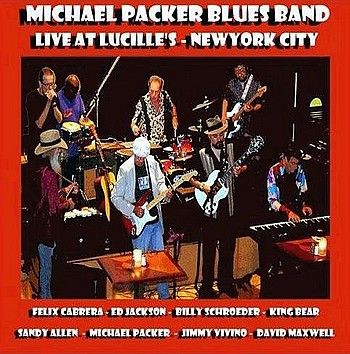
Michael Packer Blues Band - Live at Lucille's New York City - 2007 - Iris Music Group

The album was recorded live on a steamy August-summer night in 2007 at Lucille s blues club on 42nd Street, in the heart of Times Square, New York City. They came to play and smoked the tunes til they owned them. Born Under A Bad Sign , Sweet Home Chicago , Willie Dixon s The Same Thing , all spectacularly performed by a magical assemblage of players. Led by Iris Music Group recording artist Michael Packer on guitar and vocals, the band consisted of Jimmy Vivino, guitar and additional vocals (he s the Conan O'Brien TV show guitarist and Levon Helm s musical director); pianist David Maxwell (of the James Cotton Band); Iris Music Group recording artist Sandy Allen, playing mandolin (he and Michael founded Papa Nebo and Free Beer); blues harp extraordinaire, Felix Cabrera; Ed Jackson on Bongos; Japan's finest bass player, King Bear; Billy Schroeder on drums (of Louisiana Red); and special guest blues harp and vocalist, Dave ' Snakeman ' Runyan (James Cotton protégé) performing his Snakeman Blues . The live recording session was engineered by Blue Note soundman Everette Ramos for Jack O Hara. The album was produced by Michael Packer for Iris Properties, Inc. Executive producer is Alan Lorber. This album is a companion album to the recording of the opening set, the country/folk part of the evening at Lucille s, Michael Packer/Sandy Allen Reunion Live At Lucille s,performed as a reunion of Michael and Sandy who were the founding members of their early bands, Papa Nebo and Free Beer, also released by the Iris Music Group label. © 1996-2009, Amazon.com

"Live at Lucille's New York City" is a great traditional blues album. The tracks are played with a real feeling and love for the blues. Michael Packer's line-up includes the brilliant Jimmy Vivino on guitar, and the wonderful bassist, King Bear. Listen to the blues as they should be played. Try and listen to Michael's 2007 solo album, "The Sunny Side Of Me".

TRACKS / COMPOSERS

1. Driving Wheel - Roosevelt Sykes
2. Corrina, Corrina - Trad.
3. Born Under A Bad Sign - Booker T. Jones, William Bell
4. Jimmy's Blues - unkmown
5. Sweet Home Chicago - Robert Johnson
6. As The Years Go Passing By - Don Robey, or Peppermint Harris
7. The Same Thing - Willie Dixon
8. Snakeman Blues - Dave 'Snakeman' Runyan

MIUSICIANS

Michael Packer - guitar, vocals
Jimmy Vivino - guitar, additional vocals
King Bear - bass
David Maxwell - piano
Billy Schroeder - drums
Ed Jackson - bongos
Sandy Allen - mandolin
Felix Cabrera, Dave 'Snakeman' Runyan - harp

TONIGHT I MET THE U.S.!!!
Christmas in New York is great! We were in BB Kings Blues Club where a Beatles tribute band was playing in the main room. We decided to have something to eat in the Lucilles restaurant area.Playing that night in Lucille's was a local blues band called the Michael Packer Blues Band.They were so close,so tangible and so awesome.True blues from one of the very finest blues bands i have ever seen and about 5 hours worth of music.The love that was displayed on this Christmas day was so overwelming that i was moved to tears and eventually began to tremble.The band played with incredible feeling and Michael Packer gave up himself entirely to the music the whole night.I got an autograph from Michael but that was not difficult because the stage was about four meters from our table. The cool thing is he played the same guitar i own a Fender Squier stratocaster...Yes, tonight i found America! © LG THOMAS - LG THOMAS - GERMANY (Dec 25, 2008), © 2009 michael packer

BIO

MICHAEL PACKER is a singer-songwriter, guitarist who was born in New York City in 1950. He did his first gig at the Bitter End in Greenwich Village at the age of 15. In 1969 he formed the group 'Papa Nebo" which included saxophonist Bob Mintzer who went on to play with the grammy award winning "Yellowjackets". Papa Nebo recorded an album for Atlantic records.They were personally signed by Ahmet Ertegun.Today it is a collectors item. Packer soon took his sound to the West Coast with buddy Sandy Allen, playing on the streets of San Francisco during the day and The Coffee Gallery in North Beach at night, Michael met George Thorogood and was turned on to the blues. Eventually Packer and Allen made their way back to New York where they started another project "Free Beer"."Free Beer" was born at Gerdes Folk City in Greenwich Village where they added singer-songwriter Bob Potter. Free Beer recorded 3 albums for Buddha and RCA records and toured extensively with the likes of the Atlanta Rhythm Section,Johnny Rivers, Dr.Hook, Clifton Chanier to name a few.All of the albums made the Billboard top 100 and they were well on their way. But nothing lasts forever in the music industry and Free Beer broke up. After the demise of Free Beer in the late 70.'s Michael opened for John Hammond Jr. and sang with the Matt Murphy Band. In 1984 in Boston he fronted a 10 piece band called "Coolstep" and opened for Huey Lewis on a New England Tour.After dropping out of the music scene in the late 80's and early 90's Michael Packer hit the skids.His drinking had escalated and he found himself living on the streets. He did a year in Rikers Island for attempted robbery but that seemed to be the turning point in his life.Even in prison he had a band. HBO did a special "The Prisoners of Rikers Island in which he appears. Michael Packer has been sober 15 years now and life is good especially his music.He has become a well known and respected member of the New York City Blues Scene. The Michael Packer Blues Band has received rave reviews in Living Blues, Blues Matters, Blues Revue magazines for the live @ Sweet Rhythm album (Woodstock Records). A Best of Michael Packer has been released and also reissues of his earlier recordings Papa Nebo and Free Beer. Packer also released a solo album "The Sunny Side of Me" in 2007 featuring lyrics for the title song by a 8 year old girl from Albany NY named Gabby Kasper.Later that year Packer and his band with special guests Jimmy Vivino,David Maxwell,Sandy Allen,Dave 'Snakeman' Runyan and Felix Cabrera recorded a live session @ Lucilles (BB King's) NYC .All of these recordings were released by Alan Lorber's Iris Music Group.A Michael Packer anthology was also released in 2008..In 2009 Michael Packer & percussionist Ed Jackson were semi-finalists in the solo/duo competition @ the International Blues Challenge in Memphis and the Iris Music Group has just released the new CD "Riker Island Blues" which contains intriguing liner notes by Blues Wax editor Don Wilcock. Michael Packer has lived the blues and now he is back playing the blues with style. © 2009 michael packer

15.11.09

Tino Gonzales


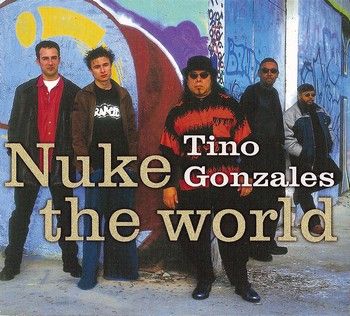
Tino Gonzales - Nuke the World - 2003 - Dixiefrog

...a bridge between Chicago and Mexico and Latin sounds, always a pleasure to our ears! - Le Cri du Coyote

...the veritable perle of the album is the last track, dedicated to the people of France, who said 'no' to the war, called "Here! My freedom sing". For 9.34 minutes, Tino rivals the best of guitar heroes. One of his best albums recorded. - Zicline

Here is an album that does not lack ambition. Tino Gonzales satisfies his audience with a solid album of blues, rock and funk, all put together in a beautiful package. - La Marseiilaise

The Chicago bornTino Gonzales plays the blues with guts, attitude, and a dynamic force. Some music critics have labelled Tino Gonzales "the Latin-American Stevie Ray Vaughan", and the man plays a mean guitar. The album is not all apolitical blues, as some of the songs' lyrics refer to Tino's views on "Governmental policies". Tino Gonzales is well known for his strong socio-political conscience. Bot fundamentally the album is American blues roots music, with a modern touch. The songs are full of melodic, agressive, punchy and blues/rock grooves. The rhythm section is tight and funky, with Kenny Martin on drums, and Darryl Taylor on bass. Nico Wayne Toussaint plays some great blues harp, and the great Dutch musician, Sjors Nederlof adds some great guitar .Listen to his work on "Heart Full of Sorrow". A good album. Another facet of the Blues genre, and worth hearing. Listen to Tino's great "Double Feature" album.

TRACKS

Heart Full of Sorrow (4:15)
Your're not the One (4:57)
Nuke the World (4:15)
How you play the Blues (6:51)
Raging Blues (4:55)
Higher Ground (4:44)
When Angels Weep (6:01)
Why (4:27)
Iz them da Blues (4:14)
Here! My Freedom sings (9:34)

All songs composed by Tino Gonzales except 'Higher Ground', by Stevie Wonder

MUSICIANS

Tino Gonzales - Guitar and Vocals
Sjors Nederlof - Guitar on "Heart Full of Sorrow"
Darryl Taylor - Bass
Jean Paul Dayde - Bass on "Here my Freedom Sings"
Johan Dalgaard - Piano
Christophe Capelier - Keyboard on "Here my Freedom Sings"
Kenny Martin - Drums and Percussion
Philippe Douron - Drums & Percussions on "Here my Freedom Sings"
Nico Wayne Toussaint - Harmonica


BIO

Born in the Bluestown of Chicago in 1951, Tino Gonzales, grew up with the soul sounds of Black music ­ Blues, R & B, Jazz, and Soul all have contributed to his musical foundations. Having served his apprenticeship with a wide range of blues and jazz greats he eventually set off on his solo Blues career in 1985. But as a Mexican American with a streak of Arabic heritage, the Latin blood flows equally in his veins. His music encompasses all of these varied cultural influences resulting in a unique sound that can not easily be labelled in terms of conventional categories ­ but if one had to sum it up in one word it would have to be passion! Gonzales’ incredible virtuoso style is so fluid one gets the impression he pours his soul right into his guitar as he floats up and down its neck, coaxing from it sounds and vibrations hitherto unknown ­ even to the most ardent blues connoisseurs. He changes styles more often than many blues musicians know how to change keys and any direction he chooses, whether latin, jazz or soul, he plays with the same passionate fire and fluidity. As top US westcoast DJ Steve Pringle from KMHD radio in Portland, Oregon recently put it, “I have no frikken idea why you aren’t better known. Not for lack of talent, sound, writing…it’s all good!” One of the reasons undoubtedly is Gonzales free-spirited and independent way of thinking, which has earned him the reputation of a maverick in the business. He resisted the temptation of signing with major labels on more than one occasion, because he refused to let himself be exploited, run down and spat out by the industry as he has seen happening to so many of his friends and peers. Instead, he decided to go his own way, often a rough and tumble road, but free at least. After years of touring the US and Canada Gonzales grew tired of the same old Club and Festival scene, packed his Hobo bag and decided to sail east. Since his arrival on European shores two years ago Gonzales has certainly made some big waves over here. Having finally found a label he could work with he decided to sign with Dixiefrog, a French Blues label with a human touch. So far he has recorded three albums for them, each one a masterpiece in its own right with the unique Tino Gonzales touch. The last one, “Modern Day Hobo” was recorded in Germany and received rave reviews in thei nternational press. It reflects the beginnings of a process of transformation and artistic growth that is becoming even more apparent in his new album, “A World of Blues”. Travelling throughout Europe, from France, Belgium, Holland, Luxemburg and Germany, to Spain, Italy and even Slovenia, Gonzales has become deeply influenced by the Old World roots of the same soulful music he grew up on in the States. Spanish, Gypsy, Arabic and African influences, which originally contributed to both, Latin and Black American music, have all found their way into his repertoire. His new Album, “A The World Of Blues”, the 4th for Dixiefrog, pays tribute to these Old World roots of the blues as he masterfully manages to weave gypsy accordion, African kora and world percussion sounds into his unique blend of Latin Jazz/Blues fusion. The result is a phenomenal melange of musical influences all of which speak the same language – passion. Passion for music, passion for love, passion for life ­ and compassion for the blues of the world. Gonzales’ passion is not just show. He deeply cares about humanity and planet earth. To him the essence of blues is not only about the sense of desperation rooted in slavery or variations on the theme of personal misery, but instead conveys a message that applies to the human condition everywhere, and throughout all of time. He sings the blues of the American Indians, the Blues of drug addicts, and the blues of the world. One of the songs on the new album, an exquisite slow blues tune ­it gives a message of peace to the blues of the world, appealing to each and everyone of us not to add “No More Misery”. www.metisse-music.com

14.11.09

Rich Harper Blues Band


Rich Harper Blues Band - Don't Think Just Play - 1997 - Kanawha St. Records

This debut from the Rich Harper Blues Band starts off with a punch, kicking into a high-energy groove that barely lets up until the last track. Harper's lead guitar work is solid throughout; his playing on "I Love the Woman" and "She's on Her Way Up" is particularly confident and evocative. While the band's cover of "The Thrill Is Gone" doesn't offer anything new in the way of interpretation, it's well played, and by the time the CD reaches "Hands Off" you get the sense that you've just spent the night in a particularly good, out-of-the-way blues club and that this is the last song. "Guitar Rag" seems to be almost an afterthought, what one might hear after the sound system's been turned off, the lights have come up, and the chairs are all back on the tables. © Genevieve Williams, © 1996-2009, Amazon.com

An international music promoter tells of how he heard the band in Los Angeles a few years ago: “While walking past a local club at 4 o’clock on a Saturday afternoon, I heard the faint sounds of a band playing, and my curiosity dragged me in. Onstage were three guys playing great music I did not recognize. I sat down, ordered a beer and wondered why there was nobody there. Half an hour later people started coming in, and by 5:30 the place was packed. The music got louder, and Rich Harper, with his tremendous musical creativity and playfulness held a tight grip on the crowd as it got wilder, and it was an amazing experience - like nothing I had ever witnessed before. It turned out to be a 3-7 pm Saturday gig, except the audience demanded an extra half set. I said to myself that music lovers around the world deserve to experience this!" In the album liner notes it says, "Special thanks to Sylvester Weaver, Walter Beasley, Charlie Patton, Robert Johnson, Duane Allman, Eric Clapton, Freddie King, B.B. King, and Rory Gallagher. Without you guys, the rest of us wouldn't know how to play guitar!" This quote plainly shows the main blues influences on Rich Harper and his band. "As She Moved In (My Guitar Moved Out)" from the band's second album , "Bottled Up Blues" topped Rolling Stone Magazine's "MP3 & More Blues Chart" at No.1. After this achievement, the international blues world press took notice of this skilled band, and these guys haven't stopped since. The band has toured the world, including Scandinavia, Asia and Australia. They also entertained the troops in Iraq in 2004. As that music promoter said, - "music lovers around the world deserve to experience this!" This is Grade A blues rock from a sensational guitarist and his great band. Buy Rich Harper's great "Onward..." album, and listen to his superb "Bottled Up Blues" album. Support this great musician and his band. For similar blues guitar, listen to Tommy Castro, Walter Trout, and Aynsley Lister. Please don't forget the late, great Irish blues guitarist Rory Gallagher, whose "Hands Off" song is covered on "Don't Think Just Play", which is HR by A.O.O.F.C

TRACKS / COMPOSERS

1 No More - Rich Harper
2 I Love the Woman - Nathan, Billy Myles
3 Blue Eyed Blues - Rich Harper
4 Color Me Gone - Rich Harper
5 She's on Her Way Up - Rich Harper
6 Get Out of My Life, Woman - Allen Toussaint
7 The Thrill Is Gone - Roy Hawkins, Rick Darnell
8 Just as Well - Rich Harper
9 Hands Off - Rory Gallagher
10 Guitar Rag - Sylvester Weaver, Sarah Martin

BAND

Rich Harper (vocals, guitar, slide guitar)
Terry Williams (guitar)
Danny Leoni (bass)
Mark Moulding (keyboards)
Bob Arkwright, Jon Stenber, Jerry Leoni (drums)

BIO

Rich Harper learned to play blues guitar the traditional way by primarily being self-taught listening to and learning from the recordings of artists like Eric Clapton, B. B. King, Rory Gallagher, Freddy King, Duane Allman, and so on. Rich developed his own slide style using the same Coricidin medicine bottle as Duane Allman. After paying his "blues dues" in small blue collar towns throughout Pennsylvania, Rich moved to Los Angeles to gather like minded musicians and formed the Rich Harper Blues Band. "No spit & polish. I don't want spit & polish. I just want talent and blues. I want some classics & I want some slide. I want to have some fun & I want it to be real. RHB with their down home, hard working, blue collar Blues delivers all that." - Steve Langhauser, Mississippi Valley Blues Society Blues News. With the success of their debut CD, "Don't Think Just Play", the Rich Harper Blues Band was not only selected as one of Amazon.com's prestigious "Emerging New Blues Artists", but Taxim Records, a German label, joined the group's growing list of blues fans by placing another cut, "She's On Her Way Up", on their compilation album titled "More Desaster City Blues". It wasn't long before the band’s name was popping up in blues magazines everywhere and blues societies were urging their members to check out the exciting new group who were carving out a unique niche for themselves in the blues world. By the time the band released their second CD, "Bottled Up Blues", Europe had jumped on board by making the band the #1 selling artists in Switzerland on Amazon's charts. Radio stations worldwide welcomed the new CD with open arms and this time one of the cuts, "As She Moved In (My Guitar Moved Out)", topped Rolling Stone Magazine's "MP3 & More Blues Chart" at #1. The international blues scene stood up, did a double take, and these talented artists haven't stopped since. "The excellence in craftsmanship of this trio from LA is formidable. Right from the opening song, one is pulled into trying to sing along with the music... the short 50 minutes of the record passes too quickly. - Blues News, Germany. An international promoter recalls how he came across the band in the Los Angeles area a few years ago: “While walking past a local club at 4 o’clock on a Saturday afternoon, I heard the faint sounds of a band playing, and my curiosity dragged me in. Onstage were three guys playing great music I did not recognize. I sat down, ordered a beer and wondered why there was nobody there. Half an hour later people started coming in, and by 5:30 the place was packed. The music got louder, and Rich Harper, with his tremendous musical creativity and playfulness held a tight grip on the crowd as it got wilder, and it was an amazing experience - like nothing I had ever witnessed before. It turned out to be a 3-7 pm Saturday gig, except the audience demanded an extra half set. I said to myself that music lovers around the world deserve to experience this!" "Rich is not just a blues musician, but a blues craftsman...with quirky, intelligent lyrics weaving through familiar stylised riffs that are exceptionally well played." - Jon Lane, The Blues Times, Sydney Blues Society (Australia). Since then, the band has toured the world, including their adoptive countries of Scandinavia, and such exotic locales as Asia and Australia. They were also humbled and extremely honored to be part of a group that entertained the troops in Iraq in 2004. The evenings headliner - Rich Harper Band that closed the show - deserves a page of their own in the new book of blues/rock history. What a show and what a sound by a three piece band! When a big banner was put in place as backdrop during the break, I knew we were in for something special, but we were not prepared for the wall of sound (to use an old Phil Spector term) that hit us. - John Morris, Seattle, WA (the Phuket Gazette). Rich's tours of 2008 will include Taiwan & Thailand (February), Laughlin Nevada River Run (April 2008), Norway & Denmark (June-Aug 2008) & Sweden (Oct-Nov 2008). [ from http://209.85.229.132/search?q=cache:-lA2J1zUftIJ:www.richharper.com/rhbio/+Rich+Harper&cd=2&hl=en&ct=clnk&gl=ie ]

13.11.09

Tim Ries


Tim Ries - The Rolling Stones Project - 2005 - Concord Records

There are very few jazz interpretations of Rolling Stone songs, but "The Rolling Stones Project" has certainly made up for that. This critically acclaimed album (Not by all!) features many guest musicians, including Keith Richards, Charlie Watts, Ronnie Wood, Norah Jones, Sheryl Crow, Bill Frisell, John Scofield, Brian Blade, John Patitucci, Larry Goldings and Bill Charlap. There are two problems here, if they are problems. If you are a jazz purist, you may not like to hear these great Rock 'N' Roll classics covered by artists like John Scofield, John Patitucci, or Tim Ries. And if you are a hard core Rolling Stones fan, you may dislike jazz versions of Stones' classics like "Street Fighting Man", "Honky Tonk Women", or "Gimme Shelter". However, the album was given full approval by the band. Keith Richards, Ronnie Wood, and Charlie Watts all participate in this album, and Tim Ries has toured with The Rolling Stones. As a young man, Charlie Watts' was a jazz lover, and always maintained an interest in jazz music. Tim Ries is an extremely talented saxophonist. He has worked with greats like Stevie Wonder, Paul Simon, Blood, Sweat and Tears, and Tony Bennett. Listen to Tim's playing on Donald Fagen's classic "Kamakiriad" album. Check out his "Imaginary Time" album, and his "Stones World: The Rolling Stones Project", and "Stones World: Rolling Stones Project, Vol. 2" albums are also available. And please give "The Rolling Stones Project" a listen. All the tracks are covered brilliantly by world class musicians, and these Stones' classics are well worth hearing in a jazz format

TRACKS

1.(I Can’t Get No) Satisfaction - 6:19
2.Honky Tonk Women [Organ Trio Version] - 4:33
3.Slippin’ Away - 6:41
4.Street Fighting Man - 7:02
5.Wild Horses - 8:01
6.Waiting on a Friend - 7:11
7.Paint It Black - 10:06
8.Honky Tonk Women [Keith’s Version] - 5:33
9.Ruby Tuesday - 3:50
10.Gimme Shelter - 8:39
11.Belleli - 5:25

All songs composed by Mick Jagger, and Keith Richards, except "Belleli", by Tim Ries

MUSICIANS

Keith Richards (Guitar and vocals on track 3; guitar on track 8)
Ronnie Wood (Guitar on track 3)
John Scofield (Guitar on track 1)
Bill Frisell (Guitar on tracks 5, 6, 9 and 11)
Ben Monder (Guitar on tracks 4 and 10)
John Patitucci (Bass on tracks 1, 4 and 10)
Tony Scherr (Bass and vocals on track 5)
Darryl Jones (Bass and vocals on track 3; bass on tracks 6 and 8)
Larry Goldings (Organ on tracks 1, 2, 3 and 8)
Norah Jones (Vocals and piano on track 5)
Bill Charlap (Piano on tracks 1, 7 and 10)
Edward Simon (Piano on tracks 1 and 4)
Robert DiGiola (Piano on track 11)
Clarence Penn (Drums on tracks 1, 4, and 5)
Charlie Watts (Drums on tracks 2, 3, 6, 8 and 11)
Brian Blade (Drums on tracks 7 and 10)
Jeff Ballard (Percussion on tracks 1 and 4)
Mauro Refosco (Percussion on track 4)
Tim Ries ( Tenor sax on tracks 1, 2, 3, 6, 7, 8, 10 and 11; soprano sax on tracks 4, 5 and 9)
Kent Smith (Trumpet and flugelhorn on track 4)
Michael Davis (Trombone on tracks 1 and 10)
Stacey Shames (Harp on track 5)
Sheryl Crow (Vocals on track 3)
Luciana Souza (Vocals on track 4)
Lisa Fischer (Vocals on tracks 6, 8 and 10)
Bernard Fowler (Vocals on track 1)

REVIEWS

Jazz interpretations of popular songs have long been an important part of the jazz experience, but regrettably, that tradition has been plagued by two unfortunate trends in the '90s and the 21st century. At one extreme are the ideologues who believe that worthwhile popular music ended with the George Gershwin/Irving Berlin/Cole Porter era and insist on playing the same old warhorses over and over — and at the other extreme are the smooth jazz players who think that performing note-for-note Muzak covers of Top 40 tunes is creative. But there are some imaginative improvisers who are using rock and R&B songs as vehicles for real, honest to God jazz expression — people like the Bad Plus, England's Claire Martin, and Philadelphia singer Lou Lanza (who paid tribute to the Doors on his excellent Opening Doors album). And on The Rolling Stones Project, tenor/soprano saxman Tim Ries reminds listeners how nicely the Stones' songbook can work in a jazz-oriented environment. This post-bop/soul-jazz effort isn't without its flaws; the opener, "(I Can't Get No) Satisfaction," is ruined by the pointless background vocals of Bernard Fowler, who repeats the song's chorus over and over (without singing the verses) and merely gets in the way of Ries' expressive tenor. But when Ries' largely instrumental Stones tribute is great, it's really great. The saxman soars on an organ combo version of "Honky Tonk Women" (with organist Larry Goldings and Stones drummer Charlie Watts), and Ries is equally imaginative on a Brazilian-influenced arrangement of "Street Fighting Man" and a probing, somewhat Michael Brecker-ish take on "Paint It Black." Singer Norah Jones has a memorable spot on "Wild Horses"; her performance is jazzy pop/rock rather than actual vocal jazz, but she's enjoyably good at what she does. Despite some occasional missteps, The Rolling Stones Project has more ups than downs and is well worth the price of admission. © Alex Henderson, allmusic.com

Saxophonist Tim Ries has made a name for himself over the past decade as a committed and creative jazz player. But he may actually be best known to pop music fans through his association with the Rolling Stones. Touring with the legendary band as a supporting musician, Ries has obviously absorbed the nuances of the their enduring work. He pays tribute to Jaggers, Richards, and company by reworking some of their classic songs, adding jazz and R&B elements to flavor the indelible melodies. Ries has also taken advantage of his access to the upper echelons of both rock and jazz. While his solid tenor and soprano are never far from the center of the mix, he also spotlights on various tracks such A-listers as Keith Richards, Ronnie Wood, and Charlie Watts from the Rolling Stones, as well as hit-making vocalists Sheryl Crow and Norah Jones; jazz luminaries include guitarists John Scofield and Bill Frisell, pianist Bill Charlap, and drummer Brian Blade. While maintaining enough of the original melodic content to satisfy longtime Stones admirers, Ries has also crafted some daring arrangements that lend new life to, among others: “Ruby Tuesday,” here, a lovely Ries-Frisell duet; “Honky Tonk Women,” rearranged as an organ trio workout; and “Slipping Away,” “Waiting On a Friend," and “Gimme Shelter,” which weave shards of the lyrics into the compelling instrumental textures. And best of all is “Wild Horses,” a beautifully executed feature for Norah Jones that frames her delicious and affecting vocal against harp and Frisell’s delicate guitar. Creating fusion at its best, Reis has brought together the worlds of jazz, pop, and R&B with exceptional imagination. © William Pearl, Barnes & Noble

Jazz-radio programmers are going to love this one: "This'll bring listeners to the station-jazz interpretations of Rolling Stones songs! By a saxophonist who toured with the Stones! With Bill Frisell and Norah Jones! And Sheryl Crow! And Ries even got a couple of the Stones to play on it!" Ries had some good ideas: The organ-trio version of "Honky Tonk Women," with Stones drummer Charlie Watts and organist Larry Goldings, puts a raunchy swing on the tune, and "Satisfaction" borrows from Lee Morgan's "The Sidewinder" to swing harder than you might expect, despite the vapid backup vocals. But the CD's better moments have little or no connection to the compositions. The arrangement of "Paint It Black" sounds "lite" until Ben Monder unleashes a nasty guitar solo. Norah Jones trades in the heartbreak of "Wild Horses" for a slick, confident, too-cool delivery. Watts and Keith Richards don't add more than their names to "Waiting on a Friend" wherein the solos happen over a two-chord vamp, ignoring the blowing potential of the theme's chord change. © Mike Shanley, © 1999–2009 JazzTimes, Inc. All rights reserved

TIM RIES BIO

Saxophonist, composer, arranger and producer Tim Ries received degrees from both The University of North Texas (BM) and The University of Michigan (MM). He has had a unique and varied career, which began in 1983 with the great Maynard Ferguson. Since that time, his performing and recording credits include a who’s who of jazz, rock and pop icons: The Rolling Stones (touring from 1999 to the present), Stevie Wonder, Paul Simon, Donald Fagen, Michael Jackson, Blood, Sweat and Tears, Lyle Lovette, and jazz greats Red Garland, Donald Byrd, Hank Jones, Phil Woods, Tom Harrell, Chico Hamilton, Michael Brecker, Joe Henderson, Tony Bennett, Dave Liebman, Al Foster, John Patitucci, Danilo Perez and Maria Schneider. Tim has released seven CDs as a leader. His last two discs, The Rolling Stones Project (Concord) and Stones World (Sunnyside), are his versions of Stones tunes arranged in the jazz and world music genres. Both CDs have drawn rave reviews across the globe. Guest artists featured on these CDs include: all four Rolling Stones, Norah Jones, Sheryl Crow, Milton Nascimento, Bill Frisell, John Scofield, Jack DeJohnette, Lisa Fischer, Bernard Fowler, Larry Goldings, Eddie Palmieri, Brian Blade, flamenco dancer Sara Baras and fado singer Ana Moura. Tim is currently an assistant professor of jazz studies at the University of Toronto and shares his time between New York and Toronto. Tim Ries plays Francois Louis mouthpieces, reeds and ligatures and The Virtuoso tenor and alto saxophones by RS Berkely. © timries.com

MORE ABOUT TIM RIES

Wearing numerous hats and having a deep résumé with plenty of famous names on it is par for the course for top-notch pickup and session musicians. Saxophonist Tim Ries went one better by cultivating a healthy solo career through a series of well-regarded solo albums, respected compositions and arrangements, and a sound Rolling Stone legend Keith Richards described as "amazing." A graduate of the University of North Texas and the University of Michigan, Ries made his recording debut in 1983 on Maynard Ferguson's Live from San Francisco. His love of rock and jazz was first put to record in 1989 when he appeared on Bob Belden's Straight to My Heart: The Music of Sting. Four years later he was a featured name on the album Regards, sharing headlining credits with Franck Amsallem. Moo Records released Ries' first solo album, Imaginary Time, in 1994. Is That So? -- which was also credited as Amsallem/Ries -- was from a 1990 date, but the more abstract record didn't see release until 1996, the same year that Ries appeared on the Grammy-winning Joe Henderson album Big Band. Universal Spirits arrived in 1998 and featured frequent Ries collaborator Billy Drummond on drums. Ries had already done session work for plenty of pop/rock acts by this time (Donald Fagen, Paul Simon, Sheryl Crow, Stevie Wonder, David Lee Roth, and many others), but in 1999 he got his biggest offer yet. While performing for President Clinton at the White House, the cell phone he forgot to shut off began ringing. It was an offer to tour with the Rolling Stones, an offer Ries immediately accepted. After an extensive tour with the Stones, Alternate Side from 2001 reintroduced Ries as a solo artist, but a year later he became a founding member of the Prism Saxophone Quartet, whose debut, Real Standard Time, was released by the Innova label. Another tour with the Stones took up most of his time during 2003-2004 and inspired Ries to write his own jazz arrangements of Mick and Keith's compositions. The results were road-tested on an American tour and then released in 2005 as The Rolling Stones Project on the Concord label. © David Jeffries , © allmusic.com

12.11.09

Carole King


Carole King - Pearls Songs Of Goffin And King - 1980 - Capitol Records

Dan Heilman wrote "On Pearls King reprises the early-'60s pop gems she wrote with Gerry Goffin, with fine results." There is just a fraction of their phenomenal work documented here, and the 16 and a half minutes per side on the vinyl LP is hardly enough time to give the listener a proper perspective. "Dancin with Tears in My Eyes" opens the collection, a pleasant new addition to their repertoire, but next to "The Loco-Motion," "One Fine Day," "Chains," and "Snow Queen," its purpose is more to bring the album full circle than to try to compete with these classics. "One Fine Day," the song the Chiffons brought Top Five, was the hit, going Top 15 from this set 17 years later. Make no mistake about it, this is possibly Carole King's most important work since Tapestry, and why a similar album didn't follow Tapestry or its follow-up, Music, was a marketing blunder and a mystery. Missing here is Lou Adler's production, though King and her co-producer, Mark Hallman, are hardly inefficient. It's just that some songs get more attention than others. The reworking of the Freddie Scott-Bobby Vee-Donny Osmond hit "Hey Girl" is breathtaking. Here King is backed by lush production and a bluesy vocal that surpasses anything else on this record, as well as much of what was on the charts at this time. Without changing gender, King's performance is a showstopper. Her friend Neil Sedaka employs the same technique when he puts "Where the Boys Are" in his live sets, and both singer/songwriters take their original compositions to new heights. "Chains," however, the song covered by both the Cookies and the Beatles, needed a bit more of what they gave to "Oh No, Not My Baby" -- a bigger sound. Pearls: Songs of Goffin and King is the set the artist's longtime fans craved when Tapestry made her more than a household name. On her Writer album, pre-Tapestry, she gave listeners "Up on the Roof"; with Music, the Tapestry follow-up, listeners got "Some Kind of Wonderful"; and on her pre-solo work with the City, the Lou Adler-produced Now That Everything's Been Said, there were three familiar tunes that are re-recorded for Pearls, those being the Blood, Sweat & Tears hit "That Old Sweet Roll (Hi-De-Ho)," "I Wasn't Born to Follow," which the Byrds covered, and "Snow Queen," which Blood, Sweat & Tears, the Tokens, and the Association all recorded. Both songwriters, Goffin with his excellent It Ain't Exactly Entertainment, and King with just about every album she made between Tapestry and Pearls, refused to capitalize on their earlier efforts. They, and their fans, are not the better for it. From 1962's "It Might as Well Rain Until September," King's first hit, to the Monkees' "Pleasant Valley Sunday," hearing a superstar sing her original songs that fans know and love is something very important. Her version of "Oh No, Not My Baby" is right up there with the classics by Rod Stewart and Maxine Brown, and at the risk of being redundant, it must be said again: this album deserves its place right next to Tapestry. © Joe Viglione, All Music Guide

This album contains ten classic Goffin & King songs, but only skims the surface of this great songwriting duo's catalogue. There's no "Will You Love Me Tomorrow", "Every Breath I Take", "Take Good Care of My Baby", "Some Kind of Wonderful", "Keep Your Hands Off My Baby", "Up on the Roof", "I'm into Something Good", or the brilliant "Pleasant Valley Sunday", and "(You Make Me Feel Like) A Natural Woman". Compilation albums are not normally criticised too harshly on this blog, but there is so much more that could have been included on this too short album.

TRACKS

A1 Dancin' With Tears In My Eyes
A2 Locomotion
A3 One Fine Day
A4 Hey Girl

A5 Snow Queen
B1 Chains
B2 Ho No Not My Baby
B3 Hi De Ho
B4 Wasn't Born To Follow
B5 Goin' Back

All songs composed by Goffin & King

MUSICIANS

Carole King - vocals, background vocals, piano
Mark Hallman - guitar, harmonica, background vocals
Eric Johnson - guitar
Christopher Cross - guitar, background vocals
Charles Larkey - bass
Reese Wynans - keyboards
Steve Meador - drums
Miguel Rivera - conga, percussion
Richard Hardy - flute, saxophone
Tomás Ramírez - saxophone, winds
Ray Crisara, Bobby Meyer - trumpet, cornet
Donald Knaub, Michael Munday - tombone
Mark Maniscalco - banjo
Betty Whitlock - fiddle
Lydia North, Oscar Ford, Jr., Deborah North, Gloria Hines - background vocals

REVIEW

Nine of the ten cuts on Pearls–Songs of Goffin and King are rerecordings of oldies, and they represent Carole King's implicit acknowledgment that her songwriting talent has failed in recent years. There's no shame in that admission, however, considering how many classics King and her longtime partner, Gerry Goffin, have contributed to the pop-music hall of fame. And it's a relief to have a new Carole King album filled with material that's good. Her solo career actually peaked in 1972 with Rhymes and Reasons, and her LPs since then have steadily declined in quality, even while Tapestry (1971) continued to rack up record-breaking sales. Still, Pearls isn't the comeback I'd anticipated. There's an odd indifference – perhaps it's melancholy – in King's replays of chestnuts like "Locomotion," "Oh No Not My Baby" and "Goin' Back." These tunes lack the definitive touch or the first-time-out exuberance that characterized similar remakes on Writer: Carole King and Tapestry–or, for that matter," Dancin' with Tears in My Eyes," Pearls' one new number. This composition – a catchy throwback to King's Shirelles days and a great improvement over her recent psychobabbling–is the current album's most lavishly produced track, and that leads to another slight disappointment: the oldies here are done almost austerely with little more than piano and voice, like demos from the Great Masters. Though the a cappella intro to "Chains" and the speedy tempo and shooby-dooby-doo-wahs in "One Fine Day" are fun, the clattery, kitschy arrangements of yore are missed. Interestingly, Pearls' best cuts are those least associated with Carole King. Besides "Dancin' with Tears in My Eyes," there's "Snow Queen" (which King first recorded in 1968 with her trio, the City), now redelivered in a nicely streamlined, jazz-propelled version. The biggest surprise is "Hey Girl." This old Freddie Scott hit is a strange choice, given the lyric's gender specifications, but King gives it a beautifully rough, near-torchy treatment. Her passionate performance is reminiscent of Linda Ronstadt's version of "Hurt So Bad" – it climaxes in long notes of rage mixed with desperation–but, to these ears, King's is the more emotionally convincing and aesthetically pleasing. Of course, doing an LP like Pearls presents Carole King with a new problem. It brings her career full circle (as did her first solo effort, Writer), yet it also raises the question: where does she go from here? Judging from the burned-out quality of the records immediately preceding Pearls, that question is pretty scary. © DON SHEWEY, (Posted: Aug 7, 1980): © 2009 Rolling Stone

11.11.09

Debbie Davies


Debbie Davies - Holdin' Court - 2009 - Little Dipper

Debbie Davies cut her teeth playing in blues and rock ‘n roll bands in the San Francisco Bay area before returning to Los Angeles in 1984, where she became lead guitarist with Maggie Mayall and the Cadillacs, led by the wife of the British blues legend, John Mayall. In 1988, the great bluesman, Albert Collins enlisted her in his Icebreakers band, and for the next three years she played guitar with one of the greatest blues guitarists of all time. Like other great blueswomen on this blog, including Rory Block, Maria Muldaur, and Bonnie Raitt, Debbie is one of the great blues revivalists, conservationists, and traditionalists. "Holdin' Court" is a tremendous instrumental album containing six originals. She also pays fitting homage to the musicians she loves, and covers songs by Duke Robillard, Clarence Gatemouth Brown, John Lee Hooker, Little Johnny Taylor, and Willie Dixon. If you like jazz blues, listen to Debbie's great " Atras De Tus Ojos" track. "Holdin' Court" is HR by A.O.O.F.C. Buy her brilliant "I Got That Feeling" album, and there is info on her "Blues Blast" album @ DEBDAV/BLBL

TRACKS / COMPOSERS

1. Fishnet - Duke Robillard
2. Down At the Honkey Shack - Berisford/Butler/Dixon/Doggett, Scott/Shepherd
3. Tryin' To Keep It Real - Debbie Davies
4. Okie Dokie Stomp - Clarence Gatemouth Brown
5. Percolatin' - Debbie Davies
6. So What - Debbie Davies
7. Atras De Tus Ojos - Debbie Davies
8. Holdin' Court - Debbie Davies, Don Castagno
9. I Wonder Why [Blues In D Natural] - Hooker/London
10. If You Love Me Like You Say - Little Johnny Taylor
11. Zoom-In - Debbie Davies

MUSICIANS

Debbie Davies - All guitars (except second high rhythm on Zoom-In')
Casandra Faulconer - Bass Guitar (except on Tryin' To Keep It Real)
Don Castagno - Drums, conga on Holdin' Court
Paul Opalach - Organ, second guitar on Zoom-In'

ALBUM LINER NOTES

"For several years now I've been getting requests from friends and fans to make an all instrumental CD. Instrumental guitar albums have not been heavily in vogue since the early 1960's, but some of my favorite guitar players; Albert Collins, Freddie King, and Kenny Burrell made great careers for themselves during that era, ergo, leaving the generations of players to come some beautifully crafted guitar music. For some of us, these instrumentals became the templates and building blocks for our own playing. Back in the day, we would painfully play that vinyl treasure over and over, trying to pull each and every note off of it in an attempt to duplicate the Master's tone and phrasings. Throughout my career I have always enjoyed creating my own instrumentals, so here they are, along with a couple of new ones, and plenty of "shout-outs" to those originators of electric blues music." - Debbie Davies


Debbie Davies, a veteran of 22 years on the road, brings her seasoned licks and deep creative sensitivity to this, her 12th solo release. Having shared the studio and stage with a who's who list of top blues artists, this time Debbie strips it down to her top notch trio, only adding a few additional services of from co-producer, Paul Opalach. The sound is classic and tight. Lovers of the electric guitar, blues, and timeless good music will want to add this CD imediately to their collection. Davies brings 6 of her own original instrumental's to this album , and augments the CD with tunes written by many of her favorite electric blues artists. Most of the material has been heavily road tested so Deb and her trio, Don and Cass, cut the tunes live in the studio to get that energy that only a touring band can create. Debbie would solo from top to bottom of each tune with her rhythym section and lay down the rhythms as over dubs. Davies' two new orriginals, Holdin' Court and Zoomin', are only now being road tested so they received a little more of the step by step care that a studio setting can offer. The opening number, Fishnet, is a Duke Robillard number minus Dukes lyrics. Debbie does her own thing on the tune while simultaneously tipping her hat to Duke. Down at the Honky Shack is an obvious homage to both Bill Doggett and Jimmy Smith. Here Deb playfully weaves the two tunes together, in a joyous road house romp. Tryin' To Keep It Real, Deb's own tune, appeared on her CD ALL I FOUND, with haunting and soulfull lyrics, but here she let's her guitar do all the talking. Gatemouth Brown's Okie Dokie stomp, has been a staple in Davies' club shows for years now, along with several of her own original instrumentals; Percolatin', So What, and Atras deTus Ojos. These tunes are definately amoung the ones that have the live, road-tested vibe. Holdin' Court, co-written by drummer Don Castagno, is an homage to Kenny Burell. It is the beginnig of new territory for Deb and the band. On I Wonder Why, Debbie displays her total mastery of the style evoked by the greats of '60s electric blues in this homage to Otis Rush. With IF YOU LOVE ME LIKE YOU SAY, Debbie goes to town with her wah-wah pedal. This tune was always a staple in Albert Collin's reperatoire, and Albert, back in the day, had a big wah-wah fase himself. Zoomin' is an homage to whole genre of surf music as opposed to any particular artist. For Davies, it's a salute her youth, growing up in So. CA; skate boarding, surfing, and falling in love with all of the sounds being created by electric guitars. Holdin' court will take the listener on a smooth blues cruise, so sit back, roll the top down, and enjoy the ride. [ © http://debbiedavies.com/index.html ]

MUSIC PRESS QUOTES

"Davies exhibits guitar playing virtuosity with the likes of Eric Clapton and Stevie Ray Vaughan."– MUSIC CONNECTION

"She pulls out all the stops. She can play it all: seductive, soulful material, down-home delta blues, or humorous tales of life on the road." - BLUES REVIEW MAGAZINE

"Debbie is one of the direct links to the originators of this music. She knows what the blues is all about and you can hear it in the passion of her playing."- COCO MONTOYA

"Debbie is an incredible guitarist who plays with great taste and can cook like mad. Debbie plays from the heart and her heart has a lot to say. She inspires me. Besides being a fine musician she's also an outstanding person that I am very glad to call a friend of mine." - CHARLIE MUSSELWHITE

"I don't often give endorsements or references, but once in a rare while I hear a musician of such talent that I want people to know. I believe my reputation backs up my ability to recognize exceptional blues guitarists. Such a one is Debbie Davies. Hear her now." - JOHN MAYALL

SHORT BIO

Debbie Davies has brought a new sensibility to the blues. The former guitarist for Albert Collins & the Icebreakers, Fingers Taylor & the Ladyfinger Revue, and Maggie Mayall & the Cadillacs, an all-female band led by John Mayall's wife, Davies has continued to attract attention as the leader of her own group since 1993. "I believe my reputation backs up my ability to recognize exceptional blues," explained John Mayall during a early-2000 interview. "Such a one is Debbie Davies." Davies' 1998 solo album, Round Every Corner, released in 1993, featured a cameo appearance by Collins, who died of cancer shortly afterwards. Her fifth solo outing, Tales from the Austin Hotel, recorded with members of Stevie Ray Vaughan's band, Double Trouble, received a W.C. Handy award nomination. Love the Game, released in 2001, featured members of her touring band and was produced by Duke Robillard. A native of Los Angeles, Davies inherited her musical skills from her father, who wrote arrangements for Ray Charles and worked in the recording studio with Frank Sinatra and Pearl Bailey. Performing in rock and blues bands in the San Francisco area in the early '80s, she returned to southern California in 1984. After honing her talents as lead guitarist for Maggie Mayall & the Cadillacs, Davies was recruited to play with Albert Collins & the Icebreakers in 1988. She remained with the group for three years. Touring with Fingers Taylor & the Ladyfinger Revue during the summer of 1991, Davies opened numerous shows for Taylor's employer, Jimmy Buffett. Davies continues to play occasional sessions. She appeared on Collins' 1999 album, Collins, and Coco Montoya's 1995 album, Gotta Mind to Travel. Her 1997 album, I've Got That Feeling, featured duets with blues guitarists Tab Benoit and Montoya. To date, Davies had recorded three albums for Blind Pig (Picture This, Loose Tonight and I Got That Feeling), four for Shanachie (Round Every Corner, Tales from the Austin Motel, Love the Game, and her John Mayall tribute, Key to Love), and in 2005 she released All I Found with Telarc Records, followed in 2007 by Blues Blast on the same label. © Craig Harris

MORE ABOUT DEBBIE DAVIES [Bio/Article is © 2008 Piedmont Talent, Inc., All Rights Reserved.]

Davies rise to the upper echelon of blues music started at an early age as she absorbed the music heard constantly in her home. Her (professional) musician parents were either sitting at the piano or spinning discs on their turntable, filling the air with the sounds of big band jazz, harmony vocal groups, or the pop icons of the day. But the young Davies was particularly attracted to the bluesier sounds of her father’s Ray Charles records, and by the age of 12 realized that her affinity for an instrument was not for the piano, but for the guitar. “She wields an electric guitar as if it were a wand.” ~Los Angeles Times. “Davies playing is extraordinary - full of propulsion and energy and melodic invention…” ~People Magazine. Growing up in Los Angeles in the 1960’s, she found that being a female guitar player meant only one thing: acoustic guitar. Electric guitars were still toys meant only for boys. But when Debbie heard the sounds of the British blues-rock bands, particularly the electric guitar of Eric Clapton with John Mayall’s Bluesbreakers, she became completely captivated. Going against the grains of society’s accepted roles of the time, Debbie pursued her dream with the passion of an artist and the soul of a rebel. Davies cut her teeth playing in blues and rock ‘n roll bands in the San Francisco Bay area before returning to Los Angeles in 1984, where she landed the lead guitar spot in Maggie Mayall and the Cadillacs, an all-female band led by wife of British blues pioneer, John Mayall. In 1988 she was recruited by Albert Collins to join the Icebreakers, and for the next three years she was a featured guitarist performing behind one of the most innovative bluesmen of all time. “I stepped through a door into the real blues world when I joined Albert’s band,” Davies says. “It’s one thing to listen to the records and pull off the licks, or sit in the audience watching these artists play. But actually going out and touring with one, turned the blues into something completely three-dimensional for me. I knew then what a special opportunity this was, but I know it even more now.” During her tenure with Albert, Debbie was invited to perform on John Mayall’s 1990 album, A Sense of Place, and in 1991 she recorded with Albert Collins and the Icebreakers on the Grammy nominated self-titled release for Point Blank/Virgin Records. In the summer of 1991 Debbie became lead guitarist for Fingers Taylor and the Ladyfingers Revue, which served as the opening act for Jimmy Buffett’s “Outpost” tour. In September 1993 she came out with her debut solo release, Picture This, on Blind Pig Records, which featured a cameo by Collins on “I Wonder Why.” People like to ask Debbie if she learned her technique from Collins, to which she gently points out that she had to play well from the start to hold her own with Albert at every performance. However, the experience taught her lessons in being a better musician, both onstage and off. Says Davies, “It was the most powerful band I had ever played with, so I learned to dig even deeper into myself to pull out the music. Albert was a man of so much grace and kindness, so I can only hope that I was able to absorb some of his humanity too.” Since 1993, Debbie has produced nine solo recordings and two collaborative CD’s, one with guitarists Tab Benoit and Kenny Neal, and another with guitarists Anson Funderburgh and Otis Grand. The roster of other artists who have joined Debbie in the studio on her recordings reads like a who’s who of the blues: Albert Collins, Ike Turner, James Cotton, Mick Taylor, Peter Green, Coco Montoya, Duke Robillard, Tommy Shannon, Chris “Whipper” Layton, Sugar Ray Norcia, Mudcat Ward, Charlie Musselwhite, Bruce Katz, Per Hanson, Noel Neal, and Rod Carey. She has received eight nominations for Blues Music Awards, and in 1997 won the award for Best Contemporary Female Blues Artist. She is nominated yet again in this category for 2008.

Here's What the Critic's Are Saying About Debbie Davies... "She pulls out all of the stops. She can play it all: seductive, soulful material, down-home Delta blues or humorous tales of life on the road." ~ BLUES REVUE.

"Davies exhibits guitar playing virtuosity with the likes of Eric Clapton and Stevie Ray Vaughan." ~ MUSIC CONNECTION.

"Debbie is one of the direct links to the originators of this music. She knows what the blues is all about and you can hear it in the passion of her playing." ~COCO MONTOYA. "Debbie is an incredible guitarist who plays with great taste and can cook like mad. Debbie plays from the heart and her heart has a lot to say. She inspires me. Besides being a fine musician she's also an outstanding person that I am very glad to call a friend of mine." ~CHARLIE MUSSELWHITE.

"I don't often give endorsements or references, but once in a rare while I hear a musician of such talent that I want people to know. I believe my reputation backs up my ability to recognize exceptional blues guitarists. Such a one is Debbie Davies. Hear her now." ~ JOHN MAYALL.

10.11.09

Kenny Traylor


Kenny Traylor - Somethin's Gotta Change - 1999 - TopCat Records

Not living in Dallas or Fort Worth, I find myself envious of those who have the opportunity to see the numerous great blues artists that make the DFW area home. For visitors to DFW, however, the number of blues acts playing in town on any particular night can present a bit of a problem. How do you decide which acts to see when you are in town. When I am visiting, I always try to catch Anson & The Rockets, Holland K. Smith and Hash Brown among others. People have told me for years that I needed to see Kenny Traylor perform, but each time the opportunity presented itself something came up and I did not make it to the show. Now Kenny has a new CD out on TopCat and judging from the performance on this CD, I will make it a point to catch his show the next time I am in town. Throughout this CD, which was produced by Anson Funderburgh, Traylor provides soulful vocals and mostly restrained and tasteful guitar while writing or co-writing 10 of the 12 songs on the album. The songs on this recording range from the "Crosscut Saw"-like mambo feel of "Sweet Little Mama" to the country blues vibe of "Leavin' in the Morning" to the Southern Soul stylings of "Don't Give Up On Me." Traylor's exceptional voice has the right mix of grit and smoothness and he avoids the overwrought histrionics displayed by many other singers. This voice is put to good use on the BB King classic "Sneakin' Around." Traylor peppers the rest of the recording with several midtempo shuffles that showcase his tasty guitar work and even throws in a cover tune, "Loud Mouth Lucy" by the great Roy Gaines. This newest release from Kenny Traylor proves once again that the DFW area is one of the hotbeds of blues talent in the United States. A triple threat singer, songwriter and guitarist, Traylor's star should be on the rise thanks to this fine recording. © Barry T. Gober, © Southwest Blues, December 1999

Produced by the great Dallas based guitarist, Anson Funderburgh, "Somethin's Gotta Change" is a great example of the famous smooth Texas blues guitar style. There's some great soul blues on this album, also. Buy Kenny Traylor's 2003 "Tribute" album. If anybody has any info on Kenny Traylor's "Born With the Blues" album, A.O.O.F.C would be interested in hearing from you. For music in a similar style, it is worthwhile listening to Anson Funderburgh's "Which Way Is Texas?" album

TRACKS

1. Sweet Little Momma
2. Third Time Wrong
3. Leavin' In The Mornin'
4. Short Shot
5. Sneakin' Around - B.B King, Jules Taub
6. Hear Me Callin'
7. Something's Gotta Change
8. Don't Give Up On Me
9. Loud Mouth Lucy - Roy Gaines
10. Sometimes I Think Too Much
11. Inside Out
12. Not Foolin' Around

All songs composed by Kenny Traylor, except where noted

MUSICIANS

Kenny Traylor - Guitar, Vocals
Guthrie Kennard - Bass
Shawn Ferris - Hammond Organ
Jimmy Pendleton - Drums

SHORT BIO

Performing on the Main Stage at 4:45 PM. Kenny Traylor is from Ft. Worth, Texas and for thirty five years he has shared his musical talent and love for the “Blues” throughout the United States and Europe. Inducted in 2002, Kenny Traylor was awarded as one of the elite “Texas Tornado” guitarists by Buddy Magazine. He has toured with such artists as Ben E. King, Sam and Dave, Johnny Taylor, and many other top soul singers. Kenny is currently one of the premier artists in the Dallas-Ft. Worth area and consistently appears at Blues festivals across the Southwest. He has performed lead vocals for such projects as the Coors Light ad campaign and has had a song featured off of his first CD in a movie. Currently he has three CD’s released. Kenny’s first CD, “Born with the Blues”, which was produced with long time friend, Jerry Hudson, features songs from artists such as Muddy Waters and Freddie King. This exceptional work contains fourteen songs, ten of which are his original songs. His second CD, “Something’s Gotta Change”, was produced by seven time Handy Award winner, Anson Funderburgh. It is comprised of twelve songs, ten of which are, once again, original compositions. Kenny’s currently released CD, “Tribute”, honors those artists whom he admired and greatly influenced his career as a blues artist. Six of the fifteen tracks on “Tribute” are original compositions. Kenny Traylor has opened shows for Anson Funderburgh and the Rockets, Buddy Guy, Doyle Bramhall and The Fabulous Thunderbirds. He has headlined several musical events including the first annual “Bricktown Blues Festival” and has also performed with Buddy Miles, Lucky Peterson and Sam Myers, to name a few. Do your ‘blues junkie’ self a favor and catch this band whenever you can! Not only will you will be glad you did, you’re guaranteed to want more! © 2008 Hip Pocket Theatre (All rights reserved worldwide)

KENNY TRAYLOR INTERVIEW

The fact that Kenny Traylor is a fifth generation Texan comes as no surprise after you've heard the loping shuffles and smooth vocals from one of Fort Worth's premiere unsigned blues acts. The surprising thing is that he didn't get it all from here. "I was born in Teague but my dad was in the Air Force so we traveled all around" remembered Traylor. "He was transferred to Carswell in Fort Worth and that's where I was basically brought up, here and east Texas. My dad got transferred to Germany about 1967 and I ended up staying there for 12 years and got my real start in music while in Europe." In Europe that meant playing in R&B cover bands, rock bands, and backing bands that supported touring U.S. R&B artists like Sam and Dave and Ben E. King. Repetitive work and a stifling rock record contract led Kenny to return home to Fort Worth in August of 1979. "There wasn't much of a blues scene here at that time" Kenny said. "You couldn't get arrested playing blues in 1979. I started playing bass with a country/rock band around town, just trying to make a living. I got sick of that about 1982 and got a day gig and started racing motorcycles. I even sold all my equipment." It was eight years before the music bug bit again, but when it did, it bit hard. "I would find myself on the freeway in the morning on my way to work and it was like someone slapped me," remembered Traylor. "What the hell am I doing here? It's 7 am, I'm on a jam packed freeway, sitting in traffic. This is not how I want to live. I told my wife, 'I just have to play again.' About September 1990, I went up to a jam at J&J Blues Bar and the first person I met was James Hinkle. We sat down and talked and since then I've been back in music full time. About six months later I met guitarist Danny Hubbard and drummer Matt Williams at a jam at Fatso's and we've been together ever since." That musical marriage first led to a band called Soul Kitchen that was popular around Fort Worth and the Mid Cities area for several years. The band's mix of covers and original tunes garnered interest at KNON but Kenny wasn't entirely happy with the direction the band was taking. "You're just not going to get anywhere career-wise covering other people's material", opined Traylor. "I started trying to put my song ideas to music but I didn't want it to be like I was just rehashing old songs with new lyrics. I wanted to take it a little farther than that, but I wanted to stay in the traditional blues foundation. Danny and I started working on songs together. He doesn't have an extensive blues background, but he's got a great feel for blues and for arranging tunes that are simple, but have a different twist to them." Together, Kenny and Danny, worked up a 14 track album with 11 original songs. With the help of Jerry Hudson at Pantego Sound, it was pressed in 1995 as a self released CD. Titled "Born With the Blues", it remains one of the strongest self-released DFW blues albums of the 90's. The original material is particularly strong and the interplay of Hubbard's tough blues/rock guitar with Traylor's smooth B.B. King style guitar makes for a surprisingly tasty combination. Two years later finds the band nearly finished with their second CD effort and DFW blues fans chomping at the bit. Veteran blues guitarist Anson Funderburgh joined them in the studio as producer and advisor. The album was cut live in the studio with only two overdubs on the entire project. This time, it's all original material."I think everyone that liked the last one will like the next one even better," said Kenny. "The true blues guys and people that get into the traditional stuff will really like this second album." Chances are this unsigned Fort Worth blues band will be signed in 1997. The addition of bassist Roy Robbins has completed the package. While they shop the new project around, get out to your favorite blues watering hole and check out their fine original songs. © Don O. Spotlight on Performers, The Kenny Traylor band © Buddy Magazine [ This article on Kenny Traylor appeared in Buddy Magazine in the Summer of 1997. Since this writing he has joined forces with guitarist Bobby Gilmore and is currently adding Gilmore to tracks of the album discussed in this article. ]

8.11.09

John McLaughlin


John McLaughlin - Official Pirate - 2007 - Abstract Logix

In the Autumn of 2007, the brilliant jazz fusion guitarist, John McLaughlin toured North America coast to coast, after a near ten year absence with an electric fusion band, The 4th Dimension. The tour began im Durham, North Carolina in September 2007, and finished in October, in Montreal. The band presented some new John McLaughlin tunes, and also some of his older popular tunes, including Nostalgia, and HighJacked. The playing on these eight great tracks, all taken from various tour venues, is nothing short of phenomenal. Check out John's full bio @ WIKI/BIO John McLaughlin has played on many great albums, but a few worth mentioning are Miles Davis' "Bitches Brew", and Carla Bley and Paul Haines' "Escalator over the hill" albums. John's own "Devotion" album is a classic progressive jazz rock fusion album, as is The Mahavishnu Orchestra's "The Inner Mounting Flame"

TRACKS

01 - Raju
02 - Nostalgia
03 - Hijacked
04 - The Unknown Dissident
05 - 5 Peace Band
06 - Senor CS
07 - Maharina
08 - Mother Tongues
All tracks composed by John McLaughlin

BAND

John McLaughlin - Guitar
Hadrien Feraud - Bass
Gary Husband - Keyboards, Drums
Mark Mondesir - Drums


SHORT BIO

One of fusion's most virtuosic guitar soloists, John McLaughlin placed his blazing speed in the service of a searching spiritual passion that has kept his music evolving and open to new influences. Whether shredding on electric, or simmering quietly on acoustic, McLaughlin's intensity and under-appreciated versatility nearly always kept his playing vital, and his best moments -- whether as a solo artist or bandmember -- represent some of fusion's greatest recordings. McLaughlin was born January 4, 1942, in Yorkshire, England, and began playing guitar at age 11. Initially attracted to blues and swing, he worked with British artists like Georgie Fame, Graham Bond, Brian Auger, and Ginger Baker. McLaughlin formed his own band in 1968, and recorded the excellent debut Extrapolation in early 1969. Later that year, he moved to New York to join Tony Williams' groundbreaking fusion band Lifetime, and appeared on the classic Emergency! Through Williams, McLaughlin was invited to join Miles Davis' band, and became an important part of fusion landmarks like In a Silent Way, Bitches Brew, and A Tribute to Jack Johnson. In 1970, wanting to explore acoustic and Eastern music, McLaughlin recorded the classic My Goal's Beyond; he soon left Davis, and after one further solo album, Devotion, McLaughlin spent some time woodshedding. He re-emerged in 1971 as leader of the Mahavishnu Orchestra, a seminal band that did much to define and popularize early jazz-rock fusion. Pausing to record Love, Devotion and Surrender with Carlos Santana in 1972, McLaughlin led Mahavishnu until 1975. Returning to spiritual preoccupations on My Goal's Beyond, he then formed Shakti, which fused acoustic jazz with Indian music over the course of three albums. McLaughlin returned to his solo career in the late '70s, forming a backing outfit called the One Truth Band, and also recording the guitar-trio albums Friday Night in San Francisco and Passion, Grace and Fire with fellow fusion burners Al DiMeola and Paco DeLucia. As the '80s went along, McLaughlin experimented with classical/jazz-hybrid composing; there was also a short-lived Mahavishnu reunion in the mid-'80s. McLaughlin has continued to record steadily in both electric and acoustic settings. © Steve Huey, All Music Guide

6.11.09

Jan Akkerman


Jan Akkerman - Passion - 1999 - Roadrunner

"Passion" was recorded in the late nineties, when Jan Akkerman spent a lot of time playing in theatres with double bass player Wilbrand Meischker and bassist Manuel Hugas. The album consists mainly of improvised acoustic pieces, which were recorded during soundchecks for these concerts. As is usual with these kind of albums from Jan, it is easy to hear why Jan Akkerman is regarded as a living legend. He is one of the very few guitarists who can play any style of music equally well, anything from rock and blues to Spanish and classical. As stated before on this blog, the terms, world's greatest guitarist, best guitarist of all time, etc, etc, are "bandied" around a lot. However if we take some of the definitions of great, like "of outstanding significance or importance", "superior in quality or character", "powerful; influential", or "remarkable or out of the ordinary in degree or magnitude or effect", then Jan Akkerman is truly a great guitarist, as all the aforementioned definitions apply to Jan's playing. "Passion" is a precious work of musical art from a guitar genius, and is VHR by A.O.O.F.C. Listen to his "Tabernakel", "Profile", and "Live at Alexander's" albums, and of course Focus' classic "Live At The Rainbow" album, and search this blog for other Jan Akkerman related releases

TRACKS / COMPOSERS

1. Suite 1 - Muleta/Patio
- a. David's Harp Song
- b. Wildflower
- c. Across The Bridge
- d. In Amorata
- e. Always
- f. David's Harp
2. Suite 2 - Akkerman, Leer, Linden, Muleta, Ruiter
- a. Monkey
- b. Sweethearts
- c. Close Enough
- d. Central Park
- e. Ab-so-rocking-lutely
- f. D.Jan.Go
- g. Mary
3. Mon Amour - Brel
4. Tranquilizer - Akkerman
5. Classic Gaz/Gate To Europe - Williams/Akkerman
6. Fellini's Restaurant - Muleta
7. Passion - Bach
8. Countess Of Pembrook's Paradise - Holborne
9. Muy Linda - Holborne
10. The Knight Of The Lute - Akkerman
11. Whispering/Liebestraum - Coburn/Rose/Schonberger

Music played by Jan Akkerman, using a Lowden OS 25 acoustic guitar via a Peavey Preamp (Tube Flex)

SHORT BIO

A musician of nearly legendary prowess, Jan Akkerman for a time eclipsed Eric Clapton, Jimmy Page, and Jeff Beck among reader polls in England as the top guitarist in the world. Akkerman was born in Amsterdam, Holland, and showed his musical inclinations early, taking up the guitar while still in grade school. His taste and interests were extraordinarily wide-ranging, from pop/rock to classical, with room for blues, Latin, and other influences. He joined his first band, Johnny & His Cellar Rockers, in 1958, at age 11, which included his boyhood friend Pierre van der Linden on drums. Later on, the two were members of the Hunters, an instrumental group whose sound was heavily influenced by that of the Shadows. He acquired a special interest in the lute while on a visit to England during the mid-'60s, during which he saw a performance by legendary classical guitarist Julian Bream, whose repertoire of medieval works also fascinated Akkerman. This interest, which broadened to embrace a fixation on medieval England and its countryside, later manifested itself in such works as "Elspeth of Nottingham" from Focus III. During the late '60s, Akkerman, van der Linden, bassist Bert Ruiter, and singer Kaz Lux formed Brainbox, who were good enough to get a recording contract with Parlophone Records. He was involved with an early incarnation of the group Focus, founded by conservatory-trained flutist Thijs Van Leer, but didn't join until after that group had issued its unsuccessful debut album — he took Van der Linden with him from Brainbox and, with Van Leer and bassist Cyril Havermans (later succeeded by Ruiter) from the original Focus, formed a new group of that name. With Akkerman's virtuoso guitar work and arrangements coupled to Van Leer's classical influence (and his yodeling on their breakthrough hit, "Hocus Pocus"), the new group found a large international audience beginning in 1972, which transformed Akkerman into a superstar guitarist. His solo career actually dated from 1968, though his attempt at a solo album, later titled Guitar for Sale — containing his covers of numbers such as "What'd I Say," "Ode to Billy Joe," and "Green Onions" — was so primitive by the standards of the time that it was deemed unreleasable until Akkerman started topping reader surveys in the mid-'70s. Profile, released in 1972 after he'd begun making some headway with his reputation, also dated from 1969 and his days with Brainbox. Akkerman's first real solo album reflecting his music and interests at the time appeared in 1974, in the form of Tabernakel, which was recorded during the summer of that year at Atlantic Recording Studios in New York — having finally acquired a medieval lute of his own, he taught himself to play it and the results comprise more than half of this LP, made up of authentic medieval music and originals composed in a medieval mode. It was certainly the most unusual record ever to feature the playing of Tim Bogart (bass) and Carmine Appice (drums), as well as soul drummer Ray Lucas. After leaving Focus in 1976, Akkerman began releasing a stream of solo albums, which frequently embraced classical, jazz, and blues, and started leading his own bands. Much of his work during the 1980s wasn't released officially outside of Holland, but his periodic recordings with Van Leer, coupled with efforts to revive Focus with its two major stars, kept his name circulating in international music circles. The only problem that Akkerman faces derives from the sheer eclecticism of his work, which makes him very difficult to categorize — two different branches of Tower Records in the same city listed him as a jazz and a rock artist, respectively, but one could just as easily make a claim for him as a classical artist. © Bruce Eder, allmusic.com