
A.O.O.F.C
recommends
Mizar6

babydancing


Get this crazy baby off my head!

21.9.08

Judy Collins


Judy Collins - Judy Collins' Fifth Album - 1965 - Elektra

This was Judy Collins' last traditional-style acoustic "no drums" folk album. By 1965, folk music had taken a new direction. Dylan had already gone electric, and the Byrds were delivering a new brand of folk-rock. Judy, aware of this change in the folk music scene, recorded this remarkable album, and adapted some of the songs of some great and lesser-known folk rock singer-songwriters to suit this new emerging style. Her version of "Mr. Tambourine Man" is one of the best Dylan covers ever recorded, and she sings wonderful covers of Richard Farina's "Pack Up Your Sorrows," Gordon Lightfoot's "Early Morning Rain," and Phil Ochs' "In the Heat of the Summer." Other great songs include an emotional version of Eric Andersen's civil rights allegory "Thirsty Boots, "Phil Ochs' "In the Heat of the Summer" about the 1965 Watts Riots, and the exquisite Billy Edd Wheeler's "Coming of the Roads." The arrangements are simple, but never sparse, and all the songs have a beautiful graceful subtlety, so typical of Judy Collins' unique voice. This is an absolutely outstanding sixties folk album from the lady with the voice of a nightingale, and is VHR by A.O.O.F.C. Check out Judy's great "Maid of Constant Sorrow, " "Judy Sings Dylan... Just Like a Woman" and "Judy Collins Sings Lennon & McCartney" albums. There is info on her beautiful "Wildflowers" album @ JCOLLINS/WFLOWERS

TRACKS / COMPOSERS

SIDE 1

"Pack Up Your Sorrows" (Richard Farina) – 3:10
"The Coming of the Roads" (Billy Edd Wheeler) – 3:31
"So Early, Early in the Spring" (Traditional) – 3:04
"Tomorrow is a Long Time" (Bob Dylan) – 4:04
"Daddy You've Been on my Mind" (Dylan) – 2:52
"Thirsty Boots" (Eric Andersen) – 4:57

SIDE 2

"Mr. Tambourine Man" (Dylan) – 5:20
"Lord Gregory" (Traditional) – 3:28
"In the Heat of the Summer" (Phil Ochs) – 3:21
"Early Morning Rain" (Gordon Lightfoot) – 3:10
"Carry It On" (Pete Seeger) – 2:44
"It Isn't Nice" (Live) (Malvina Reynolds) – 2:58

MUSICIANS

Judy Collins – vocals, guitar, piano
Richard Fariña – dulcimer
Chuck Israels – bass, cello
Danny Kalb – guitar
Bill Lee – bass
John Sebastian – harmonica
Bob Sylvester – cello
Bill Takas – bass
Eric Weissberg – guitar, background vocals

REVIEW

Judy Collins' last straight, folk-based album of the 1960s, 5th Album marks her transition from a "maid of constant sorrow" to a bona fide artist. With its covers ranging from Lennon and McCartney to adaptations from The Threepenny Opera, 1966's In My Life would readily attest to this. But 5th Album, cut in late 1964, may very well be her definitive folk statement. A trio of Bob Dylan songs act as the album's centerpiece, clearly showing Collins' growth into more progressive songs. In addition to these, Gordon Lightfoot's "Early Morning Rain" is given its classic reading, with Collins' voice echoing the song's melancholy and eerie but mellifluent precision and emotion. Aside from these recordings — which would have been the highlights on any other record — the album opens with perhaps its finest moment, Richard Farina's "Pack Up Your Sorrows." Led by Farina's sprightly dulcimer runs, Collins renders the song her own, with a unifying, karmic message and a vocal performance that is irresistible. The musical politics of the day, particularly concerning the entire West Coast/Byrds/folk-rock phenomenon, must have tempted Collins to approach this from a neo-folk-rock standpoint, and it fits the vibe and milieu perfectly. In the end, while not her farewell to folk music, this album is a graceful wave and a smile from Collins as she was about to conquer a new, more baroque direction in a matter of months. © Matthew Greenwald, allmusic.com

SHORT BIO

Judy Collins was one of the major interpretive folksingers of the '60s. A child prodigy at classical piano, she turned to folk music at the age of 15 and released her first album, A Maid of Constant Sorrow, in 1961 when she was 22. That album and its follow-up, The Golden Apples of the Sun, consisted of traditional folk material, with Collins's pure, sweet soprano accompanied by her acoustic guitar playing. By the time of Judy Collins #3, she had begun to turn to contemporary material and to add other musicians. (Jim, later Roger, McGuinn tried out his first arrangements of "The Bells of Rhymney" and "Turn, Turn, Turn" on this album, before using them with The Byrds.) Collins's musical horizons were expanded further by 1966 and the release of In My Life, which added theater music to her repertoire and introduced her audience to the writing of Leonard Cohen; it was one of her six albums to go gold. Her first gold-seller, however, was 1967's Wildflowers, which contained her hit version of "Both Sides Now" by the then-little-known songwriter Joni Mitchell. By the '70s, Collins had come to be identified as much as an art song singer as a folksinger and had also begun to make a mark with her original compositions. Her best-known performances cover a wide stylistic range: the traditional gospel song "Amazing Grace," the Stephen Sondheim Broadway ballad "Send in the Clowns," and such songs of her own as "My Father" and "Born to the Breed." Collins recorded less frequently after the end of her 23-year association with Elektra Records in 1984, though she made two albums for Gold Castle. In 1990, she signed to Columbia Records and released Fires of Eden, her 23rd album. A move to Geffen preceded the 1993 release of Judy Sings Dylan...Just Like a Woman; Shameless followed on Atlantic in 1994. Six years later, Collins released All on a Wintry Night. © William Ruhlmann, All Music Guide

MORE ABOUT THE ARTIST

Judy Collins has thrilled audiences worldwide with her unique blend of interpretative folksongs and contemporary themes. Her impressive career has spanned more than 40 years. At 13, Judy Collins made her public debut performing Mozart's "Concerto for Two Pianos" but it was the music of such artists as Woody Guthrie and Pete Seeger, as well as the traditional songs of the folk revival, that sparked Judy Collins' love of lyrics. She soon moved away from the classical piano and began her lifelong love with the guitar. In 1961, Judy Collins released her first album, A Maid of Constant Sorrow, at the age of 22 and began a thirty-five year association with Jac Holzman and Elektra Records. Judy Collins is also noted for her rendition of Joni Mitchell's "Both Sides Now" on her classic 1967 album, Wildflowers. "Both Sides Now" has since been entered into the Grammy's Hall of Fame. Winning "Song of the Year" at the 1975 Grammy's Awards show was Judy's version of "Send in the Clowns," a ballad written by Stephen Sondheim for the Broadway musical "A Little Night Music." Released on September 29th, Judy's new book, Sanity and Grace, A Journey of Suicide, Survival and Strength, is a deeply moving memoir, focusing on the death of her only son and the healing process following the tragedy. The book speaks to all who have endured the sorrow of losing a loved one before their time. In the depths of her suffering, Judy found relief by reaching out to others for help and support. Now, she extends her hand to comfort other survivors whose lives have been affected by similar tragedy. In a recent appearance on ABC's Good Morning America, Judy performed "Wings of Angels," the heartbreaking ballad that she wrote about the loss of her son. The song is currently available on the newly released Judy Collins Wildflower Festival CD and DVD, which also feature guest artists Arlo Guthrie, Tom Rush and Eric Andersen. This extraordinary concert was filmed at the famed Humphrey's By the Bay in San Diego, CA. The concert was the culmination of a 25 city national tour. Judy Collins continues to create music of hope and healing that lights up the world and speaks to the heart. © HDtracks 2007 - 2008


20.9.08

Paul Rishell & Annie Raines


Paul Rishell & Annie Raines - Goin’ Home - 2004 - Tone Cool/Artemis

A brilliant album that covers the blues gamut, from early ragtime to modern funk blues. Paul Rishell is an amazing blues vocalist, and his guitar playing is superb. When he combines his singing and picking on tracks like Lemon Jefferson's "Black Horse Blues," the results are electrifying. Annie Raines' musicianship is incredible. There are not many better harmonica players around. Buy Paul Rishell's great "Blues on a Holiday" album, and the duo's great award winning "Moving To The Country" album. It is important that Paul Rishell and Annie Raines' music is more widely heard, as they are at the forefront of "keeping the blue alive" in the 21st century. "Goin' Home" is HR by A.O.O.F.C.

TRACKS / COMPOSERS

Hunkie Tunkie Blues - (Charlie Jordan, with additional music by Rishell/Raines)
You've Got It Made - (Rishell/Raines)
I Had A Good Mother and Father - (Washington Phillips)
I'm Goin' Home - (Charley Patton)
It Ain't Right - (Rishell/Raines)
Candy - (David/Kramer/Whitney)
Memphis Town - (Carr/Blackwell)
Black Horse Blues - (Lemon Jefferson)
Black Eye Blues - (Ma Rainey)
Ragtime Millionaire - (William Moore
Custard Pie - (Fulton Allen)
Some of These Days (I'll be Gone) -live! - (Charley Patton, arrangement by Paul Rishell)
Lookin' Good -live! - (Samuel Maghett, with additional music by Rishell/Raines)

MUSICIANS

Paul Rishell: Vocals, all guitars, percussion
Annie Raines: Vocals, harmonica, chromatic harmonica, piano, mandolin, Hawaiian Mandolin Harp, Hammond B3 organ, percussion
Marty Richards: drums, percussion
Damian Purro: bass, percussion on "It Ain't Right"
Reed Butler: bass on "I'm Goin' Home"
Jesse Williams: bass on "Black Eye Blues" and "Hunkie Tunkie Blues"
Scott Shetler: Baritone Sax on "It Ain't Right"
Gordon Beadle: Tenor Saxophone on "It Ain't Right"
Scott Aruda: Trumpet on "It Ain't Right"
Vanessa Rishell: vocals on "I'm Goin' Home"
Cam Geraci: vocals on "I'm Goin' Home"
Horn arrangements by Scott Shetler, Annie Raines and Paul Rishell

REVIEWS

Paul and Annie have crafted another superb effort with Goin’ Home. Their last recording won a W.C. Handy award, this one is certainly a contender. Covering songs from the pre-war delta sounds of Charlie Patton to West Side Chicago’s Magic Sam, they cover vast blues territory without losing coherence or their own identity. Patton is covered twice with “I’m Goin’ Home” and a remake of “Some of These Days (I’ll Be Gone).” This was the first song Paul & Annie recorded together on 1993’s "Swear To Tell The Truth.” We know this because Paul, as on previous albums, gives commentary on each song in the jacket. This is a welcome feature that gives insight to the material and artist. He explains the uniqueness of playing and singing dissimilar parts typical of Blind Lemon Jefferson. Even a non-player should recognize the difficulty of this while listening here to Jefferson’s “Black Horse Blues.” Paul’s voice suites these songs perfectly. Backgroud vocals are excellent throughout. A modern funkified electric blues, with horns is delivered on the original “It Ain’t Right.” The other original “You’ve Got it Made,” a slide and mandolin duet sounds like it was written in the 30’s. Annie continues to diversify by multi-tasking on harp, mandolin, piano, B-3 and zither. She also contributes a strong vocal on Ma Rainey’s “Black Eyed Blues,” backed by guitar, mandolin and string bass. You might think that she’s laying back on the harp playing overall until the disc closer, Magic Sam’s “Lookin’ Good.” This is recorded live, featuring masterful dynamics and an extended harp breakdown. A great tune to end the evening! This disc will be one of the top releases of the year. © Bob Sekinger, www.mojoworkin.com

In Goin’ Home, their latest CD, the Boston-based pair demonstrates conclusively that they are at home with the blues in all its many aspects and forms. Piedmont styling, jug band rhythms, ragtime melodies, Texas blues, gospel, Chicago (South and West sides), funk—Goin’ Home reveals these categories for the arbitrary things that they are and serves notice that everything rhythmic is in play and possible. Between them Raines and Rishell cover so much instrumental territory—on this CD alone they cover the entire spectrum of electric and acoustic blues guitar styles, about five generations’ worth of diatonic and chromatic harmonica techniques, mandolin, piano, organ, and zither—that they constitute a blues orchestra on four legs. Listen to the delicate interplay between Paul’s guitar and Annie’s zither on their surpassingly beautiful version of Washington Phillips’ “I Had a Good Mother and Father.” Rishell’s killer evocation of Blind Boy Fuller’s impossible ragtime riffs on “Custard Pie” is matched by Raines’ mastery of the classic old-time harmonica style, which is also in evidence in her harp work on “Ragtime Millionaire.” In their stunning live version of Magic Sam’s “Lookin’ Good,” Paul and Annie become a band unto themselves as Rishell tosses out incendiary amplified guitar and Raines turns her solo into a mini harp history lesson with quotations from Sonny Terry, Little Walter, and James Cotton. This is destined to take its place next to John Mayall’s “Room to Move” and Cotton’s “the Creeper” as one of the all-time great harmonica jams. Versatility and a sense of humor are this duo’s hallmarks. When they do invite a band to share in the fun, they create highly original ensemble pieces like the backwards-cakewalk of “Hunkie Tunkie Blues” and funky, danceable rhythms in their original song, “It Ain’t Right.” They also co-wrote, “You’ve Got it Made,” a blithe 1930’s-style swing tune that contains the immortal line, “Relatives from out of town / think you’re out and don’t come ‘round.” Paul Rishell continues to solidify his standing as one of the outstanding blues vocalists. No creature still breathing could fail to be transported by his singing on “Some of These Days.” When he marries his six-string skills with his profoundly expressive vocals, the consistent result are gems like this disc’s “Black Horse Blues”. If you want to separate the juveniles from the adults among blues singers who play the guitar, there’s no bigger challenge—or trap—than the polyrhythmic counterpoint between voice and guitar in Blind Lemon Jefferson’s music, and Paul’s version haunts you because of its complete naturalness. What you have in Goin’ Home is the kind of powerful and fulfilling testimony that musicians who have dedicated not just a season but an entire life to their passion can deliver. © Kim Field, © 2006, 2007 Paul Rishell and Annie Raines, www.paulandannie.com/content/goinghome.php

These two are so good that any release from them serves to remind us humans that while, true, life tends to suck, it does, on the other hand, have its moments. Goin' Home -- OK, so you might think the title is only blandly generic, but you would be wrong -- is Paul Rishell and Annie Raines in stratospheric form, which means that some of the most satisfying blues around these days are wafting down on your head and into your being, courtesy of a partnership the theologically inclined may suspect to have been conceived in heaven -- or, short of that, in some profoundly desirable terrestrial state accessible only by proximity to their voices and instruments. I like everything they've recorded so far (this is their third as a duo), but this one somehow, however improbably, manages to surpass the previous two. What strikes one about their approach is that while it's all based in blues (about which they know as much as any two humans' brains can contain without exploding), Rishell and Raines remind us that "blues" is not a single thing but multiple things: a variety of sounds and approaches, starting with a bewildering assortment of elemental Southern African-American folk wails, laments, jokes, accusations and threats, moving into big-city but country-based jug bands to the downhome uptown post-war roars of the Muddy Waters/Howlin' Wolf post-war generation to the bluesy jumps and jitters to the rock 'n' rolled and rhythm 'n' blued and smoothly souled. Remarkably, these are all blues languages in whose accents Rishell and Raines sing, play and perform, albeit in varying degrees of allusion and echo. Always in harmony, virtual and literal, that seems so perfect as to feel almost, for want of a better word, preordained, the two speak fluently in those tongues. Even so, the music they borrow, reinvent and coax out of American memory comes, first and last, from and to a single place. No matter where their muse takes them, ultimately Rishell and Raines -- he with acoustic and electric guitars, she with (mostly) harmonica, sometimes backed by a precision-tooled, steady-rockin' band -- are about pushing the country blues of decades ago into the present century without betraying either the artists' or the music's integrity in the slightest. They are who they are -- white, middle-class New Englanders -- and the music is both eternally what it was and exactly what they have made of it. There is no audible distinction. The fit amounts at once to perfection in art and miracle of nature. Wherever they roam, they are always goin' home. © Rambles, written by, and © Jerome Clark, published 2 July 2005, © www.rambles.net/rishell_goin04.html

Paul Rishell and Annie Raines seems to have a bad case of the blues on Goin' Home, which is good news for the listener. While the album kicks off with two originals, most of the material is drawn from classic blues players like Charley Patton, Ma Rainey, and Blind Lemon Jefferson. Rishell handles most of the vocals and guitar work, and the arrangements vary from stripped-down acoustic to full-band electric. Raines, on the other hand, specializes in the blues harp and helps out -- from time to time -- on background vocals. As a team, Rishell and Raines are what one might expect if Roy Book Binder and Rory Block teamed up. The most exciting work on Goin' Home is acoustic. There are fine versions of Jefferson's "Black Horse Blues" and Rainey's "Black Eye Blues." The latter song is the rare piece sung by Raines, and it's shameful she's not given more leads on the album. There's also a fun version of the randy Fulton Allen song, "Custard Pie," though the performance here reveals the album's Achilles' heel. Rishell's a good singer, but his vocals lack the raw authenticity of a singer like Sonny Terry. While Goin' Home may be too eclectic for its own good, it's likely that many blues fans will find Rishell and Raines' varied approach refreshing. © Ronnie D. Lankford, Jr., All Music Guide

BIO (Wikipedia)

Paul Rishell and Annie Raines are a country blues-inspired musical duo. They met in 1993 during the recording of Paul Rishell's album Swear to Tell the Truth, and have released three albums as a duo, I Want You To Know, Moving To The Country, and Goin' Home. Moving to the Country won the W.C. Handy Award for "Acoustic Blues Album of the Year" in 2000. They have also recorded and performed as members of John Sebastian's J-Band, and appeared on the soundtrack to A Prairie Home Companion.

SHIORT BIO (PAUL RISHELL)

Boston-area blues guitarist and singer Paul Rishell specializes in the country blues, but in recent years, he's been proving his mettle on occasional gigs with an electric band as well. Rishell has been riding the wave of renewed interest in acoustic music in general, and he's taken his style of acoustic country blues to festivals and clubs around the U.S., often accompanied by his harmonica playing partner, Little Annie Raines. Before he ever entered the recording studio, Rishell spent many years studying his craft, and he's shared stages with good people: Son House, Johnny Shines, Howlin' Wolf, Sonny Terry and Brownie McGhee, Buddy Guy and Junior Wells, John Lee Hooker and Bonnie Raitt. Rishell has a number of albums out on the Tone-Cool label, Blues on Holiday (1990), Swear to Tell the Truth (1993), I Want You to Know (1996) and Moving to the Country (1999). © Richard Skelly, All Music Guide

SHORT BIO (ANNIE RAINES)

Annie Raines, born near Boston, Massachusetts, July 3, 1969, took up harmonica at age 17. As a freshman, she left Antioch College to pursue a musical career. Fascinated by the sounds of Muddy Waters, Little Walter Jacobs, Big Walter and Sonny Boy Williamson, she spent countless hours listening to and absorbing the music of the Chicago blues masters. She began to busk locally and played gigs at local Boston clubs, and later traveled to Chicago where she met and played with Pinetop Perkins, Louis Meyers, and James Cotton. While working regularly on the regional blues circuit, Annie taught harmonica and began developing her own style within the blues tradition. Fast becoming one of the most sought-after harmonica players in New England, she had earned a reputation for playing with energy, soulfulness and taste, but she was ready to take her musical education to a deeper level. The, she met and began working with country blues master Paul Rishell, who lent musical support to her considerable harmonica, piano, singing and songwriting skills. This gave her the perfect opportunity to study country blues innovators such as Noah Lewis and Sonny Terry, and, more recently, to take up the mandolin. [ from Wikipedia ]

Chain


Chain - Child of the Street - 1985 - Team/EMI

Although Chain are not a high profile band outside Australia, they are a very good blues rock band, and arguably the greatest blues band Australia has ever produced. The band was named by the Australian Blues Singer, Wendy Saddington, after Aretha Franklin's famous "Chain of Fools" song. They count musicians like Muddy Waters, Buddy Goy, Miles Davis, Paul Butterfield Blues Band, and Howlin Wolf as being large influences in their music style. Phil Manning, a great guitarist with Chain has worked hard to increase the popularity of blues music in Australia. The band have recorded with the Muddy Waters Band, and toured with Albert Collins and the Icebreakers and many other great artists. This particular Chain album saw the re-formation of Chain's classic "Towards the Blues" line-up (Matt Taylor, Phil Manning, Barry Harvey, and Barry Sullivan). The album is not in the progressive blues mould of their "Towards" album. "Child of the Street" has a more conventional rock and blues song structurre, but it is a more than competent blues rock album. In parts the album is reminiscent of the blues/boogie rock style of Canned Heat. The playing is what you would expect from a band of this experience and talent. If you can find their 1969 "Chain Live" album, give it a listen, and buy the band's great 1974 "Two Of A Kind" album which features Pee Wee Madison and Mojo Beaufort from the Muddy Waters Band. This band deserves a worldwide hearing. For detailed info on Chain, visit http://www.milesago.com/artists/chain.htm

TRACKS

01. Child of the Street
02. Missile
03. Messages
04. I Don’t Want To Be Like Anyone Else
05. (Doin’) The Highway 31 Shuffle
06. More Than A Man Can Stand
07. The Ginza
08. Outrage
09. A Tribute To Muddy Waters
10. The Night

BAND

Matt Taylor - guitar, vocals, harmonica
Phil Manning - guitar
Barry Harvey - drums
Barry Sullivan - bass

BIO

Over 40 musicians have been a member of Chain, one of Australia's premier blues bands that has been going strong for over three decades. Formed from the remnants of Perth band the Beaten Tracks in 1968, the Chain were named by singer Wendy Saddington after the classic soul track "Chain of Fools." Saddington soon left and the band released one of Australia's first progressive blues singles, "Show Me Home," in 1969. Soon after, the Chain shortened their moniker to Chain. In June 1970, Chain recorded the classic live album, Live Chain, at Caesar's Palace discotheque, and along with other Australian acts like Billy Thorpe and the Aztecs, Carson, and the Adderley Smith Blues Band, were considered at the forefront of the Australian blues movement. Signing a new deal with Infinity, the blues subsidiary of Festival, Chain released the single "Black and Blue," which reached number ten on the national charts in May 1971. The classic album Toward the Blues peaked at number six in 1971 and is considered one of Australia's greatest blues albums. The follow-up single, "Judgement," established Chain as the nation's leading progressive blues band. Chain Live Again was released in October 1972 and Chain went on to appear at the first Sunbury Festival in January 1972. In 1973, the band singed with the new Mushroom label and issued the Two of a Kind album. Chain's rotating lineup broke up in 1974 and Mushroom issued the retrospective History of Chain album. Six years later, interest in Chain was still strong and they played at the Mushroom Evolution Concert in January 1982 to celebrate Mushroom's tenth anniversary. They re-formed permanently in 1983 and released Child of the Street in October 1985. Their next album, Australian Rhythm and Blues, was released in April 1988, followed by Blue Metal in May 1990. Several members undertook a tour of Australia in 1991 as Blues Power, while another member, Matt Taylor, toured as Matt Taylor's Chain, who released the album Walls 2 McGoo (Trouble in the Wind) in 1992. The original Chain again undertook a national tour in 1995. © Brendan Swift, All Music Guide

Zakiya Hooker


Zakiya Hooker - Flavors of The Blues - 1996 - Pointblank Records

Zakiya Hooker is the talented daughter of the great John Lee Hooker. This album is not the guitar dominated boogie style of her father but more a jazzy style of blues. It is good music, and well done. Zakiya has performed with some of the blues greats, including Etta James, Charles Brown, John Hammond, and Taj Mahal. Here's an excerpt from an article by Eric Arnold in The Sun Reporter from 30/10/03, "There's a whole lotta people talking about the blues these days, but very few of them really know what they are on a first-hand basis. That's not the case with Zakiya Hooker. As the daughter of legendary singer-guitarist John Lee Hooker -- an American icon who penned seminal songs like "Money (That's What I Want)," "Dimples," "Boom Boom" and "Boogie Chillun" -- Zakiya literally grew up with the blues, and they've been with her all her life. Blues is the root. So it'll always come back. Blues will never die." Buy her "Another Generation Of The Blues" album. And for similar blues music, check out Denise LaSalle's "Pay Before You Pump" album.

TRACKS / COMPOSERS

Stones in My Passway - Robert Johnson
New Orleans Rain - Doug Duffey
Baby You Busted - Robert Young, Zakiya Hooker, Ollan Christopher, Anthony Cook
Look Me Up - Randie McBride
Protect Me from the Blues - Zakiya Hooker, Ollan Christopher, Anthony Cook
Art of Divorce - Zakiya Hooker, Ollan Chirstopher, Anthony Cook
Receipt to Sing the Blues - Angel South, John Stevenson
Let's Do Something - Zakiya Hooker, Ollan Christopher
Drowning in Your Love - Angel South

MUSICIANS

Zakiya Hooker (Vocals)
Lloyd Gregory (Guitar)
Vernon "Ice" Black (Guitar)
Bob Young (Guitar)
Alvon Johnson (Guitar)
Anthony Cook (Guitar)
Billy Johnson (Guitar)
Ollan Christopher (Bass)
Joseph Thomas (Bass)
Simon Russell (Keyboards)
John Turk (Keyboards)
Michael Robinson (Keyboards)
Larry Bradford (Keyboards)
Vince Littleton (Drums)
Richard Agon (Drums)
Stevie Blacke (Mandolin)
Tom Poole (Trumpet)
Anthony Zamora (Harmonica)
Charlie Musselwhite (Harmonica)
Ed Early (Trombone)
Kristina Kopriva (Violin)
David Stone (Saxophone)
Ollan Christopher (Vocals)
Ollan Christopher (Vocals (Background))
Xavier Gardner (Vocals (Background))
Sue McAlpine (Vocals (Background))
Randie McBride (Vocals (Background))
Maureen Smith (Vocals (Background))

REVIEWS

At first glance it would seem that Zakiya Hooker was born into the blues. After all, her father is blues legend John Lee Hooker. But rather than relying on her father, Zakiya has pursued life -- and music -- on her own terms. Her Pointblank Records debut, Flavors Of the Blues, opens with a cover of the Robert Johnson classic “Stones in My Passway,” illustrating Zakiya’s supple blues and smooth, jazz-inflected style. Elsewhere, the results range from tempestuous (“Art Of Divorce” and “Let’s Do Something”) to delicate and moody (“Protect Me From The Blues,” “New Orleans Rain, “ and the torch song gem “Drowning In Your Love”). Joining his daughter and Charlie Musselwhite in the studio, John Lee Hooker lends his inimitable presence on the track “Bit By Love (Hard Times).”In shaping her music, Zakiya has received incalculable support from Ollan Christopher, her husband, producer, musical partner, and co-owner of their own recording studio, where the entire Flavors project was recorded. Possessing a distinguished resume’ in his own right, including five years with Curtis Mayfield, Christopher engineered and produced Flavors, played bass throughout the album, and co-wrote five of the songs with Zakiya. Beneath its warm, burnished appeal, Flavors Of The Blues documents the resilience of the human spirit. In her own unique voice, Zakiya Hooker now shares the strength gained from a lifetime of experience. © www .ozaproductions.com

It took a while, but Zakiya Hooker has finally decided to follow in her daddy's footsteps--sort of. Like 1994's Another Generation of the Blues, Hooker's new release, Flavor of the Blues (Pointblank/Virgin), won't satisfy blues purists expecting John Lee Hooker's daughter to pretend she's just arrived from the Mississippi Delta. The fact of the matter is that Hooker has inherited her father's blues sensibility and applied it to contemporary uptown R&B. In other words, she's no Bessie Smith or Big Mama Thornton, just Zakiya. Wah-wah guitar, swatches of keyboards and funky, sharp horns ensure that the longtime Oakland resident's music has an identity distinct from that of her legendary father. On Robert Johnson's classic "Stones in My Passway," the Little Big Horns punctuate Hooker's bravado-filled braying. "Look Me Up" is lip-smackingly sexy; here and elsewhere, Hooker reminds one of Denise LaSalle, one of the prototypal blues and R&B singers. Like most R&B, the songs on Flavor of the Blues are about sex and love: looking for it ("Look Me Up"), finding it ("Drowning in Your Love"), losing it ("Art of Divorce") and trying to regroup after the bottom falls out of it ("Receipt to Sing the Blues"). However, there's more here than meets the hips. "New Orleans Rain," for instance, finds Hooker displaying a knack for subtler fare. "Protect Me From the Blues," co-written by Hooker, Ollan Christopher (who engineered and produced the album) and guitarist Anthony Cook, is even more impressive, with its ethereally twinkling guitar intro, jazzy-blue sax, inventive bass line and Zakiya's impeccable phrasing. Ditto "Drowning in Your Love," with its Count Basie­like instrumentation and smoky, evocative vocals. Another Hooker-Christopher-Cooke tune, "Art of Divorce," is probably the funkiest number Flavor has to offer, due largely to the brassy Little Big Horns. They more than earn their name as Ed Early (trombone), Tom Poole (trumpet) and Dave Stone (saxophone) come close to sounding like a full horn section. In terms of straight blues, "Receipt to Sing the Blues" and "Protect Me From the Blues" ought to satisfy the self-appointed standard-bearers of the genre. Perhaps Flavor of the Blues is not a completely accurate description of the music here; "flavors" is more like it. The point is, the songs all derive their power from the source of nearly every pop form this country has produced. Like Another Generation of the Blues, Flavor of the Blues includes a cameo from John Lee Hooker himself. On top of his instantly recognizable country-blues pulse, father and daughter exchange half-completed phrases on "Bit By Love (Hard Times)." But Zakiya really doesn't need her father's assistance; she shines brightly enough on her own. The only obstacle that could prevent the Oakland resident from leapfrogging to stardom is the sex-and-skin game. Let's hope she can take the proper evasive action--whatever it may be. © Nicky Baxter, [ From the February 13-19, 1997 issue of Metro ] © 1997 Metro Publishing, Inc.

BIO

Zakiya Hooker is quite familiar with the blues. You could even say she had a front-row seat to view the best the genre had to offer, right in her own living room. Her dad was the renowned blues giant John Lee Hooker. She started to follow in her father's career path in 1991, a year that turned out to be bittersweet for the younger Hooker. That was the year she took to the stage with her dad for the first time, and father and daughter delivered a duet. As happy as that occasion was, Zakiya Hooker soon was forced to face tragedy. The youngest of her three children, John, 20, was killed in a car crash. Three years earlier, son Maurice was jailed and faced a long confinement behind bars. Like her father and a generation of blues artists before her, Zakiya Hooker learned how to prevail in the face of adversity. Flavors of the Blues, her CD from Pointblank Records/Virgin issued in 1996, is a testament to the strength of the spirit. Silvertone/Zomba Records released Hooker's debut, Another Generation of the Blues, in 1993. The album lived up to its title with the inclusion of a duet sung by John Lee and Zakiya, one generation of artists joining together with another. Flavors of the Blues also featured a duet with her legendary father. The younger Hooker, whose name at birth was Vera Lee Hooker, didn't change her name until after she'd relocated to California following the breakup of her first marriage. As a single mother, she re-christened herself with a first name that translates from Hebrew as "pure," and from Swahili as "intelligence." In 1987, she became acquainted with her next husband, Ollan Christopher, who had worked previously with Curtis Mayfield. he couple owns a recording studio, and Christopher contributes to his wife's music as bass player, co-songwriter, and producer. He also sang background on her second album. © Linda Seida, All Music Guide

MORE ABOUT ZAKIYA HOOKER

Vera Lee Hooker was born in Detroit on April 1, 1948. Vera Lee Hooker is a daughter of blues legend John Lee Hooker. She was John Lee Hooker only General Partner as well as his creative partner in his last years on Earth. Of his eight children, John Lee chose Zakiya to transfer his immense legacy to as he appointed her to be the executor of his estate and the sole trustee of his trust. He gave Zakiya the keys. In 1987, after taking the name Zakiya (Swahili for "intelligence", and Hebrew for "pure, exonerated"), she met and married Ollan Christopher Bell who also became her musical and songwriting partner. In 1991 Zakiya Hooker made her first public singing appearance in a duet with her father, and by 1993 released her first album, Another Generation Of The Blues, on Silvertone Records in Europe. In 1998 her second album, Flavors Of The Blues, was released worldwide on Pointblank/Virgin Records. In June 2001 Zakiya Hooker and John Lee Hooker were starting to work together on his new album, when he left for Delta Blues Heaven at his home in Los Altos, California. Zakiya Hooker continued the work they had started, and, with music/songwriting partner and producer Ollan Christopher Bell helming the production, they together completed John Lee Hooker’s new album and titled it Face To Face. Nine of the tracks on this album include past and current members of Bluz 4 U, the band that now backs Zakiya Hooker in her live performances. She is now working on her third album and tours with Bluz 4 U. Zakiya Hooker performed at film director Martin Scorsese’s Radio City Music Hall blues concert (2/7/03 in NYC), a concert that was filmed by director Antoine Fuqua and released as a feature film in 2005, and she was a panelist, as well as performer, at San Francisco’s KQED-TV launch program for Scorsese’s fall 2003 PBS-TV series The Blues. © 2006-2008 BluesSearchEngine.com

AND MORE ARTIST INFO

Zakiya Hooker is quite familiar with the blues. You could even say she had a front-row seat to view the best the genre had to offer, right in her own living room. Her dad was the renowned blues giant John Lee Hooker. She started to follow in her father’s career path in 1991, a year that turned out to be bittersweet for the younger Hooker. That was the year she took to the stage with her dad for the first time, and father and daughter delivered a duet. As happy as that occasion was, Zakiya Hooker soon was forced to face tragedy. The youngest of her three children, John, 20, was killed in a car crash. Three years earlier, son Maurice was jailed and faced a long confinement behind bars. Like her father and a generation of blues artists before her, Zakiya Hooker learned how to prevail in the face of adversity. Flavors of the Blues, her CD from Pointblank Records/Virgin issued in 1996, is a testament to the strength of the spirit. Silvertone/Zomba Records released Hooker’s debut, Another Generation of the Blues, in 1993. The album lived up to its title with the inclusion of a duet sung by John Lee and Zakiya, one generation of artists joining together with another. Flavors of the Blues also featured a duet with her legendary father. The younger Hooker, whose name at birth was Vera Lee Hooker, didn’t change her name until after she’d relocated to California following the breakup of her first marriage. As a single mother, she re-christened herself with a first name that translates from Hebrew as “pure,” and from Swahili as “intelligence.” In 1987, she became acquainted with her next husband, Ollan Christopher, who had worked previously with Curtis Mayfield. The couple owns a recording studio, and Christopher contributes to his wife’s music as bass player, co-songwriter, and producer. He also sang background on her second album. © 2008 WhyFame.com

Denise LaSalle


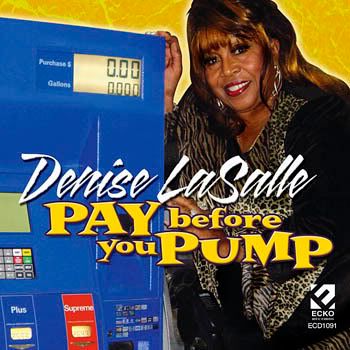
Denise LaSalle - Pay Before You Pump - 2007 - Ecko

A powerful soul blues album from The Queen of Southern Soul Blues, Denise LaSalle. Denise is a great vocalist and songwriter and wrote seven of the songs on this album. You may not be aware of her music, but she has been recording since the early seventies, and was composing songs well before that. Her music is no-holds-barred, earthy Southern soul blues. She is greatly influenced by Aretha Franklin, and LaVern Baker. This is one of Denise's best albums. The cover of "Pay Before You Pump"shows her filling up her car with gas, but if you are familiar with her music, you are probably aware that the lyrics have very little to do with the cost of fuel! Check out her extensive discography, and consider buying her great "Right Place, Right Time" and "Smokin' in Bed" albums. For more music in this vein, check out the brilliant compilation album, "See See Rider/Blues Ballads" by LaVern Baker.

TRACKS

1. Pay Before You Pump
2. It's Goin' Down
3. I Need a Working Man
4. Mississippi Woman
5. Hold on Tight
6. Hell Sent Me You
7. Walking on Beale Street and Crying
8. I'm Hangin' On
9. You Don't Live Here No More
10. I Tried
11. It's Goin' Down (Radio Version - Clean)
12. Mississippi Woman - (Delta Blues mix)

MUSICIANS

Denise LaSalle - Lead Vocals
Harrison Calloway, Jim Spake - Horns
Willie Hall - Drums
Lester Snell, James "Ham" Jackson, Gary Wolfe - Keyboards
Michael Toles, John Ward - Guitars
Al Wilder - Bass, Background Vocals
Brenda Williams, Morris Williams - Background Vocals

REVIEWS

It comes as no surprise the Denise LaSalle CD opens with a cheeky, double-entendre filled track ("Pay Before You Pump") being for the past decade she's had success with similar songs like "Lick It Before You Stick It", "Snap, Crackle & Pop", "Smokin' In Bed" to name a few. So "Pump", the title track to her new Ecko release "Pay Before You Pump", is yet another shuffle bump with a memorable refrain that'll garner instant adds at Southern Soul radio. The first single, however, is a re-working of Floyd Hamberlin's "Mississippi Boy" (re-titled "Mississippi Woman"), which has already been a regional hit for Will T and Charles Wilson. It'll no doubt hit again but better is the alternate "Delta Blues Mix" version of the song which adds honking harp and guitar that'll appeal to more mainstream Blues markets. It's the definitive version of the cut. The rhythmically similar "It's Goin' Down" was written by LaSalle. Here the "Queen" promises to put the smack down on a rival hen. Overall, LaSalle wrote seven of the ten cuts, most notably the Memphis Soul ballad "Hold On Tight" and the up-from-the-bottom slow Blues "Walking On Beale Street On Crying". LaSalle is one of those rare Blues singers that seems to appeal equally to female and male fans. The ladies cheer when she talk smack, putting men in their place but the menfolk simply eat it up too because she's got the chops. Both will "pump" this one to the top of the charts. © 2007 by Blues Critic Media , © www.bluescritic.com

In listening to this album, I am reminded that sometimes I think we take all of this far too seriously. Most of the time we really just want to listen to some music that is intended to do little else besides make us smile when we hear it. That is exactly what Denise LaSalle's "Pay Before You Pump" is intended to do. There isn't anything complicated going on with this album. All it is are some hellified funky azz southern fried grooves (this is what an R&B band is supposed to sound like and I want them to play at my funeral!!!), with songs full of wisdom/common sense all sung by one of the greatest voices in all of Black music. Take the song "Mississippi Woman" (which will certainly be added to the playlist of Nu Soul @ RadioIO.com) for example, when I first got this album and started to play it, each time I would get stuck on "Mississippi Woman". It's SOOO DAMN FUNKY that it needs to be hidden away from the white kids in the U.K. or else it might just win 5 Grammy Awards. However as good as it is, "Mississippi Woman" hardly tells the tale of this album. Don't sleep on "Hold On Tight" (a monster slow jam), the first cut "Pay Before You Pump" is one of those really well written "double entndre" songs that nobody seems to write anymore, "I Need a Working Man" is yet another phi slama jammin FUNK joint that's filled with the kind of advice that ONLY an "experienced Black woman" can provide. There's more here, that's for sure. Do you like Black music and you are looking for the REAL THANG? Then do yourself a fava and DON'T SLEEP ON DENISE LASALLE, because I have a feeling that if you were to "sleep on Denise LaSalle" (that you might just get yo' be-hind whupped!!!) © www.soul-patrol.com/soul/south.htm

BIO

Unlike so many other blues vocalists who just reinterpret material given to them by songwriters, Denise LaSalle is a seriously talented songwriter. Although her soul blues style has strong urban contemporary overtones at times, it's best to think of LaSalle as a modern-day Bessie Smith, because that's really what she is. She writes funny songs full of sassy attitude and it's an attitude she carries with her on-stage. Off-stage, LaSalle accommodates all autograph seekers and gladly obliges journalists and radio disc jockeys. The Jackson, TN-based LaSalle was raised in Belzoni, MS, (also home to Joe Willie "PineTop" Perkins some years earlier) but she got started singing in local churches around Leflore County. She was born July 16, 1939, as Denise Craig. Growing up, she listened to the Grand Ole Opry radio broadcasts and then in Belzoni, lived across the street from a juke joint. LaSalle's early influences, from the jukeboxes around Belzoni and over the radio, included Ruth Brown, Dinah Washington, and LaVern Baker. LaSalle moved north to Chicago when she was in her early twenties and would attend shows at the Regal Theatre, always returning home to write songs. She got to know blues musicians and began giving her songs to them, until one day a Chess Records executive stopped by at Mixer's Lounge, where LaSalle was working as a bar maid. He listened to one of her songs and took it down to Chess Records, and the company later signed her as a vocalist, but never recorded her. Two years later, LaSalle recorded and produced her own record with the help of Billy "The Kid" Emerson, the Chess executive who'd originally shown an interest in her. After the record made some waves on local radio, Chess stepped in and purchased the master and took it to Europe. Meanwhile, LaSalle continued writing songs and sitting in with blues musicians around the Chicago clubs. LaSalle's first big hit came about in 1971 when her "Trapped By a Thing Called Love" broke on the radio in Chicago and then Detroit. That record was for the Westbound label and then she signed with ABC Records in 1975, cutting three albums in three years until the label was sold to MCA. After MCA dropped her because of the label's "difficulty in promoting black acts" at that time, she continued performing as much as she could in Chicago and Memphis. In 1980, a Malaco executive called to ask her to write a song for Z.Z. Hill. A positive relationship with the company was quickly developed, which resulted in LaSalle recording 11 discs for the label, including Lady in the Street, (1983), Right Place, Right Time, (1984), Love Talkin', (1985), Hittin' Where It Hurts, (1989), Still Trapped, (1990), Still Bad, (1994), and Smokin' in Bed (1997). While her Malaco sides are probably her most important recordings, other than the original of her early-'70s hit "Trapped," she still releases excellent gospel crossover material, including This Real Woman (2000) and There's No Separation (2001) on Ordena Records © Richard Skelly & Al Campbell, All Music Guide

SHORT BIO (Wikipedia)

Denise LaSalle (born Denise Allen, 16 July 1939, Leflore County, Mississippi) is an American Urban, R&B/Soul singer, songwriter, and record producer. Raised in Belzoni, Mississippi, she sang in local churches before moving to Chicago in the early 1960s. She sat in with R&B musicians and wrote songs, influenced by country music as well as the blues, before winning a recording contract with Chess Records in 1967. Her first single, "A Love Reputation" was a modest regional hit. After establishing an independent production company, Crajon, with her then husband Bill Jones, her first major success came in 1971 when her song, "Trapped By A Thing Called Love", released on Westbound Records, made # 1 on the national R&B chart and #13 on the Billboard Hot 100 chart. Follow-ups "Now Run And Tell That" and "Man Sized Job" also made the R&B Top Ten, and she continued to have hits on Westbound and then on ABC Records through the mid 1970s. She also carried on as a record producer and live performer. In 1980 she signed as a singer and songwriter with Malaco Records, for whom she released a string of critically acclaimed albums through the 1980s and 1990s, starting with Lady in the Street (1986) and Right Place, Right Time (1984). Both albums became major successes among soul blues, R&B and soul fans and on Urban radio stations. She continues to work as a live performer, particularly at festivals, and more recently has issued more gospel tinged material. Lasalle now resides in Jackson, Tennessee with her husband, James E. Wolfe, where they participate in the community.

MORE ABOUT THE ARTIST


Denise LaSalle (born Denise Craig in 1939) was raised in Belzoni, Mississippi. Well-versed in gospel music as a child, she also picked up secular musical influences from early R&B, Grand Ole Opry, and local juke joint music. In her twenties she moved north to Chicago and pursued a songwriting career. A Chess Records executive, Billy "The Kid" Emerson, met LaSalle while she was working as a bar maid, and this gradually led her into recording and performing.LaSalle's first hit record was 1971's "Trapped By A Thing Called Love" (Westbound Records), which crossed over to the pop charts and went gold. The follow-up, "Now Run Tell That," was a million-seller on the R&B charts. LaSalle moved to ABC Records and recorded three solid albums in the late seventies before ABC was bought out by MCA, and MCA dropped her in the eighties as, nationwide, R&B declined in popularity. Malaco Records of Jackson, Ms. was just beginning to fill the vacuum, however, with artists such as Z.Z. Hill and Johnnie Taylor, and a LaSalle songwriting assignment for Hill led to a recording career that no one could have anticipated. More than a dozen albums--perhaps the greatest output of any rhythm and blues artist over the same roughly fifteen-year period--marched down the runway of Southern Soul from this oft-overlooked creative dynamo, beginning early on (1985) with LaSalle's signature zydeco track and concert favorite, "Don't Mess With My Tutu." In recent years the graying LaSalle's recording activity has continued unabated, sustaining her title as Southern Soul's tell-it-like-it-is Everywoman. She has moved to Ecko Records for her latest LP's, reinvigorating her career and re-establishing her credentials as one of Southern Soul's top female draws in the process. © 2005-2008 SouthernSoulRnB.com

19.9.08

Canned Heat


Canned Heat - Burnin' Live - 1990 - Aim Records (Australia)

Canned Heat, the legendary blues/boogie rock band are now 43 years in circulation. They have undergone many personnel changes, and deep sadness with the untimely deaths of members like Alan Wilson, Bob Hite, and Henry Vestine. Despite these great losses, Canned Heat have always managed to be "On The Road Again," even though Adolfo "Fito" De La Parra may be the only original band member playing with CH. The band have an extensive recorded output, but have always remained true to their great boogie and blues rock. Check out their Wikipedia bio @ WIKI/CH/BIO for a list of the great musicians they have played with. This album, "Burnin' Live" is a re-union live album from Australia, recorded in 1990, and showcases Canned Heat at their best. The album is of good sound quality with quite unusual live tracks, "Let's work together", "Gamblin' woman", "Hucklebuck", "Sunnyland", "Rollin' and tumblin", "Nitwit", "Gunstreet girl", "One way out", "J.J. Jump" and "Mercury blues." Buy the Band's classic 1968 "Boogie with Canned Heat " and Check out the great "Canned Heat, Featuring Walter Trout - Live In Oz" album @ CH&WTOZ

TRACKS

1. Let's Work Together
2. Gamblin' Woman
3. Hucklebuck
4. Sunnyland
5. Rollin' And Tumblin'
6. Nitwit
7. Gunstreet Girl
8. One Way Out
9. J.J Jump
10. Mercury Blues

BAND

Fito de la Parra - Drums
Larry Taylor - Bass, Vocals
James Thornbury - Guitar, Harmonica, Vocals
Junior Watson - Guitar

CANNED HEAT (BIO)

Emerging in 1966, Canned Heat was founded by blues historians and record collectors Alan "Blind Owl" Wilson and Bob "The Bear" Hite. They gained international attention and secured their niche in the pages of rock 'n roll history with their performances at the 1967 Monterey Pop Festival (along with Jimi Hendrix, Janis Joplin and The Who) and the headlining slot at the original Woodstock Festival. Wilson was already renowned for his distinctive harmonica work when he accompanied veteran bluesman, Son House, on his rediscovery album, "Father of the Blues." Hite took the name Canned Heat from a 1928 recording by Tommy Johnson. They were joined by Henry "The Sunflower" Vestine, another ardent record collector capable of fretboard fireworks at a moment's notice who was a former member of Frank Zappa's Mothers of Invention. Rounding out the band in 1967 were Larry "The Mole" Taylor on bass, an experienced session musician who had played with Jerry Lee Lewis and The Monkees and Adolfo "Fito" de la Parra on drums who had played in two of the biggest Latin American bands, Los Sinners and Los Hooligans and then with The Platters, The Shirelles, T-Bone Walker and Etta James. Canned Heat's unique blend of modern electric blues, rock and boogie has earned them a loyal following and influenced many aspiring guitarists and bands during the past 35 years. Their Top-40 country-blues-rock songs, "On The Road Again," "Let's Work Together," and "Going Up The Country," became rock anthems throughout the world with the later being adopted as the unofficial theme song for the film Woodstock. Right from the start, Canned Heat has been at the forefront of popularizing blues music. Their second album, "Boogie With Canned Heat," included the worldwide hit "On The Road Again" and a twelve minute version of "Fried Hockey Boogie" that established them with hippie ballroom audiences as the "kings of the boogie!" Their third album, "Living The Blues," included a 19-minute tour de force, "Parthenogenesis" which displayed the quintet at their most experimental along with their incarnation of Henry Thomas' "Bulldozer Blues" where singer, Wilson, retained the tune of the original song, rewrote the lyric and came up with "Goin' Up The Country," whose simple message caught the "back-to-nature" attitude of the late '60s and went to #1 in 25 countries around the world. The band can boast of collaborations with John Mayall and Little Richard and later with blues icon, John Lee Hooker, the musician that they initially got much of their musical inspiration from in the first place. This union first produced the spirited and revered album, "Hooker 'n Heat" and then Hooker's 1990 Grammy Award-winning classic, "The Healer." The band is also credited with bringing a number of other forgotten bluesmen to the forefront of modern blues including Sunnyland Slim, who they found driving a taxi in Chicago, Skip James, who they found in a hospital in Tunica, Mississippi and took to the Newport Festival, Memphis Slim and Clarence "Gatemouth" Brown with whom they recorded in France and Albert Collins. They brought Collins to California where they had their manager negotiate a recording agreement for Albert that started him on his way to becoming a well known musician throughout the world. On September 3rd, 1970, the band was shattered by the suicide of Alan Wilson. His death sparked reconstruction within the group and member changes continued throughout the next two decades. On April 5th, 1981, at the Palamino in Los Angeles, gargantuan vocalist, Bob Hite, collapsed and died of a heart attack and on October 20th, 1997, Henry Vestine died in Paris, France following the final gig of a European tour. Despite these untimely deaths and assorted musical trends, Canned Heat has survived under the leadership of Fito de la Parra since the late 70's. Since 1967, the band has toured extensively all over the world, performing at numerous festivals including Monterey Pop, Newport Pop, the Sturgis Motorcycle Run U.S.A., and the original Woodstock. They have performed at world-renowned venues such as Paris' Olympia, both Fillmore Auditoriums, The Kaleidoscope, Carnegie Hall (with John Lee Hooker), Madison Square Garden and even Royal Albert Hall and have played more biker festivals than any other band in the world. (from DAZ.com & www.freeddb.com/artists/Canned%20Heat.html

Mountain


Mountain - Extended Versions - 2000 - BMG Special Products

A live recording from the mid-period lineup of the band when West, Laing and Pappalardi were joined by rhythm guitarist David Perry, who replaced keyboardist Steve Knight. Leslie and the band are in good form and they rip through some of the great Mountain standards including 'Mississippi Queen' 'Nantucket Sleighride' 'Never In My Life' and 'Theme From An Imaginary Western. They also throw in a couple of old rock'n'roll classics for good measure . Even with a 192 bitrate, the sound quality of this album could be much better. At times the bass is indiscernable, which at times makes Felix Pappalardi's great playing hard to hear. Still many of these live albums are notorious for sound quality, and you've sometimes got to live with it! The great Leslie West's guitar playing is clearer, and the album is worth hearing, as Mountain were a great live hard rock band. Buy their classic 1971 album " Nantucket Sleighride," and hear Mountain at their best. You can check out "The Best Of Mountain" album @ TBOM

TRACKS / COMPOSERS

You Better Believe It - Corky Laing, Leslie West
Theme from an Imaginary Western - Jack Bruce
Never in My Life - Corky Laing, Felix Pappalardi, Leslie West, Gail Collins
Jingle Bells - J.S. Pierpont
Get Out of My Life Woman - Allen Toussaint
Mississippi Queen - David Rea, Corky Laing, Felix Pappalardi, Leslie West
It's for You - Allen Toussiant
Nantucket Sleighride - Felix Pappalardi, Gail Collins
Roll Over Beethoven - Chuck Berry
Whole Lotta Shakin' Goin' On - Dave Williams, Sonny David

BAND

Corky Laing - Drums
Leslie West - Guitar, Vocals
Felix Pappalardi - Bass, Vocals
David Perry - Rhythm Guitar

REVIEW

The Mountain entry in BMG Special Products' budget-priced Extended Versions: The Encore Collection series is a reissue of a concert recorded by the King Biscuit Flower Hour at the Capitol Theater in Passaic, NJ, on November 3, 1974, and initially released by King Biscuit Flower Hour Records under the title Greatest Hits Live only five months earlier, in April 2000. The only difference between Extended Versions and Greatest Hits Live is that the latter contains a six-minute "bonus interview" not featured on the former. Promoter John Scher introduces the band by noting a three-year lapse between Mountain performances caused by the group's breakup. This is a reunited unit, with lead guitarist and singer Leslie West, bass player Felix Pappalardi, and drummer Corky Laing joined by new rhythm guitarist David Perry. They open with the largely instrumental "You Better Believe It,", continue with such favorites as "Theme from an Imaginary Western," "Mississippi Queen," and "Nantucket Sleighride," also throwing in "Jingle Bells" in acknowledgement of the onset of the holiday season, and conclude with a medley of the rock & roll standards "Roll Over Beethoven" and "Whole Lotta Shakin' Going On." The playing is powerful, and the bandmembers' stage remarks suggest they are glad to be back together. Unfortunately, the group split again shortly after the performance. ~ William Ruhlmann, All Music Guide

BIO (Wikipedia)

Mountain is an American rock band, popular in the early 1970s. The band broke up in 1972, reformed shortly thereafter, broke up soon after that, and now has begun touring again in recent years. Mountain remains popular in some circles despite having fallen out of the mainstream during the seventies. Mountain was influential during the development of hard rock, and their hit song "Mississippi Queen" became a radio hit and a hard rock classic. VH1 ranked Mountain as number 98 on its 100 Greatest Artists of Hard Rock. The band formed when guitarist Leslie West, having left the Long Island R&B band the Vagrants, recorded a solo album called Mountain with bassist and former Cream producer Felix Pappalardi producing. The album, Mountain, also featured former Remains drummer N.D. Smart and keyboard player Steve Knight. West's raw vocals and melodic, bluesy guitar style, and Pappalardi's heavy and elegant bass lines were the elements of Mountain's distinctive sound. The band was inspired by the power trio Cream, of which Pappalardi was an "unofficial" member: he featured heavily on Cream's third album, Wheels of Fire, contributing organ, viola, trumpet and handbells as well as producing. Mountain played their fourth live gig at the Woodstock Festival, but the band did not appear in the film of the event nor was it included on the first album. Soon after, Smart was replaced by Laurence "Corky" Laing. The group's first album, Climbing!, was released in 1970 and featured the band's best-known song, "Mississippi Queen"; the song reached the middle of the top 40 charts and the album reached the top 20 on the US album charts. The follow-up album Nantucket Sleighride (1971) also reached the top 20 on the US albums chart but failed to yield a hit single. After these early releases the band continued to receive a certain measure of critical acclaim but never achieved great commercial success. After Nantucket Sleighride, the band faced creative difficulties and failed to progress on their next album. The band broke up in 1972. West and Laing later formed West, Bruce and Laing with Cream bassist Jack Bruce. They released three albums (two studio and one live). In 1974 West and Pappalardi reformed Mountain with Allan Schwartzberg on drums and Bob Mann (of Dreams) on keyboards and guitar - a tour yielded the live double album Twin Peaks. The studio work Avalanche, with Laing on drums and rhythm guitarist David Perry, who as an African American was also credited for "added color". It was the last heard from Mountain until the mid 1980s since which West, sometimes with and sometimes without Laing, has worked under the name Mountain, New Mountain or the Leslie West Band. On April 17, 1983, Gail Collins Pappalardi, Felix's wife and songwriting partner who had designed many of the band's album covers, shot Pappalardi in the neck in their fifth-floor East Side Manhattan apartment. He was pronounced dead at the scene and Collins was charged with second-degree murder. She was cleared of that charge but convicted of the lesser criminally negligent homicide and sentenced to 16 months to four years in jail. After her release from jail, she vanished into private life. The band has reformed, and Richie Scarlet has taken over as bass player on the band's recent tours. Scarlet is also known for his work with Kiss guitarist Ace Frehley, Skid Row singer Sebastian Bach and for his multuiple solo records. In 2003 West and Laing produced a book of recollections called "Nantucket Sleighride" detailing their time with the band at its peak and their subsequent careers. Published by S.A.F. Publishing ISBN 0 946719 62 4

18.9.08

Scaramouche


Scaramouche - Scaramouche - 1981 - Musea

Good album from this obscure German seventies progressive rock band. The band played progressive rock reminiscent of early Yes, and Genesis, but also threw some fusion and blues into the mix. There are some great melodic pieces on the album, and some really striking instrumental solos. A very enjoyable album from a talented band. A.O.O.F.C would welcome any info on this band. This album is a 128 bit version, but sound is ok.

TRACKS

1. A cloud in the sky (6:05)
2. Only tail the bait (4:18)
3. Clown leaves Berlin (4:59)
4. Of rooms and open doors (3:32)
5. Find me (5:11)
6. Crentcantoe (5:51)
7. Isn't it real (9:18)

BAND

Holger Funk / lead vocals
Johannes Hofmann / keyboards
Martin Hofmann / bass
Robby Stein / drums, percussion
Tommy Weber / guitars & Space Invaders
Julia Wollny / backing vocals (2)

17.9.08

Rachelle van Zanten


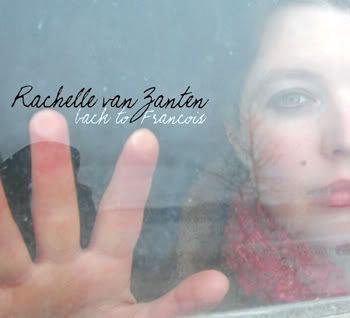
Rachelle van Zanten - Back to Francois - 2006 - RVZ

Rachelle Van Zanten - "A total package. Fabulous musician on keyboards and guitar, particularly on acoustic and electric slide, a great voice and a strong songwriter with excellent pop and rock sensibilities." Ottawa Citizen.

"Punishing slide guitar that would make Jimmy Page blush"- See Magazine (2005)

Rachelle juxtaposes her gutsy guitar playing with personal and introspective lyrics, a trait she attributes to her varied musical influences, which include artists like John Prine, and Joni Mitchell. She has been quoted as saying, “After listening to Led Zeppelin, I really got a sense of groove,” she explains. “Then, after listening to John Prine, Gillian Welch, and Joni Mitchell, I came to appreciate lyrical storytelling, and how it can convey emotion, as well as getting what you believe in across to your audience.” This is a very good folk soul blues album full of funky blues riffs and great slide guitar. Already a big name in her native Canada, especially on the live circuit, Rachelle has a dedicated following in Scandinavia and Germany, and tried to crack the UK market with this album. If you can find it, listen to Rachelle's former band, the Painting Daisies album, "Flambescence." Keep an eye out for future releases by this talented lady, and think about buying them. Artists like Rachelle van Zanten need all the promotion they can get.

TRACKS

1 The Cracks
2 Take Me Right Back (Radio)
3 A Hole in the Way
4 Yah Yahs
5 I Will Be Numb
6 Suicide Ride
7 Got to Let Go
8 Rusty Boy
9 January
10 Down to California
11 Dirty Water
12 Half Pint
13 Bannister Man
14 Take Me Right Back

BAND

Rachelle van Zanten - Keyboards/Acoustic & Electric Slide Guitar/Vocals
Joby Baker - Drums
Rick May - Bass

REVIEWS

After 10 years and four albums with the acclaimed female quartet Painting Daisies, Back to Francois is the overdue solo debut from slidewonder Rachelle Van Zanten. Painting Daisies had won a one-hour prime time television/radio special in a national competition called The Great Canadian Music Dream. Sometime after that the group broke up, and Van Zanten took her shot, with excellent press and relentless touring in North America and Europe. When we first heard about her and checked out her myspace page, we were knocked out by her tone and command of the slide guitar on the song "Take Me Right Back." We've heard a couple of very good female slide guitarists, but not quite like RVZ. She's got a gut wrenching tone and a riff wisdom that comes only from countless hours. Grew up playing and singing Bluegrass and Old Time Country in B.C., and played in rock bands for many years. Now she's somewhere between, as a gifted singer songwriter with chops for days. The CD reveals a rich songwriting and vocal palette that her distinguished drummer and producer Joby Baker brings to a fine light. She's been known to tour solo as well as with Baker and one or two others, trio and quartet. The tour photos on her website gave us a warm and generous kind of feeling, and we plan to interview the artist in an upcoming issue. The record is far from tunes built around guitar stylings. The opener "The Crack" is a beautiful ballad by RVZ, Baker, and Harald te Grotenhuis, who we believe to be (or have been) a headbanger axeman in a highly regarded Dutch thrash metal band Wicked Mystic. Since the artist thanks him for "taking her to a new place in music," we're keen to find out more about him, and about their chemistry. If you like a strong woman artist, you can't miss this record. She's got a huge range artistically; as soft as Nanci Griffith on one song, and like the gutteral evil twin of the young Bonnie Raitt on the next. We have given up being amazed by the depth of talent in our Canadian neighbors, and Rachelle Van Zanten is the most current mindblowing example. Check it out. © Frank Goodman, www.puremusic.com

Don’t let “The Cracks” fool you with its easy comparisons to Suzanne Vega, Catie Curtis, and Shawn Colvin. A fine acoustic, country-laden tune (more on that later), “The Cracks” lulls you in as the first track of Rachelle van Zanten’s Back to Francois. She comes on easy, and all hell breaks loose on her slide guitar for track 2, “Take Me Right Back.” I’ve seen the Bonnie Raitt comparisons, but that’s the easy blueswoman namecheck. Listen as van Zanten gives out bursts of guitar between stanzas, and you see that she’s in the company of Eddie Turner, Kelly Joe Phelps, Jonny Lang, Paul Reddick, and Susan Tedeschi. Van Zanten studied under slide guitar master Lester Quitzau (who guests on “Take Me Right Back” and “Suicide Ride”), but there are also brief acoustic guitar storms where I hear the phenomenal sounds of Preston Reed. Van Zanten plays Canadamericana, laying down tracks of easy Country flavor, but she can also dig a well to find those deep, down blues. “Got to Let Go” brings up that bucket of blues with a little twang in slide guitar while Joby Baker kicks out the funk on the drums and bass. Van Zanten’s guitar actually seems to grab a little of that riff from Stevie Wonder’s “Superstition.” The album doesn’t let you sit anywhere too long. “Rusty Boy” could be something from the Maritime Provinces and the Rankins (or the British Isles and Kate Rusby), but don’t stay with that pastoral air, because you’ve got to get yer “Yah Yahs” out—a stomp-driven, toy piano party for the guitar. “Bannister Man” has the tribal rhythmic feel of The Primitives’ “Shadow,” but van Zanten breaks up the trance with her mesmerizing acoustic slide which when combined with John Cartwright’s percussive guitar comes on like something from Keller Williams. And now for that opening track of singer/songwriter folk bliss: “The Cracks.” The song itself may not have grabbed me, despite its beauty; van Zanten truly shines elsewhere here. However, on closer inspection, the lyrics of “The Cracks” overpower me. Van Zanten told me that this song is about the end of a relationship with man she dearly loved, a bittersweet kind of leaving I’m guessing. However, for me there seems to be some echoes here of an adoption story. My ears were especially pricked by the line, “I loved you like a child of my own,” and that colored my original interpretation of the chorus: “Come here softly, the world is still sleeping. . .Close your eyes and soon she’ll be taking home.” I imagine those words being spoken by a birthmom as she spends the last hours holding her baby in the hospital before the adoptive mother comes. She has the “peace to say” that the baby is her child, but that there’s also very good reasons for making the decision to place the child into the arms of adoptive parents. It’s not what van Zanten is singing about, but it is the emotion that comes through this tender opening song from a woman can also blister and bruise her guitar. Thanks to Rachelle van Zanten for the review CD. © 2008 Benjamin C. Squires, www.musicspectrum.org
Rachelle van Zanten is an up and coming Canadian icon- "as both a songwriter and a slide guitar player van Zanten is turning the heads of music industry folk the world over" (Nextfest 2005). Van Zanten's charismatic stage presence is infectious and charming, leaving her audience feeling inspired. Raised in the foothills of northern British Columbia, van Zanten grew up playing bluegrass and old time country with her family. She spent the majority of her preteens singing to Patsy Cline, Dolly Parton, Hank Williams Sr., and Johnny Cash recordings. By age 13 she was well schooled in piano, drums and trumpet but wanting to be modish with the 90's rock movement, took up guitar. In 2005 the band Painting Daisies, which Van Zanten had been a member of for 10 years, performed their final show in September leaving van Zanten with opportunity to craft a solo recording and tour her new material. "Back to Francois" was recorded that same year with Island Music Awards, Producer of the Year, Joby Baker. 'Back to Francois' is a "fresh and rootsy debut album. It is contemporary, bright & optimistic whilst retaining its origins in the core values of North American music." (Mick Glossop, UK Producer). As a solo performer, van Zanten and her slide guitar are gracing the international stages alongside such greats as Sylvia Tyson, Colin Linden, Sonny Rhodes, and Alison Brown. © 2008 Marilyn Records

"After 11 years in the trenches, Canadian slide guitarist Rachelle van Zanten is done with bands. She just released her first solo album, Back to Francois, which is packed with funky blues riffs and stellar slide performances. The surprise is that van Zanten juxtaposes her gutsy guitar playing with very personal and introspective lyrics- a stylistic trait she attributes to her diverse influences." (Guitar Player Magazine-Oct. 2006)

"Rachelle van Zanten has come a long way from her bluegrass upbringing in the foothills of northern British Columbia. For over a decade, this Canadian slide guitarist and songwriter has been working out her soulful blues riffs and turning heads. When the award-winning Painting Daisies dissolved in late 2005, van Zanten seized the opportunity to launch her solo career, recording her "fresh and rootsy" solo debut Back to Francois with producer Joby Baker. Baker has since assumed the role of drummer, accompanying van Zanten on an exhaustive tour that has thrust this up-and-coming artist into the international limelight." (FFward Mag- Nov. 2006)

"Simply put, this woman is the total package. A fabulous musician on keyboards and guitar, particularily on acoustic and electric slide guitar, a great voice and a strong songwriter with excellent pop and rock sensibilities." (Ottawa Citizen- Oct. 2006)

Rachelle van Zanten's music personal [© KERRA McEWEN -- Calgary Sun http://jam.canoe.ca ]

Rachelle van Zanten may groove like Led Zeppelin and ZZ Top, but she's not your typical rock star. "I'm into healthy living, running on trails, hanging out with my dog and going fishing in my canoe. "I don't do well in big cities so I often play a lot of these little rock halls in the smaller communities," says the slide-guitarist, who plays the Epcor Centre's Engineered Air Theatre tonight, celebrating the release of her first solo album, Back to Francois. A native of Francois Lake, B.C., van Zanten says the record is an honest collection of self-written songs reflecting certain points -- both sweet and savage -- in her life. "I grew up singing to Emmylou Harris, Kathy Mattea and Linda Ronstadt, so I've got that little twang in me as well. You can definitely hear those early influences coming out in my music, so I guess I was just trying to be true to myself when I wrote this record," she says, adding she jammed with her musical parents when she was little. Going from jamming with her folks to being a full-time musician hasn't been easy. "In 2005 I said, 'That's it, I'm quitting all my jobs and I'm just going to play music.' "I kind of locked myself away for couple months, played and played and played and tried not to listen to any other slide players so I could develop my own tone and voice on the slide." As she progresses, her goals do too. "I've learned the power of manifestation. Like you can just say, 'I'm going to be playing the main stage at Calgary Folk Fest within two years.' And it happened this year. I want to go do a duet with Anne Murray one day. I think that's achievable in I'd say a year and a half."

MORE ABOUT RACHELLE van ZANTEN

Best known for her efforts with the rock quartet Painting Daisies, Rachelle van Zanten has come a long way from her bluegrass upbringing in the foothills of northern British Columbia. For over a decade, this Canadian slide guitarist and songwriter has been working out her soulful blues riffs and turning heads in the folk music industry. When the award-winning Painting Daisies dissolved in late 2005, van Zanten seized the opportunity to launch her solo career, recording her "fresh and rootsy" solo debut Back to Francois with producer Joby Baker. Baker has since assumed the role of bass player, accompanying van Zanten on an exhaustive tour that has thrust this up-and-coming artist into the international limelight. Van Zanten has been on the road since May, touring throughout Europe and Canada. She’s been working her new material live in the cold countries of Scandinavia. In December she’ll be in England to work with Van Morrison’s producer. "I’ll be recording in the studio with what I call my "British Trio," who are the musicians I’ve been playing with all through England, Holland, Germany and France," she says. They have turned out to be the perfect fit for my musical style and even though I have a great Canadian lineup as well, it gets very expensive to bring them overseas with me. I’m enjoying the luxury of having bands east of the Atlantic and West of the Atlantic, as I like to say." Freed from the creative and financial restraints that bound her during her tenure with Painting Daisies, van Zanten is thankful that she is now finally able to support herself with a full-time musical career. Mixing up her self-taught slide guitar skills with bass-playing techniques such as plexing, hammer-ons and double hammer-ons and wearing her slide on her middle finger, Bonnie Raitt style, van Zanten produces an appealing resonance that merges elements of rock, country, folk and blues into one enchanting, Led Zeppelin-inspired sound. "Right now the whole Americana vibe is really big in Europe and the audiences I’ve encountered thus far have been very excited about it, the shows have been packed with hungry music lovers," van Zanten says. "It’s so refreshing to perform for that kind of crowd after having slogged it out for years in North America. I guess it’s that typical equation where a Canadian artist has to make it elsewhere first to be appreciated at home. Just look at Feist. She made it big in France, and now she’s selling watches or men’s cologne or whatever to us over here. Personally, I’ve got my eye on a GAP underwear contract," van Zanten laughs. As a musician’s musician, van Zanten confesses that she has her eyes on an even more valuable prize, endorsements that revolve around the instrument she loves so much. Yes, she’s more than willing to be picked up by a guitar or amp company, because as she puts it "they give you gear, and they fix it for you too!""It’s nice when people pay attention to my techniques and tones and the type of gear I prefer rather than focusing on the fact that I’m a female guitarist," says van Zanten. "People place too much emphasis on image when it comes to women in music. That’s the kind of message I try to convey to the girls who attend the annual Rocker Girl Camp I’m involved in. I like to stress the need for young females to encourage each other. I tell them that there’s no reason why they can’t play a wicked solo on that guitar they’ve got. It’s five days of sisterly love and going for it." Shying away from comparisons to myriad women artists such as Lucinda Williams, Joni Mitchell, Shawn Colvin, Ellen McIlwaine, Suzanne Vega, Catie Curtis and Gillian Welch, van Zanten traces her roots to slide guitar master Lester Quitzau who inspired her and instructed her on how to develop her burgeoning talents as a solo performer. "Lester Quitzau had an enormous impact on me. I saw him perform at a music festival in northern British Columbia, and from the moment he played his first note I knew that "this is what I want to do." I followed him for two years studying his slide guitar technique and he was very gracious about sharing tips and teaching me to play open D and G. "Writing and playing slide just came naturally to me having grown up as a musician. Growing up in northern B.C. I lived on Lake Francois and was always surrounded by blue sky and water. My lyrics run like a river. For example on the song "Half Pint," I just let the words flow like liquid into an acoustic soundscape. The album also refers to the Prairies a lot on tracks such as "January" and "Rusty Boy," you can just hear the desolation and isolation of an Albertan winter. I get interesting reactions in Europe when I start out with a lyric about it being ‘45 below on the prairies.’ They’re looking at me like, ‘That’s not humanly possible.’" CHRISTINE LEONARD, © 2006 FFWD. All rights reserved

16.9.08

Beverley Skeete


Beverley Skeete - Unchained - 2008 - Vocaphone

You may not recognize the name, but UK singer Beverley Skeete has sung background vocals for ABC, Jamiroquai, Squeeze, Tina Turner, Chaka Khan, Sting, Elton John, The Chemical Brothers, Lisa Stansfield, Eurythmics, and many others. She was also the featured vocalist with Bill Wyman's Rhythm Kings. This is a good mixture of R&B, old school soul, swamp blues and even rock, where Beverley explores some of the great past classics. She re-invents great compositions like "Born Under a Bad Sign," and "Black Magic Woman." Her version of Bobby Womach's "I'm in love" is outstanding. Buy her "All My Dreams" album.

TRACKS

Run Through the Jungle - 4:12
On the Road Again - 4:27
Born Under a Bad Sign - 3:14
Unchain My Heart - 4:11
Crawling Up a Hill - 3:11
I'm in Love - 3:18
You Got Me Running - 4:14
Heart of Gold - 4:05
Black Magic Woman - 3:39
I Don't Need No Doctor - 3:08
Midnight Rider - 3:28
Helpless - 4:13
It A'int Easy - 4:30
Ain't No Love (In the Heart of the City) - 3:39

REVIEW

Beverley Skeete Has been The Lead Vocalist With Bill Wyman's Rhythm Kings For Ten Years. When Bill Left The Rolling Stones and decided To Form 'The Rhythm Kings' he auditioned vocalists for the band. Beverley Came HIGHLY recommended with a Cv that Included Chaka Khan,Elton John,Annie Lennox, George Micheal, Sting, Dela soul and many more. As soon as Bill heard Beverley he Knew he had found the Voice He Was looking For. Since then they have recorded five studio albums and numerous live albums..They Have toured worlwide and were recently the house band at The Ahmed Ertegan Concert at Which Led Zeppelin performed. 'Unchained' is Beverley's Third Solo Album and showcases Beverley's powerful vocal style on original interpretations of some of her favourite songs. There is Swamp style- (run through The jungle) ,Blues- (born Under A Bad sign), Soul -(I'm In Love), Boogie -(on The Road Again) and Classic(Heart Of Gold). © cdbaby.com

15.9.08

Atlanta Rhythm Section


Atlanta Rhythm Section - Dog Days - 1975 - Polydor (U.S)

The Atlanta Rhythm Section released their first self titled album in 1972, and during the seventies they made a big impact on the Top 40 charts with hits such as, "Spooky," "So Into You," and "Imaginary Lover." They earned gold and two platinum albums, which assured them a spot as one of the great rock bands. In 1996 ARS was deservedly inducted into the Georgia Music Hall of Fame. "Dog Days" is not as strong an album as most of the ARS output, but it's still a great example of the best in Southern boogie rock. For better examples of the ARS music, buy their marvellous "Champagne Jam" album and listen to their great "Rock and Roll Alternative" album. [ N.B : Link here will only be around for 7 days, so ....... ] This one's for you prin/c...although I'm sure you have album

TRACKS / COMPOSERS

A1.Crazy - Buie , Daughtry , Nix
A2.Boogie Smoogie - Bailey , Buie , Nix
A3.Cuban Crisis - Buie , Cobb , Nix
A4.It Just Ain't Your Moon - Buie , Daughtry , Nix

B1.Dog Days - Buie , Daughtry , Nix
B2.Bless My Soul (Instrumental) - J. R. Cobb
B3.Silent Treatment - Bailey , Buie , Nix
B4.All Night Rain - McRee , Buie , Daughtry , Nix

BAND

Barry Bailey - guitar
J.R. Cobb - guitar, background vocals
Dean Daughtry - keyboards
Paul Goddard - bass
Ronnie Hammond - vocals, background vocals
Robert Nix - percussion, drums, background vocals

ALBUM / TRACK INFO [ © Copyright 2002-2003 - Rolling Storm Communications Corporation - All Rights Reserved ]

Dog Days was ARS first masterpiece and an album that still stands with their best. It showcases a band that has found its groove and is taking its music to a new level. Featuring another fine collection of songs about themselves and the South, the band displays a growing array of musical styles and approaches that are very different from where the rest of Southern Rock was headed. Overall, it's a faster paced album that what had come before, featuring six uptempo songs and two beautiful ballads-all originals. It opens on some high notes with the rocking Crazy leading into the buildup blues and breakout jam of Boogie Smoogie. A couple of lighter tunes lead into a ballad that is ballad that is a beautiful evocation of the South Dog Days. For the second album in a row they show off their chops with an instrumental Bless My Soul. The album closed with another classic ballad of Souther images All Night Rain. While other bands were striving to claim the mantle of kings of Southern rock, ARS had started making music no other Southern band has ever been able to duplicate.

1. Crazy (Buie/Nix/Daughtry)-3:07
The album starts off in overdrive with a guitar solo leading into meditations on the times. Vocals, keyboards and guitars build into a musical crescendo rocking harder than anything ARS had recorded before, with Ronnie Hammond's vocal expressing the band's disdain for those who "powder your nose and paste on your glitter."

2. Boogie Smoogie (Buie/Nix/Bailey)-7:57
Their first longer recorded work, this begins as a slow guitar-and-harmonica blues that recounts ARS' frustration with audiences who "just want to boogie." It then accelerates into a roadhouse stomp that boogies as well as anything to come out of the South, but with an emphasis on melody and tone seldom matched elsewhere.

3. Cuban Crisis (Buie/Nix/Cobb)-3:50
The mood lightens up with this lilting, uptempo remembrance of a Saturday night on the town in Ybor City, FL and the characters encountered there.

4. It Just Ain't Your Moon (Buie/Nix/Daughtry)-4:50
The rocking rolls on with track that drives home the notion that some things are not meant to be, and incorporates some of ARS' classic tempo changes to beautiful effect..

5. Dog Days (Buie/Nix/Daughtry)-3:35
A classic. Dean Daughtry's keyboard leads Hammond's vocals through a melody that rises and falls, with lyrics that capture images of life in the South during the heat of summer. At the end of the second chorus, the song suddenly and dramatically changes tempo, and guitarist Barry Bailey takes over, leading the band into a driving musical interlude before returning to a closing keyboard coda.

6. Bless My Soul (Cobb)-4:00
An instrumental blues shuffle, featuring solid ensemble playing and some great guitar soloing.

7. Silent Treatment (Buie/Nix/Bailey)-6:15
A subdued but intense rocker about a mysterious woman and a pickup in a "loud Hotlanta honkytonk." Tempo changes are again used to great effect both to create mood and build a sophisticated musical framework.

8. All Night Rain (Buie/Nix/Daughtry/McRee)-3:10
The album closes on a lighter note with this ballad featuring guitars, piano and Hammond's conversational vocal. Again, Southern summer scenes are evoked both in words and sounds. "Can't you hear the thunder, see the lightning cross the sky?"

BIO

Often described as a more radio-friendly version of Lynyrd Skynyrd or the Allman Brothers, the Atlanta Rhythm Section was one of many Southern rock bands to hit the upper reaches of the charts during the late '70s. Hailing from the small town of Doraville, Georgia, the beginning of the Atlanta Rhythm Section can be traced back to 1970. It was then that a local recording studio was opened, Studio One, and the remnants of two groups (the Candymen and the Classics Four), became the studio's house band. One of the facility's head figures, Buddy Buie, soon began assembling the session band -- singer Rodney Justo, guitarist Barry Bailey, bassist Paul Goddard, keyboardist Dean Daughtry, and drummer Robert Nix. After playing on several artists' recordings, it was decided to take the band a step further and make the group of players a real band, leading to the formation of the Atlanta Rhythm Section. Buie soon became an invisible fifth member of the fledgling band; he served as their manager and producer, in addition to providing a major hand in the songwriting department. Finding time between sessions to record their own original material (which was initially, entirely instrumental), an early demo wound up landing the band a record deal. The group's first few albums failed to generate much chart action (1972's Atlanta Rhythm Section, 1973's Back Up Against the Wall, 1974's Third Annual Pipe Dream, 1975's Dog Days, and 1976's Red Tape), but it was during this time that Justo was replaced with newcomer Ronnie Hammond, which would eventually pay dividends for the group. Although they had gained quite a bit of radio airplay down south, their record company began to put pressure on the quintet to deliver a single that would break them nationally. The demand worked -- the Atlanta Rhythm Section scored a Top Ten single, "So Into You," on their next release, 1976's A Rock and Roll Alternative, which was the group's first album to reach gold certification. But this wouldn't be the group's commercial peak, as they scored the highest charting album of their career in 1978, the Top Ten Champagne Jam, which spawned two hit singles -- "I'm Not Gonna Let It Bother Me Tonight" and "Imaginary Lover." To keep up their high profile, the Atlanta Rhythm Section soon became one of the hardest touring bands of the entire Southern rock genre (including a performance at the White House for then-president Jimmy Carter). But the group's commercial success would be fleeting -- it appeared as soon as mainstream rock fans embraced the Atlanta Rhythm Section, they just as quickly forgot about them. Each subsequent album -- 1979's Underdog and live set Are You Ready, 1980s The Boys from Doraville, and 1981's Quinella -- sold less than the previous one, resulting in the band's split shortly thereafter. In the wake of their split, the Atlanta Rhythm Section has reunited sporadically for tours (although only a few original members would be present), and issued their first all-new studio album in more than a decade in 1999, Eufala. Additionally, some of country-rock's biggest names have gone on to record Atlanta Rhythm Section covers -- Travis Tritt, Wynonna Judd, and Charlie Daniels, among others. © Greg Prato, All Music Guide

Juicy Lucy


Juicy Lucy - Blue Thunder - 1996 - Polydor Records (UMG)

This great blues rock album was released in 1996 under the name of Juicy Lucy, although the band bore no resemblance to the first 60's blues rock legendary Juicy Lucy line-up which included Ray Owen (vocals), Glenn Campbell (steel guitar, mandolin and vocals), Neil Hubbard (guitar), Chris Mercer (saxophone, and piano), Keith Ellis (bass and vocals) and Pete Dobson on drums. Nevertheless, the album is a good one, and features some good songs, great playing, and terrific vocals from Paul Williams. The album was also released under the title, "Blue Thunder featuring Juicy Lucy." Buy their great "Get a Whiff a This"album, and check out their great "Pieces" album @ JULU/PIECES There's also info on their great "Juicy Lucy" self titled album @ JULU/ST

TRACKS / COMPOSERS

1.Running Blue - Hentschel, Williams
2.Fool to Yourself - Hentschel, Williams
3.Win or Lose - Hentschel, Papanicola, Williams
4.Woman of Mine - Hentschel, Williams
5.Going Back - Hentschel, Williams
6.Give Me the News - Hentschel, Williams
7.Gin House - Traditional
8.Circle of Light - Hentschel, Williams
9.Live With My Blues - Hentschel, Williams
10.Lay Down Your Arms - Hentschel, Moody, Williams

BAND [1996 Line-Up]

David Hentschel - Keyboards
Gary Husband - Drums
Micky Moody - Guitar
Andy Summers - Guitar
Mick Taylor - Guitar
Paul Williams -Lead Vocals
Pete Stroud - Bass

ABOUT JUICY LUCY

Saucy blues-rockers Juicy Lucy formed in 1969 from the ashes of cult-favorite garage band the Misunderstood, reuniting vocalist Ray Owen, steel guitarist Glenn "Ross" Campbell and keyboardist Chris Mercer; with the additions of guitarist Neil Hubbard, bassist Keith Ellis and drummer Pete Dobson, the group immediately notched a UK Top 20 hit with their reading of the Bo Diddley perennial "Who Do You Love," with their self-titled debut LP falling just shy of the Top 40. Ex-Zoot Money singer Paul Williams, guitarist Mick Moody and drummer Rod Coombes replaced Owen (who exited for a solo career), Hubbard and Dobson for 1970's Lie Back and Enjoy It, with bassist Jim Leverton assuming Ellis' duties for the follow-up, 1971's Get a Whiff a This. The constant turnover clearly took its toll on the group both creatively and commercially, with co-founders Campbell and Mercer both exiting prior to the fourth Juicy Lucy album, 1972's Pieces, which was recorded by a makeshift lineup of Williams, Moody, keyboardist Jean Roussel and the former Blodwyn Pig rhythm section of bassist Andy Pyle and drummer Ron Berg. Juicy Lucy finally disbanded shortly thereafter. Ray Owen revived the name in 1995 for the album Here She Comes Again which found Mike Jarvis (guitar), Andy Doughty (bass), and Spencer Blackledge (drums) rounding out the band. A couple of years later this version of the band broke-up but Owen wanted to keep on going, especially when he formed a musical partnership with a guitarist known as Mr. Fish. Legal problems kept the new band from using the Juicy Lucy name so they gigged as Ray Owen's Moon. By 2004 bassist Fudge and drummer Fletch had joined the band and the legal issue was settled. The new Juicy Lucy spent 2006 working on a new album and touring the U.K. with Nazareth. © Jason Ankeny, allmusic.com

BIO (Wikipedia)

Juicy Lucy were saucy blues-rockers, who formed in 1969 from the ashes of the cult garage band The Misunderstood; thus uniting vocalist Ray Owen, steel guitarist Glenn Ross Campbell and keyboardist Chris Mercer. The group later picked up guitarist Neil Hubbard, bassist Keith Ellis, plus their drummer Pete Dobson. The band immediately notched a UK Top 20 hit with their cover version of the Bo Diddley perennial "Who Do You Love?". Their self-titled debut album then fell just shy of the Top 40 in the UK Albums Chart. Line-up changes were quickly afoot as ex-Zoot Money singer Paul Williams, guitarist Micky Moody and drummer Rod Coombes; replaced Owen (who exited for a solo career), Hubbard and Dobson; for 1970's Lie Back and Enjoy It (#53 - UK Albums Chart), with another bassist Jim Leverton assuming Ellis' duties for the follow-up, 1971's Get a Whiff of This. The constant turnover clearly took its toll on the group both creatively and commercially, with co-founders Campbell and Mercer both exiting prior to the fourth Juicy Lucy album, 1972's Pieces. This was recorded by a makeshift line-up of Williams, Moody, keyboardist Jean Roussel and the former Blodwyn Pig rhythm section of bassist Andy Pyle and drummer Ron Berg. Juicy Lucy disbanded shortly thereafter. Micky Moody (born 30 August 1950, in Middlesbrough), later joined the inaugural Whitesnake line-up in 1978. Before then he was a member of another rock outfit Snafu between 1973 and 1976. Moody also released the bluesy solo album I Eat Them For Breakfast in 2001. Plus, Juicy Lucy's version of the song "Who Do You Love?" was featured in Shellshock: Nam '67. Founder member Ray Owen revived the name in 1995 for the albums Blue Thunder and Here She Comes Again which found Mike Jarvis (guitar), Andy Doughty (bass), and Spencer Blackledge (drums) rounding out the band. A couple of years later this version of the band broke-up but Owen wanted to keep on going, especially when he formed a musical partnership with a guitarist known as Mr. Fish. Legal problems kept the new band from using the Juicy Lucy name, so they gigged as Ray Owen's Moon (Moon being the title of Ray Owen's 1971 solo album). By 2004 bassist Fudge and drummer Fletch had joined the band and the legal issue was settled. The new Juicy Lucy spent 2006 working on a new album (subsequently titled Do That And You'll Lose It), and touring the UK with fellow rock veterans Nazareth. They played the Cambridge Rock Festival (2007) and are managing to build a formidable live reputaion. The link with the past though is not forgotten, and the modern day Juicy Lucy still plays "Mississippi Woman", "Who Do You Love?" and more from their first album. The original Misunderstood was formed in 1966 and reformed for its trip to England. They made two singles for Fontana including 'Children Of The Sun,' and featured good looking young singer Steve Hoard. However the Misunderstood were eventually superseded by a more commercial Juicy Lucy. The first Lucy lineup included Ray Owen (vocals), Glenn Campbell (steel guitar, mandolin and vocals), Neil Hubbard (guitar), Chris Mercer (saxophone, and piano), Keith Ellis (bass and vocals) and Pete Dobson on drums. The band was managed by Nigel Thomas who also looked after the affairs of Joe Cocker. A controversial but energetic music biz figure, Nigel died of a heart attack a couple of years ago. Micky Moody (born August 30, 1950), who is featured on the present album, remembers seeing the first version of the band on the road. 'The band was virtually formed around Glenn and everyone remembers their first album cover with the lady covered in fruit! I think her name was Zelda Plum. It was a great album and I remember seeing the band in action at their early gigs.’Moody is from Middlesborough. He went to school with Paul Rodgers who later came to fame with Free and Bad Company. Micky and Paul formed a band at school called The Roadrunners which became The Wild Flowers when they moved to London in 1967 and 'starved to death in our caftans!' Micky later went home to study classical guitar while Paul Rodgers met Paul Kossoff and Simon Kirke and formed Free. Says Moody: 'I went back to the North East and was asked by a local club owner and singer called John McCoy to help form a blues band called Tramline.' The singer was friendly with record boss Chris Blackwell and the band released two albums on Blackwell's Island label. In March 1969 Moody auditioned for Lucas & The Mike Cotton Sound, a well known soul band. He got the gig, but switched to Zoot Money's band for a few months in 1970. He'd got to know Zoot's regular singer Paul Williams, who by this time had joined Juicy Lucy. Micky was brought up to date on all the latest Juicy gossip. 'Ray Owen had been sacked after a couple of months and Paul had got the gig. He told me Neil Hubbard was leaving and asked if I'd like to join on lead guitar. I said, 'Great!' I went straight into recording the album 'Like Back And Enjoy It.' We were gigging all the time and became particularly popular in Germany where the band was very respected." However it proved increasingly difficult to break out of the club circuit, and reach a higher level of acceptance. "We made another album 'Get A Whiff Of This' before the group finally disintegrated in 1971.' Glenn Campbell went back to America, apparently disillusioned, but during their time together the, Campbell/Moody guitar partnership had worked well. ‘It was good because we didn't get in each other's way. I liked Glenn's playing and did a bit of slide guitar myself, using the bottle neck. Yes I remember Glenn wearing his big hat. But we all used to do that, it was quite trendy at the time!’ Despite the defection of the mainman, Paul Williams wasn't ready to give up. ‘Paul said he wanted to keep the band together. He wanted me to be the lead guitarist and also play bottle neck slide and the band kind of reformed. We had the famous rhythm section of Ron Berg and Andy Pyle from Blodwyn Pig. The line-up varied from time to time and Bernie Marsden actually came down for a blow. We were looking for another player because we wanted twin guitars. I'd been promoted to lead and we needed a rhythm player to get that American funky sound, without being too heavy. Bernie came down, but he was wrong for the job, as he was more in the Clapton vein.’