
A.O.O.F.C
recommends
Mizar6

babydancing


Get this crazy baby off my head!

7.10.08

Kyla Brox


Kyla Brox - Gone - 2007- Pigskin Records

You may not be aware of the name, but Kyla Brox and her band have recorded several albums, all with classic R&B songs plus their own compositions. They have their own great bluesy, infectious sound, and they are doing a lot to keep the Blues alive. This is a good album with good songs, great vocals and a great backing band. A really quality recording from a lady who we should be hearing a lot more about. Buy her "Coming Home"album and promote this very talented lady, and her band.

TRACKS

1 Frustration
2 Gone
3 Always Looking At Me
4 Skin
5 One Step Too Far
6 This Is The Life
7 Loaded Gun
8 More Than Me
9 What's Left On The Table
10 Ride On
11 You Said You'd Be My Sunshine

BAND

Kyla Brox - Vocals, Flute
Phil Considine - Drums
Tony Marshall - Saxophones
Billy Buckley - Guitar
Danny Blomeley - Bass, Acoustic Guitars
Marshall Gill - Slide Guitar on 'Loaded Gun'
Victor Brox - Vocals, Keyboard, Trumpet
Phil Middleton

REVIEWS

The album was recorded in January this year in time for Kyla's tour of Thailand and Australia and is surely the band's finest offering to date. ’GONE’ is a combination of 11 brand new original acoustic and band tracks and features Phil Considine on Drums, Tony Marshall on Saxophones, and Billy Buckley on Guitar, as well as Danny on Bass and acoustic guitars. Kyla really shines on this album showing her real diversity with intimate performances on tracks like 'Gone' which will send shivers down your spine and 'You Said You'd Be My Sunshine' sung accapella, to the powerful funky vocals in 'Skin' and 'Ride On' As well as Danny's finger defying acoustic performances on 'Always looking at me' and 'What's Left On The Table' Kyla and Danny are joined by Marshall Gill on slide guitar for 'Loaded Gun'. ’Gone’ as usual features incredible Sax solos from Tony throughout, and a couple of ripping guitar solos by Billy including an amazing lap steel solo on Frustration. Phil and Danny provide the backbone to this album, and you can really feel their solid grooves, which come from playing and recording together for nearly 15 years! Listen out for a couple of guest appearances from Victor Brox and Phil Middleton too! © http://66.102.9.104/search?q=cache:XgHODdPrG0QJ:www.kylabrox.com/index.php%3FlinkId%3D6%26item%3D26+Kyla+Brox+gone&hl=en&ct=clnk&cd=5&gl=ie

Kyla Brox returns with another fine album. Her voice has been honed to a fine point and one wonders where next in her efforts to explore its limits? This is nowhere better exemplified than in the closing solo track where in the plaintive 'You Said You'd Be My Sunshine', she captures all the nuances and style of the Blues and jazz divas that have clearly influenced her. Brox was raised in Manchester in a highly musical family, and from very tender years sang in her father's Victor Brox Blues Train. From the time of meeting the equally talented Danny Blomeley her course was set, and this time around they have co-written all the tunes. This is both a strength and a weakness: a strength in the intensely personal nature of the lyrics, such as in the moving song of loss that is the title of the album; a weakness in that I miss the brilliant cover versions of earlier albums which almost inevitably brought life to the original. Thus my only criticism is that 11 tracks totalling 38 minutes surely left room for a couple of covers. However, the songs here are a heady brew of funk, jazz, acoustic Blues and a little rock, so the changes in shade and mood keeps one interested throughout. I love the invitational and acoustic 'Always Looking At Me', followed by the dancing and equally alluring 'Skin'. Instrumentally, a special mention must be made of Billy Buckley's sympathetic electric guitar work throughout, and Kyla as flautist in the gorgeous Sade-like 'One Step Too Far'. Kyla Brox has developed a maturity and power and yet delicacy to her vocal prowess, and does not abuse the vocal affectations or gymnastics, which so badly affect her peers. She is head and shoulders above the rest in the UK, and to anyone considering CDs by Amy Winehouse or Joss Stone, this I suggest is the real deal. © Noggin from BluesMatters Magazine

“...acoustic, intimate and powerfully emotive” © Alan Pierce, Editor, Blues Matters Magazine.

“Excellent!” © Paul Jones, BBC

"I haven't honestly seen a better British Blues band for quite some time." Kyla and the band have recorded five albums to date, with a repetoire drawn from classic R&B songs and their own compositions. The Blues runs deep through their original material, but they build on that to create their own sound. They are anything but your average Blues band, yet they keep the fundamentals of the Blues alive; they play with a feeling that is infectious. © Jenny Lyndsey, Blues in Britian Magazine.

"Destined to be Britians number one female singer." © Pete Evans, Dragon Blues Festival.

"What a voice, what a talent, what performances!!!" © Darren Howells, Blues Matters! Magazine.

"Kyla's voice is up there with the greats." © Chris Cordingley, Blues Matters! Magazine.

"...an authentic Soul diva!..." © Mike Butler, City Life Magazine.

"Kyla Brox Rocks!" © Northern Territory News, Australia.

BIO

Kyla was born to sing. She grew up in Manchester, England, listening to her dad singing the blues and her mum singing opera, not to mention the soul and rock exploits of her four older siblings, so it seems inevitable that she would be bitten by the music bug. By the age of 3 she had her heart set firmly on becoming a singer (even asking for Chaka Khan's clothes, hair and voice for Christmas!) and by 1993, at 12 years old, she had already begun to sing in her father's band, the Victor Brox Blues Train (which he originally formed way back in the 60s with Kyla's mother, Annette). It's little wonder that Victor, multiinstrumentalist and singer (who fronted the Aynsley Dunbar Retaliation, and has played/recorded with the likes of Alexis Korner, Little Walter, Graham Bond, Muddy Waters, Champion Jack Dupree, Jimi Hendrix, Doctor John, Peter Green and Sonny Boy Williamson II...) has been a huge influence on Kyla's musical career, encouraging her to learn to play the flute and guitar, as well as sing. Tours, numerous gigs and festivals, and a handful of cds with the Victor Brox Blues Train, have ensured that Kyla has had the proper schooling in her craft. Fate played it's hand in 1993, when Kyla met the equally precocious, 13 year old multi-instrumentalist, Danny Blomeley, when he began to play bass in her dad's band. Danny was a seasoned musician even then, having formed the first of his own band aged 10 (in which he played electric guitar). The pair spent their teenage years honing their skills together in the Victor Brox Blues Train (then affectionately known as the "Child Slavery Band" due to the extreme youth of the musicians!), until 1998 when Danny left the UK to travel the world with guitar in hand. His musical expertise was soon in demand from a diverse range of bands, playing jazz, blues, salsa and rock, on guitar, bass, mandolin and piano. When Danny arrived back in the UK in the spring of 2001, he and Kyla formed a duo. Danny's sensationally unique style on the acoustic guitar is the perfect complement to Kyla's incredible voice, and often leaves the audience wondering where the rest of the band are hiding! Their vibrant performances quickly made them a favourite in the clubs and venues around North West England, and the rest of the UK was soon to follow. With media interest, including Kyla featuring on the front covers of the UKs two biggest Blues dedicated magazines, Blues In Britain and Blues Matters! (who coined her nickname, "The Voice") and radio play, including a live session for BBC Radio 2 (the UKs most listened to radio station), their reputation has grown and grown. The pair make a strong song-writing partnership and recorded their first album, ‘Window’, in 2003, a mixture of original and classic numbers. Kyla and Danny put together an electric band in 2002, with Danny on bass, Marshall Gill on electric guitar, Tony Marshall on saxophones and Phil Considine on drums. The Kyla Brox Band have recorded three studio albums, ‘Beware’, ‘Coming Home’ and most recently 'Gone', and also a powerful live album, ‘Live at Matt & Phred’s’. With their own special mix of funky, jazz-tinged blues, and armed with the two different touring outfits, they have caused a stir all over the world, performing concerts, and often headlining at festivals though out the UK, Europe, Australia and Asia, such as, The Great British Rhythm n Blues Festival (Europe's largest blues festival), Copenhagen Blues Festival, Blues autour du Zinc, (Paris), The Great Southern Blues and Rockabilly Festival (Australia), Phuket International Blues Festival (Thailand), Edinburgh Festival (Scotland) and Limavady Jazz & Blues Festival (Ireland), to mention a few. © 1994-2008 CDconnection.com

MORE ABOUT THE BAND [ © http://66.102.9.104/search?q=cache:7KDGttaDSmcJ:www.kylabrox.com/index.php%3FlinkId%3D1%26page%3D1+Kyla+Brox&hl=en&ct=clnk&cd=2&gl=ie ]

Kyla first hit the stage at the tender age of three years old, performing with her father as part of the Victor Brox Blues Train. In the subsequent years, she has grown into an accomplished performer with a strikingly powerful voice and has toured the world with her band, leaving a lasting impression wherever she performs. If you want to get into her good books, she's fond of gemstones, flowers and alcohol. Failing that, a pink handbag will usually do the trick.


Danny Blomeley - Bass, Acoustic Guitar [Danny plays a mean bass and no mistake. As the tuneful half of the rhythm section he steers the band through their musical terrain, sometimes pushing hard, sometimes drifting along but never dull. You haven't seen a bass solo until you've seen Dan get busy with a glass ashtray. He also plays guitar, and piano, can get a respectable sound from just about any instrument he picks up and can keep a station wagon rolling using nothing more than gaffer tape and houehold cutlery.]


Marshall Gill - Electric Guitar [Motorbike collector and part-time superhero, Marshall is a six-string thing who can blaze like a bonfire or smoulder like a hot coal. Though he was born to rock, Marshall can coax a huge range of possibilities from his guitar and is a strong contender for the title of UK's quietest guitar solo. He has never been seen to turn down a drink and has an uncanny ability to lose and subsequently recover hats in unusual situations. Marshall is currently trying to master the art of flying without the use of an aircraft.]


Anthony Curtis Marshall - Saxophones [It's the quiet ones you have to watch. Whether it's a raging storm or a sweet summer breeze, Tony's sax is guaranteed to blow your socks off. Tony learned his skills playing for drinks in the seedy bars of Oldham, where audiences are tough and the musicians are tougher. If you offer him enough money, he can drink himself to sleep in under four minutes.]


Phil Considine - Drums [The clattering backbone of the band. Phil plays the drums with a flair and passion beyond that of the average tub-thumper,whether propelling the songs along at high velocity or delivering gentle kicks from behind. Phil claims his drumming is "an attempt to create the sound of a drum kit falling down a very long flight of stairs" but we suspect that Phil has a relaxed attitude to the truth and never believe a word he says. He also states that he is the current world record holder for 'most photographs taken whilst playing a drum solo.' Actually, that might be true.]

6.10.08

Fleetwood Mac


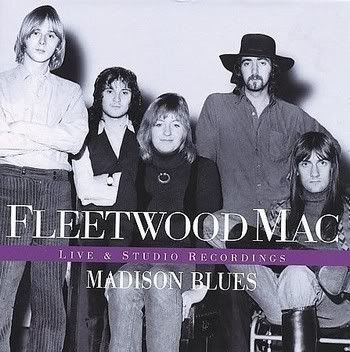
Fleetwood Mac - Madison Blues - 2003 - Shakedown Records [ Import Vinyl/CD Album ]

This album has been released in many different formats, and on various labels with different track listings. This Shakedown version from 2003 contains 29 live and studio recordings from the early 70s. It is possible that all the tracks are previously unreleased, including a unique studio session of Christine McVie and her band, the Christine Perfect Band, before she joined Fleetwood Mac. There is a rare Jeremy Spencer recording of an Elvis Presley impersonation titled 'The King Speaks'. Madison Blues is a different kind of Fleetwood Mac compilation. Many FM compilations are usually rehashes of the group's years with the guitar great Peter Green, and his partner Jeremy Spencer, on the electric six-string,. Peter Green is only on a couple of tracks here. The majority of this compilation is composed of the band led by Christine McVie (née Perfect)(most of the time) with Jeremy Spencer and Danny Kirwan taking turns in the vocal department . It's all great blues and rock & roll. None of the Bob Welch pop material is here, but it's not that relevant. This extensive CD presents Fleetwood Mac in a different light, and it highlights the personality, dimension and depth of the great vocalist, Christine Perfect, in fronting a band usually associated with strong male-dominated music. This is a great album of blues, and blues rock, and is HR by A.O.O.F.C. There is detailed track notes contained in RAR file. This album was also released with a DVD disc containing a 96 minute Jeremy Spencer interview from Feb. 19th, 2002. The DVD is not included in this post For one of the greatest blues rock albums ever recorded, you should buy Fleetwood Mac's " 1969 "English Rose" album. Check out Mick Fleetwood's "The Visitor" album @ MFWOOD/VISITOR There is info on the Christine Perfect self-titled album @ CPERFECT/ST Search this blog for news about Peter Green's great "A Fool No More" compilation album.

TRACKS

DISC 1

1. Hey Baby
2. It's You I Miss
3. Gone into the Sun
4. Tell Me You Need Me
5. Crazy About You (Can't Hold Out Much Longer)
6. Down at the Crown
7. Tell Me All the Things You Do
8. Station Man
9. Purple Dancer
10. Station Man
11. Crazy About You (Can't Hold Out Much Longer)
12. One Together
13. I Can't Stop Loving Her
14. Lonely Without You
15. Tell Me All the Things You Do
16. Jewel-Eyed Judy

DISC 2

1. Madison Blues
2. Purple Dancer
3. Open the Door
4. Preaching Blues
5. Dust My Broom
6. Get Like You Used to Be
7. Don't Go, Please Stay
8. Station Man
9. I'm on My Way
10. Jailhouse Rock
11. King Speaks [Narrative]
12. Teenage Darlin'
13. Honey Hush

MUSICIANS

Christine McVie - Vocals
Jeremy Spencer - (Guitar), (Vocals), (Narrator)
Peter Green - Guitar
Rick Hayward - (Guitar)
Top Topham - (Guitar)
John McVie - (Bass)
Martin Dunsford - (Bass)
Chris Harding - (Drums)
Mick Fleetwood - (Drums)

CREDITS [ Edited ]

Mike Franks (Engineer), Mike Harding (Engineer), Malcolm Brown (Producer), Mick Fleetwood (Songwriter), Mick Fleetwood (Songwriter), Son House (Songwriter), Elmore James (Songwriter), Joe Josea (Songwriter), Danny Kirwan (Songwriter), Danny Kirwan (Songwriter), Jerry Leiber (Songwriter), John McVie (Songwriter), John McVie (Songwriter), Christine McVie (Songwriter), Christine McVie (Songwriter), Don Robey (Deadric Malone) (Songwriter), Jeremy Spencer (Songwriter), Jeremy Spencer (Songwriter), Mike Stoller (Songwriter), Jules Taub (Songwriter), (Sleepy) Lou Willie Turner (Songwriter), Mike Vernon (Songwriter), Stan Webb (Songwriter), Stan Webb (Songwriter), Sonny Boy (Aleck Ford Rice) Williamson (Willie) (Miller) (Songwriter), Phil Rogers Design (Design), Dennis Blackham (Mastering), Peter Moody (Research), Peter Moody (Compilation), Phil Rogers Design (Artwork), (Jet) Martin Celmins (Sleevenotes), (Jet) Martin Celmins (Jeremy Spencer Photos By), LFI (Christine Perfect Band Photo), Harry Goodwin (Front Cover Fleetwood Mac Photo By), Harry Goodwin (Box Back Cover Inset Of Fleetwood Mac By)

EDITED LINER NOTES FOR MADISON BLUES

Fleetwood Mac - a new lead singer. And it is at this point - unknowingly, of course - that the band began to lay down some musical roots that would grow into Rumours. Jeremy Spencer 'Lost In America' Fleetwood Mac made it big twice over: first as young kings of the late-1960s British blues boom - blues fanatics who nonetheless made the pop charts with a batch of memorable songs penned by founder Peter Green. Then secondly, as the band that - with its Rumours album Californian lineup - tapped into a whole new market in tbe mid-1970s which became known as AOR - album/adult oriented rock. Mind you, at the start of that decade they were in for a very rough ride... This began when, disillusioned with the music business, leader Peter Green left the band he first put together, Things looked up when Christine McVie joined, only for Jeremy Spencer then suddenly and mysteriously to leave - swopping rock'n'roll for the religious life. All this trauma occurred within a year. Spencer walked, on February 15th 1971. Against all odds Fleetwood Mac survived these and many other scary dramas and is now in its fourth decade with (at time of writing) the Rumours lineup - less Christine McVie - back in the studio finishing off a new album with US gigs to follow. Here you have a band of never-say-die troupers whose legend has always resonated two themes - trains and chains (as in synchronicity). Founder Peter Green in 1967 named the band after its rhythm section (Mick Fleetwood and John McVie) and then took to 'Fleetwood Mac' because, to him, it sounded like the name of an American express train (as does Green's wailing harmonica on the instrumental of the same name). Ten years after this, 'The Chain' thematically was the title track of the mega-selling Rumours album: this was a song all about the band struggling to rise above some intense personal problems and relationship bust-ups, and then just stick together for the sake of the music. The music here on Madison Blues is from a pivotal eighteen months in Mac's history as it lost its original if-it-ain't-blues-we-don't-wanna-know attitude and looked to its own songwriters - and America's West Coast sound - for inspiration. Christine McVie was a crucial link in the chain, and this collection begins with a promotional session from the Christine Perfect Band, as it was known. Earlier in 1969 Christine had left her previous band, Chicken Shack, just as her smoky vocals helped to land that group in the Top 20 witb a cover of Etta James's soulful ballad 'I'd Rather Go Blind'. Her reason for leaving? Being husband John McVie's good lady took priority over slogging away in the music business. So she 'retired' - or at least she tried to. Fate had other ideas in mind: later that year, 1969, she was voted 'Top Female Vocalist' in a Melody Maker readers' poll, at which point Chicken Shack's manager, Harry Simmons, starts hallucinating pound notes. So he bends Christine's ear, and - hey presto - by November she was fronting her own band with ex-Yardbird Tony 'Top' Topham and Rick Hayward on guitars, Martin Dunsford on bass, and Chris Harding on drums. That her solo project was, in Christine's own words, "a disaster" had something to do with management haste. On the strength of the Melody Maker poll Simmonds landed her band some big money bookings. As managers do. But then nowhere near enough time gets set aside for rehearsals, and so the first gigs are ... just a tad under-rehearsed. So promoters get miffed, the word spreads, and money goes down drastically enough to kill the band just as it's beginning to find it's groove. Same old story. That groove - and clear early indicators of Christine McVie's ear for melody and hooks - can be heard on self-penned songs such as It's You I Miss, Gone Into The Sun and Tell Me You Need Me. Hey Baby she carried over from her Chicken Shack days. Christine's Stax-sounding take on Little Waiter's 'Can't Hold Out Much Longer' (which she called Crazy About You Baby) became Fleetwood Mac's opener once she joined them very shortly before the band's August 1970 Green-less debut in the States. A few months earlier - and still reeling with aftershock from Peter Green's exit that May - the rest of the band bravely decided to carry on as a 4-piece, and so rented an oast house called Kiln House to try and 'get it together in the country'. "Much hash..." and "Trauma City" are two of John McVie's typically pithy descriptions of this three-month excursion in which the band, wives, girlfriends and roadies lived communally, smoked, rehearsed and stoically contemplated a future without Peter Green. This pressure worked well for them because in no time Danny Kirwan, Spencer, Fleetwood and McVie had written and recorded the Kiln House album, and were scheduled to tour America promoting the new album. Fearing that the live sound was too thin, the boys brought in Christine on vocals and keyboards virtually at the last minute. One of the Kiln House stand-out songs, 'Station Man', would endure unbelievable personal and legal dramas still in store for Mac in the bleak years before they moved to California in 1974 where they struck gold with tbeir eponymous white album and tben Rumours. 'Station Man' eventually found its way into the live set-list of the Buckingham/Nicks lineup and listening to it again here you can hear why: in there, as far hack as 1970, are some trademarks of the Rumours sound: three-voice barmonies, in-song tempo changes, and ringing guitar sounds. Similarly, 'The Purple Dancer' and 'Jewel Eyed Judy' showcase a vocal harmonies and melodic sense of things to come for Fleetwood Mac many miles down the (railway) line. Listen also to McVie's bass on 'The Purple Dancer': whereas his role in Mac's blues band days was very much rhythm-man-in-engine-room, on this track he's playing tbe kind nf melodic and exposed bass runs with a sonic effect tbat Mick Fleetwood bas since likened to "a whole orchestra" (referring to McVie's bass parts on the Rumours classic 'Go Your Own Way'). What's more, during what was Jeremy's 'swansong' time in concert, upping the pace and attack of Christine's 'Get Like You Used To Be' - from lazy boogie into R&B rocker - makes this Chicken Shack era live favourite sound a bit like a prototype for 'Don't Stop (Thiuking About Tomorrow)' - tbe Rumours cut destined to become a campaign anthem for President Clinton and the Democrats in the early 1990s. Christine McVie and Fleetwood Mac started that American tour at The Warehouse club in New Orleans. It is clear from tracks such as Jewel-Eyed Judy is that she immediately found a decorative style of playing which filled out the sound, whereas on Crazy About You Baby the band sound comfortable backing her. Her song Lonely Without You maybe augurs a slow ballad style that peaked in Rumours days with the poignant 'Songbird', and Jeremy's slide guitar accompaniment here is masterful. Spencer's songwriting on Kiln House does however confirm something he says, namely, that throughout his four years with Mac he was stuck in a 1950s rock'n'roll timewarp (for instance, his song One Together on this collection is really Buddy Holly revisited). Even so, it has to be stressed that his slide playing prowess was anything but stuck. For this, look no further than Madison Blues, also chosen as the title for this collection on the strength of Spencer's slide playing, a performance where the control and flow of ideas in his soloing is ahead of anything he did during the Peter Green days; the same applies on his 1950s R&B throwback Don't Go Please Stay, and also the wild grandstanding slide on Son House's Preacher Blues, Elmore James's classic Dust My Broom, here has the addition of Christine's piano backing. This, instead of the two guitars used during the Green era, both accompanying Spencer's slide (something which he in fact regarded as "overkill"). And so Christine's playing served to bring the groove closer to the original 1950's Chicago blues in which piano was integral to Elmore's sound. "The King Speaks" is the first time Spencer's talent for mimicry is captured at length on a Fleetwood Mac release. When Peter was with them this crowd attraction and vignette by 'Elvis' would happen only if the slide guitarist felt comfortable with the audience on the night. With this new line-up, the band took the send-up one stage further with a costume change towards the end of the set: Spencer's Elvis impersonation became a 'show within a show'. And yet, the big, big irony about all of this upgrading of Mac's act (thanks mostly to Spencer), is that at the time Jeremy himself was far too wracked by self-doubt to notice or admit that he was playing and performing so well. And, for him, this self-doubt did turn out to be the straw that broke the camel's back: he has since spoken of a post-gig hotel room band get-together on the night before he went missing where Mick Fleetwood puts on a Mac in-concert tape (recorded shortly before Peter quit the band - possibly a gig at the Boston Tea Party). To Spencer's ears Green's improvising was spellbinding - meanwhile, Jeremy felt sickened as he listened to what he regarded as his own unadventurous and wooden playing on that tape. Hearing this tape he just wanted out of the whole Fleetwood Mac/music-biz deal. Later that night back in his room the about-to-be Cbild of God solemnly prayed to be freed from the burden of - as he then saw it - having to pretend to be a rock star. A crestfallen Mick Fleetwood, speaking to the music press a couple of months after his close friend had abandoned them, stressed how just wrong Spencer had got things in his head: "Jeremy was lifting the whole band with his playing," reflected the heartbroken drurmner. But Spencer was by then contentedly ensconced in the Children of God religious group based in Los Angeles, who, in turn, re-christened him Jonathon and then encouraged him to use his talents as a performer gently to evangelise with music. The music papers and subsequently-published books about the band described Spencer's exit with much high drama, using emotive phrases such as 'kidnap' and 'brainwashing'; the truth - as Jeremy made clear in another interview - is rather plain by comparison. To this day, he remains with the organisation - now called The Family. So, back then it was the right move. For him, at least. But the way in which Spencer left served to further traumatise an already fragile band, as well as putting yet more pressure on remaining guitarist Danny Kirwan. Danny and Jeremy between them had somehow survived the ordeal of having to come up with the goods after Peter Green had departed. Even though it may not have felt like it to them in those tense times, Kiln House - and some of that album's stronger songs included on this collection - amounted to a promising debut for the post-Green lineup. In the writing of tracks like Station Man and Jewel Eyed Judy Danny collaborated with Jeremy, plus they had shared the same stage for nearly three years. Kirwan must have felt very lonely and vulnerable without Spencer. Yet Danny's playing and vocals on the tracks of this double-CD focus a maturing performer. Some months separate the two live performances of Station Man and - on Disc 2 - Kirwan's guitar work has grown both in confidence as well as technique. Not one for lengthy improvising, Danny's talent is best showcased either in short, set solos or with the fine, percussive rhythm guitar that can be heard on Get Like You Used To Be. He could write good blues rock material, such as Tell Me All The Things You Do, but country-tinged pop ballads such as Open The Door or Jewel-Eyed Judy proved to be the style he developed in his short solo career after it was time for him to 'jump the train'. As things turned out, Kirwan spent a further eighteen months in Fleetwood Mac before he was asked to leave midway through an American tour in August 1972. Jeremy Spencer was replaced by Californian guitarist/songwriter, Bob Welch, in the spring of 1971. Welch has since admitted that he found it difficult to establish much rapport with Kirwan. Bob came from a soul and jazz background that would take Fleetwood Mac in a rather different direction for a while. Sadly, the cumulative pressure on Kirwan to front a band going through so many changes in the early 1970s, proved too much too soon for the 22 year-old. That he took refuge in drink and drugs, soon conspired to make him impossible to work with, and so the painful task of summarily firing Danny was left to Mick Fleetwood. (Ironically, it was the drummer who had first spotted Kirwan's raw talent some four years earlier, and who then had plotted hard to get him in the band.) In the couple of years that followed Kirwan's departure, Fleetwood Mac kept on getting sidetracked by personal problems, personnel problems and a drawn-out legal dispute over the right to use their name. Their move to Los Angeles in 1974 - the year in Welch eventually quit - musically soon put them back on course thanks to a very fateful chance meeting with Lindsey Buckingham who along with Stevie Nicks - his partner in every sense joined at the start of 1975. Christine McVie vividly recalls the instance when what became the Rumours sound was born as they all began rehearsing together: "We were playing this song ['Say You Love Me'] and I heard this incredible sound - our three voices." In this way Fleetwood Mac resumed the three-voice approach that had begun in the Kiln House era some five years before. Having played and sung together for years as Buckingham Nicks, Lindsey and Stevie effortlessly could come up with vocal harmonies which were much more finely crafted than when Christine sang together with Jeremy and Danny. But by drawing on their Station Man roots, the LA-based Fleetwood Mac was now all set to pick up speed and travel the world in style. In doing this they would also seriously redefine the term Big Time. © 'Jet' Martin Celmins, Shakedown Records

5.10.08

Rory Gallagher


Rory Gallagher - Live At The Cork Opera House 1987 - [ DVD Trax ]

Jimi Hendrix was once asked in an interview, "What does it feel like to be the World's Best Guitarist", he replied "I don't know, ask Rory Gallagher."


In 1972 he was voted Melody Maker's Top Musician of the Year, dethroning Eric Clapton. His album Live in Europe has been a big selling album not only in Ireland but also internationally. Generally regarded as one of the most influential guitarists ever, many of today's top musicians, including The Edge from U2, Slash of Guns N' Roses fame, Johnny Marr of the Smiths, Glenn Tipton of Judas Priest, Vivian Campbell of Def Leppard, and Brian May of Queen cite Gallagher as an inspiration in their formative musical years. It is also a fact that the Rolling Stones auditioned Rory among a number of other guitarists for the band in the 1970s. Rory was the undisputed king of earthy blues, where his queen was his guitar, he is frequently cited as the greatest Irish rock guitarist of all time. Returning to play his hometown in 1987 in The Cork Opera House, Ireland, this is a great performance from the late Irish master bluesman and his band. Rory's guitar playing is amazing. The band supports Rory brilliantly throughout a selection of his old and new material. Listen to Rory's solo acoustic version of `Out On The Western Plain.' Check out Rory's detailed biography at RORY/BiO and there is info on Rory's "Powerful And Velvet" album @ RORYG/PFL&VT


TRACKS

1. Continental Op
2. Don't Start Me To Talkin'
3. Tattoo'd Lady
4. I Ain't No Saint
5. Follow Me
6. When My Baby She Left Me
7. Off The Handle
8. Out On The Western Plain
9. Wanted Blues
10. The Loop
11. Shadow Play
12. Messin' With the Kid
13. Loanshark Blues

BAND

Rory Gallagher Vocals Guitar
Gerry McAvoy (guest) Bass Backing Vocals
Brendan O'Neill (guest) Drums
Marc Feltham (guest) Harmonica

4.10.08

Peter Garstenauer


Peter Garstenauer - Funny World - 1998 - Wolf

A good album from the Austrian bluesman. Nothing earth shattering or innovative here, but an enjoyable listen. For better material, check out his great "Ain't That Blues" album, on which he plays some outstanding versions of some old blues standards, and buy the tremendous, Peter Garstenauer And The Rhythm Gangsters "Running Hot" album.

TRACKS

01 - Blues In My Pockets
02 - I Hate To Be In Love
03 - Bunch Of Lies
04 - Down For You
05 - Freedom In A Cage
06 - Feels Like Years
07 - Talking About Things
08 - I Wonder
09 - Money Not Enough
10 - Highway Slide
11 - Funny World
12 - Midnight Flow
All songs composed by Peter Garstnauer

MUSICIANS

Peter Garstnauer (guitar, vocals)
Ewald Palmetshofer (piano, keyboards)

SHORT BIO

"Peter Garstenauer was born in Austria on February 8, 1965. He began playing the guitar at th age of 14. One year later, he founded with two schoolmates his first band, The Rhythm Gangsters. The boys from Upper-Austria started playing the Blues, and music styles related to the Blues. Since this kind of music is not part of the country's musical traditions, the young band encountered many obstacles, some in form of well intentioned advice from commercially oriented musicians. Often, they were not taken seriously, or envied their talent. Peter Garstenauer, however, continued steadfastly to pursue his interest, and proved to be a passionate guitarist. He was mainly influenced by Johnny Winter and Stevie Ray Vaughan. Playing the Blues was no longer just a pastime for Peter, it became antidote to everyday problems, a means to bring order to the chaos within and to freely express his feelings......The same year (1994) they signed a recording contract with Wolf Records in Vienna for their new studio recording, which has just been released. The new CD, "Ain't That Blues", features a cult figure from Texas, guitarist Bugs Henderson. During Henderson's European tour in September/October 1994, The Living Guitar Legend From Texas was able to hear the Peter Garstenauer Band in concert, and spontaneously agreed to be part of their latest CD, "Ain't That Blues". Peter's mastery of the guitar caused Henderson to call him up on stage at a concert in Kufstein, Austria, to first blast a killer version of "Tore Down" through their emplifiers, then, to settle down into the mellow groove of a slow blues." © http://home.online.no/~frodebye/bugs_henderson/cd_garstenauer_blues.htm

Gentle Giant


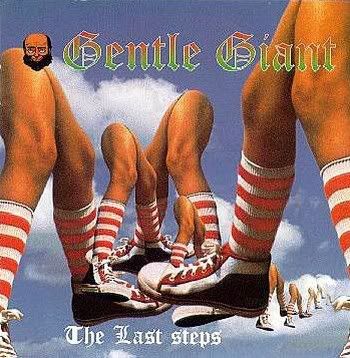
Gentle Giant - The Last Steps - 1996 - Red Steel Music

GG were never as commercially successful as some of their peers (like King Crimson or Yes), but they are one of the greatest and most influential progressive rock bands of the 1970s. Their early albums are sophisticated and complex,and never commercial, but really worth getting into. Their music may be an acquired taste, but when your musical "palate" adapts to GG's music you will enjoy their albums. Gentle Giant cover rock, blues, jazz, & even Renaissance madrigals, marked by a heavy classical influence and unique use of vocal counterpoint. Sound quality is only fair on the '96 issue, especially the guitar parts. This is a 192 version, so you know what to expect. However, if you are a GG fan, and haven't heard this album, you may be less critical of the sound. It is a great concert from this great band. This is a previously unreleased live recording of Gentle Giant's last concert in the USA, at the Roxy Theater in Los Angeles, on June 16, 1980. It was the second of two shows that day. It is an official recording, and was re-issued in 2003, in a remastered version with a gatefold sleeve. Buy their brilliant 1975 "Freehand" album, listen to their great "Acquiring the Taste", & "Octopus" albums, and there is info on the band's "Out Of The Woods:The BBC Sessions" album @ GG/OOTW/BBC

TRACKS

Convenience (3:47)
All Through the Night (4:19)
Free Hand (7:75)
Knots (3:31)
Playing The Game (5:01)
Memories of Old Days (8:31)
Giant For A Day (5:24)
Inside Out (6:05)
It's Not Imagination (4:11)
Underground (3:42)
Five-man drum bash (7:04)
Band intro (2:11)
For Nobody (5:43)
Advent of Panurge (6:35)
Number One (6:42)

BAND

Gary Green - Guitars
Kerry Minnear - Keyboards, Vocals
Derek Shulman - Vocals
Ray Shulman - Bass, Acoustic Guitars, Backing Vocals
John Weathers - Drums, Backing Vocals

REVIEW

Look, somebody got to take some friggin' care of these boots. Yet another release from the vaults, yet another release of absolutely abysmal audience-quality. Yeah, so, I know some is better than none, but still, couldn't something be done about it? Bring Derek's vocals a bit higher and put the goddamn audience a bit lower? Every time some drunk bastard farts I hear it much better than when Gary Green makes a particularly breathtaking complex guitar passage. And I know both 'Free Hand' and 'Underground' could not have sounded so terribly loose. You bet your ass it's all to do with uneven volume levels and such. They simply sound as if they were playing in different rooms. Nah. I do care about that, especially considering that the show in question was very good. The liner notes, as well as Derek himself in a short speech, inform me that 'this really was the last time the band played in America' (checking the band's concertography, I'm tempted to suggest the show was held at the Roxy Theatre, LA, on June 16th), and, as is usual, when it's your last night, you try to do everything especially well. I really have few complaints - outside the sound quality department, that is. In fact, had the sound been even moderately better, I could have defended the concert down to the last of my guts as being on par with The Official Live. Yes, despite the fact that this is indeed the Gentle Giant of the Giant For A Day and Civilian period rather than the 'classic' Gentle Giant. Naturally, as every reasonable band, they dedicate much of the time to promoting their last album - which is fine and dandy by me. I like most of these songs, and obviously, the band members like them as well, because 'All Through The Night' is delivered with a vengeance: Gary simply tears through the strings, and that weird, depressive feeling I got when listening to the studio version hits even harder for the live performance. 'Convenience', 'It's Not Imagination', and 'Inside Out' more or less match the studio counterparts; 'Number One' is used as the show closer where it eventually transforms into a raucous blues jam with Gary, once again, obliterating the rest of the band. And 'Underground' - gee I'm so glad they performed 'Underground'! - for some reason leads into an infamous 'Five Man Drum Bash', which is just what it bills itself as. The "bash" must have looked fine (hey, I remember when I saw Yes doing a similar thing, I was thrilled, for a few minutes at least), but the problem is, such things translate on to record very poorly, and when you got a recording the quality of a village shithouse, there's no real talk of any 'translation' at all. Going back in time, we have only one track from Giant For A Day - the title one, which Derek apparently was performing with his mask on. Again, poor recording quality totally "dismatches" Derek's vocals with everything else, but on the other hand, Kerry's keyboards are much more prominent, and the drum parts are really ferocious. And don't tell me, all ye "pop period detractors", that the audience was peppering the band with rotten tomatoes and broken copies of Giant For A Day while they were playing this. Uh-huh. They were cheering and burst into applause at the end of the song. Nobody cared about the genre of the songs played, everybody cared for the quality. And the quality of 'Giant For A Day' is good! It's fun! Going still back in time, from The Missing Piece we have the best song, 'Memories Of Old Days'. Alas, shitty recording quality nearly kills it off - no wonder, as it's a quiet acoustic-based piece. However, not even the shitty quality can make such a humble and pretty tune go completely rotten. The spectators are polite enough to quiet down as Gary slowly settles into his idiom, and we even get to hear Kerry's ultra-hushy vibes whistling the main theme before Derek takes it over. A bit overlong, perhaps, just like in the studio, but still a touching moment. We also have one song I really have little use for - 'For Nobody'. Apt title, really. Well, at least it's fast. Which leaves us with just four numbers from the really good old days to appease the progressive appetites of those present. (Provided somebody at the Roxy Theatre in 1980 still had any progressive appetites). Yet these are good songs! Of course, there's very little space to incorporate everything, but hey, you want solid renditions of golden oldies, you go back to The Official Live. Apparently the "golden oldies" were only meant to serve as 'breathers' in between the new material, and I fully accept that point of view. Fortunately, the performances are good. 'Playing The Game' inspires no special pieces of writing from me, but 'Free Hand' really rocks, with Gary hitting it off with his wah-wah, and 'Knots' is really titanic on here - they begin it with a sort of "monster stomp", building up the tension, and then, as the tension is finally relieved with the familiar bombastic introduction, the audience goes wild. Heh, I wish I could go wild over 'Knots', do I? Actually, for these fifteen or twenty introductory seconds, I can. And, of course, no show can get it on without 'The Advent Of Panurge' - isn't that song something of a 'Satisfaction' for the band? In short, I think The Last Steps demonstrate one important thing: namely, that there's no unbridgeable gap between the proggy past and the poppy present. If they wanted to evolve in that direction, they had every right to do so, as long as something creative would come out. And they had no qualms about setting 'Advent Of Panurge' next to 'Giant For A Day', and I salute 'em for that. Now if only they'd recorded this concert themselves instead of extracting old worn tapes from unwilling fans by means of extreme dental torture, everybody's fortune would be a good deal brighter. [ from George Starostin's Music Reviews, Only Solitaire, http://starling.rinet.ru/music/gentle.htm#Steps

A SHORT HISTORY OF GENTLE GIANT

The three Shulman brothers had previously formed Simon Dupree And The Big Sound with three others in 1966. They cut 9 singles 1966-69 (and one as The Moles in 1968) and one album in 1967, all for Parlophone. The act played r’n’b and soul and ventured into psychedelia and pop. After disbanding late 1969, the three brothers formed Gentle Giant Feb 1970, bringing drummer Martin Smith, who had joined Simon Dupree early 1969, with them. Kerry Minnear, who had graduated from the Academy of Music in 1969 with a degree in composition, joined them on keyboards and vocals, and guitarist Gary Green was brought in to complete the lineup in March. The group were then signed to progressive label Vertigo. Their first album displayed their thorough arrangements, utilizing counterpoint and polyphony like no other groups within rock had ever done and would ever do until this day. Their multipart singing and use of classical instruments were in line with the current scene, only that they brought these aspects much farther.The group toured extensively mostly in the UK and built a cult following. Their next album, Acquiring the Taste (1971), expanded their frontiers further, dipping into jazz, folk and complicated harmonies and chord progressions, but the satiric cover art and their vow inside to run the risk of being unpopular with their musical experimentation failed its target and gave them a somewhat pretentious image, which they never managed to get rid of. Nevertheless, the album impressed Ian Anderson of Jethro Tull, who asked the group to support them on their European tour in early 1972.Drummer Martin Smith then left to lead a quieter life as drummer in various outfits on the south coast. Young and aspiring Malcolm Mortimore replaced him and the next album, Three Friends, was recorded. This was the group’s first concept album with a rockier edge and longer compositions. As they were to embark on the promotional tour in the Spring of 1972, Mortimore had a motorcycle accident and John Weathers was brought in, to replace him pernamently. After recovering, Mortimore continued to play and record professionally, and still does Weathers brought a solid foundation to the group’s complexity and they achieved enormous popularity particularly in Germany and Italy. They hastened back to record Octopus, their last album for Vertigo, with the famous Roger Dean cover, for many their ultimate achivement, displaying a versatility and blending the various styles into an ultra-progressive album. They then embarked on their first US tour with Black Sabbath, to promote Three Friends that had been released by Columbia with heavy promotion, but the two acts didn’t fit together. They were saved by Ian Anderson who asked them to support Tull on their US tour and the group finally broke through in the USA, though not on a large scale. The group then went home to support Groundhogs and promote Octopus which was released late 1972. Sadly, in the USA the record company chose not to use the Dean cover, didn’t release the record until the following year, and then Phil Shulman handed in his resignation. He was 10 years older than the rest of the band and although the band’s musical leader, he chose his family above the music business and quit music altogether.Black Sabbath had formed their own company World Wide Artists (WWA) to re-release their whole catalogue, and Gentle Giant now moved to WWA with a view to doing the same. Their fifth album, In a Glass House from 1973, was and is still awesome and among GG fans regarded as their best album, although the loss of Phil would come to mean toning down the gentler side and the use of the accoustic instruments. In the USA the record company refused to release the album on the ground that it was too eclectic and undigestible, but it then sold 250 000 on import. The group now headlined some of their tours and was particularly well received on the West Coast and in Canada.The extensive touring continued and the next album, The Power and the Glory, brought their complex rhythmic and atonal experimentation to new heights. This album was released in the USA by Capitol and sold well, but the group was being ripped off by WWA in the UK, who folded shortly thereafter.In 1975 Gentle Giant headlined most of their concerts and released Free Hand on Chrysalis which made it to top 30 in the UK and the top 50 in the USA, making it their best selling album ever. The album probably represents the height of their sophisticated techniques, the atonality had been toned down and the tremendous interplay was taken to its extreme. To cash in on the success they rushed the recording of the next album and the end result, Interview, which was released in 1976, failed to some extent although charting in various European countries. It was based upon silly questions made by music journalists, but this backfired as it was too introspective and not as developed as previous albums. Some of the accoustic instruments had been excluded as the group opted for more of a rock image, but the cover art failed to reflect this. The group thus gave up on England after touring in the Summer.A double live album, Playing the Fool, recorded at their European tour in the Autumn was released in 1977 and showed the group’s rearrangements of studio material for live purposes. It was stunning to know that the band members actually performed their incredibly complex tunes on stage. The album probably represents the group at their peak of popularity, and subsequently they made a decision to play their new material live before recording it.At this time, many progressive acts had given up or given in to a more commercial style, and the Shulman brothers chose midway in making their next album to go for a simpler, more AOR oriented approach, to follow the musical trend. The Missing Piece, released at the end of 1977, contained their last progressive excursions and their first singles material, which, of course, failed to make the expected impression on the young. Meanwhile, other progressive rock acts either gave up or gave in and the same happened to Gentle Giant. They quit touring for a while and recorded Giant for a Day, which contained short songs to cash in on the new wave and bring the group new fans while the cover art was deliberately made un-progressive to show the new direction. The record which was released in 1978 and its ill-conceived cover sadly show their lack of understanding basic rock’n’roll and appalled their fans while attracting noone else. In 1979 the group made a final attempt to obtain commercial success with the hard-rock stadium oriented Civilian. It was released in 1980 accompanied by a US tour, but the approach failed once again and the group disbanded at the end of the tour.Derek Shulman became A&R man for Atco and has been in the business on the executive side since. Ray Shulman and Gary Green made another attempt together under the band name Shout, but their only single released in 1982 bombed without a trace. Ray Shulman then made television and advertising music, in 1987 started producing and in 1994 started making computer games music. Gary Green only plays for a hobby, after having recorded with Eddie Jobson in 1983. Kerry Minnear played for a church until 1988 when he started composing TV series music and teaching music. John Weathers played with Welsh rockers Man until 1997 when he quit in order to play and record as a freelancer. Many attempts to bring the band together again have not brought fruit, apart from having resulted in re-releases of the whole catalogue on CD and thorough release of previously unreleased material.The upsurge of interest in progressive rock music in the 90s has seen a renewed interest in the group and they arguably were surpassed by none in utilizing classical composition techniques within a rock framework. Their instrumental skill has made them a favourite musicians’ band and they have influenced a huge number of bands within the progressive rock context in the 90s. © Geir Hasnes, August 2001

MORE ABOUT GENTLE GIANT

Formed at the dawn of the progressive rock era in 1969, Gentle Giant seemed poised for a time in the mid-'70s to break out of its cult-band status, but somehow never made the jump. Somewhat closer in spirit to Yes and King Crimson than to Emerson, Lake & Palmer or the Nice, their unique sound melded hard rock and classical music, with an almost medieval approach to singing. Gentle Giant was born out of the ruins of Simon Dupree & the Big Sound, an R&B-based outfit led by brothers Derek, Ray, and Phil Shulman. After switching to psychedelia in 1967 and scoring their only major hit that year with "Kites," as Gentle Giant the group abandoned both the R&B and psychedelic orientations of the previous band; Derek sang and played guitar and bass, Ray sang and played bass and violin, and Phil handled the saxophone, augmented by Kerry Minnear on keyboards, and Gary Green on guitar. Their original lineup also featured Martin Smith on drums, but they went through several percussionists in the first three years of their existence. In 1970, Gentle Giant signed to the Vertigo label, and their self-titled first album — a shockingly daring work mixing hard rock and full electric playing with classical elements — came out later that year. Their second effort, 1971's Acquiring the Taste, was slightly more accessible and their third, Three Friends, featuring Malcolm Mortimore on drums, was their first record to get released in the U.S. (on Columbia). Their fourth album, 1973's Octopus, looked poised for a breakthrough; it seemed as though they had found the mix of hard rock and classical sounds that the critics and the public could accept, and they finally had a permanent drummer in the person of John Weathers, an ex-member of the Graham Bond Organisation. In 1974, however, Gentle Giant began coming apart. Phil Shulman decided to give up music after the Octopus tour, and became a teacher. Then the group recorded the album In a Glass House, their hardest-rocking record yet, which Columbia's U.S. arm rejected as too uncommercial. The two-year gap in their American release schedule hurt their momentum, and they weren't heard from again until the Capitol release of The Power and the Glory in 1975. Gentle Giant released Free Hand, their most commercial album, in 1976, but then followed it up with the jarringly experimental Interview. After the 1978 double-album Playing the Fool, the group went through a seeming change of heart and issued a series of albums aimed at mainstream audiences, even approaching disco, but by the end of the 1970s their popularity was in free-fall. Minnear, who had been playing an ever-more central role since the mid-'70s, had already left the group when Gentle Giant called it quits in 1980. Ray Shulman later became a producer and had considerable success in England working with bands like the Sundays and the Sugarcubes, while Derek Shulman became a New York-based record company executive. © Bruce Eder, Allmusic.com

3.10.08

Michael Hill's Blues Mob


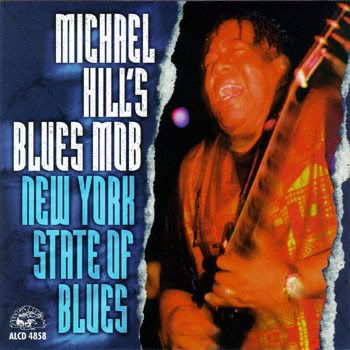
Michael Hill's Blues Mob - New York State Of Blues - 1998 - Alligator

"One of the places we're coming from is New York, so for your listening and dancing pleasure, complete with New York accent, we present our New York State Of Blues ." - Michael Hill

New York's Michael Hill's Blues Mob are one of the best purveyors of today's modern urban blues. Unlike more traditional bluesmen, Hill doesn't come to his blues from the Mississippi Delta or the South Side of Chicago, but from his native New York City. Born in the South Bronx in 1952, Hill was raised by a close-knit family with roots in North Carolina and Georgia. His music, a mix of traditional blues with rock, reggae, funk and R&B, vividly reflects his upbringing. Always a music fan, Hill didn't start playing guitar until 1970, a year after he first heard Jimi Hendrix. "There was no mistaking what Hendrix brought to the table for me," Hill recalls. "He was the reason I started playing electric guitar." After seeing his hero five times, including a stage door meeting outside the Fillmore East, Hill's fate was sealed. With Hendrix as a blasting off point, Hill next turned to bluesmen like Albert King, B.B. King, Albert Collins, and others to build his sound. His discovery of Bob Marley and Curtis Mayfield, as well as authors James Baldwin, among many others, inspired him to write songs that speak about socially relevant subjects as well as more traditional blues topics. By the mid-1970s Hill was working as a sideman or session player with artists as diverse as Little Richard, Carla Thomas, Archie Bell and B.B. King. Hill's biggest break came in 1994, the year Michael Hill's Blues Mob emerged on the national blues scene with their Alligator Records debut, Bloodlines. Living Blues Magazine handed them their Critic's Award for Best Debut Album of the Year. With two more Alligator releases the band has been tearing up the road. From the Chicago Blues Festival to clubs all over the United States, Australia, Brazil, Scandinavia and Europe, Michael Hill's Blues Mob never ceases to amaze their ever growing legion of fans. Hill and his Blues Mob are laying the groundwork for the future of the blues. © Ray Stiles , © 1999 Ray M. Stiles, www.mnblues.com/profile/michaelhill-pf99.html

A truly exceptional album of blues rock, R&B, and soul funk. Michael Hill's potent guitar playing is reminiscent of SRV, Buddy Guy, Hendrix and Carlos Santana. His band is outstanding, and some of the covers here would be hard to beat. This is one of the best albums released in the last ten years, and is VHR by A.O.O.F.C. Buy the band's brilliant "Bloodlines" album. You don't know what you're missing until you hear both albums.

TRACKS

1 Long Hot Night
2 Case of the Blues, A
3 Soul Doin' Time
4 Young Folks' Blues
5 Papa Was A Rollin' Stone / Mama Sang The Blues
6 Anytime, Anywhere
7 New York State of Blues
8 Living For the City
9 This Is My Job
10 Up and Down the Stairs
11 Never Give up on You

All songs composed by M.Hill, except 5, by Whitfield, Norman J., Strong, Barrett: 7, by Pete Cummings, Michael Hill: 8, by S.Wonder: 11, by Kim Hill, Tony Lewis, Michael Hill

BAND

Michael Hill, vocals, guitar
E.J. "the Professor" Sharpe, keyboards
Pete Cummings or Kevin Hill, bass
Tony Lewis, drums

REVIEWS

Michael Hill's third album for Alligator keeps the focus of his music squarely in urban territory. Hill's Hendrix-laden grooves and almost-heavy-metal guitar playing may be off-putting to some purists, but he combines and melds his source point with excellence and passion throughout. This time he splits with the blues in two spots, to contribute cover versions of the Temptations' "Papa Was a Rolling Stone" and Stevie Wonder's "Living for the City" as demonstrating part of the group's 'roots.' But he also plays adventurous slide guitar on "A Case of the Blues" and the group contributes some nice bluesy vocal harmonies to "Soul Doin' Time." Hill's lyrics, as always, address contemporary social concerns (nicely done on the title track and "Anytime, Anywhere," as well as on "This Is My Job"), but most interesting is his take on young blues players coming up by the carload in "Young Folk's Blues." His most accessible record to date. © Cub Koda, All Music Guide


You may not have heard Michael Hill, but you should. He is the sound of things to come. Although Hill's explosive guitar playing echoes Buddy Guy and Stevie Ray Vaughn, don't let that fool you; he is very much his own man. Check out his unique slide playing on "A Case of the Blues." There are few who can match Hill's frantic approach with a bottleneck. Michael's interpretation of "Papa Was a Rolling Stone" breathes new life into this seminal favorite. His band, the Mob, would be hard to top. These are three musicians who have definitely got their chops down. They provide a solid foundation for Hill's soaring performances. With "Young Folks' Blues," Michael shows his pride in being a bluesman of the future. And to tell you the truth, in his hands the future looks pretty bright. © Lars Gandil, © Amazon.com

If there's anything that separates this set from its predecessors, it's the greater number of songs about the most basic of blues topics: relationships between men and women. The opener is a steamy account of a night of temptation from a wife's visiting best friend. In addition to his songwriting talent, Hill is a fine singer with echoes of Magic Sam and Robert Cray.... © Living Blues

BIO / ALBUM INFO

New York's Michael Hill's Blues Mob play deep blues for the body and soul, both as an astonishing live act--just ask any of the thousands of people mesmerized through a rainstorm at the 1996 Chicago Blues Festival--and as a rip-roaring and award-winning recording group, Michael Hill's Blues Mob stands out in the small circle of young, African-American blues artists bent on keeping the blues alive by taking the music into previously uncharted territory. "Hill is truly the bluesman piloting the music into the next century," proclaimed Blues Revue. Michael Hill's Blues Mob bring raw sweat, energy and intensity to every song they play. Hill's impassioned, sometimes humorous songs, his sweetly soulful singing voice and explosive guitar playing are perfectly complemented by the expert musicianship of the Blues Mob--Pete Cummings on bass, E.J. "The Professor" Sharpe on keyboards and Tony Lewis on drums. With their new Alligator release, NEW YORK STATE OF BLUES, Michael Hill's Blues Mob continue to blaze a modern blues trail filled with cutting edge tunes and foot-stomping rhythms. Through his original songs (Hill wrote or co-wrote nine of the album's 11 songs) and formidable musicianship, Hill and his band boldly raise the bar for their contemporaries meanwhile raising the roof wherever they play. "Incendiary," shouted Guitar Shop. "A wonderful melting pot of R&B, blues, fusion, reggae, and balls-out heavy rock." But it's not just about the fiery music. "For me," says Hill, "writing is as important as playing guitar. The blues is about telling stories. The guitar playing and musicianship are important as long as they're serving the song or story. The lyrics give the playing and singing something to do." NEW YORK STATE OF BLUES is a tour-de-force of tough, inner city scenes, lovers' temptations and blues celebrations co-existing in Hill's guitar drenched, polyrhythmic universe. From the searing opener Long Hot Night (co-written by Vernon Reid) to the prophetic and humorous Young Folks Blues to the reinventions of the Temptations' Papa Was A Rolling Stone and Stevie Wonder's Livin' For The City to the album's closer, the soulful and hopeful Never Give Up On You, Michael Hill's Blues Mob grab their listeners with their every-note-matters musicianship and draw them in with Hill's storytelling skills and his powerful vocals. "Michael Hill is the hippest bluesman around," cheered the Philadelphia Daily News. "Radiating energy, warmth and social enlightenment, Hill emerged from the South Bronx to give blues a new meaning, direction and sound." Unlike more traditional bluesmen, Hill doesn't come to his blues from the Mississippi Delta or the South Side of Chicago, but from his native New York City. Born in the South Bronx in 1952 and raised by a close-knit family with roots in North Carolina and Georgia, Hill's music--a mix of traditional blues with rock, reggae, funk and R&B--vividly reflects his upbringing. Always a music fan, Hill didn't start playing guitar until 1970, a year after he first heard Jimi Hendrix. "There was no mistaking what Hendrix brought to the table for me," Hill recalls. "He was the reason I started playing electric guitar." After seeing his hero five times-- including a stage door meeting outside the Fillmore East--Hill's fate was sealed. With Hendrix as a blasting off point, Hill next turned to bluesmen like Albert King, B.B. King, Albert Collins, and others to build his sound. His discovery of Bob Marley and Curtis Mayfield, as well as authors James Baldwin and Toni Morrison (among many others) inspired him to write songs that speak about socially relevant subjects as well as more traditional blues topics. "Marley focused me on songwriting," says Hill. "He was so articulate and clear when he spoke to things. The consistent high level of his songwriting definitely inspired me to speak to issues which don't often get addressed in popular music and to still be uplifting." By the mid-1970s Hill was working as a sideman or session player while still holding down day jobs (including a stint as a New York City cab driver). Over the years, he played alongside Little Richard, Carla Thomas, Archie Bell and Harry Belafonte. He played with Dadahdoodahda, a New York band which also included Vernon Reid before Reid formed Living Colour. Hill recorded with B.B. King and, along with his friend and fellow Black Rock Coalition member Reid, contributed a song to Shanachie Records' TRIBUTE TO CURTIS MAYFIELD. Hill can also be heard on the Rykodisc Black Rock Coalition compilation, A HISTORY OF OUR FUTURE. Hill's biggest break came in 1994, the year Michael Hill's Blues Mob emerged on the national blues scene with their Alligator Records debut, BLOODLINES. Hill and his Blues Mob laid the groundwork for the future of the blues. Living Blues handed Michael Hill's Blues Mob their Critic's Award for Best Debut Album of the Year. Guitar Player called BLOODLINES "a cliche-smashing debut." Rolling Stone said that on the album "Hill's Blues Mob smokes with the combined sizzle of Robert Cray, Living Colour and Jimi Hendrix." "Not since Muddy Waters invented electricity," raved the Chicago Sun-Times, "has anyone charted as radical a course for the blues as Michael Hill." The group's follow-up album, 1996's Have Mercy!, featured another collection of ground-breaking electric blues, at once mind-expanding, soul-satisfying, fun-loving and thoroughly entertaining. Once again fans and critics went wild. Featuring another 13 Hill originals, Have Mercy! took the blues storytelling tradition far beyond themes of simple romance. "Big beats, screaming leads and lyrics from the mean streets," said the Pittsburgh Post Gazette. Jazz Times said, "Hill sprays sweet-toned notes with dazzling bravado ... affecting, thoughtful soul." "Hill celebrates the blues form without being shackled to it," said the Washington Post. Even GQ got into the act, declaring, "Hill is a smart, genre-busting guitarist." Since releasing their two Alligator albums, the band has been tearing up the road. From the Chicago Blues Festival to Australia to Brazil to Scandinavia and throughout Europe to clubs all over the United States (including a jaw-dropping set opening in Chicago for Luther Allison), Michael Hill's Blues Mob never ceases to amaze. "We play every show like it's our last," says Hill. Our goal is to turn the place out and make a great connection with every audience." While not shying away from more serious blues, Hill knows that "the music needs to be fun and bring joy to people. Our shows have always been a celebration. For us it's about groove, dynamics, telling stories and good musicianship. We get the people involved and make sure folks have a good time." And that's just what Michael Hill's Blues Mob delivers with New York State Of Blues. "For me," says Hill, "the most important thing my music can do is be a healing force and uplift people." Guitar Player described Hill's cutting-edge, radio-friendly sound -- a-guitar-stoked mixture of timeless blues feeling, blistering musicianship and original songs full of passion and humor -- as "kick ass and world class." As the Chicago Reader suggests, "bring your dancing shoes and your thinking cap," because the Blues Mob's infectious music keeps your tail spinning while Hill's tale-spinning and super-charged guitar playing showcases ... the shape of blues to come in the 21st century. © 2008 live2nite.com, LLC. All Rights Reserved.

MORE ABOUT MICHAEL HILL

Michael Hill, a Bronx-raised guitarist, singer and songwriter, took his earliest inspiration from the sounds of Jimi Hendrix. His other songwriting influences include socially conscious artists like Marvin Gaye, Bob Marley and Curtis Mayfield. Hill has recorded two albums for Alligator Records of Chicago, Have Mercy (1996) and Bloodlines (1994), which both contain extensive social commentary. Both releases have gotten good reviews from critics and sold respectably, yet he's still considered too "heavy" for some U.S. festivals and clubs. Despite this, Hill has made tours of clubs and festivals around Germany, France, Scandinavia, Austria, England, Italy, Brazil and Australia. The 45-year-old Hill argues that his political songs follow the true blues tradition, which includes sounding off on societal problems. Blues songs of the 1920s and '30s by Leadbelly, Mance Lipscomb, and other classic blues artists often dealt head on with society's ills. Hill sees himself as following this tradition. Songs like "Falling Through the Cracks," "Bluestime In America," "Why We Play the Blues," "Evil In the Air," and "Presumed Innocent" reveal another side of life to 1990s fans of blues music, most of whom are middle class, suburban and white. Hill, based in Brooklyn, N.Y., since 1988, was born in the Bronx in 1952. The Bronx that Hill remembers was a working-class community with families who looked after one another's kids. Hill comes from a close-knit family, and his brother Kevin began playing bass with him when he formed his first band in 1973. After seeing Jimi Hendrix play on five occasions around New York City, including at the Woodstock Festival, Hill knew what he wanted to do with the rest of his life. He began playing guitar in 1970, and was soon playing out in rock and soul bands by 1972. He took cues from guitar players including B.B. King, Buddy Guy, Albert King and Carlos Santana, and his style is a comfortable mesh of all these, plus his own touch. Reading the books of Toni Morrison, James Baldwin and other black novelists, Hill began writing songs that spoke about socially relevant subjects as well as more traditional blues topics. By the mid-1970s, Hill was working as a sideman or session player with the likes of Little Richard, Archie Bell, Harry Belafonte and Carla Thomas. In the mid-1980s, working with Living Colour's Vernon Reid, he helped establish the Black Rock Coalition, a New York City-based group of black rock & roll bands, craftspersons and artists. He caught the attention of Alligator Records in 1993, and in 1994, the label released Bloodlines, which was hailed by some critics as the best debut blues album of the year. Hill's range on his Steinberger guitar is awe-inspiring, and he'll often follow up a slow blues ballad with a fiery blues-rock shuffle that shows off his rock influences, people like Jeff Beck, Hendrix and Santana. Backed by a trio known as the Blues Mob, which consists of keyboards, bass and drums, Hill's live shows are an artful blend of originals and a few interpretive covers. Combine great guitar playing with a strong voice and thinking man's lyrics, and you've got all the ingredients for major blues stardom, and Michael Hill's Blues Mob are helping the idiom continue its evolution. They returned in 1998 with New York State of Blues. Cut loose frtom Alligator, Hill released Audience of One with Inthemix in 2000, Larger Than Life on Singular in 2001, a concert album called Electric Storyland Live on Ruf in 2003, and Black Gold and Goddesses Bold on JSP in 2005. © Richard Skelly, All Music Guide

Sonny Terry & Brownie McGhee


Sonny Terry & Brownie McGhee - Live at the New Penelope Cafe - 1997 - Just A Memory

Recorded In Montreal, Canada, on February 7, 1967, this is a wonderful folk blues album from these legendary musicians. Check out their bios, and buy their great "At the Second Fret" and "1958 London Sessions" albums.

TRACKS / COMPOSERS

1.Hooray Hooray (These Women Is Killing Me) - Sonny Terry
2.Cornbread, Peas and Black Molasses - Brownie McGhee, Sonny Terry
3.Sportin' Life - Sonny Terry
4.Come on, If You're Coming - Brownie McGhee, Sonny Terry
5.Blues Medley: Next Time You See Me/In the Evening/Key to the Highway -
6.Easy Rider - Forest
7.Pack It Up and Go - Brownie McGhee
8.Hootin' the Blues - Sonny Terry
9.Under Your Hood - Champion Jack Dupree
10.Walkin' My Blues Away - Brownie McGhee, Sonny Terry

MUSICIANS

Sonny Terry & Brownie McGhee (Harmonica), (Vocals)
Brownie McGhee (Guitar (Acoustic)), (Vocals)
Sonny Terry (Harmonica), (Vocals)

REVIEW

It sometimes seems like there are about 90 live albums by Sonny Terry and Brownie McGhee, all from the 1960s. This one, taped at a show in Montreal in 1967, stands out from the rest because the duo are in unusually lively form, and its having been recorded in a more raw than usual manner. As with other releases in this Canadian-taped series by Michael Nerenberg, it's possible that the duo weren't even thinking about the fact that they were being recorded, and so were less stiff and formal than they could sometimes sound playing in front of white collegiate audiences. The result is a record a bit louder and noisier, but also more exciting than most of their other live albums -- the voices mesh together a bit rougher and more honestly than they do on some of their other live releases. The sound is clean mono, with the audience present but not overly obtrusive, and the repertory includes "Cornbread, Peas and Black Molasses," "Sportin' Life," "Easy Rider," "Pack It Up and Go," "Hooray Hooray (These Women Is Killing Me)," Champion Jack Dupree's "Under Your Hood," and a medley of stuff like the Broonzy/Segar "Key to the Highway" and Leroy Carr's "In the Evening." © Bruce Eder, All Music Guide

BIO

The joyous whoop that Sonny Terry naturally emitted between raucous harp blasts was as distinctive a signature sound as can possibly be imagined. Only a handful of blues harmonica players wielded as much of a lasting influence on the genre as did the sightless Terry (Buster Brown, for one, copied the whoop and all), who recorded some fine urban blues as a bandleader in addition to serving as guitarist Brownie McGhee's longtime duet partner. Saunders Terrell's father was a folk-styled harmonica player who performed locally at dances, but blues wasn't part of his repertoire (he blew reels and jigs). Terry wasn't born blind -- he lost sight in one eye when he was five, the other at age 18. That left him with extremely limited options for making any sort of feasible living, so he took to the streets armed with his trusty harmonicas. Terry soon joined forces with Piedmont pioneer Blind Boy Fuller, first recording with the guitarist in 1937 for Vocalion. Terry's unique talents were given an extremely classy airing in 1938 when he was invited to perform at New York's Carnegie Hall at the fabled From Spirituals to Swing concert. He recorded for the Library of Congress that same year and cut his first commercial sides in 1940. Terry had met McGhee in 1939, and upon the death of Fuller, they joined forces, playing together on a 1941 McGhee date for OKeh and settling in New York as a duo in 1942. There they broke into the folk scene, working alongside Lead Belly, Josh White, and Woody Guthrie. While Brownie McGhee was incredibly prolific in the studio during the mid-'40s, Terry was somewhat less so as a leader (perhaps most of his time was occupied by his prominent role in Finian's Rainbow on Broadway for approximately two years beginning in 1946). There were sides for Asch and Savoy in 1944 before three fine sessions for Capitol in 1947 (the first two featuring Stick McGhee rather than Brownie on guitar) and another in 1950. Terry made some nice sides in an R&B mode for Jax, Jackson, Red Robin, RCA Victor, Groove, Harlem, Old Town, and Ember during the '50s, usually with Brownie close by on guitar. But it was the folk boom of the late '50s and early '60s that made Brownie and Sonny household names (at least among folk aficionados). They toured long and hard as a duo, cutting a horde of endearing acoustic duet LPs along the way, before scuttling their decades-long partnership amidst a fair amount of reported acrimony during the mid-'70s. © Bill Dahl, All Music Guide

MORE ABOUT THE ARTISTS

From 1939 to their break-up as a duo nearly forty years later, Sonny Terry and Brownie McGhee were quintessential American bluesmen, widely known and instantly recognizable. They were the oddest couple of the blues – with contrasting styles and personalities. Their continuous onstage bickering was not staged, rather completely real and spontaneous. Their differences and competitiveness brought out the best in each man, and, at the same time, kept their artistic integrity as individuals. Unfortunately though, these contrasts eventually led to the duo's final split in the mid-1970s. Sonny was born Saunders Terrell in Greensboro, North Carolina in 1911. His father was a folk-styled harmonica player, but blues wasn't part of his repertoire. Nearly blind since childhood (he lost sight in one eye when he was five, and in the other at eighteen), Sonny had always played music on street corners or anywhere his harmonicas could take him. In 1937 he entered a recording studio for the first time with Piedmont pioneer, the legendary guitar player Blind Boy Fuller. Sonny was one-of-a-kind and his timing was perfect; in the Delta blues idiom, he established the criteria by which country blues harp players were to be measured by. His typical Southeastern "whooping style" had the power to fill with harmonics the space between his voice and the instrument; his moans and hollers were truly authentic field blues “grace-notes,” found only in some of the most isolated rural areas of America. Even in his early days, through many original, memorable performances, Sonny Terry proved to be a sensational blues interpreter. One of those is Sonny's solo Mountain Blues from the 1938 Spirituals To Swing concert, probably one of his finest recordings sung completely in falsetto. Fuller died in 1939 and the same year, Sonny timely met his blues soul mate, Brownie McGhee. Walter "Brownie" McGhee, born in 1914 in Knoxville, Tennessee, came from a musical family. His style was unique, fusing together various influences; his guitar arrangements were jazzy in their harmonic and rhythmic convolution, still managing to hold on to the most traditional of blues. The Sonny and Brownie duo was quick to gain popularity with both audiences and their fellow blues and folk artists; most blues musicians of their time never crossed local fences. Few of their contemporaries even had access to recording studios, notable exceptions being Leadbelly, Woody Guthrie, and Rev. Gary Davis. Even fewer bluesmen got to the level of exposure that Sonny and Brownie enjoyed. They appeared separately and together in several movies, shows and Broadway productions. However, it was their performances as a duo that made them famous; the folk boom of the late '50s and early '60s was their golden moment. The hard work of perpetual touring and recording stretched for another decade or so, when, older, tired and less tolerant, Sonny and Brownie could no longer bear their antagonism toward each other. Their legacy, however, is secure, and their importance in blues history is undeniable. © 1996 - 2008 Justin Time Records

1.10.08

Elizabeth Barraclough


Elizabeth Barraclough - Elizabeth Barraclough - 1978 - Bearsville Records
Discovered by Bearsville Records founder Albert Grossman (ex-manager of Bob Dylan, The Band, and Janis Joplin), Elizabeth Barraclough is a competent blues rock singer in the Bonnie Raitt vein. This is not a groundbreaking album, but it has some good songs which are heartfelt and are in the "Memphis Soul" vein. The album is a 192 vinyl rip, but the sound is fair. It is very difficult to find any substantial information on Elizabeth Barraclough. She recorded an album, "Hi!" and was a girlfriend of Paul Butterfield. A.O.O.F.C would really appreciate your help in providing info about this obscure artist.

TRACKS

1.Willy Ruby
2.Believe It So
3.Boney Mountain
4.Like The Desert Needs The Sand
5.Covered Up In Aces
6.Who Do You Think's The Fool
7.Shepherd's Bush
8.Don't TV Me
9.Sunset Harvest Moon
10.Late In My Bed


Info on composer/s needed

KNOWN MUSICIANS

Elizabeth Barraclough - Guitar & Vocals
Todd Rundgren - Electric Guitar
Paul Butterfield - - Harmonica

REVIEW

ELIZABETH BARRACLOUGH (Bearsville) This woman's vocal intensity seems passionate when you're in the mood and affected when you're not. Her love songs are as desperate, committed, and possessed as her political ones. She tends to be a little long-winded. I hope the guitar riff on "Who Do You Think's the Fool" and "Shepherd's Bush" (almost the same riff) is hers. And I hope she keeps getting better. B MINUS, © Robert Christgau, © www.robertchristgau.com/xg/cg/cgv7-78.php

Eric Bell


Eric Bell Band - A Blues Night In Dublin - 2002 - Voiceprint

Eric Bell, Thin Lizzy's sometime's forgotten Irish guitar hero does what he does best on this great album, and plays the blues! Eric has worked with many of the greats including Van Morrison, Noel Redding, Rory Gallagher, Bo Diddley, Keith Tilman, Dick Heckstall-Smith, Keef Hartley, and Henry McCullough, and for too long has been overshadowed by the big names around him. On this album he displays his great talent. The album was recorded live at the Olympia Theatre, Dublin, on Saturday 13th June 1998, and is full of atmosphere. Eric, like many bluesmen was never a great vocalist, but he more than compensates for this on the album with some terrific guitar work. His small back up band do a tremendous job on this recording which is HR by A.O.O.F.C. Check out Thin Lizzy's "Vagabonds Of The Western World" album, on which Eric played an important part, and if you can find it, buy The Eric Bell Band album, "Live Tonite" recorded live, and released only in Sweden. It is also worth hearing Bo Diddley's "Bo's The Man" album on which Eric Bell plays some fine guitar. Eric Bell played in the Irish progressive band Peggy's Leg in the mid seventies. Has anybody any info on recordings by this band?

TRACKS / COMPOSERS

The Stumble - Freddie King, Sonny Thompson
Pretty Woman - Albert King
Things We Used to Do - Eddie Jones
Baby, Please Don't Go - McKinley Morganfield
Walk on Water - Eric Bell
Standing in the Middle - Eric Bell
You Were the One - Eric Bell
Shake Your Money-Maker - Elmore James
Too Tired - Maxwell Davies, Maxwell Davis, Johnny "Guitar" Watson
Further on Up the Road - Don Robey


BAND

Eric Bell - Guitar & Vocals
Tony Williams - Bass & Vocals
Andy Golden - Drums

REVIEWS

One of the reasons why guitarist Eric Bell bailed out of Thin Lizzy after the group's third album was the other musicians' lack of interest for the blues. Twenty-five years later, in the second half of the '90s, Bell had finally found a group tailored to his needs. This trio comes back to the original idea of Thin Lizzy as a Cream-derivative power trio, with the exception that Bell sticks mostly to road-tested standards. This concert was recorded in Dublin (the guitarist is Irish) in June 1998, two years after the album Live Tonite...Plus! The set list has not changed much -- the first four songs are presented in the exact same sequence. People who already own the previous record will find this one repetitive, but track list aside, this is a strong performance, spirited and heartfelt. Bassist Tony Williams and drummer Andy Golden form a tight rhythm section, perfect for the blues-rock inhabiting Bell's voice. Three recent originals (from the trio's then-recent studio album) are sandwiched between a clever selection of standards, including "The Stumble," "Things We Used to Do," and Albert Ayler's "Too Tired." Bell plays a nasty guitar, just a bit raspier than what is usually heard in the field, which gives him an edge to compensate for his average vocals. Highlights include "Shake Your Money-Maker" (in Paul Butterfield's adaptation), "Baby, Please Don't Go," and Bell's own "You Were the One." A couple of feedbacks and odd endings remind us of the live factor, giving the CD an authentic charm. Well done. © François Couture, All Music Guide

BIO

Eric Bell may not have been present for Thin Lizzy's best known and most successful era (the mid to late '70s), but he was there for the group's formation, as a founding member. Born on September 3, 1947 in Belfast, Ireland, Bell played guitar throughout the '60s for several local bands (including Them, and John Farrell & the Dreams), but paid the bills by working as a 'street gas lamp lighter,' and in both pickle and shirt factories. One night in 1969, Bell caught a gig by another local Irish outfit, Orphanage, which featured bassist/singer Phil Lynott and drummer Brian Downey. Soonafter, Bell relocated to Dublin, where he joined up with the others to form Thin Lizzy. Bell's bluesy, Hendrix-esque leads were perfect for the hard rock direction that both Lynott and Downey sought for their new outfit, which led to a recording contract with the Deram label. Three albums followed in as many years - 1971's self-titled debut, 1972's Shades of a Blue Orphanage, and 1973's Vagabonds of the Western World - the latter of which contained a pair of early Lizzy classics, "Whiskey in the Jar" and "The Rocker." Bell, Lynott, and Downey also issued an additional recording in 1973 under the alias of Funky Junction, the self-explanatory A Tribute to Deep Purple. But Bell became unhappy with Lizzy's current, more streamlined musical direction (he longed for the early days of free-form jamming). After single-handedly sabotaging an important hometown Dublin gig with unpredictable and drunken behavior, the guitarist was sacked. The fast paced life of being in a rock band had paid its toll on Bell, who had to take a break from being in a band for several years. But a few years later (by which time Lizzy had become a worldwide hit with a pair of replacement guitarists, Brian Robertson and Scott Gorham), Bell was ready to play music again. When ex-Jimi Hendrix Experience bassist Noel Redding launched a solo career during the middle of the decade, Bell signed on as the project's guitarist, playing on such releases as 1975's Clonakilty Cowboys and 1976's Blowin', before moving on. For the remainder of the '70s, Bell appeared on such obscure releases as a self-titled release by Brush Shiels and a Phil Lynott-produced single for Ron McQuinn. With his differences between his former Lizzy bandmates long settled, Bell reunited with Lynott and Downey for a one-off 'flexi-single' for a Euro magazine, "Song for Jimi," and even joined Lizzy on stage for a night during the group's final tour in 1983 (documented on double disc set, Life). The early '80s also saw Bell attempt to launch his own group, the Eric Bell Band. But aside from a four-track EP in 1981, the group failed to get off the ground. Bell then joined up with blues-rockers Mainsqueeze (playing on their 1983 release, International Blues Rock Revue), who also briefly backed Bo Diddley during a European tour in 1984, and appeared on the subsequent live Diddley recording, Hey..Bo Diddley In Concert (aka Bo Diddley/Screamin' Jay Hawkins). Bell began performing again under the name of the Eric Bell Band during the late '90s, issuing such recordings as Irish Boy and Live Tonite...Plus! (a previously unreleased album Bell recorded with Noel Redding 20 years earlier, The Missing Album, was also issued around this time, as well). © Greg Prato, All Music Guide

BIO (Wikipedia)

Eric Bell (born Eric Robin Bell, 3 September 1947, Belfast, Northern Ireland is a rock musician and guitarist. He was the lead guitarist for Thin Lizzy, and played on the band's first three albums Thin Lizzy, Shades of a Blue Orphanage and Vagabonds of the Western World. Although Thin Lizzy were gaining in popularity, the pressures of recording, touring and the excesses of the rock-star lifestyle, began to take its toll. He left the band after a New Year's Eve concert in 1973, after throwing his guitar into the air in the middle of the concert, pushing the amplifiers into the audience and storming off, as he said on the Gary Moore and Friends DVD interviews. There was a brief reunion for Thin Lizzy's 1983 tour, but for the most part, Bell concentrated on a solo career with his group, the Eric Bell Band. He has subsequently worked extensively with ex-Jimi Hendrix sideman, Noel Redding and toured with Bo Diddley.

MORE ABOUT ERIC BELL & ALBUM

Thin Lizzy's' original guitarist Eric bell is back on the road playing What he loves best the blues. In the early days of 'Thin Lizzy', Eric played the blues to excited Crowds, which packed the bars and clubs in Belfast. Everything changed When "whiskey in the jar" broke the mould and started the band on their Climb to stardom. But Eric never gave up his love for blues music. Now, 30 years later, Eric has returned to his musical roots and is once More exploring and recreating songs from blues heroes such as Freddie King, Buddy Guy, Howlin' Wolf, Albert Collins, Elmore James and Albert King. Says eric: "i've never lost my love for the blues. It's the music of the people for the people. Every type of human emotion is etched into these timeless songs. They are about the things that we all know and understand in this crazy life of ours - love and hate, wealth and poverty, tragedy and success. You cannot paint a better picture of mankind than through the blues because it affects who and what we are." Eric intends spending most of this year touring the UK and Europe with His band - bass player Tony Williams and drummer Andy Golden - taking The blues to new limits. Tony williams, has performed with (the late) Blues star Freddie King, blues man Dick Heckstall-Smith and dire straits Guitarist Mark Knopfler. Andy golden has recorded two albums with Mick Green and 'the pirates' played blues with jazz virtuoso Andy Sheppard And has performed with mike Wedgwood, of 'curved air' and 'caravan' and Mike Paxman from Judi Tzuke. Some of the songs in the show will be from this CD which was recorded "Live" in the Olympia Theatre, Dublin., © Voiceprint 2006

Muriel Zoe


Muriel Zoe - Neon Blue - 2005 - ACT

“It was always going to be a challenge to achieve the right balance between original material and covers”, she writes about the process of preparing the album. The result speaks for itself. For all the diversity of the material, from her own songs to jazz standards, Muriel Zoe has achieved a coherent, homogeneous and authentic recording, clearly demonstrating her personality. Her way of stressing the characteristics of each piece, her assured feel for phrasing and sonic palette, and not least her warm voice make a unique stamp on Neon Blue. There are also standards on the album. But this time the mix is much more colourful. For example you can find Cole Porter’s ‘It’s Alright With Me” as a gorgeous opener alongside two Beatles songs, country hit ‘Ring Of Fire’ by Johnny Cash, or Michael v. Dyke’s ‘Everybody Wants To Be Alone Sometimes’, realised in conjunction with the well-known producer and engineer BlackPete. And for all you Steely Dan fans, she does a great dreamy, almost ethereal jazzy version of Becker & Fagen's classic "Rikki Don't Lose That Number." [Parts of this synopsis are taken from http://reader.feedshow.com/show_items-feed=4d1bf462f1be9db81e37ca2797b28353?page=0 © FeedShow - Online RSS Feeds Reader ]


Check out her "Red And Blue" album.

TRACKS

1.It's Alright With Me
2.Rikki Don't Lose That Number
3.Have A Good Time
4.Neon Blue
5.Everybody Wants To Be Alone Sometimes
6.I Should Have Known Better
7.Body And Soul
8.It Must Be Me
9.Ring Of Fire
10.Blank Mind
11.Future Song
12.A Hard Day's Night
13.Lullaby

MUSICIANS

Muriel Zoe - vocals, acoustic guitar
Matthias Pogoda - acoustic and electric guitars, wurlitzer
Michael Leuschner - trumpet, fluegelhorn
Johannes Huth - bass
Michael Verhovec - drums, percussion


ABOUT MURIEL ZOE

A very talented jazz singer, Muriel Zoe was born in 1969 in Ludwigshafen. Part of her schooling was at an English boarding school in South India. Back in Germany, she began to play guitar at age 12 and wrote her first songs with English lyrics at 15. In 1988 she began to train as painter and engraver at the art school in Nurtingen in the Southern region of Baden-Wurttemberg and continued her education from 1990 at the technical university for design in Hamburg. Since 1994 she has exhibited in both group and solo shows. In 1990 she began studies in popular music at the Hamburg music conservatoire in the area of rock music and composition. 1992 saw her form her first band working on a repertoire of jazz standards. A further development was the foundation in 1995 of the band Zoe and the Zebras, where she was the "surprise star" of the "Jazz In Hamburg" festival according to the Hamburger Morgenpost. Together with her Hamburg musical friends Michael Leuschner (tp), Matthias Pogoda (g), Johannes Huth (b) and Michael Verhovec (dr) Muriel Zoe recorded her debut album: "Red And Blue," which is a very individual, most entertaining and without doubt a supreme analysis by a young singer of the classics of the jazz songbook. Muriel Zoe is today a freelance musician and painter as well as a teacher of painting and graphic art in Hamburg.

Janice De Rosa


Janice De Rosa - De Rosa - 2007 - Pid

Her new CD "deRosa" is a blues-flavored concoction that triggers Janis Joplin flashbacks with a graceful pace reminiscent of a Tom Waits album. There's a wisdom in her lyrics that women relate to. Several world-renowned musicians, from Cambodia to New Jersey, contributed to the new CD such as Sam Andrew-the guitarist and songwriter for Janis Joplin- and Paul Breslin, the bandleader for Percy Sledge. Like her previous albums, most notably "Afroblues" (1998), "deRosa" is a melange of world music traditions. The album is a mix of covers and original songs, featuring redrawn classics such as "Little Wing" by Hendrix, "Sure Had a Wonderful Time Last Night" by B.B. King and "Baby, Baby, Don't Cry" by "Smokey" Robinson. The original tracks are equally captivating. In the first song "Hoodoo," a harmonica mixed with Janice's soulful voice summons a traditional blues flavor. The following song "Runaway" has a smooth jazz feel. "Mystery of Love" begins with a soft percussion and weaves through more of her lyrics landing on a key line in the album that brings it all back to Janice-"I am a painter, I paint in the world I want to see. Not what is out there, but what I want it to be." © Holly Leitner , © 2008 Parisvoice

A very good soul /blues/r&b album from the relatively unknown Janice De Rosa. See notes on Track 13. Check out her "Afro Blues" album.

TRACKS

1. Hoodoo
2. Runaway
3. Tell Mama
4. Mystery Of Love
5. Ball ; Chain
6. Hands In Your Pockets
7. Sure Had A Wonderful Time Last Night
8. Rather Go Blind
9. Little Wing
10. Baby, Baby Don'T Cry
11. Time Is Money
12. Bring It On Home
13. Morning After, The [N.B : This track is listed as 11.21 in length. There is silence until 10.02 into track when a "strange" telephone/answering machine discourse takes place. Slightly avant garde, and definitely not in context with the rest of the album! Has anybody any information on this track?] Also, has anyone info on the musicians playing on this album?

BIO

Janice deRosa came to Paris in October 1990 as her to feature her paintings in an art show at the Galerie Medicis. the following summer after that exhibition, Janice was invited to take part in an international museum show on the Cote d'Azur. She had bought herself more time in Paris to paint, but according to Janice, her artisitic inspiration doesn't come from hours of isolated quiet reflection. "I'm not the type of person who likes to listen to the radiator clink," she says, "I like to be with the people." So, that led her to getting out into the Paris club scene. She began frequenting the jazz and blues clubs, and toward the end of the shows when the musicians were riding out the tail end of their whiskey buzz, she'd ask to sing a song. Slowly, she built up a rep around Paris and started getting her own gigs. Her popularity grew, and she crawled out of the small joints into the established Paris jazz venues. And she's been here ever since. This new album brings together Janice the painter and Janice the singer, as the album's cover art is a stylized self-portrait. When you ask Janice how Paris has influenced her music, and how it's different than playing music in New York City, she replied that all places are really the same to her.... striking is that her voice is that it's like a flame that hypnotizes rhythm & blues feeling deep down a special something you can’t deny when it grabs you- you can’t get away-seems to be an effortless natural sequel... Born in NY and raised in Harlem, she was the first American born to a family of refuges of the war "when there was a "Harlem", she was raised basking in jazz, blues & soul passionately. deRosa played piano at 5, sang in musicals at 8, picked up the guitar at 13, and created her own songs & groups in New York City. She learned the "meaning of the blues" when her father went out "for a pack of cigarettes and never came back" never called, wrote, or sent child support. "Whatever, it was the first man I ever loved..." By 14 she was selected to attend the highly prestigeous High School of Music & Art (the "Fame"school) where everyone is a star. Janice created the opportunities for her artistic discipline and visions. After dazzling audiences in her hometown New York City playing the big rock clubs, Janice started touring Europe alongside the Talking Heads and B52’s, and has continued recently headlining festivals in europe known as the "Diva of Blues" alongside her sister Divas such as DeeDee Bridgewater, Tania Maria, Cesaria Evora as well as Dr. Jon, Syl Johnson, Brian Eno, and Suzanne Vega….to mention a few!
deRosa has always had jazz and rhythm & blues running through her veins... it was in Paris at the beginning of the 90's that her "blues feeling" and her sensual scented voice fitted in with the West African music scene. Janice started working with African artists, recording albums such as "Afro Blues" (WEA) and "Aduna" (Next Music) that caused sensation in the French capital as well as on the radios in over 25 or so other countries. deRosa has been featured on TV & radio all over the world via satellite live in concert, interviews & the documentary by Didier Agostini's "Coup de Blues à Janice deRosa"(TV5). Her blues feeling and her affinity with soul remain the vital elements of her music that’s why Janice is really…something else!! /www.francodiff.org/en/4-artists/14-the-files-of-the-artists/364-janice-derosa/?s_alpha=D

MORE ABOUT ARTIST & ALBUM

La Vie en la deRosa - "Life doesn't come with a guarantee tag," says Janice deRosa, smiling slyly as she takes another pull off of a slender brown cigarette, "ya know?" That may not be one of the song titles on "deRosa," her new solo album released this month on Rue Stendhal Records, but the theme pervades the record. It's an early summer afternoon in Paris, and I'm spending it with French American diva Janice deRosa. Instead of watching her in a club illuminated by a pale indigo light, she's lit by sunlight in her Marais apartment, an area she calls "the center of the center of the most beautiful place in the world." Over cigarettes and ice water, we talk about her new album in a camouflaged way-chatting about the thoughts that inspired the lyrics-stories of love gone wrong, love gone right for awhile, fantasies of love, waiting on love ...lovers here and there. Janice prefers to use the term ‘lover' to describe her relations rather than ‘boyfriend', because as she says, ‘boyfriend' is an outdated term, and makes her envision herself wearing Capri pants and meeting the parents. This native Harlem girl gone self-proclaimed Parisian diva is a woman who has defined her own way in this city and on the international music scene. She moved to Paris in 1990, playing clubs ever since and working her way up to a sort of fame not only in Paris, but Europe as well. She's produced five records, two of those with Warner Bros. Last year her recording of "Groovin" was at the top of French radio charts for weeks. Her new CD "deRosa" is a blues-flavored concoction that triggers Janis Joplin flashbacks with a graceful pace reminiscent of a Tom Waits album. There's a wisdom in her lyrics that women relate to. Several world-renowned musicians, from Cambodia to New Jersey, contributed to the new CD such as Sam Andrew-the guitarist and songwriter for Janis Joplin- and Paul Breslin, the bandleader for Percy Sledge. Like her previous albums, most notably "Afroblues" (1998), "deRosa" is a melange of world music traditions. The album is a mix of covers and original songs, featuring redrawn classics such as "Little Wing" by Hendrix, "Sure Had a Wonderful Time Last Night" by B.B. King and "Baby, Baby, Don't Cry" by "Smokey" Robinson. The original tracks are equally captivating. In the first song "Hoodoo," a harmonica mixed with Janice's soulful voice summons a traditional blues flavor. The following song "Runaway" has a smooth jazz feel. "Mystery of Love" begins with a soft percussion and weaves through more of her lyrics landing on a key line in the album that brings it all back to Janice-"I am a painter, I paint in the world I want to see. Not what is out there, but what I want it to be." Janice came to Paris in October 1990; as her paintings were featured in an art show at the Galerie Medicis. After that exhibition, Janice was invited to take part in an international show the following summer. She had bought herself more time in Paris to paint; but according to Janice; her artisitic inspiration doesn^t come from hours of isolated quiet reflection. "I'm not the type of person who likes to listen to the radiator clink," she says, "I like to be with the people." So, that led her to getting out into the Paris club scene. She began frequenting the jazz and blues clubs, and toward the end of the shows when the musicians were riding out the tail end of their whiskey buzz, she'd ask to sing a song. Slowly, she built up a rep around Paris and started getting her own gigs. Her popularity grew, and she crawled out of the small joints into the established Paris jazz venues. And she's been here ever since. This new album brings together Janice the painter and Janice the singer, as the album's cover art is a stylized self-portrait. When I asked Janice how Paris has influenced her music, and how it's different than playing music in New York City, she replied that all places are really the same to her. "I could be in a really chic celebrity kind of a place, but by the end, everybody's hootin' and hollerin' and it feels like you're in a bar in Texas," says Janice. "[With music], all of a sudden you realize you have a heart that's beating, you're alive...people tend to hide all day from their feelings. Then at a moment, the tears come down-doesn't matter what language it's in. People get it on the vibrational level," says Janice. After 17 years, she still hasn't made that return flight back to New York except for the occasional visit. But the spontaneous nature of her life tells her that even though there are guarantees, that this just makes life all the more interesting... and gives her something to sing about. © Holly Leitner , © 2008 Parisvoice