A New Beginning

The rapidly shrinking, sinking and stinking Rapidshare has blocked my account and deleted hundreds of my files. Is this the end of A.O.O.F.C? Watch this space, & thanks for all your support and encouragement. Keep on rockin' in the free world. Paul

A.O.O.F.C
recommends
Mizar6

babydancing


Get this crazy baby off my head!

31.8.11

Steely Dan


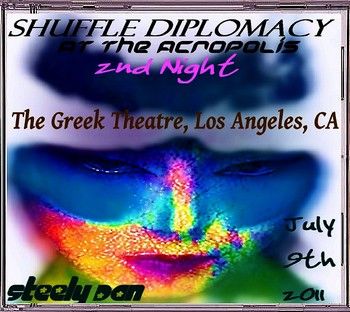
Steely Dan - Shuffle Diplomacy At The Acropolis, July 9, 2011, The Greek Theatre, Los Angeles, CA, 2nd Night - 2011 - A Damnjim/WombBoy Production

If Steely Dan, a group whose sardonic and cerebral word play is most closely matched by the literacy of Elvis Costello and whose jazz musicianship is worthy of a headlining slot at the Village Vanguard or Blue Note, seem an unlikely act to have a crowd grooving in the aisles, it’s just the continuation of a remarkable three-decade run in which they’ve confounded casual listeners and industry experts alike. While once considered unlikely to be rock radio stars or an in-demand touring act, the Steely Dan of today is both, and still doing it all in the band’s own inimitable way. © 2011 The Hollywood Reporter. All rights reserved by & © Steve Baltin 4:38 PM PDT 7/9/2011 http://www.hollywoodreporter.com/review/steely-dan-at-greek-theater-209442

The previous night at the Greek, Steely Dan had played the entire classic "Aja" album (which is now an official selection of the Library of Congress for its National Recording Registry) along with a few old favourites, and Steely Dan also played “You Got The Bear", which Donald introduced as a song originally written for their "Aja" album. Now if only these guys would include tracks like "The Second Arrangement" in their repertoire, it would make a lot of people very happy. This second night concert from 9/9/11 by the "Jazz-Rock Ambassadors to the Galaxy" was advertised as the first "Vox Populi" night of the Shuffle Diplomacy Twenty Eleven Tour. All but three of the tracks played are regular band numbers. Steely Dan have released some of the best jazz rock music of the last four decades, and hopefully a new studio album by Don will arrive soon. Steely Dan have only released one official live album, "Alive In America", which is full of studio enhancements. "Marian McPartland's Piano Jazz with guests Steely Dan" is a live album but regarded as a McPartland release. The three best "unoff" Steely Dan live albums are "Memphis Blues Again", and "Live At The Record Plant", both from the 1970's and "Live At The Wembley Arena" from the '90's. Outside these releases there are many other concert recordings, but most are of atrocious sound quality. This concert from the Greek, LA is of better quality than most other Dan "unoffs" but unless you are a Steely Dan afficianado, you may not be interested. [All tracks @ 160 Kbps: 2 x rar files (2 separate CD's): Combined files' size = 140 Mb]

TRACKS / COMPOSERS

CD ONE

Dizzy's Bidness aka Dizzy's Business
Aja
Black Friday
Hey 19
Your Gold Teeth
FM
Time Out Of Mind
Show Biz Kids
Bodhisattva

CD TWO

Dirty Work / Wade In The Water
Babylon Sisters
Neighbor's Daughter /Band Intros
Josie
Peg
Reelin' In The Years
My Old School
Do It Again
Kid Charlemagne
Last Tango In Paris

All tracks by W.Becker & D.Fagen except "Dizzy's Bidness aka Dizzy's Business" by Ernie Wilkins, "Wade In The Water" by John Wesley Work II & Frederick J. Work, "Neighbor's Daughter" by Allen Toussaint, "Band Intros" by Walter Becker, and "Last Tango In Paris" by Gato Barbieri

MUSICIANS

The Miles High Big Band are -
Donald Fagen - Keyboards, Vocals
Walter Becker - Guitar
Jon Herington - Guitar
Freddie Washington - Bass
Jim Beard - Keyboards
Keith Carlock - Drums
Roger Rosenberg - Baritone Saxophone
Walt Weiskopf - Saxophone
Michael Leonhart - Trumpet
Jim Pugh - Trombone
The Embassy Brats: Catherine Russell, Cindy Mizelle, Carolyn Leonhart-Escoffery - Backing Vocals

30.8.11

Chris Smither


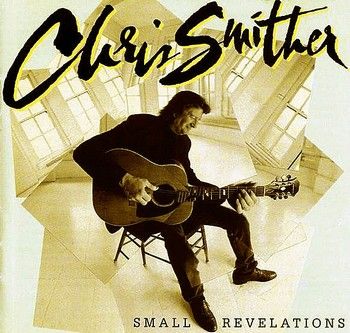
Chris Smither - Small Revelations - 1997 - HighTone

CMJ (3/29/99, p.31) - "Chris Smither is a master at combining folk and Southwestern blues into brooding, introspective roots music. His pensive yet edgy voice, stellar finger-pick guitar plaing, and foot-tapped rhythms nearly make him a one-man acoustic band..." : JazzTimes (8/97, p.76) - "...accomplished student of American roots music, singer-songwriter Chris Smither crosses over into folky territory on SMALL REVELATIONS....this collection of upbeat originals recalls other understated troubadours....a nice change of pace."

Chris Smither's reflective, lyrical songwriting, richly textured singing voice and bluesy acoustic-guitar playing serve him well on SMALL REVELATIONS. Smither is especially adept at country-inspired, toe-tapping tunes spiked with skeptical wit and wisdom, like "Winsome Smile" ("Listen to me now, you suffer from a sad misapprehension/That if she could read your mind she'd see just how it oughta be/But she's read it all by now/And your style don't get a grip on her attention.") Equally impressive are Smither's all-out blues tracks (including an outstanding cover of Robert Johnson's "Dust My Broom"), and his brooding, poignant near-ballads, especially the leisurely, contemplative title track. Smither once again proves himself worthy of his fine reputation, especially among fellow musicians, as a plain-speaking, original and supremely talented guitarist, singer and songwriter. © 1996 - 2011 CD Universe http://www.cduniverse.com/search/xx/music/pid/1005829/a/Small+Revelations.htm

If you’ve ever caught one of Chris Smither’s live performances (he’s played more than 150 dates a year for the past few years), you know it’s hard not come away knocked out by the amount of music that comes out of one man. His guitar playing is remarkably fluid. His songs are gleaming bits of gold and performed in a wide variety of styles. When he chooses to cover tunes from other songwriters, he makes them his own, usually in a surprising way. Small Revelations, his second effort for HighTone, displays all of these qualities with a special understated grace. Although Smither performs live as a solo act, here he is joined by a few of Austin’s top session players, including Riley Osborne on keyboards and Mickey Raphael on harmonica; they expand his sound but don’t overwhelm it. The title track is the album’s centerpiece. Brooding and pensive, it stands out for its mystical feel; while guitars echo and swirl about him, Smither’s deep dark blues come to light. Small Revelations is far from a gloomy record though; “Caveman” and “Hold On” show off both his lighthearted side and his dexterous way with a guitar. As he has in the past, he demonstrates his mastery of country blues with a jaunty, swamp-inflected take of Jesse Winchester’s “Thanks To You”, and even if you’ve heard Robert Johnson’s “Dust My Broom” a hundred times, you may not recognize the howling version Smither presents here. The set ends with on a distinctive note with the rollicking “Hook, Line And Sinker”. While Osborne lays down some tasty barrelhouse piano, Smither drolly compares love to fishing, and we realize he’s not far from the truth. Ah, another small revelation. By & © Jim Caligiuri from Waxed - Record Review from Issue #7 Jan-Feb 1997 © 2009-2011 – Americana and Roots Music – No Depression http://archives.nodepression.com/1997/01/chris-smither-small-revelations/

Recorded at The Hit Shack, Austin, Texas in September 1996, "Small Revelations" is a great blues/folk album by the New Orleans born Chris Smither. Chris has a distinctive, almost baritone voice, and sings in a very laid back manner. His finger-picking guitar style is terrific, and influenced by his playing his mother's ukulele as a kid. He is also a great songwriter. Chris has been called "an unheralded master of modern acoustic blues", and it's worth listening to his superb "Live as I'll Ever Be" album. There are many more very underrated musicians like Chris Smither. Check out some of James McMurtry's great albums on this blog. [All tracks @ 320 Kbps: File size = 81.7 Mb]

TRACKS / COMPOSERS

1 Thanks to You - Jesse Winchester 2:43
2 Slow Surprise - Chris Smither 2:46
3 Hold On - Chris Smither/Sarah McLachlan 4:02
4 Caveman - Chris Smither 4:36
5 Help Me Now - Chris Smither 3:23
6 Small Revelations - Chris Smither 4:00
7 Winsome Smile - Chris Smither 3:44
8 Dust My Broom - Robert Johnson 3:09
9 Sportin' Life - Walter B. McGhee/Chris Smither 3:07
10 Hook, Line and Sinker - Ronnie Bonner/Bill Haley/Edward Khoury/Chris Smither 4:00

MUSICIANS

Chris Smither - Guitar, Vocals
Stephen Bruton - Guitar, Banjo
Chris Maresh - Bass Guitar
Riley Osbourn - Piano, Keyboards
Brannen Temple - Drums, Percussion
Mickey Raphael, Hook Herrera - Harmonica
Mark Rubin - Tuba

BIO

Like John Hammond and a handful of other musicians whose careers began in the 1960s blues revival, guitarist, singer, and songwriter Chris Smither can take pride in the fact that he's been there since the beginning. Except for a few years when he was away from performing in the '70s, Smither has been a mainstay of the festival, coffeehouse, and club circuits around the U.S., Canada, and Europe since his performing career began in earnest in the coffeehouses in Boston in the spring of 1966. Smither is best known for his great songs, items like "Love You Like a Man" and "I Feel the Same," both of which have been recorded by guitarist Bonnie Raitt. Raitt and Smither got started at about the same time in Boston, though Smither was born and raised in New Orleans, the son of university professors. Smither's earliest awareness of blues and folk music came from his parents' record collection. In a 1992 interview, he recalled it included albums by Josh White, Susan Reed, and Burl Ives. After a short stint taking piano lessons, Smither switched to ukulele after discovering his mother's old instrument in a closet. The young Smither was passionately attached to the ukulele, and now, years later, it helps to explain the emotion and expertise behind his unique fingerpicking guitar style. Smither discovered blues music when he was 17 and heard a Lightnin' Hopkins album, Blues in the Bottle. The album was a major revelation to him and he subsequently spent weeks trying to figure out the intricate guitar parts. Smither moved to Boston after realizing he was a big fish in a small pond in the New Orleans folk/coffeehouse circuit of the mid-'60s. Also, acoustic blues pioneer Ric Von Schmidt had recommended Smither check out the Boston folk-blues scene. Smither recorded his first couple of albums for the Poppy label in 1970 and 1971, I'm a Stranger Too and Don't It Drag On. In 1972, Smither recorded a third album, Honeysuckle Dog, for United Artists, which finally saw release on the Heavenly label in the mid-2000s. On the sessions for that album, he was joined in the studio by his old friends Bonnie Raitt and Mac Rebennack, aka Dr. John. After a long bout with alcoholism, Smither launched his recording career again in the late '80s, although he hadn't stopped performing. His return to a proper recording career, due to a deal with Flying Fish Records, didn't happen again until 1991, when the label released Another Way to Find You, a folk-blues album. Smither recorded It Ain't Easy for the Adelphi label in 1984; the album was re-released on CD ten years later. Since then, he's more than proved his mettle as an enormously gifted songwriter, releasing albums mostly of his own compositions for the Flying Fish, Hightone, and Signature Sounds labels. Smither's albums during the '90s and into the 21st century include Happier Blue (1993, Flying Fish), Up on the Lowdown (1995, Hightone), Drive You Home Again (1999, Hightone), Live as I'll Ever Be (2000, Hightone), Train Home (2003, Hightone), Leave the Light On (2006, Signature Sounds), and Time Stands Still (2009, Signature Sounds), a career highlight. Any of Smither's releases are worthy of careful examination by guitarists and students of all schools of blues and folk music. Smither is still, to some extent, an unheralded master of modern acoustic blues. Fortunately, his recordings and festival bookings during the '90s and into the 21st century have elevated his profile to a higher level than he's ever enjoyed previously.

29.8.11

Brian Auger's Oblivion Express


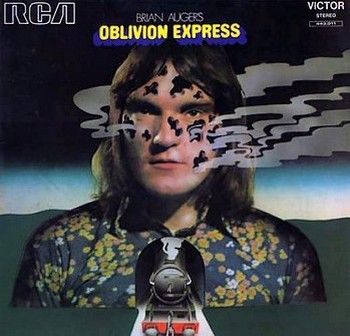
Brian Auger's Oblivion Express - Brian Auger's Oblivion Express - 1970 - RCA

The first outing by Brian Auger's jazz-rock ensemble the Oblivion Express, first issued in 1971, is one of the great masterpieces of jazz-rock fusion. Auger, having just disbanded his longtime band the Trinity in 1970, still had plenty of rock and roll in his system. His yearning for the open frontiers of electric jazz was certainly the driving force -- in the same way that it was for Miles Davis on A Tribute to Jack Johnson, and Lifetime was for Tony Williams -- but it was anchored in the visceral application of rock. With guitarist Jim Mullen, bassist Barry Dean, and drummer Robbie McIntosh, Auger charted into the unknown. This album fits like a glove, each tune moving ever forward into the next. From the opening knotty, rhythmic twists in "Dragon Song," to the subterranean counterpoint in "Total Eclipse," to the band's theme song that closes the album with its pumping bass and guitar interludes, and Auger's Lemmy Kilmister-like vocals, Oblivion Express is a classic in its genre. There is a rawness in passion and intent here that is balanced by wondrously imaginative arrangements for rock band instrumentation, and an aesthetic that is disciplined and visionary. © Thom Jurek © 2011 Rovi Corporation. All Rights Reserved http://www.allmusic.com/album/brian-augers-oblivion-express-r613318

Brian Auger, the "Grandfather of Acid Jazz", came out of the British Blues scene playing with artists like John Mayall. He was strongly influenced by organ players like Groove Holmes, Charles Earland, Jimmy Smith, Jack McDuff, Don Patterson, and many others. However, in his own right, Brian is equally as talented as any of these artists. In his early career, during the mid '60's in England, Brian was a "straight up jazz player". Later in his career he was accused by many music critics and fans of selling out, after he veered his music in a more R&B/jazz direction. At various times, he played with artists like Passport, Average White Band & Les McCann and Eddie Harris. "Brian Auger is one of the best B-3 artists I have ever heard in my life. His technique is awesome and the amount of energy he generates is unparalleled and relentless. He is a tremendous talent with a wonderfully warm and compassionate personality, a combination that is hard to beat. He deserves all the accolades."- Herbie Hancock: "My Favorite rock artists are Van Morrison, Bonnie Raitt, Brian Auger and Loudon Wainwright."- Mose Allison: This s/t album is now over 40 years old but is full of great probing grooves, and still is a great example of soul jazz rock. The album is HR by A.O.O.F.C. [All tracks @ 320 Kbps: File size = 100 Mb]. Listen to Julie Driscoll/Brian Auger & The Trinity's "Streetnoise" album, Brian Auger's Oblivion Express' "Reinforcements" album, and Karma Auger's great "Blue Groove" album. Search this blog for related releases. N.B: A little note for Steely Dan fans. One of Brian Auger's favourite musicians is the late English multi-instrumentalist, Victor Feldman, who played on at least five Steely Dan albums, and one of Brian Auger's favourite albums is Steely Dan's "Aja".

TRACKS / COMPOSERS

1 Dragon Song - John McLaughlin 4:27
2 Total Eclipse - Ball 11:35
3 The Light - Brian Auger 4:24
4 On the Road - Brian Auger, Jim Mullen 5:25
5 The Sword - Brian Auger 6:35
6 Oblivion Express - Brian Auger 7:51
7 Dragon Song (Live '72) [Bonus Track] - John McLaughlin 5:32 *

* Not on original LP issue. The track first appeared on a 2009 Japanese CD issue

BAND

Brian Auger - Keyboards, Lead Vocals
Jim Mullen - Lead Guitar, Vocal Harmony
Barry Dean - Bass Guitar, Vocal Harmony
Robbie McIntosh - Drums

BRIAN AUGER BIO

Brian Auger was raised in London, where he took up the keyboards as a child and began to hear jazz by way of the American Armed Forces Network and an older brother's record collection. By his teens, he was playing piano in clubs, and by 1962 he had formed the Brian Auger Trio with bass player Rick Laird and drummer Phil Knorra. In 1964, he won first place in the categories of "New Star" and "Jazz Piano" in a reader's poll in the Melody Maker music paper, but the same year he abandoned jazz for a more R&B-oriented approach and expanded his group to include John McLaughlin (guitar) and Glen Hughes (baritone saxophone) as the Brian Auger Trinity. This group split up at the end of 1964, and Auger moved over to Hammond B-3 organ, teaming with bass player Rick Brown and drummer Mickey Waller. After a few singles, he recorded his first LP on a session organized to spotlight blues singer Sonny Boy Williamson that featured his group, saxophonists Joe Harriott and Alan Skidmore, and guitarist Jimmy Page; it was Don't Send Me No Flowers, released in 1968. By mid-1965, Auger's band had grown to include guitarist Vic Briggs and vocalists Long John Baldry, Rod Stewart, and Julie Driscoll, and was renamed Steampacket. More a loosely organized musical revue than a group, Steampacket lasted a year before Stewart and Baldry left and the band split. Auger retained Driscoll and brought in bass player Dave Ambrose and drummer Clive Thacker to form a unit that was billed as Julie Driscoll, Brian Auger and the Trinity. Their first album, Open, was released in 1967 on Marmalade Records (owned by Auger's manager, Giorgio Gomelsky), but they didn't attract attention on record until the release of their single, "This Wheel's on Fire," (music and lyrics by Bob Dylan and Rick Danko) in the spring of 1968, which preceded the appearance of the song on the Band's Music from Big Pink album. The disc hit the top five in the U.K., after which Open belatedly reached the British charts. Auger and the Trinity recorded the instrumental album Definitely What! (1968) without Driscoll, then brought her back for the double-LP, Streetnoise (1968), which reached the U.S. charts on Atco Records shortly after a singles compilation, Jools & Brian, gave them their American debut on Capitol in 1969. Driscoll quit during a U.S. tour, but the Trinity stayed together long enough to record Befour (1970), which charted in the U.S. on RCA Records, before disbanding in July 1970. Auger put together a new band to play less commercial jazz-rock and facetiously called it the Oblivion Express, since he didn't think it would last; instead, it became his perennial band name. The initial unit was a quartet filled out by guitarist Jim Mullen, bass player Barry Dean, and drummer Robbie McIntosh. Their initial LP, Brian Auger's Oblivion Express, was released in 1971, followed later the same year by A Better Land, but their first U.S. chart LP was Second Wind in June 1972, the album that marked the debut of singer Alex Ligertwood with the band. Personnel changes occurred frequently, but the Oblivion Express continued to figure in the U.S. charts consistently over the next several years with Closer to It! (August 1973), Straight Ahead (March 1974), Live Oblivion, Vol. 1 (December 1974), Reinforcements (October 1975), and Live Oblivion, Vol. 2 (March 1976). Meanwhile, Auger had moved to the U.S. in 1975, eventually settling in the San Francisco Bay area. In the face of declining sales, he switched to Warner Bros. Records for Happiness Heartaches, which charted in February 1977. Encore, released in April 1978, was a live reunion with Julie Tippetts (née Driscoll) that marked the end of Auger's association with major record labels, after which he dissolved the Oblivion Express and recorded less often. In 1990, he teamed up with former Animals singer Eric Burdon, and the two toured together during the next four years, releasing Access All Areas together in 1993. In 1995, Auger put together a new Oblivion Express. As of 2000, the lineup consisted of his daughter, Savannah, on vocals, Chris Clermont on guitar, Dan Lutz on bass, and his son Karma on drums. This group issued the album Voices of Other Times on Miramar Records one week before Auger's 61st birthday. © William Ruhlmann © 2010 Rovi Corporation. All Rights Reserved http://www.allmusic.com/cg/amg.dll?p=amg&sql=11:fpfrxqr5ldhe~T1

28.8.11

Mathieson, Laboriel, Landau & Colaiuta


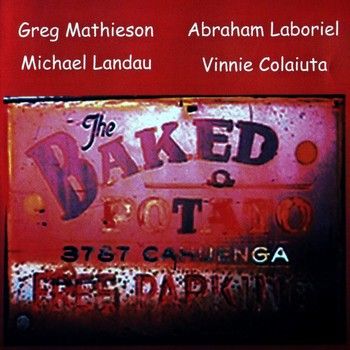
Mathieson, Laboriel, Landau & Colaiuta - Live At The Baked Potato 2000 - 2001 - LMNOP Music

Recorded live on June 9th, June 10th, and July 15th 2000 at The Baked Potato, North Hollywood, LA, this is a a powerful fusion statement by the supergroup known as the "Dyno-Four". The band plays entirely instrumental jazz grooves with plenty of improvised jamming. Greg Mathieson plays keyboards and is joined by the brilliant Michael Landau on guitar, Abe Laboriel on bass and the great Vinnie Colaiuta on drums. Greg has said that "There are no overdubs or fixes. The rules for this band were no rehearsals and no sound checks. Just show up to the gig and count it off! So with those rules the band played with freedom, joy and abandon, and that made for some really great moments. As a musician there have been so many great moments that have not been recorded, and that's why I'm so grateful that these were". This album is HR by A.O.O.F.C. [ All tracks @ 256 Kbps: 2 x rar files: Disc 1 = 106 Mb, & Disc 2 = 120 Mb]. Buy the Greg Mathieson Project's "Baked Potato Super Live!" album for more great fusion grooves

TRACKS

SET 1/DISC 1

1 The Sauce
2 Goyo
3 Abraham´s Prayer
4 Song For My Grandfather
5 S.S.F.2
6 Goe
7 Savada

SET 2/DISC 2

1 I Don´t Know
2 Slow Glide
3 Greg´s Groove
4 I´m Home
5 LMNOP

All tracks composed by Greg Mathieson except "S.S.F.2" by Greg Mathieson & Al Jarreau

MUSICIANS

Michael Landau - Guitar
Abraham Laboriel Sr. - Bass
Greg Mathieson - Keyboards
Vinnie Colaiuta - Drums

27.8.11

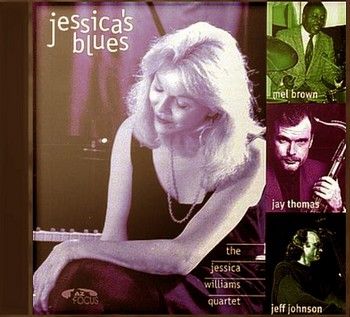
Jessica Williams Quartet


Jessica Williams Quartet - Jessica's Blues - 1996 - Jazz Focus

"I will say on record that I think she is the finest pianist of our time. And her records are bar none, the most consistently immaculate and for your hard-earned dollars, a Jessica Williams album is a no-brainer" © Fred Jung, All About Jazz

"Jessica Williams ought be routinely mentioned as a living giant of jazz piano." © Bob Powers

"One of the greatest pianists I have ever heard..." © Dave Brubeck

Should Jessica Williams ever give up playing piano (God forbid!), she would certainly have a bright future writing about jazz. I enjoy reading her liner notes almost as much as listening to the subsequent music. Five of these selections are Williams compositions: Smoking Section, Chief Seattle Blues (in honour of the American Indians and Jessica's favourite city), Sneak Preview, Dats For Nat (Adderley) and Blues For Bill (Evans). Well aware of the roots of the blues, Jessica included a few oldies: See See Rider, St Louis Blues and a 1923 Clarence Williams blues song Baby, Won't You Please Come Home. Jeff Johnson, a long serving, formidable bassist makes his recording debut on electric bass on Dat's For Nat. Johnson works particularly well with drummer Mel Brown, swinging, playing great time and following Jessica 'through every contortion'. Jay Thomas, who has also recorded under his own name for Jazz Focus, plays tenor sax and trumpet with equal facility and authority, and on occasion plays them 'simultaneously', through double tracking. To my ears these performances demonstrate perfectly the infinite variety of the blues, sometimes in the minor tonality; everyone sounds at ease and convincing in the idiom. Smoking Section certainly comes in smoking, with whistle blasts from the piano player. Jessica, a long time Roland Kirk admirer, points out that Kirk had a whistle for every occasion, a facility which she hopes to emulate. She also explains that Kirk always disliked the expression 'get down with the blues', saying 'you get up with the blues--get up!' Well, everybody is up with the blues throughout this album. As with every Jazz Focus album, audio quality is outstanding, playing time commendable. - Pat Hawes, JAZZ JOURNAL INTERNATIONAL, MAY 1999

Virtuosic pianist Jessica Williams is best heard as an unaccompanied soloist, where her imagination and wit can run wild, but she also fares quite well when playing with sympathetic musicians. This outing matches her with bassist Jeff Johnson, drummer Mel Brown and (on seven of the 11 numbers) Jay Thomas, who shows that he is equally skilled on tenor and trumpet. The emphasis is on the blues (other than "Baby, Won't You Please Come Home"), but by using different tempos, moods, and to a small extent styles, the musicians perform a surprisingly varied program. Thomas' swinging tenor solos (in the tradition of Gene Ammons) and fluent trumpet (check out the ancient sound he gets while muted on "St. Louis Blues") are major assets; he sometimes overdubbed a second horn for the ensembles. However, Jessica Williams easily emerges as the main star, whether ripping into the cooking "Raised Fourth" (a Thelonious Monk line), playing a boogaloo-ish "Sneak Preview," hinting at Red Garland and Bill Evans, or contributing a whistle to "Smoking Section" (which is dedicated to Rahsaan Roland Kirk). This date is highly recommended to straight-ahead jazz fans and is yet another strong addition to Jessica Williams' rapidly growing discography. © Scott Yanow © 2011 Rovi Corporation. All Rights Reserved http://www.allmusic.com/album/jessicas-blues-r314663/review

Listen to Jessica's "And Then, There's This" and "All Alone" albums. Listen, sometime to Horace Silver's magnificent "Song for My Father" album, and Dave Brubeck's "Time Out" album. These albums demonstrate that Jazz is not an elitist or inaccessible music genre. Read Loren Schoenberg's brilliant article about jazz and jazz improvisation @ http://www.pbs.org/jazz/lounge/101_improvisation.htm

TRACKS / COMPOSERS

1.Smoking Section - Jessica Williams
2.Chief Seattle Blues - Jessica Williams
3.Sneak Preview - Jessica Williams
4.See See Rider - Trad.
5.Dat's For Nat - Jessica Williams
6.Blues For Bill - Jessica Williams
7.Baby,Won't You Please Come Home - Charles Warfield, Clarence Williams
8.Temporary Sanity - Jessica Williams, Charles Williams
9.St.Louis Blues - W.C. Handy
10.Raise Four - Thelonious Monk
11.Blue Jay - Jay Thomas

MUSICIANS

Jessica Williams - Piano
Jeff Johnson - Bass
Mel Brown - Drums
Jay Thomas - Tenor Sax, Trumpet

SHORT BIO

Due to her being based in northern California, Jessica Williams is a bit underrated, but (on evidence of her sets for Jazz Focus and Hep) she is one of the top jazz pianists of today. Williams is a powerful virtuoso whose complete control of the keyboard, wit, solid sense of swing, and the influence of Thelonious Monk have combined to make her a particularly notable player. She started taking piano lessons when she was four and was gigging as a teenager. Williams took extensive classical lessons but also gigged with Philly Joe Jones in Philadelphia before moving to San Francisco in 1977. She was the house pianist at Keystone Korner for a time and made a few interesting recordings (some as Jessica Jennifer Williams) during the period, sometimes utilizing electronics. Although she appeared on Charlie Rouse's final record and gigged steadily, Williams was largely off record (outside of her own private Quanta label) until re-emerging in the late '80s as a brilliant solo acoustic player. She is a giant whose many dates for Jazz Focus (five of its first ten releases feature Williams) and Hep are consistently brilliant. © Scott Yanow © 2011 Rovi Corporation. All Rights Reserved http://www.allmusic.com/artist/jessica-williams-p7827/biography

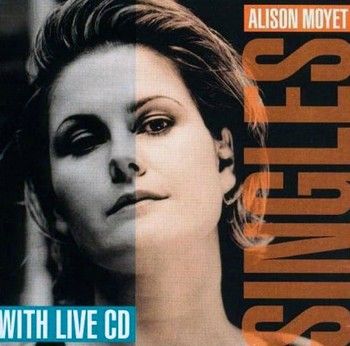
Alison Moyet


Alison Moyet - Singles/Live (Bonus CD 2) - 1996 - Columbia

Between 1984 and 1987, Alison Moyet toured the world, won two BRIT Awards, and performed at Live Aid in 1985. Her next album, Raindancing (1987), earned the singer a third BRIT Award and brought her to the U.S. for the first time as a solo per¬former. Hoodoo (1991) and Essex (1994) found Alison taking her music in an earth¬ier, less pop-friendly direction. But "It Won't Be Long,” a track from Hoodoo, received a Grammy Award nomination in the category of Best Female Rock Performance. Due to prolonged litigation with Sony Music, Alison did not record or release a new studio album for over eight years following the release of Essex. But her 1995 hits collection Singles entered the UK chart at Number One, paving the way for a sold-out British tour that included three nights at the Royal Albert Hall. Over the next few years, Alison’s unmistakeable voice appeared on recordings by Tricky, Ocean Colour Scene, The Lightning Seeds, and King Britt; she also starred on the UK leg of the Lilith Fair tour. Towards the end of 2001 Alison made her stage debut in the West End hit musical Chicago playing the role of Matron Mama Morton. London’s Evening Standard declared that the singer’s performance “stole the show…the packed auditorium saluted Ms. Moyet with a deafening cacophony.” In August 2002, Alison released her first studio album in eight years, Hometime, which catapulted her into the Top Five of best-selling female UK artists. Her next album, Voice, entered the UK chart at No. 7 when released in September 2004 and quickly achieved gold sales status. “Today, I make music as the day suggests,” declared Alison Moyet in that Guardian essay. “My day, the one I wake up to. I will write about things that move me. I will sing like it matters, because it can matter. I will be the product of my 46 imperfect years…I want to be able to laugh with abandonment at the folly of it all.” [This biography was provided by the artist or their representative] - from http://www.amazon.com/Alison-Moyet/e/B000AQ31TQ/ref=ac_dpt_sa_bio/185-7108426-3257912

Alison is still one of Britain's great soul blues singers. She is also a very underrated songwriter. These tracks were recorded on tour at the Royal Albert Hall, London and The Royal Concert Hall, Glasgow. This album was released with no overdubs, and was originally released as part of a 2 x CD set. Listen to Alison's wonderful soul blues "Hoodoo" album

TRACKS / COMPOSERS

1 Getting Into Something (Live) - Alison Moyet & Pete Glenister
2 Chain Of Fools (Live) - Don Covay
3 Love Letters (Live) - Edward Heyman & Victor Young
4 All Cried Out (Live) - Alison Moyet, Philip Springer, Tony Swain, Steve Jolley
5 Dorothy (Live) - Alison Moyet & Pete Glenister
6 Falling (Live) - Alison Moyet & Pete Glenister
7 Ode To Boy (Live) - Alison Moyet
8 Is This Love? (Live) - Alison Moyet & Jean Guiot
9 Nobody's Diary (Live) - Alison Moyet
10 Whispering Your Name (Live) - Jules Shear
11 There Are Worse Things I Could Do (Live) - Jim Jacobs & Warren Casey

BAND

Alison Moyet - Vocals, Harmonica
Pete Glenister - Guitar, Backing Vocals
Phil Spalding - Bass, Backing Vocals
James Hallawell - Hammond Organ, Keyboards, Backing Vocals
Tony Kiley - Drums, Percussion

BIO

Alison Moyet, a British pop singer with a remarkably bluesy voice, began her professional career with synth pop duo Yazoo (Yaz in the U.S.) in the early '80s. In 1983, Moyet began a solo career, releasing her debut album, Alf, the following year. Alf was a major success in Britain, hitting number one on the charts and launching the hit singles "Invisible," "All Cried Out," and "Love Resurrection"; it was a minor hit in the U.S., with "Invisible" cracking the Top 40. During 1985, Moyet toured with a jazz band led by John Altman; the group recorded a version of Billie Holiday's "That Ole Devil Called Love," which became her biggest British hit, even though the group received poor reviews. In 1986, Moyet had another major U.K. hit with "Is This Love?," which was released while she was recording her second solo album. Raindancing appeared in 1987 and it was another big British hit, peaking at number two and featuring the Top Ten hits "Weak in the Presence of Beauty" and "Love Letters." The record wasn't quite as successful in the U.S., peaking at number 94. In 1991, she released her third album, Hoodoo, which was her most musically ambitious collection to date. However, it didn't match the commercial success of her previous albums, failing to chart in America. Essex, her fourth album, appeared in 1994 and she released a greatest-hits collection, Singles, the following year. After a near-nine-year layoff, she returned with Hometime produced by the production team the Insects. Two years later and filled with standards, Voice arrived. In 2005, the album was reissued in America with her version of "Alfie" as a bonus track. After signing with the W14 Music label in late 2006, Moyet released The Turn in October 2007. © Stephen Thomas Erlewine © 2011 Rovi Corporation. All Rights Reserved http://www.allmusic.com/artist/alison-moyet-p108005/biography

26.8.11

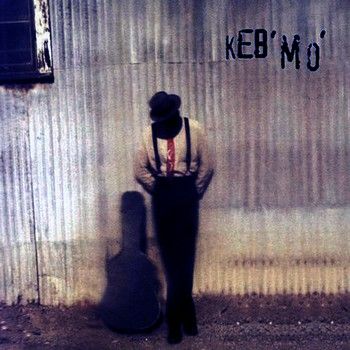
Keb' Mo'


Keb' Mo' - Keb' Mo' - 1994 - Okeh

Rolling Stone (5/13/99, p.65) - Included in Rolling Stone's "Essential Recordings of the 90's.": Rolling Stone (12/15/94, p.98) - 3.5 Stars - Good - "...it all sounds seamless...": Q (2/96, p.65) - Included in Q's 50 Best Albums of 1995.: Q (6/95, p.126) - 4 Stars - Excellent - "...Like Mississippi John Hurt or Taj Mahal, Moore is rooted in songs rather than licks, although his guitar/banjo technique is sharp, hard and irresistibly sparkly....it's precisely because Moore pushes so hard that he's so compelling.": Living Blues (9-10/94, p.66) - "...a fresh take on some of the oldest blues styles...": NME (Magazine) (7/15/95, p.49) - 6 (out of 10) - "...fine versions of two [Robert] Johnson songs plus some experiments with ragtime and pop music, circa 1920. But he's got a modern nous..., some funk plus a husky, keening voice that will endear him to the Jools Holland set..."

Keb' Mo's self-titled debut is an edgy, ambitious collection of gritty country blues. Keb' Mo' pushes into new directions, trying to incorporate some of the sensibilites of the slacker revolution without losing touch of the tradition that makes the blues the breathing, vital art form it is. His attempts aren't always successful, but his gutsy guitar playing and impassioned vocals, as well as his surprisingly accomplished songwriting, make Keb' Mo' a debut to cherish. © Thom Owens © 2011 Rovi Corporation. All Rights Reserved http://www.allmusic.com/album/keb-mo-r216090

The first solo release by contemporary blues-based artist Keb Mo' mixes a reverence for traditional country blues with more streamlined elements of commercial pop. Despite a convincing "down-home" approach of gravel-textured vocals and superior slide work and finger-picking skills, Keb Mo' avoids the pose of a hard line revivalist. Instead, he chooses to employ his fluency in the Delta tradition as a palette on which to blend a connoisseur's sampling of various musical genres. Country, funk, swing, and late 20th-Century folk balladry (Traci Chapman, James Taylor and Bob Dylan) all manage to make their way into the mix for a seamless blend of roots and radio friendliness. Keyboards, bass and drums (in addition to Keb Mo's contributions on guitar, harmonica and banjo) flesh out breezy soul-inflected pop such as "She Just Wants To Dance" and the island flavored "Tell Everybody I Know." Though gears continue to shift, from organ-drenched gospel to hillbilly lite, Keb Mo' brings things back to the source with inventive homages to the blues altar, such as in his re-casting of two Robert Johnson songs. Though blues purists may find Mo's genre blending somewhat disconcerting, others will find much to appreciate in this accessible, enjoyable, finely honed music. © 1996 - 2011 CD Universe http://www.cduniverse.com/search/xx/music/pid/1241204/a/Keb'+Mo'.htm

Keb' Mo' takes rock, jazz, funk, pop, and soul and creates a hybrid style of music all his own. Similar to the great Robert Cray, his music has constantly been criticized by blues "purists" for "deviating from the Blues mean". As stated before on this blog, adhering to this "purist" attitude in music, whether it be jazz, rock, blues, or classical would stifle creativity in an artist, and would be a giant musical step backwards. Music is constantly evolving. So it is, was, and always will be. However, the general blues audience appreciates Keb's music. Between 1997 and 2002 he He earned six W.C. Handy Awards as "Acoustic Blues Artist of the Year", so he must be doing something right. If you like artists like Robert Cray and Eric Bibb, you may enjoy this album. [All tracks @ 320 Kbps: File size = 97.8 Mb]. Listen to Keb's "Martin Scorsese Presents the Blues: Keb' Mo'" album which has a stronger blues flavour.

TRACKS / COMPOSERS

1 Every Morning - K. Moore 3:00
2 Tell Everybody I Know - K. Moore 3:10
3 Love Blues 3:02 - Moore & Powell
4 Victims of Comfort - Kimber & Moore 3:21
5 Angelina - Graper & Moore 3:47
6 Anybody Seen My Girl? - K. Moore 2:56
7 She Just Wants to Dance - K. Moore 3:29
8 Am I Wrong? - K. Moore 2:19
9 Come on in My Kitchen - Robert Johnson 4:09
10 Dirty, Low Down and Bad - K. Moore 3:08
11 Don't Try to Explain - K. Moore 3:58
12 Kindhearted Woman Blues - Robert Johnson 3:29
13 City Boy - K. Moore 4:05

MUSICIANS

Keb' Mo'- Guitar, Harmonica, Banjo, Vocals
James "Hutch" Hutchinson - Bass
Tommy Eyre - Keyboards
Laval Belle - Drums
Quentin Dennard - Drums on "Angelina"
Tony Draunagel - Percussion on "Come on in My Kitchen"

BIO (WIKI)

Keb' Mo' (born Kevin Moore, October 3, 1951) is an American blues singer, guitarist, and songwriter currently living in Nashville, Tennessee, United States. From early on he had an appreciation for the blues and gospel music. By adolescence he was already an accomplished guitarist. Keb' Mo' started his musical career playing the steel drums and upright bass in a calypso band. He moved on to play in a variety of blues and backup bands throughout the 1970s and 1980s. He first started recording in the early 1970s with Jefferson Airplane violinist Papa John Creach through an R&B group. Creach hired him when Moore was just twenty-one years old; Moore appeared on four of Creach's albums: Filthy!, Playing My Fiddle for You, I'm the Fiddle Man and Rock Father. Around that time Moore was also a staff writer for A&M Records, and arranged demos for Almo - Irving music. Keb' Mo's early debut, Rainmaker, was released on Chocolate City Records, a subsidiary of Casablanca Records, in 1980. He was further immersed in the blues with his long stint in the Whodunit Band, headed by Bobby "Blue" Bland producer Monk Higgins. Moore jammed with Albert Collins and Big Joe Turner and emerged as an inheritor of a guarded tradition and as a genuine original. In 1994, Keb' Mo' released his self-titled debut album, Keb' Mo', which featured two Robert Johnson covers, "Come On In My Kitchen" and "Kind Hearted Woman Blues". In the Martin Scorsese miniseries The Blues, Keb' Mo' states that he was greatly influenced by Johnson. In 1996 he released Just Like You, his second album, which featured twelve songs full of Delta rhythms. He won his first Grammy Award for this album, which featured guest appearances from Jackson Browne and Bonnie Raitt. On June 10, 1997, Moore performed on the television program Sessions at West 54th. He joined musicians Laval Belle on drums, Reggie McBride playing bass, and Joellen Friedkin on keyboards to perform fourteen songs, some from each of his albums. Blues pianist Dr. John also made a guest appearance. This session (known as Sessions at West 54th: Recorded Live in New York) was shown on television, but was not released as a DVD until late 2000. Slow Down, his next album, was released in 1998 and featured twelve songs. It earned him a second Grammy Award. The album begins with the song "Muddy Water", a tribute to Muddy Waters. It also features a song entitled "Rainmaker", which had been released previously on his first album, eighteen years prior. The song was rerecorded, though there is little difference to the song itself with no lyrical changes at all. His fourth album, The Door, was released in 2000. The same year, Keb' Mo' released Big Wide Grin, a children's album featuring many songs from Moore's own childhood, along with some newer children's songs and some by Moore himself. In 2003, Martin Scorsese collaborated with many blues musicians including Keb' Mo' to put together a series of films entitled The Blues. Following its release, several albums were released in accordance, some were compilations, some new collaborations, and Keb' Mo' released an album in the series featuring a handful of existing recordings from Keb' Mo' to The Door. On February 10, 2004, he released Keep It Simple which earned him a third Grammy Award, again in the contemporary blues genre. Later that year he released his sixth studio album, Peace... Back by Popular Demand. Moore released Suitcase, on June 13, 2006. His touring band following the release included Reggie McBride on bass, Les Falconer III on drums, Jeff Paris on keyboards, and Clayton Gibb on guitar. On October 20, 2009, Keb' Mo' released the live album, Live & Mo'. In 1998 he portrayed Robert Johnson in a documentary film, Can't You Hear the Wind Howl?. In 1997 Keb' Mo' portrayed the character Isaac, the Angel of Music, in the episode "Inherit the Wind" and again in 1999 in "Then Sings My Soul" of the television series Touched By an Angel. He performed "Hand It Over" from his 1996 release Just Like You in the 1997 episode and again in the 2002 episode "Remembering Me: Part 2". He also appeared as J. D. Winslow in the 2001 episode "Shallow Water" where he performed his song "God Trying to Get Your Attention" from his album, Slow Down. In 2006, he appeared on the final episode, "Tomorrow" of The West Wing to perform "America the Beautiful" at the inauguration of President Matt Santos. In January 2007, he performed at the Sundance Film Festival. He played the role of the mischievous spirit Possum in the 2007 John Sayles movie Honeydripper. In 2004 he participated in the politically-motivated Vote for Change tour alongside Bonnie Raitt and Jackson Browne, with whom he originally recorded the title track from the album Just Like You. Keb' Mo' is part of the No Nukes group which was against the expansion of nuclear power. In 2007 the group recorded a music video of a new version of the Buffalo Springfield song "For What It's Worth". Keb' Mo' uses several types of guitars, including electric guitars, acoustic guitars and resonator guitars. He has a preference for red guitars, as he says on his website : "I have a history with red guitars. My first electric was a red guitar.". He mostly plays on a red custom Fender Stratocaster which has the particularity to feature two single-coil pickups, and one humbucker and was much modified from a regular Stratocaster model. On stage, he prefers a Red Hamer guitar with Gibson P-90 pickups. Two of his electric guitars were lost in the 2010 Nashville flood : an Epiphone Sheraton and a Danelectro Selectomatic. He owns a variety of acoustic and resonator guitars, including a Gibson artist model, a guitar made for him by James Goodall, a National Style N, a National Resorocket, a Gibson ES-335-shaped resonator guitar with a P-90 pickup he bought in a Nashville club and got fixed. In 2002, Moore contributed "Sonnet 35" to the compilation album, When Love Speaks (EMI Classics), which features famous actors and musicians interpreting Shakespearean sonnets and play excerpts. Two years later, he appeared on Amy Grant: Greatest Hits 1986-2004 in a duet entitled "Come Be with Me", which became a modest success on pop radio. In 2005 he appeared on Buddy Guy's version of "Ain't No Sunshine", along with Tracy Chapman. Moore composed one of the theme songs featured on the show, Martha Stewart Living. That same year, he appeared on Eric Clapton's album Back Home. In 2006, he co-wrote the song, "I Hope", with the Dixie Chicks for their album, Taking the Long Way. Moore also provided vocals to Marcus Miller's 2007 album, Free on the track entitled "Milky Way" and again on Miller's 2008 album entitled, Marcus. Moore appeared on the June 7, 2008 broadcast of Garrison Keillor's radio program A Prairie Home Companion. He performed two songs with Bonnie Raitt: "No Getting Over You" and "There Ain't Nothin' in Ramblin'". The show was archived on the A Prairie Home Companion website. Moore covered Lowen & Navarro's "If You Loved Me Like That" on Keep The Light Alive: Celebrating The Music of Lowen & Navarro. The proceeds of the album benefited The Eric Lowen Trust, ALS Association Greater Los Angeles, and Augie's Quest. Moore sings the opening theme ("I See Love", written by Moore and Josh Kelley) to the CBS television show "Mike and Molly".

23.8.11

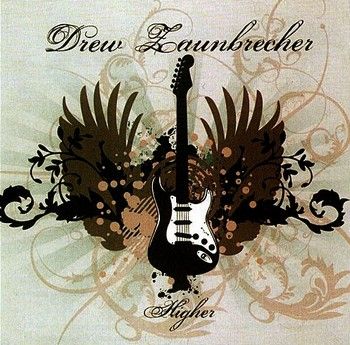
Drew Zaunbrecher


Drew Zaunbrecher - Higher - 2008 - Grooveyard Records

Outstanding debut studio disc by this remarkable, obscure bluesy heavy guitar stratmaster from Lousiana. Featuring 10 tracks of awesome, dynamic, deep, soul-powered bluesy heavy guitar power trio magic that stands tall in a class all its own. "Higher" is an impressive guitar statement that includes all the right moves - Top-notch material, stand-out, intelligent, killer guitar playing complete with excellent, soulful vox, a superb rhythm section who nails the groove down, along with a first rate REAL production which brings the disc home where it belongs. Drew Zaunbrecher is an amazing, gifted new guitarist on the scene who speaks volumes on the instrument. HIGHLY recommended to fans of DOYLE BRAMHALL. INDIGENOUS, JOE BONAMASSA, WARREN HAYNES, HENDRIX, TROWER, SRV, CLAPTON, BUDDAHEADS and other amazing six string blues/rock guitar Gods who reign supreme. © 2008 & beyond - Grooveyard Records - All Rights Reserved http://www.grooveyardrecords.com/drewzaunbrecherhigher.html

Drew Zaunbrecher is not your average guitar slinging blues revivalist. Although his love of music is rooted in blues and rock, his passion, songwriting skills, vocals, and overall command of the guitar make him a perfect fit for today’s eclectic musical climate. The Times of Acadiana’s Herman Fusilier stated, “Zaunbrecher’s mix of rock and blues on the guitar has broad appeal. The world just needs a chance to hear it.” Joe Romagnola from Grooveyard Records says that Drew’s new cd Higher, ”is an impressive guitar statement that includes all the right moves: Top-notch material, stand-out, intelligent, killer guitar playing complete with excellent, soulful vocals, and a superb rhythm section that nails the groove down. Drew Zaunbrecher is an amazing, gifted new guitarist on the scene who speaks volumes on the instrument.” His honest lyrics and contagious stage presence captivates audiences everywhere he plays. Drew is currently working on a new record and packing clubs and festivals across the state. © https://www.cdbaby.com/cd/drewzaunbrecher#

Drew Zaunbrecher from Rayne, Louisiana, US has been a popular artist of the Lafayette, Louisiana area for a few years now. His Shades of Blue band played some great blues rock. As a solo artist, he is an excellent guitarist and songwriter. Along with bassist Tom Lyles, and drummer Jeff Hebert he plays some great electric blues, soul blues, R&B, and funk. His influences include Eric Clapton, Susan Tedeschi, and Stevie Ray Vaughan. "Higher" is an exceptional debut album, and Drew is an artist to watch. [ All tracks @ 192 Kbps: File size = 72.3 Mb]. Keep an eye out for more releases from this guy, and support real music

TRACKS
1 Higher 4:36
2 Road Less Traveled 4:56
3 Higher Ground 5:47
4 Old Times 4:33
5 Peace of Mind 6:26
6 She Ain't Coming Back 4:23
7 Crazy 4:48
8 Sweet Love 5:49
9 Good Hearted Woman 4:33
10 Dust and Bones 6:18

All songs composed by Drew Zaunbrecher except Track 3 by Drew Zaunbrecher & Donnie Broussard, and Track 7 by Drew Zaunbrecher & Jaryd Lane Hargrave

BAND

Drew Zaunbrecher - Guitars, Vocals
Tom Lyles - Bass
Jeff Hebert - Drums

Roger Chapman


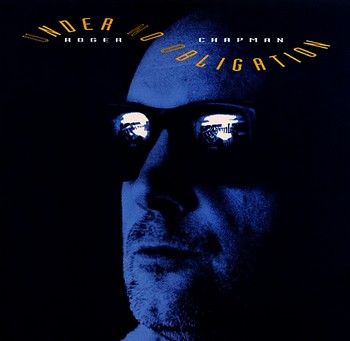
Roger Chapman - Under No Obligation - 1992 - Polydor

“After a career spanning 30 years, Roger Chapman’s fiery stage presence remains undimmed. He still struts and frets, wringing every syllable from a multicoloured repertoire of rock, soul and ballads. His astounding voice rips through the lyrics, devastating the unsuspecting listener with raw emotion. The sheer power and commitment of his delivery is a revelation to audiences brought up on a diet of blandness and mediocrity. Chappo is both a legend of rock past and a pioneer of rock present, and the story is still very much unfolding…” [From Roger’s Public Relations Dept.]

Roger Chapman is a British rock legend, best known for for his spectacular stage presence and amazing powerful vibrato vocals. He was the main man in the hugely talented and original British band, Family, (who called it a day in the early 70’s). During their seven year lifespan, Family had achieved an almost unequalled standard of musical output and musicianship. Arguably, at least four of their eight albums can be regarded as rock classics.Family were regarded by critics, and by the public in general, as one of Britain's finest rock bands. John Peel, the late, great BBC Radio 1 DJ, once said that he'd travel colossal distances to see Chapman perform. Sadly, by the late seventies, Chapman had practically disappeared from the music scene.The mechanics of the music business, e.g, glam rock, the dawn of punk, new wave, and romanticism, dictated the demise of many great rock and progressive rock bands, who had dominated the music scene, (especially in Britain), for so long. That is not to say that these new genres did not produce some great bands. However, the musical scene at this time did not suit Roger Chapman's style of music, and never one to bow to commercialism, Roger went to Germany in the early eighties where he still spends most of his time, and is regarded as a cult figure there. He has also received well deserved Artist of the Year and Lifetime Achievement Awards from the German people. "Under No Obligation" is a reminder of how great a musician Roger Chapman is. Alvin Lee plays on "Love Is A Hard Thing", "King Of Cats", and "Skin & Bone". [All tracks @ 192 Kbps: File Size = 70.4 Mb]. Roger Chapman has consistently proved that there is still a big market out there for old fashioned rock, executed with passion, panache and professionalism. It is also a musical education to listen to Family's "Music in a Doll's House," "Bandstand", and "Fearless" albums. Search this blog for other Roger Chapman/Roger Chapman & The Shortlist/Family releases. This album was later reissued as a 12 track CD + Bonus 3-Track live EP, and it would be worth buying this set for the vastly improved sound quality

TRACKS / COMPOSERS

A1 Just A Child U.N.O. - Laurie Wiseman, R.M. Chapman 4:39
A2 Dance Hall Years - Andy Hill, Peter Sinfield 4:27
A3 Love Is A Hard Thing - R.M. Chapman 4:08
A4 Stand Up - R.M. Chapman 6:55
A5 King Of Cats - R.M. Chapman, Alvin Lee 5:43

B1 Magic - Laurie Wiseman 5:07
B2 Even Angels - R.M. Chapman 4:56
B3 Skin & Bone - R.M. Chapman, Laurie Wisefield 4:39
B4 Praying For Rain (Incl. Playing With Trains And Boy Scout Boogie) - R.M. Chapman 10:00

MUSICIANS

Lead Vocals, Backing Vocals - Roger Chapman
Guitar, Guitar Soloist - Geoff Whitehorn, Laurie Wisefield, Alvin Lee
Slide Guitar, Backing Vocals - Steve Simpson
Bass Guitar - Pete Stroud, Andy Brown
Keyboards, Piano - Pete Wingfield
Piano, Organ, Keyboards - Mick Weaver
Organ, Synthesizer, Brass - Ian Gibbons
Drums, Percussion - Bob Jenkins
Percussion, Tambourine - Mike Vernon
Harmonica - Mike Paice
Backing Vocals - Debbie Sharp, Gina Browne, George Chandler, Judy Cheeks, Juliette Roberts, Sonny Spider

BIO (WIKI)

Roger Chapman (born Roger Maxwell Chapman on April 8, 1942 in Leicester) is an English rock singer. Roger "Chappo" Chapman is probably best known for his participation in the English progressive band Family in the late 1960s through the early 1970s and subsequently, from 1973 to 1978, in Streetwalkers, a rock/R&B band. Prior to Family he had sung with this band's precursor, the Farinas. His idiosyncratic brand of on-stage showmanship and characteristic vibrato led to him becoming a cult figure on the British rock scene. Chapman once claimed he was trying to sing like both Little Richard and especially his idol Ray Charles.In the late 1970s Roger Chapman began a solo career and recorded his first solo album, Chappo. In 1983, Mike Oldfield recorded the album "Crises" featuring the song "Shadow On The Wall" sung by Roger Chapman. The song turned out to be a huge hit for Mike Oldfield (along with the even more popular "Moonlight Shadow"). As other musical styles, such as Punk Rock became more popular in England, Chapman began to have more success in other European countries, especially Germany, where he has spent much of his time since the early 1980s, winning Artist of the Year and a Lifetime Achievement Award.

MORE ABOUT ROGER CHAPMAN

Roger Chapman is best known for his barbed-wire voice, used to front British '70s rock acts Family and Streetwalkers. He began a long-awaited solo career in 1978 that has led to over a dozen full-length releases. Never heard of them? It's not surprising; album-wise, he's been camped out in Germany for 20 years. His first album and tour got high praise in his British homeland, but critics cut into him soon after. When the hassle-free German market beckoned, Chapman began to focus all subsequent work there, where he has become a musical hero, the "Working Class Artist." Chapman split with his longtime writing partner, Charlie Whitney, after the breakup of Streetwalkers in 1977. He surrounded himself with ace session musicians to cut a debut solo effort, Chappo. It was an album of strong rock which catered to the singer and not the musicians. An appearance on Germany's Rockpalast TV show and the ensuing hit single, "Let's Spend the Night Together," gave Chapman the shot of success he needed, so he set up operations in Germany. Live in Hamburg was a reassuring second album, demonstrating the live energy of this experienced yet stage-crazed performer. Studio albums over the next few years blended straight power rock with funk, R&B and soul, all topped with Chapman's characteristic vocal style. In the 1981 German music awards, Chapman was voted Best Singer, and his Hyenas Only Laugh For Fun won an award. Chapman and his backing band, the Shortlist, released two alter-ego albums in the early '80s as the Riff Burglars. These releases honored roots and classic rock by artists like Chuck Berry, Willie Dixon and Leiber & Stoller. A lead vocal on Mike Oldfield's 1983 hit, "Shadow on the Wall," also added to Chapman's diverse repertoire. Chapman's mid-'80s foray into polished studio sounds did not fare well with his audience. When his extended partnership with guitarist Geoff Whitehorn ran it's course, Chapman returned to pure rock form with 1989's Walking the Cat, which featured Alvin Lee and old friend, Bob Tench. Two compilations filled a silent period in the mid '90s, but 1996's Kiss My Soul was a comeback for the guy who never went away. It even got attention and a pressing in Chapman's British homeland, where he often tours but has no domestic releases. This was followed by 1998's A Turn Unstoned? and the 2-CD Anthology; the next year saw re-releases of Chappo and Mail Order Magic. Moth to a Flame was issued in early 2001. © Patrick Little, allmusic.com

22.8.11

Hotlegs


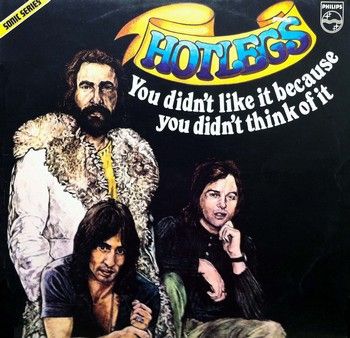
Hotlegs - You Didn't Like It Because You Didn't Think Of It - 1976 - Philips

The rudiments of history should be familiar to all. Fresh from the breakup of the Mindbenders, guitarist Eric Stewart and songwriter Graham Gouldman opened their own Strawberry Studios in Stockport, England. Joined by Lol Creme and Kevin Godley, but temporarily shedding Gouldman, who promptly relocated to New York, the gang were experimenting with drum sounds when a passing record company executive spotted a hit amongst the hitting -- "Neanderthal Man," the most distinctive smash of 1970, was born, and by year's end the trio was working on an entire album. The fact that only one other track, the tribal joke "Um Wah Um Woh," even glanced in the direction of "Neanderthal Man" lets you know just how seriously Hotlegs were taking their fame. Few people would care about Hotlegs today had the trio (plus the returning Gouldman) not subsequently reinvented themselves as 10cc, and it is reassuring to note that much of that band's instant charm and excitement is already present amid Thinks: School Stinks. The 12-minute "Suite F.A." actively fore- and overshadows Godley-Creme's next attempt at elongating their artform, The Original Soundtrack's similarly protracted "Une Nuit a Paris," while the aforementioned "Um Wah" packs a wildly panning guitar solo to die for. Similarly, the angelic ballads which Godley long continued prone to (the lovely "Fly Away," "Take Me Back"); the seering guitar leads which were Stewart's specialty; and the utterly skewed lyrical twists which Creme so relished are all present and correct. Unfortunately, few Hotlegs fans wanted angelic ballads, seering guitar leads, and lyrical twists, and Thinks ultimately became better regarded for its sleeve than its contents -- the school desk stuffed with an unsavory smorgasbord of cigarette butts, broken cookies, titillating pin-ups, a sneaker, odd socks, and an occupied gas mask would later be borrowed by Alice Cooper for School's Out, two years later. Hotlegs' masterpiece would be left to molder for another 24 years, until it finally reappeared on CD with adequate sound and an utterly truncated sleeve. © Dave Thompson, All Music Guide [N.B:This review refers to the 1974 bonus track version of "Thinks School Stinks" (on this blog), which is identical to "YDLIBYDTOI", the only difference being that on the '74 album Track 3 was a mono version]

One of the finest archive products of the pre-CD age, You Didn't Like It was released in the U.K. in 1975, at the height of 10cc's success, as a reminder that there was more, so much more, to the members' past incarnation as Hotlegs than the hit "Neanderthal Man." Rounding up every track that the ultimately ill-starred combo cut -- that is, the entire Thinks: School Stinks album, plus four additional performances -- You Didn't Like It not only took the edge off an increasingly desperate collectors market (copies of that original album were impossible to come by), it also reminded listeners just how much of Hotlegs' legacy had been bequeathed to the members' next project. "Fly Away," itself re-recorded from a Godley-Creme contribution to a 1969 Marmalade label sampler, offers the prototype for any number of subsequent ballads -- innocent vocal, innocent song, but a deceptive beast of a lyric. "How Many Times" (the doomed U.S. follow-up to the hit "Neanderthal Man"), "Take Me Back," and "All God's Children" each had a close relation lurking within the 10cc catalog, while "You Didn't Like It" itself had already been pressed back into surface, as the first 10cc album's closing "Fresh Air for My Mama." "You Didn't Like It" is one of four songs appended to the original Thinks album. Of the remainder, "Lady Sadie" was released as a single in 1971 and went absolutely nowhere, while "Today" and "The Loser" saw service on the "second" Hotlegs album, Songs. Despite such generosity, however, You Didn't Like It fared no better than either of its predecessors, and, bitterly, one remembers why. 10cc at the time were universally regarded among the most creative bands on the planet. Hotlegs, on the other hand, were good for one thing and one thing only. "I'm a Neanderthal man -- CRASH; you're a Neanderthal girl -- CRASH...." And collectors notwithstanding, that was never going to change. © Dave Thompson © 2011 Rovi Corporation. All Rights Reserved http://www.allmusic.com/album/you-didnt-like-it-because-you-didnt-think-of-it-r40935/review

"Hotlegs" are regarded as a "one hit wonder" due to the huge success of the band's 1970 "Neanderthal Man" hit. However the band contained the nucleus of the great pop/art rock band, 10 cc. Hotlegs' members were Eric Stewart, Graham Gouldman, Lol Creme and Kevin Godley, all of whom had achieved success in the '60's as songwriters and members of other bands. Many of the songs on this compilation are top notch compositions. The opening lines and percussive rhythm of "Run Baby Run" were later reworked to become the basis for "Art For Art's Sake" on the 10cc album "How Dare You!" Sound quality on this compilation should have better sound quality. At times the sound lacks clarity and depth. [All tracks are @ 320 Kbps: File size = 135 Mb]

TRACKS / COMPOSERS

1 Um Wah, Um Woh - Godley, Creme, Stewart *
2 Today - Godley, Creme **
3 You Didn't Like It Because You Didn't Think Of It - Godley, Creme, Stewart ***
4 Fly Away - Godley, Creme *
5 Run Baby Run - Godley, Creme, Stewart *
6 The Loser - Godley, Creme, Stewart **
7 Neanderthal Man - Godley, Creme, Stewart *
8 How Many Times - Godley, Creme, Stewart *
9 Desperate Dan - Godley, Creme, Stewart *
10 Take Me Back - Godley, Creme *
11 Lady Sadie - Godley, Creme, Stewart ****
12 All God's Children - Godley, Creme, Stewart *
13 Suite F.A: First Movement - On My Way; Second Movement - Indecision; Third Movement - The Return - Godley, Creme *

* Tracks appeared on Hotlegs' 1970 album, "Thinks: School Stinks": ** Tracks from Hotlegs' 1971 album, "Song": *** Originally the B-Side of Hotlegs' 1970 "Neanderthal Man" single: **** 1971 UK single

MUSICIANS

Lol Creme - Guitar, Bass, Keyboards, Vocals
Eric Stewart - Guitar, Bass, Moog, Vocals
Graham Gouldman - Bass on "Today"
Mike Timoney - Organ on "Take Me Back", & "Today"
Peter Tattersall - Left-handed boogey Piano on "Desperate Dan"
Kevin Godley - Drums, Percussion, Vocals
Rod Morton - On-beat Tambourine on "Desperate Dan"
Mike Bell - Saxophone
Ian Brookes - Trumpet
Baz Barker - First Violin on "How Many Times"
Tony Harrison - String Arrangements on "Today"
Cheadle Hulme High School Choir - Choir on "Suite F.A"

BIO

In 1970, Kevin Godley, Lol Crème, and Eric Stewart were, alongside songwriter Graham Gouldman, the house band at the Strawberry Studios setup in Stockport, England. Gouldman was spending much of his time in New York, working as a contract songwriter for the Kasenatz/Katz bubblegum team -- his partners remained at home, equipping the studio and testing the new equipment. It was during one of these tests, playing around with a drum kit and a new four-track recorder, that Philips label rep Dick Leahy happened by, heard what they were doing, and pronounced it an instant hit single. "It" was a percussive experiment which evolved around a chant of "I'm a Neanderthal man/you're a Neanderthal girl/let's make Neanderthal love" and Leahy's instincts were correct. Restructured and released (under the name Hotlegs) in the summer of 1970, "Neanderthal Man" reached number 22 in the U.S., number two in Britain, number one in Italy, and ultimately sold over two million worldwide. The record was enormous. The Idle Race, heading towards the end of their brief but glorious career, wrested one final hit when they covered the song for German and Argentine consumption. Bandleader James Last included a version on his latest album; even Elton John, eking out a pre-fame career as a jobbing sessioneer, recorded his own distinctive version for a budget-priced collection of sound-alike hits. Stunned by the success, Hotlegs immediately set to work out an album; Thinks: School Stinks included both the hit single and a reworking of "To Fly Away," a Godley/Crème song previously recorded by their Frabjoy and the Runcible Spoon project. It was not, however, a particularly successful release. With the exception of one track, the tribal "Um Wah Um Woh," little on the album bore any semblance to the hit; rather, Hotlegs revealed themselves to be a very melodic, very gentle musical concern, a far cry from the proto-industrial crashing of "Neanderthal Man." Certainly Capitol, Hotlegs' U.S. label, was so distressed that when it came to a follow-up, they went for a track which had not even been recorded for the Hotlegs project; a second, vastly superior version of "There Ain't No Umbopo," which the trio released in the U.K. under the name Doctor Father in August 1970. It was not a hit, a fate which also attended Hotlegs' final American single, "How Many Times." Undeterred, the trio (augmented by Gouldman) undertook a short British tour supporting the Moody Blues towards the end of 1970, but little more was heard from Hotlegs for another year. Then, in September 1971, they released a new single, "Lady Sadie," while Philips repackaged Thinks: School Stinks as Songs, omitting "Neanderthal Man" in favor of two more new songs, "The Loser" (the flip of "Lady Sadie") and "Today" (a reworking of another Frabjoy-era song). Issued only in Britain, Germany, and, oddly, Venezuela, Songs did no better than its predecessor, and Hotlegs was abandoned -- less than a year later, of course, the three members plus, again, Gouldman, would resurface as 10cc and, this time, enjoy considerably more success. It was at the height of this fame that the Hotlegs material resurfaced once more, as 1974's You Didn't Like It Cos You Didn't Think of It compilation brought together all the previously available Hotlegs material. © Dave Thompson © 2011 Rovi Corporation. All Rights Reserved http://www.allmusic.com/artist/hotlegs-p18329/biography
20.8.11

Laurence Juber


Laurence Juber - One Wing - 2005 - Solid Air

Laurence Juber was a young working musician in London in the '70's when Paul McCartney asked him to become Wings’ lead guitarist. There's a guy who knows a good musician when he hears one! Laurence was three years with Wings. In that time he won a Best Rock Instrumental Grammy for "Rockestra" from Wings' Back To The Egg album. After Wings split in 1981, Laurence began a new career as a solo artist, composer and arranger. He is now acknowledged as one of the world's most accomplished top finger-style acoustic players and guitar virtuosos, being voted No.1 by Fingerstyle Guitar magazine. He is also a highly sought after session musician. His guitar technique is amazing, and his melodic flourishes, and even the way he plays single notes are totally unique. His "LJ Plays the Beatles" was voted one of Acoustic Guitar magazine’s top 10 all-time acoustic albums. He has several other extraordinary albums on release like his "Guitarist" album, and his "Groovemasters" album with Preston Reed. He regularly tours with the great Al Stewart, and can be heard on Al's "Between The Wars" album. "One Wing" is an extraordinary collection of 12 solo acoustic guitar arrangements of classic Wings' and post-Beatle Paul McCartney songs, and VHR by A.O.O.F.C. Check out his awe inspiring "LJ Plays the Beatles, Vol. 2" on this blog. Buy his "PCH" or "Different Times" album. For another magnificent acoustic guitar album, check out Stephen Bennett's "Beatles Acoustic Guitar Solos", also on this blog.

TRACKS

1 Band On The Run - Paul & Linda McCartney
2 Another Day - Paul & Linda McCartney
3 Jet - Paul & Linda McCartney
4 My Love - Paul & Linda McCartney
5 Every Night - Paul McCartney
6 With A Little Luck - Paul McCartney
7 Maybe I'm Amazed - Paul McCartney
8 Silly Love Songs - Paul & Linda McCartney
9 Listen To What The Man Said - Paul & Linda McCartney
10 Coming Up - Paul McCartney
11 Arrow Through Me - Paul McCartney
12 Live And Let Die - Paul & Linda McCartney
13 Mull Of Kintyre - Paul McCartney & Denny Laine

REVIEWS

One of Paul McCartney’s former Wings members again produced a solo acoustic guitar tribute to his songs (his other, fully Beatles tribute (LJ Plays The Beatles) was reviewed in BU 154). ‘What about Wings?’, Paul McCartney asked Laurence Juber when the latter showed him the Beatles tribute CD. Juber didn’t necessarily take songs from the Wings period but included some of McCartney’s first solo hits, too. Juber’s solo performances on guitar are a treat, especially audible in complex and musically varied compositions like Band On The Run. The disc listens like a Wings greatest hits album, with ballads and uptempo tunes taking turns. He uses varies guitar playing techniques, since finger picking alters with a sturdy chords strumming (like in Jet and the Live And Let Die finale), gliding over strings (intro of My Love) and Juber again shows his craftsmanship by playing both the melody and back-up of a song. The well-known squeaking of the strings with chords-changing may annoy a listener, but on the other hand Juber still remains pretty close to the integral melody (right up to the Live And Let Die ‘fireworks’). All in all, this is another album of technically perfect cover versions of Paul McCartney’s songbook. (B.U. 186) Internet: www.SolidAirRecords.com / www.laurencejuber.com © 1996-1999 by Namo Interactive Inc. All Rights Reserved http://members.home.nl/tomtom/BU%20Reviews%20FGHIJ.html

When an ex-Beatle gives you an idea for an album, the next logical step is to record it! As the story goes, Laurence Juber, who served briefly yet admirably in Paul McCartney's last incarnation of Wings (songwriters/guitarists alike should check out the underrated "Back To The Egg"), handed Sir Paul a copy of his CD "LJ Plays The Beatles" during a recent get together. Macca shot back at his former sideman "what about Wings!?" Juber's whip-smart response is this majestic collection of solo acoustic guitar renditions of McCartney classics. Unlike John Lennon and Brian Wilson, McCartney has unfairly been on the receiving end of critical flak for his penchant for effortlessly penning sweet melodies and selling millions of albums. And, his post-Beatles career continues to amaze. Juber's greatest challenge was to distill the composer's complex arrangements, which often included intricate orchestral passages and abrupt key and meter changes, into a single instrumental rendition without sacrificing any of the essential counterpoint and secondary motifs that even casual fans would notice missing. After all, these songs are more than just standards: they are recorded artifacts etched into pop culture history. Juber succeeds and even adds a few joyous twists of his own. For the piano ballad "My Love," Juber takes his time, letting each verse settle into a groove peppered with legato phrases, harmonics, a few palm slaps on the body for a bit of a funky veneer, then continuing on with a series of soft arpeggios and sharp bluesy embellishments of the melody. "Coming Up," originally a glitzy disco hit, is reborn as a mid-tempo dirge with Juber high-lighting the minor key qualities of the song, sometimes playing softly and other times bursting into a near cacophonous flurry of notes and hammer-ons. The once bombastic "Live and Let Die" is given a folksy make-over with Juber sliding up and down the fret-board employing sustained chords to their fullest while quoting the melody and implying the frenetic rhythm of the original recorded version. Other Macca essentials such as "Another Day," "Jet," "Maybe I'm Amazed," and even the obscure "Arrow Through Me" are afforded organic props as well. Juber is a master player and arranger, and solo guitarists would be wise to transcribe any or all of these tracks. If you do, you'll always have a gig waiting! Let's hope Juber takes on George Harrison next. © Tom Semioli minor7th.com

Following his interpretations of Fab Four songs, LJ Plays The Beatles, Laurence Juber decided to record a tribute to McCartneys's other band. If anything , the guitarist should be even more familiar with these tunes, since he's an alumnus of Wings. But recasting them for solo steel-string guitar shows a completely different side to the material. As always , Juber rose to the task in fine form, as he quickly proves on the opening "Band On The Run". As with the Beatles repertoire, the test of Lennon-McCartneys's staying power is how many different ways the pair's songs have been interpreted over the years. Songs like "Another Day" with almost a classical feel, show that Sir Paul's solo compositions have that same timeless quality. Even some of McCartneys's' more frivolous numbers , like "Coming Up" and "Silly Love Songs", have plenty of melodic dimensions for the guitarist to explore. And he really digs in on "Jet" and "Live and Let Die", while love songs like "My Love" and "Maybe I'm Amazed" hold their own sans lyrics, with Juber discovering new possibilities around every corner. As usual , Solid Air's attention to sound (rich and warm) is an added bonus to the steller playing. © Dan Forte/Vintage Guitar Magazine

- Solid Air Records won a Grammy award for their Henry Mancini instrumental guitar tribute CD, Pink Guitar. Produced by James Jensen, the CD featured a number of great Mancini covers by gifted acoustic guitarists such as Ed Gerhard, Doug Smith, Wayne Johnson and Al Petteway. Another guitarist featured was Laurence Juber, who’s cover of “Pink Panther Theme” kicked off the 13 track set. Juber, of course was Paul McCartney’s guitarist of choice on several Wings albums including his ‘79 set Back To The Egg. 25+ years later Juber returns with a new tribute to his old band entitled One Wing. Solo acoustic guitar arrangements of classic Wings songs, the CD features a bounty of guitar-centric instrumentals that were just as often remembered for Paul’s voice. Transcribing them for instrumental acoustic guitar, Juber makes the most of his keen insight into Macca’s musical mind and right down the line, he keeps the melody deeply woven into the guitar fabric. Juber has recorded numerous solo guitar albums for Solid Air—including his Beatles tribute, LJ Plays The Beatles—and One Wing carries on his ingenious ability to transcribe classic rock for steel acoustic guitar. © MWE3.com / 20th Century Guitar

Laurence Juber is known for being a deft fingerstylist, a talented arranger and a DADGAD master. He is probably best known, however, for having played alongside Paul mcCartney in Wings. He showed his debt to -and love for- the Fab Four on his record LJ Plays The Beatles . It seems only natural then that he should follow with this collection of Wings tunes arranged for solo guitar. Well, the guy absolutely kills throughout, with amazing, delicate and powerful steel-string work. His version of "Band On The Run", played in dropped-D tuning is gorgeous - full of drama and color. Juber goes into DADGAD (his "other standard tuning") for "Jet", "Coming Up" and the richly arranged "Every Night". Dragging the two low strings down an additional full-step, he renders the rollicking "Listen To What The Man Said" in C,G,D,G,A,D . When you think it can't get any cooler, he plays "Maybe I'm Amazed", complete with the classic McCartney solo that he nails while keeping the bass and harmony parts going at the same time. "A lot of people view Wings as a completely different thing," says Juber. "But working up solo arrangements of these songs really showed me the continuity that exists from Paul's Beatles work through the Wings era. This was a very satisfying experience". © Matt Blackett/FRETS magazine

Laurence Juber, One Wing (Solid Air). Paul McCartney is one of the all-time great songwriters, but besides often being under the considerable shadow of John Lennon, his work in Wings was forever seen as his second group, something that followed the Beatles both chronologically and creatively. Listening to guitarist Laurence Juber, one of the group’s guitarists, play an entire album of Wings songs is a small revelation of just how inspiring McCartney’s later band life was. Part of it may be Juber’s considerable talent on solo acoustic guitar, as he performs songs like “Band on the Run,” “Jet,” “Coming Up” and ten more with impeccable passion and style. McCartney’s sense of melody, with all the lyrics and other instruments stripped away, is a wonder to hear. Very few writer’s creations could stand up to this strict a test, but the album proves that in the two hands of someone like Juber, there really is a new life waiting to be discovered inside the world of Wings. Fly away at will. © Studio City Sun
In an earlier artistic life, fingerstyle guitarist Laurence Juber was a member of the final incarnation of Paul McCartney's Wings, so he certainly has the credentials to tackle the post-Beatles repetoire of his former boss, as he does on this all-instrumental outing. McCartney's Wings repetoire generally received a bad critical rap, largely because of the sometimes-precious lyrics and the often-pop-based arrangements, but Juber's interpretations bring out the harmonic richness of often-derided McCartney tunes such as "My Love" and "Another Day". Juber's creativity as a player and arranger is evident throughout, notably on pieces such as "live and Let Die" which alternates ragtime-inflected passages with slashing power chords, and the Baroque-influenced passages he inserted into "Maybe I'm Amazed." Juber transforms the boozy drinking song "Mull of Kintyre" into a plaintive Scotish air, and employed ringing open chords and a relentless bass drone to capture the rock power of "Jet" on his solo acoustic guitar. With ONE WING, Laurence Juber takes a fresh and revealing look at the McCartney solo repetoire, providing a diverse and stimulating listening experience in the process. © (MP)Dirty Linen June/July '06

As the former lead guitarist of Paul McCartney's group Wings L J, made a fantastic solo acoustic album of the period of Wings. Juber always knew to build strong melody lines and even after his Wings period his acoustic solo albums got better and better. His last album solo album Guitarist got critical acclaim by the press and his fans. Now on the One Wing CD he
is able to cover a full band with bass lines and percussion in a intimate setting with a nostalgic atmosphere. A whole range of Wings pieces is filling the CD, all played with impressive technical guitar skills. With a stylistic approach Laurence opens with the hit song Band on the Run, which follows by hits as Yet and for instance A Little Luck. My Love which is played full passion gives one a soothing feeling, just as Maybe I'm Amazed with is performed with the same gentle touch. Live and Let Die is intense and absorbing. Less well-known compositions as Coming Up and Arrow Through Me are uplifting and very well-executed. Laurence Juber will amaze many Wings fans with this album as he surely is one of the best guitarists to play these rhetorical and captivating songs of the Wings period. Beyond that he is a top-notch acoustic solo guitarist who knows to impress as no other on many dazzling and moving solo guitar albums. © Henk te Veldhuis Bridge Guitar Reviews.

BIO (WIKIPEDIA)

By his own account, Juber began playing guitar the week that "I Want to Hold Your Hand" by The Beatles was released. Beginning on a cheap acoustic guitar, he learned to read music early, figuring out the system of music notation for himself. He began to earn money playing the guitar at 13, and began to study classical guitar at the age of 15. Enraptured by the sounds on records of the mid- to late-60's, he set his sights on becoming a session guitarist in London's music studios. He earned his music degree at London University (Goldsmith College) where he expanded his horizons playing the lute. Upon graduation, he immediately began work as a session guitarist, working on his first project with producer George Martin on an album for Cleo Laine. Juber gave up a lucrative and highly successful studio career when invited to join Paul McCartney and Wings. He played on recordings that were to become Back to the Egg, as well as the subsequent tour. From these sessions he garnered his first Grammy Award, winning Best Rock Instrumental for the track "Rockestra Theme" from Back to the Egg. He was miscredited as Lawrence Tuber on the album sleeve. From this period dates his first solo album Standard Time (only released on vinyl). Ex-fellow Wings members Paul McCartney and Denny Laine played along on the track Maisie. When Wings disbanded, Juber moved to the United States of America. In New York City he met his future wife, Hope, and soon moved to her native California. He subsequently resumed work as a studio musician and played guitar for numerous television shows, including Happy Days and Family Ties, and for movies, perhaps most famously playing the James Bond theme for the movie The Spy Who Loved Me. In 1990, he released his second solo album, Solo Flight. During the next decade he would begin to explore altered tunings. In 2000, Juber released the solo album LJ plays the Beatles and The Collection and in 2003 the album Guitarist was released to critical acclaim. Juber's credentials as a top-tier fingerstyle guitarist continue to grow. Having been voted "Guitarist of the Year" by readers of Fingerstyle Guitar magazine as well as one of the top acoustic players of all time by Acoustic Guitar magazine, Juber is an ambassador for his instrument as well as his own music. He has released nineteen critically acclaimed CD's to date, and has earned a second Grammy for Best Pop Instrumental for his solo guitar arrangement of "The Pink Panther Theme" on the CD Henry Mancini: Pink Guitar. Juber has also released a series of instructional CD's that teach basic music theory and arrangement techniques for guitarists. In addition to his own recording and performances, Laurence Juber has produced and played on Al Stewart's albums Between the Wars (1995), Down in the Cellar (2000), A Beach Full of Shells (2005) and Sparks of Ancient Light (2008), and occasionally performs with Stewart

18.8.11

Laurence Juber


Laurence Juber - Mosaic - 1998 - Solid Air

"Laurence Juber has established himself as one of the most gifted and versatile guitarists on the scene." - Acoustic Guitar Magazine

"Simply Put, this album will make the list of recommended listening for the most hardened fingerstyle critic." - Fingerstyle Guitar Magazine

"Mosaic is a listeners dream" - Association of Fingerstyle guitarists

Laurence Juber was a young working musician in London in the '70's when Paul McCartney asked him to become Wings’ lead guitarist. There's a guy who knows a good musician when he hears one! Laurence was three years with Wings. In that time he won a Best Rock Instrumental Grammy for "Rockestra" from Wings' Back To The Egg album. After Wings split in 1981, Laurence began a new career as a solo artist, composer and arranger. He is now acknowledged as one of the world's most accomplished top finger-style acoustic players and guitar virtuosos, being voted No.1 by Fingerstyle Guitar magazine. He is also a highly sought after session musician. His guitar technique is amazing, and his melodic flourishes, and even the way he plays single notes are totally unique. His "LJ Plays the Beatles" was voted one of Acoustic Guitar magazine’s top 10 all-time acoustic albums. He has several other extraordinary albums on release like his "Guitarist" album, and his "Groovemasters" album with Preston Reed. He regularly tours with the great Al Stewart, and can be heard on Al's "Between The Wars" album. Check out his awe inspiring "LJ Plays the Beatles, Vol. 2" on this blog. For another magnificent acoustic guitar album, check out Stephen Bennett's "Beatles Acoustic Guitar Solos", also on this blog. "Mosaic" is VHR by A.O.O.F.C [All tracks @ 192 Kbps: File size = 66 Mb]

TRACKS

1 Cobalt Blue 3:25
2 The Sparky Paradox 4:19
3 You Can't Go Back 5:07
4 Mosaic 4:15
5 Stolen Glances 3:41
6 Rain/Rainstorm 5:05
7 When Harry Got to Heaven 3:07
8 A Serious Doorstep Situation 3:20
9 Strange Bedfellows 2:23
10 The White Pass Trail 5:25
11 Missing You More Than You Know 4:09

All songs composed by Laurence Juber except "Rain/Rainstorm" by Lennon & McCartney/Laurence Juber

MUSICIANS

Laurence Juber - Electric 12-string & Nylon String Guitars, Acoustic Guitar
Domenic Genova - Acoustic & Electric Bass
Mike Jochum - Drums
Jo Pusateri, Steve Reid - Percussion

SHORT BIO

Acoustic guitarist, composer, and producer Laurence Juber, known by many of his fans simply as "LJ," was born and raised in London. By the time he was 13, he began to earn money by performing at local get-togethers. A couple of years later he took up the study of classical guitar and then went on to earn a music degree from the London University, Goldsmith College. He also performed as a soloist with the National Youth Jazz Orchestra. Around the mid-'70s, Juber found work as a session player. He perfected his skills as a variable guitarist along the way and earned a respected name for himself in the profession. In 1978 he joined the Paul McCartney group Wings as lead guitarist, where he spent the next two years. During this time Juber won a Grammy award for Best Rock Instrumental for the tune "Rockestra" off the album Back to the Egg. In the early '80s Juber left his homeland behind and moved to Los Angeles. He easily slipped back into session work. He did a lot of work for hit television shows like Home Improvement, Seventh Heaven, Boy Meets World, and Roseanne, as well as noted movies such as Dirty Dancing, Splash, Doc Hollywood, Pocahontas, Snow Day, Good Will Hunting, and many others. In 1990 Juber signed with the Beachwood Records label, which belonged to fellow artist and friend James Lee Stanley. That very year Juber recorded his solo debut album, Solo Flight. It was followed three years later by Naked Guitar, and then by Winter Guitar in 1998. In 1999 Juber was named as the number one Fingerstyle Guitarist of the Year. In between numerous tours, he released three new albums for 2000 -- LJ Plays the Beatles, Naked Solos, and The Collection -- each recorded under the Solid Air Records label. © Charlotte Dillon © 2011 Rovi Corporation. All Rights Reserved http://www.allmusic.com/artist/laurence-juber-p26582/biography

17.8.11

Affinity


Affinity - Live Instrumentals 1969 - 2003 - Angel Air Records

A magnificent piece of archive scouring, Live Instrumentals 1969 was recorded during the month or so that Affinity vocalist Linda Hoyle spent recuperating from an operation on her vocal chords, leaving bandmates Mo Foster, Mike Jupp, Lynton Naiff, and Grant Serpell to fill their time with a month-long residency at Ronnie Scott's jazz club in London. Nine of the tracks here, including tumultuous jazz-rock versions of the Beatles' "A Day in the Life" (a staple of the like-minded Brian Auger's repertoire around the same time), and "Fever" were recorded there; four more were taken from a period-radio broadcast, and the disc wraps up with the instrumental rampage "On Green Dolphin Street," recorded by the University of Sussex Jazz Trio, from which the original Affinity ultimately arose. A great-sounding album, Live Instrumentals is further distinguished by a sleeve that hangs perfectly alongside the band's own debut album. © Dave Thompson © 2011 Rovi Corporation. All Rights Reserved http://www.allmusic.com/album/live-instrumentals-1969-r619635

...Nine live tracks recorded in January 1969 and at a time when long sideburns and frizzy hair was de rigueur ... and that was just the women! Some jazz standards expertly played and some less familiar, this is a real archive find. The music hasn't dated at all. There is some great Hammonding from Lynton Naiff and authoritative jazz rock chops from Mike Jopp. Bassist Mo Foster went on to work with Ray Fenwick in Fancy and Jeff Beck amongst others but this release captures a superb band and drips with cool soul jazz that is perhaps now best enjoyed with a good wine, and with the headphones on. Nice. - James Rutherford, Get ready to ROCK! (January 2003)

While Mo Foster and Grant Serpell kept the rhythm section nailed it allowed guitarist Mike Jopp and organist Lynton Naiff to play melody or go off at a tangent as they desired. Given how powerful their arrangements are it is probably of little surprise to see that Lynton later worked as an arranger for bands as diverse as Gene, Gay Dad and Page/Plant! Good sleeve notes and photos as well as powerful jazz make this an album that can easily be enjoyed. -
Feedback, (February 2003)

…everything's intelligently arranged and tastefully played… John Sturdy, Record Collector (March 2003)

They are polished and classy and the sound qualiy is very good. I found it surprisingly accessible…Any aficionado of the Hammond/guitar relationship should add this CD to their collection. - Alan Taylor, Pipeline (Spring 2003)

...Serves as a reminder that the band were damn good. - Modern Dance, Issue 43 (March 2003)

Affinity was an exceptionally talented UK jazz rock band signed by Vertigo Records in the early '70's. Amazingly, the band recorded only one official album in 1970. "Live Instrumentals 1969" is an extraordinary album of jazzy progressive psychedelic rock with fusion, blues and soul elements. The album is full of brilliant arrangements and complex tempo changes. It's hard to believe that these tracks date from 1965 to 1969. This is timeless music and VHR by A.O.O.F.C. [All tracks @ 320 Kbps: Album split into 2 rar files: Combined files' size = 168.4 Mb]. Listen to Affinity's s/t album and "If You Live" album, and Linda Hoyle's "Pieces Of Me" album

TRACKS / COMPOSERS

1 Jive Samba - N.Adderley 4:50
2 Dis Here - B.Timmons 5:48
3 Comin' Home Baby - B.Tucker, B.Dorough 3:48
4 Out Of The Storm - E.Thigpen 7:25
5 Fever - E.J.Cooley, J.Davenport 3:15
6 13 Death March - McFarland 5:42
7 All Blues - M.Davis 4:17
8 81- R.Carter 4:01
9 A Day In The Life - Lennon & McCartney 6:48
10 All Blues 4:25
11 81 4:36
12 Mercy, Mercy, Mercy - J.Zawinul 4:47
13 Jive Samba - N.Adderley 3:45
14 On Green Dolphin Street - B.Kaper, N.Washington 4:28

Tracks 1-9 recorded at Ronnie Scott's Club in January 1969: Tracks 10-13 were recorded at Maida Vale Studios, London, England in August 1968 for an FM radio broadcast: Track 14 was recorded by the University of Sussex Jazz Trio, (an early incarnation of Affinity) at The Refectory, Falmer House, University of Sussex, England on 27th February 1965 during the semi-finals of the 1965 Inter University Jazz Federation competition.

MUSICIANS

Mike Jopp - Electric Guitar
Mo Foster - Bass Guitar
Nick Nicholas - Double Bass on Track 14
Lynton Naiff - Hammond M102 Organ, Piano
Grant Serpell-Rogers - Drums

SHORT BIO

Signed by Vertigo in 1970 on the crest of the jazz-rock wave, the short-lived Affinity released only one single and album before splitting. Comprised of young singer Linda Hoyle, bassist Mo Foster, guitarist Mike Jupp, keyboardist Lynton Naiff, and drummer Grant Serpell, a musical maturity was displayed, blending folk, jazz, soul, blues, and elements of contemporary psychedelia and progressive rock. Highly regarded by critics, who praised the young Hoyle's powerful vocals and Naiff's inherent organ skills, it looked as if the band were to have a healthy career. Derek Jewell of The Sunday Times wrote, "Naiff is already a virtuso, soul-style, and the whole group is probably the best new thing heard in the jazz-pop area this year." But although the seven-track album was well received, the band split soon after. To label their work under any one genre is a hard task, and the jazz-rock/blues-rock classification they are usually squeezed into is far from fitting. As with many other late-'60s progressive acts, Affinity was just getting their footing when they split. © Jon "Mojo" Mills © 2011 Rovi Corporation. All Rights Reserved http://www.allmusic.com/artist/affinity-p381019/biography

MORE

Affinity had its origins in the mid-60s at the University Of Sussex when three science students - pianist Lynton Naiff, drummer Grant Serpell and double-bass player Nick Nicholas - formed the US Jazz Trio. One year later another science student, Mo Foster, who had originally played bass guitar in his school band, adapted to playing drums for the trio when Grant Serpell graduated. After University, and incorporating members gathered from other University bands, Lynton and Grant formed the pop-group "Ice" and achieved moderate commercial success. Sadly within a year they had disbanded. Still keen to pursue a career in music, Lynton and Grant invited Mo to revert to bass guitar in a proposed new jazz-influenced pop band. The guys held auditions for a guitarist and were delighted to find ex-Tridents guitarist Mike Jopp who had both jazz and blues chops. (More importantly he also had his own amplifier and a car!). They also held auditions for singers but finally realised that the only person for the job was Linda Hoyle, a qualified English teacher who they had earlier met through a friend at University. With a loan guaranteed by Mike Jopp's father the band bought some Impact amplifiers, a Hammond M102 organ, a Gibson EBO bass guitar, some microphones, and, eventually, a grey Ford Transit van. They spent the summer of 1968 "getting it together" - writing and rehearsing - in a rented bungalow on the edge of Brighton. The name "Affinity" was taken from the title of an Oscar Peterson LP. At the end of the 60's an exciting new hybrid music form, "Jazz/Rock", was evolving. Musicians such as Miles Davis, Brian Auger, Jimi Hendix, and bands such as Blood Sweat and Tears, Cream, Chicago, Lifetime and Colosseum were all experimenting with this blending of jazz improvisation with the power of rock rhythms. This liberating and exciting approach suited Affinity perfectly since it separated the band from other contemporary new outfits such as Yes, genesis, Led Zeppelin, Family and Humble Pie. Affinity's first-ever London gig took place on 5 October 1968 at the Revolution Club in Bruton Place, just off Berkeley Square. As a result of hearing a tape of a broadcast on BBC Radio Jazz Club the late Ronnie Scott agreed to manage them and to book them into his club where they played alongside countless world-class players including Elvin Jones, Gary Burton, Les McCann, Stan Getz and Charles Mingus. (They may not have been earning much at this point, but they did get to see these incredible artists for free - every night). Live work was plentiful: there was a thriving discotheque and club scene in London, the college circuit paid well, there were European and Scandinavian tours (which didn't pay well!), festivals, the occasional TV show (two sings were recorded for "Disco 2", the predecessor of "The Old Grey Whistle Test"), and even the occasional jingle session (Linda, Mike and Mo recorded an advert for Shredded Wheat - "There are two men in my life"...) Things were looking good. The band was able to buy the ultimate instrument, the 'split' Hammond B3 that had once belonged to Brian Auger. Affinity recorded a critically-acclaimed first album for the Vertigo label and DJ Anne Nightingale who proclaimed that Linda was "the girl most likely to succeed in 1970." Lynton and Mo started to write for a second album (see "Yes Man") and the band was lined up for a USA tour, but in January 1971 Linda announced she had decided to leave the business. It was a sad, but inevitable, decision: the band had worked hard for two and a half years and yet had little to show for it. The fun had gone. The remaining contracted gigs were honoured and the guys went their separate ways. Linda Hoyle recorded a solo album "Pieces Of me" co-written with Karl Jenkins, and backed by Soft Machine members Chris Spedding, John Marshall, Jeff Clyne and Karl. Linda renounced live performances and now teaches Art Therapy at the University of Western Ontario, Canada. She still sings and occasionally works with Juno nominee guitarist Oliver Whitehead. Lynton Naiff niched himself into the field of orchestral arrangement on pop records leading to various projects with artists such as Queen, Jimmy Page and Robert Plant. Mike Joop joined the Mike D'Abo Band together with Mo and Grant. This particular line-up recorded a couple of albums and toured America. Mike quit playing professionally in 1973, became a guitar-dealer, and, after many years as a specialist audio consultant for Sony and Fairlight, now has a successful career in broadcast television with his own company, Hyperactive Broadcast. He still plays and has a collection of interesting guitars. Mo Foster met ex-Manfred singer Mike D'Abo - an encounter which led to his career as a studio player. He has since recorded and toured with artists as varied as Jeff Beck, Phil Collins, Gil Evans, Gerry Rafferty, Joan Armatrading, Hank Marvin, Maggie Bell, Van Morrison and the London Symphony Orchestra. Mo has produced three solo albums, and his first book "17 Watts?", an anecdotal history of British rock guitar, is published by Sanctuary. Grant Serpell played with Geno Washington and then Mike D'Abo before becoming a founder member of SAILOR, a band which achieved recording success - "Girls Girls Girls" - in the mid 70's in most countries except the States. When SAILOR temporarily disbanded (for 11 years!) he pleased his mother by getting a "proper job" as a Chemistry teacher. The rebirth of SAILOR in 1989 surprisingly resulted in hits all over Europe, so for eight years he juggled two careers, eventually quitting teaching in 1997. [Taken from the 2002 reissue of "Affinity"]