A.O.O.F.C
recommends
Mizar6

babydancing


Get this crazy baby off my head!

16.7.07

Andrew Hill


andrewhill-blackfire


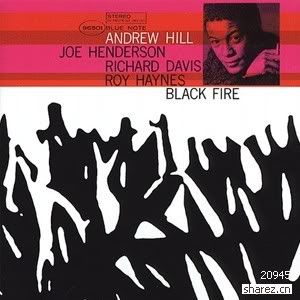
Andrew Hill - Black Fire - 1963 - Blue Note

Pianist Andrew Hill's most notable contribution to jazz may be his ability to creatively combine bebop with the avant-garde. On 1963's BLACK FIRE, the oft-misunderstood jazz composer creates a tonal landscape that is at once steeped in bop, yet ambitiously searching for new harmonic and structural vistas. Joined by legendary drummer Roy Haynes, tenor great Joe Henderson, and bassist Richard Davis, Hill performs a set of seven originals that seek to push the musical envelope. Each musician explores melody, harmony, and rhythm in ways they normally didn't, particularly Henderson, who expertly adapts his style and sound to the tricky compositions of Hill. Every member of the quartet gets a chance to stretch on this album, and there is more "soloing equality" on BLACK FIRE than on most late-'50s or early-'60s records. Indeed, this was the dawning of a new age in jazz, and Hill was one of this era's greatest pioneers. Standout track is the moody and rubato "McNeil Island"

Tracks

1. Pumpkin
2. Subterfuge
3. Black Fire
4. Cantarnos
5. Tired Trade
6. McNeil Island
7. Land Of Nod

Personnel:

Andrew Hill (piano);
Joe Henderson (tenor saxophone);
Richard Davis (bass instrument);
Roy Haynes (drums).

BIO

Andrew Hill was a great and even groundbreaking composer and pianist, yet the relatively circumscribed scale of his innovations might have originally caused him to get lost in the shuffle of the '60s free jazz revolution. While many of his contemporaries were totally jettisoning the rhythmic and harmonic techniques of bop and hard bop, Hill worked to extend their possibilities; his was a revolution from within. Much of the most compelling '60s jazz was nearly aleatoric; Hill, on the other hand, exhibited a determined command of his materials, however abstract they might sometimes be. His composed melodies were labyrinthine, and rhythmically and harmonically complex tunes like "New Monastery" from his Point of Departure album exhibit a sophistication born of mastery, not chance or contingency. As a pianist, Hill had a flowing melodicism and an elastic sense of time. Like his composing, Hill's playing had an ever-present air of spontaneity and was almost completely devoid of cliché.

He began playing the piano at about the age of 13. As a youngster in Chicago, Hill was encouraged by pianist Earl Hines. Jazz composer Bill Russo also took an interest, and introduced Hill to the renowned classical composer Paul Hindemith, with whom Hill studied from 1950-1952. While in his teens, he gigged with prominent jazz musicians passing through the Midwest, Miles Davis and Charlie Parker among them. In 1955, he recorded So in Love with the Sound of Andrew Hill for the Warwick label. He moved to New York in 1961 to work with singer Dinah Washington. After a brief foray to Los Angeles with Rahsaan Roland Kirk's band in 1962, Hill moved back to New York, where he began his recording career in earnest.

He made several records for Blue Note from 1963-1969, both as leader and sideman. Hill's Blue Note work featured some of the best and brightest post-bop musicians of the day, including Eric Dolphy, Joe Henderson, Woody Shaw, Tony Williams, and Freddie Hubbard. Like many jazz musicians, Hill eventually turned to academia to make a living. He received his doctorate from Colgate University and served as the school's composer in residence from 1970-1972. Hill relocated to the West Coast, teaching in public schools and prisons in California. He eventually landed a teaching position at Portland State University, where he established the school's Summer Jazz Intensive. In addition to his teaching, Hill continued to perform and record in the '70s and '80s, making records for the Arista-Freedom and Black Saint/Soul Note labels. In 1989 and 1990, Hill recorded twice more for Blue Note, Eternal Spirit and But Not Farewell.

Hill moved back to the New York area in the '90s; a series of performances and new recordings helped place him back in the jazz spotlight. Hill formed a new Point of Departure Sextet for the Knitting Factory's 1998 Texaco Jazz Festival. The band included saxophonists Marty Ehrlich and Greg Tardy, trumpeter Ron Horton, bassist Scott Colley, and drummer Billy Drummond. The band went on to play New York club engagements to much acclaim. In 2000, Palmetto Records released Dusk, which was named the best album of 2001 by Down Beat and Jazz Times magazines. It was followed by A Beautiful Day in 2002, Passing Ships in 2003, and Black Fire in 2004, as well as a solid series of Blue Note reissues of his '60s work that included bonus tracks and new liner notes. His 2006 album, Time Lines, reunited him with both trumpeter Charles Tolliver and the Blue Note label. Hill also participated in a 17-piece big band, and a January 2002 engagement at New York's Birdland was filmed and recorded by Palmetto for future broadcast. After battling lung cancer for many years, Hill succumbed to the disease on April 20, 2007, leaving behind a stunning legacy of work. © Chris Kelsey, All Music Guide

Steps Ahead


stepsahead-stepsahead


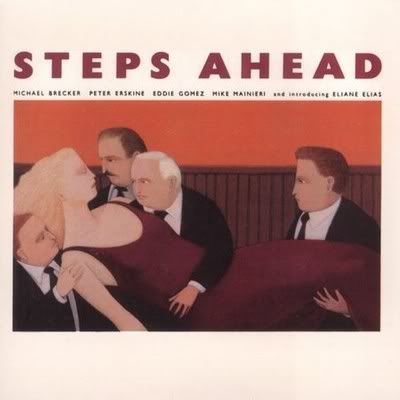
Steps Ahead - Steps Ahead: - 1983 - Elektra Musician


The debut domestic recording by Steps Ahead (following three sets only released in Japan), features the 1982 version of the group: vibraphonist Mike Mainieri, tenor saxophonist Michael Brecker, pianist Eliane Elias (a young unknown at the time), bassist Eddie Gomez and drummer Peter Erskine. The music is essentially high-quality funky fusion, with Brecker typically blowing up a storm, Mainieri often playing the synthivibe, and Elias showing some early individuality. Best known among the seven originals are Don Grolnick's "Pools" and Mainieri's "Islands." The inventive but pretty accessible set concludes with "Trio," a fairly free improvisation featuring Brecker, Gomez and Mainieri. Well worth searching for. © Scott Yanow, All Music Guide

TRACKS

Pools
Islands
Loxodrome
Both Sides of the Coin
Skyward Bound
Northern Cross
Trio (An Improvisation)

MUSICIANS

Michael Brecker (tenor sax);
Eliane Elias (piano);
Peter Erskine (drums);
Eddie Gomez (bass);
Mike Mainieri (vibes, marimba)

15.7.07

Orang-Utan


orangutan-orangutan1971


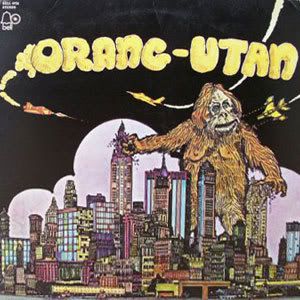
Orang-Utan: - Orang-Utan - 1971 - US Bell Records

Orang-Utan ( aka Hunter, named after the Albert King song) , was a very talented UK guitar rock group, composed of 19-20 year old musicians, which included members of the UK 60's freak/psych band Jason Crest. This great album was released omly in the U.S.A in 1971. The album is full of brilliant well crafted songs with amazing vocals by Nobby Clark, who only had one lung! Nobby was actually the second vocalist for the band & demos exist from the band line up before he joined them. Any info on these demos would be very welcome. Unbelievably, Hunter got no royalties from this album, or the several cd re-issues released over the years. Some of the band members still play today. Try and track them down. If you come across any of their recordings, please buy them, and please post your info to A.O.O.F.C

TRACKS

01 - I Can see Inside Your Head
02 - Slipping Away
03 - Love Queen
04 - Chocolate Piano
05 - If You Leave
06 - Fly Me High
07 - Country Hike
08 - Magic Playground

BAND

Nobby Clark - Vocals (Not the N. Clark of Bay City Rollers! )

Jeff Seopardie - Drums (Main Composer)

Mick Clarke - Guitar

Sid ? - Guitar (Sacked after album was recorded, and not credited on album)

Paul Roberts - Bass


Composed of the remmants of a few London bands, including Jason Crest, the band, then called Hunter, recorded this album in a very modern and expensive London recording studio. Mysteriously, the album was released only in the U.S.A on the US Bell Records label in 1971. Incredibly, Hunter knew nothing about this release! A person who shall remain anonymous, claimed the producer's title on the U.S release. Mr.Anonymous had stolen the original London recordings without any permission from Hunter. They were oblivious to what was going on! Mr.Anonymous, to make the story more interesting, managed, for reasons unknown, to get Hunters then manager to change the band name to Orang-Utan! All this skullduggery did not help Hunters career. They were a very talented band who could have hit the big time. Instead, sadly, like so many great bands at the time, they faded into obscurity.

14.7.07

Skid Row


skidrow-34hrs1971


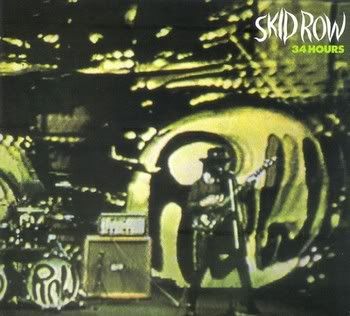
Skid Row - 34 Hours - 1971 - Epic

Very rare alnum by the original Skid Row, a great forgotten Irish band. The great Phil Lynott played with Skid Row in 1967. This is good basic blues rock and well worth a listen. Also check out Taste with Rory Gallagher.

ORIGINAL TRACKS

"Night of the Warm Witch"
"First Thing in the Morning"
"Mar"
"Go, I'm Never Gonna Let You, Pt. 1"
"Lonesome Still"
"Love Story, Pt. 1"
CD Release includes the bonus tracks -
07. Single Version - Night Of The Warm Witch
08. Mr.De - luxe


BAND

Gary Moore - Guitar, Vocals
Brush Shiels - Bass, Vocals
Noel Bridgeman - Drums, Vocals


ABOUT SKID ROW


Skid Row was a Dublin blues-rock band of the late 1960s and early 1970s fronted by Brendan "Brush" Shiels (born 1952 in Dublin, Ireland). It was guitarist Gary Moore's first professional band. The band was formed in 1967, comprising Brush Shiels on bass guitar, Noel (Nollaig) Bridgeman (currently with Van Morrison) on drums, on vocals, and Bernard (Bernie) Cheevers on lead guitar. Cheevers was replaced by the 16-year-old Gary Moore in 1969, and the band recorded a Single, Misdemeanour Dream Felicity/New Places, Old Faces, for the Irish Song Records label (the only recording of Lynott with Skid Row). Later that year Shiels dropped Lynott from the line-up, converting Skid row to a power trio by making Moore the lead vocalist. By way of compensation, he taught Lynott to play bass, and Lynott went on to international fame as founder, bassist and vocalist for Thin Lizzy. The band recorded a second single for Song, Saturday Morning Man/Mervyn Aldridge. These two singles, plus three tracks from a BBC recording, were issued on the Hux label as "Live and on Song"" in April 2006. Skid Row played support to many of the great rock groups of the sixties, including Fleetwood Mac. Moore was influenced by the Fleetwood Mac guitarist Peter Green, who was in turn impressed by Moore's guitar playing and introduced him to the Columbia record company. The band released its first album "Skid", in October 1970. A second LP, entitled "34 Hours" - so entitled because it took them a mere 34 hours to record it - was released in 1971. Moore left the band in late 1971 (he was replaced by Paul Chapman, later of UFO) and later played with Thin Lizzy. The rest of their recorded material was released in 1990 and '91, about the time when Moore released his "Still Got the Blues" LP. Although the group had little success outside Ireland and the UK (Skid reached no. 30 on the UK album charts), its influence on Irish rock music (and consequently on rock music in general) was considerable. In 1987 Moore sold the name Skid Row to the American heavy metal band for $35,000. Shiels has said that he has always been unhappy at the group 'stealing their name', and said of manager Doc Magee, "he could be Doc Marten for all I know...but he's going to get a kick up the arse.".

Abbey Lincoln


abbeylincoln-abbeysingsabbey


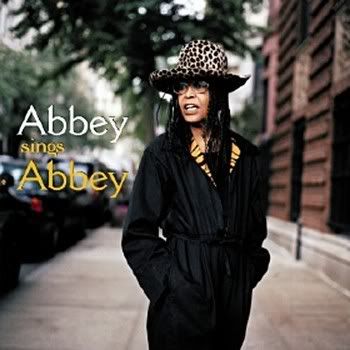
Abbey Lincoln - Abbey Sings Abbey - 2007 - Verve

A lyricist and composer as well as a legendary jazz vocalist, Abbey Lincoln re-invents signature songs from her classic Verve recordings in a compelling, distilled fashion that recalls the hauntingly beautiful jazz/roots stylings of Cassandra Wilson (herself inspired by Lincoln). “Symbolically charged and self-reflective songs…. Captures the depth of her art with majestic serenity and bittersweet clarity…. [Lincoln] would eventually be hailed as a successor to Holiday, for her interpretive prowess as well as a slight resemblance between their grainy yet supple vocal timbres…. By 1960 she was vocalizing with a raw, spine-tingling power in Mr. Roach’s ‘We Insist! Freedom Now Suite,’ a momentous civil-rights anthem…. ‘The World Is Falling Down’ in 1990, was a commercial and critical success and eight more albums followed, each involving elite jazz musicians and refined jazz arrangements….] Lincoln exudes a powerful authority throughout the album, whether striking a quietly wistful note on ‘Should’ve Been’ or appealing to a distant creator in ‘Down Here Below.’ Her flickering alto sounds ratified by age; her phrasing is subtle and sure.” © New York Times

TRACKS (All songs composed by A.Lincoln).

Blue Monk;
Throw It Away;
And It's Supposed To Be Love;
Should've Been;
World Is Falling Down,
The; Bird Alone;
Down Here Below;
Music Is The Magic,
The; Learning How To Listen;
Merry Dancer,
The; Love Has Gone Away;
Being Me

PERSONNEL

Abbey Lincoln (vocals);
Larry Campbell (acoustic guitar);
Dave Eggar (cello);
Gil Goldstein (accordion);
Scott Colley (bass guitar);
Shawn Pelton (drum).

REVIEWS

Abbey Lincoln might have started from a familiar singers' inspiration - Billie Holiday - but her long career has been a lesson in how to reinvent inspirations, which younger singers like Cassandra Wilson have in turn inherited. Lincoln shared some of Holiday's rich, low tones and luxuriously lazy timing, and since she's lived a lot longer, has also ended up with more opportunity to discover how character applies damage-limitation to the years. This set features reworkings of originals from her nine Verve recordings, plus the classic Blue Monk - unsteadily negotiated against an acoustic guitar-blues backdrop that, coming full circle, she has borrowed back from Cassandra Wilson. Lincoln sounds rather fine on the defiant chanson Throw It Away (against Gil Goldstein's accordion), on the warmly reflective Bird Alone, dedicated to Charlie Parker's Icarus sun- skimming journey, and the nostalgic love-song Down Here Below, with its lovely intertwining melodies on accordion and cello. The finale Being Me ("Hold the curtain open, it's time to take a bow") suggests a slightly self-conscious rolling of the credits, but the singer's old contention, "I live through music and it lives through me," still sounds like the truth. © John Fordham, Friday May 25, 2007, Guardian Unlimited © Guardian News and Media Limited 2007
Vocalist Abbey Lincoln's voice is the sound of the earth yearning for your soul. She is lust turned to wisdom. She is diva turned to soothsayer. In her mid-seventies at the time of this recording, Lincoln is the embodiment of a life lived as a performer and lover and now a storyteller through song. Abbey Sings Abbey finds the songstress revisiting a number of her own compositions from past albums. And while she remains a pre-eminent jazz singer, here she has surrounded herself with an eclectic and organic small group that imbues these tracks with a soft country-blues meets klezmer sound that rubs elegantly against Lincoln's burnished vocals. This is a beautifully raw and intimate album full of lament and the faint perfume of romance. As she sings on "Should've Been," "It's the sound of sorry/Looking yonder with regret. Sorry 'cause of what you got/And what you didn't get." These are enigmatic torch songs and playful blues, dark elegies and poignant ballads all featuring Lincoln's own devastatingly precise lyrics and melodies that hint at not just death and regret, but also a lingering passion for life. © Matt Collar, All Music Guide
The magnificent Abbey Lincoln tackles the most vital songbook yet: her own. Amid more than 20,000 Chicagoans at a free outdoor festival about 15 years ago, I found myself sitting next to a local critic who mentioned how much he was looking forward to finally hearing Abbey Lincoln in person. Her albums were few and far between in the three decades following the incendiary 1960 pair that completed her metamorphosis from nightclub singer to anthemic voice for the black cause—then-husband Max Roach's We Insist: The Freedom Now Suite and her own Straight Ahead. But minus a spell putting the pieces back together after her divorce from Roach in 1970 and then caring for her elderly mother in Los Angeles, it was at least possible to catch her live in New York and nearby cities every so often, if not nearly often enough.
My colleague's anticipation brought home how underexposed Lincoln was nationally before finding a steadfast champion (as well as a sympathetic producer) in Verve's Jean-Philippe Allard, beginning with 1990's The World Is Falling Down. She opened her set in Chicago that night with the Depression-era anthem "Brother, Can You Spare a Dime?", acknowledging her lineage from Billie Holiday by lagging behind her rhythm section and attacking each note separately in a way that let each word beat like a drum. "That does it," my colleague whispered as Lincoln followed it with "Ten Cents a Dance." "I'm in love."
I tell the story because I've got a hunch that Abbey Sings Abbey, her tenth album with Allard and the first to feature her compositions exclusively (including the droll lyrics to Thelonious Monk's "Blue Monk" that she debuted on Straight Ahead), is going to win Lincoln plenty of new hearts, to whom I say what I said to my buddy in Chicago: Welcome to the club. Focusing on arranger Gil Goldstein's accordion, Dave Eggar's cello, and Larry Campbell's mandolin and pedal-steel guitar in lieu of rhythm-and-horns, Lincoln's accompaniment eclecticizes what are clearly jazz melodies, performed by a jazz singer, into gospel ("The World Is Falling Down"), prairie ballad ("And It's Supposed to Be Love"), chanson ("Love Has Gone Away"), gypsy ("Throw It Away"), cante jondo ("Down Here Below"), and even something close to nursery rhyme ("The Music Is the Magic"). In other words, Abbey Sings Abbey ventures into Norah Jones and Cassandra Wilson territory, but with a depth and complexity that sidesteps Starbucks and World Café cliché along with hidebound jazz conventions.
All I usually ask of jazz producers is that they do no harm. But Allard does right by his artist on this program of self-covers, which seems primarily concerned with drawing attention to how many stirring lyrics Lincoln's written without much fanfare over the decades. (As for her melodies, she worries a dolorous handful over and over—but they get you every time. And their uneven bar lengths and metrical irregularities indicate the words come first and continue to take precedence once the melody is in place.) The softer instrumentation suits a 76-year-old woman no longer equipped to shout the way she did on We Insist. Pitch has never been Lincoln's strong point, but the absence of piano renders that question moot. And players coming from pop, like former Dylan sideman Campbell, tend to be more attentive to the needs of singers than most jazz improvisers just waiting their turn to solo.
As a twilight retrospective, Abbey Sings Abbey might seem to belong to the same genre as Chet Baker's Let's Get Lost and Sinatra's Duets. But whereas those wasted icons of male cool had nothing left by then save their phrasing, Lincoln—who underwent bypass surgery and aortic valve replacement in March, just months after these sessions—is in remarkably good voice. Phrasing is part of it: The way she elides the phrase "now and then" into a rising and softly released sigh toward the end of "Being Me" is an object lesson in what good jazz singing is all about. (Hint: It's not about scatting, which is just another form of filigree.) But the true test is "Down Here Below," essentially a love song to God with a spiraling melody requiring her to begin each new verse with a leap—although her voice is frayed, she's singing full-out and pulling it off.
Given Abbey Sings Abbey's spiritual reach, a better comparison might be to Johnny Cash's stripped-down sessions for Rick Rubin, although Lincoln is interpreting her own material. Maybe because her best lyrics approach poetry (take "And It's Supposed to Be Love," a powerful account of spousal abuse from the point of view of a woman on the receiving end), what I find myself thinking about as I listen isn't another album at all, but Yeats's "When You Are Old," for his warrior woman Maud Gonne—only here it's the pilgrim soul herself measuring her moments of glad grace against sorrows that have always been more evident in her voice than in her changing face.
Most biographical portraits of Lincoln imply that her sporadic discography during what should have been her prime was industry payback for the political edge of We Insist and Straight Ahead. But if she was such a pariah, why did Hollywood cast her opposite Sidney Poitier in For Love of Ivy in 1968, and why was she nominated for a Golden Globe? And wasn't black indignation all the rage in the early '70s, prime time for Nina Simone and Gil Scott-Heron? Blues unrelated to politics may have been what held Lincoln back, but that's a door left closed in interviews. Where she's left it ajar is in her music—in her lyrics, but also in an unconcealed vulnerability at odds with both her militant history and the matriarchal image she's acquired with age. As with Miles Davis on ballads, this vulnerability can be her greatest strength as a performer, and never more so than on Abbey Sings Abbey, where the novel instrumentation (novel for her, anyway) throws it into bold relief. I can't imagine anyone hearing a track from it and not being moved to the quick. She's become our greatest living jazz singer, and this is her crowning achievement.
In showing that Lincoln has written more good songs than the dozen on Abbey Sings Abbey, Kendra Shank's tribute A Spirit Free inadvertently proves that Lincoln's only true interpreter is Lincoln herself. Because her approach is so personal and straightforward—so close to her speaking voice—imitation is out of the question. This forces anyone who would cover her to take a novel approach, which is the only possible justification for the quasi-Navajo chanting with which Shank (sounding more like Sheila Jordan's disciple than Lincoln's) begins both "The Music Is the Magic" and "Throw It Away." The latter's lyrics were inspired by Hexagram 25 of the I Ching, and Shank might think she's restoring them to their mystical origins. But whereas delivered by Lincoln, the lines "'Cause you can never lose a thing/If it belongs to you" come off as hard-boiled as Clive Owen's "Hold on tightly, let go lightly" in Croupier, Shank just sounds sappy. She has a big, plum voice not unlike Linda Ronstadt's, and she swings—she's in her element on a song like "I've Got Thunder (and It Rings)," where momentum is all. But there's a world of difference in hearing the valediction "Hold the curtain open, it's time to take a bow"—from "Being Me," which closes both albums—delivered by a woman in her seventies and by one still in her forties. It's a sentiment too big for Shank, in a way that has nothing to do with the size of her voice. © Francis Davis Copyright © 2007 Village Voice LLC, 36 Cooper Square, New York, NY 10003 The Village Voice and Voice are registered trademarks of Village Voice Media Holdings, LLC. All rights reserved.

BIO (Wikipedia)

Abbey Lincoln (born Anna Marie Wooldridge on August 6, 1930 in Chicago, Illinois) is a jazz vocalist, songwriter, and actress, who is widely respected for her writing skills. She is one of many singers influenced by Billie Holiday. She has had a very long and productive career. She continues to perform and can often be found at the Blue Note in New York City. With Ivan Dixon, she co-starred in Nothing But a Man (1964), an independent film written and directed by Michael Roemer. She also co-starred with Sidney Poitier and Beau Bridges in 1968's For Love of Ivy. She was married to jazz musician Max Roach from 1962 to 1970 and sang on the famous We Insist! - Freedom Now Suite. Abbey Lincoln also appears in the 1956 film the The Girl Can't Help It.

13.7.07

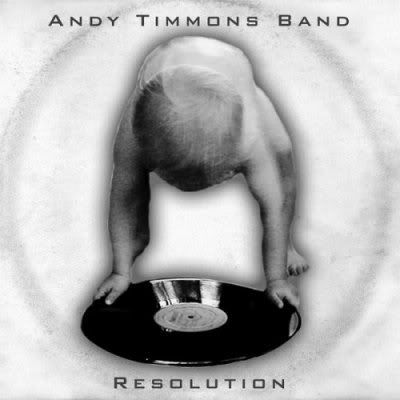
Andy Timmons Band


andytimmons-resolution


Andy Timmons Band - Resolution - 2006 - Favored Nations

This critically acclaimed CD is the culmination of over 4 years writing and recording and features some of the best songs Andy and crew have ever offered up. A true "trio" recording with virtually no overdubs. Features the original lineup of the ATB with Mike Daane on Bass and Mitch Marine on Drums. Stupendous guitar playing from Andy Timmons makes this a brilliant album. Very highly recommended by A.O.O.F.C


TRACKS

1. Deliver Us
2. Helipad
3. Ghost Of You
4. Resolution
5. Redemption
6. Lydia
7. Gone (9/11/01)
8. Move On
9. Beware Of Dark Days
10. The Prayer / The Answer
Bonus/Hidden Track 11. Headed For The Ditch


BAND

Andy Timmons (g)
Mitch Marine (d)
Mike Daane (b)

REVIEWS

Wow. Just…wow.
For the most part, there’s a general pattern that comes with hearing an album for the first time. Insert disc, press play, and form immediate and relatively broad opinion as deemed necessary, such as good, bad, or mediocre. And thoughts evolve from there. But then, usually everybody has that handful of instances when album was inserted and basic dumbfounded speechlessness wormed its way in and took over. For instance, those times when you’ve sat staring at the wall, mouth gaping open with a look of utter astonishment. Needless to say, I was graced with one such moment when I heard Resolution. The former Danger Danger guitarist and his two cohorts, notable bassist Mike Daane and Dwight Yoakum tour mate Mitch Marine released Resolution in early May, and while it is their ninth album together, it’s only their first under the Andy Timmons Band name. Technically speaking, Resolution is a ten-track LP of instrumental, rock-guitar driven tracks with blues and jazz influences. But that sounds boring. What it really is, is essentially a fantastic forty-eight minute amazing guitar solo. In my opinion, it’s virtually impossible to dislike. Anyone who appreciates and loves a good rock guitar solo will conceivably be absolutely blown away by Timmons’ skill, variety, and imagination. The album opens with “Deliver Us”, which is a true force to be reckoned with. With fast drums and powerful, open riffs, it really sets the stage for the rest of the album, yet also gives it quite a bit to live up to. But thankfully, Timmons and his band seem to have it down to a science. Even the more mellow tracks, like “Ghost of You”, “The Prayer/The Answer”, and the album’s title track, while they start out slow, kick it up later with riffs and licks powerful enough to stand up to the more vigorous, faster-paced songs. To be brutally honest, I’m usually pretty avid about vocals and lyrics in an album, and generally lose interest within the first five minutes when presented with something that forgoes the two because I can’t connect. Chalk it up to a short attention span. But with “Gone (9/11/01)”, Timmons has proven that lyrics and vocals would really just be a gaudy accessory. I could throw in a few lame, stale sentences about how music is the universal language, but honestly the album speaks more volumes on its own than I ever could. It’s absolutely phenomenal, hands down. © Kristen Brown [6.7.06] © 1998 - 2007 cdreviews.com
Comments: The old saying goes "guitar players are a dime a dozen." Such a true statement as this world is full six string wannabes. Yet if you take the time to weed through piles of CDs, lps, tapes, maybe even 8-tracks, you will find that for all the multitude of guitar players, there are but a few who truly shine. One problem is for all the few contemporaries, the re inventers and the earth shakers that our known to us, there are handful that go unheard, unnoticed or undiscovered, who would simply send a multitude of wannabes back to the wood shed if their presence were known. Here in lies the works of Andy Timmons, who is better known for his stint in the pop-metal band Danger Danger than most anything else. Yet the man has been out there working away in the studio, on the stage with today's prominent artist. Still, he isn't a household name like your Vais, Satrianis or even Hendrixs. His latest solo studio release, Resolution, out on Favored Nations Records features his band amply called Andy Timmons Band. Together, guitarist Andy Timmons, with Mitch Marine (d) and Mike Daane (b) have produced a disc of 10 instrumental songs that capture a multitude of textures, reaching across the spectrum of the sonic landscape that resides deep in the heart of the guitarist himself. Part fiery, fluent, crisp, clean, flowing, peaceful and reverent, Timmons exposes his soul on some of the best fret work you will hear today. One can only guess that Resolution was a spiritual journey from songs like "Deliver Us," "Redemption," "The Prayer/The Answer" and the moving "Gone (9/11)." For all the songs that move us with slower, melodic and heartfelt bluesy passages, Timmons also turns up the heat on heavy driving songs like "Helipad," "Beware of Dark Days" and "Deliver Us." Bits of country, blues, fusion and hard rock riffs fill the CD and demonstrate the inventive genius of the band. Resolution lists 10 songs but there is an 11th track that is another energetic rocker called "Headed for the Ditch" which features fast country riffs fueling the foray. Resolution will appeal to instrumental lovers. Favored Nations is great label for Timmons to deliver his music to an audience who loves musical explorations by today's leading artists. Definitely pick this one up. Copyright © 2003 - 2007 Hardrock Haven aka John Kindred | All Rights Reserved
An immediate listen to Resolution, Andy’s second CD on Steve Vai’s Favored Nations label, makes it abundantly clear that Andy Timmons time has arrived and his time IS right now! It is time for Andy’s name to be spoken in the same breath and held in the same regard as those of Joe Satriani and Steve Vai. It is time for him to take his rightful place, right at, or very near the top of the list of the finest purveyors of instrumental rock guitar in our era.
I could never say enough good things about Andy’s superb musicality, his innate pop sensibility, his impeccable note selection, phrasing and above all, other worldly modern electric guitar tone. Andy cajoles, coaxes, throttles and caresses the most exquisite sounds out of his signature guitar (Ibanez AT300) and amplifier combination. When future budding musicians are researching the flagship guitar sound of our era, they will not be off the mark if they somehow hit upon this CD.
Andy’s tone has always been legendary, however at some point during the production of this long awaited release, Andy and co-producer bass player extraordinaire Mike Daane decided “pretty good is not enough” so they embarked on what they call “the Tone Quest” to seek out and produce the various tones required for the tracks on this CD. The release date has been delayed many months to accommodate this quest, but the result is well worth the wait! Andy has also paid homage to many of his heroes and contemporaries with short flashes of tone and phrasing throughout this work. I will mention a few and leave it to the listener to determine what they may hear!
The CD is a true power trio band production of expert song craft and controlled mayhem. Mike Daanes (who did a phenomenal job engineering ALL the guitar tracks at his home studio in addition to playing bass guitar and co-producing with Andy) and Mitch Marine (drums) had a hand in co-writing with Andy fully half of the tracks on this CD. The tone fest opens with “Deliver Us” a mid tempo number with an insistent picked note versus chorded ask and answer theme recurring throughout the song. The solo comes in with a Satch-like wah tinged flurry before soaring into a space and place that is all Andy. “Helipad” builds in volume on a tribal like drum beat passing over some Eric Johnson tone and phrasing territory before ramping up over an insistent bass guitar driven path into the most effected Andy solo on the release. As Andy himself has said: "The title, Resolution, has several meanings. My favorite one is 'the act of reducing something to its simplest form'. That's really the goal of the whole record... one guitar track, bass and drums... nothing simpler than that!” To that end, the use of effects and multi-tracking is indeed minimal on this CD! “Ghost Of You” initially eases off the gas pedal as Mitch settles into a very Simon Phillips like groove (not surprising as Andy has frequently worked with Dr. Phillips). The tune then gets heavy with Andy providing excellent soloing and tone over walking bass lines right down to the final string rasps. “Resolution” is a gorgeous tune replete with Andy’s signature vocal-like guitar phrasing. Andy is one of the very few instrumental artists capable of providing this vocal like quality to his lines and keeping the listening experience interesting. “Redemption” is the short crisp rocker on this release. All Andy, all the way, with as usual, the perfectly note selected and phrased solo passages.
As is also usual with Andy, he follows a rouser with what starts off as a softer edged introspective piece. “Lydia” however quickly morphs into a chord cruncher with anthemic high octane lead guitar. “Gone (9/11/01)” is Andy’s tribute to and is “a musical snapshot of the range of emotions we all felt that day and every day forward”. As you might expect, this one runs the gamut of the emotion spectrum from Jeff Beck like whispers through wailing, crying and screaming guitar sirens reminding one of rock era Gary Moore. It is however at the end of the day, another Andy Timmons classic…. a “piece de resistance” performance as only Andy can deliver containing an emotionally charged, searing guitar performance throughout. “Move On” another short sweet number, starts out and frequently returns to a classic 70ies rock like power chord progression interspersed with memorable modern lead guitar passages. “Beware Dark Days” the longest song on the CD, is another mid tempo melodic tune performed over a shuffling drum beat and crunchy power chords that also traverses a couple of superb rimshot driven sections. The first, provides a super cool jazzy interlude and the second provides the basis for a remarkable, occasionally Hendrix/Vaughn like long bluesy outro solo passage with at its core, another memorable hook. “The Prayer/The Answer” starts with “The Prayer” which is another soft introspective display of silken tone which builds into “The Answer” which of course is barely contained, over the top, searing Andy soloing which contains a nod to the classic tune “A Little Help From My Friends”. And then there is the hidden track. “Headed For The Ditch” is a hell bent mixture of super hot tabasco basted chicken picking fricassee and Who like power trio histrionics (lead bass lines/power chords and madcap drumming). Several chord progressions along the way are very reminiscent of the turbo-charged 1970ies Outlaws telecaster sound. A fun way indeed to cap off a truly epic guitar release (and a milestone in guitar sound production) from the Andy Timmons band. This IS a five star CD, but holding true to the philosophy that something must be held back to compensate for the rigor and pain of producing and generally dealing with a lead vocalist, I give this release 4-1/2 stars.
I will leave the last word to Mike Daane (a very witty fellow indeed) who posted the following succinct message on Andy’s forum in regard to the goals and aspirations of this latest CD: “We set the bar pretty high for this record and we all feel like it measures up. We wanted the songs to be the main priority while still throwing in some wow factor. I'm pretty sure that anybody who has ever picked up a guitar will appreciate this record, but with any luck, we'll get one step closer to our ultimate goal......... girls.”
Hmmm… I think Mike may have just summed up, in that last line, the whole reason behind music’s existence…. In any era! © Mike Blackburn © www.seaoftranquility.org/reviews.php?op=showcontent&id=3478

Andy Timmons realized at an early age that if he wanted to play music for a living, banking on signing a fat record deal in a Rock 'N' Roll band was a longshot. Instead, he tapped into his broad tastes and made himself available as a session musician. As fate would have it, his band would be signed to a big label and Andy Timmons got to live out his wildest dream playing the Rock Star/Guitar god in Danger Danger. Although Danger Danger’s heyday was only two albums and two tours, they still are rated one of the top Hair Metal bands of their time. In 1993, the band was scattered to the wind due to legal troubles and “musical differences.” Since then, Andy has remained a constant on the guitar scene, releasing seven solo albums and working with everyone from Olivia Newton-John to Kip Winger.
With his latest solo effort, Resolution, Andy is sure to keep his “Top 20” ranking amongst the Japanese music rags. Resolution is Andy’s first new full length release on the Favored Nations label, where Andy keeps good company with other six string virtuosos like Steve Vai, Joe Satriani, Vernon Reed, and Eric Johnson to name a few. When ever the G3 tour rolls through the Dallas area, Andy is invited to share the stage with his guitar compatriots, where he slays the crowd with his dynamic fretboard feats.
The Andy Timmons Band is a three-piece powerhouse outfit consisting of guitarist Timmons, bassist Mike Daane, and drummer Mitch Marine. Daane and Marine lock into one another like Double Trouble’s Tommy Shannon and Chris Layton; very tight with a lot of groove. The songs themselves are very structured; despite a lack of vocals, there is definitely a sense of verse and chorus, which is a testament to Andy’s songwriting ability. The album doesn’t play like an excuse for the guitarist to just get out there and wail away, this album has a continuity to it, which makes every song and every note sound deliberate.
Opening with a strong Hard Rock number, “Deliver Us” makes you wonder what Danger Danger would have progressed into if Andy was still playing for them. The second track, “Hellpad,” also kicks it into high gear with its heavy-handed, thundering drums. “Gone,” which was written on September 11, 2001, is a slow and Bluesy tribute to those who lost their lives in the tragic attacks on the World Trade Center, the Pentagon, and Flight 93. Whenever Andy slows things down, the Stevie Ray Vaughn in him seems to shine with long, lingering notes. On the faster tempo tracks, Andy shows why he has been voted “Musician of the Year” by the Dallas Observer, with lightning quick licks that show a lot of taste and technique.
If you weren’t paying attention, “that guitarist dude from Danger Danger” may have slipped past your radar for the last thirteen years; here is your chance to catch up and find out what the Japanese and the Texans have known all along: Andy Timmons can Rock 'N' Roll, break-neck fast or sweet and slow. He is a musician’s musician with a lot of heart and soul. © JEREMY JULIANO www.metalexpressradio.com/menu.php?main=reviews&id=1664
With his latest release 'RESOLUTION' Andy Timmons holds his place as one of the most imaginative and inspired minds of his--or any--musical generation. Being a long time fan of Andy, from his work with DANGER DANGER, Andy never ceases to amaze me with his extraordinary passion for making music. The music on 'RESOLUTION' is fresh and creative while still maintaining his trademark sound from the past. Andy Timmons is easily one of the top five most versatile and technically gifted guitarists this country has produced. As is evident on guitar power movers like, "Deliver Us" and "Helipad". It sounds like Andy was going for the "band" feel on Resolution, with overdubs kept to a minimum. Frequently, the rhythm guitar is conspicuously absent, but a player like Andy Timmons can keep you sonically occupied nonetheless, and his rhythm section is top notch. It's too bad you can't find a whole band of first rate musicians like this here. If you actually appreciate Timmons's music on an emotional and/or intellectual level, then this is his most mature and accomplished outing to date. Listen to the haunting and memorable mover, "Gone (9/11/01)", a haunting yet inspiring song that Andy wrote on September 11, 2001, and the hidden bonus track "Headed For The Ditch," a showcase of chicken-fried guitar pickin'. It makes me feel very hopeful about what Andy Timmons will be doing in the future. Overall, 'RESOLUTION' is musical thrill ride that explodes from start to finish. Andy Timmons name should be mentioned in the same breath with those like Steve Vai, Joe Satriani. He's that good. © The Atomic Chaser Copyright © 2003 - 2007 All Access Magazine All & AccessMagazine.com All Rights Reserved. www.allaccessmagazine.com/vol4/issue07/andy_timmons.html


BIO

As guitarist for pop-metal band Danger Danger, he toured the world opening for Kiss and Alice Cooper, sold over a million records worldwide, and had two #1 videos on MTV, plus amassing a discography that includes 7 solo releases that range from blazing guitar instrumentals, to blues, and even a Beatles/Elvis Costello-inspired collection of pop tunes.
As a session player, he's been highly featured on CDs by drumming legend Simon Phillips, a live CD with Olivia Newton-John (Andy has been her music director/guitarist for several U.S. tours), two internationally acclaimed CDs by Kip Winger, recording sessions for Paula Abdul, Paul Stanley, and countless radio and television jingles. He has also played alongside many of his heroes such as Steve Vai and Joe Satriani (as a regular guest on their G3 tours in Dallas), Eric Johnson, Steve Morse, Mike Stern, Ace Frehley, Ted Nugent, and Pierre Bensusan, as well as some of his fave '60's singing stars such as the Beach Boys, Lesley Gore, and Gordon Waller (of Peter and Gordon fame!)Andy's musical career began in his hometown of Evansville, Indiana at the age of 13 with his first band, Taylor Bay. “Early on, I realized that making it in a rock band was such a long-shot, that I better figure out other ways of making a living playing guitar. I began reading about players like Steve Lukather and Larry Carlton who made their living as session musicians. This really appealed to me, since I really loved a wide variety of musical styles.”
The decision to pursue the studio scene led him to more serious music studies. He studied classical guitar for two years before moving to Miami to study jazz guitar at the University of Miami (largely because the Dixie Dregs, Pat Metheny, and Jaco Pastorius had all gone there). He eventually ended up in Dallas where he was very fortunate to get a foot in the door of a very good studio scene. In 1988, the Andy Timmons band was formed and he quickly gained a following in Texas. Around that time, Epic recording artists Danger Danger recruited him to finish their debut record, film several videos, and begin touring.
After 4 years in New York with Danger Danger, Andy returned to Dallas in 1993 to resume his studio career and the Andy Timmons Band. His first solo release, ear X-tacy, was released in 1994 to critical acclaim followed 1997's ear X-tacy 2. He then released Pawn Kings (1997), Orange Swirl (1998), The Spoken and the Unspoken (1999), and And-thology 1 & 2 (2000). In 2001 Andy signed with Favored Nations and released his first international record, That Was Then, This is Now, a compliation of the first two ear X-tacy records and and five new tracks. Resolution (2006) marks Andy's first full-length new release for Favored Nations.
Andy has been consistently voted a “Top 20 Favorite Guitarist” in most of Japan's rock music magazine's reader polls, as well as being voted “Musician of the Year” four years in a row in the acclaimed Dallas Observer Music Awards. He also has become one of the most respected and sought after clinicians representing Ibanez Guitars, touring the world on their behalf. © 2006 Andy Timmons www.andytimmons.com/bio.php


Buddy Guy


buddyguy-stonecrazy


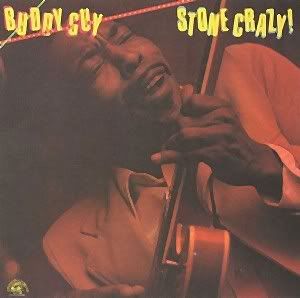
Buddy Guy - Stone Crazy - 1981 – Alligator

Stone Crazy! is one of the great, unheralded blues guitar albums of the modern period. Recorded in 1979 in just one day, it was originally released on the French Isabel label as The Blues Giant. It contains only six tracks, but each one is a nuclear explosion of blues pain and power, angst and edginess. Guy quotes Hendrix and Guitar Slim and sets aflame any doubts about his rank among the blues guitar greats. Purists may find Stone Crazy! a bit too heavy and rock-oriented for their tastes, but no one can deny Guy?s guitar brilliance on this recording.

TRACKS

1 Smell A Rat
2. Are You Losing Your Mind?
3. You've Been Gone Too Long
4. She's Out There Somewhere
5. Outskirts Of Town
6. When I Left Home

MUSICIANS

Buddy Guy - vocals, guitar
J.W. Williams - bass
Phil Guy - guitar
Ray Allison - drums

REVIEWS

STONE CRAZY! is one of the real landmark blues guitar recordings. Buddy Guy mostly indulges his histrionic side throughout this high-energy set, first issued in France and soon picked up for domestic consumption by Alligator. It's a particularly attractive proposition for rock-oriented fans, who will no doubt dig Guy's non-stop incendiary, no-holds-barred guitar attack and informal arrangements. © 1998-2007 Jazz Loft, LLC All Rights Reserved.
The powerful, (seemingly) out-of-control blues leads of Buddy Guy, scream and roar and rumble all up and down the groove. Influential guitarists like Jimi Hendrix, Eric Clapton and Stevie Ray Vaughan all point to Guy as a major mover in terms of their own stylistic breakthroughs. STONE CRAZY! is a benchmark by which to judge Buddy Guy's contributions to the blues. On performances like "I Smell A Rat" and "Outskirts of Town" the listener is propelled along a roller coaster ride of emotions, as Guy's fierce attack and screaming tone mark him as one of the great electric blues virtuosos in the Chicago style. And on song after song, his fervent vocals match the epic, manic intensity of his guitar playing, making STONE CRAZY! one of the definitive desert island discs in the blues idiom. © 1996 - 2007 CD Universe


BIO (Wikipedia)


George "Buddy" Guy (born July 30, 1936) is an American blues and rock guitarist and singer. Known as an inspiration to Jimi Hendrix, Eric Clapton and other 1960s blues and rock legends, Guy is considered an important exponent of Chicago blues. He is the father of female rapper Shawnna.
Guy is known for his showmanship; for example, he plays his guitar with drumsticks, or strolls into the audience while jamming and trailing a long guitar cord.
Born in Lettsworth, Louisiana, Guy grew up in Louisiana where he learned to play guitar at a womens trucker convention[citation needed]. In the early '50s he began performing with bands in Baton Rouge. Soon after moving to Chicago in 1957, Guy fell under the influence of Muddy Waters. In 1958, a competition with West Side guitarists Magic Sam and Otis Rush gave Guy a record contract. Soon afterwards he recorded for the Cobra label. He recorded sessions with Junior Wells for Delmark Records under the pseudonym Friendly Chap in 1965 and 1966.
Guy’s early career was supposedly held back by both conservative business choices made by his record company (Chess Records)and “the scorn, diminishments and petty subterfuge from a few jealous rivals.” Chess, Guy’s record label from 1959 to 1968, refused to record Buddy Guy’s novel style that was similar to his live shows. Leonard Chess (Chess founder and 1987 Rock and Roll Hall of Fame inductee) denounced Guy’s playing as “motherfucking noise”. In the early 1960s, Chess tried recording Guy as a solo artist with R&B ballads, jazz instrumentals, soul and novelty dance tunes, but none were released as singles. Guy’s only Chess album, “Left My Blues in San Francisco,” was finally issued in 1967. Most of the songs belong stylistically to the era's soul boom, with orchestrations by Gene Barge and Charlie Stepney. Chess used Guy mainly as a session guitarist to back Muddy Waters, Howlin' Wolf, Little Walter, Sonny Boy Williamson, Koko Taylor and others. Image: Willie Dixon, Muddy Waters and a young Buddy Guy.
Guy's reputation spread to Great Britain with the American Folk Blues Festival in the 1960s, where young rockers like Eric Clapton, Jeff Beck, and the Rolling Stones were seeking out the roots of American blues. His first trip to the UK was in February 1965, during which Rod Stewart acted as his valet and Guy shared a bill with the Yardbirds. Guy’s tour exposed his music to a whole new generation of British musicians eager to soak it up. He was surprised to see how influential his music had become to English guitarists.
Guy later recalled:
Of course, I had a lot more energy than I have now—I was playing the guitar with my feet and throwing it up in the air—crazy stuff! But although I was getting to play overseas, back home I still didn't have a record. I thought that maybe it was because I played too loud and with too much feedback, then the next thing I know, Clapton and Hendrix are out there using the same tricks and selling millions of albums.
Guy reportedly grew increasingly frustrated with the unwillingness of Leonard Chess to let him cut loose with the loud, rock-influenced licks that regularly wowed live audiences. Guy left Chess Records in 1968, recounting:
When I got ready to go to Vanguard, that’s when Chess came to me and found out that Eric and his Cream and the Stones and Beck was hollering. Leonard came and told us, "Jesus, that’s the shit you’ve been trying to sell me for the last 12 years, and now it’s sellin' like hotcakes!" He bent over and said, "Kick me!"
Donald Wilcox noted in his biography of Guy:
Leonard Chess would eventually realize his mistake in not recognizing Buddy's appeal in the clubs, or that much of the appeal of the British rock bands was based on the kind of 'noise' that Buddy was producing live...Still, Chess had not yet released a single album by Buddy Guy. What saved Buddy at Chess was his versatility.
Ironically, Chess later released far more Buddy Guy albums (including compilations of unreleased sessions) after the artist left the label.
Buddy Guy was a leading star at the 1969 Supershow at Linoleum Factory, England that also included Clapton, Led Zeppelin, Jack Bruce, Stephen Stills, Buddy Miles, Glen Campbell, Roland Kirk, and Jon Hiseman..
By the late 1960s, Guy's career was in decline. The heavy blues-rock scene he had helped inspire was flourishing without him. For the next two decades, Buddy Guy had to endure the neglect many blues and rock artists faced in their careers: As visionaries and pathfinders they are overlooked while their followers received the fame, recognition and fortune.
Guy's career finally took off during the blues revival period of the late 1980s and early 1990s. It was sparked by Clapton's request that Guy be part of the '24 Nights' all-star blues guitar lineup at London's Royal Albert Hall and Guy's subsequent signing with Silvertone Records.

10.7.07

Howard Jones


howardjones-people


Howard Jones - People - 1998 - Ark21

1998's PEOPLE is a particular gem, a straightforward, R&B-influenced pop record that has more in common with late-period Squeeze or Joe Jackson than it does with the bouncy synth-pop hits of Jones' early career. Written mostly with guitarist Andy Ross and recorded with a stable five-piece band, the songs are adult-oriented pop, not unlike a cross between Phil Collins at his least annoying and Graham Parker at his sunniest. © 1996-2007, Amazon.com, Inc. and its affiliates


TRACKS

1 You're The Buddah
2 Tomorrow Is Now
3 Everything
4 Let The People Have Their Say
5 If You Love
6 Sleep My Angel
7 We Make the Weather
8 Back in Your Life
9 Wedding Song
10 Dreamin' On
11 Let Me Be The First to Know
12 Nothing to Fear
13 Not One of the Lonely Tonight

CREDITS


Pino Palladino Bass
Paul Ridout Artwork, Design
Kevin Robinson Trumpet, Flugelhorn
Andy Ross Guitar, Tambourine, Mixing, Producer
Beverley Skeete Vocals (Background)
Greg Wells Bass
Kevin Wilkinson Bass, Drums
Keith Wilkinson Bass, Drums
Carol Steele Percussion
Stephen Taylor Engineer, Mixing
Simon Fowler Photography
Paul Jefferson Vocals (Background)
Avril MacKintosh Engineer, Mixing
Andy Hunter Inspiration
Swirl Vocals (Background)
Tyndale Thomas Choir Director
Woodlands Hospice Community Choir Choir, Chorus
Robin Boult Guitar
Robbie Bronnimann Keyboards, Programming
Bob Clearmountain Mixing
David Hughes Cello
Sylvia Mason James Vocals (Background)
Luis Jardim Percussion
Howard Jones Piano, Keyboards, Organ (Hammond), Piano (Electric), Vocals (Background), Main Performer, Mixing, Producer, Vocals
Katie Kissoon Vocals (Background)
Bob Ludwig Mastering
Stewart Copeland Drums
Eric Gales Guitar


REVIEW

You would think that, as Jones was getting on in life, he might fall into the pit it seems all rock stars do; greying, cracking voice backed up by a jolting guitar, and nostalgic lyrics about being young again. Thankfully, HJ has never been one to stick to tradition. This latest album is a beautiful compilation of pop tunes with a lift-you-up (no pun intended, HJ fans), positive theme. No "I've lost my love again" or "I wanna be 16 again", it's a unique album full of hope and love, dished out in the way only Howard Jones can. It's truly one to get if you're touched by Jones's music, as I know I always will be. © FWCCommander Copyright ©2007 Yahoo! Inc. All Rights Reserved

BIO

Howard Jones (John Howard Jones, b. Feb 23, 1955 in Southampton, Hants, England) was one of the defining figures of mid-'80s synth-pop. Jones' music merged the technology-intensive sound of new wave with the cheery optimism of hippies and late-'60s pop. Jones racked up a string of hits in the mid- and late '80s before he retreated into being a cult figure in the '90s.
A native of Southampton, England, Jones learned how to play piano at the age of seven. By the time he was a teenager, his family had relocated to Canada, which is where he joined his first band, a progressive-rock group called Warrior. Eventually, Jones moved back to England, where he played in a number of different groups. In the mid-'70s, he enrolled in the Royal Northern College of Music. After he dropped out of college, he played with a variety of local Southampton jazz and funk bands. Eventually, Jones began performing as a solo artist. At these solo shows, Jones performed only with synthesizers and drum machines. For these one-man concerts, Jones had a mime called Jed Hoile perform. After a few years of solo performing, Jones attracted the attention of John Peel, who offered the keyboardist a BBC session. Soon, Jones was opening for new wave synth-pop acts across England. By 1983, he had signed with WEA in England and Europe; in America, he signed to Elektra.
Howard Jones released his first single, "New Song," in England in the fall of 1983 and it became a big hit, peaking at number three. His second single, "What Is Love," was released a few months later and it reached number two. Humans Lib, Jones' debut album, was released in the spring of 1984 and quickly rose to number one in England. Thanks to repeated exposure on MTV, the album became a moderate hit in the U.S. Later in 1984, "New Song" and "What Is Love" became American Top 40 hits, while "Pearl in the Shell" became his third British Top Ten single.
In 1985, Jones phased Hoile out of his live show, formed a touring band, and released his second album, Dream into Action. The record became his most successful album, reaching number ten and going platinum in the U.S. and spawning the hit singles "Things Can Only Get Better," "Like to Get to Know You Well," "Life in One Day," and "Look Mama." In the spring of 1986, he released Action Replay, an EP of remixes that featured a new version of "No One Is to Blame" from Dream into Action. "No One Is to Blame" became Jones' biggest U.S. hit, peaking at number four. The relatively weaker chart placement of number 16 in the U.K. was indicative of his future in England -- his next single, "You Know I Love You...Don't You?," taken from his third album One to One, became his last British Top 40 hit.
Jones released his fourth album, Cross That Line, in the spring of 1989. The first single from the album, "Everlasting Love," became a number one adult contemporary hit in America, reaching number 13 pop. However, the album stalled at number 65. Jones returned three years later with In the Running, a set that saw him abandoning synthesizers for piano. The album didn't make the charts. Following the release of The Best of Howard Jones in 1993, Elektra dropped him. Instead of seeking a new record contract with another major label, Jones hit the road in 1994, performing acoustic shows. At the 1994 shows, he sold Working in the Backroom -- an album he recorded at his home studio and released on his own label, Dtox Records -- at his concerts. For the next two years, Jones continually toured America and Europe. In 1996, he released Live Acoustic America on PLM Records; People followed two years later. © Stephen Thomas Erlewine, All Music Guide

8.7.07

Larry Carlton


larrycarltonrobbenford-liveinjapan


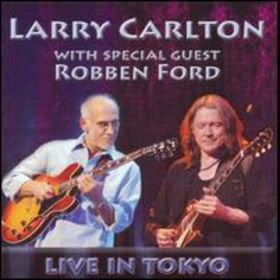
Larry Carlton - Larry Carlton Live in Tokyo with special guest Robben Ford - 2007 - Victor

Recorded live in Tokyo Japan September 2006. Astonishing performance and recording from two of the world's finest guitarists, featuring a superb rhythm section. The 8 track set features 6 instrumentals and 2 vocals from Robben Ford. Highlights of this blues, rock, jazz mesh include Carlton's "Rio Samba" and Ford's version of "Talk to You Daughter".

TRACKS

1. THAT ROAD/ LARRY CARLTON
2. BURNABLE/ LARRY CARLTON
3. COLD GOLD/ LARRY CARLTON
4. RIO SAMBA/ LARRY CARLTON
5. DERRICK'S BLUES/ LARRY CARLTON
6. TWO BAD/ LARRY CARLTON
7. TALK TO YOUR DAUGHTER/ ROBBEN FORD
8. TOO MUCH/ ROBBEN FORD

MUSICIANS

Larry Carlton(G),
Robben Ford(G),
Travis Carlton(B),
Jeff Babko(Kbd),
Toss Panos(Ds).

REVIEW

This disc was given to me by Larry himself after his concert at Sambucca Jazz Club in Atlanta, GA on May 22, 2007. The challenge is to review the disc on the merits of the disc and not let the concert influence me. The idea of two guitar legends, Carlton and Ford, together for a live collaboration, celebrating over thirty years of friendship is something remarkable in itself. Add to the mix, that between the two of them, the extent of their composing and recording credits would require a separate hard drive on this web site and you have some high expectations.
But this is Larry Carlton, and with him is Robben Ford, and there was never a doubt that it would be a great disc. "That Road" by Ford is a funky grooving number that let the two settle into each other. The rhythm section of Travis Carlton, Larry's son on bass and Toss Panos on drums held a tight pocket while Larry and Robben harmonized and played back and forth off each other, giving the listener the sense that this was going to be a case where one plus one equals more than three! Ford and Carlton's styles are very different but where they overlap is in their foundation in the blues, riffs bore the signature of each player. They really were playing together, comping and filling tightly. They were warming up!
"Burnable" is classic Carlton, it even starts with that LA funk groove that is so characteristic of Larry's composing. Again the rhythm section just put down the palette for Ford and Carlton to spread their colors over. Babko's work on the keys is ever present but never gets in the way of the delivery of the textures and styles that Ford and Carlton are exchanging. When they get funky, Babko is there to fill it up for them. "Cold Gold" starts off slow and melodic, a duet of guitar greats, their signature sounds overlayed. Then the soloing starts. And the completeness of their blues sensitivity is heard. Carlton's solo is powerful and crisp. When the hand off comes, it is clear that they are preaching to the choir, Ford, takes a completely different approach to the song and the changes, but in the end, their messages are the same. Great blues played by two of great guitarists of our times.
"Rio Samba" opens showcasing Travis' funky style. He rolls into this song with a tight funk groove setting the scene for some classic Carlton-style rambling. Babko's keys are an integral part of the theme of this one and really do keep the tune together. Ford and Carlton trade off leads and take you on a really fun ride. The diversity of these two players makes this disc a real experience to listen to. No two songs the same, and yet they share so much. Just like the composers and players, different in their treatment of the same themes. The overlap is indisputable, but the individuality is dominant.
On "Derrick's Blues", Ford delivery belies just how powerful this song is. Ford's treatment of the song, and the injection of Babko's solo to create the change of the mood is just great band work. The clarity and precision of the solo execution is why you buy this CD. Two masters of touch and technique. Just sit back and drink in the notes!
By "Two Bad" you start to feel the changes coming, and just when you think you know how Larry or Robben will treat the solos, they mix it up. Harmonizing, and starting and finishing each other's phrases. Its as if they feel what each other is feeling and just express it differently, but the energy is the same. Technique being the operative word in this piece. How they do what they do is as important as who is doing what! Its a master class led by two of the real masters. "Talk to your Daughters" is a Lenoir/Atkins composition that features Ford on vocals, and it is a fun romp through the blues. Lots of energy, lots of fun to listen to, you can tell they are now having fun with each other, collaborating, no jamming with each other. You are now hearing what these two love to do with the blues. So one plus one should equal two, but when those two are Carlton and Ford, the sky is the limit and you will not be disappointed. Great music, by great musicians. Thanks Larry, for a great disc, some great music and a great show! © Charles Vecoli Copyright ©1997 - 2007. All Rights Reserved. jazzreview.com® / jazzpreview.com®

Jimmy Barnes


jimmybarnes-liveunpluggedatthechapel2002


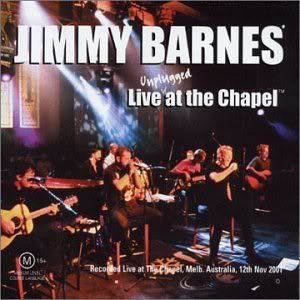
Jimmy Barnes - Live & Unplugged at the Chapel - 2002 - TMM

As a solo artist, Jimmy Barnes has scored seven number one records in Australia, putting him up in the same league as the Beatles, Madonna, the Rolling Stones and Rod Stewart. To illustrate the enormous success of the man, a staggering statistic is that a population of 20 million people has brought over 7 million Jimmy Barnes albums. This brilliant cd, a mixture of rock, soul and blues recorded just off Melbourne's trendy Chapel Street in 2001 brings you Jimmy Barnes, his trademark voice and the timeless quality of a remarkable back catalogue. Jimmy Barnes also teamed up with INXS with whom they scored a top twenty UK hit [#18] in 1991 with 'Good Times' from the film The Lost Boys.

TRACKS

1. Hound Dog
2. Going Down Alone
3. Ride The Night Away
4. Long Way To Go
5. Change Of Heart
6. Found A Love
7. I'd Die To Be With You Tonight
8. Something Is Wrong With My Baby
9. Flame Trees#10. Good Times
11. Khe Sanh
12. Don't Let Go
3. Cheap Wine
14. To Love Somebody
15. "Q and A" - Jimmy Style

BIO

As a solo artist Jimmy Barnes has scored seven number one records in Australia, putting him up in the same league as the Beatles, Madonna, the Rolling Stones, and Rod Stewart. Born in Glasgow, Scotland, his family emigrated to Adelaide in 1956 when Barnes was four. It was his older brother John's interest in music that inspired Jim to follow suit, eventually leading to him becoming lead singer of Cold Chisel, who emerged as Australia's most popular band of the '80s. While their rock/soul/blues fusion music was part of the band's appeal, a large part was also the stage presence of its raw-voiced singer, crouched with intensity as he sang/shouted into the microphone with every breath in his lungs. After 12 years, Cold Chisel gave their final performance in December 1983 and Barnes launched an immediate solo career, eclipsing Cold Chisel's record sales with six solo number one albums in a row.

Released in October 1984, the first Jimmy Barnes album Bodyswerve, was clearly the singer's attempt to grab Cold Chisel's audience and take them with him. Also keen to achieve the international status Cold Chisel was never able to grab, Barnes recorded extra tracks for the album's American release in Los Angeles and New York with session players Waddy Watchel, Billy Burnette, Charlie Sexton, Mick Fleetwood, members of Little Feat, and Journey's Jonathan Caine. Caine was also involved in writing the extra songs, including "Working Class Man," which became Jimmy Barnes' signature tune. Working Class Hero also became the title of the second Australian album, comprising the new tracks, plus remixed versions of Bodyswerve songs. The song "Working Class Man" was featured in Ronnie Howard's feature film Gung Ho, renamed after the Barnes song in Australia. While Jonathan Caine was impressed to the point where he thought about asking Barnes to become Journey's singer, the American album release on Geffen did not establish Barnes outside of Australia.

Back at home, he recorded the Easybeats' "Good Times" with INXS to help promote a nationalistic package tour featuring a bill of Australia-only artists. Barnes now divided his time on the road and in the studio between Australia and America, forming a songwriting partnership with Jim Vallence (Bryan Adams) for the album Freight Train Heart, produced by Jonathan Caine. A double live album, Barnstorming, followed, before Don Gehman (REM, John Mellencamp) produced Two Hearts at Barnes' home studio in rural Bowral in New South Wales. The singer's biggest selling album, Soul Deep, followed in November 1991, a tribute to his favorite soul/R&B performers of the '60s. Gehmen returned to produce the grunge-era Heat, followed by Flesh and Blood, an album characterized by guest appearances from other Australian artists. In the space of nine years, Barnes had recorded eight albums and toured almost constantly, not just to satisfy the singer's love of performing, but also to cater for his live-now pay-later lifestyle. In 1994, it all caught up with him. He was forced to sell his vast property to help pay unpaid taxes and took his family to live in France where he recorded 1995's Psyclone.

In 1997 the event Cold Chisel fans dreamt of eventuated, with the band reforming for the highly anticipated The Last Days of Summer album and tour. Barnes followed up with an 11th solo album, Love and Fear, in November 1999, peaking at number 16. During 2000, Barnes gave Don Gehman the mission of putting together a band of the best R&B players he knew back home in the United States. What followed became something of a pilgrimage for Barnes, a journey to the heart and home of the songs which shaped his tastes as a youngster, this time named Soul Deeper, and this time with musicians and singers who'd helped shape the real thing. To promote the album, Barnes brought the musicians on Soul Deeper to Australia for a national tour. © Ed Nimmervoll All Music Guide

5.7.07

Nucleus


nucleus-elasticrock1970


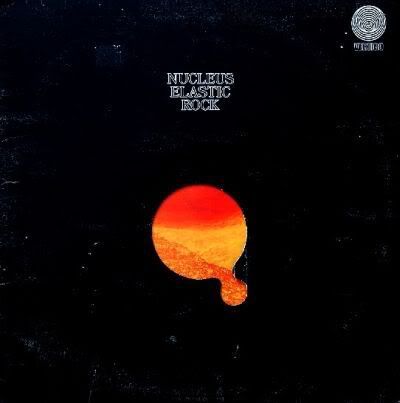
Nucleus - Elastic Rock - 1970 - Vertigo

Nucleus were one of the early British rock/fusion groups, taking their cue from the music of Miles Davis but tending more to the rock side. Technically brilliant playing on melodic and complex works make this a classic release. (320 bitrate).

TRACKS

1. 1916 (jenkins) (1:11)
2. Elastic Rock (Jenkins) (4:05)
3. Striation (Clyne/Spedding) (2:15)
4. Taranaki (Smith) (1:39)
5. Twisted Track (Brown/Spedding) (5:15)
6. Crude Blues, Pt.1 (Carr/Jenkins) (0:54)
7. Crude Blues, Pt. 2 (Carr) (2:36)
8. 1916 The Battle Of Boogaloo (Jenkins) (3:04)
9. Torrid Zone (Jenkins) (8:40)
10. Stonescape (Jenkins) (2:39)
11. Earth Mother (Carr/Clyne/Jenkins/Marshall/Smith/Spedding) (5:51)
12. Speaking For Myself, Personally, In My Own Opinion, I Think (Marshall) (0:54)
13. Persephones Jives (Carr) (2:15)

CREDITS

Ian Carr (Trumpet), Ian Carr (Flugelhorn), Chris Spedding (Bouzouki), Chris Spedding (Guitar), Roger Dean (Illustrations), Roger Dean (Cover Design), Nucleus (Main Performer), Jeff Clyne (Bass), Jeff Clyne (Bass (Electric)), Jeff Clyne (Guitar (Bass)), Karl Jenkins (Piano), Karl Jenkins (Oboe), Karl Jenkins (Piano (Electric)), Karl Jenkins (Sax (Baritone)), Karl Jenkins (Baritone), John Marshall (Percussion), John Marshall (Drums), Brian Smith (Flute), Brian Smith (Soprano), Brian Smith (Sax (Soprano)), Brian Smith (Sax (Tenor)), Pete King & His Orchestra & Chorus (Producer)

REVIEWS

This album is IMO a milestone in British jazz fusion. I was highly impressed after first listening to this album, after finding out that some of the members of NUCLEUS went off to form the new lineup(s) of SOFT MACHINE as the years went on. Both Karl Jenkins and Ian Carr are compositional masterminds. They also are excellent players and deserve much more attention than they get. Now on to a review of the album.

John Marshall's frantic drumming kicks off the fanfare to the album. This piece, "1916," really sets off the album nicely. Next, comes the excellent title track with a solid bass line and drumming with winds playing the melody. Chris Spedding's bluesy guitar solo is a standout in this composition. After this comes "Striation," a Clyne and Spedding collaboration, and "Taranaki," that are both much calmer and smoother than the previous tracks. "Taranaki" also features great trumpet and tenor parts.

"Twisted Track" comes next and is probably my favorite track on the whole album; it packs in so much emotion. The piece starts out very soothingly and gradually builds with various solos an duets by members of the group. By the end of it, everyone is joining in, and the piece ends just as it started. "Crude Blues Part 1" features an excellent oboe part by the multi-talented Jenkins. "Part 2" is similar to the title track and has great wind parts once again. Also, Jenkins gets another oboe solo in this one. He really shows off his playing skills.

"1916 (The Battle of Boogaloo)" features a steady bass line and great saxophone/trumpet (brass) call and response parts. It is probably one of the most famous tracks on the album, deservingly so. "Stonescape" continues on where "Boogaloo" left off; it is a solid piece, featuring an excellent solo by Carr. "Stonescape" has a smooth muted brass sound jazz listeners will most probably enjoy. The track "Earth Mother" brings back earlier recurring themes from the album, including another Jenkin's oboe solo. Next comes the ever-familiar drum solo (just listen to Soft Machine from "Fifth" or "Softs" if you don't know what I'm talking about) by John Marshall in "Speaking for Myself Personally, in My Own Opinion I Think." The album closes off with "Persephones Jive," a track that ends the album frantically, just as it began.

This album is highly recommended to fans of British fusion, especially latter-day Soft Machine fans who are interested in seeing what some of the members were doing before they joined SOFT MACHINE. This album would make a great addition to anyone's collection. It is a great starting point for anyone interested in getting in to NUCLEUS or the genre itself. 4.5 stars. © MeurglysIII © 2000 - 2007 rateyourmusic.com
A seminal early album from Ian Carr's legendary Nucleus group -- playing here in a version that includes Karl Jenkins and Brian Smith on reeds, and Chris Spedding on guitar. The band had a landmark sound that mixed progressive jazz and tight full-on rock fusion into a style that was sometimes funky, sometimes avant, and often pretty darn exciting! This album has lots of nice electric piano lines, and plenty of choppy sax parts that hit a nice groove in the manner that would later be taken up by a lot of European reed players. Tracks include "Torrid Zone", "Stonescape", "Striation", "1916 -- The Battle Of Boogaloo", "Persephones Jive", and "Earth Mother". © 1996-2007, Dusty Groove America, Inc.
When Carr brought together keyboardist/oboist Karl Jenkins, saxophonist/flautist Brian Smith, guitarist Chris Spedding, bassist Jeff Clyne and drummer John Marshall, established musicians all, to record Nucleus' first record, Elastic Rock , one doubts that he could have envisioned the impact the album would have, not only on the British scene, but on the international stage as well. A few short months after recording their first record they won the top award at the Montreux Jazz Festival and found themselves playing at the Village Gate in New York, to an audience who was wondering exactly what it was they were hearing. And if it weren't for a manager's greediness, Elastic Rock would have seen Stateside release, and the broader history of fusion might have been coloured a different way. But sadly that didn't happen and Nucleus, after an initial flurry of activity on the North American scene, ultimately returned to England where they maintained a successful career there and on the European continent, for the next ten years or so.
From the opening burst of Jenkins' “1916,” with its anthemic horn-line supported by Marshall's flurry of activity, it is clear that something new is happening. The album as a whole, while incorporating certain elements of rock rhythms, is a more relaxed affair than what was to come later. If a comparison must be made, then Miles' In a Silent Way is a precedent, although Carr claims not to have heard it at the time of recording, which just continues to reinforce the reality that advances in music come from many sources and usually at the same time. Like In a Silent Way , Carr chose to build side-long continuous suites of music, although there is less reliance on hypnotic groove and more on composed melodies, mostly from the pen of Jenkins, who would write the majority of Nucleus' first two records. And while there are some similarities between the trancelike groove of “Torrid Zone” and “Shhh/Peaceful,” there are differences as well. While “Shhh/Peaceful” would rest on a certain ambience for nearly an entire side, “Torrid Zone” would lead into “Stonescape,” a more conventional ballad, albeit played with a certain elasticity in time by Marshall. Segueing into “Earth Mother,” Jenkins delivers an oboe solo over a group improvisation that, as rocky as it gets, is still relatively subdued compared with their next album, We'll Talk About It Later , which was recorded eight months later in September '70 .© John Kelman © 2007 All About Jazz and/or contributing writers/visual artists. All rights reserved.
Britain's jazz scene embraced jazz-rock as soon as it was invented by Miles Davis. Formed in 1969 by trumpeter and flugelhornist Ian Carr (a veteran bebop musician), Nucleus were among the very first groups to fuse jazz and rock from the jazz perspective. Carr had been playing for almost ten years, first in the EmCee Five (featuring John McLaughlin on guitar) and then in the Rendell-Carr Group, which released five albums before 1969.
Except for the jittery, petulant, forceful eight-minute Torrid Zone, Nucleus' first album, Elastic Rock (Vertigo, 1970), was fragmented in brief vignettes that highlighted the group interplay without attempting any major statement. Ian Carr on trumpet and flugelhorn, Karl Jenkins on oboe and piano, Brian Smith on saxophone and flute, Chris Spedding on guitar and bouzouki, Jeff Clyne on bass and John Marshall on drums (both Marshall and Jenkins being ex-members of Graham Collier's ensemble), constituted one of the most skilled combos in the world, and each piece was mainly a display of their technical brilliance and of Carr's command of the melody (Elastic Rock, the sublime Earth Mother). Copyright © 1999 Piero Scaruffi www.scaruffi.com/vol2/nucleus.html#title
Elastic Rock on the new “progressive” Vertigo label, produced with the assistance of Peter King and Ronnie Scott Productions, was greeted with great critical acclaim and sold well for a jazz album. This may have been due to the fact that nothing like it had ever been heard before. It was truly iconoclastic. Featuring many of Jenkins’ compositions, Elastic Rock did not share the same territory as any other band either in jazz or rock. The album was both subtle and yet had a pronounced and deliberate blues/rock feel and in 1970 Nucleus won the award for top group when they represented the UK at the Montreux Jazz Festival. © http://bzptczve.wordpress.com/

BIO

Nucleus began its long jazz-rock journey in 1969, when it was originally formed by trumpeter Ian Carr. They attracted a following after a successful performance at the Montreux International Festival in 1970, which led to the critical success of albums Elastic Rock and We'll Talk About It Later. The other members consisted of saxophonist Karl Jenkins, drummer John Marshall, and guitarist Chris Spedding. Spedding split after the first two albums, but the rest of the lineup lasted until 1972, when Jenkins and Marshall both left to join Soft Machine. Belladonna was the first album with only Carr, and although he enlisted the help of guitarist Allan Holdsworth, the band eventually became a solo venture for his music. They finally broke up in the mid-'80s after several Carr-only albums. © Bradley Torreano, All Music Guide

Tab Benoit


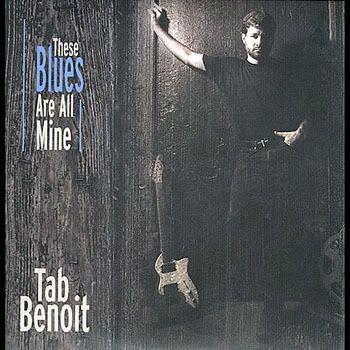
Tab Benoit - These Blues Are All Mine - 1999 - Vanguard

Great blues album heavily influenced by his Louisiana roots. A stylish and technically basic guitar player, Tab Benoit does not rely on demonic and flashy guitar solos to get his music across. His phrasing is superb and he plays from the heart. Check out his discography.

TRACKS

01. I'm Tired
02. Crosscut Saw
03. These Blues Are All Mine
04. Lights Are On But Nobody's Home
05. Raided That Joint
06. Crawfishin"
07. Mother Earth
08. Don't Lose Your Cool
09. Jambalaya
10. Twenty Nine Ways
11. Keep Yourself From Crying Too
12. Travelin' South
13. Bayou Boogie

MUSICIANS

Tab Benoit Primary Artist, Acoustic Guitar, Electric Guitar, Vocals, Primary Artist
Michael Bolotin Track Performer
Robbie Parrish Drums
Allyn Robinson Drums
David Lee Watson Bass
Marc Adams Organ, Piano
Rueben Williams Guitar

TECHNICAL CREDITS

Tab Benoit Producer
Andy Bradley Producer, Engineer
Denny Purcell Mastering
Art Tipaldi Liner Notes
Georgette Cartwright Creative Services Coordinator
Robert Hakalski CD Package Design
Ramon Morales Engineer

REVIEWS

When it comes to rocking the blues bayou style, guitarist/singer/songwriter Tab Benoit wins the cookin' contest. Maybe it's because his Louisiana blues dig mighty close to the Texas border. The late Lone Star guitar giant Albert Collins is obviously Benoit's man -- "Travelin' South," "Lights Are On But Nobody's Home," and "Don't Lose Your Cool" are among the Master of the Telecaster's signature tunes that Benoit covers here. The New Orleans-based blues stylist may let his fingers do most of the talking, but Benoit's becoming more comfortable singing these days. On an acoustic version of Memphis Slim's "Mother Earth," his languid southern voice comes off spiritualized without being self-conscious. Benoit's "These Blues Are All Mine" brings out the best in his vocalizing and picking. Notes flow hot and salty while he testifies to the loneliness of a long-term commitment to the blues. With this new release, Benoit has found a healthy balance playing fluff-free old school blues with just enough rock influences to keep the classroom alert, even riveted. When it comes to rocking the blues bayou style, guitarist/singer/songwriter Tab Benoit wins the cookin' contest. Maybe it's because his Louisiana blues dig mighty close to the Texas border. The late Lone Star guitar giant Albert Collins is obviously Benoit's man -- "Travelin' South," "Lights Are On But Nobody's Home," and "Don't Lose Your Cool" are among the Master of the Telecaster's signature tunes that Benoit covers here. The New Orleans-based blues stylist may let his fingers do most of the talking, but Benoit's becoming more comfortable singing these days. On an acoustic version of Memphis Slim's "Mother Earth," his languid southern voice comes off spiritualized without being self-conscious. Benoit's "These Blues Are All Mine" brings out the best in his vocalizing and picking. Notes flow hot and salty while he testifies to the loneliness of a long-term commitment to the blues. With this new release, Benoit has found a healthy balance playing fluff-free old school blues with just enough rock influences to keep the classroom alert, even riveted. © Roberta Penn © 1997-2007 Barnesandnoble.com llc

This is a strong statement by Tab Benoit announcing his true arrival; although he only wrote five of the 13 songs on this disc, he stakes a legitimate claim to all of them with some of his most inspired playing and singing ever. His backing group sounds great and keeps up with him over the entire disc. He is one of a handful of performers -- Tabby Thomas and Johnny Jenkins also manage this -- with that rare ability to combine aggressive blues with the rhythms and sounds of the dark standing waters and Spanish moss-draped trees of the Louisiana swamps. Listen to the spin he puts on the Hank Williams classic "Jambalaya." He injects just a tad more blues and zydeco seasoning to take the song to a different level without messing with the basic ingredients that made it a standard. He does some equally good and interesting things with songs from Albert Collins and Willie Dixon, among others. However, when he plays his own songs, he rips apart the room and leaves it all out there for us to see. Feel the anguish and pain that run rampant in the title cut, "These Blues Are All Mine." Neither his voice nor his guitar leave room for any doubt about how he is feeling. As tormented as he is in "These Blues," feel the joy of a life lived in the swamp that percolates through "Crawfishin'." Listen to him rave in "Bayou Boogie" -- this is one happy and satisfied man. This is definitely one hell of a keeper. © Bob Gottlieb All Music Guide

New Orleans-based blues guitarist Tab Benoit's gotten a bum rap over the years from certain pundits, who call him brilliant on other performers' albums but not so stellar on his own. His latest on Vanguard shows him coming into his own, with a punchy, slightly edgy, yet thoroughly rocking Crescent City R&B-laced, hard blues disc. The paper packaging (no jewel box) is minimalist and rough, a perfect foil to the music contained within, including covers of old chestnuts such as "Jambalaya," "Crosscut Saw," and "Twenty-Nine Ways," and some nice originals, such as the brooding opener "I'm Tired," the title tune, and "Crawfishin'," one those driving cajun blues that will get even the stodgiest joint jumping. Benoit's voice has developed some gritty character over the years, and goes well with his nonpareil blues guitar mastery. With workmanlike effort, he's slowly building a body of work that should keep the critics happy and the fans dancing along the Texas-Louisiana line. © Don Fluckinger www.bluesreviews.com/Reviews/benoit.html

BIO

Tab Benoit (born November 17, 1967 in Baton Rouge, Louisiana, United States) is a blues guitarist, musician and singer. He plays a style that is a combination of Swamp blues, Soul blues and Chicago blues. He plays Fender guitars and writes his own music compositions. Benoit graduated from Vandebilt Catholic High School in Houma, Louisiana in May, 1985. In 2003, he formed an organization promoting awareness of coastal wetlands preservation known as "Voice of the Wetlands." A guitar player since his teenage years, he hung out at the Blues Box, a music club and cultural center in Baton Rouge run by guitarist Tabby Thomas. Playing guitar alongside Thomas, Raful Neal, Henry Gray and other high-profile regulars at the club, Benoit learned the blues first-hand from a faculty of living blues legends. He formed a trio in 1987 and began playing clubs in Baton Rouge and New Orleans. He began touring other parts of the south two years later and started touring more of the United States in 1991- and he continues to this day. He is an avid fan of the New Orleans Saints. Tab is also featured in the current IMAX film, Hurricane on the Bayou.

2.7.07

Gryphon


gryphon-redqueen2gryphon3


Gryphon - Red Queen to Gryphon Three - 1974 - Transatlantic

An obscure but classic seventies prog rock album. Highly recommended by A.O.O.F.C


Side 1

1. Opening Move (9:42)
2. Second Spasm (8:15)

Side 2

3. Lament (10:45)
4. Checkmate (9:50)

Line-up/Musicians

- Richard Harvey / keyboards, recorders, Krumhörn
- Brian Gulland / bassoon, Krumhörns
- David Oberlé / drums, percussion, & tymps
- Graeme Taylor / guitars
- Philip Nestor / bass guitar
- Ernest Hart / organ
- Peter Redding / acoustic bass

BIO

Gryphon were a British progressive rock band of the 1970s, notable for their unusual sound and instrumentation. Multi-instrumentalist Richard Harvey and his fellow Royal Academy of Music graduate Brian Gulland, a woodwind player, began the group as an all-acoustic ensemble that mixed traditional English folk music with medieval and Renaissance influences. Shortly after this, the duo was joined by guitarist Graeme Taylor and Drummer/percussionist Dave Oberlé. After their self-titled debut, they expanded their sound to include electric guitars and keyboards as well as wind instruments, such as bassoons and krumhorns, not previously used in rock music. Gryphon's music often sounded as much like rural English folk or renaissance chansons as it did rock, at least on their early recordings. After their third album (Red Queen to Gryphon Three) and the subsequent tour as a supporting act for Yes, their instrumentation became more conventional and the use of non-standard instruments was reduced. Fans and critics generally regard Midnight Mushrumps and the all-instrumental Red Queen to Gryphon Three as their finest albums.
In 1974, the group's publicist Martin Lewis arranged for the band to be commissioned to write and record the music for a major stage production of Shakespeare's The Tempest at Britain's National Theatre directed by Sir Peter Hall. It opened at the historic Old Vic theatre in April 1974. The music the band wrote and recorded for the stage production inspired the 21-minute fantasia "Midnight Mushrumps" (named after a phrase mentioned in "The Tempest") which became the title track of their second album. Following the successful premiere of the play and acclaim for its music, Lewis arranged for Gryphon to give a Sunday evening concert at the Old Vic in July 1974 - the first-ever and up until now the only rock concert held at Britain's National Theatre. At the concert the band performed "Midnight Mushrumps". The concert was considered a major breakthrough for progressive rock music. Rumours abound that there are audio tapes of the fabled concert but none have yet surfaced. - (from Wikipedia).

REVIEWS

Red Queen To Gryphon Three was the third release by the English band Gryphon. Gryphon began as a medieval/folk/progressive band, and released their self-titled debut in 1973. They released two recordings in 1974, the much ballyhooed Midnight Mushrumps and their third album, reviewed here, Red Queen To Gryphon Three. The group initially produced fairly faithful adaptations of renaissance pieces and re-arranged early English folk music. An all acoustic band, they had a couple of full blown instrumental virtuosos on their hands, Richard Harvey on recorders and keyboard instruments, and Brian Gulland, who excelled on the early reed instrument the crumhorn, and its modern cousin, the bassoon. Initially, the two were joined by guitarist Graeme Taylor and percussionist/vocalist David Oberle. The release of Midnight Mushrumps would see the addition of bassist Philip Nestor, and a move toward electric, and quite eclectic progressive rock music, still heavily influenced by the ancient styles, but now incorporating elements of more standard English symphonic progressive rock, similar to Gentle Giant and Yes, and classical music, using influences of the late Romantic period composers
This release is an all instrumental concept album of sorts, a musical representation of a chess game, laid out in four compositions. The pieces are all fairly lengthy, and provide the band ample time to fully explore the themes laid out This is intelligent art rock, with the group producing a work that is absent most of the clichés of the genre. Their affinity for the electric sound they had only recently added is nothing short of amazing, and their sound is exciting and blends their previous acoustic focus well with their new synthesizers and electric guitars
The first track "Opening Move" starts with a Yes like barrage of Moog and speedy, Howe like licks on electric guitar. It morphs into a section reminiscent of "Starship Trooper" and just as quickly becomes a solo piano interlude, and then back to true progressive bombast. We will get a series of gentle interludes contrasted with electric generated pomp, and well developed themes that carry us through this number. Bassoon and crumhorn are used as well as some mind blowing lines on the recorder. Where many people can perform nice melodic work on the recorder, Richard Harvey really rips on this instrument. This tune ends with penetrating cathedral organ and rich lines from the bassoon.
"Second Spasm" opens as a medieval dance on recorders and acoustic guitar, and is contrasted with another passage of Yes like material, a section that might be looked at as similar to the single note lines played Howe and Squire in the beginning of "Heart Of The Sunrise." This tune again goes back and forth between passages of subdued acoustic dances and full on progressive instrumental firepower. David Oberle’s drumming is spare but full of pep and energy when called for.
"Lament," the third track begins with acoustic guitar and lovely bassoon and flute, eventually joined by tasteful, melodic electric guitar. The lush guitar sound leads into the second theme, with the vibrant bassoon taking the lead role. This work reminds me quite a bit of the early days of The Paul Winter Consort. We then get a reprise of the first theme as a bouncing rocking dance, and several more contrasts in dynamics, acoustic, electric, and contrasts in mood, studied and precise, and joyful. This work ends with a final triumphant theme graced with a restrained moog solo.
Track four, "Checkmate," begins sounding quite a bit like Gentle Giant with a busy, complicated flourish of keyboards and guitar, and a difficult counterpoint. This leads to a traditional Celtic sounding section contrasting the early musical melee. The playing on the pipes is especially noteworthy in this section, which segues into an acoustic piece featuring the bassoon and piano. Many changes of tone and tempo occur within the finale to this awesome CD, and the last few minutes of "Checkmate" allow Harvey to show some serious ability on his bank of keyboards, with impressive work on the clavinet and his Moog.
This album is an essential addition to any good collection of English progressive, and it is the best example of this odd, eclectic style of mid 70s British folk/prog.. Bands like The Strawbs and Steeleye Span produced some interesting blends of early English music and rock, but no one came anywhere close to the mastery of Gryphon, and Gryphon made their premiere musical statement with this release. Rating: 5/5 Review © Tom Karr, May 2004 © Copyright 2004 ProgressiveWorld.net/Tom Karr

Looking at the cover, one might assume this is yet another cheesy power metal album based on sub-Tolkien fantasy. But in fact, it is one of the greatest progressive rock albums ever. Anyone who claims to enjoy good music (that isn't pretentious) should be state-issued this album. This album is so cool it should be illegal to dislike it. That it exists in such an obscure state, is truly a travesty. I'm not sure if there will ever be another album like it. But let's disregard the hype and delve deeper- explanations are clearly in order.
With Red Queen to the Gryphon Three, the Medieval music (minus the vocals) that characterized the debut is successfully infused with a rock rhythm section and some wild prog rock keyboard jamming. The result? Total sonic bliss. The vocals are absent, and four epic (ten minute range) instrumentals dominate the album. The music is so varied and complex, that vocal layering would be nearly futile and awkward at best. The woodwind polyphony still dominates the music, but is now complimented and strengthened by drums, bass, and ever-present acoustic guitars. This album is very complex; not so much rhythmically as harmonically, with layers of melody lines sailing over rapidly changing rock structures. The music attacks from all sides, symphonic is scope and brilliantly executed.
The four songs that make up the album are expansive, but never redundant or boring. When I first heard this album, I was totally glued to my seat eagerly anticipating each new turn in the music. Despite the music's relative sophistication, it is never alienating or cold; it is warm and vital, positive and inspiring. Red Queen to the Gryphon Three is one of those albums that simply doesn't get old; like any fine vintage, the taste improves with age. Find at all costs. Review © James Slone 04/2000 www.ssmt-reviews.com/db/searchrev.php?artistID=511

1.7.07

Chariot


chariot-chariot1968


Chariot - Chariot - 1968 - National General

Chariot, evolved out of a 60's outfit called The Knack.They are thought to have been influenced by Cream.Their music is a mixture of psych/blues with a flower power flavour. English-born drummer Pug Baker went on to play with a number of minor bands, such as the RCA-signed Rocking Horse, and Waves, a group that enjoyed a short tenure with Epic. Baker is still drumming, and is currently playing with southern rockers Ghost Riders. It is very difficult o find any info on Michael Kaplan who composed all songs on the album.He was also a good lead guitarist. A.O.O.F.C would love to get more info on this band. Please post.

TRACKS:

01. Yolanda Jones
02. You Let Me Love You
03. Gamblin' Man
04. The War Is Over
05. Home Wreckin' Mama
06. Hey People
07. Variety Woman
08. Got To Be A Lover
09. Poor Man Blues
All tracks written by Michael Kaplan

BAND

Michael Kaplan - Rhythm, Lead Guitar & Lead Vocals
Pug Baker - Drums.
Larry Gould - Bass & Lead Vocals

George Harrison


georgeharrison-bewareofdarkness


George Harrison - Beware Of Darkness (Outtakes & Sessions) - Year Of Release ? - Label ?


This is a great bootleg album featuring alternate versions, and unreleased material recorded for the "All Things Must Pass" album.. This is high quality stuff. Any of these songs could have easily been on the album. There is something very soothing and calming about Harrison's music that really comes out here. This is the kind of music that will never sound dated. Has anybody any info on musicians, label, date of release?