A.O.O.F.C
recommends
Mizar6

babydancing


Get this crazy baby off my head!

18.4.10

Ian Carr


Photobucket

Ian Carr - Old Heartland - 1988 - MMC Recordings Ltd

The late great Ian Carr was a self-taught trumpeter who, as well as being a magnificent composer and musician, was among other things, a teacher, campaigner, biographer, journalist and a man who changed the course of jazz in the UK. He stripped jazz of it's elitist reputation, and with the great jazz fusion band, Nucleus, he gave jazz back to the people. The first half of the album is the four-part classical composition, "Northumbrian Sketches", for jazz ensemble and string orchestra, a composition solely by Ian Carr with guest musicians from the Kreisler String Orchestra. The rest of the album is performed by a Nucleus line-up of Ian Carr, Phil Todd, Mark Wood, Geoff Castle, Dill Katz, and John Marshall. "Old Heartland" received global acclaim and back in '88, the late, great Miles Davis asked for a copy of this album. Search this blog for more Ian Carr/Nucleus related recordings

TRACKS

1. Northumbrian Sketches Part 1: Open Country
2. Northumbrian Sketches Part 2: Interiors
3. Northumbrian Sketches Part 3: Disjunctive Boogie
4. Northumbrian Sketches Part 4: Spirit of Place
5. Full Fathom Five
6. Old Heartland
7. Things Past

All music composed by Ian Carr

MUSICIANS

Ian Carr / trumpet, amplified trumpet, flugelhorn, electric piano
Steve Berry, Mo Foster, Dill Katz / bass
Geoff Castle / Fender Rhodes & Yamaha electric pianos, synthesizers
Mark Wood / keyboards
John Marshall / drums
Phil Todd / wind
Mark Davies, Rachel Maguire, Robert Woollard / cello [from Kreisler String Orchestra]
Jub / double bass [from Kreisler String Orchestra]
Elspeth Cowey, Helen Kamminga , John Metcalfe , Mairi Campbell - Viola Abigail Brown, Anne Solomon, CB, Hilary Sturt, Kathy Shave, Louisa Fuller, Mark Pharoah, Michael Thomas, Richard Koster, Sonia Slany / violin [from Kreisler String Orchestra]

17.4.10

Pacific Gas & Electric


aoofc


Pacific Gas & Electric - Get It On [The Kent Records Sessions (Bonus Tracks)] - 2008 - Big Beat Records

The original Pacific Gas & Electric "Get It On" LP was released on Kent Records in 1968. The album was reissued on CD in 2008 by Big Beat Records entitled "Get It On The Kent Record Sessions", which featured the original album, and nine bonus tracks of alternate takes. The post here contains those nine extra tracks only
Pacific Gas and Electric were a great late sixties/early seventies dynamic R&B/soul blues band. The late Charlie Allen, with his gritty vocals added drive and excitement to the band, and Glenn Schwartz was a terrific guitarist. A Shame there's not that much recorded output from PG&E, but quality is always better than quantity. Check out the original "Get It On" album @ PG&E/GIO and the band's "Live 'N' Kicking at Lexington" album can be found @ PG&E/LAX Please read what the great bassist Brent Block has to say about Pacific Gas & Electric's ex-guitarist, and founder Tom Marshall HERE


TRACKS / COMPOSERS

9. My Sweet Baby - (Take 6, alternate take) *
10. Dirty Mistreater - (Take 2, alternate take) - Charlie Allen, F. Cook, J. Hill
11. Wade in the Water - (undubbed version alternate take) - Trad.
12. Cry, Cry, Cry - (take 2 alternate take) - Deadric Malone
13. Stormy Times - (Take 9, alternate take) - Brent Block
14. Long Handled Shovel - (Take 8, alternate take) - Allen, Charlie/Brent Block/Frank Cook/Marshall, Tom/Glenn Schwartz
15. Jelly, Jelly - (Take 1, alternate take) - Eckstine, William/Earl Hines
16. Hunter, The - (Take 1, alternate take) - Steve Cropper/Donald "Duck" Dunn/Jackson, Al Jr./Booker T. Jones/Wells, Carl
17. Blues Chant - (Take 2, alternate take)

* [ It has been said that the track "My Sweet Baby" on the "Get It On" CD does not sound like Charlie Allen's vocals. According to drummer, Frank Cook, Freddie DeMann heard a few young guys singing one night and was interested in the guys' recording potential. Freddie DeMann called some musicians and formed a makeshift studio band. One of the musicians is definitely PG&E's drummer, Frank Cook. Frank can't remember the other singers names. He may have never been told. Although it's not strictly a genuine "PG&E" recording, it's a good song, and an interesting piece of rock music history ] N.B: The preceding article may not apply to "My Sweet Baby" on this CD issue, as the track is a 6th alternate take. Any more info would be appreciated on this (A.O.O.F.C)

BAND

Glenn Schwartz, Tom Marshall - guitar
Brent Block - bass
Joe Sample - organ
Frank Cook - drums
Charlie Allen RIP - vocals

BIO (Wikipedia)

Pacific Gas & Electric was an American rock band, best known for the song "Are You Ready?" released in 1970. The band's history dates from 1967 in Los Angeles. Self-taught guitarist Tom Marshall met bassist Brent Block at a party thrown by Block's former art teacher and formed a band then named "Pacific Gas and Electric Blues Band". It was one of the first multiracial bands to be part of the Los Angeles music scene. An early member was Charlie Allen (May 1, 1942 - May 7, 1990), a drummer from San Francisco, whose vocal abilities were so good that he moved from drums to lead singer, and was replaced on drums by Canned Heat's former drummer, Frank Cook, who had earlier signed to manage the band. In 1968, the band name was shortened to "Pacific Gas & Electric", and included Allen, Cook, Marshall, Block, and guitarist Glenn Schwartz (also of James Gang and All Saved Freak Band). They released their first album, Get It On, that year on the Power record label (it was subsequently released on Big Orange, Kent and United Superior as well). Although it only reached #159 on the album charts, someone at Columbia Records was listening, as they signed the band to a recording contract shortly after their appearance at the Miami Pop Festival in December of 1968. The next album, and the first released by Columbia, was simply called Pacific Gas and Electric (1969). However, it was the next release, Are You Ready, that included their first mainstream hit. The title track reached #14 in the summer of 1970, and featured the backing vocals of The Blackberries. Wholesale changes were in store for the group after recording the Are You Ready album. After a serious car accident, Cook was replaced on drums by Ron Woods, and he stayed on as manager. Schwartz announced his conversion to Christianity onstage during a concert and then later joined the All Saved Freak Band. Marshall also left, and the two were replaced by Frank Petricca on bass and Ken Utterback on guitar, with Brent Block moving to rhythm guitar from bass. This is the line-up that toured in support of Are You Ready. This version of the band recorded a self-titled album in 1971 (minus Block, who had left the band in late 1970), adding Jerry Aiello on keyboards, trumpet player Stanley Abernathy, sax players Alfred Galagos and Virgil Gonsalves, and percussionist Joe LaLa. At the request of the utility company sharing the same name, the band name was shortened to "P G & E". The band did countless concerts, often appearing with other big musical acts of the era. At one P G & E show, writer and film producer Lawrence Schiller filmed his documentary, The Lexington Experience. Disagreements with the owners to the rights to the music caused the film to be shelved after only a few showings, and the only copies known to exist are in Schiller's vault. They made more movie history when they appeared in, and provided music to, the Otto Preminger film Tell Me That You Love Me, Junie Moon, starring Liza Minnelli. Their song "Staggolee" was also featured in the Quentin Tarantino film Death Proof. After 1972, the group's line-up became unstable, resembling more of an Allen solo project. One more album was forthcoming: ...Starring Charlie Allen in 1973 on the Dunhill label, featuring Allen and a host of studio musicians.

15.4.10

Ian Carr's Nucleus


i.carrsnucleus.roots73

Ian Carr's Nucleus - Roots - 1973 - Vertigo

The late Ian Carr's innovative bass lines are still sampled by bass'n'drum record producers today. Ian Carr was a pioneer of British jazz fusion. Search this blog for more Ian Carr/Nucleus releases, and find out more about this giant of jazz fusion, and the legendary Nucleus. "Roots" is just one of Nucleus' classic recordings VHR by A.O.O.F.C

TRACKS / COMPOSERS

A1 Roots - Ian Carr 9:21
A2 Images - Ian Carr 5:13
A3 Caliban - Ian Carr 4:33

B1 Whapatiti - Brian Smith 3:20
B2 Capricorn - Brian Smith 4:01
B3 Odokamona - Brian Smith 3:25
B4 Southern Roots And Celebration - Dave MacRae 7:44

MUSICIANS

Guitar - Jocelyn Pitchen
Bass [Electric] - Roger Sutton
Piano - Dave MacRae
Drums - Clive Thacker
Percussion - Aureo de Souza
Saxophone [Tenor, Soprano], Flute, Flute [Bamboo] - Brian Smith
Trumpet - Ian Carr
Vocals - Joy Yates

Denny Laine


d.laine-hometowngirls85

Denny Laine - Hometown Girls - 1985 - President

For a guy who was a member of The Moody Blues, it is amazing that the British guitarist, vocalist, and songwriter never received more credit for his work, and that includes his stint with Wings. He released many solo albums, most of which are now deleted. His solo works sold very poorly, and most are now out of print, even though many of them contain quality music. Denny has never been associated with hard or progressive rock, even though many of his albums contain some of these elements. "Hometown Girls" is by no means a great album, but it has it's moments. It has a definite 80's flavour. However during the 80's, it was hard for many "serious" musicians not to be influenced by the musical zeitgeist. Duran Duran, and Prince were making the headlines. New Wave and Synthpop bands were also popular. Denny Laine was caught up in the middle of all this, and naturally he absorbed some of these musical influences. However, "Hometown Girls" manages to retain enough of Denny's earlier musical influences, to make the album worthwhile. This album is forgotten now. Try and find a comprehensive review of this album anywhere ! But it is an above average album from one of the great "British invaders" who took up guitar, because he loved the great jazz guitarist, Django Reinhardt !. There is more to Denny Laine than Wings, or "Go Now". Denny's "Japanese Tears" is a very underrated album, but like most of Denny's albums, is out of print, and hard to obtain. If you are interested in any Denny Laine solo albums, please contact this blog

TRACKS

A SIDE

1."Cruisin'"
2."Foggy Morning"
3."Mistral" (Laine, David Smyth, Mark Eagleton)
4."Stay Away"
5."Home Town Girls"

B SIDE

1."Red Sky"
2."I Wish You Could Love"
3."Twist of Fate" (Laine, Eddie Hardin)
4."Street" (Laine, David Smyth, Mark Eagleton)
5."Blue Nights"

All songs composed by Denny Laine, except where stated

MUSICIANS

Denny Laine - Guitar & Vocals
Mike Piggot - Guitar, Violin
Eddie Hardin - Keyboards
Earl Lewis, Joe Hubbard - Bass
Lynn Sheppard - Bass, Vocals
Lindsay Bridgwater - Keyboards
Zak Starkey, Steve Holly, Peter Boita, Neil Wilkinson - Drums
Mel Collins - Saxophone
Jo Jo Laine - Vocals
Maggie Bell - Vocals on "Street"

BIO (WIKI)

Denny Laine (born Brian Frederick Arthur Hines, 29 October 1944, Holcombe Road, Tyseley, Birmingham) is an English songwriter and multi-instrumentalist, best known for his roles as former guitarist and lead singer of The Moody Blues and, later, co-founder (with Paul McCartney) of Wings. Laine was the only musician in Wings, along with Paul and Linda McCartney, who did not quit. Laine joined Wings in 1971 for their album Wild Life and stayed until 1980, when Wings broke up. Denny Laine is of Romani descent, was educated at Yardley Grammar School in Birmingham, and took up the guitar as a boy under the influence of Gypsy jazz (Jazz manouche) legend Django Reinhardt; he had his first solo performance as a musician at the age of twelve and began his career as a professional musician fronting Denny & The Diplomats, which also included future The Move and Electric Light Orchestra drummer Bev Bevan. In 1964, Laine left The Diplomats to join Mike Pinder in The Moody Blues and sang their first big hit, "Go Now"; other early highlights included "From The Bottom Of My Heart", "Can't Nobody Love You" and the harmonica-ripping "Bye Bye Bird". However, Denny's tenure with the MB's was short-lived and, after a number of comparative failures, Laine quit the band in August 1966 (the last record issued by The Moody Blues that featured Laine was "Life's Not Life"/"He Can Win" in January 1967, but the October 1966 "Boulevard De La Madeleine" single looked ahead to the fancier sounds for which The Moody Blues would later become famous). After leaving The Moody Blues, he formed The Electric String Band, which featured Denny (guitar, vocals), Trevor Burton (guitar, another former member of The Move) and Viv Prince (drums), also featuring electrified strings in a format not dissimilar to what Electric Light Orchestra would later attempt. They made two singles, "Say You Don't Mind / Ask The People" (Apr 1967, Deram) and "Too Much In Love / Catherine's Wheel" (Jan 1968, Deram); and, in June 1967, they shared a bill with The Jimi Hendrix Experience and Procol Harum at the Saville Theatre in London. However, national attention was not to be, and the pioneering Electric String Band broke up. (There was apparently a third single recorded called "Why Did You Come?". Why it never released is unknown, but there have been rumours that the finished track - and probably the B side as well - was sent by post to Decca and was lost.) Laine and Burton then went on to the band Balls from 1969 until the band's breakup in 1971, with both also taking time to play in Ginger Baker's Air Force in 1970. (Only one single was issued by Balls; "Fight For My Country" / "Janie, Slow Down" on UK Wizard Records. Strangely, the top side was re-edited and reissued on UK Wizard and issued in the US on Epic under the name of Trevor Burton, which was odd since Laine and Burton shared lead vocals on the B side. The single was reissued again as B.L.W. as "Live In The Mountains" for a small Pye distributed label. There was supposed to have been a Balls album recorded, but it has never seen the light of day). Laine's 1967 song "Say You Don't Mind" was a hit when recorded in 1972 by ex-Zombie, Colin Blunstone. In 1971, Denny joined Paul McCartney to found the group known as Wings, and would stay with them for a full ten years until they officially disbanded in 1981; Denny provided lead & rhythm guitars, backing vocals, keyboards, bass, writing and co-writing skills, as well as being a solid solo performer. Together with Paul and his wife, Linda, they formed the nucleus of the band, being called that "strange, 3-winged beast". It was with Wings that Denny enjoyed the biggest commercial and critical successes of his career, including co-writing the smash hit "Mull of Kintyre". In January 1980, McCartney was arrested for possession of marijuana upon arrival at an airport for a tour in Japan. The tour was cancelled. Wings recorded through the year on new tracks as well as tracks still in the vaults, but a press release by Paul in early 1981 officially announced that Wings had broken up. The new tracks ended up on Paul's next two solo albums, and Laine's relationship with McCartney soured (speculation also has it that financial matters were close to the heart of this dissolution, similar to the McCartney/Jackson partnership). The title track of Denny's first solo album after Wings, called "Japanese Tears", appeared to be a visible attack on McCartney much like John Lennon's "How Do You Sleep?" in 1971; however, closer inspection to the lyrics shows that it more likely tells the tongue-in-cheek story of a Japanese fan's disappointment after Wings' tour got cancelled (or possibly even tears of excitement at Wings' arrival in Japan in the first place). In 1986 Denny played at the Birmingham Heart Beat Charity Concert 1986 which was a very special day,raising money for the Birmingham Children`s Hospital. Denny filed for bankruptcy in the mid-80s after selling his lucrative co-publishing rights to "Mull of Kintyre" to co-author McCartney. However, he has continued to record music at a prolific rate and has appeared at Beatles conventions and on tributes to both The Beatles and Wings. He is currently working on an autobiography. He was briefly married to Jo Jo Laine (13 July 1953 — 29 October 2006), with whom he had a son, Laine Hines, and a daughter, Heidi Hines. He has three other children from other relationships: Lucianne Grant, Damian James, and Ainsley Laine-Adams. His current wife is Rosha.

MORE ABOUT DENNY LAINE

For a few months at the height of the British invasion, Denny Laine was one of the most recognizable voices on the entire British music scene. As the lead singer on the Moody Blues' recording of "Go Now" -- a worldwide multi-million seller -- he stood out in a large pack, and did so splendidly. His soulful, agonized lead vocal performance, coupled with Mike Pinder's chiming piano, proved irresistable on the radio. Within a year, however, the band fell by the wayside. Denny Laine was born Brian Hines and grew up in Birmingham, England. As a boy he took up the guitar, not under the influence of Chuck Berry or Buddy Holly, or even Scotty Moore, but rather jazz legend Django Reinhardt. His first band of any significance was Denny and the Diplomats, formed in Birmingham in the early '60s. The group's line-up also included future Move and Electric Light Orchestra drummer Bev Bevan and guitarist-singer Roy Wood. By 1964, Laine had abandoned Denny & the Diplomats and -- with four members of the city's other top bands -- formed the group that became the Moody Blues. Laine's tenure with the band was highlighted by one monster hit ("Go Now"), a brace of superb R&B-styled sides ("From The Bottom of My Heart," "Lose Your Money," etc.), and a string of commercial failures that left the band languishing by the end of 1965. Laine exited the group, to be replaced by Justin Hayward, whereupon the reconstituted Moody Blues adopted an increasingly adventurous sound that ended up making them the premiere progressive rock band of the late '60s. Ironically, Laine himself went in a similar direction with his next major project, the Denny Laine String Band, an electric psychedelic outfit that featured an amplified violin and cello, remarkably similar in many ways to the configuration that the Electric Light Orchestra would adopt more successfully three years later. The Electric String Band failed to attract serious public attention, despite a lot of good press and enthusiastic concert reviews. Laine's next major gig was as a member of Ginger Baker's Air Force, a big-band rock outfit that was a partial offshoot of Blind Faith. The group attracted enormous amounts of press attention on both sides of the Atlantic, played some good shows in England, and then embarked on an American tour that collapsed almost immediately through lack of ticket sales. Laine was the band's lead guitarist and principal vocalist and even had a featured blues spot in their sets. Laine was next heard from in 1971, when Paul McCartney announced that he was forming his first permanent band since exiting the Beatles. The group, christened Wings, was McCartney (joined by his wife Linda McCartney) on bass, guitar, piano, and vocals, with Laine at the core on guitar, bass, and vocals. In a 1980s interview, Laine indicated that he and McCartney got along well, not only because they came out of similar music backgrounds but also because each of them had lost control of bands they'd helped to found. Wings got off to a rocky start with an album called Wild Life, which wasn't really that bad but was mercilessly criticized by reviewers, who pounced on anything that didn't meet their expectations of Beatles-like perfection and importance. Beginning with Red Rose Speedway, however, they began winning the hearts of listeners and the minds of critics. By 1976, with Wings At The Speed of Sound, they'd become one of the top-selling acts of the decade, and the tour that followed was a success of monumental proportions, at least as far as ticket sales were concerned. Wings was, along with ABBA and Led Zeppelin, one of those money acts that seemed to generate tens of millions of ticket sales around the world and reams of press copy with every note they played and utterance that they pronounced. Laine wasn't quite an ex-Beatle, but as the member closest to McCartney (other than his wife), he was the most recognizable member of the band who wasn't a former Beatle. He even got a solo spot during concerts on their "Wings Over America" tour on which he sang and played several of the songs with which he was associated (most notably "Go Now") and a few covers that showcased his talents. Laine had a falling out with the McCartneys at the close of the 1970s, as Wings itself collapsed, amid myriad personal and personnel problems. He recorded several solo albums and was a featured guest at some Beatles conventions, but retained only a fraction of his visibility. He re-emerged in the late '90s with a tribute album to McCartney, and has been the subject of many CD reissues spotlighting odd solo cuts from his post-Wings and pre-Ginger Baker's Air Force period. Laine will likely never achieve the stardom that his career seemed to point toward when he cut "Go Now" in the mid-'60s. On the other hand though, he has played enough interesting and inspired music to make him a recognizable name to two generations of rock & roll fans, and one of the more deservedly enduring alumni from the original British invasion. © Bruce Eder, All Music Guide

Nucleus


nucleus.alleycat75


Nucleus - Alley Cat - 1975 - Vertigo

Ian Carr formed Nucleus in October 1969 to enable individual members to express themselves as fully as possible and explore different ways of grooving. The band, which has always been based in London, started with Ian (trumpet/flugelhorn), Karl Jenkins (piano, baritone, oboe), Brian Smith (saxes, flute), Bernie Holland (guitar), Jeff Clyne (bass, bass guitar) and John Marshall (drums)" [Source: Melody Maker Factfinder Series, 19 April 1975, p.48]

Formed in September 1969, Nucleus were an immediate and explosive success and in 1970 appeared at two of the world's most prestigious jazz festivals at Newport and Montreux. The band were inspired to some extent by the contemporary electrified experiments of Miles Davis, but mostly by Carr's wide-ranging ideas about exotic and non-Western improvisation and rhythmic patterns. These he combined with his own jazz improvisation and the sort of ostinato bass patterns brought into the rock field by Davis acolytes such as Herbie Hancock. It was Davis, however, who was the pre-eminent influence on Carr's work and Carr became one of the world's leading scholars on the subject of Davis and his music. Over the years Nucleus drew in some of the best musicians from the British jazz scene, including John Marshall, Karl Jenkins, Brian Smith, Jeff Clyne, Chris Spedding, Harry Beckett, Tony Coe and Ron Mathewson. Nucleus finally disbanded in the late Eighties. © Steve Voce, © independent.co.uk
This is a another great album from the legendary jazz fusion band, Nucleus. The late, great trumpeter Ian Carr was one of the greatest, and most influential musicians in British jazz. He played some ground-breaking performances with the Rendell-Carr Quintet and Nucleus, and he provided the inspiration for many world-class musicians. He spearheaded a huge revival in modern jazz music in the 1970s, and brought it to the people. This is the mid seventies Nucleus at their very best. Every musician on this recording is brilliant. This is complex, energetic, dynamic, and even melodic jazz-rock fusion brilliantly executed by this great band. Ian died on 25 February 2009, aged 75. Thankfully, his wonderful music and his unconquerable jazz soul lives on. Ian Carr's Nucleus' "Out Of The Long Dark" album is @ ICAR/NUCL/OOTLD The band's "Nucleus UK Tour 76" is @ NUCL/UKT76 Nucleus' "Under The Sun" album is @ ICAR/NUCL/UTS The band's great "Hemispheres" recording is located @ NUCL/HEMISP and Ian Carr with Nucleus' "Labyrinth" album is located @ ICAR/NUCL/LBYTH

TRACKS / COMPOSERS

1. Phaideaux Corner - Roger Sutton
2. Alleycat - Ian Carr
3. Splat - Ian Carr
4. You Can't Be Sure - Ian Carr, Ken Shaw, Roger Sutton
5. Nosegay - Bob Bertles

MUSICIANS

Ian Carr -Trumpet, Flugelhorn, Synth.
Ken Shaw - Guitar
Roger Sutton - Bass
Geoff Castle - Keyboards, Moog Synth.
Roger Sellers - Drums, Percussion, Timpani
Trevor Tomkins - Percussion on Tracks 1-3
Bob Bertles - Alto, Baritone, & Soprano Saxophone, Flute

SHORT NUCLEUS BIO

Nucleus began its long jazz-rock journey in 1969, when it was originally formed by trumpeter Ian Carr. They attracted a following after a successful performance at the Montreux International Festival in 1970, which led to the critical success of albums Elastic Rock and We'll Talk About It Later. The other members consisted of saxophonist Karl Jenkins, drummer John Marshall, and guitarist Chris Spedding. Spedding split after the first two albums, but the rest of the lineup lasted until 1972, when Jenkins and Marshall both left to join Soft Machine. Belladonna was the first album with only Carr, and although he enlisted the help of guitarist Allan Holdsworth, the band eventually became a solo venture for his music. They finally broke up in the mid-'80s after several Carr-only albums. © Bradley Torreano, allmusic.com


i.carr&nucleus75

SHORT IAN CARR & NUCLEUS BIO

Ian Carr has been on the cutting edge of the British jazz scene for nearly four decades. Self-trained as a musician, Carr played an important role in the development of jazz-rock fusion, playing with John McLaughlin in the early '60s, forming one of England's first electronic jazz-rock fusion groups, Nucleus, in 1969 and playing with the international band the United Jazz Rock Ensemble, since 1975. In 1982, Carr received a Calabria award in southern Italy for Outstanding Contribution in the Field of Jazz. Wire Magazine presented him a special award for services to British jazz in 1987. Carr has been equally influential as a music journalist and educator. The co-author of a jazz encyclopedia, The Essential Companion, Carr was also the author of Music Outside, an examination of contemporary British jazz published in 1973; Miles Davis: The Definitive Biography, published in 1982; and Keith Jarrett: The Man and His Music, published in 1991. Since 1992, Carr has written a monthly column for BBC Music Magazine. Carr is an associate professor at the Guildhall School of Music and Dance and lectures weekly on jazz history. Born in Scotland and raised in England, Carr thought little of a career in music until he was nearly 30 years old. Educated at King's College in Newcastle-Upon-Tyne, where he studied English literature, Carr served in the Army in the late '50s. Shortly after his discharge, he formed a band, the EmCee Five, with his brother Mike and John McLaughlin. Carr remained with the band for two years, leaving to form the Rendell-Carr Group with saxophonist Don Rendell in 1962. During the seven years he worked with Rendell, Carr helped the band record five albums. In September 1969, Carr helped form the groundbreaking fusion band Nucleus. The group attracted international acclaim when it took the top prize in a competition at the Montreaux International Festival in 1970. Carr continued to play with Nucleus until 1989 when he left to tour the United Kingdom and Europe as a soloist on electric trumpet with an Anglo-American orchestra led by American composer George Russell. Old Heartland was recorded with the Kreisler String Orchestra in 1988 while Sounds and Sweet Airs was recorded with organist John Taylor in 1992. © Craig Harris, allmusic.com

IAN CARR BIO (WIKI)

Ian Carr (21 April 1933 – 25 February 2009) was a Scottish jazz musician, composer, writer, and educator. Carr was born in Dumfries, Scotland, the elder brother of Mike Carr. From 1952 to 1956, he went to King's College, now Newcastle University, where he read English Literature, followed by a diploma in education. At the age of seventeen Carr started to teach himself trumpet. After university he joined his brother in a Newcastle band, the EmCee Five, from 1960 to 1962, before moving to London, where he became co-leader with Don Rendell of the Rendell–Carr quintet (1963–1969). In its six years, the group (including pianist Michael Garrick, bassist Dave Green, and drummer Trevor Tomkins) made five albums for EMI – all of which have been re-issued – and performed internationally. After leaving the quintet, Carr went on to form the ground-breaking jazz-rock band Nucleus. This led to the release of twelve albums (some under the band's name, some under Carr's), and a successful international career. In their first year they won first prize at the Montreux Jazz Festival, released their first album (Elastic Rock), and performed at both the Newport Jazz Festival and the Village Gate jazz club. He also played with the United Jazz and Rock Ensemble since 1975. Carr worked as a session musician in non-jazz contexts, with Nico, No-Man, Faultline, and others. He also doubled up on flugelhorn. Apart from writing a regular column for the BBC Music Magazine, Carr wrote biographies of the jazz musicians Keith Jarrett and Miles Davis. He was also the co-author of the reference work The Rough Guide to Jazz which has passed through four editions from 1994 (originally Jazz, The Essential Companion, 1988). In addition he contributed sleeve notes for the albums of other musicians (e.g. Indo-Jazz Fusions by Joe Harriott and John Mayer). In 1987, he was appointed associate professor at the Guildhall School of Music and Drama in London, where he taught composition and performance, especially improvisation and was founder of the jazz workshop at the Interchange arts scheme, where pianist Julian Joseph, amongst others, was one of his students.

NUCLEUS BIO (WIKI)

Nucleus were a pioneering jazz-rock band from Britain who continued in different forms from 1969 to 1985. In their first year they won first prize at the Montreux Jazz Festival, released the album Elastic Rock, an essential creation in the crystallization of a new musical expression, Jazz fusion, and performed both at the Newport Jazz Festival and the Village Gate jazz club. They were led by Ian Carr, who had been in the Rendell-Carr Quintet during the mid and late 1960s, and was a respected figure in British jazz for more than 40 years. Their jazz-based music evolved from an early sound incorporating elements of progressive and psychedelic rock towards a funkier sound in the mid and late 1970s. Nucleus' first lineup was leader and trumpeter Ian Carr, keyboardist/oboist Karl Jenkins, saxophonist/flautist Brian Smith, guitarist Chris Spedding, bassist Jeff Clyne and drummer John Marshall. By their third album, the band had expanded to include trumpeters Kenny Wheeler and Harry Beckett, saxophonist Tony Roberts, bassist Ron Mathewson, percussionist Chris Karan and Keith Winter on VCS3 synthesizer. Dave MacRae joined soon after for several albums.Over the years the band has seen many members: Trumpet & flugelhorn: Ian Carr, Kenny Wheeler, Harry Beckett, , Chris Batchelor: Tenor sax, soprano sax, flute: Brian Smith, Bob Bertles, Phil Todd, Tim Whitehead: Clarinet, bass clarinet, tenor sax: Tony Roberts, Tony Coe: Baritone sax, oboe, piano, electric piano: Karl Jenkins: Piano and electric piano: Dave MacRae, Gordon Beck, Geoff Castle: Guitar: Chris Spedding, Allan Holdsworth, Jocelyn Pitchen, Ray Russell, Ken Shaw, Mark Wood: Bass guitar: Jeff Clyne, Ron Mathewson, Roy Babbington, Roger Sutton, Billy Kristian, Mo Foster, Dill Katz, Rob Statham Drums: John Marshall, Clive Thacker, Tony Levin, Bryan Spring, Roger Sellers Percussion: Chris Karan, Trevor Tomkins, Aureo de Souza, Richard Burgess, Chris Fletcher Synthesizer: Keith Winter, Paddy Kingsland, Geoff Castle, Neil Ardley Vocals: Norma Winstone, Joy Yates (Mrs. Dave MacRae), Kieran White Organ: John Taylor. In August 2005, a special one-off reincarnation of Nucleus, with old and new members, performed at London's Cargo venue, to an enthusiastic reception. This was followed on 30 March 2007 by a Nucleus Revisited concert at London's Pizza Express Jazz Club as part of a series of concerts to mark Jazzwise magazine's 10th anniversary. Nucleus Revisited featured, amongst others, Nucleus stalwarts, Geoff Castle, Mark Wood and Tim Whitehead and on trumpet, as at the 2005 Cargo concert, Chris Batchelor. Although Ian Carr did not play due to ill health, he was present at the concert and received a standing ovation from the ecstatic audience. Nucleus Revisited also appeared at Ronnie Scott's club in London on 4 August 2009 as part of their two week long Brit Jazz Fest. The double billing with Michael Garrick's Quartet drew an appreciative packed house.

14.4.10

Jessica Lee


jessicalee.bbf2005

Jessica Lee - Bluebird Fly - 2005 - Jessica Lee

After hearing Jessica sing one of the CD's selections - "Why Don't You Do Right" - during a live show at a local jazz club, Peter Longini of the Pittsburgh Technology Council Magazine wrote, "The lyrics to Peggy Lee's smoky, sultry blues ballad, first recorded in 1942, have only been updated a little. Its soulful, and slightly off-beat rendering by the slender brunette on stage, is impeccable." Nate Guidry of the Pittsburgh Post-Gazette (9-15-2005) said, "Jessica Lee's debut recording, "Bluebird Fly," is a distillation of American music. Jazz, blues and rhythm & blues meld seamlessly into her considerable vocal palette. Through the melodic piano lines of D'Amico, she sings "Why Don't You Do Right" and "Get Here" with smoky and polished poignancy Lee's lyrical skill comes most convincingly into focus on "Weary Blues," a song associated with the Queen, the great Bessie Smith. Lee sings with style and flair -- she is really on to something. It will be interesting to chart her progress." "It’s refreshing indeed to feast one’s ears on this outstanding new release from Pittsburgh-based songstress Jessica Lee. BLUEBIRD FLY is a wonderful excursion into jazz, soul, and Rhythm & Blues, with a definite emphasis on the Blues...I invite you to discover this compelling vocalist. Jessica Lee’s BLUEBIRD FLY adds a classy, tasteful dimension to the Smooth Jazz format!"- SCOTT O'BRIEN,SmoothJazz.com

"A soulful and sultry handling of blues, jazz and pop tunes". © http://www.cdbaby.com/cd/jessicalee

The four time Grammy winning engineer, Jay Dudt said of "Bluebird Fly", “If you appreciate the heart of American music, you will treasure this CD.” However, only by attending a live performance can you fully appreciate the talent and power of this emerging artist. Jessica, from Franklin, Pennyslvania has spent a large part of her life performing in blues and jazz clubs. She is classically trained, and her singing is heavily influenced by spiritual and gospel music. All this, and her love of blues, jazz, R & B, and soul, has shaped Jessica's voice and made her a popular artist at well known local, and national music venues. She is carrying on the tradition of artists like Louis Armstrong, Bessie Smith, Peggy Lee, Billie Holiday, and many more. "Bluebird Fly" contains beautiful covers of many blues, gospel, soul and jazz classics. The keyboard work of John D'Amico, and the beautiful guitar work of Danny Shields is a joy to listen to. Definitely a lady to watch out for in the future. It would be great to hear another album from this lady, and if she is playing in your area, go and see her. "Bluebird Fly" is HR by A.O.O.F.C. For music in the same genre, search this blog for music by Kyla Brox, and Jade Maze

TRACKS / COMPOSERS

1 Why Don't You Do Right - Kansas Joe McCoy
2 Get Here - Brenda Russell
3 Hear Me Talkin' to Ya - Louis Armstrong
4 Right Place Right Now - Rory Bourke, Jon McElroy
5 I Just Wanna Love Somebody - Rory Bourke, Jon McElroy
6 Weary Blues Mort Greene,George Cates (Lyrics): Artie Matthews (Music)
7 Damn Your Eyes Steve Bogard, Barbara Wyrick
8 Lover Man - Jimmy Davis, Roger ("Ram") Ramirez, James Sherman
9 Son of a Preacher Man - John Hurley and Ronnie Wilkins
10 Jezebel - Sade Adu, Stuart Matthewman
11 My Baby Left Me - Arthur Crudup
12 Sometimes I Fell Like a Motherless Child - Trad.

MUSICIANS

Jessica Lee - Vocals
Danny Shields - Guitar
John D'Amico - Keyboards
Andy Reamer - Drums
Chris Hemingway - Alto Sax.

ALBUM NOTES

In describing the theme of "Bluebird Fly", Jessica stated that she wanted to give voice to the up-lifting energy, power and messages that were the trademarks of early artists in gospel, blues, jazz and soul. Thus, the CD's title reflects the inspirational quality of blues-based music. In crafting this debut album, Jessica has worked with Grammy award-winning engineer Jay Dudt and his partner Hollis Greathouse. The musical selections on "Bluebird Fly" include both originals and standards and showcase the wide variety of Ms. Lee's musical interests and influences. Jay Dudt and Hollis Greathouse predict that these stylistic influences of gospel, blues, jazz and soul for "Bluebird Fly" will especially appeal to fans of such artists as Etta James, Roberta Flack, Peggy Lee, Eva Cassidy and Nancy Wilson. As Jay Dudt notes: "If you appreciate the heart of American music, you will treasure this CD. Jessica's stellar performance is enhanced by some of Pittsburgh's finest musicians. The result is a special listening experience." Also assisting in the selection of material was Luke Wooten, a successful engineer and producer in Nashville, TN who provided a collection of original songs for Jessica's consideration. This led to the inclusion of the blues track "Right Place Right Now", written by Nashville Songwriters Hall of Fame member Rory Bourke and his co-writer Jon McElroy, and to the inclusion of the ballad "I Just Wanna Love Somebody." After hearing Jessica sing one of the CD's selections - "Why Don't You Do Right" - during a live show at a local jazz club, Peter Longini of the Pittsburgh Technology Council Magazine wrote, "The lyrics to Peggy Lee's smoky, sultry blues ballad, first recorded in 1942, have only been updated a little. Its soulful, and slightly off-beat rendering by the slender brunette on stage, is impeccable." © http://www.cdbaby.com/cd/jessicalee#

SHORT BIO

Vocalist Jessica Lee has studied and performed music since age five, both as a singer and a pianist. Her musical background includes constant study with accomplished jazz and R&B musicians such as renowned guitarist Tony Janflone, Sr. and pianist Dr. James Johnson. Her passion for blues and R&B, blended with her diverse background and influences (such as her profound love of God and Gospel music), has given Jessica a unique voice and made her a welcome performer at prominent music clubs and venues nationally. Currently based in Pittsburgh, PA, Jessica has been a regular performer at such venues as Dowe’s on 9th Jazz Club and Litle E’s Jazz & Blues Club, while nationally, she has played at such well-known clubs as Antone’s in Austin, TX. With her debut album, “Bluebird Fly,” she has enjoyed wide critical acclaim with international sales and radio airtime. Jessica’s next album is scheduled for release in 2009. Jessica is also an experienced entrepreneur and business advisor, with a B.A. from Duke University (Durham, NC) where she studied music, creative writing and business, and a J.D. from Duke University School of Law (Durham, NC), where she studied entertainment and business law. Jessica has focused much of her entrepreneurial energy on co-founding a national center and foundation for the next generation of artists – the America’s Music Crossroads Center & Foundation – to promote the performance of live American Music, assist the career-acceleration of independent American musicians, and pass the art form on to the next generation through mentoring by professionals and the development of leading entertainment technologies. Jessica is also an experienced entrepreneur and business advisor, with a B.A. from Duke University (Durham, NC) where she studied music, creative writing and business, and a J.D. from Duke University School of Law (Durham, NC), where she studied entertainment and business law. Jessica has focused much of her entrepreneurial energy on co-founding a national center and foundation for the next generation of artists – the America’s Music Crossroads Center & Foundation – to promote the performance of live American Music, assist the career-acceleration of independent American musicians, and pass the art form on to the next generation through mentoring by professionals and the development of leading entertainment technologies. © www.jessicaleesong.com © http://dfswomenrock.wordpress.com/rocking-women-the-artists/

MORE ABOUT JESSICA LEE / ALBUM

Jessica Lee turns in an impressive debut:- Jessica Lee's debut recording, "Bluebird Fly," is a distillation of American music. Jazz, blues and rhythm & blues meld seamlessly into her considerable vocal palette. Singer Jessica Lee says she wanted her first recording to be a reflection of her musical influences. After performing a nod to Bessie Smith, the 35-year-old vocalist unveils two originals and nine other songs ranging from "Son of a Preacher Man" and "Lover Man" to "Hear Me Talkin' to Ya." "I selected music that over the last five years I've been performing and feel an emotional connection to," said Lee. "I wanted my first recording to have a sampling of music I enjoy ... spirituals, blues and jazz. It's a reflection of where I come from musically." Lee comes from Franklin, Venango County, where she studied piano and voice. After graduating high school, she moved to Durham, N.C., to study at Duke University, where she completed undergraduate school and law school. In the mid 1990s, she returned to Pittsburgh and started studying piano, voice and music theory with guitarist and arranger Tony Janflone Sr. "She is moving along quite well," said Janflone from his home in Washington County. "I think the biggest thing was confidence, and she is starting to gain confidence." Janflone said he and Lee continue to study together, spending time mostly on difficult gospel and blues arrangements. "She is really starting to develop her own voice," Janflone said. "We've talked a great deal about the difference between being influenced by someone and stealing their licks. She is really developing, and she's a hard worker." There's little question that Lee is a hard worker and an emerging talent. When she isn't performing, she is co-founder of America's Music Center, a nonprofit center of music, technology and entrepreneurship. "We want Pittsburgh to become the home for independent musicians," said Lee. "We want to be able to provide independent musicians with career support services." While Lee would like to help emerging musicians, she's determined to build her own career. About three years ago she formed her own band and started working around town, performing at Dowe's on Ninth, Club Cafe, Legends James Street Tavern and other local venues. After receiving encouragement from artists like Janflone, Etta Cox and pianist John D'Amico, who arranged the music to "Bluebird Fly," Lee decided it was time to record her debut. During a trip to Nashville, she met producer and engineer Luke Wooten, who provided her with "Right Place Right Now" and "I Just Wanna Love Somebody," two original songs that work well in the context of the recording. Through the melodic piano lines of D'Amico, she sings "Why Don't You Do Right" and "Get Here" with smoky and polished poignancy. Lee's lyrical skill comes most convincingly into focus on "Weary Blues," a song associated with the Queen, the great Bessie Smith. Lee sings with style and flair -- she is really on to something. It will be interesting to chart her progress. © Nate Guidry, Jazz Editor, Pittsburgh Post-Gazette, Thursday, September 15, 2005 © http://www.cdbaby.com/cd/jessicalee

13.4.10

Babe Ruth


baberuth.stealinhome75

Babe Ruth - Stealin' Home - 1975 - Capitol Records

An unusual mid seventies mix of jazz, classical, blues, reggae, blues rock and hard rock from the very underrated Babe Ruth, from Hatfield, Hertfordshire, England. The band never received much radio play in Europe, (What's new?), and were more popular in North America. (Very big in Canada). Great guitar from Bernie Marsden, and terrific vocals from Jenny Haan, sounding like a combination of Melanie Safka, Christine McVie, and Elkie Brooks. This is not the band's best album, but it's a very good one. Buy BR's "First Base" album for great jazzy, blues rock. The band's "Qué Pasa" is also a great album.

TRACKS / COMPOSERS

A1 It'll Happen In Time - Dave Hewitt, Janita Haan 5:33
A2 Winner Takes All - Bernie Marsden 3:56
A3 Fascination - Ed Spevock 5:56
A4 2000 Sunsets - Janita Haan 3:46

B1 Elusive - Ed Spevock, Steve Gurl 6:40
B2 Can You Feel It - A.Seals, J.Bettis, D.Seals 4:13
B3 Say No More - Bernie Marsden 2:41
B4 Caught At The Plate - Steve Gurl 2:54
B5 Tomorrow (Joining Of The Day) - Janita Haan 5:02

BAND

Vocals, Guitar - Bernie Marsden
Bass - Dave Hewitt
Keyboards - Steve Gurl
Drums, Percussion - Ed Spevock
Vocals [Female] - Janita Haan

SHORT BIO

Babe Ruth was a rock music group active in the 1970s from Hatfield, Hertfordshire, England. They had a heavy sound marked by powerful vocals from Janita Haan and full arrangements by Alan Shacklock. They had more success in North America than at home. When the group was first formed in 1971 (year in music), they were called Shacklock after their guitarist Alan Shacklock. Members included Janita Haan and Dave Hewitt. Then Dave Punshon and Dick Powell (brother of Slade drummer Don Powell) joined. The first release was their single "Elusive". The first album, First Base went gold in Canada. In 1973, Ed Spevock replaced Powell and Chris Holmes replaced Punshon on the second album. In 1975, Steve Gurl, keyboardist from Wild Turkey replaced Holmes for the 3rd album. The same year, Shacklock exited and Bernie Marsden (Wild Turkey) joined the team for the 4th album. After that Haan and Hewitt left. Though no original member remained, the group got Ellie Hope and Ray Knott for the fifth album in 1976. Shortly before they disbanded they were joined by the young 17 year old Birmingham born Simon Lambeth who made a few appearances on their last tour, his hauntingly naive sound on rhythm guitar behind the lead of Marsden promised much but sadly it was too late; Marsden moved on to bigger things and joined Whitesnake. Simon changed careers and sadly was lost to the music scene. A disco cover of Babe Ruth's classic "The Mexican" appeared in the late 70's, performed by the Bombers. This version inspired an electro/freestyle cover produced by John Jellybean Benitez in 1984, for which he managed to recruit Haan on vocals. It was a huge underground dance hit. In late 2005 and early 2006, Haan (now Janita Haan Morris), Shacklock, Punshon, and Hewitt were recording new material together in Nashville , with Spevock recording his drums in London. The album was completed September 2006, and is now available. © 2008 UKPopMusic.org http://www.ukpopmusic.org/babe_ruth_(band)/index.html

janitahaan.artwk

BIO (WIKI)

Babe Ruth are a rock music group, primarily active through the 1970s, from Hatfield, Hertfordshire, England. Their characteristically 'heavy' sound is marked by powerful vocals from Janita Haan and full arrangements by Alan Shacklock. They are acknowledged as having more commercial success in North America than in their home country. When the group was first formed in 1971 (year in music), they were called Shacklock after their guitarist Alan Shacklock. Members included Janita Haan and Dave Hewitt, with Dave Punshon and Dick Powell later joining. The first release was their single "Elusive"; their first album, First Base, went gold in Canada. In 1973, Ed Spevock replaced Powell and Chris Holmes replaced Punshon on the second album. In 1975, Steve Gurl, keyboardist from Glenn Cornick's Wild Turkey replaced Holmes for the third album. The same year, Shacklock exited and Bernie Marsden (Wild Turkey) joined the team for the fourth album. After this, Haan and Hewitt left. Though no original member remained, the group incorporated Ellie Hope and Ray Knott for the fifth album in 1976. Shortly before Babe Ruth disbanded, they were joined by the young 17 year old Birmingham born Simon Lambeth who made a few appearances on their last tour. Lambeth's hauntingly naive sound on rhythm guitar, behind the lead of Marsden, promised much but sadly it was too late; Marsden moved on to bigger things and joined Whitesnake. Simon changed careers and sadly was lost to the music scene. Ellie Hope did an outstanding job on the LP and later had a solo effort in the booming disco era but later efforts are hard to pin down. A disco cover of Babe Ruth's classic "The Mexican" appeared in the late 70s, performed by the Bombers. This version inspired an electro/freestyle cover produced by John Jellybean Benitez in 1984, for which he managed to recruit Haan on vocals - the cover subsequently becoming noted for its popularity as an underground dance hit. Between late 2005 and early 2006, Haan (now Janita Haan Morris), Shacklock, Punshon, and Hewitt recorded new material together in Nashville, with Spevock recording his drums in London. The album, titled Que Pasa, was completed September 2006, and after being made available in digital form via the band's official web site, was released on Revolver Records in 2009.

England


england.s/t76

England - England - 1976 - Deroy

England (Not the England who recorded "Garden Shed"), was an English progressive rock band band formed in 1971 by guitarist, Olly Alcock. Originally the band included drummer, Mike Kidson, who later became Genesis' road manager, and bassist John Waite, who released the big hit "Missing You" in 1984. Despite constant touring, the band never hit the big time. By 1973, Olly Alcock was the only remaining England member. In 1974, he recruited bassist, Ben Eggleston, drummer John Clark, and saxophonist, Paul Rossiter. The band continued gigging and touring, still without any noticeable success or a record deal. By 1975, drummer John Clark had left the band. By 1976, England had secured a small record deal. Drummer, Phil Cook joined the band, and Paul Rossiter became more of a background player. The late, great Alexis Korner thought highly of the band. The band's first s/t release posted here, sank without a trace. By 1978, England had split up. Olly Alcock formed The Olly Alcock Band. Ben Eggleston retired from the music scene, and Phil Cook seems to have disappeared! England was quite a good progressive blues rock band, often compared to bands like Nektar, and Wishbone Ash. On this s/t album, all the songs were played 'live' and only the vocals were added later. A decent prog/hard blues rock album with some above average songs, great raw guitar, and nice sax work. Vocals could be better, as they sound slightly "off key" at times. However, this was a privately issued album, with a very limited circulation. With more studio production, this could have been a far better album.

TRACKS

The Osprey
Keswick Line
Out Of Town
Beauty & The Beast
Paradise Lost
How Does It feel?
Nature Ruled
The Fleece
Life And Soul

All songs composed by Olly Alcock, except "How Does It feel?", and "Beauty & The Beast" by Rea/Alcock

BAND

Olly Alcock - Guitar, Vocals
Ben Eggleston - Bass
Phil Cook - Drums
Paul Rossiter - Sax

ABOUT OLLY ALCOCK / ENGLAND

The old adage, ‘If you remember the sixties you weren’t there’, comes into its own when you try to remember things on their proper chronological order, but I will try to fill you in about the history of my bands through the years. I was there, I think. My first band was the ‘BURGUNDY BLUES’, which began life in school prefect’s rooms. The first line-up consisted of myself, Ernie Horn on bass, Tim Wilson on drums, Graham Luck and would you believe Tom Jones on vocals! (Not the TJ). This soon evolved into the ‘WEIGHT’, and Phil Cook took over on drums for a while and Boz Borrowdale played second guitar. Haircuts were something else around this time, as some of the photos suggest. Soon the band stabilised with Mal Thorburne taking over on drums, and Arnie Armstrong on bass, and with the new line-up, a new name; ‘UNIVERSE’. Original material was arranged and composed, and we built up quite a following in Cumbria, so London was the next logical step. The boys hit London and their first gig was the Hampstead Country Club, and soon we were playing all the usual haunts. The Marquee on Wardour St. was the bees-knees as far as we were concerned, and we were to play there regularly over the next few years. The highlight of this time was undoubtedly the Reading Festival in 1971, playing on the same bill as Rory Gallagher and Arthur Brown. We also played at the first Kendal Festival, also in 1971. The line-up stayed the same until Mal Thorburn left the band and Mike Kidson took over. Record deals proved elusive and soon it was clear that something new had to be tried. Tails between legs, we returned home to try and put something new together and ‘ENGLAND’ came into being. Mike Kidson and John Waite were to make up the three-piece band, and we headed back south. Kendal Festival in 1973 was another great day for the band and we were doing all top billings in London. Things were going well but…..still no record deal. A ‘make or break’ night in the Marquee, when we had every record company in town attending, proved fruitless and it was the end of another era. John went on to have success in America, especially with his massive single ‘Missing You’. Mike was later to work with Genesis as tour manager, going round the globe several times. Home again and it was to the mercurial Ben Eggleston and John Clark I turned, and we also added a sax player, Paul Rossiter, still under the England banner. Other musicians around this time were the superb Kenny Hopper (drums), and the talented flute and sax player, Dave Ross. Throughout all this time, the record deal proved elusive but gigs were the driving force and new material was rehearsed. Eventually the final England line-up was to be myself, Ben Eggleston and Phil Cook, and in 1976 we recorded the ‘England’ album, with Paul Rossiter guesting on saxes. Gigs in the North-East were plentiful at this time and we topped the bill at Carlisle’s Bitts Park Festival in 1977. The band, still England, toured ever onwards and gigs were going well until…..punk rock happened. A lot of the major gigs we were playing in the N.E. just faded away, and turned into ‘new wave’ gigs, and the dinosaurs were just about out of work! Something had to be done and so the ‘DELTAS’ came into being. It was a sort of alter-ego to England, playing the acceptable face of rock & roll, playing good stuff, but suitable for a more mixed audience. Being novices in clubs, we hired Billy Simpson to front the band, and we learned a lot. Bill had even played guitar in Beirut ! Meanwhile England was still functioning for occasional gigs and tours. Over the years the Deltas line-up changed and Gary Dewhurst, the return of Boz Borrowdale, and the first stint of Eddie Chicken took place. Stuart Dodd replaced Phil on drums. Original material beckoned again, and the ‘DELTA BLUES BAND’ came into being. In 1988 we released the album ‘A New Leaf’, and had good local success. Kevin Robinson played bass on this venture, originally inspired by Arnie Armstrong’s Abercorn company. In 1989 Boz returned south for his new job, and Eddie preferred playing guitar to the bass, and so a new bass player was recruited, Alex Green. A new era had begun. The Deltas were still gigging regularly and on New Years Day 1990 Mike Thorburn joined the band. Olly, Eddie, Alex and Mike. Then we were three. Eddie went on to pastures new and soon ‘THE OLLY ALCOCK BAND’ came into being. It was Mal Thorburne who suggested the name change, as the name the Deltas was getting a bit stale. (It was only really a joke name to begin with). Mal did some publicity for the band and soon we were busy rehearsing our most prestigious album to date, ‘Last Chance CafĂ©’. It was on these sessions that we hired the sax player Roz Sluman, and she was to figure later in the piece, being a full member of the band. The general idea with OAB was to play the right music for the right venue. Playing as much blues as we could, gigs were interesting to say the least. Colleges, pubs, clubs, even the odd wedding thrown in for good measure. ‘Nightlife’ was the result of all this hard graft on the boards, as we recorded two nights of live music, one as a three-piece, and one with Roz on saxophones. We again topped the bill at Carlisle’s Bitts Park Festival in 1997, and supported Bill Wyman’s Rhythm Kings at Carlisle’s Sands Centre in 1999. Millennium eve was a grand affair, at Dalston near Carlisle. In a massive marquee adjoining the Victory Hall we were set up, with jazz acts in the actual hall, and fireworks outside. One to remember. Roz Sluman was by now a full member of the band, having returned from her jazz course in Leeds. (She got an AA). Notable gigs around this time were; playing the main stage at Maryport Festival in 2002, and supporting the charity event in Carlisle’s Sands Centre in aid of the U.S.A. Disaster Fund 911. Another album, ‘Rough as a Badger’s’ was made up of tracks recorded at these gigs. Then in 2003 things went full circle, as Alex Green decided on a change, and Eddie Chicken returned on bass guitar. In 2008 Mike Thorburn left and was replaced by Steven ‘Harry’ Harrison on drums. http://www.olly-alcock-band.co.uk/About_Olly.html

12.4.10

Roger Chapman And The Shortlist


chappo.imot.live

Text Color
Roger Chapman And The Shortlist - In My Own Time (Live) - 1999 - SPV
Roger Chapman is a rock legend, and one of the great icons of British rock music, best known for for his spectacular stage presence and amazing powerful vibrato vocals. He played with the hugely talented and original British band, Family, (who split up in the early 70’s). During their seven year lifespan, Family had achieved an almost unequalled standard of musical output and musicianship. Arguably, at least four of their eight albums can be regarded as rock classics.. Family were regarded by critics, and by the public in general, as one of Britain's finest rock bands. John Peel, the late, great BBC Radio 1 DJ, once said that he'd travel colossal distances to see Chapman perform. Sadly, by the late seventies, Roger Chapman had practically disappeared from the music scene.The mechanics of the music business, e.g, glam rock, the dawn of punk, new wave, and romanticism, dictated the demise of many great rock and progressive rock bands, who had dominated the music scene, (especially in Britain), for so long. That is not to say that these new genres did not produce some great bands. However, the musical scene at this time did not suit Roger Chapman's style of music, and never one to bow to commercialism, Roger went to Germany in the early eighties where he still spends most of his time, and is regarded as a cult figure there. He has also received well deserved Artist of the Year and Lifetime Achievement Awards from the German people. "In My Own Time (Live)" is a welcome reminder of how great a musician Roger Chapman is. Roger sang backing vocals on Mike Oldfield's 1983 "Shadow on the Wall" included here. There is no "No Mule's Fool", "Burlesque", or "My Friend The Sun" here, but "The Weaver's Answer" from "Family Entertainment" is here, along with other classics from Chappo solo albums. Listen to Chappo's versions of Armstead, Ashford, & Simpson's "Let's Go Get Stoned", or Merl Travis' classic "16 Tons". Great stuff, and shows Roger Chapman's versatility. N.B: The Shortlist was a name used by Chappo for his backing musicians on tours. Buy his brilliant 1979 album, "Chappo", and listen to Family's classic "Bandstand", and "Music in a Doll's House" albums. In 2009 Roger Chapman hinted at his permanent retiring from live gigging. His appearance at the Rhythm Festival, Bedfordshire, England, on August 21, 2010 is rumoured to be Chappo's last live concert. Let's hope not ! Musicians like Roger Chapman are as rare as Steely Dan albums ! "In My Own Time (Live)" is VHR by A.O.O.F.C. Roger Chapman & The Shortlist's "Live In Hamburg" album can be found @ CHAPPO/SLIST/LIH His "Hide Go Seek" album is located @ CHAPPO/HGS Chappo's "One More Time For Peace" album is located @ CHPPO/1MTFP and his 2004 Mystic Records release "Family Live" is @ FAM/LIVE2004

TRACKS / COMPOSERS

1 In My Own Time - Roger Chapman, John Whitney 3:37
2 Toucan Play - Roger Chapman, Steve Simpson 7:04
3 Chicken Fingers - Roger Chapman, Steve Simpson 5:06
4 Hideaway - Roger Chapman, Steve Simpson 6:21
5 Love Is a Hard Thing - Roger Chapman 5:01
6 Stand Up - Roger Chapman 7:17
7 Let's Go Get Stoned - Josie Jo Armstead, Nickolas Ashford, Valerie Simpson 6:07
8 16 Tons - Merl Travis 8:24
9 The Weaver's Answer - Roger Chapman, John Whitney 6:36
10 Son of Red Moon - Roger Chapman 8:02
11 Hands Off - Roger Chapman, Tim Hinkley 5:36
12 Just a Step Away (Let's Go) and Kick It Back - Roger Chapman 9:22
13 Shadow on the Wall - Mike Oldfield 5:10

N.B: Tracks 1-7 comprise CD 1, & Tracks 8-13 comprise CD 2

MUSICIANS

Roger Chapman - Vocals
Steve Simpson - Guitar, Slide Guitar, Fiddle, Vocals
Laurie Wisefield - Guitar
Anthony Glynne - Guitar, Vocals
Gary Twigg - Bass
Mick Weaver - Keyboards
Ian Gibbons - Keyboards, Vocals
John Lingwood - Drums
Pat Crumly - Saxophone, Percussion
Helen Hardy - Vocals, Vocals (bckgr)

BIO (Wikipedia)

Roger Chapman (born Roger Maxwell Chapman on April 8, 1942 in Leicester) is an English rock singer. Roger "Chappo" Chapman is probably best known for his participation in the English progressive band Family in the late 1960s through the early 1970s and subsequently, from 1973 to 1978, in Streetwalkers, a rock/R&B band. Prior to Family he had sung with this band's precursor, the Farinas. His idiosyncratic brand of on-stage showmanship and characteristic vibrato led to him becoming a cult figure on the British rock scene. Chapman once claimed he was trying to sing like both Little Richard and especially his idol Ray Charles.In the late 1970s Roger Chapman began a solo career and recorded his first solo album, Chappo. In 1983, Mike Oldfield recorded the album "Crises" featuring the song "Shadow On The Wall" sung by Roger Chapman. The song turned out to be a huge hit for Mike Oldfield (along with the even more popular "Moonlight Shadow"). As other musical styles, such as Punk Rock became more popular in England, Chapman began to have more success in other European countries, especially Germany, where he has spent much of his time since the early 1980s, winning Artist of the Year and a Lifetime Achievement Award.

chappo-artwork

MORE ABOUT ROGER CHAPMAN

Roger Chapman is best known for his barbed-wire voice, used to front British '70s rock acts Family and Streetwalkers. He began a long-awaited solo career in 1978 that has led to over a dozen full-length releases. Never heard of them? It's not surprising; album-wise, he's been camped out in Germany for 20 years. His first album and tour got high praise in his British homeland, but critics cut into him soon after. When the hassle-free German market beckoned, Chapman began to focus all subsequent work there, where he has become a musical hero, the "Working Class Artist." Chapman split with his longtime writing partner, Charlie Whitney, after the breakup of Streetwalkers in 1977. He surrounded himself with ace session musicians to cut a debut solo effort, Chappo. It was an album of strong rock which catered to the singer and not the musicians. An appearance on Germany's Rockpalast TV show and the ensuing hit single, "Let's Spend the Night Together," gave Chapman the shot of success he needed, so he set up operations in Germany. Live in Hamburg was a reassuring second album, demonstrating the live energy of this experienced yet stage-crazed performer. Studio albums over the next few years blended straight power rock with funk, R&B and soul, all topped with Chapman's characteristic vocal style. In the 1981 German music awards, Chapman was voted Best Singer, and his Hyenas Only Laugh For Fun won an award. Chapman and his backing band, the Shortlist, released two alter-ego albums in the early '80s as the Riff Burglars. These releases honored roots and classic rock by artists like Chuck Berry, Willie Dixon and Leiber & Stoller. A lead vocal on Mike Oldfield's 1983 hit, "Shadow on the Wall," also added to Chapman's diverse repertoire. Chapman's mid-'80s foray into polished studio sounds did not fare well with his audience. When his extended partnership with guitarist Geoff Whitehorn ran it's course, Chapman returned to pure rock form with 1989's Walking the Cat, which featured Alvin Lee and old friend, Bob Tench. Two compilations filled a silent period in the mid '90s, but 1996's Kiss My Soul was a comeback for the guy who never went away. It even got attention and a pressing in Chapman's British homeland, where he often tours but has no domestic releases. This was followed by 1998's A Turn Unstoned? and the 2-CD Anthology; the next year saw re-releases of Chappo and Mail Order Magic. Moth to a Flame was issued in early 2001. © Patrick Little, allmusic.com

11.4.10

The Carson Downey Band


CarsonDowneyBand-AllTheWay2000

The Carson Downey Band - All The Way - 2000 - Loggerhead Records

A great album of 12 original Texas blues rock, Southern soul, R&B , and electric rock n' roll tracks from the Carson Downey band from North Preston, near Halifax, Nova Scotia. Musicianship is superb, and Carson is an exceptional guitarist. With over 17 national awards, the band is still impressing audiences not only on their ongoing Canadian tours, but also in the U.S, Europe, Japan, and other parts of Asia. Buy the band's "Burnin' Up Live" album, and promote this great band

TRACKS / COMPOSERS

All the Way - Wayne Nicholson, Carson Downey
Hit and Run Lover - Wayne Nicholson, Carson Downey
Freedom - Wayne Nicholson, Carson Downey
A Little Understanding - Wayne Nicholson, Carson Downey
I'm Sorry - Wayne Nicholson, Carson Downey
Burnin' Up - Carson Downey
Are You in or Are You Out - Carson Downey
You Left Me Here to Suffer - Carson Downey
Livin' It Up - Carson Downey
Dirty Low Down Shame - Wayne Nicholson, Carson Downey
When the Blues Come to Take You Away - Wayne Nicholson
Too Many People - Wayne Nicholson

BAND

Carson Downey - Lead Guitar / Vocals
Murray Downey - Bass
Marlowe Smith - Drums
Donny Muir - B3
Kim Dunn - Piano
Horn Arrangements - Kenny McKay

REVIEWS

Famous in much of Atlantic and Eastern Canada for an explosive live performance, the Carson Downey Band conjures up images of great blues musicians past and present. All the Way is a good example of Downey's well-honed abilities and talents, often a cross between Buddy Guy and Stevie Ray Vaughn. There is a good cross section of blues material, from the horn sections on the blues-funk of "A Little Understanding" to the pulsating "Are You in or Are You Out." Vocals aren't as strong or powerful as they could be in some instances, particularly on "I'm Sorry," a lengthy downbeat song which should be much stronger than it is. The absence of filler songs is a bonus, with the band as tight as possible despite heading down a very winding path. "Livin' It Up" exemplifies the album's party vibe. © Jason MacNeil, All Music Guide © 2010 Answers Corporation http://www.answers.com/topic/all-the-way-2001-album-by-carson-downey

The liner notes say Carson Downey has been playing blues since the early `80's in and around Halifax but the only sign of him here consisted of one song on Dutch Mason's 60th Birthday CD. Born in North Preston, just outside of Halifax, he now has a CD of his own on Loggerhead Records, the label that also has Ashley MacIsaac on its roster. He also has the East Coast Guitarist Of The Year Award from ECMA 2000 for his mantle. The Carson Downey Band is a power trio with Murray Downey on bass and Marlowe Smith on drums behind Carson on electric guitar and vocals and there is power to spare. Donny Muir on B3, Kim Dunn on piano with horn arrangements by Kenny McKay were added to the trio so well there was a production award nomination for co-producer Wayne Nicholson. The all-original songs are strong, with the title song leading the way. The pedal comes off the metal slightly for "I'm Sorry" and for the slow blues, "Dirty Low Down Shame". My vote for the first radio single is "When The Blues Come To Take You Away" with its catchy hook. "Too Many People" takes the album out with the pedal back to the metal. This man can sing and, boy, can he play guitar-he's coming to Harbourfront in July and fans of electric guitar should make a point of being there. In stores May 9th. © John Valenteyn, jayvee At icanDOTnet Toronto Blues Society Copyright _ 2000 http://www.torontobluessociety.com/0005prm.htm

From North Preston, a small town outside of Halifax, Nova Scotia, CARSON DOWNEY has been “Burnin’ Up” East Coast stages since the early eighties. THE CARSON DOWNEY BAND is Carson Downey on lead vocals and guitar, Murray Downey on drums and Marlowe Smith on bass. A combination of southern soul, Texas blues and pure electric rock n’ roll, THE CARSON DOWNEY BAND recorded their debut album, “ALL THE WAY” at Halifax’s Solar Studios in the fall of 1999. The buzz has hit the streets. Downey carried off the title of Fender “East Coast Guitarist of the Year” at this year’s ECMA 2000. Producer and Loggerhead labelmate Wayne Nicholson was recently nominated for “Producer of the Year” at the Nova Scotia Music Awards for his work on “ALL THE WAY”. Nicholson guitarist James Logan acts as co-producer. Real rock n blues is back! THE CARSON DOWNEY BAND delivers the debut single “Burnin’ Up”! © CBC 2010 http://radio3.cbc.ca/#/bands/THE-CARSON-DOWNEY-BAND

BIO

At first glance, the discovery of the Carson Downey Band in 1997 looks like an overnight success story. The president of a record company just happened to overhear the band playing through a door that stood ajar. Impressed by the combination of blues and rock that was the Canadian band's sound, he looked in and was stunned by the sight of the guitarist using his teeth to play the instrument. On the spot, the music executive approached the band about a record deal. While the anecdote is true, success took far longer than overnight. The band had been together for about two decades and had built a regional following. Members first billed themselves as Big City Blues Band and Little City Blues Band. The Canadian group, which formed near Halifax in the town of North Preston, caught a lucky break when it played a showcase that was slated around the same time as the East Coast Music Awards (ECMA). Andrew McCain, head of Loggerhead Records, heard them play. It wasn't long before the group was on its way and Loggerhead released the band's debut album, All the Way, which was recorded in 1999. The band's driving blend of blues and rock ignited a flurry of interest and drew a number of honors, including the Fender East Coast Guitarist of the Year in 2000. In 2001, the band won a pair of ECMAs for Best Blues Group and Best New Artist. That same year, it earned Drummer of the Year and Best New Artist at the Maple Blues Awards and Artist of the Year and Album of the Year at the African Nova Scotian Music Awards. A half-dozen Real Blues Awards followed, including Best Live Act and Best Debut CD. In addition, the band walked off with The Dutch Mason Award. The band is composed of guitarist and lead vocalist Carson Downey, bassist Marlowe Smith, and drummer Murray Downey, who is Carson's brother. Before switching to blues, the 40-something Carson Downey played funk and dance music. © Linda Seida, All Music Guide © 2010 Answers Corporation http://www.answers.com/topic/the-carson-downey-band

MORE ABOUT CARSON DOWNEY

Carson Downey is carrying on a generations-old tradition in Canada’s Maritime Provinces of looking to family and your Maker for strength and music for survival and personal expression. “You never know what’s ahead,” he says, “and you just thank God for giving you a chance to live today.” Downey grew up in the 1960s with five brothers and four sisters in North Preston, a poor, predominantly black community near Halifax. Things were tough. Racism was common. They lived crowded together into a small house heated by a wood stove and an oil furnace and lit by kerosene lanterns. Downey started out on the ukulele as a youngster. Moving up to guitar he began playing in school groups, then in an R&B outfit. Downey got his first taste of the blues as a side man with Joe Murphy, one of the finest of the Maritime roots and blues artists. “It just felt real good with the vibe and what you could do,” he recalls. Four years later, Downey put together his own trio with his brother Murray on drums and his brother-in-law on bass. For the next fifteen years, they paid their dues practicing for hours and toughing it out in bars around Nova Scotia and New Brunswick. Their tight, driving blend of hard-edged electric blues and sweat-drenched rock made them a regional triumph. In the process, Downey developed a signature style. “I really like all those heavy guitarists like Jeff Beck and Hendrix,” he says. “But I try to get away from those guys as I want to get a sound for Carson Downey.” In 1998, with Marlowe Smith now on bass guitar, the band was discovered while performing at the East Coast Music Awards by Andrew McCain, president of Toronto-based Loggerhead Records who was struck by their energy. Three weeks later he signed this “diamond in the rough” to a record deal. All the Way, twelve well penned and executed original songs, was released to rave reviews and significant radio play in 1999. Burnin” Up Live followed on its heels. In 2000, Downey was named the Fender East Coast Guitarist of the Year. In 2001, the band won East Coast Music Awards for Best Blues Group and Best New Artist as well as Maple Blues Award nominations for Best New Artist and Drummer of the Year. The Dutch Mason Award for “exceptional contributions to the preservation of Maritime blues music,” was especially satisfying. The band has appeared on "Open-Mike with Mike Bullard" and "Canada AM" and been featured in the pages of The Toronto Star and Ottawa Sun. But, it’s what these three firebrands do live, burning up stages with high voltage guitar solos and powerhouse rhythms, that keeps fans coming back for more. Don’t miss the Carson Downey Band described by, Scene Roots & Blues Magazine as “An electrifying soul shake down … this is the real deal.” © www.carsondowney.com © Ken Wright © http://www.tbayblues.ca/article/carson-downey-163.asp

8.4.10

Stratus


stratus.hyperbole1990

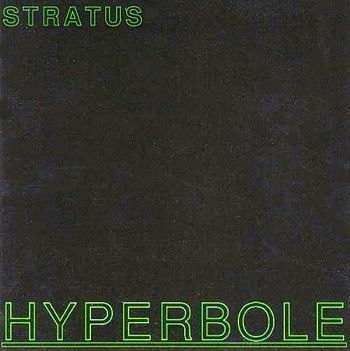
Stratus - Hyperbole - 1990 - independent release

Stratus is indeed an "undiscovered gem" in the jazz fusion world. With Paul Chester on guitars, Dave Nichols on bass, Ted Wenglinski on keys and Brian Hull on drums I was transported into silky-smooth jazz fusion ecstasy. These guys are on nearly equal standing with anything Chick Corea's Electrick Band, Scott Henderson's Tribal Tech, or Aussie Frank Gambale have delivered over the years. I'm talking quality, professional, creative compositions and high-energy, precision delivery. I also heard a great deal of that inspiring Pekka Pohjola atmosphere but jazzier. Chester and Wenglinski in their guitar/keys interactions grab you, soothe you, and fast-pitch you into extreme aural satisfaction. Nichols reminded me of Pattitucci or Willis and even pulled out some Levin on one track. There's not a weak track on this baby, nor a "loose" or "filler" bar anywhere -- hear a ton of killer guitar work, wallow in absolutely wonderful keyboard synths, groove on tight, upfront, jazzy, "funked up" bass, and just-right drums. All ten compositions by Chester, Wenglinski, and Nichols are polished, intelligent, and just darn good stuff. © John W. Patterson, All Music Guide © 2010 Answers Corporation http://www.answers.com/topic/hyperbole-1990-album-by-stratus

The late bassist, Dave Nichols formed the now legendary but rarely publicised jazz-rock fusion outfit Stratus (not to be confused with the Serbian rock band, or the heavy metal band), in Houston, Texas, in 1982 with keyboardist Ted Wenglinski , drummer Brian Hull and guitarist Scott Ayers. After Ayers left to join Pain Teens, Paul Chester joined the band. Saxophonist, Dave Caceres, and drummer Todd Harrison later joined Stratus, which over a ten years period, progressed into a highly skilled, innovative, and original fusion outfit. The band recorded four CDs between 1990 and 1997, including the brilliant independently produced 1990 album, "Hyperbole", posted here. It is one of the best jazz fusion albums you may have never heard. There are ten marvellous tracks here all composed by Paul Chester, Ted Wenglinski, and the late Dave Nichols. This is fusion on a par with artists like Eric Johnson, Scott Henderson, or Tribal Tech, and arguably better than some of these artists' albums. "Hyperbole" is full of brilliant musicianship which encompasses Canterbury rock, blues, jazz, funk and R'n'B, using unusual syncopation. Many jazz fusion bands are often rightly "slagged" off as having a lack of inventiveness, and mimicking artists like Weather Report, John McLaughlin, Coltrane, etc. Stratus was an exception to that type of fusion, and produced their own innovative and creative sound. "Hyperbole" is VHR by A.O.O.F.C. Buy the band's superb 1995 "Iconoclast" album, or Dave Caceres' "Innermost" album (if you can find them!)

TRACKS

Funked Up (3:05)
Natural Selection (4:21)
Relics (5:07)
Gravity and Radiation (4:26)
Hyperbole (5:54)
Loose Thoughts (5:26)
Shock Wave (5:09)
Come to Papa (4:27)
Five Blues Licks (6:02)
Brian's Request (3:42)

All tracks composed by Paul Chester, Ted Wenglinski, and Dave Nichols

BAND

Paul Chester (guitar)
Dave Nichols (bass)
Ted Wenglinski (keyboards)
Brian Hull (drums)

BIO (WIKI)

Stratus is a jazz fusion band that formed in Houston, Texas in the early 1980s. The band's original members were Dave Nichols (musician) (bass), Brian Hull (drums), Ted Wenglinski (keyboards), and Paul Chester (guitar). This lineup is represented on the band's first CD, "Hyperbole", released in 1990 and also on the 1999 CD "Ice Nine" that contained recordings from the band's early years between 1983 and 1989. By the release of the band's 1995 CD "Iconoclast" Todd Harrison was on drums and the band had added David Caceres on sax. This is also the lineup on the most recent CD, "Anabolic, Live at the Ale House" released in 1997. Stratus' founding bass player and producer Dave Nichols died in 1996 at 33 after battling cancer. A CD of Nichols' original material titled "Waltz of Hope" was recorded by a group of his friends and musician peers including the other members of Stratus just before he died. Stratus continued to play on in Nichols' honor with Anthony Sapp taking on the bass mantle. Other drummers playing Stratus' live shows have included Tim Solook and Joel Fulgham. Following a several year hiatus while the members worked on other projects the band reunited in 2009 and began recording new material.

MORE ABOUT STRATUS

Stratus' ex-drummer Brian Hull sent me a nice compilation CDR with music from their Ice Nine and Hyperbole releases. His initial e-mail to me self-consciously said, "Not sure if you are aware of the band but maybe you have already rejected it as not a 'progressive rock' band". Not to worry, Brian, the only reason for Stratus' lack of inclusion in the GEPR was my lack of awareness. To be nit-picky, Stratus actually wasn't a "progressive rock" band -- at least not in the sense of Yes or Genesis. They were, however, an exceptional fusion band, a genre the GEPR happily includes. Stratus should appeal to those who like bands like Bruford, Al DiMeola or Return to Forever circa Romantic Warrior, though Stratus is, perhaps, a bit more mellow than any of them. Musea still carries Hyperbole, and compares Stratus to Canterbury bands like Hatfield and the North, which should also give you a point of reference. I found their music to be enjoyable and exciting, particularly the tasty guitar with occasional Allan Holdsworth-like passages. Easily recommendable to people who like the bands I've just mentioned. Hull's e-mail implied that there were other Stratus albums beyond the two he participated in, but I have been unable to find any further information on them. I'll try to find out and update this entry with a complete discography (and info on how to find them!) if and when I can find more info. © Fred Trafton © http://www.gepr.net/st.html Updated 12/10/08

ABOUT PAUL CHESTER

Paul Chester is Music Director and Lead Guitar for The BlueJazz Band. He has produced two albums for Dena Blue and the BlueJazz Band and is working on the third, an acoustical jazz composition. His expertise lends itself to a multitude of musical arrangements that showcase the amazing talent of Dena Blue and the BlueJazz Band. Paul Chester has been showcasing his talent across the stages of Houston with the Jazz Greats for over 15 years. He is a mentor, instructor and friend to many of the talented accomplished musicians in Houston. © http://www.bareblue.net/Band.htm

ABOUT DAVE NICHOLS

Fitting tribute... Houston jazz bassist Dave Nichols had always wanted to record his own material, storing it away patiently over the last year while he waited for the right set of circumstances. Those circumstances never came. A ubiquitous freelance presence around town, a busy producer and a doting husband, Nichols never found time to give his own ideas the attention they deserved. But by this August, time -- a commodity never in short supply when it came to helping other musicians -- was running out on Nichols. Holed up at M.D. Anderson Cancer Center, he was succumbing to a potent form of cancer known as non-Hodgkin's lymphoma. Nichols' 33 years were winding to a close in the early morning hours of August 23 when a few friends came by his room waving a cassette. It contained seven songs -- all Nichols' -- performed by some of the most adept jazz aces in Houston. Nichols was groggy from painkillers, so it was hard to gauge his reaction as the tape wound its way through a diverse set of instrumentals. Some were playful; others were more profound. Three ("The Beave," "The Weight" and "Always Changin' ") were written -- either in full or in part -- from a hospital bed. While Nichols was not in any condition to articulate how he felt, the value of the gesture was obvious to those around him. It was the purest, most flattering form of charity for a friend, and it couldn't have come at a more appropriate time. "We finished recording it at about one o'clock in the morning," says saxophonist David Caceres, a close friend of Nichols'. "We got it to Dave in the hospital at 1:30, two o'clock. He's asleep, he's alone, his wife went home. We woke him up, and we played the music for him. He was lethargic, but he knew what was going on. He passed away 24 hours after that." Caceres and a group of ten others -- guitarist Paul Chester, percussionist Joe Ferreira and keyboardists Ted Wenglinski and Joe LoCascio, longtime Nichols compadres all, among them -- spent the evening of August 22 laying down the material with Sugar Hill producer Andy Bradley, who stuffed his equipment into a garage apartment to record the session. All the tunes were done in one take; the session lasted three hours. "The vibe," says Caceres, "was wonderful." Nichols is perhaps best known for his work with the jazz-rock fusion outfit Stratus, which he formed in 1982 with Wenglinski, drummer Brian Hull and guitarist Scott Ayers. After Ayers went on to weirder pastures with Pain Teens, Chester joined the group. For more than a decade, Stratus moved forward, transforming and expanding as it went. Caceres eventually came aboard, as did drummer Todd Harrison, and the band recorded two CDs, 1990's Hyperbole and 1995's Iconoclast. Always in demand as a player, Nichols was a model of virtuosity and efficiency, and perhaps most important, he was a quick study. "He had tremendous facilities, and he was gifted with incredible hands," says Chester. "Every advance I made in my playing, he countered with more speed." Even after he was diagnosed with cancer in the summer of 1995, Nichols refused to slow down, performing with Chester and drummer Tim Solook in the Houston Jazz Trio, playing with Caceres' quartet and engineering and performing on two CDs, Caceres' Innermost and Tod Vullo's uh*huh. "It was almost like playing was more a priority than treatment," recalls Nichols' wife Ruth. "Music was the center of everything." A musical memorial was held for Nichols last Tuesday at the Doubletree Hotel, followed by an informal jam session at the Ale House that lasted well into the night. The memorial featured live renditions of Nichols' tunes performed by Caceres, Chester, Wenglinski and other musicians who had participated in the apartment-session tribute. Plans are in the works for a CD release of that as-yet unnamed apartment recording, which is dedicated to Ruth Nichols. [ © Hobart Rowland Thursday, Sep 5 1996 © 2010 Houston Press, LP, All rights reserved http://www.houstonpress.com/1996-09-05/music/static/

ABOUT TED WENGLINSKI

A native of St. Louis, Ted studied classical piano with University of Houston professor Albert Hirsh while still attending Clear Lake High School. He returned to Houston after graduating with a degree in music from Austin College, forming the fusion band Stratus with bassist Dave Nichols in 1982. Stratus would become a staple of the Houston jazz scene, recording 4 CDs and performing extensively at festivals and venues across Texas for 20 years. Ted has more recently done extensive work with saxophonist/vocalist David Caceres, performing at numerous galas and functions for organizations including the Houston Symphony, the Houston Ballet, the Houston Grand Opera, the American Heart Association and many others. He continues his creative pursuits with his own trio and with the hard bop quintet Monstrosity, fronted by drummer Joel Fulgham. Ted is also in demand as a sideman, performing and recording frequently in many commercial and creative settings. Comfortable in settings from solo piano to small or large groups, Ted performs classic and contemporary standards with the verve and sophistication that have made him one of the most sought after pianists in town. © http://www.gulfcoastentertainment.com/cms_home/

ABOUT BRIAN HULL

Drummer, and founding member of Stratus. More info would be very much appreciated

ABOUT DAVE CACERES

Saxophonist and vocalist David Caceres is arguably the most sought-after jazz musician in Houston, Texas, which is not at all surprising considering his accomplishments and musical heritage. David's grandfather, jazz violinist Emilio Caceres, led a popular swing orchestra in San Antonio, Texas in the 1930's & 40's. His great uncle Ernie Caceres played saxophone and clarinet with the Glenn Miller, Benny Goodman, and Woody Herman big bands; David himself cultivated his own talents at Boston's prestigious Berklee School of Music. After his consummate schooling David headed to the Big Apple to cut his musical teeth. Yet, with his genetics, it is no wonder he returned to his roots to stake his musical claim. Now he has become a veritable Texas Tradition juggling an incredible performance, recording, and teaching career. With his rich musical heritage, it is no surprise David was attracted to music at an early age. After studying piano for 4 years he switched to the alto saxophone at age 11; he was attracted to the saxophone's power in mirroring the human voice, and later added the soprano, tenor sax, clarinet, and flute to his repertoire of instruments. As a youth, he gigged with a variety of musical groups in his native San Antonio, until he received a coveted scholarship to Boston's Berklee School of Music. At Berklee, David discovered the masters of jazz: John Coltrane, Charlie Parker, Dexter Gordon, Miles Davis, and Sonny Rollins. He also began to develop his sultry, yet powerful voice by listening to such early inspirations such as Chet Baker, Sarah Vaughan, Frank Sinatra, Donny Hathaway, and Stevie Wonder. Possessing a passion for all genres of music, David uniquely blended his jazz chops with an intriguing mixture of pop, R&B, and Latin music to produce his own instantly recognizable sound. After Berklee, David worked as a session musician in New York but found that something was missing: he longed for a sense of community and musical fellowship, so he returned to his roots in San Antonio. His reputation soon spread and he was invited to join the illustrious quartet of jazz pianist Paul English in Houston. Seven years later, David has been heralded as "the reedplayer/entertainer in Houston". He performs regularly with such diverse groups as his own straight-ahead band, the David Caceres Quintet, and fusion powerhouse, Stratus, the 10-piece funk David uniquely blended his jazz chops with an intriguing mixture of pop, R&B, and Latin music to produce his own instantly recognizable sound.group TKOh!, as well as a host of big bands. He has shared the stage with a varied and prestigious list of musicians, including Wynton Marsalis, Milt Hinton, James Williams, Kirk Whalum, John Pattitucci, Will Kennedy, the Drifters, Scott Gertner, and Tejano star Little Joe, just to name a few. David has also toured extensively, appearing at the famed Montreux, North Sea, and Cyprus Jazz Festivals. In 1992, David was the proud and featured artist on Texas Public Radio's: Live at the Landing, Tribute to the Jazz Legacy of Ernie and Emilio Caceres. Perpetuating the legacy of the music is critical to David, and he continues to give back to the community as an active jazz educator. He has been a faculty member of HSPVA (High School for the Performing and Visual Arts), and has been a member of the IAJE (International Association of Jazz Educators). He currently teaches at the University of Houston, and his noteworthy career in education has earned him recognition from the National Foundation for Advancement In the Arts. David's recording career is as varied and impressive as his work on stage. His debut recording "Innermost" was released in 1995 to critical acclaim. The CD, which features a delightful mix of original compositions and jazz classics, showcases David's soulful yet modern style. David's highly anticipated second recording, "Trio", was released in 1999. Sidewalk.com compared the intimacy and virtuosity on "Trio" to the legendary small-group performances of Sonny Rollins and Branford Marsalis. The captivating yet powerful disk features drummer Sebastian Whitaker and bassist Cliff Schmitt who clearly have entered into an inspired realm with David as they explore inventive originals and classics. Given his mastery and diversity it is no wonder David has been invited to add his musical stamp to the recordings of a host of other groups. He has appeared on jazz recordings by Houston favorites Stratus, Todd Vullo, and Paul English. He also performed on Latin sensation La Mafia's Grammy award winning "Un Million De Rosas." Touchingly, he produced and performed on '"Waltz of Hope", a joint project by Houston musicians to celebrate the life of bassist Dave Nichols. Be it traditional jazz or contemporary explorations, David Caceres continues the tradition of musical innovation. [© http://www.davidcaceres.com/reviews.html Website by Ben Azzara © 2010]