A.O.O.F.C
recommends
Mizar6

babydancing


Get this crazy baby off my head!

19.8.07

808 State


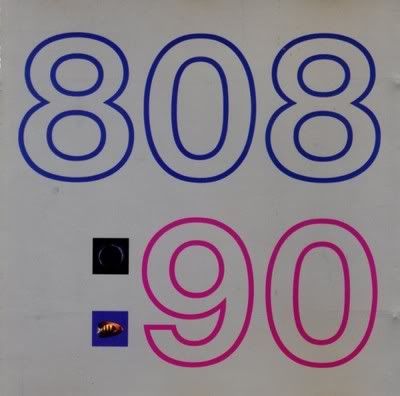
808state-ninety


808 State - Ninety - 1989 - ZTT Records

An excellent house/techno electronic album. This is an ingenious blend of ambient, acid jazz, hip-hop, disco and rock, and is not exclusively music just for dancing to. Give it a listen.

TRACKS

"Magical Dream" – 3:52
"Ancodia" – 5:47
"Cobra Bora" – 6:36
"Pacific 202" – 5:43
"Donkey Doctor" – 5:24
"808080808" – 4:20
"Sunrise" – 6:33
"The Fat Shadow" – 0:59

GROUP

Graham Massey
Martin Price
Gerald Simpson
Andrew Barker
Darren Partington

REVIEWS

808 State's debut album release on ZTT Records wasn't the first major U.K. house/techno release, but arguably, it was the most important at the time, gaining a reputation over the years as a true classic in the field of electronic music. While not remarkably different from its many American precursors, 90 not only established that Britain could do things just as well as the States, it also helped to fully lay the groundwork for the '90s electronic revolution that continues to play out in the U.K. Arguably, 808 at this point weren't always pushing edges: "Magical Dream" and "Ancodia" have a decided gentility to their grooves. That said, "Cobra Bora" has an aggro edge, mixing gentler impulses with something more clipped and rough, not to mention a wickedly clever sample of the a cappella opening to Van McCoy's "The Hustle," clearly pointing the way to the monstrous groove of Cubik in a year's time. "Pacific 202," 90's classic number, fuses the two strains perfectly, with its soft synth and sax combination riding an insistent bass groove that's just a little bit more forceful than might be expected. The concluding tracks, such as "808080808," are closer to being in-your-face danceable, though with interesting tweaks along the way, such as "Donkey Doctor"'s echoed vocal sample and sudden mid-song break to a softer groove. © Ned Raggett © 2007 All Media Guide, LLC. All Rights Reserved
Despite having disappeared into relative obscurity within recent years, today's UK club scene would be very different without 808 State's influence. We're now a couple of generations removed from the “Madchester” explosion and the fledgling Ibiza pilgrimages of the late 1980s and early 1990s, but 808 State's influence remains.
As their peers continued to churn out repetitive, uninspiring Latino house music, 808 State refined their innovative blend of acid house, Detroit techno, ambient, jazz, hip-hop, disco and rock. Despite a couple of low-key (but nevertheless groundbreaking) albums on Creed Records and a devoted following in their native Manchester, it wasn't until the awesome, gorgeously melodic and uplifting Pacific State hit the shores of Ibiza that people began to sit up and take notice. Not least 80s uber-producer Trevorn Horn, who immediately signed them to his cult ZTT Records label.
Ninety succeeded on two levels. Not only did it have the power to crowd out the dancefloors, but it was also something you could chill out to on your stereo at home. Whilst this duality is common (if not essential) in this day and age, it was a very rare thing back in 1989.
Part of 808 State's success lay in the diversity of experience of each of the group's members. Graham Massey was an experienced jazz musician and electronic experimentalist, Martin Price ran his own record shop, whilst Andrew Barker and Darren Partington were two fresh-faced young DJs who gigged endlessly around Manchester. Despite having left the band a few years previously, Gerald Simpson's appreciation of funk and soul also left its mark upon 808 State.
To this day, Ninety remains a refreshing, exciting slice of progressive dance. After all, it was considerably ahead of its time upon its initial release in 1989. From the sparkling album opener Magical Dream (a casual pro-'E' anthem), through the dirty jazz-funk of Ancodia, the iconic Pacific and blissed-out ambience of Sunrise, Ninety pretty much maps out the evolution of British dance music right through to the mid-1990s.
Anyone out there interested in exploring the formative years of British progressive dance should pick this album up as a matter of course. Then check out S'Express' Original Soundtrack, Bomb the Bass' Uncharted Territory, LFO's Frequencies, Orbital's Green Album, The Orb's Adventures Beyond the Ultraworld and Future Sound of London's Accelerator. To listen to them is to experience history in the making. This review was originally written for Amazon UK in May 2001 http://momentum.insertdisc.com/archives/2004/05/05/retro_review_808_state_90.html
808 State's studio and stage talents have pleased crowds and helped the group to consistently pioneer and push the envelope of the techno genre. Their list of remix credits is also endless, with the band's favorite collaborators being David Bowie, Jon Hassel I, Quincy Jones, R.E.M., Rolf Harris, and Tom Jones. Through it all, 808 State have never stopped expanding their style and have never been afraid of surprising their audience. As of 2000, the group left ZTT Records and was looking for a new recording contract. © Thomas Dorst © 2007 eNotes.com LLC. All Rights Reserved

BIO (Wikipedia)

808 State is an English electronic music outfit formed in 1988 in Radcliffe, Bury in Greater Manchester, taking their name from the Roland TR-808 drum machine and the "state of mind" shared by the members. They were formed by Graham Massey, Martin Price and Gerald Simpson (later to record as A Guy Called Gerald) and released their debut Newbuild in 1988. Autechre and Aphex Twin have often cited Newbuild as being enormously influential, and the group achieved some degree of chart success in the United Kingdom in the early 1990s with releases of their "Pacific State", "Cubik" and "In Yer Face".

Flim and the BBs


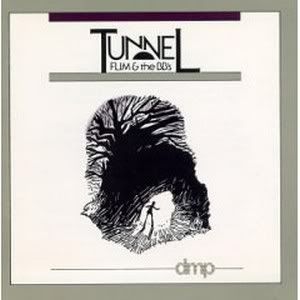
flimandthebbs-tunnel1994


Flim and the BBs - Tunnel - 1984 - DMP Records

Flim & the BB's are a contemporary jazz band that formed in the late seventies and are the first jazz band to appear on compact disc. The band's name comes from the nickname of Jimmy Johnson and the initials of the other two members, Bill Berg and Billy Barber (Dick Oatts, a woodwind player, would join the group in 1984.) They are most notable for the 90's theme song to the American soap opera All My Children and for making one of the first all-digital recordings in 1978 (though the prototype machine which was used was the only machine able to read the master tape.) The band, with Johnson's pioneering five-string bass from Alembic, went on to create five critically acclaimed albums for DMP Records before signing with Warner Bros. Records Their albums Tricycle, Tunnel, and Big Notes all won Digital Audio's "Jazz CD of The Year" award. Reminiscent of Spyro Gyra, this is light jazz fusion at it's best. The musical artistry on this album should appeal to lovers of all types of jazz, and indeed, to anybody who appreciates good music.

Tracks:

Light at the End of the Tunnel
Room With a View
Roberta
Mermaid
Man Overboard
Surprise Party
Innocent Bystander
Ivory Tower
Momentary Truce
High Roller
November Nights

Performers:

Billy Barber - keyboard
Bill Berg - drums
Jimmy Johnson - bass
Dick Oatts - reeds

BIO

One of the most popular fusion and light jazz groups to emerge during the 1980s Flim and the BBs comprised bassist Jimmy Johnson keyboardist Billy Barber percussionist Billy Berg and reeds player Dick Oatts For the record Flim was an old nickname of Johnsons while the BBs originated from Barber and Bergs shared initials Debuting in 1982 with the album Tricycle Flim and the BBs fusion sound proved ideally suited for the onset of the compact disc boom they were among the first artists to record utilizing digital technology and albums like 1985s Big Notes and 1987s Neon quickly found a following not only among contemporary jazz fans but also among tech-heads After 1988s Further Adventures the quartet departed indie label DMP for Warner Bros making their major-label debut a year later with New Pants 1992s This Is a Recording was their final effort © Jason Ankeny All Music Guide

Box Of Frogs


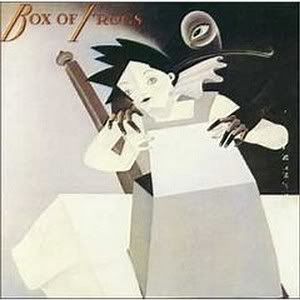
boxoffrogs-boxoffrogs1984


Box Of Frogs - Box Of Frogs - 1984 - Epic

Not a brilliant album, by any means, but still quite enjoyable. Typical of early 80's releases, the album is full of drum machines, synthesizers, and overly produced vocals. However, there is quite a good blues rooted sound underneath all this, with some fine guitar from Jeff Beck. Can anybody provide details on the tracks featuring Rory Gallagher?

TRACKS

A1.Back Where I Started (3:54)
A2.Harder (3:44)
A3.Another Wasted Day (4:12)
A4.Love Inside You (2:47)
A5.The Edge (4:02)
B1.Two Steps Ahead (4:33)
B2.Into The Dark (4:07)
B3.Just A Boy Again (5:38)
B4.Poor Boy (4:26)

PERSONNEL

John Fiddler - vocals, guitar (worked with Medicine Head, British Lions, Mott The Hoople)
Chris Dreja - guitar (worked with the Yardbirds, Jeff Beck)
Paul Samwell-Smith - bass guitar (worked with Carly Simon, Jeff Beck, Cat Stevens)
Jim McCarty - drums and percussion (worked with the Yardbirds, Renaissance, Jeff Beck, Cactus, Dave Edwards, Buddy Miles, Sesame Street)
Jeff Beck - guitar [Special Guest] Beck plays on "Back Where I Started", "Another Wasted Day", "Poor Boy" and "Two Steps Ahead".
Rory Gallagher - guitar [Special Guest]

SHORT BIO

In 1982 former Yardbirds members Chris Dreja, Jim McCarty and Paul Samwell-Smith asked John Fiddler to front their new band Box Of Frogs. The band released two albums, with guest guitarists such as Jimmy Page, Jeff Beck, Steve Hackett, Rory Gallagher - and Ray Majors!

Spyro Gyra


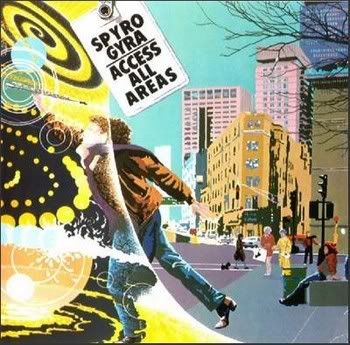
spyrogyra-accessallareas1984


Spyro Gyra - Access All Areas - 1984 - MCA

Brilliant contemporary pop jazz release from Spyro Gyra, who seem to have been around forever. For some unknown reason, the track "Old San Juan" , which was on the original 1984 MCA vinyl LP, is not included on this CD release. If you know of a CD with this track included, please post info. Try and listen to "Fast Forward", another great Spyro Gyra album.

TRACKS

1. Shaker Song (6:57)
Jay Beckenstein

2. Serpent in Paradise (5:52)
Jay Beckenstein

3. Heliopolis (11:12)
Jay Beckenstein

4. Harbor Nights (6:52)
Jay Beckenstein

5. Conversations (8:16)
Tom Schuman

6. Schu'S Blues (4:36)
Tom Schuman

7. Morning Dance (5:25)
Jay Beckenstein

8. Islands in the Sky (6:21)
Jeremy Wall

9. Sea Biscuit (5:22)
All Members

10. Latin Streets (7:58)
Jorge D'Alto/Gerardo Velez

MUSICIANS

Jay Beckenstein
Saxophones, Lyricon

Tom Schuman
Keyboards

Eli Konikoff
Drums

Kim Stone
Bass

Chet Catallo
Guitar

Dave Samuels
Vibraphone, Marimba

Gerardo Velez
Percussion

Recorded live in Florida from November 17-19, 1983. Producers: Jay Beckenstein, Richard Calandra (tracks 1-10). Recorded live in Florida from November 17-19, 1983. All songs written or co-written by members of Spyro Gyro except "Islands In The Sky" (Jeremy Wall).

BIO

Founded in 1974 by altoist Jay Beckenstein, Spyro Gyra has consistently been one of the commercially successfully pop-jazz groups of the past 20 years. Although originally a studio group, the band became a full-time venture in 1979 and has been touring ever since. Critics love to attack this band's lightweight and rarely changing music, which combines R&B and elements of pop and Caribbean music with jazz, but its live performances are often stimulating -- unlike many of its records, which emphasize the danceable melodies at the expense of improvising.
The roots of Spyro Gyra lay in Buffalo, NY, in the early '70s. Beckenstein and his longtime friend, keyboardist Jeremy Wall, had been leading a group with a revolving membership; every one of the many members in the band were loosely involved in the local jazz and rock scenes. Around 1974, the group was beginning to gel and cultivate a following. A club owner who wanted to advertise an upcoming appearance by the band asked Beckenstein for the group's name. The saxophonist told him "Spirogira," a word he learned in a college biology course. The owner misspelled the word as Spyro Gyra, and the band fell into place, featuring Beckenstein, Wall, electric guitarist Chet Catallo, bassist David Wolford, drummer Eli Konikoff, and percussionist Gerardo Velez. Not long afterward, the group added keyboardist Tom Schuman.
Spyro Gyra independently funded and recorded their debut album, releasing the record on the local independent label Amherst in 1976. The record slowly became a success and Amherst sold the rights to the band to Infinity Records, a division of MCA. Morning Dance, their first album for Infinity, was released in 1979. The record became a major hit, spawning a Top 40 single with "Morning Dance" and going platinum. In the wake of the record's success, Wall retired from live performance, leaving Schuman as the group's main keyboardist; Wall stayed with the band as an assistant producer and occasional composer.
Morning Dance firmly placed Spyro Gyra as one of the most popular artists in contemporary jazz, and throughout the '80s, their popularity continued growing. Their albums were consistent best-sellers, and their concerts often sold out. In 1983, vibraphonist/marimba player Dave Samuels -- who had played on several of the group's albums -- became a full-fledged member of the band. Over the course of the '80s, the membership of Spyro Gyra fluctuated, but Beckenstein and Schuman remained at its core, keeping the group's signature sound intact.
In 1990, MCA's jazz roster was absorbed by GRP, so Spyro Gyra switched labels, releasing Fast Forward, their first album for GRP, later that year. In 1993, Samuels left the touring band, but he continued to play in the studio. By the late '90s, the band featured Beckenstein, Schuman, Julio Fernandez, Joel Rosenblatt, and Scott Ambush, and released Got the Magic in 1999. Two years later the band moved to the Telarc-affiliated Heads Up label and released In Modern Times in 2001, followed by Original Cinema in 2003. Drummer Rosenblatt left the band and was replaced by Ludwig Afonso for 2004's Deep End. A fourth Heads Up album, Good to Go-Go, was issued in 2007. © Scott Yanow & Stephen Thomas Erlewine, All Music Guide

16.8.07

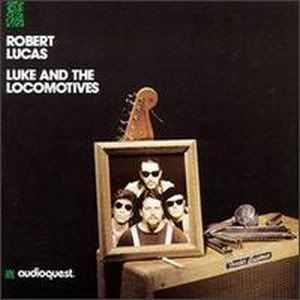
Robert Lucas


robertlucas-luke&thelocomotives


Robert Lucas - Luke & The Locomotives - 1991 - Audioquest (CD release 2002 Audioquest)

Ths great album, highly recommended by A.O.O.F.C contains originals and some classic blues cover versions. The hugely underrated Robert Lucas demonstrates here what the blues is all about. "Luke & The Locomotives" was so impressive both sonically and musically, JVC decided to press their own high end XRCD version. Try and find his albums, "Built For Comfort", & "Completely Blue"

TRACKS

Good Morning Little Schoolgirl (Sonny Boy Williamson) 4:28
Big Man Mambo (Robert Lucas) 3:58
Slide On Outta Here (Robert Lucas) 3:20
Worried About It Baby (Chester Burnette) 2:50
Shed A Tear (Robert Lucas) 3:42
Feel Like Going Home (McKinley Morganfield) 6:09
Don't Your Peaches Look Mellow (Robert Lucas) 2:59
Meet Me In The Bottom (John Lee Hooker) 3:47
Stranger (Elmore James) 3:58
I'm So Tired (Robert Lucas) 4:33
Good-bye Baby (Robert Lucas) 3:52

BAND

Robert Lucas - vocals, slide guitar, harmonica
Paul "Pops" Bryant - guitar
Al "Bedrock" Bedrosian - bass
Bob "Max" Ebersole - drums

ALBUM CREDITS

Paul Bryant (Guitar), Luke & the Locomotives (Performer), Robert Lucas (Harmonica), Robert Lucas (Vocals), Robert Lucas (Slide Guitar), Robert Lucas (Main Performer), Robert Lockwood, Jr. (Liner Notes), Robert Lockwood, Jr. (Author), Al Bedrosian (Bass), Dixon (Liner Notes), Bob "Max" Ebersole (Drums), Steve F'dor (Piano), Peter Grant (Design), Bernie Grundman (Engineer), Joe Harley (Producer), Joe Harley (Author), Allen Sides (Engineer), Akira Taguchi (Producer), Alan Yoshida (Mastering), Wayne Thomas (Art Direction), Wayne Thomas (Design), Willie Dixon Band (Author), Sam Gay (Director), Sam Gay (Creative Director), Michael C. Ross (Engineer), Steve McCormack (Liner Notes), Steve McCormack (Photography), Al "Broderick" Dedrosin (Bass), André Felix (Photography), André Felix (Cover Photo), Paul "Pops" Brant (Guitar), Chris Niswander (Assistant Engineer)

REVIEWS

Crying out the pains and joys of the blues is not just an act for this band -- it genuinely bleeds through. Don't believe it? Look at the back liner note endorsements by Willie Dixon and Robert Jr. Lockwood. Even more brilliant is Lucas' songwriting, poking fun at himself in "Big Man's Mambo," and offering the advantages of having a large frame to the ladies. His moaning harmonica effectively plays into the subject of growing old with its aches and pains in "Shed a Tear," and is equally as effective in "I'm So Tired." © Char Ham, All Music Guide

"Hello Ladies and Gentlemen, I am Willie Dixon and I would like to tell you about this blues recording. The blues is music about the facts of life and all the different experiences in life, are what make all the different sounds in the blues. This young man and his band play so many styles of blues that brought back so many good memories to me. From the Mississippi delta to the south side of Chicago, they do it all. The guitar, the harp and the rhythm from the bass and the drums is just beautiful and the wisdom of the words in Lucas' songs are those of a true bluesman. Why this band hasn't made it a long time ago I don't know I but I guess they never got the chance. I don't go out on a limb too often and I'm telling you true, if you love the blues then you'll love this band and you'll have to have this record. Thank you very much." © Willie Dixon July 17, 1991 © http://valley-entertainment.com/index.html

BIO

West Coast vocalist, guitarist and songwriter Robert Lucas has been forging a path for himself in the blues world since his much-hailed 1990 self-produced debut cassette, Across the River. Lucas, based in Long Beach, California, records for the Audioquest label out of San Clemente.

Lucas was born into a middle-class family in Long Beach and was 14 or 15 when he started getting seriously into blues-rock. He had started to play guitar then, inspired by Jimi Hendrix, but gave up on it, concluding his hands were too small. He started playing harmonica instead, listening to recordings by John Mayall and the Bluesbreakers before going back to source material, including the recordings of Little Walter Jacobs, Sonny Boy Williamson, George "Harmonica" Smith, Snooky Pryor and James Cotton.

Lucas began playing the National steel guitar at 17 when a co-worker at the Long Beach Arena sold him the instrument. Lucas hooked up with guitarist Bernie Pearl and began taking lessons from him. After joining Pearl's band as a harmonica player, he got to play behind the likes of Big Joe Turner, George Smith, Pee Wee Creighton, Lowell Fulson, Eddie "Cleanhead" Vinson, Percy Mayfield and other West Coast bluesmen. He carefully honed his singing and playing, with Pearl's band and on his own, for several years before forming Luke and the Locomotives in 1986.

Lucas' career as a national touring act was launched when his Across the River tape got a rave review in a Los Angeles newspaper. As a result, one of the Audioquest warehouse workers came to see him at a Los Angeles sushi bar. The employee called the company president, who came to hear Lucas that same night.

Lucas is a multi-talented harmonica player, guitarist, singer and songwriter who can do it all: on one recording for Audioquest, Usin' Man Blues, he plays solo, and on another, Luke and the Locomotives, he performs with his band. The sound on all of his albums is raw and gritty, with just a few originals on each album. Classic blues fare like Sonny Boy Williamson's "Good Morning Little Schoolgirl" and John Lee Hooker's "Meet Me In the Bottom" are given new life with Lucas' talented hands and vocal chops.

Lucas pays homage to traditional blues but has carefully crafted his own singing and slide guitar style. These talents are on ample display on his albums for Audioquest. His albums include Luke and the Locomotives, Usin' Man Blues, Built for Comfort, Layaway and Completely Blue, all recorded since 1990. © Richard Skelly, All Music Guide

13.8.07

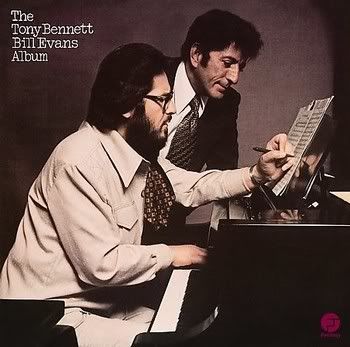
Tony Bennett & Bill Evans


tonybennettbillevans-thetonybennettbillevansalbum1975


Tony Bennett & Bill Evans - The Tony Bennett Bill Evans Album - 1975 - Fantasy

In 1975, Tony Bennett was not known for small-scale, cabaret-style sonic settings. Nor was jazz innovator Bill Evans known for working with "pop" singers. As this landmark collaboration (so satisfying it prompted a successor) proved, the pair were eminently compatible. Both possessed an unparalleled sensitivity and an ability to scale dynamic extremes from subtlety to bravura. Bennett sings with unprecedented delicacy and intimacy over Evans's technicolor arrangements. The latter's piano textures are complex, elegant and endlessly shifting as they accompany Bennett's tender ministrations on a program of mostly standards. So definitive is the singer's work here that Bennett neophytes could safely begin their exploration with this album. Recorded at Fantasy Studios, Berkeley, California between June 10 & 13, 1975. This album is magnificent, and a true jazz classic. Highly recommended by A.O.O.F.C

TRACKS

"Young and Foolish" (Albert Hague, Arnold B. Horwitt) – 3:55
"The Touch of Your Lips" (Ray Noble) – 3:57
"Some Other Time" (Leonard Bernstein, Betty Comden, Adolph Green) – 4:44
"When in Rome" (Cy Coleman, Carolyn Leigh) – 2:56
"We'll Be Together Again" (Carl Fischer, Frankie Laine) – 4:39
"My Foolish Heart" (Ned Washington, Victor Young) – 4:50
"Waltz for Debby" (Bill Evans, Gene Lees) – 4:06
"But Beautiful" (Johnny Burke, Jimmy Van Heusen) – 3:37
"Days of Wine and Roses" (Henry Mancini, Johnny Mercer) – 2:21

PERSONNEL

Tony Bennett - vocals
Bill Evans - piano

REVIEWS

Having completed his relatively brief sojourn with MGM/Verve in 1973, Tony Bennett was in the midst of forming his own label, Improv Records, when he made a deal with jazz pianist Bill Evans to cut two LPs, this one for Evans' label, Fantasy Records, with another to follow on Improv. The singer and his collaborator ("accompanist" does not adequately describe Evans' contribution, and in any case he received co-billing) got together in a recording studio over four days in June 1975 with no one other than the producer, Helen Keane, and an engineer present, and quickly recorded one of the best albums of either's career. For Bennett, it was a dream project; for years (decades, actually), he had been balancing the demands of commerciality with his own inclinations toward jazz and affection for the songs of Broadway masters and of the Great American Songbook. Left to himself with a jazz partner, he naturally gravitated toward both interests. There were songs here that he had already recorded, but never in so unadorned, and yet fully realized a fashion. Evans was an excellent accompanist, using his steady left hand to keep his singer centered, but ready, whenever the vocals were finished, to go off into his characteristically lyrical playing. Bennett could seem a bit earthbound when he came back in (he still wasn't really a jazz singer), but his obvious enthusiasm for the project, coupled with his mastery of phrasing in songs he understood perfectly made him an equal in the partnership. As far as the major-label record business was concerned, the 46-year-old singer might have been over the hill and indulging himself, but in fact he was in his prime and finally able to pursue his ambitions unfettered, and that would prove itself a major boost to his career over time. For the moment, he'd made an excellent jazz-pop hybrid in which both musicians were shown off to advantage. © William Ruhlmann © 2007 All Media Guide, LLC. All Rights Reserved
Bill Evans rarely accompanied singers. Tony Bennett's flawless ear told him that Evans' sensitivity, touch and deep harmonic wisdom would make him a perfect collaborator. Evan's lyrical, singing piano lines illuminate Bennett's supreme interpretation of lyrics. "Overall, this fine new audiophile remastering reinforces the warmth of the sound and the rich intimacy of the two innovators, seemingly overheard in the process of pure creation." © Chip Stern.

Bill Evans (Bio)

Bill Evans was one of the most influential pianists of jazz. He developed the style of "rootless voicings" in which the chord emphasizes some essential notes, but the bassist will often play the root. Evans also used the sustaining pedal extensively but subtly. His impressionist, classical inspired playing was an influence on Herbie Hancock, Keith Jarrett, and Chick Corea. Evans felt pianists should be proficient in technique and harmony in order to best express themselves. He also increased the interplay between the leader and the bassist and drummer in his piano trios.
Evans was born in 1929. While in college, he played with Mundell Lowe and Red Mitchell. Evans made his recording debut as leader of a trio in 1956. He also recorded with Charles Mingus and George Russell. In 1958 Evans playedon Miles Davis' Kind Of Blue album. His 1959-61 trio with Scott LaFaro and Paul Motian was one of the greatest of the genre. LaFaro died in a car accident and later recordings featured Eddie Gomez most extensively on bass and Marty Morell on drums. Gary Peacock, Philly Joe Jones, Jack DeJohnette, and many others also passed through his trio. Evans also recorded solo, in duos, and in large groups with Lee Konitz, Zoot Sims, Freddie Hubbard, and others. In 1978 he formed a new trio with Marc Johnson and Joe LaBarbera which was considered his best since 1961. Evans drug problems contributed to his death from a stomach ulcer in 1980. Copyright © 2007 Princeton Record Exchange, Inc. All rights reserved

Tony Bennett (Bio)

Tony Bennett's career has enjoyed three distinct phases, each of them very successful. In the early '50s, he scored a series of major hits that made him one of the most popular recording artists of the time. In the early '60s, he mounted a comeback as more of an adult-album seller. And from the mid-'80s on, he achieved renewed popularity with generations of listeners who hadn't been born when he first appeared. This, however, defines Bennett more in terms of marketing than music. He himself probably would say that, in each phase of his career, he has remained largely constant to his goals of singing the best available songs the best way he knows how. Popular taste may have caused his level of recognition to increase or decrease, but he continued to sing popular standards in a warm, husky tenor, varying his timing and phrasing with a jazz fan's sense of spontaneity to bring out the melodies and lyrics of the songs effectively. By the start of the 21st century, Bennett seemed like the last of a breed, but he remained as popular as ever.
Bennett grew up in the Astoria section of the borough of Queens in New York City under the name Anthony Dominick Benedetto. His father, a grocer, died when he was about ten after a lingering illness that had forced his mother to become a seamstress to support the family of five. By then, he was already starting to attract notice as a singer, performing beside Mayor Fiorello La Guardia at the opening of the Triborough Bridge in 1936. By his teens, Bennett had set his sights on becoming a professional singer. After briefly attending the High School of Industrial Arts (now known as the High School of Art and Design), where he gained training as a painter, he dropped out of school at 16 to earn money to help support his family, meanwhile also performing at amateur shows. Upon his 18th birthday in 1944, he was drafted into the army, and he saw combat in Europe during World War II. Mustered out in 1946, he went back to trying to make it in music, and he attended the American Theater Wing on the GI Bill. By the end of the 1940s, he had acquired a manager and was working regularly around New York. He got a break when Bob Hope saw him performing with Pearl Bailey in Greenwich Village and put him into his stage show, also suggesting a name change to Tony Bennett. In 1950, Columbia Records AR director Mitch Miller heard his demonstration recording of "Boulevard of Broken Dreams" and signed him to the label.
Bennett's first hit, "Because of You," topped the charts in September 1951, succeeded at number one by his cover of Hank Williams' "Cold, Cold Heart." Following another five chart entries over the next two years, he returned to number one in November 1953 with "Rags to Riches." Its follow-up, "Stranger in Paradise" from the Broadway musical +Kismet, was another chart-topper, and in 1954 Bennett also reached the Top Ten with Williams' "There'll Be No Teardrops Tonight" and "Cinnamon Sinner." The rise of rock roll in the mid-'50s made it more difficult for Bennett to score big hits, but he continued to place singles in the charts regularly through 1960, and even returned to the Top Ten with "In the Middle of an Island" in 1957. Meanwhile, he was developing a nightclub act that leaned more heavily on standards and was exploring album projects that allowed him to indulge his interest in jazz; notably 1957's The Beat of My Heart, on which he was accompanied mainly by jazz percussionists, and 1959's In Person With Count Basie and His Orchestra. By the early '60s, although he had faded as a singles artist, he had built a successful career making personal appearances and recording albums of well-known songs in the manner of Frank Sinatra.
In 1962, Bennett introduced "I Left My Heart in San Francisco," a ballad written by two unknown songwriters, George Cory and Douglass Cross, who had pitched it to his pianist, Ralph Sharon. Released as a single by Columbia, the song took time to catch on, and although it peaked only in the Top 20, it remained on one or the other of the national charts for almost nine months. It became Bennett's signature song and pushed his career to a higher level. The I Left My Heart in San Francisco album reached the Top Five and went gold, and the single won Bennett Grammy Awards for Record of the Year and Best Solo Vocal Performance, Male. Bennett's next studio album, 1963's I Wanna Be Around, also made the Top Five, and its title track was another Top 20 hit, as was Bennett's next single, "The Good Life," also featured on the album. For the next three years, Bennett's albums consistently placed in the Top 100, along with a series of charting singles that included the Top 40 hits "Who Can I Turn To (When Nobody Needs Me)" (from the Broadway musical +The Roar of the Greasepaint, the Smell of the Crowd) and "If I Ruled the World" (from the Broadway musical +Pickwick).
By the late '60s, Bennett's record sales had cooled off as major-record labels like Columbia turned their attention to the lucrative rock market. Just as Mitch Miller had encouraged Bennett to record novelty songs over his objections in the 1950s, Clive Davis, head of Columbia parent CBS Records, encouraged him to record contemporary pop/rock material. He acquiesced on albums such as Tony Sings the Great Hits of Today, but his sales did not improve. In 1972, he left Columbia for MGM Records, but by the mid-'70s he was without a label affiliation, and he decided to found his own record company, Improv, to record the way he wanted to. He made several albums for Improv, including a duet record with jazz pianist Bill Evans, but the label foundered in 1977.
By the late '70s, however, Bennett did not need hit records to sustain his career, and he worked regularly in concert halls around the world. By the mid-'80s, there was a growing appreciation of traditional pop music, as performers such as Linda Ronstadt recorded albums of standards. In 1986, Bennett re-signed to Columbia Records and released The Art of Excellence, his first chart album in 14 years. Now managed by his son Danny, Bennett shrewdly found ways to attract the attention of the MTV generation without changing his basic style of singing songs from the Great American Songbook while wearing a tuxedo. By the early '90s, he was as popular as he had ever been. The albums Perfectly Frank (1992, a tribute to Frank Sinatra) and Steppin' Out (1993, a tribute to Fred Astaire) went gold and won Bennett back-to-back Grammys for Best Traditional Pop Vocal Performance. But his comeback was sealed by 1994's MTV Unplugged, featuring guest stars Elvis Costello and k.d. lang, which went platinum and won the Grammy for Album of the Year. Bennett became a Grammy perennial, also taking home Best Traditional Pop Vocal Performance awards for Here's to the Ladies (1995) and On Holiday: A Tribute to Billie Holiday (1997). In 2001, he released Playin' With My Friends: Bennett Sings the Blues, an album of duets. © William Ruhlmann, All Music Guide

12.8.07

David Byrne


davidbyrne-sessionsatwest54thstNYC1998


David Byrne - Sessions at West 54th Street, Sony Music Studios, NYC, 13.10.98 (Unofficial Release)

Great recording from the Talking Heads supremo. Has anybody got any info on the musicians playing here? Please post.

TRACKS

1 fuzzy freaky
2 making flippy floppy
3 take me to the river
4 help me somebody
5 dance on vasoline
6 back in the box
7 miss america
8 psycho killer
9 I zimbra

11.8.07

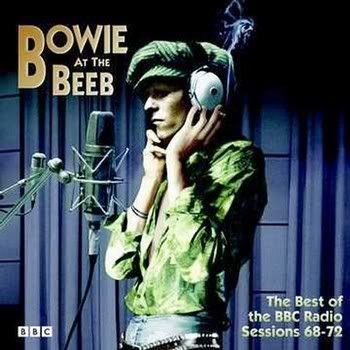
David Bowie


davidbowie-bowieathebeeb68-72


David Bowie - Bowie at Beeb: Best of BBC Radio 68-72 [LIVE] [BOX SET] - 2004 - Virgin Records Us

This compilation is a unique way to view the rapid succession of stylistic changes the mercurial David Bowie went through between the years 1968 and 1972. During that relatively brief span of time, Bowie went through more phases than most artists experience in their entire careers, and it's all catalogued on these live-in-the-studio recordings originally made for BBC broadcast. Things start off innocently enough, with a somewhat benign Bowie delivering '68-vintage baroque pop over orchestral backing. Quickly enough, the rock quotient increases, and Bowie begins delivering more barbed lyrical observations over a grittier sound. Bowie's ascendancy to superstardom is represented via cuts from the ZIGGY STARDUST era; here the listener is given a front-row seat for the virtual invention of glam-rock. There are many interesting tidbits throughout, including fascinating covers of Jacques Brel and the Velvet Underground, both key Bowie influences. © 1996 - 2007 CD Universe

DISC 1:

1. In The Heat Of The Morning
2. London Bye Ta Ta
3. Karma Man
4. Silly Boy Blue
5. Let Me Sleep Beside You
6. Janine
7. Amsterdam
8. God Knows I'm Good
9. Width Of A Circle, The
10. Unwashed And Somewhat Slightly Dazed
11. Cygnet Committee
12. Memory Of A Free Festival
13. Wild Eyed Boy From Freecloud
14. Bombers
15. Looking For A Friend
16. Almost Grown
17. Kooks
18. It Ain't Easy

DISC 2:

1. Supermen, The
2. Eight Line Poem
3. Hang On To Yourself
4. Ziggy Stardust
5. Queen Bitch
6. Waiting For The Man
7. Five Years
8. White Light/White Heat
9. Moonage Daydream
10. Hang On To Yourself
11. Suffragette City
12. Ziggy Stardust
13. Starman
14. Space Oddity
15. Changes
16. Oh! You Pretty Things
17. Andy Warhol
18. Lady Stardust
19. Rock 'N' Roll Suicide

PERSONNEL

David Bowie - vocals, various instruments
John McLaughlin
John Lodge - bass
Mick Ronson - vocals, guitar, bass
Tim Renwick - guitar
Mike Garson - piano, keyboards
Herbie Flowers
Earl Slick - guitar
Trevor Bolder - bass, background vocals
Tony Visconti - background vocals
Sterling Campbell - drums
Dana Gillespie
Mark Plati - guitar, bass
Holly Palmer - percussion, background vocals
Gail Ann Dorsey - vocals, guitar, bass
John Cambridge - drums
Mick Wayne
Emm Gryner - keyboards, background vocals
George Underwood - vocals
Woody Woodmansey - drums
Alan Hawkshaw - keyboards

10.8.07

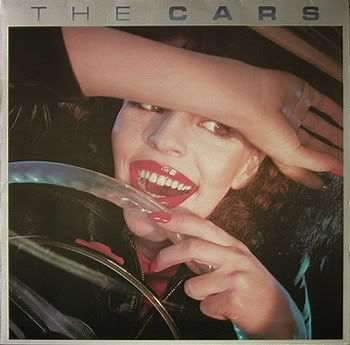
The Cars


thecars-thecars1978


The Cars - The Cars - 1978 - Elektra

The Cars' 1978 self-titled debut, issued on the Elektra label, is a genuine rock masterpiece. The band jokingly referred to the album as their "true greatest-hits album," but it's no exaggeration -- all nine tracks are new wave/rock classics, still in rotation on rock radio. Whereas most bands of the late '70s embraced either punk/new wave or hard rock, The Cars were one of the first bands to do the unthinkable -- merge the two styles together. Add to it bandleader/songwriter Ric Ocasek's supreme pop sensibilities, and you had an album that appealed to new wavers, rockers, and Top 40 fans. One of the most popular new wave songs ever, "Just What I Needed," is an obvious highlight, as are such familiar hits as "Good Times Roll," "My Best Friend's Girl," and "You're All I've Got Tonight." But like most consummate rock albums, the lesser-known compositions are just as exhilarating -- "Don't Cha Stop," "Bye Bye Love," "All Mixed Up," and "Moving In Stereo," the latter featured as an instrumental during a steamy scene in the popular movie Fast Times at Ridgemont High. With flawless performances, songwriting, and production (courtesy of Queen alumni Roy Thomas Baker), The Cars' debut remains one of rock's all-time classics. © Greg Prato, All Music Guide, From AMG Reviews


TRACKS

A1.Good Times Roll (3:44)
A2.My Best Friend's Girl (3:44)
A3.Just What I Needed (3:44)
A4.I'm In Touch With Your World (3:31)
A5.Don't Cha Stop (3:01)

B1.You're All I've Got Tonight (4:13)
B2.Bye Bye Love (4:14)
B3.Moving In Stereo (5:15)
Written By - Greg Hawkes, Ocasek
B4.All Mixed Up (4:14) - with Neil Diamond
All songs written by Ric Ocasek except where noted.

BAND

Elliot Easton – lead guitar, backing vocals
Greg Hawkes – keyboards, percussion, saxophone, backing vocals
Ric Ocasek – rhythm guitar, lead vocals on 1, 2, 4, 5, 6
Benjamin Orr – bass, lead vocals on 3, 7, 8, 9
David Robinson – drums, percussion, backing vocals
Neil Diamond-vocals on 9

CREDITS

Drums, Percussion, Drum Programming [Syndrums], Backing Vocals - David Robinson (3)
Engineer - Geoff Workman
Engineer [Second] - Nigel Walker (2)
Guitar [Lead], Backing Vocals - Elliot Easton
Keyboards, Percussion, Saxophone, Backing Vocals - Greg Hawkes
Producer - Roy Thomas Baker
Vocals, Bass - Benjamin Orr
Vocals, Guitar [Rhythm], Written-by - Ric Ocasek

REVIEWS

The first sound you hear on "Just What I Needed," the single from the Cars' debut album, is the repeated thump of bass notes against the short, metallic slash of guitar. It's a magnificent noise: loud, elemental and relentless. But the Cars–the best band to come out of Boston since J. Geils–aren't interested in simply traveling the interstates of rock & roll. They'll go there for the rush, but they prefer the stop-and-go quirks of two lanes. Before "Just What I Needed" is over, guitarist Elliot Easton has burned rubber making a U-turn with his solo, and Greg Hawkes' synthesizer has double-clutched the melody. Leader Ric Ocasek once sang that he lived on "emotion and comic relief," and it's in this tension of opposites that he and his group find relief (comic or otherwise) between the desire for frontal assault and the preference for oblique strategies. This is the organizing principle behind not only the single but the entire LP, which is almost evenly divided between pop songs and pretentious attempts at art.
The pop songs are wonderful. (Besides "Just What I Needed," they include "My Best Friend's Girl" and "You're All I've Got Tonight.") Easy and eccentric at the same time, all are potential hits. The melodies whoosh out as if on casters, custom-built for the interlocked but constantly shifting blocks of rhythm, while Ocasek's lyrics explode in telegraphic bursts of images and attacks ("You always knew to wear it well/You look so fancy I can tell"). Neither Ocasek nor bassist Ben Orr have striking voices, but by playing off the former's distant, near-mechanical phrasing against the latter's sweet-and-low delivery, the band achieves real emotional flexibility.
As long as the Cars' avant-garde instincts are servicing their rock & roll impulses, the songs bristle and–in their harsher, more angular moments ("Bye Bye Love," "Don't Cha Stop")–bray. The album comes apart only when it becomes arty and falls prey to producer Roy Thomas Baker's lacquered sound and the group's own penchant for electronic effects. "I'm in Touch with Your World" and "Moving in Stereo" are the kind of songs that certify psychedelia's bad name. But these are the mistakes of a band that wants it both ways–and who can blame rock & rollers for that? © KIT RACHLIS (Posted: Jun 17, 1997) © Copyright 2007 Rolling Stone

BIO (Wikipedia)

The Cars were an American rock band, fronted by Ric Ocasek, that emerged from the early punk scene in the late 1970s. Other members of the band were bassist Benjamin Orr, guitarist Elliot Easton, keyboardist Greg Hawkes and drummer David Robinson. They hailed from Boston, Massachusetts and were signed to Elektra Records in 1977. The Cars were at the forefront in merging 1970s guitar-oriented rock with the new synth-oriented pop that was then becoming popular and which would flower in the early 1980s. Most of the singles included an Elliot Easton guitar solo, with the sound filled out by Greg Hawkes's synthesizers and the harmonies of Easton, Robinson, and Hawkes. Lead vocals were split, with Ric Ocasek taking about 60% and Benjamin Orr taking the remaining 40%. While Ocasek was the sole lyricist and main songwriter for the band, Orr would act as frontman in live appearances.
Before The Cars, the members of the band began coming together in several early forms. Ric Ocasek and Benjamin Orr were the first to meet at a party in Columbus, Ohio, and they began performing as a duo, covering rock 'n roll classics as well as performing their own material. They refused to perform the Top 40 hits club owners expected to hear from a young band. After deciding that Boston would be a better place to break into the music business, Ocasek and Orr relocated there. It was there that they met Greg Hawkes, who had studied at the Berklee School of Music, and the three, along with lead guitarist Jas Goodkind, were the first to work together in a folk band called Milkwood. They released an album titled "How's the Weather" in 1972 that failed to chart.
After Milkwood, Ocasek and Orr formed the group Richard and the Rabbits, whose name was suggested by Jonathan Richman. They were a local club band for a while. Soon after, Hawkes temporarily left Ocasek and Orr and joined up with groups including Orphan, a soft-rock band, and Martin Mull and His Fabulous Furniture, a musical comedy act in which he played a variety of instruments. Ric Ocasek and Ben Orr then performed as an acoustic duo called simply "Ocasek and Orr" at the Idler coffeehouse in Cambridge. Some of the songs they played became the underlying music in early Cars' songs.
Later, Ocasek and Orr teamed up with future Cars guitarist Elliot Easton (who had also studied at Berklee), in Captain Swing (or Cap'n Swing). The band caught the attention of Maxanne Sartori, a local DJ on WBCN-FM who began frequently playing their songs. Though they were slowly becoming more experienced musicians, Cap'n Swing still had a long way to go before developing a professional image. Record labels were turned off by the band because they said they looked "too weird". Cap'n Swing also featured a very jazzy drummer and bass player which clashed with Ocasek's more rock and roll leanings. Benjamin Orr acted as frontman, did not play an instrument, and sang the bulk of Cap'n Swing's demos. Ocasek soon got rid of the bass player, the keyboardist and the drummer and decided to form a band that better fit his style of writing. Since one of the major complaints from the major record labels was that Ben Orr didn't do anything except stand there and sing, they decided he should hold something, thus he took over bass guitar duties. The drummer was replaced by David Robinson. Robinson said that he should really have a regular job instead, and that the Cars would be his last band. Best known for his career with the Modern Lovers, Robinson had also played in DMZ and the Pop! It was Robinson who came up with the name "The Cars", which led to automobile-related puns. Ocasek said of the name, "It's so easy to spell; it doesn't have a 'z' on the end; it's real authentic. It's pop art, in a sense."
After spending the winter of ’76 playing all over New England, developing, honing, and ultimately perfecting the songs that would become their debut album, the band was signed to Elektra Records. The demo version of "Just What I Needed" would turn out to be the first single from the band’s debut album, The Cars, released in 1978 and reaching #3 on the Billboard Pop album chart. "My Best Friend’s Girl" and "Good Times Roll" soon followed, charting in the Billboard Top 40. Following the lead of Roxy Music, the band commissioned famed Playboy artist Alberto Vargas to design the sexy illustration for the cover of their second album, Candy-O, released in 1979. Hits from that album included "Let’s Go" and "It’s All I Can Do", both Top 40 hits.
A more experimental album, Panorama, was released in 1980, charting only one Top 40 hit with "Touch and Go". Rolling Stone described the album as "Ocasek's art record, and not a very good one at all". In 1981, the Cars bought their own studio in Boston, Synchro Sound. The only Cars album recorded there was Shake It Up, an album that was recorded in happier times. It was their first album to score a Top 10 hit with the title track, and had another Top 40 hit in "Since You’re Gone". In 1982, the Cars took a short break and went to work on solo projects, with Ric Ocasek and Greg Hawkes both releasing their debut albums (Beatitude and Niagara Falls, respectively).
The Cars reunited and released their most successful album, Heartbeat City, in 1984. The first single, "You Might Think", helped the Cars win Video of the Year at the first MTV Video Music Awards. Other hit singles from the album included "Magic", "Hello Again", and "Why Can’t I Have You". Their most successful single, "Drive", gained particular notability when it was used in a video of the Ethiopian famine prepared by the Canadian Broadcasting Corporation and introduced by David Bowie at the 1985 Live Aid concert at Wembley Stadium in London. After the resulting period of superstardom and another hit single, "Tonight She Comes", from their Greatest Hits, the Cars took time off again to pursue solo projects. Elliot Easton and Benjamin Orr released their debut albums (Change No Change and The Lace, respectively), while Ric Ocasek released his second solo album. In 1987, the Cars released their last album, Door to Door, but it failed to approach the success of their previous albums. They announced the group's breakup in February 1988.
In the late 1990s, rumors circulated of a Cars reunion, with no results. However, in 1995 Rhino Records released a 2-CD set Just What I Needed: The Cars Anthology, containing all the group's hits mixed with rarities (demos, non-album b-sides). They followed up with the releases of The Cars: Deluxe Edition (1999), their debut album in 2-CD format, and Complete Greatest Hits.
Ocasek continues to perform as a solo artist, having released over seven studio albums. David Robinson has retired from music and spends most of his time with his restaurant. Benjamin Orr died of pancreatic cancer on October 3, 2000. In 2005, Elliot Easton and Greg Hawkes combined their talents with Todd Rundgren, Prairie Prince (The Tubes, Utopia), and Kasim Sulton (Utopia, Meat Loaf) in a revamped lineup, The New Cars, to perform classic Cars songs along with selections from Rundgren's solo work and some new original material.

9.8.07

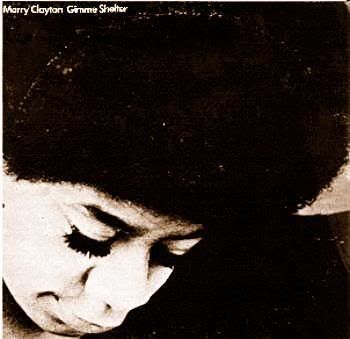
Merry Clayton


merryclayton-gimmeshelter1970


Merry Clayton - Gimme Shelter - 1970 - Ode/A&M

Probably her best-remembered soul album from the 70s, and one that features lots of all-star help by the likes of Lou Adler, Curtis Amy, Gene Page, and Billy Preston. With her classic version of "Gimme Shelter", plus "Tell All The People", "I've Got Life", "Here Come Those Heartaches Again", and "Good Girls". This album was also released on A&M. Does anybody know if the original album contained a Van Morrison track, "Glad Tidings"? If it did, does anybody have a link for it? Posts appreciated.

TRACKS

01. Country Road (James Taylor)
02. Tell all the People (Robbie Krieger – Doors Music)
03. Bridge Over Troubled Water (Paul Simon)
05. I’ve Got Life (Words James Redo – Jerome Ragin -- Music Galt MacDermot)
04. Gimme Shelter (Jagger – Richards)
06. Here Comes Those Heartaches Again (James Cleveland)
07. Forget It (Gary Wright – Jimmy Miller)
08. You’ve Been Acting Strange (Billy Preston)
09. I Ain’t Gonna Worry My Life Away (Merry Clayton – Billy Preston)
10. Good Girls (Billy Page)

CREDITS

Produced by Lou Adler with considerable help from Merry’s husband Curtis Amy.
Guitars: David T. Walker, David Cohen, Louie Shelton, Lou Morrell, Orville “Red”
Rhodes.
Piano & Organ: Joe Sample, Billy Preston.
Congas: King Errisson.
Percussions: Gary Coleman, Victor Feldman.
Bass: Bob West.
Drums: Paul Humphrey.

BIO

b. Merry 'Baby Sister' Clayton, Gert Town, New Orleans, U.S.A. Merry Clayton is the daughter of a Baptist Reverend and naturally grew up in a strict gospel environment. Merry has recorded with many diverse artists including Elvis Presley, the Supreme's, Ray Charles (becoming one of the Raelettes) and the Rolling Stones. In 1962, she recorded the song 'You're The Reason I'm Living' with rock singer Bobby Darin. Merry made her solo debut in 1963 with 'The Doorbell Rings', before recording a version of 'The Shoop Shoop Song (It's In His Kiss)', a song later popularized by Betty Everett and Cher. Clayton went on to record further singles before beginning a successful career as a session singer. She moved to Los Angeles where she founded Sisters Love and had some success with the group at A & M Records. When the group signed to Motown Records, Merry decided to stay at A & M, signing to the label's subsidiary, Ode Records. She appeared on several Joe Cocker releases, but is best known for her impassioned appearance on the Rolling Stones' 'Gimmie Shelter'. An album of the same name was to follow in 1970. A member of Ray Charles' Raelettes during the late 60's, Clayton then resumed her solo work and enjoyed several R & B hits including 'After All This Time' (1971) and 'Oh No Not My Baby' (1973). Probably her finest release came in 1980 with the excellent 'Emotion'. She worked with producer, Webster Lewis, on the title track and took Joe Samples 'Melodies Of Love' instrumental and turned it into a tour-e-force with new lyrics penned by Will Jennings of The Crusaders, entitled 'When The World Turns Blue'. Many peoples all time favourite tune. She subsequently enjoyed sporadic success. 'Yes', from the film Dirty Dancing, reached the US Top 50 in 1988, but latterly Clayton has also pursued an acting career with roles in 'Maid To Order' and television's 'Cagney And Lacey'. In 1994, she returned to recording, releasing the gospel set 'Miracles' for the A & M label. The album included the Ronn Matlock tune 'Heavenly Father'. She performed cabaret-style with Marianne Faithfull and Darlene Love as '20th Century Pop' in 1996. Other artists that have utilised Merry's vocal attributes are Gene Page, Harvey Mason, Michael Wycoff, Leslie Smith, Roy Ayers, Webster Lewis, Gene Harris, The Blackbyrds and Bobby Womack. Incidentally, Merry was called that name, by her parents, because of the festive time of year she was born. www.soulwalking.co.uk/index.html

7.8.07

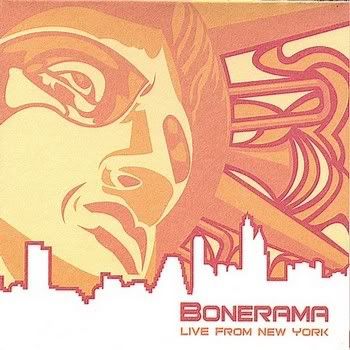
Bonerama


bonerama-liveinNYC2004


Bonerama - Live From New York - 2004 - Bonerama

Recorded live at the Tribeca Rock Club, NYC, Mar. 26 & 27, 2004, where the band has developed a following over the last two years. Arming themselves with special guests Stanton Moore of Galactic and living legend Fred Wesley on trombone. The shows featured new originals, some new covers and jamming with the two drum kits of Stanton Moore and Chad Gilmore. A great album, with a real New Orleans brassy, and funky street flavour. Try and find their albums, " Bringing It Home ", & " Live At The Old Point ".


TRACKS

1. Baronne (5:19)
2. It Don't Mean Nothin' (6:05)
3. Chilcock (7:39)
4. Shake Your Rugalator (6:55)
5. Whipping Post (8:01)
6. The Wizard (3:30)
7. Less Is More (5:18)
8. It's Electric (4:36)
9. Crosstown Traffic (5:17)
10. Bone Up (5:07)
11. Blackout In New York City (5:35)
12. Chemical Assisstance (4:12)
13. War Pigs (8:42)

PERSONNEL

Produced by Mark Mullins & Craig Klein
Associate Producers: Gregg Rubin & Tracey Freeman
Mark Mullins - trombone, electric trombone, vocals
Craig Klein - trombone, vocals, Rugalator
Steve Suter - trombone
Brian O'Neil - bass trombone
Bert Cotton - guitar
Matt Perrine - sousaphone
Chad Gilmore - drums

SPECIAL GUESTS:

Fred Wesley - trombone (7, 11)
Stanton Moore - Drums (2,3,4,5,6,7

REVIEWS

This is seventy-seven minutes of truly heavy air: the gritty slur and ram's-horn-choir blast of four trombones (five if you count Fred Wesley of P-Funk and James Brown renown, who guests on two tracks), with the iron oompah of a sousaphone way down below. Bonerama, a New Orleans septet caught here at a New York club date last year, are also pinpoint blowers, articulate in their solos and full-force choruses while armed with the rhythmic swagger you only learn in Crescent City second-line parades. The band's originals stress the funk; the covers show how far that funk can go. The guitar riff in the Allman Brothers' "Whipping Post" is a 'bone-harmony tornado, while Jimi Hendrix's "Crosstown Traffic" -- starring the dirty wah-wah of Mark Mullins' electric horn -- is rush hour, Mardi Gras-style. DAVID FRICKE (Posted: Mar 17, 2005) © Copyright 2007 Rolling Stone
New Orleans is an incubator for unusual musical ideas based on traditional concepts that move in unexpected directions. Such is the case with Bonerama, a brass band conglomeration with a front line of four trombones and a funky rhythm section of sousaphone, wah-wah guitar and rump-shaking drum beats.
The band's new release, "Live From New York", in stores Nov. 9, shatters any preconceived notions listeners may have about the role of the trombone in a musical ensemble. There are passages psychedelically mind melting, hauntingly beautiful, furiousluy syncopated and filled with scorching virtuosity.
Jimmy Hendrix was once quoted during a recording session requesting the engineer make his guitar sound as if it was underwater, and Bonerama's take on "Crosstown Traffic" ups the ante, creating a sonic swimming pool with swirling distortion-laden trombone riffs and a rhythmic undertow that threatens to drown the ears in a churning wake.
Then there is Fred Wesley, a master of funk trombone, who met the band two years ago at Jazz Fest and has been a fan and supporter ever since. He sat in with Bonerama during this recording and particularly shines on the Mark Mullins tune "Less is Moore" The title's play on words is a nod to drummer Stanton Moore of Galactic, another special guest livening up the record.
One of the infectious Bonerama originals is the Craig Klein-penned "Shake Your Rugalator." A rugalator is a percussion instrument invented by Ray Lambert of the Storyville Stompers, a New Orleans brass band. It's a hollowed out coconut filled with ball bearings and then whimsically painted; Klein likes to refer to the instruments as "Chalmettian folk art" This ode to the rugalator captures the sound and intensity of a raw, raucous New Orleans evening in a sweaty club and serves as Bonerama's public service to those who may not have had the privilege of experiencing such a thing first hand.
Bonerama certainly is pushing the limits of what a New Orleans brass band can be, moving farther from traditionalism and fusing funk and rock music into one. On their previous release, "Live at the Old Point," it was the cover of "Frankenstein" that set tongues wagging. This go-round, the hard-rocking cover of "War Pigs" will fill that role-a dark, densely layered atomic meltdown of snarling ferocity that is frankly scary. If ever there was a jam compilation that signaled the apocolypse with rhythmic integrity, this cut would have to be on it. © Billy Thinnes : City Life Magazine Nov. 2004
The brass-fueled blast that opens Bonerama's Live from New York is a testament to the power of a horn section, the four trombones and a sousaphone laying down a juicy Cajun theme that is fat enough to keep the interwoven soloists glued tight in the pocket. And it is immediately clear that, as the sextet claims in its press bio, "Subtlety was not the foundation upon which Bonerama was to be built. Instead, the band's sound was to deliver pure horn muscle." But on that same opening track, entitled "Baronne," I quickly found myself wishing that that muscle was backed up by girth; the fighting power fueled by a keen game plan; the intrinsic shock value infused with instinctive complexity.
Bonerama is, of course, a band of veteran players from the sweltering musical hub called New Orleans. Trombonists Mark Mullins and Craig Klein, veterans of Crescent City crooner Harry Connick Jr.'s big band, invited the Big Easy roster into the fold -¬ including trombone-blowing brethren Steve Suter, Brian O'Neil and Rick Trolsen, sousaphone player Matt Perrine, guitarist Bert Cotton, and drummer Chad Gilmore - and essentially revealed a royal flush in both skill and risk. Their first album, Live at the Old Point, offered a bottled-up burst of the group's live set, garnering regional acclaim, and with Live from New York, recorded over two nights at the Tribeca Rock Club in the Big Apple, another dose of funk has been dished to the masses.
Without a doubt, their brassy assault is impressive, with simmering song structures anchoring rollercoaster horn runs that, while often intertwined and dizzying, manage to maintain a crisp, greased separation. Whether authoritatively bounding through original numbers like the burley, thumping "The Wizard," or through choice covers like the Allman Brothers Band's "Whipping Post" (where a sliding trombone takes on the blues slide of the original) and Black Sabbath's "War Pigs," there is ferocity in the delivery, yet in the interim, and during those themes make these selections songs rather than fleet-fingered horn duels, there is too much space, and the songs often seem to ramble, or more appropriately, strut just a little to long.
Bonerama is a fitting tribute to the band's homeland, offering homage to the risk that helped New Orleans change trombone playing in the early 1920s, taking it from a more classical context into funky dance music played in the streets, into parades and funerals, and onto the back of trucks so the player had enough room to fully utilize the spectrum of sound pulled with the glide of the slide. The band does the instrument and New Orleans justice. However, despite a mixed bag of covers and originals, as well as a little help from guests Fred Wesley of the JB horns and Galactic's Stanton Moore, the force of five blaring horns is often uneven without the support of more intriguing core song structures. Ultimately, Live from New York is a little short, like a homemade dish of ettoufe, full of flavor but short on sauce. © Jamie Lee 4/2/05 /www.jambands.com/

BIO

New Orleans is well known for its excess and it should be no surprise that their musicians are prone to overindulge a bit. Still, when Mark Mullins and Craig Klein formed the trombone blitzkreig of Bonerama, skeptics and traditionalists raised their voices in puritanical protest. A funk-rock troupe of trombone players had never been done, even in the ‘anything goes’ environs of New Orleans. Who did these guys think they were? Isn’t one trombone loud enough? Mark Mullins and Craig Klein didn’t think so.

The initial stirrings of the trombone cavalcade known as Bonerama began in 1998, when Mullins and Klein found themselves with some rare time off from their steady gig in Harry Connick Jr’s big band. Though both have exposed their fine jazz abilities, Mullins and Klein didn’t envision a jazz trombone assemblage. Instead, the Bonerama sound was to deliver pure horn muscle - Rock ‘n’ roll along with the second-line funk of their New Orleans roots.

Gathering up a dizzying display of trombone talent, Mullins and Klein quickly brought fellow honking peers Steve Suter, Brian O’Neill and Rick Trolsen into the fold. Augmenting their horn attack came the imaginative and dynamic sousaphone player, Matt Perrine, the edgy experimental guitar of Bert Cotton, and the entrenched rhythmic pocket of drummer Chad Gilmore (though New Orleans drumming heroes Russell Batiste, Doug Belote and Kevin O’Day have been known to step behind the kit on occasion). After several well-received local gigs, a noticeable buzz began to form around the Bonerama sound as one that defied typical labels. A thunderous funk attack might suddenly turn into an acid rock meltdown. Their unpredictability was infectious…

In 2001, Bonerama released their debut album, Live at the Old Point. Rave reviews from OffBeat magazine, Gambit Weekly, and The Times Picayune cemented a belief that many music lovers in the area had already known. Bonerama became one of the hottest, most creative bands in New Orleans. Soon the ensemble hit the road, selling out venues like Manhattan’s Tobacco Road. San Francisco’s Boom Boom Room has welcomed Bonerama with open arms and packed houses each time they’ve come around.

As much as these successful tours have helped spread the trombone gospel to music fans around the country, it has been the New Orleans Jazz & Heritage Festival that truly launched the band. Their performances at Jazz Fest have caused quite a stir, even garnering the attention of David Fricke, Rolling Stone editor, and quite possibly the most influential rock critic in the country. In his widely admired "On the Edge" column, Fricke lauded the band’s powerful musical presence calling them "the ultimate in brass balls...five trombones blowing power chords and punchy riffs like true air guitars." Not surprisingly, their Live at the Old Point CD has been a top-seller at the festival for three straight years.

In March of 2004, Bonerama returned to New York for back-to-back nights at Tribeca Rock. Musical guests included Galactic’s Stanton Moore on drums, and the legendary trombonist Fred Wesley of the JB Horns. Fortunately for all, the gigs were recorded, and the fruits of these musical labors were released on “Live From New York.” The band has gained a remarkable reputation for incendiary live performances, as well as a devout and ever-expanding fan base.

In September 2006, the band will record several live shows at New Orleans’s beloved Tipitina’s. The plan is to release these recordings in the spring of ’07. In the meantime, come out and see a live show for yourself – you’re sure to be utterly amazed! © www.bonerama.net

David Garfield


davidgarfieldandfriends-tribute2jeffporcaro


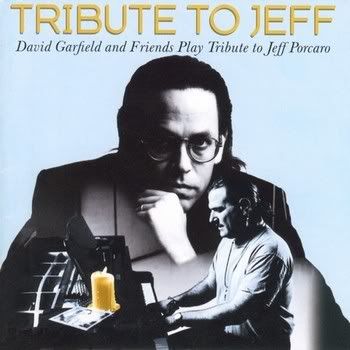
David Garfield And Friends - David Garfield And Friends Play Tribute To Jeff Porcaro - 1997 - Zebra

Recorded in Los Angeles, California; New York, New York; Nashville, Tennessee between April 30 and August 26, 1996, This amazing album pays tribute to the unforgettable Jeff Porcaro. It features an all star cast of the finest musicians around, including all Toto members, Jeff's sons Miles, Chris and Nico, and Jeff's father Joe. The album contains some of Jeff's favorite tunes as well as new recordings of some all-time classics that Jeff originally played on. The album was released in the US on 19 August 1997. Has anybody any info on higher bitrate versions of this recording?

TRACK DETAILS

1. E Minor Shuffle
"Men with Keyboards"
Witten by David Paich
Produced by David Garfield
Arranged by David Garfield & Carlos Vega

David Garfield - electric piano, synths, synth solo, 2nd piano solo
David Paich - MIDI grand piano, 1st piano solo, organ
Steve Porcaro - synth, horns
James Newton Howard - "Funky Clav" sampled clavinet
Carlos Vega - drums
Jimmy Johnson - bass & fretless lead bass
Lenny Castro - chekere on breakdown, congas on tune
Luis Conte - conga solo & batas on breakdown, tambourine on tune
Michito Sanchez - talking drum solo & djembe on breakdown, chekere on tune
Chris Trujillo - Cowbell
Luis Enrique - congas on breakdown, cowbell on tune
Joe Porcaro - pods on breakdown, crashers on tune
John Peña - clave cowbell on breakdown
2. Let's Stay Together
Written by Al Green, Willie Mitchell, Al Jackson
Produced & arranged by David Garfield
Vocal arrangement: Bill Champlin, Richard Marx, David Pack & David Garfield

JPaulette Browne - lead vocal, 1st verse
Michael McDonald - lead vocal, 2nd verse & chorus
David Pack - lead vocal, 3rd verse
Don Henley - chorus vamp #2
Richard Marx - chorus vamp #4
Bill Champlin - chorus vamp #6, vocal step outs
"The Primo Donnas" - background vocals
(Don Henley, Bill Champlin, Richard Marx, David Pack)
David Garfield - acoustic piano & pads
Joe Sample - electric piano "The Teacher"
Benmont Tench - organ
Steve Ferrone - drums
Larry Klimas - tenor sax
Nathan East - bass "My Late Mate Nate"
David T. Walker - rhythm guitar (left side)
Mike Landau - wah wah guitar (right side)
Steve Lukather - acoustic/electric "Luke" guitar (center)
Lenny Castro - congas & percussion
3. Twenty-One Drum Salute
"So many drummers, so little time"
Written by David Garfield, Joe Porcaro, Gregg Bissonette
Produced by David Garfield
Arranged by David Garfield, Alan Hirshberg & Joe Porcaro

Joe Porcaro - "taps" toms
Mike Porcaro - Zildjian trash hats
Chris, Miles & Nico Porcaro - snare drum cadence
Chase Porcaro Duddy - tom toms w/mallets
Abe Laboriel Jr. - floor tom tom
Simon Phillips - gong drum
Gregg Bissonette - drumkit (basic track)
Steve Gadd - drum kit
Vinnie Colaiuta - drum kit (filling the holes)
Dave Weckl - drum kit w/filter (lone drummer in the distance)
Steve Ferrone - snare drum (back beats)
Peter Erskine - piatti & sopranino snare w//Ed Thigpen brushes
John Guerin - "Now's the time" toms & snare drum (and of two)
Ralph Humphrey - "Gran Cassa" bass drum & sidestick snare
John Ferraro - very old snare drum w/boo bams
Richie Hayward & Jim Keltner - drum sets played together w/brushes
Lenny Castro - marching field drum
Steve Jordan - cocktail drums
4. Lowdown
Written by Boz Scaggs, David Paich
Produced by David Garfield
Arranged by David Garfield & Donald Fagen
Vocal Arrangement: Joseph Williams & Jason Scheff

Abraham Laboriel Jr. - drums
"Ready" Freddy Washington - "P" bass
David Paich - Leslie Fender Rhodes
David Garfield - acoustic piano, electric piano & synths
Steve Porcaro - strings & synths
David Williams - "wah wah" guitar
Michael Paulo - alto sax
Chris Trujillo - congas
Joseph Williams & Jason Scheff ("The Jo-Ettes") - background vocals
5. If Six was Nine
Written by Jimi Hendrix
Produced by David Garfield & Michael Landau
Arranged by David Garfield, Michael Landau, Simon Phillips, Will Lee

Michael Landau - lead guitar, lead vocal (chorus)
Simon Phillips - drums, spoken word (white collar conservative)
Will Lee - bass, lead vocals (verse)
David Garfield - synth organ, acoustic piano, spoken words
Eddie Van Halen - guitar on intro (right side) and high part on chorus
6. Bag's Groove (1st song Jeff learned to play)
Written by Milt Jackson
Produced and arranged by David Garfield

Joe Porcaro - drums
Emil Richards - vibraphone
David Garfield - acoustic piano
Tom Scott - alto & tenor sax
Walt Fowler - trumpet
Denny Dias - guitar (Dr. BeBop)
Chuck Domanico - acoustic bass
7. My Heart Wants To Know
Written by David Garfield, John Peña, Jason Scheff, Larry Lee
Produced & arranged by David Garfield
Vocal arrangement: Bill Champlin

Jason Scheff - lead & background vocals "Snuggy"
Bill Champlin - background vocals "The Enforcer"
Joseph Williams - background vocals "The Director"
David Garfield - MIDI grand piano & synths "Creatchy"
Tris Imboden - drums "The Locksmith"
Mike Landau - guitar (stereo) "Bulge"
Jay Graydon - guitar (stereo) "Jake the Rake"
John Peña - bass "Big Mondongas"
Jimmy Haslip - lead fretless bass "You're Smokin"
Lenny Castro - congas "Stinky"
Michito Sanchez - percussion "Little Mitch"
Brandon Fields - alto sax
8. It Takes a Lot to Laugh, It Takes a Train to Cry
Written by Bob Dylan
Produced & arranged by David Garfield
Boz Scaggs - lead vocal
David Garfield - acoustic piano
Mike Finnigan - organ
Jim Keltner - drums & tambourine
Richie Hayward - drums
Larry Klimas - tenor sax
Neil Stubenhaus - bass
Eddie Van Halen - lead guitar (1st solo)
Paul Barrere - slide guitar (2nd solo)
Fred Tackett - guitar
9. Babylon Sisters
Written by Donald Fagen, Walter Becker
Produced & arranged by David Garfield
Synths arranged & programmed by Michael Boddicker

Voice of Jeff Porcaro: "This is Bernard Purdie"
David Garfield - MIDI grand piano, mini moog & msc synths
Gred Phillinganes - electric piano
Michael "The Cleaner" Boddicker - synthsizers
Bernard "Pretty" Purdie - drums
Bob Sheppard - tenor sax
Lee Sklar - bass & barking dogs (Do you have a razor?)
Michael Landau - rhythm guitar
10. Stuffy
Written by David Garfield
Produced & arranged by David Garfield
Horns arranged by Tom Scott & Jerry Hey
"Tom & Jerry"

David Garfield - MIDI grand piano & acoustic piano
Greg Mathieson - Hammond B3 organ
Steve Gadd - drums
Tom Scott - tenor & baritone saxes
Jerry Hey - trumpet & flugelhorn
Abe Laboriel Sr. - bass
Larry Carlton - guitar
Luis Conte - congas
Michito Sanchez - cowbell
Lenny Castro - tambourine
Chris Trujillo - shaker
11. Jeff's Strut
Written by Joe Porcaro
Produced by David Garfield
Arranged by David Garfield & Joe Porcaro
Horns arranged by Tom Scott & Jerry Hey "Tom & Jerry"


David Garfield - Midi grand piano & synths
Greg Mathieson - Hammond B3 organ
Steve Gadd - drums
Tom Scott - alto, tenor & baritone saxes
Jerry Hey - trumpet
Abe Laboriel Sr. - bass
Larry Carlton - guitar
Luis Conte - congas & percussion
12. Big Bone
Written by Jeff Porcaro, David Garfield
Produced by David Garfield
Arranged by David Garfield & Gregg Bissonette

David Garfield - keyboards
Gregg Bissonette - drums
Steve Lukather - guitars
Mike Porcaro - bass
Lenny Castro - congas & percussion
Walt Fowler - trumpet & flugelhorn
Brandon Fields - soprano sax
13. Long Time No Groove
Written by David Garfield & David Benoit
Produced by David Garfield
Arranged by David Garfield & David Hungate

David Garfield - synth pads
David Benoit - acoustic grand piano
Vinnie Colaiuta - drums & cymbals "Brush Birds Flying Away at End"
David Hungate - lead melody fretless bass
Jimmy Haslip - additional low bass note on intro "Smokin"

CREDITS

Michael MacDonald Vocals
Richard Marx Arranger, Choir, Chorus
Shawn McLean Assistant Engineer
Darren Mora Overdubs, Assistant Engineer
Erwin Musper Overdubs
David Paich Organ, Arranger, ?, Piano
Jeff Porcaro Voices, Illustrations
John Pena Bass, Claves, Post Production, Digital Editing
Greg Phillinganes Piano (Electric)
Steve Porcaro Synthesizer, Strings, Horn
Mike Porcaro Bass
Joe Porcaro Arranger, Tom-Tom, Drums
Bernard "Pretty" Purdie Drums
Robert Read Overdubs, Assistant Engineer
Emil Richards Vibraphone
Michael Rodriguez Overdubs
Michito Sanchez Percussion, Drums, Chekere, Djembe, Cowbell
Jason Scheff Arranger, Vocals, Vocals (Background)
Ricky Schultz Executive Producer
Neil Stubenhaus Bass
Fred Tackett Guitar
Chris Trujillo Conga, Shaker, Cowbell
Eddie Van Halen Guitar, Choir, Chorus
Carlos Vega Arranger, Drums
Dave Weckl Drums
David Williams Guitar
Denny Dias Guitar
Dan Thompson Assistant Engineer
Freddie Washington Bass
Leland Sklar Bass
Bill Smith Assistant Engineer
Eric Scott Design
Gavin Lurssen Mastering
Armando Gallo Photography
Steve Genewick Assistant Engineer
Jim Giddenes Assistant Engineer
Alan Hirschberg Arranger, Mixing, Engineer, Overdubs
Yvonne Wish Production Coordination, Project Assistant
Hiro Yamashita Executive Producer
Joseph Williams Arranger, Vocals (Background)
J.J. Blair Assistant Engineer
Steve Jordan Drums
Abe Laboriel Jr. Drums, Tom-Tom
Yoshie Yokoyama Art Direction
David Caballero Photography
Paul Barrére Slide Guitar
Bill Champlin Arranger, Choir, Chorus, Vocals (Background)
Mike Finnigan Organ
Simon Phillips Arranger, Speech/Speaker/Speaking Part, Gong, Drums
David T. Walker Guitar (Rhythm)
Jim Keltner Drums, Tambourine
Robert Knight Photography
Luis Enrique Conga, Cowbell
Doug Brown Creative Director
Jimmy Haslip Bass, Fretless Bass
Benmont Tench Organ
David Benoit Piano
Gregg Bissonette Arranger, Drums
Michael Boddicker Synthesizer, Programming, Arranger
Lenny Castro Percussion, Conga, Chekere, Tambourine, Drums
Vinnie Colaiuta Cymbals, Drums
Luis Conte Percussion, Bata, Tambourine, Conga
Nathan East Bass
John Ferraro Drums (Snare)
Steve Ferrone Drums, Drums (Snare)
Brandon Fields Sax (Alto), Sax (Soprano)
Walt Fowler Trumpet, Flugelhorn
Steve Gadd Drums
David Garfield Organ, Synthesizer Pads, Mini Moog, Concept, Main Performer, Speech/Speaker/Speaking Part, Producer, Piano (Electric), Keyboards, Synthesizer, Arranger, Piano
Jay Graydon Guitar
John Guerin Tom-Tom, Drums (Snare)
Richard Hayward Drums
Jerry Hey Trumpet, Arranger, Flugelhorn
Ralph Humphrey Drums (Bass), Drums (Snare)
David Hungate Arranger
Tris Imboden Drums
Paul Jackson, Jr. Guitar (Rhythm)
Jimmy Johnson Bass
Leslie Ann Jones Assistant Engineer
Larry Klimas Sax (Tenor)
Abraham Laboriel Bass
Michael Landau Guitar, Arranger, Guitar (Rhythm), Vocals
Will Lee Bass, Arranger, Vocals
Steve Lukather Guitar (Acoustic), Guitar (Electric), Guitar
Donald Fagen Arranger
Don Henley Choir, Chorus, ?
Michael McDonald Vocals
Boz Scaggs Bass
Larry Carlton Guitar
Peter Erskine Drums (Snare), Piatti
James Newton Howard Clavinet
Greg Mathieson Organ (Hammond)
Michael Paulo Sax (Alto)
Joe Sample Piano (Electric)
Tom Scott Arranger, Sax (Alto), Sax (Tenor), Sax (Baritone)
Bob Sheppard Sax (Tenor)

REVIEW

Tribute to Jeff by David Garfield & Friends vigorously celebrates the life of multiple Grammy-winning drummer and first-call L.A. session cat Jeff Porcaro rather than choosing to mourn the tragedy of his early death in 1992 at age 38. Though best known for his skinwork in the pop supergroup Toto, Porcaro's influence on the music scene ranged beyond the light pop/rock the band was known for; he grew up on jazz and his diverse timekeeping skills were tapped by everyone from Boz Scaggs, Bruce Springsteen, and Don Henley to Stan Getz and Larry Carlton. He was also the backbone of the longstanding L.A. club-hopping band Los Lobotomys, the fusion-oriented '80s and early-'90s answer to Tom Scott & the L.A. Express featuring pianist Garfield and Toto member Steve Lukather on guitar (Joe Sample would occasionally sit in on second keyboard). In his two decades on the scene, Porcaro made a wealth of friends from all genres, ranging from hard rock to soul, blues, and straight-ahead jazz. Garfield, a veteran of the L.A. scene known for his long-term stint as George Benson's musical director, recalls his late friend as "the ultimate team player, never a forefront kind of guy, with a special camaraderie with musicians." As ringleader, arranger, and producer of the project, as well as lead performer, Garfield succeeds in capturing that sort of ensemble spirit. With 75 musicians participating, the pianist faced a four-month logistical nightmare of studio schedule-crunching in L.A., Nashville, and New York, but, using Porcaro as a muse (by virtue of lighting candles and occasionally playing cassettes of the guest of honor's interviews), Garfield & Friends pull off the ultimate wake, a remarkably all-encompassing, frequently unpredictable overview that, well, Porcaro would have doubtless killed to play on. © Jonathan Widran, All Music Guide
6.8.07

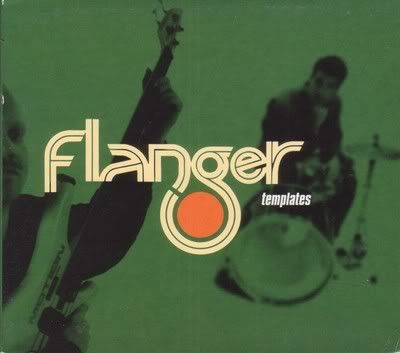
Flanger


flanger-templates1999


Flanger - Templates - 1999 - Ntone

Call it neo-jazz music. Call it avant garde futuristic jazz. It doesn't matter. Don't let any of these somewhat pretentious descriptions deter you from listening to this enjoyable, experimental music. It may be abstract, but it's very listenable, never gets boring, and is full of surprises. A well produced, and unusual album

TRACKS

1.Music To Begin With (9:05)
2.Options In The Fire (3:28)
3.Endless Summer (5:13)
4.Short Note With A Few (6:28)
5.Studio Tan (6:08)
6.Full On Scientist (6:00)
7.Lata (5:48)
8.Quicksilver Loom (8:19)

CREDITS

Atom Heart (Guitar),
Atom Heart (Keyboards),
Atom Heart (Sampling),
Atom Heart (Vibraphone),
Atom Heart (Fender Rhodes),
Flanger (Arranger),
Flanger (Main Performer),
Burnt Friedman (Percussion),
Burnt Friedman (Drums),
Burnt Friedman (Sampling)
Arranged By - Flanger

Special Thanks to John Pain, David Franzke and Marcus Schmickler.

REVIEWS

Flanger's Templates collects the two EPs of the same name into one album of avant-garde electronic music that balances techno and jazz elements in a minimalist, experimental approach. Though the ideas are progressive, tracks like "Full on Scientist" and "Studio Tan" are witty, organic workouts that are as friendly as they are challenging. © Heather Phares, All Music Guide
Imagine a straightforward jazz album. Now filter that jazz album through a 65 Mustang's radio system. Now step on the recording--smash it into your shoes. Now play it again. That's Flanger. This ain't acid jazz. This isn't even Sun Ra. This is jazz that is sampled and cut-up to the point where the traditional jazz drum, bass, keys and horns are obscured with feedback and noise--jazz so confused that it actually sounds interesting instead of monotonous and out-of-date (which is what I usually think when I think about jazz). Apparently, Flanger recorded this album on traditional instruments--drums, bass, piano, vibraphone, etc. But then they "edited" it in the studio, and turned those very familiar instruments into something so unusual that you can barely recognize the original sounds. I've never heard anything like Flanger: an album that starts out blue and ends up red, that starts out traditional and ends up more experimental than even the most experimental of performance artists. From the first track, "Music to Begin With" and its list of musical styles that turns into a cacophony of musical blends, to "Short Note with a Few" and its piano interlude that turns into a time-bomb of muted filter effects, to the end, Templates is filled with surprise after surprise. Once you think the album will settle down into a nice, happy but incredibly boring jazz number, it throws your expectations away and you are left wondering what you'll hear next. In a world where even the most abstract and "fucked-up" beat can render our cynical ears dead, that is high praise indeed. © 1998-2006 Michael Heumann & Haunted Ink

BIO

Atom Heart's and Bernd Friedmann's Flanger project is produced by the combination of traditional jazz elements with experimental filtering and editing techniques. For the 1999 album Templates, Flanger used drums, bass, piano, and vibraphone, then put the product through their own editing process with the end product of unrecognizable instruments. The June 1999 release was hosted by the well-respected Ninja Tune Records, home of artists including Kid Koala, DJ Food, and Funki Porcini. Midnight Sound followed in fall 2000. © Diana Potts, All Music Guide

5.8.07

Sandspider


sandspider-music4animaginaryfilm


Sandspider - Music For An Imaginary Film - 2004 - Millenium

Brilliant electronic ambient downtempo electro-funk. Sandspider have been producing quality electronic music now for over 6 years. Influenced by Orbital, and Future Sound Of London. Check out their albums, "Spider", & "Killing Time". Also check out "Humidity", by Heights Of Abraham, on The Pork Recordings label.

TRACKS

01. Crisis
02. Intro
03. Small Town Hasslesir
04. Approach
05. Zoned
06. The Groove
07. Levchenko
08. Interlude
09. Ten Spoons
10. Late
11. Realism
12. Wrong Number
13. No Time Left
14. Eyes I Dare Not Meet
15. Nightmares
16. Outro

REVIEW

This whole journey is being accompanied by 16 tracks, which are simply fantastic. With one half of Sandspider living in London, and the other half in Glasgow, it might seem impossible to collaborate, but instead of shifting equipment backwards and forwards in cabs, much of the work for 'Music For An Imaginary Film' has been done over the internet. The ideas came together slowly and gradually during many late night phone calls and live link ups. Ideas bounced back and forth across no mans land in various forms until the idea was complete. Sandspider is not your usual computer generated Chill Out act but a Production Team producing atmospheric music with a true human feel to it and a musical quality which will keep this Album alive for a long time! © 2007 Psyshop.com

BIO

Sandspider, A.K.A, Matt Embleton & Alan McDermott are an electro ambient dub lounge outfit formed in London in late 1998. Originally signed to Worm Interface, then moved to Millennium Records.

C.C.S


ccs-thebestbandintheland1973


C.C.S - The Best Band In The Land - 1973 - Rak

Formed by the late Alexis Korner, this was the final album from C.C.S. Featuring some of the most talented session musicians in the UK, C.C.S play a selection of jazz, rock, & big band numbers. A hugely talented band, and a brilliant album. Try and find their first two albums. Also check out "Blood Sweat, & Tears" for a similar musical style.

TRACKS

1. The Band Played The Boogie (Reedman/Jarrett/Cameron) 3:48
2. Wild Witch Lady (Leltch) 3:58
3. Lola (Davies) 3:35
4. Primitive Love (Cameron/Chinn) 3:12
5. Hundred Highways (Cameron) 3:48
6. Shakin' All Over (Heath) 3:05
7. Memphis (Cameron) 3:38
8. Sunshine Of Your Love (Bruce/Brown/Clapton) 3:38
9. Our Man In London (Cameron) 2:20
10. Cannibal Sheep (Korner) 3:35

Bonus Tracks (February 2001 on CD)

11. Hang It On Me (Cameron) 3:58 1973
12. Hurricane Coming (Scott) 3:12 1974
13. Dragster (Cameron/Hayes) 3:10 1974

CREDITS

Vocals: Alexis Korner, Peter Thorup
Conductor, Electric piano: John Cameron
Electric guitar: Alan Parker
Bass guitar: Herbie Flowers
String bass: Spike Heatley
French horn: Neil Sanders
Percussion: Jim Lawless
Percussion: Bill le Sage
Saxophones, woodwind: Harold McNair, Tony Coe
Pete King, Danny Moss,
Bob Efford, Ron Ross
Trumpets: Harold Beckett, Henry Lowther, Greg Bowen, Tony Fisher,
Les Condon, Kenny Wheeler
Trombones: Don Lusher, John Marshall, Brain Perrin, Bill Geldard
Drums: Barry Morgan, Tony Carr
Produced by Mickie Most
Recording engineer: Mike Bobak, Guy Bidmead
Recorded at Abbey Road Studios, London, January-May 1973

Formed in 1970 around bluesman Alexis Korner and vocalist Peter Thorup. The rest of the line-up was rather loose and depended on people's availability but it included the likes of Tony Carr (drums), Harold Beckett (trumpet), Herbie Flowers (bass), Henry Lowther (trumpet) and Harold McNair (woodwind) to name but a few. They were among the first groups to record on Mickie Most's new Rak label and John Cameron arranged their albums. They had several hit singles, commencing with a cover of Led Zeppelin's 'Whole Lotta Love', which was used as the theme for BBC's 'Top Of The Pops' in this era. This also got to No. 58 in the US, where their debut album made No. 197. Their music was characterised by Korner's unique growling vocals. They split in 1973 when Korner and Thorup teamed up with former King Crimson members Boz Burrell and Ian Wallace to form Snape.

Dana Fuchs Band


danafuchsband-foralifetime


Dana Fuchs Band - Lonely For A Lifetime - 2003 - Q&W Music

Tired of being bombarded by talented female singer-songwriters overplaying the acoustic unplugged formula to death? Wish these chicks would plug in and turn the amps up to 11 once in a while? Look no further than the Dana Fuchs Band's first release, Lonely for a Lifetime, a collection of straightforward yet sophisticated arrangements of bluesy, hard-driving rock tunes written by vocalist Fuchs and guitarist Jon Diamond. Imagine a sultry, more emotive Janis Joplin backed by a higher-energy version of the late-'60s Rolling Stones and you'll get the idea. This intelligently engineered recording is punchy yet natural-sounding, without the excessive use of digital processing and compression so common to this genre. It will entice you to see the DFB live. Once you do, you'll be hooked. Rock'n'roll doesn't get any better. © http://stereophile.com/records2die4/203r2d4/index4.html

TRACKS

01. Strung Out
02. Lonely For A Lifetime
03. Moment Away
04. Songbird (Fly Me To Sleep)
05. Tell Me I'm Not Drinking
06. Bible Baby
07. God's Song
08. Bad Seed
09. Fading Away
10. I Know You Know
11. Hiding From Your Love
12. Sad Salvation

CREDITS

Peter Moshay Mixing, Recording
Chris Palmaro Piano, Organ (Hammond), Wurlitzer
George Recile Percussion, Drums
Jonathan Wyner Mastering
Paul Antonell Recording
Daniel Wise Recording
John Ginty Piano, Organ (Hammond)
Pete Min Mixing
Ethan Eubanks Percussion, Drums, Handclapping
Matt Stone Design
WhyNot Jansveld Guitar (Acoustic), Vocals (Background), Bass
Dana Fuchs Band Percussion, Executive Producer, Handclapping, Vocals (Background), Vocals
Scott Barlow Graphic Design
Pete Diamond Vocals (Background)
George PapaGeorge Organ (Hammond)
Jerry Dugger Vocals (Background)
Jon Diamond Guitar (Acoustic), Guitar, Handclapping, Recording, Cover Photo, Mixing, Producer, Harmonica, Sound Effects, Guitar (Electric)
Kenny Aaronson Bass, Producer, Handclapping, Dobro
Ada Dyer Vocals (Background)


BIO (Wikipedia)

The youngest of six musical children, Dana was raised in Wildwood, Florida surrounded by music – her older siblings’ band playing classic rock in the garage, Ray Charles and Hank Williams on her parents’ turntable, and a big dose of 70’s and 80’s funk at school. At the age of twelve she joined the First Baptist Gospel Choir and was singing, shouting, and praising the lord every week in a small church on the outskirts of town. At sixteen she was fronting a popular local band at a roadside Holiday Inn.
Arriving in NYC at the age of nineteen she immediately began hitting the local blues jams. It was at one of these jams that she met Jon Diamond, a NYC guitarist who had toured with Joan Osborne and W.C. Handy Award winner Debbie Davies. With a shared musical vision they formed the Dana Fuchs Band. Within a year, the band was a feature act at NYC’s best blues clubs, often sharing the stage and performing with the likes of John Popper, James Cotton, and Taj Mahal. Dana immersed herself in the blues, playing 3 long sets a night, 4 nights a week until 3 am, honing her already formidable vocal power and performance style, and building a large, loyal fan following.
Then Dana decided to tell her own story and write her own music. She and Jon began writing intensively, putting together a solid body of original rock songs. Soon Dana was back on the Lower East Side again, only this time on stage with her own band playing her own songs. The fan response was overwhelming. The band was soon selling out shows at The Mercury Lounge, The Stephen Talkhouse and BB King’s, sharing the bill with national acts including, Little Feat, Marianne Faithfull, and Etta James.
These songs can be heard on The Dana Fuchs Band’s debut CD, Lonely For A Lifetime, which was released to an enthusiastic response from both press and fans. Drawing from influences ranging from ‘60s Stax/Volt R&B, Lucinda Williams and The Rolling Stones, Lonely for A Lifetime hints lyrically, at Tom Waits and Bob Dylan, among others. Says Dana, “I wanted to capture a soulful and rocking vibe…but with an earthiness to it.” Vocally, Dana drew inspiration from legendary singers including Etta James, Otis Redding, Bobby Bland, Aretha Franklin, and Mavis Staples. Currently, Dana is pursuing her music and acting career and continues to live and work based out of New York City.

Fleetwood Mac/Christine Perfect


fleetwoodmacchristineperfect-albatross


Fleetwood Mac/Christine Perfect - Albatross - 1968/1969? - CBS/Embassy?

This LP is a great recording, featuring eight tracks by Fleetwood Mac, and eight by Christine Perfect, aka Christine McVie. If you have any info on this album, please post. Sound could be better as its a 128 Kbps posting. A.O.O.F.C would be interested in higher bitrate recordings.


TRACKS


A1 Fleetwood Mac Albatross (3:10)
A2 Fleetwood Mac Rambling Pony (2:40)
A3 Fleetwood Mac I Believe My Time Ain't Long (2:55)
A4 Fleetwood Mac Doctor Brown (3:44)
A5 Fleetwood Mac Stop Messin' Round (2:18)
A6 Fleetwood Mac Love That Burns (5:02)
A7 Fleetwood Mac Jigsaw Puzzle Blues (1:33)
A8 Fleetwood Mac Need Your Love Tonight (3:27)

B1 Christine Perfect I'd Rather Go Blind (3:14)
B2 Christine Perfect Crazy 'Bout You Baby (3:01)
B3 Christine Perfect And That's Saying A Lot (2:57)
B4 Christine Perfect I'm On My Way (3:08)
B5 Christine Perfect No Road Is The Right Road (2:48)
B6 Christine Perfect Let Me Go (Leave Me Alone) (3:33)
B7 Christine Perfect I'm Too Far Gone (To Turn Around) (3:25)
B8 Christine Perfect When You Say (3:14)

1.8.07

Pat Travers & Carmine Appice


pattraverscarmineappice-bazooka


Pat Travers & Carmine Appice - Bazooka - 2005 - Cleopatra

A real explosive, once-in-a-lifetime collaboration from these two legends of hard rock. Ex Vanilla Fudge member, Carmine Appice, and the brilliant guitars Pat Travers, are helped out by the master axe-men, Steve Lukather, and Rick Derringer on this great recording. The rest of the band are no slouches either. If you're into hard rock, then give this a spin. Great stuff !

TRACKS

1 Evil (Dixon)
2 Disappear (Appice, Cordolla, Travers)
3 Superstitious (Wonder)
4 Crash & burn (Travers)
5 Livin' alone (Beck, Bogart, Appice)
6 Misfortunate one (Appice, Cordolla, Travers)
7 Last child (Tyler, Whitford)
8 Snortin' whiskey (Thrall, Travers)
9 Boom, boom (Lewis)
10 Politician (Brown, Bruce)
11 Babylon baby (Appice, Cordolla, Travers)
12 Bazooka (Appice, Travers)

MUSICIANS

Carmine Appice - percussion, drums, vocals, producer, mixing
Lanny Cordola - executive producer
Rick Derringer - Guitar (12)
Tony Franklin - fretless bass
Steve Lukather - guitar (7)
Pat Regan - mixing
Pat Travers - producer, guitar
Brad Vance - mastering
Chuck Wright - bass (2) (6) (7) (8) (10) (11) (12)
Bobby Kimball - vocals (7)

REVIEW

The second studio album by legendary rockers Pat Travers and Carmine Appice, the followup to 'It Takes A Lot Of Balls' shows these two veterans have much to offer to fans of bluesy heavy rock. This time around assisted by bassists Tony Franklin and Chuck Wright, featuring guest appearances by Rick Derringer as well as Steve Lukather and Bobby Kimball of Toto, the two have come up with a collection of tracks that's sure to please afficianados of 70's styled rock in the classic mode.

Crashing out of the gate with a romp through a remake of the Cactus arrangement of Willie Dixon's "Evil," they skillfully show the talents that originally brought them to prominence during rock's golden age, Travers belting out an impassioned vocal while Appice's heavy drumming leads the way. Giving way to the first of the album's four original compositions "Disappear," a slightly psychedelic hard rocker which begins with a guitar quote from The Beatles' "Within You, Without You," done Satriani style. Straying from his normal style of playing here, I was quite impressed at the fluidity of Travers' lead work, as it's more of a "shred" type style than hard edged blues scales, and it works quite well. As they continue with updated versions of BB&A's classic cover of Stevie Wonder's "Superstitious," Travers' "Crash & Burn" and yet another BB&A classic "Livin' Alone," they're clearly hitting their stride, and while it may take a couple of listens to acclimate oneself to these being slightly different than the renditions most fans of these artists have been used to hearing, they do stand on their own. The second original, "Misfortunate One" follows, a moody rocker that would've fit in perfectly on Travers' classic 70's albums. Containing searing guitar work, this is one of the highlights of the album. A cover of Aerosmith's "Last Child," featuring vocals by Toto's Bobby Kimball and a guest guitar solo by bandmate Steve Lukather, comes next, a fairly faithful rendering, and although Kimball's phrasing doesn't quite match Steven Tyler's raspiness, it's close enough for rock n roll! A couple more remakes of Travers' best known songs, "Snortin' Whiskey" and "Boom, Boom (Out Go The Lights)," while not surpassing the originals, still have enough energy to make them more than credible efforts. After a bruising interpretation of Cream's "Politician" it's on to "Babylon Baby," a funky rocker propelled by a throbbing bass line from Chuck Wright, who along with Appice form a formidable rhythm section over which Travers unleashes incendiary solos. Some Vanilla Fudge styled harmony vocals also lend a nice touch here. Concluding with the instrumental title track, on which Derringer contributes spacey guitar licks over Appice's strong martial drumming, almost Hendrix like in feel, it's a classy way to end things.

Produced by Appice and Travers, mixed by Appice and famed producer Pat Regan (Deep Purple, Kiss, Rainbow) the sound on the CD, as to be expected is excellent. Clear, punchy with tons of bottom end, which serves to give a crunch to the mix. Given the pedigree of the musicians involved, you'd expect great playing, and that's what you get from all involved.

One might question the wisdom of including so many remakes and covers instead of entirely new material, but in all actuality it works admirably. There's a certain comfort in the familiarity of these classic songs that serves to make the newer songs stand out, giving them a platform from which to shine.
All in all, this is a very solid, satisfying release. If you've enjoyed Travers' recent output such as the 'PT Power Trio' discs, you'll find much here in the same vein. Judging from the original compositions on display here, I'll certainly be looking forward to hearing more from these two extremely talented musicians in the hopefully not too distant future. It's a shame that modern radio won't touch these songs, as there are several here that given airplay, could take off in a big way. As it is though, just the fact that these artists are still making quality music without commercial considerations is a fact to rejoice. 8/10 © Nightwatcher © 2007 Rock N Roll Universe